A little settling on a new chain can be normal. Repeated sagging, derailment, or constant retensioning is not—and it usually points to a fixable setup, lubrication, or wear problem.
Turn the saw off, disconnect power or remove the battery, and let hot components cool before inspection. A very loose chain can derail, damage the bar or chain catcher, and increase loss-of-control and kickback risk.
Most chainsaw chain tension problems come down to heat, setup, or wear.
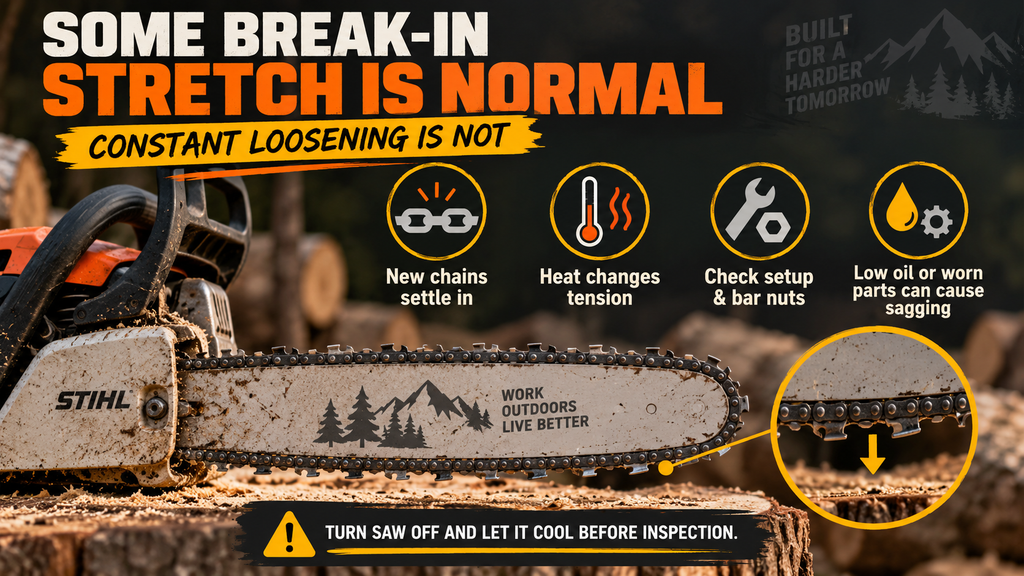
New chains can settle during their first few cuts, but a chain that repeatedly sags or comes off is usually being tensioned incorrectly, run with loose bar nuts, starved of bar oil, or held by worn parts.
1. Some break-in stretch is normal—constant loosening is not
A new chainsaw chain has rivets, drive links, and cutters settling into working contact. During the first tank of fuel or several short cutting sessions, it may need more frequent checks. Cutting also heats the chain and guide bar. Heat changes their dimensions slightly, which is one reason a chain can feel different after use.
That does not mean you should keep tightening a hot chain until it is rigid. Let the saw cool and follow the tension procedure in your owner’s manual. STIHL, Husqvarna, Oregon, ECHO, DeWalt, Milwaukee, Makita, and other manufacturers may specify details for their own bar and chain systems.
2. Check whether the chain is actually tensioned correctly
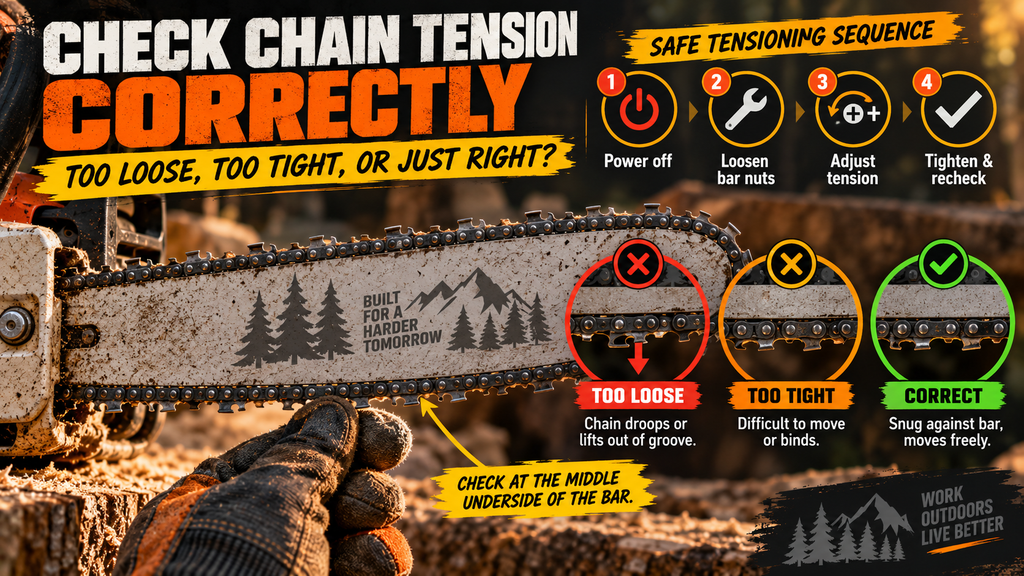
There is no single universal measurement for every chainsaw. In general, with the saw powered off and secured, a correctly tensioned chain sits snugly against the underside of the guide bar but can still be pulled around the bar by hand while wearing appropriate gloves. The drive links should remain engaged in the bar groove when you gently pull the chain away from the bar.
A practical tension check
Check the chain at the middle of the underside of the bar, not only near the nose. Always use the exact procedure printed for your saw.
- Too loose: the chain visibly droops or drive links lift out of the bar groove.
- Too tight: the chain is difficult to move by hand or binds as it travels around the bar.
- Correct: it rests against the bar, moves freely, and stays seated in the groove.
Safe tensioning sequence
- Switch off the saw. Unplug an electric model or remove the battery; for gas models, follow the manufacturer’s shutdown guidance.
- Loosen the bar nuts enough for the guide bar to move, then lift the bar nose slightly to remove slack.
- Adjust the tensioning screw or tool-free dial until the chain is snug but still moves freely by hand.
- Keep the bar nose raised while tightening the bar nuts to the manufacturer’s specification. Recheck tension before cutting.
3. Loose bar nuts or a poorly seated guide bar can undo a good adjustment
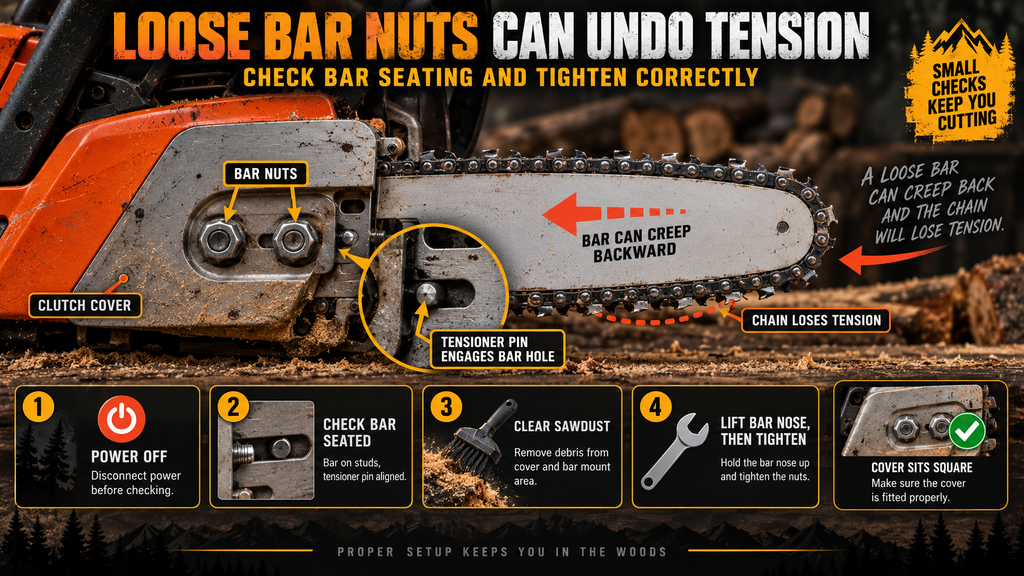
The tensioner works by moving the guide bar. If the bar nuts are loose, the bar can creep backward under load and the chain will lose tension. Remove the clutch cover only with power safely disconnected, then check that the bar is seated on its mounting studs, the tensioner pin engages the bar’s adjustment hole, and the cover is fitted squarely. Packed sawdust in the cover or bar-mount area can prevent parts from seating correctly.
Experienced maintenance tip: tension first with the bar nose lifted, then tighten the bar hardware while holding that position. Tightening the nuts before the tension is set can leave slack once the bar settles.
4. Poor lubrication can make a chain loosen faster
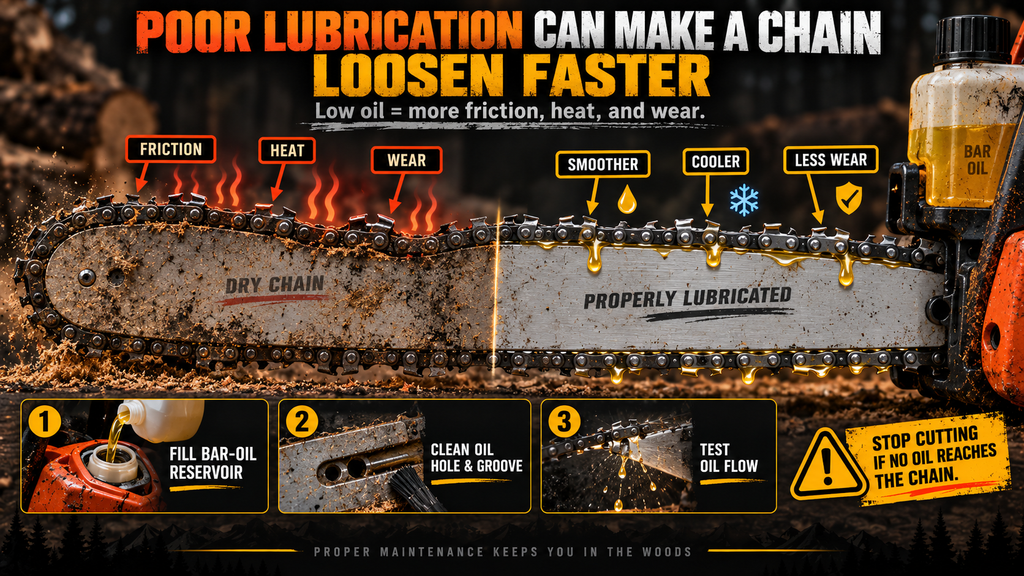
Chain oil reduces friction between the drive links, bar rails, sprocket, and chain. When oil flow is poor, excess heat accelerates wear and can make the chain feel inconsistent from one cut to the next. A dry chain can also discolor, smoke, or leave a scorched bar.
- Fill the bar-oil reservoir with the lubricant recommended for your conditions and saw.
- Clean the bar’s oil inlet hole and groove when you clean sawdust from the saw.
- If you suspect no oil is reaching the chain, stop and follow the manufacturer’s oil-flow test rather than continuing to cut.
5. Inspect the chain, sprocket, guide bar, and tensioner for wear
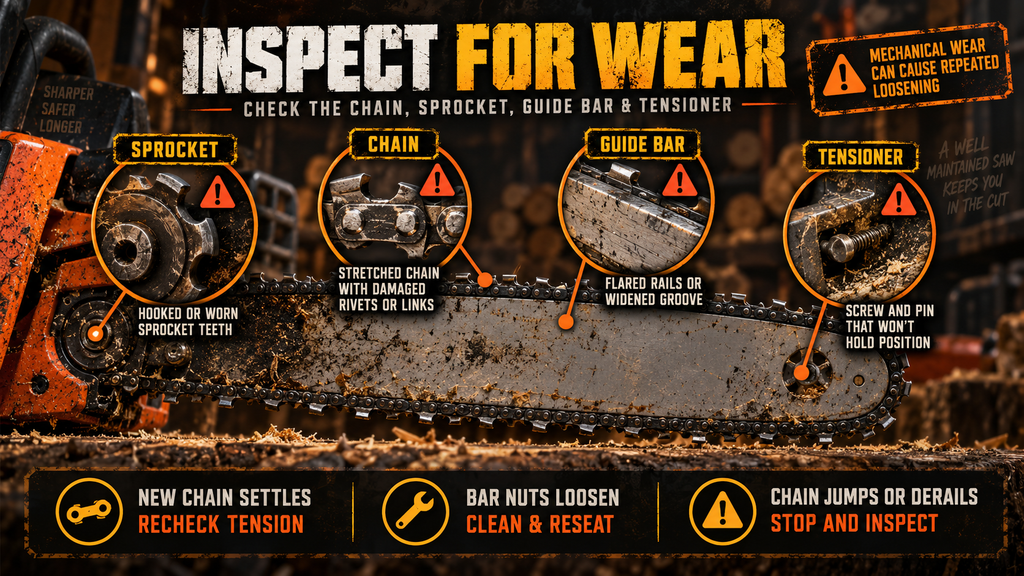
When tension keeps disappearing despite correct setup, the issue may be mechanical. Look for a stretched chain with damaged rivets or drive links, hooked or deeply grooved sprocket teeth, flared bar rails, a widened bar groove, or a tensioner screw and pin that will not hold position. A chain that has derailed can damage the chain catcher or bar cover, so inspect those parts too.
| What you notice | What to do next |
|---|---|
| A new chain needs one or two early adjustments, then settles. | Usually normal break-in. Recheck tension as directed in the manual. |
| The bar nuts are loose, or tension changes after they are tightened. | Clean and reseat the bar and cover; inspect the mounting hardware and tensioner. |
| The chain jumps, derails, binds, or cannot maintain tension. | Stop using the saw until the chain, bar, sprocket, and tensioning system are inspected. |
6. When to replace parts or seek service
Replace a chain that has damaged, cracked, severely worn, or repeatedly derailed drive links, or one that has reached the end of its adjustment range. Replace or service a guide bar with badly worn rails or groove damage, and inspect the sprocket whenever you replace a heavily worn chain. Running a new chain on a damaged sprocket or bar can shorten the life of the new chain.
Get professional help when the tensioner does not hold.
Do not compensate for a slipping tensioner by overtightening the chain or repeatedly forcing the adjustment screw. If the chain keeps coming off after a proper setup, have the saw inspected before using it again.
Frequently asked questions
How often should I check my chainsaw chain tension?
Check tension before each use, after the first few cuts with a new chain, and whenever the saw has heated up or behaved differently. Follow the inspection and adjustment interval in your owner’s manual.
Why does my chain loosen after I tighten it?
The guide bar may be settling, the bar nuts may not be secure, or the tensioner, sprocket, chain, or bar may be worn. Let the saw cool, repeat the correct tensioning sequence, and inspect the hardware if the problem returns.
Can I keep using a chainsaw if the chain keeps coming off?
No. Stop using the saw until the chain, guide bar, sprocket, chain catcher, and tensioning system have been checked. Repeated derailment can increase the risk of injury and damage.