Steering & Suspension · Car Maintenance Guide
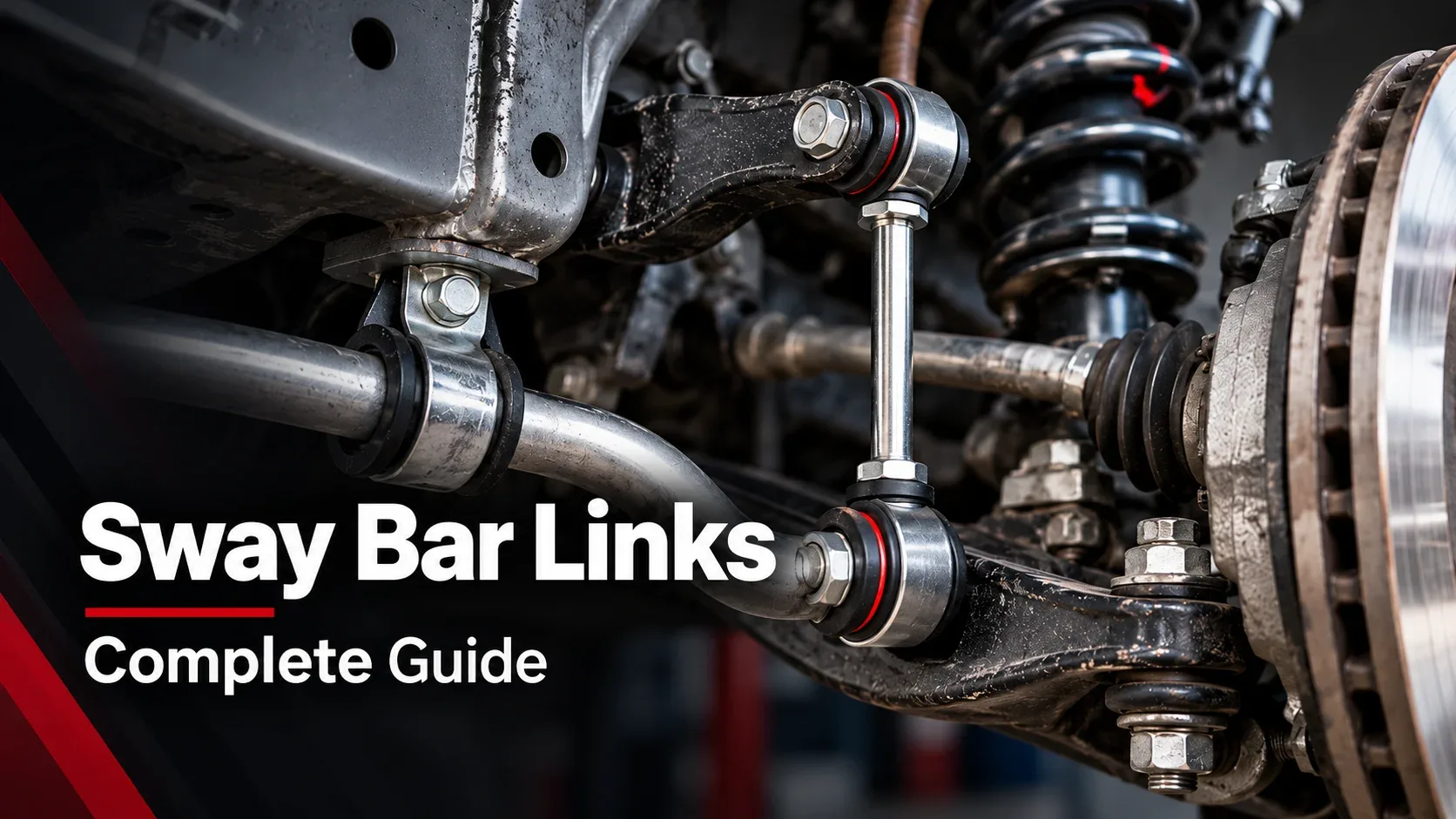
Hearing a clunk over bumps or noticing that your car leans more than usual through corners? Worn sway bar links are one possible cause. These small suspension parts help a stabilizer bar reduce body roll, but they can wear, loosen, or break over time.
This guide explains how sway bar links work, where to find them, symptoms that deserve attention, how a proper inspection is performed, and what replacement can cost in the United States. Because noises and handling symptoms overlap with other faults, the goal is to help you understand the problem—not diagnose it from a sound alone.
What Are Sway Bar Links?
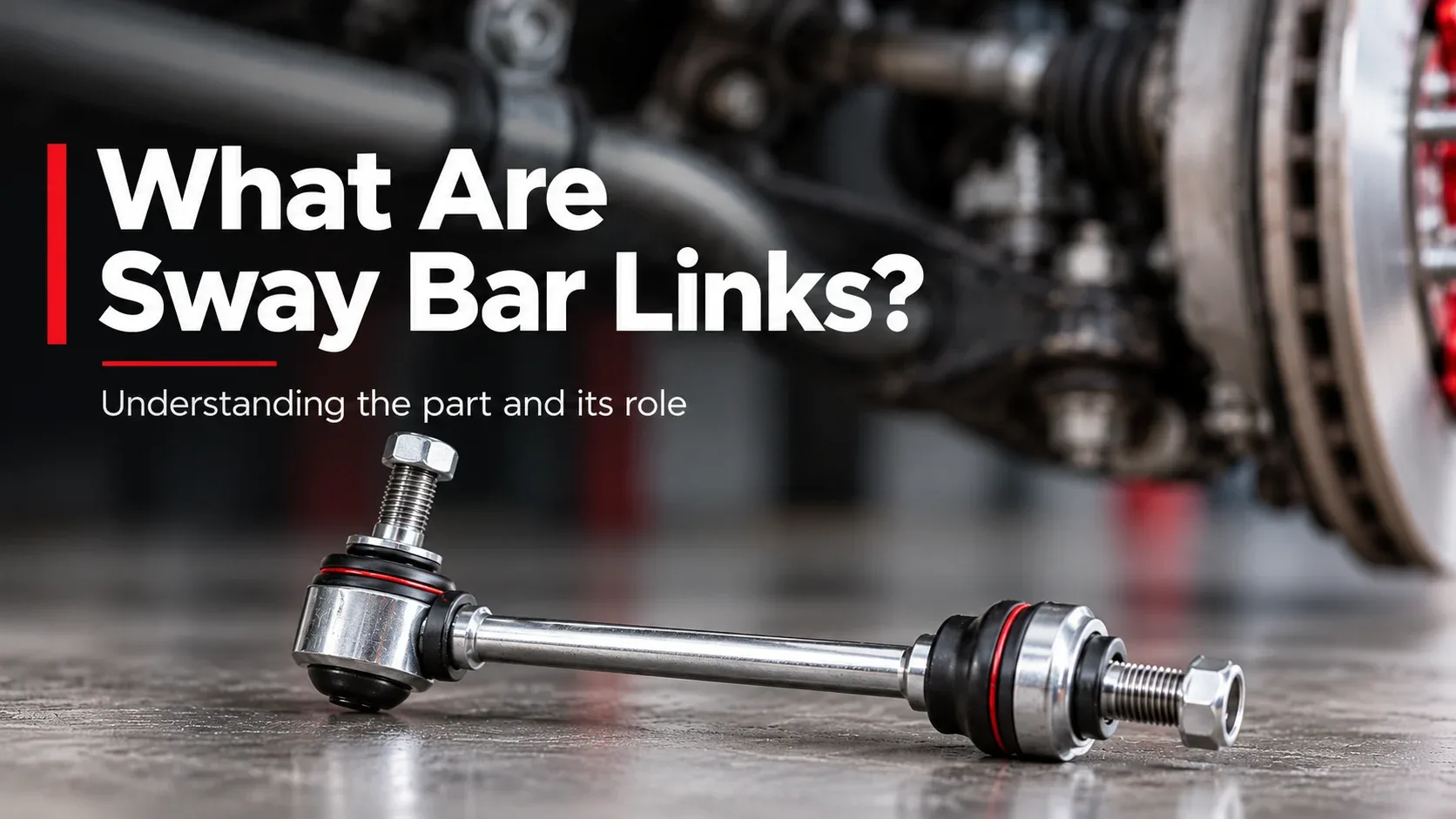
A sway bar link is a connecting part in a vehicle’s suspension. The sway bar itself—also called an anti-roll bar or stabilizer bar—is a metal bar that works with the left and right sides of the suspension. The links connect that bar to moving suspension parts.
Many links are short metal rods with ball-joint connections at their ends. Others use threaded rods, bushings, and washers. Their shape depends on the suspension design. Not every vehicle has the same number or style of links; a car may have sway bar links at the front, rear, or both.
Sway bar links are part of the suspension system. Although their condition can affect how stable the car feels in a turn, they are not the components that directly steer the wheels.
How Do Sway Bar Links Work?
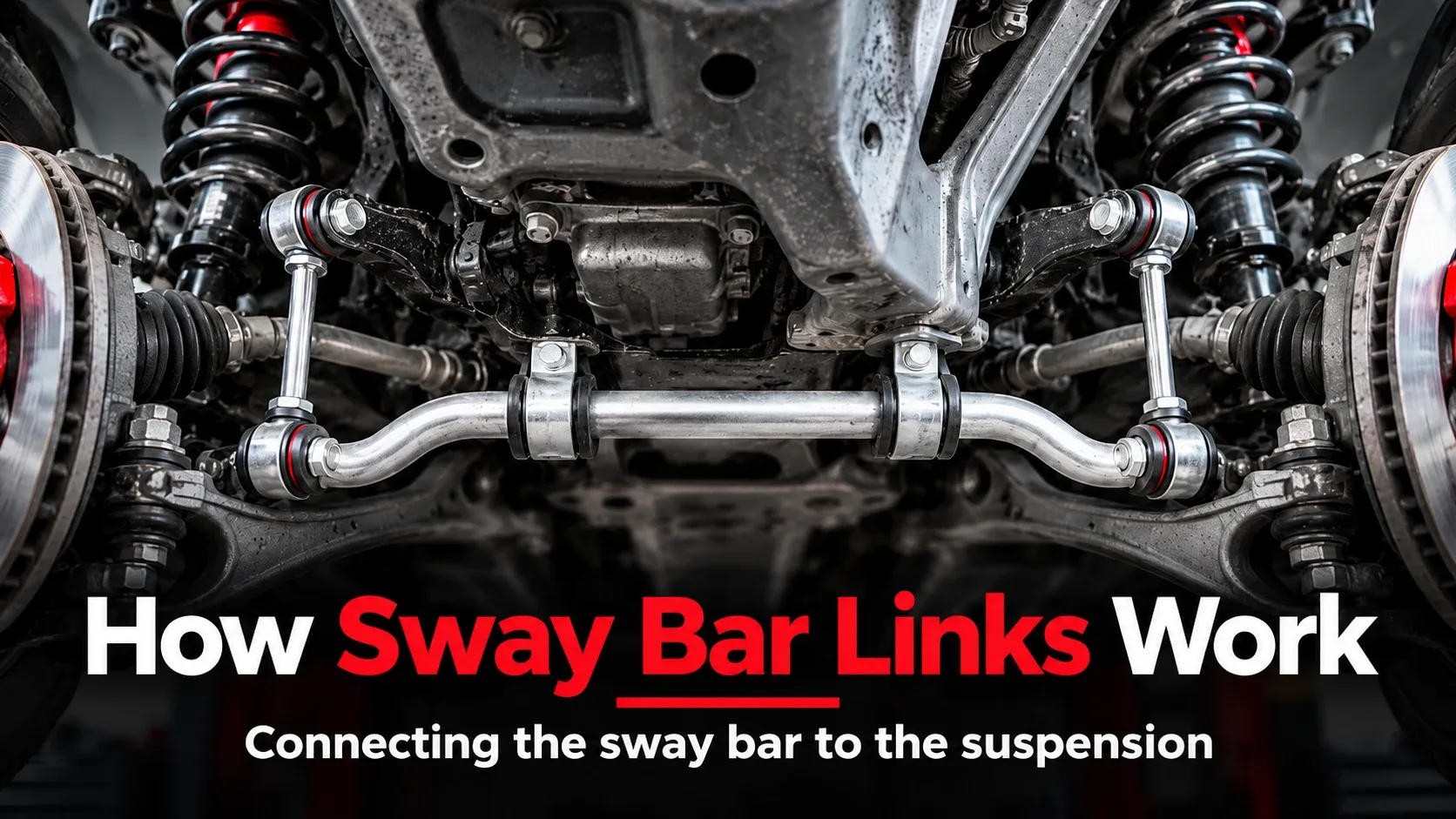
When a car corners, the body tends to lean toward the outside of the turn. Its suspension compresses and extends by different amounts on the two sides. The sway bar twists in response to this difference and resists some of that body roll.
The links transmit forces between the suspension and the sway bar. If a link becomes disconnected or cannot transmit the intended forces, that axle’s roll-control system may no longer work as designed.
The role of the stabilizer bar
The bar is intended to limit body roll and contribute to a more controlled feel in turns. It does not replace the springs, shock absorbers, or struts, which serve other suspension functions.
What happens on bumpy roads?
As the wheels move up and down, the links articulate with the suspension. Healthy joints or bushings allow the necessary motion without excessive looseness. Worn joints may knock against internal clearances, creating noise.
Where Are Sway Bar Links Located on a Car?
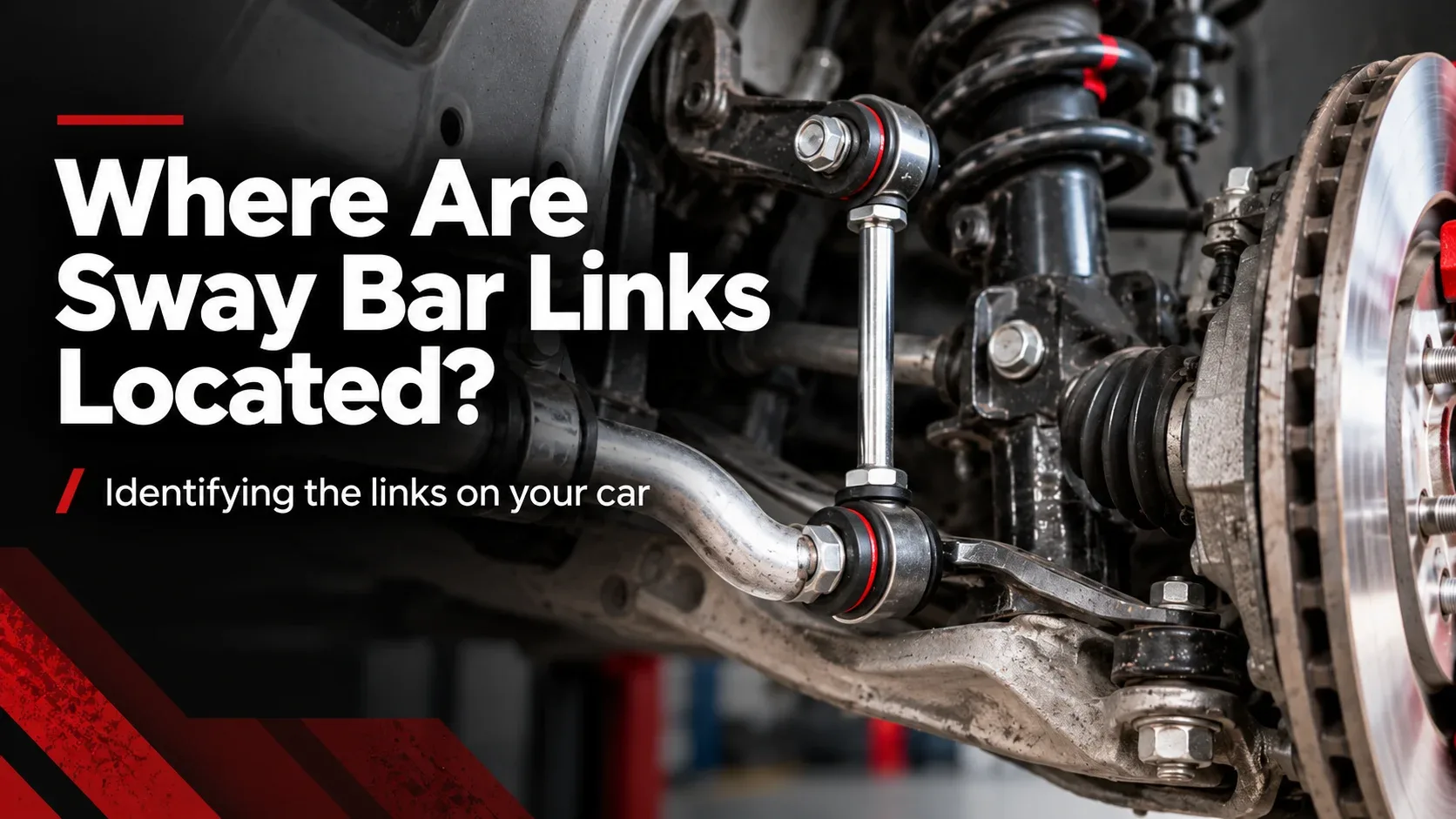
On many passenger vehicles, front sway bar links sit near the front wheels behind the tire, connecting a stabilizer bar end to a strut or lower control arm. Rear links, where fitted, similarly connect the rear stabilizer bar to rear suspension components.
Front sway bar links
Front links may be visible with the wheel removed, depending on wheel clearance and suspension layout. On MacPherson-strut vehicles, one end frequently mounts to a bracket on the strut.
Rear sway bar links
Rear suspension layouts vary widely. Some have short links, some have bushing-type connections, and some vehicles have no separate rear sway bar links.
What Are the Symptoms of Bad Sway Bar Links?
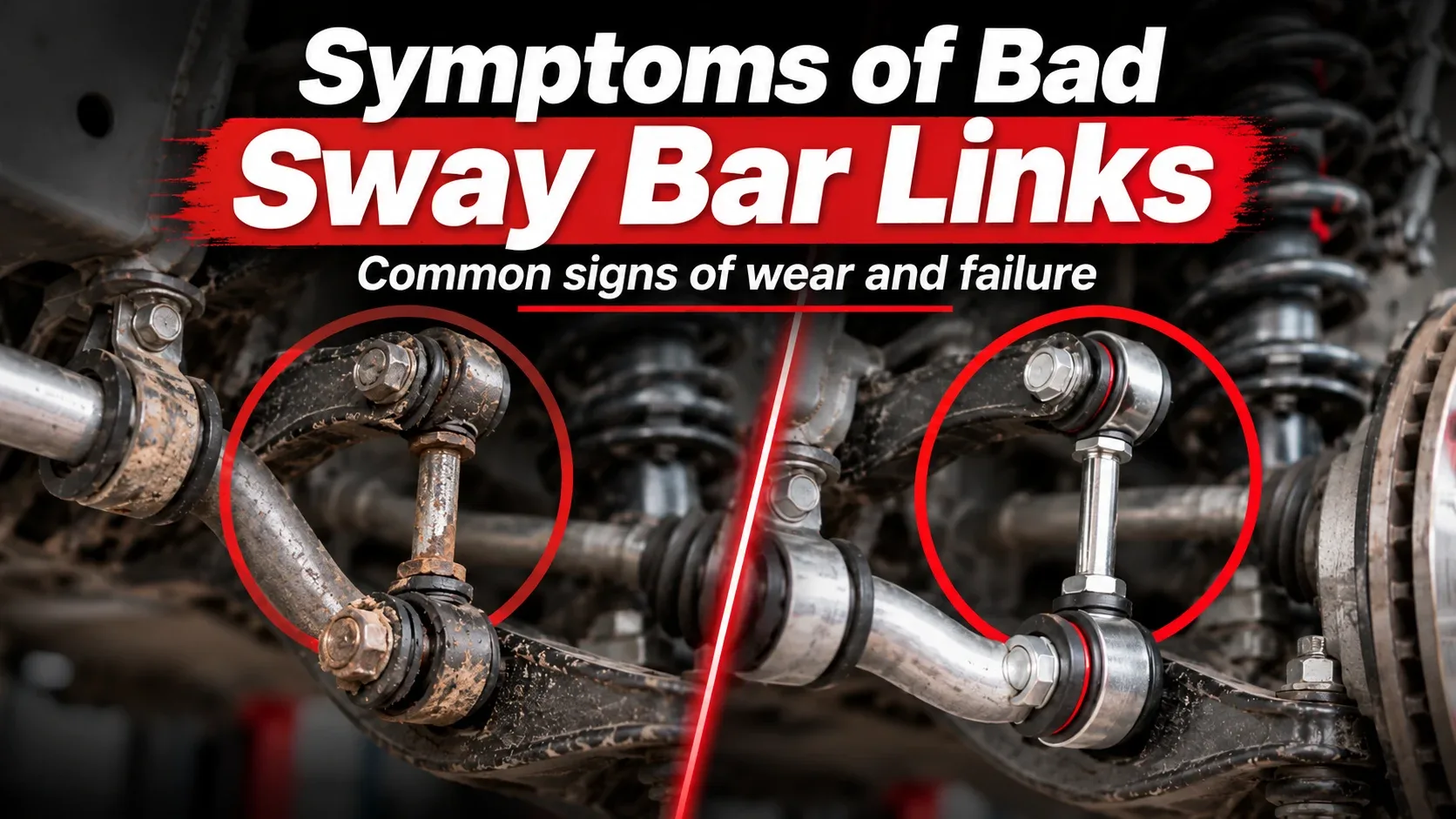
Symptoms vary with the type of failure. A loose joint may make a pronounced noise while a completely disconnected link may affect cornering stability more noticeably.
1. Clunking or knocking over bumps
This is one of the most frequently reported symptoms. You may hear a metallic knock while traveling over potholes, speed bumps, or uneven pavement—sometimes more clearly at low speeds.
2. Rattling from the suspension area
Play in an end-link joint or worn bushing may create a repeated rattle. But loose brake hardware, strut mounts, and other parts can make similar sounds.
3. Increased body roll or an unsettled feeling
If a link breaks or disconnects, the stabilizer bar may contribute less roll resistance on that axle. You may notice more lean in turns or a different response during quick lane changes. The change may be subtle on some vehicles.
4. Visible deterioration
Torn protective boots, missing bushings, bent rods, corrosion, loose nuts, or an obviously separated joint can indicate damage. A torn boot alone does not prove the joint is already loose, but it allows contaminants to enter and warrants closer inspection.
| What you notice | Possible connection | Recommended action |
|---|---|---|
| Clunk on small bumps | Joint or bushing play | Inspect links and nearby suspension parts. |
| Rattle on uneven roads | Loose or worn attachment | Check mounts and fasteners for wear. |
| More lean in a turn | Reduced sway bar effectiveness | Check for disconnected or broken parts. |
| Damaged boot or missing bushing | Contamination or deterioration | Assess the joint and replace if needed. |
Important: Tire vibration, pulling, or uneven tire wear is not a reliable stand-alone indicator of bad sway bar links. Those problems deserve checks of tires, alignment, steering, and other suspension components.
Bad Sway Bar Links vs. Other Suspension Problems
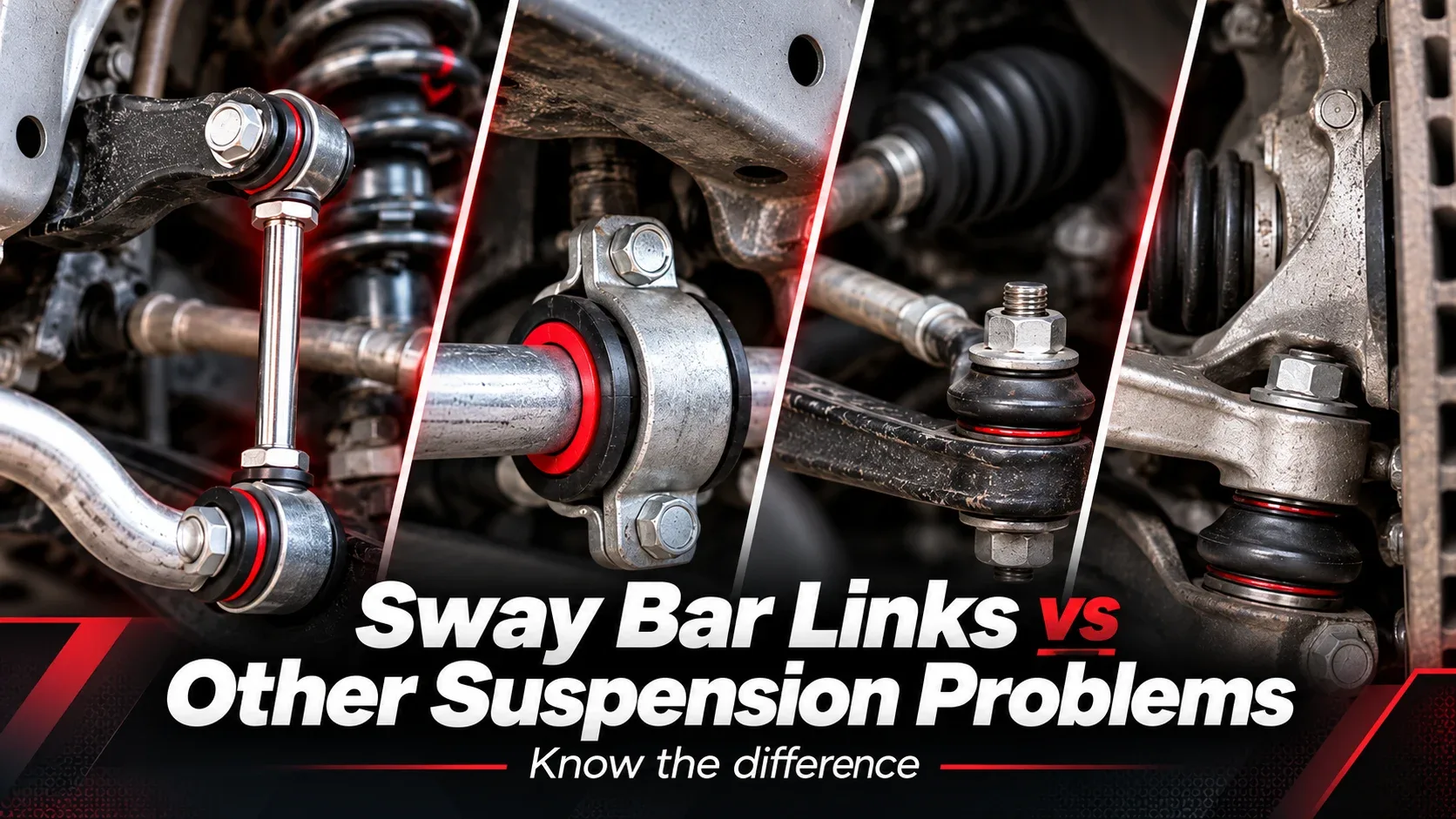
Clunking does not automatically mean a sway bar link has failed. Diagnosing the correct component avoids paying for a repair that does not resolve the original noise.
| Component | Potential signs | How it differs |
|---|---|---|
| Sway bar link | Rattle or clunk over bumps; possible handling change | Connects the bar to the suspension. |
| Sway bar bushing | Knock or squeak near stabilizer bar mounting area | Supports the sway bar against the chassis/subframe. |
| Ball joint | Clunks, looseness, abnormal tire movement | Critical suspension pivot; failure can be dangerous. |
| Tie rod end | Steering looseness, knocking, altered toe | Transmits steering force to the wheel. |
| Strut mount | Knocking or creaking, sometimes during steering | Supports and locates the strut assembly. |
How to Check Sway Bar Links for Wear
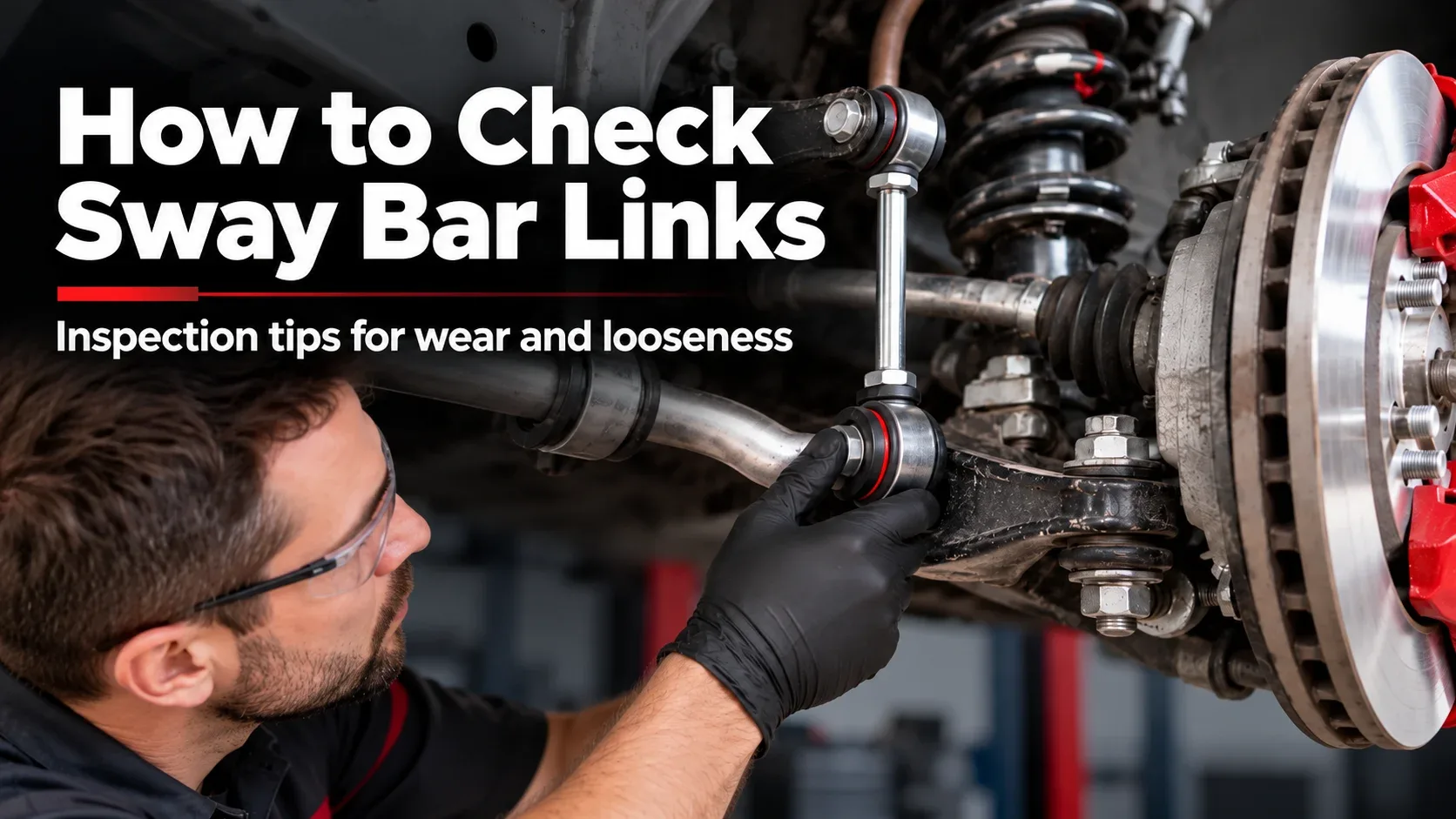
A technician typically combines the driver’s description, a road test when appropriate, and an inspection of the affected suspension. The following is an overview rather than a universal test procedure.
- Identify the noise conditions. Note whether the sound occurs over bumps, during turning, or when crossing uneven surfaces.
- Locate the links. Use the vehicle’s service manual to identify front or rear mounting points.
- Visually inspect the assembly. Look for broken boots, missing bushings, rust damage, bent links, and loose or missing hardware.
- Check for excessive play using the correct procedure. A trained technician may assess joint movement under the suspension loading conditions specified for that vehicle.
- Inspect neighboring components. Check stabilizer bar bushings, struts, ball joints, and other likely sources before confirming a repair.
Can You Drive With Bad Sway Bar Links?

A mildly worn link that only makes noise is not the same as a broken or detached link. However, reduced stabilizer-bar effectiveness can alter handling, particularly in turns and abrupt maneuvers. The car’s behavior depends on its overall suspension design and the exact failure.
Arrange a prompt inspection rather than assuming that a noisy link is harmless. If the vehicle feels unstable, steering behavior changes significantly, a component is hanging loose, or a part could interfere with a wheel or brake line, stop driving in a safe place and seek professional assistance.
Do not treat an unverified clunk as permission to continue driving. Some other faults that produce similar noises—including severely worn ball joints—are more immediately hazardous.
How to Replace Sway Bar Links: General Overview
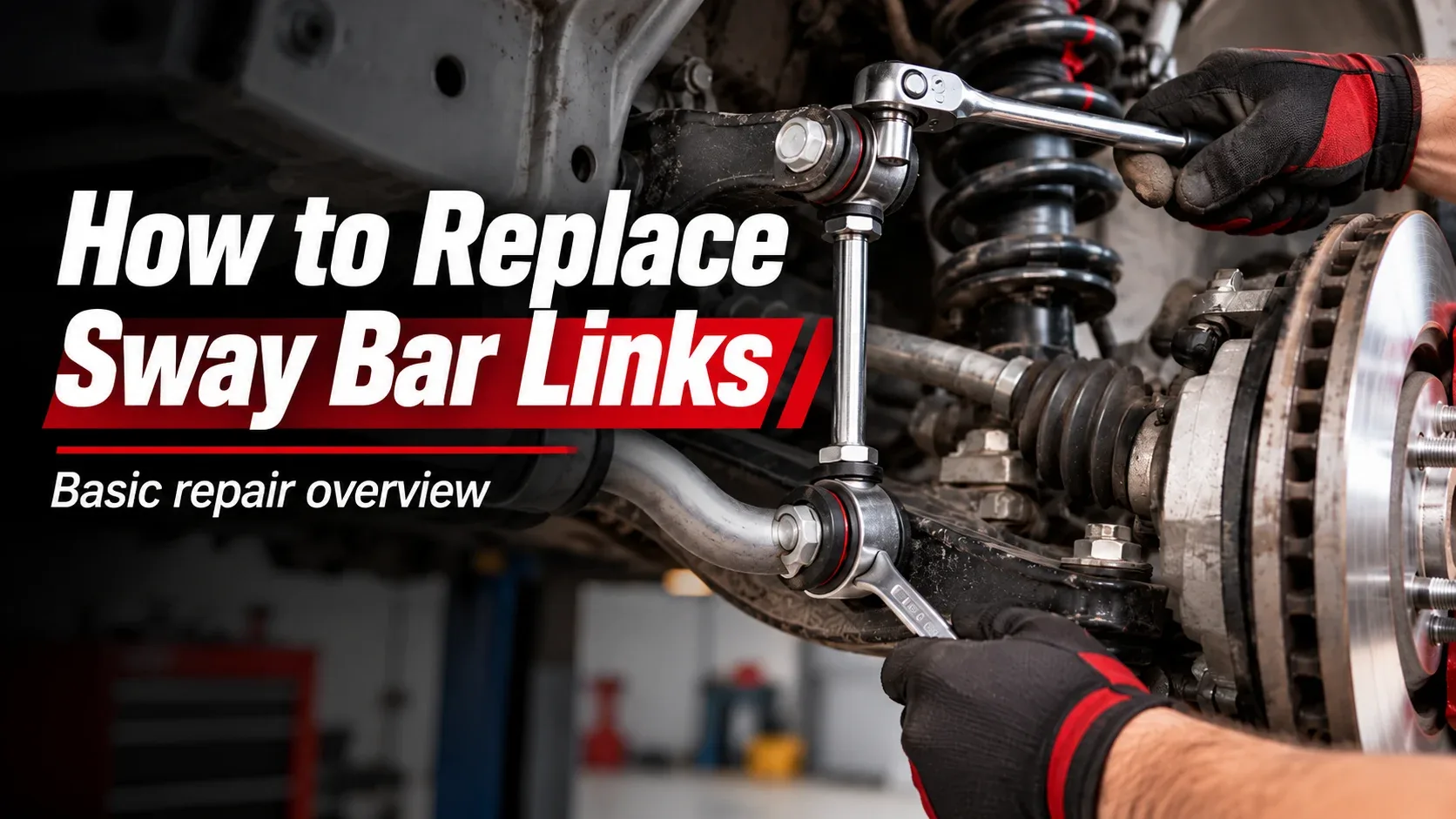
On some cars this is a relatively accessible repair; on others, corrosion or tight clearance makes it much more difficult. The steps below explain the workflow, not a substitute for model-specific service procedures.
Tools and materials commonly involved
Correct replacement links, suitable hand tools, possibly a hex or Torx counterhold, penetrating oil, a torque wrench, and proper lifting/support equipment. Exact tool sizes and replacement hardware vary.
- Verify fitment. Match the part to the vehicle’s year, make, model, trim, axle, and suspension package.
- Prepare safely. Park on suitable level ground, secure the vehicle, and follow manufacturer lifting and suspension-loading instructions.
- Access the link. Locate both mounting points and assess nearby brake hoses, sensor wires, and other parts.
- Remove the old fasteners. Use the correct counterhold or removal procedure. Rusted or seized hardware may require special tools or professional assistance.
- Fit the new link. Ensure the link is correctly oriented and nothing binds or touches moving parts through suspension travel.
- Tighten to specification. Use the factory torque values and specified suspension position; replace single-use fasteners where required.
- Verify the work. Inspect clearance and attachments, reinstall any removed components correctly, and perform an appropriate post-repair check.
How Much Does Sway Bar Link Replacement Cost?
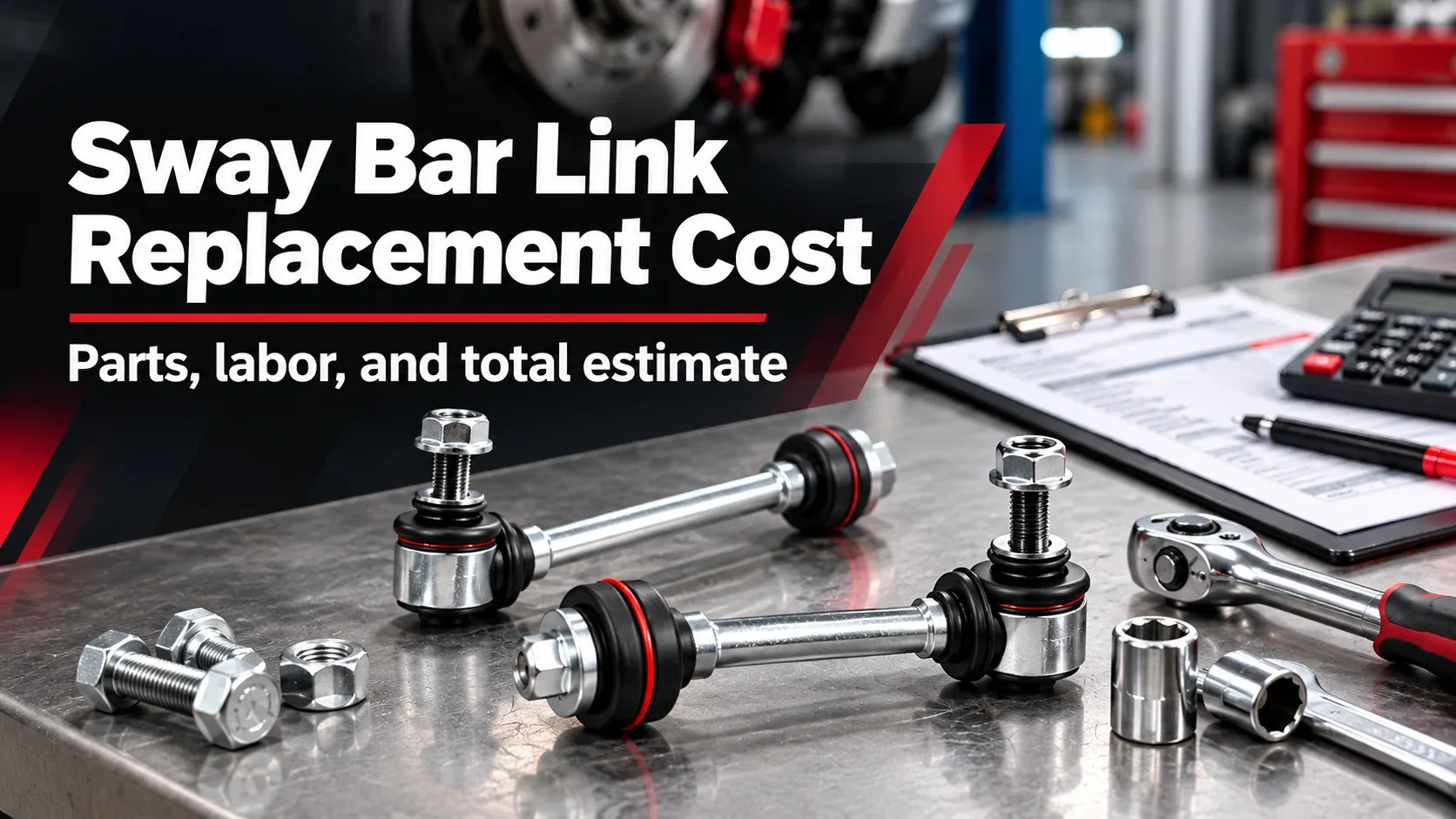
As of September 3, 2026, RepairPal’s US estimate for a stabilizer bar link kit replacement was $131–$185, comprising approximately $69–$94 for parts and $62–$91 for labor. This is an estimate for RepairPal’s defined service, not a universal price per individual link or per axle. It excludes taxes, fees, location adjustments, and additional repairs.
| Estimated cost component | US estimate |
|---|---|
| Parts | $69–$94 |
| Labor | $62–$91 |
| Estimated total | $131–$185 |
Source: RepairPal’s stabilizer bar link kit replacement estimate, updated September 3, 2026. Estimates may change.
Actual quotes depend on the vehicle, part quality, local labor rates, and whether rusted hardware complicates removal. Ask the shop whether the quote covers one link, two links, or a complete kit, and whether additional alignment or suspension work is included.
Should You Replace Both Sway Bar Links at the Same Time?
Replacing a pair on the same axle is a common shop recommendation because both have experienced similar age and road conditions. It may also avoid another repair visit if the opposite link is close to wearing out.
Still, replacement of both is not an absolute mechanical requirement in every situation. If one link is damaged by a specific impact and the other tests good, replacing only the failed side can be reasonable when allowed by the vehicle and parts manufacturer. Ask for the condition of both links to be documented.
How Long Do Sway Bar Links Last?
There is no single mileage at which sway bar links must be replaced on every car. Some remain serviceable for many years; others fail earlier because of pothole impacts, moisture, salt exposure, worn protective boots, or component quality.
A link should be evaluated based on condition and the manufacturer’s inspection criteria, not replaced solely because the odometer has reached an arbitrary number.
Types of Sway Bar Links for Cars
Ball-joint-style links
Common on many modern vehicles, these use small articulated joints to accommodate changing suspension angles. Damaged boots or internal joint play may lead to wear and noise.
Bushing-style links
These designs use rubber or polyurethane bushings, washers, and mounting hardware. Deteriorated or missing bushings can create clearance and noise.
Front and rear designs
Front and rear sway bar links are not automatically interchangeable, nor are left and right links on every car. Confirm part number, length, end fitting, and any handed design before ordering.
When searching for sway bar links for a car, look beyond a general product description: suspension package, trim, drivetrain, and model year can change the correct fit. Retail listings for sway bar links for cars should be checked against the vehicle manufacturer’s fitment data or an exact OEM cross-reference.
How to Help Sway Bar Links Last Longer
- Slow appropriately for potholes, sharp road impacts, and rough surfaces.
- Have new clunks or steering/suspension changes checked rather than waiting for a larger failure.
- Include link boots, joints, and mounts in routine suspension inspections.
- Use parts specified for the vehicle and follow installation procedures and torque settings.
- After a curb strike or major impact, have the suspension checked even if the car still drives.
Sway Bar Links vs. Tie Rods and Ball Joints
Although all three may be discussed during a steering and suspension inspection, they perform different jobs:
- Sway bar links: Connect the anti-roll bar to suspension parts and transfer motion and force.
- Tie rods: Connect steering-system movement to the steering knuckles to turn the road wheels.
- Ball joints: Provide pivoting connections that permit controlled suspension and steering movement, depending on design.
This distinction matters because replacing a sway bar link cannot correct a failed tie rod or ball joint—and the latter faults may create serious safety hazards.
Frequently Asked Questions About Sway Bar Links
Are sway bar links necessary?
They are required for a vehicle’s stabilizer bar system to operate as designed. A missing or disconnected link can reduce roll control on the affected axle.
Can bad sway bar links make a clunking noise?
Yes. Loose joints or worn bushings can knock as the suspension moves, especially on uneven roads. Other suspension parts can produce the same sound.
Can worn sway bar links affect steering?
They can change the vehicle’s handling feel and roll behavior, but they are not primary steering linkages. Significant steering looseness should prompt an inspection of steering components too.
What happens if a sway bar link breaks?
The sway bar may no longer function as intended on that side, affecting roll control. A detached piece may also interfere with nearby components. Have the damage inspected promptly.
Can bad sway bar links cause vibration?
They may create noises or looseness, but a persistent steering-wheel or road-speed vibration is more often investigated through tires, wheels, brakes, and other components. Do not assume the link is responsible.
Do you need an alignment after replacing sway bar links?
Usually not after a straightforward link-only replacement because wheel alignment settings are generally not altered. If other suspension parts were loosened or the car has tire wear, pulling, or other symptoms, ask whether an alignment check is needed.
Can I replace just one sway bar link?
Sometimes. Replacing both on an axle is commonly recommended when age or wear is similar, but the right choice depends on inspection findings and manufacturer guidance.
Are front and rear sway bar links the same?
Not necessarily. They may differ in length, geometry, attachments, and part number. Some cars do not use separate links at the rear.
How can I choose the correct sway bar links for my car?
Check the vehicle’s year, make, model, trim, axle, and suspension configuration, ideally against OEM fitment information. Verify the specific part number before purchase.
Final Thoughts
Sway bar links are small parts with a meaningful role in the suspension’s roll-control system. A clunk over bumps can signal a worn link, but a complete inspection is necessary to distinguish it from worn bushings, strut mounts, ball joints, or steering components.
If you hear recurring suspension noise or feel that your vehicle handles differently, have it checked. A confirmed diagnosis helps you choose the correct repair, understand the estimate, and avoid replacing good parts unnecessarily.
- MOOG — Symptoms of Bad Sway Bar Links (manufacturer guidance on functions and common symptoms).
- RepairPal — Stabilizer Bar Link Kit Replacement Cost (estimate updated September 3, 2026).
Editorial note: This article provides general educational guidance, not a vehicle-specific diagnosis or repair manual. Confirm inspection methods, specifications, and procedures using your vehicle manufacturer’s service information.