A pressure washer can remove stubborn grime from concrete, outdoor furniture, vehicles, and equipment. But even a capable machine is only as dependable as its water supply, spray accessories, and pressure power washer hose. Choosing a hose with the wrong fittings, pressure rating, or dimensions can lead to leaks, poor performance, and serious hazards.
In this guide, you’ll learn how a pressure washer works, what makes a high-pressure hose different from a garden hose, how to compare hose materials and fittings, and what to check before replacing a worn hose. You’ll also find straightforward maintenance advice and safety precautions.
Why Choosing the Right Pressure Washer Hose Matters
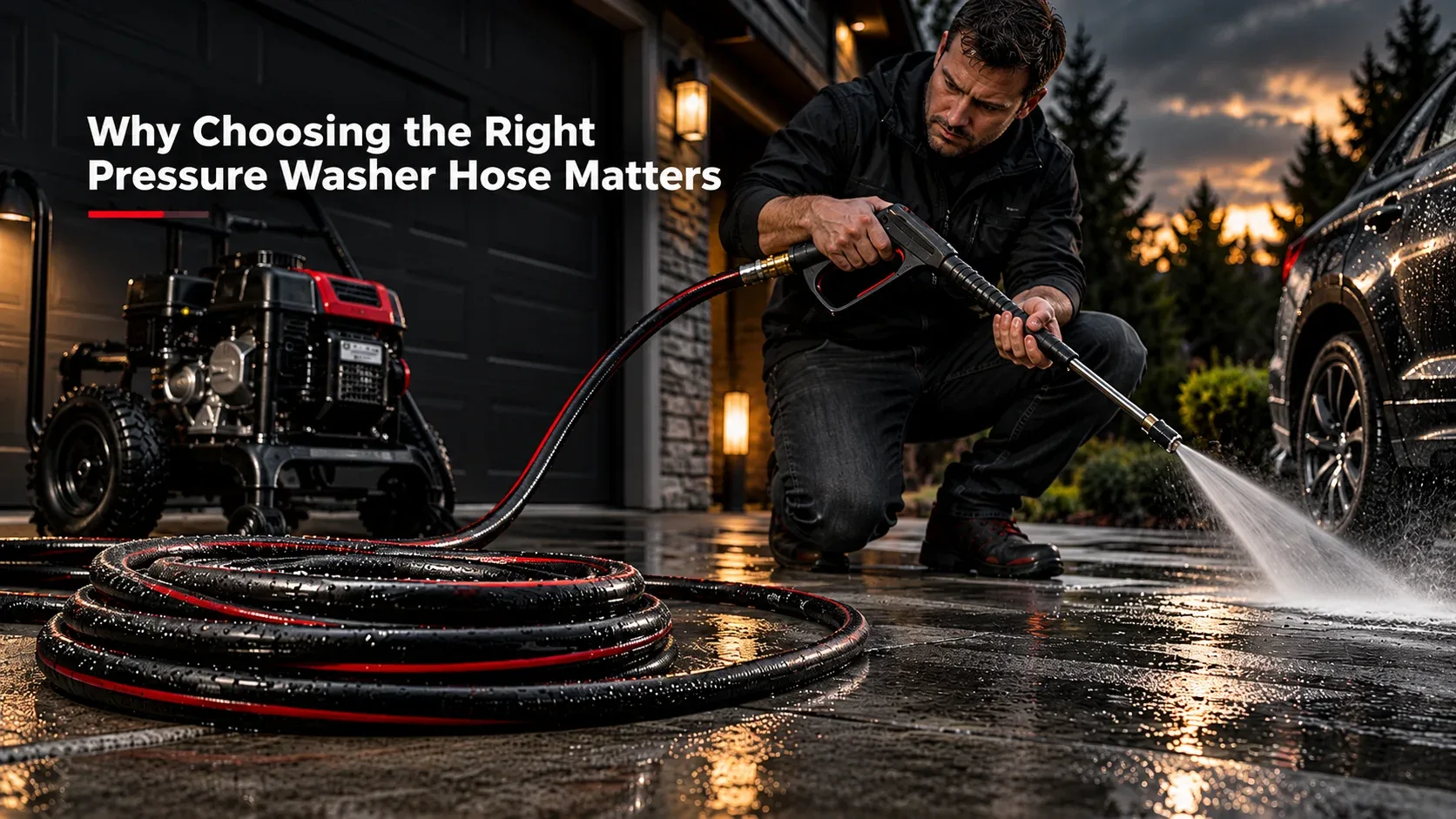
Imagine Michael, a homeowner preparing to wash his driveway on a Saturday. As he unwinds the hose, he finds a deep kink and notices moisture around the spray-gun connection. Should he tighten the fitting, buy an extension, or replace the hose? The answer depends on what is actually damaged.
The hose carries pressurized water from the machine to the operator’s spray gun. It must withstand the equipment’s operating conditions while staying manageable around cars, garden edges, corners, and rough pavement. A suitable hose helps avoid unnecessary restrictions and damaged connections; it does not increase the washer’s rated pressure or magically improve cleaning power.
A high-pressure hose with cuts, bulges, exposed reinforcement, a damaged jacket, or suspected structural damage should not be used. Do not patch it with tape, clamps, or ordinary plumbing repair parts. Replace the hose assembly with a suitable approved replacement.
What Is a Pressure Power Washer?
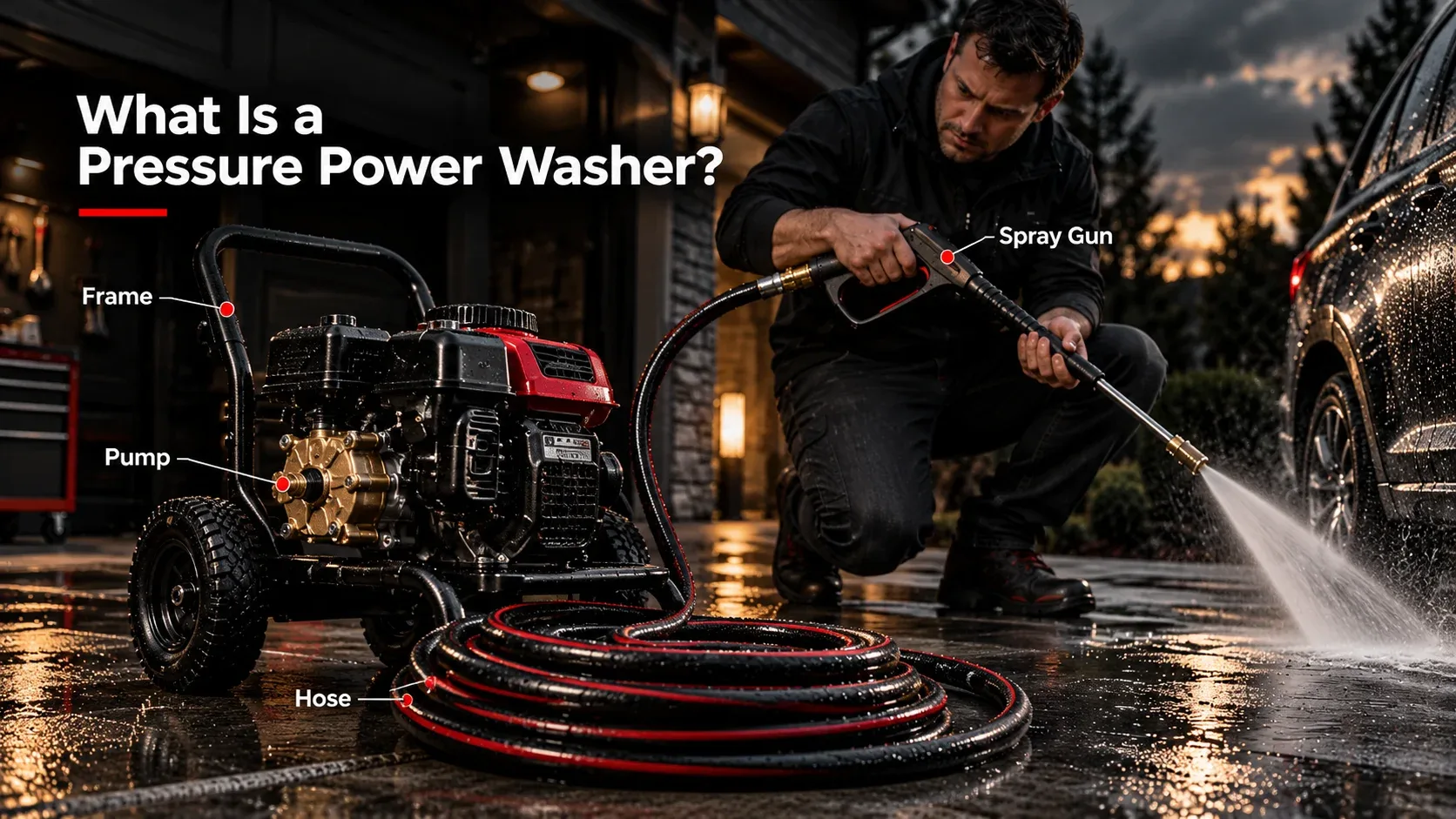
A pressure washer is a cleaning machine that uses a pump to supply water at elevated pressure. A motor or engine powers the pump, and a spray gun and nozzle allow the operator to control the outgoing jet. Unlike ordinary hose rinsing, the high-energy water spray can help dislodge built-up dirt, mud, moss, and other debris when used on appropriate surfaces.
The terms pressure washer and power washer are commonly used interchangeably. Some manufacturers and professionals use power washing specifically for equipment that heats the cleaning water. Product specifications are more useful than the name when comparing machines.
Main Components of a Pressure Washer
Motor or engine
Provides the mechanical power that drives the pump.
Water pump
Moves the incoming water and creates the flow and pressure needed by the system.
High-pressure hose
Connects the washer outlet to the spray gun while handling rated operating conditions.
Spray gun and wand
Let the operator control the flow and aim the spray safely.
Nozzle
Shapes the jet into a selected spray pattern, influencing coverage and intensity.
Water inlet and filter
Receive water from a suitable supply and help keep larger debris out of the pump.
How Does a Pressure Washer Work?
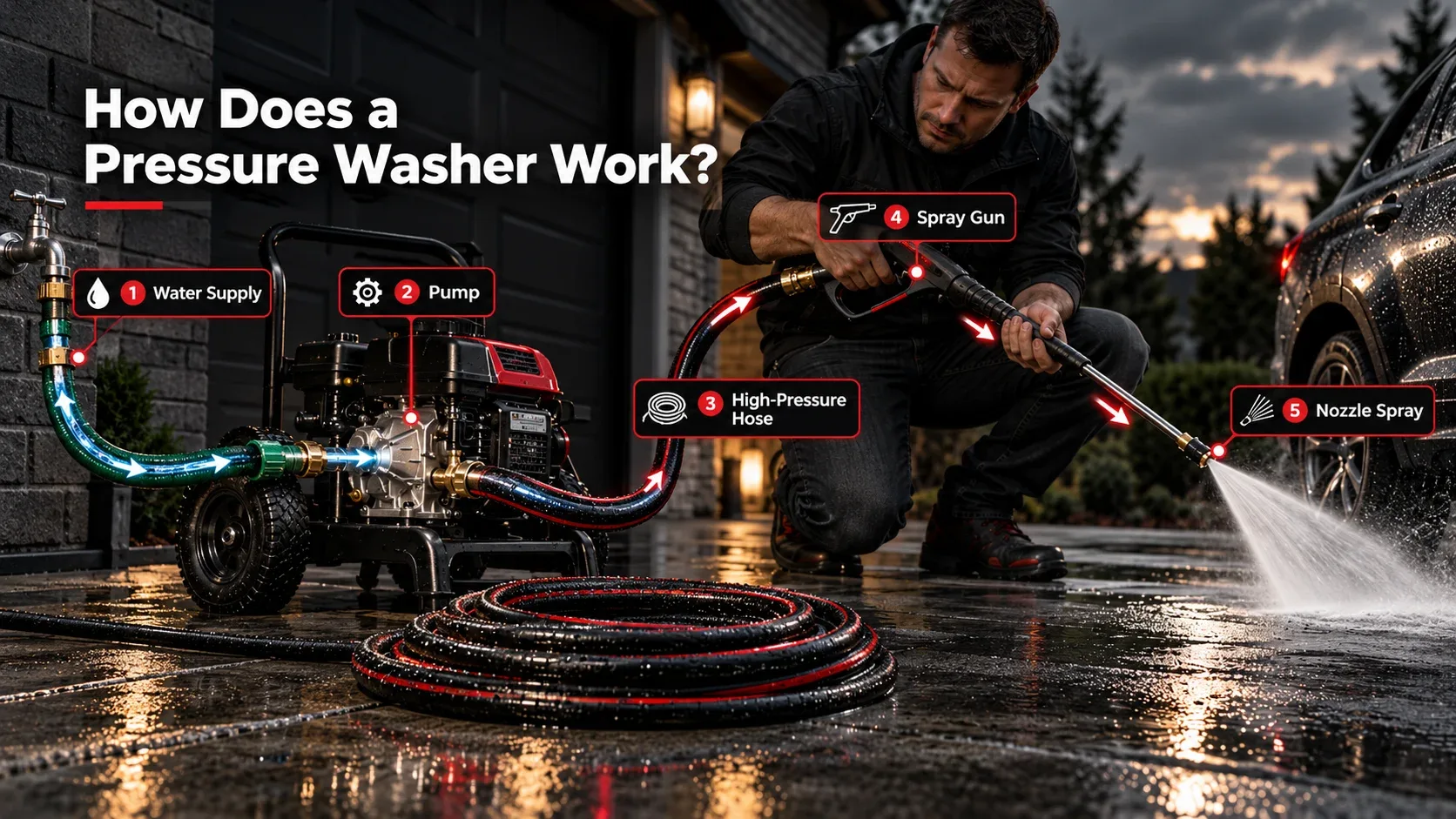
First, water enters through the supply hose. The pump, driven by an electric motor or gasoline engine, delivers the flow toward the high-pressure outlet. When the spray gun is activated, water passes through the hose, gun, wand, and nozzle. The nozzle creates a controlled restriction that contributes to the working pressure and forms the cleaning jet.
Pumps and unloader arrangements differ by model. Many machines manage pressure by diverting or regulating water when the trigger is released. The operating manual explains whether the washer has limits on how long it can remain running without spraying.
Why the Hose Matters in This System
A high-pressure hose is not just a convenient extension. Its internal diameter, length, material, and fittings are part of the water-delivery path. An excessively long or narrow hose can cause additional friction losses, while an incorrect or poorly sealed coupling can leak.
What Is a Pressure Power Washer Hose?
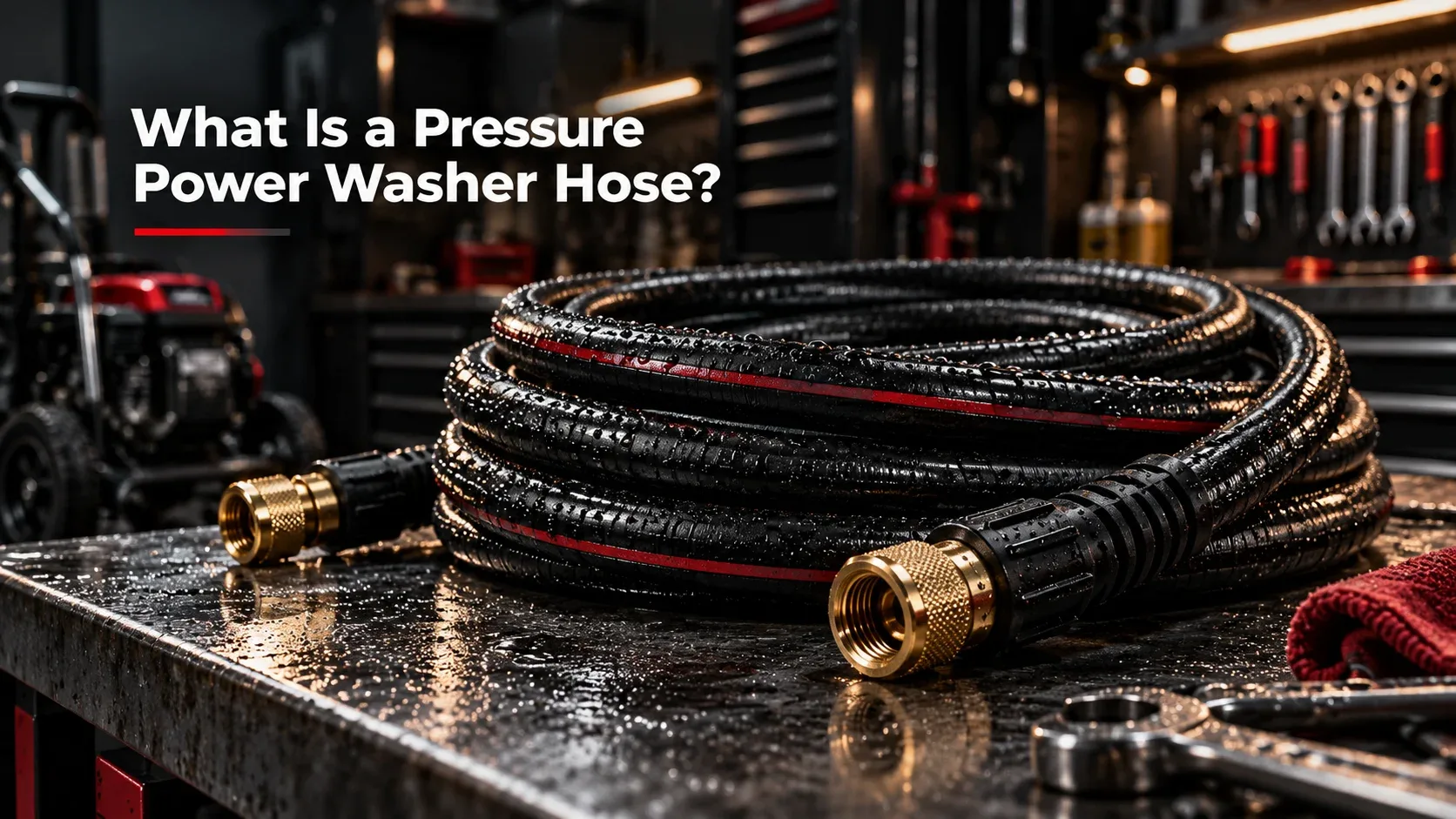
A pressure power washer hose is a purpose-built high-pressure hose that transfers water from a pressure washer’s discharge outlet to its spray gun. It commonly includes an inner tube, one or more reinforcing layers, and an outer protective cover. Construction varies considerably by manufacturer and duty level.
When comparing replacements, pay attention to the rated working pressure, permissible temperature, inside diameter, overall length, end fittings, and explicit compatibility with your pressure washer model. Do not treat a published burst-pressure figure as permission to operate above the hose’s working-pressure rating.
High-Pressure Hose vs. Garden Hose
| Feature | High-pressure washer hose | Garden supply hose |
|---|---|---|
| Typical position | Between washer outlet and spray gun | Between water tap and washer inlet |
| Design purpose | Carry the washer’s rated discharge pressure | Deliver inlet water at normal supply pressure |
| Connections | Machine-specific pressure-rated fittings | Water-supply fittings |
| Interchangeable? | No. A standard garden hose must not replace a high-pressure discharge hose. | |
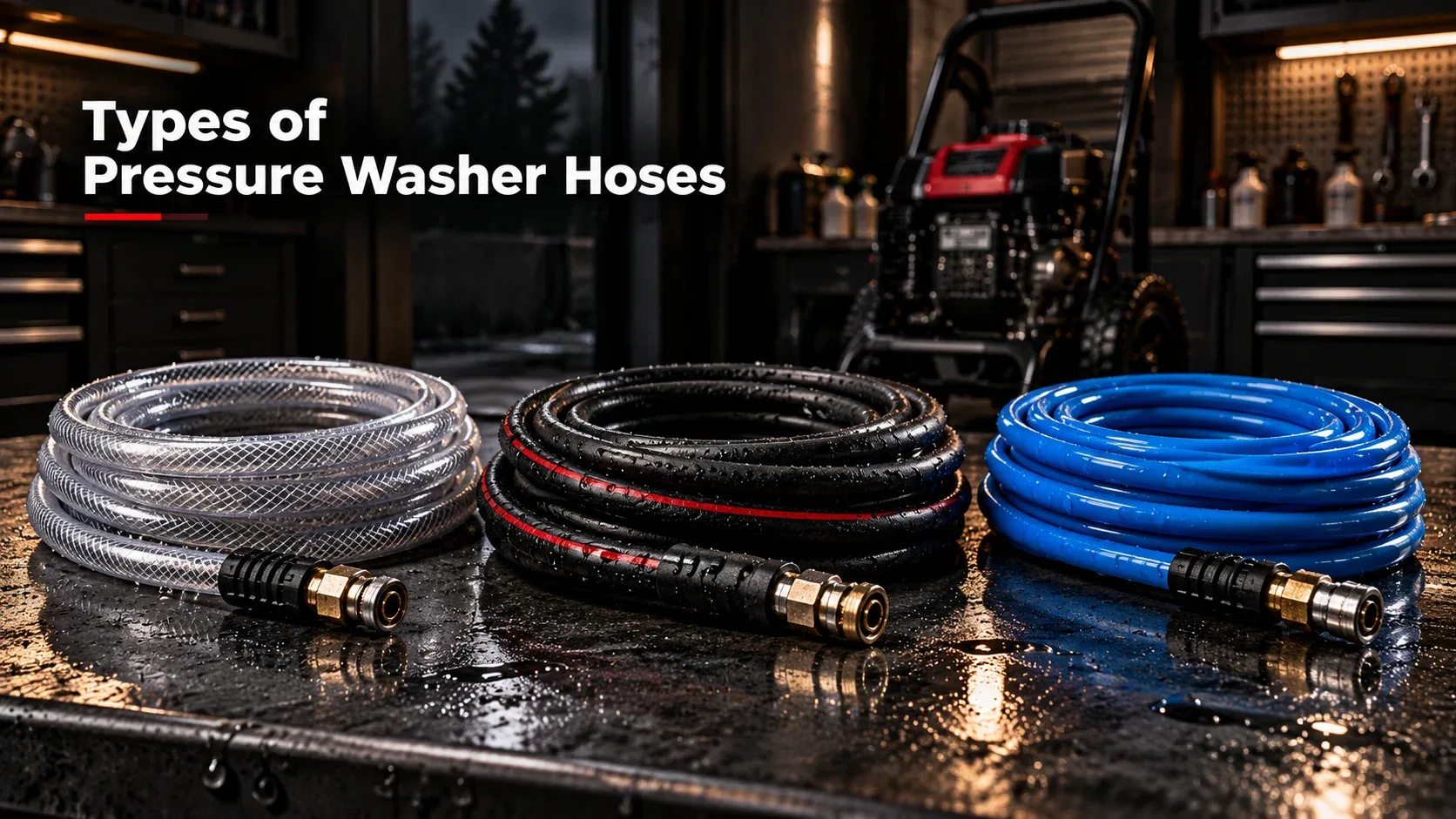
Types of Pressure Washer Hoses
Hoses are often described by their outer material, but their complete construction and rating matter more than a simple material label. A reinforced hose built for industrial service may perform very differently from a light-duty hose with a similar-looking outer cover.
| Common type | Potential advantages | Important limitations | Consider when… |
|---|---|---|---|
| PVC or thermoplastic-based | Often economical and relatively lightweight | Some models can feel stiff or kink easily | Choosing a compatible hose for occasional home use |
| Rubber-covered | Often flexible and robust for repeated handling | Can be heavier and harder to move | Working frequently around vehicles or large areas |
| Polyurethane-covered | Can offer good abrasion resistance in suitable designs | Properties vary; the cover alone does not establish the pressure rating | Comparing higher-quality or application-specific hoses |
Practical rule: Choose by verified specifications and handling needs, not by color or a claim that one material is always best. For hot-water equipment, confirm that the hose and all fittings are rated for the actual operating temperature.
How to Choose the Correct Hose Size and Length
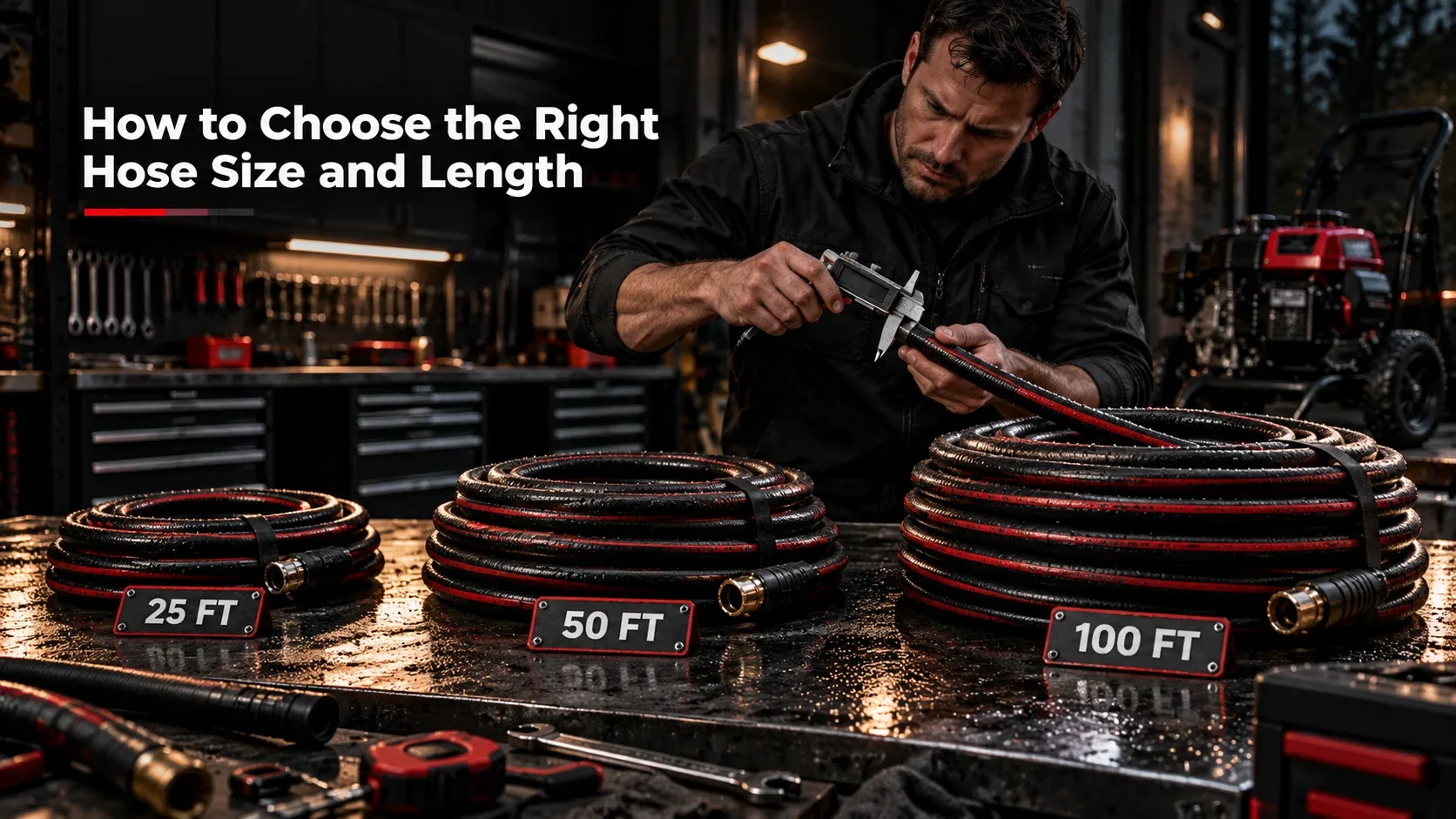
A longer hose makes it easier to walk around a driveway or vehicle without dragging the machine behind you. But extra length also increases frictional resistance, especially with smaller internal diameters and higher water-flow rates.
1. Check Internal Diameter
Common replacement hoses are marketed in sizes such as 1/4 inch, 5/16 inch, and 3/8 inch, but not every size suits every washer. Check the existing hose specification and the equipment manual. An adapter does not make an incompatible diameter or pressure rating appropriate.
2. Choose a Practical Length
A 25-foot hose may be convenient for smaller projects. A 50-foot hose gives more walking range, and longer runs can help on larger properties. The best option is the shortest practical length approved for your machine and task.
3. Verify Pressure and Temperature Ratings
The new hose’s rated working pressure must meet or exceed the pressure required by the machine manufacturer. Temperature ratings must also cover the application. When uncertain, use a genuine or expressly approved compatible hose assembly.
4. Match Both End Connections
Inspect the machine outlet and spray-gun inlet; do not assume they accept the same connector type. Read model-specific fitting information rather than estimating dimensions by eye.
Michael first records the model number printed on his pressure washer. He then checks the manual for the original hose’s length, fittings, and working rating. This gives him a reliable specification to shop against instead of guessing from photos.
Pressure Washer Hose Fittings and Connections
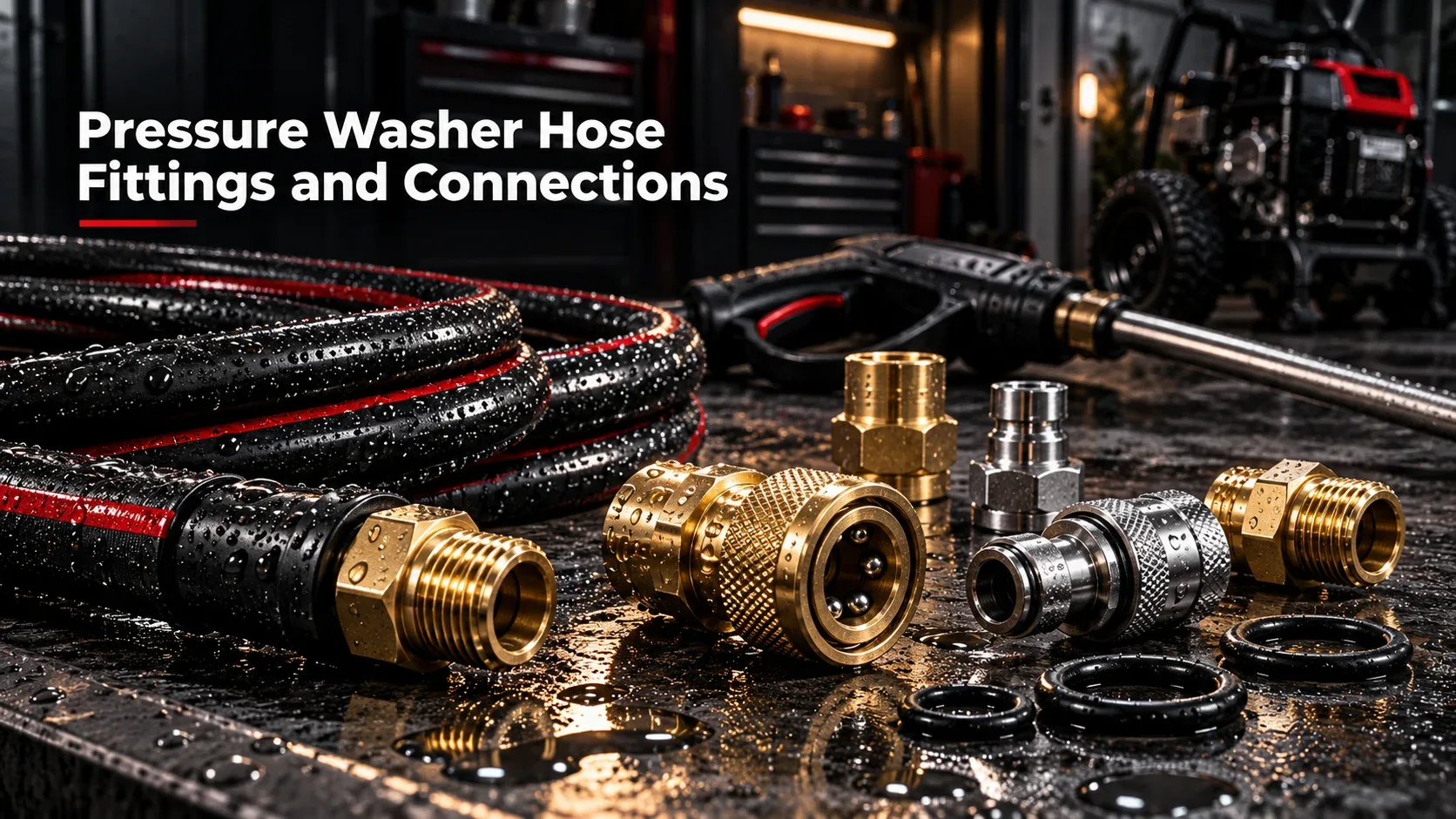
Connection mismatches are a common reason a replacement hose cannot be installed or leaks after installation. A fitting must have the right style, dimensions, sealing surfaces, and pressure rating.
M22 Threaded Connections
Many consumer machines and accessories use M22-style threaded couplings. However, some have different internal stem dimensions, often described as 14 mm or 15 mm. Matching the outer thread alone does not guarantee an effective seal.
Quick-Connect Couplings
Quick-connect systems can make attachment and removal more convenient. Match the plug, socket, connection size, pressure rating, and intended equipment. A loose or almost-fitting quick connector is not acceptable.
O-Rings and Seals
Some leaks originate at damaged, missing, or incorrectly fitted seals rather than the hose body. Replace a seal only with the manufacturer-specified type after shutting down and completely depressurizing the system.
If the fitting will not seat correctly, stop. Cross-threading or mismatched adapters can damage parts or allow connections to separate under pressure.
Electric vs. Gas Pressure Washers
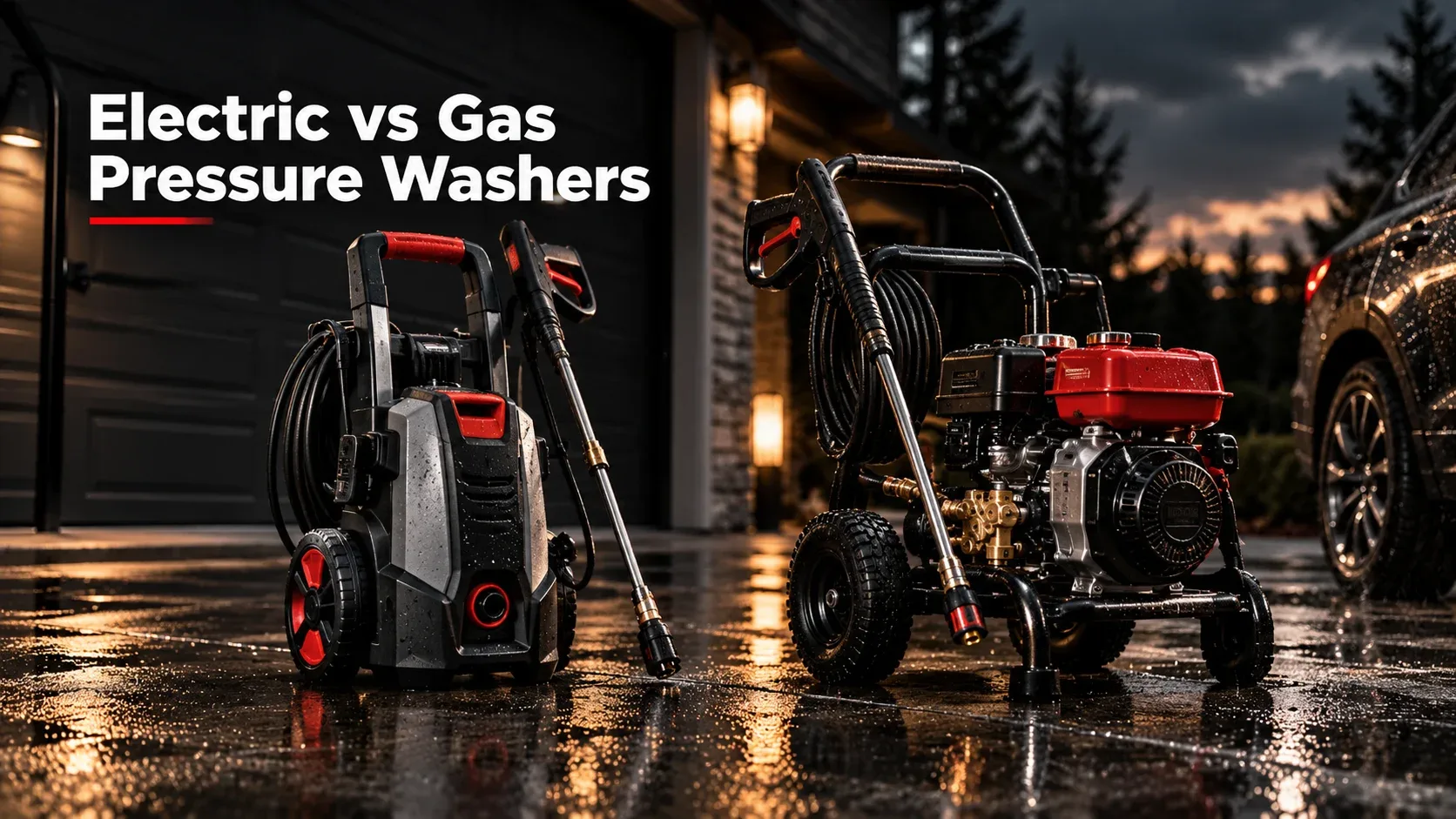
Electric and gasoline pressure washers use the same basic cleaning principle, but differ in operating requirements, maintenance, portability, and typical applications. Hose selection still depends on the individual machine—not simply its power source.
| Factor | Electric pressure washer | Gas pressure washer |
|---|---|---|
| Power | Electric motor; needs an appropriate electrical supply | Gasoline engine; operates independently of a power socket |
| Common tasks | Home patios, outdoor furniture, light-to-moderate jobs | Frequent or demanding outdoor cleaning, subject to machine rating |
| Noise / exhaust | Generally quieter; no on-site engine exhaust | Typically louder; produces hazardous exhaust |
| Maintenance | Usually fewer engine-related maintenance steps | Engine oil, fuel and engine servicing as specified |
| Hose choice | Match exact model specifications | Match exact model specifications |
Gas-powered units must never be operated in a garage, house, or other enclosed or partially enclosed area where carbon monoxide can accumulate. Electric units require close attention to outdoor electrical safety and the manufacturer’s cord and outlet requirements.
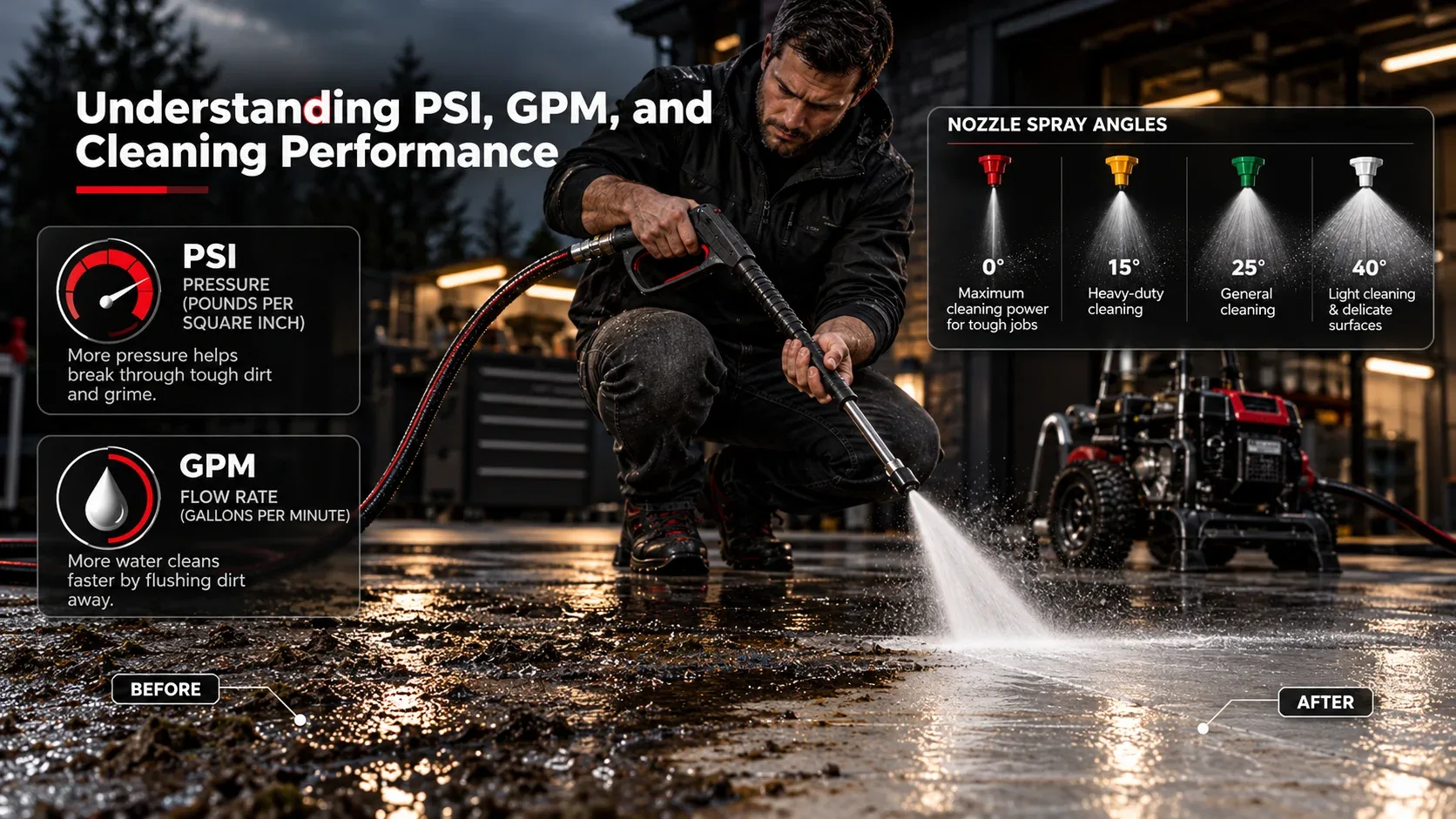
Understanding PSI, GPM, and Cleaning Performance
Two numbers appear repeatedly in pressure washer specifications:
PSI
Pounds per square inch. A pressure measurement relevant to the force and intensity of the water jet.
GPM
Gallons per minute. A measure of how much water the machine delivers, affecting rinsing and debris removal.
Pressure and flow work together. High pressure alone does not guarantee that a machine will clean every surface more efficiently. Nozzle shape, distance, surface condition, chemistry, and water temperature also affect results. Manufacturers sometimes use a PSI × GPM figure as a broad cleaning-capacity comparison, but it is not a universal performance rating.
Why Nozzle Choice Matters
A narrow jet concentrates the water over a smaller area, increasing the risk of gouging wood, damaging paint, or injuring a person. Wider fan patterns distribute the spray over a larger area. Start with the lowest suitable pressure and least aggressive approved nozzle, keep an appropriate distance, and test an inconspicuous area.
Do not use a zero-degree pinpoint nozzle on delicate materials or people. For automotive finishes, follow the vehicle and washer manufacturers’ advice rather than relying on a single supposedly safe PSI number.
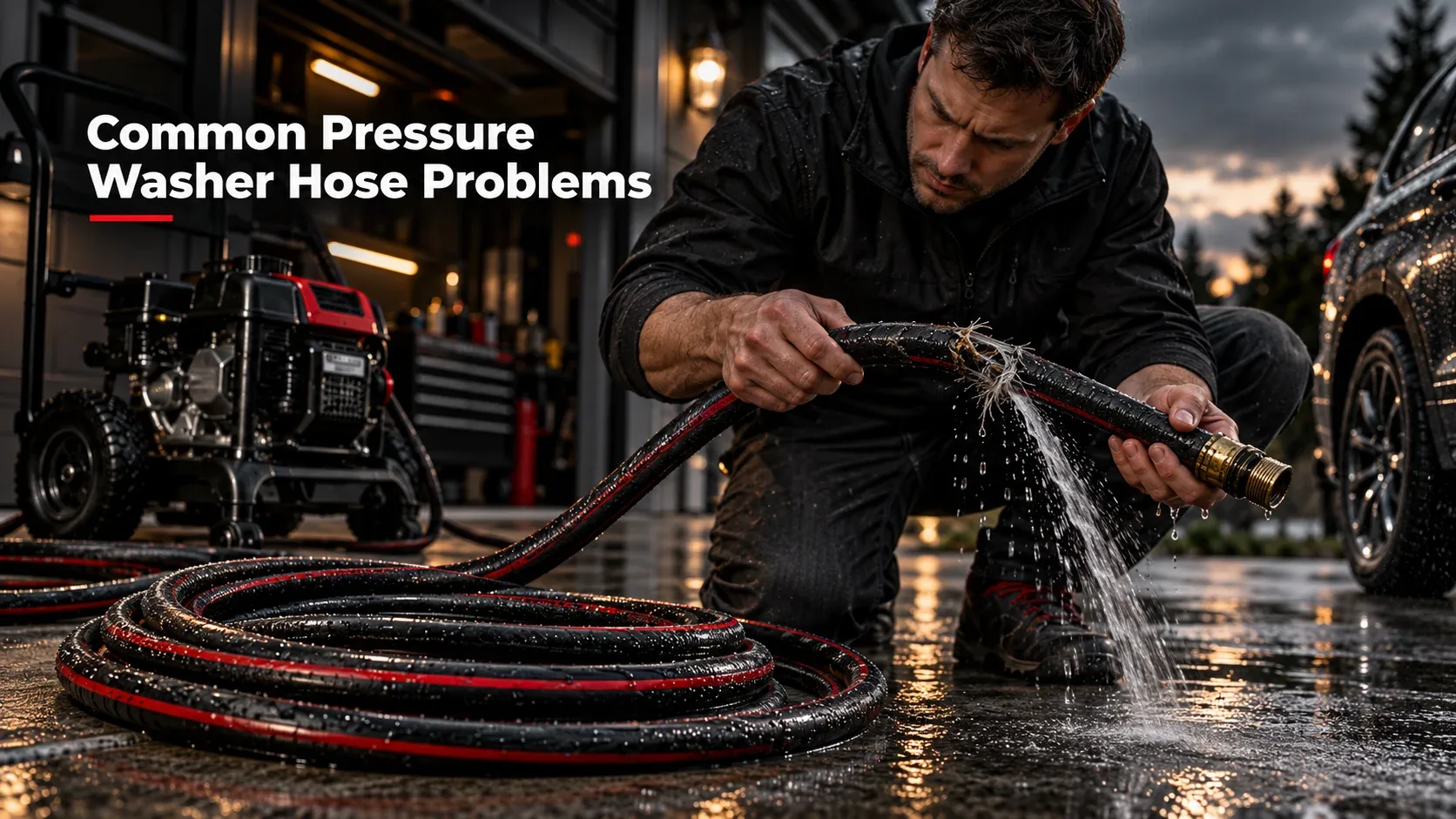
Common Pressure Washer Hose Problems
Not every weak spray or drip means the hose itself is defective. Diagnose by observing symptoms only while following safe inspection procedures. Never touch or search for a suspected high-pressure leak while the system is pressurized.
| Symptom | Possible cause | Safer next step |
|---|---|---|
| Leak at connector | Loose or incompatible fitting; damaged seal | Shut off, isolate and depressurize; inspect and replace approved seals or fittings as instructed |
| Bulge, cut or exposed reinforcement | Physical hose damage | Stop using the hose and replace the rated assembly |
| Persistent severe kinks | Damage, poor hose routing or unsuitable material | Inspect when depressurized; replace if damaged |
| Weak cleaning spray | Insufficient inlet water, clogged nozzle, restrictive hose or pump issue | Check water supply and manufacturer troubleshooting steps with equipment safely shut down |
| Connection will not seat | Wrong size or incompatible fitting | Verify exact connector standards; do not force it |
For recurring pressure fluctuations or unexplained leaks after basic safe checks, consult the manufacturer or a qualified repair technician.
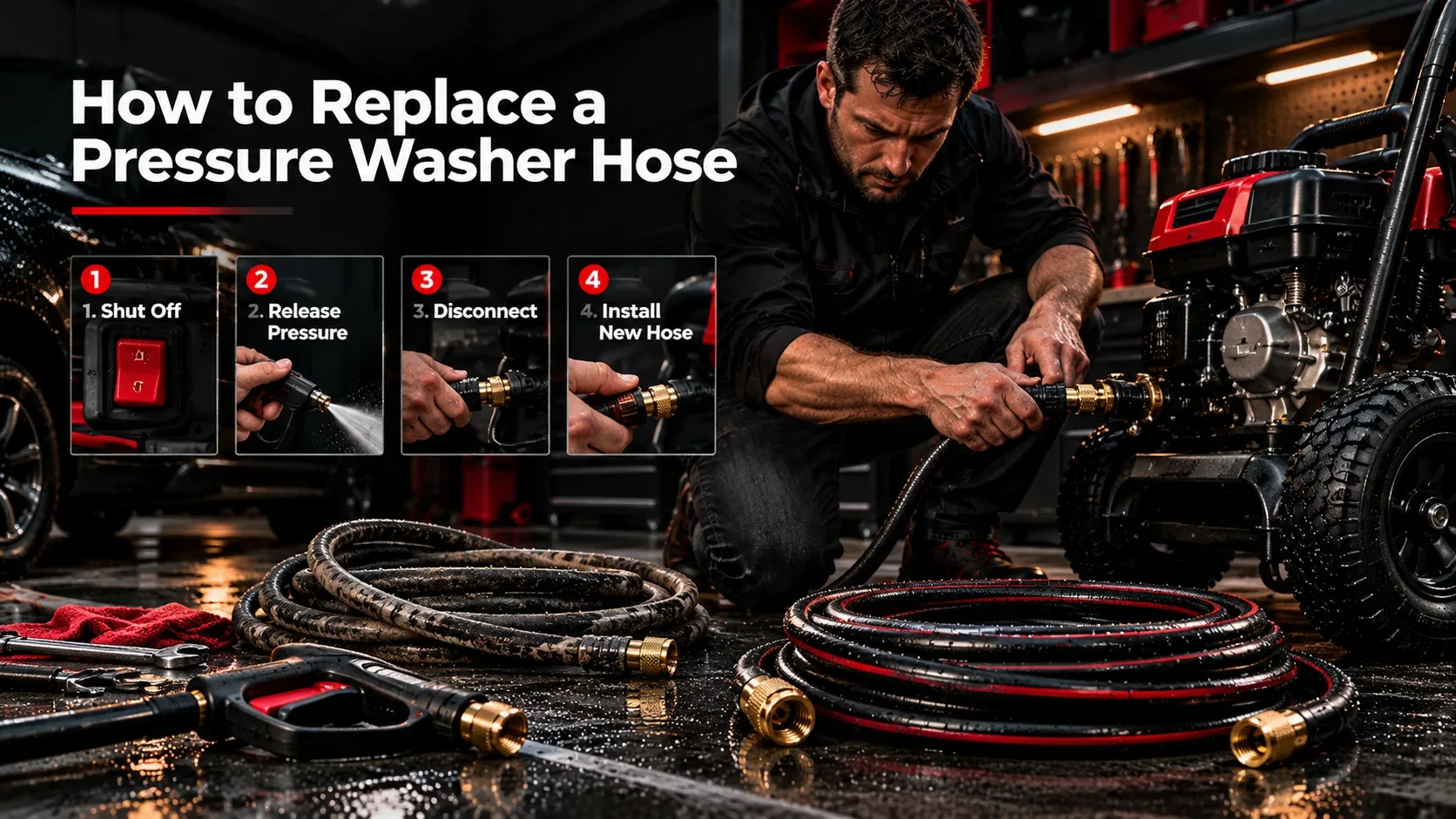
How to Replace a Pressure Washer Hose Safely
If the high-pressure hose is damaged, replacement is generally safer than attempting a field repair. Exact procedures differ by machine, so the model’s instructions take priority over this general overview.
- Identify the replacement: Record the washer model number and verify required pressure rating, temperature rating, hose dimensions, and both connector types.
- Shut the washer down: Switch off the unit and disconnect or isolate its power source as instructed; shut off the inlet water.
- Relieve trapped pressure: Follow the manufacturer’s depressurization procedure before attempting any disconnection. Never assume the hose is depressurized merely because the motor stopped.
- Inspect the connections: Check the machine outlet and gun inlet for damage, contamination, or missing specified seals. Do not continue if components are damaged.
- Install the compatible hose: Fit the approved hose using the manufacturer’s stated attachment method and torque instructions, if any. Avoid twists, tight bends and contact with sharp or hot surfaces.
- Perform the prescribed start-up check: Re-establish water supply, purge air, and check operation in the sequence specified by the manual. Keep people clear and never use hands to locate pressurized leaks.
A pressurized water jet can penetrate skin and cause severe tissue damage even when the visible puncture looks small. If an injection injury is suspected, seek immediate emergency medical care and explain that a high-pressure washer was involved.
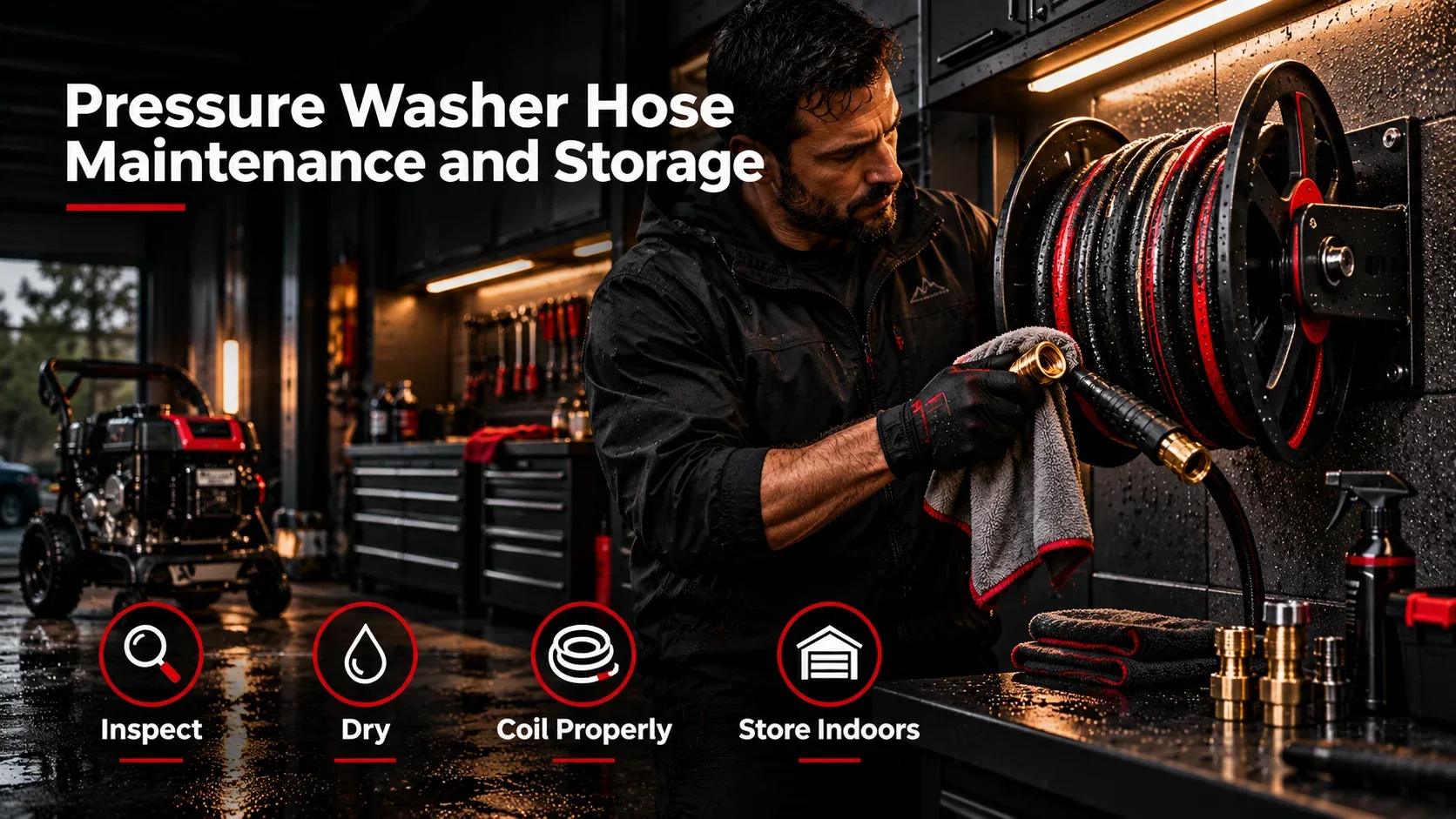
Pressure Washer Hose Maintenance and Storage
Routine inspection can help you spot wear before the next cleaning job. It also reduces avoidable damage from dragging, sharp corners, improper storage, and freezing weather.
- Before every use: Inspect the entire hose and fittings for cuts, abrasions, bulges, kinks, corrosion, or loose connections.
- During use: Keep the hose away from vehicle tires, sharp edges, hot exhaust parts, and moving machinery.
- After use: Shut down and depressurize according to the manual; clean and drain components as specified.
- For storage: Coil loosely without sharp bends, or use a compatible reel that maintains the required bend radius.
- In cold weather: Follow the washer manufacturer’s winterization and freeze-protection instructions for the pump, hose, and accessories.
There is no single reliable lifespan for every pressure washer hose. Frequency of use, construction, temperature, abrasion, pressure cycles, and storage conditions all affect its condition. Replace on the basis of damage and manufacturer requirements rather than assuming an arbitrary number of years.
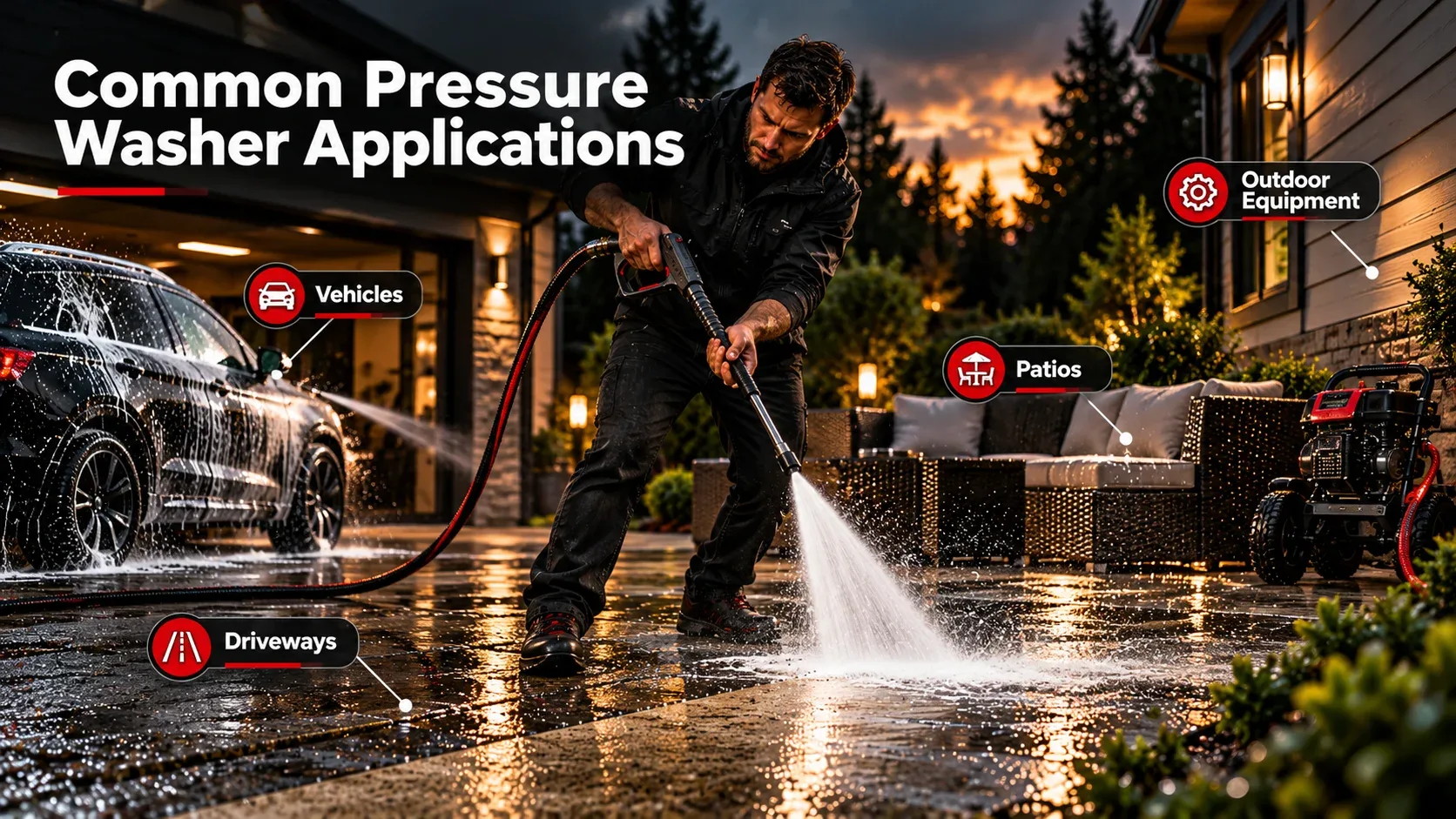
Common Pressure Washer Applications
Pressure washers can handle many cleaning tasks, but surface compatibility is essential. More aggressive cleaning is not necessarily safer or better.
Concrete driveways
Remove loose dirt and surface grime using suitable equipment and technique. Avoid directing water into cracks or weakened joints.
Patios and pavers
Clean suitable hardscape surfaces carefully; aggressive spraying can displace joint material or damage coatings.
Vehicles
Use vehicle-safe procedures and appropriate spray patterns, distance, and detergents. Avoid vulnerable seals and damaged finishes.
Outdoor furniture
Confirm whether the manufacturer permits pressure washing. Painted, woven, and soft materials can be easily damaged.
Tools and equipment
Protect bearings, electrical components, labels, and lubricated assemblies from direct spray.
Professional cleaning
Choose equipment and rated hoses suited to the duty cycle, conditions, and worksite risk controls.
Essential Pressure Washer Safety Tips
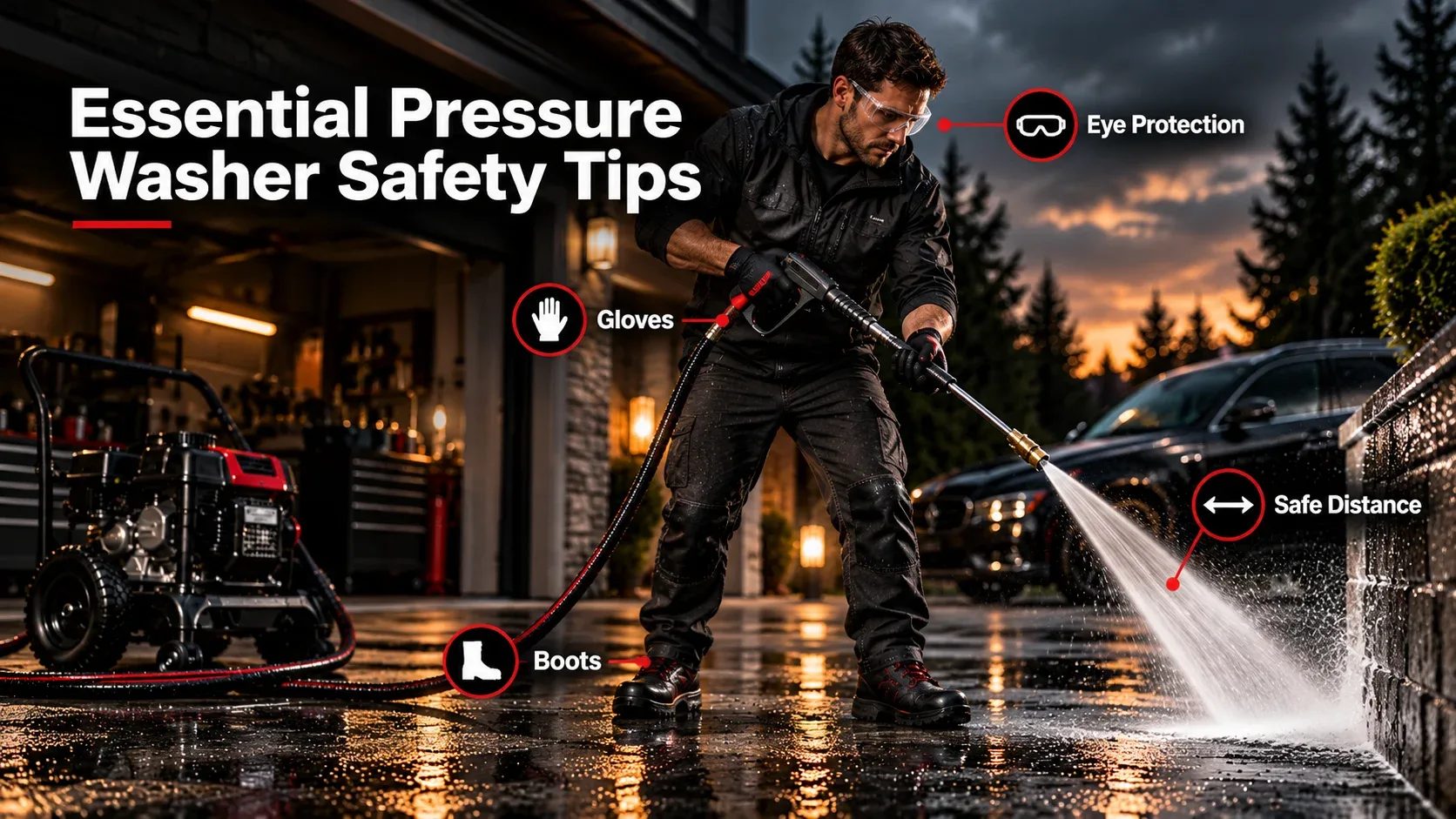
A pressure washer can cause injuries and property damage if used incorrectly. Follow the machine manual and any warnings supplied with accessories.
- Wear suitable eye protection and footwear. Use additional protection required for your cleaning task and environment.
- Never point the spray at yourself, another person, or an animal. Keep hands away from the water jet and suspected leaks.
- Do not use damaged hoses or mismatched fittings. Avoid makeshift repairs to pressurized components.
- Use electrical equipment appropriately. Keep electrical connections dry and follow grounding, GFCI/RCD, and extension-cord guidance in the manual.
- Prevent carbon monoxide exposure. Run gasoline-powered machines outdoors, well away from openings and occupied spaces.
- Protect nearby property. Keep water away from power outlets, sensitive vehicle parts, fragile finishes, and materials not approved for pressure washing.
- Control spray and footing. Be mindful of slippery surfaces, kickback from the spray gun, and bystanders.
- Use approved cleaning agents. Do not introduce chemicals unless the washer and chemical delivery system support them.
Pressure Washer Hose Buying Checklist
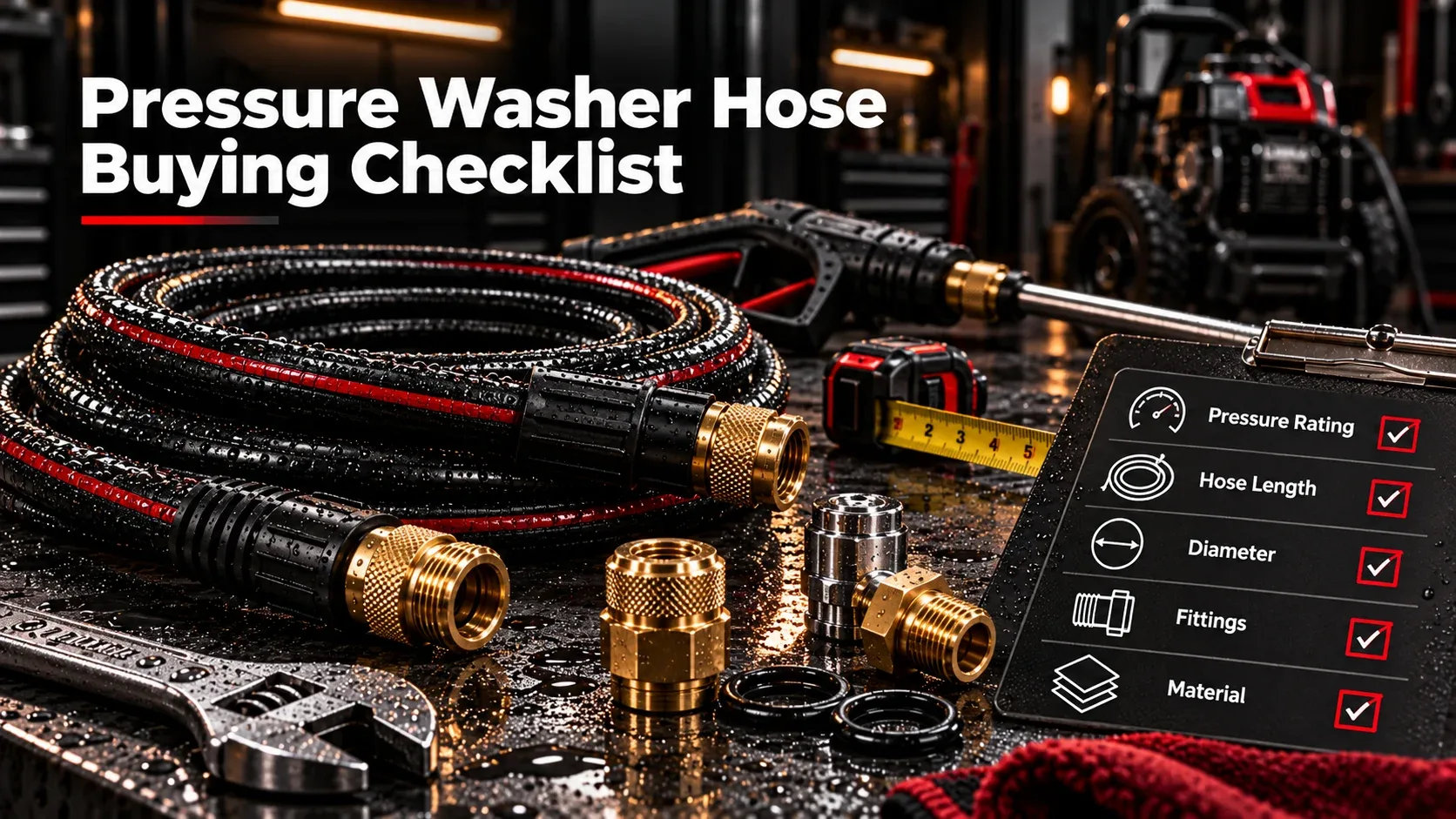
Before ordering a new hose, compare the product listing with the equipment manual. A compatible replacement needs to satisfy all relevant specifications, not just the advertised pressure figure.
- Confirm pressure washer manufacturer and exact model number.
- Check required hose working-pressure rating.
- Check maximum operating-water temperature.
- Match the specified internal diameter.
- Select an approved practical length.
- Verify both end connections and seal dimensions.
- Consider bend radius, flexibility, abrasion resistance, and storage.
- Choose a genuine or manufacturer-approved compatible assembly when possible.
- Read the hose manufacturer’s instructions before installation.
For Michael, the decision is simple once the specifications are known: replace the defective hose with a compatible rated assembly, then follow the machine’s shut-down, connection, and testing procedures.
Frequently Asked Questions
Can I use a garden hose instead of a pressure washer hose?
No. A garden hose may provide the inlet water supply if suitable for the machine, but it is not a substitute for the pressure-rated discharge hose connecting the washer to the spray gun.
What size pressure washer hose do I need?
Check your washer manual and original hose specifications for internal diameter, length, pressure and temperature ratings, and end connections. Hose sizes that look similar may not be interchangeable.
Is a 25-foot or 50-foot pressure washer hose better?
A 25-foot hose is often easier to manage in a small area, while a 50-foot hose gives more reach. Longer hoses may add friction losses; choose a length and diameter compatible with your machine.
Can I connect two pressure washer hoses together?
Only if the manufacturer permits the arrangement and all hose assemblies and couplers are properly rated and compatible. Longer overall hose length can change pressure loss and handling.
Why is my pressure washer hose leaking?
Possible causes include an incorrect fitting, damaged seal, worn coupling, or deterioration of the hose. Shut off and depressurize the equipment before inspection. Never feel for leaks while the system is pressurized.
Can I repair a damaged high-pressure washer hose?
Do not patch a damaged high-pressure hose with tape, clamps, or ordinary repair fittings. Stop using it and replace the assembly with a properly rated and compatible replacement.
Do all pressure washer hoses fit every machine?
No. Different washers have different working-pressure requirements, hose sizes, connector types, sealing dimensions, and temperature limits. A matching thread appearance is not enough to establish compatibility.
How should I store a pressure washer hose?
Depressurize and drain it according to the manufacturer’s instructions, inspect it, then coil it without sharp bends and store it away from damage and freezing conditions. Follow the machine’s winterization instructions.
Final Thoughts: Choosing and Maintaining Your Pressure Washer
Understanding how the pump, high-pressure hose, spray gun, and nozzle work together makes it easier to buy accessories, troubleshoot issues, and protect the surfaces you clean. The best hose is not necessarily the longest, most expensive, or most heavily advertised option—it is the one properly rated and compatible with your machine and job.
Before the next driveway or detailing project, inspect the hose, read the manufacturer’s instructions, and replace any damaged pressure-bearing component. Those simple steps support safer operation and more reliable cleaning.