A truck can be one of the most useful vehicles for camping because the bed already provides a large, open area for carrying tents, coolers, sleeping gear, cooking supplies, tools, and outdoor equipment. The challenge is keeping everything protected and organized without giving up the flexibility that makes a pickup useful in the first place.
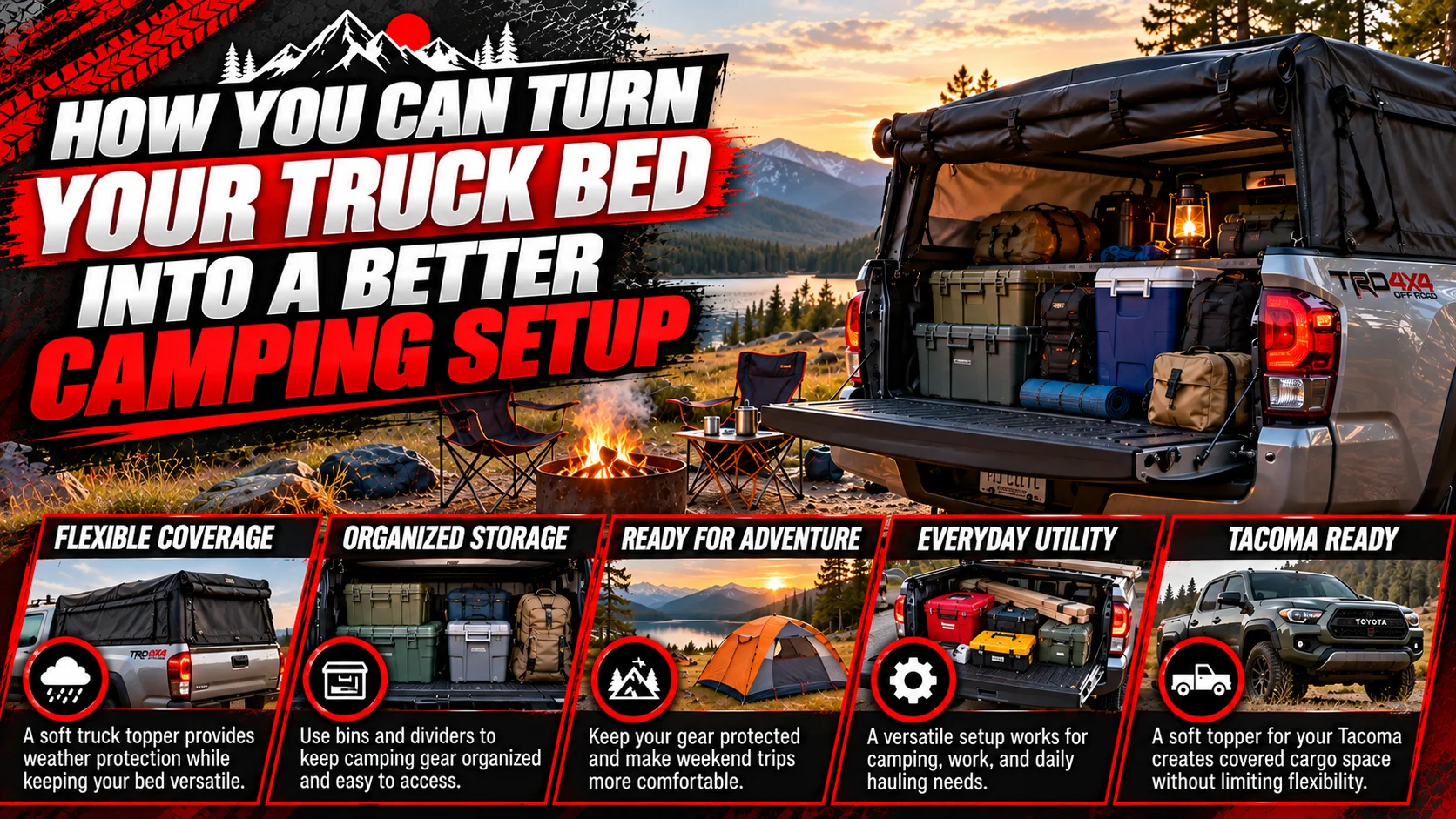
A well-planned truck bed camping setup should make it easier to switch between everyday hauling and weekend travel. Instead of permanently converting the bed into a dedicated camper, many drivers prefer storage and coverage options that can adapt to changing needs. A soft truck topper can provide weather protection and added coverage while still allowing the bed to remain useful for larger cargo when necessary.
The right setup depends on how often the truck is used for camping, what type of gear is normally carried, and how much flexibility is needed between trips. With thoughtful organization, secure storage, and adaptable bed coverage, a pickup can become a practical base for weekend adventures without losing its everyday utility.
Soft Truck Toppers for Changing Cargo Needs
Traditional truck caps can provide dependable coverage, but some drivers need a setup that is easier to adjust. A flexible topper can help protect cargo during travel while giving owners the option to open or collapse the system when they need to haul larger equipment.
For camping, covered bed space can make packing much easier. Sleeping bags, tents, camp chairs, cooking supplies, and other equipment can stay protected from direct exposure to rain, wind, or road debris. Covered storage can also help keep gear more organized during long drives because items are less likely to shift or become exposed.
One of the biggest advantages of a flexible truck topper is versatility. During the week, a driver might use the bed for tools, home improvement supplies, or work equipment. When the weekend arrives, the same area can be reorganized for camping gear without requiring a permanent modification to the truck.
Drivers can improve the setup further by using storage bins or dividers beneath the topper. Frequently used items should remain closer to the tailgate, while sleeping equipment and supplies that are only needed at camp can be placed farther forward.
The goal is to keep the bed adaptable. A good camping setup should make outdoor travel easier without preventing the truck from handling normal hauling responsibilities.
Tacoma Bed Coverage for Weekend Adventures
Toyota Tacoma owners often use their trucks for a combination of commuting, trail driving, camping, and recreational travel. That makes flexible bed coverage especially useful for drivers who do not want to dedicate the truck exclusively to one purpose.
A soft topper tacoma setup can help create a covered cargo area for weekend trips while preserving the ability to reconfigure the bed when needed. Campers can store gear beneath the covered area or arrange the bed to support a more comfortable overnight setup.
Before traveling, it helps to think about how the bed will be used once camp is reached. Some drivers primarily need covered transportation for equipment, while others may want to use part of the truck bed as a sleeping area. In either case, keeping the layout simple can make setup and breakdown faster.
Heavy items should be placed low and secured so they do not move during travel. Lighter equipment, such as blankets, sleeping bags, or clothing, can be packed around larger containers. Gear that will be needed first at the campsite should remain close to the tailgate for easier access.
Tacoma owners can also create separate zones within the bed. One section may hold cooking equipment, another may contain sleeping supplies, and a third can be reserved for tools or recovery gear. This makes it easier to find specific items after arriving at camp.
Flexible Protection for Tools and Outdoor Gear
Camping gear is rarely the only equipment carried in a truck. Drivers may also bring tools, recovery straps, flashlights, coolers, fishing equipment, bikes, or other outdoor accessories. Keeping these items protected while maintaining easy access can improve the overall travel experience.
Flexible bed coverage helps create a barrier between equipment and the elements, but organization is equally important. Waterproof or durable storage containers can provide another layer of protection for smaller items and help prevent the bed from becoming cluttered.
Drivers should also think about which items need to remain accessible during the drive. A roadside emergency kit, flashlight, or basic tool set should not be buried beneath several layers of camping equipment. Keeping essential gear near the tailgate or inside the cab can make unexpected stops easier to handle.
For overnight trips, it may also be useful to separate dirty or wet gear from sleeping equipment. Boots, muddy tools, or damp outdoor clothing can be placed in designated containers so they do not affect the rest of the cargo.
A flexible setup allows drivers to make adjustments from one trip to the next. Short weekend trips may require only a few containers, while longer adventures may need a more structured system for food, shelter, and equipment.
Truck Top Upgrades That Support Everyday Hauling
The best truck bed upgrades are useful even when camping season ends. Instead of choosing equipment that only works for occasional trips, drivers can look for solutions that support work, errands, home projects, and daily transportation as well.
Options such as Softopper truck tops can fit into a broader approach to keeping the bed covered while maintaining the flexibility needed for different types of cargo. When additional bed height or open space is required, an adaptable setup can make switching configurations easier.
Everyday hauling needs should remain part of the decision. Contractors may regularly carry tools or supplies, while homeowners may use the bed for furniture, landscaping materials, or larger purchases. Outdoor enthusiasts may need room for bikes, camping equipment, or sports gear.
A practical topper should support these changing uses rather than making them more difficult. Drivers should also continue using appropriate tie-down points and cargo restraints whenever equipment is being transported, even when the bed is covered.
Keeping the truck bed organized between trips can make camping preparation faster as well. Removing unnecessary equipment and maintaining a few dedicated storage containers can reduce packing time when the next weekend adventure arrives.
Conclusion
Turning a truck bed into a better camping setup does not have to mean building a permanent camper. Flexible bed coverage, organized storage, and a simple packing system can make a pickup more comfortable and useful for outdoor travel while preserving its ability to handle everyday hauling.
A soft topper can help protect gear during changing weather, while Tacoma-specific options can make it easier to prepare for weekend trips. Combining covered storage with bins, cargo zones, and secure tie-downs can also make camping equipment easier to access and manage.
The best setup is one that works both at the campsite and at home. By choosing adaptable upgrades and keeping the bed organized, truck owners can create a vehicle that is ready for work during the week and outdoor travel whenever the opportunity arrives.