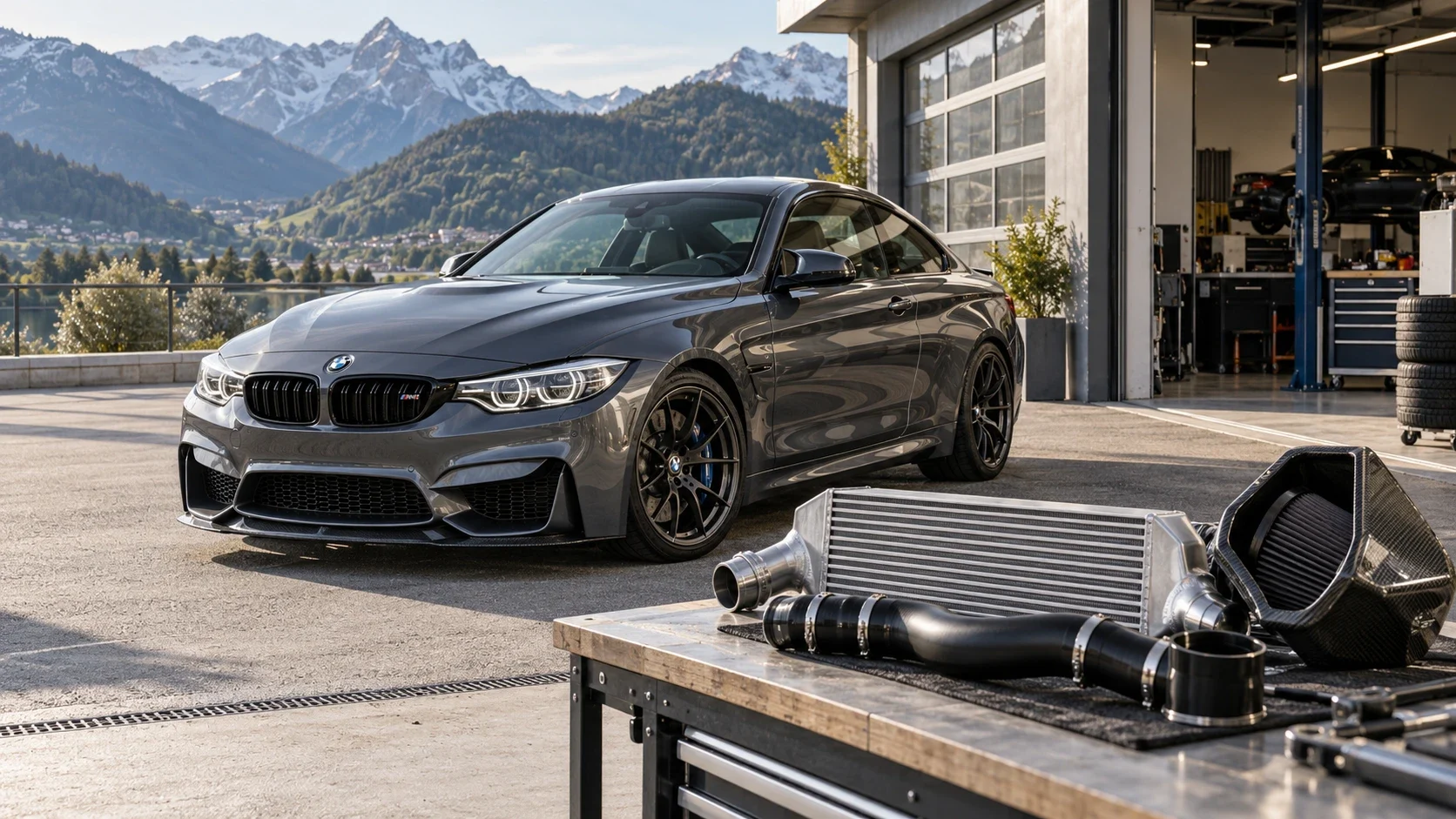
The most expensive BMW upgrade is often the part you end up replacing twice: once because it looked right online, and again because it did not suit the car or the way you drive.
A well-planned build starts before the shopping basket. Whether you want a more engaging daily driver or are preparing for track days, choosing BMW performance parts means matching the hardware to a specific goal, checking compatibility and understanding the full installation cost.
Here is how to approach that process without wasting your budget.
Start With What You Want to Improve
“More power” is a starting point, but it is not a complete upgrade plan. Think about when you want the car to feel different.
Do you want more intake sound during acceleration? Are you preparing the car for an engine tune? Are you concerned about how it performs during repeated track sessions? Each question leads to a different discussion with a supplier or workshop.
Use your normal driving as the reference. A BMW that spends most of its time commuting should still be enjoyable in traffic and on long journeys. Before buying anything that changes the sound or character of the car, try to experience a similar setup in person. A short video rarely tells you how it will feel after two hours behind the wheel.
Check the Exact BMW Specification Before Ordering
A model name alone is not enough to confirm fitment. Start with the vehicle’s production date, chassis code and engine variant, then read the product’s exclusions.
Even when a listing mentions your engine family, check that it also covers your vehicle and production period. Existing modifications matter too: a component designed around the factory layout may need further checks if surrounding parts have already changed.
Prepare a short vehicle summary before contacting a supplier:
- BMW model, production year and chassis code.
- Engine code, where known.
- Current engine software and hardware modifications.
- Intended road or track use.
- The exact product or part number you are considering.
If anything remains unclear, request written fitment confirmation using your vehicle details or VIN. It is easier to resolve uncertainty before a parcel arrives than when the car is already in pieces at a workshop.
Understand What Each Performance Part Is Supposed to Do
An upgrade should have a clear role in the build. Avoid treating every aftermarket component as a guaranteed horsepower increase.
Intake Systems: Look Beyond Sound and Carbon Fibre
When comparing BMW intake systems, look for fitment information, filter maintenance instructions, installation requirements and testing relevant to your engine.
For example, Eventuri publishes a stock-airbox comparison for its B58 M240i application. That illustrates the kind of supporting evidence worth looking for, although a manufacturer’s result should not be treated as a guaranteed gain on your own vehicle.
Check the test car’s software and supporting modifications before comparing headline figures. If your main reason for buying is sound or appearance, that is a valid preference, just keep it separate from the performance claim.
Cooling Parts: Identify the System You Are Upgrading
“Better cooling” is too vague to guide a purchase. Ask which circuit the product serves, what limitation it is intended to address and why it suits your planned use.
If you are investigating inconsistent performance during track sessions, have a specialist review the symptoms and available temperature data first. Buying a larger cooling component without identifying the problem can turn an expensive modification into guesswork.
Charge Pipes: Check the Complete Installation
For charge pipes, examine connection points, sensor provisions, included seals and compatibility with neighbouring components. Ask whether the kit requires anything beyond what is supplied.
Also ask what the replacement is intended to achieve on your setup. Supporting a modified engine and producing a measurable power increase are different claims.
Compare the Installed Price, Not the Checkout Price
The product price is only one part of the budget. Before ordering, request an estimate covering:
- The component and delivery.
- Fitting hardware, seals and fluids.
- Installation labour.
- Any required software work.
- Post-installation checks.
A useful question for the workshop is: “What else will I need to buy to complete this job properly?”
Ask it before comparing suppliers. A more complete kit can be better value than a cheaper listing that requires several separate purchases.
What European Buyers Should Check
For delivery within Europe, confirm the dispatch country, estimated lead time, VAT treatment and any applicable import charges for your destination. A euro-denominated price does not tell you where the parcel will ship from.
Read the return conditions as well. Find out what happens if the part does not fit, whether special-order items have different terms and who pays return shipping.
For a road car, request any relevant approval documentation for the exact part and verify the requirements where the vehicle is registered. Resolve insurance and warranty questions before installation, particularly when planning exhaust or engine-software changes.
Where to Compare BMW Performance Parts
A specialist collection is useful for building a shortlist. TunePoint Europe’s range of BMW performance parts includes intake systems, intercoolers, cooling radiators and charge pipes for selected BMW applications. Use the collection to explore options, then check the individual listing against your vehicle specification and upgrade plan.
When contacting a supplier, replace “Is this a good part?” with more specific questions:
- Does this exact part fit my vehicle and existing modifications?
- What benefit should I expect on my current setup?
- What additional parts or installation work are required?
- What documentation and after-sales support are included?
The quality of those answers is useful when deciding where to buy.
Build in Stages and Keep a Record
Have existing faults assessed before adding performance hardware. Then agree on the order of upgrades with the workshop handling the car.
Where practical, make changes in stages and record the part numbers, installation dates and observations. If several modifications arrive at once, it becomes harder to judge which one delivered the improvement, or introduced an issue.
The right first upgrade is the one you can explain clearly: what it fits, what it changes and why that change matters to you. When those answers are solid, buying BMW performance parts becomes a much more straightforward decision.