DeWalt 20V MAX is enough for most drilling, fastening, repair, and everyday cutting. FlexVolt earns its higher cost when you need larger cordless tools to handle sustained heavy cutting, grinding, or corded-tool-replacement work.
Quick answer: start with the work, not the voltage label
For a homeowner or general DIY kit, DeWalt 20V MAX usually gives the best balance of cost, battery weight, tool choice, and convenience. FlexVolt is not a universal upgrade for every tool. It is a separate high-demand option for certain larger tools and workloads, especially where output and sustained runtime matter more than a compact setup.
The trust rule: verify the exact model
Do not buy based only on “20V MAX,” “FlexVolt,” or a battery Ah number. Check the official DeWalt listing and manual for the exact bare-tool or kit model. Confirm its required battery platform, published weight, included batteries, charger compatibility, warranty terms, and regional product differences before comparing prices.
DeWalt 20V MAX vs FlexVolt at a glance
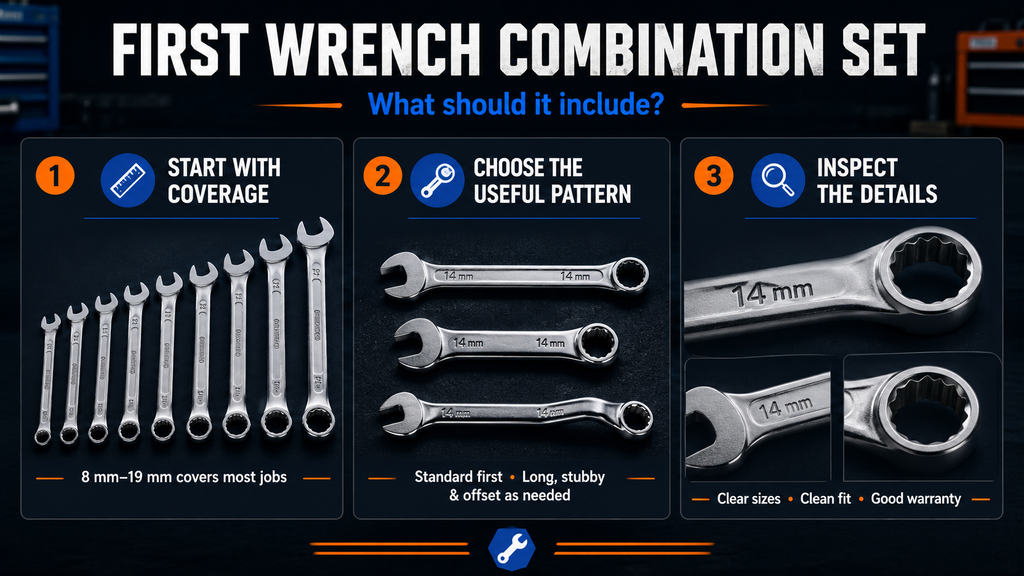
This is a practical buying framework, not a substitute for the product page of the tool you want. Tool design, motor electronics, battery capacity, blade or accessory choice, and material all affect real-world performance.
| Factor | DeWalt 20V MAX | DeWalt FlexVolt |
|---|---|---|
| Primary role | Broad everyday platform for drills, impact drivers, lights, sanders, compact saws, and many professional tools. | Designed for selected high-demand tools where DeWalt targets larger, more corded-like cordless performance. |
| Battery compatibility | 20V MAX batteries power compatible 20V MAX tools, but they do not power FlexVolt-only tools. | FlexVolt batteries can operate in compatible 20V MAX tools and switch to 60V in compatible FlexVolt tools. |
| Size and handling | Smaller packs are often easier to manage on compact tools, overhead jobs, and service work. | FlexVolt packs are generally larger and heavier, which can improve endurance but add fatigue on smaller tools. |
| Best fit | General repairs, home projects, finish work, fastening, maintenance, and users building a versatile first kit. | Frequent heavy cutting, large-diameter drilling, grinding, landscaping, and replacing selected corded tools. |
Can you mix DeWalt 20V MAX and FlexVolt batteries?
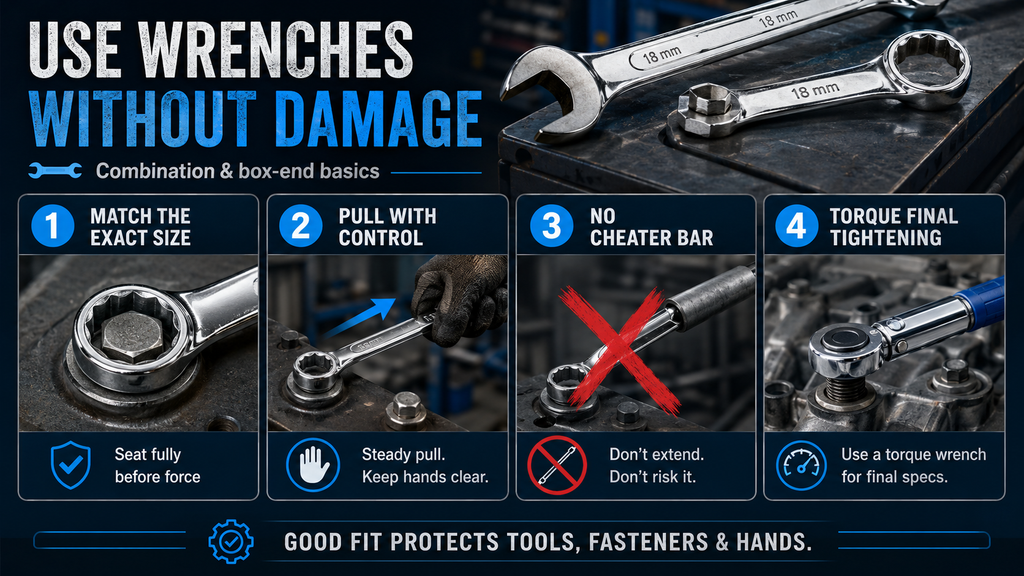
Yes, many existing DeWalt users can add FlexVolt without replacing their 20V MAX collection. A FlexVolt battery is designed to run compatible 20V MAX tools in 20V MAX mode and compatible FlexVolt tools in 60V mode. The reverse is not true: a standard 20V MAX battery cannot power a FlexVolt-only 60V tool. Compatibility also does not mean equal tool performance.
What the FlexVolt battery is actually doing
| In a 20V MAX tool It operates as a compatible 20V MAX battery pack. | In a FlexVolt tool It switches configuration to supply the higher-voltage FlexVolt platform. |
| What does not happen The battery does not automatically turn a 20V tool into a 60V tool. | What to compare Tool model, battery Ah or watt-hours, published weight, and your workload. |
A FlexVolt pack may give a compatible 20V MAX tool longer runtime depending on its capacity and the task. It does not guarantee more output, because the tool itself determines how it uses the available battery power. For compact drills and drivers, the larger pack can also make the tool less balanced.
Does FlexVolt have better runtime?
Runtime depends first on the battery’s actual energy capacity, then on the tool and the work. A large FlexVolt battery can hold more total energy than a small 20V MAX pack, so it can run longer in a compatible 20V MAX tool. But it is not automatically a better value than a high-capacity 20V MAX pack. Compare the official Ah and watt-hour figures where DeWalt publishes them, then weigh the runtime gain against battery cost and handling.
Is FlexVolt heavier, and does that matter?
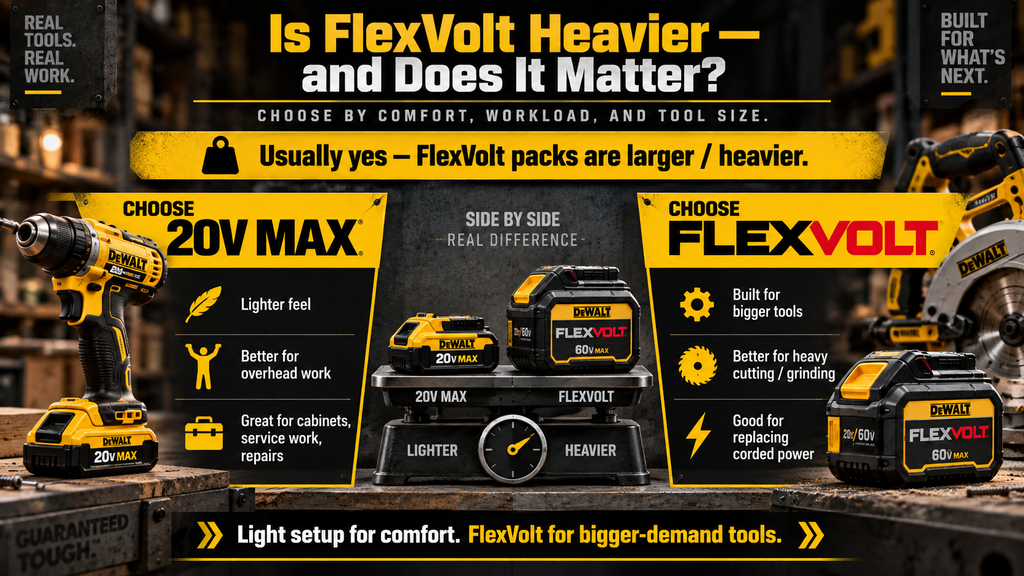
Usually, yes. FlexVolt batteries are physically larger than many standard 20V MAX packs, and that extra size is part of why they can support larger tools and longer demanding work. Whether the weight matters depends on where the tool is used. A heavier pack is less noticeable on a large saw resting on material than on a compact drill held overhead for repeated fastening.
Choose a lighter 20V MAX setup when comfort is productivity
For cabinet installation, electrical work, mechanical repairs, punch-list tasks, furniture building, and overhead fastening, a smaller 20V MAX pack can be the better professional choice. Less battery weight can improve reach, balance, and fatigue over a long day.
Choose FlexVolt when the tool needs the platform
FlexVolt makes the most sense on the larger tools built around it: certain miter saws, table saws, circular saws, grinders, rotary hammers, outdoor equipment, and other high-demand applications. If the exact FlexVolt tool replaces a corded tool or lets you work efficiently where power outlets are impractical, its size and price can be justified.
Is FlexVolt worth the extra money?
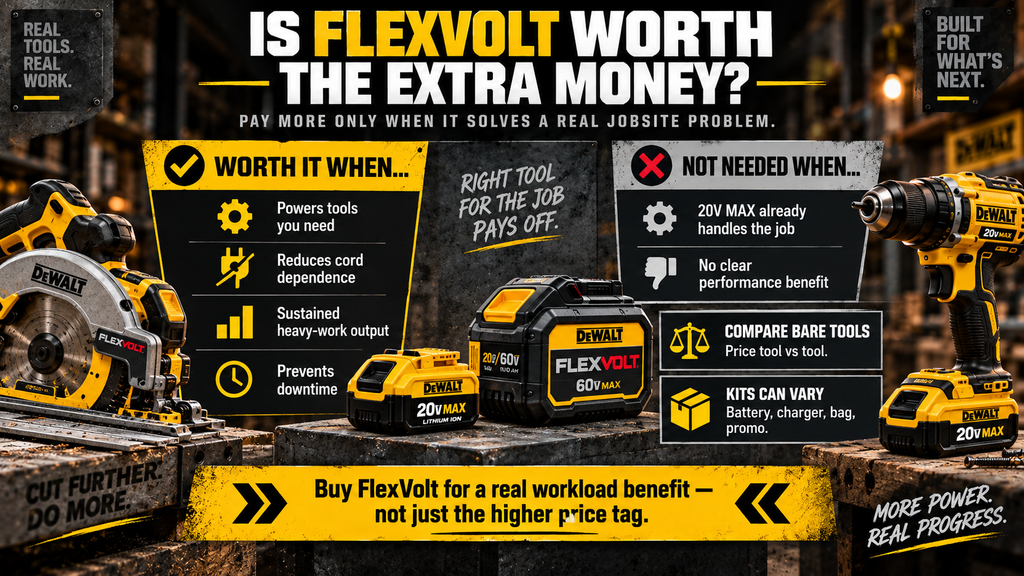
FlexVolt is worth paying for when it solves a repeated jobsite problem: it powers a tool you cannot otherwise use, reduces cord dependence, provides enough sustained output for your material, or prevents downtime on heavy work. It is unnecessary when a standard 20V MAX tool already completes the task comfortably. Compare bare-tool prices separately from kits, because a kit price can reflect the charger, included battery capacity, storage bag, and current retailer promotion—not just the tool.
Which DeWalt battery system should you buy?
Choose 20V MAX if…
You are building a first cordless kit, already own compatible 20V MAX batteries, or mainly drill, drive fasteners, sand, make light cuts, and handle maintenance tasks. It is also the sensible default when compact handling, lower entry cost, and broad tool selection matter more than corded-tool replacement.
Choose FlexVolt if…
The exact saw, grinder, rotary hammer, outdoor tool, or other larger tool you need is built for FlexVolt—and you will use that capability often. FlexVolt is especially compelling for contractors and serious renovators who want specific cordless tools to take on work normally reserved for corded equipment.
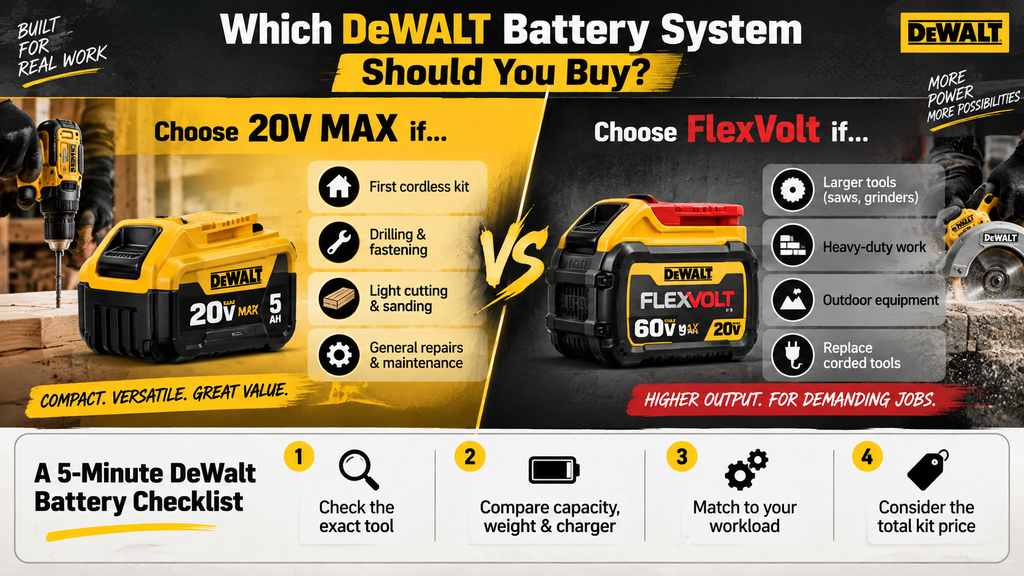
A five-minute DeWalt battery checklist
- Start with the exact tool you want, then confirm which battery platform it requires.
- Compare battery capacity, published weight, and charger compatibility for the exact pack or kit.
- Ask whether heavy cutting, grinding, or large-hole drilling is occasional or part of your regular work.
- Price the whole setup: bare tool, batteries, charger, warranty, and the 20V MAX batteries you already own.
Frequently asked questions
Is FlexVolt more powerful than DeWalt 20V MAX?
FlexVolt tools are designed for higher-demand applications, but battery compatibility does not mean every 20V MAX tool becomes more powerful with a FlexVolt pack installed. The tool’s motor, electronics, and official specifications determine its capability. Compare the exact tool model, not just the battery label.
Can I use a FlexVolt battery on a 20V MAX tool?
DeWalt FlexVolt batteries are designed to work with compatible 20V MAX tools, where they operate in 20V MAX mode. They may provide longer runtime depending on capacity and workload, but they can also make a compact tool heavier. Always verify compatibility for your exact tool and region.
Can I use a 20V MAX battery in a FlexVolt tool?
No. A standard 20V MAX battery does not power FlexVolt-only tools. If a tool is specified as FlexVolt, use the compatible FlexVolt battery stated by DeWalt in the product documentation.