A chainsaw that starts or idles but falls flat at full throttle is frustrating—and potentially unsafe. Work through these common causes in order before changing carburetor settings or replacing parts.
A chainsaw that bogs when you give it gas usually has a fuel-delivery, airflow, exhaust, or carburetor problem. Begin with fresh fuel, the air filter, fuel filter, tank vent, spark plug, and spark arrestor.
Make the saw safe before you troubleshoot
Shut the engine off, let it cool, engage the chain brake, and keep fuel away from sparks or flames before inspecting your chainsaw. Wear eye protection and gloves. Follow the fuel ratio, service intervals, and adjustment procedure in your model’s operator manual.
Troubleshoot a bogging chainsaw in this order
Most loss-of-power problems come from a simple restriction or stale fuel. Check the easy, low-risk items first. Test the saw only when it is reassembled and you can do so safely outdoors.
Replace old or incorrect fuel
Gasoline ages quickly, especially after seasonal storage. Drain questionable fuel and refill with fresh fuel mixed exactly to your manufacturer’s specified two-stroke ratio. Do not guess the oil ratio.
Inspect the air filter
A packed filter limits airflow and can make the engine run rich, smoke, and lose throttle response. Clean or replace it using the method stated in the operator manual; some filter materials should not be blown out with high-pressure air.
Check the fuel filter and line
A clogged in-tank fuel filter or cracked fuel line can supply enough fuel for idle but not enough for acceleration. Look for brittle hoses, wet spots, loose connections, or a filter darkened by debris.
Rule out a blocked tank vent
If the tank cannot vent, a vacuum can form and starve the carburetor. A saw that briefly improves after the fuel cap is loosened may have a vent issue. Inspect or service the vent according to the manual.
Read the spark plug
A fouled, worn, or improperly gapped plug can misfire under throttle. Replace it with the specified plug if it is damaged or heavily carboned. Plug color can offer clues, but it is not a substitute for diagnosis.
Inspect the spark arrestor
Carbon buildup on the muffler spark-arrestor screen can restrict exhaust flow and make a chainsaw feel weak at high speed. Service it only after the saw cools, and never run a saw with safety components removed.
When the basic checks do not solve it
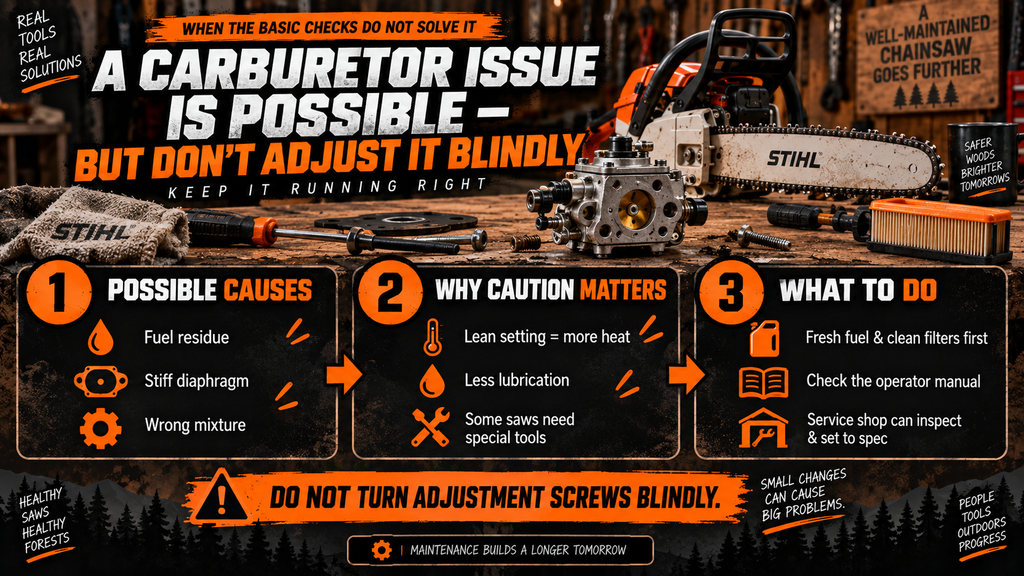
A carburetor issue is possible—but do not adjust it blindly
Fuel residue, a stiff metering diaphragm, or an incorrect mixture setting can make a chainsaw hesitate when the throttle opens. On many modern saws, adjustment screws are limited or require a special tool for a reason: an overly lean setting can raise engine temperature and reduce lubrication.
If fresh fuel and clean filters do not help, consult your operator manual before touching any adjustment screw. A service shop can pressure-test fuel delivery, inspect the carburetor, and set the saw to the manufacturer’s specification.
Understand the symptoms
Too rich, too lean, or something more serious?
Possible lean condition
A lean saw may surge, race, hang at high idle, lose power under load, or sound unusually sharp. Air leaks, restricted fuel flow, or incorrect carburetor settings can cause this. Stop using a saw that races or overheats.
Possible rich condition
A rich-running saw may sputter, smoke excessively, foul plugs, and struggle to clear out at full throttle. A dirty air filter, old fuel, too much oil in the mix, or carburetor contamination can contribute.
Carburetor service
If the saw has been stored with fuel inside, internal carburetor passages and diaphragms may need cleaning or rebuilding. This is a sensible repair for an experienced technician rather than a first adjustment to make at random.
Compression or internal damage
Hard starting, poor power after maintenance, scoring, abnormal noise, or a chain that behaves unpredictably can indicate an internal engine problem. Compression testing and cylinder inspection are best handled by a qualified small-engine technician.
Know when to stop
Do not keep cutting with a chainsaw that behaves unpredictably
A bogging saw can become more than an inconvenience when it stalls during a cut, races unexpectedly, overheats, or loses safe throttle control. Stop work and arrange professional inspection if basic maintenance does not restore normal operation.
Never defeat safety features, remove the spark arrestor permanently, or compensate for a power problem by forcing the bar through wood.
A practical decision path
The quickest route to a useful diagnosis
- 01Start with fresh, correctly mixed fuel. Then inspect the air filter, fuel filter, fuel line, and tank vent for obvious restriction or deterioration.
- 02Inspect the spark plug and spark-arrestor screen. Replace worn service items with the parts and specifications listed for your exact chainsaw model.
- 03If the chainsaw still bogs, avoid trial-and-error tuning. Use the manual’s approved procedure or ask a qualified service technician to assess the carburetor, air leaks, and compression.
How this guide is built
This article uses a maintenance-first troubleshooting sequence based on common small-engine fuel, air, ignition, and exhaust faults. It is general guidance, not a substitute for the operator manual or model-specific service information. Manufacturer procedures take priority when they differ.
Frequently asked questions
Chainsaw bogging questions, answered
Can old fuel make a chainsaw bog down?
Yes. Stale gasoline can lose volatility and leave deposits that restrict fuel passages. If fuel has sat in the saw for an extended period or you are unsure of its age, replace it with fresh, correctly mixed fuel before deeper troubleshooting.
Why does my chainsaw idle but die when I throttle it?
Idle requires far less fuel and airflow than acceleration. A restricted fuel filter, blocked vent, dirty carburetor, fouled plug, clogged spark arrestor, or incorrect mixture can allow idle but cause the engine to stumble when demand rises.
Should I adjust the carburetor screws myself?
Only if your operator manual permits it and you understand the correct method for your model. Random adjustment can make the engine dangerously lean or mask a fuel-delivery fault. Clean, inspect, and rule out basic issues first.
When should I take a chainsaw to a repair shop?
Seek service if the saw races, overheats, has poor compression, leaks fuel, makes abnormal mechanical noise, or still bogs after fresh fuel and routine filter, plug, and exhaust checks. These symptoms can require pressure testing or internal inspection.
Can a dirty spark arrestor cause loss of power?
Yes. A carbon-blocked spark-arrestor screen can restrict exhaust flow and make the saw feel weak when the throttle opens. Let the saw cool completely and service the screen only as described in the operator manual.
What should I check before adjusting the carburetor?
Verify the fuel mix, air filter, fuel filter, fuel line, tank vent, spark plug, and spark arrestor first. If the saw still bogs, use the model-specific service procedure or consult a qualified technician.