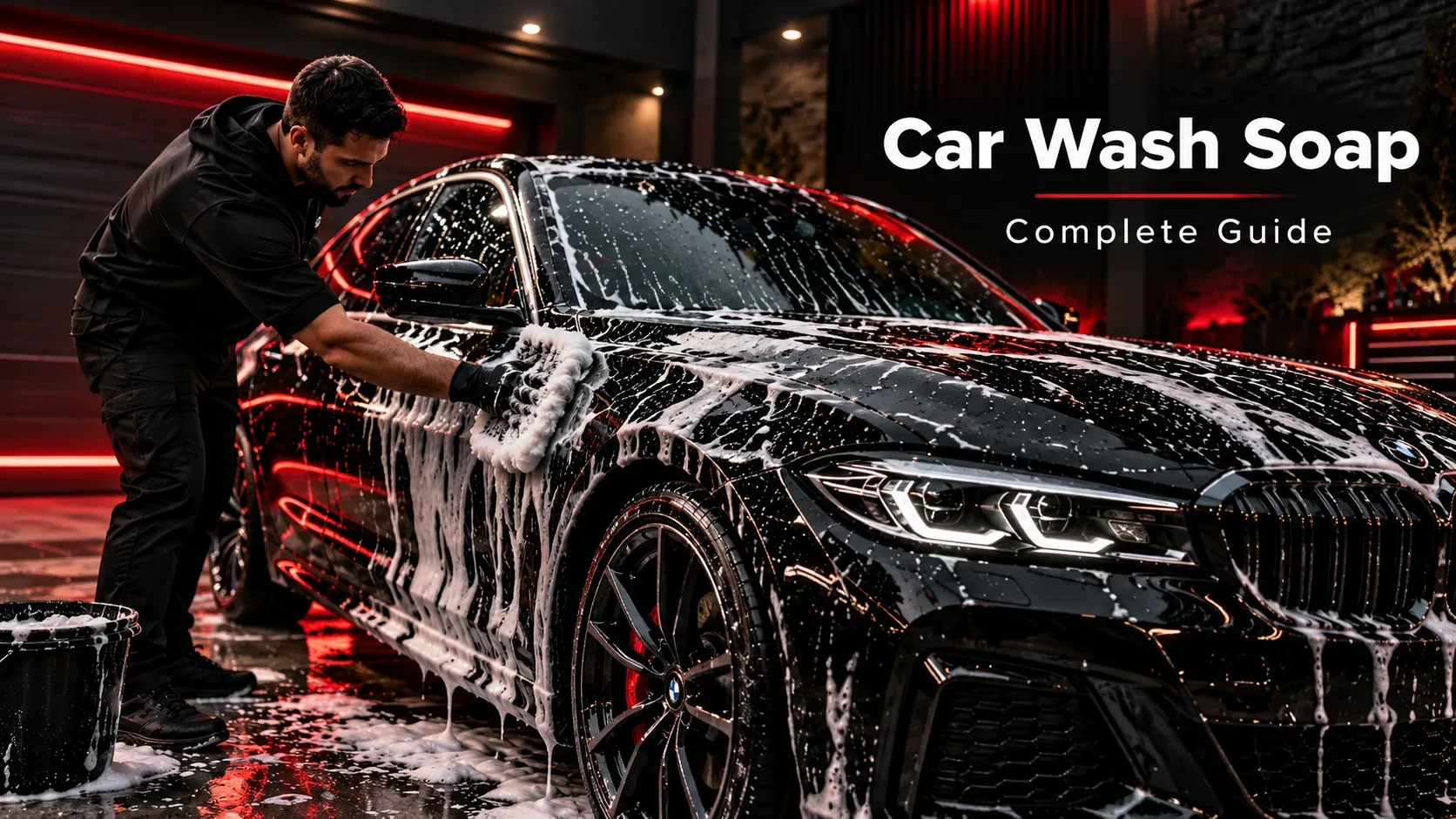
A clean car looks great, but keeping its paint in good condition takes more than a bucket of water and a sponge. Choosing the right car wash soap makes it easier to remove grime while maintaining your vehicle’s existing protection.
With products promising thick foam, brilliant shine, and powerful cleaning, how do you know what your car actually needs? This guide explains soap types, safe washing methods, coating compatibility, costs, and common mistakes.
What Is Car Wash Soap?
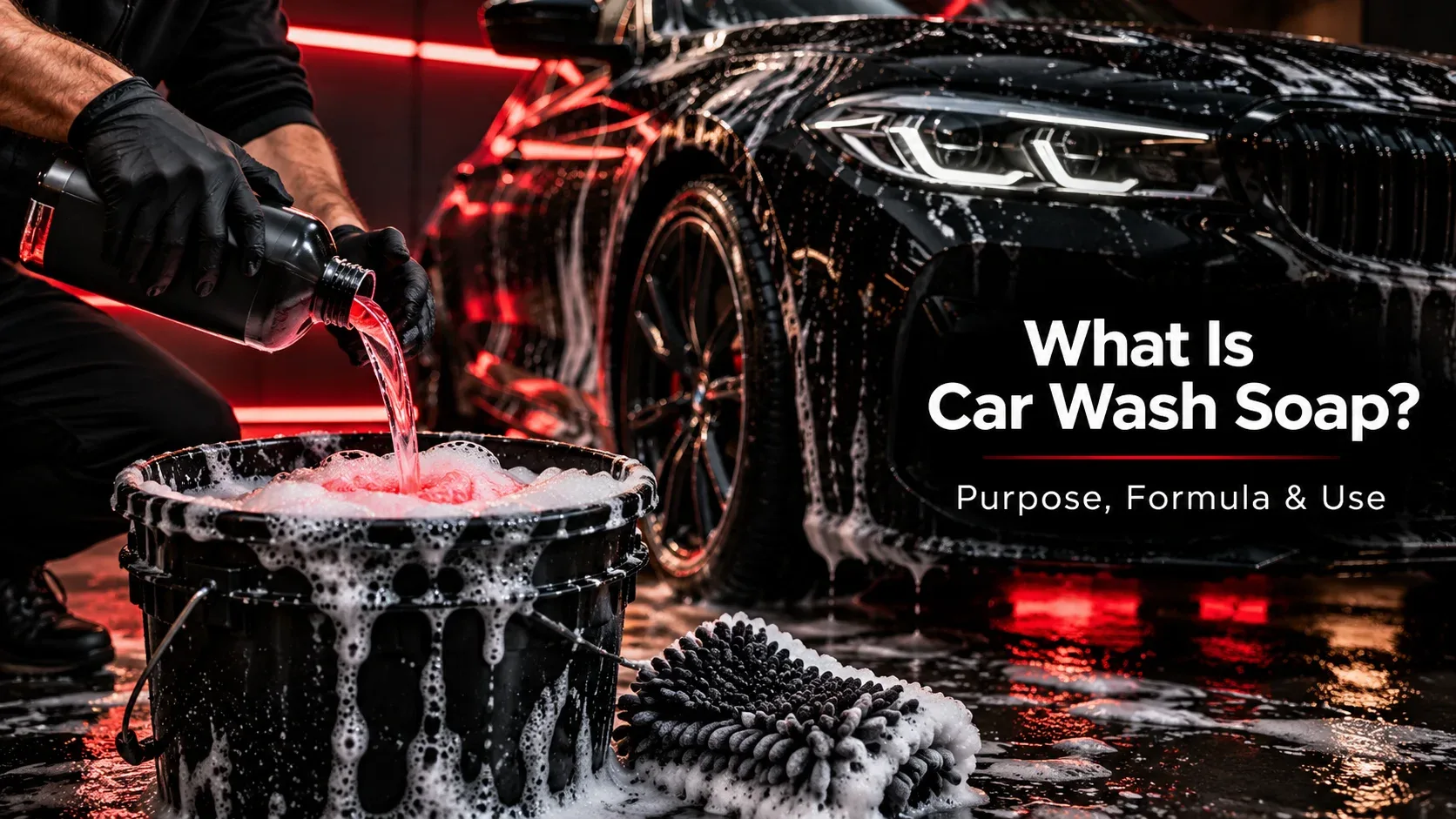
Car wash soap, also called car shampoo, is a cleaning product formulated for washing vehicle exteriors. Its purpose is to loosen and remove dust, traffic film, oily grime, and everyday contamination while remaining suitable for the surfaces specified on the label.
Formulas vary. Many contain surfactants and ingredients that affect lubrication, foam, rinse performance, or gloss. A maintenance shampoo is not a replacement for polishing, scratch repair, or specialized paint decontamination.
How Does Car Wash Soap Work?
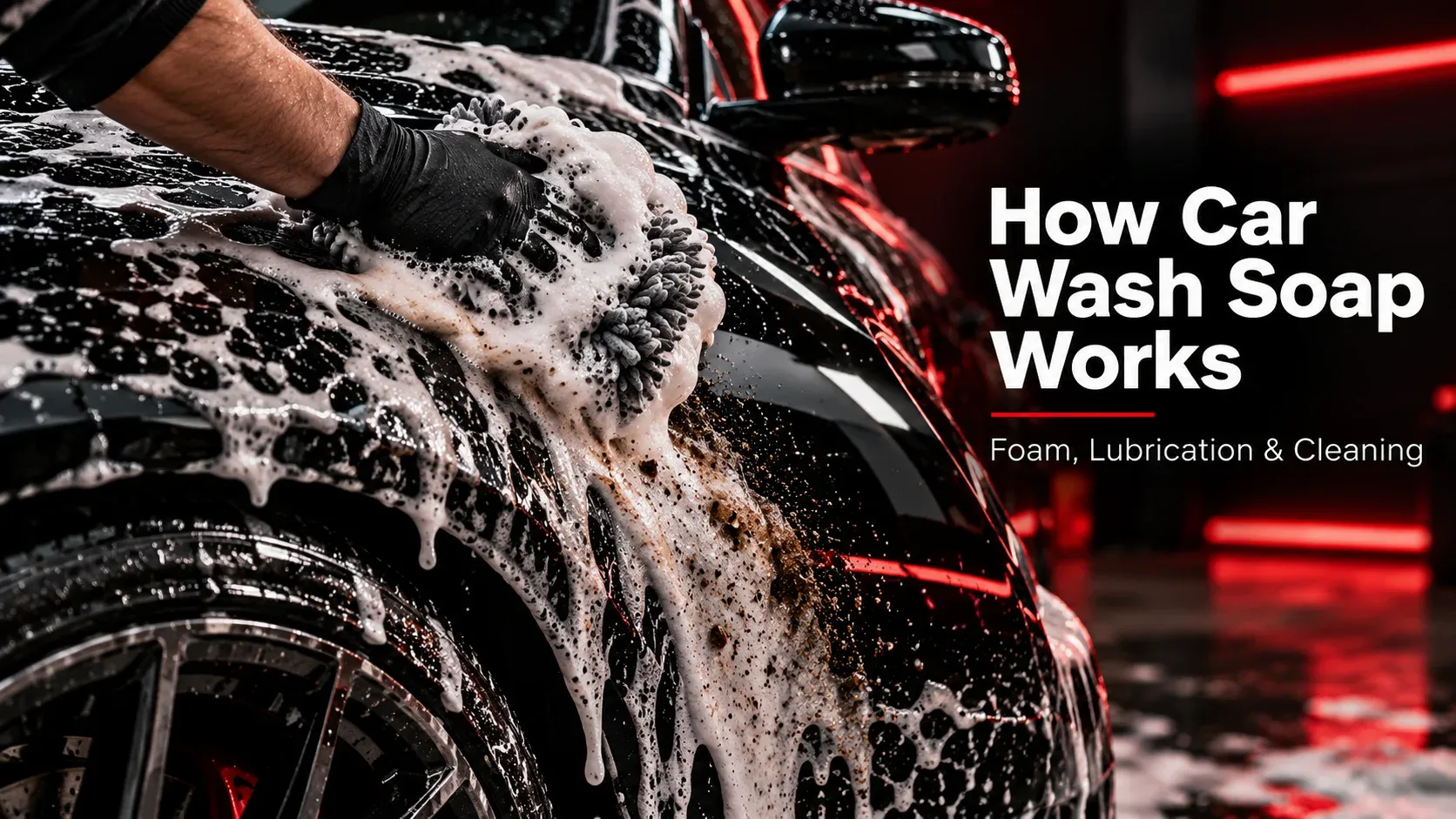
Surfactants Help Remove Dirt
Surfactants help water interact with oily grime and suspend contamination so it can be rinsed away. Plain water may not remove this material as effectively.
Lubrication Reduces Friction
Many automotive shampoos provide a slippery solution that helps a clean wash mitt glide across paint. However, grit caught in the mitt can still produce scratches, so lubrication is no substitute for clean tools.
Rinsing Carries Residue Away
Water rinses away loosened dirt and leftover shampoo. Rinse promptly to reduce streaks or dried residue, especially in warm weather.
Different Types of Car Wash Soap Explained
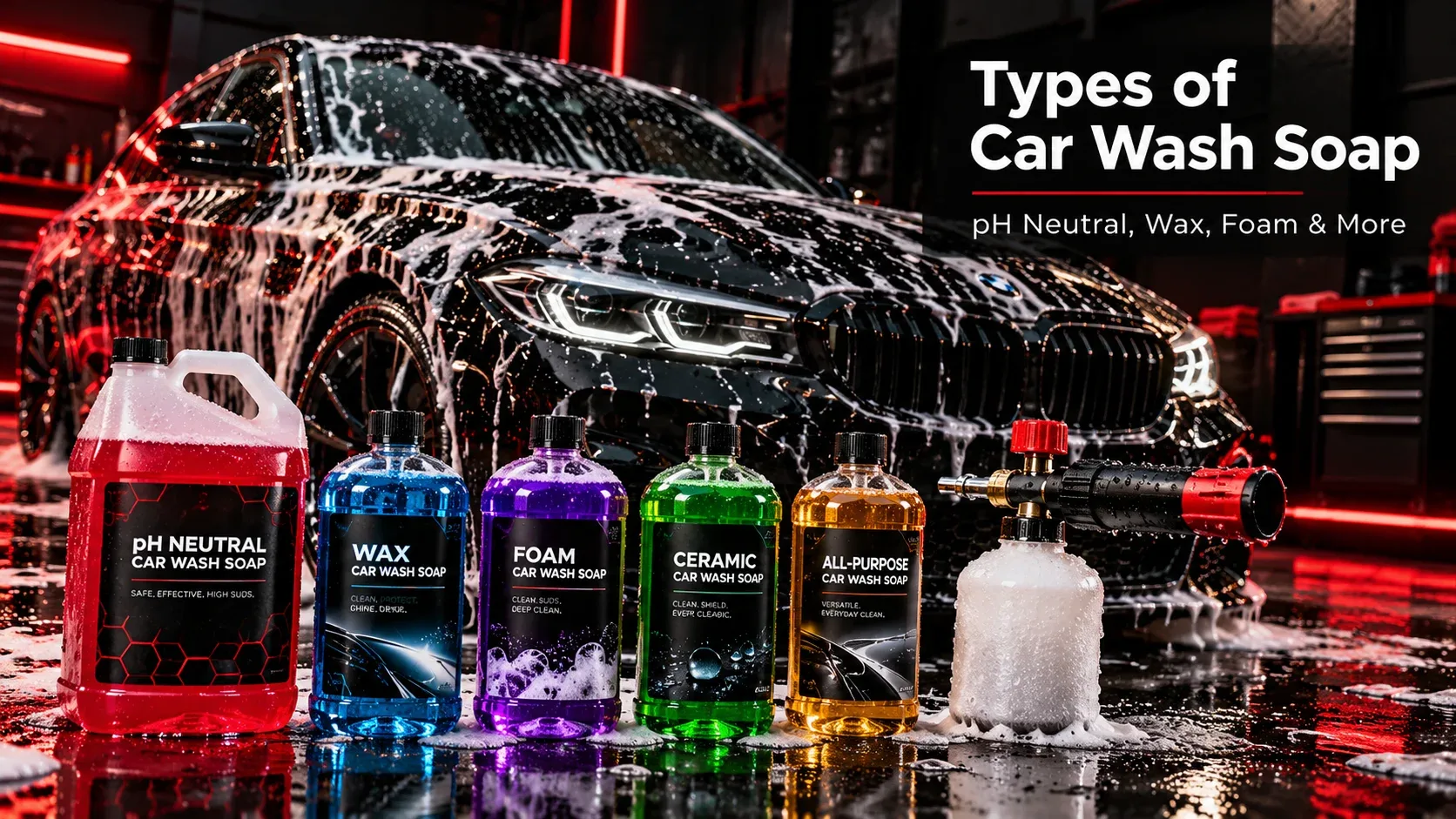
1. pH-Neutral Maintenance Shampoo
Often used for routine washing, these formulas are generally intended to clean normal road grime without overly aggressive chemistry. pH alone does not guarantee compatibility with every coating.
2. Wash-and-Wax Soap
These products include gloss or protection additives. They are convenient, although their protective effect is not the same as a separately applied durable wax or sealant.
3. Stronger Cleaning Shampoo
More intensive formulas may suit heavier grime or preparation washes but could affect existing wax or sealant protection. Follow product-specific instructions.
4. Ceramic-Coating Maintenance Shampoo
These are marketed for coated vehicles and often prioritize appropriate cleaning and clean rinsing. Check the coating manufacturer’s guidance before using added gloss or coating-boosting ingredients.
5. Foam Cannon Shampoo
Products designed for foam cannons are diluted and applied with compatible equipment. Thick foam looks impressive, but foam volume alone is not a measure of cleaning power.
| Soap Type | Best Use | Key Consideration |
|---|---|---|
| pH-neutral | Routine maintenance | Check protective-layer compatibility |
| Wash-and-wax | Cleaning with added gloss | May leave additives |
| Stronger cleaner | Heavier grime or preparation | May affect wax or sealants |
| Ceramic maintenance | Coated vehicles | Follow coating-care instructions |
| Foam cannon formula | Foaming pre-wash | Use prescribed dilution |
Benefits of Using the Right Car Wash Soap
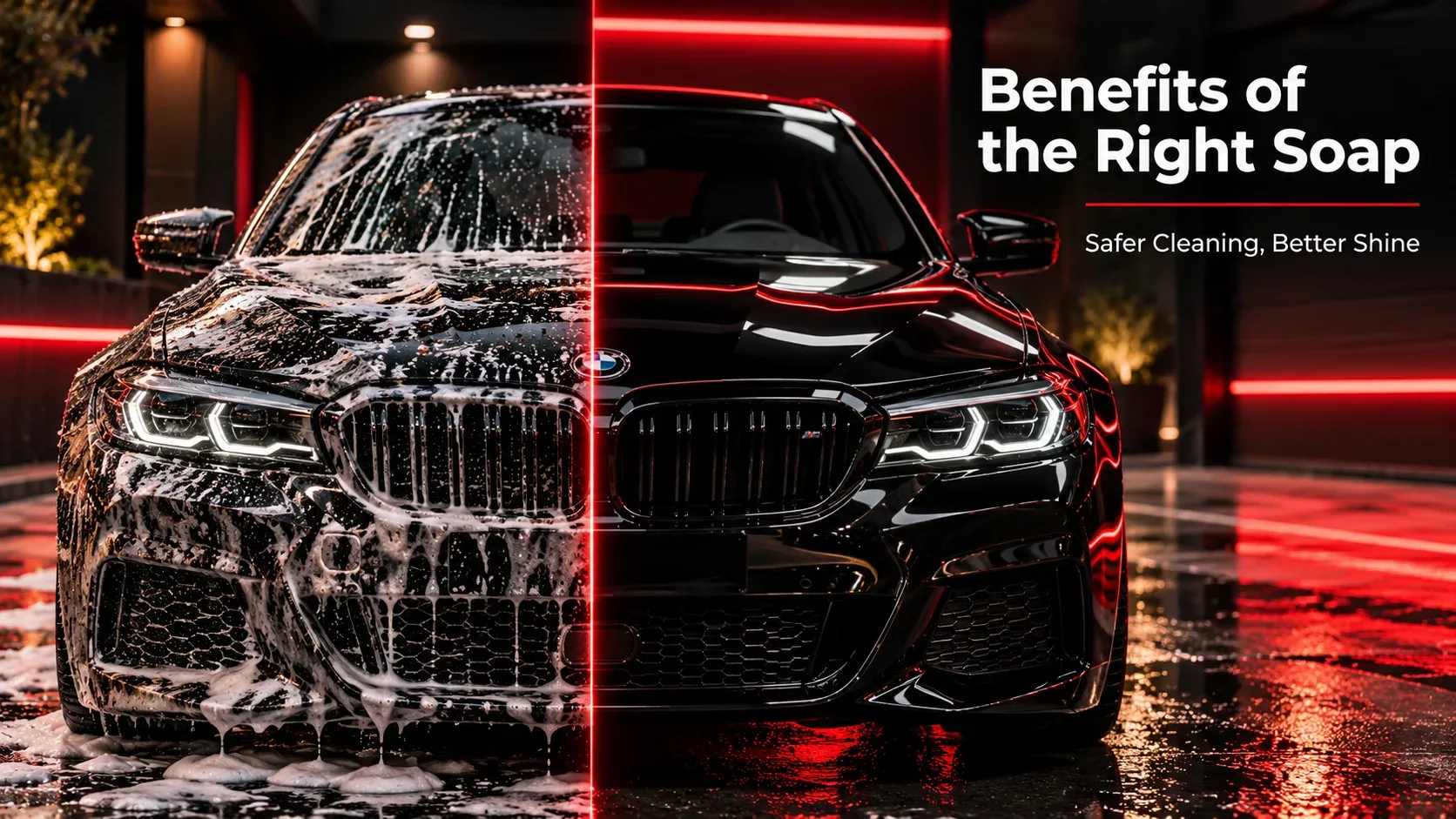
More Effective Cleaning
Suitable surfactants loosen road dust, oily deposits, pollen, and routine contamination.
Better Wash-Mitt Glide
Many products support lower-friction contact washing when paired with clean microfiber tools and light pressure.
Surface Compatibility
Choosing a maintenance shampoo appropriate for the existing wax, sealant, or coating helps avoid unnecessary harsh cleaning.
A Cleaner Finish
Correctly diluted shampoo that rinses thoroughly helps reduce leftover streaks and residue.
How to Choose the Best Car Wash Soap for Your Vehicle
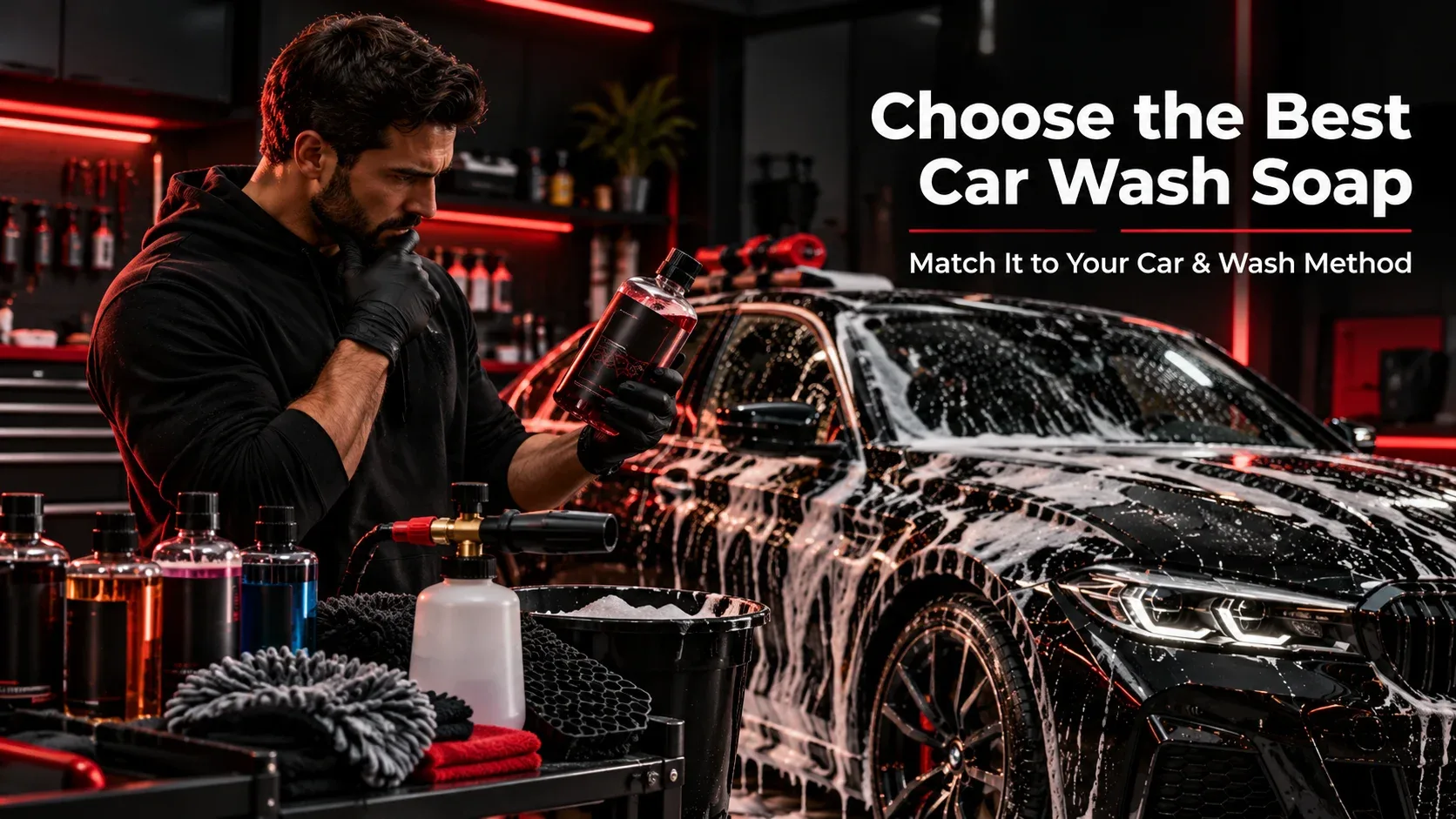
The best choice depends on your vehicle’s finish, protection, level of dirt, washing equipment, and budget. Don’t judge a product only by its price or how much foam it produces.
Check Surface Protection
For ceramic coatings, paint protection film, wax, or sealants, first consult the relevant maintenance instructions.
Match the Cleaning Strength
Use maintenance shampoo for ordinary dirt. Heavy contamination may need a suitable pre-wash or specialist treatment rather than a stronger bucket mixture.
Follow the Dilution Ratio
More concentrated soap does not automatically clean better. Overuse can waste product and make rinsing harder.
Compare Cost Per Wash
Concentrated shampoos sometimes provide greater long-term value, even when the bottle costs more.
| Your Situation | What to Look For |
|---|---|
| Frequent washing | Mild maintenance shampoo |
| Waxed vehicle | Wax-compatible formulation |
| Ceramic coating | Manufacturer-compatible shampoo |
| Heavily dirty car | Appropriate pre-wash and safe contact wash |
| Budget-focused | Good dilution and cost per wash |
| Foam cannon user | Equipment-compatible dilution |
Car Wash Soap vs. Dish Soap: What’s the Difference?
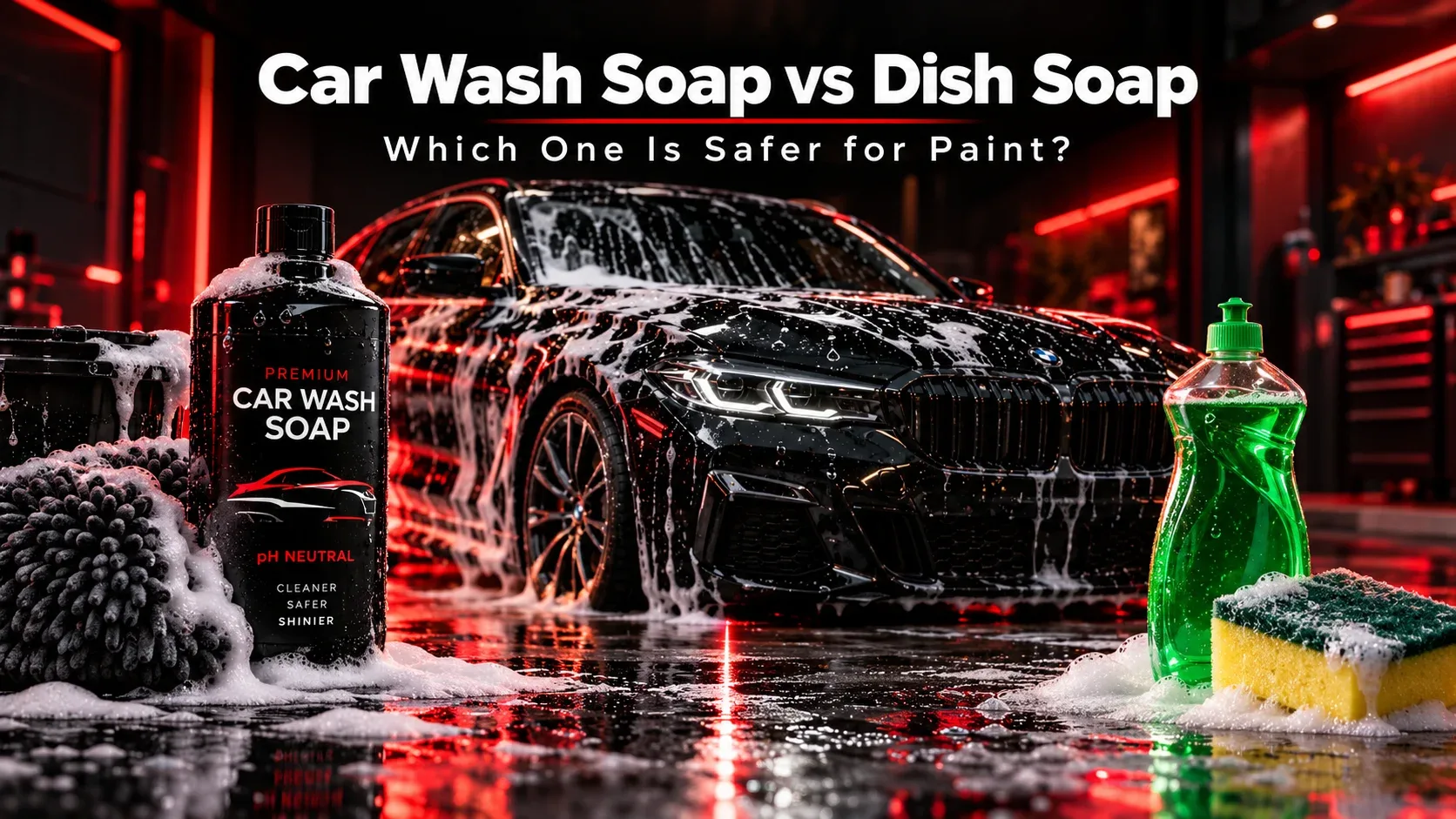
Dish detergent is designed to clean kitchen items, particularly grease, rather than to maintain automobile finishes. Some formulations may be less suitable for wax or sealant maintenance.
Occasional dish-soap contact does not necessarily cause immediate paint damage, but a dedicated automotive shampoo is the better choice for routine car washing.
| Feature | Car Wash Soap | Dish Soap |
|---|---|---|
| Primary purpose | Vehicle exterior cleaning | Kitchenware cleaning |
| Paint-care formulation | Designed for specified automotive surfaces | Not primarily developed for cars |
| Wax compatibility | Compatible products available | Varies and may be unsuitable |
| Routine car washing | Preferred when used as directed | Generally not recommended |
How to Wash Your Car With Car Wash Soap: Step-by-Step
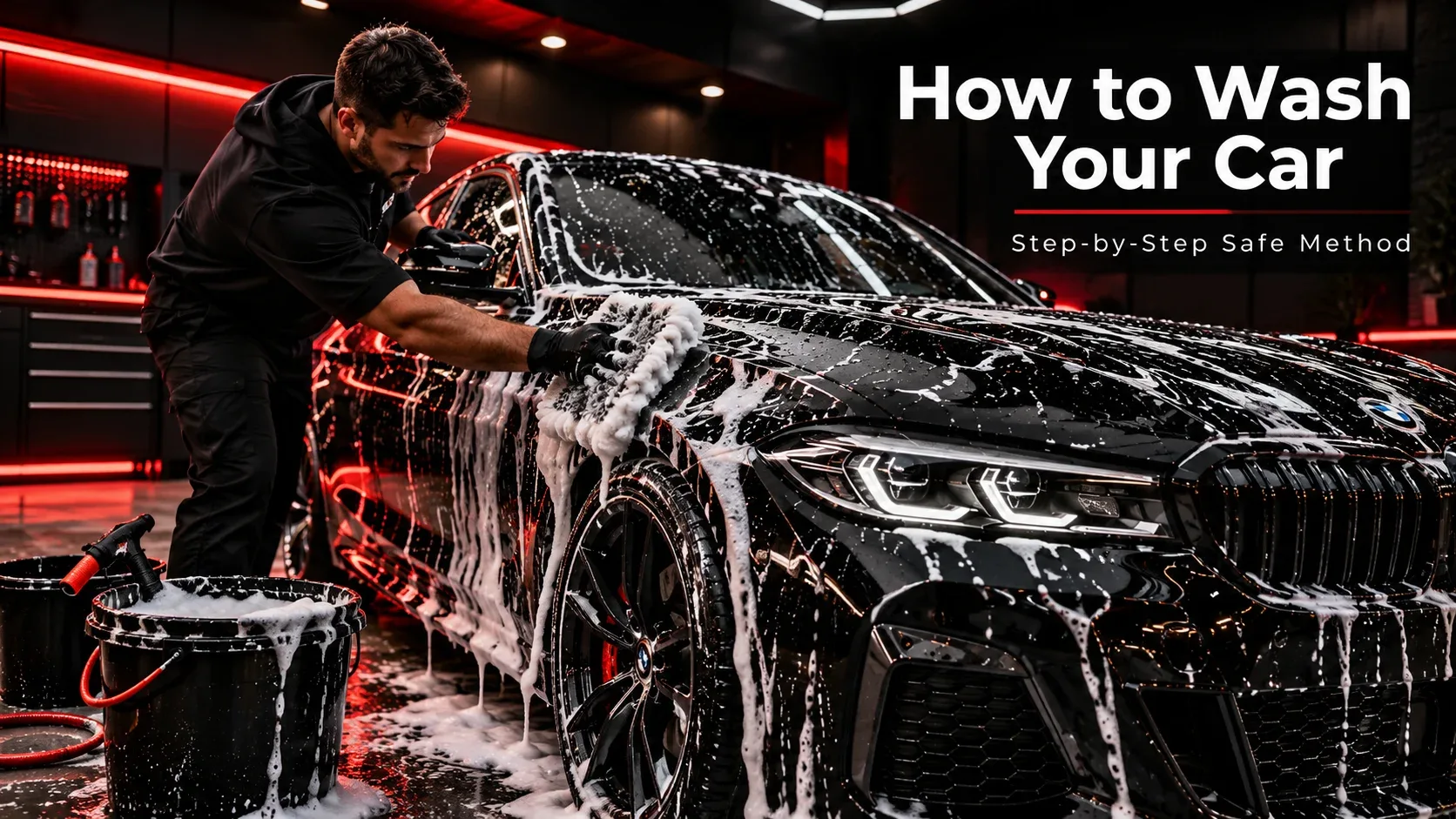
Good technique is just as important as shampoo selection. Prepare clean buckets, suitable car shampoo, a microfiber mitt, rinsing water, separate wheel tools, and clean drying towels.
1 Park in the Shade
Allow hot panels to cool and choose a location where soap will not dry too quickly.
2 Pre-Rinse Loose Dirt
Rinse the car before contact washing, focusing on lower sections with more road grit.
3 Dilute the Shampoo
Measure shampoo according to the label. For example, a product might specify 30 mL per 10 liters, but the actual recommendation varies.
4 Wash Top to Bottom
Gently clean upper panels first with a clean mitt. Rinse the mitt frequently and avoid dragging grit over the paint.
5 Rinse Before Soap Dries
Work in manageable sections and rinse trim, badges, mirrors, and panel gaps thoroughly.
6 Dry Carefully
Use soft, clean microfiber drying towels with minimal pressure or suitable touchless drying equipment.
What Car Wash Soap Is Safe for Ceramic-Coated Cars?
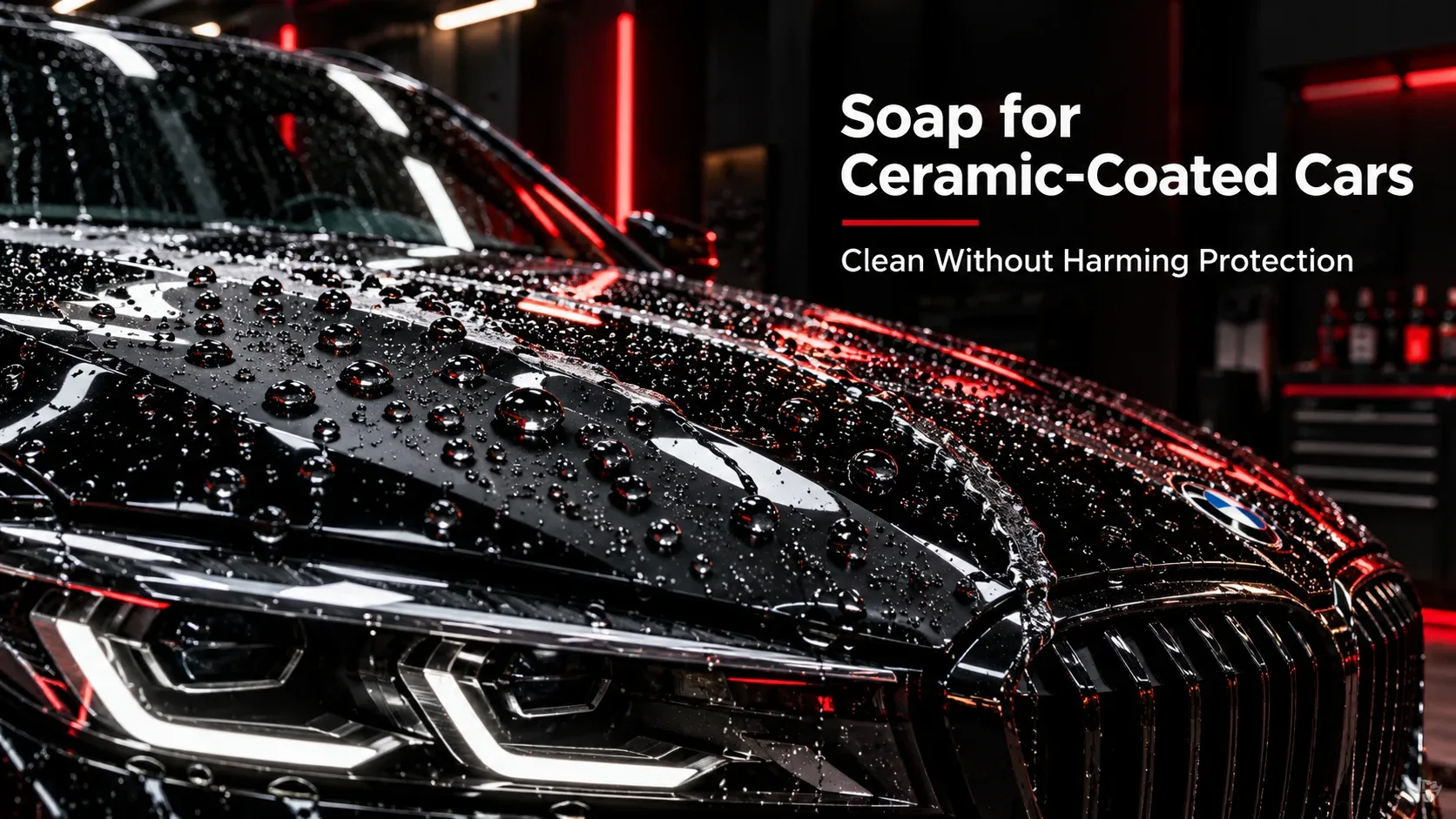
Ceramic coatings can help water bead on painted surfaces, but they still need regular cleaning. A mild, clean-rinsing shampoo that meets the coating manufacturer’s maintenance guidance is often a practical choice.
Check Coating Compatibility
Do not assume that every pH-neutral product is automatically safe for every coating. Look for specific maintenance recommendations.
Understand Added Protection Ingredients
Shampoos containing waxes or water-repellent additives can change surface behavior. Whether that is desirable depends on the coating system.
Water Beading Can Change Because of Contamination
If a coated panel stops beading as strongly, contamination may be affecting its performance. Appropriate cleaning may help; weak beading alone does not prove coating failure.
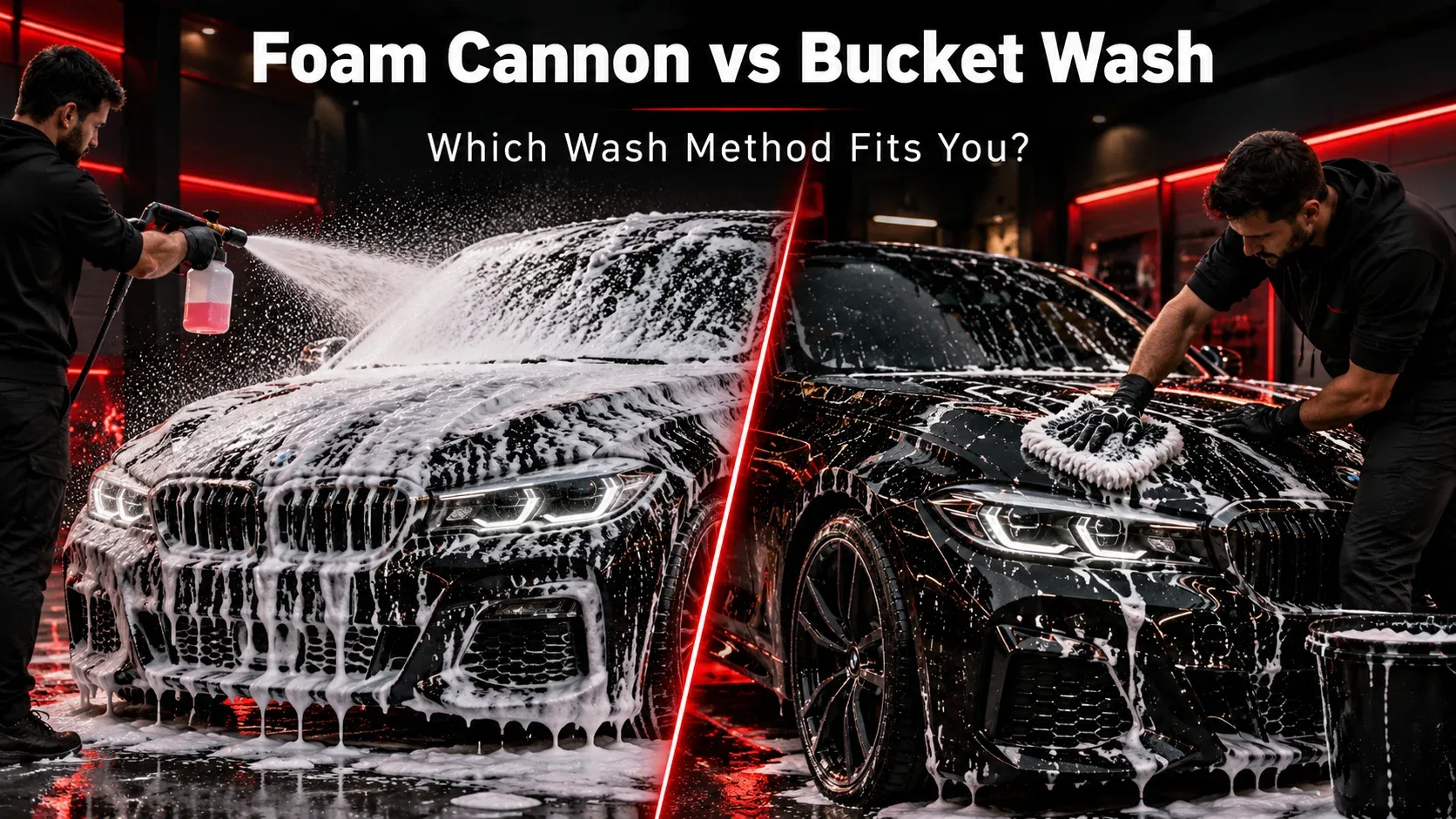
Foam Cannon vs. Bucket Wash: Which Is Better?
Foam Cannon Pre-Washing
A foam cannon uses compatible pressure-washing equipment to apply foam across the vehicle. A suitable pre-wash can help loosen dirt before contact washing. Thick foam does not guarantee full dirt removal.
Traditional Bucket Washing
A bucket and clean mitt allow controlled physical cleaning without specialized pressure-washing equipment. Careful technique is important to avoid rubbing loose grit against paint.
| Factor | Foam Cannon | Bucket Wash |
|---|---|---|
| Equipment | Compatible pressure washer and cannon | Bucket and mitt |
| Main benefit | Convenient foam pre-wash | Controlled contact cleaning |
| Initial expense | Typically higher | Typically lower |
| Bonded road film | May remain after rinsing | Contact can remove remaining film |
For many drivers, an appropriate pre-rinse or pre-wash followed by gentle contact washing offers a practical combination.
Common Car Wash Soap Mistakes to Avoid
Using Too Much Shampoo
Excess concentration does not necessarily improve cleaning and can increase residue.
Washing Hot Paint
Soap and rinse water can dry quickly on hot panels, leaving unwanted deposits.
Using Dirty Mitts or Sponges
Grit trapped in washing tools can contribute to swirl marks and scratches.
Scrubbing With Too Much Pressure
If grime is stubborn, use an appropriate pretreatment instead of forcing a dirty mitt across the paint.
Reusing Wheel Tools on Paint
Brake dust and abrasive road debris should not be carried from wheels to painted panels.
Ignoring the Label
Use each product only on the surfaces and at the dilutions specified by its maker.
How Much Does Car Wash Soap Cost?
Car wash soap prices vary by brand, bottle volume, concentration, and special features. The following are illustrative US price ranges, not verified current quotes for particular products.
| Category | Illustrative Price Range |
|---|---|
| Basic automotive shampoo | $8–$15 |
| Premium maintenance shampoo | $15–$30 |
| Specialized coating shampoo | $18–$35+ |
| Larger concentrated container | Varies by volume and formulation |
Calculate Cost Per Wash
Suppose a 500 mL bottle costs $15 and requires 25 mL for each wash. That provides 20 washes, at roughly $0.75 in shampoo per wash.
Cost per wash = Bottle price ÷ Number of washes per bottle. Your actual usage may vary with vehicle size, bucket volume, and use of a foam cannon.
Frequently Asked Questions About Car Wash Soap
What is the best type of car wash soap?
For routine maintenance, a mild automotive shampoo compatible with your vehicle’s existing protection is usually a sensible starting point.
Is pH-neutral car wash soap better?
It is often suitable for maintenance washing, but pH is only one factor. Ingredients, dilution, and protective-layer compatibility also matter.
Can you use dish soap to wash a car?
Dish detergent can remove grime, but it is generally not the preferred product for regular vehicle washing and may not suit some wax or sealant systems.
How much car wash soap goes in a bucket?
Use the manufacturer’s specified dilution. There is no universal quantity for every shampoo.
Does car wash soap remove wax?
Some stronger cleaners may affect wax and sealant layers. Maintenance shampoos designed for compatibility are generally a better routine choice.
What shampoo is suitable for ceramic-coated cars?
Choose a product compatible with your coating manufacturer’s instructions, often a mild maintenance shampoo.
Can car wash soap damage paint?
Unsuitable products, incorrect dilution, or abrasive washing technique can cause problems. Follow instructions and keep tools clean.
How often should I wash my car?
Some drivers wash about every one to two weeks, but conditions, mileage, weather, contamination, and storage influence the right frequency.
Is foam cannon soap different from regular shampoo?
Some products are formulated for foam cannon use, while others support both foam cannon and bucket dilution. Check the label.
Can I wash my car with only water?
Water removes some loose dirt but may not adequately remove oily road film. Avoid rubbing contaminated paint without appropriate lubrication.
Final Thoughts: Choose the Right Soap, Not Just the Most Foam
The best car wash soap is the one that suits your vehicle’s finish, existing protection, and regular cleaning needs. Choose compatible chemistry, follow the recommended dilution, and focus on safe technique rather than foam thickness alone.
Pre-rinse loose dirt, clean gently with suitable microfiber tools, rinse before shampoo dries, and dry carefully. These habits help keep your car looking cleaner while reducing avoidable wash-induced marks.
Editorial note: Product compatibility varies by manufacturer and protective coating. Follow your vehicle’s and product’s maintenance instructions. Price and dilution examples are illustrative.