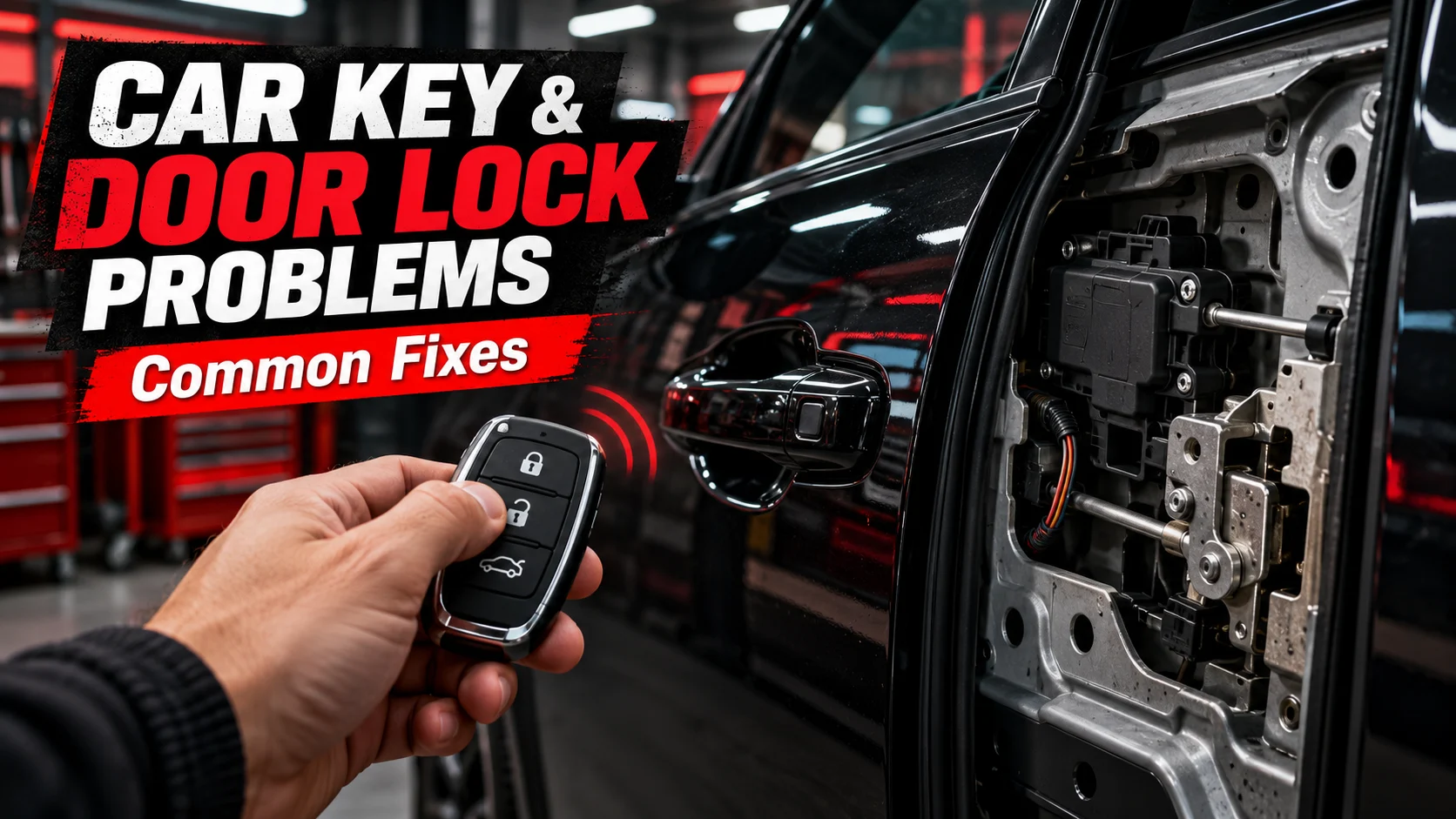
Your car key suddenly stops responding, or one door refuses to lock even though the others work normally. Before replacing parts, it helps to determine whether the issue is a weak key fob battery, damaged lock actuator, mechanical latch, wiring problem, or vehicle security system.
This guide explains common car key and door lock problems, simple checks you can perform, how to change a car key fob battery, and when car door lock actuator repair or professional key programming may be necessary.
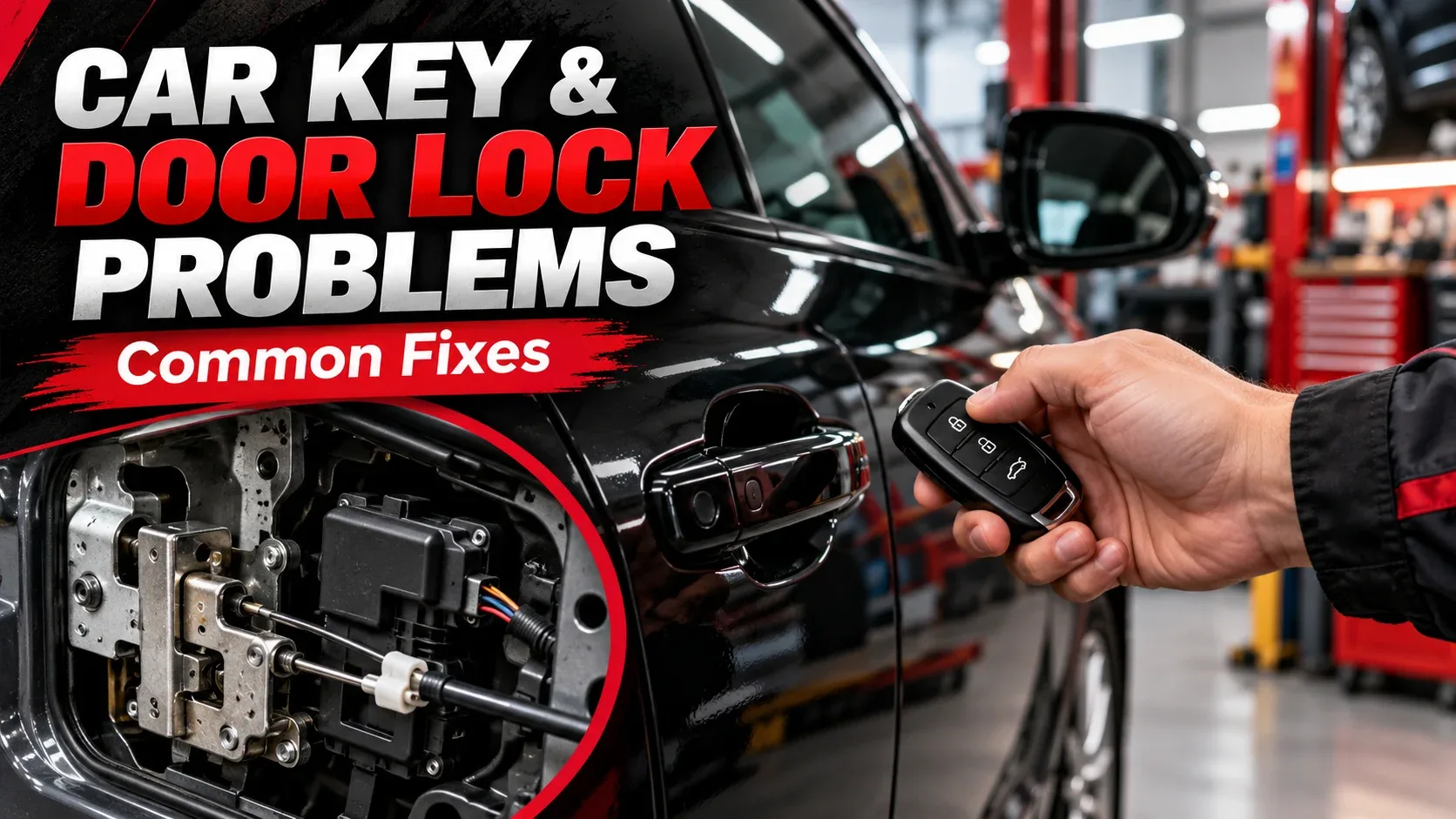
Quick Answer: What Should You Check First?
If the remote key fob fails, test its battery and a spare remote. If only one door fails, inspect that door’s latch, actuator, and wiring. If all power locks stop working, check the vehicle’s electrical supply, applicable fuses, switches, and control system before purchasing parts.
Common Car Key and Door Lock Problems: Quick Diagnosis
Different symptoms point toward different components. Check exactly what happens when you operate the locks before ordering a replacement part.
Remote Not Responding
Start with the fob battery, spare remote, and vehicle response.
One Door Won’t Lock
Consider a faulty actuator, damaged wiring, or binding latch.
All Locks Stop Working
Check shared electrical power, switches, fuses, and electronic controls.
| Symptom | Possible Cause | First Check |
|---|---|---|
| Fob works only nearby | Weak battery or interference | Correct battery and spare fob |
| One door does not lock | Actuator, latch, wiring | Try interior lock switch |
| All power locks fail | Power, fuse, switch, module | Check other electrical functions |
| Buzzing or grinding | Worn actuator or binding latch | Observe the affected door |
| Metal key does not turn | Worn key or lock cylinder | Try an undamaged spare |
| New key will not start engine | Programming or starting fault | Inspect security warnings |
Fast test: If the interior power-lock switch works but the remote doesn’t, investigate the fob and remote-control system first.
Understanding Car Door Lock Components
Modern car locks combine mechanical parts with electrical controls. A key, switch, or remote may command an electric actuator to move the lock mechanism. Knowing the basic door lock components makes it easier to recognize where a problem starts.
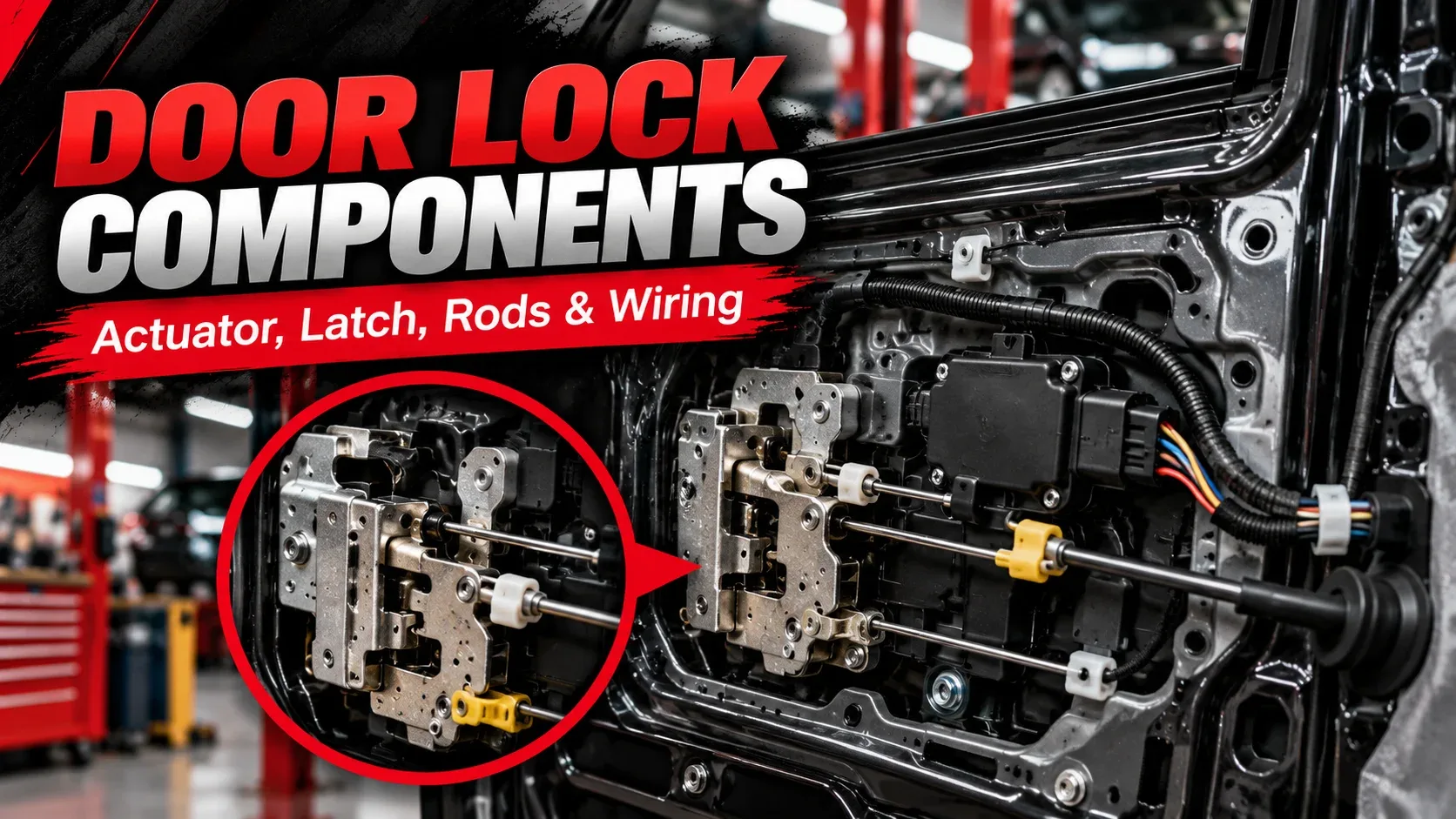
Door Lock Actuator
The electric drive that moves the locking mechanism when commanded.
Door Latch Assembly
Secures the closed door and releases it through the handle mechanism.
Mechanical Lock Cylinder
Accepts a correctly cut physical key where equipped.
Wiring and Connectors
Carry power and electronic control signals to door components.
Power Lock Switch
Allows a driver or passenger to command locking and unlocking.
Body or Door Module
Controls or monitors door locking on many modern cars.
Some vehicles integrate the power door lock actuator into the latch assembly. This affects repair access, part cost, and whether the actuator can be replaced individually.
Car Key Fob Not Working: Causes and Common Fixes
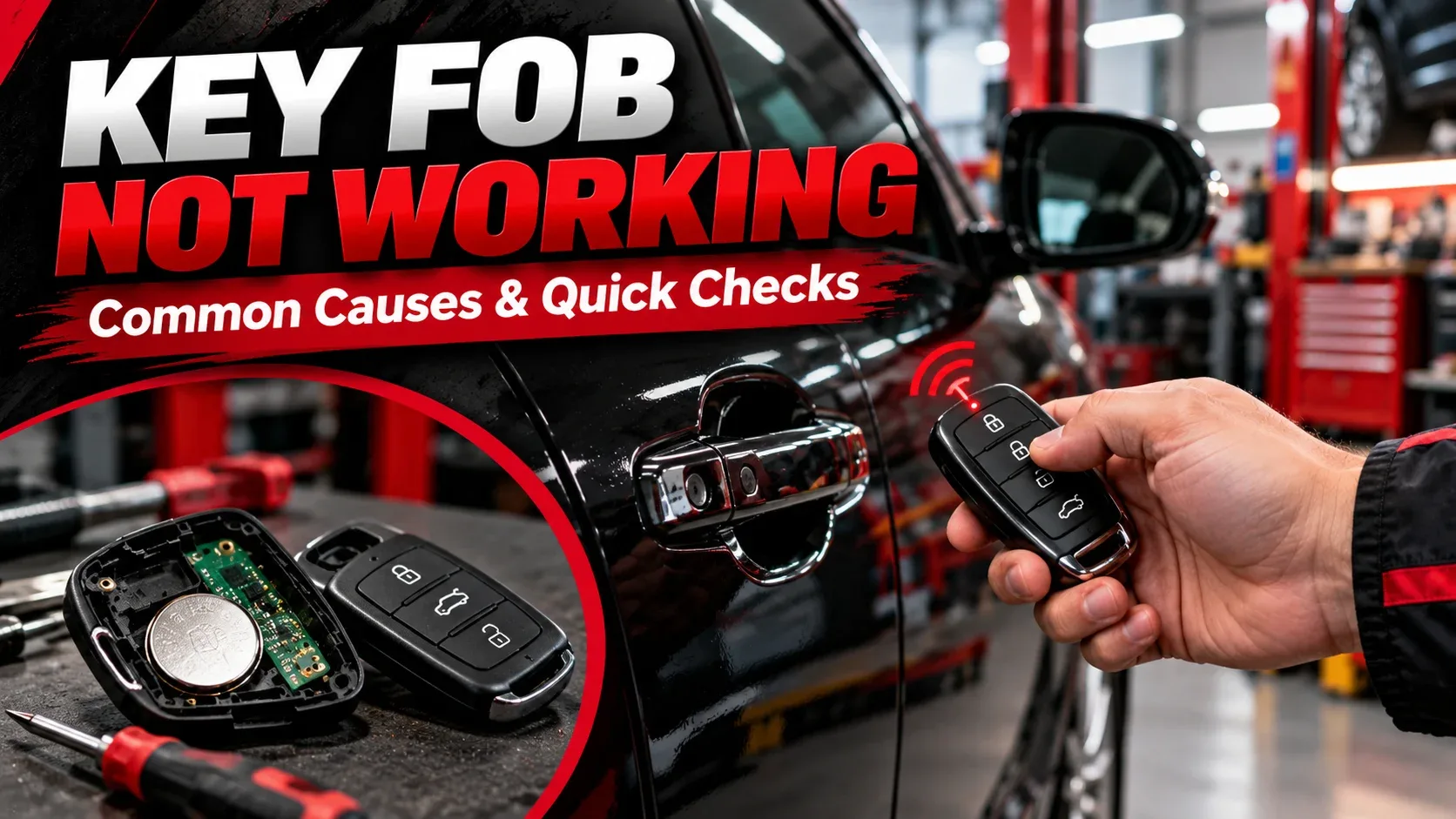
Most key fobs use a small battery to transmit commands to the vehicle. Weak batteries, damaged buttons, radio interference, or a vehicle-side fault can prevent unlocking.
Weak or Dead Car Key Battery
A reduced operating range or occasional missed button presses may indicate a weak coin-cell battery. Check the owner’s manual for the correct type.
Worn or Damaged Buttons
If only one button fails, the remote’s rubber buttons or circuit contacts may be damaged. Water exposure and drops can also cause electronic faults.
Interference or Receiver Problems
Try the key in another location and compare a working spare. If multiple remotes fail, the issue may involve the vehicle receiver, power supply, or electronic control system.
Remote Synchronization
Some vehicles have model-specific procedures to synchronize a remote. Remote locking and immobilizer programming may be separate processes, so do not assume changing the battery requires engine-key programming.
How to Replace a Car Key Fob Battery
Replacing a car key fob battery is usually a beginner-friendly maintenance task, provided the remote housing can be opened according to the manufacturer’s instructions.
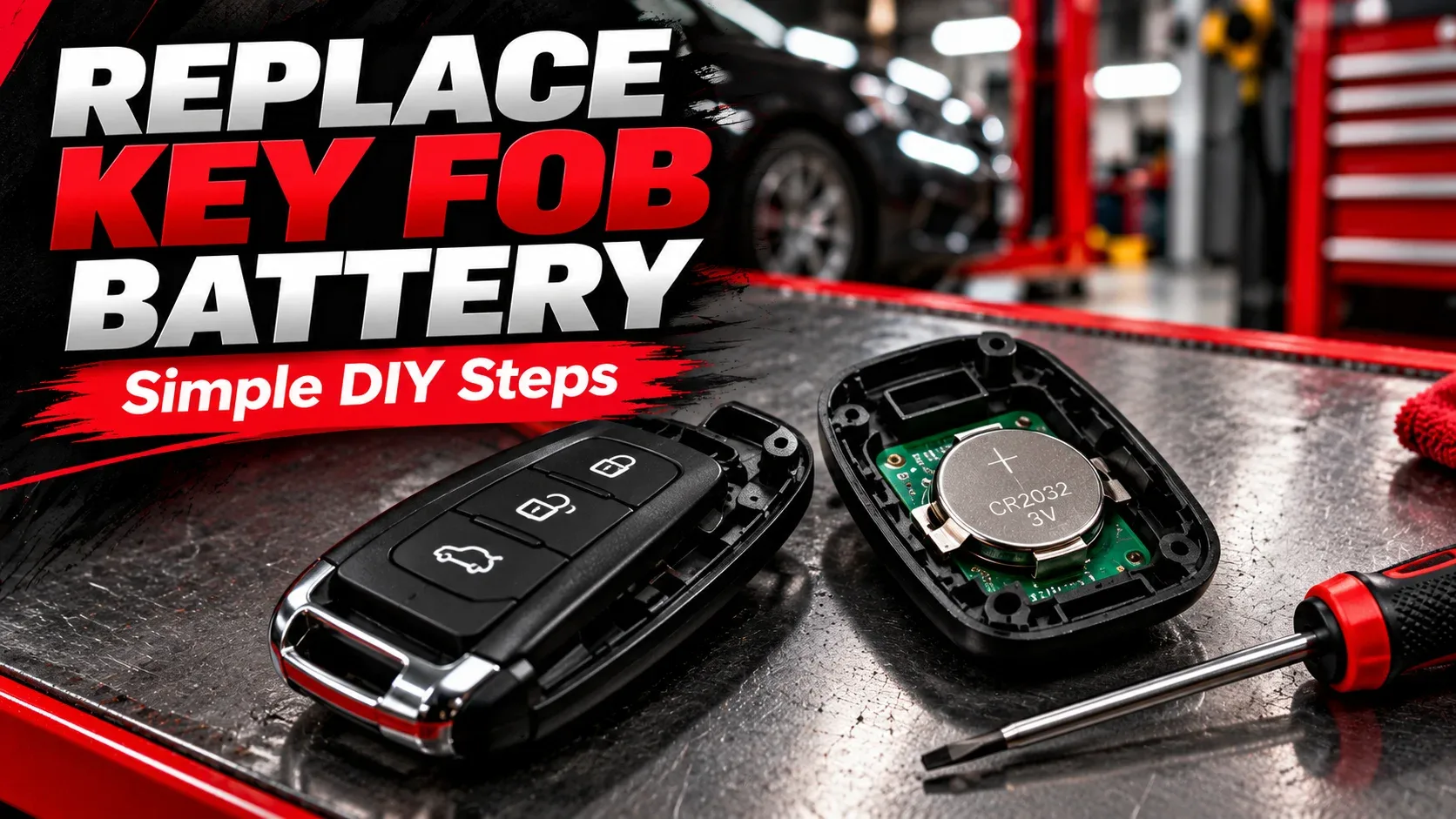
What you may need: A correct replacement coin-cell battery, soft cloth, and an appropriate nonmetal opening tool if the manufacturer recommends one.
Find the Correct Battery
Check the manual or the number stamped on the existing battery, such as CR2025 or CR2032.
Open the Remote
Remove the emergency key where required and open the case using the correct release or seam.
Remove the Old Cell
Note the battery’s orientation. Avoid bending its metal contacts or damaging the circuit board.
Install the Replacement
Insert the specified battery with the same polarity and ensure that it is seated properly.
Close and Test
Secure the case and test locking and unlocking. If needed, follow model-specific remote resynchronization guidance.
Battery safety: Coin-cell batteries are dangerous if swallowed. Keep new and used cells away from children, close the remote securely, and seek emergency medical advice immediately if ingestion is suspected.
If the remote case or contacts are damaged, replacing the battery may not solve the problem. A qualified automotive locksmith can examine the fob.
CR2025 vs. CR2032: Which Battery Fits Your Car Key?
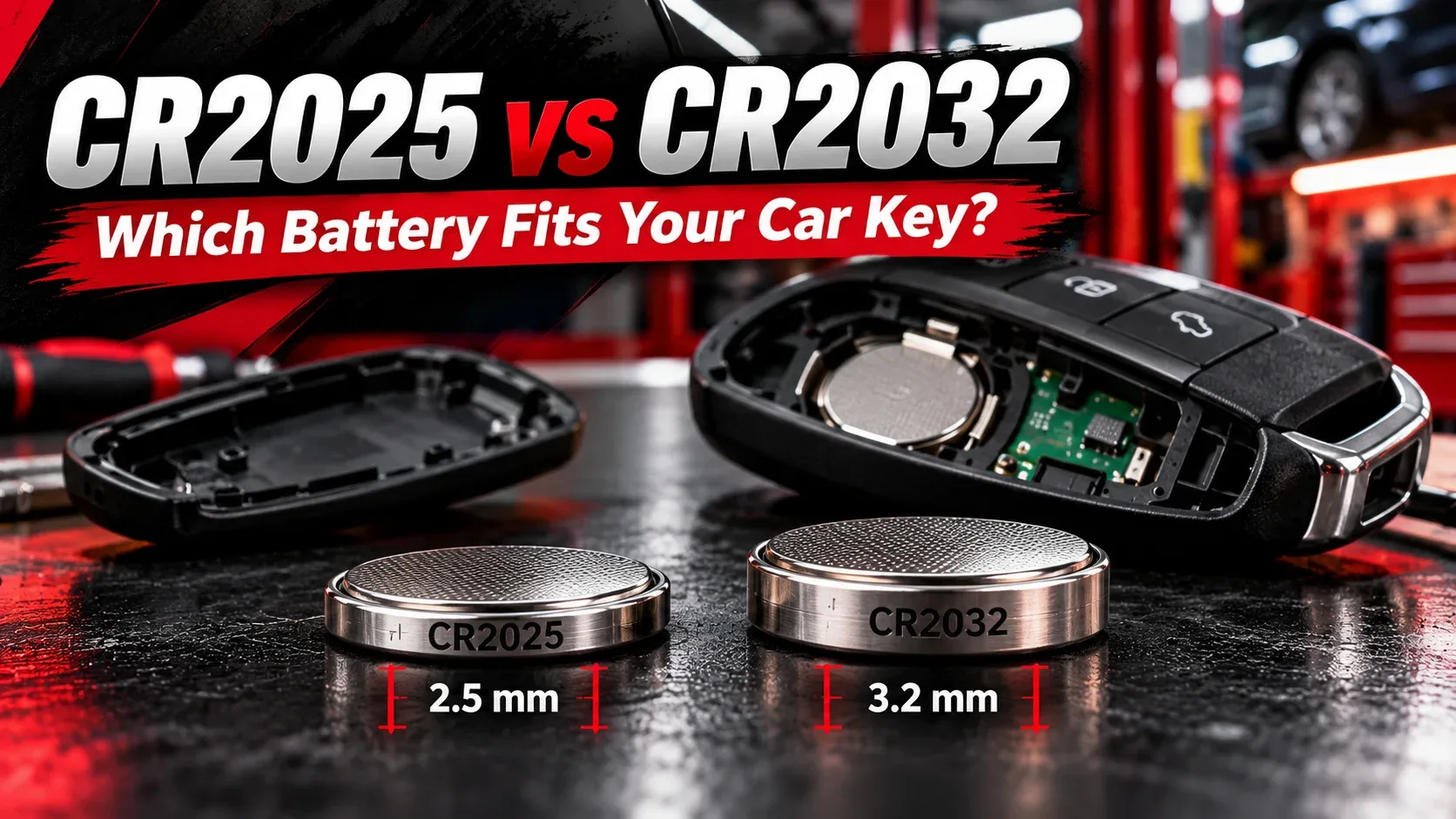
The CR2025 battery for car key fobs and the CR2032 battery for car keys share a nominal voltage and diameter, but their different thickness means they should not be substituted without manufacturer approval.
| Specification | CR2025 | CR2032 |
|---|---|---|
| Nominal voltage | 3V | 3V |
| Diameter | 20 mm | 20 mm |
| Thickness | 2.5 mm | 3.2 mm |
| Typical relative capacity | Lower | Higher |
| Use | Only if specified | Only if specified |
Do not force an alternative size: A thicker battery may damage contacts or stop the remote case from closing; a thinner one may fit loosely.
Symptoms of a Bad Car Door Lock Actuator
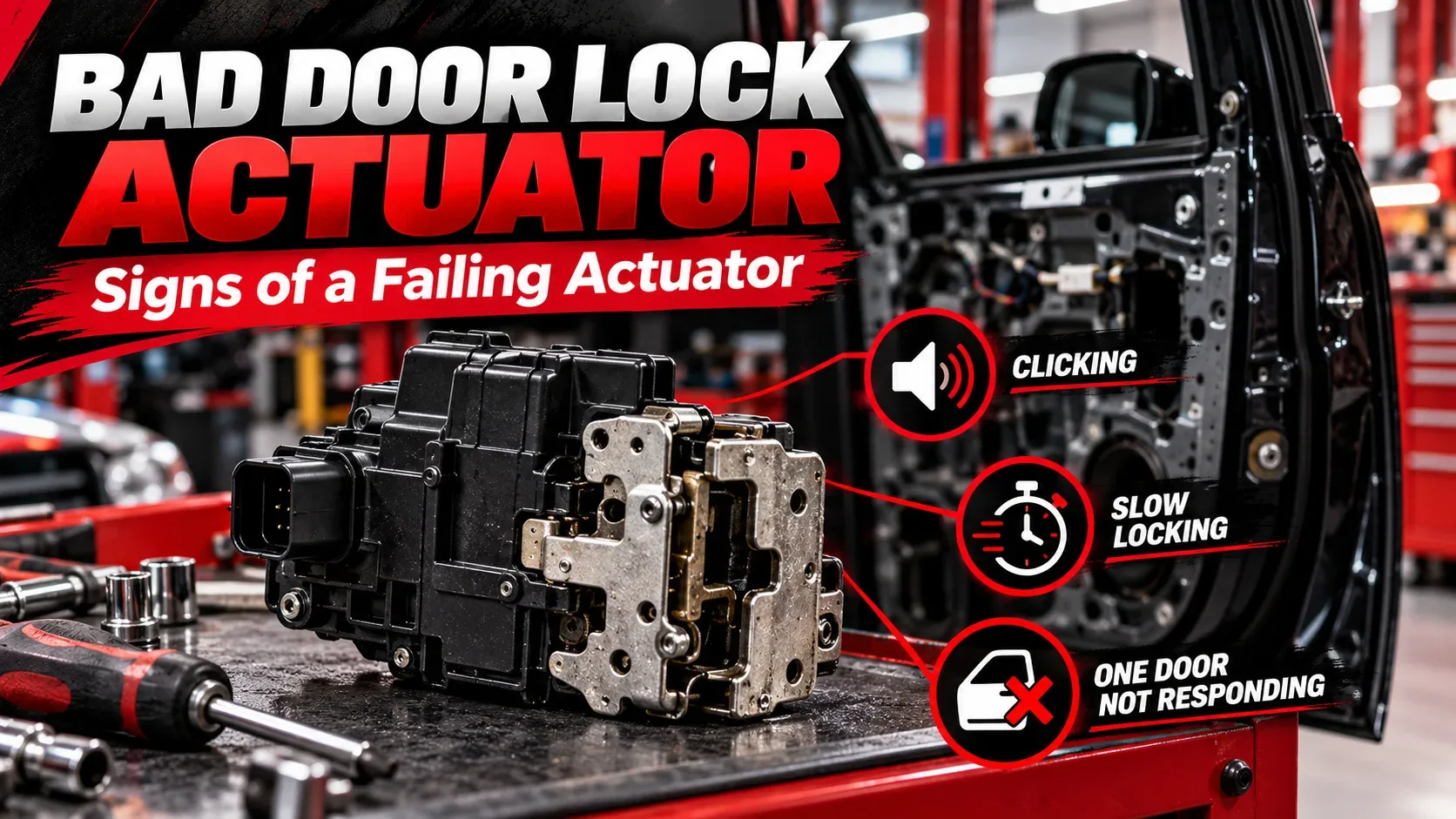
A failing car door lock actuator may cause one door to stop responding, produce repeated clicking, or operate slowly. The same symptoms can also arise from a binding latch or wiring fault.
Only One Door Does Not Respond
If other doors work, the fault may be localized to the affected actuator, door wiring, mechanical linkage, or latch.
Clicking, Buzzing, or Grinding
Worn motor gears or a binding mechanism can produce noises when locking or unlocking. A sound alone does not conclusively identify the failing component.
Slow or Intermittent Movement
A struggling actuator may move the lock incompletely or operate unpredictably. Inspect the entire mechanism before ordering parts.
Important: Do not drive if a door cannot close and latch securely. A defective locking feature and an unsafe door latch are different problems.
Car Door Lock Actuator Repair: Diagnosis and Replacement
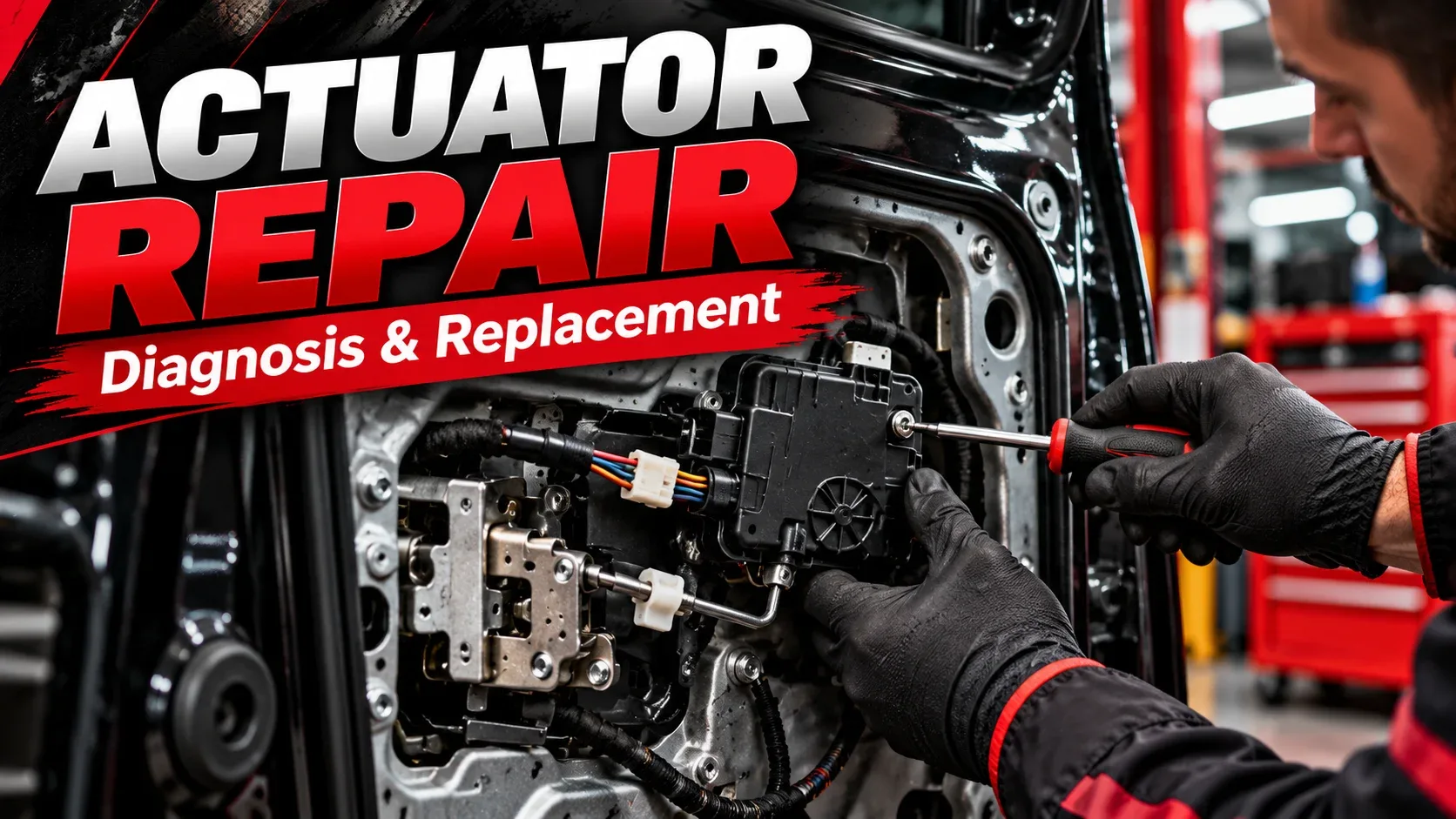
Good car door lock actuator repair starts with diagnosis rather than immediately replacing parts. Door trim removal and electrical checks can differ substantially between models.
Tools and Preparation
Depending on the vehicle, service may require trim tools, screwdrivers, sockets, a digital multimeter, and a vehicle-specific wiring diagram. Review all precautions for side airbags, window regulators, and electronic connectors.
Isolate the Affected Door
Compare the remote and interior switch response for each door. Identify whether the problem is isolated or system-wide.
Check Mechanical Operation
Look for signs of binding, broken linkage, or a jammed latch. Do not force components.
Access the Assembly Safely
Follow manufacturer-specific door trim and power-disconnection instructions, especially around side airbags.
Test the Circuit
A qualified person can use the wiring diagram and appropriate measurements to check whether the actuator receives the intended signals.
Replace the Confirmed Failed Part
Install a compatible actuator or integrated latch assembly as instructed by the manufacturer.
Reassemble and Verify
Confirm the manual release, inside and outside handles, powered locking, window operation, and secure door latching.
Electrical precaution: Never apply battery power to unidentified connectors. Avoid disturbing side airbag circuits or wiring without the correct service procedure.
Repair or Replace?
Wiring and linkage faults may be repairable without a new actuator. When sealed motors or gears fail, replacing the actuator or combined latch unit is often the practical solution.
Power Door Lock Electrical Problems: Fuses, Wiring, and Switches
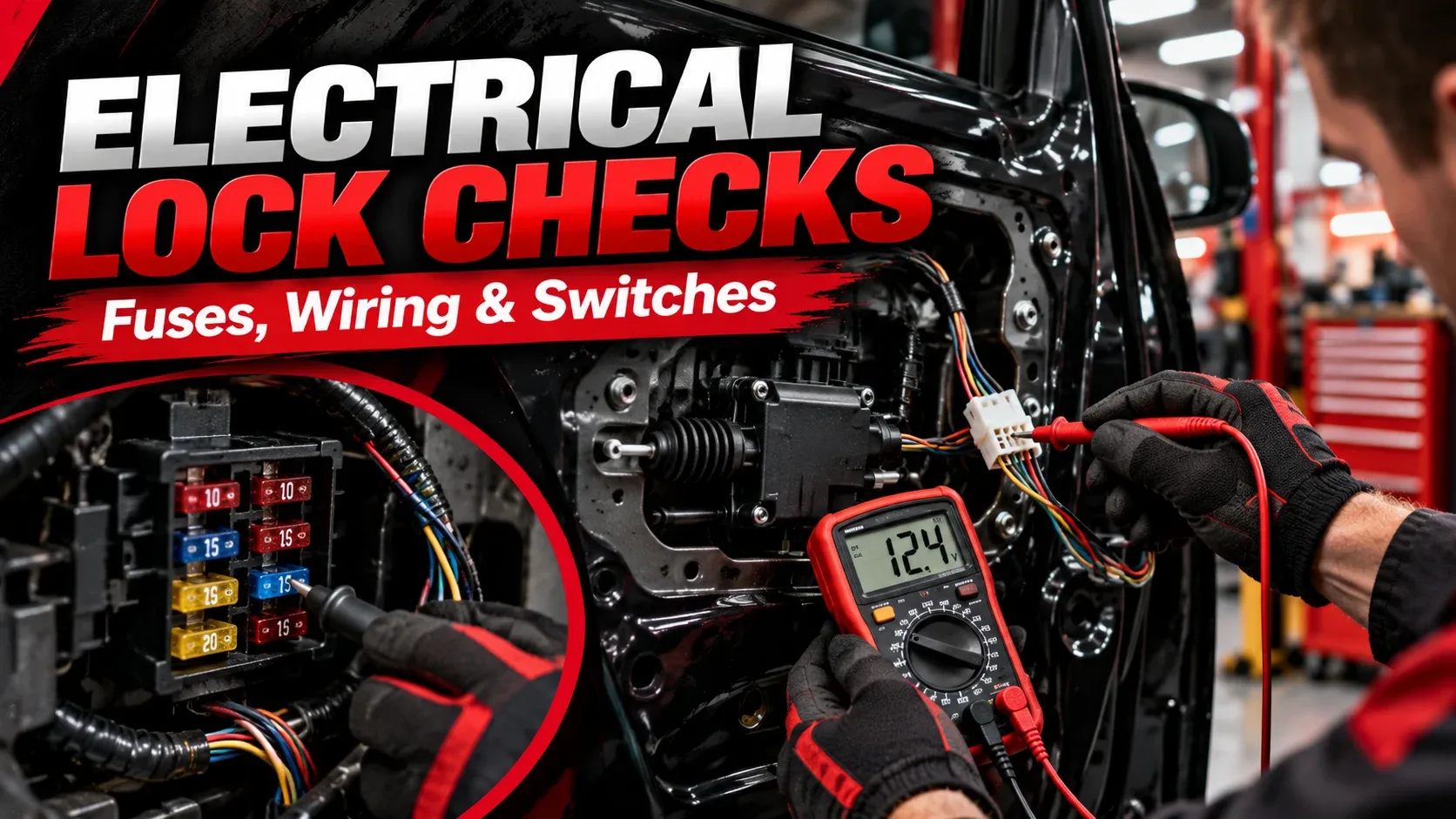
An actuator can be mechanically sound but unable to work because its power or control signal is missing. Check the vehicle’s electrical system before assuming the actuator needs replacement.
Blown Fuse
Check the fuse locations identified in the vehicle manual. If a replacement fuse blows again, a short circuit or other electrical fault may be present.
Damaged Door Wiring
Repeated door movement can damage wires near the door hinge or rubber harness boot, producing intermittent locks or additional door electronics problems.
Faulty Switch or Control Module
Compare available switches. Electronic module faults may require a professional scan tool and manufacturer diagnostic instructions.
Diagnostic shortcut: One failing door suggests a local fault; all failing locks suggest a shared circuit, control, or power issue; remote-only failure points toward the fob or receiver system.
Car Key Transponder Programming Explained
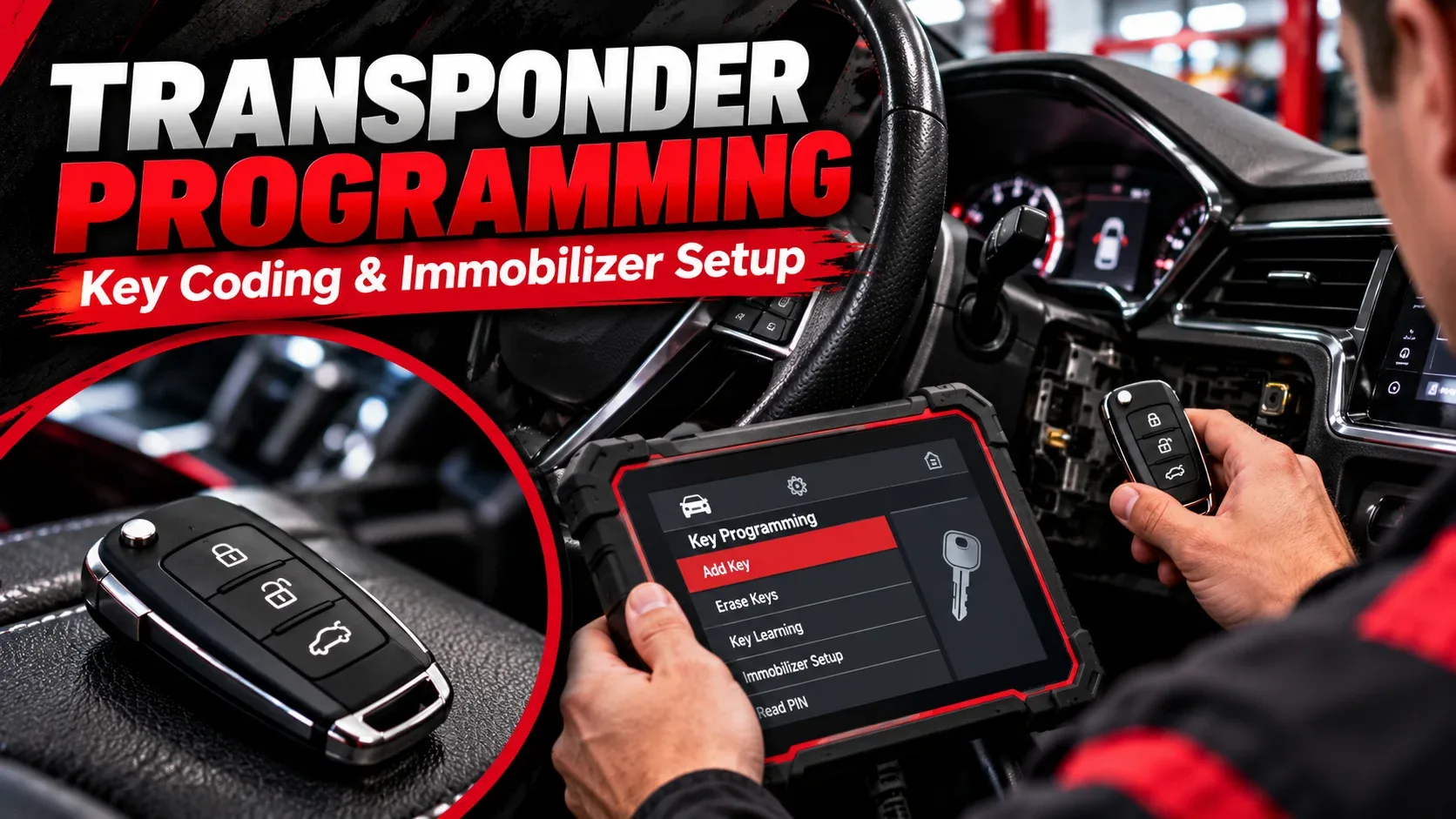
A transponder-enabled car key communicates with the vehicle immobilizer. A blade that is cut correctly may physically turn a lock while still lacking electronic permission to start the engine.
| Service | What It Does | Typical Need |
|---|---|---|
| Key cutting | Matches the mechanical lock | Key code or existing key |
| Remote pairing | Enables button-operated locking | Model-specific procedure |
| Transponder programming | Authorizes engine starting | Compatible key and approved equipment |
| Smart key configuration | Enables supported proximity features | Specialized equipment on many vehicles |
Car key transponder programming requirements vary by manufacturer and model year. Battery replacement alone generally does not erase stored immobilizer authorization, although some remotes may need synchronization.
How to Get a Replacement Car Key Without the Original
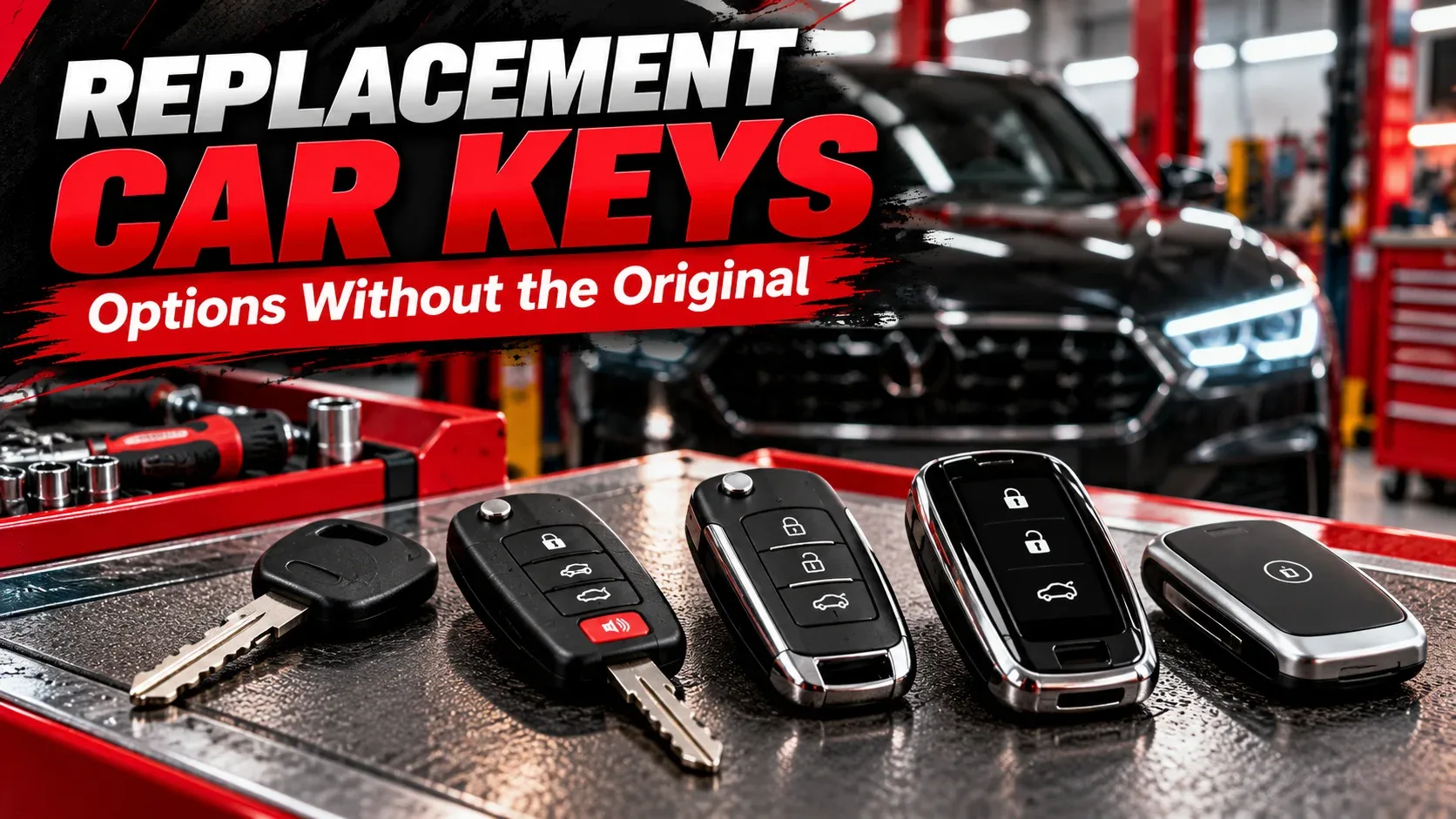
Losing your only key does not necessarily mean replacing all door locks. Depending on vehicle security requirements, a dealership or qualified automotive locksmith can often supply a compatible replacement after verifying authorization.
Authorized Dealership
May order manufacturer-compatible keys and arrange cutting and programming.
Qualified Automotive Locksmith
May provide cutting and programming services if equipped for the specific vehicle.
Information You May Need
- Vehicle identification number (VIN), make, model, and year.
- Government-issued identification and proof of ownership or authorized possession.
- Information about any spare keys and the vehicle’s security system.
Ask whether the quoted price includes key hardware, cutting, remote pairing, transponder programming, travel, and applicable taxes.
Car Key and Door Lock Repair Costs
Costs depend on the vehicle, local labor rates, part availability, diagnosis, and programming requirements. Before paying for a replacement, confirm which service the quote includes.
| Service | Relative Cost | DIY Suitability |
|---|---|---|
| Coin-cell battery replacement | Usually low | Often beginner-friendly |
| Key fob housing repair | Low to moderate | Depends on design |
| Mechanical key cutting | Varies by type | Professional equipment |
| Door lock actuator replacement | Moderate to high | Intermediate or professional |
| Transponder programming | Varies significantly | Frequently professional |
| Complete smart key replacement | Can be high | Usually professional |
Simple fob-battery changes are often reasonable DIY tasks. Diagnosing electronic modules, removing door trim around airbags, or performing key security programming is usually better handled by a qualified professional.
How to Prevent Future Car Key and Door Lock Problems
Protect the Key Fob
Reduce impact, water exposure, and unnecessary handling of internal circuits.
Replace Weak Batteries
Investigate reduced remote range before the fob stops working altogether.
Do Not Force Locks
Have stiff keys and binding door mechanisms diagnosed.
Maintain a Spare Key
Keep a verified working replacement stored securely.
Use a Light Key Chain
Avoid excessive weight hanging from traditional ignition keys.
Act on Early Symptoms
Check repeated clicking, intermittent locking, and damaged wiring promptly.
Frequently Asked Questions
Can a bad door lock actuator drain the car battery?
In some failure scenarios, a fault can keep a circuit active and contribute to battery drain. An actuator that merely stops moving does not automatically cause a drain; further testing may be needed.
How long does a car key fob battery last?
Many last several years, depending on battery quality, remote design, use, and conditions. Follow vehicle-specific guidance when available.
Does replacing a key fob battery erase its programming?
Usually not. Some vehicles may require remote resynchronization, but immobilizer authorization is typically stored separately from the coin cell.
Can I drive with a bad door lock actuator?
A door that still latches securely may be operable, though its locking function is impaired. Do not drive if the door will not close or remain latched safely.
Why can my car key unlock the door but not start the engine?
The metal blade and the electronic immobilizer can serve different functions. A transponder issue is one possibility, along with normal starting-system faults.
Can I replace a door lock actuator myself?
Some intermediate DIY owners can, but door layout, electrical diagnosis, and airbag proximity make certain vehicles better suited to professional service.
Are CR2025 and CR2032 batteries interchangeable?
Not automatically. Both are 3V and 20 mm across, but they differ in thickness. Use the remote manufacturer’s specified size.
Can a locksmith make a replacement without the original key?
A properly equipped automotive locksmith may be able to, subject to vehicle support, ownership verification, and available security programming methods.
Why does only one power door lock stop working?
A localized problem may involve that door’s actuator, linkage, latch, wiring, or switch. Diagnosis determines the actual fault.
Final Thoughts: Fix the Cause, Not Just the Symptom
Car key and door lock faults range from simple battery issues to more complicated electrical or security-system repairs. Start with the least invasive checks and move toward component replacement only after confirming the cause.
- Test the remote and its correct battery first.
- Compare failing doors with functioning doors.
- Check actuator, latch, and wiring before replacing parts.
- Use vehicle-specific service instructions and compatible keys.
- Choose professional diagnosis for complex electrical or immobilizer problems.