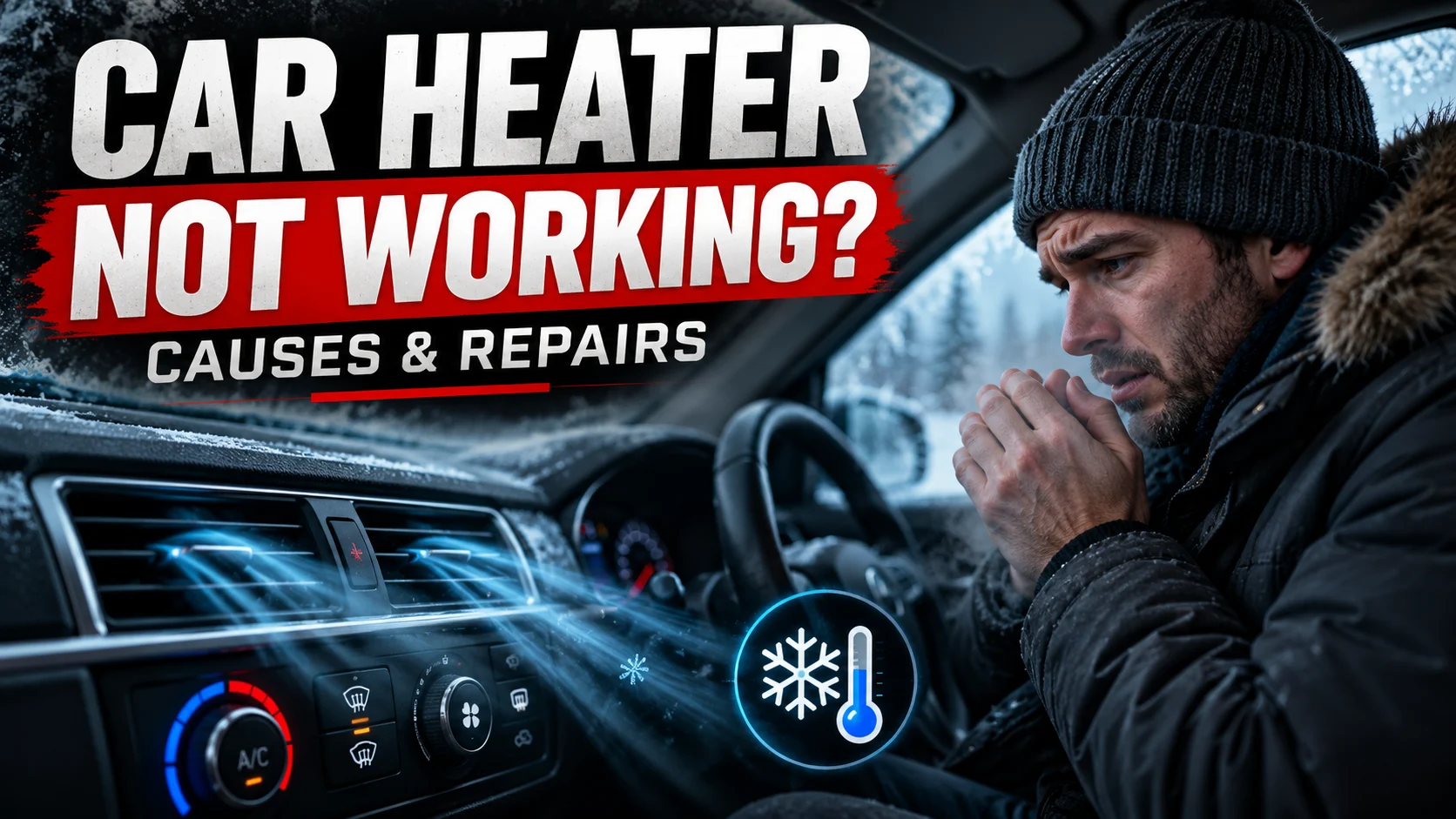
When your car heater is not working, a cold commute can quickly become uncomfortable—and fogged windows can make driving unsafe. Sometimes the problem is as simple as low coolant or a blocked cabin air filter. Other times, it involves the thermostat, heater core, blend door or blower motor.
Start by identifying the exact symptom rather than replacing parts at random. This guide explains the common causes, what you can check safely, when a heater core flush may help, and what professional car heater repair could cost.

Quick Answer: Why Is My Car Heater Blowing Cold Air?
If air comes from the vents but stays cold after the engine reaches normal operating temperature, possible causes include low coolant, a thermostat stuck open, a restricted heater core, trapped air or a malfunctioning temperature blend door. If no air comes from the vents at all, investigate the blower motor, electrical supply and controls first.
Car Heater Not Working? Check These Symptoms First
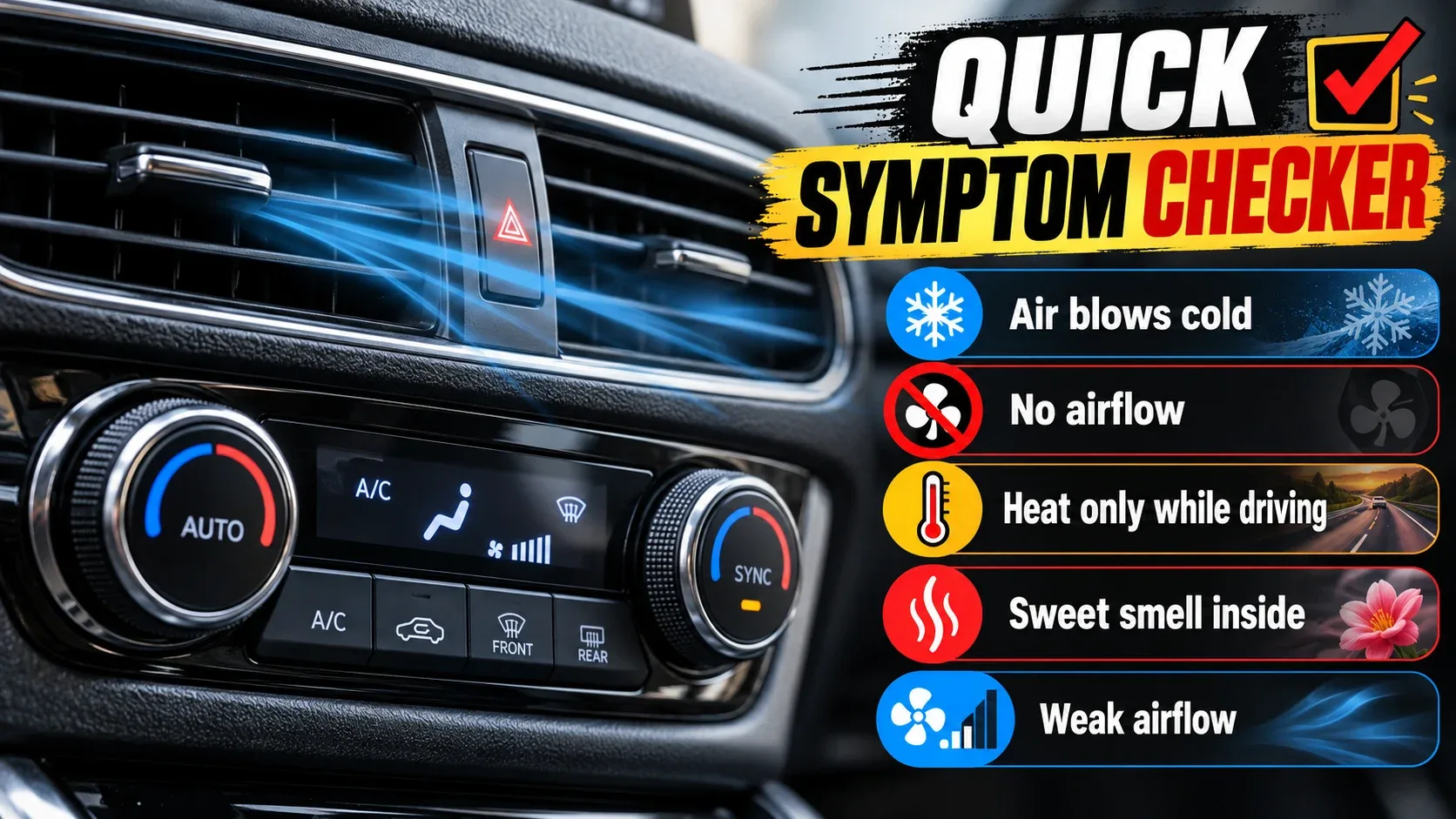
An effective heater diagnosis begins with one question: Is the air cold, weak or completely absent? Those symptoms point toward different systems.
| What you notice | Possible cause | Best next check |
|---|---|---|
| Strong airflow, no heat | Coolant, thermostat, heater core or blend door | Check engine temperature and coolant when cool |
| No air from vents | Blower, fuse, wiring or control issue | Test all fan speeds |
| Heat varies at idle | Low coolant, air or circulation issue | Check coolant level and leaks |
| Weak airflow | Clogged filter or air passage | Inspect cabin filter |
| Sweet smell or damp carpet | Possible heater core leak | Arrange cooling-system inspection |
These are clues, not proof of a failed component. Several different faults can produce the same symptom.
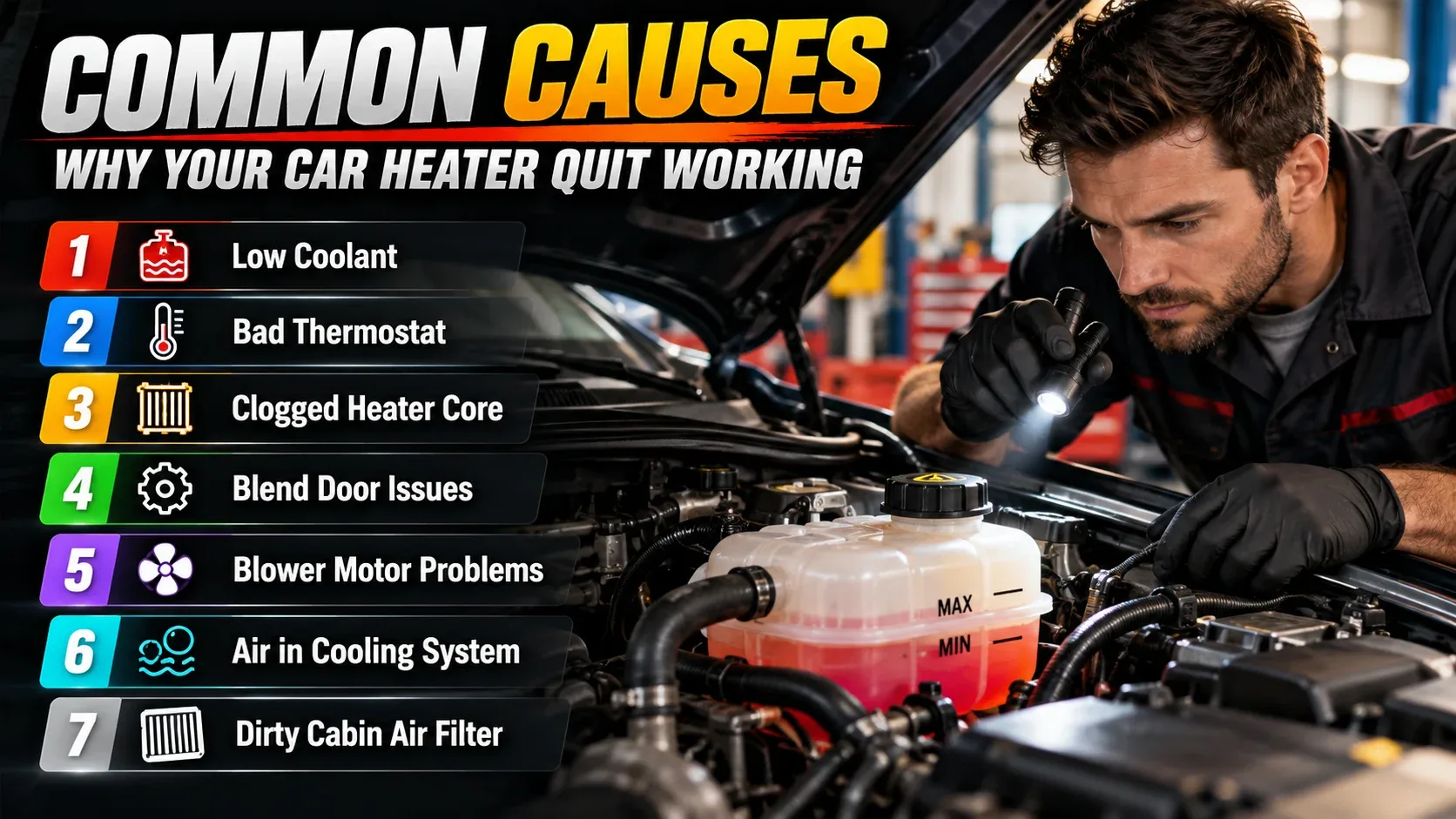
7 Common Reasons Your Car Heater Quit Working
1. Low Coolant or a Coolant Leak
The heater needs hot engine coolant flowing through its heater core. If the coolant level is low, the heater core may not receive enough hot coolant, especially at idle. You might also notice coolant spots beneath the vehicle or a warning on the dashboard.
What to do: With the engine completely cool, inspect the coolant reservoir according to your owner’s manual. If it is repeatedly low, find and repair the leak rather than continually topping it off. Use only the coolant specification approved for your vehicle.
2. Thermostat Stuck Open
A thermostat that stays open can prevent the engine from warming up normally. The cabin heat may remain lukewarm, and the temperature gauge may sit unusually low during a normal drive. A technician can verify actual coolant temperature and thermostat operation before replacement.
3. Clogged Heater Core
Rust, deposits or contaminated coolant can restrict the narrow passages of the heater core. Air may blow normally but never get sufficiently warm. A carefully performed heater core flush sometimes improves flow, though severe corrosion or internal damage may require replacement.
4. Faulty Temperature Blend Door
The blend door directs airflow through or around the heater core. If its actuator or linkage fails, the system may remain stuck on cold even when the engine and coolant are hot. Clicking behind the dashboard or inconsistent temperatures between vents can offer clues.
5. Blower Motor or Electrical Trouble
If little or no air comes from any vent, the problem may be a failed blower motor, fuse, relay, electrical connection, fan-speed controller or HVAC control. A heater core replacement will not solve a fan that cannot move air.
6. Air Trapped in the Cooling System
Air pockets can interfere with coolant circulation after a coolant leak or repair. The heater may alternate between warm and cold, sometimes with unusual engine-temperature behavior. Proper bleeding procedures vary by vehicle and some require specialized filling equipment.
7. Restricted Cabin Air Filter or Ventilation Path
A dirty cabin filter or blocked air intake can sharply reduce airflow, making the heat seem ineffective. Replacing a clogged filter may restore airflow, but it will not correct an underlying lack of heat in the coolant system.
Safety first: Never remove a radiator cap or pressurized coolant cap when the system is hot. If the temperature gauge enters the overheating zone, coolant is escaping rapidly, or the windshield cannot be cleared safely, stop driving in a safe location and arrange assistance.
How to Fix a Car Heater: Safe First Checks
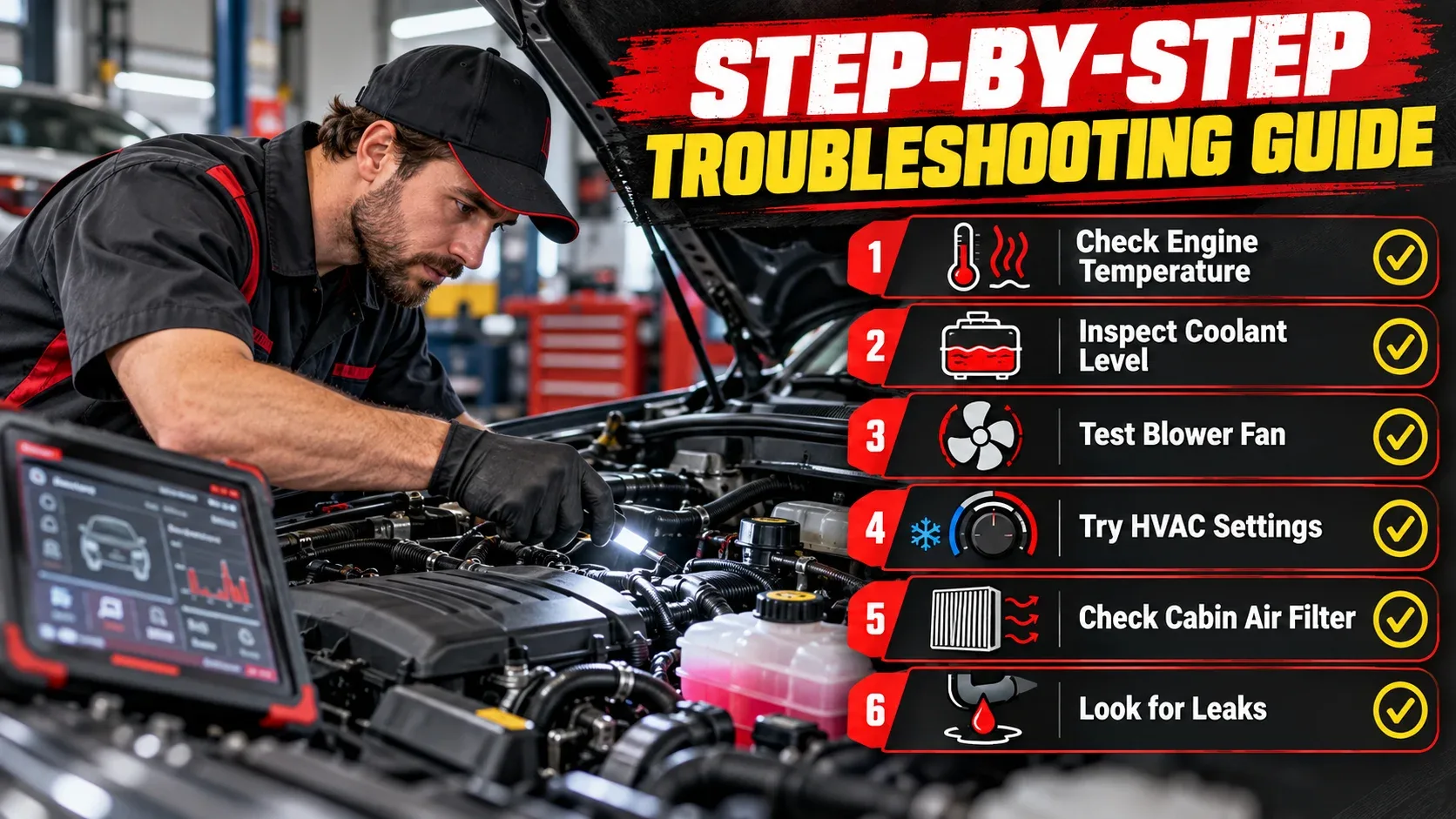
You can narrow down many heater complaints before paying for major repairs. Follow these checks in order and stop if you encounter an overheating or coolant-loss warning.
- Observe the temperature gauge. During normal driving, see whether the engine reaches its usual operating range. An unusually low reading can suggest a thermostat or sensor problem; overheating requires prompt attention.
- Inspect coolant when fully cool. Follow the manufacturer’s guidance for checking the reservoir, looking for leaks and identifying the correct coolant.
- Test the blower fan. Switch through every fan speed. If airflow is absent or inconsistent, focus on the ventilation electrical system.
- Change temperature settings. Switch between warm and cold and, where fitted, compare driver and passenger sides. Unresponsive settings can indicate a blend-door or control problem.
- Check the cabin air filter. Inspect it in accordance with the owner’s manual and replace it if blocked.
- Look for leak clues. A sweet odor, unexplained moisture or recurring coolant loss deserves a qualified inspection.
- Confirm the fault before replacing parts. Heater-core flow testing, pressure testing and electrical diagnosis may be needed.
Avoid touching heater hoses or opening any coolant fittings on a running or hot engine. If the engine is overheating, do not continue driving simply to test the heater.
What Is a Heater Core and How Does It Work?
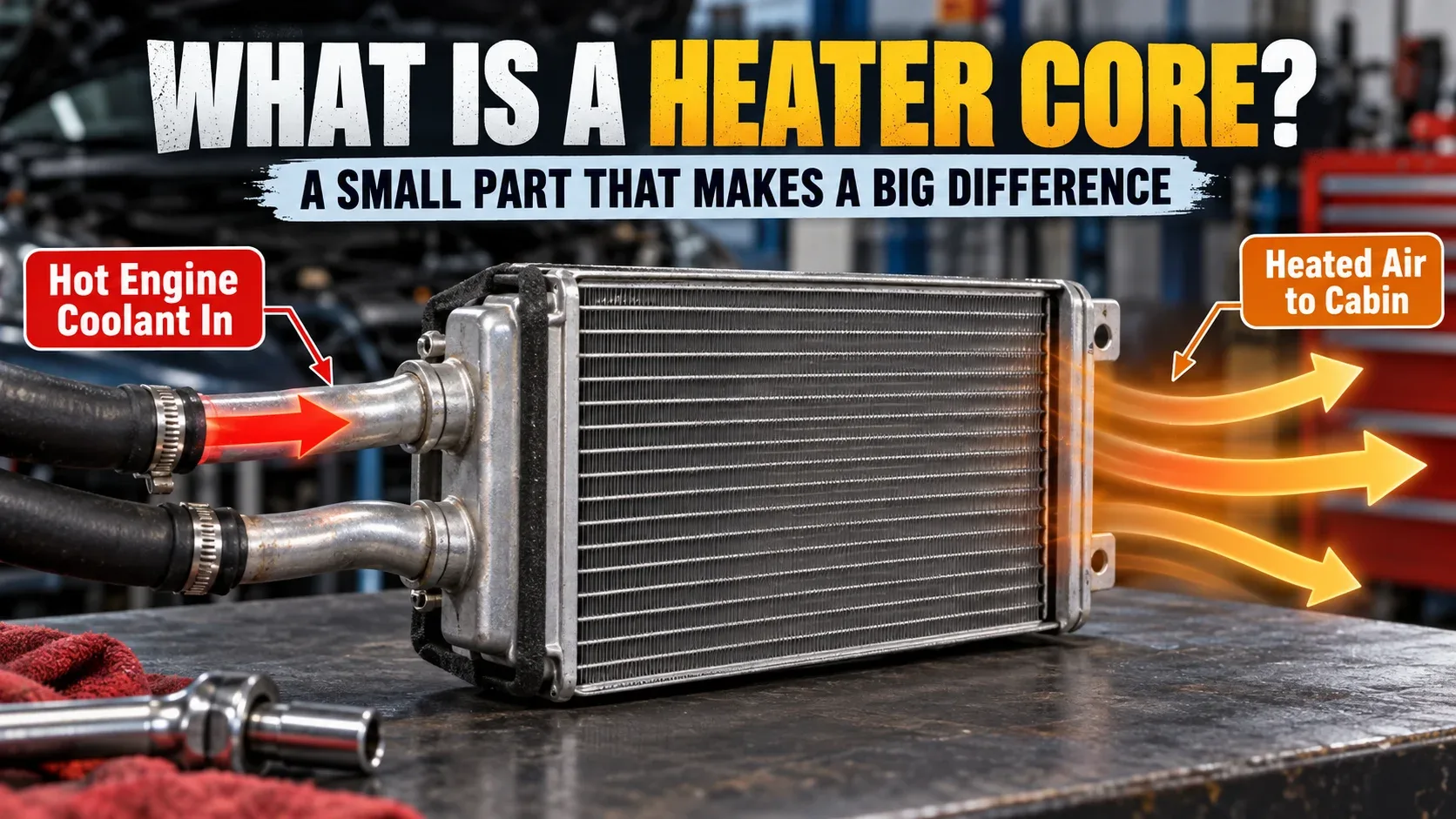
The heater core is a small heat exchanger inside the vehicle’s HVAC housing, often behind the dashboard. Hot engine coolant travels through its internal passages, while the blower pushes air across the fins and into the cabin.
This is why the heating system depends on both coolant circulation and working air controls. A car can have perfectly good airflow yet produce no heat, or have plenty of heat available but no functioning blower to deliver it.
Signs of a Bad or Clogged Heater Core
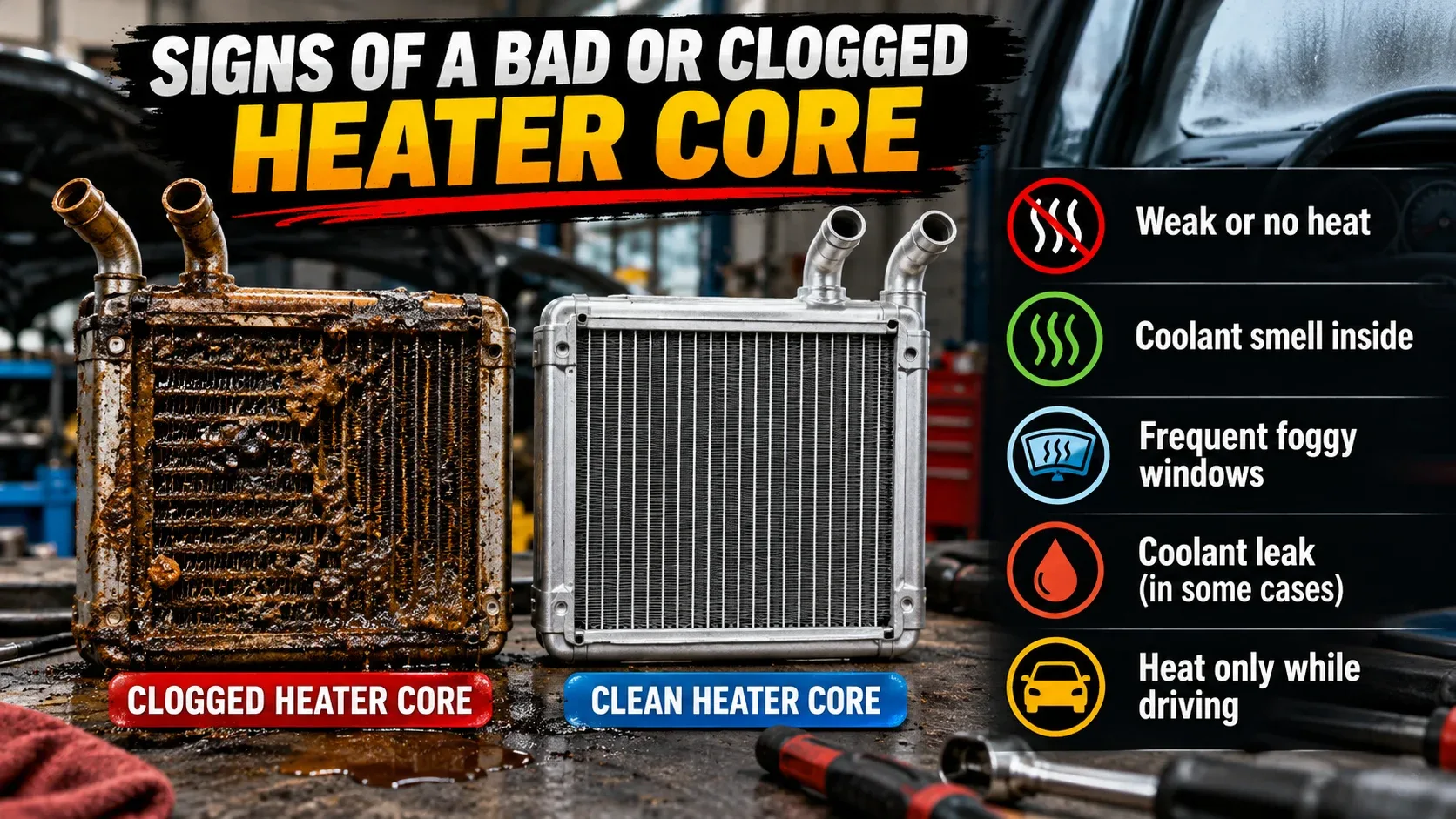
A restricted heater core often causes poor cabin heat despite an engine that has reached operating temperature. A leaking heater core creates a different set of warning signs.
- Possible blockage: weak or uneven heat while the fan works normally.
- Possible leak: sweet coolant smell inside the cabin.
- Possible leak: damp or sticky carpet near the HVAC housing.
- Possible leak: film or persistent fogging on the windshield, especially with coolant loss.
These signs should lead to diagnosis—not an immediate assumption that the heater core must be replaced. Leaks elsewhere and HVAC air-control faults can overlap with these symptoms.
Heater Core Flush: When Can It Fix Poor Heating?
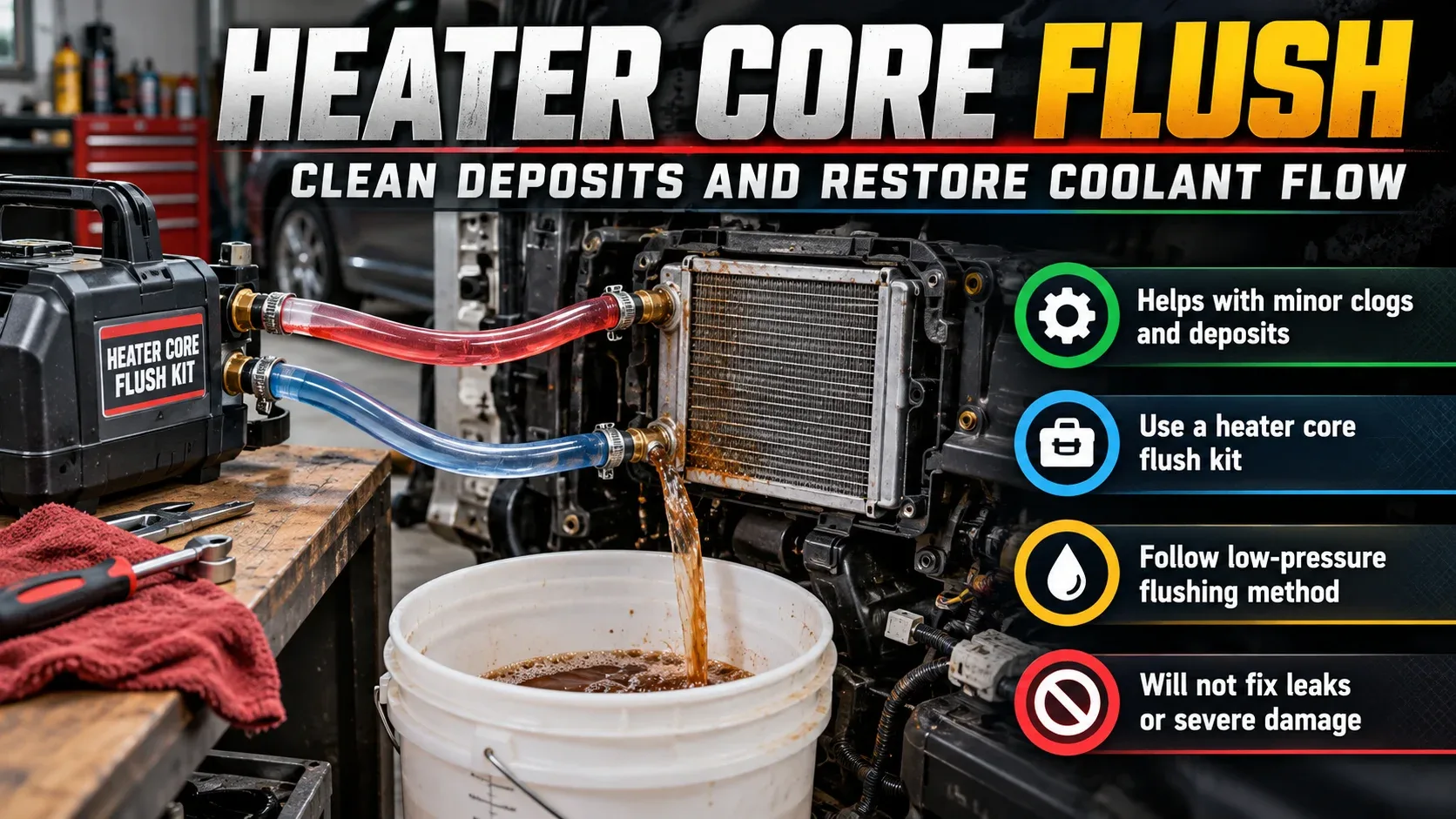
A heater core flush circulates suitable fluid through the core to help remove buildup that may be restricting coolant flow. If the core is partially blocked but structurally sound, a flush may restore some or all of the lost heat.
It cannot seal a leaking heater core, repair a broken blend door or correct low coolant caused by an unresolved leak. Nor is it guaranteed to remove heavy corrosion or hardened deposits.
What Comes in a Heater Core Flush Kit?
A typical heater core flush kit may include adapters, hose fittings and flushing connections. Additional supplies can include collection containers, protective gloves and the correct replacement coolant. The exact tools and method depend on the vehicle.
Important: A heater core can be damaged by excessive pressure or incorrect procedures. Let the engine cool completely, use vehicle-specific guidance and collect coolant for proper disposal. If access or pressure control is uncertain, choose a professional flush instead of experimenting with a garden hose or compressed air.
Heater Core Fix vs. Flush vs. Replacement
| Situation | Likely next step | Why |
|---|---|---|
| Restricted flow, no leak confirmed | Consider a professional flush | May clear removable deposits |
| Core leaking coolant | Replace damaged core | Flushing does not repair leaks |
| Heat problem caused by blend door | Repair actuator or controls | Heater core may be fine |
| Severe blockage remains after diagnosis | Evaluate replacement | Permanent restriction may persist |
When Is Heater Core Replacement Necessary?
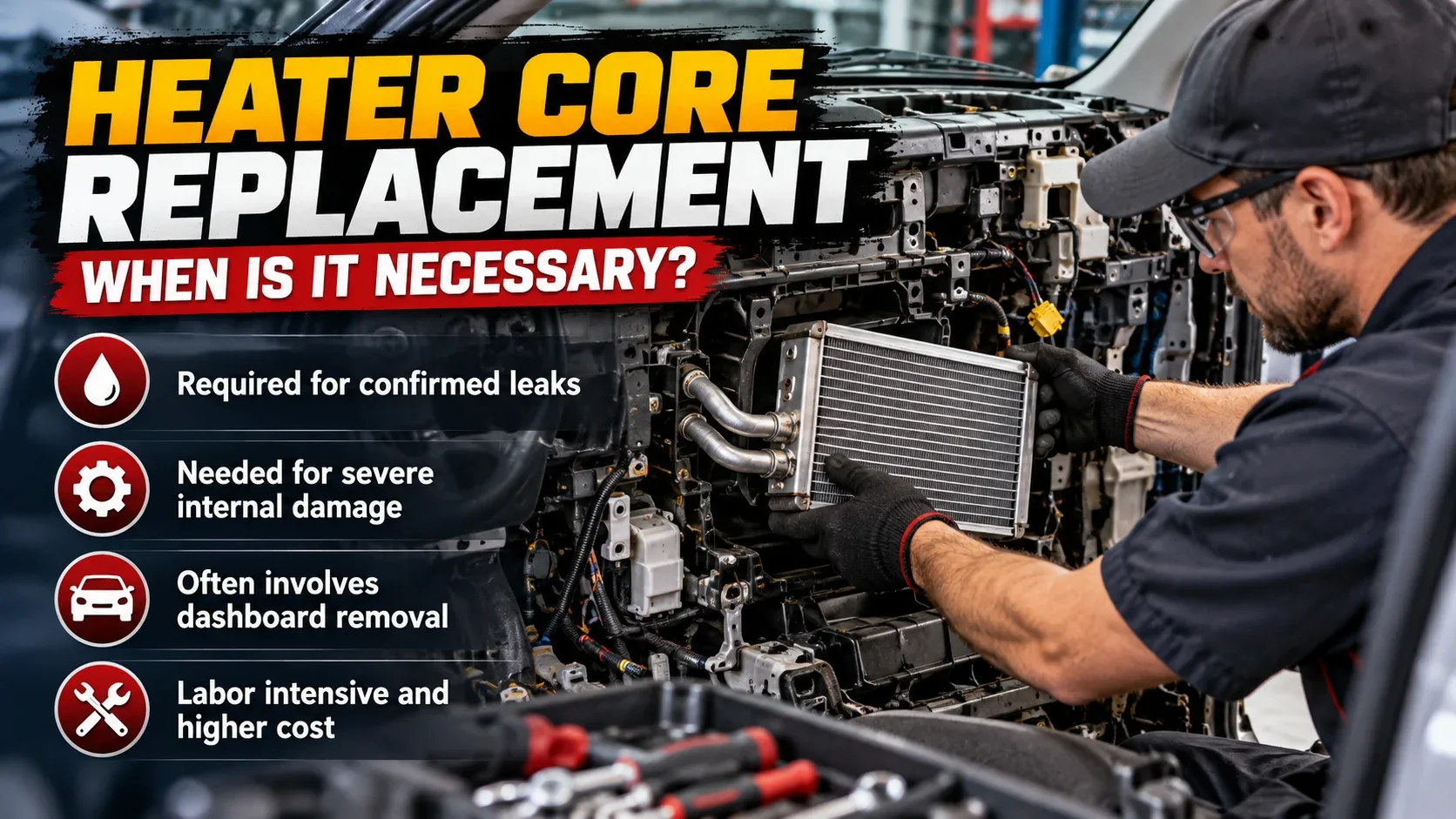
Heater core replacement generally makes sense when a leak has been confirmed or internal damage and blockage cannot be corrected reliably. Many vehicles require significant dashboard and HVAC housing disassembly to access the part.
The work may involve airbag-adjacent components, coolant lines and careful refilling and air bleeding. For most vehicle owners, this is a professional repair rather than a first DIY project. Ask the shop to show how it ruled out more accessible faults first.
Car Heater Repair Cost: What Should You Expect?
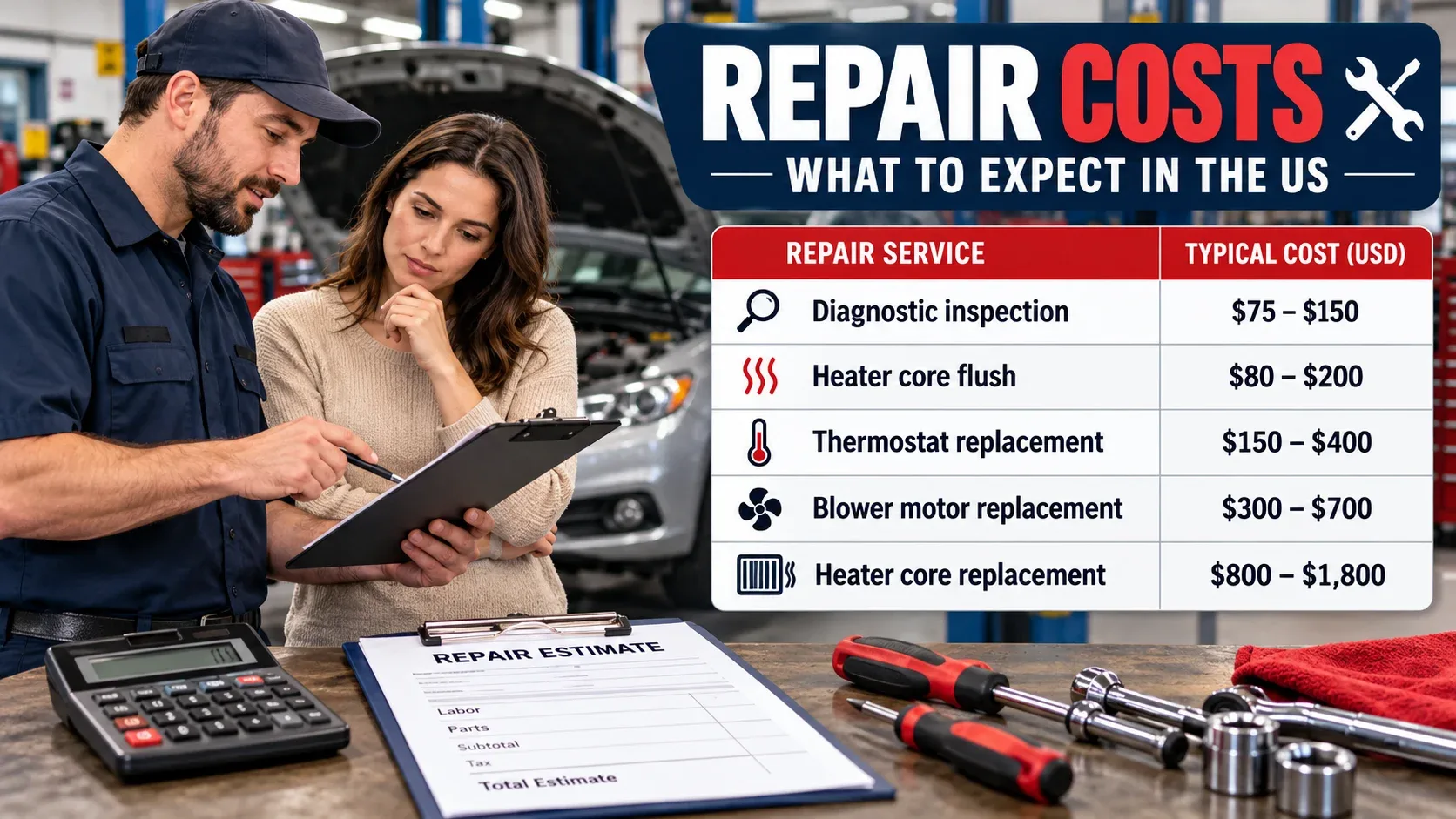
The cost to replace a heater core is usually far higher than the price of a simple filter or coolant check because dashboard access can require extensive labor. These are US reference estimates, not quotes for a particular vehicle.
| Service | Estimated US cost | Context |
|---|---|---|
| Heater core flush | $100–$250 | Published professional flushing guide range |
| Heater core replacement | $1,375–$1,912 | RepairPal national average estimate |
| Thermostat replacement | $616–$716 | RepairPal national average estimate |
| Coolant leak, electrical fault or blend door | Vehicle-specific quote | Depends on confirmed cause and access |
Source notes: RepairPal national estimates updated September 3, 2026; CarParts.com heater core flushing guidance updated June 11, 2026. The RepairPal averages exclude taxes, fees and location adjustments. Actual prices may be outside these ranges.
Before approving an expensive heater core fix, request an itemized estimate. Ask whether diagnosis, coolant, labor, any HVAC disassembly and post-repair testing are included. An accurate quote depends on your vehicle’s year, make, model, engine and local labor rates.
Are Plug-In Car Heaters Worth Using?
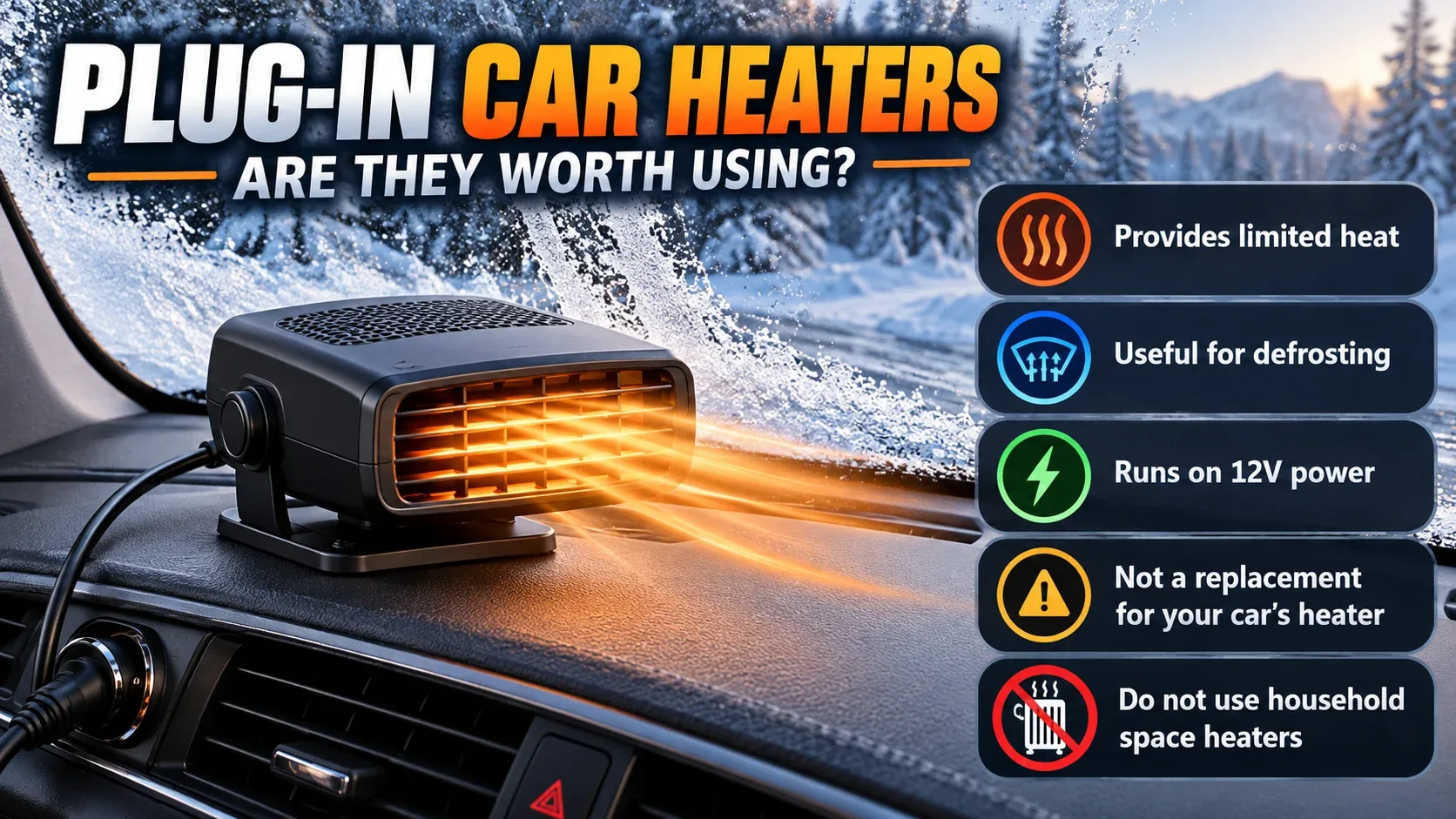
You may see an in-car plug-in heater advertised as an instant fix for cold air. Small 12-volt accessories typically have limited heating capacity compared with a vehicle’s built-in coolant-based heater. Their usefulness for warming an entire cabin is usually limited.
Only use automotive accessories rated for your vehicle’s electrical outlet and follow the manufacturer’s instructions. Overloading an outlet or positioning a device near combustible materials can create hazards.
Never use a household space heater inside a car or rely on a portable heater to replace a working defroster. Repairing the actual HVAC fault is the better long-term solution.
DIY Car Heater Repair or Visit a Mechanic?
Simple observations—checking the gauge, testing fan speeds and inspecting the cabin filter—are reasonable starting points for most owners. Coolant leaks, repeated overheating, heater-core flushing and major dashboard disassembly demand more caution.
A qualified technician can perform cooling-system pressure tests, verify coolant circulation, examine stored HVAC faults where supported, and inspect electrical controls. That diagnosis can save money by preventing an unnecessary heater core replacement.
Frequently Asked Questions
Why is my car heater blowing cold air when the engine is warm?
Low coolant, a restricted heater core, an air pocket or an HVAC blend-door problem are possible causes. Confirm normal engine temperature and coolant level before deeper testing.
Can low coolant cause the heater to stop working?
Yes. A low coolant level can reduce hot coolant flow through the heater core. Repeated loss indicates a leak or other cooling-system fault that must be addressed.
How can I tell if my heater core is clogged?
Weak cabin heat with normal blower airflow and normal engine temperature may suggest a restriction. A technician can assess heater-core flow while ruling out coolant and blend-door issues.
Will a heater core flush fix my car heater?
Possibly, if deposits restrict coolant flow and the core is otherwise intact. Flushing will not repair leaks, broken actuators or unrelated electrical problems.
How long does heater core replacement take?
Time varies widely by vehicle and dashboard design. Some require extensive interior disassembly, so ask your repair shop for a vehicle-specific labor estimate and expected completion date.
Can I drive with a broken heater?
That depends on the cause. A lack of cabin warmth alone differs from an overheating engine or coolant leak. Do not drive if cooling-system damage is suspected or you cannot keep the windows clear enough for safe visibility.
Why does my heater only work while driving?
Heat that changes with engine speed may be linked to low coolant, trapped air or coolant circulation problems. Have the cooling system checked rather than assuming a single component is responsible.
Final Thoughts: Get the Right Heater Fix
When a car heater quits working, begin with the symptom: cold air, weak airflow or no airflow. Check basic controls and coolant safely, then let the evidence guide further diagnosis.
A heater core flush may help with a confirmed restriction, but a leaking core typically needs replacement. Address overheating and windshield defrost problems promptly, and avoid paying for major repairs before the actual fault has been confirmed.