You turn on your car’s air conditioner, select the highest fan setting, and wait for cool air. Instead, the vents remain quiet. Maybe the fan has been squealing for weeks, working only intermittently, or blowing air on just one speed. Now you are wondering what has gone wrong and how to fix it.
Car blower motor problems can leave you without adequate cabin airflow, making summer cooling and winter heating uncomfortable. They can also affect windshield defogging and defrosting.
However, a malfunctioning cabin fan does not automatically mean the blower motor itself is defective. A failed blower motor resistor, electronic speed controller, wiring connection, fuse, or blocked airflow path can produce similar symptoms.
This guide explains how to recognize the warning signs, distinguish likely causes, perform sensible diagnostic checks, and decide whether a repair or replacement makes sense.
Common causes include a worn blower motor, faulty fan-speed resistor, failed electronic controller, loose electrical connector, blown fuse, damaged wiring, or debris interfering with the blower wheel.
If the fan works only on high speed, a resistor or control-circuit problem may be responsible. If it does not work at any speed, both the motor and its electrical supply need investigation.
The best first step is to identify the exact symptom instead of purchasing a replacement part immediately.
Car Blower Motor Problems: Quick Symptom Checker
Imagine turning the fan control to maximum and hearing nothing. That problem calls for a different diagnosis than a fan that runs normally but pushes very little air through the vents.
The following table matches common symptoms with possible causes and sensible first checks.
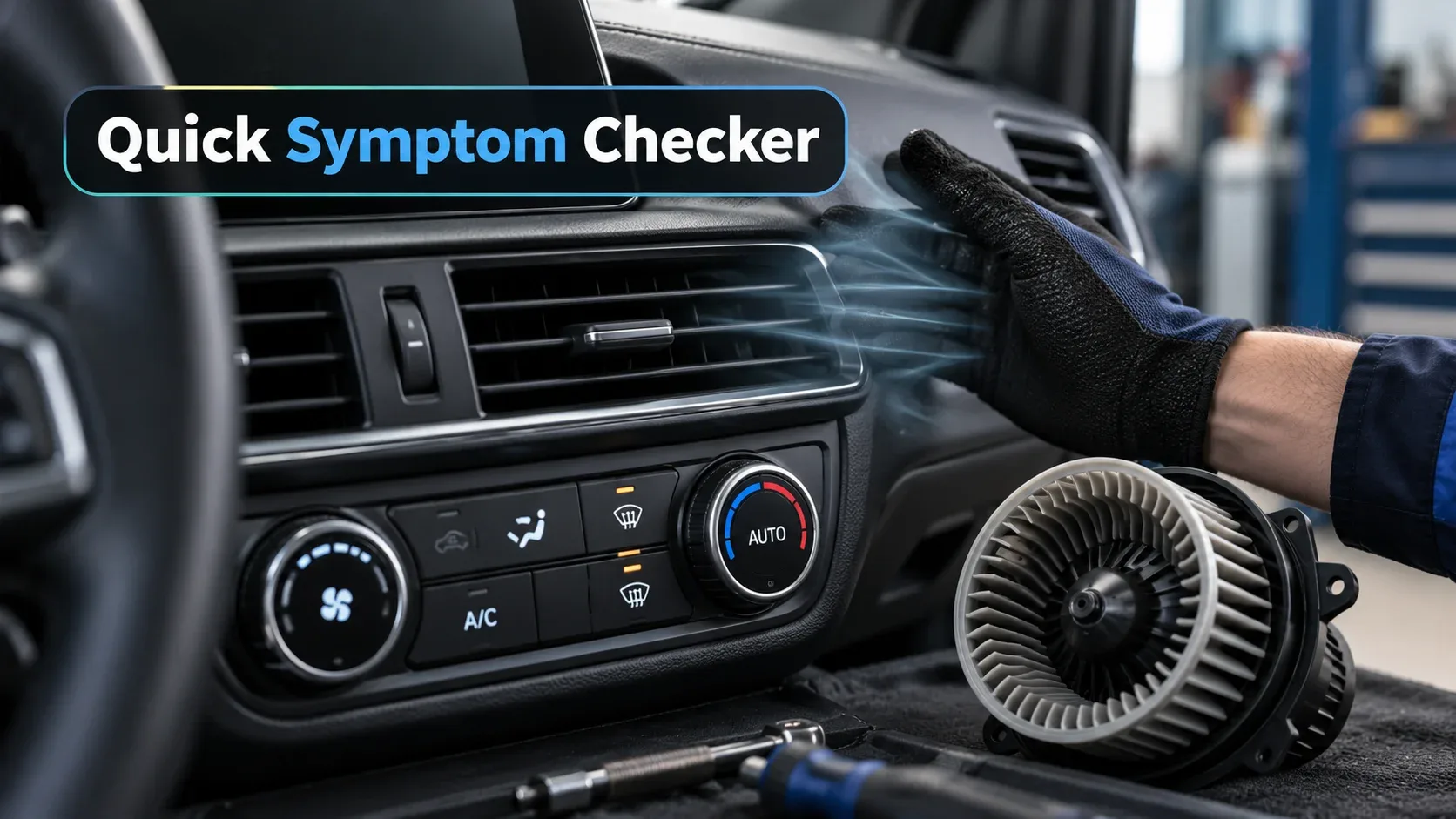
Use these symptoms as an initial guide. They help identify which components deserve attention, but they do not confirm that any particular part has failed.
| What You Notice | Possible Cause | First Thing to Check |
|---|---|---|
| Fan works only on highest speed | Resistor, controller, or speed circuit | Resistor assembly and connector |
| No airflow at any speed | Motor, fuse, wiring, or controller | Fuse and electrical supply |
| Squealing or grinding | Worn bearings or fan interference | Motor and blower wheel |
| Fan stops and starts randomly | Intermittent motor or electrical connection | Connector, wiring, and motor condition |
| Fan is noisy but airflow is weak | Clogged filter or restricted duct | Cabin air filter and intake |
| Burning smell or melted plastic | Overheated wiring or electrical fault | Stop operation and inspect safely |
| Fuse repeatedly blows | Short circuit or excessive electrical load | Motor circuit and current draw |
Diagnostic insight: A fan-speed problem does not prove that the motor has failed. Likewise, strong airflow without proper cooling often points to a different air-conditioning problem.
Common Car Blower Motor Symptoms and What They Mean
Different blower motor problems can produce different warning signs. Understanding these symptoms can help you choose the correct inspection process before spending money on parts.
-
Fan Only Works on High Speed
If your car’s blower works on the highest setting but not on lower speeds, the blower motor resistor, speed-control module, or related wiring may be faulty.
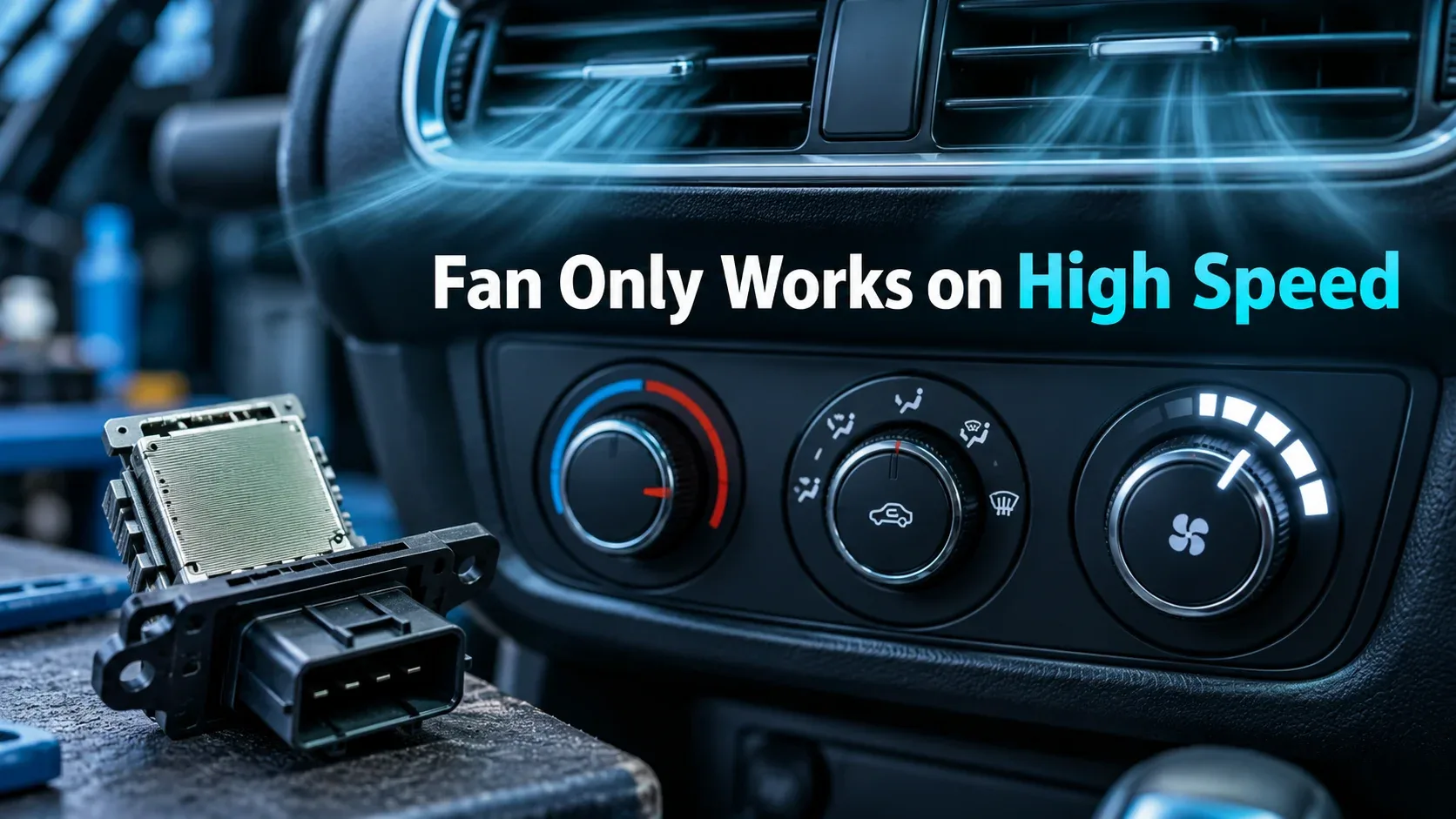
Inspect the resistor assembly and its electrical connector before assuming the blower motor must be replaced.
-
No Airflow at Any Fan Speed
If the blower does not operate at all, possible causes include a blown fuse, failed blower motor, damaged wiring, poor ground connection, or faulty electronic controller.
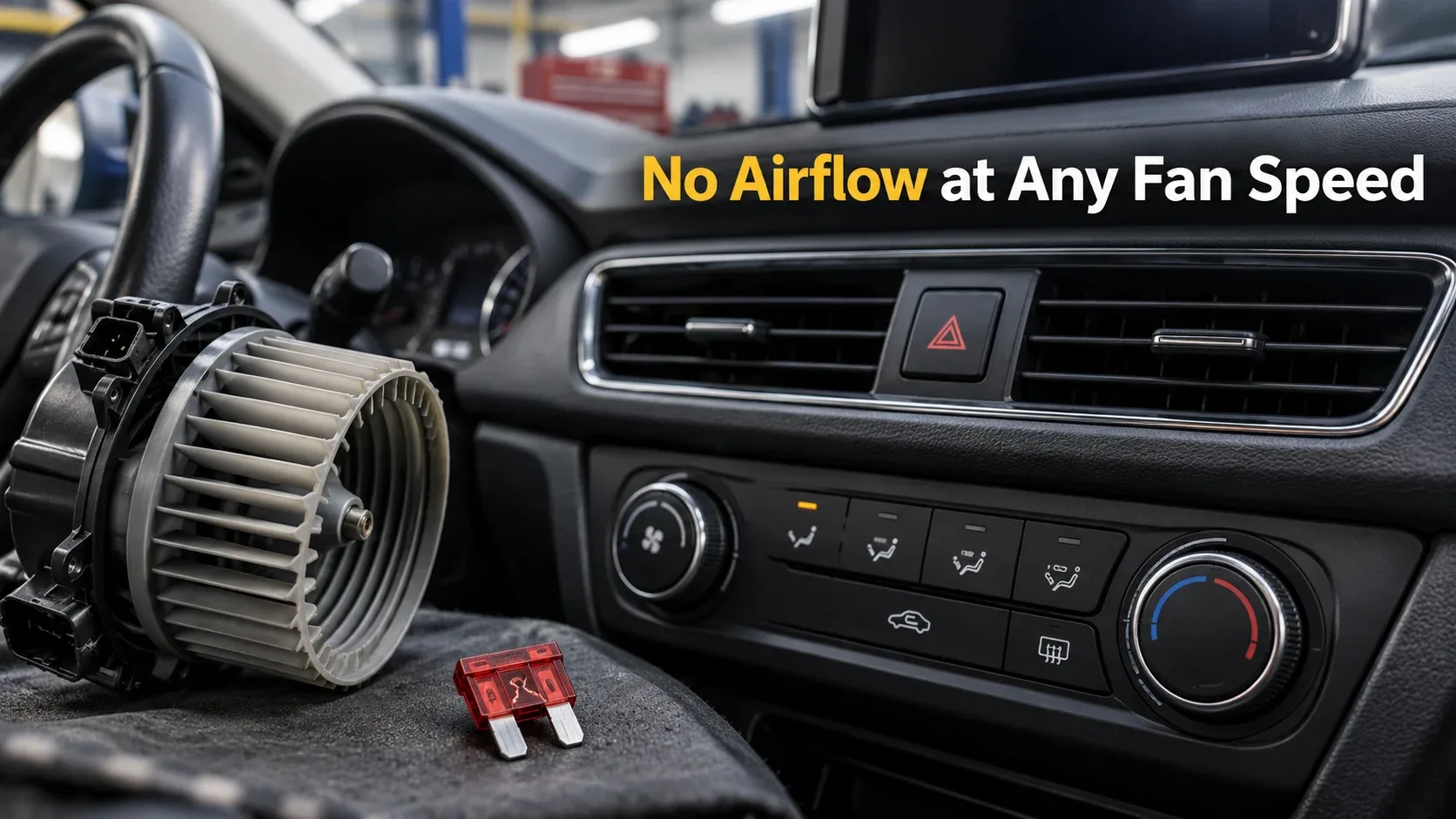
Check the electrical supply and relevant control circuits before replacing the motor.
-
Squealing, Grinding, or Rattling Noises
Unusual noises may indicate worn motor bearings, a loose blower wheel, or debris inside the fan housing.
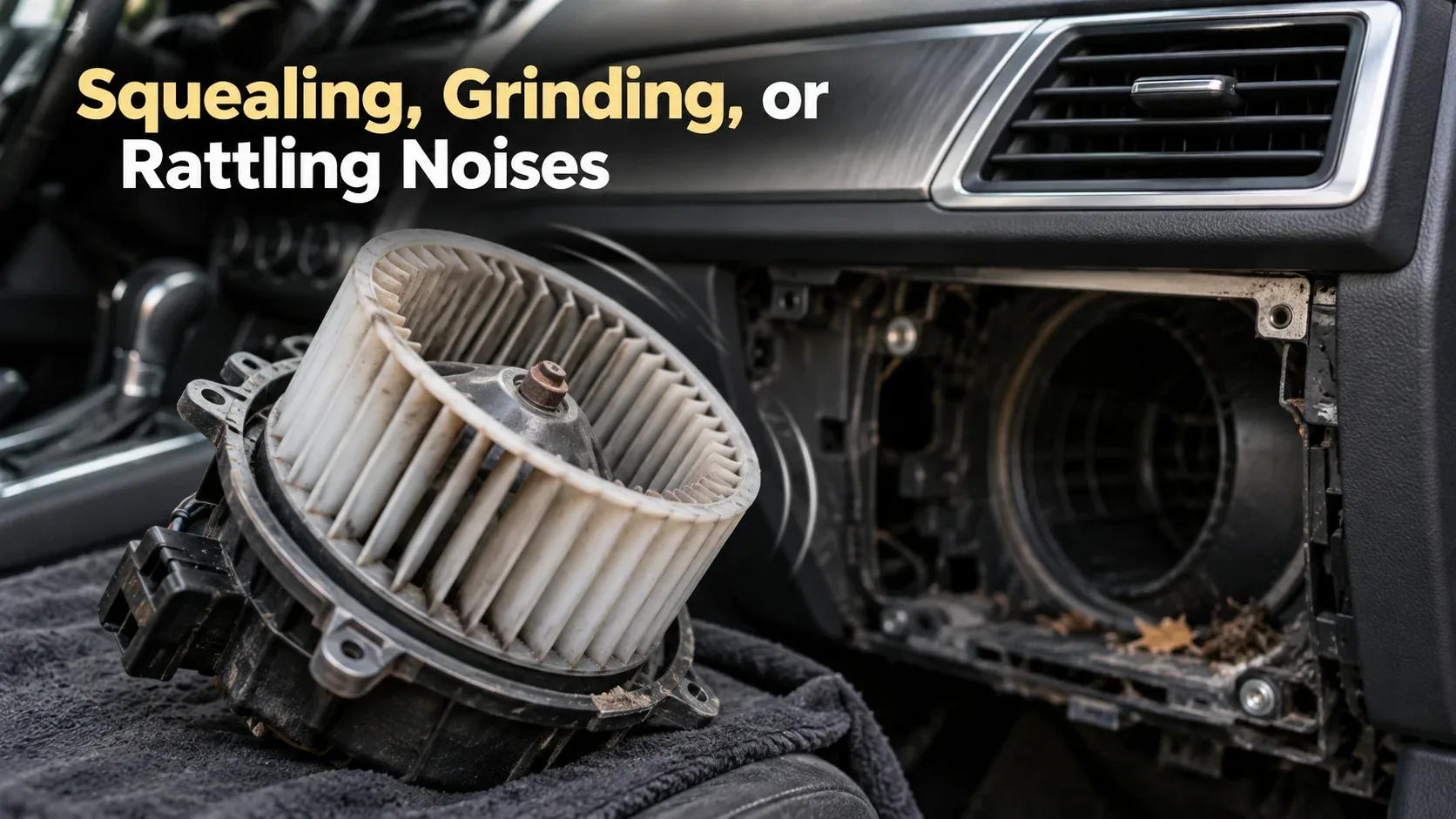
Inspect the blower assembly for mechanical wear, damage, or interference.
-
Weak Airflow From the Vents
If the fan runs but very little air reaches the cabin, the cabin air filter may be clogged or the intake or ductwork may be restricted.
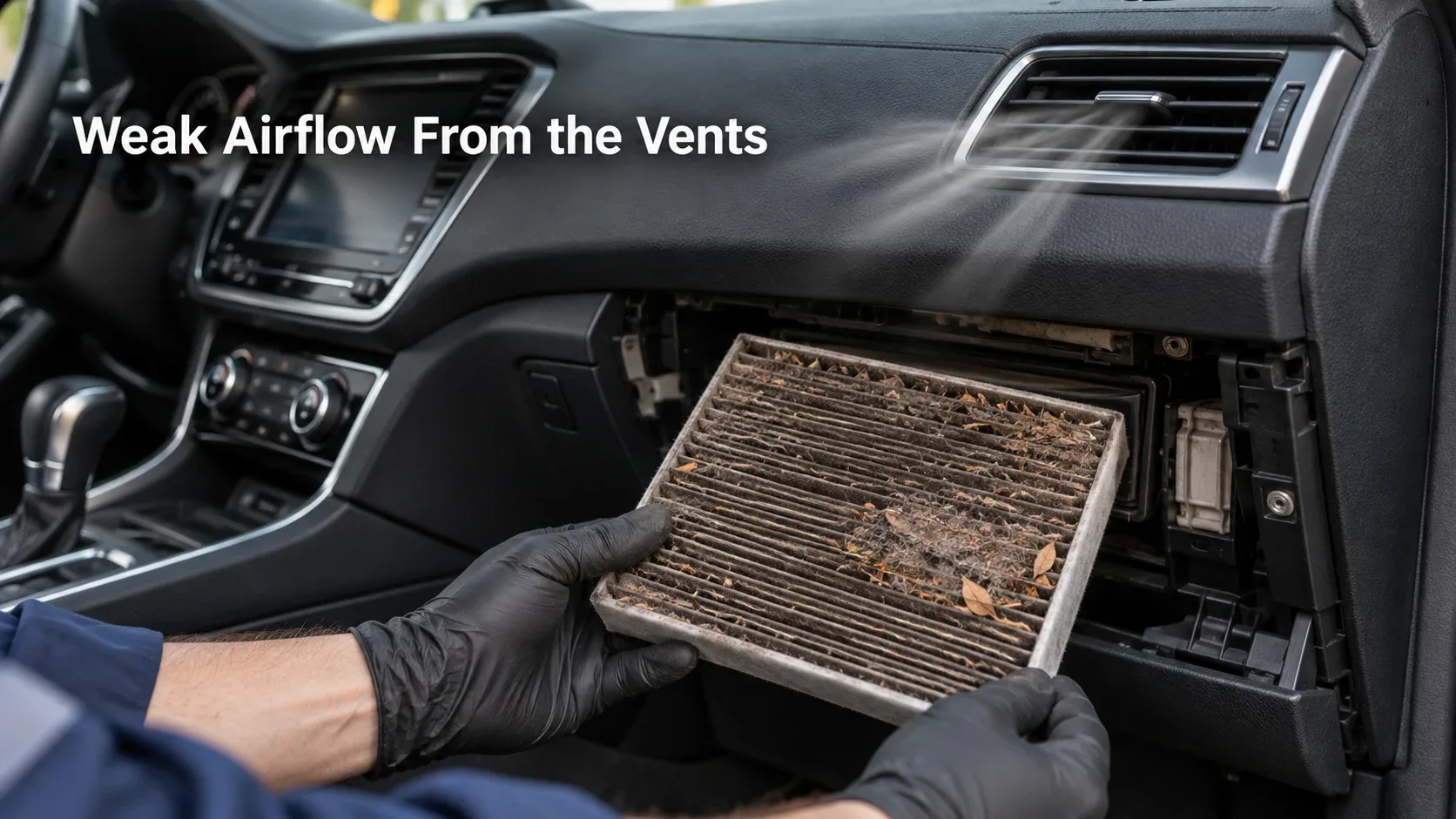
A weak motor is another possibility, but airflow restrictions should be checked first.
-
Blower Motor Works Intermittently
A blower that starts and stops unexpectedly may have a loose connector, worn motor components, overheated electrical terminals, or a failing control module.
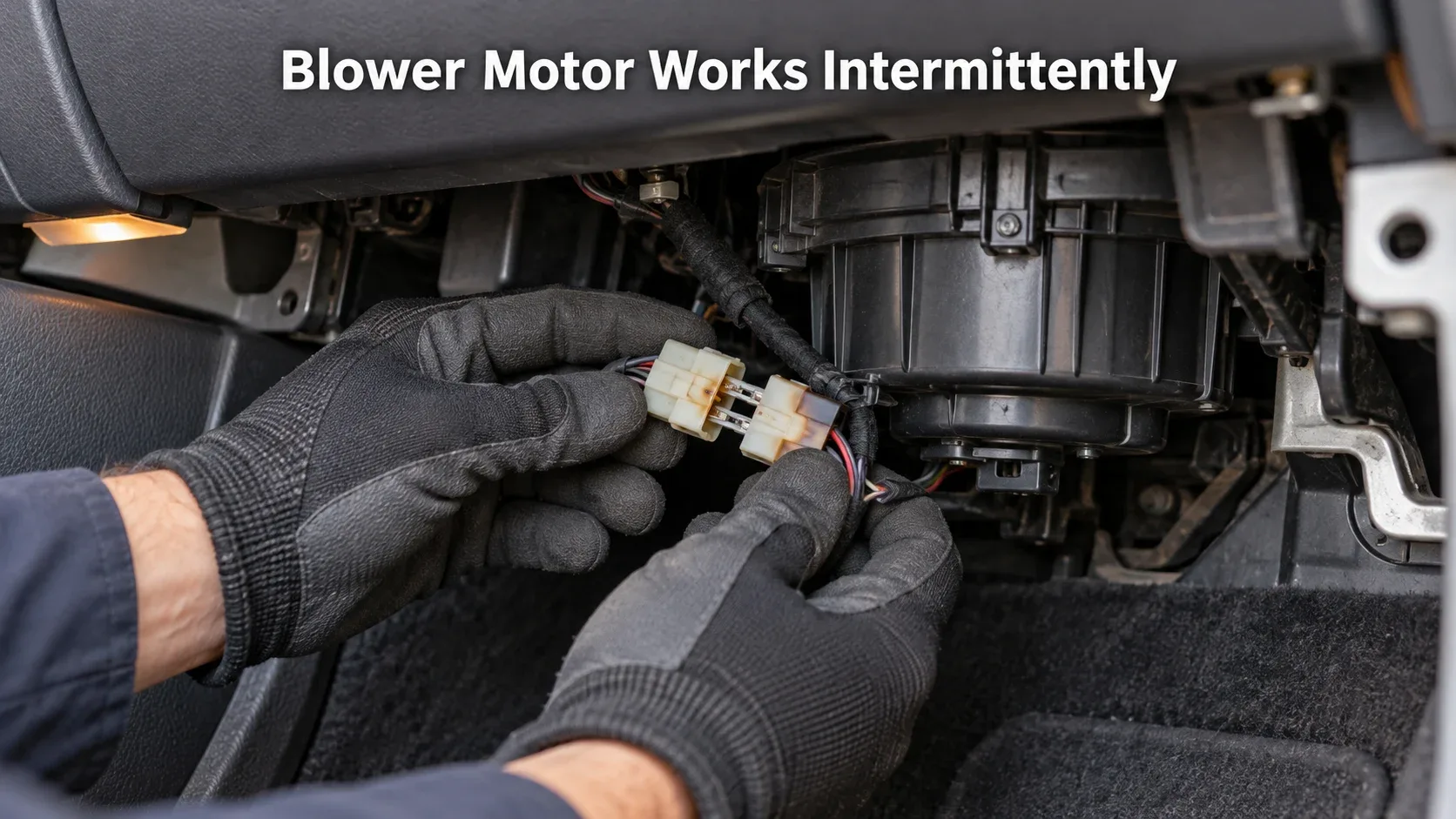
Inspect electrical connections and test the circuit under the conditions when the problem occurs.
Important: These symptoms provide diagnostic clues, not a confirmed diagnosis. The correct repair depends on the vehicle’s HVAC configuration and test results.
What Is a Car Blower Motor?
The car blower motor is an electrically powered motor that spins a fan inside the vehicle’s heating, ventilation, and air conditioning system.
Its job is to move air through the HVAC assembly and deliver that air through the dashboard, floor, and defroster vents.
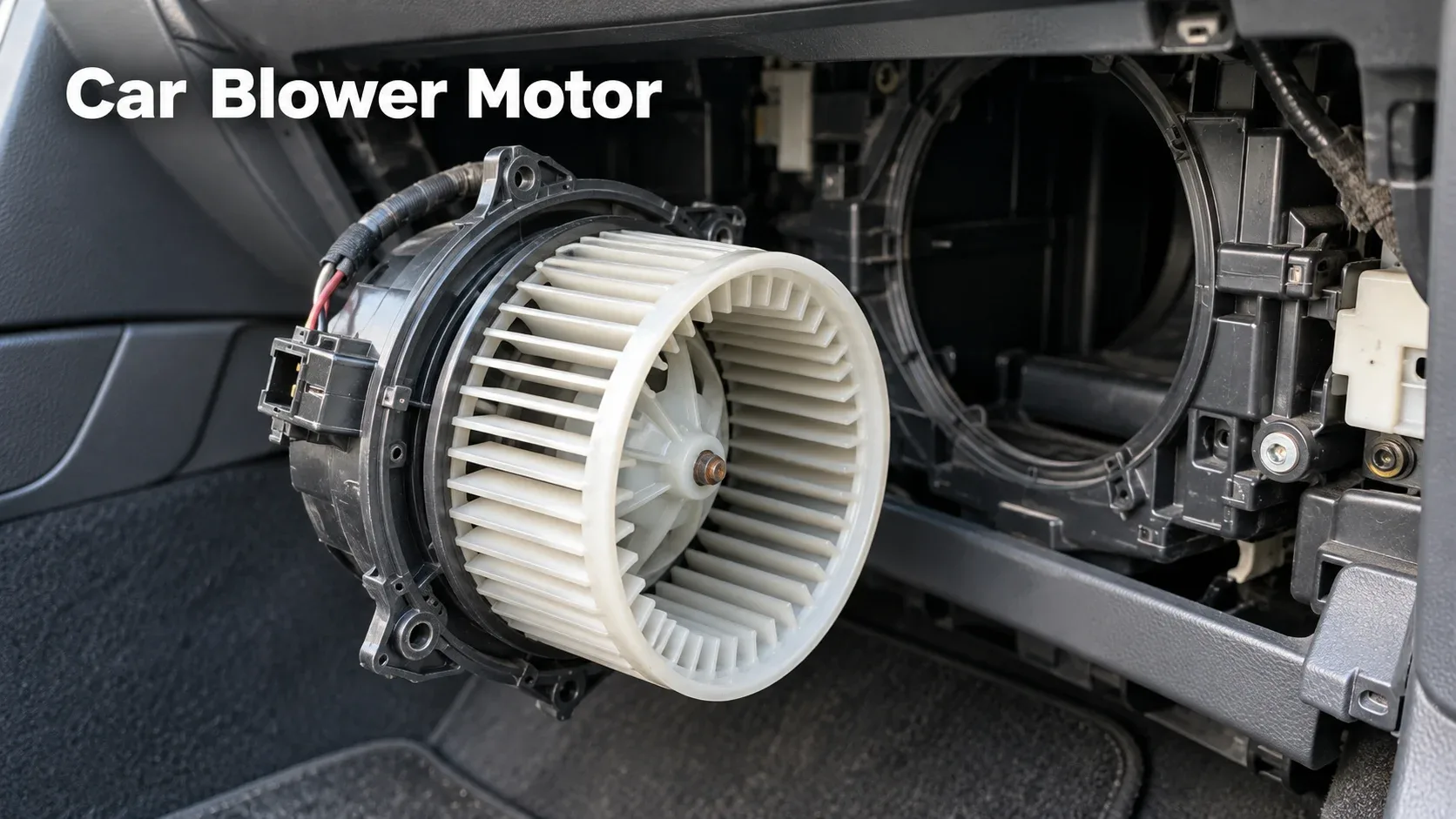
In many passenger vehicles, the blower assembly is located inside the HVAC housing near the passenger-side dashboard or glove compartment. Its position depends on the vehicle.
The fan is often shaped like a cylindrical cage, which is why it may be called a squirrel-cage blower. This design moves air efficiently inside the compact HVAC housing.
What Does the Blower Motor Actually Control?
Air Movement
Moves air through the HVAC assembly and into the vehicle cabin.
Air Cooling
The refrigerant and evaporator system remove heat from incoming air.
Air Heating
The heater core or another heating element warms the air.
Air Distribution
HVAC doors determine airflow direction and mixing.
A vehicle can have a properly operating blower motor while the air conditioner fails to cool. Likewise, a functional heater may deliver very little warm air if the blower cannot move it.
How the Car HVAC Blower System Works
To understand blower motor problems, it helps to separate the airflow path from the electrical circuit that drives the motor.
The Airflow Path
When you turn on the cabin fan, the blower draws air from the selected intake and moves it through the HVAC housing.
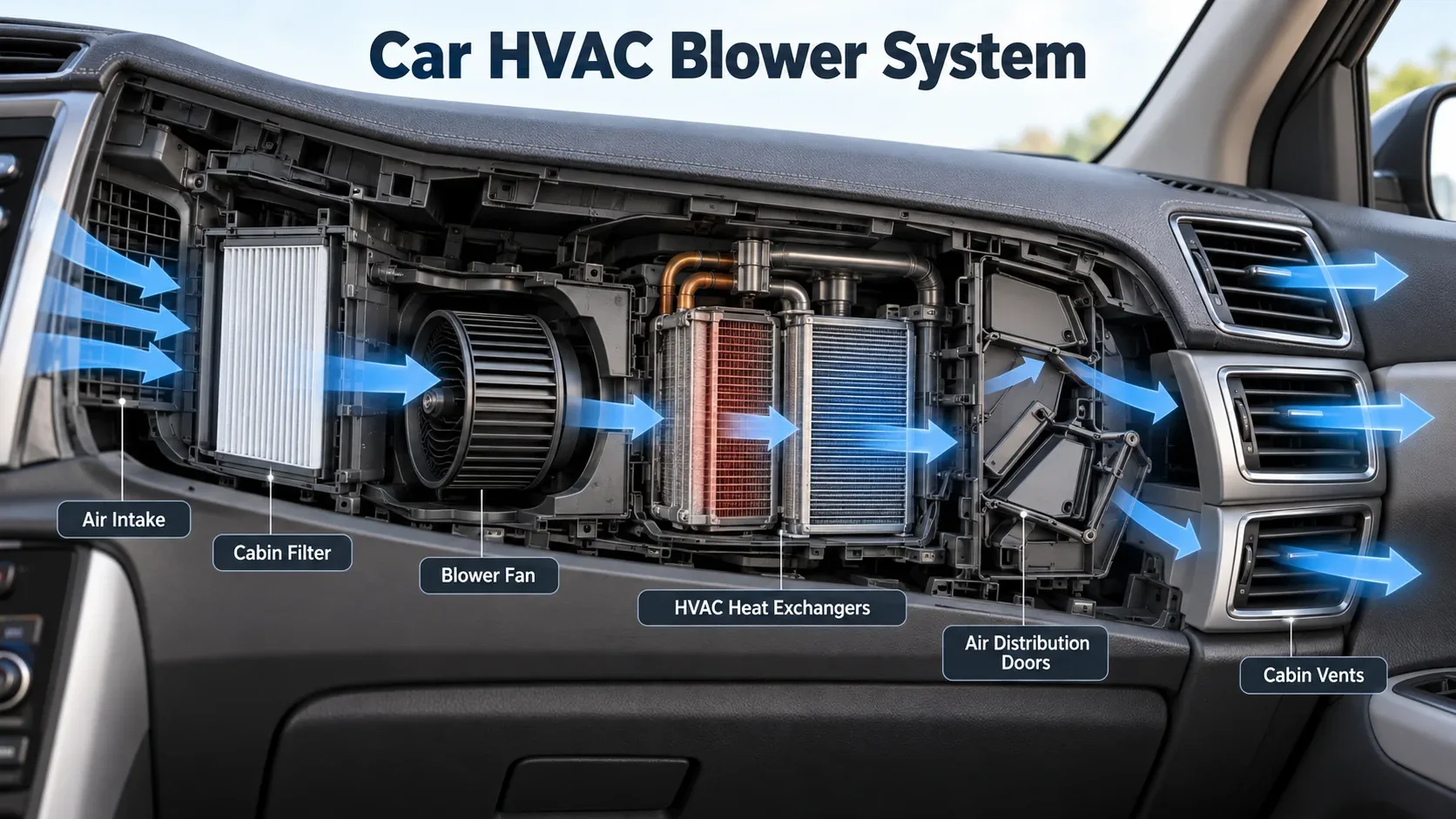
Air passes through the relevant HVAC components before reaching the dashboard, floor, or windshield vents.
Simplified illustration. Component locations and airflow order vary between vehicle designs.
The cabin air filter removes airborne particles from the air passing through it. A severely restricted filter can reduce airflow even when the blower motor runs.
The Electrical Control System
The driver selects a fan speed through the dashboard controls. The vehicle then uses a blower resistor, electronic controller, or another control arrangement to regulate blower motor operation.
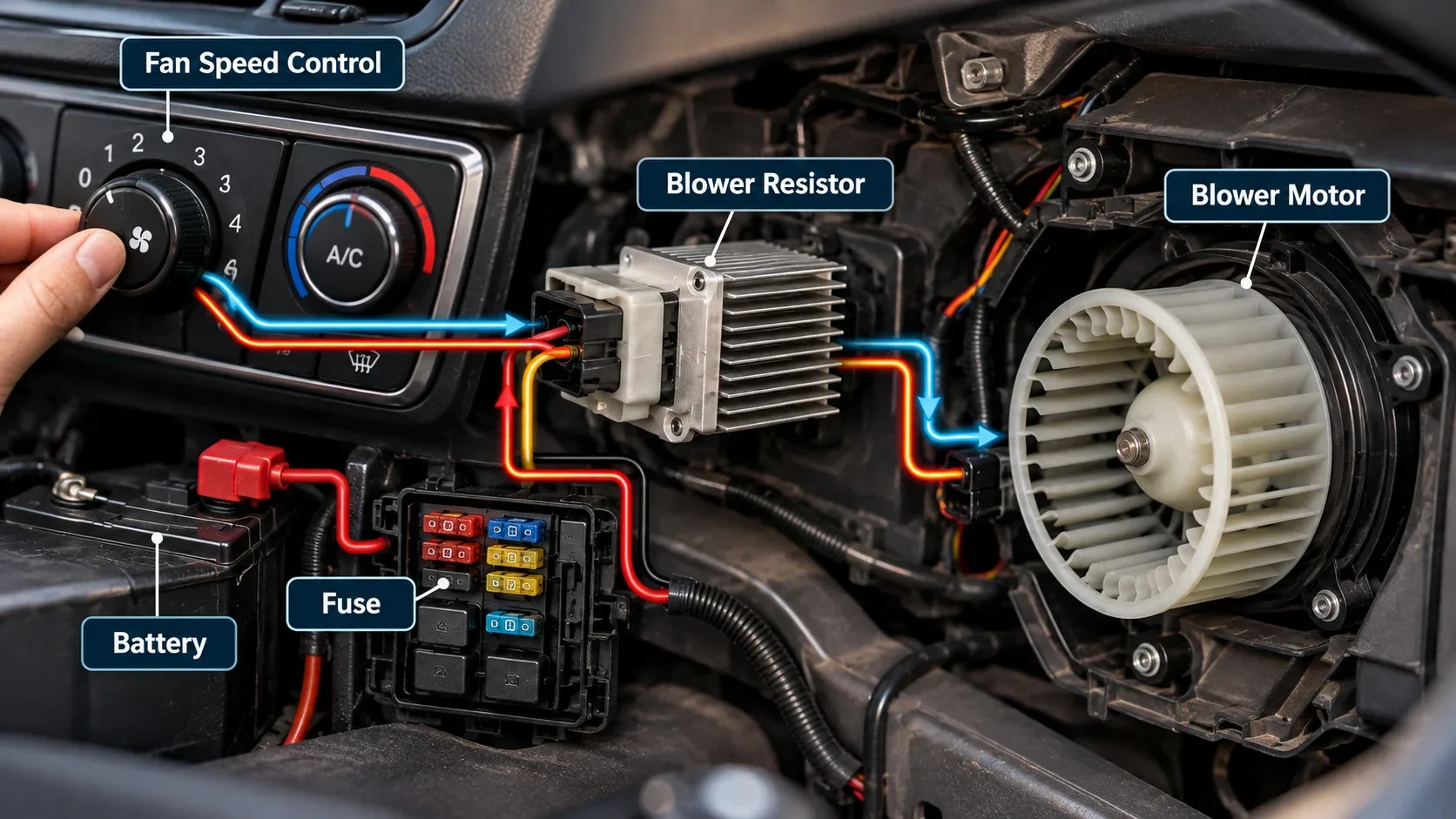
On older manual climate-control systems, fixed resistors may reduce the power reaching the motor at lower fan settings.
Many modern automatic climate-control systems instead use electronic speed-control modules that regulate blower operation more continuously.
Important: Not every modern vehicle has a traditional blower resistor pack. The correct diagnostic procedure depends on the control system.
10 Symptoms of a Bad Car Blower Motor
Blower problems can develop gradually or appear without warning. Some symptoms suggest motor wear, while others point toward electrical or airflow faults.
1. No Airflow From the Vents
You turn the fan to maximum, but no air comes through the vents. A failed blower motor is one possibility, but a blown fuse, failed controller, or damaged wiring can produce the same symptom.
2. Squealing or Chirping Noise
A high-pitched squeal that changes with fan speed may indicate worn motor bearings. Debris inside the housing may produce a similar noise.
3. Grinding or Rattling
Grinding or heavy rattling may occur when the blower wheel contacts its housing, motor bearings wear, or mounting components become loose.
4. Intermittent Fan Operation
The fan may work during one drive and stop during the next. Possible causes include worn motor components, loose electrical connections, and electronic controller faults.
5. Weak Airflow
A weakening motor can run more slowly, but a blocked intake or clogged cabin filter may produce the same complaint. Inspect restrictions first.
6. Fan Works Only at Certain Speeds
If lower fan speeds stop working while high speed remains functional, the resistor or speed-control circuit deserves investigation.
7. Blower Stops After Running for a While
A fan that operates when cold but stops after several minutes may have an intermittent motor or electrical problem. Testing while the fault is present can help identify it.
8. Excessive Vibration
A cracked blower wheel, loose mounting point, or debris accumulation can create vibration that changes with fan speed.
9. Burning Smell
Overheated connectors, damaged wiring, failing electrical components, or debris in the HVAC system may produce unusual odors.
Safety warning: If you notice an electrical burning smell, smoke, or melted wiring, switch off the HVAC fan and arrange an inspection before operating it again.
10. Repeated Blower Fuse Failure
A fuse that repeatedly blows may indicate a short circuit or excessive electrical load. The underlying problem must be diagnosed rather than repeatedly replacing the fuse.
Blower Motor vs. Blower Motor Resistor: What’s the Difference?
One common repair mistake is confusing a failed blower motor with a failed blower motor resistor. Although these components work together, they perform different functions.
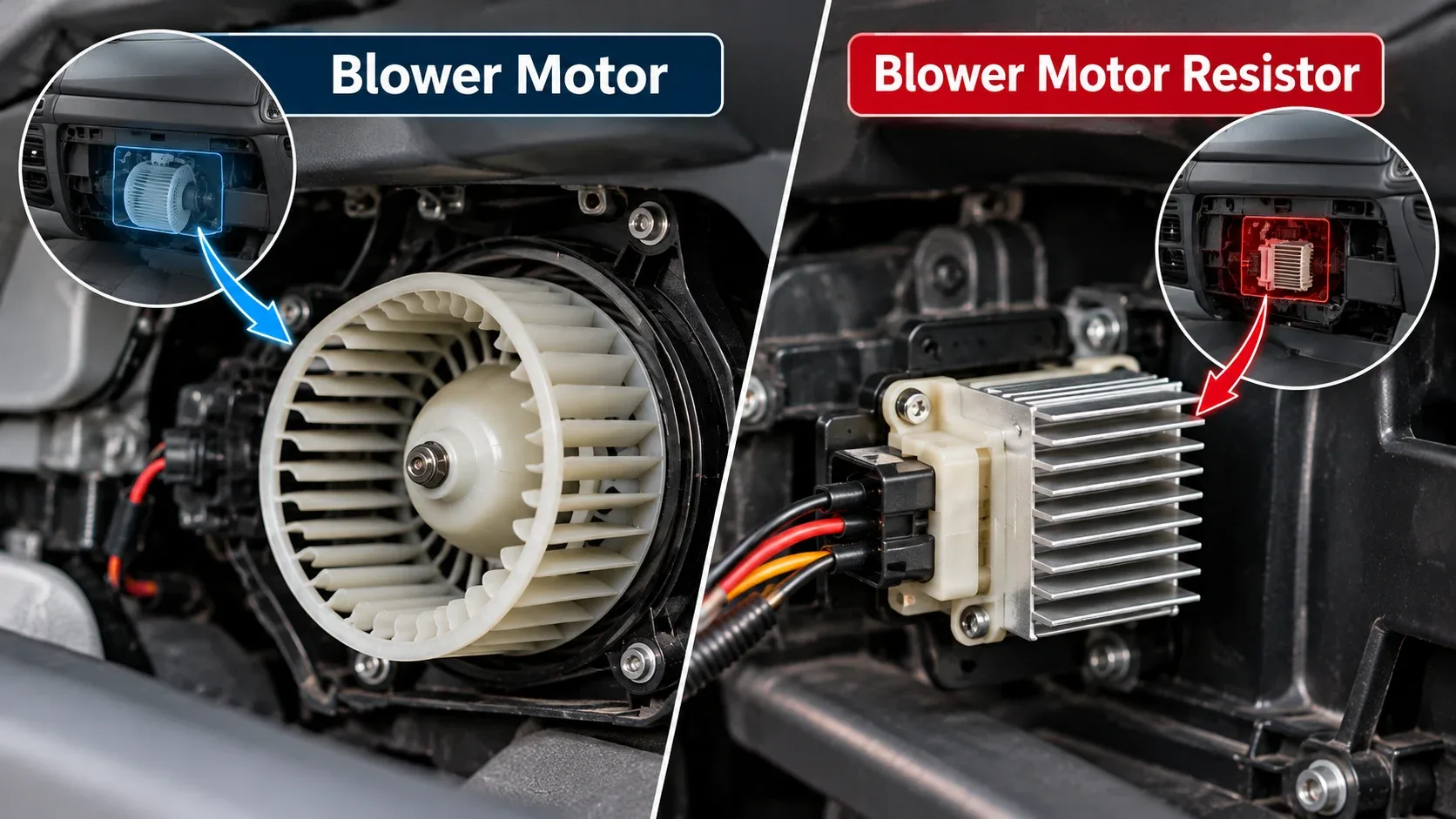
The blower motor spins the fan and creates airflow. The resistor or electronic controller manages fan speed.
What Does the Blower Motor Do?
The motor provides the mechanical force needed to spin the fan wheel. When it fails, the fan may stop, operate intermittently, or make unusual mechanical noises.
What Does the Blower Motor Resistor Do?
In traditional resistor-based systems, the resistor controls the lower fan speeds by changing the electrical resistance within the circuit.
If part of the resistor assembly fails, certain speeds may stop working while others remain functional.
Modern electronic blower controllers perform a similar speed-regulation function using different circuitry.
Blower Motor vs. Resistor Comparison
| Feature | Blower Motor | Resistor / Controller |
|---|---|---|
| Main function | Moves cabin air | Controls fan speed |
| Common symptoms | Noise, no operation, intermittent operation | Missing or irregular speeds |
| Mechanical noise | Possible | Not normally produced by the resistor |
| Diagnostic testing | Power, ground, current draw, motor condition | Input, output, commands, wiring |
| Typical repair | Motor replacement | Resistor, controller, or connector repair |
Can a Bad Blower Motor Damage the Resistor?
In some systems, an aging motor may draw excessive current or contribute to overheating at electrical connections.
Replacing a damaged resistor without checking the motor circuit may allow the fault to return.
Expert tip: If the resistor connector is melted, inspect both the connector and the underlying electrical load before completing the repair.
Why Does My Car Fan Only Work on High Speed?
Suppose the blower operates on the highest setting but does not respond on low or medium speeds.
On many older resistor-based systems, high speed uses a different electrical path that bypasses some or all speed-limiting resistance.
A resistor circuit failure can therefore disable lower speeds while the highest speed continues.
Other Possible Causes
- Burned resistor connector
- Damaged fan-speed switch
- Open circuit in the wiring
- Faulty electronic blower controller
- Climate-control module fault
The correct repair requires confirming the circuit fault. Check whether associated wiring is damaged and whether the blower motor is operating within the manufacturer’s specifications.
Car Blower Motor Not Working: Step-by-Step Diagnosis
When the cabin fan stops working, begin with simple checks and progress to electrical testing only when necessary.
This approach can prevent removing a functioning blower motor or replacing the wrong component.
Step 1: Confirm the Exact Symptom
Start the vehicle according to its normal operating instructions and select different fan-speed settings.
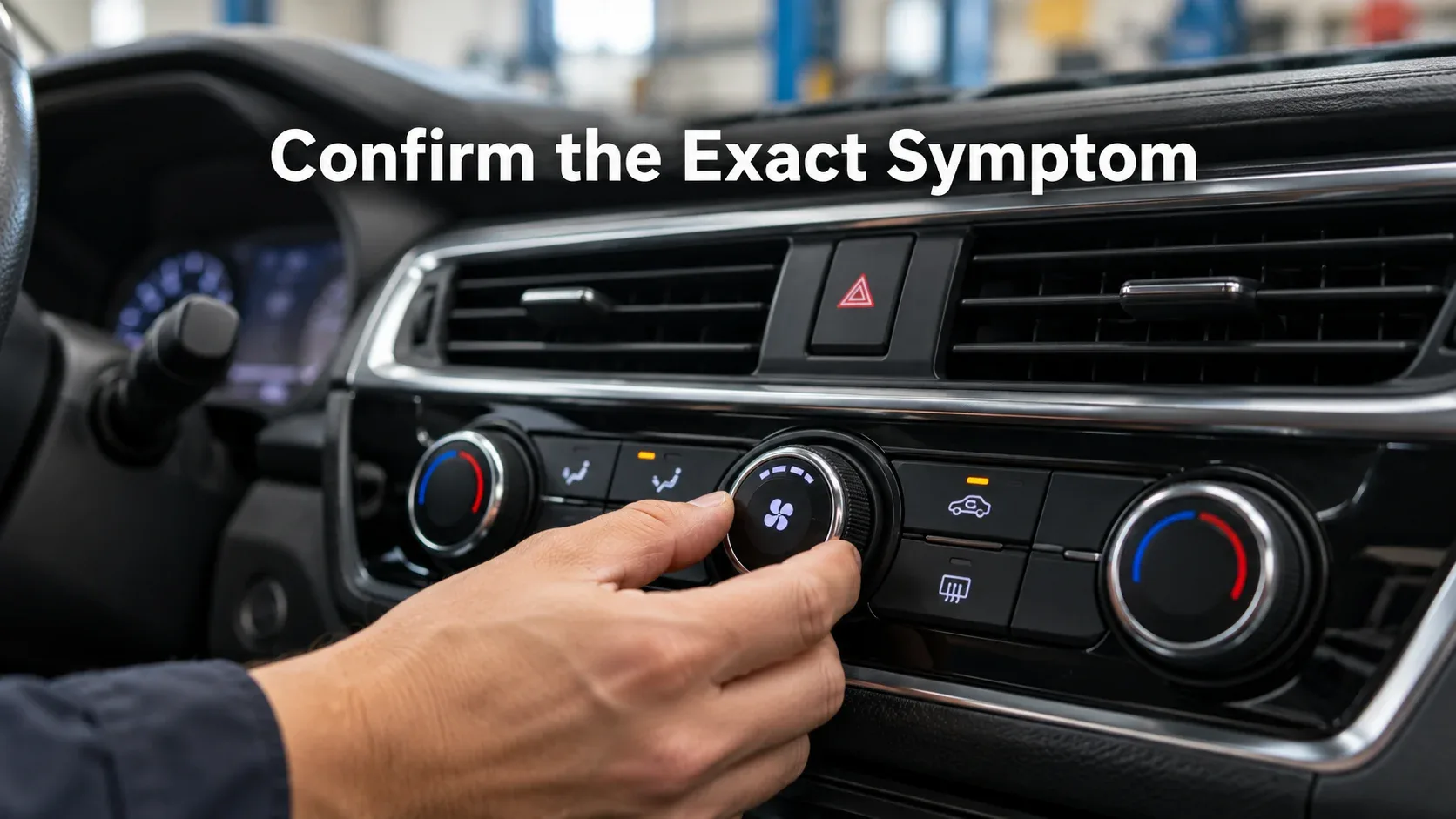
Observe the system and answer the following questions:
- Does the fan respond at any speed?
- Can you hear the blower spinning?
- Does airflow change between vent modes?
- Does the problem affect both heating and AC?
- Does the fan work intermittently?
These observations can narrow the problem before disassembly.
Step 2: Check the Cabin Air Filter
If the motor can be heard running but airflow remains weak, inspect the cabin air filter where accessible.
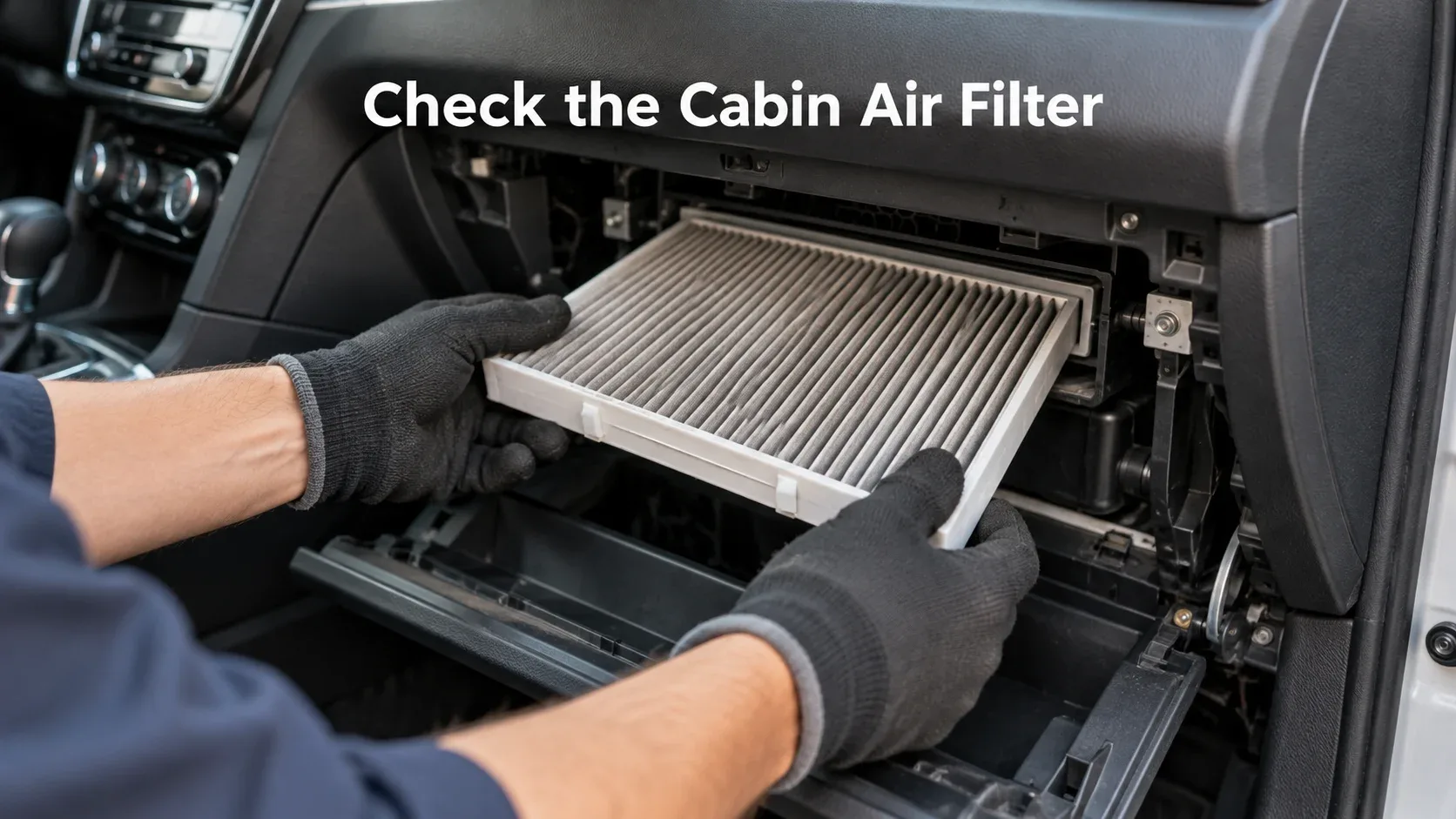
A heavily clogged filter may reduce airflow through the HVAC system. Check for excessive dirt, leaves, and moisture.
Replace the filter when needed, using the type specified for your vehicle.
Step 3: Inspect the Relevant Fuse
Locate the blower circuit fuse using the owner’s manual or the vehicle’s fuse-box diagram.
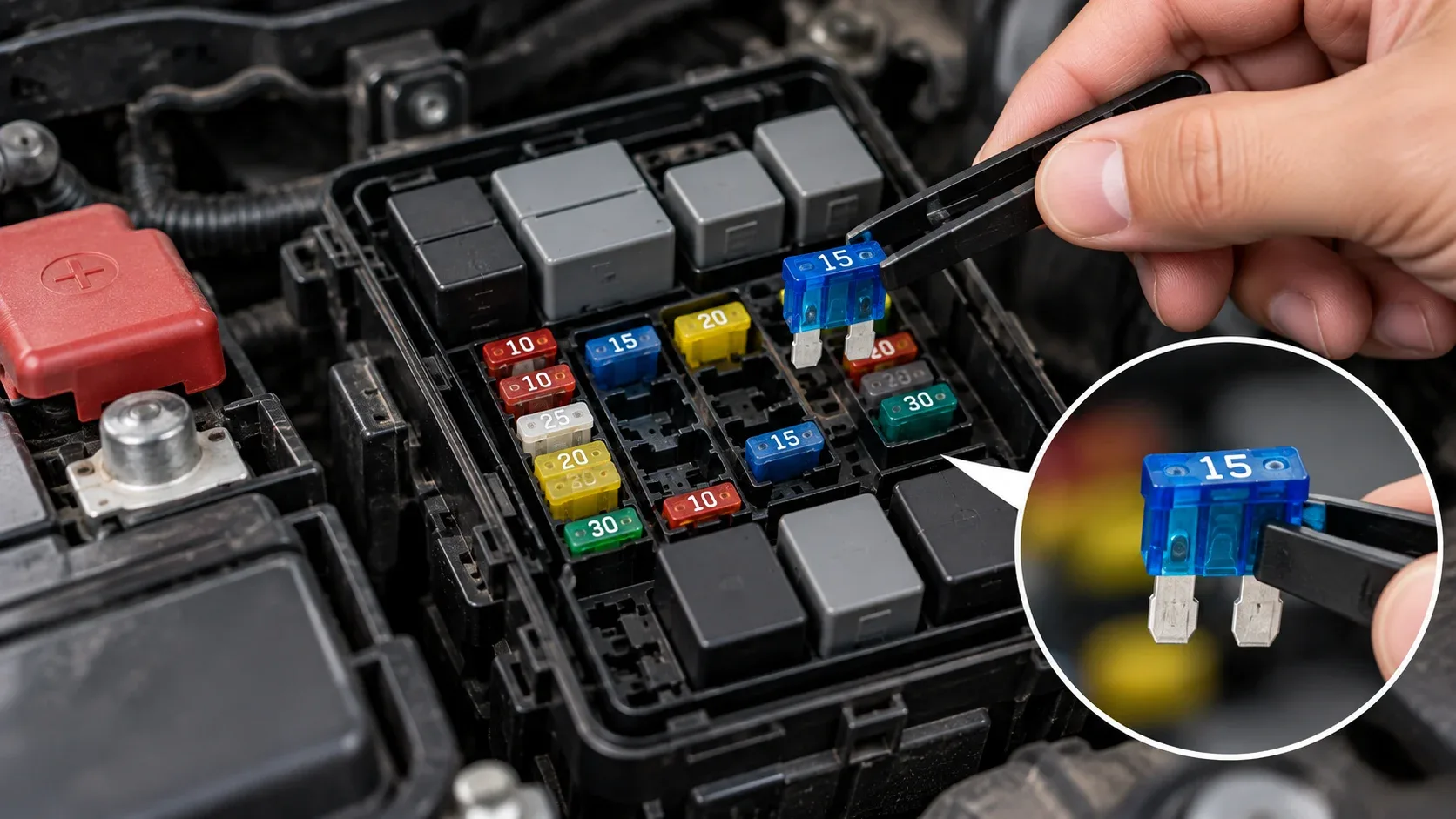
A blown fuse may explain why the blower does not operate. However, repeated fuse failure may indicate a circuit fault that needs further testing.
Never install a higher-rated fuse to keep a failing blower circuit working. The correct fuse rating protects the wiring and related components.
Step 4: Listen for Mechanical Problems
Squealing, grinding, or heavy vibration may indicate worn blower motor bearings, a damaged fan wheel, or debris inside the housing.
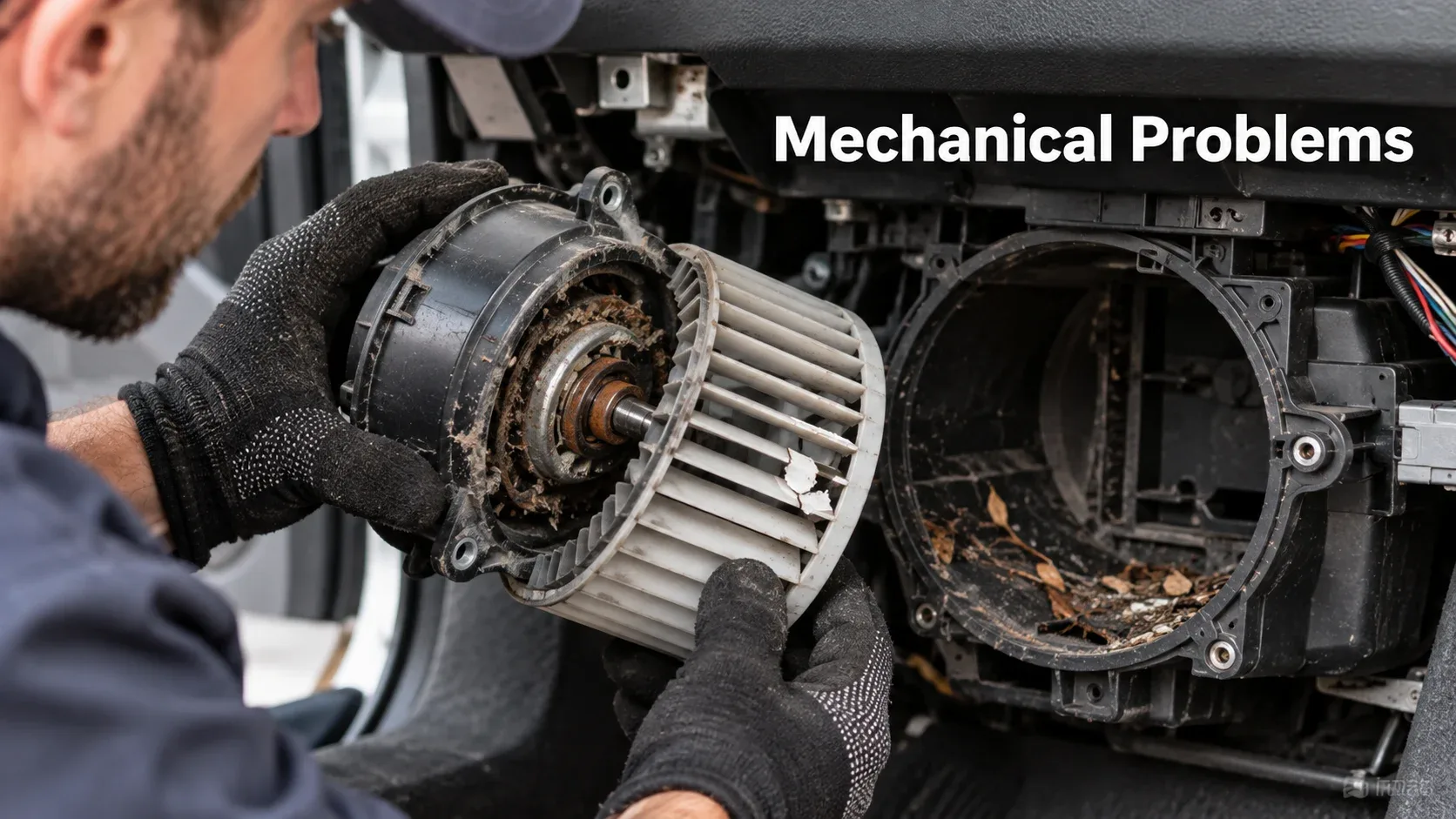
Switch off the blower before inspecting moving components. Check for loose mounting points, damaged fan blades, or objects that may interfere with rotation.
Step 5: Inspect Accessible Electrical Connectors
With power isolated as required by the manufacturer’s procedure, inspect accessible connectors for corrosion, looseness, heat damage, or melted plastic.
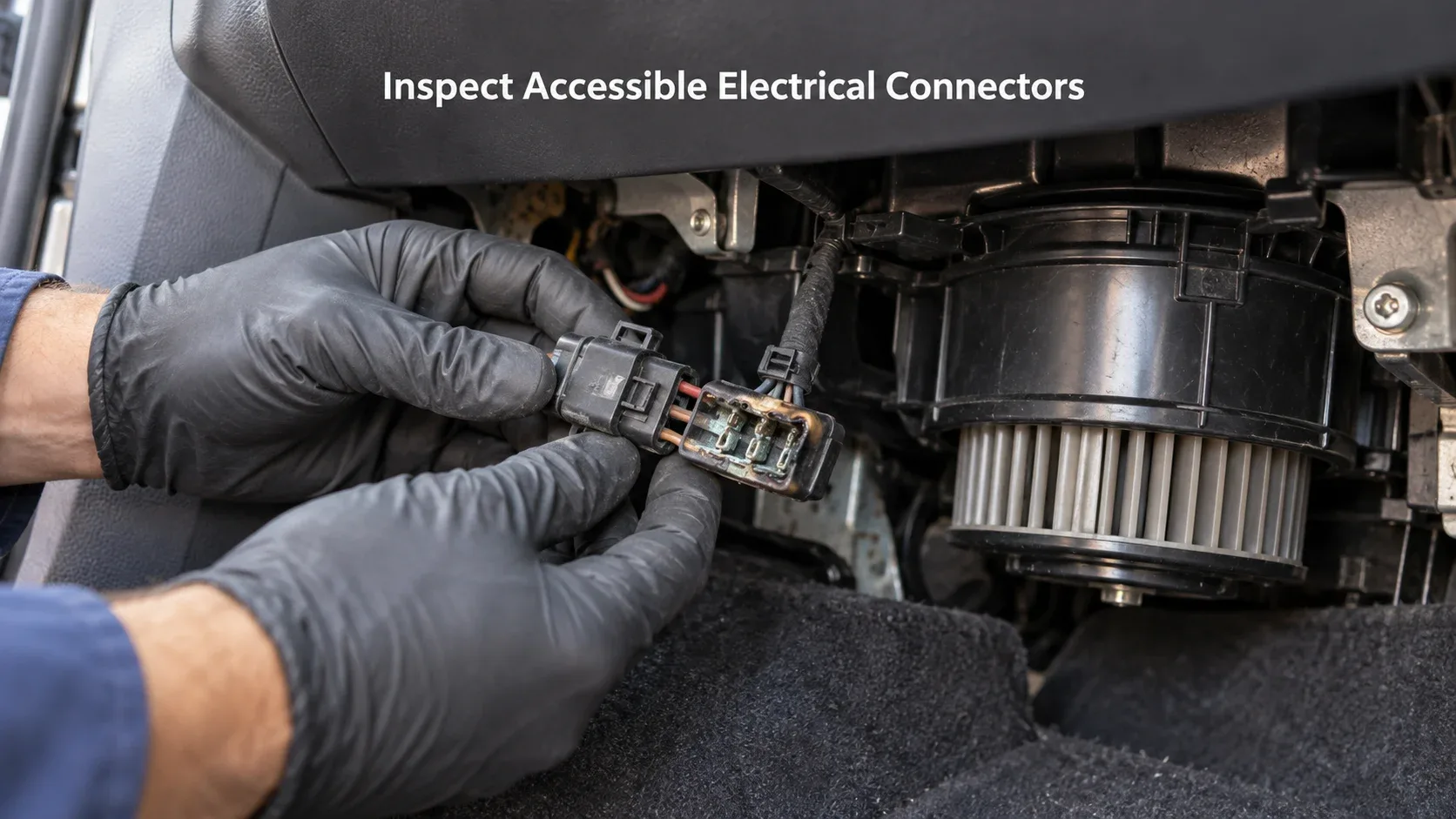
Overheated wiring requires more than simply installing another component. The cause of the heat damage must also be found.
Step 6: Check Power and Ground
A trained technician or electrically competent DIYer can use a suitable digital multimeter and the vehicle’s wiring diagram to check whether the blower receives the correct electrical supply and control signals.
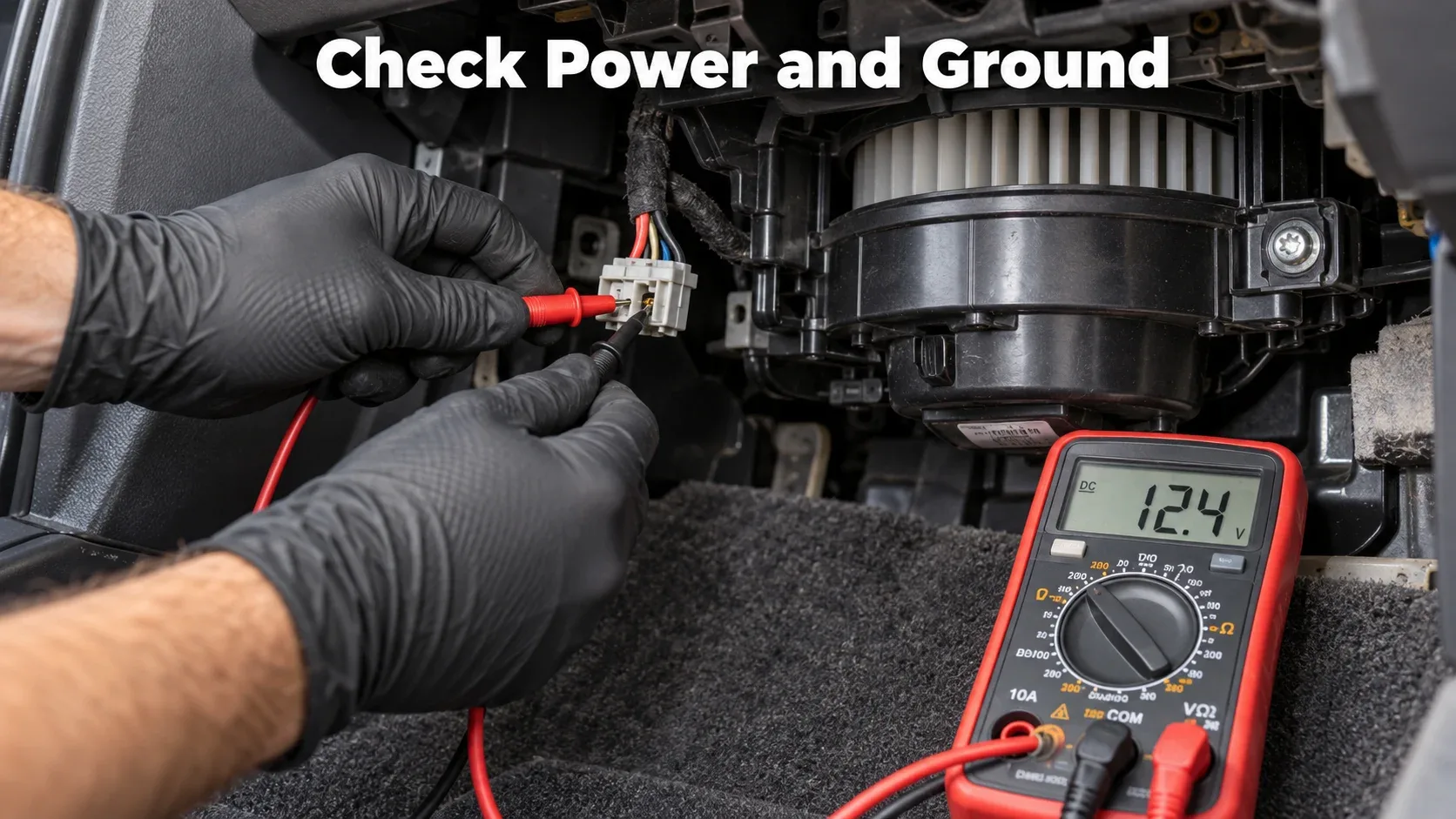
If the expected electrical supply and ground are present under the specified test conditions but the motor does not respond, the motor becomes a stronger suspect.
If the required electrical supply is missing, the fault may be in the fuse, wiring, controller, or switching circuit.
Step 7: Confirm the Fault Before Buying Parts
Testing may identify a defective blower motor, faulty resistor, damaged connector, or another electrical problem.
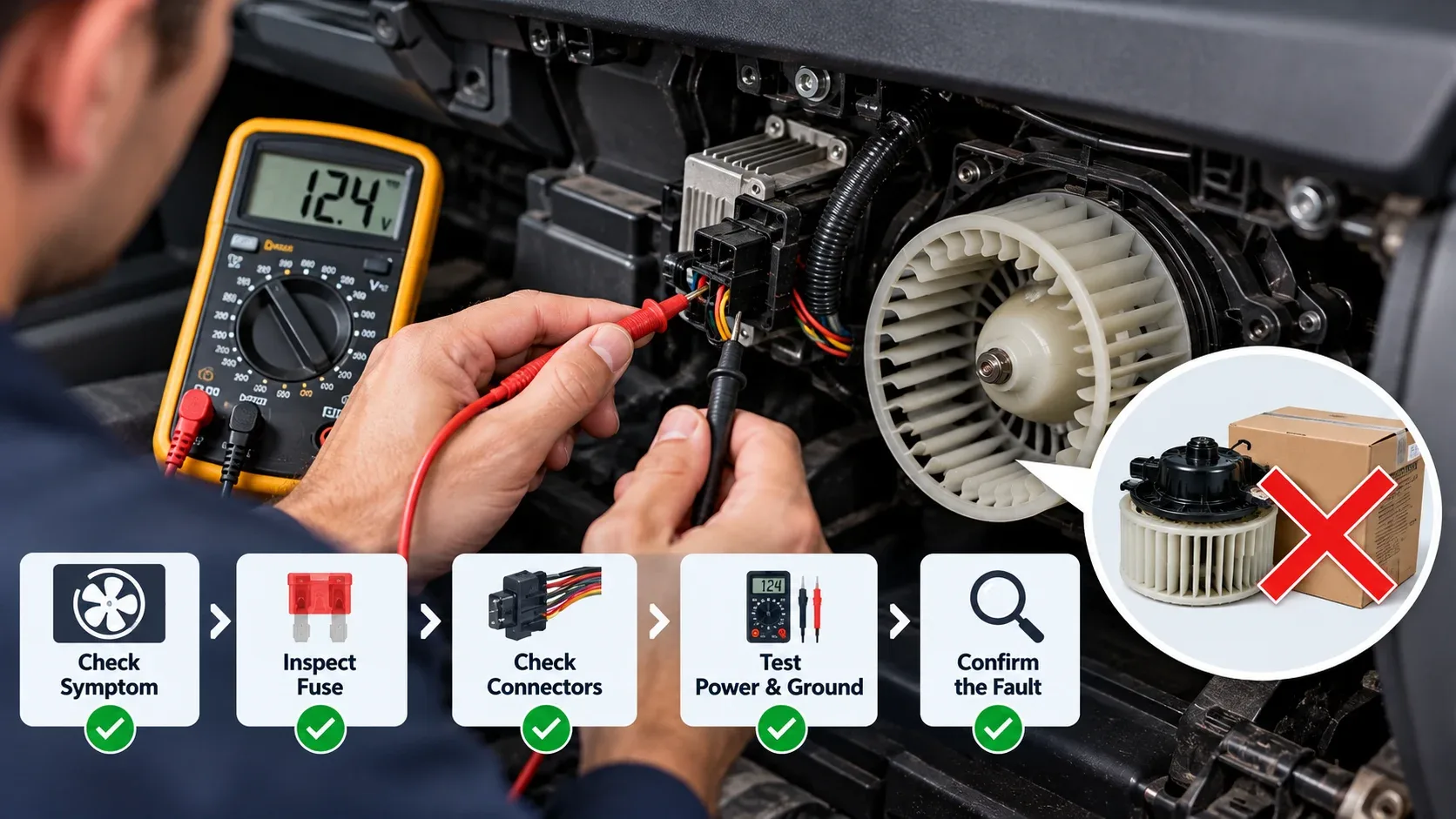
The replacement decision should follow the confirmed fault, not the most noticeable symptom.
Quick Diagnostic Decision Guide
Check Electrical Supply
Inspect the relevant fuse, motor supply, ground, and controller operation.
Check Airflow
Inspect airflow restrictions, mechanical noise, and fan performance.
Check Speed Control
Inspect resistor circuits, controllers, switches, and connectors.
Check Connections
Investigate unstable power, motor wear, overheated terminals, and controller faults.
These are preliminary diagnostic paths. Vehicle-specific testing is necessary to confirm the cause.
How to Test a Car Blower Motor With a Multimeter
A digital multimeter can help determine whether the blower motor circuit is functioning correctly.
However, the correct test points and expected readings depend on the vehicle, motor design, and control system.
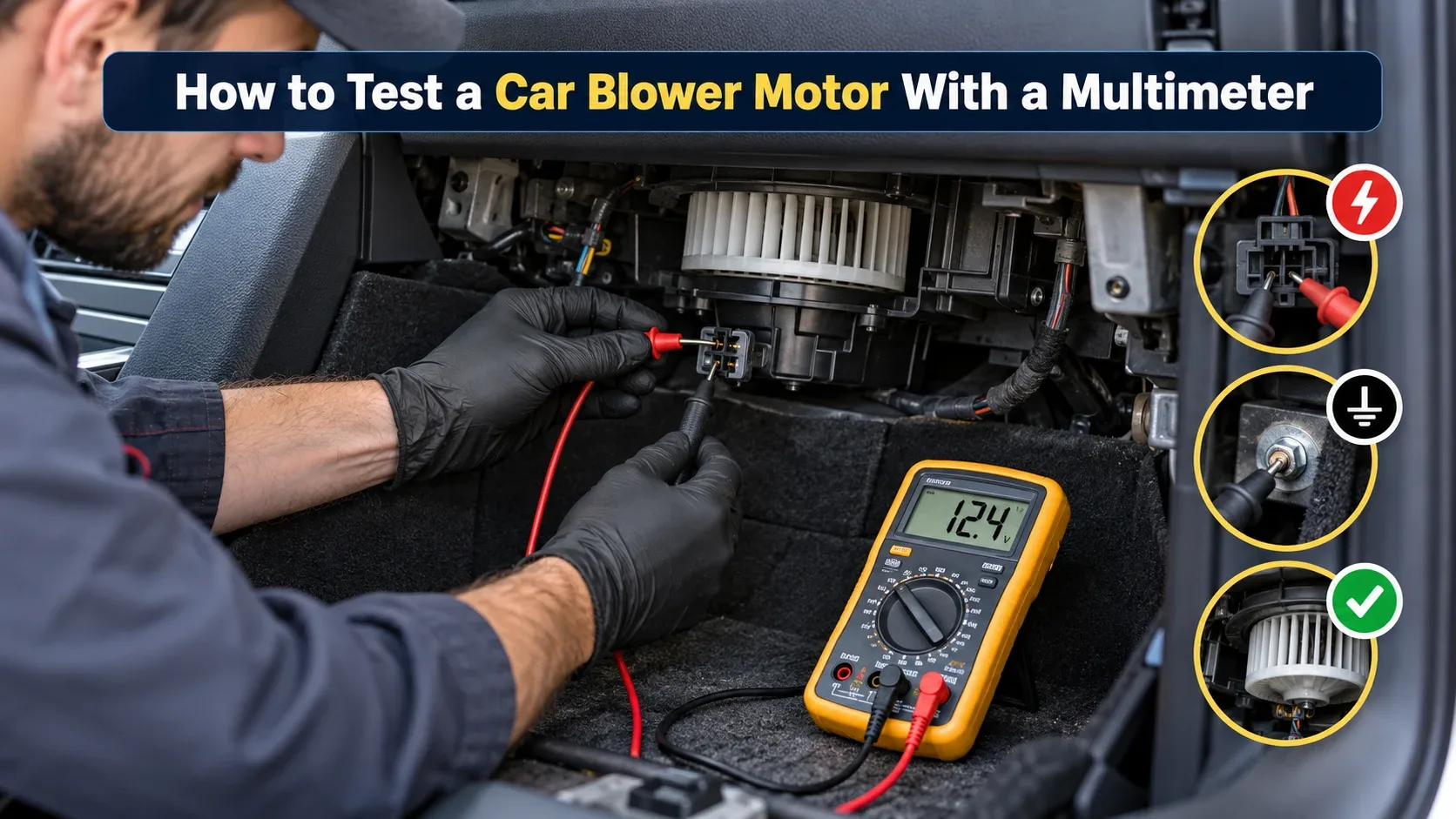
The following checks explain the general diagnostic process. Use the manufacturer’s service information for the exact procedure.
1. Identify the Correct Circuit
Obtain the wiring diagram for the vehicle’s make, model, year, and HVAC configuration.
Locate the blower motor connector and determine how the system controls power and ground.
2. Check Supply Voltage
With the circuit configured according to the manufacturer’s procedure, measure voltage at the appropriate test points.
A nominal 12-volt vehicle electrical system does not mean every blower terminal will display exactly 12 volts under all conditions.
Electronic controllers may use pulsed signals or control strategies requiring additional testing.
3. Evaluate the Ground Circuit
A poor ground connection may prevent the motor from operating correctly even when supply voltage is present.
Voltage-drop testing under appropriate load conditions may reveal excessive resistance in the circuit.
4. Check Motor Condition
Depending on the motor type, useful checks may include current-draw measurement, mechanical inspection, and manufacturer-approved testing.
A basic resistance reading alone is not a reliable universal diagnosis for every blower motor.
5. Compare Results With Specifications
Use the correct service manual rather than assuming one electrical reading applies to every vehicle.
Brushless or electronically controlled blower assemblies may require different testing methods from traditional brushed motors.
Electrical safety: Avoid probing unidentified connectors near airbag wiring. Do not bypass protective devices or apply direct battery power unless the approved procedure specifically allows it.
Car HVAC Blower Motor Replacement: Step-by-Step Guide
Once testing confirms a failed blower motor, replacement may be necessary.
Some blower assemblies are accessible beneath the passenger dashboard. Others require additional trim or HVAC component removal.
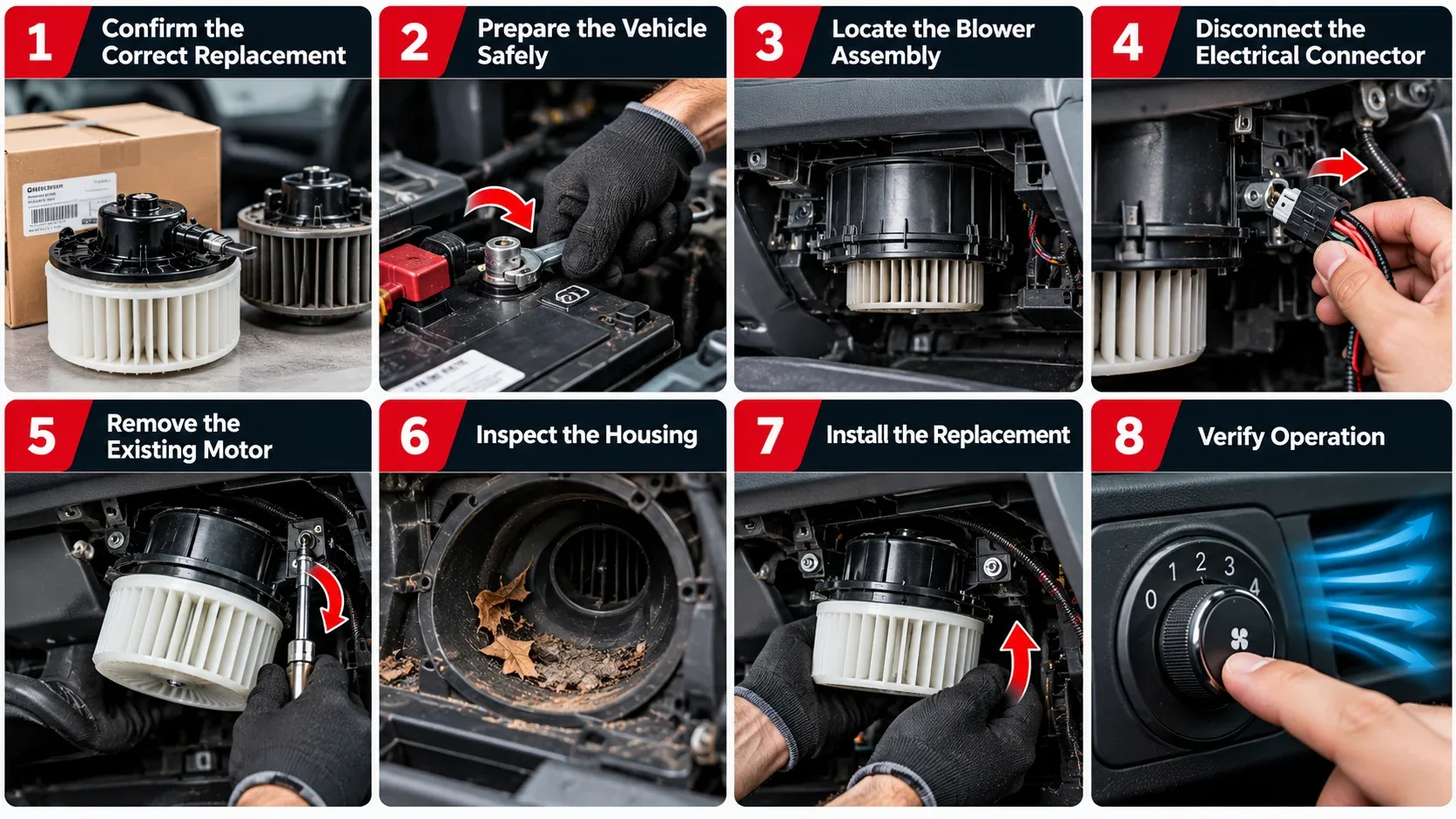
The following eight steps summarize the replacement process. Exact access, fastener locations, and electrical precautions vary by vehicle.
Step 1: Confirm the Correct Replacement
Identify the correct motor or blower assembly using the vehicle’s year, make, model, engine, and HVAC configuration. Check connector and mounting compatibility.
Step 2: Prepare the Vehicle Safely
Park securely, switch off the ignition, and follow the manufacturer’s electrical isolation instructions. Be aware of nearby passenger-side airbag components.
Step 3: Locate the Blower Assembly
Use the service manual to find the assembly and determine which trim panels must be removed.
Step 4: Disconnect the Electrical Connector
With the system safely isolated, release the connector lock without pulling directly on the wiring.
Step 5: Remove the Existing Motor
Remove the specified fasteners or retaining mechanism. Support the motor as it is removed to avoid damaging the housing.
Step 6: Inspect the Housing
Look for leaves, debris, moisture intrusion, damaged seals, or signs of fan-wheel interference. Correct relevant underlying problems.
Step 7: Install the Replacement
Position and secure the new motor according to the manufacturer’s instructions. Reconnect electrical components without pinching wiring.
Step 8: Verify Operation
After reassembly and safe restoration of electrical power, test the available fan speeds and vent modes. Check for smooth airflow and abnormal noise.
DIY difficulty: Replacement can range from straightforward to highly involved. Some vehicles require significant access work. Consult model-specific service instructions.
Should You Repair or Replace the Blower Motor?
Not every blower-related complaint requires replacing the motor assembly.
Proper testing may reveal that the motor is functional and the actual problem is a filter, connector, resistor, or electronic controller.
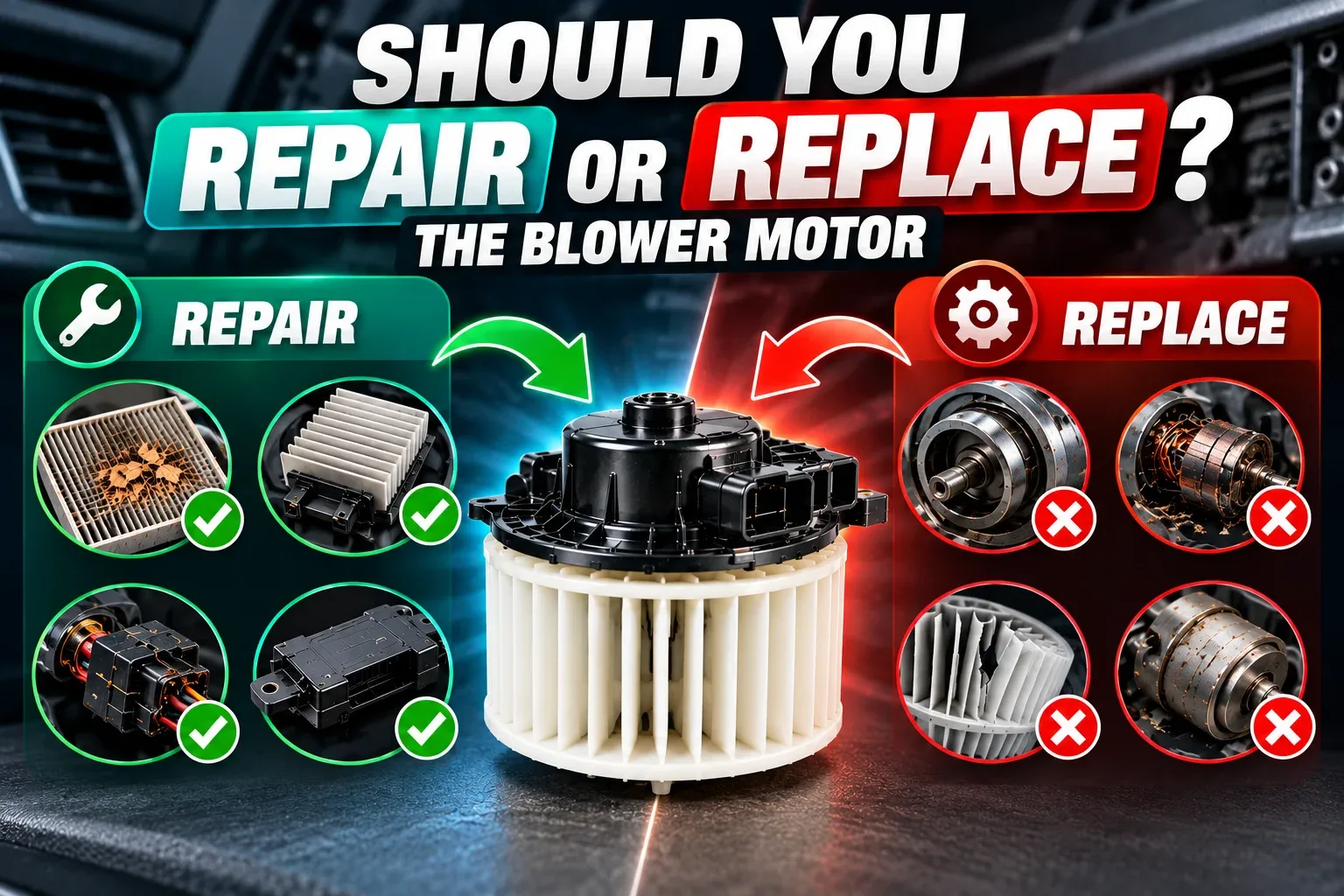
The decision depends on which component has actually failed. Some problems can be solved by clearing airflow restrictions, replacing a filter, or repairing electrical connections. Confirmed internal motor damage may require complete replacement.
Common Problems and the Right Repair
| Confirmed Finding | Likely Repair Direction |
|---|---|
| Severely clogged cabin filter | Replace filter and inspect airflow |
| Debris interfering with fan wheel | Remove debris and inspect for damage |
| Failed resistor | Replace after inspecting associated circuit |
| Overheated connector | Repair connector and underlying electrical problem |
| Worn motor bearings | Replace motor or blower assembly |
| Motor fails approved tests | Replace defective assembly |
| Electronic controller failure | Repair or replace the controller as appropriate |
When Replacement Makes Sense
Motor replacement is generally appropriate when testing confirms a defective motor and the assembly is not reasonably serviceable.
Severely worn bearings, damaged windings, and persistent mechanical failure often make replacement the practical option.
When the Motor May Not Be the Problem
If testing shows that the motor operates correctly, continue investigating the related controls, wiring, and airflow restrictions.
Replacing a working motor will not solve a defective controller, overheated connector, or blocked cabin air filter.
Repair decision: Replace the component that has actually failed, not the component that merely appears most suspicious.
Common DIY Mistakes That Make Blower Problems Worse
Many unnecessary blower motor replacements happen because the first suspicious component gets replaced without enough testing.
Replacing the Motor Without Checking the Resistor
A fan that works only at certain speeds may have a control-circuit problem rather than a defective motor.
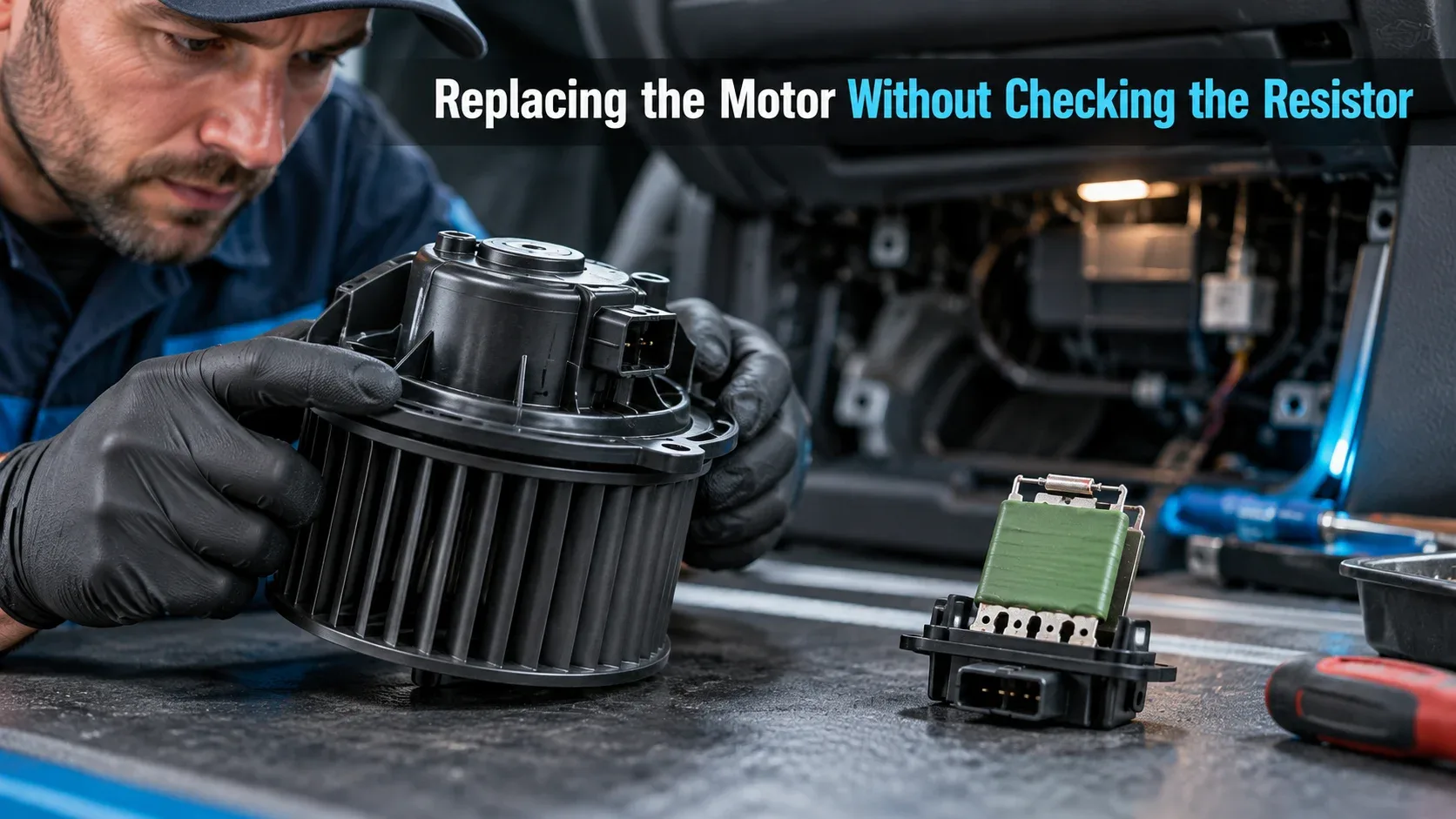
Inspect the resistor and speed-control circuit before purchasing a replacement motor.
Ignoring Melted Connectors
Installing a new resistor without addressing overheated terminals or abnormal electrical loads may allow the problem to return.
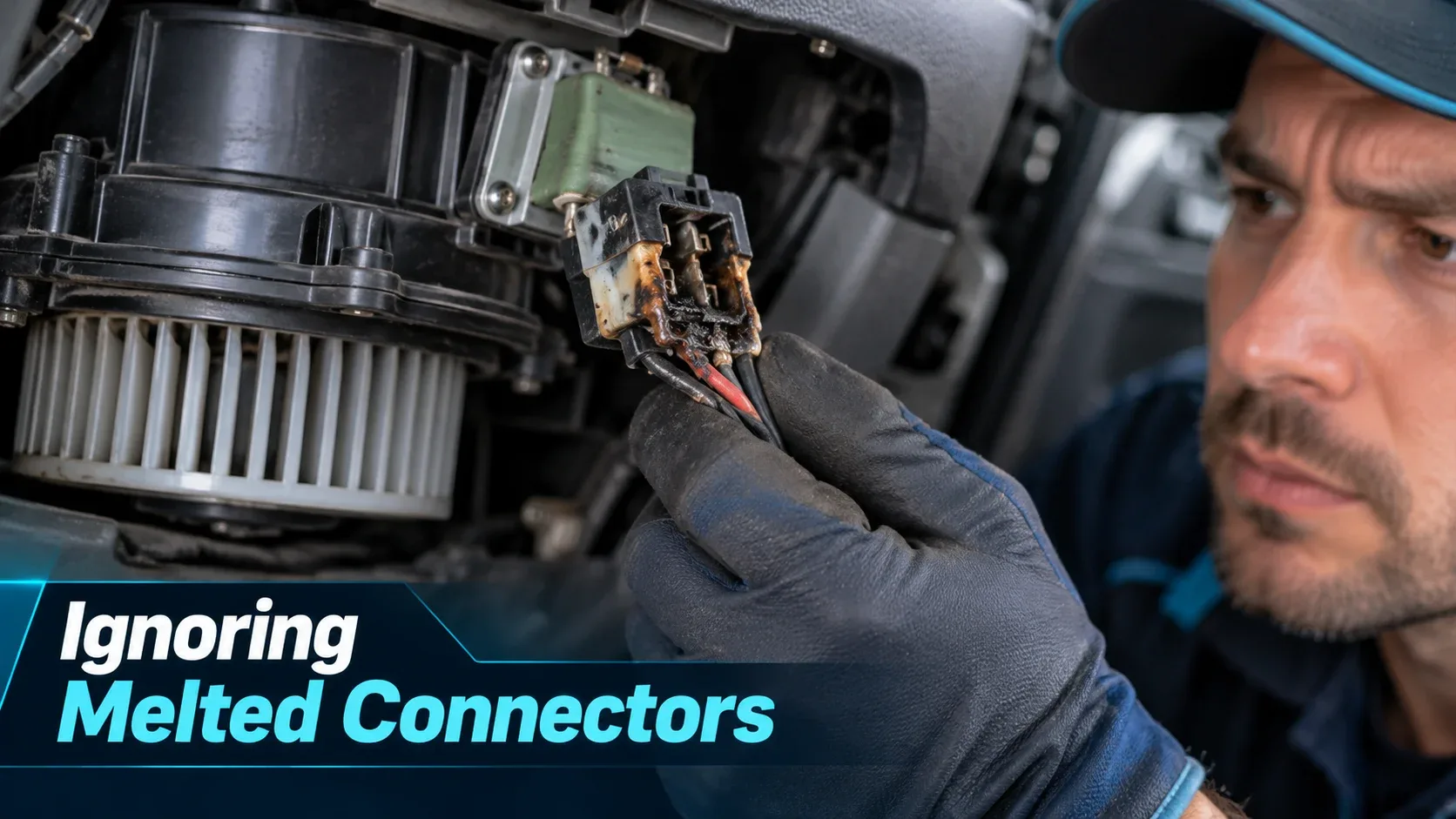
Inspect terminal condition, wiring integrity, and related electrical components before completing the repair.
Using the Wrong Fuse
A larger fuse does not solve an overcurrent problem. It can compromise the circuit’s electrical protection.
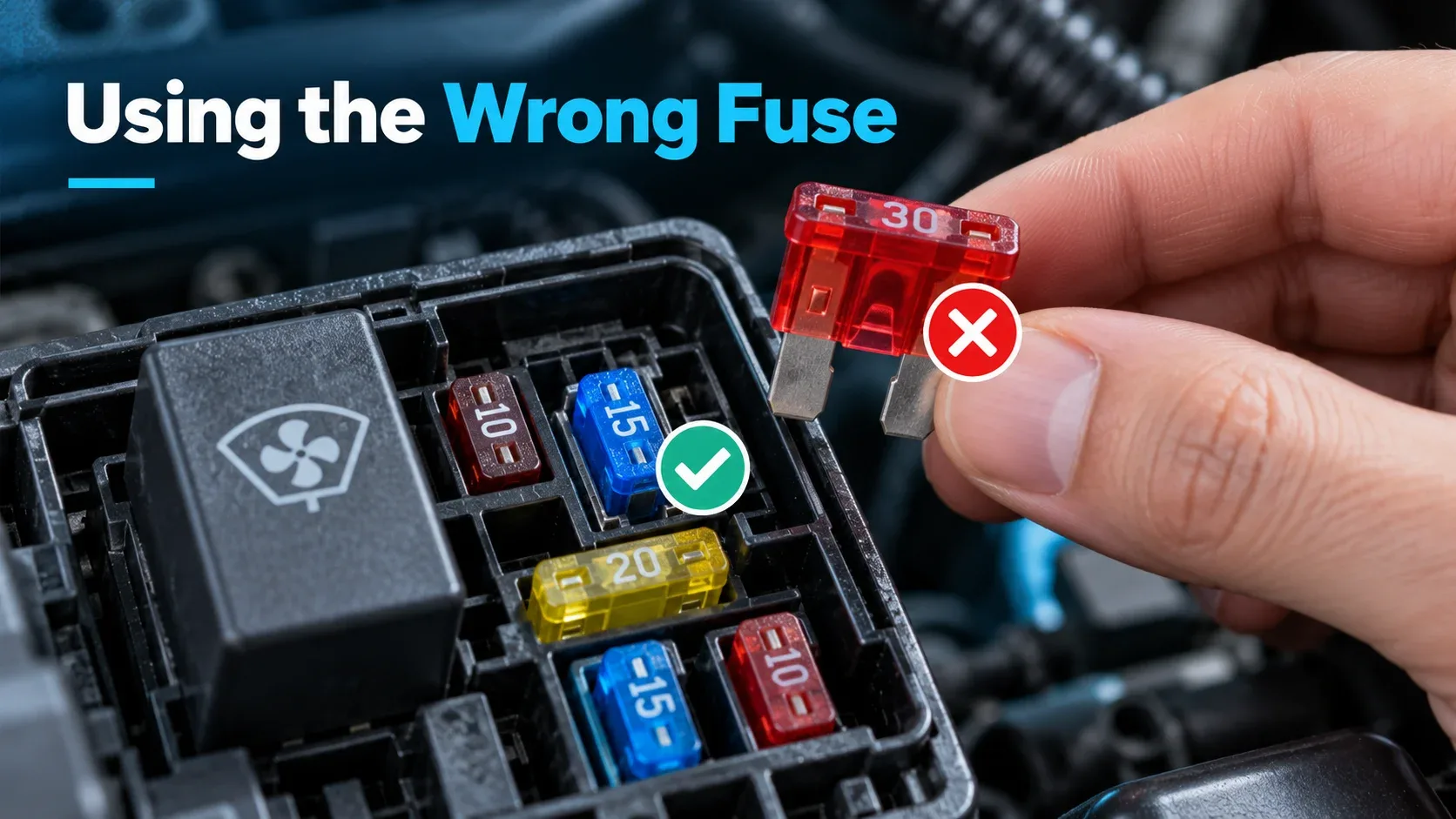
Use the rating specified by the vehicle manufacturer and diagnose repeated fuse failure.
Assuming Weak Airflow Means a Bad Motor
Cabin filters, blocked air intakes, and HVAC duct restrictions should be considered before replacement.
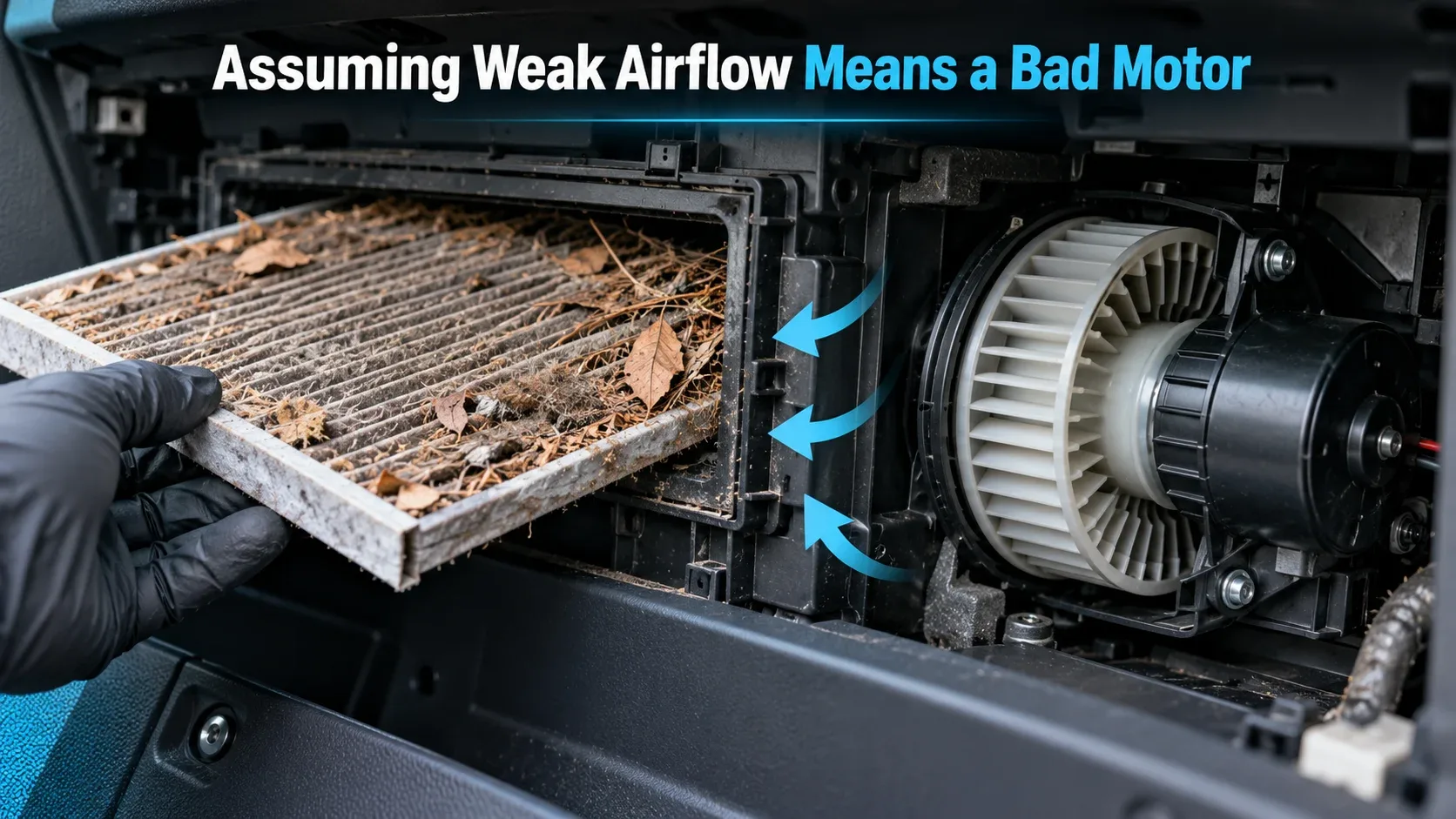
A functioning motor cannot provide normal cabin airflow when the air path is severely restricted.
Testing Without a Wiring Diagram
Connector arrangements and electrical control strategies differ among cars. Incorrect testing may damage electronic modules or produce misleading results.
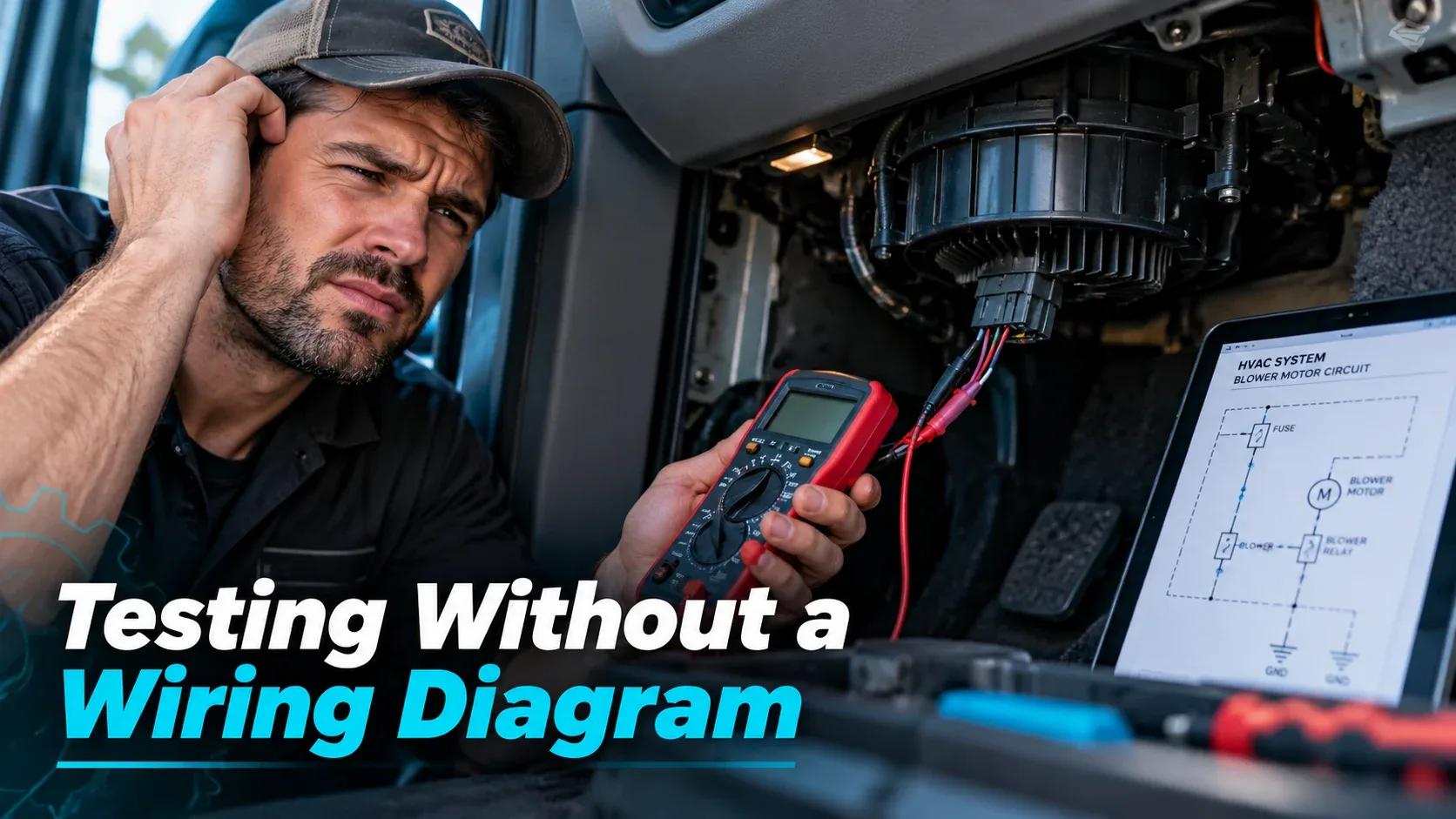
Always identify the correct circuit and follow vehicle-specific diagnostic procedures.
Ignoring Water Intrusion
Moisture entering the HVAC housing may damage the blower motor, electrical connector, or controller.
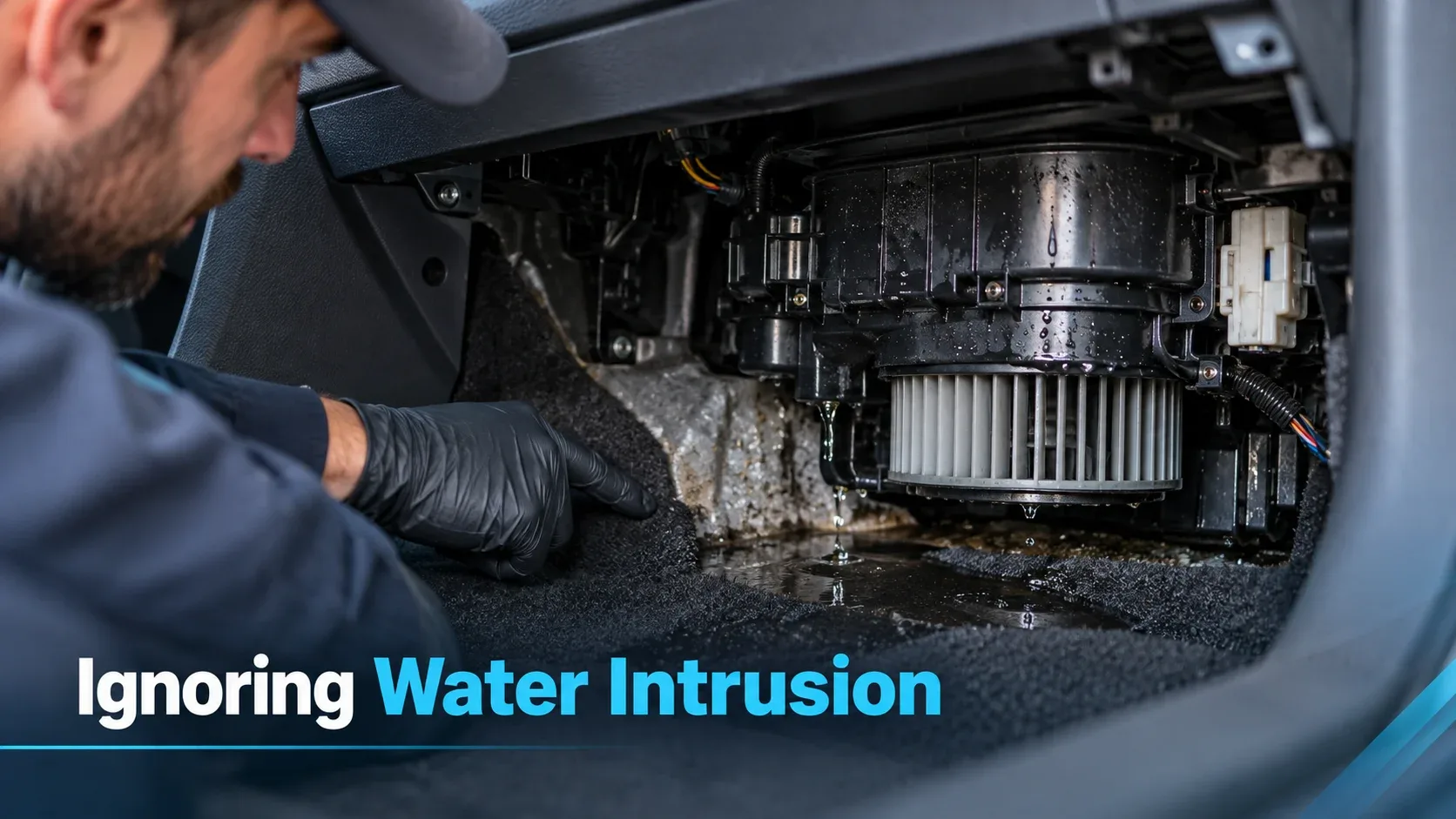
Replacing an affected component without addressing the water source can lead to repeated failures.
How to Prevent Premature Blower Motor Failure
Not all blower motor failures can be prevented, but routine maintenance may reduce certain avoidable causes of poor airflow and component damage.
Maintain the Cabin Air Filter
Replace the filter according to the vehicle’s service schedule or sooner when conditions warrant.
Keep Air Intakes Clear
Remove visible leaves and debris from accessible intake areas using approved cleaning methods.
Investigate Unusual Noises
Check new squealing, scraping, or vibration before mechanical damage becomes more severe.
Address Moisture Problems
If water repeatedly enters the passenger footwell or HVAC housing, find and correct the source.
Also pay attention to persistent electrical odors, intermittent fan operation, and repeated fuse failures.
Early investigation can help reduce the risk of additional component damage.
Frequently Asked Questions About Car Blower Motor Problems
These questions address common concerns about car blower motors, resistors, symptoms, and repair decisions.
What are the most common symptoms of a bad blower motor?
Common symptoms include no airflow, squealing or grinding noises, intermittent operation, excessive vibration, and weak fan performance. Similar symptoms can also be caused by airflow and electrical faults.
Can a bad blower motor resistor stop the fan completely?
Yes. Depending on the vehicle’s electrical design and the failure, a resistor or electronic controller fault may prevent blower operation. The motor itself may still be functional.
Why does my blower motor only work on high speed?
On many traditional resistor-based systems, a failed resistor circuit can disable lower speeds while high speed remains functional. Other wiring or control faults are also possible.
Can a bad blower motor affect both AC and heat?
Yes. The cabin blower normally moves air for both heating and air conditioning. If it cannot operate correctly, both systems may have inadequate airflow.
Can I drive with a bad blower motor?
The vehicle may still operate, but inadequate defogging or defrosting can create dangerous visibility conditions. Do not drive if you cannot maintain a clear view. Electrical smoke or burning odors also require urgent attention.
Can a dirty cabin air filter damage the blower motor?
A severely restricted filter can reduce airflow and may contribute to unfavorable operating conditions in some HVAC designs. However, motor failures have multiple causes, and replacing the filter cannot prevent every failure.
Is replacing a car blower motor a difficult DIY job?
Difficulty varies by vehicle. Some blower assemblies are accessible beneath the glove compartment, while others require significant disassembly. Proper diagnosis and awareness of electrical and airbag-related safety requirements are essential.
Should I replace the blower motor and resistor together?
Not automatically. Replace components based on confirmed faults. If a resistor or connector has overheated, assess motor current draw and related wiring to determine whether another component also needs attention.
Can a blower motor stop working intermittently?
Yes. Worn motor components, loose terminals, intermittent wiring faults, or electronic controller problems can cause a blower to start and stop. Testing while the fault is present may help identify the cause.
How do I know whether the blower motor or resistor is bad?
Check fan-speed behavior, inspect connectors, and test the relevant electrical circuits using a wiring diagram. A motor may fail mechanically or electrically, while resistor and controller faults often affect speed regulation. Symptoms alone cannot always distinguish them reliably.
Final Car Blower Motor Diagnostic Checklist
Before buying a new motor or resistor, work through these checks.
- Confirm which fan speeds work.
- Listen for unusual blower noises.
- Determine whether airflow is restricted.
- Inspect the cabin air filter.
- Check the relevant blower circuit fuse.
- Look for damaged electrical connectors.
- Identify the vehicle’s speed-control design.
- Test power and ground using approved procedures.
- Investigate the resistor or controller.
- Confirm the fault before replacing components.
- Inspect related systems for the original cause.
- Test all fan speeds after completing repairs.
A careful diagnostic process may reveal that the issue is not the blower motor at all.
Finding the actual cause helps prevent unnecessary component replacement and repeated failures.
Final Thoughts: Diagnose Before You Replace
Car blower motor problems can make a vehicle uncomfortable and may affect visibility when windshield defogging is needed.
Although a failing blower motor can cause unusual noise, intermittent operation, and complete loss of airflow, the actual problem may involve the blower motor resistor, electronic controller, fuse, wiring, or airflow path.
The best approach is to understand the symptoms, check the simple possibilities first, and perform the appropriate tests before replacing parts.
When a failure is confirmed, an experienced DIYer may be able to replace an accessible blower assembly. More complex electrical faults and difficult dashboard repairs may require a qualified automotive technician.
The goal is not simply to make the fan work again. It is to identify why it stopped working and complete a reliable repair.
Editorial note: This article provides general automotive troubleshooting guidance. Electrical specifications, component locations, repair procedures, and safety requirements vary between vehicles. Consult the appropriate manufacturer service information before performing model-specific repairs.