Car AC & Heating • Troubleshooting Guide
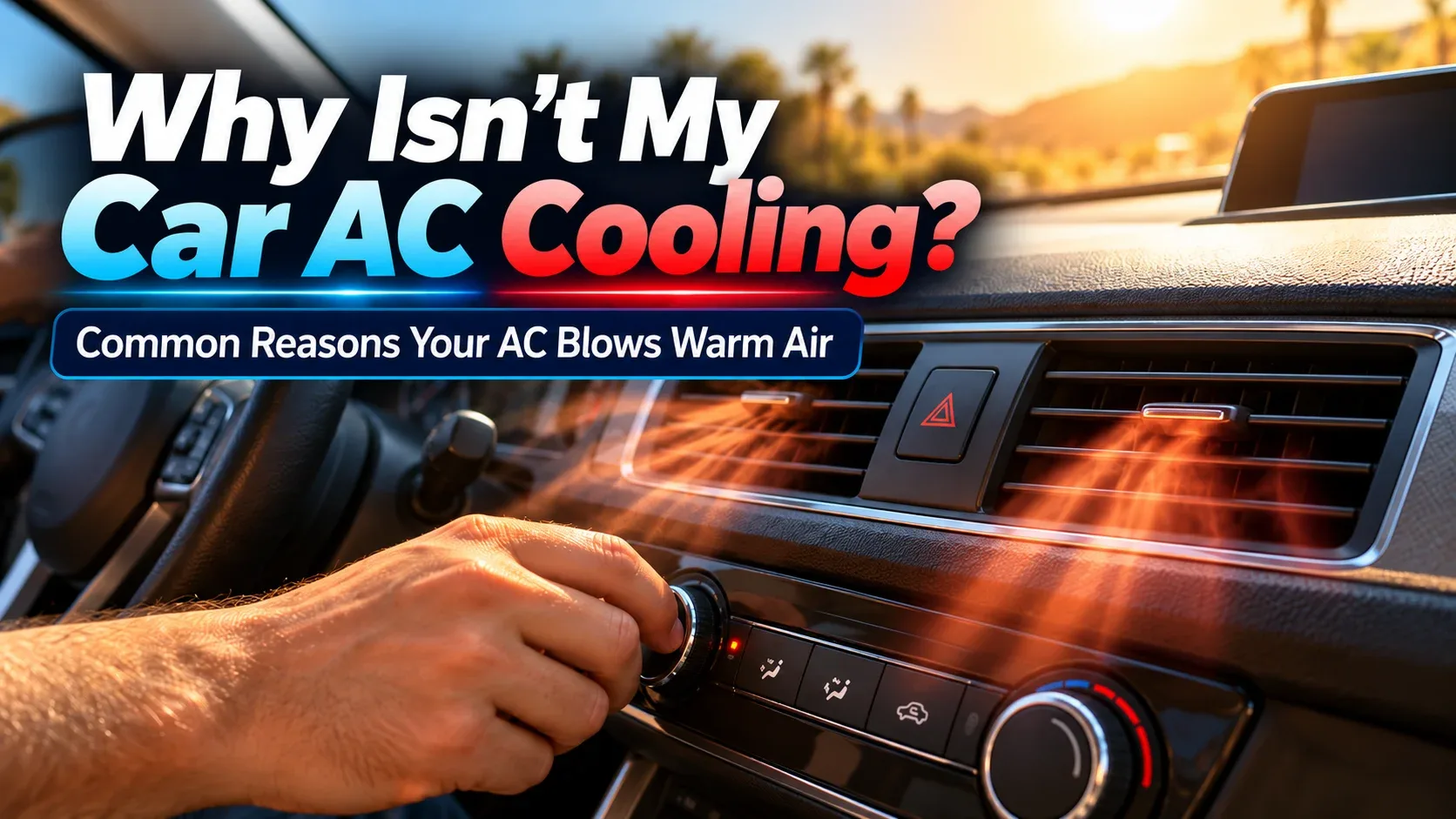
Your fan is blowing, but the air feels warm. Here’s how to recognize the symptoms, understand the likely causes, and decide what to check before paying for repairs.

It’s 3 PM on a scorching summer afternoon. You get into your car, crank the air conditioning to maximum, and wait for cool relief.
But instead of cold air, a wave of heat hits your face. You lower the temperature, raise the fan speed, and tap the AC button again. Nothing changes.
Before buying a can of refrigerant or assuming the compressor is dead, there’s an important question: is the problem weak airflow, or is plenty of air blowing but not getting cold? That distinction is the beginning of a useful diagnosis.
Quick answer: Why isn’t my car AC cooling?
The most common possibilities include low refrigerant caused by a leak, a compressor or control fault, inadequate condenser airflow, electrical problems, or a malfunctioning blend door. If the vent airflow itself is weak, a clogged cabin filter or blower issue may be more likely.
First move: confirm that AC is switched on, temperature is set to cold, and recirculation is selected. Then use the symptom chart below. A recharge is not the automatic fix for warm air.
Why Is My Car AC Not Blowing Cold Air?
Car AC not blowing cold air can mean two very different things: the airflow is strong but warm, or very little air comes out. The first often points toward cooling-system or temperature-control faults. The second points you toward the blower, filter, or air passages.
| What you notice | Possible explanation | Next sensible step |
|---|---|---|
| Strong air, never cold | Refrigerant, compressor, controls or blend door | Confirm settings; obtain system diagnosis |
| Cool at highway speed, warm at idle | Insufficient condenser cooling or fan issue | Have fan and airflow operation inspected |
| Weak flow at all fan settings | Restricted cabin filter or blower fault | Inspect accessible filter and vent airflow |
| Cold on one side only | Blend-door or dual-zone climate issue | Check both temperature zones and controls |
| Cooling stops after a few minutes | Intermittent electrical, pressure or control fault | Record when it happens; have codes and operation checked |
A symptom is a clue, not proof that any particular component needs replacing.
How Does a Car Air Conditioning System Work?
Think of your car’s air conditioner as a heat transporter. Instead of creating cold air, it moves heat from inside the passenger cabin to the outside air through a sealed refrigerant circuit.
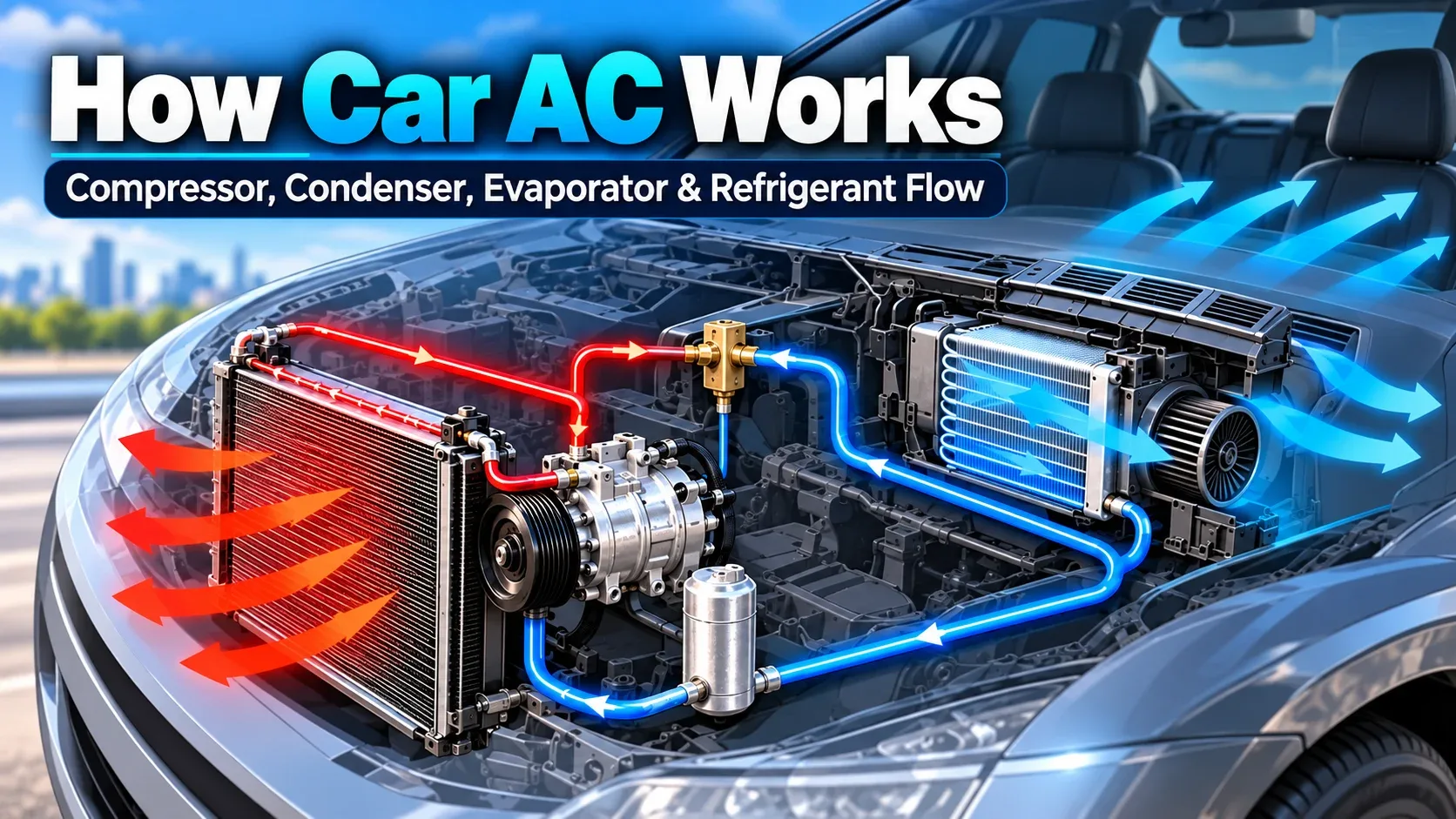
Raises refrigerant pressure→Condenser
Releases heat outside→Expansion device
Reduces pressure→Evaporator
Absorbs cabin heat
The blower pushes cabin air across the cold evaporator. That cooled air comes out through your dashboard vents. The refrigerant travels through the circuit again and again.
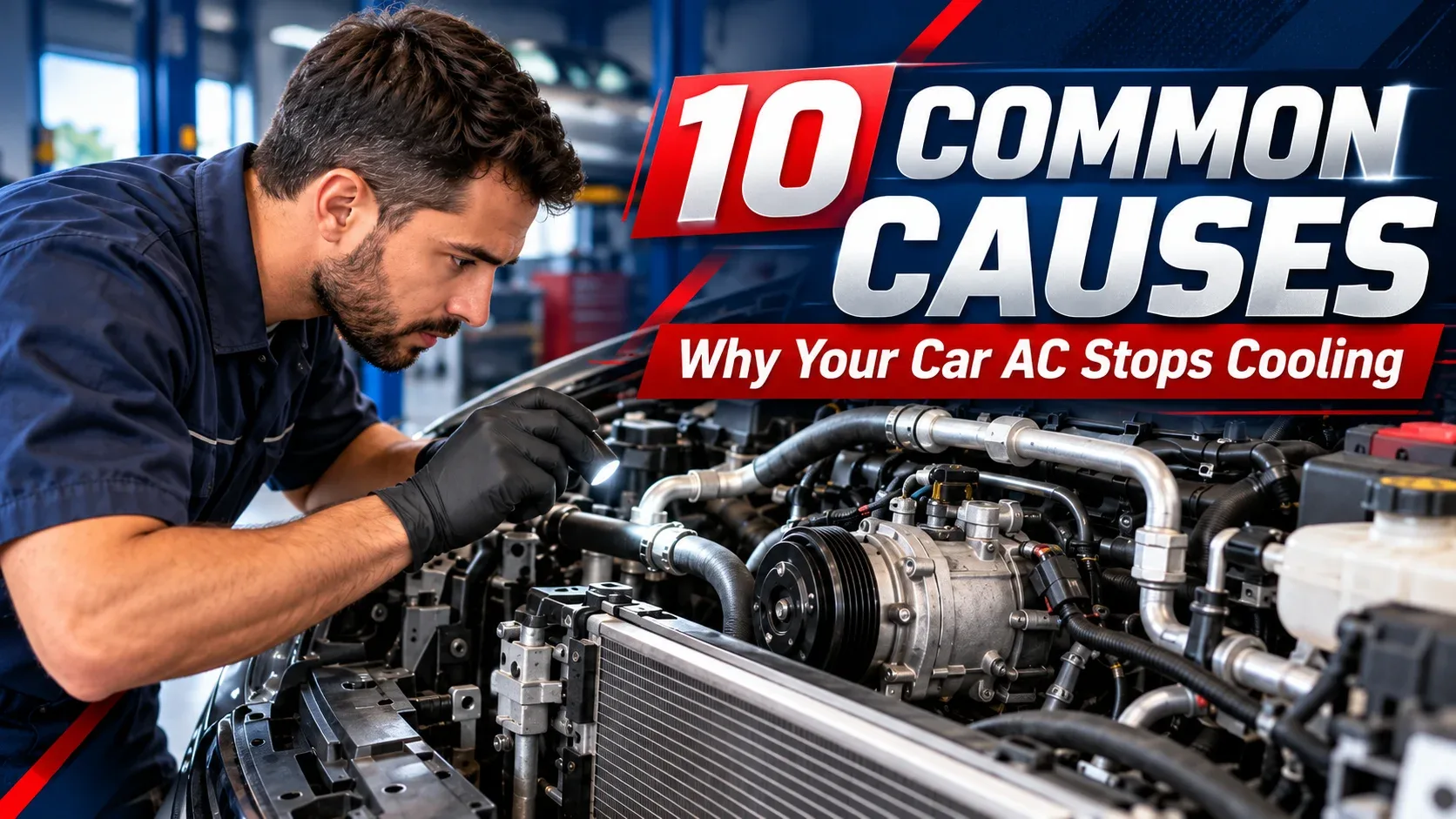
10 Common Causes of Car AC Not Cooling
Here’s what a technician considers when diagnosing warm vent air. The order isn’t a guaranteed ranking for every model; different cars use different compressors, controls, and fan designs.
1. Low refrigerant from a leak
When refrigerant escapes through a damaged seal, hose, connection, condenser or evaporator, the system may no longer cool effectively. Cooling may fade gradually, and some vehicles may shut down compressor operation to protect components.
Solution: have the leak located and repaired, then recharge with the manufacturer-specified refrigerant and quantity.
2. Faulty AC compressor or compressor control
The compressor circulates refrigerant. A mechanical failure, variable-displacement control issue, electrical problem or drive fault can prevent proper cooling. Some vehicles have clutchless compressors, so the absence of an audible clutch click proves little.
Solution: verify commands, electrical supply, pressures and compressor operation before replacing expensive parts.
3. Damaged or blocked condenser
The condenser sits near the front of the vehicle. Road debris, corrosion or collision damage can obstruct heat transfer or create a leak. A damaged condenser may need replacement.
Solution: inspect safely for obvious blockage or damage; professional assessment is needed for suspected leaks.
4. Condenser or radiator cooling fan fault
If the car AC is cool while driving but warm while stopped, limited air passing through the condenser may be responsible. Fan problems, airflow obstructions and related controls deserve attention.
Solution: a technician should verify fans operate as required. Never place hands near an electric fan—it can start without warning.
5. Clogged cabin air filter
A dirty filter restricts air going through the climate-control housing. You’ll often notice reduced airflow more than a complete loss of refrigeration.
Solution: inspect or replace the cabin filter using the vehicle manual. This is one of the more approachable DIY maintenance jobs.
6. Electrical failure, fuse, relay or wiring issue
Blown fuses, faulty relays, damaged wiring or module faults can affect the AC request, blower or compressor. Don’t assume a fuse is the root cause if it blows again after replacement.
Solution: use the correct fuse rating and seek diagnosis for repeating electrical faults.
7. Blend-door or temperature-actuator fault
The evaporator may be cold, but a stuck blend door could still direct heated air through the vents. This can sometimes produce different temperatures on the driver and passenger sides.
Solution: check settings and obtain HVAC actuator or control-system diagnosis.
8. Expansion valve or refrigerant restriction
An expansion device meters refrigerant into the evaporator. Restrictions can disrupt cooling and produce abnormal operating conditions. Symptoms overlap with other faults.
Solution: refrigerant-circuit testing by a qualified AC technician.
9. Evaporator issue
An evaporator can leak, become restricted or develop conditions that contribute to freezing. Evaporator replacement can be labor-intensive because the component is often behind the dashboard.
Solution: confirm the fault before authorizing major interior disassembly.
10. Sensor or control-module problem
Pressure transducers, temperature sensors and climate-control modules help decide when and how the system runs. A false signal may interrupt cooling even if much of the refrigerant circuit is intact.
Solution: proper scan-tool data and electrical testing—not guessing from a single code.
Car AC Troubleshooting: Find Your Symptom
Back to the hot parking lot: before Michael buys a car AC recharge kit, he watches how the system behaves. Use this quick sorting guide for your own vehicle.

Warm from every vent
Look toward cooling performance, compressor/control operation, and refrigerant diagnosis—not just the cabin filter.
Hardly any air from vents
Start with fan settings, cabin filter condition, blower operation and air distribution.
Cold while moving, warm at idle
Condenser airflow and fan behavior are important possibilities, although not the only ones.
One side cool, other warm
Consider temperature doors and dual-zone controls; refrigerant issues can also sometimes create uneven cooling.
6 Safe DIY Checks Before You Book a Repair

- Verify AC mode: ensure the AC button is on, temperature is set low and vents are actually selected.
- Try recirculation: this can reduce the load of cooling hot outside air, particularly during hot weather.
- Compare fan speeds: identify whether air volume changes normally from low to high.
- Inspect the cabin filter: if accessible, check for dirt or blockage with the vehicle turned off.
- Look for obvious external debris: check the front condenser area visually when the engine is off and cool; do not bend delicate fins or remove pressurized components.
- Record patterns: is the AC warmer at idle, only after 20 minutes, or only on one side?
Car AC Refrigerant: R-134a vs R-1234yf
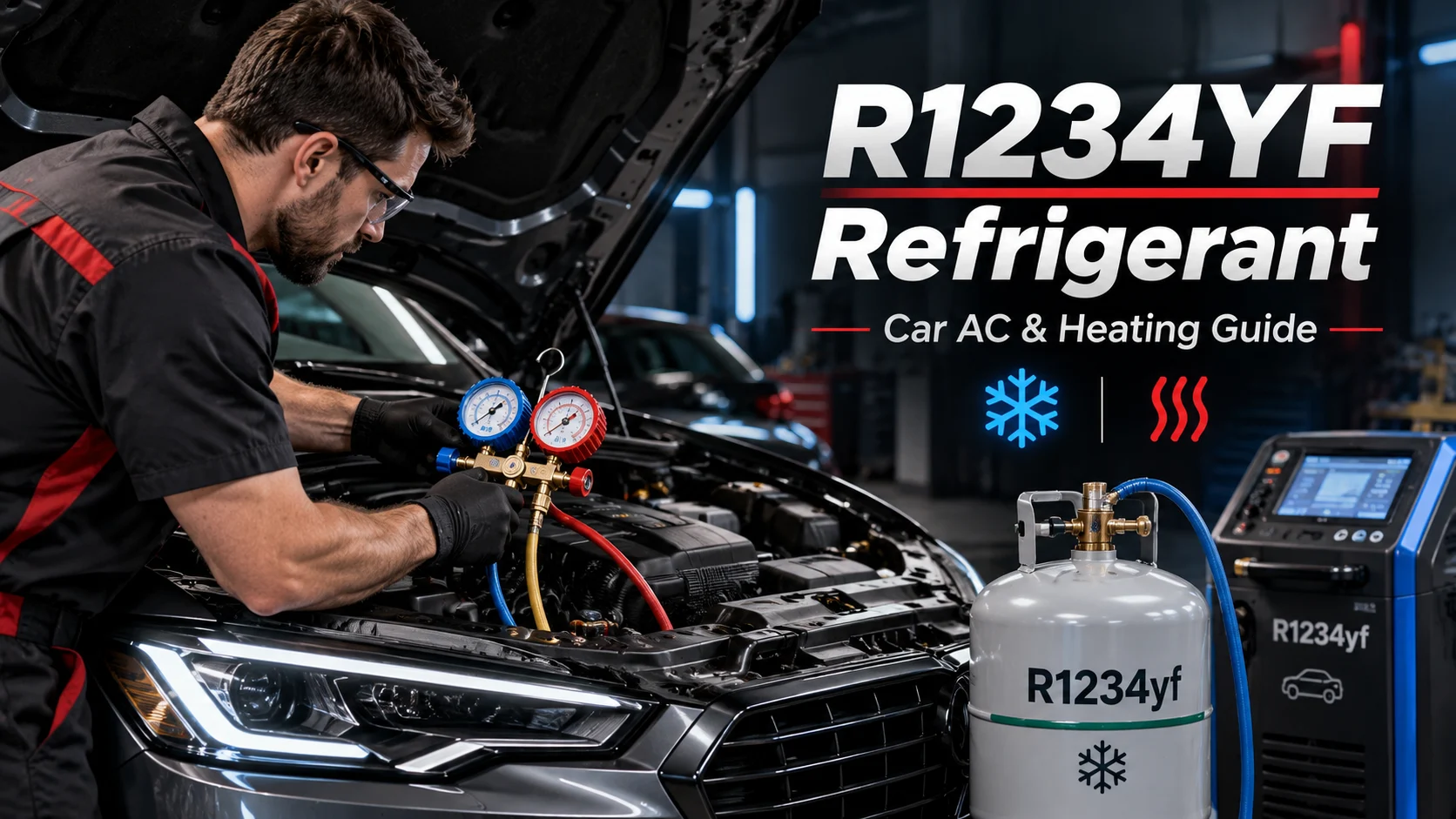
People still search for “Freon for car AC” or “car AC cooling liquid,” but the correct technical term is refrigerant. Many older vehicles use R-134a; many newer vehicles use R-1234yf. The right type depends on your specific vehicle—not just its age.
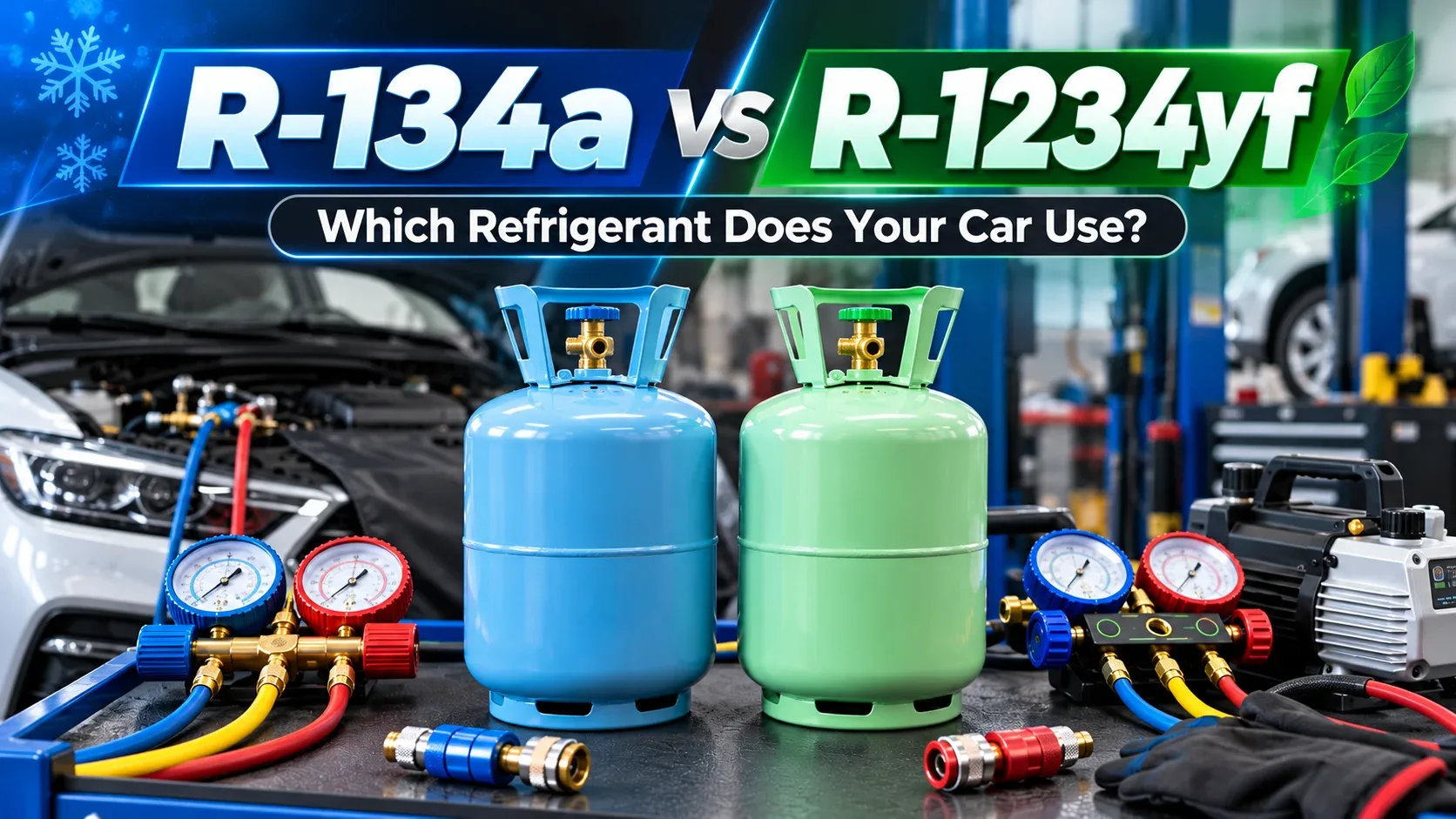
| Question | R-134a | R-1234yf |
|---|---|---|
| Where used? | Common in older vehicles | Common in many newer vehicles |
| Can they be interchanged? | No. Follow the manufacturer label and service specifications. | |
| Service equipment | Must be appropriate for the refrigerant and system. | |
| How to identify? | Under-hood AC label, owner’s documentation or manufacturer service information. | |
Mixing refrigerants or using incompatible service fittings can create safety, performance and repair issues. Refrigerant charge quantity also matters: more is not necessarily better.
Does Your Car AC Need a Recharge?
A car AC recharge restores a specified refrigerant charge after appropriate testing or service. It does not fix a failed compressor, stuck blend door or refrigerant leak.

A qualified shop may inspect system performance, test for leaks, recover existing refrigerant, evacuate the system as required, and charge the exact specified amount by weight. The process depends on the nature of the repair and manufacturer procedures.
| Situation | Better approach |
|---|---|
| System charge verified low | Find out why refrigerant was lost and repair any leak before correct recharge. |
| Airflow weak, cooling unknown | Inspect filter, blower and air distribution first. |
| AC compressor not commanded on | Diagnose control, sensor and electrical conditions. |
| Repeatedly needs refrigerant | Leak detection and permanent repair, not endless top-offs. |
DIY Car AC Recharge Kits: Are They Worth It?
Searches for “how to recharge car AC,” “how to add Freon to car AC,” and “do it yourself air conditioning recharge kit” often lead to inexpensive cans and a low-side gauge. Those products can look simple, but a basic gauge does not reveal total refrigerant mass or fully diagnose the high- and low-pressure sides.
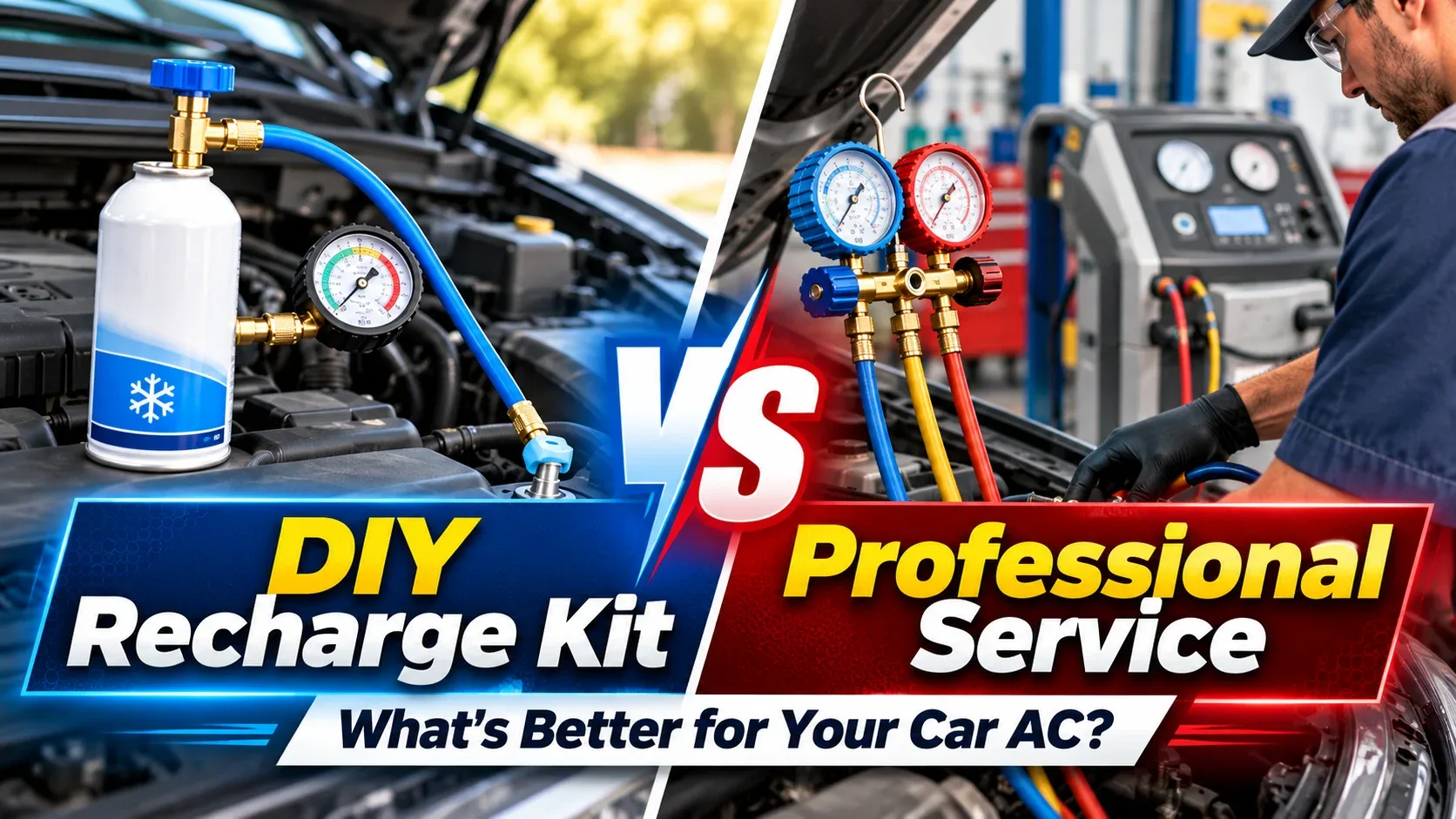
Why drivers consider a kit
Lower upfront purchase price and apparent convenience.
What a kit cannot confirm
The true refrigerant charge, whether a leak exists, or every compressor/control fault.
Potential problems
Overcharging, wrong refrigerant, contamination, sealant complications and unresolved leaks.
Safer decision
Have a shop diagnose the root cause and charge to the vehicle’s specification.
In the United States, automotive refrigerant recovery and servicing are subject to environmental and technician-certification rules. Check applicable regulations rather than intentionally releasing refrigerant. This guide does not provide a step-by-step procedure for connecting gauges and charging a pressurized system.
How Mechanics Find and Fix a Car AC Leak
If cooling returns after a refill and fades again, that pattern can suggest refrigerant loss. Leaks may be small and not visible to the naked eye. A technician may use an appropriate electronic leak detector, manufacturer-approved tracer dye or another specified testing method.
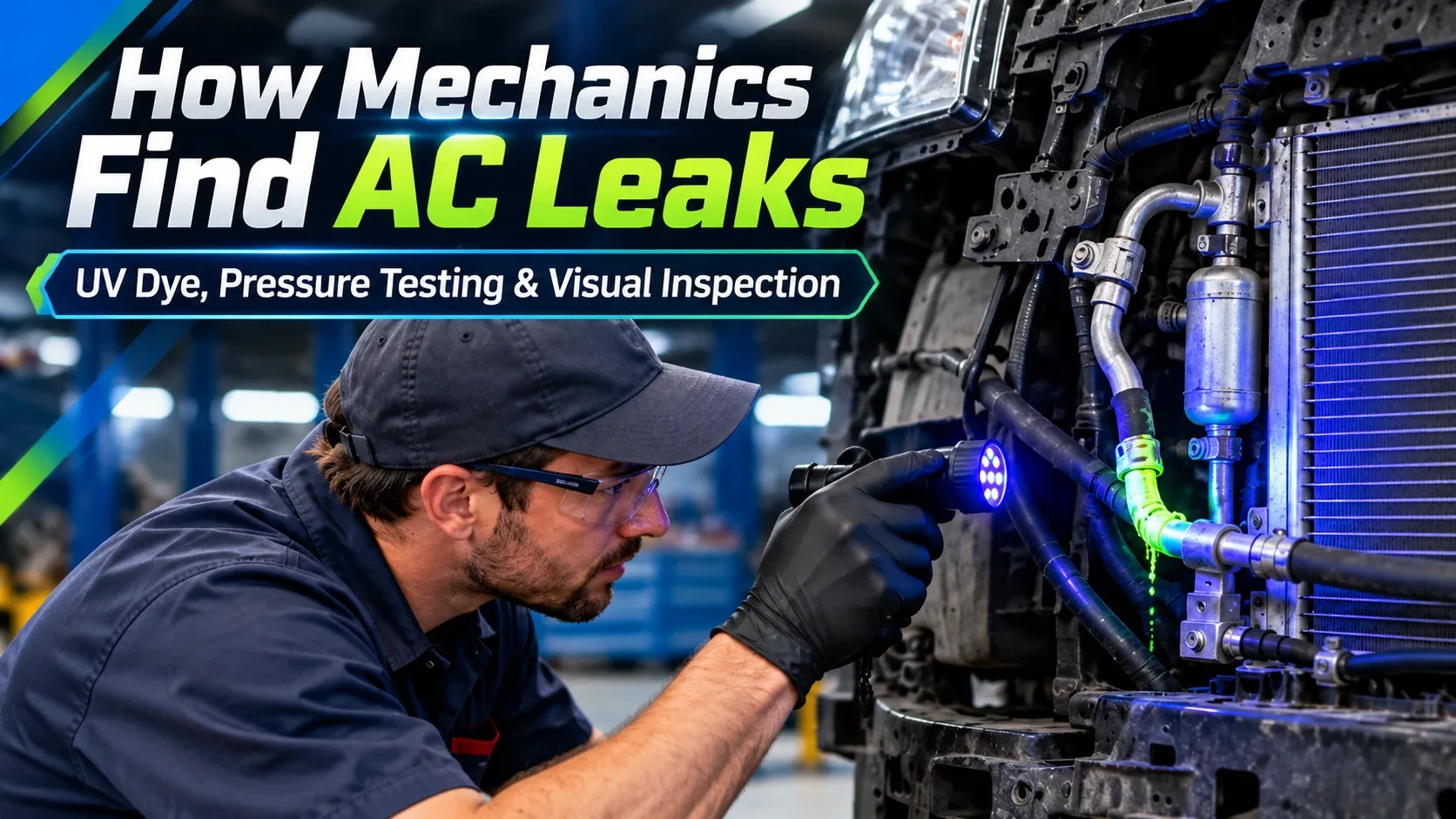
| Common leak area | Potential repair |
|---|---|
| Hose or joint seal | Replace failed hose, seal or connection as needed |
| Condenser | Repair strategy often involves condenser replacement |
| Compressor shaft seal or housing | Assess compressor condition and service options |
| Evaporator | Replace leaking component, sometimes requiring dashboard work |
| Service port | Repair leaking valve/core using proper system service procedures |
Car AC Compressor, Condenser and Fan Problems
These parts play different roles and fail in different ways. One damaged component can affect the operation of the entire circuit, which is why systematic diagnosis matters.
AC compressor
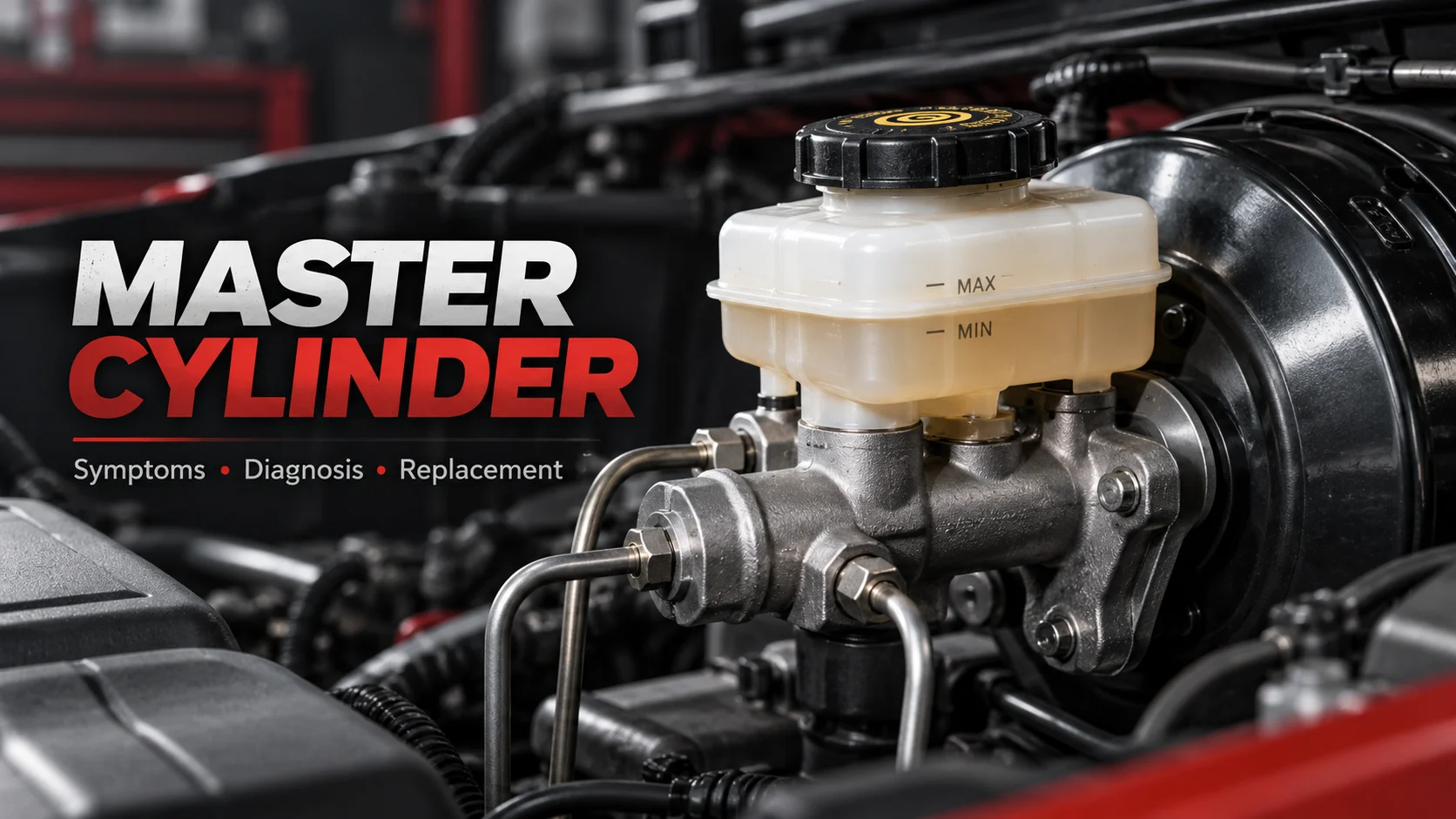
Moves refrigerant through the system. Mechanical wear, drive issues and electrical/variable-control faults can reduce or stop cooling. Not every vehicle uses an externally visible magnetic clutch.
AC condenser
Rejects heat at the front of the car. Damage, contamination or poor airflow can hurt cooling, especially in high ambient temperatures.
Condenser cooling fan
Helps move air across heat exchangers at low vehicle speeds. If your AC cools while driving but not in traffic, fan operation is worth checking professionally.
Pressure sensors and climate controls
Help protect and manage the system. Faults may disable cooling even when the compressor itself is usable. A scan tool and manufacturer-specific testing can differentiate these issues.
How Much Does It Cost to Fix Car Air Conditioning?
Costs vary substantially by city, vehicle, refrigerant type, parts access and whether the repair requires removing major dashboard or engine-bay components. The figures below are broad US planning estimates, not live quotes. Get an itemized estimate before authorizing work.
| Service / repair | Approximate US planning range | What changes the price? |
|---|---|---|
| AC diagnosis / inspection | $75–$200+ | Diagnostic depth and local labor rates |
| Refrigerant service / recharge | $150–$450+ | Refrigerant type, charge size and required service steps |
| Cabin air filter replacement | $25–$120+ | Part type and access |
| Refrigerant hose or seal repair | $150–$700+ | Leak location, part and access |
| Condenser replacement | $400–$1,200+ | Vehicle design and labor |
| Compressor replacement | $700–$1,800+ | Parts, oil/flush requirements and related repairs |
| Evaporator replacement | $900–$2,500+ | Dashboard removal and labor hours |
Estimates are illustrative, can fall outside these ranges, and may not include taxes or every related component. For confirmed pricing, compare local written estimates for the same repair scope.
How to Clean Car Air Conditioning and Keep It Working
A little routine maintenance helps protect airflow and reduces avoidable odors, although it cannot prevent every refrigerant leak or mechanical failure.
- Inspect the cabin air filter: replace at intervals appropriate to your vehicle and driving environment.
- Keep exterior intakes and condenser area free of visible debris: use safe, gentle cleaning methods from the vehicle manual.
- Address musty smells: moisture and microbial buildup around the evaporator or drainage system can contribute; inspect filter and drainage concerns.
- Watch for new symptoms: weaker cooling, unusual sounds and repeated refrigerant loss deserve timely diagnosis.
- Use appropriate professional service: avoid unverified additives or mixing refrigerants.
If the AC smells musty, the cause is not necessarily low refrigerant. Investigate moisture, cabin filter condition and evaporator hygiene rather than immediately purchasing a recharge kit.
What About Jeep Grand Cherokee and Other Model-Specific AC Problems?
Searches such as “air conditioning repair Jeep Grand Cherokee” deserve model-year-specific information. The same symptom may have different causes in different generations because refrigerants, compressor controls and HVAC actuators vary.
Before looking for a specific repair, collect your year, make, model, engine, refrigerant label information, symptoms and any stored HVAC-related codes. Check the owner’s manual, manufacturer service information and applicable service bulletins. Don’t assume a problem described for another year applies to yours.
Frequently Asked Questions About Car AC Not Cooling
Why is my car AC blowing hot air instead of cold?
Possible causes include a refrigerant leak, compressor or control fault, insufficient condenser airflow, electrical issue or blend-door problem. Check settings and airflow first, then use professional testing to confirm the cause.
Can car AC lose refrigerant without a visible leak?
Yes. Small leaks can be difficult to see. Refrigerant circulates in a sealed system and generally shouldn’t need routine topping up in a properly functioning circuit.
How much does it cost to recharge a car AC?
A broad US planning estimate is about $150–$450 or more, depending on refrigerant and service needs. Leak diagnosis or repair may add to that cost.
Can I recharge my car AC myself?
Retail kits exist, but incorrect refrigerant, overcharging and failure to detect leaks are real concerns. Professional testing and weight-based charging are safer ways to establish the correct refrigerant charge.
How do I know if the AC compressor is bad?
Warm air or unusual sounds alone are not enough. A technician can compare commands, electrical supply, operating pressures and actual compressor performance to determine whether the compressor or its controls are faulty.
Why is my car AC cold while driving but warm at idle?
A condenser fan or airflow issue is one possibility because the vehicle gets more airflow at speed. A qualified diagnosis should also consider refrigerant charge and other system conditions.
Does using car AC consume gasoline?
In a gasoline car, AC can add engine load and affect fuel use. It does not use gasoline as the refrigerant. In electric vehicles, cooling uses battery energy and can affect driving range.
Can a dirty cabin filter make car AC seem weak?
Yes. A badly restricted filter can reduce air coming through the vents, even when the refrigeration system is cooling. It usually affects air volume rather than being the sole cause of strong but warm airflow.
How can I tell if my AC condenser is bad?
Visible physical damage, refrigerant leakage or poor heat rejection may raise suspicion. But a proper assessment is necessary before deciding to replace the condenser.
Why does my AC smell musty?
Moisture around the evaporator, a dirty filter or drainage issues can contribute to musty odors. Inspect and maintain the HVAC system rather than assuming a recharge is needed.
Final Thoughts: Fix the Cause, Not Just the Warm Air
When car AC stops cooling, it’s tempting to buy refrigerant and hope the problem disappears. A better approach starts with the symptoms: check settings, distinguish weak airflow from warm airflow, observe when the problem occurs, and avoid opening the refrigerant system.
With those clues, you can explain the issue clearly to a repair shop, ask for meaningful diagnostics, and make a more informed decision about the repair cost. The result is a safer—and often more economical—path back to a comfortable drive.
Editorial note: This guide is general educational information. Automotive AC systems use pressurized refrigerants and vehicle-specific procedures. Follow your manufacturer’s service information and applicable refrigerant-handling laws. Illustrations are labeled placeholders for future section images, not photographs of diagnosed failures.