
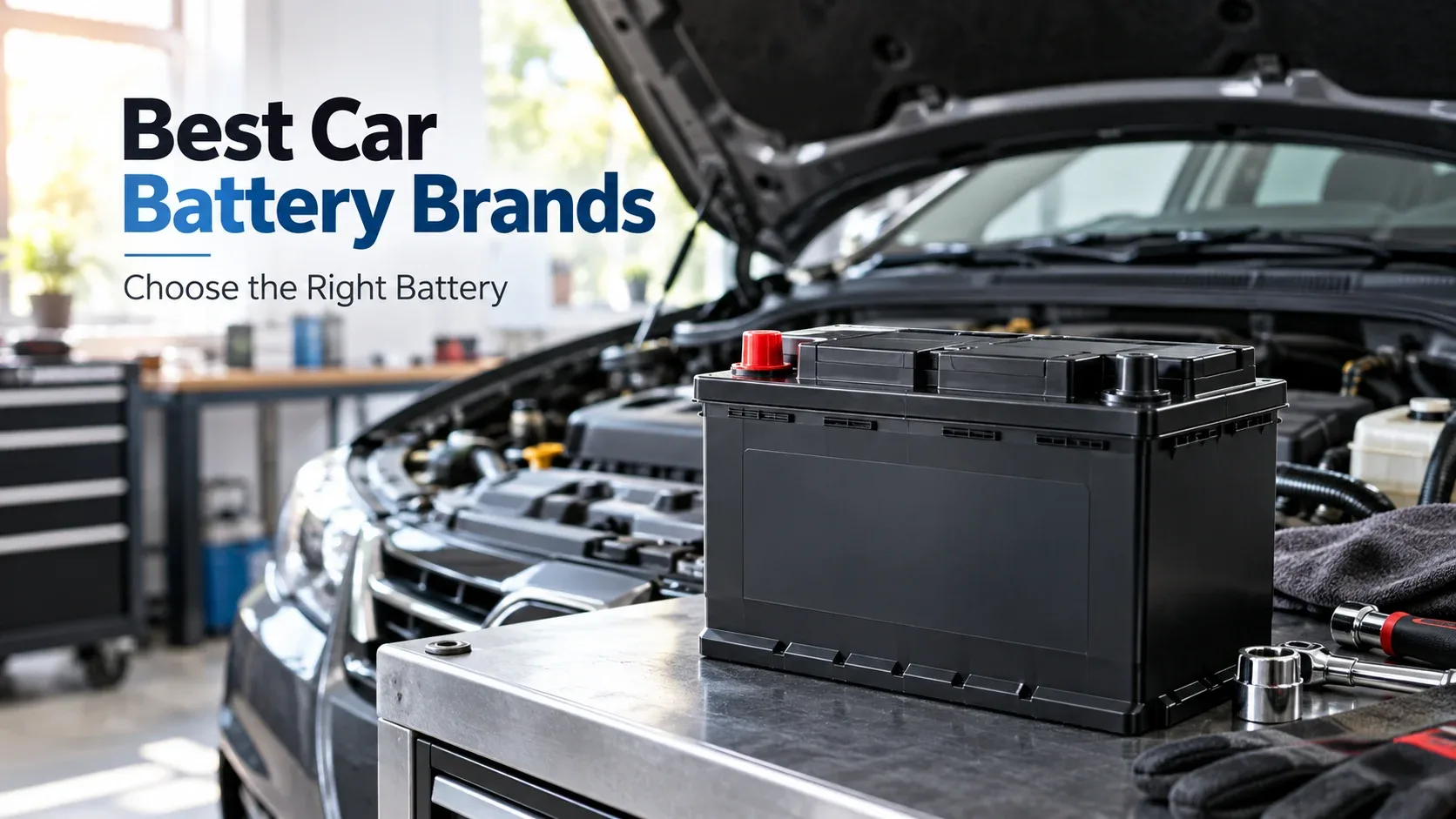
Finding the best car battery is not simply a matter of buying the most expensive model or choosing the brand with the biggest advertising budget. A battery must match your vehicle’s required size, chemistry, cold cranking amps, terminal configuration, electrical demands, and operating climate.
Well-known battery brands can provide good options, but a highly rated battery can still be the wrong choice if it does not meet your vehicle manufacturer’s specifications. This guide explains how to compare the best car battery brands while focusing on the specifications that actually determine fit and performance.
What Makes a Car Battery the Best Choice?
There is no single battery that is best for every car. A compact commuter, diesel pickup, luxury SUV and start-stop vehicle can have very different electrical requirements.
Before comparing a top rated car battery with another model, look at the specifications required by your vehicle.
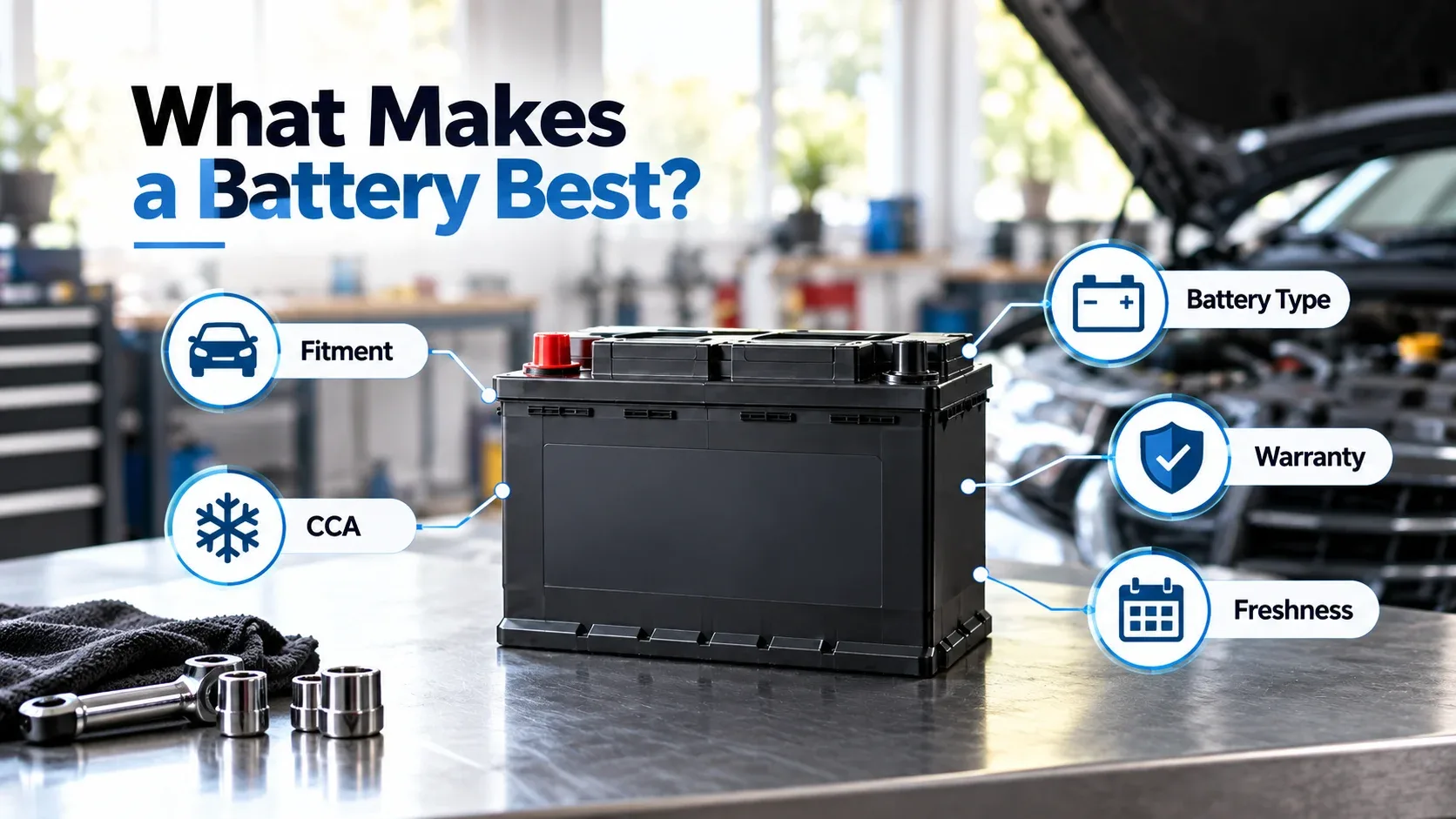
Correct Fitment
The battery needs to physically fit the battery tray and use the correct terminal arrangement and hold-down system.
Correct Battery Type
Vehicles designed for AGM, EFB or another battery technology should normally receive a compatible replacement.
Adequate Starting Power
The replacement should meet the manufacturer’s required cold cranking amp specification.
Good Warranty Support
Compare what the warranty covers, how long free replacement lasts and where warranty service is available.
Check Battery Fitment Before Comparing Brands
Brand reputation matters, but fitment should come first. Two batteries may both provide 12 volts yet differ in dimensions, terminal locations, battery chemistry and mounting design.
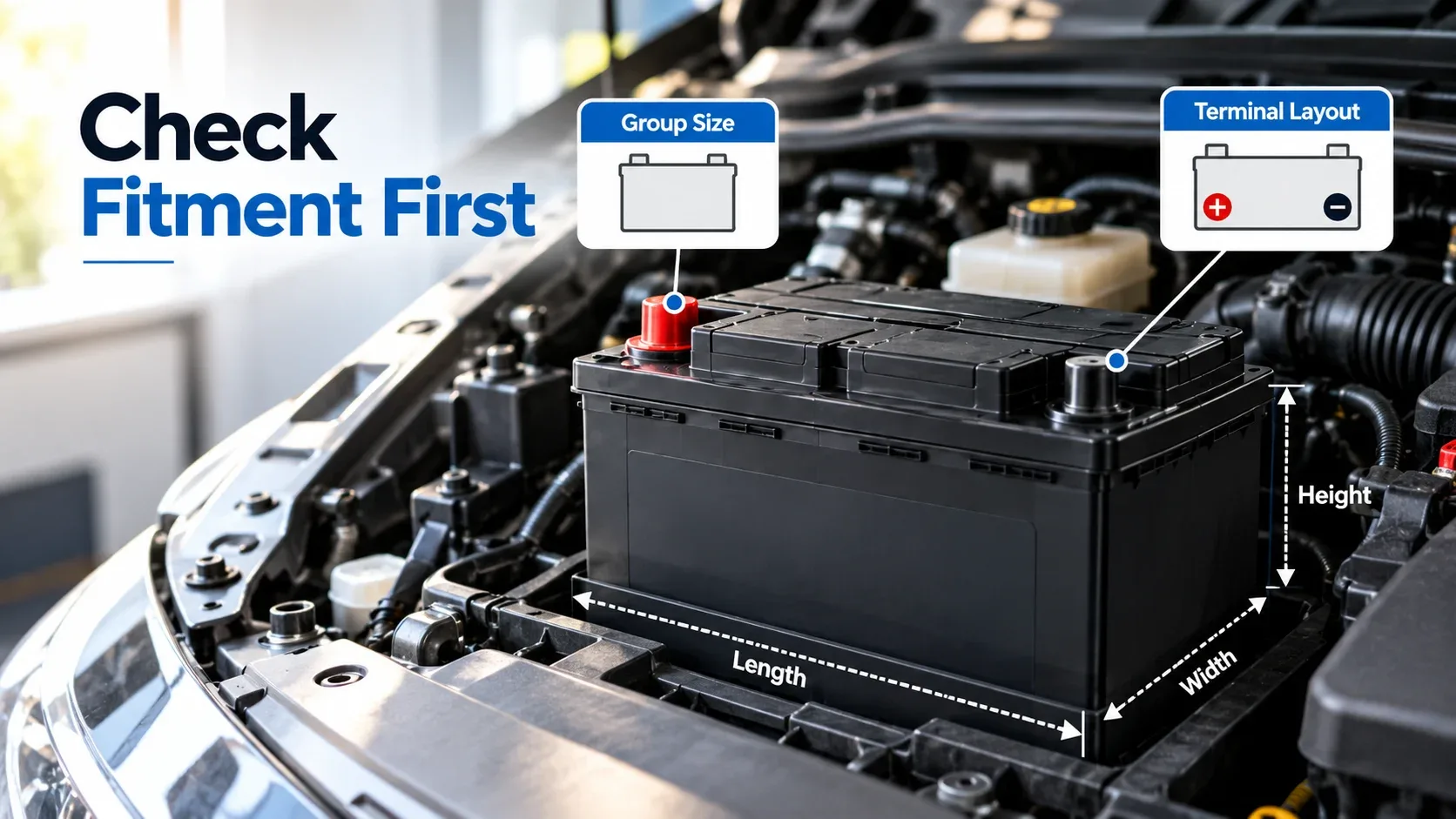
Check the following before purchasing:
- Battery group size
- Physical dimensions
- Positive and negative terminal locations
- Battery chemistry
- Cold cranking amps
- Reserve capacity where specified
- Hold-down or mounting configuration
- Vehicle manufacturer recommendations
A Good Brand Can Still Be the Wrong Battery
Never choose a battery solely because the brand has a strong reputation. A battery that does not match the vehicle’s specifications can create fitment, starting, charging or electrical-system problems.
Best Car Battery Brands Worth Comparing
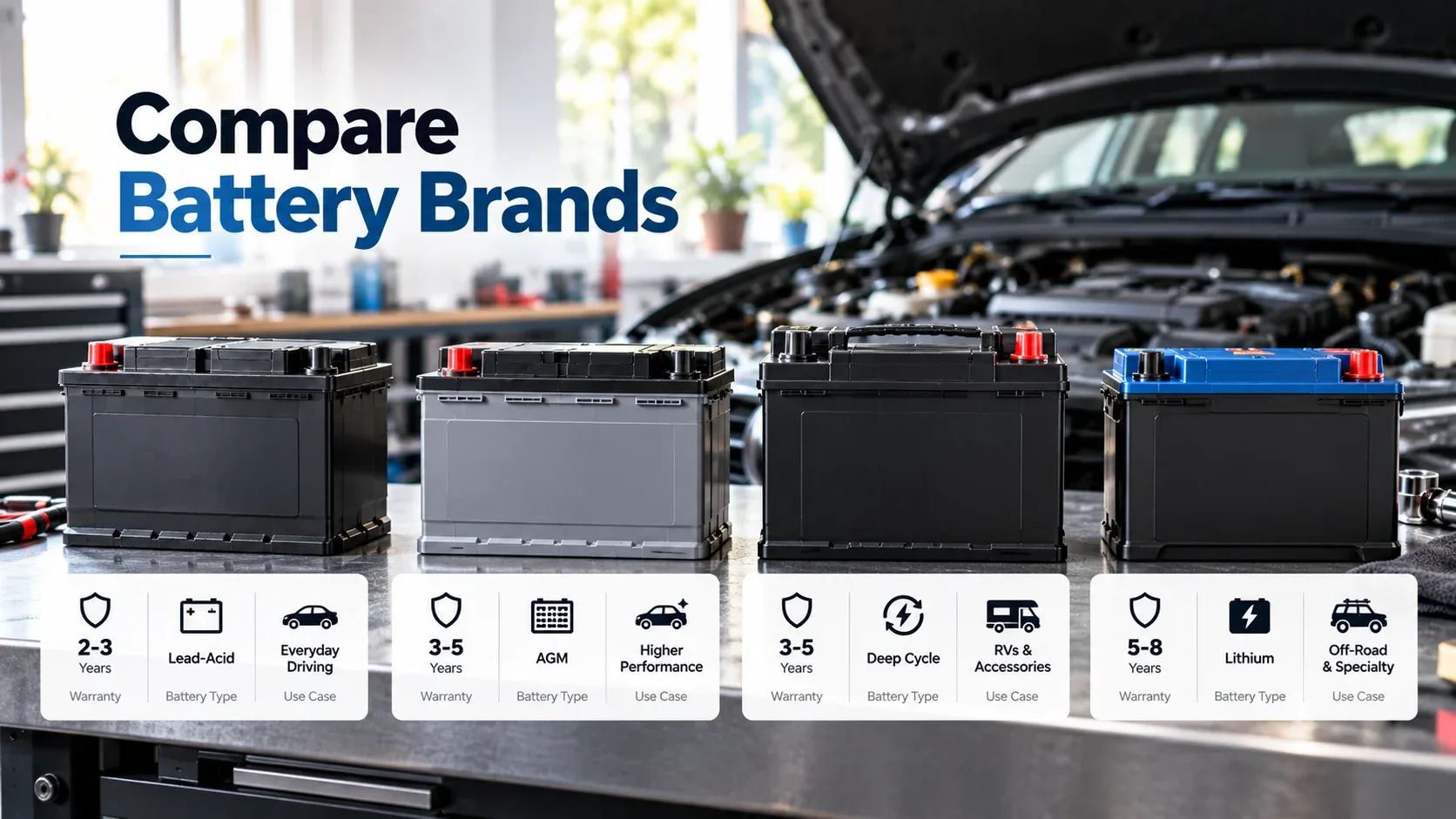
Several established manufacturers and retail battery brands offer automotive batteries covering common passenger cars, SUVs, pickups and performance applications. Rather than treating this as a universal ranking, compare the available model from each brand against your exact vehicle requirements.
Interstate Batteries
Interstate is a widely recognized automotive battery brand with replacement batteries for many passenger vehicles and light trucks. Its product line includes different performance levels and battery technologies, so buyers should select by vehicle fitment rather than assuming every Interstate model offers the same specifications.
OPTIMA Batteries
OPTIMA is particularly associated with AGM battery designs and offers multiple product families for different starting and cycling demands. Its REDTOP and YELLOWTOP ranges serve different use cases, making application matching important.
ODYSSEY Batteries
ODYSSEY offers AGM batteries commonly considered by drivers looking at demanding starting, performance and high-electrical-load applications. As with any premium battery, confirm the exact model’s fitment and charging requirements before purchasing.
ACDelco
ACDelco supplies replacement automotive batteries across a range of vehicle applications. It can be particularly familiar to owners of General Motors vehicles, although fitment should still be checked by vehicle rather than brand.
DieHard
DieHard is another established replacement-battery name with batteries aimed at common passenger vehicle applications. Product availability, technology and warranty terms can differ between models and retailers.
Do Not Treat Brand Lists as a Universal Ranking
The best automotive battery for your vehicle could come from any reputable manufacturer if the battery matches the required specifications, is fresh, is properly installed and has useful warranty support in your area.
Car Battery Brand Comparison: What to Look For
| Brand | Common Reason to Consider | What to Verify |
|---|---|---|
| Interstate | Broad replacement-market recognition | Exact product line, fitment and current warranty |
| OPTIMA | AGM-focused options and specialty applications | Correct product family and intended use |
| ODYSSEY | AGM options for demanding applications | Charging requirements, size and use case |
| ACDelco | Wide automotive replacement coverage | Vehicle-specific fitment and battery type |
| DieHard | Common consumer replacement options | Specific model, chemistry and retailer warranty |
Warranty policies and available battery models can change. Verify the current terms for the exact battery before purchase rather than relying on an older review or comparison chart.
AGM vs Flooded vs EFB Car Batteries
Battery chemistry is one of the most important factors when deciding which best auto battery option fits your car.
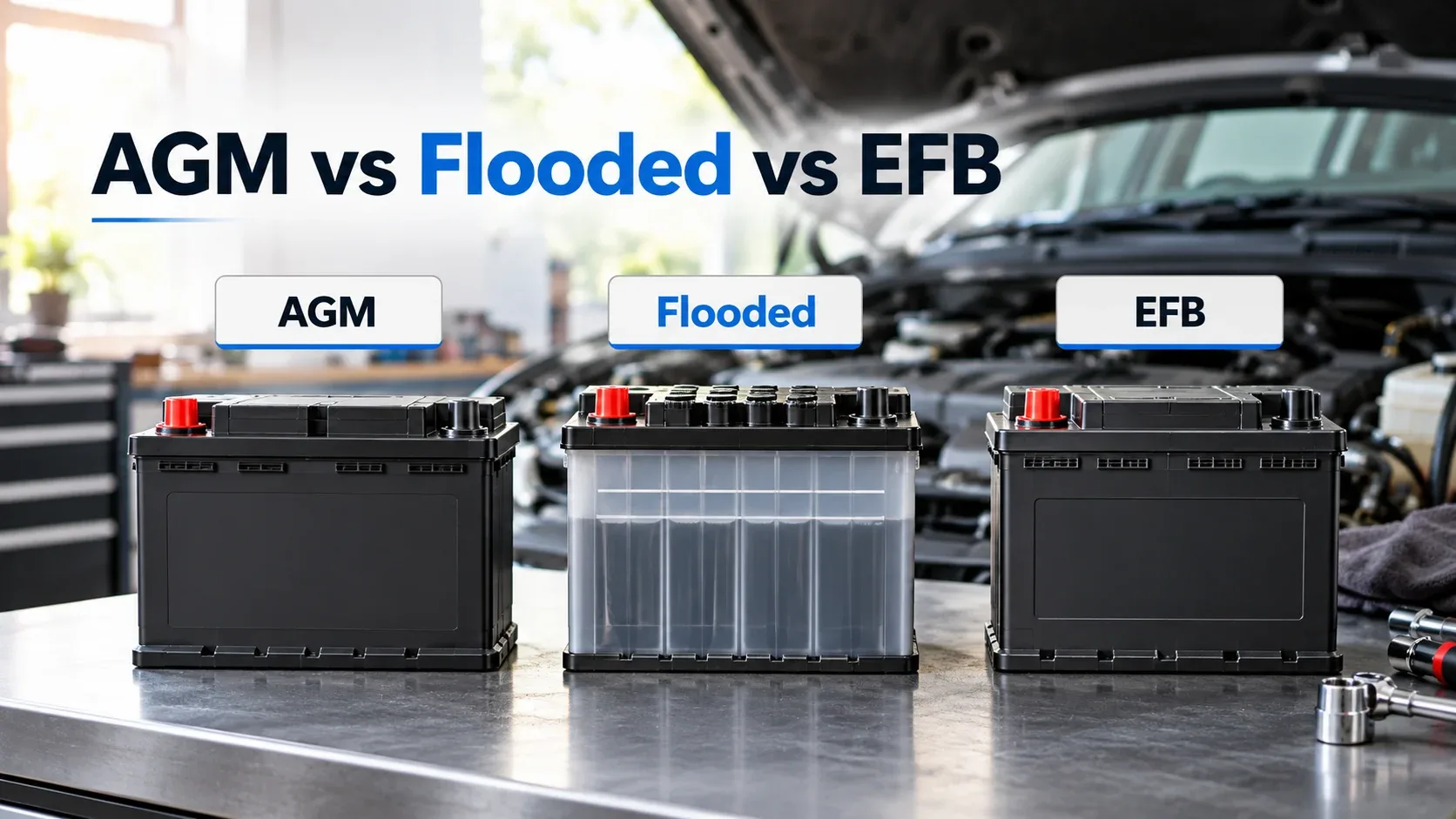
| Battery Type | Typical Characteristics | Common Applications |
|---|---|---|
| Flooded Lead-Acid | Traditional automotive battery design | Many conventional vehicles without advanced start-stop requirements |
| EFB | Enhanced flooded design intended for improved cycling compared with a basic flooded battery | Some start-stop vehicles and higher-demand applications |
| AGM | Absorbent Glass Mat design with strong cycling and electrical-load capability | Many start-stop, luxury and high-electrical-demand vehicles |
Do Not Downgrade Battery Technology Without Checking
If the vehicle manufacturer specifies AGM or EFB, replacing it with a basic flooded battery may not provide the cycling performance expected by the vehicle’s electrical and charging system.
What Does CCA Mean on a Car Battery?
Cold Cranking Amps (CCA) describes a battery’s ability to provide starting current under cold-temperature test conditions. It is an important specification for starting an engine, particularly in colder climates.
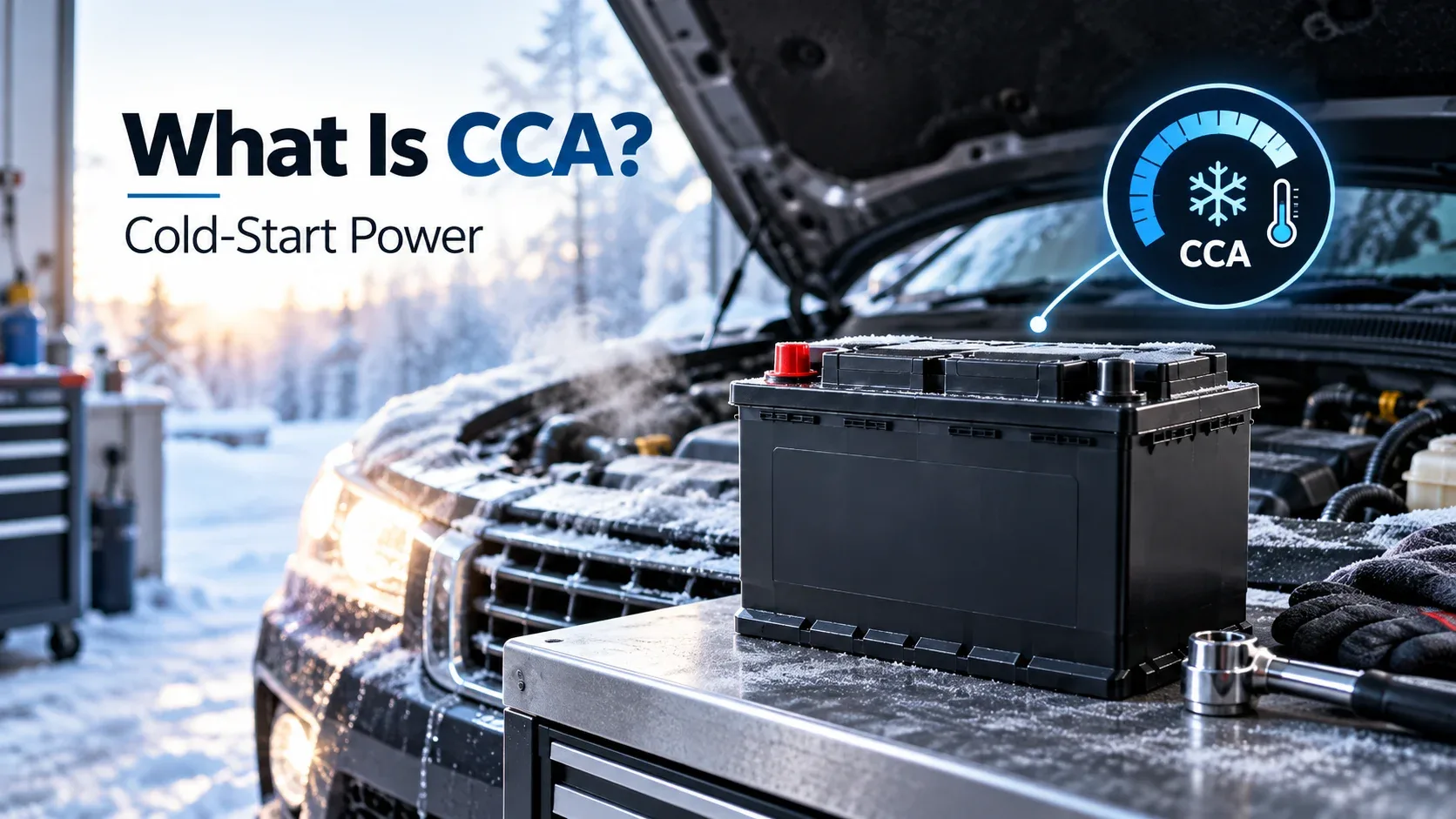
The replacement battery should meet the vehicle manufacturer’s required CCA. A higher rating can provide additional starting capacity in some situations, but CCA should never be considered in isolation from size, chemistry, terminal layout and charging-system compatibility.
What Is Car Battery Group Size?
Battery group size refers to standardized physical characteristics such as battery dimensions and terminal arrangement. Common group-size systems help match replacement batteries to vehicle battery trays and cable locations.
A battery that is too tall, too wide or has reversed terminals may not install correctly even if its electrical ratings appear suitable.
Where to Find the Correct Group Size
Check the vehicle owner’s manual, the label on the existing battery or a reputable battery manufacturer’s vehicle-fitment tool.
Why Reserve Capacity Matters
Reserve capacity is another useful specification. It relates to how long a fully charged battery can support a specified electrical load under standardized test conditions before voltage falls to a defined level.
It can be particularly relevant for vehicles with significant electrical loads, but the correct value should still be selected according to vehicle requirements.
Check the Battery Manufacturing Date
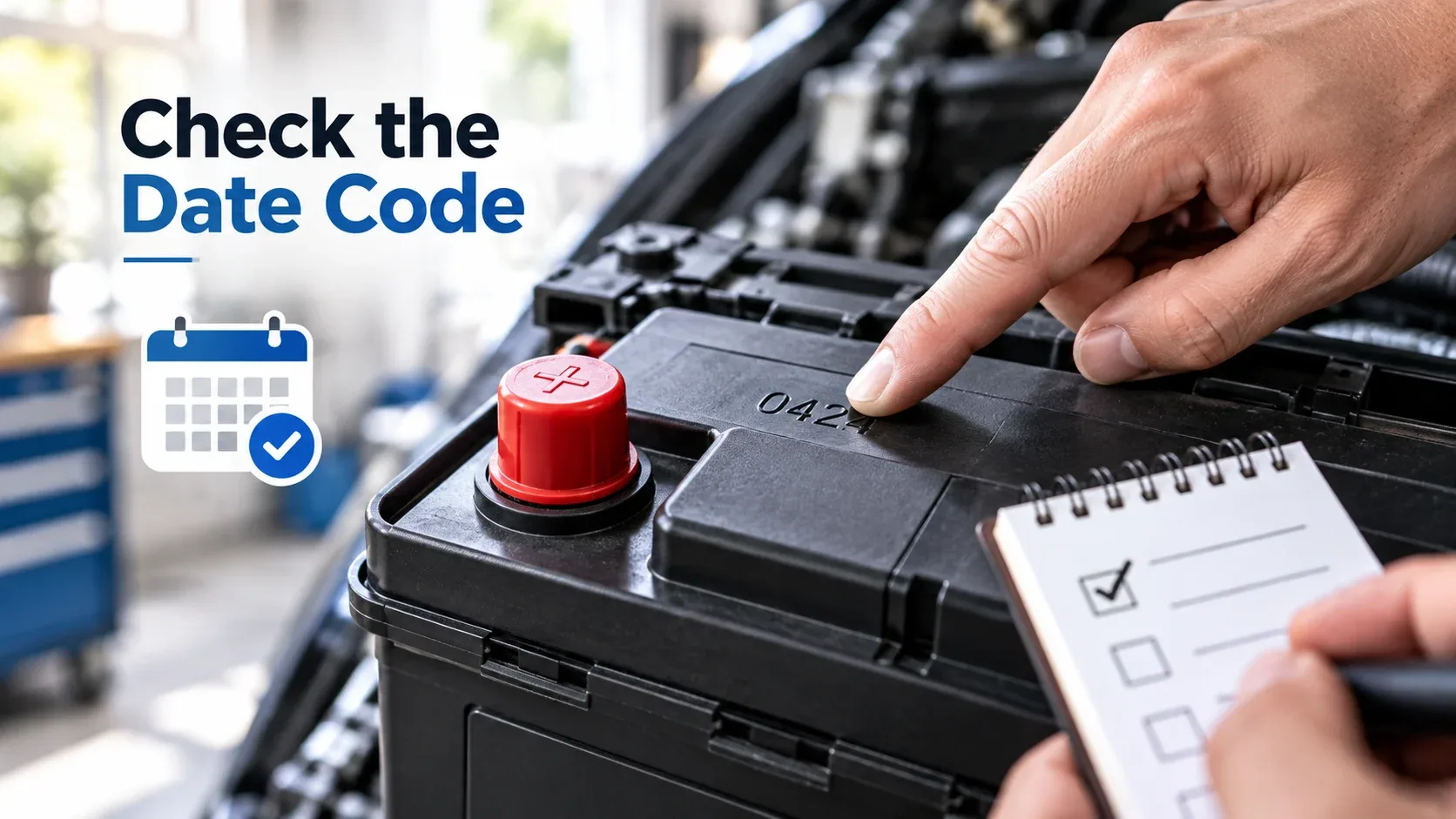
Battery freshness is easy to overlook when comparing the top car battery brands. Lead-acid batteries gradually lose charge while sitting in storage, so it is sensible to inspect the manufacturing or date code when possible.
Date-Code Formats Vary
Manufacturers do not all use the same date-code format. If the code is unclear, check the manufacturer’s documentation or ask the retailer to explain it.
Compare Car Battery Warranty Terms Carefully
A long warranty sounds attractive, but the details matter. Some policies provide a free-replacement period while others may have different terms depending on the product, application or purchaser.
Before buying, check:
- Length of the free-replacement period
- Whether proof of purchase is required
- Where warranty service is available
- Whether commercial or special-use applications have different coverage
- Whether replacement batteries restart or continue the original warranty period
Current warranty terms should always be checked directly with the manufacturer or retailer because policies can change.
Best Car Battery for Hot vs Cold Climates
Climate can significantly affect automotive battery life and performance. Cold temperatures make starting an engine more demanding, which is why CCA receives particular attention in winter climates.
High temperatures can also accelerate chemical activity and battery degradation, meaning drivers in very hot climates should not assume battery stress only occurs during winter.

Does Your Car Battery Actually Need Replacing?
Slow cranking or a no-start condition does not automatically prove the battery itself is defective. Similar symptoms can result from loose terminals, corrosion, a charging-system problem, excessive parasitic draw or a starter-system fault.
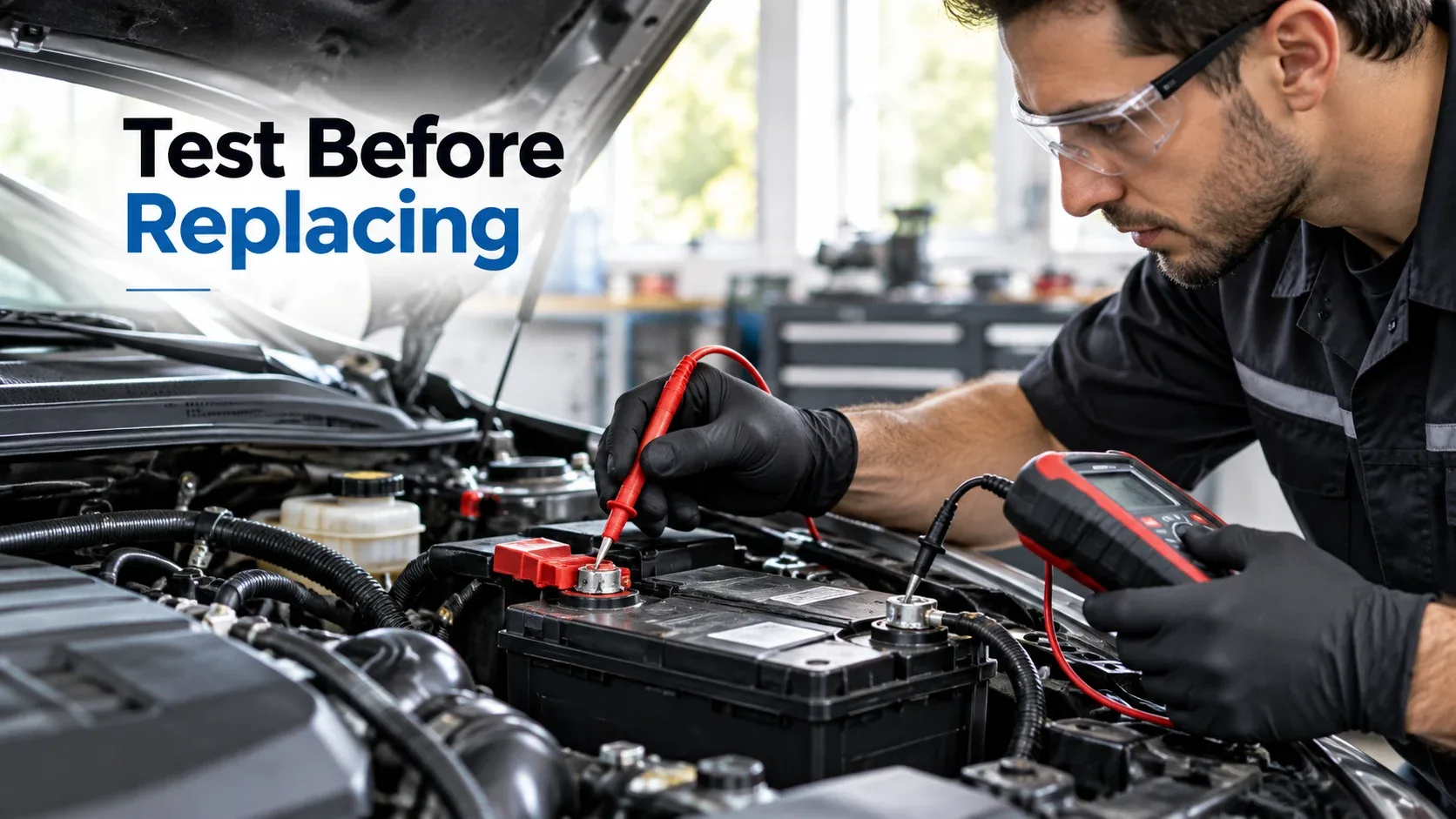
Useful checks may include:
- Battery state of charge
- Battery load or conductance test
- Terminal condition
- Alternator charging output
- Starting-system condition
- Parasitic current draw when appropriate
Symptoms Are Clues, Not Proof
A slow crank, clicking sound or dead battery can suggest a battery problem, but testing is more reliable than replacing parts based on symptoms alone.
Common Car Battery Buying Mistakes
Even buyers comparing the best car battery brands can end up with the wrong battery if basic specifications are overlooked.
Buying by Brand Alone
A trusted name does not replace checking vehicle-specific fitment.
Choosing the Wrong Group Size
Incorrect dimensions or terminal locations can make installation unsafe or impossible.
Ignoring Battery Chemistry
Replacing AGM or EFB with an unsuitable battery type can create compatibility problems.
Ignoring Battery Age
Check the manufacturing date rather than assuming every battery on the shelf is equally fresh.
Do Modern Cars Need Battery Registration?
Some modern vehicles use battery-management systems that monitor battery condition and charging behavior. Depending on the vehicle, replacing the battery may require battery registration, coding or adaptation using a diagnostic tool.
This does not apply to every vehicle, so check the service information for your specific make, model and year.
Why Battery Registration Matters
On vehicles designed for it, registration informs the battery-management system that a new battery has been installed so the charging strategy can be managed appropriately.
How to Choose the Best Car Battery Step by Step
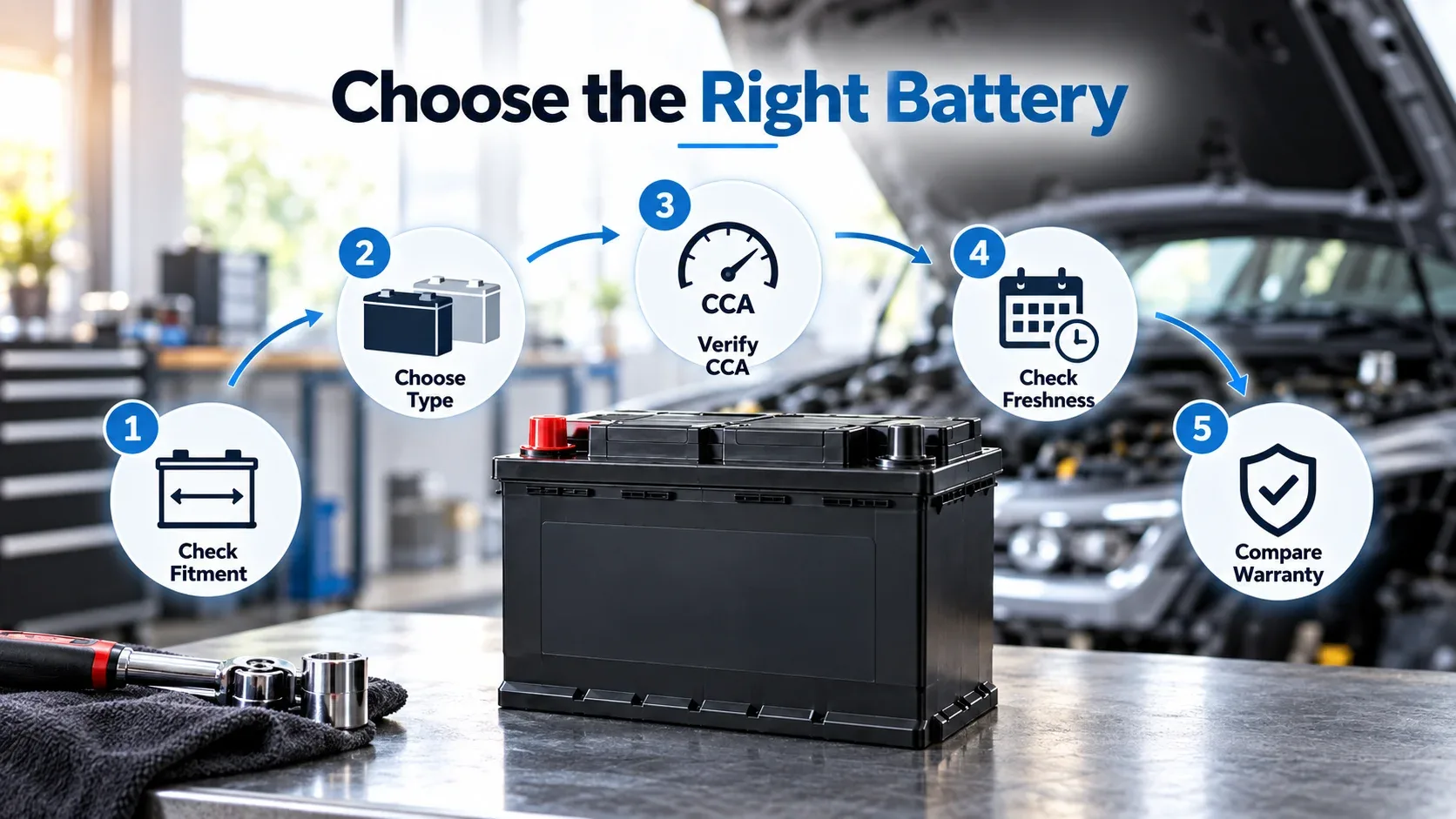
- Check the vehicle manufacturer’s battery specification.
- Confirm the correct battery group size.
- Match the required battery technology such as flooded, EFB or AGM.
- Confirm the minimum required CCA.
- Check terminal location and mounting configuration.
- Compare batteries from established brands.
- Check the manufacturing date or date code.
- Compare current warranty terms.
- Consider climate and driving conditions.
- Verify whether your vehicle requires battery registration after installation.
Frequently Asked Questions About Car Batteries
What is the best car battery?
The best car battery is one that correctly matches your vehicle’s group size, battery technology, terminal configuration, CCA requirements and electrical demands while offering suitable freshness and warranty support.
What are the best car battery brands?
Interstate, OPTIMA, ODYSSEY, ACDelco and DieHard are among the established names buyers commonly compare. The right choice depends more on the specific battery model and vehicle compatibility than the brand name alone.
Is AGM better than a regular car battery?
AGM offers advantages for many high-demand and start-stop applications, but that does not make AGM necessary for every car. Follow the battery technology specified by the vehicle manufacturer.
Can I install a battery with higher CCA?
A battery with a higher CCA rating may be acceptable if it has the correct physical fit, chemistry and other required specifications. Check the vehicle manufacturer’s recommendations before changing from the specified battery.
How long should a car battery last?
Battery life varies considerably with temperature, driving patterns, charging conditions, electrical demand, storage and battery quality. Test the battery’s condition rather than replacing it solely because it reaches a particular age.
Does a more expensive battery always last longer?
No. Price can reflect battery technology, warranty, capacity and construction, but operating conditions and correct vehicle compatibility still have a major effect on battery life.
Should I replace an AGM battery with another AGM battery?
If your vehicle specifies AGM technology, using another compatible AGM battery is generally the appropriate approach unless the vehicle manufacturer provides an approved alternative.
How do I know what battery fits my car?
Check your owner’s manual, the existing battery label or a reputable vehicle-specific battery fitment guide. Verify group size, battery type, terminal position and required CCA before purchase.
Final Takeaway
Choosing the best car battery starts with your vehicle’s specifications, not the logo printed on the battery.
Confirm the correct group size, battery technology, CCA rating and terminal arrangement first. Then compare reputable battery brands based on battery freshness, warranty support, availability, price and your climate and driving conditions.
The best purchase is therefore not necessarily the battery with the highest price or biggest CCA number. It is the battery that correctly fits the vehicle and its electrical system while providing dependable support for the way the vehicle is actually used.