Replacing a worn suspension ball joint may seem like a straightforward repair until you discover that the joint is pressed tightly into the control arm. Removing it with ordinary hand tools can be difficult, and using the wrong technique may damage expensive suspension components. A ball joint press is designed to help with this type of repair.
Whether you’re a DIY mechanic or maintaining your own vehicle, understanding how a ball joint press works can help you choose the correct equipment, avoid common mistakes, and recognize when a job requires professional assistance.
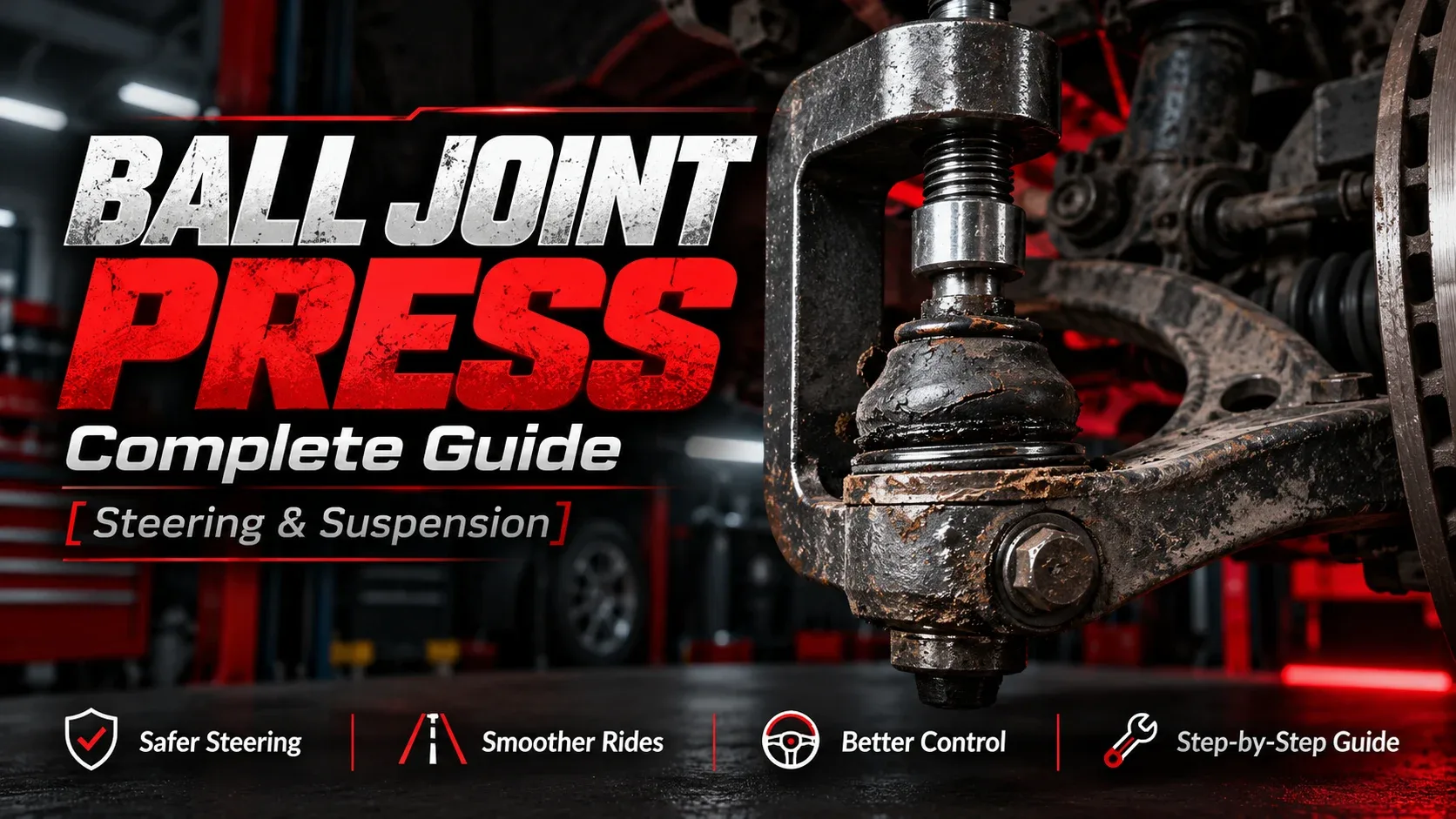
Quick Answer: A ball joint press is a specialized automotive tool used to remove and install compatible press-fit suspension ball joints. Most manual kits feature a C-frame, a forcing screw, and interchangeable adapters that apply controlled pressure to the ball joint housing.
What Is a Ball Joint Press?
A ball joint press is a mechanical service tool that pushes a compatible press-fit ball joint out of or into its mounting bore. These mounting bores may be located in control arms or steering knuckles, depending on the vehicle’s suspension design.
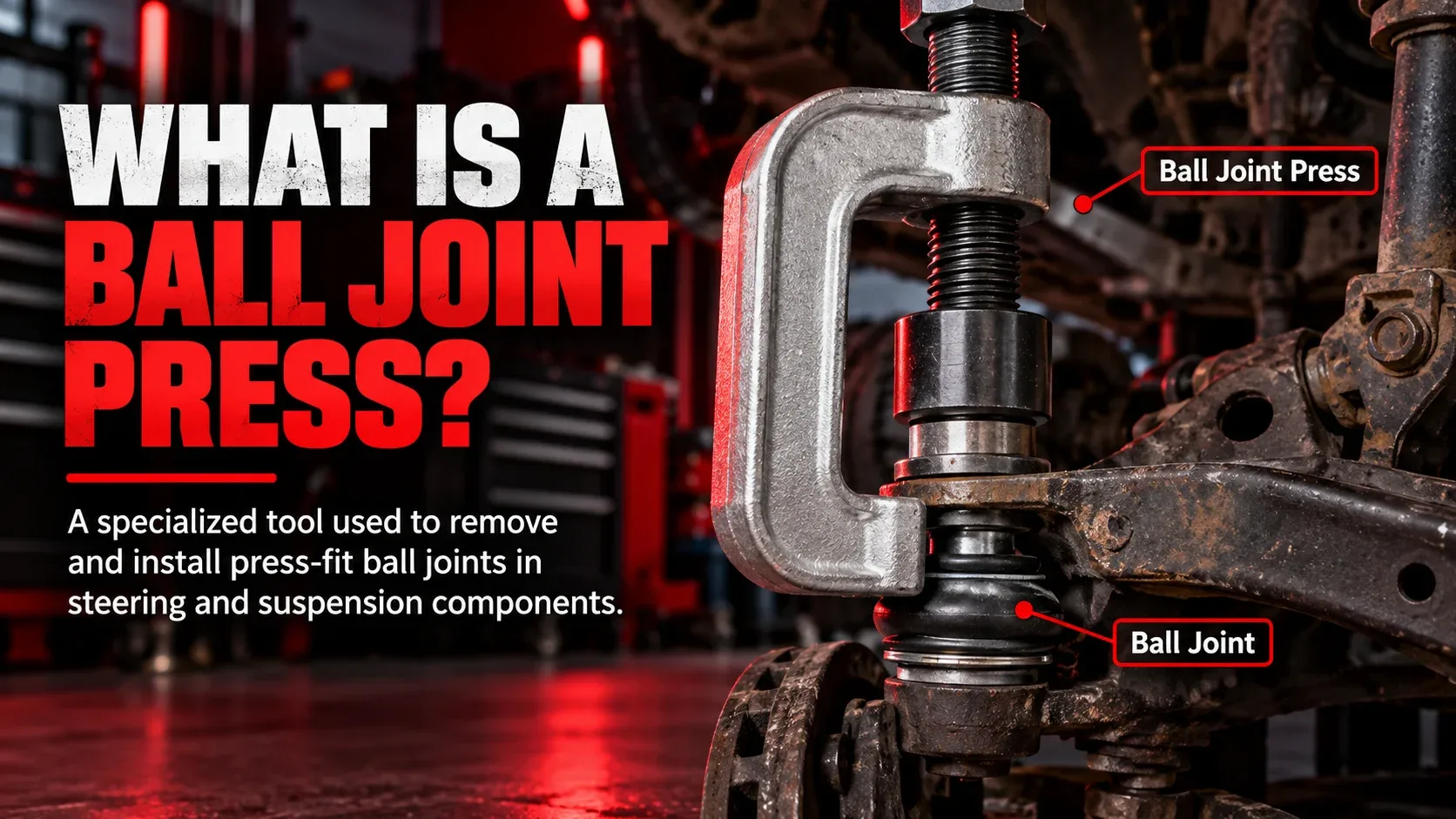
Ball joints connect suspension and steering components while allowing movement as the wheels steer and the suspension travels over bumps. Because these connections support important vehicle functions, correct installation is essential.
Some ball joints are attached using bolts, while others are retained through an interference fit. In a press-fit design, the outside of the ball joint housing fits tightly within a machined mounting bore.
A ball joint press tool applies controlled force to move the joint without relying on uncontrolled hammer blows. However, the correct pressing direction, tool setup, and adapters depend on the vehicle and replacement part.
How Does a Ball Joint Press Work?
Most manual ball joint presses convert rotational force from a threaded screw into linear pressing force. The C-frame provides opposing support, while an appropriately selected adapter transfers pressure to the specified section of the joint housing.
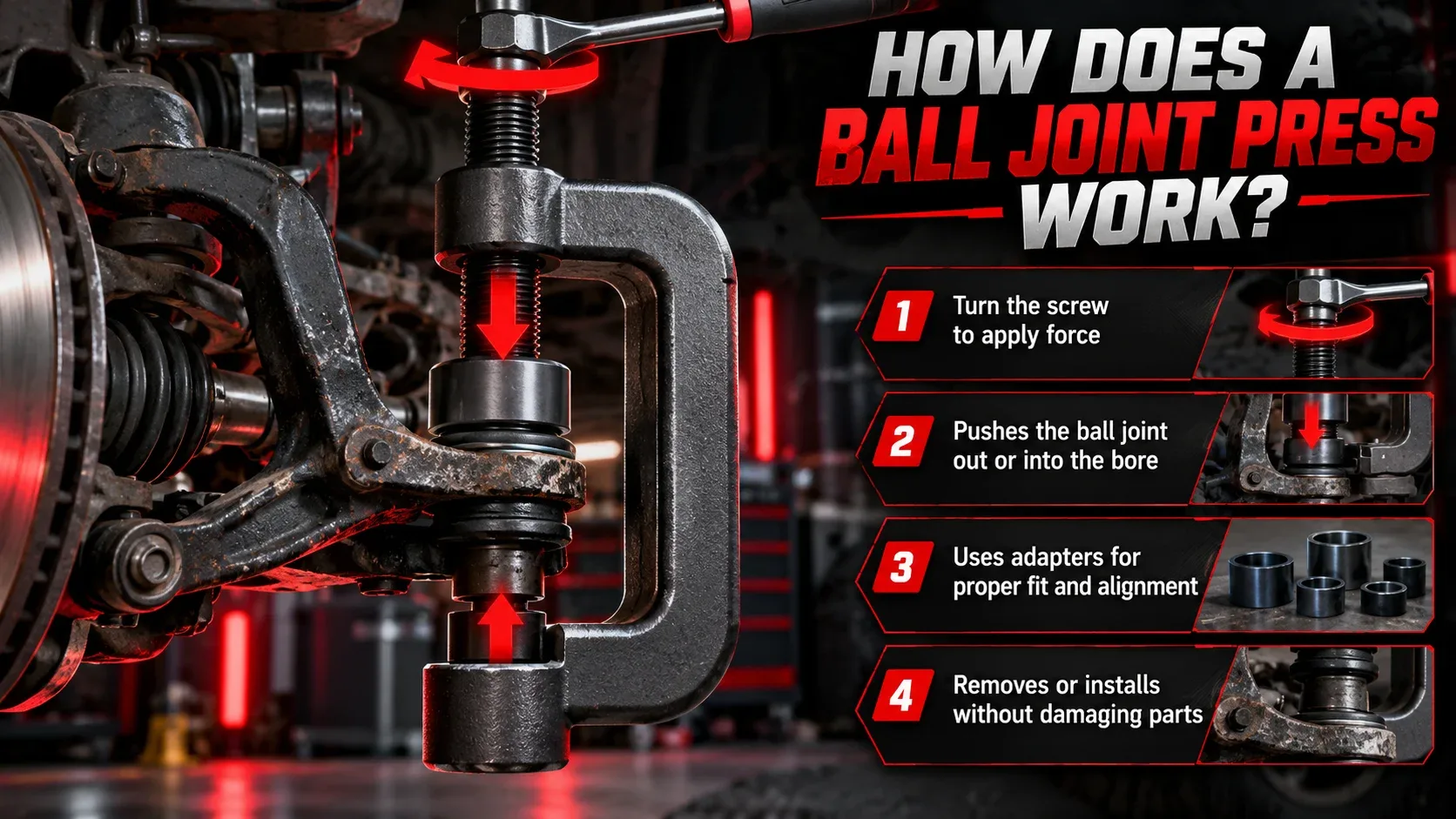
During removal, a receiver cup creates space for the old joint to leave its mounting bore. During installation, another adapter arrangement helps guide the replacement joint into the bore.
The tool must remain correctly aligned throughout the process. If the joint starts entering at an angle or the tool visibly deforms, work should stop until the problem has been identified.
Mechanic’s Tip: More force is not always the solution. Excessive resistance can indicate incorrect adapters, retained hardware, corrosion, or an unsuitable pressing direction.
Main Parts of a Ball Joint Press Kit
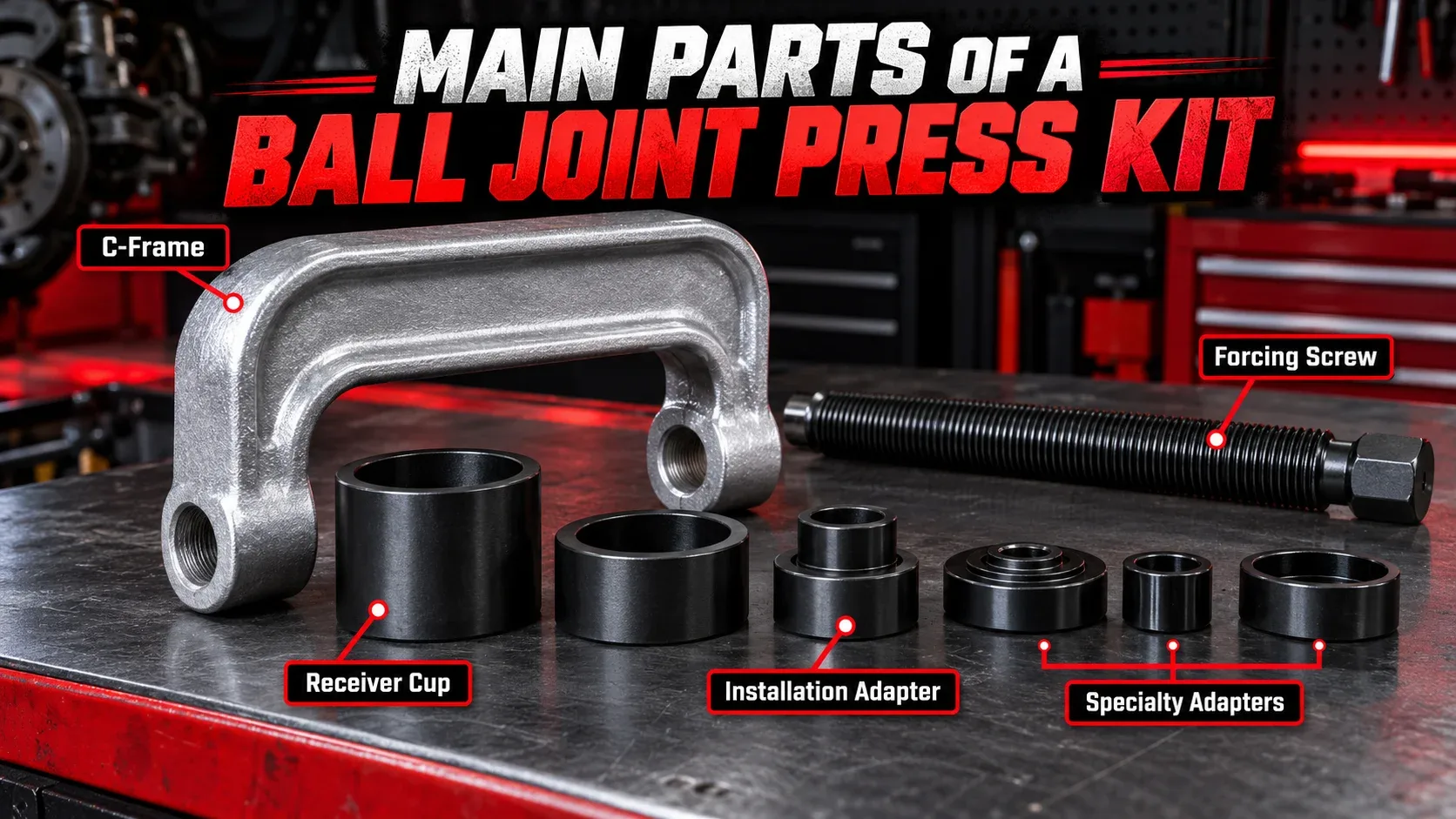
A typical ball joint press kit includes several components designed to work together. Understanding them makes it easier to select the correct configuration for a particular application.
| Component | Purpose |
|---|---|
| C-frame | Provides the rigid structure that supports pressing force. |
| Forcing screw | Generates linear pressure as the threaded screw advances. |
| Receiver cup | Provides space for the ball joint to move during removal. |
| Installation adapter | Transfers force to the specified area of the replacement joint. |
| Specialty adapters | Accommodate specific joint shapes and suspension designs. |
The number of adapters varies between kits. Even a large kit may not contain the correct components for every make and model.
Types of Ball Joint Press Tools
Different suspension systems and workshop arrangements may require different pressing equipment. The most appropriate choice depends on joint construction, available access, and manufacturer requirements.
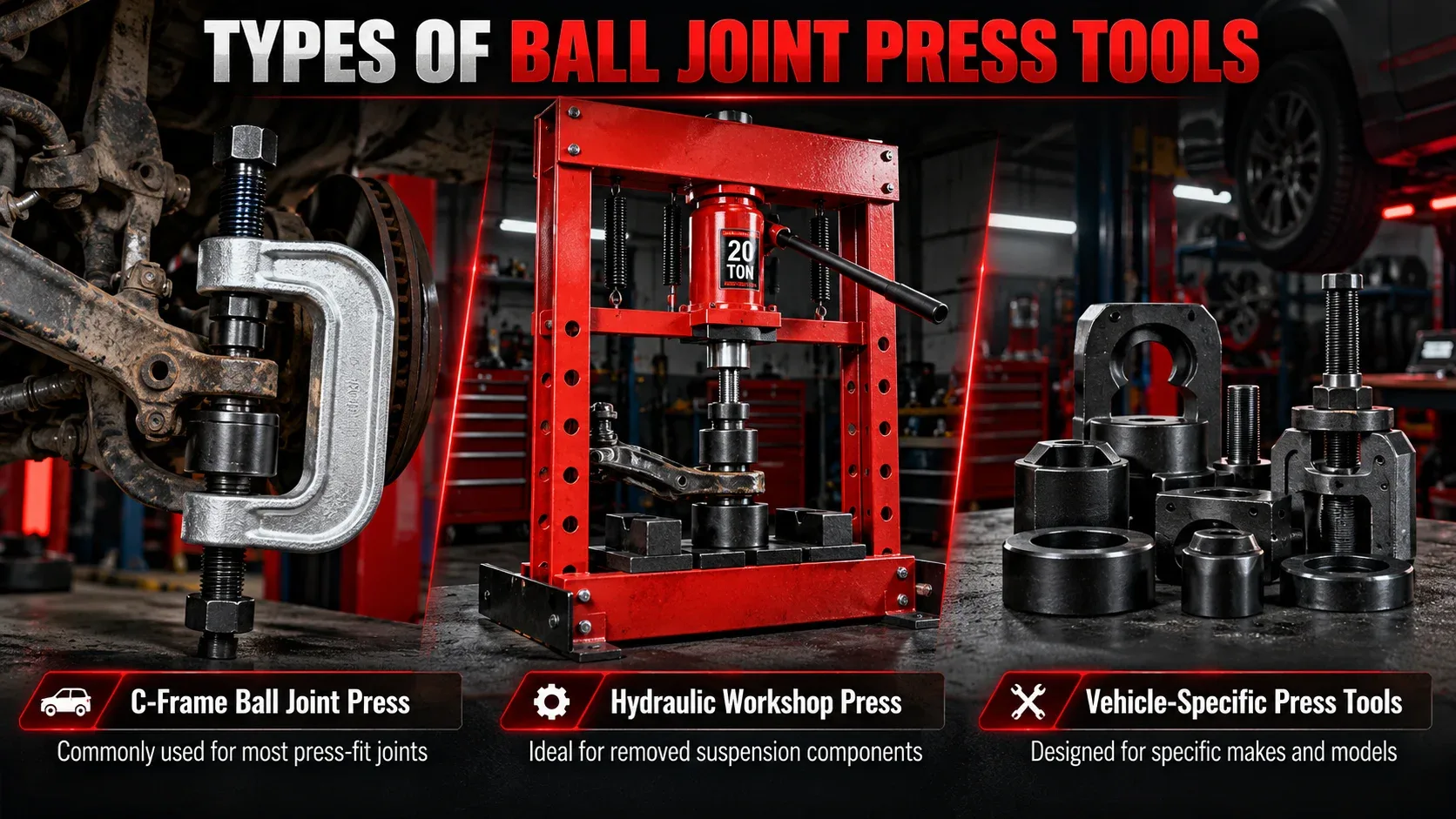
1. C-Frame Ball Joint Press
The C-frame ball joint press is commonly used for compatible press-fit joints. It consists of a heavy-duty C-shaped frame, a threaded screw, and interchangeable adapters.
Depending on the vehicle and approved repair procedure, some joints can be serviced while the control arm remains installed on the vehicle.
2. Hydraulic or Workshop Press
A hydraulic workshop press applies force through a hydraulic mechanism. It may be used when a suspension component can be removed and properly supported in the press.
Suitable supporting fixtures are essential. Applying hydraulic force to an unsupported or incorrectly positioned component can cause damage.
3. Vehicle-Specific Press Tools
Certain vehicles require specialized adapters or unique press configurations. These tools help support the suspension component and direct force onto the intended surface.
A press advertised as universal should never be assumed to fit every vehicle.
When Is a Ball Joint Press Necessary?
A ball joint press is usually required when replacing a serviceable press-fit ball joint and the manufacturer specifies a pressing method.
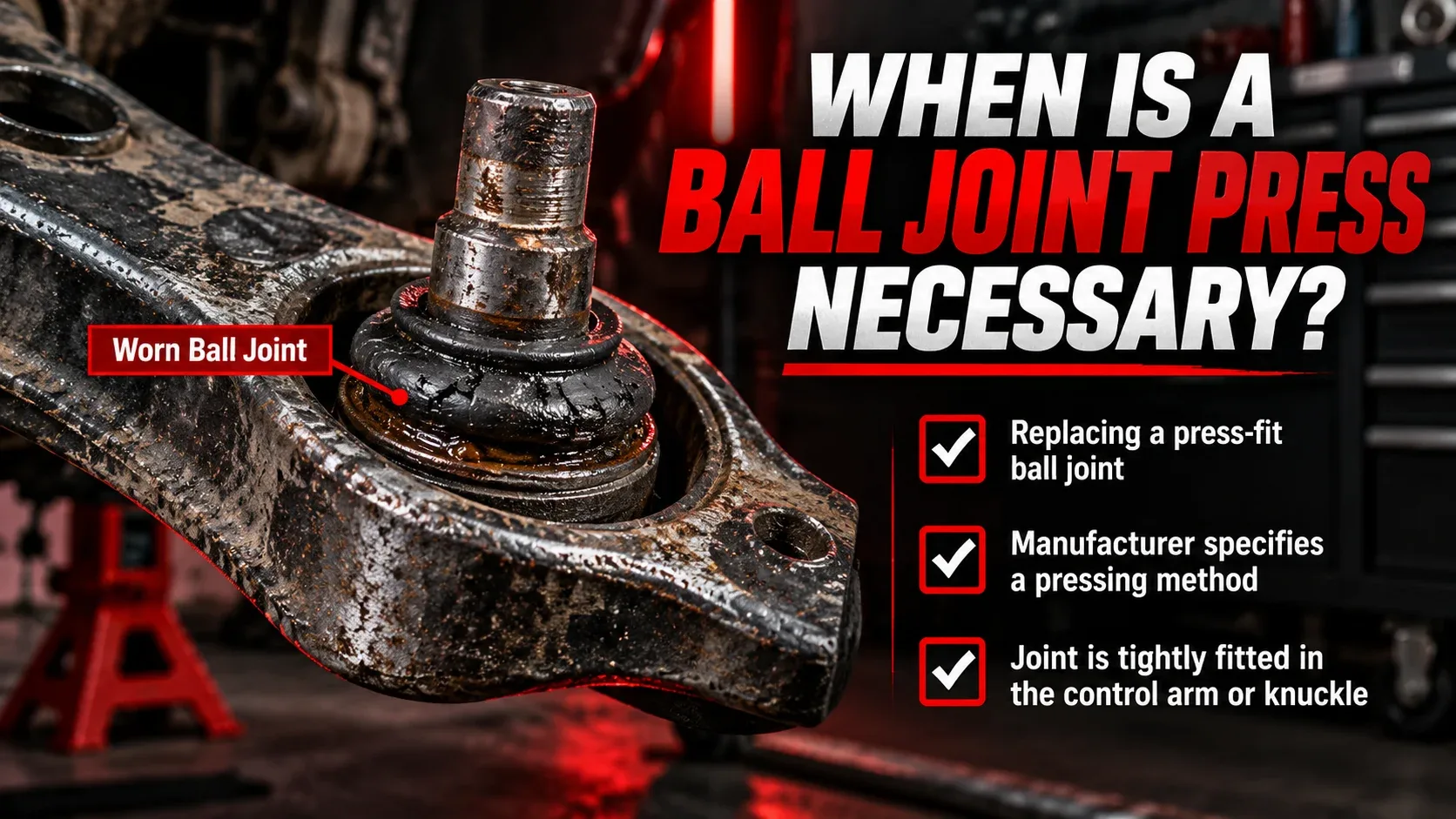
It may not be required for a bolt-on ball joint or when replacing an entire control arm with its ball joint already installed.
Signs That a Ball Joint May Need Replacement
- Clunking or knocking sounds over bumps.
- Unusual looseness in the steering or suspension.
- Irregular tire wear related to suspension movement.
- Visible deterioration of the ball joint dust boot.
- Excessive joint movement confirmed during inspection.
These symptoms can also be associated with worn bushings, tie rods, wheel bearings, and other components. The ball joint should be properly inspected before replacement is recommended.
Important: A severely worn ball joint can create a serious loss-of-control risk. If significant joint looseness or possible separation is discovered, do not continue driving until the vehicle has been professionally assessed.
Tools and Safety Equipment Before Starting
Before working on a suspension assembly, gather the tools and information required for your vehicle.
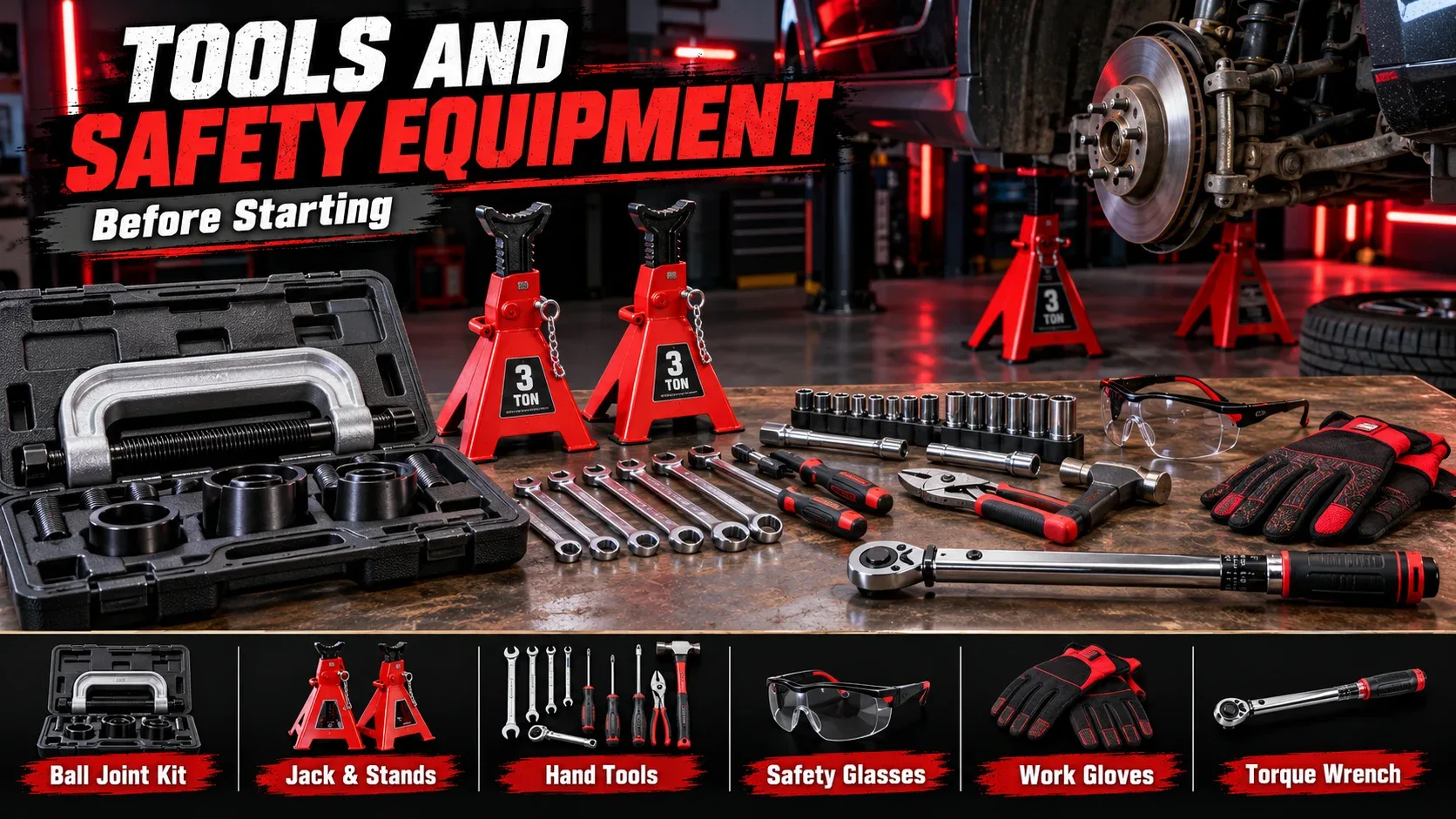
- Compatible ball joint press kit.
- Correct installation and removal adapters.
- Vehicle-specific repair instructions.
- Replacement ball joint and required hardware.
- Suitable lifting jack and rated jack stands.
- Wheel chocks.
- Appropriate hand tools.
- Torque wrench.
- Eye protection and work gloves.
- Manufacturer-specified specialty tools.
Suspension springs and loaded components may store considerable energy. A safe repair requires following the manufacturer’s exact lifting, supporting, and disassembly procedures.
How to Use a Ball Joint Press Safely
The following six steps describe the general operation of a compatible ball joint press. They are not a substitute for the complete service procedure for your specific vehicle.
Safety Warning: Incorrect suspension support or release of stored spring energy can cause serious injury. Do not attempt the repair without the correct service information and equipment.
Step 1: Verify the Vehicle-Specific Procedure
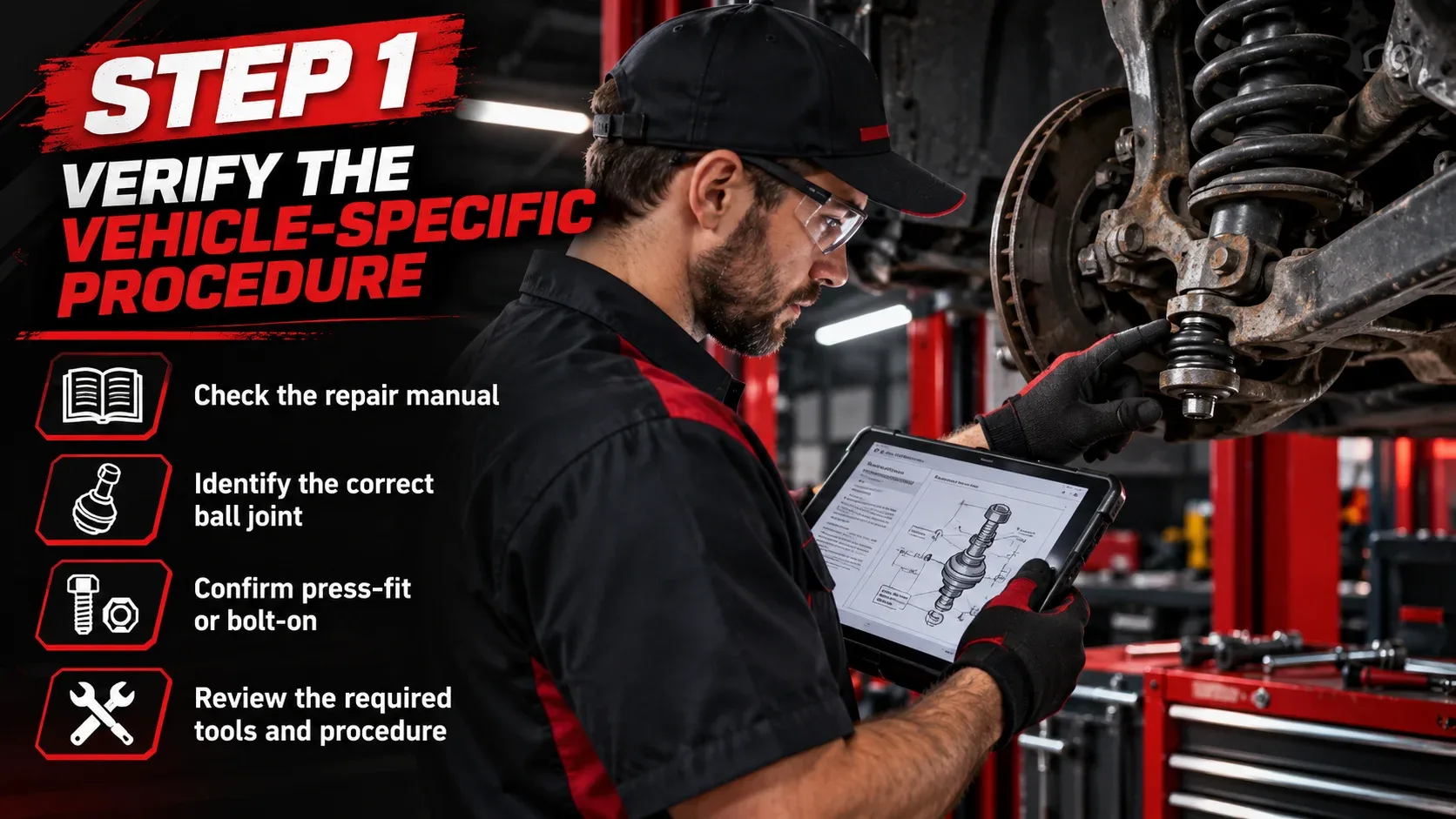
First, identify the exact joint requiring replacement. Check whether it is a press-fit, bolt-on, or integrated assembly.
Review the manufacturer-approved instructions to identify the correct support method, required disassembly, pressing direction, and any special installation requirements.
Step 2: Select the Correct Adapters
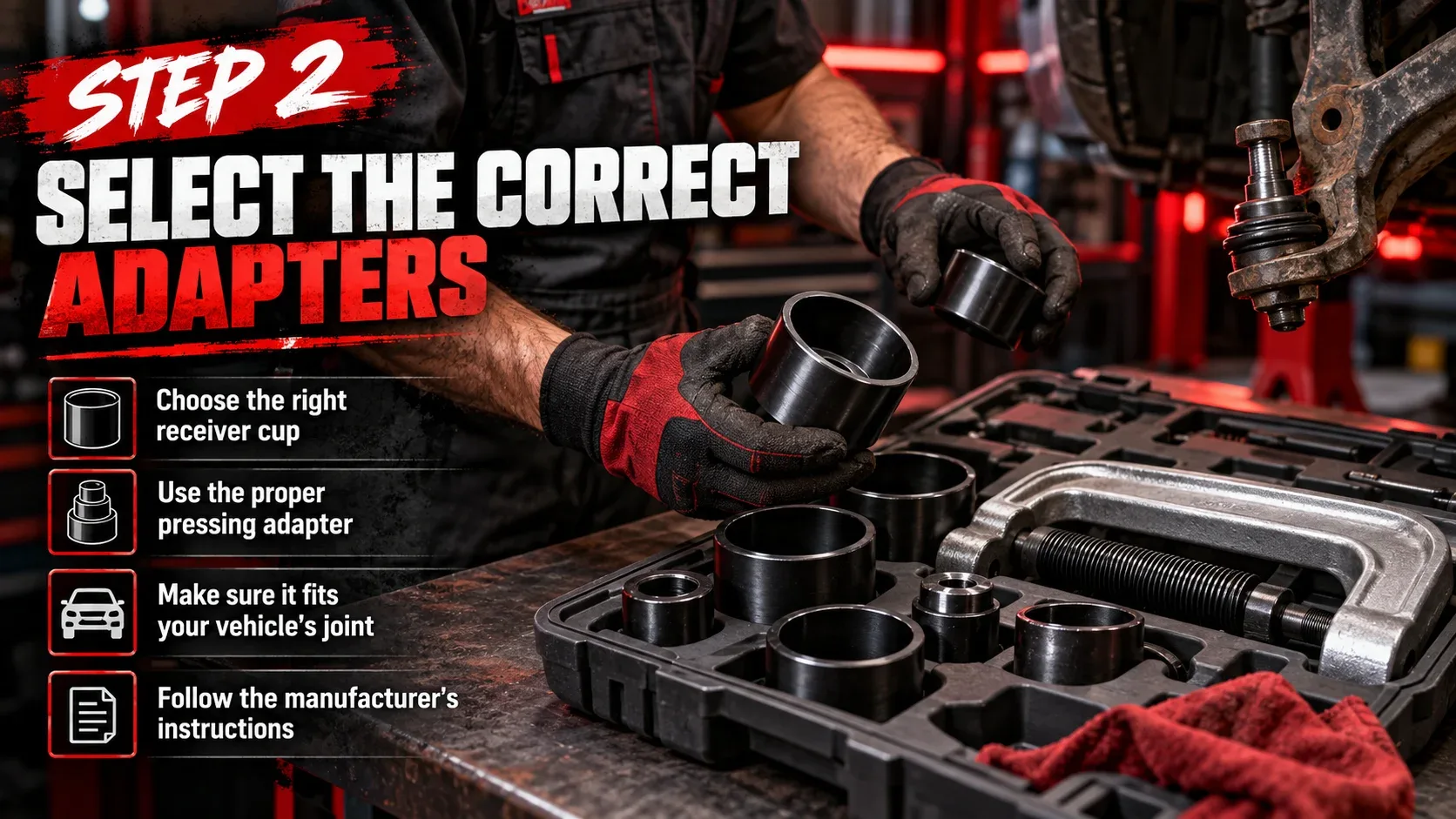
Choose a receiver cup that provides clearance for the joint as it moves. Select a pressing adapter that contacts the surface specified in the service instructions.
Never assume that an adapter is suitable simply because it physically fits around the joint.
Step 3: Position the Ball Joint Press
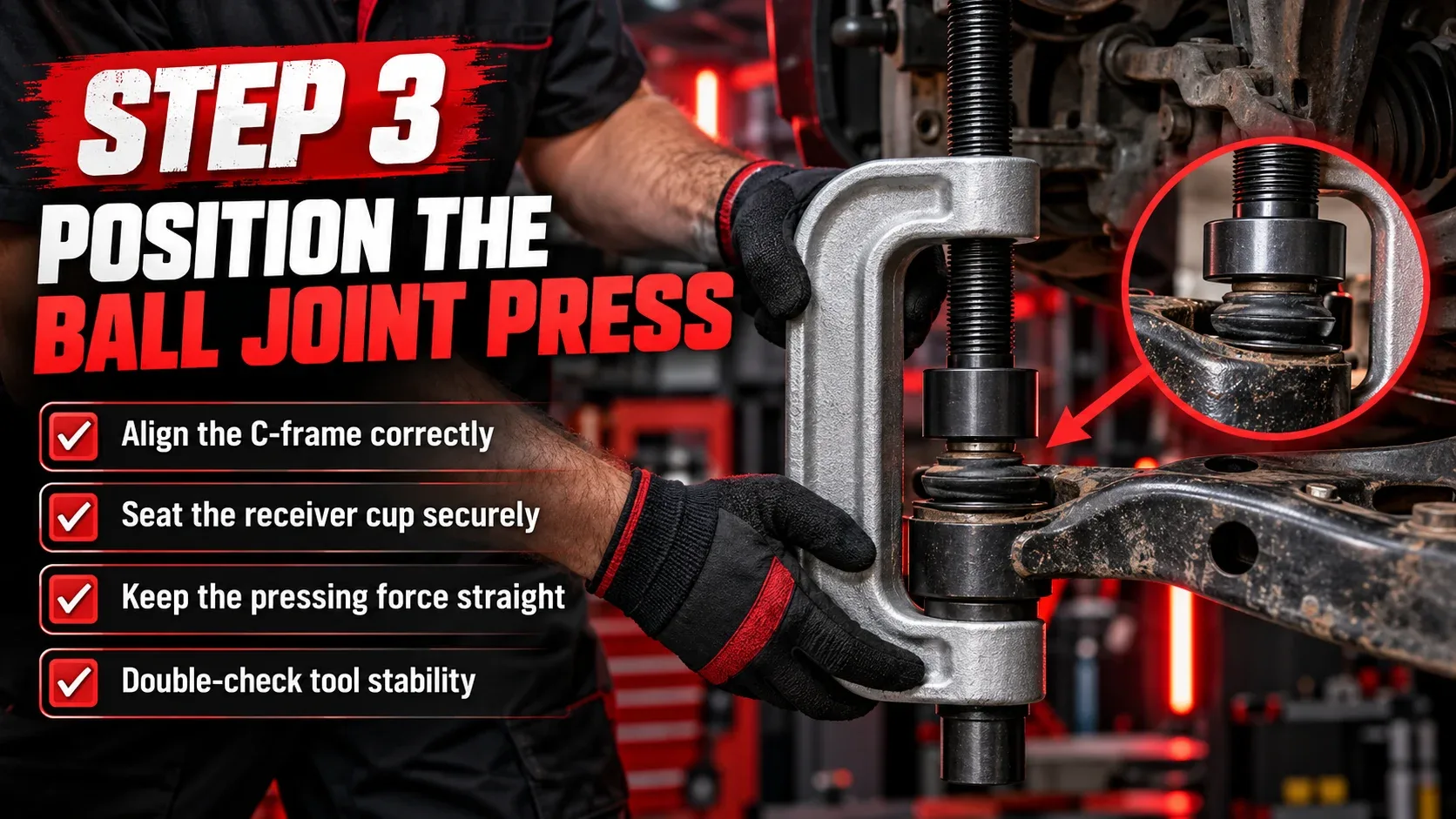
Arrange the C-frame, receiver cup, and pressing adapter according to the approved procedure.
Make sure the assembly is properly supported and the pressing force is directed along the intended axis. Incorrect alignment can damage both the joint and the mounting component.
Step 4: Remove the Old Ball Joint
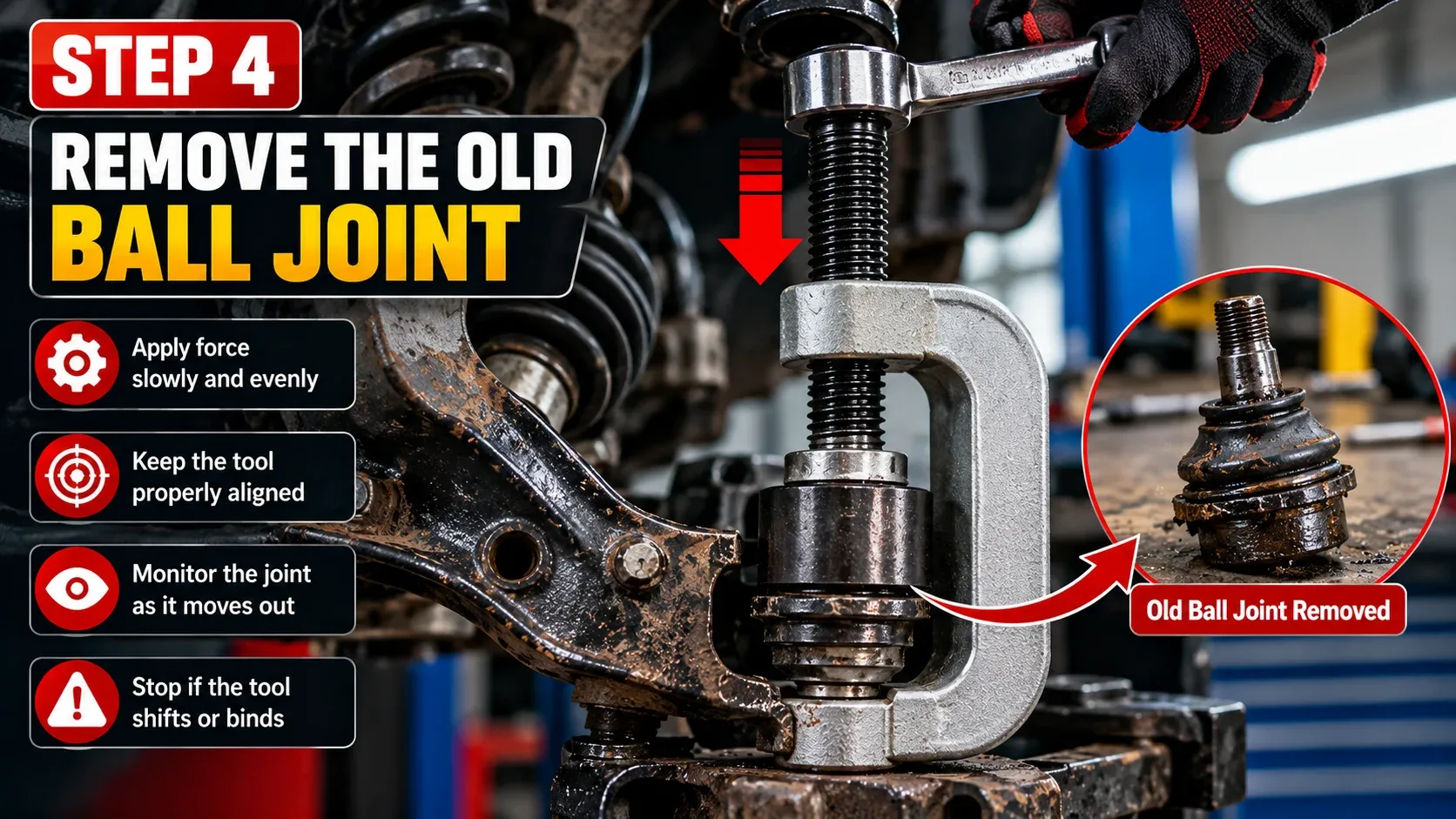
With the correct tool configuration, apply force gradually according to the tool manufacturer’s instructions. Check the position of the joint and adapters throughout removal.
If the press moves unexpectedly, the joint binds, or the tool begins bending, stop and reassess the setup.
A stuck ball joint should never be treated as a reason to apply unlimited force.
Step 5: Install the New Ball Joint
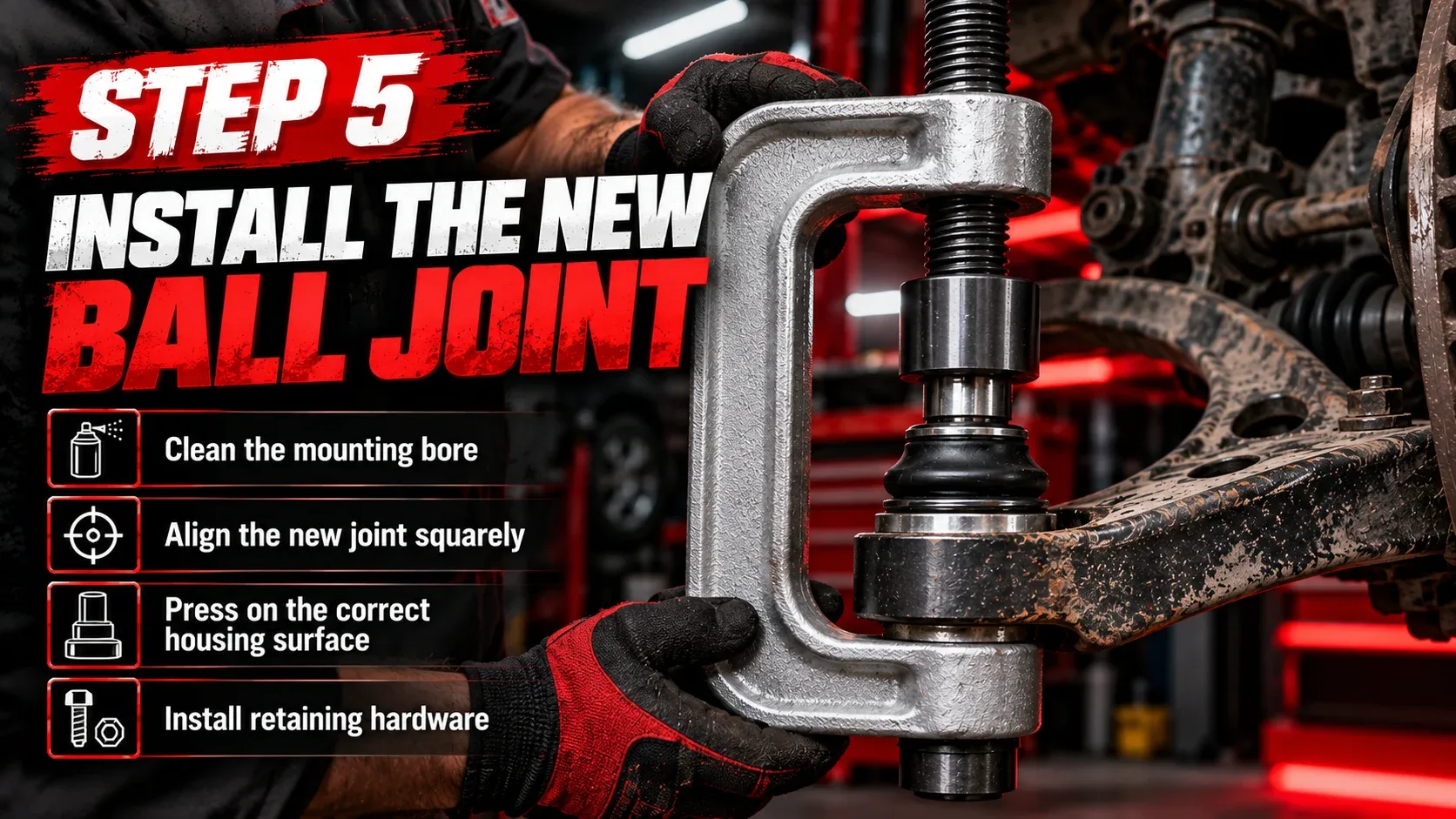
Inspect the mounting bore for corrosion, cracks, distortion, or other damage before installation.
Confirm the replacement part matches the specified application. Follow its orientation and installation instructions.
Use the correct adapter to apply force to the approved housing surface. Seat the replacement to the specified position or depth, then install all required retaining hardware.
Installation Tip: Do not press against the ball stud, dust boot, or housing surfaces that are not approved for press contact.
Step 6: Reassemble and Inspect
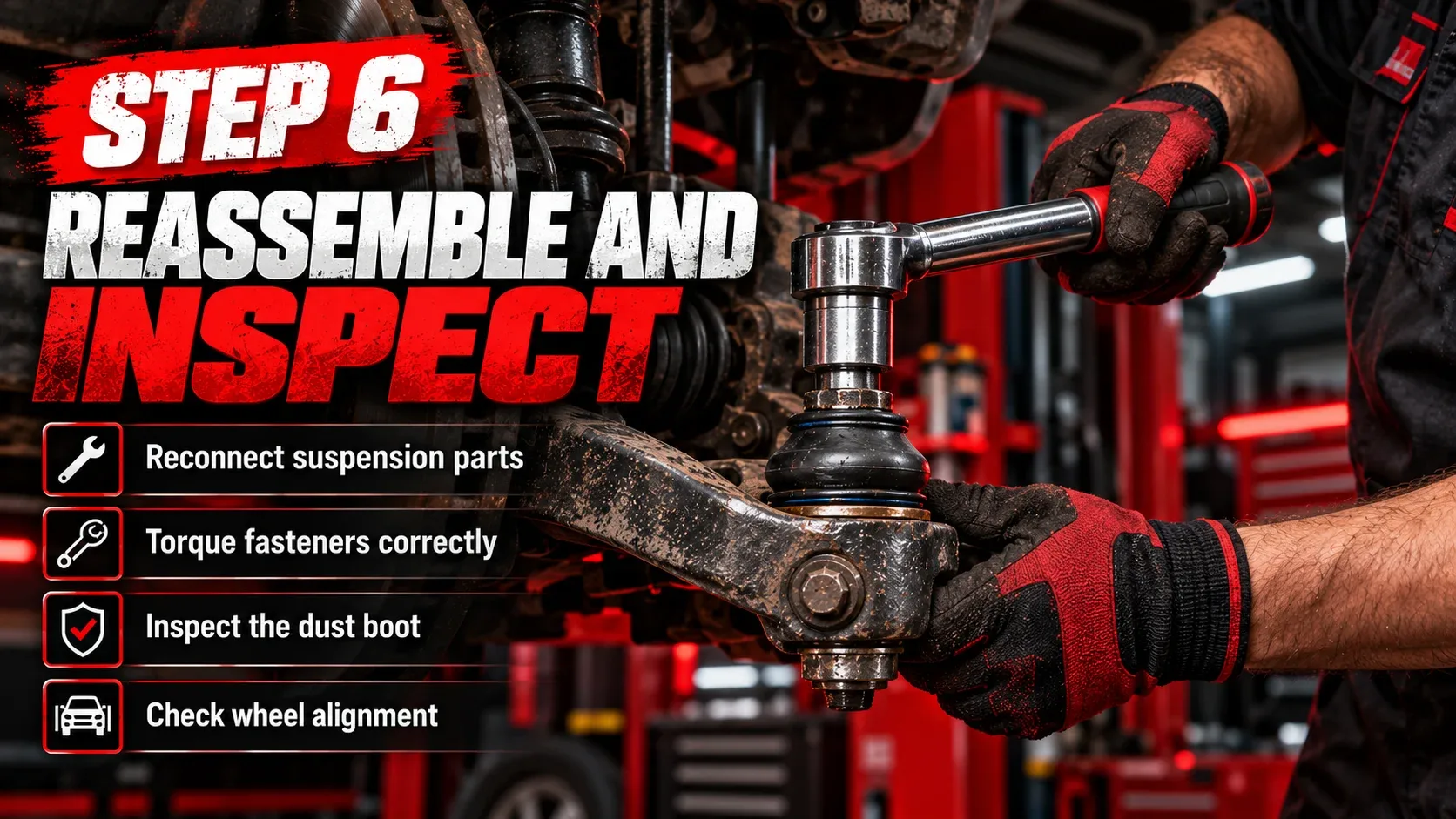
Reassemble all affected suspension and steering components according to the service manual.
Use specified new hardware where required and tighten critical fasteners to the correct torque. Follow the manufacturer’s instructions regarding alignment inspection or adjustment.
Common Ball Joint Press Problems and Mistakes
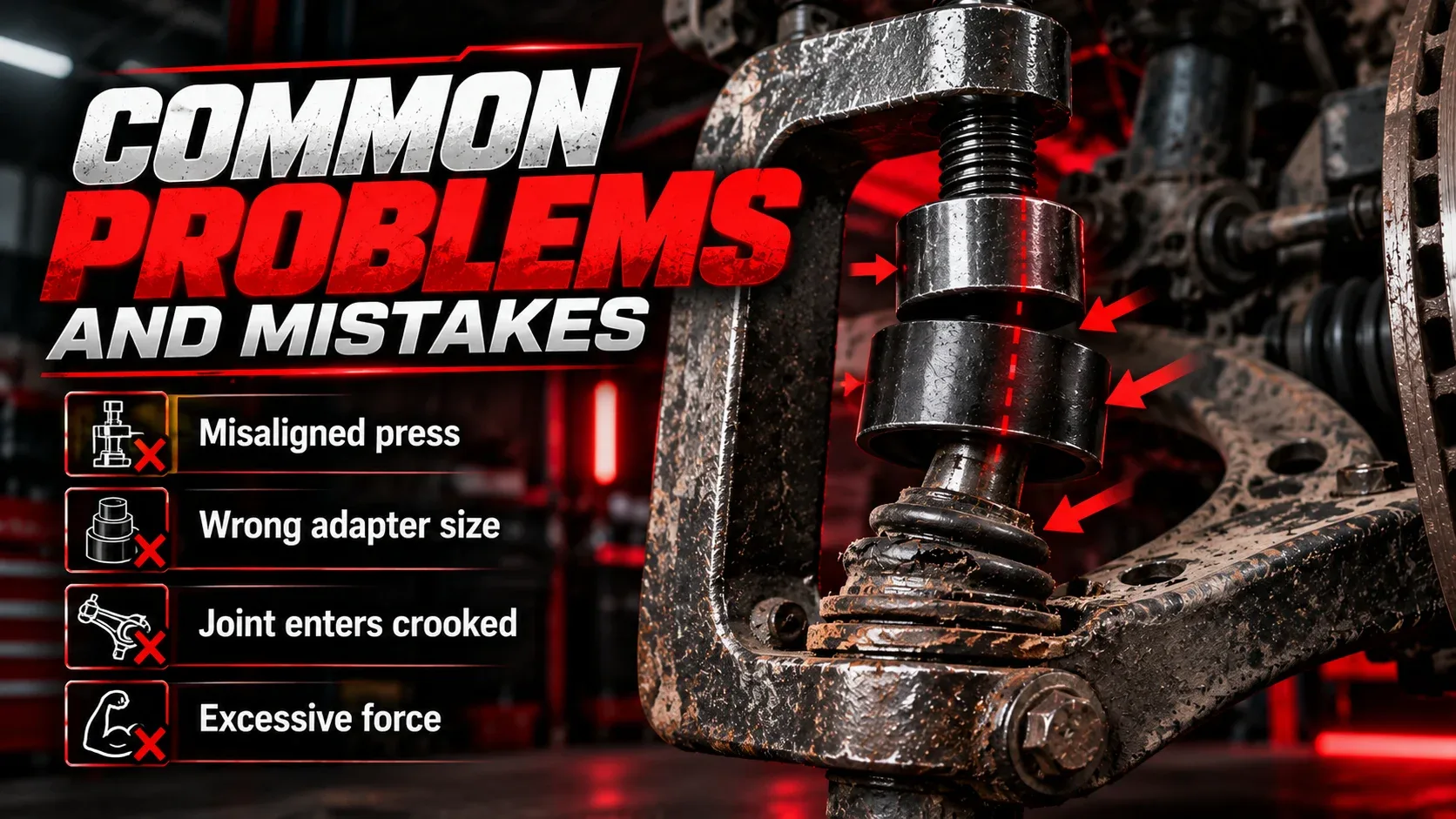
Problems during pressing often result from corrosion, incorrect adapters, misalignment, or incompatible replacement components.
| Problem | Possible Cause | Recommended Action |
|---|---|---|
| Joint does not move | Corrosion, retaining hardware, or incorrect direction. | Stop and verify the procedure. |
| Press begins bending | Excessive force or incorrect setup. | Stop and inspect the tool. |
| New joint enters crooked | Misalignment or incorrect adapters. | Stop and assess the fit. |
| Receiver cup slips | Incorrect cup size or poor seating. | Correct the arrangement before continuing. |
| Joint will not seat | Wrong component or damaged mounting bore. | Verify part and mounting specifications. |
Why Correct Alignment Is Essential
A ball joint that enters its bore at an incorrect angle can damage the joint housing or mounting surface. Pressing should be performed only with the correct tool setup and approved seating method.
Can You Remove a Ball Joint Without a Press?
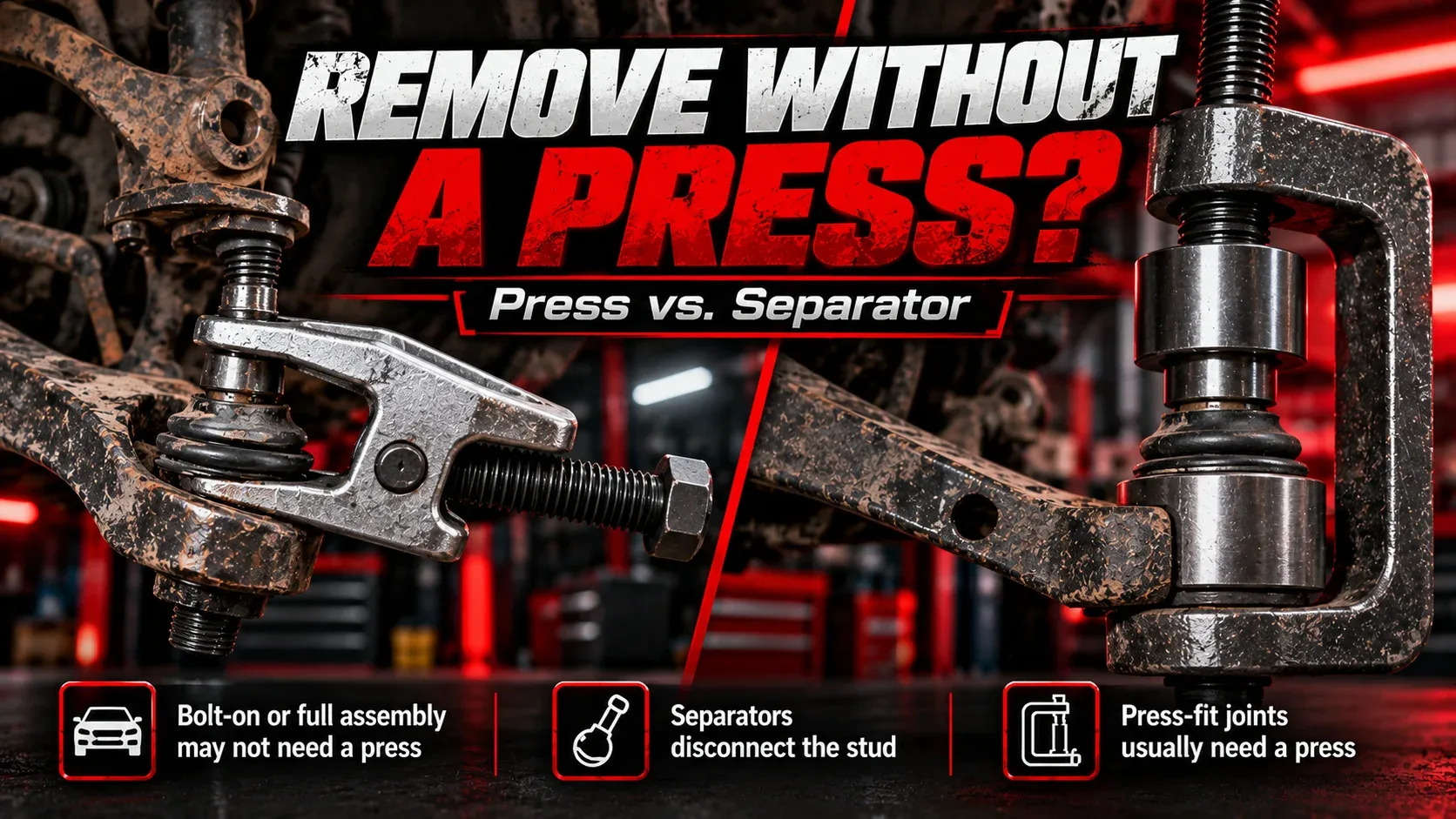
Some ball joints can be removed without a press because they use bolt-on connections or are replaced together with a complete suspension assembly.
However, a compatible press-fit joint generally requires the removal method specified in the service manual.
Ball Joint Press vs. Ball Joint Separator
A ball joint separator is designed to disconnect the tapered ball joint stud from its mating component.
A ball joint press performs a different function by moving a press-fit housing through its mounting bore.
| Tool | Function |
|---|---|
| Ball joint press | Removes or installs compatible press-fit ball joints. |
| Ball joint separator | Separates a tapered stud connection. |
| Workshop press | Applies supported force to components designed for bench pressing. |
Avoid uncontrolled hammering or improvised pressing arrangements that may damage suspension components.
How Much Does a Ball Joint Press Cost?
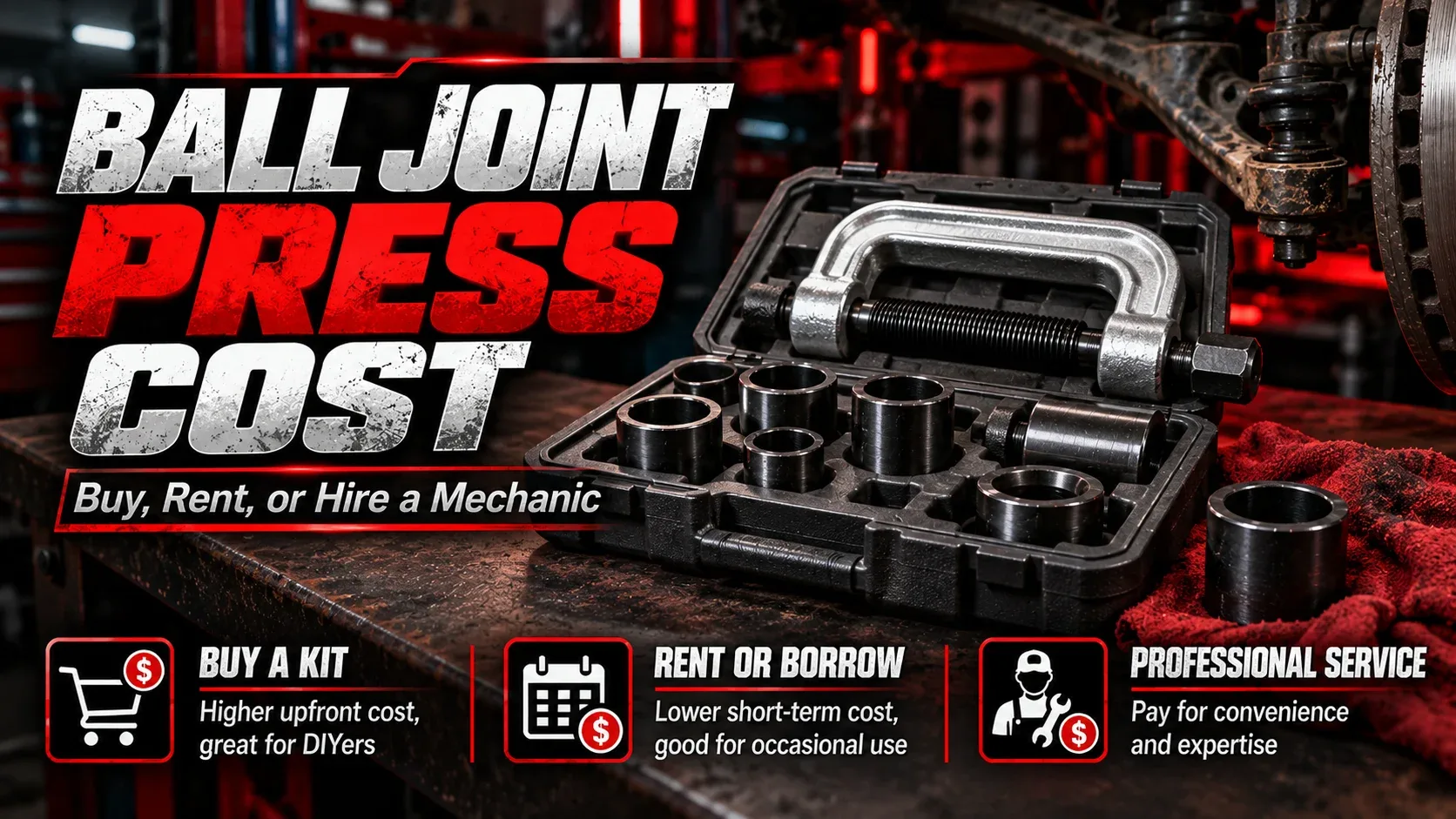
The price of a ball joint press depends on its construction, included adapters, intended applications, and manufacturer.
Buying a Ball Joint Press
Purchasing a press may be worthwhile for someone who frequently works on suspension systems. Compatibility, quality, and access to replacement adapters matter more than price alone.
Renting or Borrowing a Ball Joint Press
Some auto parts retailers and tool rental businesses provide ball joint press kits through loan or rental programs.
These programs may require a deposit, and available adapters can vary. Confirm the terms before choosing this option.
Hiring a Professional Mechanic
Professional replacement may be appropriate when the joint is severely seized, the correct equipment is unavailable, or the suspension has complex support requirements.
| Option | Best For | Considerations |
|---|---|---|
| Purchase a press kit | Frequent DIY maintenance | Initial investment and compatibility. |
| Rent or borrow | Occasional repairs | Availability, deposit, and adapters. |
| Professional service | Complex repairs | Labor, parts, and alignment costs. |
How to Choose the Right Ball Joint Press Kit
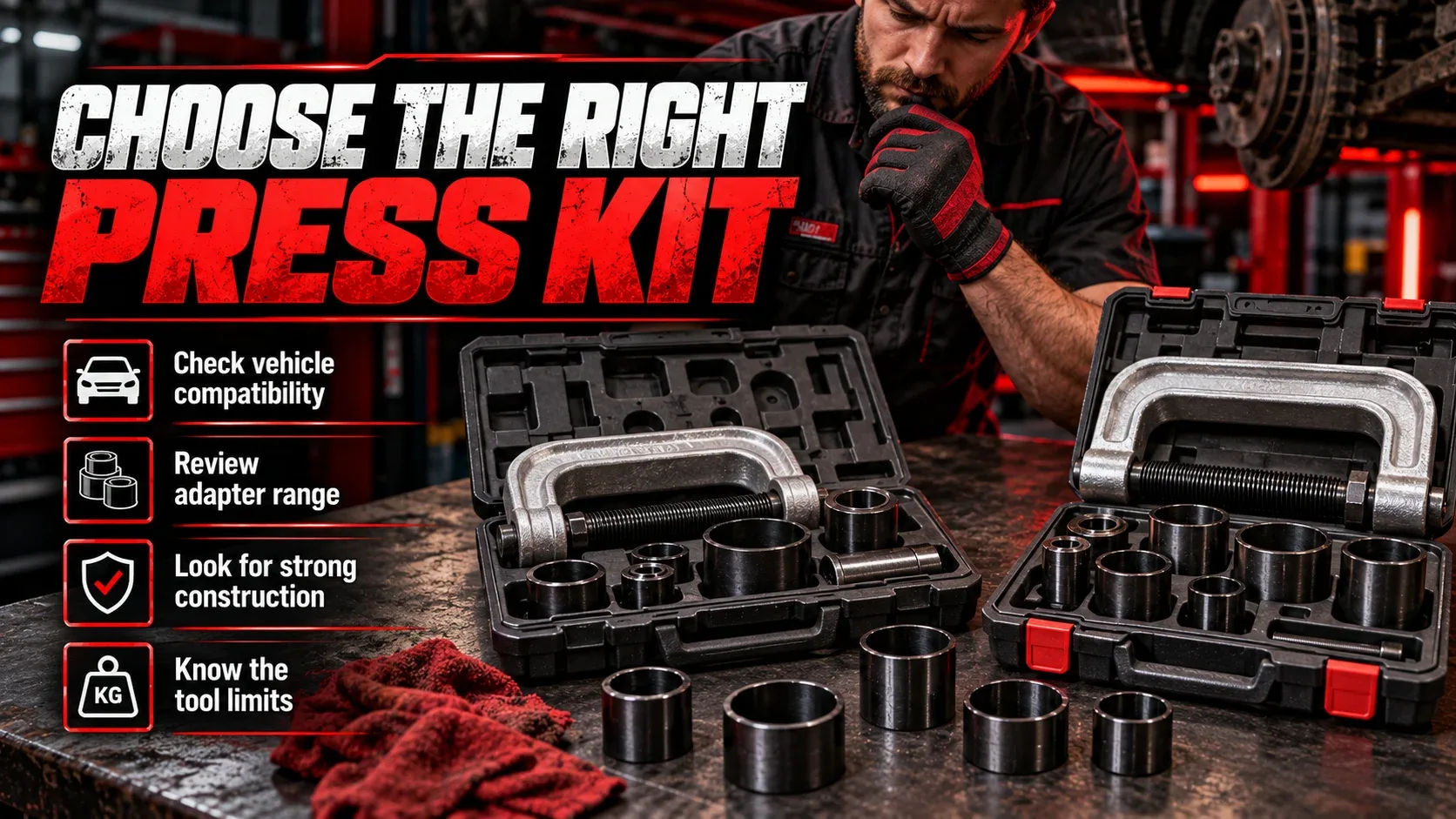
Check Vehicle Compatibility
Confirm that the tool is compatible with your vehicle’s make, model, model year, and suspension design.
Review Adapter Selection
A good adapter assortment can help cover multiple applications. However, having more pieces does not guarantee the correct fit for every joint.
Consider Construction Quality
Choose a tool with clear instructions, appropriate strength, and reliable manufacturer support.
Understand Tool Limitations
Do not exceed specified operating limits or modify the tool to fit an unsupported application.
Important Ball Joint Press Safety Tips
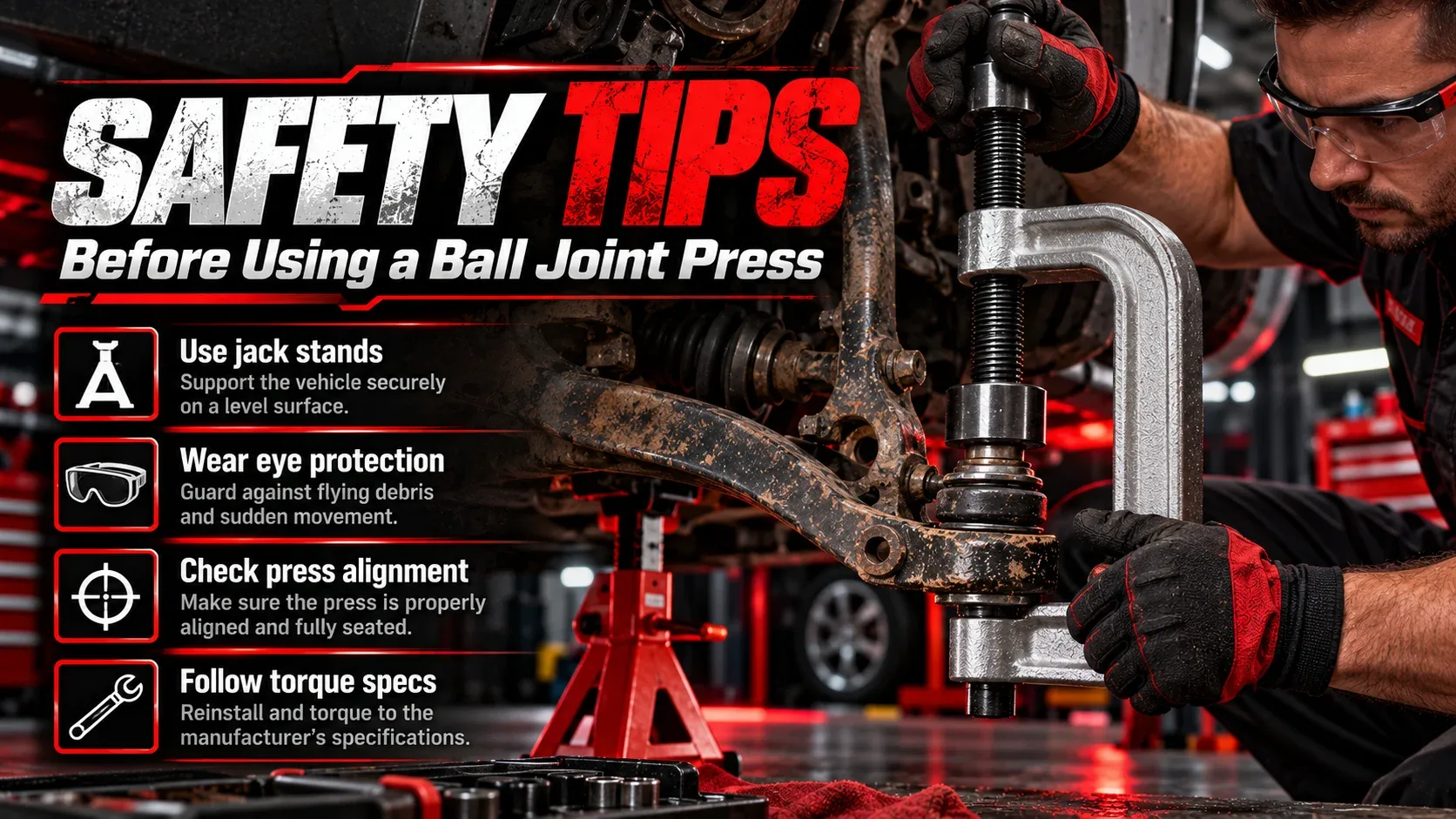
- Support the vehicle at manufacturer-approved lifting and support points.
- Never work under a vehicle supported only by a hydraulic jack.
- Follow suspension spring and loaded-component safety procedures.
- Wear suitable eye protection.
- Confirm correct adapter placement and pressing direction.
- Keep clear of the path of force and moving components.
- Stop if the press shifts, cracks, or visibly bends.
- Never reuse severely damaged suspension components.
- Follow all manufacturer torque and retaining-hardware requirements.
Critical Safety Reminder: Improper ball joint installation may cause steering or suspension failure. Never return a vehicle to service with an incorrectly seated joint, missing retaining hardware, or damaged suspension components.
Frequently Asked Questions About Ball Joint Presses
What is a ball joint press used for?
A ball joint press removes and installs compatible press-fit suspension ball joints using controlled force and suitable adapters.
Can you use a ball joint press on any vehicle?
No. The tool must match the joint design, available working space, and manufacturer service requirements.
Can a ball joint press install a new ball joint?
Yes. Compatible press kits can install new press-fit joints when configured with the correct adapters and approved procedure.
Do you need a press to replace a control arm?
Not necessarily. A complete replacement control arm may already include an installed ball joint.
Can you rent a ball joint press?
Yes. Some automotive parts retailers and rental services offer ball joint press kits, although terms and availability vary.
What is the difference between a ball joint press and a separator?
A press removes or installs the press-fit housing. A separator disconnects a tapered ball joint stud from its mating component.
Why won’t my ball joint come out with a press?
Possible causes include corrosion, retaining hardware, incorrect pressing direction, misalignment, or incompatible adapters. Stop and verify the setup before continuing.
Can the wrong ball joint press damage suspension components?
Yes. Incompatible tools, incorrect adapter placement, or excessive force can damage the joint housing, control arm, or other suspension components.
Final Thoughts: Is a Ball Joint Press Right for Your Repair?
A ball joint press is an important tool for servicing compatible press-fit suspension ball joints. It provides a controlled way to remove and install joints when used with the correct adapters and manufacturer-approved procedures.
Before beginning a DIY repair, verify your vehicle’s joint design, required equipment, and suspension support requirements.
When you cannot confirm the correct procedure or safely control the components involved, professional service is the better option.