Steering & Suspension Guide
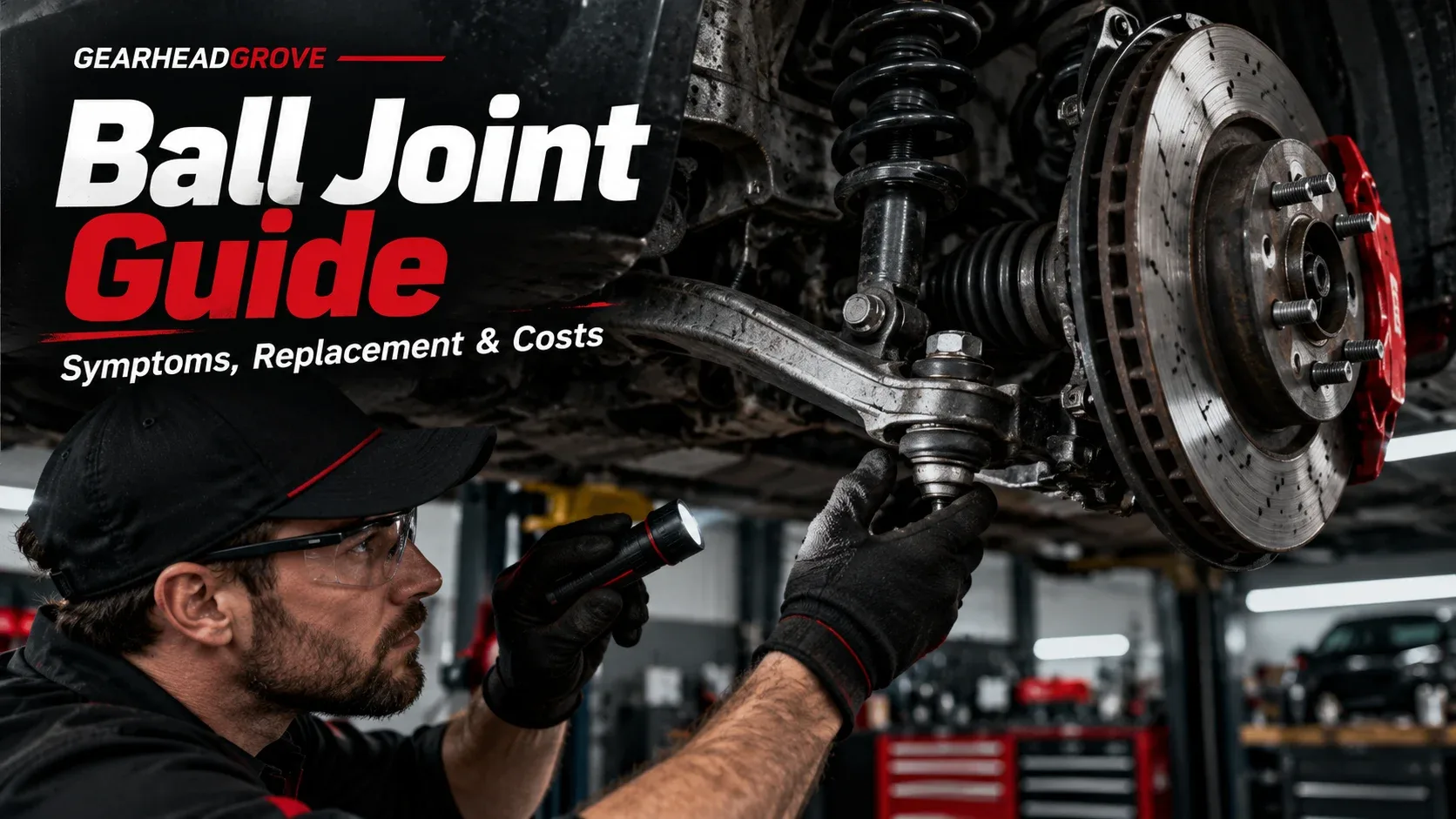
That little clunk when you drive over a bump might seem harmless. But when it comes with loose steering or uneven tire wear, one small suspension component deserves a closer look: the ball joint.
Picture this: You’re driving home, roll across a rough patch of pavement, and hear a dull knock near the front wheel. A week later, your mechanic points to a ball joint. Now you’re wondering: What exactly is it? Is the car safe? And how much will the repair cost?
This guide explains what car ball joints do, the signs that may point to wear, how shops confirm a problem, and what to expect from ball joint replacement—without turning your afternoon into a suspension engineering lesson.
What is a ball joint?
A ball joint in a car is a pivoting ball-and-socket connection between a control arm and a steering knuckle. It helps the suspension move over bumps and, where applicable, allows the wheels to steer. A worn ball joint may cause clunking, looseness, or unusual tire wear, but these symptoms do not prove the joint is faulty.
Typical US replacement benchmark: about $307–$452 nationally, based on RepairPal estimates updated September 3, 2026. The actual quote depends on your exact vehicle, location, parts, and additional work.
Safety first: If steering becomes seriously unstable or a ball joint is suspected of severe wear, stop driving and arrange professional inspection or towing.
What Is a Ball Joint in a Car?
Think of the way your shoulder can rotate in different directions. A car’s ball joint follows a similar ball-and-socket principle, only it is built from strong metal components designed for steering and suspension loads.
At one end is a rounded metal stud; at the other is a socket that holds it. The joint is usually protected by a flexible dust boot, which helps keep lubricant in and water and grit out. This moving connection joins the control arm to the steering knuckle.
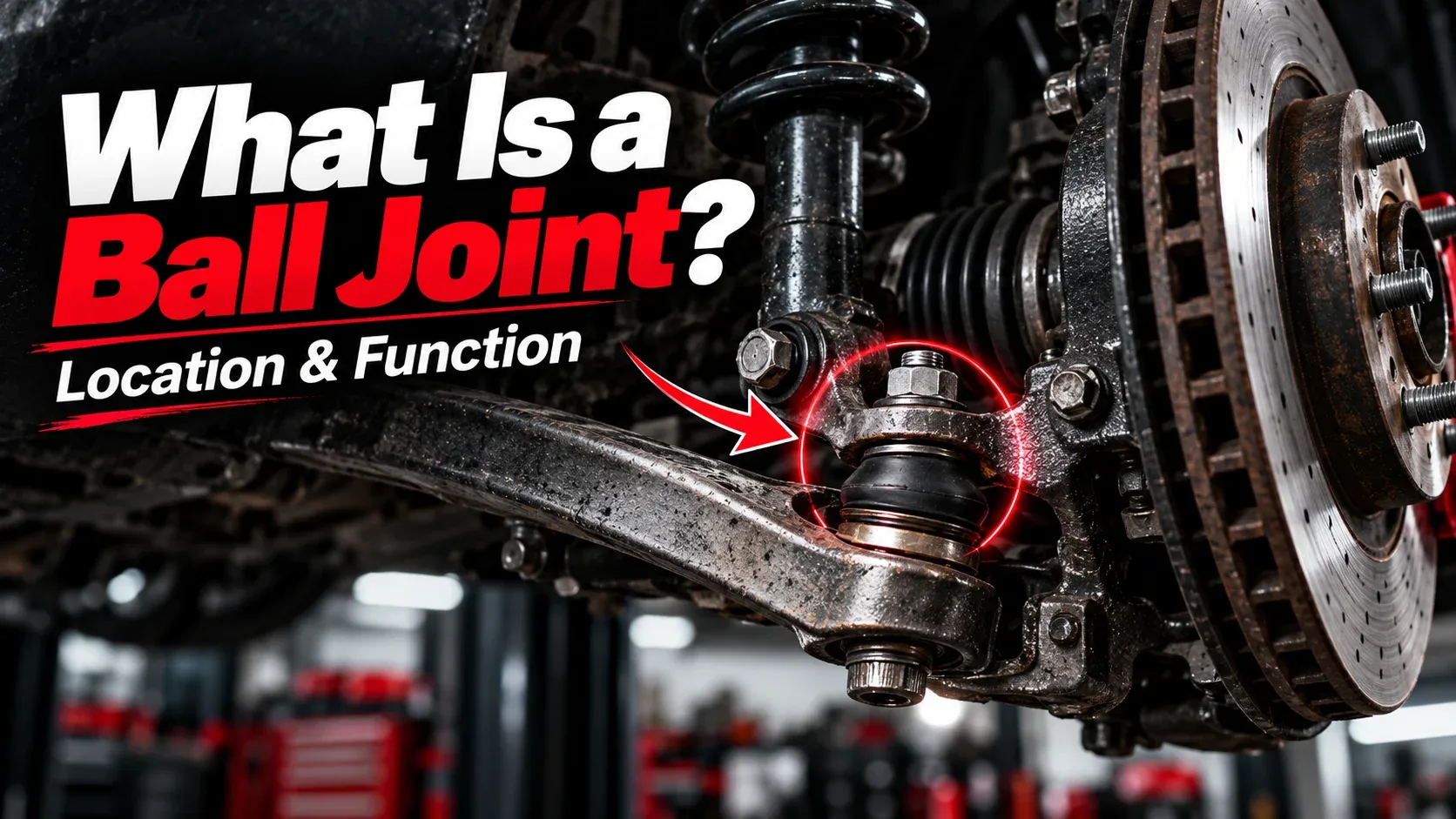
Why does that matter? Without a flexible pivot at the right suspension connections, the wheel assembly could not follow the road or turn in the way the suspension was designed to allow.
How Does a Ball Joint Work While You Drive?
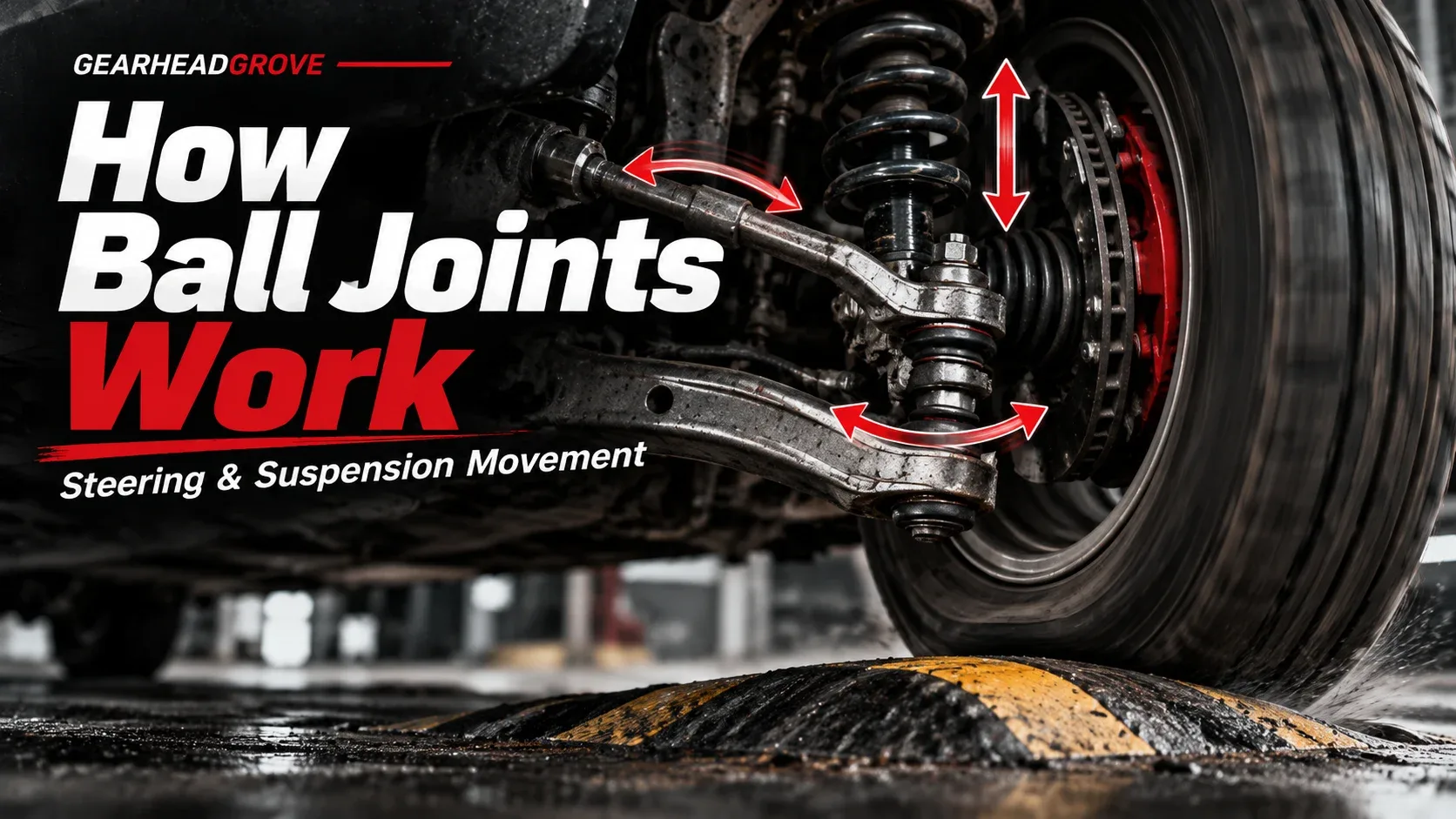
Let’s follow your front wheel for a moment. When you drive straight, the suspension holds the wheel in its intended position. Hit a small bump, and the control arm moves as the suspension compresses. Turn into a driveway, and the steering knuckle rotates on vehicles with steerable front wheels. The ball joint allows the necessary movement at its connection.
The suspension articulates as the wheel moves up and down.
The joint accommodates steering movement where the suspension design requires it.
The connection must stay tight enough to maintain predictable wheel geometry.
Once the joint develops excessive wear, the intended movement can turn into unwanted looseness. That’s why a problem can affect both ride quality and vehicle control.
Upper vs. Lower Ball Joints: What’s the Difference?
Here’s a detail many guides skip: not every car has both an upper and a lower ball joint. Different suspension systems use different arrangements.
| Feature | Upper ball joint | Lower ball joint |
|---|---|---|
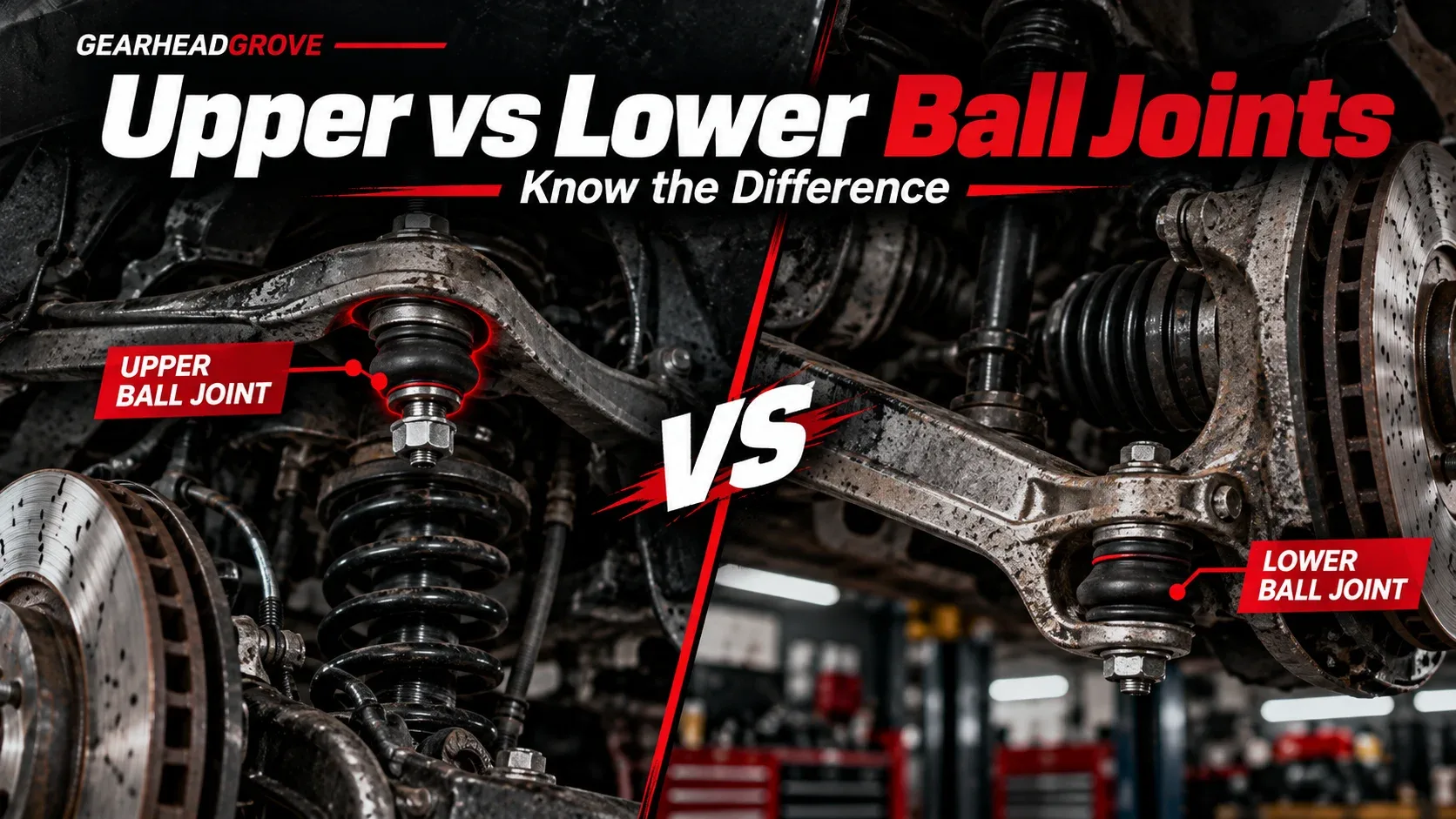
| Typical location | Connects upper control arm to steering knuckle | Connects lower control arm to steering knuckle |
| Found on | Suspensions with an upper control arm and ball joint | Many double-wishbone and MacPherson-strut designs |
| Function | Provides a pivot at the upper connection | Provides a pivot at the lower connection |
| Replacement | May be replaceable or integrated into an arm | May be replaceable or integrated into an arm |
On many MacPherson-strut front suspensions, there is a lower ball joint but no traditional upper ball joint; the strut assembly provides the upper connection. Some truck and SUV suspensions use both. Your vehicle’s service information is the best source for its exact layout.
7 Common Symptoms of a Bad Ball Joint
Back to that mysterious clunk. A worn ball joint is one possible suspect, but it’s not the only one. Bushings, strut mounts, sway-bar links, tie rods, and wheel bearings can create overlapping symptoms. Treat the following as reasons to inspect, not proof of failure.
1. Clunking or knocking over bumps
A repeated knock from the wheel area—particularly as the suspension changes direction—may indicate excessive play in a joint or another suspension component.
2. Loose or wandering steering
If the vehicle no longer tracks as predictably or seems to require extra steering correction, worn steering or suspension parts are possible causes. Tire and alignment problems can feel similar.
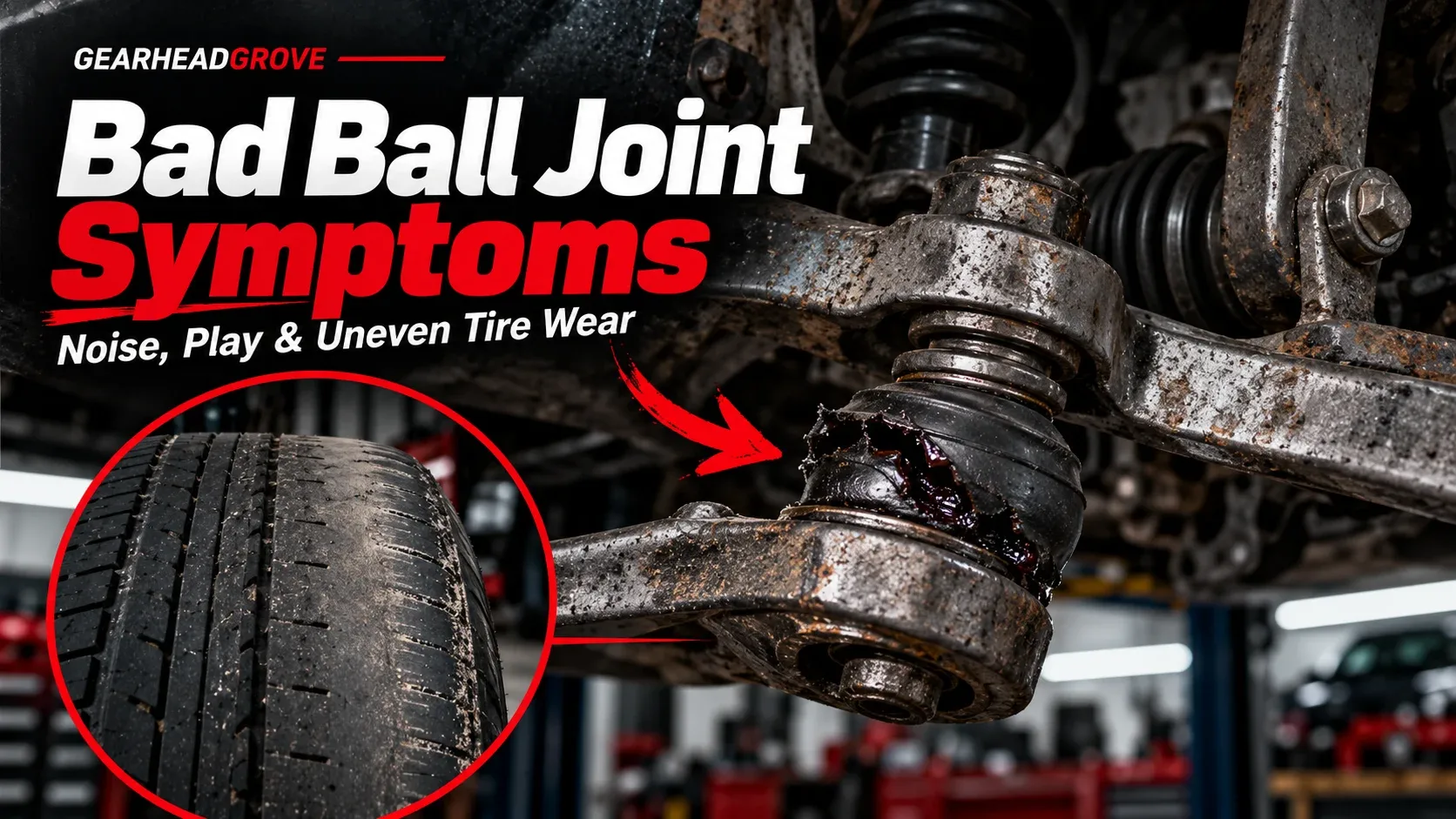
3. Uneven tire wear
Abnormal wear on an inner or outer tire edge can reflect wheel-geometry problems. A worn joint may contribute, but improper inflation and alignment are other common explanations.
4. Vibration or shaking
Unwanted movement in suspension components can sometimes contribute to vibration. Tire imbalance, damaged wheels, and other issues are often more likely, so don’t jump straight to a ball joint diagnosis.
5. Squeaking or creaking
A dry or contaminated joint may make noise during suspension travel or steering, but rubber bushings and other components can squeak too.
6. Torn dust boot or grease leakage
A damaged boot can allow moisture and grit into the joint. A torn boot is a reason to inspect the component closely; it does not, by itself, prove excessive internal play.
7. Excessive movement confirmed by inspection
This is stronger evidence than a noise alone. A trained technician checks movement using the correct support points and limits for that specific suspension design.
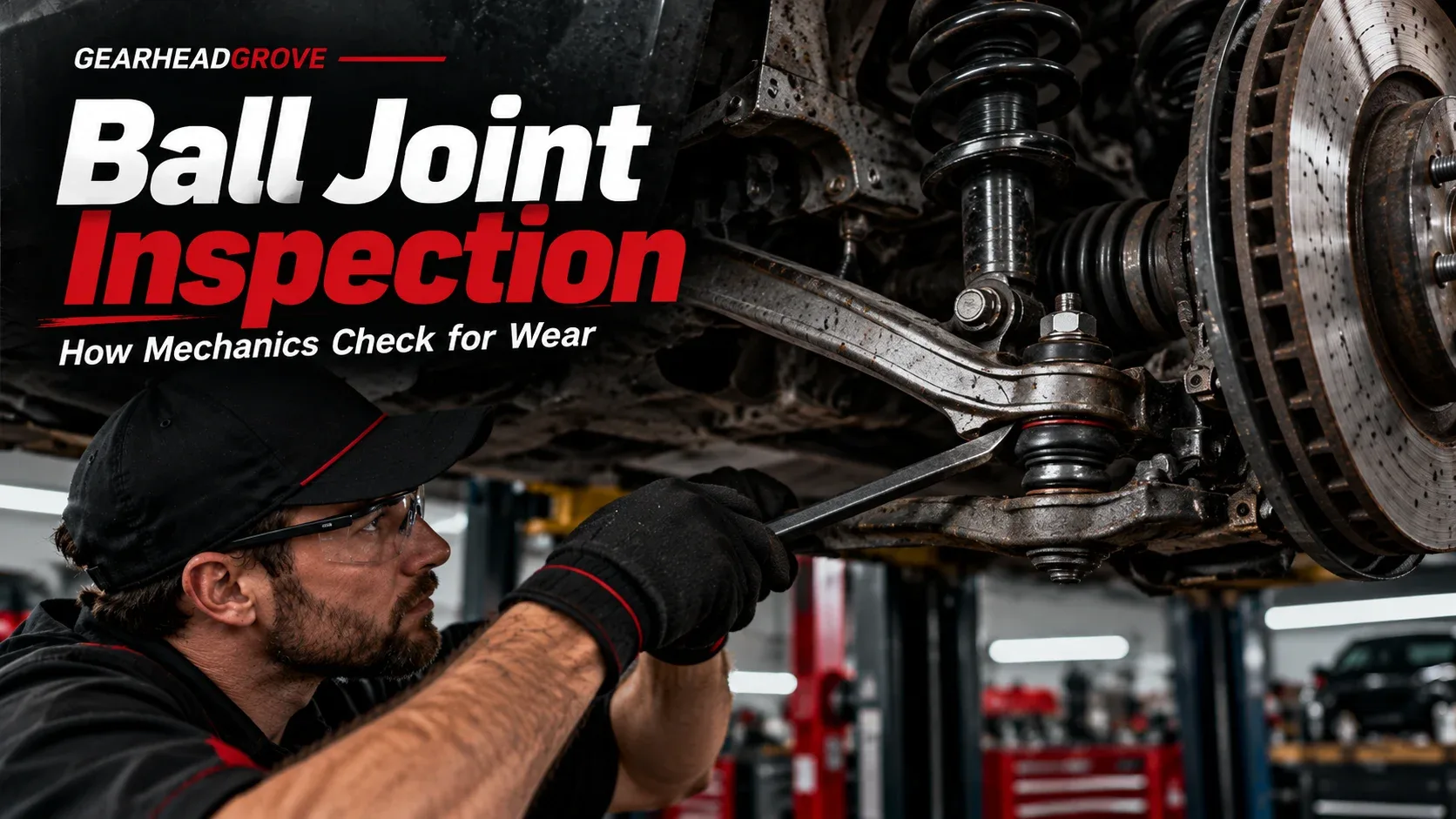
How Do Mechanics Check a Ball Joint?
Imagine your mechanic saying, “Let’s confirm what’s moving before replacing anything.” That’s exactly the approach you want.
- Discuss the symptoms. When does the sound occur—during bumps, braking, or turning?
- Inspect tires and visible suspension parts. The technician looks for uneven wear, damaged boots, grease leakage, and related issues.
- Support the vehicle correctly. Proper lifting position matters because load-carrying and follower-style joints are not always checked the same way.
- Check for movement and compare it with specifications. The mechanic may use controlled leverage or a measuring instrument, depending on the design.
- Rule out other components. Tie rods, control-arm bushings, wheel bearings, and other suspension connections are considered before diagnosis.
Can You Drive With a Bad Ball Joint?
It’s tempting to ask, “Can I just drive it for another week?” The problem is that a symptom alone doesn’t tell you how badly a component is worn.
A ball joint that has developed severe wear can potentially separate, allowing a wheel assembly to shift out of its intended position and compromising vehicle control. That is a significant safety hazard.
You don’t need to panic over every creak, but you do need to take changes in steering and suspension behavior seriously.
Ball Joint Replacement Cost in 2026
Now to the question that often sends people searching in the first place: How much does ball joint replacement cost?
RepairPal suspension ball joint replacement benchmark; updated September 3, 2026. Not a guaranteed price for your vehicle.
| Estimated cost component | Reported US range | What it covers |
|---|---|---|
| Parts | $94–$139 | Replacement ball joint parts in the national benchmark |
| Labor | $213–$312 | Shop work to remove and install the joint |
| Total | $307–$452 | National average benchmark, excluding taxes, fees and other repairs |
Why your estimate might be higher or lower
- Vehicle make and model: Parts and labor times vary widely.
- Separate joint versus control-arm assembly: Some cars require replacing a larger assembly instead of an individual joint.
- Joint design: A pressed-in joint may require additional specialty tools and labor compared with a bolt-on design.
- Local shop rates: Independent shops and dealership service departments can quote different rates.
- Extra work: Wheel alignment, damaged fasteners, or other worn suspension parts can add to the bill.
Example estimates for popular vehicles
| Vehicle | RepairPal estimate |
|---|---|
| Honda Civic | $215–$314 |
| Ford F-150 | $279–$396 |
| Toyota Camry | $347–$511 |
| Chevrolet Silverado 1500 | $348–$553 |
These are model-level examples from RepairPal’s September 2026 cost listings, not quotes for every year or trim. Confirm the estimate for your exact vehicle and ZIP code. Wheel alignment and other repairs may be additional.
What Happens During Ball Joint Replacement?
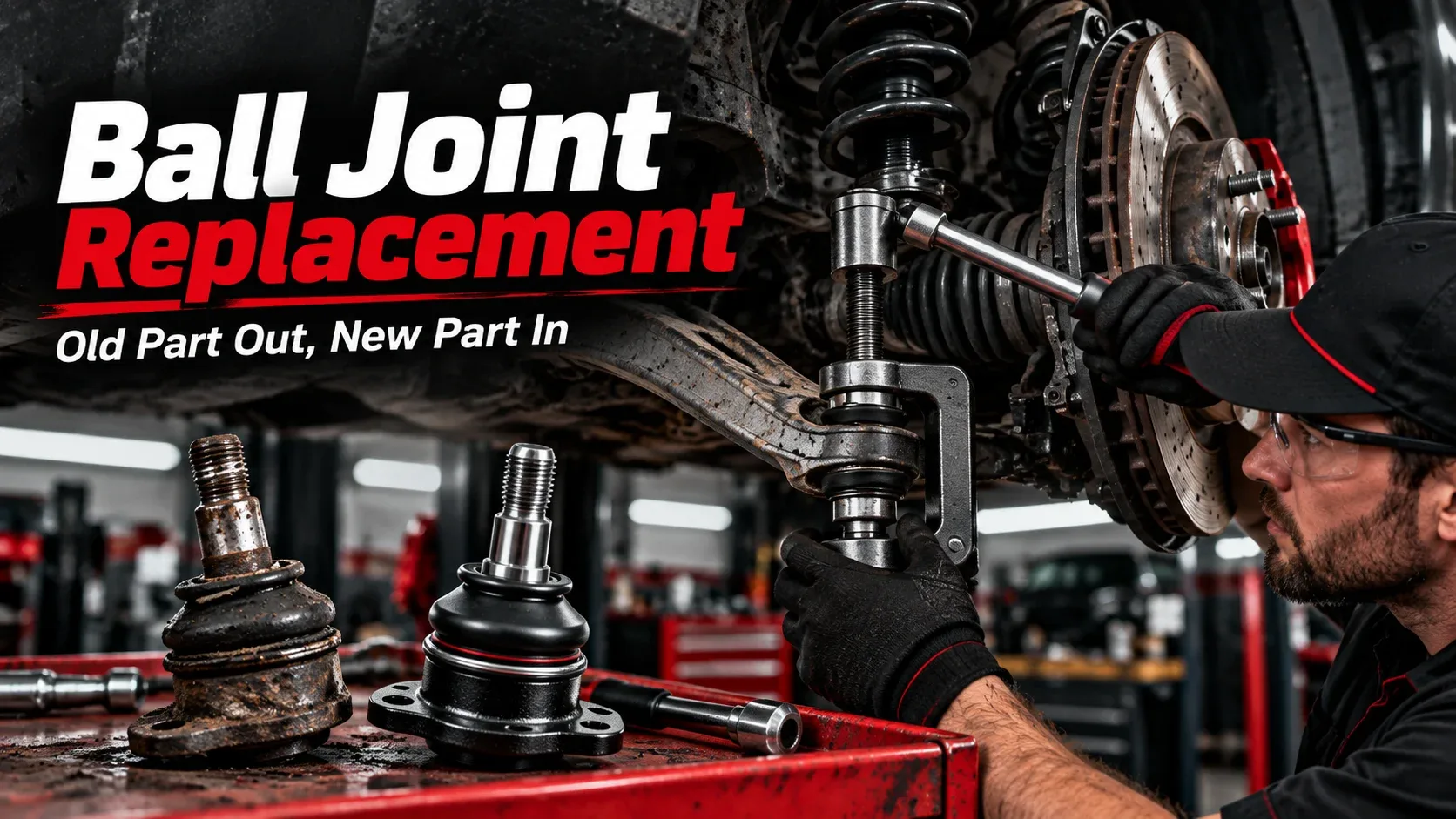
Ball joint replacement isn’t the same on every car. Some designs allow an individual joint to be removed; others have a joint permanently attached to a control-arm assembly.
Confirm the faulty joint. A mechanic verifies the affected component and checks for related problems.
Lift and secure the vehicle. The technician supports the suspension according to the manufacturer procedure and removes the wheel as needed.
Access and separate the joint. Related fasteners and suspension connections are carefully released, with attention to stored loads.
Install the correct replacement. The shop uses the required tools, fasteners, and specified tightening procedures for the vehicle.
Inspect the repair and alignment. The technician checks connections, assesses wheel alignment needs, and road-tests the vehicle where appropriate.
Can you replace a ball joint yourself?
Some experienced DIY mechanics can handle the job with the appropriate tools and service documentation. But suspension parts may be under considerable force, and an improperly installed joint can create a serious risk. If you lack the right lifting equipment, specialty tools, or experience, professional replacement is the safer choice.
Ball Joint vs. Tie Rod vs. Control Arm
These names often show up together on a repair estimate, so let’s untangle them.
| Component | Main job | Potential signs of trouble |
|---|---|---|
| Ball joint | Pivot between control arm and steering knuckle | Clunking, excess joint play, steering or tire-wear changes |
| Tie rod | Transfers steering movement to the wheel | Steering looseness, wandering, uneven tire wear |
| Control arm | Locates wheel assembly and connects it to the vehicle structure | Knocks, worn bushings, unwanted suspension movement |
A good repair recommendation identifies the actual failed part instead of relying on a generic “front-end noise” description.
How Long Do Ball Joints Last?
There is no reliable replacement mileage that applies to every car. A joint may last for many years or wear sooner depending on suspension design, road conditions, load, exposure, and maintenance.
What speeds up wear?
- Repeated pothole strikes or rough-road driving.
- Damaged dust boots that let moisture and grit reach the joint.
- Vehicle loads and operating conditions beyond normal expectations.
- Neglected inspections when steering or suspension symptoms begin.
Simple habits that help
Avoid hard impacts when practical, keep tires properly inflated, inspect unusual tire wear, and ask your shop to check steering and suspension components during routine service. Follow vehicle-specific maintenance guidance rather than replacing ball joints on an arbitrary schedule.
5 Questions to Ask Before Approving a Repair
You’re standing at the service counter with an estimate in hand. Before saying yes, ask:
- Which ball joint is worn? Ask the shop to identify its location and show the inspection finding.
- How was the wear confirmed? Ask whether the joint exceeds the manufacturer’s permitted movement.
- Are we replacing a single ball joint or the whole control arm? This can make a big difference in pricing.
- Does the estimate include alignment and any required extra parts? Get the total scope in writing.
- What warranty covers the replacement? Clarify coverage for parts and labor.
Frequently Asked Questions
What happens if a ball joint fails while driving?
A severely worn ball joint may separate, allowing the wheel assembly to move out of its intended position and potentially causing loss of vehicle control. If severe wear or separation is suspected, do not drive the vehicle.
How much does ball joint replacement cost?
RepairPal’s US national estimate, updated September 3, 2026, is $307–$452 for suspension ball joint replacement. Individual vehicles, labor rates, control-arm designs, alignment, taxes and other work can change the final price.
How long does ball joint replacement take?
There is no single time that applies to every vehicle. Job length depends on access, corrosion, whether the joint is pressed in or integrated into an arm, and whether additional work is required. Ask your shop for a vehicle-specific labor estimate.
Can I replace only one ball joint?
Often yes, if the design permits and inspection shows the other joints are serviceable. Some vehicles require replacement of an entire control-arm assembly. Replacing both sides is not automatically necessary solely because one has failed.
Do I need a wheel alignment after replacing a ball joint?
Alignment inspection is commonly recommended after steering or suspension work, and many shops recommend a full alignment after ball joint replacement. The exact requirement depends on the vehicle and repair performed.
What does a bad ball joint sound like?
A worn ball joint can cause a clunk or knock as the suspension moves, and some joints may squeak. However, similar noises can come from bushings, links and other components. Inspection is needed to identify the source.
Can a bad ball joint cause a vibration?
It can contribute to unwanted movement in some cases, but vibration is nonspecific. Tires, wheels, wheel bearings, and other components should also be checked.
Is it safe to drive with a worn ball joint?
You cannot judge driving safety reliably from a noise alone. Severe wear creates a real risk of separation and loss of control. Have suspected problems assessed promptly and do not drive if the vehicle is dangerously unstable or severe wear is suspected.
Final Thoughts: Small Part, Big Responsibility
Remember the clunk from the beginning? Instead of guessing which component caused it—or automatically agreeing to the first repair suggestion—you now know what a ball joint does, what warning signs deserve attention, and what a proper diagnosis should involve.
The smart next step: If you notice new clunks, steering looseness, or unusual tire wear, arrange a qualified suspension inspection. Confirm the cause, ask for an itemized quote, and address serious safety concerns without delay.
Editorial note: This general educational guide is not a substitute for a model-specific repair manual or professional inspection. Procedures and safety limits vary by vehicle. Pricing was checked against RepairPal’s September 3, 2026 US estimates.