Your SUV cranks slowly, and the repair shop recommends an absorbed glass mat car battery. Why does it cost more than a conventional replacement—and is a new battery even necessary?
Consider Michael, a driver whose modern SUV repeatedly struggles to start after being parked. His mechanic identifies an AGM battery, but he finds a cheaper flooded battery that looks like it will fit. Before spending money, he needs to know which battery the vehicle requires and why the original is struggling.
This practical guide explains AGM construction, advantages and drawbacks, flooded and EFB differences, fitment, charging, diagnostic testing, replacement, costs, and common misconceptions.
What Is an Absorbed Glass Mat Car Battery?
An AGM—more precisely, Absorbent Glass Mat—battery is a valve-regulated lead-acid (VRLA) battery. Absorbent fiberglass separators retain the sulfuric-acid electrolyte between the lead plates rather than allowing it to move freely as in a flooded battery.
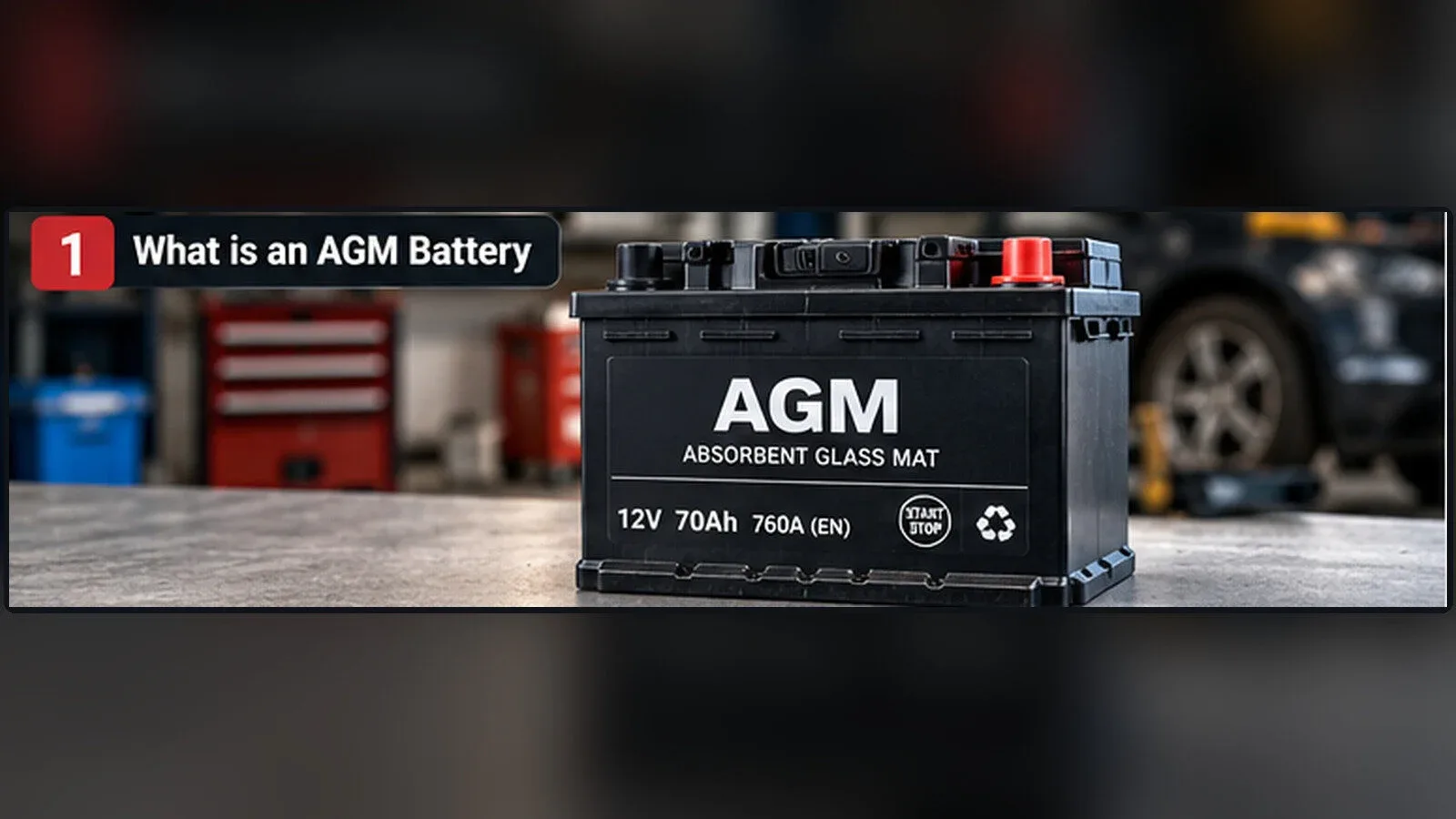
AGM batteries can provide high starting current, good resistance to vibration, and improved cycling performance in appropriate applications. Although often described as sealed and maintenance-free, they can still vent gas under abnormal conditions and must be charged properly.
How Does an AGM Battery Work?
The battery produces electrical energy through reversible chemical reactions between lead-based plates and electrolyte. When the engine starts, it sends a high current to the starter motor; when the vehicle’s charging system is working correctly, the battery is replenished.
AGM’s tightly held fiberglass separators keep the electrolyte near the active plates. Pressure-relief valves manage excessive internal pressure, while oxygen recombination reduces normal water loss.
This construction is why an AGM battery is not the same as lithium-ion, despite both sometimes appearing in modern vehicles.
AGM vs Flooded vs EFB Car Batteries
AGM, enhanced flooded batteries (EFB), and standard flooded batteries all use lead-acid chemistry, but they support different cycling demands. EFB enhances flooded construction, while AGM holds electrolyte within fiberglass mats.
| Feature | AGM | EFB | Standard Flooded |
|---|---|---|---|
| Electrolyte | Absorbed in glass mat | Liquid | Liquid |
| Cycle capability | Generally strong | Enhanced | Generally lower |
| Start-stop use | Where specified | Where specified | Usually not suitable for demanding systems |
| Relative cost | Higher | Intermediate | Often lower |
Not every vehicle with start-stop requires AGM—some specify EFB. The owner’s manual and manufacturer fitment data should determine your choice.
AGM Battery Benefits—and Where They Matter
AGM technology is valuable for vehicles that regularly experience repeated cycling, vibration or substantial accessory demands. However, its benefits matter most when the vehicle was engineered to use them.
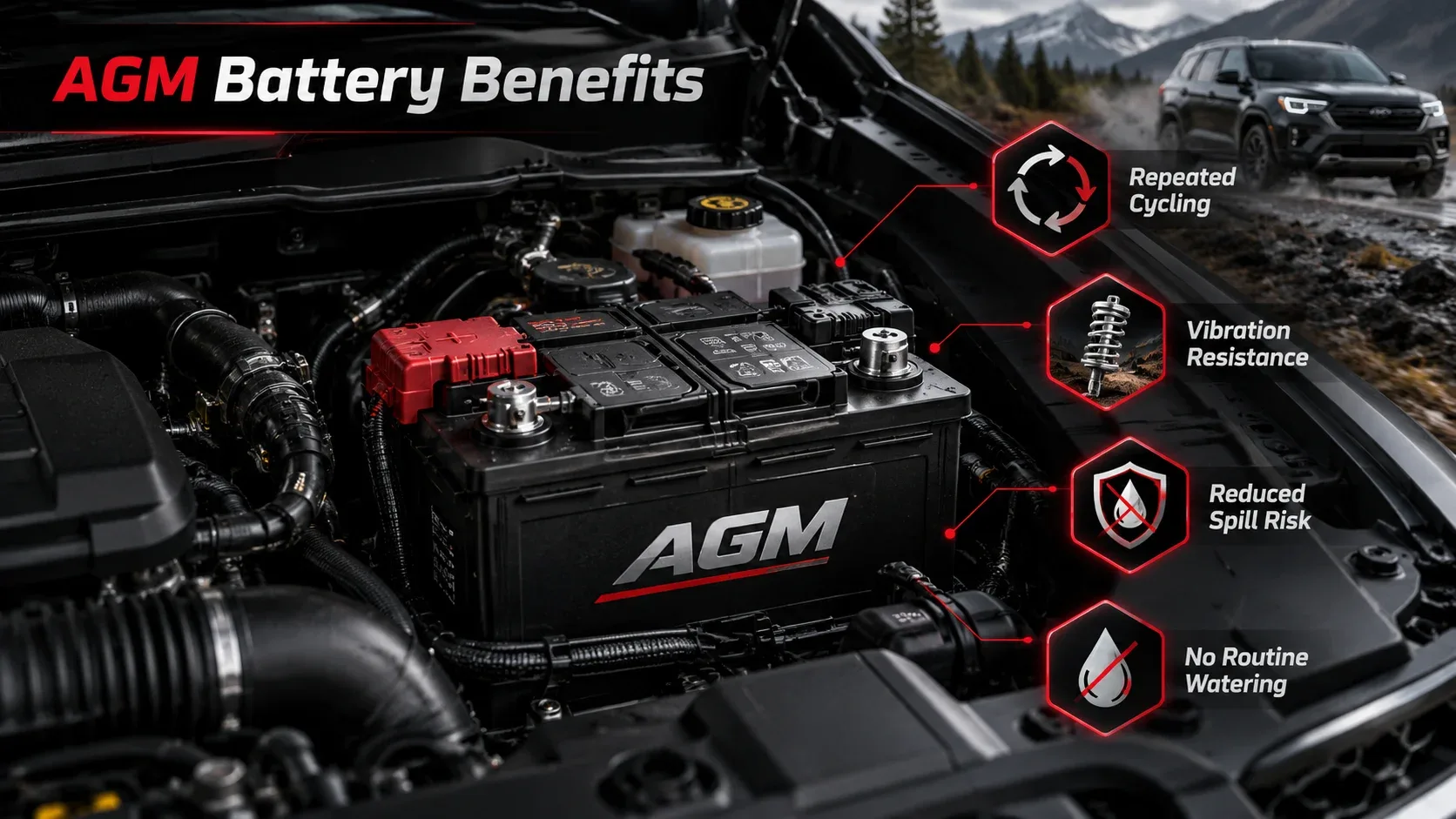
Repeated cycling: AGM can better support certain frequent discharge-recharge cycles.
Vibration resistance: Its construction helps resist movement and road vibration.
Reduced spill risk: Electrolyte is absorbed rather than freely flowing.
No routine watering: The battery does not require conventional electrolyte top-ups.
These benefits do not guarantee a longer lifespan in every vehicle; driving patterns, temperature and charging conditions still matter.
The Drawbacks: When AGM Might Not Be Worth It
AGM batteries generally cost more to buy and require an appropriate charging profile. Repeated deep discharges, extreme heat and unsuitable charging can shorten service life.
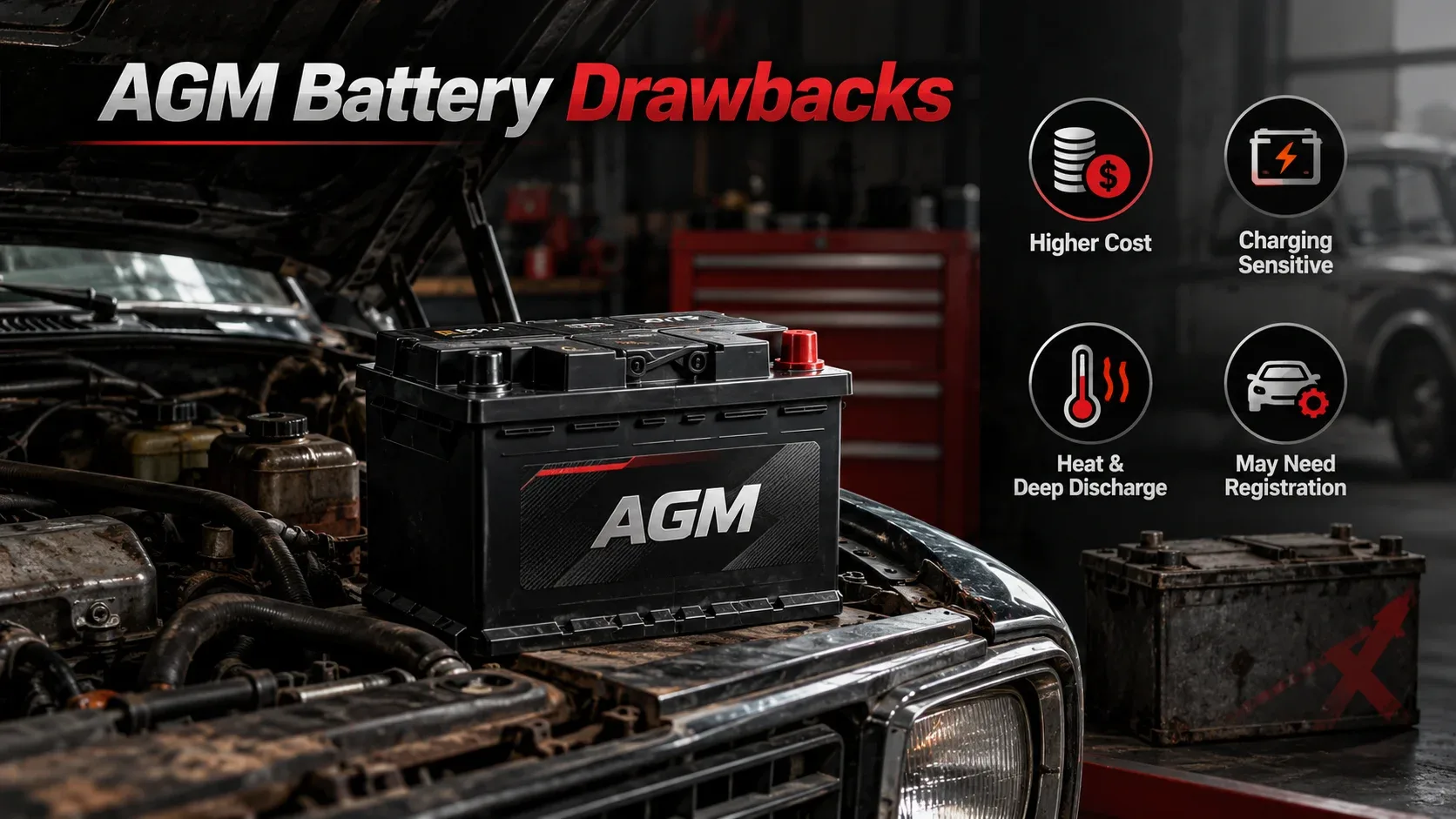
An older vehicle specified for a conventional flooded battery may not receive meaningful value from an AGM upgrade. Some modern cars also require coding or registration when a replacement battery is installed.
A premium battery should solve a real vehicle requirement—not simply add unnecessary expense.
How to Tell Whether Your Car Needs an AGM Battery
Start with manufacturer documentation and a vehicle-specific battery catalog. The installed battery’s label is useful, but a previous replacement may have been incorrect.
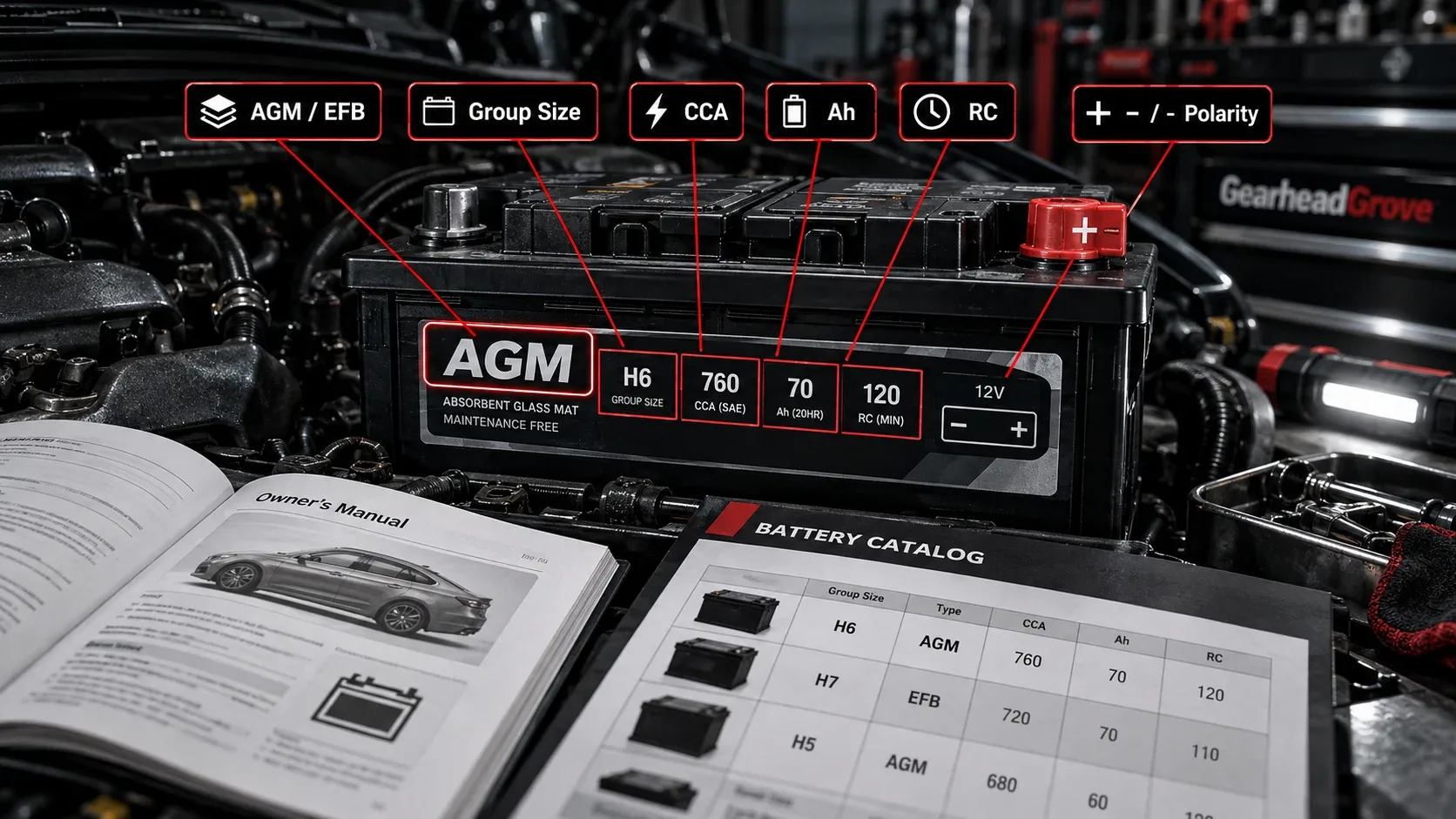
Verify battery technology, group size, cold-cranking amps (CCA), ampere-hour capacity (Ah), reserve capacity (RC), terminal polarity, mounting hardware and any venting requirements.
A higher CCA number alone does not prove compatibility. The vehicle’s physical and electrical requirements must all be met.
Interactive Battery Compatibility Checklist
Check these items against manufacturer documentation:
The checklist is an educational aid. Always confirm the exact replacement against your vehicle’s specifications before purchasing.
Replacing AGM With a Regular Flooded Battery
Michael notices that a less expensive flooded battery physically fits his SUV’s battery tray. But matching dimensions do not necessarily mean the battery is compatible.
Some vehicles rely on AGM’s cycling capabilities and charging-management settings.
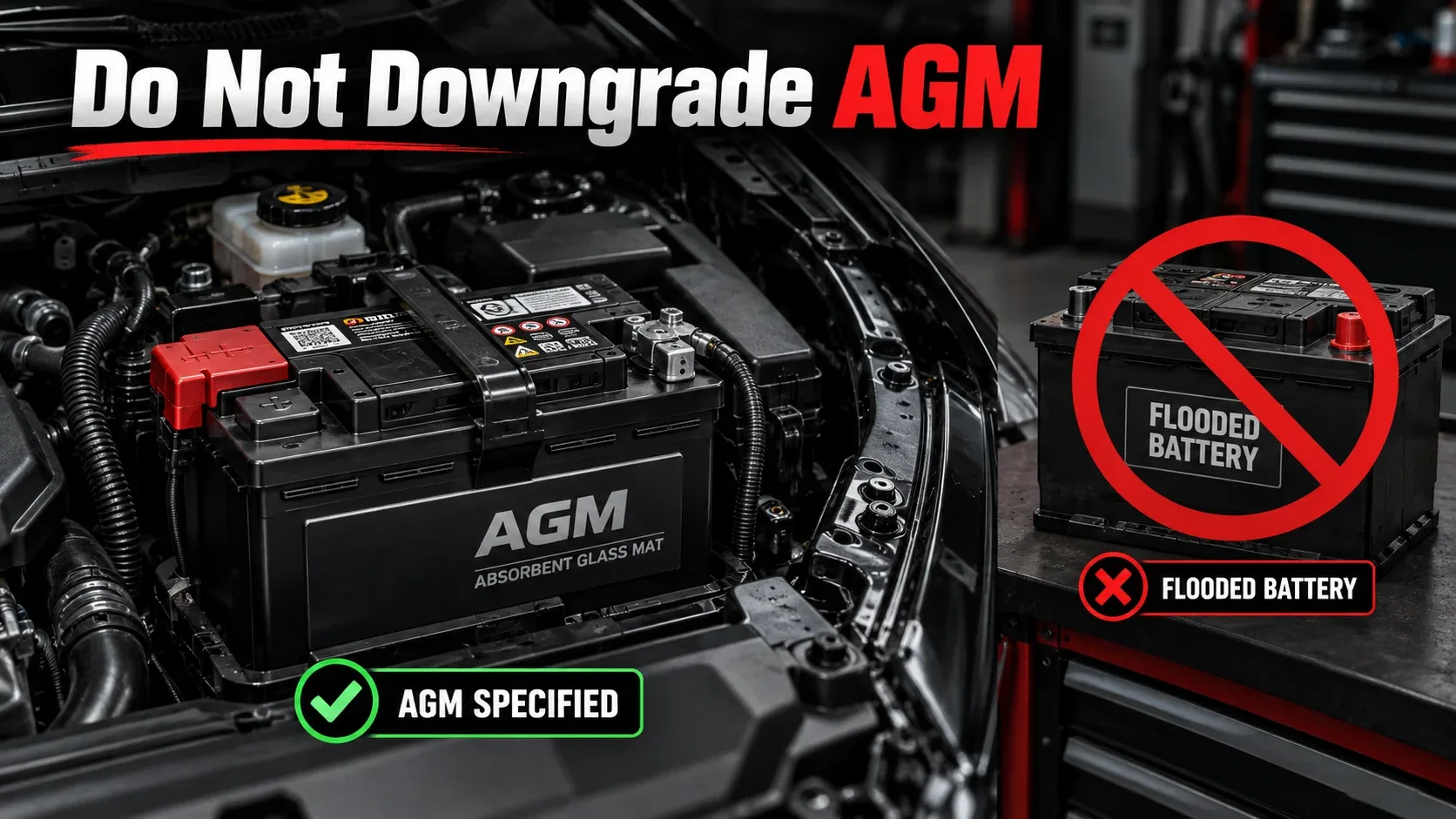
When AGM is specified, do not downgrade to a standard flooded battery without explicit manufacturer approval.
The safer approach is to purchase a replacement with the correct technology, physical size, terminal arrangement and electrical ratings.
Upgrading a Flooded or EFB Battery to AGM
Switching from a flooded or EFB battery to AGM can be appropriate in some applications, but the upgrade is not automatically beneficial or compatible.
Before changing technologies, verify the vehicle’s battery specifications and charging system.
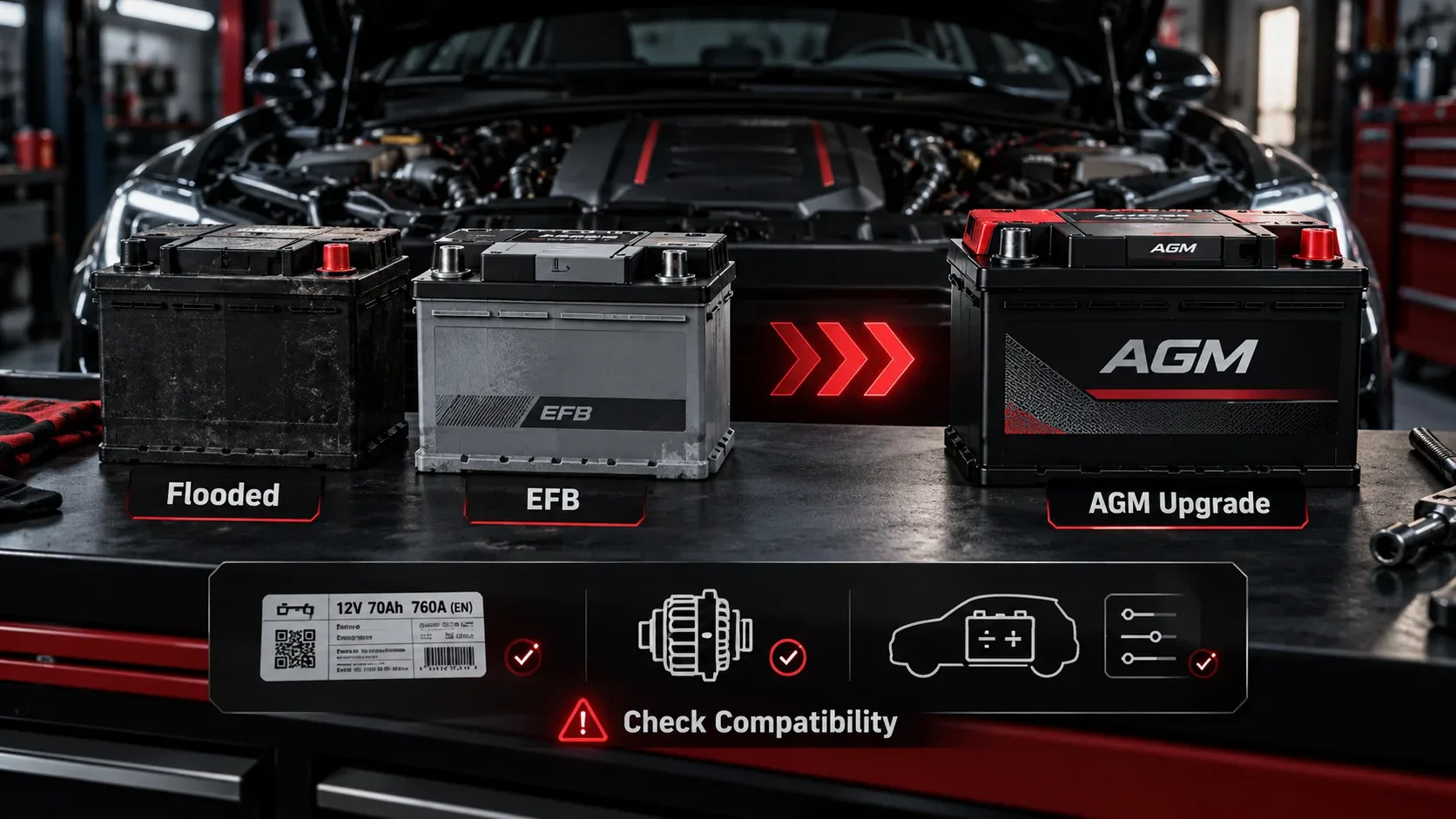
Some modern cars require diagnostic-tool coding after battery technology or capacity changes. Without the correct configuration, charging behavior may not be appropriate.
If the vehicle’s original battery type is working well, an upgrade should be based on a verified need rather than advertising claims.
How to Charge an AGM Car Battery Safely
An AGM battery that struggles to start the vehicle might simply be discharged. Proper charging followed by battery health testing can help establish whether replacement is necessary.
Always use equipment and charging settings compatible with the specific AGM battery.
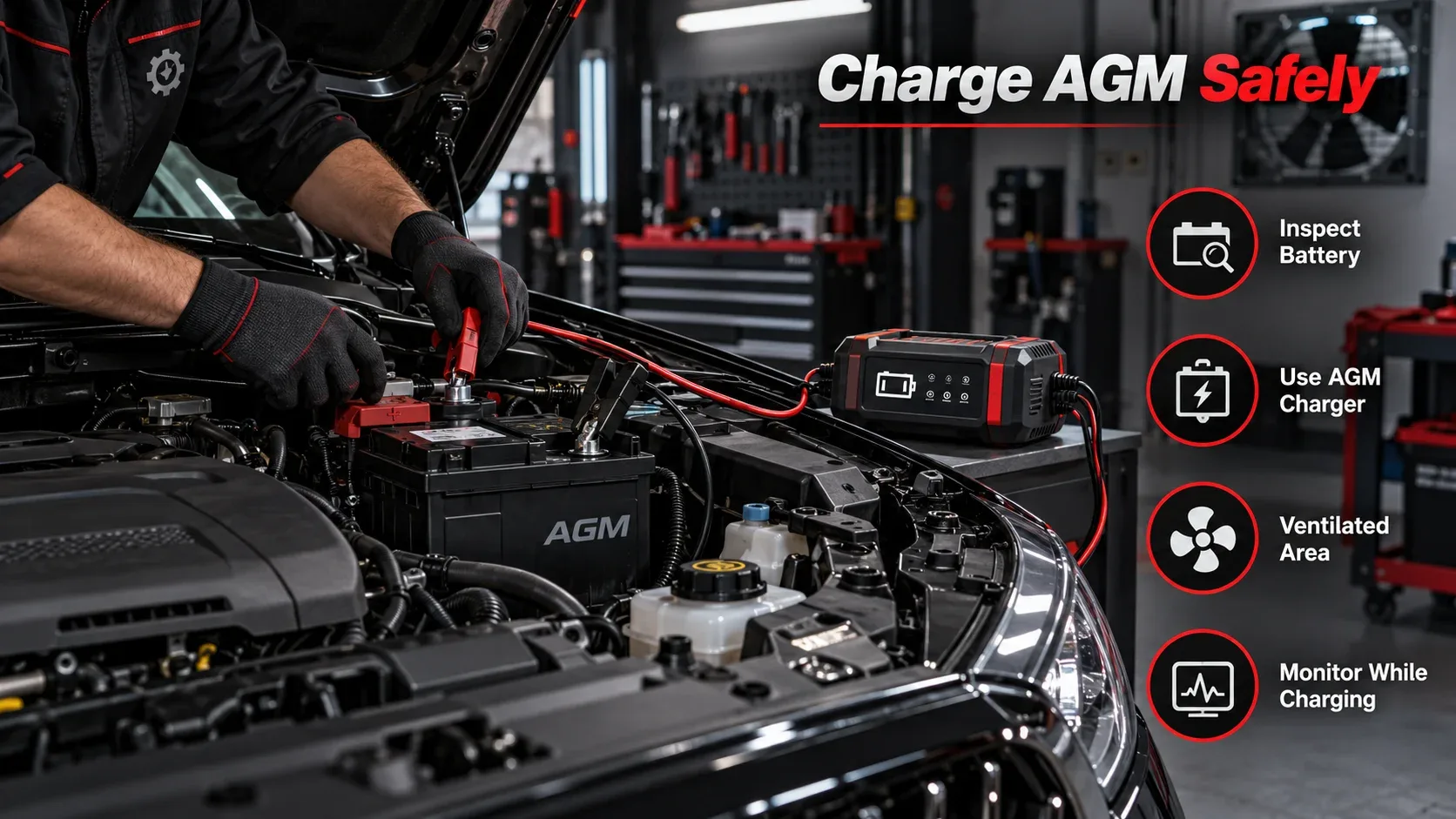
Safe Charging Checklist
- Read the vehicle and battery manufacturer’s instructions.
- Inspect the battery for damage, swelling, leakage or freezing.
- Use a compatible AGM charging profile.
- Choose a ventilated location away from flames and sparks.
- Switch the charger off before connecting it and follow the specified connection procedure.
- Use the approved charging settings.
- Monitor for abnormal heat, swelling, venting or charging faults.
- Disconnect according to instructions and perform appropriate testing.
Lead-acid batteries contain corrosive electrolyte, can vent flammable gases and can deliver extremely high short-circuit current. Use eye protection, avoid bridging the terminals with metal tools, and seek professional assistance if the procedure is unclear.
What Charging Voltage Does an AGM Battery Need?
There is no single charging-voltage setting that is correct for every AGM battery. The appropriate voltage and current depend on battery design, temperature, charging stage and manufacturer specifications.
Modern vehicle charging systems may also adjust output according to operating conditions.
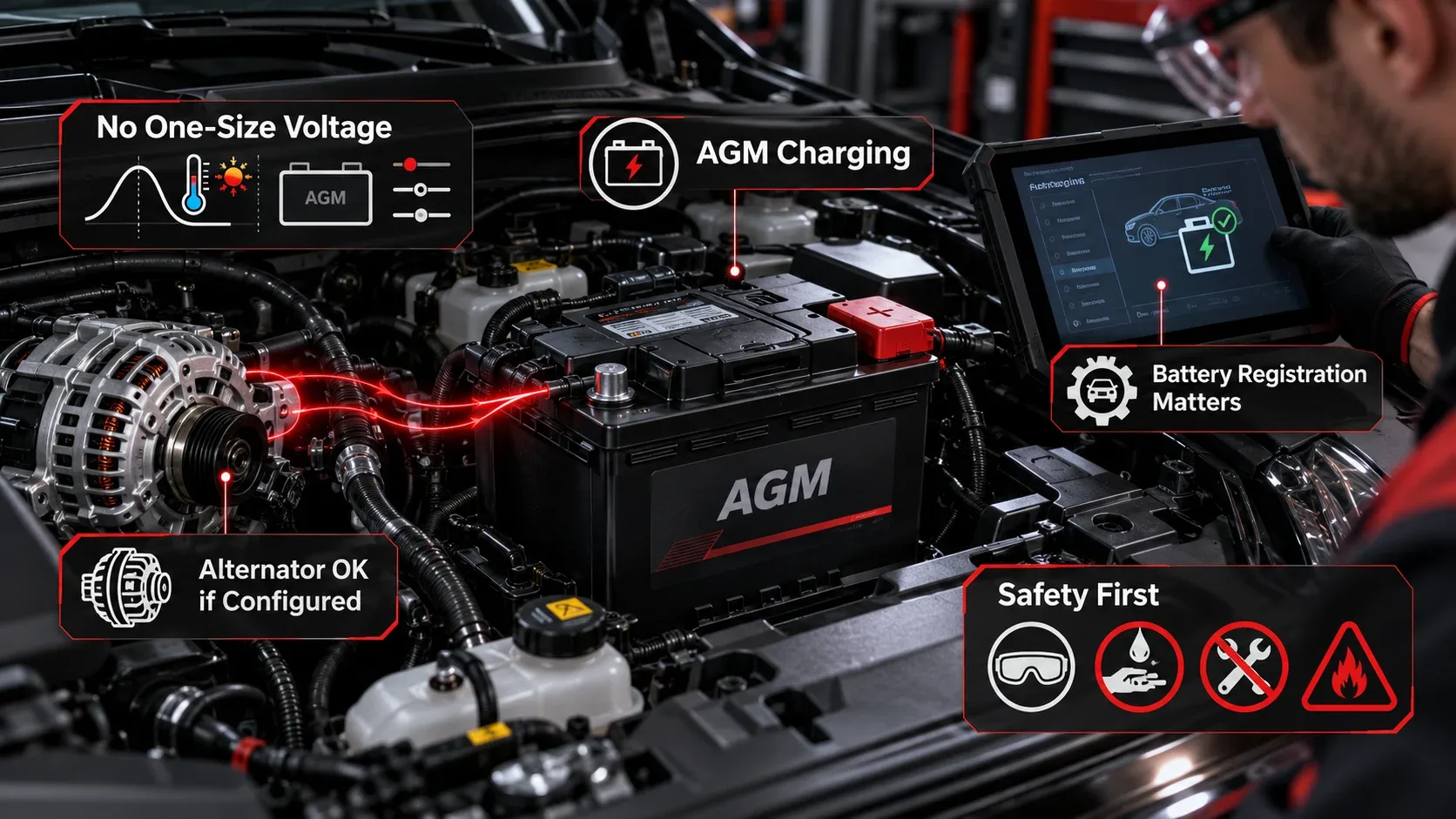
Do not apply aggressive equalization, desulfation or reconditioning modes unless the battery manufacturer explicitly approves them for the specific battery.
Can the Alternator Charge an AGM Battery?
Yes, if the vehicle’s charging system is designed or properly configured for AGM use.
Some modern cars use battery-management systems that track battery age, condition and charging history. Registering a replacement may be necessary so the system manages the new battery properly.
Skipping required registration can affect charging behavior. Always follow the vehicle manufacturer’s procedure.
Is Your AGM Battery Bad—or Just Discharged?
Slow cranking is a reason to investigate, but it is not proof that the battery needs replacement. Weak state of charge, loose or corroded connections, excessive parked-current draw, charging-system faults or starter problems can produce similar symptoms.
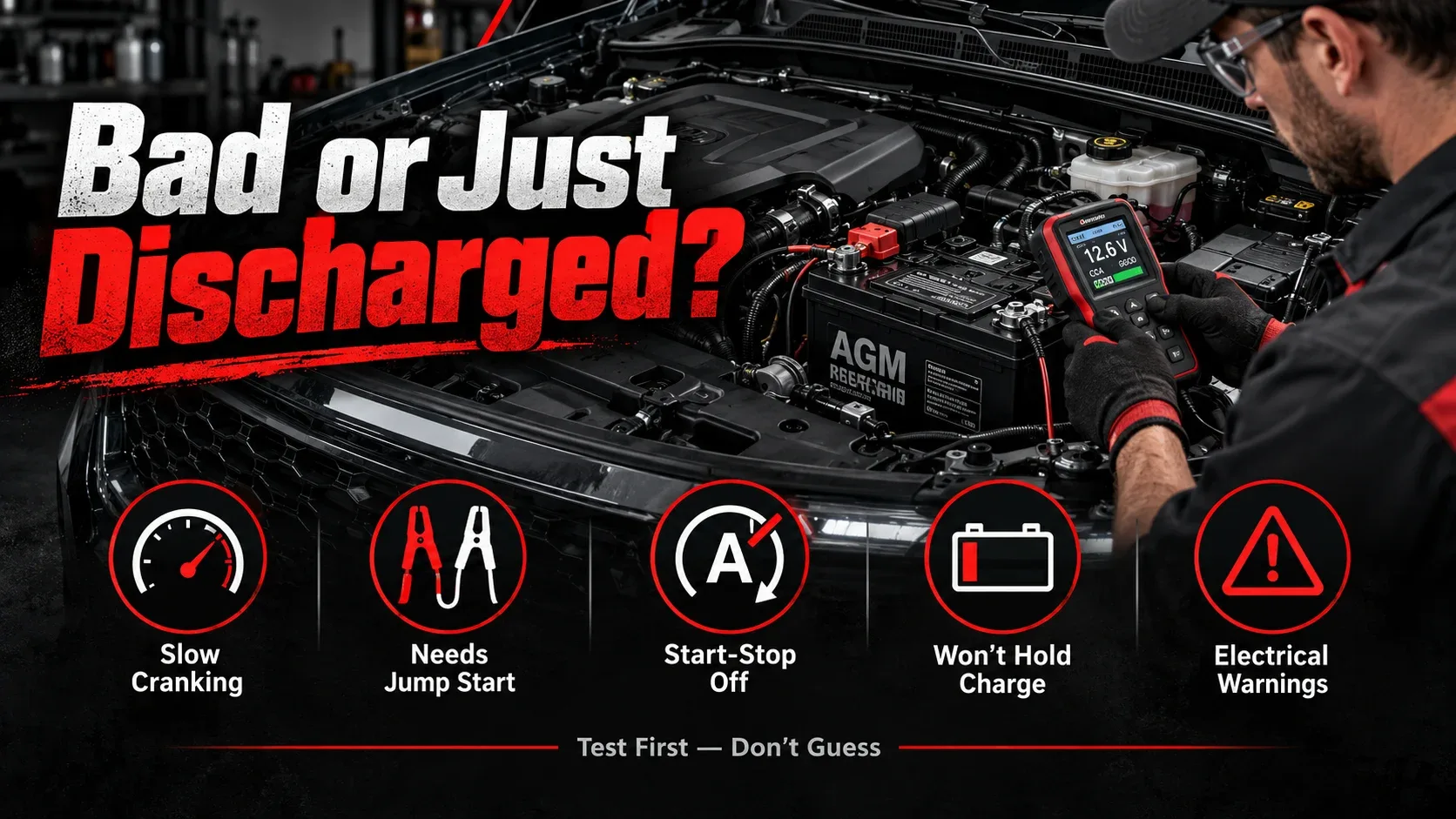
Common Warning Signs
- The engine cranks more slowly than normal.
- The vehicle repeatedly needs jump starts.
- Start-stop becomes unavailable because of battery-condition restrictions.
- The battery struggles to maintain adequate charge after correct charging.
- Electrical warnings or unusual accessory behavior appear.
Which Tests Can Help?
| Test | What It Helps Establish |
|---|---|
| Open-circuit voltage | Approximate state of charge under appropriate conditions. |
| Conductance test | Estimated battery condition and starting performance. |
| Controlled load test | Performance under electrical demand. |
| Charging-system test | Whether the vehicle recharges the battery properly. |
| Parasitic-current test | Unwanted electrical loads while the car is parked. |
Voltage readings alone cannot determine the battery’s remaining starting capability. Health testing should follow the appropriate procedure and battery specifications.
A Realistic AGM Battery Diagnostic Example
Imagine a three-year-old AGM battery that struggles to start an SUV after the vehicle has remained parked for several days.
The battery is discharged, but the technician finds no obvious physical damage. Instead of replacing it immediately, the technician investigates.
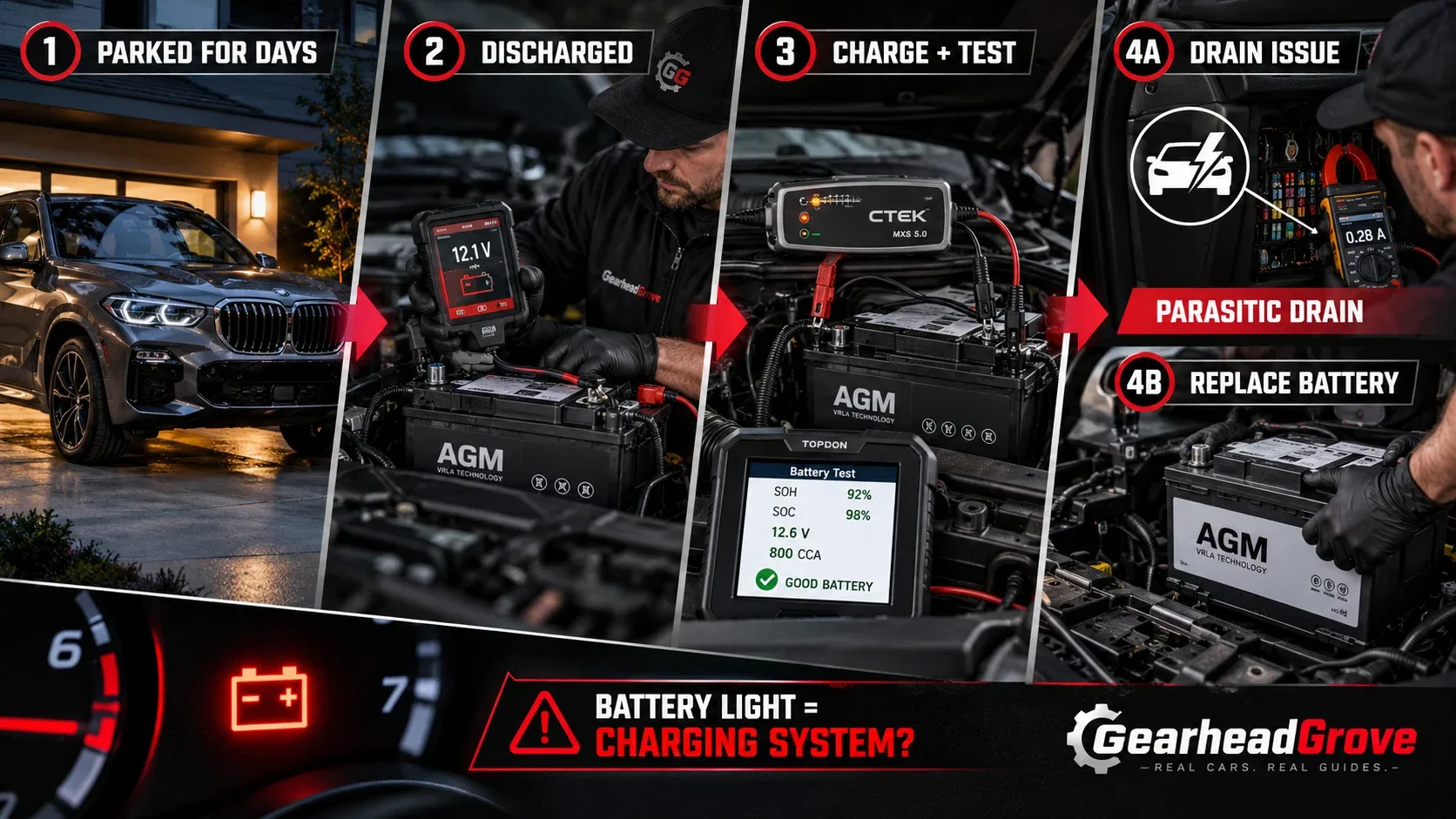
Situation: A three-year-old AGM battery struggles after the SUV remains parked for several days.
First finding: The battery is discharged, but there is no obvious physical damage.
Next step: Recharge using an approved procedure, then check the battery’s health, charging-system operation and parked-current behavior.
Possible outcome: The battery may test healthy and reveal an electrical drain as the cause. Alternatively, it may fail the post-charge test and require replacement.
This scenario is illustrative, not a documented repair. The lesson is to determine the underlying cause rather than automatically purchasing another battery.
A battery warning lamp while driving may indicate charging-system trouble. A new battery will not repair a faulty alternator or charging-control problem.
How Long Does an AGM Car Battery Last?
Battery lifespan varies with temperature, driving patterns, depth of discharge, charging performance and battery construction.
Many automotive starting batteries provide several years of service, often roughly three to five, but an individual AGM battery may fail earlier or last longer.
Factors That Shorten Battery Life
- Extreme heat and temperature-related aging.
- Repeated deep discharges.
- Persistent undercharging and sulfation.
- Overcharging or unsuitable charging profiles.
- Frequent short trips with inadequate recharge time.
- Unexpected parasitic electrical loads.
Testing is more reliable than replacing a battery simply because it has reached a certain age.
AGM Battery Replacement: What the Job Should Include
If Michael’s AGM battery fails an appropriate test after recharging, replacing it makes sense. But correct replacement may include battery-management procedures, not just a physical swap.
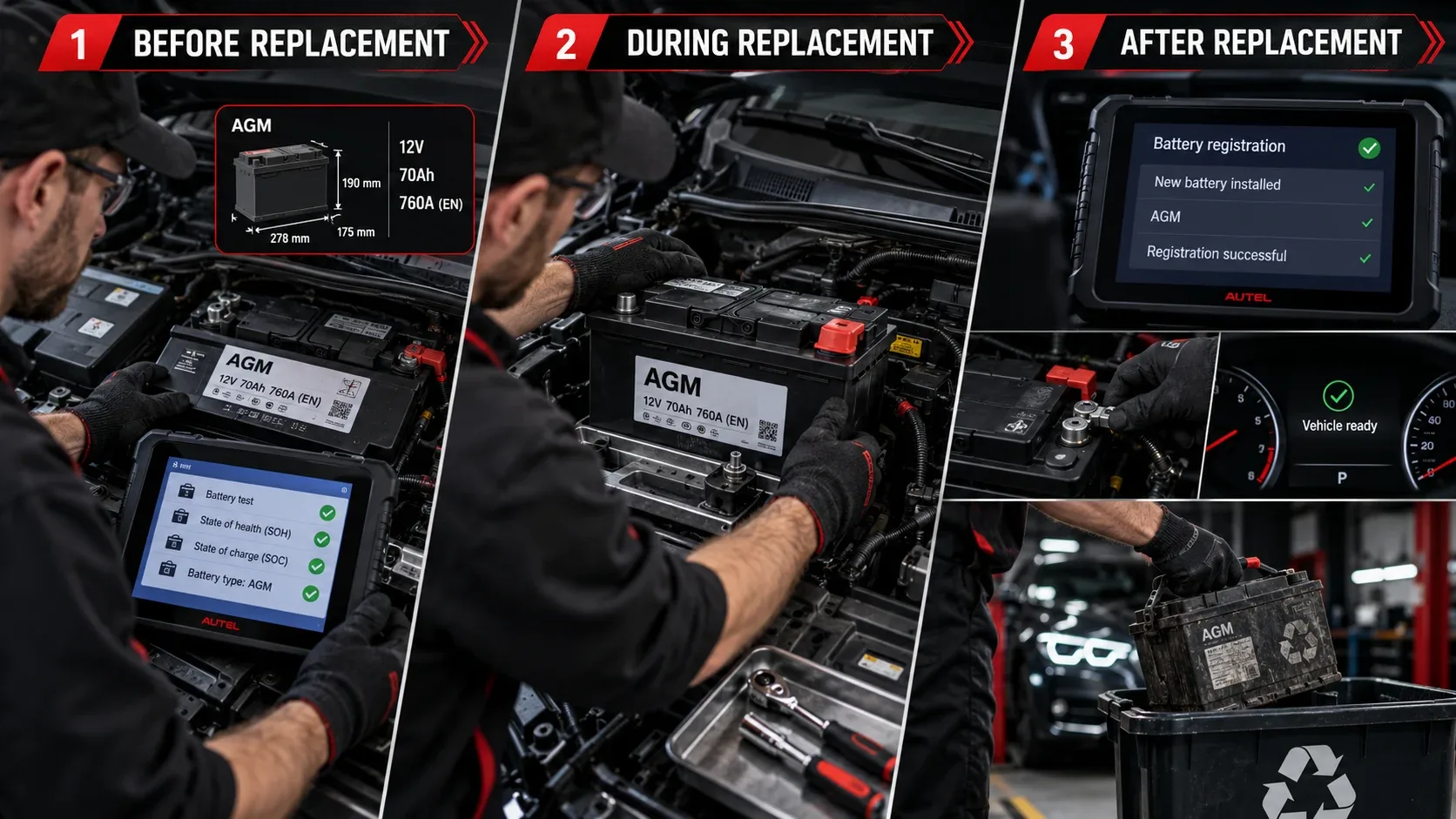
Before Replacement
Verify battery technology, physical fit, CCA, capacity, polarity, hold-down hardware, venting requirements and whether diagnostic-tool registration is necessary.
During Replacement
Follow the manufacturer’s electrical-isolation and installation procedure. Use suitable protective equipment, prevent short circuits and secure the replacement battery correctly.
Some cars use remote terminals, unusual battery locations or electronics that require additional precautions.
After Replacement
- Confirm the battery and terminal connections are secure.
- Complete required registration or coding.
- Investigate any relevant diagnostic faults.
- Verify normal starting and charging performance.
- Recycle the old battery through an authorized collection facility.
For complex battery-management systems, inaccessible batteries or hybrid high-voltage systems, seek a qualified automotive technician.
AGM Battery Replacement Cost: Is It Worth Paying More?
AGM batteries tend to have a higher purchase price than conventional flooded replacements.
As a broad illustrative U.S. budgeting range, many automotive AGM batteries can cost about $180–$350 or more before labor. This is not a current retailer quote or price guarantee.
| Cost Component | What to Consider |
|---|---|
| Battery | Size, capacity, ratings, construction and warranty. |
| Labor | Access and installation complexity. |
| Registration | Required diagnostic coding or configuration. |
| Testing | Battery and charging-system diagnosis. |
| Core charge | Potentially refundable charge when returning the old battery. |
If AGM is specified, the appropriate AGM replacement is generally the practical choice even when the initial cost is higher.
How to Maintain an AGM Car Battery
AGM batteries do not need routine watering, but attention to the vehicle’s electrical system still matters.
- Avoid prolonged electrical accessory use with the engine off.
- Investigate unexpected or recurring battery discharge.
- Maintain sound terminal connections.
- Address charging-system faults promptly.
- Use an approved AGM-compatible maintainer during extended storage when recommended.
- Have the battery tested if starting behavior changes.
Repeated jump starts without diagnosing the cause can leave you stranded and shorten battery life.
AGM Battery Myths That Can Lead to Expensive Mistakes
Several common claims about AGM batteries can confuse vehicle owners and lead to incorrect maintenance decisions.
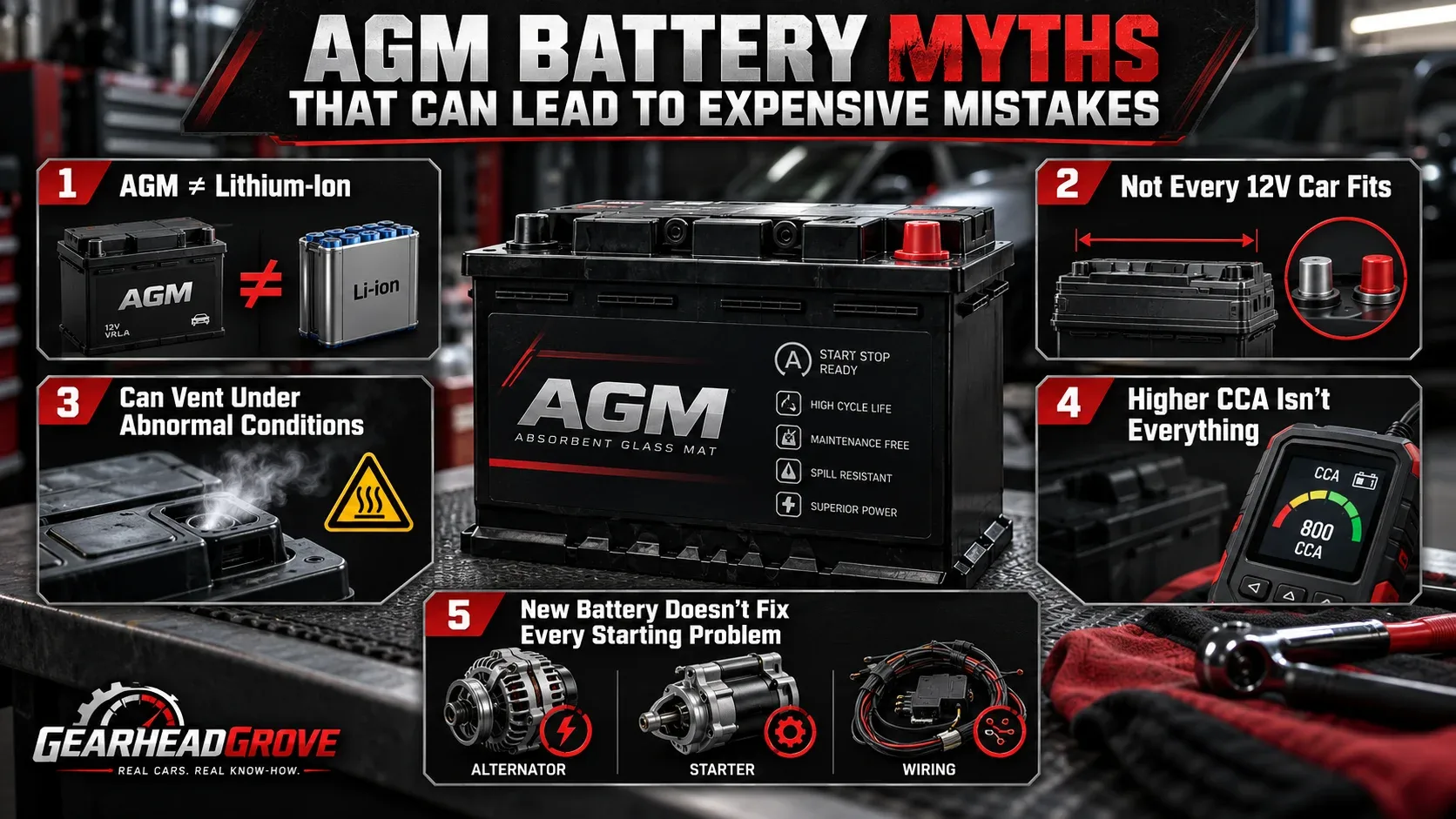
Myth: AGM is lithium-ion. AGM uses lead-acid chemistry with electrolyte retained in glass mats.
Myth: Any AGM fits any 12V car. Battery size, electrical ratings, terminals and charging compatibility must all be checked.
Myth: AGM never releases gas. Pressure-relief valves can vent under abnormal conditions.
Myth: Higher CCA always means a better battery. CCA is only one specification and doesn’t prove full compatibility.
Myth: A new battery fixes every starting problem. Alternators, starters, wiring, connections and electrical drains can all be responsible.
Frequently Asked Questions
What does AGM stand for?
AGM stands for Absorbent Glass Mat, a design that retains electrolyte in fiberglass separators between lead plates.
Is AGM better than a regular flooded battery?
AGM offers particular cycling and vibration advantages, but the right choice depends on the vehicle’s original specifications.
Can an AGM battery replace an EFB?
Sometimes, where approved by the vehicle manufacturer and with the required charging-system configuration.
Can a regular flooded battery replace AGM?
Do not downgrade when AGM is specified unless the vehicle manufacturer explicitly allows it.
Can an alternator charge an AGM battery?
Yes, if the vehicle’s charging system is designed or configured for that battery.
Do AGM batteries require a special charger?
Use a charger and settings approved for the particular AGM battery; not all charging or reconditioning modes are suitable.
Can you jump-start an AGM battery?
Many AGM-equipped vehicles can be jump-started using the manufacturer’s vehicle-specific instructions and equipment. Never attempt it on a damaged or frozen battery.
How do I know if an AGM battery is bad?
Have it charged appropriately, then tested using manufacturer-suitable diagnostic procedures. Slow starting alone is not proof of battery failure.
Do you need to register a replacement AGM battery?
Some vehicles require battery registration or coding; consult model-specific service guidance.
Are AGM batteries recyclable?
Yes. Return used lead-acid batteries to an authorized battery collection or recycling channel.
Final Thoughts: Choose the Battery Your Car Actually Needs
Michael’s story shows why battery fitment and diagnosis matter more than marketing labels. AGM is valuable in vehicles that require its electrical characteristics, but a new battery won’t solve every slow-starting problem.
Check manufacturer specifications, identify the cause of any discharge, and use correct charging and replacement procedures.