Hearing a strange noise while turning the steering wheel can be worrying, especially when the sound happens every time you park, make a sharp turn, or move the steering wheel from side to side.
Some drivers hear a whining or groaning noise, while others notice clicking, clunking, squeaking, or creaking. These sounds can come from different parts of the steering or front suspension system.
The important thing to understand is that a steering noise does not automatically mean a major part has failed. The type of sound, when it happens, and how the steering feels can help narrow down the possible cause.
This guide explains the common causes of steering wheel noise when turning, what different sounds may indicate, and when you should have your car inspected.
Why Does My Steering Wheel Make Noise When Turning?
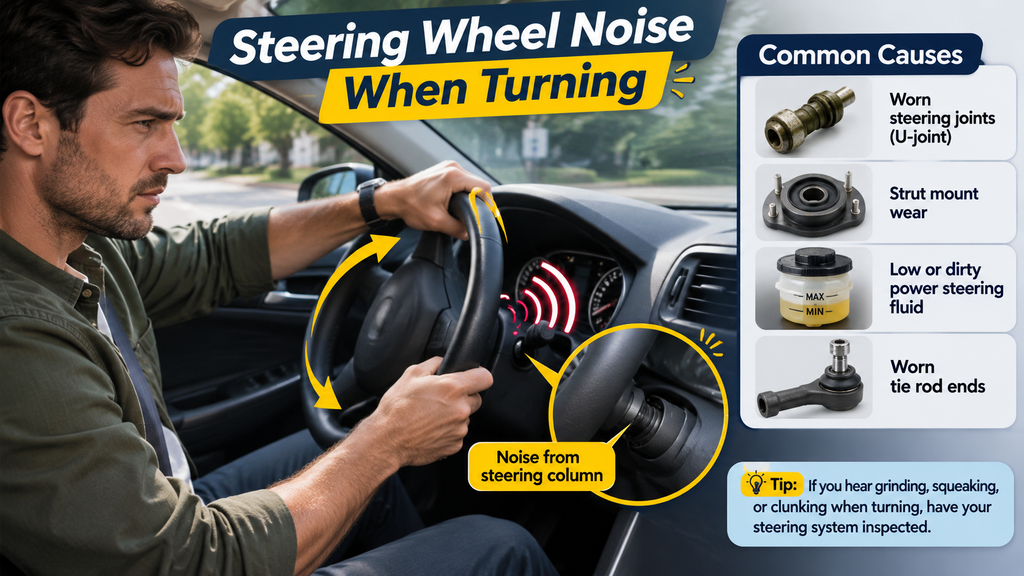
Steering wheel noise can be caused by low hydraulic power steering fluid, a worn power steering pump, damaged CV joints, worn tie rod ends, ball joints, strut mounts, or other steering and suspension components.
Whining may suggest a hydraulic steering problem, repeated clicking during a moving turn may indicate a CV joint issue, and clunking or creaking may come from worn steering or suspension joints. These are possible causes, not confirmed diagnoses.
What Does Steering Wheel Noise Sound Like?
The easiest place to start is by identifying the sound you hear. A whining noise may point to a different problem than a clicking or clunking sound.
Use this comparison table to understand the most common possibilities.
| Type of Noise | Possible Cause | When You May Hear It |
|---|---|---|
| Whining or groaning | Low hydraulic fluid, air in the system, or worn pump | Parking or turning at low speed |
| Clicking or popping | CV joint, strut mount, or steering-column component | Tight turns or steering movement |
| Clunking or knocking | Tie rod ends, ball joints, or loose suspension parts | Slow turns, sometimes over uneven pavement |
| Creaking or squeaking | Strut mounts, bushings, or worn joints | Turning while parked or moving slowly |
| Rubbing or scraping | Tire or wheel-well contact | Sharp turns or near full steering lock |
| Grinding | Mechanical binding or damaged steering components | Steering movement, sometimes with stiffness |
Remember: Sounds are clues, not proof. Several different components can create similar noises.
1. Whining or Groaning Noise When Turning the Steering Wheel
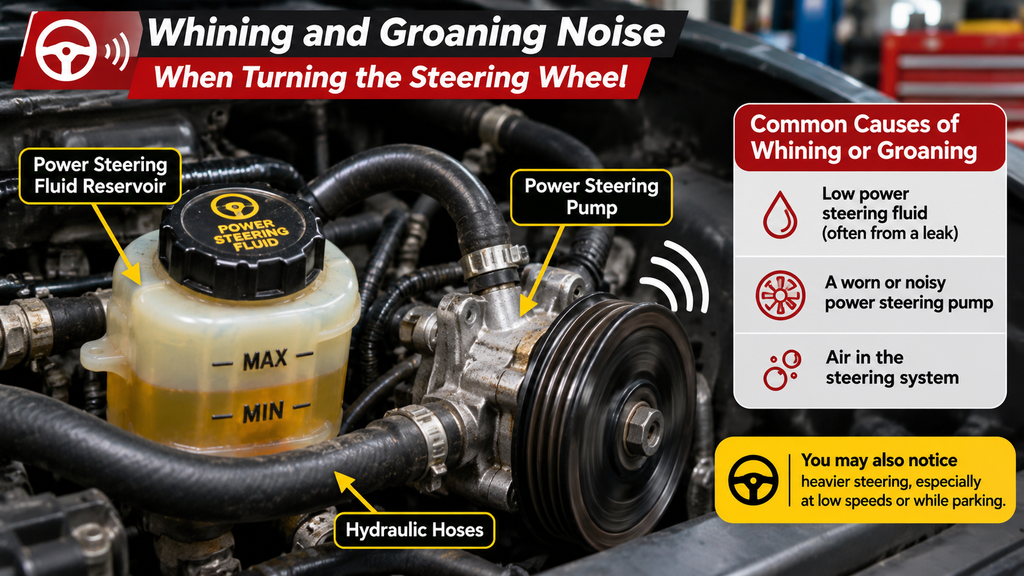
A whining or groaning noise is commonly associated with hydraulic power steering systems. It may become noticeable when turning the steering wheel at low speed or while parking.
Low Power Steering Fluid
Hydraulic power steering uses pressurized fluid to make steering easier. When the fluid level becomes too low, the pump may draw in air or fail to maintain normal fluid pressure.
This can create whining, buzzing, or groaning sounds when the steering wheel is turned.
You may also notice that the steering feels heavier than usual. Low fluid often indicates a leak, so topping up the reservoir may not solve the underlying problem.
Worn Power Steering Pump
The power steering pump circulates hydraulic fluid through the steering system. When it wears or develops an internal problem, it may make unusual noises.
A worn pump can produce a whining or groaning sound, particularly when additional steering assistance is needed.
However, pump noise does not automatically mean the pump needs replacement. Low fluid, leaks, or air in the system can cause similar symptoms.
Does This Apply to Electric Power Steering?
Not necessarily. Many newer vehicles use electric power steering (EPS) instead of a hydraulic pump and fluid system.
If your vehicle has electric power steering, it generally will not have a conventional power steering fluid reservoir. Check the owner’s manual before attempting any fluid-related checks.
What to do: If your vehicle has hydraulic power steering, check the reservoir only as directed in the owner’s manual. If the fluid is low, a leak is visible, or the whining continues, arrange a professional inspection.
2. Clicking or Popping Noise When Turning
A clicking or popping sound may happen during sharp turns, especially when driving slowly into a parking space.
The cause depends partly on whether the car is moving or stationary.
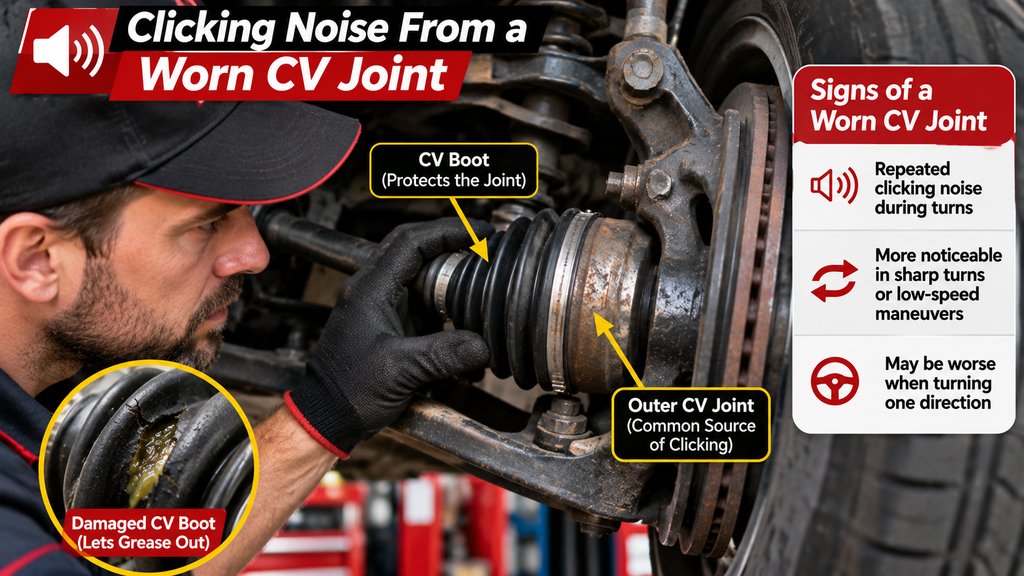
Worn CV Joint
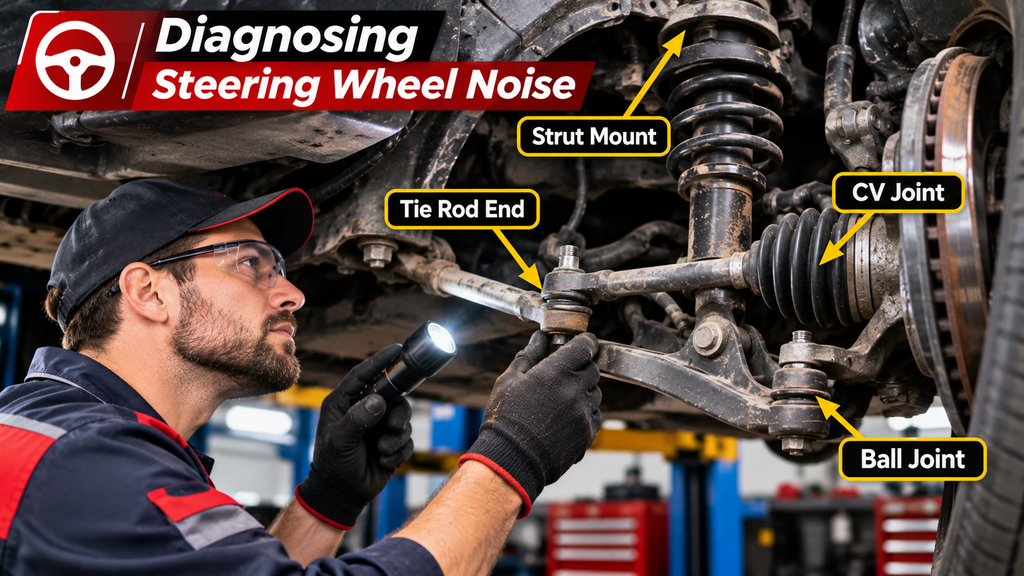
A constant velocity (CV) joint is part of an axle that transfers power to a wheel while allowing the wheel to turn and move with the suspension.
When a CV joint wears, it can produce repeated clicking sounds during a moving, tight turn.
Drivers often describe this as a rhythmic “click-click-click” noise that changes with vehicle speed.
A damaged CV joint boot can allow protective grease to escape and dirt to enter, contributing to wear.
Steering Column or Strut Mount Movement
Not every clicking sound comes from a CV joint.
If the car is parked and you hear a click when turning the steering wheel, a steering-column component, upper strut mount, or another moving steering part may be involved.
How Can You Tell the Difference?
A repeated click that follows wheel rotation during a moving turn is different from a single click when moving the steering wheel while parked.
This difference can help guide an inspection, but it is not enough to confirm a failed part.
3. Clunking or Knocking Noise When Turning the Steering Wheel
A clunking noise usually sounds deeper and heavier than a click. You may hear it while turning into a driveway, changing steering direction, or moving slowly over uneven pavement.
Several steering and suspension components can cause this sound.
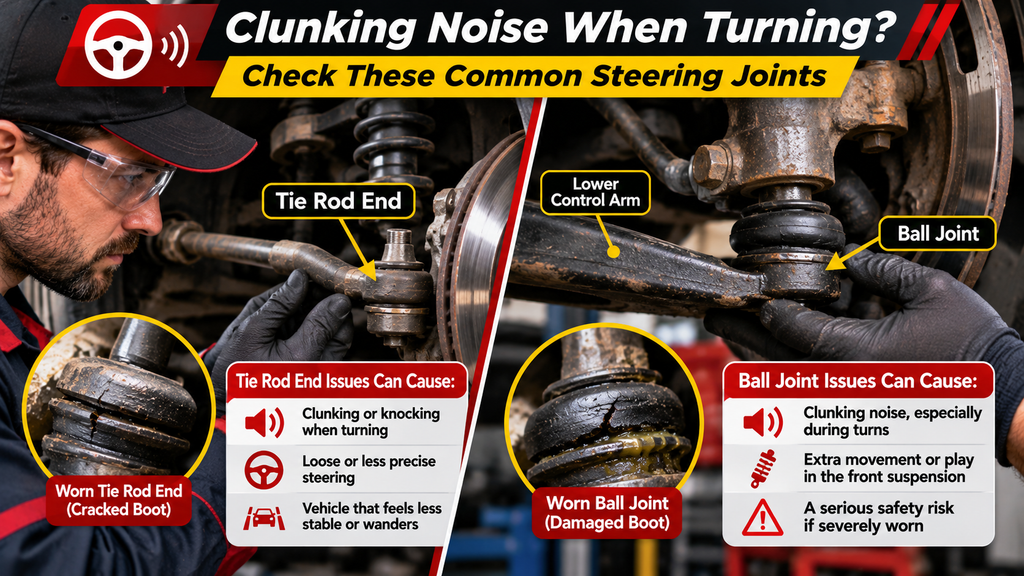
Worn Tie Rod Ends
Tie rod ends connect the steering system to the wheels. They help the wheels respond when you turn the steering wheel.
As these joints wear, unwanted movement can develop. This may cause knocking or clunking during steering.
Some drivers also notice loose steering or delayed steering response.
Because tie rods are important for controlling wheel direction, suspected wear should be inspected promptly.
Worn Ball Joints
Ball joints allow parts of the front suspension to move while the wheels turn.
When a ball joint becomes worn, it may produce a knock or clunk, particularly when the vehicle turns over uneven ground.
Severe ball-joint wear can become a serious safety concern, so abnormal steering movement or looseness should never be ignored.
Loose or Worn Suspension Mounts
Suspension mounts and bushings help keep components correctly positioned while allowing controlled movement.
When these parts deteriorate, components may shift slightly during steering and create a clunking sound.
Does Clunking Mean the Steering Rack Is Bad?
Not necessarily. A steering rack problem is possible, but worn tie rods, ball joints, mounts, and other components can cause similar sounds.
The connected steering and suspension parts should be checked before an expensive rack replacement is recommended.
4. Creaking or Squeaking Noise When Turning the Steering Wheel
A creaking or squeaking sound may resemble a dry door hinge, rubber rubbing, or a short squeal during steering movement.
This type of noise is often more noticeable during parking maneuvers or slow turns.
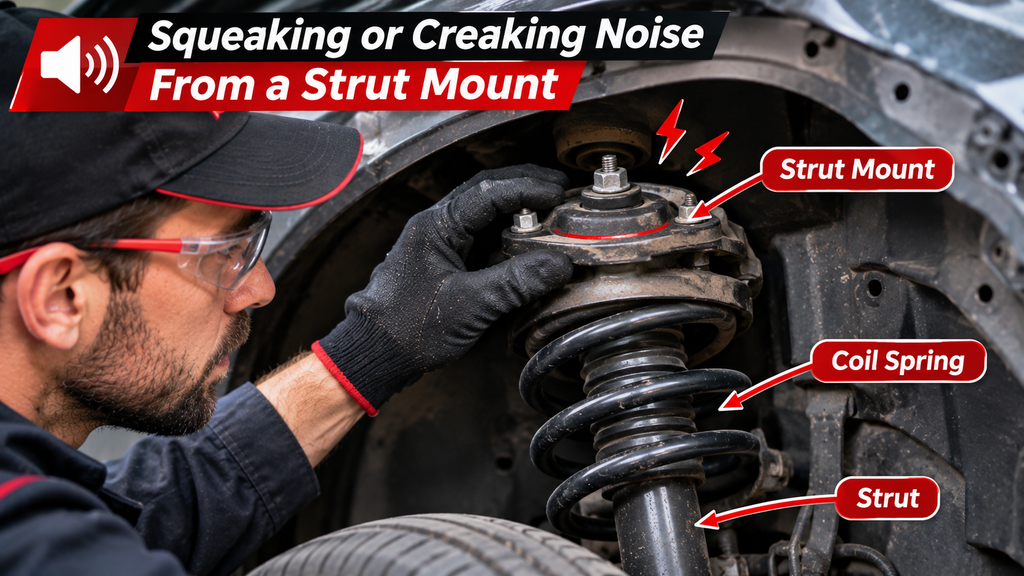
Worn Strut Mounts
On many cars, the upper front strut mounts allow parts of the suspension to rotate as the steering wheel turns.
A worn or binding strut mount may produce creaking, squeaking, or popping sounds.
The noise can sometimes be heard even when the car is parked.
Worn Suspension Bushings
Rubber bushings reduce vibration and allow suspension parts to move in a controlled way.
Over time, these bushings may harden, crack, or deteriorate. Movement during steering can then produce creaking or squeaking sounds.
Dry or Worn Steering Joints
Some steering joints may begin to make noise as they wear or develop resistance to movement.
A squeak or creak may be an early clue, especially if the sound becomes louder or more frequent.
Should You Spray Lubricant to Stop the Noise?
Avoid spraying general-purpose lubricant onto steering or suspension components without identifying the cause.
Some joints are sealed, and lubrication may not repair internal wear. Masking the noise could also delay a needed inspection.
5. Rubbing, Scraping, or Grinding Noise When Turning
Rubbing and scraping sounds may occur when the tire or another component contacts a nearby surface during steering.
A harsher grinding noise, especially with steering resistance, can indicate a more serious mechanical problem.
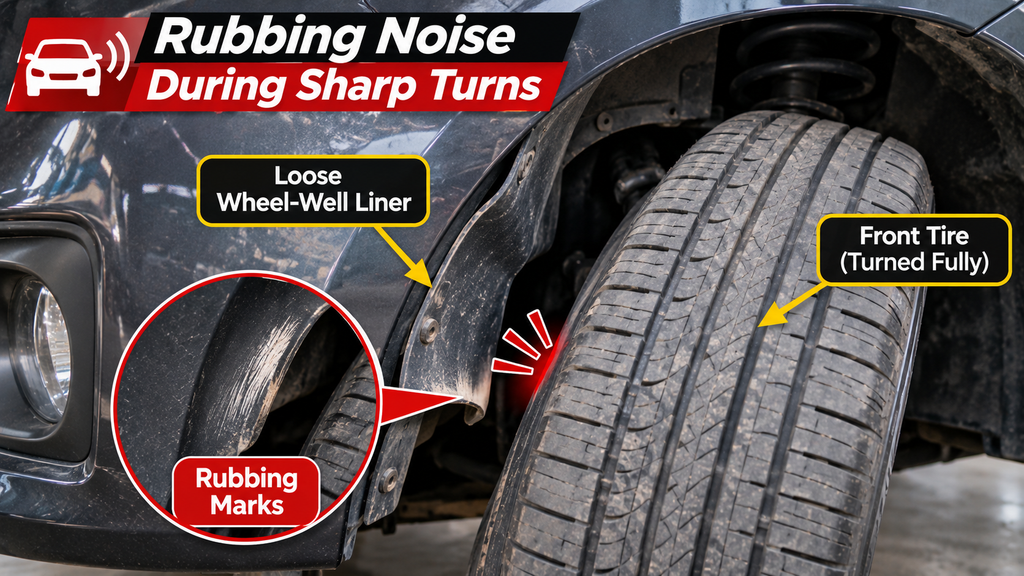
Tire or Wheel-Well Contact
During a sharp turn, a tire may rub against a loose wheel-well liner or another nearby component.
This can happen after damage to the plastic liner or when wheel and tire sizes do not provide enough clearance.
The noise is often more noticeable near full steering lock.
Mechanical Binding in Steering Components
If a steering or suspension component is not moving smoothly, it may produce grinding, scraping, or other unusual sounds.
Grinding accompanied by stiff steering, catching, or unpredictable movement should be treated as a safety warning.
Safety warning: If the steering wheel begins to bind or becomes difficult to control, stop safely. Do not continue driving until the problem has been assessed.
Why Does My Steering Wheel Make Noise When Parked?
Hearing a noise while turning the steering wheel with the vehicle stationary can provide a useful diagnostic clue.
Since the front wheels are not rotating as they do during driving, some causes become less likely.
Common Causes of Noise While Stationary
Possible sources include worn strut mounts, steering-column components, steering joints, suspension bushings, and hydraulic power steering problems.
You may also hear some tire scrub when the tires twist against dry pavement during stationary steering.
Does Noise While Parked Rule Out a CV Joint?
A worn outer CV joint typically produces repeated clicking while the vehicle is moving through a turn.
If the vehicle is stationary and the noise occurs only as you move the steering wheel, components that move with steering input deserve attention.
However, the exact cause still requires inspection.
Why Does Steering Noise Happen Only When Turning Left or Right?
Sometimes the noise appears only when turning in one direction. That detail can help a mechanic narrow down the inspection.
For example, a worn CV joint may become louder during a particular turn because the load on the axle changes.
A strut mount, steering joint, or rubbing component may also create noise mainly during left or right turns.
Turning direction alone cannot reliably identify the failed component or the side that needs repair.
When describing the problem to a mechanic, mention whether the sound occurs while turning left, right, or both ways.
How to Identify Steering Wheel Noise Safely
You do not need advanced mechanical knowledge to collect useful information about steering noises.
Before visiting a repair shop, pay attention to the conditions under which the sound happens.
Notice the Type of Sound
Try to identify whether you hear clicking, whining, groaning, clunking, squeaking, creaking, or grinding.
Describe the sound in everyday language rather than trying to guess which part has failed.
Notice When It Happens
Does the noise occur while parked, moving slowly, or making a sharp turn?
Also note whether it happens in both directions or only when turning left or right.
Pay Attention to Steering Feel
A steering wheel that feels normal is different from one that has become stiff, loose, or unpredictable.
Changes in steering feel may be more important for safety than the noise itself.
Check for Obvious Visible Problems
With the vehicle safely parked, you can look for visible fluid under the front of the car, damaged tires, or a loose wheel-well liner.
Do not reach into moving parts, place yourself beneath an unsupported vehicle, or attempt to inspect moving steering components by hand.
Useful Information to Tell Your Mechanic
- What the sound resembles.
- Whether it happens while parked or moving.
- Whether it occurs during left or right turns.
- Whether steering feels normal or unusually stiff.
- When you first noticed the sound.
- Whether the noise is getting louder or more frequent.
These observations can help a technician decide which steering and suspension components to inspect.
Is It Safe to Drive With Steering Wheel Noise?
Some steering noises may come from minor problems, but others can indicate wear in parts that help control the direction of the vehicle.
Do not judge the seriousness of a steering problem only by how loud the sound is.
Warning Signs That Require Immediate Attention
Stop in a safe location and arrange professional assistance if you experience:
- Sudden or severe difficulty turning the steering wheel.
- Steering that binds, catches, or behaves unpredictably.
- Noticeable steering looseness or difficulty keeping the car on course.
- Strong vibration or wobbling associated with steering.
- Loud grinding or clunking with abnormal handling.
- A steering-system warning accompanied by changes in steering behavior.
When Should You Schedule a Mechanic Inspection?
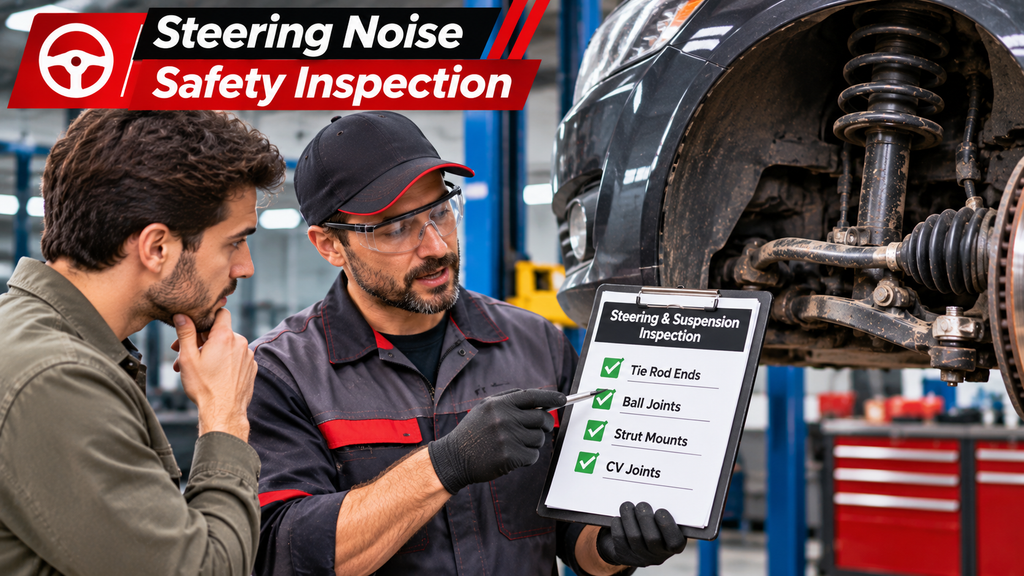
If steering feels normal but you continue hearing a new clicking, clunking, squeaking, or whining sound, arrange an inspection promptly.
The mechanic can check the relevant steering and suspension components and explain which repairs, if any, are necessary.
Catching worn components early may help prevent more serious steering problems.
Frequently Asked Questions
Why does my steering wheel make noise when I turn it?
Possible causes include low hydraulic power steering fluid, a worn pump, damaged CV joints, strut mounts, tie rod ends, ball joints, and other steering or suspension components. The type of sound and when it happens help narrow down the cause.
Why does my steering wheel make a whining noise?
In a hydraulic power steering system, whining can result from low fluid, air in the system, or pump wear. Other causes are possible, especially on vehicles with electric power steering.
Why do I hear clicking when making a sharp turn?
Repeated clicking during a moving, sharp turn may indicate a worn CV joint. Clicking while stationary can involve other steering or suspension components. Inspection is needed to confirm the cause.
Why does my steering wheel squeak when turning?
Squeaking may come from worn strut mounts, rubber suspension bushings, or steering joints. The sound may be more noticeable during low-speed turns or when the vehicle is parked.
Why does my steering wheel creak when parked?
Possible causes include a worn strut mount, suspension bushing, or steering joint. Tire scrub against pavement can also create noise during stationary steering.
Can worn tie rods cause noise when turning?
Yes. Worn tie rod ends may produce clunking or knocking sounds, sometimes with loose steering. Because they help control wheel direction, suspected wear should be checked promptly.
Why does the steering noise happen only when turning left?
A noise heard mainly in one direction may involve a CV joint, strut mount, steering joint, or rubbing component. Turning direction alone cannot confirm which part has failed.
Can electric power steering make noise?
Yes. Electric power steering uses an electric motor and mechanical steering components. Some operating sounds may be normal, but a new unusual noise, especially with changes in steering feel, should be inspected.
Can I drive with a squeaking steering wheel?
A mild squeak may not indicate an emergency, but safety cannot be confirmed from the sound alone. Arrange an inspection if it persists. Stop safely if steering becomes stiff, loose, or unpredictable.
Final Takeaway
A steering noise when turning the wheel can come from several parts of the steering or suspension system.
Whining or groaning may suggest a hydraulic power steering issue. Repeated clicking during a moving turn may point toward a CV joint, while clunking, creaking, and squeaking may involve worn joints, bushings, or strut mounts.
The most helpful approach is to pay attention to the type of sound, when it happens, and whether steering feels normal.
If the noise continues or the way your vehicle steers changes, have a qualified mechanic inspect the car. Confirming the actual cause before replacing parts can help avoid unnecessary repairs and protect your safety.