Buying new tires is already a significant expense, but the price on the tire listing may not represent your final bill. Mounting, wheel balancing, valve components, disposal, and optional protection can all affect what you pay at a tire shop.
Understanding Discount Tire installation cost before you visit helps you compare prices accurately and avoid confusion at checkout. Fortunately, the retailer bundles several important services into its installation package rather than charging separately for every routine step.
This guide explains how installation pricing works, what tire balancing includes, when specialized road force equipment may be necessary, and which services are free for qualifying customers.
Quick Answer: How Much Does Discount Tire Charge?
Discount Tire charges a one-time installation fee when you purchase and install new tires. Its published service information confirms that the package includes mounting, balancing, applicable valve stems or TPMS rebuild kits, tire disposal, a visual inspection, and lifetime maintenance benefits.
The company has displayed a $25-per-tire installation and lifetime spin-balancing item in its online catalog, but that figure should be treated as a pricing example, not a guaranteed nationwide rate. Your actual price must be confirmed for your tires, vehicle, and selected location.
Customers who purchased qualifying tires from Discount Tire receive lifetime rebalancing at no additional charge. Mounting and balancing tires purchased elsewhere generally involves a separate per-tire charge.
How Much Does Discount Tire Charge to Install Tires?
The total amount depends on whether you are purchasing new tires from Discount Tire or asking the shop to install tires bought from another retailer.
For new tire purchases, installation is normally calculated per tire and added to the tire price. The fee supports the labor and equipment used to mount the tire, balance the wheel assembly, and prepare it for safe operation.
A customer replacing four tires should therefore review both the tire subtotal and the installation subtotal. A relatively inexpensive tire can become a less attractive deal if installation costs are omitted from the initial comparison.
Example: Four-Tire Installation Cost
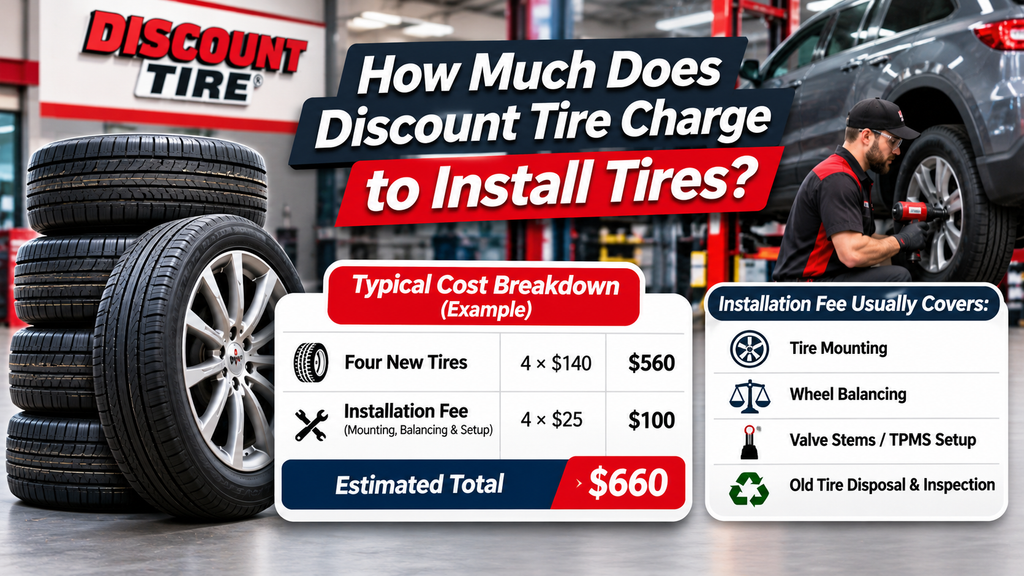
The following calculation illustrates how a four-tire purchase might be priced. It uses a hypothetical $140 tire and a $25 installation fee per tire. These are example figures rather than a current quote for a specific vehicle or location.
| Expense | Calculation | Example Cost |
|---|---|---|
| Four new tires | 4 × $140 | $560 |
| Installation package | 4 × $25 | $100 |
| Subtotal | Tires + installation | $660 |
| Taxes and optional extras | As applicable | Not included |
Pricing reminder: This $660 subtotal is illustrative. It does not establish the actual price at your Discount Tire location. Always check the current cart breakdown or request an itemized quote before buying.
What’s Included in Discount Tire Installation Costs?
An installation package covers more than placing a new tire onto a wheel. Technicians must safely remove the old tire, prepare the wheel, mount the replacement, inflate it correctly, and check the completed assembly.
According to Discount Tire’s published installation policy, the standard package includes the following services.
🔧
Tire Mounting
The old tire is removed when necessary, and the replacement is fitted to the wheel using professional mounting equipment.
⚙️
Wheel Balancing
The completed assembly is checked for weight imbalance, and corrective wheel weights are installed where needed.
🛞
Valve Components
New valve stems or appropriate TPMS rebuild kits are included when applicable to the installation.
♻️
Old Tire Disposal
The installation package includes disposal of the old tires being replaced.
🔍
Visual Inspection
Technicians inspect tire and wheel condition as part of the installation process.
✓
Lifetime Maintenance
Qualifying purchases include ongoing tire rotations, rebalancing, pressure checks, and other published maintenance services.
These bundled services are an important part of the overall value. When comparing tire retailers, check whether another shop includes balancing and disposal or adds them as separate line items.
Discount Tire Balancing Cost: Is It Free?
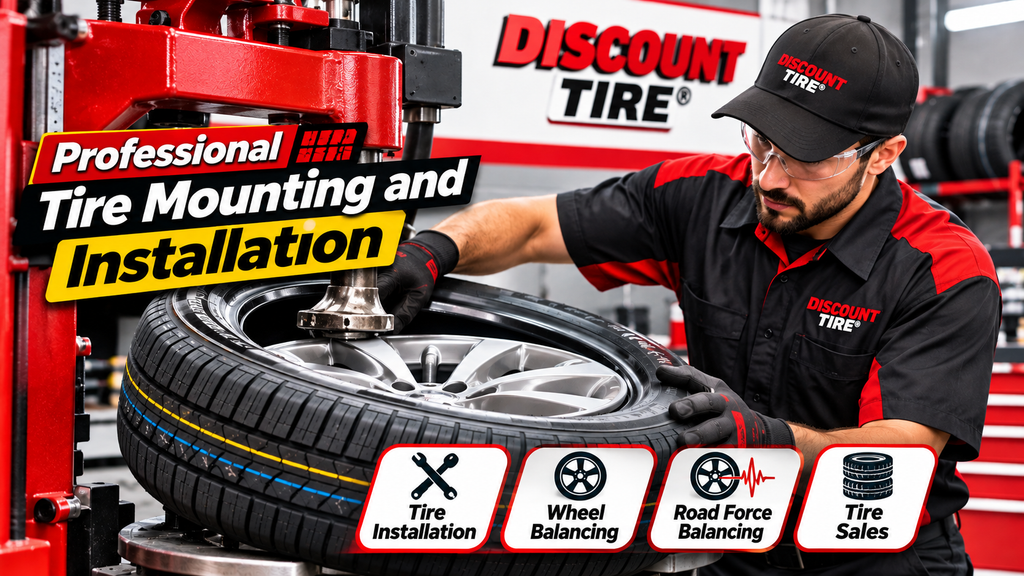
Discount tire balancing is included with qualifying purchases and installation. Customers who bought their tires from the retailer can return for lifetime rebalancing without paying another routine balancing charge.
However, buying tires elsewhere does not automatically qualify the customer for the same free service. Discount Tire states that balancing for tires purchased from another retailer is available for a charge.
| Customer Situation | Balancing Policy |
|---|---|
| Buying and installing new Discount Tire tires | Initial balancing included in installation |
| Returning with qualifying purchased tires | Lifetime rebalancing included |
| Balancing tires purchased elsewhere | Paid service; ask for local pricing |
| Mounting tires purchased elsewhere | Regional per-tire charge; includes lifetime rebalancing |
| Road force balancing for a qualifying customer | Included when technicians determine it is needed |
What Does Wheel Balancing Actually Do?
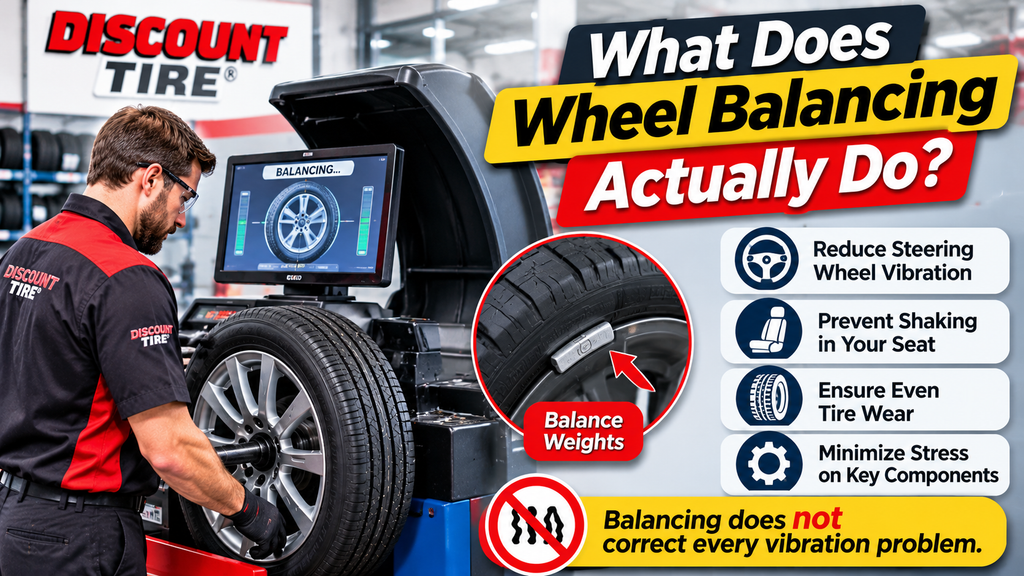
Even a new tire and wheel assembly may have small differences in weight around its circumference. When the assembly rotates at highway speed, these differences can create vibration.
A technician places the wheel assembly on an electronic balancing machine. The machine identifies imbalance and indicates where corrective weights should be attached.
Proper balancing can help reduce:
- Steering wheel vibration at certain driving speeds.
- Uncomfortable shaking through the seat or vehicle body.
- Uneven loading caused by rotating weight imbalance.
- Unnecessary stress on related components.
Balancing does not correct every vibration problem. Tire damage, bent wheels, suspension faults, or other mechanical issues can produce similar symptoms.
Discount Tire Road Force Balancing Explained
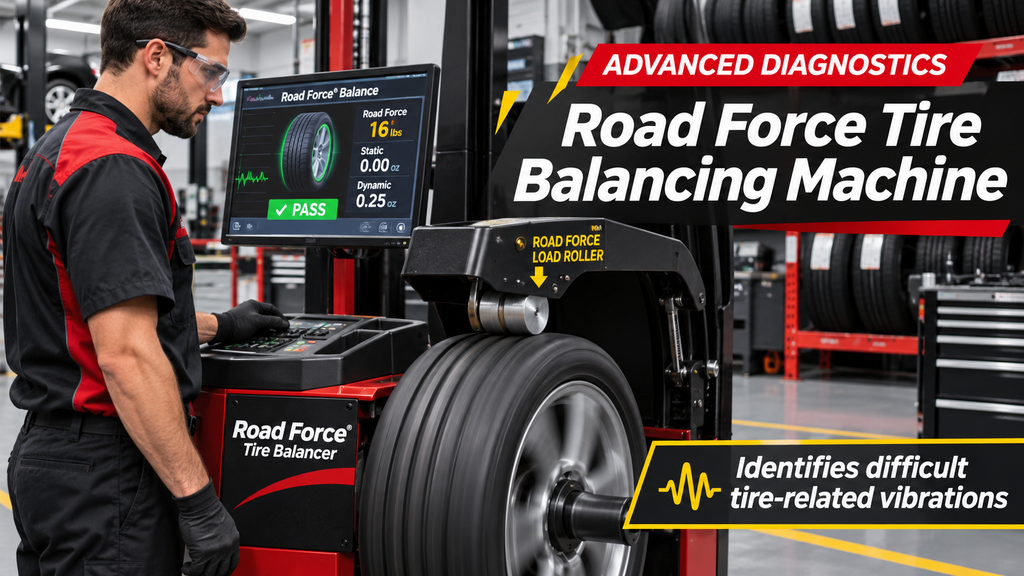
Discount tire road force balancing is an advanced diagnostic balancing method intended to identify certain tire-and-wheel problems that ordinary spin balancing may not reveal.
Standard balancing identifies uneven weight distribution. Road force equipment also uses a load roller to apply pressure against the rotating tire, approximating the forces the tire experiences while supporting a vehicle on the road.
This allows technicians to evaluate variations in tire stiffness, wheel or tire runout, and possible mismatches between the tire and wheel.
When Is Road Force Balancing Necessary?
A technician may recommend the additional procedure when a vehicle still vibrates after conventional balancing has been performed correctly.
Common situations include:
- A persistent steering wheel shake at highway speeds.
- Vibration that began soon after installing new tires.
- Repeated standard balancing attempts that did not resolve the problem.
- Suspected tire stiffness variation or an out-of-round assembly.
- Ride problems following a pothole or curb impact.
Depending on the measurements, a technician might rotate the tire on the wheel to improve how the two components work together. This procedure is often called match mounting.
Does Discount Tire Charge Extra for Road Force Balancing?
Discount Tire’s published road force guidance states that technicians can perform the advanced procedure as part of the balancing service when they determine it is needed.
For qualifying customers receiving included lifetime balancing, the company describes necessary road force balancing as part of that benefit.
Customers whose tires were purchased elsewhere should confirm the balancing charge and applicable service terms with their selected store. Advanced equipment availability may also depend on location.
Practical advice: If you are experiencing vibration, describe when it occurs instead of requesting an advanced procedure without diagnosis. Note the speed, whether the steering wheel or seat shakes, and whether the problem started after a tire change or road impact.
Standard Balancing vs. Road Force Balancing
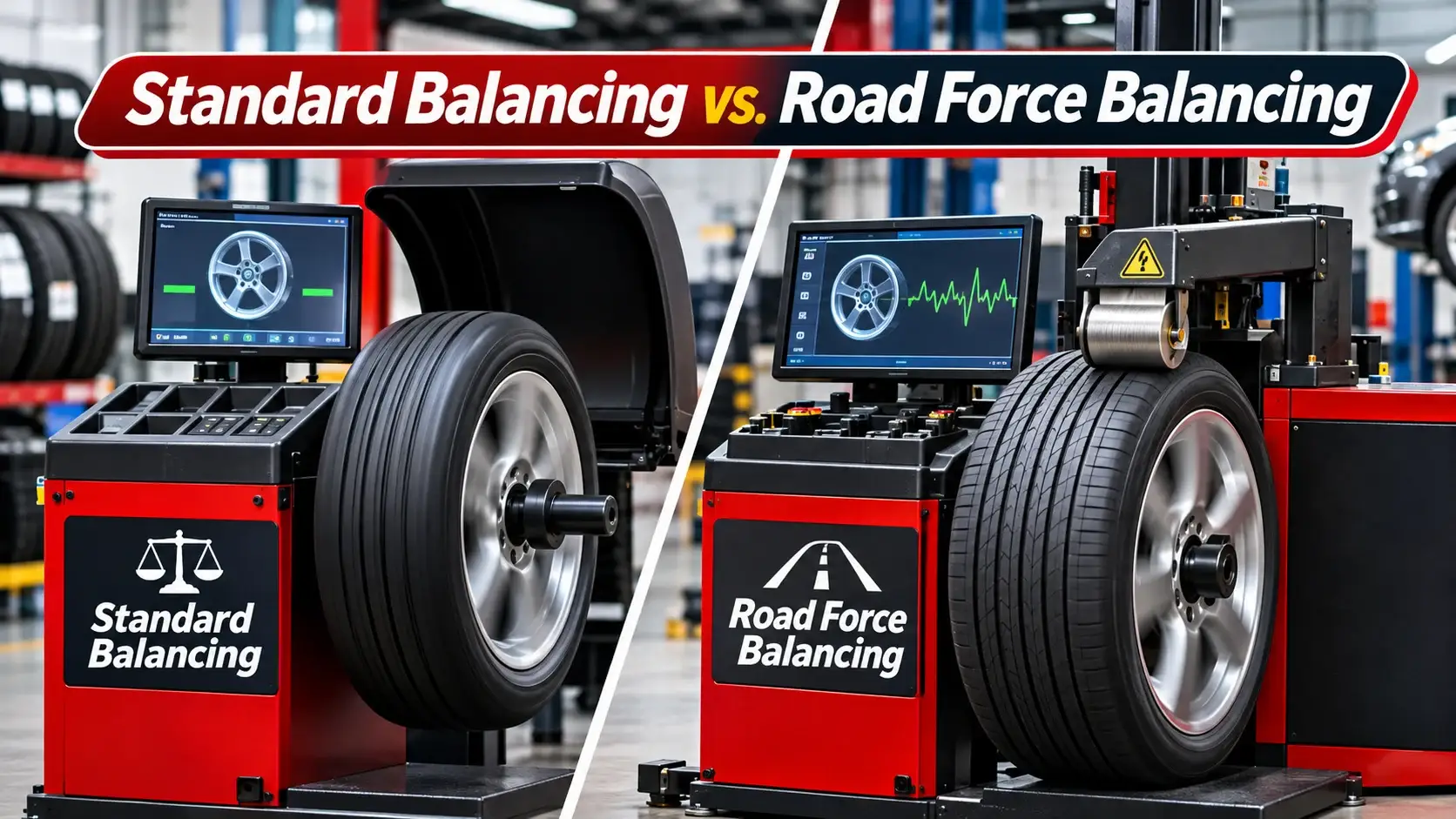
Both methods aim to improve ride quality, but they measure different characteristics of the wheel-and-tire assembly. Road force analysis adds information that may be useful when the assembly is balanced by weight yet still produces vibration.
| Feature | Standard Balancing | Road Force Balancing |
|---|---|---|
| Main purpose | Correct weight imbalance | Investigate load-related tire and wheel variation |
| Equipment | Electronic spin balancer | Balancer with a load roller |
| Measures | Static and dynamic weight imbalance | Weight imbalance plus road-force-related variation |
| Best application | Routine tire installation and maintenance | Persistent or difficult vibration concerns |
| Can identify stiffness variation? | Not directly | Yes |
| Typical first step? | Yes | Usually after initial diagnosis |
For most routine installations, standard balancing is the appropriate starting point. Advanced testing is particularly useful when a vibration remains despite proper conventional balancing.
Neither method substitutes for a complete vehicle inspection when a vibration originates from damaged wheels, worn suspension parts, or other mechanical faults.
Does Discount Tire Install Tires Purchased Elsewhere?
Yes. Discount Tire states that it accepts tires purchased from other sellers for mounting and balancing, subject to applicable fitment and safety requirements.
Unlike an eligible installation purchased directly from Discount Tire, the outside-tire service involves a per-tire charge that varies by region.
The company says this mounting and balancing service also includes lifetime rebalancing at Discount Tire. Always confirm the exact package and price for your purchase situation.
What Should You Check Before Bringing Outside Tires?
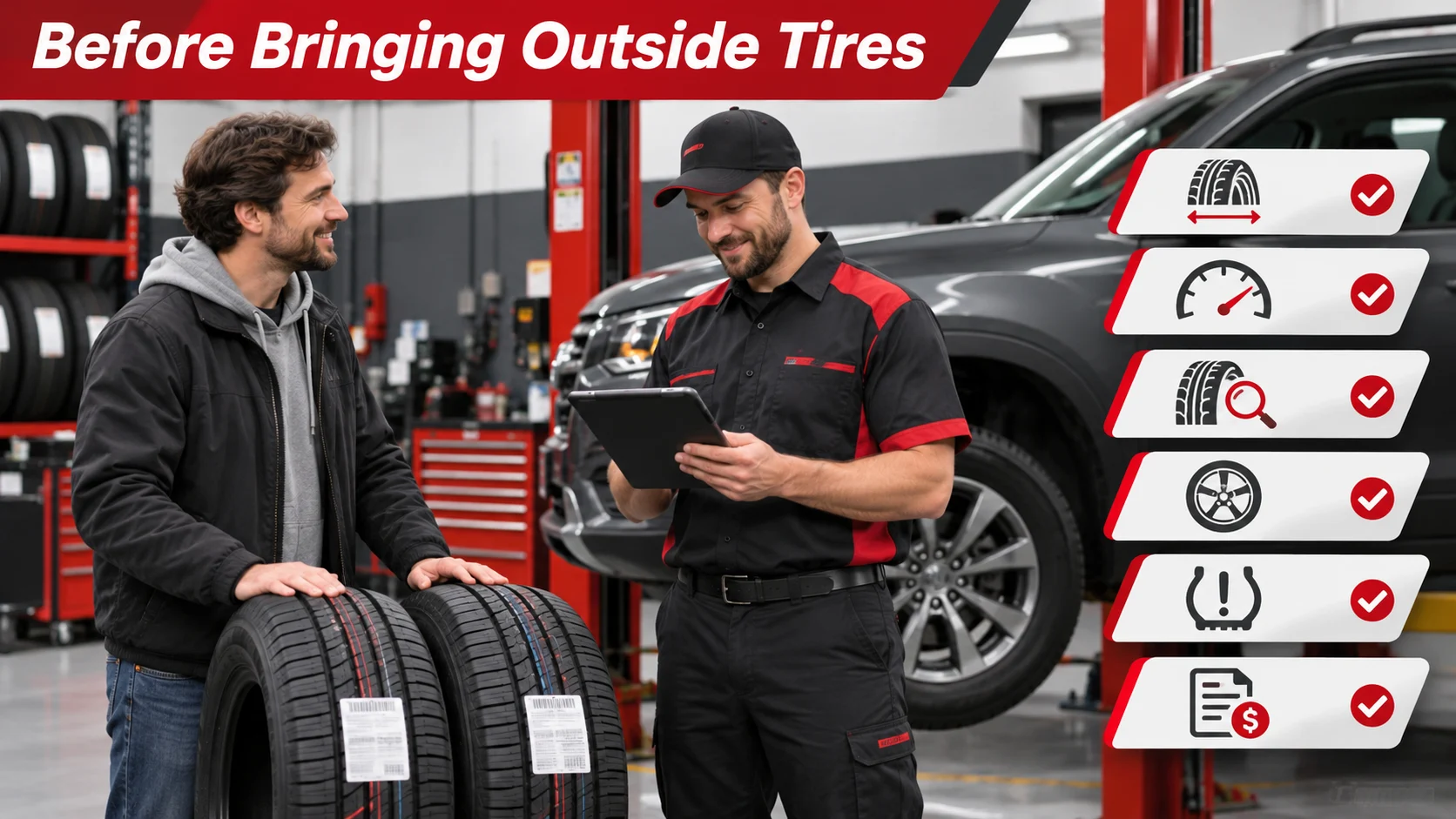
- Tire size: Verify compatibility using the vehicle placard and owner’s manual.
- Load and speed ratings: Make sure the replacement tires meet vehicle requirements.
- Tire condition: New or used tires must be suitable for safe installation.
- Wheel compatibility: Confirm rim diameter, approved rim width, and fitment.
- TPMS requirements: Ask whether the existing sensor components need service.
- Final quote: Confirm the complete mounting and balancing price.
Buying tires online can offer additional choices, but shipping, installation fees, fitment concerns, and warranty arrangements should all be considered when comparing the final value.
Additional Tire Installation Charges to Consider
The advertised installation package already covers many routine tasks. However, certain optional products and vehicle-specific repairs may involve additional costs.
| Potential Expense | What to Know |
|---|---|
| New TPMS sensor replacement | A failed electronic sensor may require additional parts and labor beyond a routine rebuild kit. |
| Wheel alignment | Not part of ordinary tire installation; available at participating locations. |
| Tire protection Certificates | Optional coverage purchased separately under applicable terms. |
| Specialized tire or wheel work | Unusual fitment, damaged parts, or specialty assemblies may require an additional assessment. |
| Taxes or other applicable charges | Depend on the transaction and local requirements. |
Avoid double-counting: Standard tire disposal, routine mounting, initial balancing, and applicable valve stems or TPMS rebuild kits are already listed in Discount Tire’s installation package. Do not assume these are separate charges without reviewing the actual quote.
How Long Does Discount Tire Installation and Balancing Take?
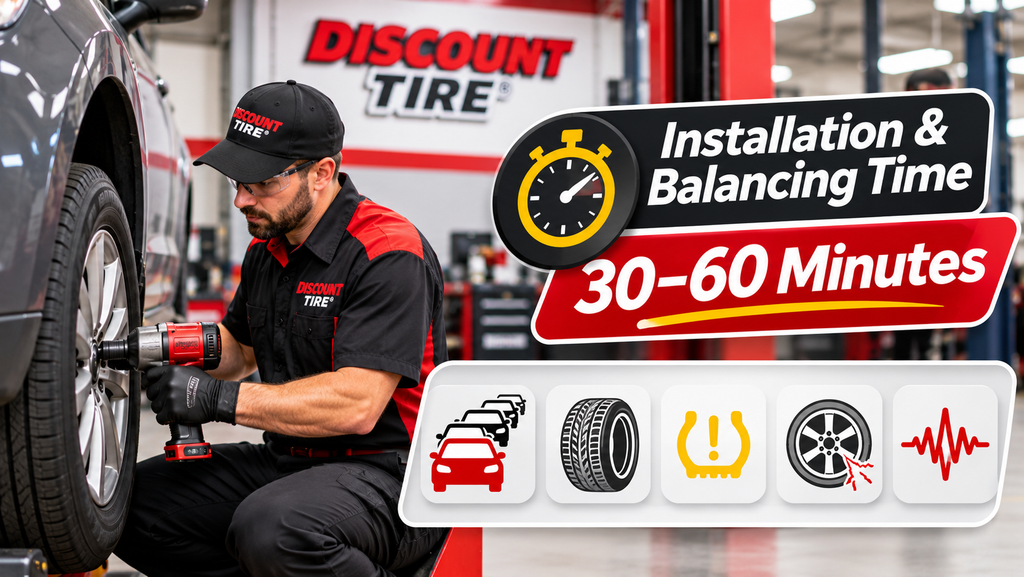
Installing four standard passenger-vehicle tires commonly takes approximately 30–60 minutes of active service time once the vehicle enters the service bay. This is a planning estimate, not a guaranteed completion window.
Actual time may increase because of:
- The number of vehicles already waiting for service.
- Large, low-profile, or specialty tire configurations.
- Additional TPMS repairs or fitment concerns.
- Wheel damage or other problems discovered during inspection.
- Further vibration diagnosis or road force procedures.
An appointment can make the visit easier to plan, although appointment time and total time at the store are not necessarily the same.
How Often Should You Have Your Tires Balanced?
Discount Tire recommends balancing about every 6,000 miles as part of routine maintenance. The appropriate interval may also depend on your vehicle manufacturer’s guidance, tire condition, and driving circumstances.
Balancing may be needed sooner when:
- You notice new vibration while driving.
- A wheel weight is missing or has become detached.
- New tires have been mounted.
- A tire has been removed and remounted.
- A technician identifies imbalance during an inspection.
Do not assume that every steering or ride vibration requires balancing. If the vehicle pulls to one side, shows unusual tread wear, makes new noises, or vibrates under braking, another inspection may be more appropriate.
Is Tire Balancing the Same as Wheel Alignment?
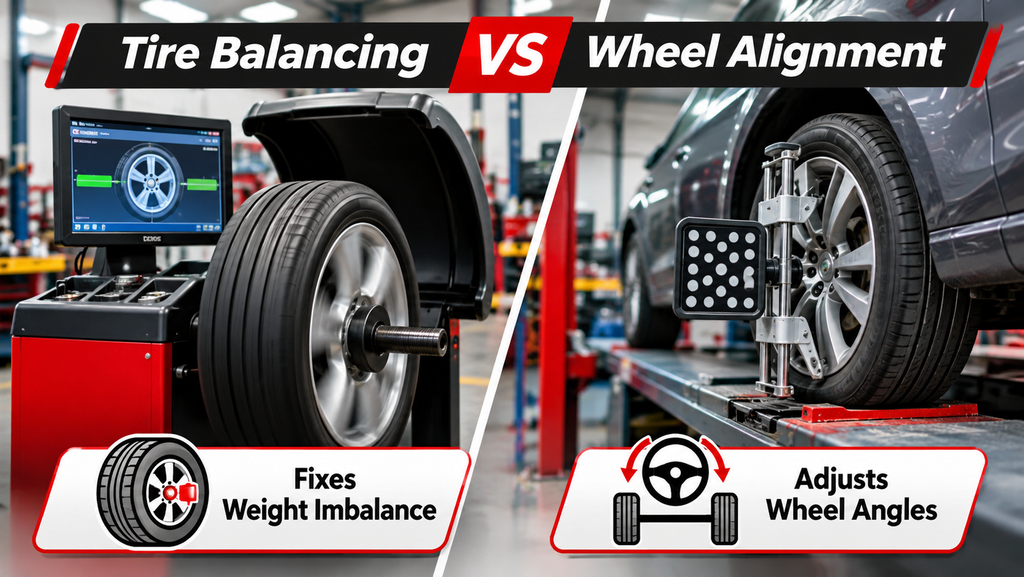
No. Although the services are sometimes mentioned together, balancing and alignment address different vehicle conditions.
Wheel Balancing
Corrects uneven rotating weight distribution in the tire-and-wheel assembly. It primarily addresses vibrations caused by imbalance.
Wheel Alignment
Measures and adjusts the vehicle’s wheel angles where the design allows. It helps address certain tracking, steering, and irregular tire wear problems.
A balanced wheel can still be misaligned, and a properly aligned vehicle can still have an unbalanced tire. An accurate diagnosis determines which service is needed.
Discount Tire advertises alignment services at participating locations, but alignment is not automatically included with a standard tire installation purchase.
How to Save Money on Tire Sales and Installation
The best value comes from comparing the complete purchase rather than focusing only on the advertised tire price.
1Compare Installed Prices
Ask each retailer for the total cost of four tires, mounting, balancing, applicable taxes, and any optional services. Use the same tire model and specifications when comparing quotes.
2Consider Lifetime Maintenance
Included rotations and rebalancing may reduce future maintenance expenses if you use those services throughout the tires’ service life.
3Review Optional Protection
Consider road-hazard protection based on your driving conditions, the price of replacement tires, and the published coverage terms. It is not automatically necessary for everyone.
4Check Tire Compatibility
Confirm correct tire size, load index, speed rating, and vehicle fitment before ordering. An inexpensive but unsuitable tire is not a worthwhile purchase.
5Ask About Current Offers
Discounts, rebates, and promotions can change. Compare the final amount payable rather than assuming every promotion applies to your selected tires.
Is Discount Tire Installation Worth the Cost?
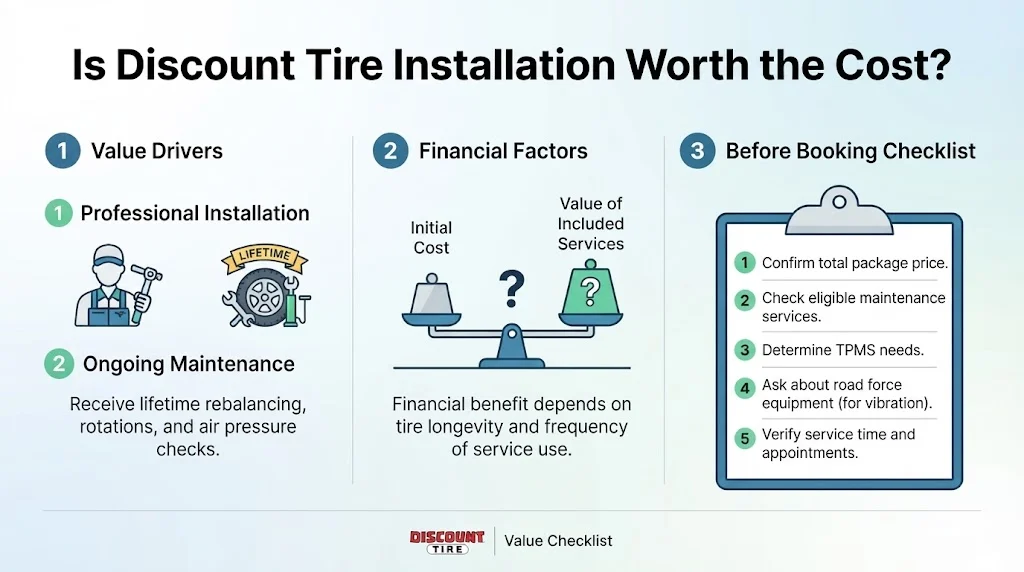
Discount Tire can offer good overall value to drivers who want professional installation alongside ongoing maintenance benefits.
The key advantage is not simply the initial mounting service. Eligible customers also receive lifetime rebalancing, tire rotations, air pressure checks, and other qualifying maintenance services.
For a driver keeping the same tires over several years, those services may be useful. However, the actual financial benefit depends on the initial installed price, tire longevity, service needs, and how frequently the customer uses the included benefits.
A competing retailer may still be the better choice when its total installed price, convenience, tire selection, or service terms more closely match your needs.
Before booking, confirm these five details:
- The total tire and installation price.
- Which lifetime maintenance services apply to your purchase.
- Whether additional TPMS work is necessary.
- Whether road force equipment is available if vibration is a concern.
- The expected service time and appointment requirements.
Frequently Asked Questions
1. How much does Discount Tire charge to install four tires?
The final amount depends on the installation charge at your selected location and the tires being fitted. A $25-per-tire example would equal $100 for four tires before tire costs, taxes, or optional charges. Confirm the current per-tire rate before purchasing.
2. Does Discount Tire charge for balancing new tires?
Initial balancing is included in the installation package when you buy and install qualifying new tires at Discount Tire.
3. Is Discount Tire balancing free for life?
Yes, qualifying Discount Tire tire purchases include lifetime rebalancing. Tires purchased from other retailers do not automatically qualify for free balancing.
4. Does Discount Tire offer road force balancing?
Yes. Road force balancing is an advanced diagnostic service offered where the necessary equipment is available. Technicians can use it to investigate certain persistent vibration problems.
5. Is road force balancing free at Discount Tire?
Discount Tire states that road force balancing is included when needed as part of qualifying balancing service. Customers without eligible lifetime balancing benefits should confirm their service charge with the store.
6. Can Discount Tire mount tires purchased online?
Yes. The retailer accepts tires bought elsewhere for mounting and balancing, subject to tire condition, fitment, and other safety requirements. Regional per-tire charges apply.
7. Does installation include old tire disposal?
Yes. Discount Tire lists tire disposal among the services included with its standard new-tire installation package.
8. Does Discount Tire replace TPMS sensors during installation?
Applicable TPMS rebuild kits are included in the installation package, but replacement of an entire failed electronic sensor is a different service that may cost extra.
9. Do I need balancing every time my tires are rotated?
Not necessarily. Rotation and balancing are different procedures. Balancing may be appropriate at recommended intervals or when imbalance symptoms are present.
10. Will balancing fix steering wheel vibration?
Balancing can correct vibration caused by uneven weight distribution. It will not necessarily resolve vibration resulting from bent wheels, damaged tires, braking problems, or worn vehicle components.
11. Does Discount Tire include wheel alignment with installation?
No. Wheel alignment is a separate service available at participating Discount Tire locations. Ask for pricing and availability if your vehicle needs alignment work.
12. Can Discount Tire balance tires without replacing them?
Yes. Wheel balancing is available as a maintenance service. Whether a charge applies depends on the tire purchase and applicable service benefits.
Final Verdict
Discount Tire combines professional installation with several maintenance services that can make a tire purchase more convenient over time. Its installation package covers mounting, initial balancing, applicable valve components, disposal, and inspection.
Qualifying tire purchases also include lifetime rebalancing, while road force balancing may be used when technicians identify a persistent vibration requiring advanced analysis.
The best way to avoid unexpected expenses is to compare the complete installed price, confirm your vehicle’s requirements, and ask which optional services are genuinely necessary before authorizing the work.