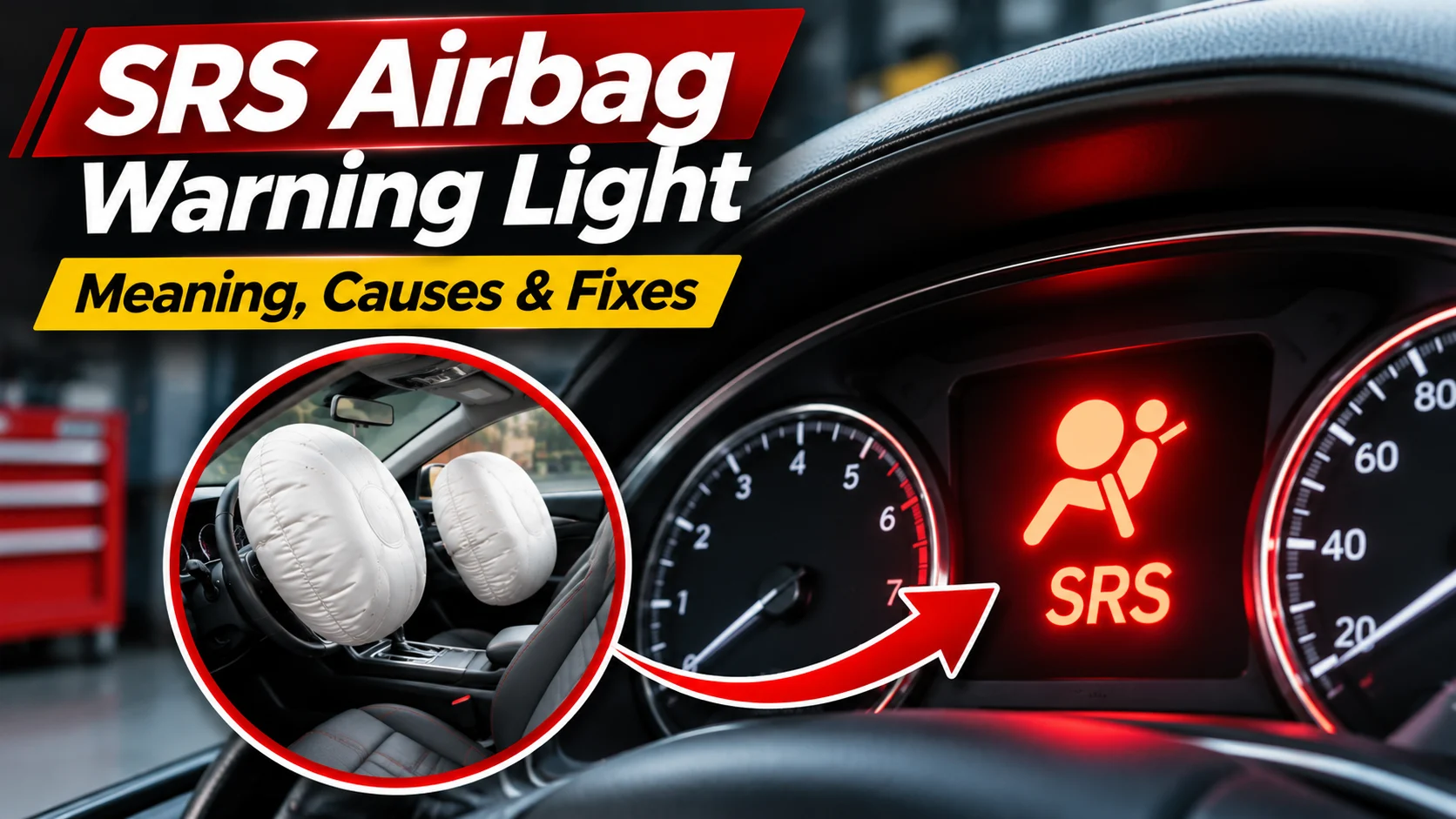
Seeing an unfamiliar warning light on your dashboard can be unsettling, especially when it involves your vehicle’s airbags. If you notice an illuminated SRS airbag warning, you may wonder whether the airbags will work in an accident and what you should do next.
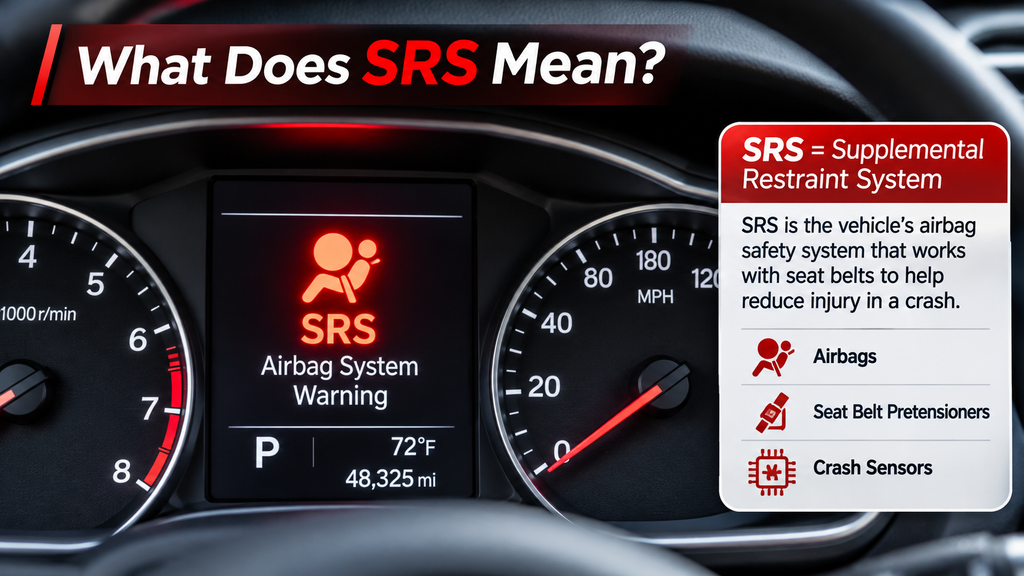
First, understanding the SRS meaning is important. SRS stands for Supplemental Restraint System, the vehicle safety system that includes airbags and related restraint components. These devices are designed to work with seat belts to help protect occupants during certain collisions.
A warning light that stays on after startup, flashes unexpectedly, or comes on while driving may indicate a problem with the system. However, the light alone cannot identify which component has failed.
This guide explains what SRS means in a car, how the system works, common reasons for an airbag warning, what you can safely check, and how a qualified technician diagnoses the problem.
Quick Answer: What Does SRS Mean in a Car?
SRS means Supplemental Restraint System. It is the safety system responsible for monitoring and controlling various airbag and related restraint components, including seat belt pretensioners in many vehicles.
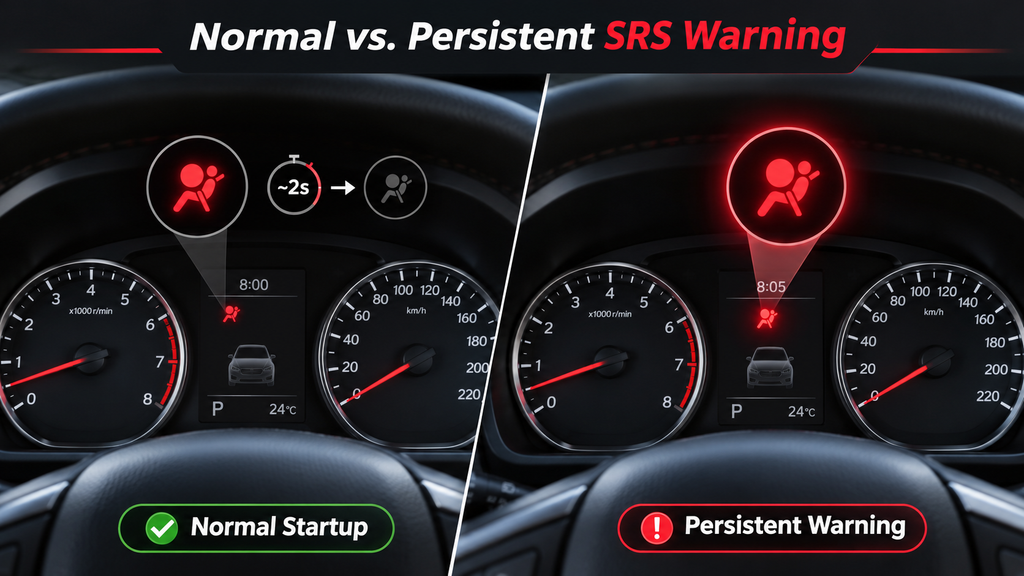
If the SRS light briefly appears when you start the vehicle and then turns off, that is usually part of the normal self-check. If the light remains on, flashes abnormally, or appears while driving, the system may have detected a fault.
What should you do? Continue wearing your seat belt, consult your owner’s manual, and arrange prompt inspection by a qualified technician. Do not attempt to bypass, disconnect, or reset airbag components yourself.
SRS Definition
Supplemental Restraint System
Normal Behavior
Startup light briefly illuminates and goes out.
Possible Fault
Light remains on, flashes, or appears while driving.
What Is SRS in a Car?
The Supplemental Restraint System is part of a vehicle’s occupant protection equipment. It is called supplemental because airbags are designed to supplement seat belts rather than replace them.
During a collision that meets certain conditions, the system may deploy appropriate airbags or activate seat belt pretensioners to help reduce injury risk. Deployment depends on the vehicle design, crash direction, severity, and other factors.
The system uses electronic monitoring to identify certain malfunctions. When a problem is detected, the dashboard may display an SRS or airbag warning indicator.
You might also see the words SRS AIRBAG printed on the steering wheel, dashboard, seats, or other trim. These labels identify airbag locations; they are not warning indicators by themselves.
What Does the SRS Airbag System Include?
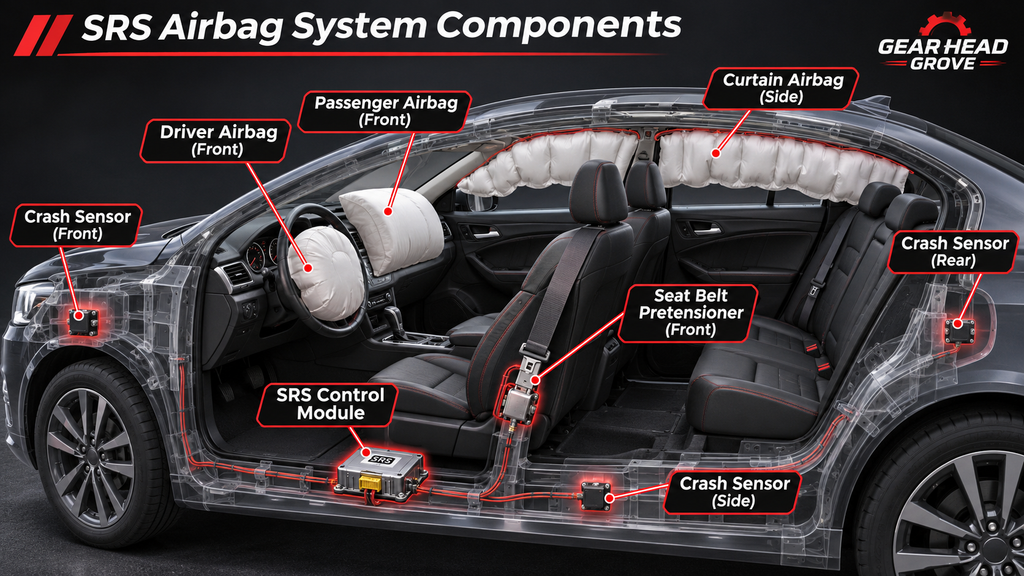
The SRS is more than a steering-wheel airbag. Many modern vehicles use a network of restraint components that work together to detect appropriate crash conditions and manage occupant protection.
| Component | Primary Function |
|---|---|
| Front Airbags | Provide supplemental protection in qualifying frontal or near-frontal crashes. |
| Side Airbags | Help protect occupants in certain side impacts. |
| Curtain Airbags | May provide protection along side windows during qualifying crashes. |
| Seat Belt Pretensioners | Tighten the belt during specified crash conditions. |
| Crash Sensors | Provide information used to assess crash conditions. |
| Occupant Classification Components | Help manage passenger restraint behavior where fitted. |
| Restraint Control Module | Monitors relevant components and controls restraint deployment. |
| Related Wiring and Connectors | Connect the control system with sensors and restraint devices. |
Not every vehicle has every airbag type or the same sensors. The owner’s manual provides the most accurate description of the equipment fitted to a particular make, model, and year.
What Does the SRS Warning Light Mean?
An illuminated airbag warning usually means the vehicle’s restraint-system monitoring has detected a condition that requires attention.
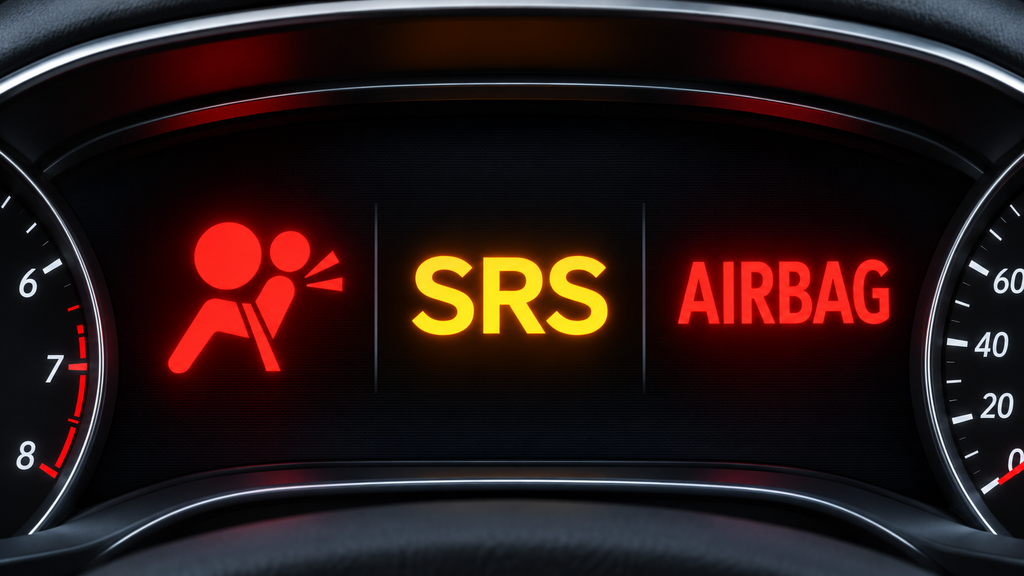
Depending on the model, the dashboard indicator may show the letters SRS, the word AIRBAG, or a symbol depicting a seated person with a circle in front.
These indicators are designed to alert the driver to a possible system malfunction. They do not reveal the precise failed component.
Common SRS Warning Symbols
You may encounter an airbag pictogram, an SRS message, or a text-based airbag readiness warning. Some models also display an additional dashboard message or sound a warning chime.
The exact symbol, light color, and expected startup behavior depend on the manufacturer.
How Does the Supplemental Restraint System Work?
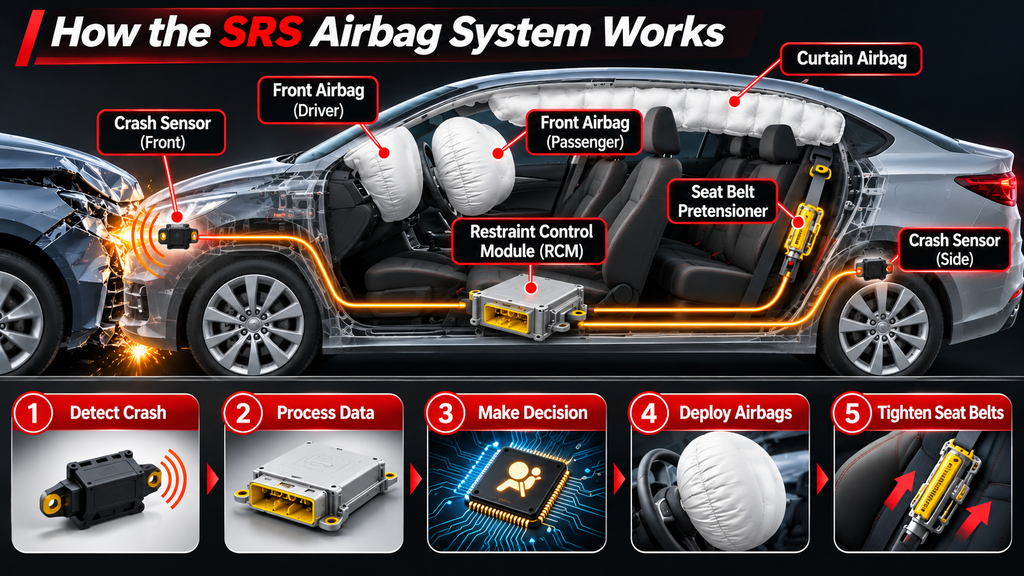
During normal operation, the vehicle monitors relevant restraint-system components and checks for certain electrical or diagnostic problems.
In a crash, sensors provide information to the restraint control module. The module evaluates conditions according to the vehicle’s design and determines whether particular restraint devices should activate.
01 · Monitor
The system monitors sensors and restraint-related circuits.
02 · Evaluate
The control module evaluates information during a collision.
03 · Activate
Appropriate restraints may deploy when conditions are met.
Airbags do not deploy in every crash. For example, a low-severity collision may not meet the deployment requirements for a particular airbag.
Even when airbags are installed and functioning, seat belts remain essential because airbags are designed to provide supplemental protection.
Why Is My SRS Airbag Light On?
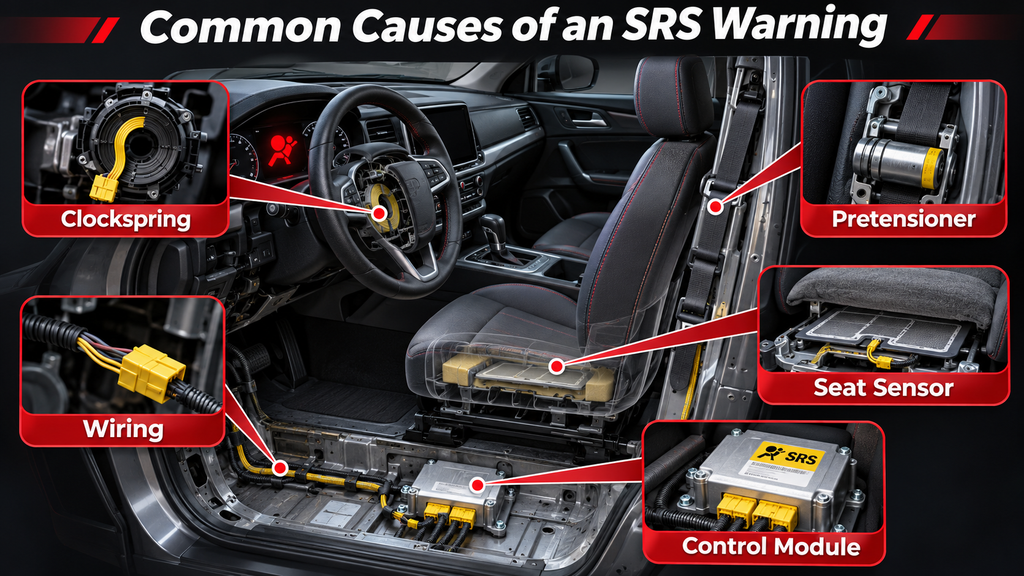
An SRS warning can have several possible causes. Some involve sensors or wiring, while others relate to restraint hardware or electronic control systems.
The warning light does not identify the failed part. A technician needs vehicle-specific diagnostic information before deciding which components require testing or repair.
1. Seat Occupancy or Position Sensor Problems
Some vehicles use sensors to determine seat occupancy or position. If the system detects a problem with these components, it may illuminate the SRS warning.
2. Seat Belt Pretensioner or Buckle Circuit Faults
Many vehicles monitor the seat belt pretensioner system and certain buckle-related circuits. A malfunction may trigger a restraint-system warning.
3. Damaged Wiring or Connectors
Electrical damage, poor connections, water intrusion, or previous repairs may affect restraint-system circuits.
However, SRS wiring should not be disconnected, probed, cleaned, or modified by an untrained vehicle owner.
4. Steering Wheel Clockspring Problems
Many vehicles use a clockspring assembly to maintain certain electrical connections while the steering wheel turns. A fault involving the airbag circuit may cause an SRS warning.
Steering-wheel buttons or the horn may also exhibit problems in some cases, but these symptoms alone cannot confirm a clockspring failure.
5. Power Supply or Voltage Issues
Some vehicles may record restraint-system faults associated with low voltage, power interruptions, or other electrical supply problems.
A weak or recently disconnected battery is not proof that the battery caused the warning. Diagnosis is still required.
6. Crash Damage or Previous Repairs
Previous collision damage, deployed restraint components, or improper repairs can leave faults in the SRS system.
For a used vehicle with an airbag warning, a qualified inspection is especially important before purchase or continued use.
7. Control Module or Sensor Malfunctions
A fault involving a crash sensor, restraint control module, or its monitored circuits can also illuminate the warning.
These components are safety-critical. Replacing them without confirming the problem can be unnecessary, expensive, and unsafe.
SRS Light During Startup vs. While Driving
Understanding when the warning appears can help you explain the problem accurately to a technician.
| Light Behavior | What It May Mean | Recommended Action |
|---|---|---|
| Briefly on at startup | Usually part of a normal self-check. | Confirm expected behavior in the owner’s manual. |
| Stays on after startup | Possible restraint-system malfunction. | Arrange prompt professional inspection. |
| Comes on while driving | Possible newly detected or intermittent fault. | Record the event and seek prompt diagnosis. |
| Flashes unexpectedly | Potential fault, depending on vehicle behavior. | Follow the owner’s manual and obtain inspection. |
| Never lights during expected self-check | Possible warning-indicator or system problem. | Have the system checked. |
Some vehicles also use audible warnings or additional messages. The exact system behavior varies by model.
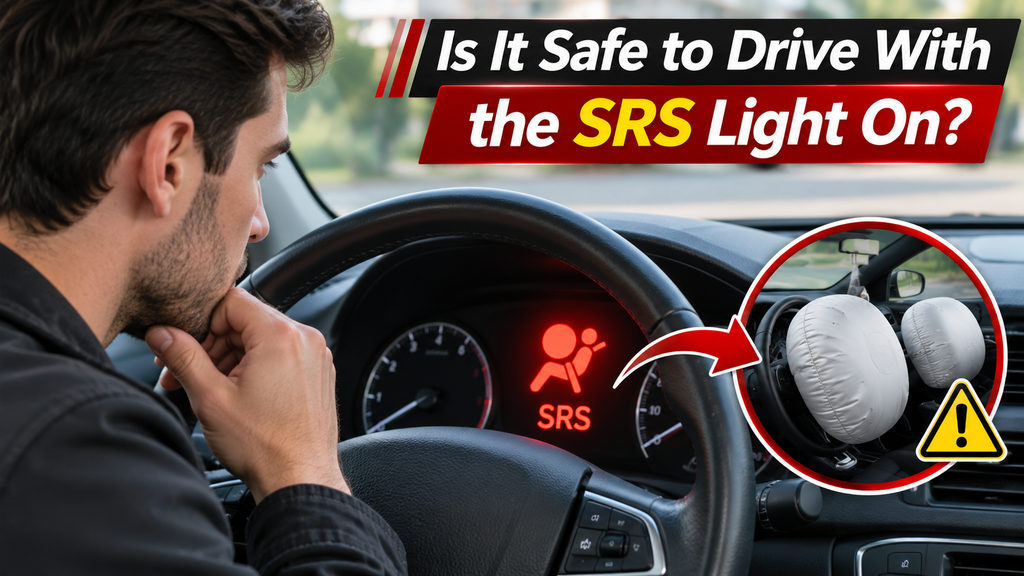
Is It Safe to Drive With the SRS Light On?
A car may still start and drive normally with the SRS warning illuminated, but that does not mean its restraint system is functioning correctly.
Some airbags or seat belt pretensioners may not operate as intended during a collision. The actual risk depends on the diagnosed fault and vehicle design.
Because the light does not reveal which protection features are affected, it is not possible to declare a vehicle safe from the dashboard warning alone.
What to Do When the Airbag Warning Appears
- If driving, stay focused on the road and find a safe place to stop when practical.
- Check whether any additional serious vehicle warning or message is present.
- Continue using seat belts correctly. Never rely on airbags as a substitute.
- Consult the vehicle owner’s manual for the meaning of the indicator.
- Contact a qualified repair facility or authorized dealer promptly.
- If the vehicle has collision damage, deployed restraints, or another condition making it unsafe to operate, arrange recovery or towing rather than driving it.
Do not ignore an airbag warning for weeks simply because the vehicle appears to operate normally.
How to Troubleshoot an SRS Warning Safely
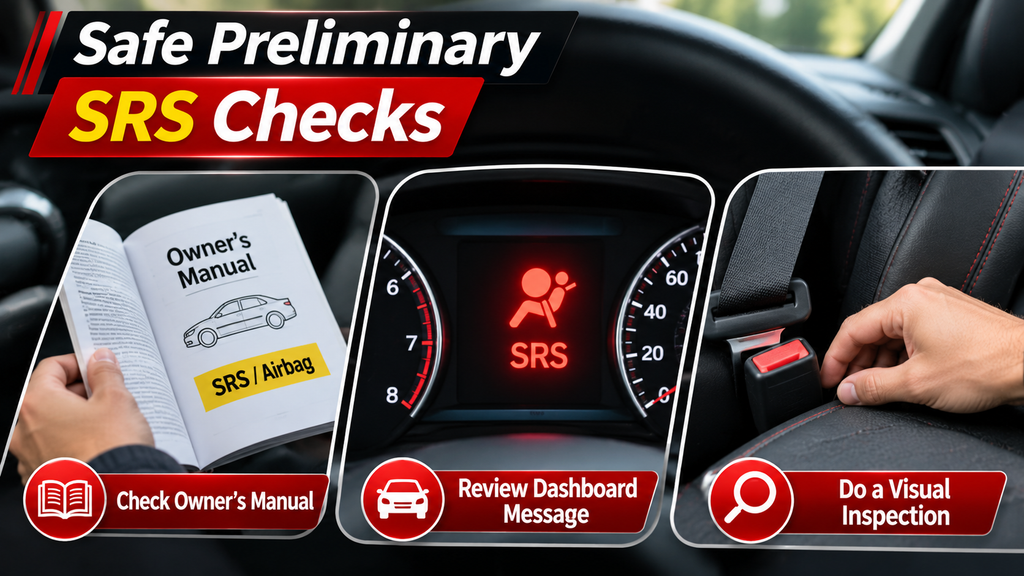
When an airbag warning appears, it is reasonable to gather information before visiting a repair shop. However, troubleshooting must remain non-invasive because the system contains components designed to deploy rapidly in a collision.
Step 1: Check the Owner’s Manual
Find the warning-light section for your exact vehicle. Confirm what the SRS indicator should do during startup and what the manufacturer recommends when it remains illuminated.
Step 2: Record When the Warning Appears
Note whether the light appears immediately at startup, during driving, or intermittently. Record any related dashboard message or warning sound.
This information can help a technician reproduce or investigate the issue.
Step 3: Review Recent Vehicle History
Consider whether the vehicle recently had a collision, electrical repairs, battery problems, water intrusion, or work involving the seats or steering wheel.
Report these details to the technician without assuming that any one event caused the malfunction.
Step 4: Observe the Cabin Without Disassembly
You can visually note whether the passenger seat has loose objects or unusual loads that might affect an occupant-detection system, where applicable.
Do not reach beneath seats to disconnect wires, unplug connectors, inspect yellow wiring, or manipulate sensors. Some components under seats belong to the restraint system.
Step 5: Arrange a Qualified Inspection
Have a technician with the correct vehicle-specific equipment assess the restraint system and recommend repairs based on diagnostic findings.
Do Not Attempt These SRS Repairs Yourself
- Disconnecting or probing airbag wiring.
- Testing airbag igniters with ordinary electrical meters.
- Installing resistors to bypass a faulty restraint circuit.
- Removing steering-wheel airbag modules.
- Changing or bypassing seat occupancy sensors.
- Disconnecting the vehicle battery to try to erase an SRS fault.
- Clearing diagnostic codes without identifying and correcting the cause.
How Do Mechanics Diagnose SRS Airbag Problems?
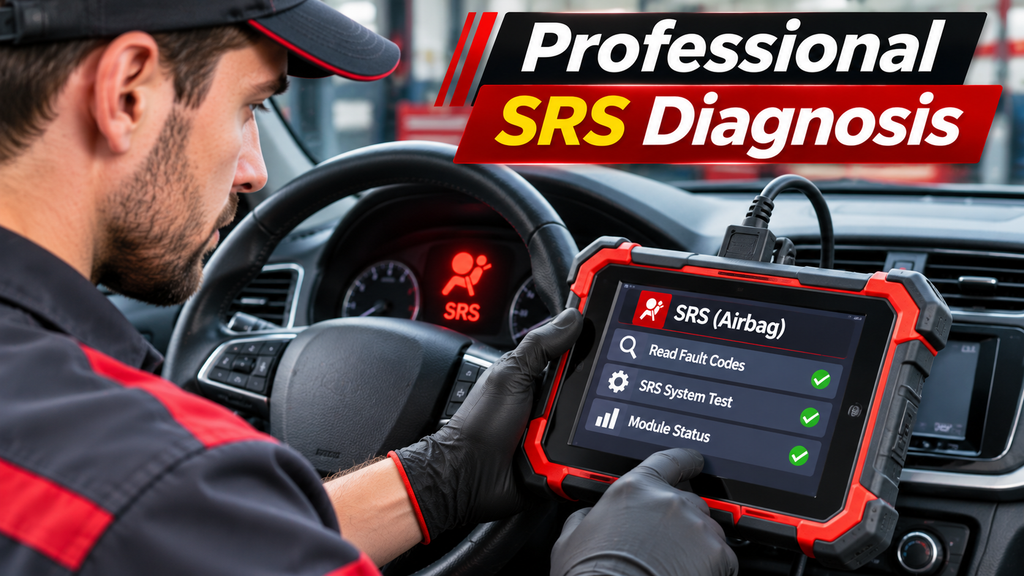
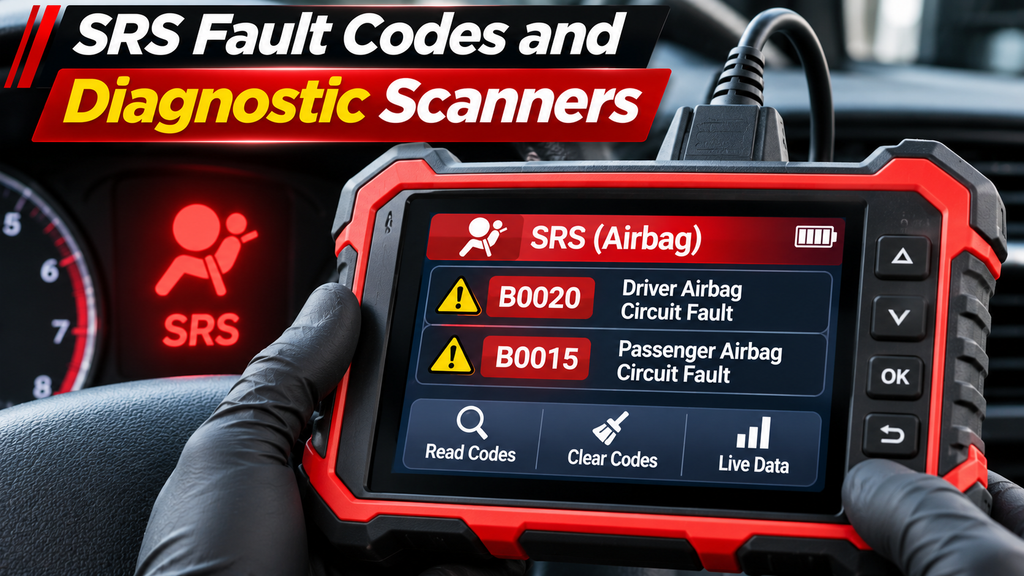
A qualified technician typically begins by reviewing the driver’s symptoms, checking for relevant manufacturer service information, and using an appropriate diagnostic scan tool.
The scan tool can communicate with supported restraint-system control modules and retrieve stored diagnostic trouble codes.
A Typical Diagnostic Proces
- Verify the complaint: Observe the warning behavior and related messages.
- Scan the appropriate module: Retrieve manufacturer-specific SRS trouble codes and available diagnostic data.
- Review service information: Identify the relevant diagnostic procedure for that vehicle.
- Perform approved tests: Inspect or test components using manufacturer-authorized methods and required precautions.
- Repair the confirmed fault: Replace or repair only the parts identified by proper diagnosis.
- Verify the repair: Follow the prescribed checks and confirm that the system no longer reports the fault.
An SRS trouble code identifies a detected condition or affected circuit. It does not automatically prove that one particular sensor or airbag must be replaced.
Can an OBD-II Scanner Read SRS Airbag Codes?
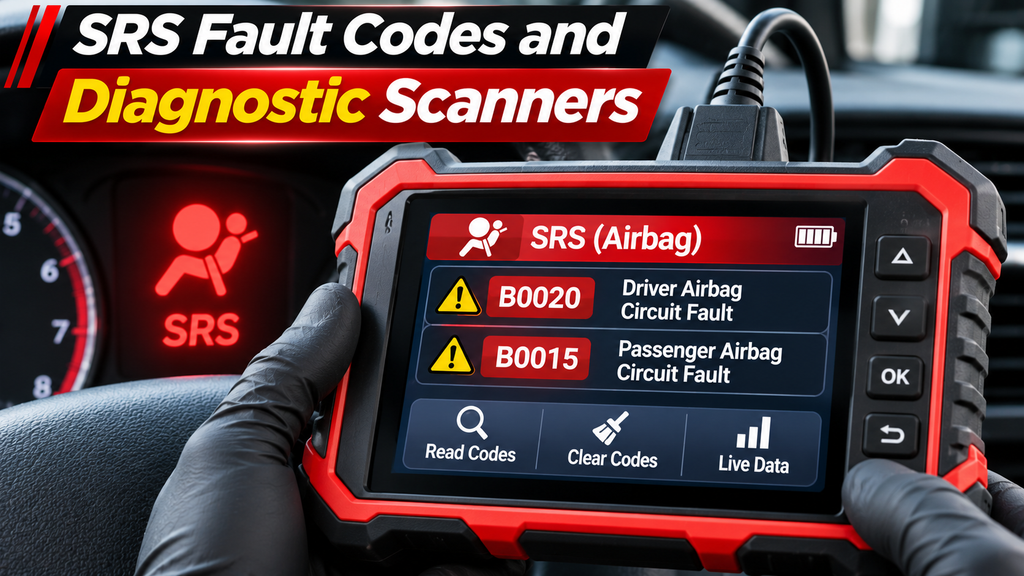
Some diagnostic scanners can read SRS codes, but not every basic OBD-II code reader supports airbag-system diagnostics.
Many inexpensive readers primarily access emissions-related powertrain information. Reading manufacturer-specific restraint-system data generally requires a compatible scanner with the correct vehicle coverage.
Even if a scan tool can display a code, interpreting and repairing the fault still requires the proper service information and safety procedures.
What Information Can an SRS Scan Tool Provide?
- Stored restraint-system diagnostic trouble codes.
- Descriptions of detected conditions, where supported.
- Fault status information, depending on the vehicle.
- Additional module data available through the manufacturer’s diagnostic system.
The available data varies by vehicle, scanner, and software version. A code reader is not a substitute for professional fault confirmation.
Can You Reset the SRS Airbag Warning Light?
Resetting a dashboard indicator is not the same as repairing a restraint-system fault.
Some diagnostic systems allow fault codes to be cleared after the underlying issue has been corrected. However, if the condition remains present, the warning may return or the system may continue to report a problem.
Unplugging the battery, cycling the ignition, or using an unsupported scanner is not a reliable or appropriate repair.
Important: A dashboard light being off does not prove that every airbag and seat belt pretensioner is functioning correctly. Proper diagnosis and post-repair verification are essential.
SRS Airbag Light vs. Passenger Airbag OFF Light
These two indicators are sometimes confused, but they serve different purposes.
| Indicator | Meaning |
|---|---|
| SRS / Airbag Warning | Signals a potential restraint-system malfunction when illuminated abnormally. |
| Passenger Airbag OFF | Indicates the front passenger airbag is deactivated. On some vehicles, this can be normal when the seat is unoccupied or the occupant-classification system selects that state. |
Passenger airbag indicators must be interpreted according to the manufacturer’s instructions. If a properly seated adult passenger is present and the indicator behavior appears incorrect, have the vehicle checked.
The passenger airbag OFF indicator does not automatically mean that the entire SRS system has failed.
What If the SRS Light Comes On After an Accident?
If the airbag warning appears after a collision, the vehicle should receive a proper restraint-system inspection before returning to normal service.
Collision damage can affect sensors, airbag components, seat belt pretensioners, wiring, and structural mounting locations, even when damage is not immediately obvious.
If an airbag or pretensioner has deployed, affected components require manufacturer-approved inspection and repair procedures. Deployed safety devices cannot simply be folded back into place and reused.
Also remember that airbags are not expected to deploy in every collision. Lack of deployment alone does not prove that the system failed.
A recall search is useful, but it does not diagnose a current SRS warning. A vehicle can have a restraint-system problem even when no open recall is listed.
How Much Does SRS Airbag Diagnosis or Repair Cost?
The cost depends on the vehicle, the fault, required labor, parts availability, and whether the repair is covered by a warranty, recall, or manufacturer program.
Some cases require only diagnostic work and a repair to an approved component. Others may involve more extensive wiring, restraint-module, sensor, or hardware replacement.
Because the warning light alone cannot identify the cause, a universal repair estimate would be misleading.
Questions to Ask Your Repair Shop
- Which SRS diagnostic codes were retrieved?
- What testing confirmed the fault?
- Which components actually require repair or replacement?
- Will the repair use manufacturer-approved parts and procedures?
- Is the issue covered by an open recall or applicable warranty?
- Will the restraint-system warning and diagnostic status be verified afterward?
Request a clear diagnosis before agreeing to expensive component replacement.
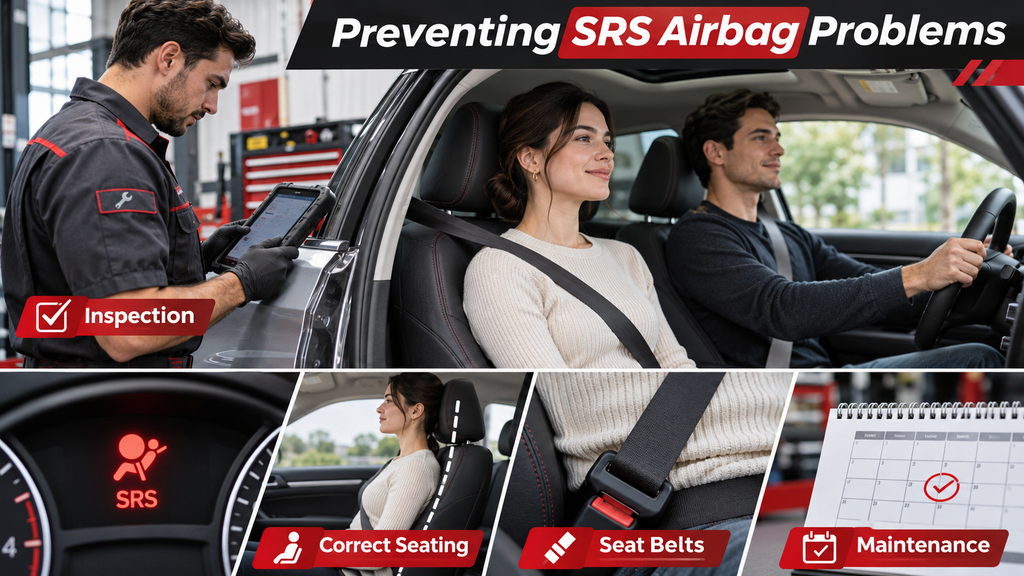
How to Reduce the Risk of SRS Problems
Not every restraint-system fault can be prevented. However, careful vehicle maintenance and proper repairs can reduce avoidable damage to sensitive safety components.
- Follow your manufacturer’s maintenance and safety instructions.
- Address dashboard airbag warnings promptly.
- Avoid unauthorized seat, steering-wheel, or restraint-system modifications.
- Do not allow unqualified repairs to airbag wiring or connectors.
- Have collision damage professionally inspected.
- Keep the dashboard and airbag deployment areas free of prohibited accessories.
- Check applicable airbag recalls and complete recall repairs.
- Use seat belts correctly on every trip.
Vehicle safety systems depend on correct component installation, manufacturer-approved repair procedures, and proper occupant seating positions.
Frequently Asked Questions About SRS Airbag Warnings
1. What does SRS mean in a car?
SRS stands for Supplemental Restraint System. It refers to a vehicle’s safety system that includes airbags, crash sensors, and related restraint components. The system works alongside seat belts to help protect occupants during certain collisions.
2. What is an SRS airbag system?
An SRS airbag system uses sensors, a control module, airbags, and other restraint components to provide supplemental protection during qualifying crashes. The system monitors certain faults and may illuminate a dashboard warning when a malfunction is detected.
3. What does the SRS warning light mean?
An SRS warning light that stays on or appears while driving may indicate a malfunction in the airbag or related restraint system. Because the affected components may not function correctly during a collision, the vehicle should receive prompt professional inspection.
4. Is it safe to drive with the SRS light on?
A car may continue to operate normally with the SRS warning illuminated, but its occupant protection systems may not work as intended. The warning alone cannot establish whether the vehicle is safe. Consult the owner’s manual and arrange professional diagnosis promptly.
5. Why is my SRS airbag light staying on?
Possible causes include faulty seat sensors, damaged wiring, seat belt pretensioner problems, clockspring faults, low-voltage events, or control-module issues. A qualified technician must retrieve and interpret diagnostic trouble codes to identify the underlying problem.
6. Can a weak battery cause the SRS light to come on?
Yes. Low battery voltage or electrical power interruptions can trigger restraint-system fault codes in some vehicles. However, the battery is not necessarily the cause. A proper diagnosis is required before replacing components or attempting to clear the warning.
7. Can a seat sensor cause an SRS warning light?
Yes. Vehicles equipped with monitored occupant classification or seat-position sensors may illuminate the SRS light when a related fault occurs. Avoid disconnecting or modifying wiring beneath the seats because it may belong to the restraint system.
8. Can airbags still deploy if the SRS light is on?
Some airbags or restraint components may still operate, while others may be affected by the malfunction. The warning light alone cannot determine which devices will deploy correctly. Professional diagnosis is necessary to assess the problem.
9. What is the difference between the SRS light and the passenger airbag OFF light?
The SRS warning indicates a possible restraint-system fault. The passenger airbag OFF indicator shows that the front passenger airbag is deactivated, which can be normal under certain occupant-detection conditions. Consult the owner’s manual if either indicator behaves unexpectedly.
10. Why does the SRS light turn on when starting the car?
The SRS indicator normally illuminates briefly during the vehicle’s startup self-check. It should turn off according to the manufacturer’s specified sequence. If it remains illuminated, flashes unexpectedly, or does not appear during an expected check, inspection may be required.
11. Can a regular OBD-II scanner read SRS codes?
Not always. Basic OBD-II scanners usually focus on emissions-related engine codes. Reading airbag diagnostic trouble codes generally requires a compatible scanner with SRS module access and support for the vehicle’s make, model, and year.
12. How do mechanics diagnose an SRS warning light?
A qualified technician uses a compatible diagnostic scanner to retrieve SRS fault codes, reviews manufacturer service procedures, and performs approved inspections or tests. Once the fault is confirmed, the technician repairs the relevant components and verifies system operation.
13. Can I reset the SRS airbag warning light myself?
Resetting the warning without repairing the underlying fault is not recommended. Disconnecting the battery or clearing diagnostic codes does not guarantee that the system is functioning correctly. Have the malfunction diagnosed and repaired using manufacturer-approved procedures.
14. Will the SRS warning light go off by itself?
The warning may disappear if an intermittent fault is no longer detected, depending on the vehicle. However, the system may retain diagnostic information, and the underlying problem may still exist. A light that turns off does not necessarily confirm a successful repair.
15. Can a damaged clockspring cause the SRS light to come on?
Yes. A faulty steering-wheel clockspring may interrupt electrical connections involving the driver’s airbag. Some vehicles may also experience horn or steering-wheel control problems. These symptoms are not sufficient to confirm a clockspring failure without diagnosis.
Final Thoughts
Understanding what SRS means in a car is the first step toward responding appropriately to an airbag warning. The Supplemental Restraint System includes important occupant-protection equipment that works alongside seat belts.
A warning light that stays on, flashes unexpectedly, or appears while driving should not be dismissed as a minor dashboard issue. Although the car may continue to operate normally, the restraint system may not provide its intended protection in a collision.
Rather than attempting to disable the warning or repair airbag wiring yourself, use the owner’s manual to understand the indicator and arrange professional diagnosis.
Bottom line: An SRS warning deserves prompt attention because occupant safety matters more than simply turning off a dashboard light.