Have you ever opened an electrical connector on your car and noticed a clear, jelly-like substance inside? Or perhaps a mechanic recommended putting grease on your spark plug boots to keep moisture out. That substance may be dielectric grease.
Dielectric grease is widely used in automotive maintenance to help protect suitable electrical connections against moisture, dirt, and corrosion. However, there is one detail that often causes confusion: dielectric grease does not conduct electricity.
So how can a non-conductive grease be useful around electrical connections? The answer depends on how the connection works, where the grease is applied, and whether the manufacturer recommends its use.
This guide explains what dielectric grease is, its benefits and applications, whether it conducts electricity, and how to use it correctly on automotive components.
Quick Answer: What Is Dielectric Grease?
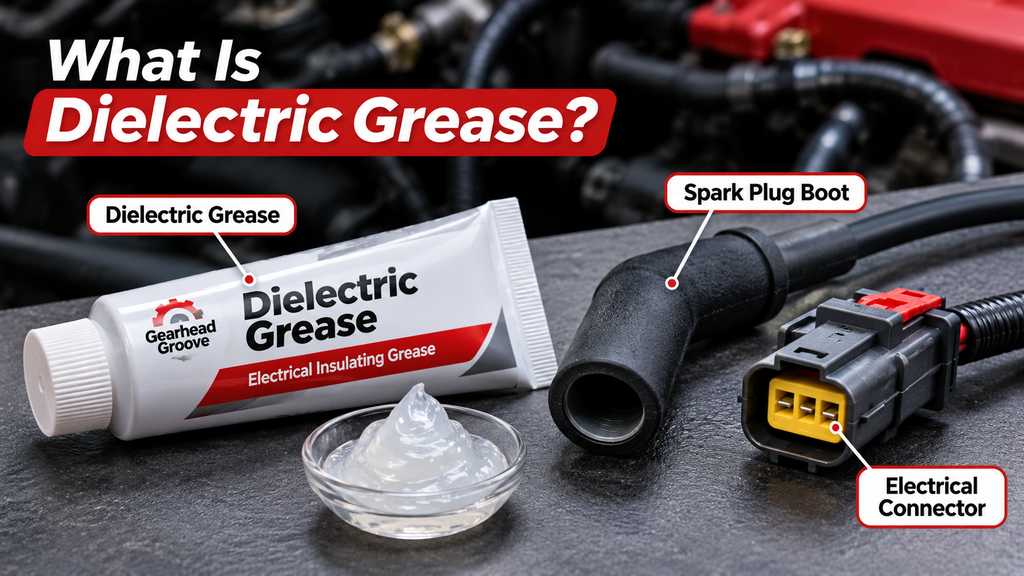
Dielectric grease is a non-conductive insulating lubricant that helps protect suitable electrical connections against moisture, corrosion, and environmental contamination. Most automotive dielectric greases are silicone-based.
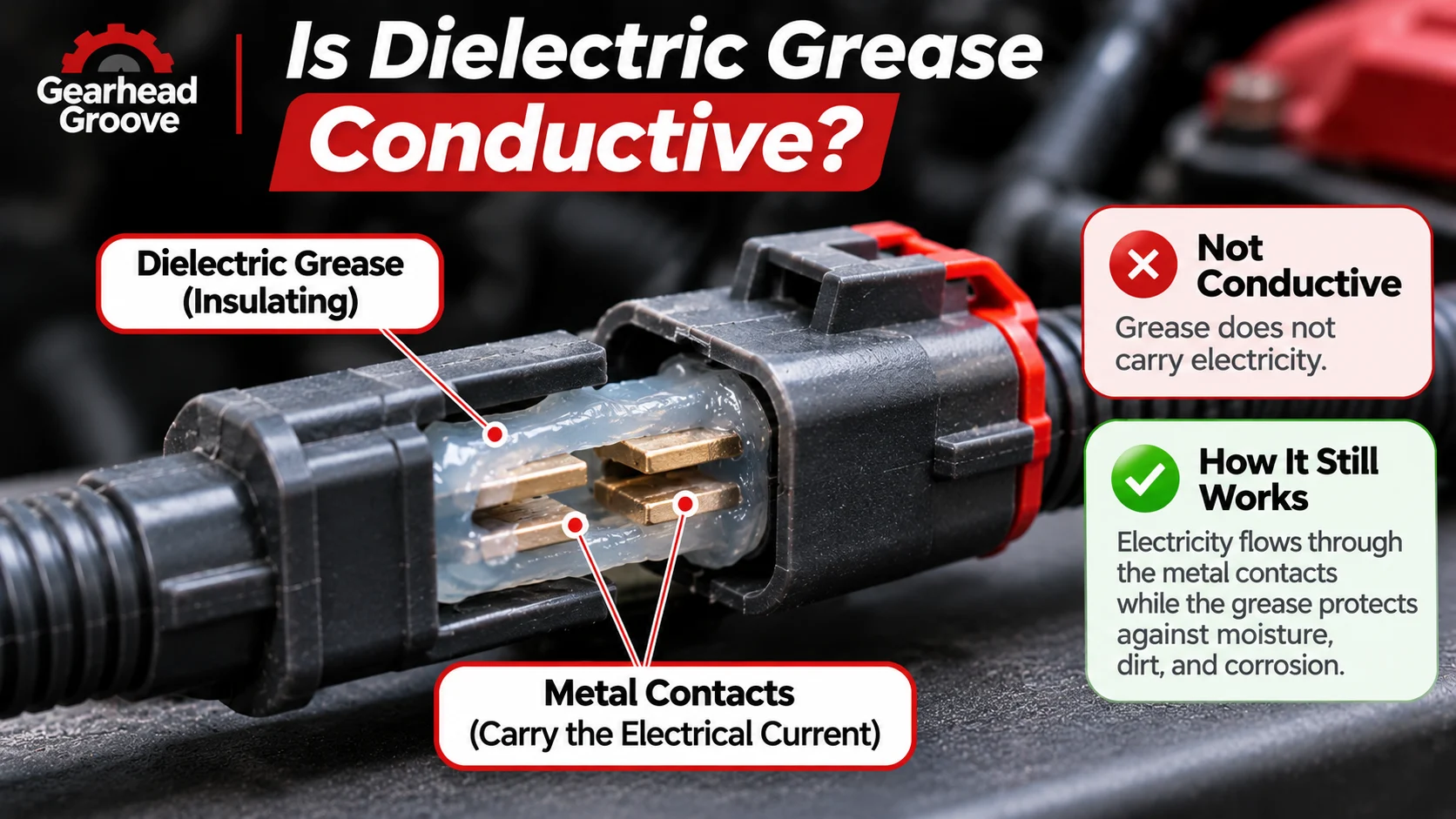
Is dielectric grease conductive? No. The grease does not carry current like copper or another metal conductor. Properly assembled metal contacts carry electricity, while compatible grease helps protect the surrounding connection.
Common uses: Spark plug boots, compatible electrical connectors, battery connections, trailer wiring, and certain bulb sockets when approved by the manufacturer.
What Is Dielectric Grease?
Dielectric grease is a specialized lubricant formulated to provide electrical insulation and environmental protection. Many products use silicone oil combined with a thickening agent to create a stable, water-resistant compound.
The word dielectric describes a material that acts as an electrical insulator rather than a conductor.
Unlike grease used primarily for wheel bearings or chassis joints, dielectric grease is designed for applications where insulation, moisture resistance, and compatibility with selected electrical components are important.
Key Properties of Dielectric Grease
- Electrical insulation: It resists electrical current flow.
- Moisture resistance: Helps keep water away from protected surfaces.
- Corrosion protection: Helps limit exposure to moisture and contaminants.
- Lubrication: Helps prevent certain rubber boots and seals from sticking.
- Temperature resistance: Many formulations work across a specified temperature range.
- Environmental sealing: Helps protect suitable connections from dirt and road salt.
Actual performance varies by product. Check the technical data sheet and vehicle manufacturer’s recommendations before applying it.
Is Dielectric Grease Conductive?
No. Dielectric grease is not electrically conductive under normal intended conditions. It acts as an insulator, meaning electricity does not flow through the grease the way it flows through a metal conductor.
However, this does not mean it automatically prevents an electrical connector from working.
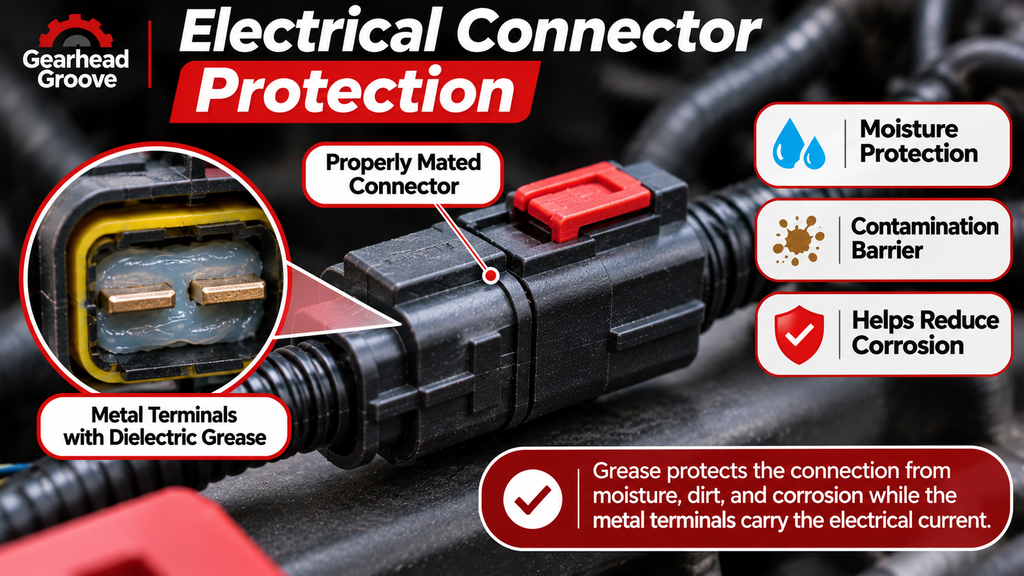
In a properly assembled connector, electrical current travels through the metal contacts. Depending on the connector design and product formulation, sufficient contact pressure maintains a metal-to-metal connection while the surrounding grease provides environmental protection.
Proper Metal Contact
Mating terminals make secure electrical contact while compatible grease protects the surrounding connection from moisture and contamination.
Poor or Loose Contact
Grease cannot repair damaged terminals, missing contact pressure, broken wiring, or a badly corroded connection.
The important distinction is that dielectric grease protects an approved connection; it does not create the electrical connection.
Some connectors are designed to operate without added grease. Applying it to an incompatible connector may interfere with its intended sealing, assembly, or performance.
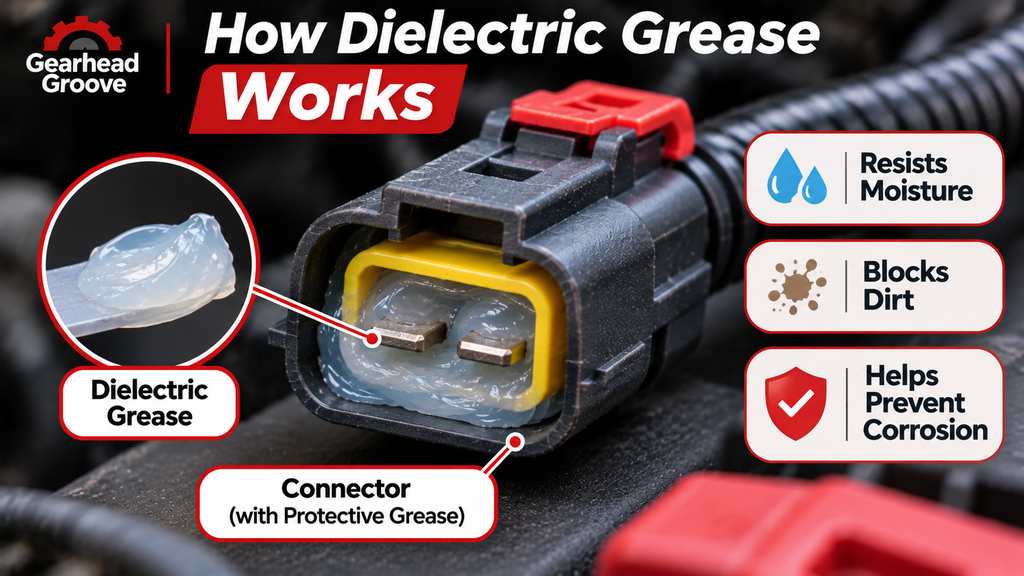
How Does Dielectric Grease Work?
Dielectric grease creates a protective barrier around suitable electrical components. Its primary benefits come from insulation, moisture resistance, and lubrication.
1. Helps Keep Moisture Away
Water and road salt can contribute to corrosion on exposed electrical components. Dielectric grease helps limit the exposure of protected surfaces to these contaminants.
2. Reduces Environmental Contamination
When correctly applied, it can help protect suitable connectors and seals against dirt, road spray, and other contaminants.
3. Provides Electrical Insulation
The grease resists electrical conduction. In some high-voltage ignition applications, proper use around insulating spark plug boot surfaces can help reduce unwanted electrical leakage paths.
4. Lubricates Rubber Components
Some dielectric greases help rubber boots slide into position and prevent them from sticking to compatible ceramic and insulating surfaces.
These properties explain why a non-conductive product can still be useful in automotive electrical maintenance.
What Is Dielectric Grease Made Of?
Many automotive dielectric greases are silicone-based compounds containing silicone fluid and a thickener. The thickener gives the grease its paste-like consistency and helps it remain in place during normal use.
Common formulations are translucent or white, but appearance alone cannot determine whether a product is safe for electrical applications.
Some electrical lubricants use different base materials or additives. Their electrical properties, compatibility, and recommended uses can differ significantly.
Before using any grease: Confirm that the product is approved for the intended component and operating conditions.
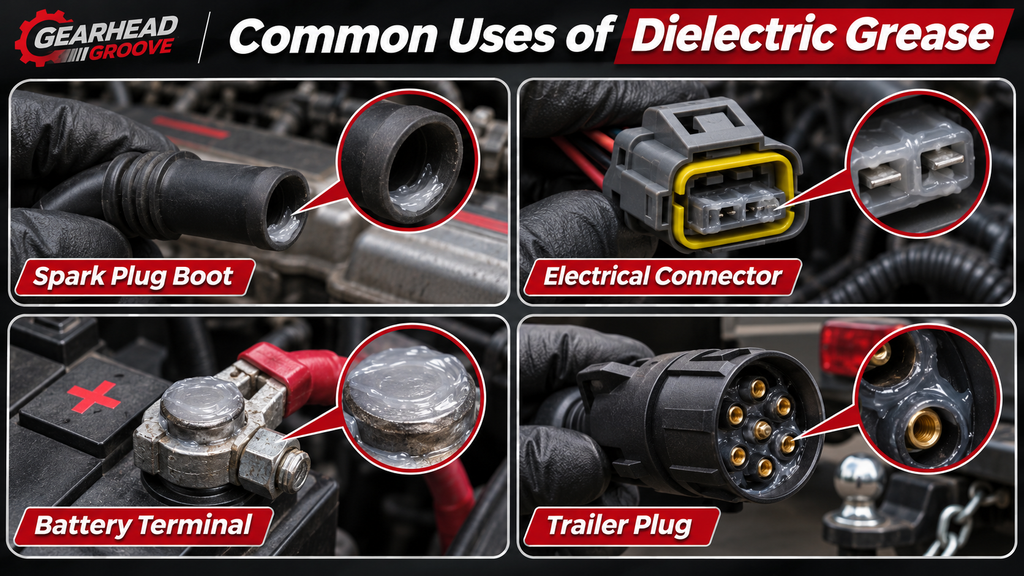
What Is Dielectric Grease Used For?
Dielectric grease has several automotive applications, but the correct use depends on the component design and manufacturer’s instructions.
| Component | Potential Benefit | Important Consideration |
|---|---|---|
| Spark plug boots | Insulation and easier boot removal | Apply a thin layer where specified |
| Electrical connectors | Moisture and contamination protection | Confirm connector compatibility |
| Battery connections | Environmental protection | Maintain clean, secure metal contact |
| Trailer connectors | Protection from road spray | Check plug and seal compatibility |
| Bulb sockets | Moisture and corrosion protection | Avoid prohibited or hot surfaces |
| Rubber seals | Lubrication during assembly | Verify material compatibility |
These examples do not mean every connector or automotive component should receive dielectric grease. Some sealed connectors are designed to work without additional lubricants.
How to Use Dielectric Grease on Spark Plug Boots
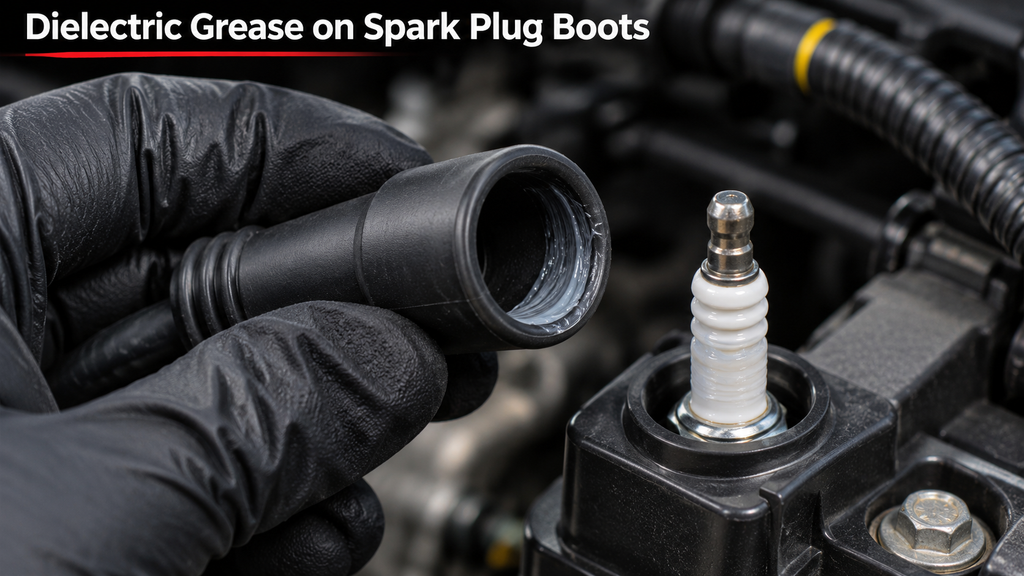
One of the most familiar applications of dielectric grease is on spark plug boots and compatible ignition coil boots.
These rubber or silicone boots fit over the spark plug’s ceramic insulator and electrical terminal. Suitable grease can reduce sticking and provide protection around insulating surfaces.
Recommended Application Steps
- Turn off the ignition and let the engine cool completely.
- Check the vehicle and ignition-component manufacturer’s instructions.
- Carefully remove the spark plug boot without pulling directly on the wire.
- Inspect the boot for cracks, burning, contamination, or damage.
- Clean the approved surfaces and allow them to dry.
- Apply a small, thin layer of suitable grease to the specified inside area of the boot or ceramic insulator.
- Reconnect the boot until it is securely seated.
Important: Do not pack the entire boot with grease. Avoid coating spark plug electrodes, ignition terminals, or threads unless the manufacturer specifically directs otherwise. Grease on spark plug threads may affect tightening behavior.
Ignition-component manufacturers generally recommend a light application only where required. Excessive grease may interfere with installation or operation.
Can You Use Dielectric Grease on Electrical Connectors?
Yes, dielectric grease may be appropriate for certain electrical connectors. However, connector-specific instructions determine whether grease is recommended, permitted, or prohibited.
For suitable connectors, the grease helps limit environmental contamination while properly mated metal contacts carry electrical current.
Before Applying Grease to a Connector
- Confirm that the connector is approved for the selected grease.
- Turn off the relevant electrical system and follow safe service procedures.
- Inspect contacts for corrosion, bending, looseness, or overheating.
- Clean contacts using a manufacturer-approved method, if required.
- Apply only the recommended quantity and placement.
- Reconnect the assembly fully and verify that its locking mechanism engages.
Some grease manufacturers permit application to mating terminals while maintaining direct metal-to-metal contact. Other connector manufacturers advise against adding grease because their products already contain engineered sealing systems.
Remember: Grease cannot fix a damaged terminal, weak contact spring, broken wire, or corroded connector. Repair the underlying fault before using protective grease.
Can You Put Dielectric Grease on Battery Terminals?
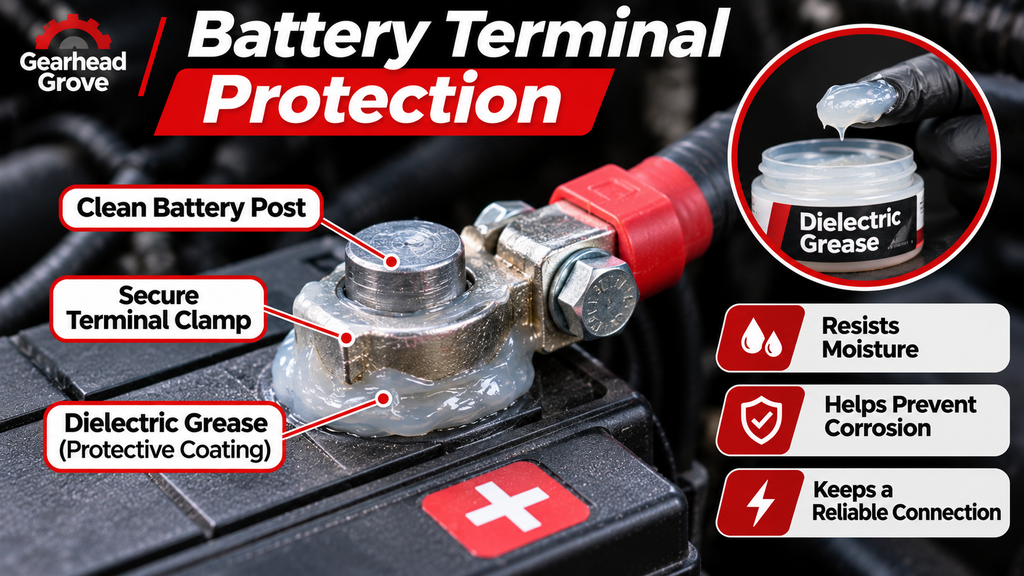
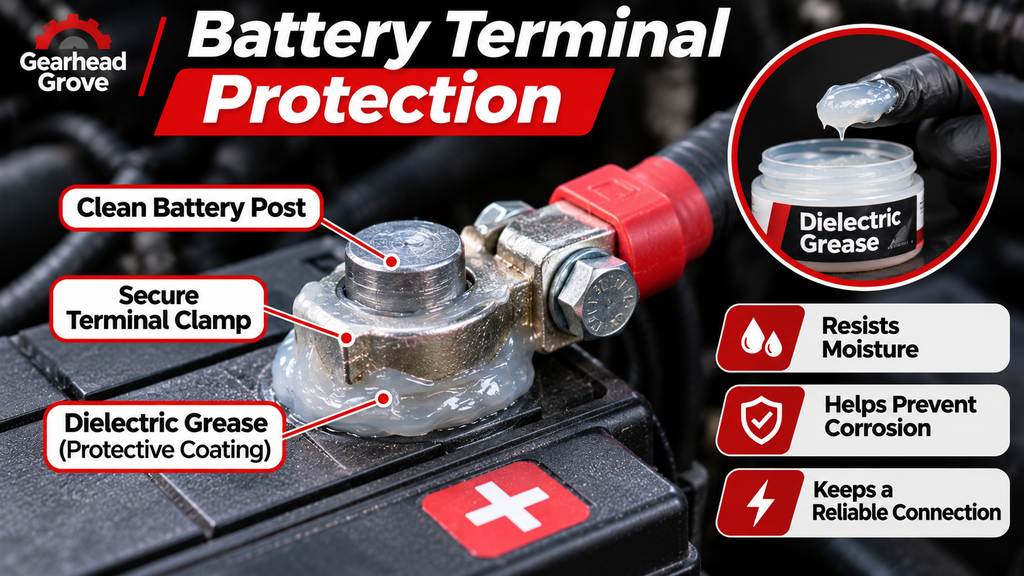
Dielectric grease is sometimes used to help protect suitable automotive battery connections from moisture and corrosion.
However, battery connections must remain electrically sound. Grease is not a substitute for cleaning corrosion, replacing damaged terminals, or tightening loose connections.
Safe Application Principles
- Check the vehicle manufacturer’s battery service instructions.
- Use suitable protective equipment when servicing lead-acid batteries.
- Clean and inspect terminals using the specified procedure.
- Ensure the terminal clamp makes secure electrical contact with the post.
- Apply an approved protective product only at the specified location.
- Confirm that the connection is secure and the cover is installed.
Applying a thin protective coating around an already assembled terminal is one common approach. Some product instructions also permit treatment of mating surfaces if reliable metal-to-metal contact is maintained.
The correct method depends on the terminal design and vehicle. Procedures for conventional lead-acid batteries should not be automatically applied to hybrid or high-voltage electric vehicle systems.
Other Automotive Applications of Dielectric Grease
Trailer Wiring Connectors
Trailer connectors experience rain, dirt, road spray, and salt. Where the connector manufacturer approves it, dielectric grease can help protect connections against contamination.
Headlight and Bulb Connectors
Some automotive lighting connectors permit dielectric grease to help protect contacts against moisture and corrosion. Keep the grease away from hot bulb glass, optical surfaces, and any area where application is prohibited.
Rubber Boots and Seals
Compatible dielectric grease may lubricate certain rubber and plastic components, making assembly easier and reducing sticking.
Always verify material compatibility because not every grease formulation is suitable for every seal or elastomer.
Benefits of Dielectric Grease
When used correctly, dielectric grease provides several practical maintenance benefits.
Moisture Protection
Helps shield suitable electrical components from water and condensation.
Corrosion Protection
Helps limit exposure to conditions that encourage corrosion.
Electrical Insulation
Provides insulation around appropriate electrical components.
Rubber Lubrication
Helps certain approved spark plug boots and seals resist sticking.
These benefits can support reliable operation, but dielectric grease cannot guarantee that an electrical connection will remain corrosion-free or trouble-free indefinitely
Is Electrical Grease the Same as Dielectric Grease?
The terms electrical grease and electric grease are sometimes used informally to describe products intended for electrical applications.
However, these terms do not guarantee that two products have identical electrical properties.
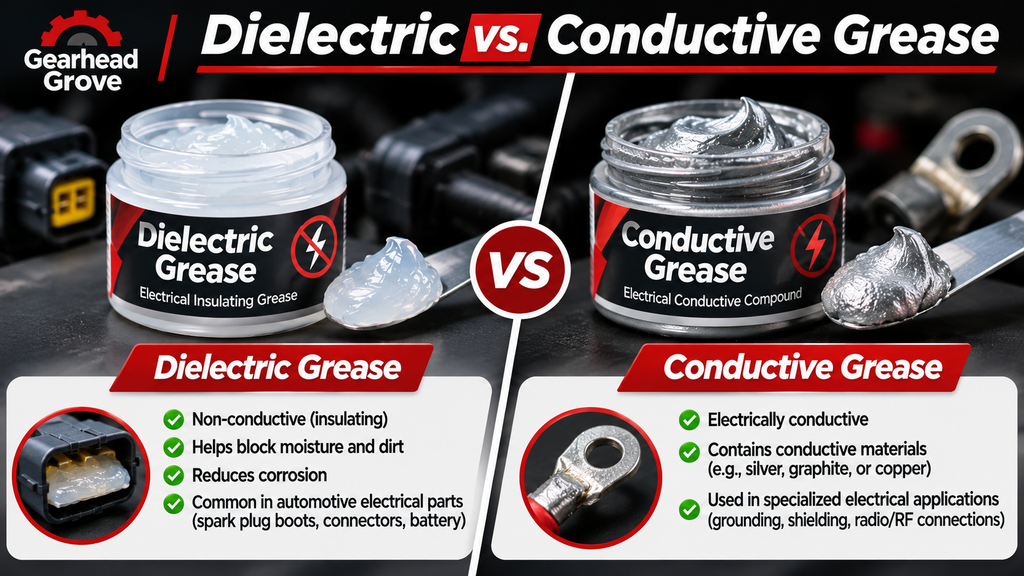
Dielectric grease is insulating. Other electrical contact lubricants may use different formulations, and some specialized compounds contain electrically conductive materials.
Before purchasing or applying a product, review its technical specifications rather than relying only on general product terminology.
Dielectric Grease vs. Conductive Grease
Dielectric and conductive greases are designed for different applications and should not be treated as interchangeable.
| Feature | Dielectric Grease | Conductive Grease |
|---|---|---|
| Electrical Property | Insulating | Designed with conductive properties |
| Main Purpose | Sealing, lubrication, insulation | Specialized electrically conductive applications |
| Composition | Often silicone-based | May contain conductive fillers |
| Automotive Use | Selected boots and approved connectors | Only in specifically approved applications |
| Interchangeable? | No | No |
Important: Never substitute conductive grease for insulating dielectric grease unless the equipment manufacturer specifically requires it. Conductive material in the wrong location can create electrical hazards.
Dielectric Grease vs. Regular Grease
Ordinary automotive grease is often used to reduce friction and wear in mechanical parts such as bearings, joints, and chassis components.
Dielectric grease is formulated for electrical insulation, environmental protection, and lubrication of suitable electrical-system components.
Regular grease may contain oils or additives that are unsuitable for electrical connectors or rubber seals, so it should not automatically replace dielectric grease.
The same applies to petroleum jelly. Although it can provide some barrier properties, it is not a universal substitute for purpose-made dielectric grease.
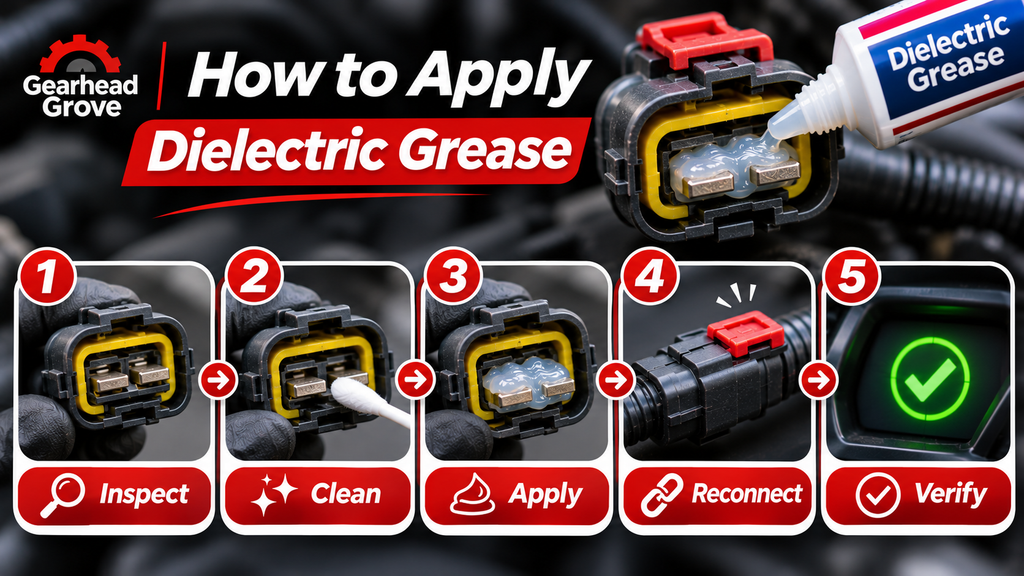
How to Apply Dielectric Grease Correctly
Correct application matters as much as choosing the right product. This general procedure applies only to manufacturer-approved low-voltage automotive maintenance.
Step-by-Step Application Checklist
- Identify the component. Confirm that its manufacturer permits dielectric grease.
- Read the product instructions. Check compatibility, temperature limits, and placement.
- Make the system safe. Turn off the ignition and follow the electrical service procedure.
- Inspect the connection. Look for corrosion, damaged terminals, broken seals, and overheating.
- Clean and dry. Use an approved cleaning method to remove contamination.
- Apply the specified amount. Use only the quantity recommended for that component.
- Reassemble correctly. Ensure terminals are fully seated and locking mechanisms engage.
- Check operation. Verify that the relevant system functions normally afterward.
For unfamiliar connectors, safety-critical systems, or persistent faults, consult a qualified technician rather than experimenting with grease placement.
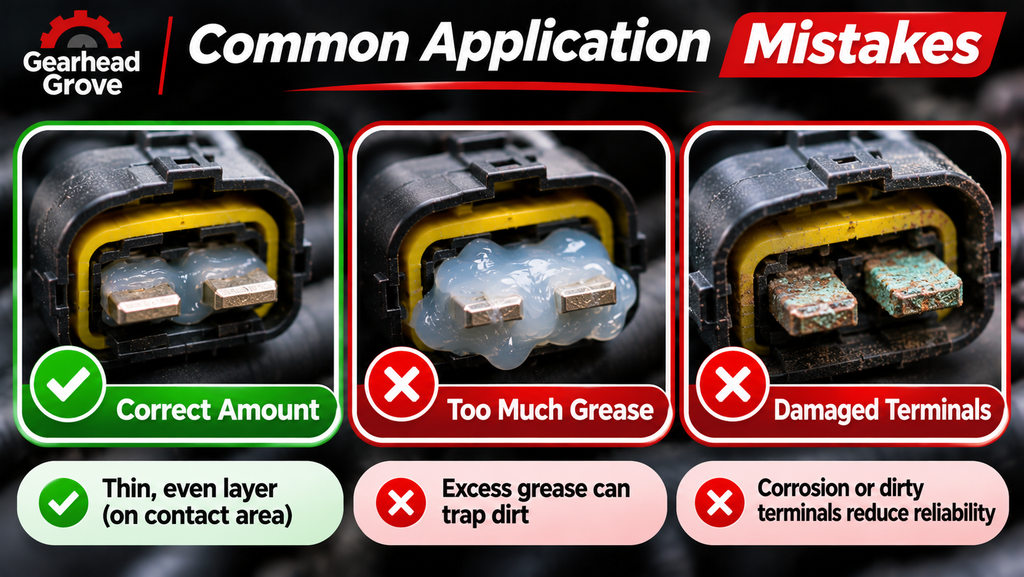
Common Mistakes When Using Dielectric Grease
Even a protective product can cause problems when applied incorrectly.
Mistakes to Avoid
- Using too much grease: Excess material may interfere with some connector assemblies or ignition boots.
- Applying grease to damaged contacts: Grease cannot restore proper contact pressure or repair corrosion damage.
- Ignoring connector instructions: Some sealed connectors prohibit added grease.
- Using the wrong product: General-purpose grease may have unsuitable electrical or material properties.
- Applying grease to prohibited surfaces: Certain components need clean, grease-free areas.
- Confusing protection with repair: A failing electrical circuit requires diagnosis.
If a connector shows signs of melting or its terminals are loose, cleaning and applying grease will not make it safe. Damaged components must be properly inspected and repaired.
When Should You Not Use Dielectric Grease?
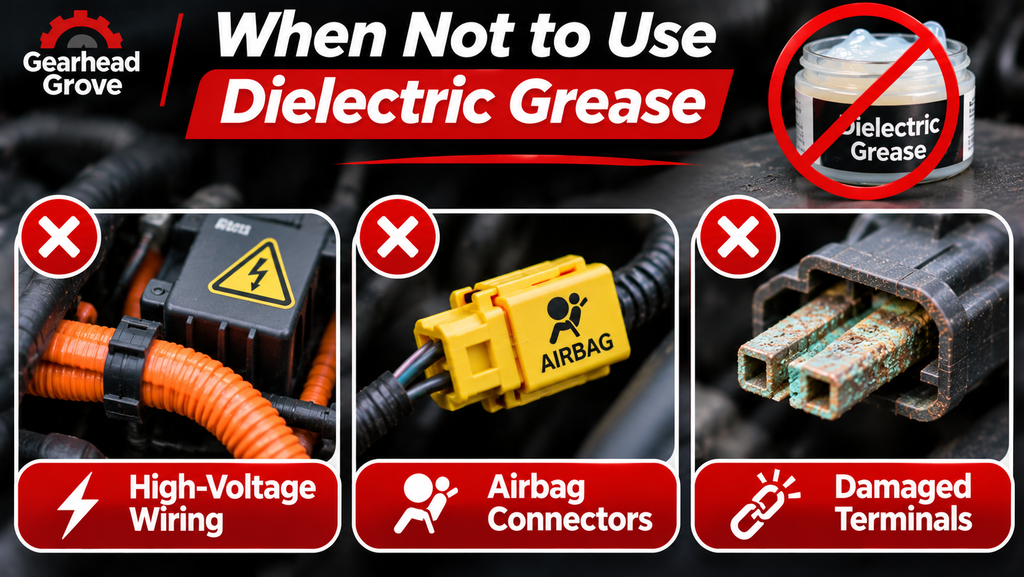
Dielectric grease is not appropriate for every electrical component.
Avoid applying it without explicit manufacturer approval to:
- High-voltage electric or hybrid vehicle systems.
- Airbag and supplemental restraint system connectors.
- Sealed connectors that prohibit additional lubricants.
- Sensor connectors with specialized contact requirements.
- Spark plug electrodes or threaded areas.
- Surfaces requiring thermal-transfer compounds.
- Damaged, overheated, loose, or badly corroded terminals.
- Components with unknown material compatibility.
Dielectric grease is not a universal remedy for intermittent electrical faults. When a connector or circuit is failing, proper diagnosis is more important than adding lubricant.
Electrical Safety Warning
Vehicle electrical systems can remain energized even when the ignition is off. High-voltage EV and hybrid circuits, airbag wiring, and certain battery systems require specialized procedures. Do not open or service them without appropriate training and manufacturer documentation.
Top 10 Frequently Asked Questions About Dielectric Grease
These FAQs are optimized for your article “Dielectric Grease: Uses, Benefits and Electrical Conductivity”, targeting common Google search queries and your primary keywords.
1. What is dielectric grease used for?
Dielectric grease is a non-conductive lubricant used to protect suitable electrical connections from moisture, corrosion, and contamination. Common automotive applications include spark plug boots, electrical connectors, battery terminals, and trailer wiring when approved by the component manufacturer.
2. Is dielectric grease conductive?
No, dielectric grease is electrically non-conductive. It acts as an insulator rather than carrying electrical current. In properly assembled connectors, electricity flows through direct metal-to-metal contact, while the grease provides environmental protection.
3. Can dielectric grease be used on electrical connections?
Yes, dielectric grease can be used on certain electrical connections when recommended by the manufacturer. It helps protect against moisture and corrosion. However, some sealed connectors prohibit additional grease, so always check the component’s instructions.
4. Can you put dielectric grease on spark plugs?
Yes, dielectric grease is commonly applied in small amounts inside compatible spark plug boots and around approved ceramic insulating surfaces. It helps prevent sticking and provides insulation. Avoid applying it to spark plug electrodes or threads unless specifically instructed.
5. Does dielectric grease prevent corrosion?
Dielectric grease helps reduce corrosion by creating a protective barrier against moisture, road salt, and environmental contamination. However, it cannot repair existing corrosion or damaged metal contacts. Electrical connections should be properly inspected and cleaned before application.
6. Can you use dielectric grease on battery terminals?
Yes, some dielectric grease products are suitable for protecting automotive battery terminals. A thin coating around an appropriately assembled connection can help reduce moisture exposure and corrosion. Ensure the battery clamp remains clean, tight, and electrically secure.
7. What is the difference between dielectric grease and electrical grease?
Dielectric grease is specifically formulated to provide electrical insulation and environmental protection. Electrical grease is a broader term that may refer to different contact lubricants, including specialized products with different electrical properties. Always check the product specifications before use.
8. Can dielectric grease cause electrical connection problems?
Yes, incorrect application can contribute to connection problems. Excessive grease or use on incompatible connectors may interfere with proper assembly or contact performance. Dielectric grease cannot compensate for loose terminals, damaged connectors, or poor electrical contact.
9. What is the difference between dielectric grease and conductive grease?
Dielectric grease is electrically insulating and primarily used for protection, sealing, and lubrication. Conductive grease contains materials designed for specialized electrically conductive applications. These products are not interchangeable and should only be used where specified by the equipment manufacturer.
10. How do you apply dielectric grease correctly?
First, turn off the relevant electrical system and inspect the component for damage or corrosion. Clean and dry the approved surfaces, then apply a small amount of dielectric grease in the location specified by the manufacturer. Reconnect the component securely and verify proper operation.