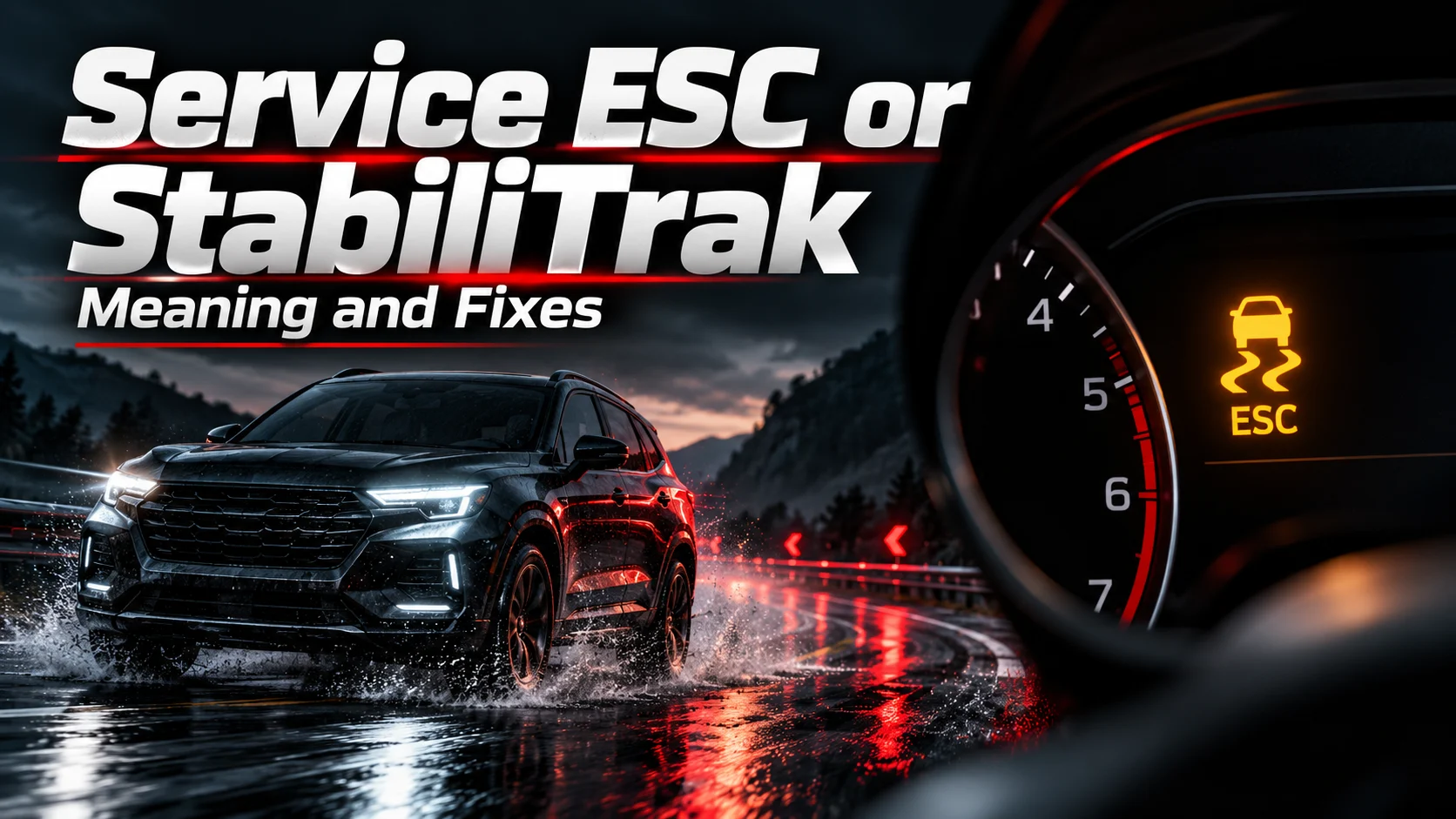
You’re driving when a dashboard message suddenly says “Service ESC” or “Service StabiliTrak.” The car might feel normal, but the message raises a serious question: is it safe to keep driving?
A Service ESC or StabiliTrak warning usually means your vehicle has detected a condition affecting electronic stability control or a related system. Common diagnostic possibilities include wheel-speed sensors, wiring, ABS components, steering-angle information, electrical supply, or certain engine-management faults. The message alone does not identify the failed part.
Quick Answer: What Does Service ESC Mean?
Service ESC means the stability-control system needs attention and its assistance may be limited or unavailable. Check for accompanying brake, ABS, steering, or engine warnings. If the vehicle behaves abnormally, stop safely and arrange help. Otherwise, follow your vehicle manual and obtain prompt diagnosis rather than trying random resets.
Is It Safe to Drive With Service ESC or StabiliTrak On?
In some vehicles, basic steering and braking continue to operate when ESC is unavailable. However, the system may no longer help correct a skid during a sudden maneuver or slippery turn. You should not assume that driving is safe just because the car feels normal.
| What you notice | What to do |
|---|---|
| ESC light flashes briefly on slippery pavement | This often means the system is actively helping. Reduce speed and drive smoothly. |
| Steady Service ESC message; braking and steering feel normal | Consult the manual, avoid challenging driving conditions, and arrange prompt diagnosis. |
| ESC and ABS lights appear together | Some safety assistance may be unavailable. Seek service promptly. |
| Red brake warning, unusual braking, instability, or steering problems | Stop as soon as safely possible and request professional assistance. |
Safety first: Electronic stability control cannot overcome tire-grip limits. Do not use an ESC warning as a reason to test handling on a public road.
What Is Electronic Stability Control (ESC) in a Car?
ESC stands for Electronic Stability Control. It helps maintain the direction the driver intends when the vehicle starts to understeer or oversteer. If you searched for ESC meaning, E.S.C meaning, what is ESC in a car, or what does ESC mean in a car, these phrases describe the same core safety function.
For example, while taking a wet bend, the vehicle may start moving farther toward the outside of the turn than the steering input suggests. ESC can selectively brake individual wheels and sometimes reduce engine power to help bring the vehicle back toward the intended direction.

ESC supports, rather than replaces, careful steering, suitable tires, and appropriate speed. It cannot prevent every loss-of-control situation.
How Does Electronic Stability Control Work?
Electronic stability control working relies on sensing, comparing, and responding. The system reads steering inputs, wheel movement, and vehicle motion to assess whether the car is following its intended path.
- Sensing: Wheel-speed, steering-angle, and vehicle-motion sensors report information.
- Analysis: Electronic controllers compare steering intention with the vehicle’s actual movement.
- Correction: When necessary, the system commands selective braking and may request engine-torque reduction.

ESC vs. ABS vs. Traction Control
| System | Main purpose |
|---|---|
| ESC | Helps the vehicle follow the intended travel direction when a skid develops. |
| ABS | Helps prevent wheel lock during braking. |
| Traction control | Helps control excess drive-wheel spin during acceleration. |
These systems are distinct, but often share sensors or braking hardware. One fault can therefore result in multiple warnings.
What Is StabiliTrak in Chevrolet and GM Vehicles?
StabiliTrak is General Motors’ name for its electronic stability control technology. It is found on various Chevrolet, GMC, Buick, and Cadillac models, with specific features differing by model and year.
For drivers searching what is StabiliTrak or Service StabiliTrak Chevy, the message indicates that the vehicle has identified a possible issue affecting stability-control operation or a system it depends upon.
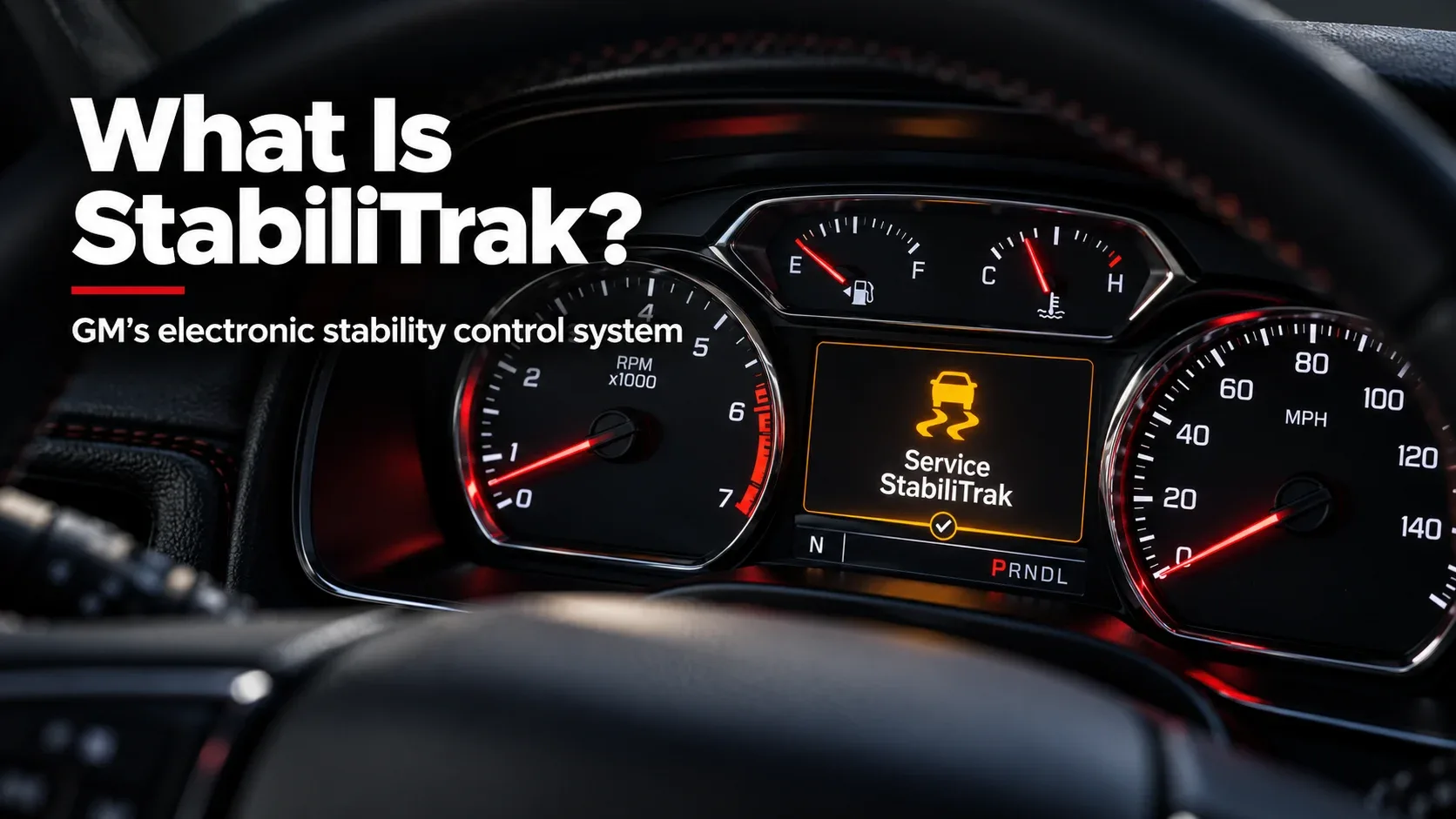
A Silverado, Equinox, Malibu, Traverse, Tahoe, or other Chevrolet may show a StabiliTrak warning. Do not assume the same repair applies to every Chevrolet vehicle.
What Does the Electronic Stability Control Light Mean?
The electronic stability control light often appears as an amber car with curved skid marks. The meaning changes with whether it flashes, remains steadily lit, or is accompanied by an ESC OFF or service message.

Flashing Light
Flashing during slippery driving often indicates ESC or traction control is actively intervening. Reduce speed and avoid abrupt steering or acceleration.
Steady Warning Light
A light that stays on may indicate a disabled system or malfunction, depending on the vehicle and accompanying dashboard message. Check the exact owner’s manual.
ESC OFF Indicator
An ESC OFF light generally indicates the feature has been switched off. Restore the correct setting using the vehicle’s approved controls if appropriate.
Common Causes of Service ESC and Service StabiliTrak Warnings
A persistent Service Electronic Stability Control message may have several possible causes. Identifying the right one requires diagnostic data, not guesswork.

1. Wheel-Speed Sensor Fault
ESC and ABS require dependable wheel rotation data. Damaged sensors, sensor circuits, or related wheel components can interrupt these readings.
2. Damaged Wiring or Connectors
Road debris, corrosion, poor connections, or stretched harnesses can interrupt wheel-speed and other electronic signals.
3. Steering-Angle Sensor Problems
ESC needs reliable steering input information. Incorrect readings or missing calibration can interfere with the system.
4. ABS System Faults
ESC depends on braking-control hardware and electronics. ABS-related problems may also disable stability assistance.
5. Weak Battery or Charging-System Issues
Low or unstable voltage may contribute to electronic faults and multiple warning messages, but an ESC warning does not prove that a battery needs replacing.
6. Engine-Management or Module Communication Issues
Some stability systems request engine-torque reduction. Engine or communication faults can sometimes affect that cooperation.
7. Tire and Wheel Conditions
Improper tire sizing, damaged tires, or certain wheel problems can interfere with expected wheel information. Inspect for obvious issues without assuming tire pressure alone caused the warning.
Diagnosis tip: Trouble codes guide testing. A code mentioning a sensor is not always proof that the sensor itself is defective.
How to Diagnose and Fix a Service Electronic Stability Control Warning
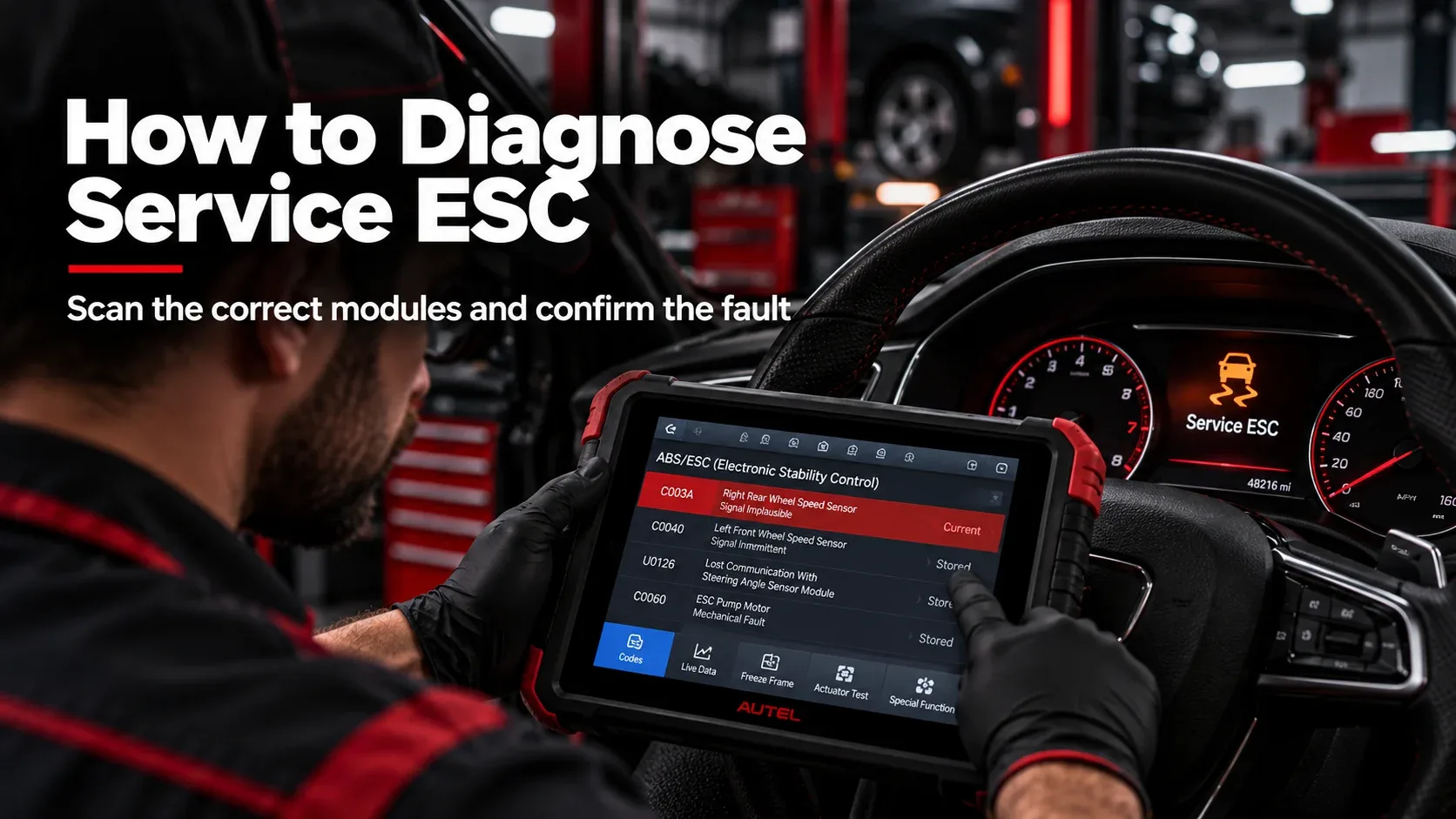
Start with the symptom, then confirm the fault using the correct diagnostic system. Replacing sensors or disconnecting the battery without testing can waste money and obscure important evidence.
Record the Dashboard Messages
Note whether Service ESC, ABS, brake, check-engine, or other warnings appear and when they happen.
Assess Safety
Stop safely if steering, braking, or vehicle stability is abnormal. Do not perform road tests when the vehicle may be unsafe.
Check Obvious Conditions
While parked, inspect tire condition, verify the approved tire specifications, and check whether ESC was intentionally switched off.
Scan Relevant Control Modules
Use equipment that can read chassis, ABS, ESC, and relevant engine data. Basic engine-only OBD-II scanners may not retrieve all necessary codes.
Test Suspected Circuits or Components
Follow manufacturer diagnostic procedures to verify sensor signals, wiring, supply voltage, calibration, or module communication.
Repair and Verify
Repair the confirmed fault and ensure warning indicators, diagnostic checks, and any required calibration behave correctly afterward.
Important: Repairs involving brake hydraulics, stability controls, or electronic calibration may require a qualified technician and specialized tools.
How to Reset the Service StabiliTrak Light
Drivers often search how to reset Service StabiliTrak light, but a reset is not necessarily a repair. If an actual fault remains, the warning may return immediately or after further driving.
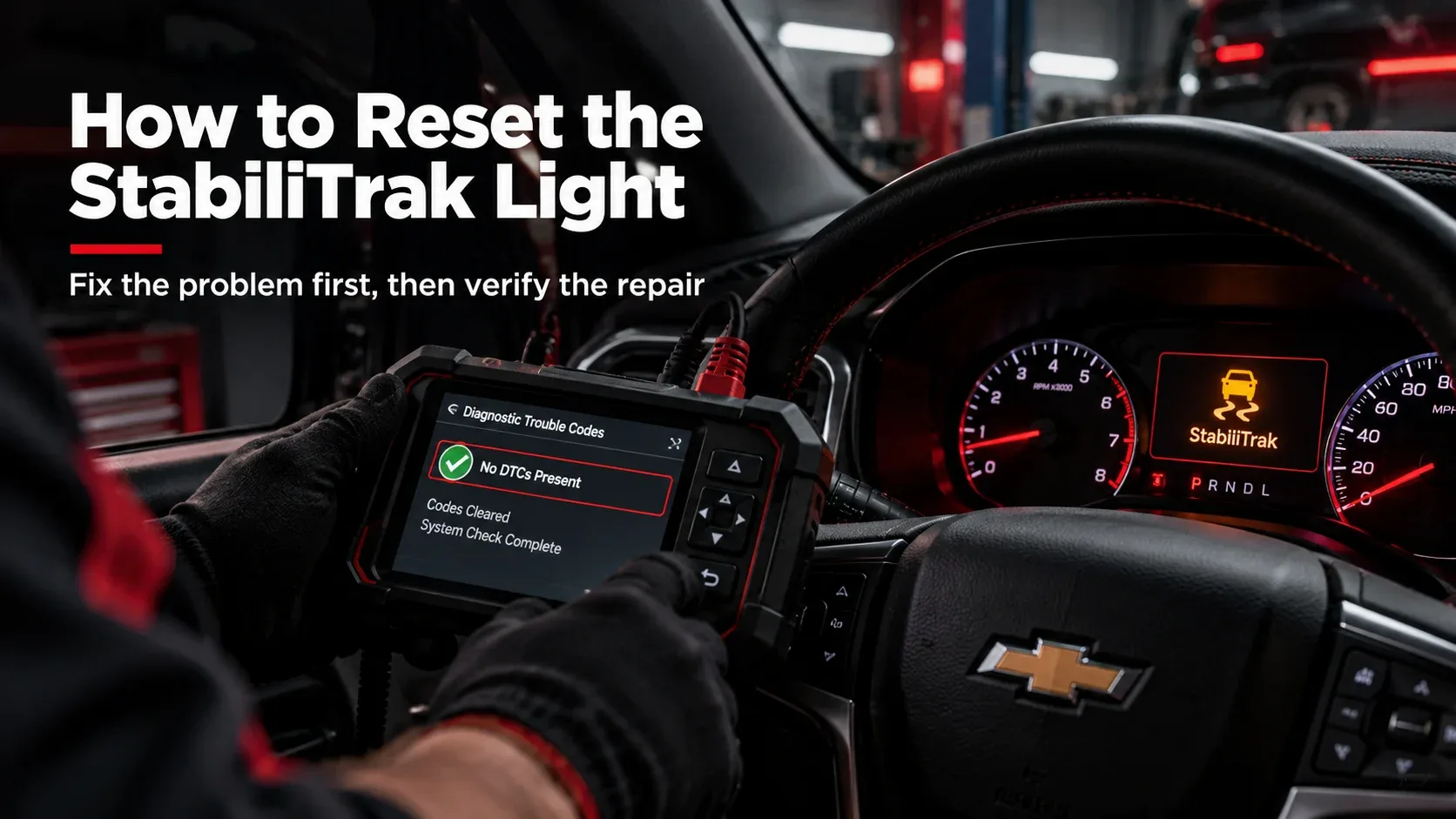
- Identify and fix the fault. Read relevant diagnostic trouble codes and test the affected system.
- Check whether ESC was manually disabled. Use your vehicle’s own activation controls if applicable.
- Follow vehicle-specific instructions. Some temporary warnings can disappear after normal checks complete.
- Clear stored codes only when appropriate. A technician may do so after an actual repair.
- Verify the results. Recurrent messages need more diagnosis.
Avoid universal battery-disconnect fixes: Disconnecting the battery does not repair a defective component and may introduce additional calibration or electronic issues.
Why Does “Hill Start Assist Not Available” Appear?
Hill Start Assist Not Available indicates that the feature intended to help limit rollback while starting on an incline is unavailable. Some vehicles share information or hardware between hill-start assistance, braking, and ESC, so the messages can appear together.

Possible explanations include an ESC/ABS-related fault, missing wheel-speed or motion data, a wiring or communication issue, or a vehicle-specific operating condition. Do not assume that two messages require two separate repairs. Use the regular brakes and consult the vehicle manual.
BMW Chassis Stabilization Warning vs. Service ESC
The term chassis stabilization BMW can involve BMW’s Dynamic Stability Control (DSC) or related vehicle-dynamics functions. It serves a similar broad purpose to ESC, but the exact warning and diagnosis differ between BMW and GM vehicles.
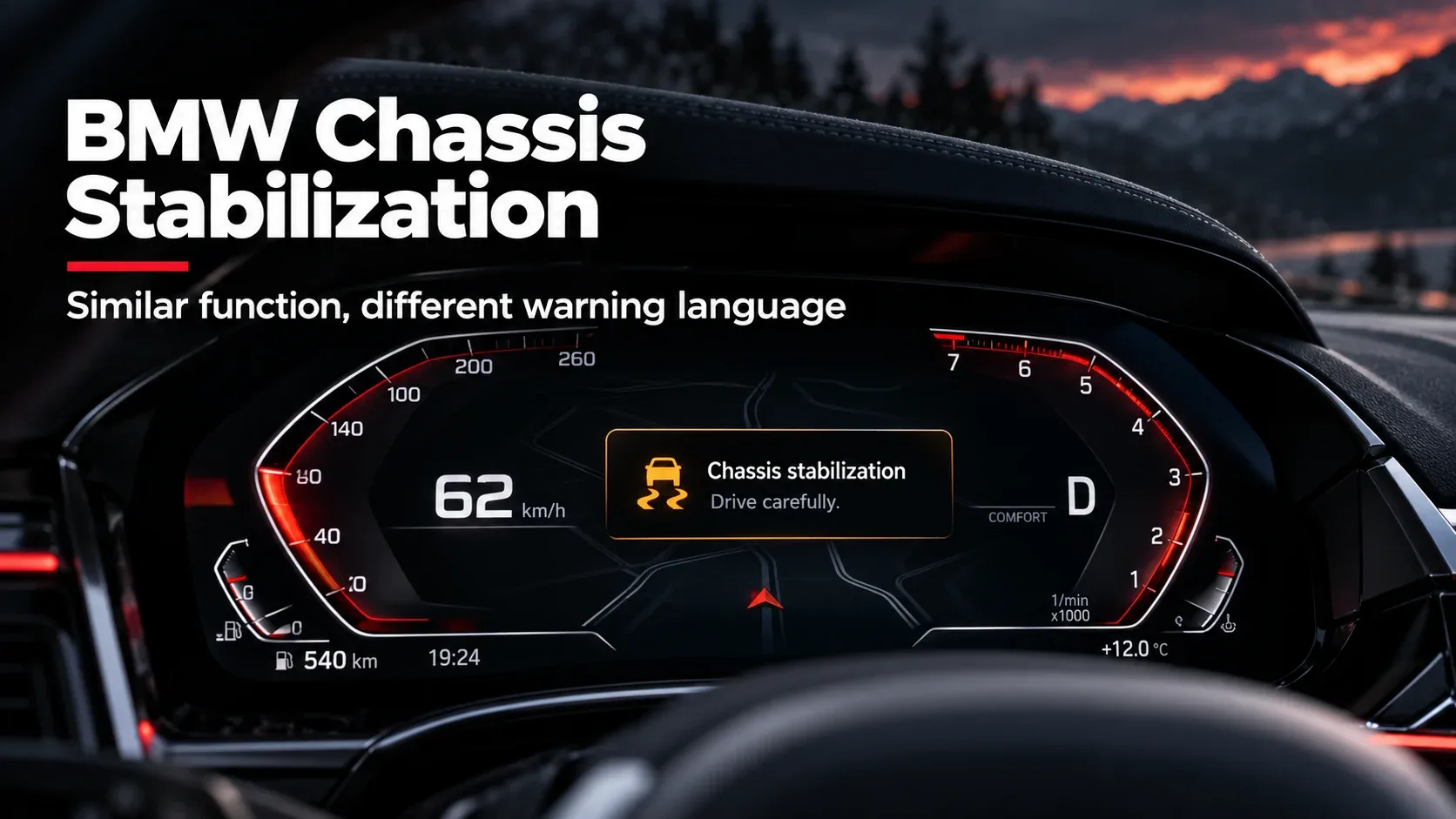
A BMW chassis warning should be investigated using the exact dashboard wording, model-year information, and compatible BMW diagnostic equipment. Avoid applying Chevrolet-specific reset instructions to a BMW.
How Much Does Electronic Stability Control Repair Cost?
ESC service costs depend on the confirmed fault, vehicle design, shop labor rates, and required programming or calibration. A connector repair and an ABS hydraulic unit replacement will not have comparable costs.
| Potential work | Why cost varies |
|---|---|
| Diagnosis | Time and equipment required to access and test relevant modules. |
| Wheel-speed sensor or wiring | Part accessibility, wheel-hub integration, and harness damage. |
| Steering-angle calibration | Manufacturer procedure and tool requirements. |
| ABS module or hydraulic unit | Replacement parts, installation, programming, and brake-system procedures. |
| Battery or charging repair | Which electrical component is actually defective. |
Request an itemized diagnosis and an explanation of the tests performed before approving expensive repairs.
How to Reduce the Risk of Future ESC Problems
Although electronic faults cannot always be prevented, good maintenance can help minimize avoidable stability-control problems.

- Maintain recommended tire sizes, pressures, and condition.
- Address persistent ABS, brake, and traction-control warnings promptly.
- Protect sensor wiring during wheel-hub, suspension, and brake repairs.
- Investigate recurring low-voltage or charging symptoms.
- Complete manufacturer-required calibrations after relevant repairs.
Frequently Asked Questions
What does ESC mean in a car?
ESC means Electronic Stability Control. The system helps manage a developing skid by comparing vehicle movement with steering intent and applying corrective actions.
Is Service ESC the same as Service StabiliTrak?
Both refer to stability-control functionality, but StabiliTrak is GM-specific terminology and warning behavior varies by model.
Can I drive with a Service ESC light on?
Some vehicles retain basic braking and steering, but important stability assistance may be unavailable. Follow the owner’s manual; stop safely if any serious warning or abnormal behavior appears.
Can a weak battery cause the StabiliTrak warning?
Sometimes unstable voltage contributes to electronic faults, but electrical testing is required to establish the cause.
Can a faulty ABS sensor trigger Service ESC?
Yes. Wheel-speed information is often shared among ABS, traction control, and stability control.
Will Service StabiliTrak reset itself?
A temporary warning might clear after the relevant condition disappears, but persistent or recurring warnings need diagnosis.
What does Hill Start Assist Not Available mean?
The vehicle cannot currently provide its usual hill-start assistance. A shared braking or stability-control fault is one possible explanation.
Is ESC the same as traction control?
No. Traction control manages drive-wheel spin, while ESC helps maintain directional stability. They often share parts and data.
Final Thoughts: What to Do When Service ESC Appears
Do not ignore a persistent Service ESC or StabiliTrak warning, and do not assume a particular sensor is defective based on the message alone. Check other alerts, consider driving safety first, obtain the correct module codes, repair the verified fault, and confirm the warning is resolved.
- Flashing and steady ESC lights can mean different things.
- ABS, steering, electrical, or engine-management faults may be involved.
- Clearing codes is not the same as repairing a problem.
- A vehicle-specific service procedure is the safest basis for diagnosis and repair.