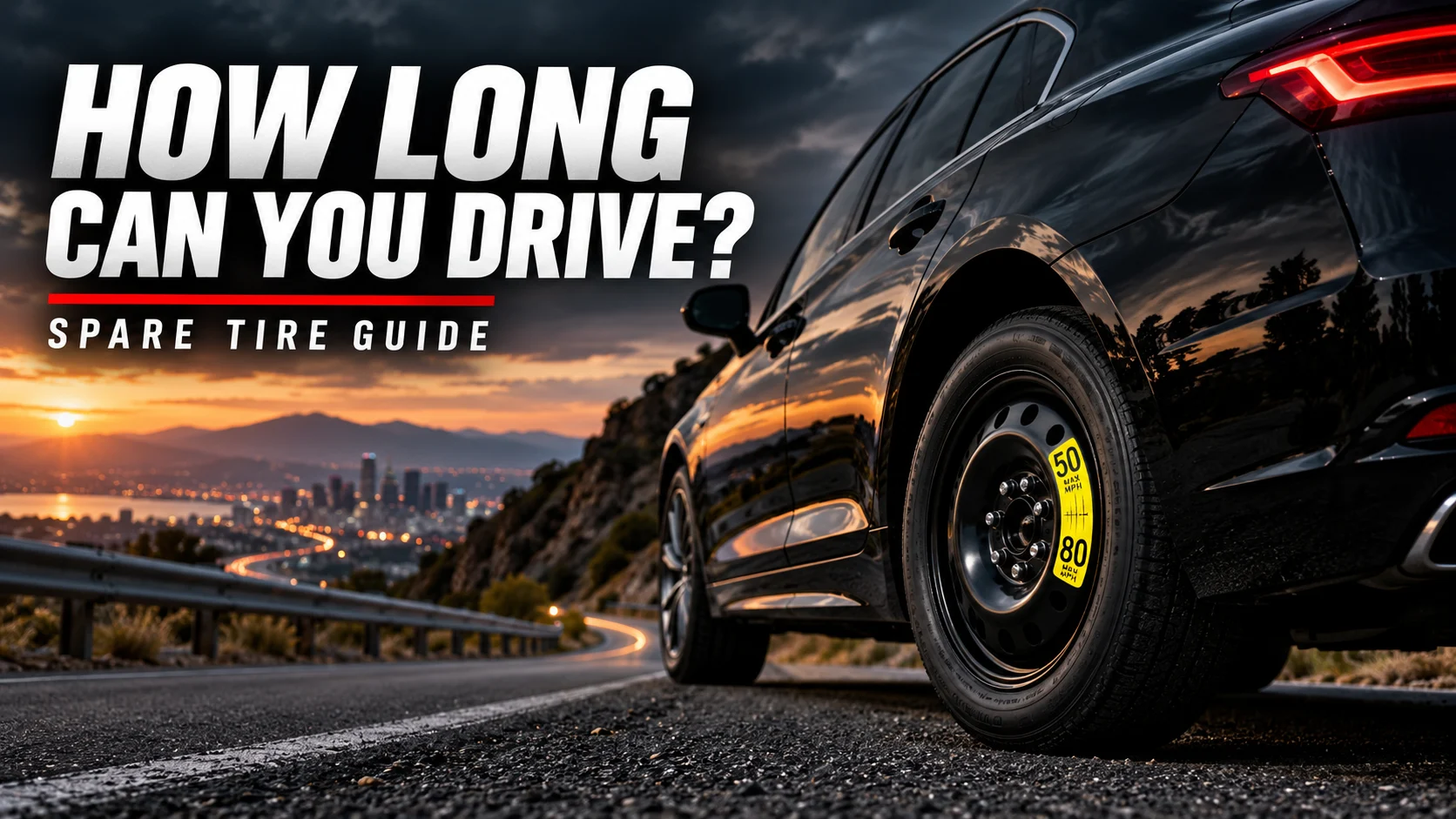
If you’ve recently had a flat tire and installed a spare, you’re probably wondering: how long can I drive on a spare tire? The answer depends on whether your car carries a compact donut spare, a full-size matching spare, or another type of temporary spare.
A temporary spare is designed to help you reach a repair facility, not to replace your normal tires for routine commuting or long road trips.
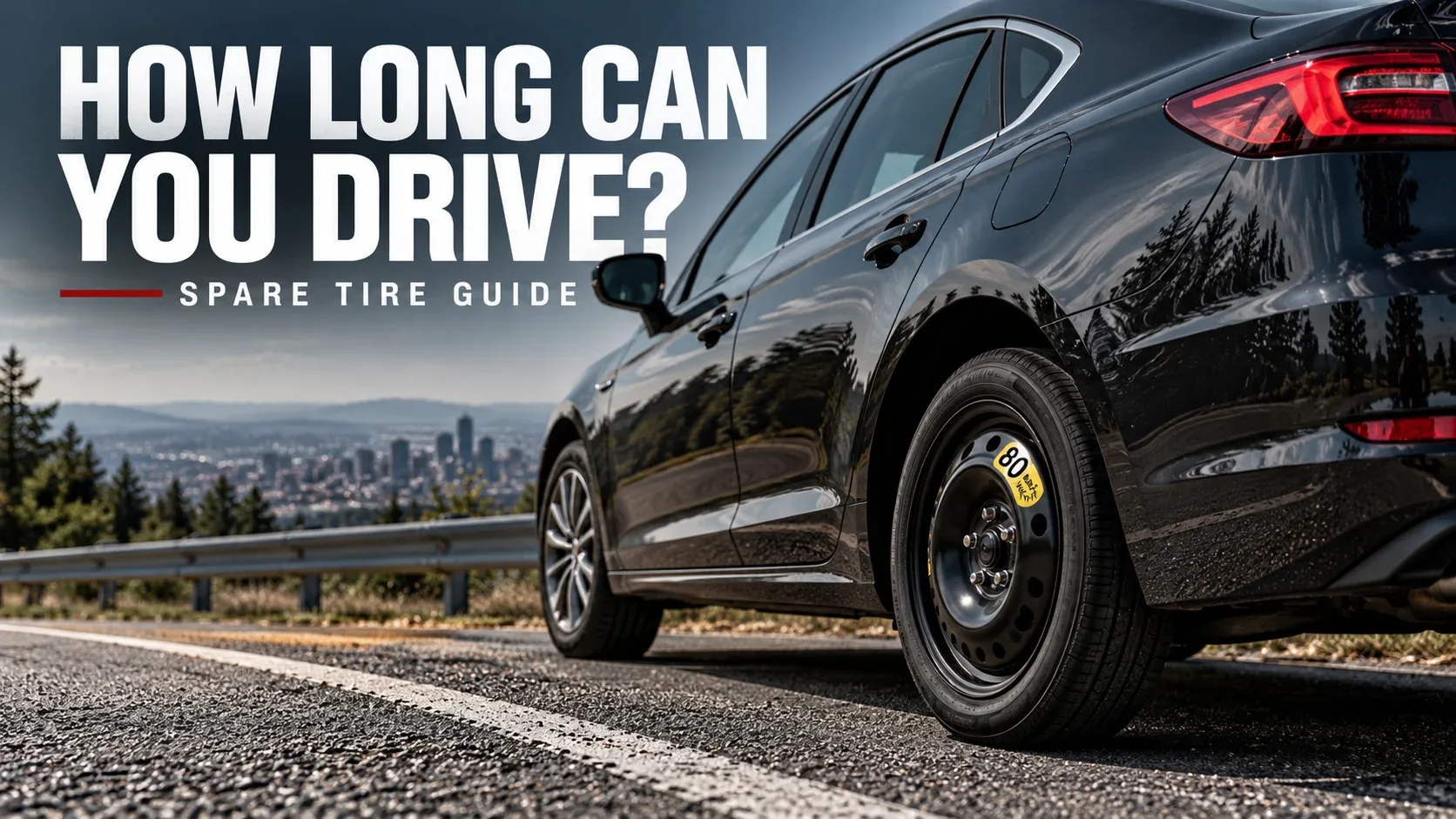
How Long Can You Drive on a Spare Tire?
Many compact donut spares are meant for about 50 miles of emergency travel at no more than 50 mph. These are common guidelines, not universal limits. The vehicle owner’s manual and tire markings take precedence.
Do not drive on a damaged, underinflated, or incompatible spare—even for a short distance.
This guide explains how far and how fast you can travel, how different spare tires compare, which driving conditions demand extra caution, and when to arrange professional help.
On This Page
What Is a Spare Tire and How Does It Work?
A spare tire is an extra tire intended to keep your vehicle mobile when a regular tire goes flat or is damaged. Some vehicles carry a full-size spare, while others include a smaller temporary tire commonly called a donut.
Why Are Donut Spare Tires Smaller?
Compact spares save storage space and reduce weight. Their narrower construction can provide different traction and handling from regular tires. That is why manufacturers generally set limits on temporary-spare speed, distance, and use.
How Far Can You Drive on Different Types of Spare Tires?
Your safe driving distance depends mainly on the spare’s type, condition, and manufacturer instructions. There is no single mileage limit that applies to every spare tire.
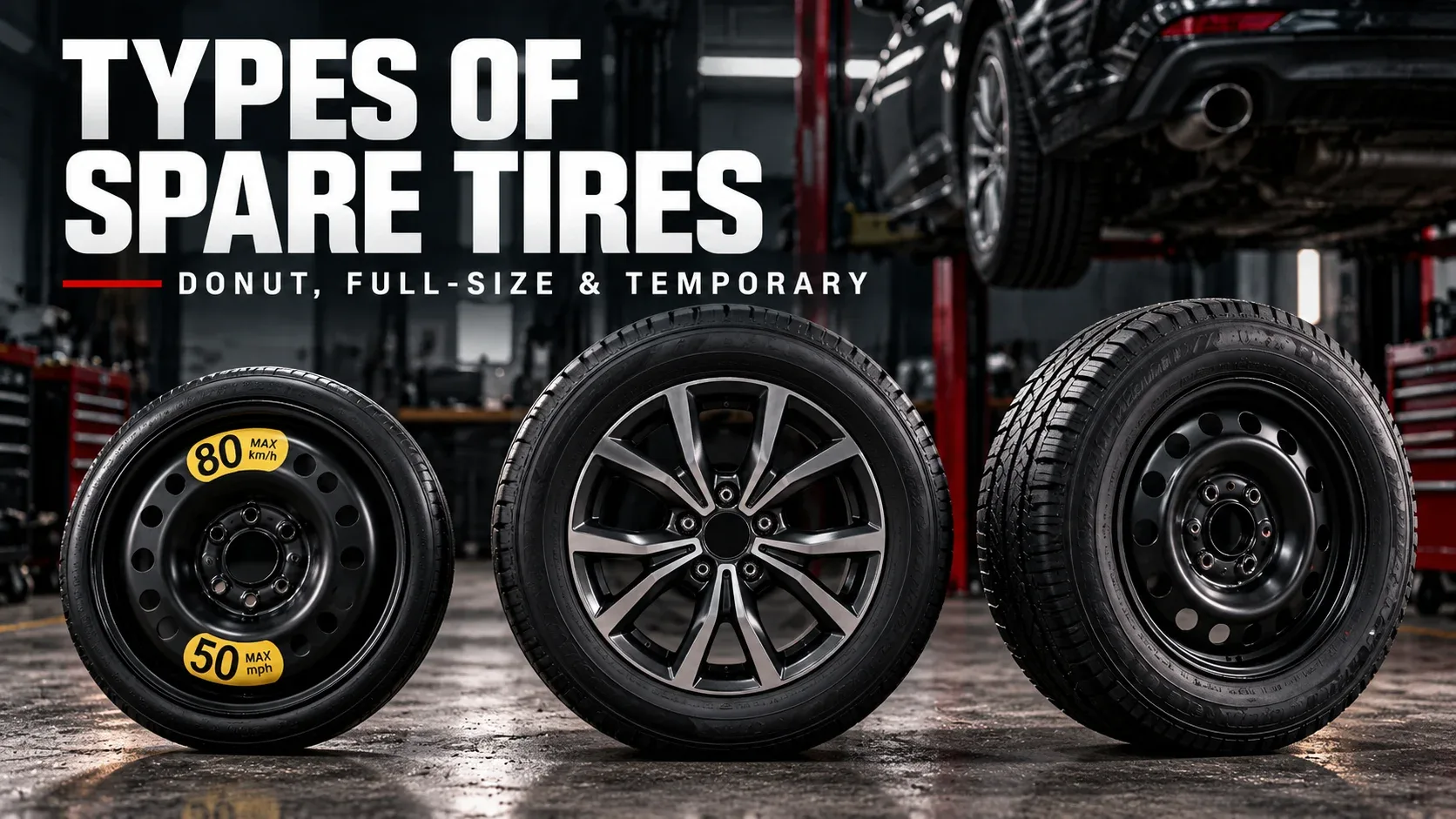
1. Compact Donut Spare Tire
A compact donut is narrower than a typical road tire. Many are intended for approximately 50 miles at a maximum of 50 mph. Treat it as an emergency way to reach a nearby repair shop.
2. Full-Size Matching Spare Tire
A full-size matching spare has the appropriate tire and wheel specifications for the vehicle. If it is roadworthy, correctly inflated, and compatible with the other tires, the manufacturer may allow normal use. Tire age, tread depth, and AWD requirements still matter.
3. Full-Size Temporary Spare Tire
Some vehicles have a spare that looks full-size but has different construction or specifications. It may still have temporary-use limits, so check its marking and the vehicle manual.
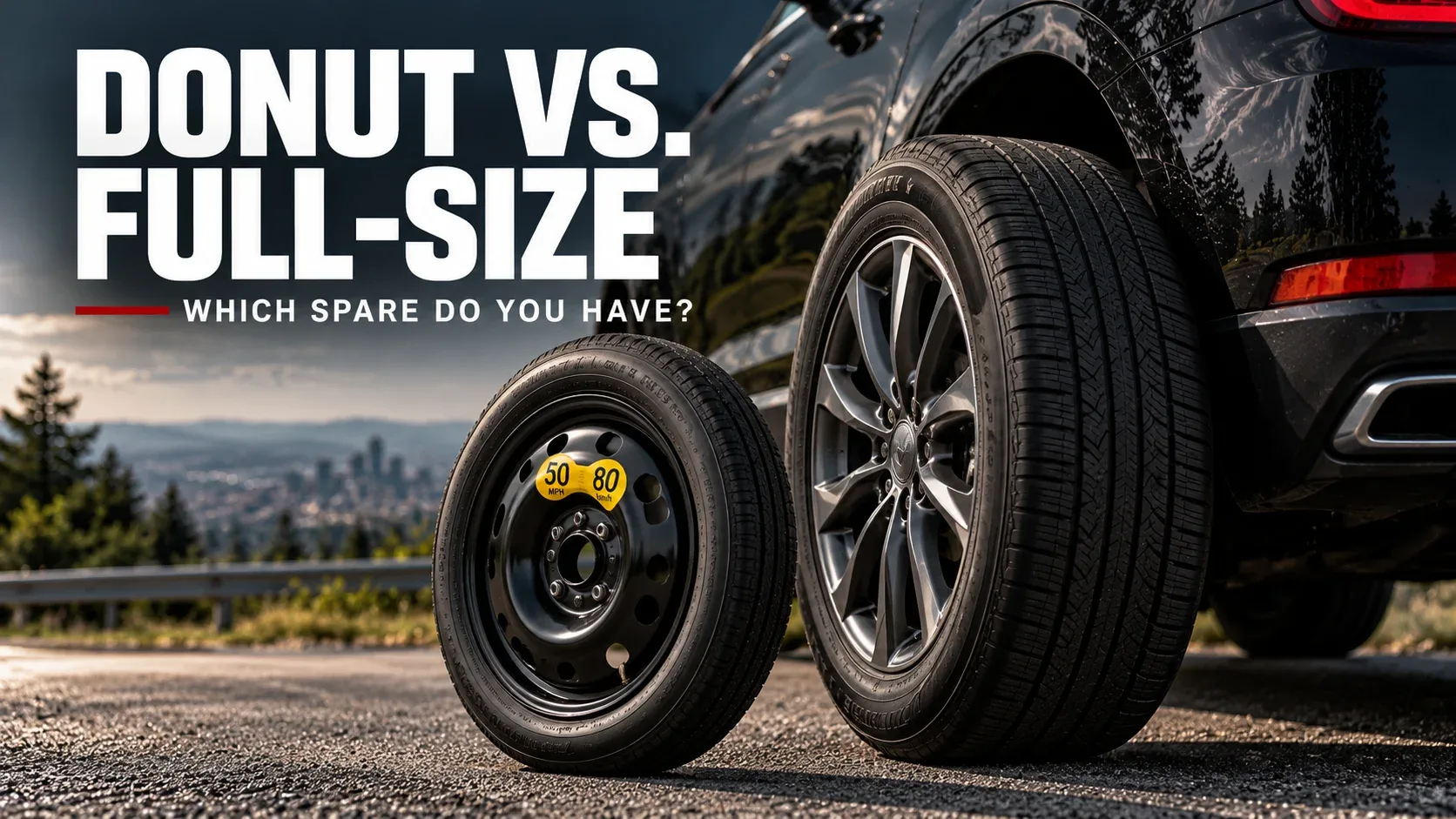
Spare Tire Distance and Speed Comparison
| Spare Type | Distance Guidance | Speed Guidance | Use |
|---|---|---|---|
| Compact donut | Commonly about 50 miles | Commonly 50 mph maximum | Emergency only |
| Matching full-size | Condition and vehicle dependent | Normal limits if approved | Potential regular use |
| Temporary full-size | Manufacturer-specific | Manufacturer-specific | Temporary use |
Never identify a spare solely by appearance. Read the tire sidewall labels and follow your manufacturer’s directions.
How Fast Can You Drive on a Spare Tire?
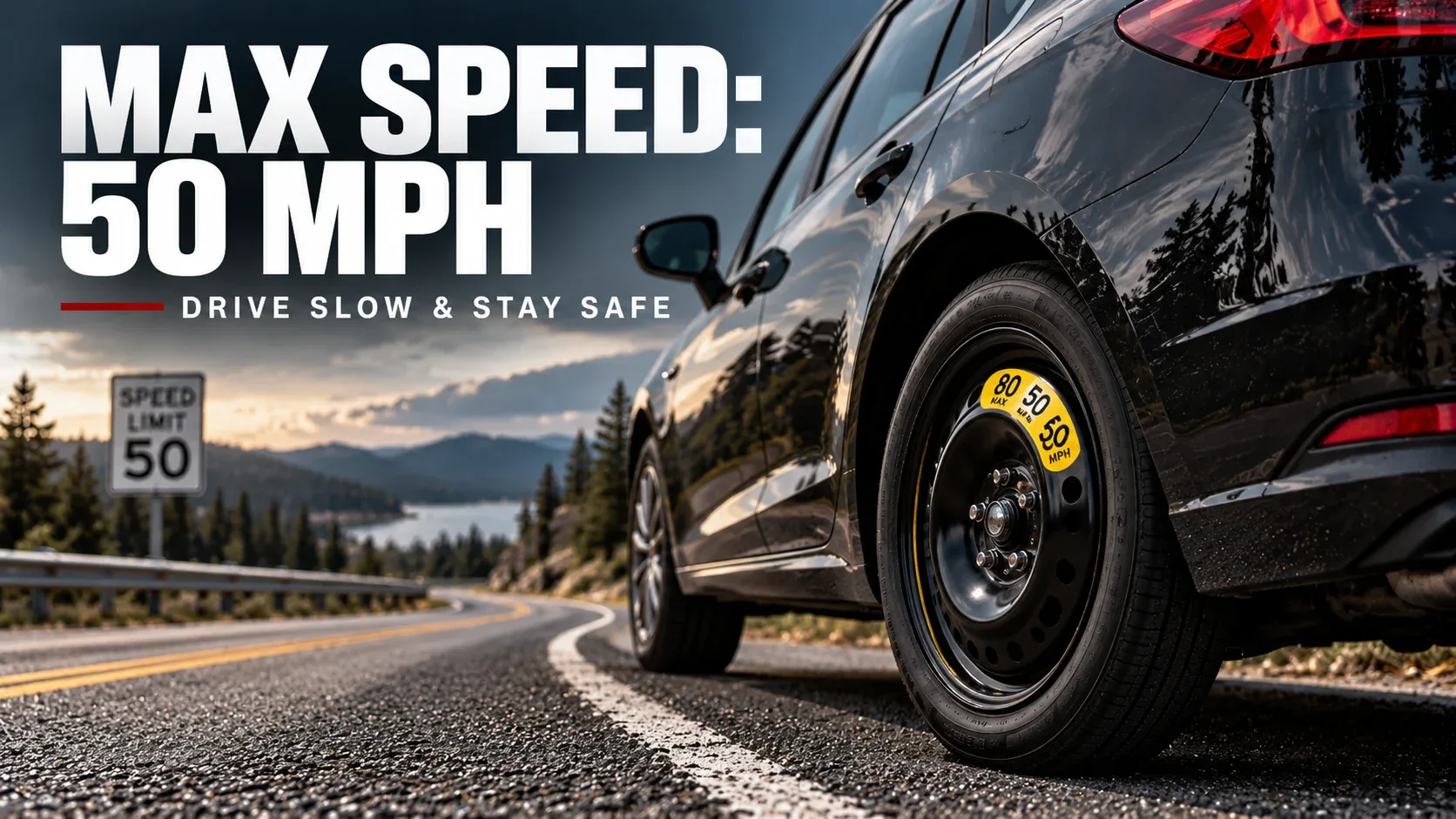
Many compact temporary spares are rated for a maximum speed of 50 mph (about 80 km/h). This is an upper limit, not a target. Slower travel may be necessary depending on traffic, visibility, road surface, and weather.
Why Does Driving Speed Matter?
- Heat: Higher speeds can increase tire stress and heat buildup.
- Handling: Steering response may differ from normal tires.
- Traction: Wet roads and abrupt braking can increase risk.
- Tire damage: Exceeding the tire’s operating limits may increase failure risk.
Can You Drive on the Highway With a Spare Tire?
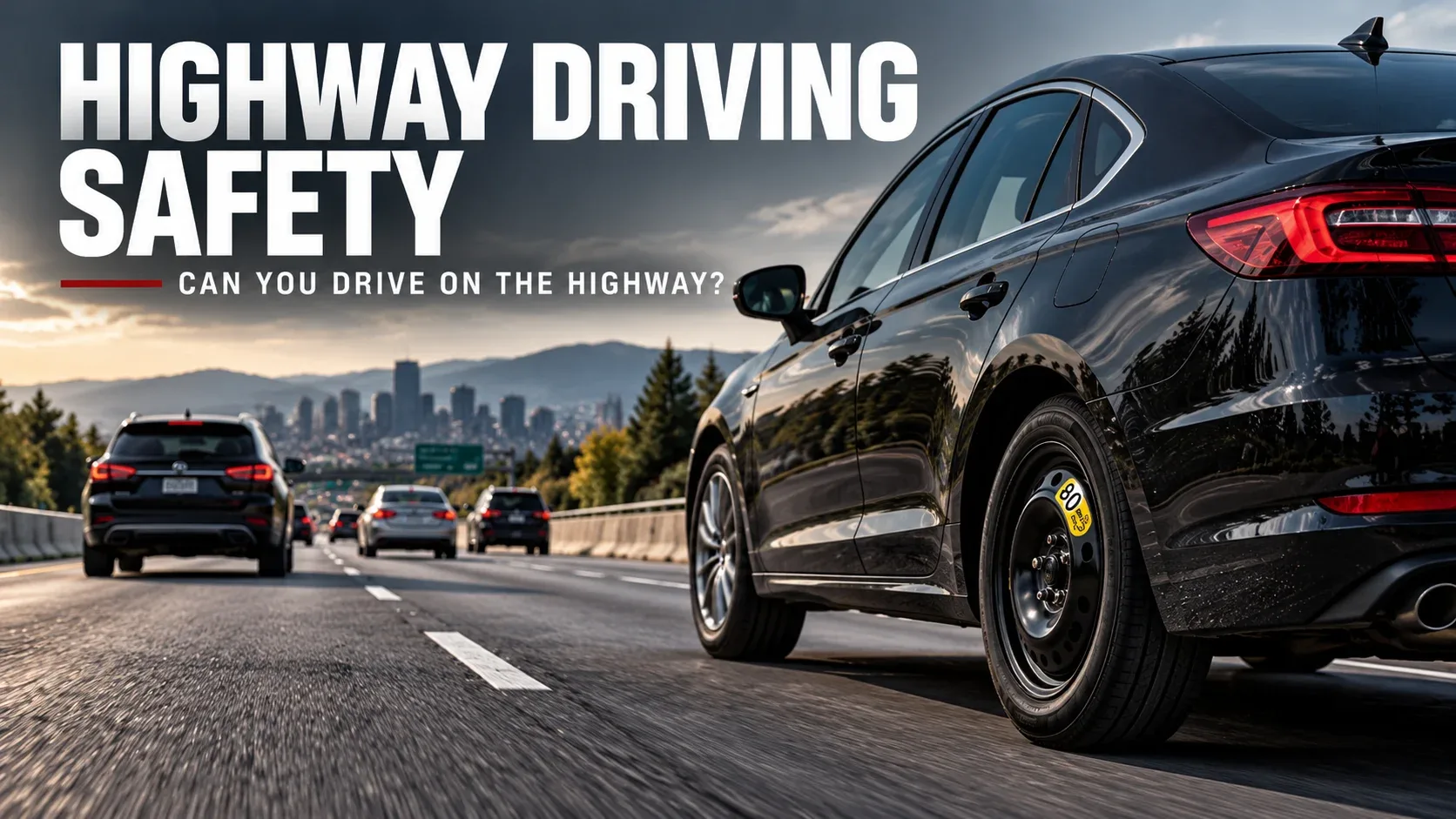
Highway travel with a compact temporary spare is best avoided when a safe alternative route or roadside assistance is available. Highway traffic may move faster than your spare’s speed rating, and the vehicle’s handling may be different.
Precautions if Highway Travel Cannot Be Avoided
- Never exceed the speed rating printed on your temporary spare.
- Use the appropriate slower lane where laws and conditions permit.
- Leave more space between your vehicle and the one in front.
- Avoid sudden steering, hard braking, and aggressive lane changes.
- Exit safely as soon as you can reach a suitable tire service location.
- Call for a tow if safe travel within the tire’s limit is not possible.
For example, a 50-mph-limited spare may be unsuitable for a fast-moving interstate where reduced speed creates a serious traffic hazard. In that situation, assistance may be safer than continuing.
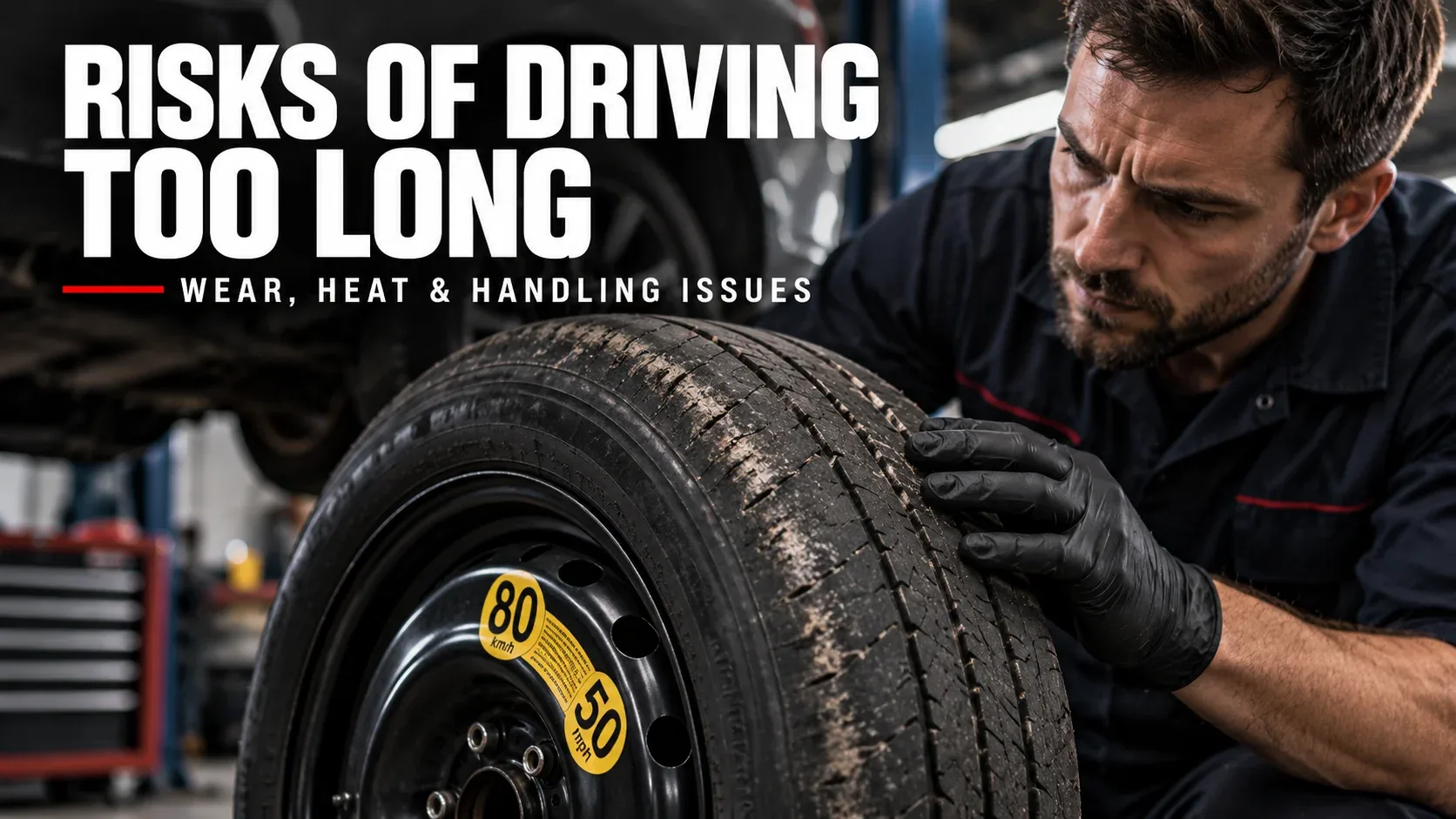
What Happens if You Drive Too Long on a Spare Tire?
Using a compact spare beyond its intended limits can increase tire damage risk and change vehicle behavior. The consequences depend on tire design, inflation, road conditions, vehicle weight, and drivetrain.
1. Increased Tire Damage Risk
Compact spares are not engineered for the same continuous service as normal road tires. Excessive mileage, speed, load, or improper inflation can contribute to premature wear or damage.
2. Reduced Traction and Stability
A narrower temporary tire may respond differently in wet weather, sharp turns, and sudden braking.
3. Possible Drivetrain Issues
Some AWD and 4WD vehicles are sensitive to differences in rolling circumference. Using an unsuitable spare may strain drivetrain components. Consult your manual for mounting position and tire compatibility instructions.
4. Braking and Warning-Light Changes
Tire size differences may affect braking and stability behavior. A tire pressure, ABS, or traction warning should not be dismissed without checking its cause.
Warning Signs: Pull Over Safely
- Strong vibration or shaking
- Grinding, thumping, or unusual tire noises
- Severe pulling or unstable steering
- Visible bulges, cuts, or tread separation
- Rapid pressure loss, smoke, or a burning smell
If any of these occur, stop in a safe location away from traffic and seek professional help.
How to Drive Safely on a Spare Tire
Before driving, make sure the spare is compatible and has been installed correctly. These precautions can reduce the risks of a short emergency trip.
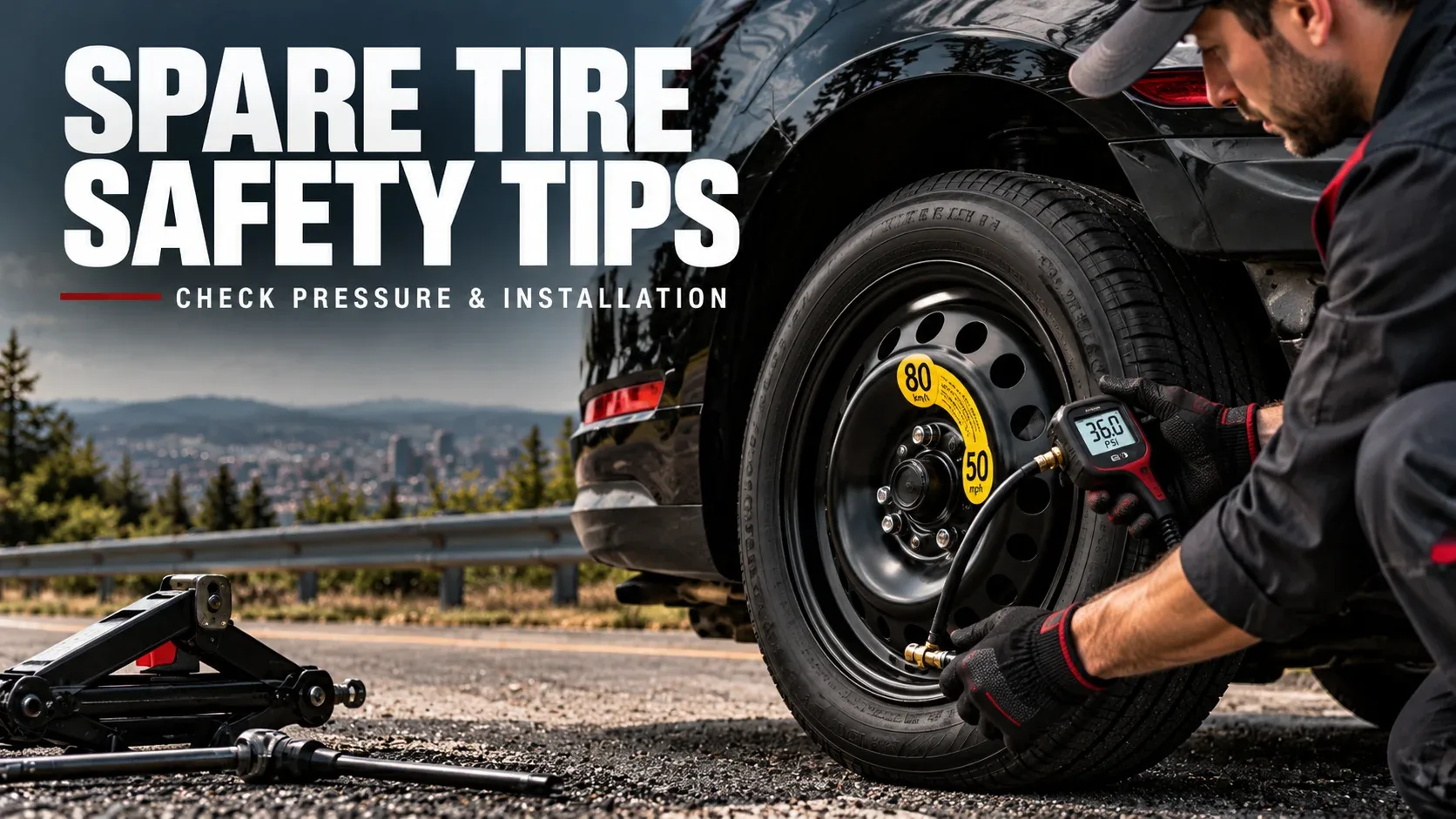
Spare Tire Safety Checklist
- Confirm that the spare is approved for your vehicle.
- Inspect for cracking, bulges, or visible damage.
- Check the specified cold inflation pressure.
- Confirm proper wheel installation and fastening.
- Stay within speed, distance, and load limits.
- Avoid abrupt braking, hard cornering, and unnecessary loads.
- Do not tow unless your vehicle manufacturer permits it.
- Drive to an appropriate tire repair facility.
How Much Air Does a Donut Spare Need?
Many compact spares specify around 60 PSI when cold, but that is not a universal standard. Use the pressure printed on the tire or specified in the owner’s manual. Check it periodically while the spare is stored, because a spare can lose pressure even when unused.
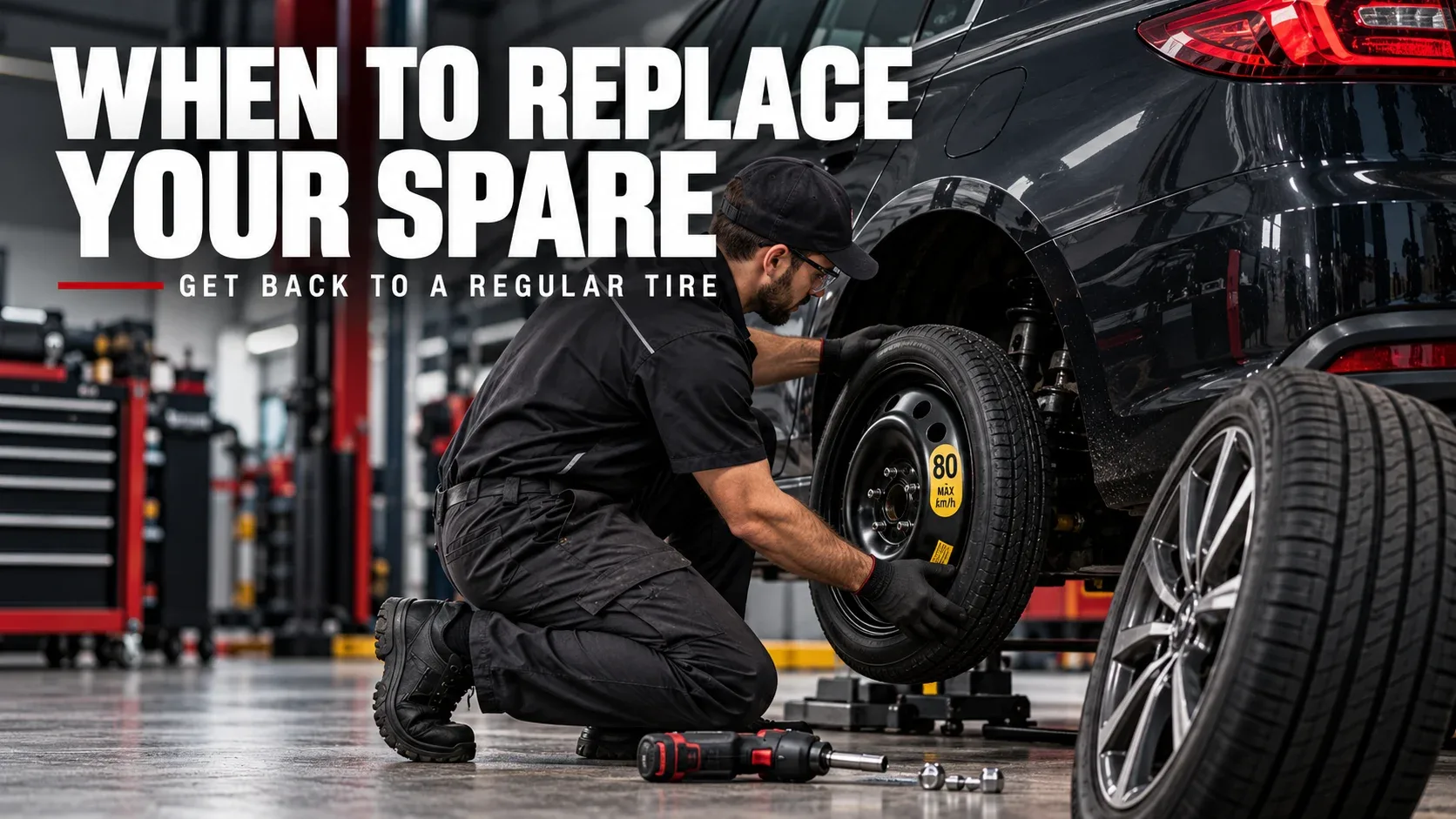
When Should You Replace a Spare Tire With a Regular Tire?
A compact temporary spare should be replaced with an appropriate road tire as soon as practical. Do not treat the entire emergency mileage allowance as a reason to postpone a repair.
What Should You Do at the Tire Shop?
- Inspect the damaged tire: Ask whether a qualified repair is possible.
- Confirm replacement compatibility: Check size, load rating, speed rating, and drivetrain requirements.
- Inspect the spare: Confirm it remains serviceable for future emergencies.
- Verify installation: Ensure wheel fasteners meet the manufacturer’s torque specification.
- Restore emergency equipment: Store the serviceable spare, jack, and tools properly.
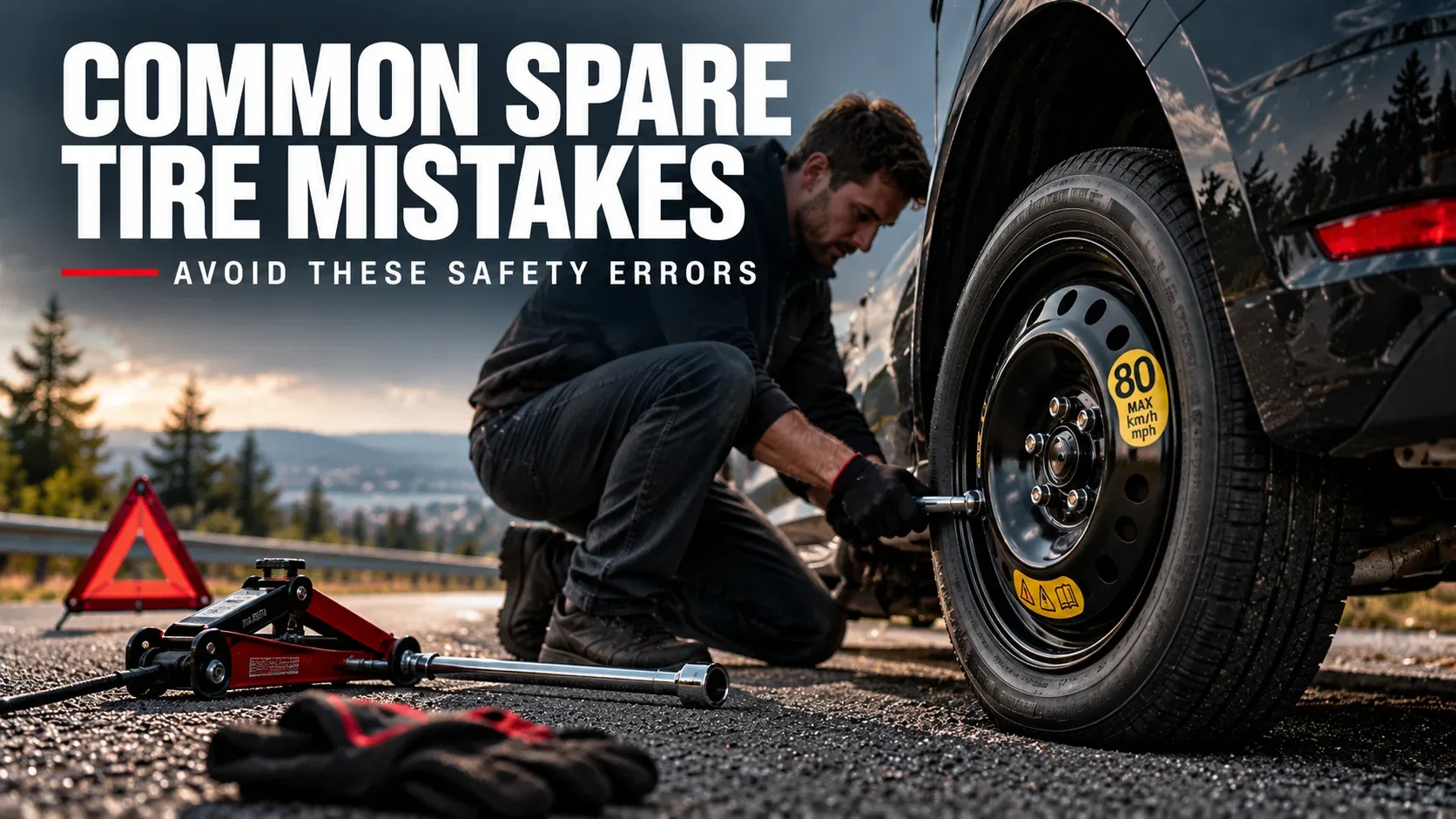
Common Mistakes Drivers Make With Spare Tires
Most spare-tire mistakes are avoidable. Knowing what not to do can help prevent a simple flat tire from becoming a larger safety problem.
| Mistake | Why It Matters | Better Approach |
|---|---|---|
| Driving above the rated speed | Increases stress and risk | Follow the tire’s speed marking |
| Driving too far | Exceeds emergency-use expectations | Reach a tire shop promptly |
| Ignoring pressure | Underinflation affects performance | Check required cold PSI |
| Assuming full-size means permanent | Some full-size spares remain temporary | Verify size and restrictions |
| Ignoring AWD restrictions | May affect drivetrain components | Use manufacturer guidance |
| Using a damaged spare | Raises tire-failure risk | Arrange professional assistance |
Frequently Asked Questions
Quick answers to common questions after installing a spare tire.
Can I drive 100 miles on a spare tire?
A 100-mile trip generally exceeds the recommendation for many compact donut spares, which are commonly limited to about 50 miles. Follow your tire’s and vehicle’s instructions. Arrange a repair or tow rather than exceeding those limits. A matching full-size spare may be different.
How long can I drive on a donut spare tire?
Many donut spares are for short emergency trips, commonly around 50 miles at speeds up to 50 mph. Check the exact instructions for your vehicle and installed tire.
Can I drive on a spare tire for three days?
Calendar days are not a reliable measure of safety. Mileage, speed, tire condition, and manufacturer restrictions matter. Replace a compact temporary spare as soon as practical rather than using it for multiple days of commuting.
Can I drive 70 mph with a spare tire?
Not if the spare is marked with a lower maximum such as 50 mph. A properly matched full-size spare may have different limits if the vehicle manufacturer permits its use.
Is it safe to drive in the rain with a spare tire?
Wet roads may increase the risks of reduced traction and altered handling. Reduce speed, increase following distance, and avoid abrupt steering or braking. Postpone travel or request assistance if conditions are unsafe.
Can a spare tire damage the transmission or differential?
An unsuitable tire size or rolling circumference can affect certain drivetrains, especially some AWD systems. Consult your vehicle manual and a qualified technician.
What pressure does a donut spare tire need?
Many compact spares specify about 60 PSI cold, but not all do. Use the tire marking and owner’s manual rather than assuming a universal value.
Can I use a full-size spare tire permanently?
Potentially, if it is a correctly matched, roadworthy full-size tire and the manufacturer allows regular use. Check age, tread, size, load rating, and drivetrain compatibility; some full-size spares remain temporary.
How Long Is Too Long on a Spare Tire?
For many compact donuts, driving farther than about 50 miles or faster than 50 mph exceeds common guidance. Your actual tire markings and vehicle manual are the controlling references.
A correctly matched full-size spare may be subject to different requirements, but only if its condition and compatibility are verified.