Picture a maintenance technician working on a heavy-duty truck or industrial machine. A large fastener needs a precisely controlled amount of torque, but a conventional torque wrench is difficult to use at that load. This is where a torque multiplier becomes valuable.
A torque multiplier is a mechanical tool that increases the output torque delivered to a fastener relative to the torque applied at its input. Instead of relying on a much longer wrench, it uses gearing to provide mechanical advantage.
In this guide, you’ll learn how torque multipliers work, how to calculate input and output torque, where they are used, and how to operate them safely. We’ll also compare different tools and explain what to consider before choosing one.
Quick Answer: What Does a Torque Multiplier Do?
A torque multiplier increases available output torque through gear reduction. For example, a tool with an effective multiplication factor of 5 can produce approximately 500 Nm of output torque from 100 Nm of input torque, provided that factor is the manufacturer’s specified effective value. The device must be supported by its properly positioned reaction arm.
What Is a Torque Multiplier?
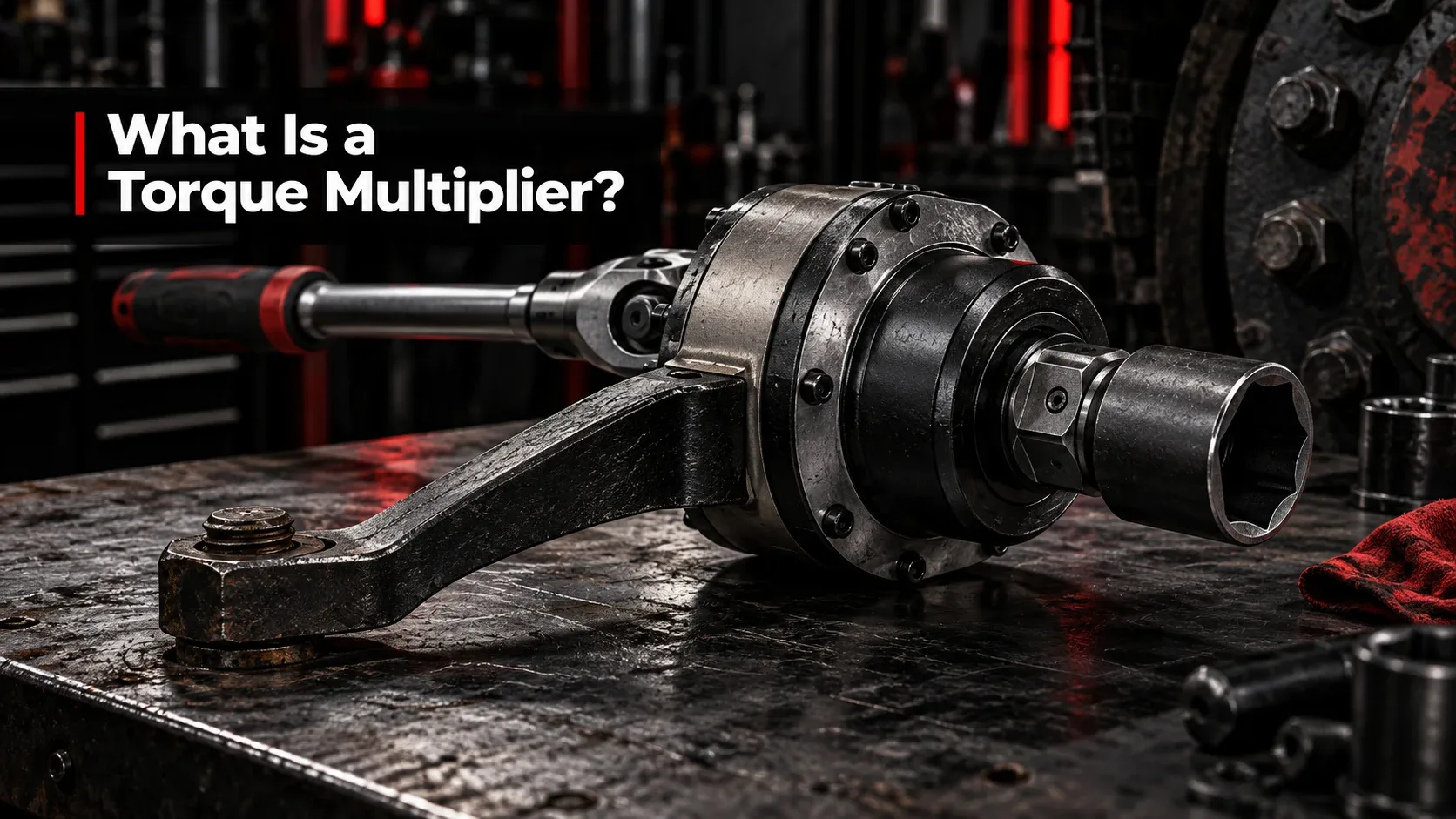
A torque multiplier tool is a mechanical device designed to produce greater output torque than the torque applied to its input drive. Most manual torque multipliers accomplish this using a planetary gear system.
Unlike a simple extension bar, a torque multiplier contains gears that reduce output rotational speed while increasing torque. This makes the tool particularly useful when a fastener requires a torque level that is difficult or impractical to apply directly.
Suppose a large fastener requires 600 Nm of tightening torque. A multiplier with an effective multiplication factor of 3 would require approximately 200 Nm of input torque. The actual input setting must still be confirmed using the tool’s manufacturer specifications.
How Does a Torque Multiplier Work?
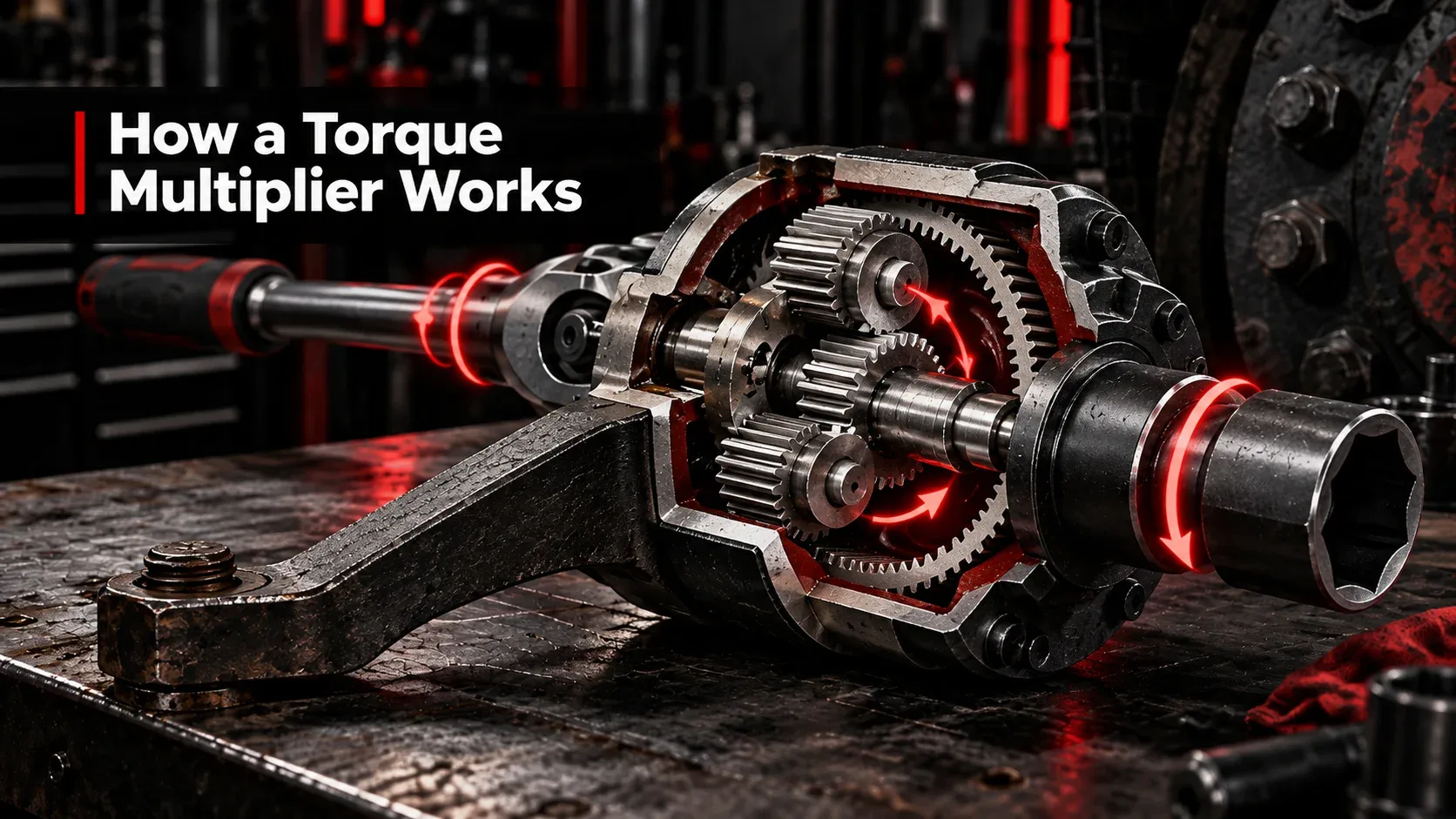
Most manual torque multipliers use a planetary gearbox. This compact arrangement contains a central sun gear, several planet gears, and a surrounding ring gear.
When torque is applied at the input drive, the gearbox transfers motion through the gear train. The output rotates more slowly while delivering increased torque. The reaction arm prevents the multiplier housing from rotating freely and allows torque to be transmitted to the fastener.
Understanding the Planetary Gear System
The precise arrangement depends on the gearbox design, but the essential principle is that different gear members rotate at different speeds. A fixed or restrained member provides the reaction needed for the gearing to multiply torque.
Input Torque
A torque wrench applies controlled torque to the input drive.
Gear Reduction
The gearbox reduces speed and creates mechanical advantage.
Reaction Support
The reaction arm resists the tendency of the housing to rotate.
Output Torque
The output drive delivers increased torque to the fastener.
Why Is the Reaction Arm Important?
Applying torque to a gearbox creates an opposing reaction. Without adequate restraint, the housing can rotate instead of transferring the intended torque to the fastener.
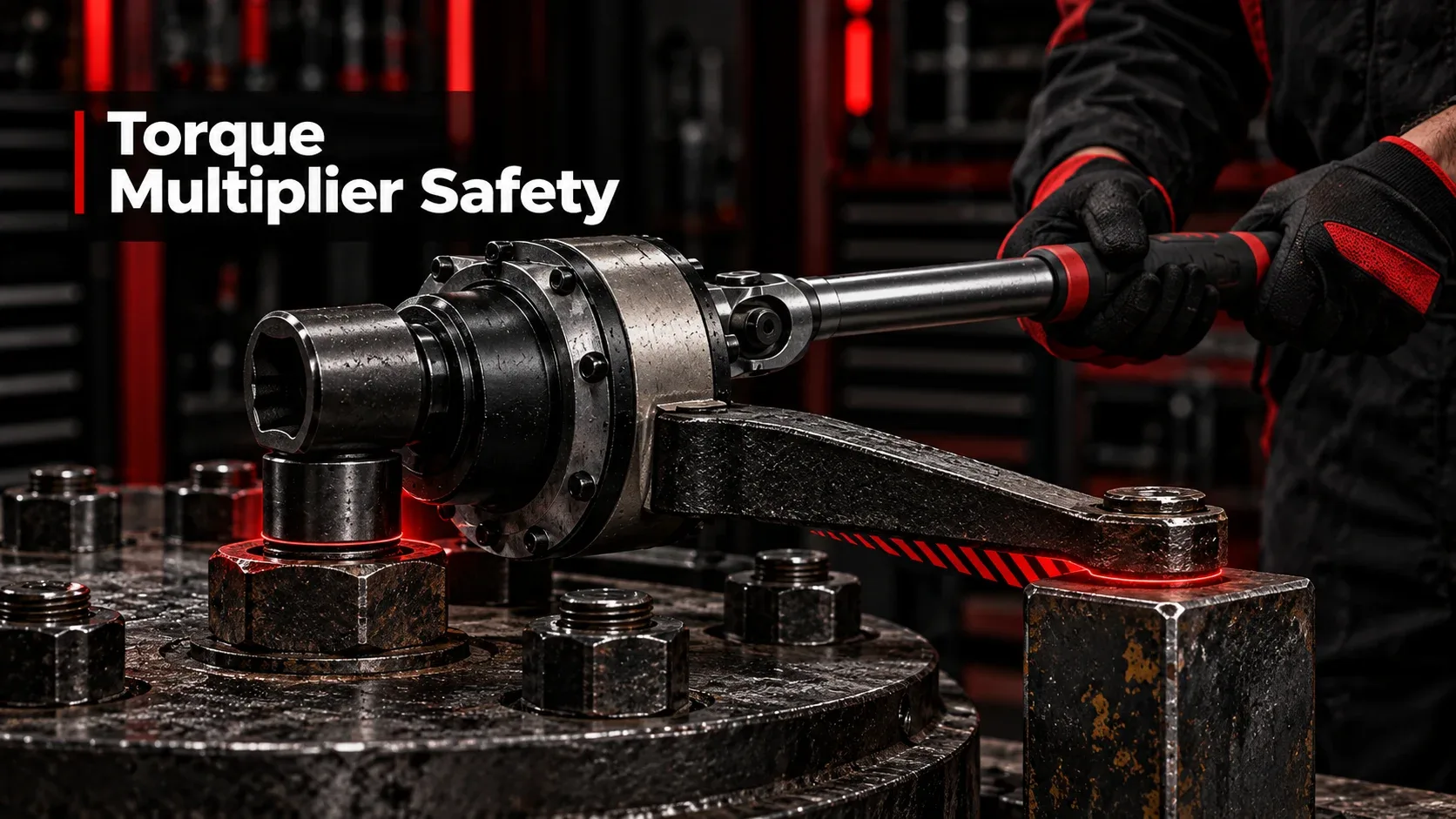
The reaction arm must be correctly installed and supported against an approved, sufficiently strong reaction point. This is also one of the most important safety considerations when using the tool.
Main Parts of a Torque Multiplier
Understanding the main components helps you recognize how the tool transfers force, where it requires support, and which parts must be inspected before use.
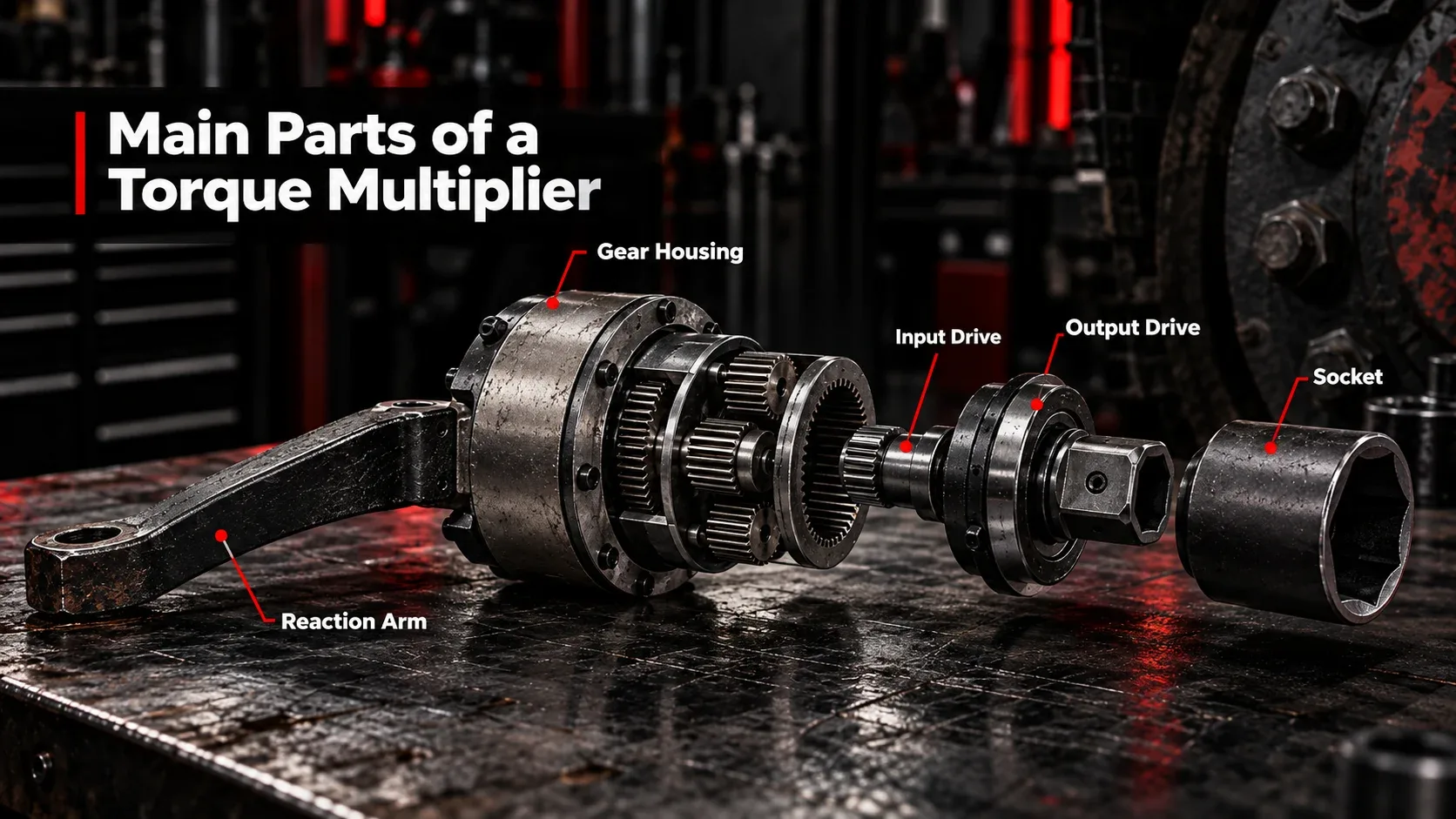
| Component | Main Function |
|---|---|
| Input Drive | Receives torque from the driving tool. |
| Planetary Gear Assembly | Provides gear reduction and mechanical advantage. |
| Output Drive | Transfers torque to the fastener through a suitable socket. |
| Reaction Arm | Resists reaction torque through an approved contact point. |
| Housing | Supports and protects the internal gearbox. |
| Anti-Wind-Up Mechanism | On equipped models, helps retain and manage stored torsional energy. |
Not every torque multiplier includes an anti-wind-up mechanism, interchangeable reaction arms, or the same input and output drive sizes. Always refer to the exact model documentation.
Torque Multiplier Ratio: How to Calculate Output Torque
A torque multiplication ratio describes the relationship between input torque and output torque. For practical calculations, the important value is the manufacturer’s specified multiplication factor, which may differ from the nominal gear ratio.
Example: A 5:1 Effective Multiplication Factor
Assume a manufacturer specifies an effective multiplication factor of exactly 5. If the operator applies 100 Nm at the input, the expected output torque is approximately 500 Nm under the manufacturer’s stated conditions.
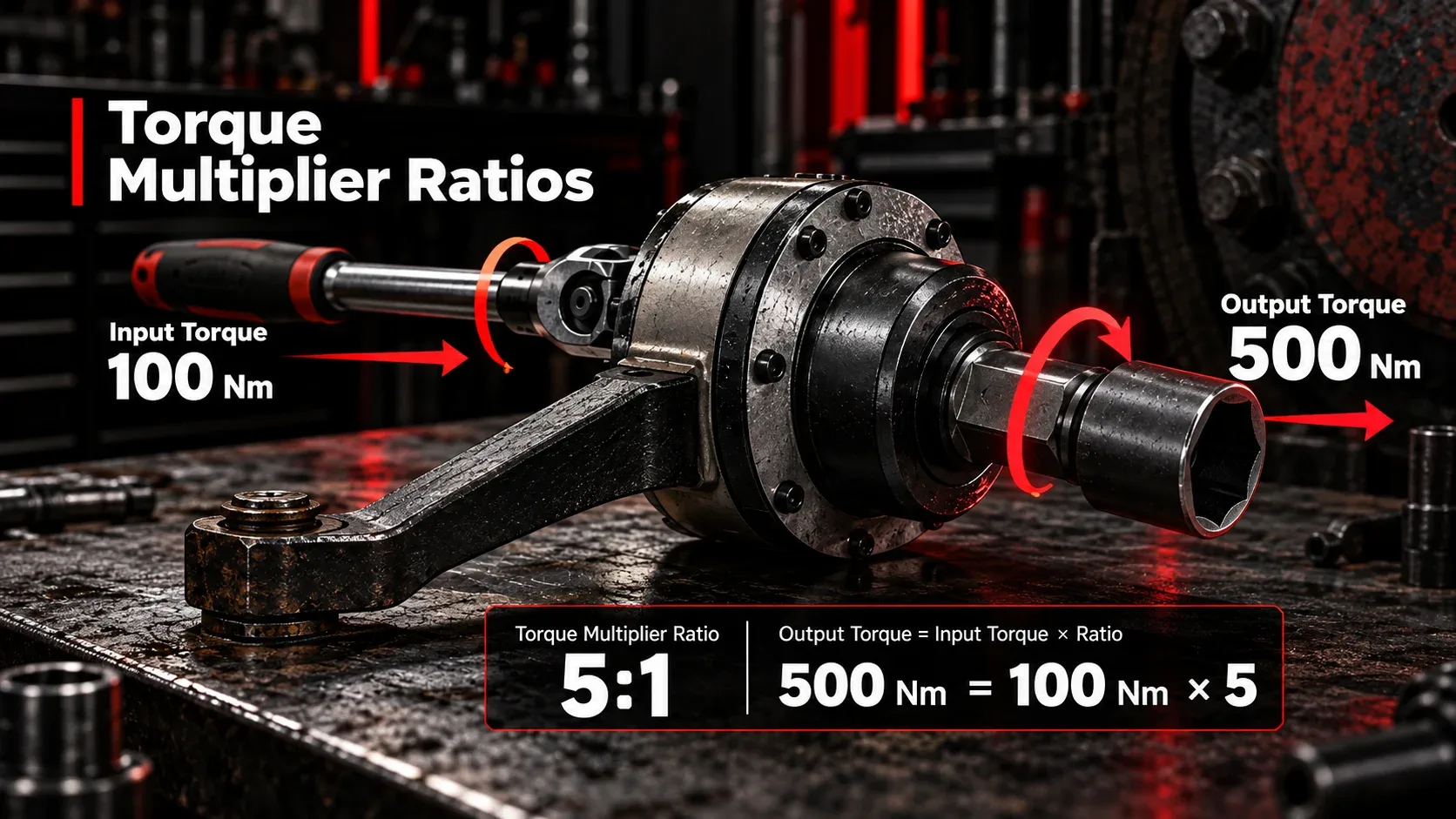
Illustrative Torque Multiplier Ratio Chart
The following examples assume the factors shown are actual effective multiplication factors, not simply nominal gearbox ratios.
| Input Torque | Effective Factor | Calculated Output |
|---|---|---|
| 100 Nm | 3 | 300 Nm |
| 100 Nm | 5 | 500 Nm |
| 150 Nm | 5 | 750 Nm |
| 200 Nm | 10 | 2,000 Nm |
What About Gearbox Efficiency?
If a nominal gearbox ratio is known but losses must be considered, the simplified engineering relationship is:
Output Torque ≈ Input Torque × Gear Ratio × Efficiency
For instance, a theoretical 5:1 gearbox operating at an assumed 90% efficiency would deliver approximately 450 Nm from 100 Nm of input torque. The 90% value is an illustration, not a specification for a particular product.
For actual bolting, use the manufacturer’s verified effective multiplication factor rather than an assumed efficiency.
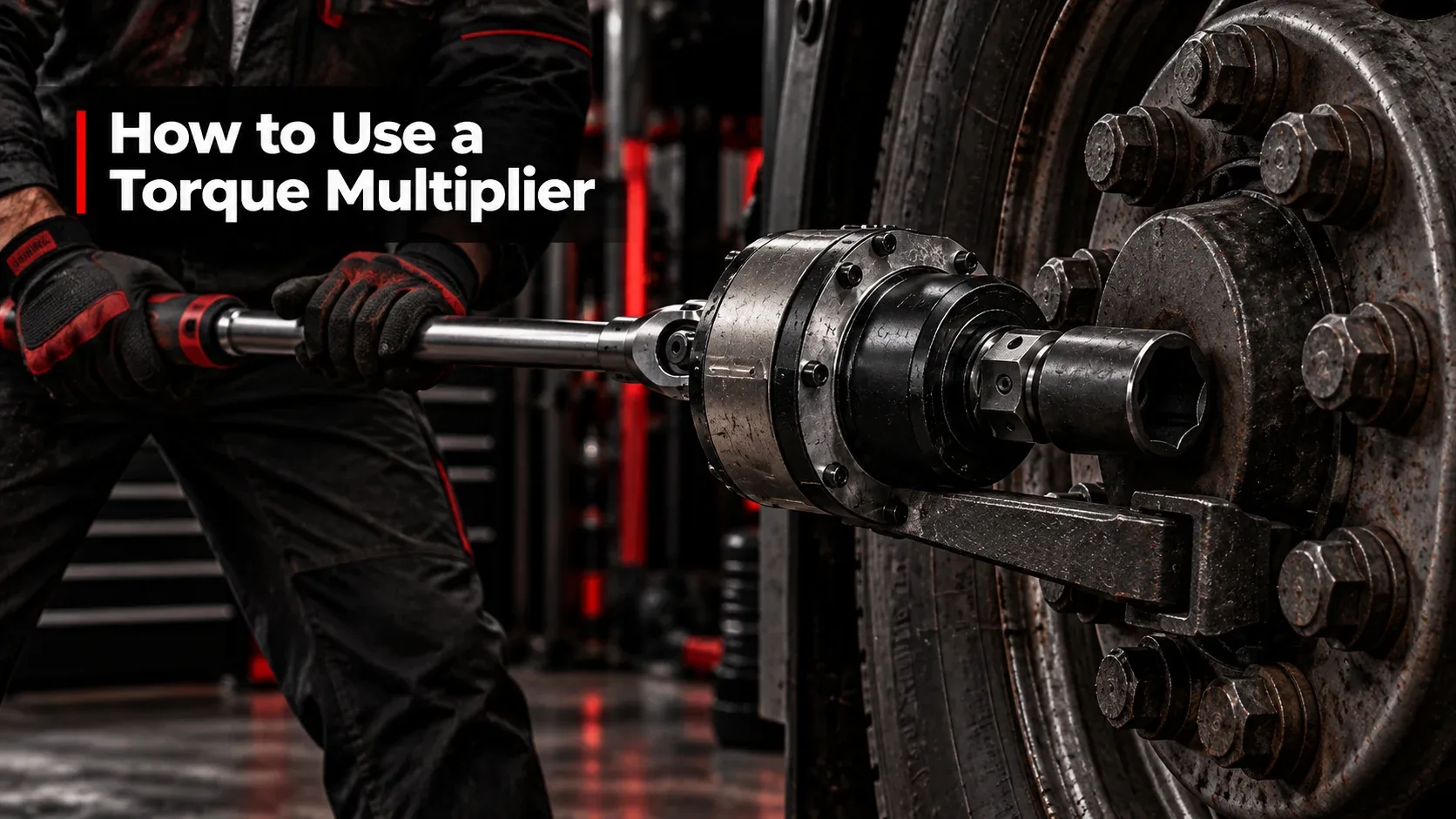
How to Use a Torque Multiplier Safely
Using a torque multiplier wrench correctly involves more than connecting a socket and applying force. Proper selection, reaction-arm placement, input settings, and torque release procedures are essential.
Check the equipment manufacturer’s tightening specification, including fastener condition, lubrication requirements, and tightening sequence.
Ensure the multiplier, torque wrench, adapters, and manufacturer-approved socket can handle the application. Inspect components for damage.
Fit the correct socket to the output drive and connect it squarely to the fastener. Set up the reaction arm according to manufacturer instructions.
Use the approved multiplication factor or manufacturer-provided torque chart to determine the correct torque wrench setting.
Operate the tool in its approved direction, keeping hands and body parts clear of reaction and output assemblies. Do not use sudden impacts unless expressly approved.
Follow the model-specific method for releasing stored torsional energy before removal. Certain tools require a defined anti-wind-up release sequence.
Check the specified tightening process was completed, inspect the tool, and document torque where maintenance procedures require it.
Never place your hand between the reaction arm and its support. A multiplier can generate large reaction forces and store torsional energy. Do not use damaged equipment, improvised reaction points, or unapproved methods.
Different Types of Torque Multipliers and High-Torque Tools
Manual torque multipliers are part of a broader family of equipment used for high-torque fastening. Electric, pneumatic, and hydraulic torque tools can serve similar applications but are not all conventional planetary gear multipliers.
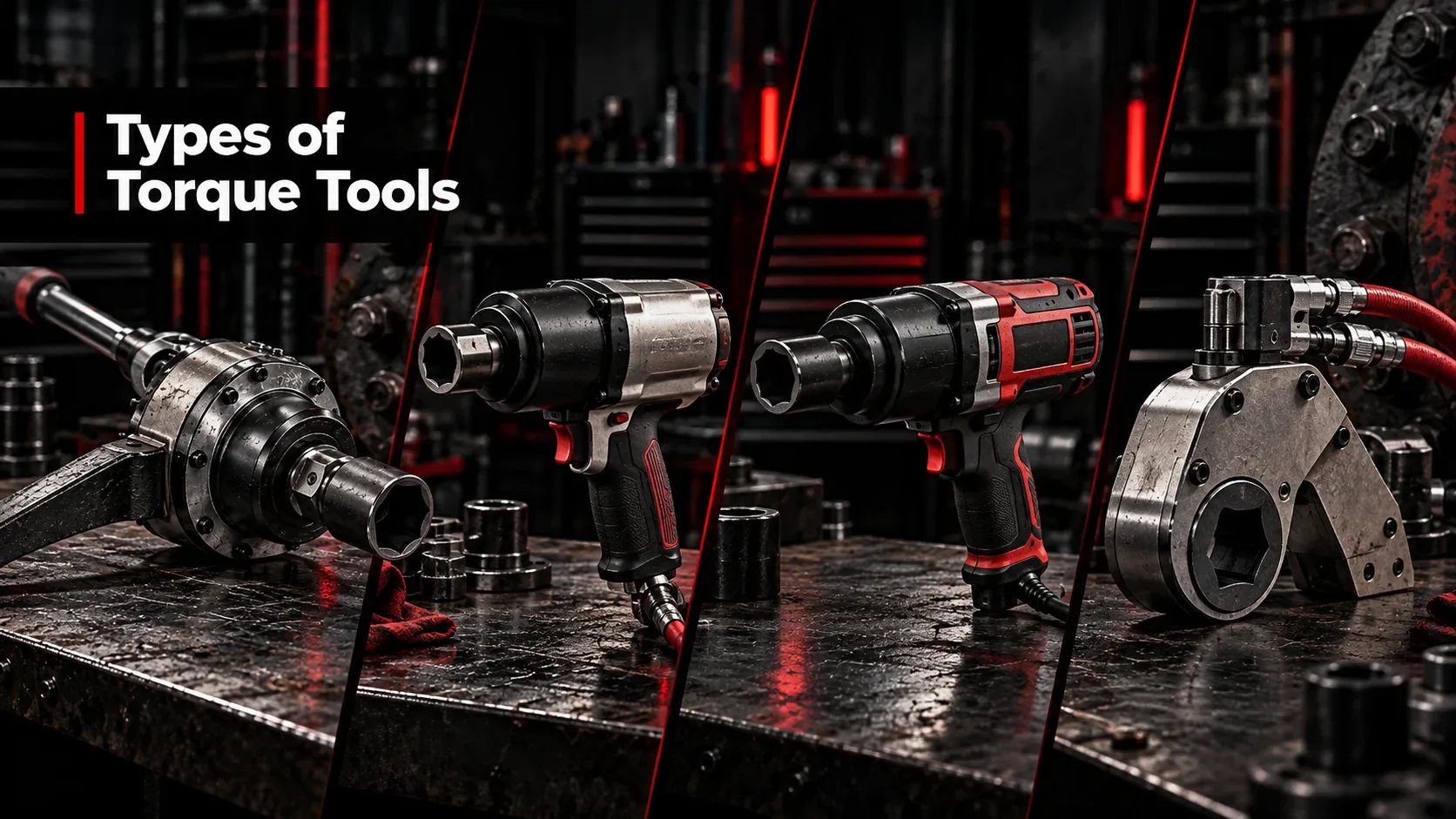
1. Manual Torque Multiplier
Manual multipliers use gear reduction to increase output torque from a manually operated input. They are portable and useful where power sources are unavailable.
2. Pneumatic Torque Tool
Pneumatic systems use compressed air to drive tightening mechanisms. They are often used for repeated industrial bolting, although control and calibration vary by model.
3. Electric Torque Tool
Electric torque tools may offer programmable settings, controlled tightening, and digital monitoring, useful where repeatability or documentation is important.
4. Hydraulic Torque Tool
Hydraulic torque tools use hydraulic pressure to generate substantial tightening or loosening torque and require suitable hydraulic equipment and safety procedures.
Torque Multiplier vs. Torque Wrench: What’s the Difference?
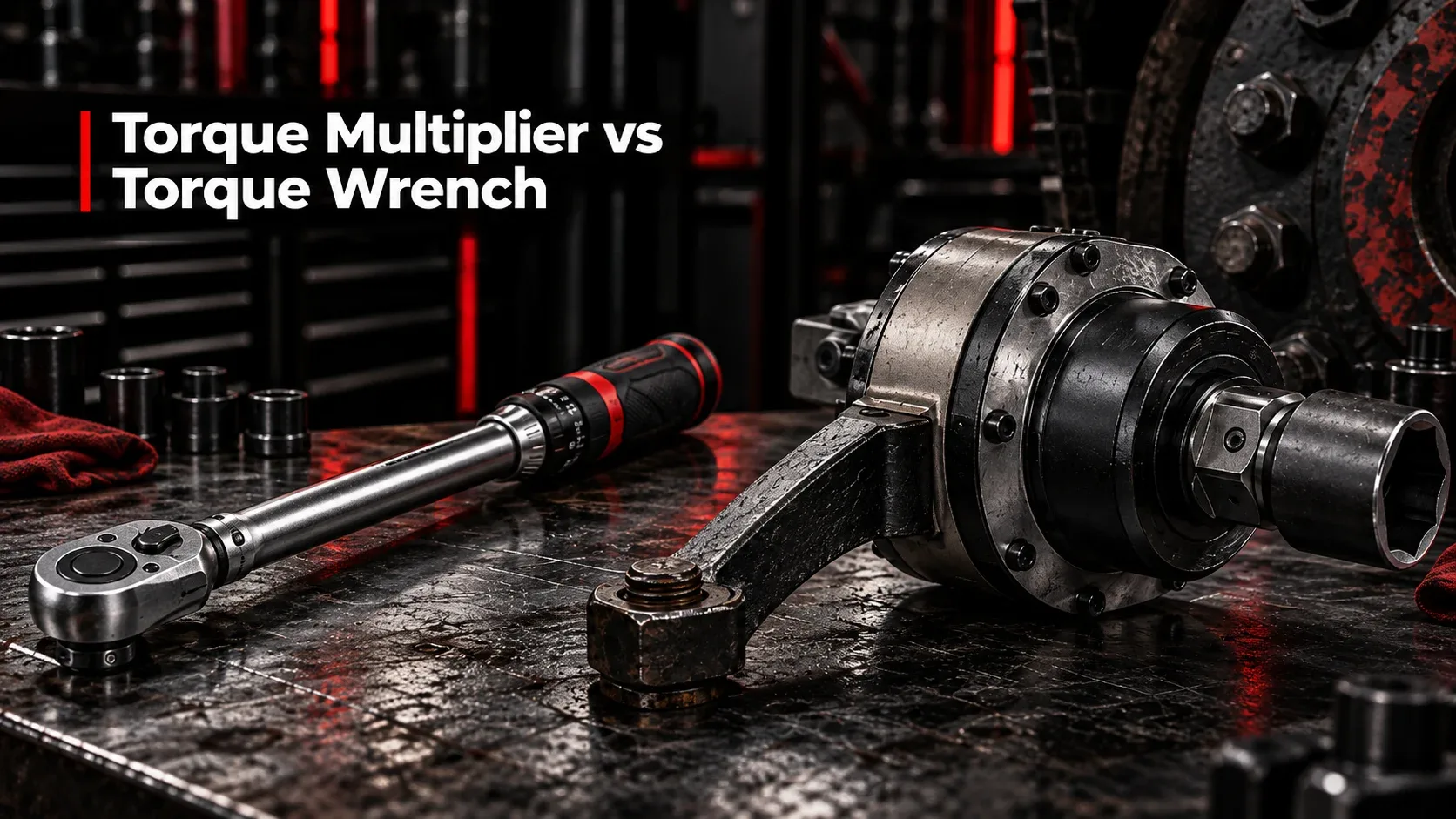
A torque wrench allows an operator to apply or measure specified torque, while a geared torque multiplier increases available output torque from its driving tool.
| Feature | Torque Wrench | Torque Multiplier |
|---|---|---|
| Primary Purpose | Controlled torque application | Increase output torque |
| Mechanism | Calibrated mechanism or indicator | Gear reduction |
| Reaction Arm | Not normally required | Required on typical manual models |
| Best Use | Fasteners within rated range | Higher torque operations |
| Accuracy | Depends on calibration and technique | Depends on input wrench and multiplier |
Which should you choose? Use an appropriately rated torque wrench when it can safely and conveniently deliver the required torque directly. Use a multiplier when direct application is impractical and an approved reaction point is available.
Common Applications of Torque Multipliers
Torque multipliers are useful with large fasteners, significant tightening requirements, and limited space for leverage.
Heavy-Duty Vehicles
Selected truck, trailer, and heavy-vehicle fasteners may require controlled torque beyond ordinary hand-tool ranges.
Industrial Machinery
Maintenance teams may use multipliers on large machinery assemblies requiring high tightening torque.
Construction Equipment
Large equipment assemblies may use fasteners that benefit from geared high-torque tools.
Industrial Bolting
Suitable multipliers can assist in selected plant maintenance and structural bolting tasks.
Always check the specific equipment’s prescribed tightening method, tool type, and sequence.
Advantages and Limitations of Torque Multipliers
Torque multipliers offer important advantages but are not ideal for every fastening operation.
Advantages
- Increases available output torque.
- Reduces manual input torque.
- Reduces dependence on long leverage bars.
- Manual models may be portable.
- Supports controlled high-torque fastening when correctly operated.
Limitations
- Output rotation is slower.
- Requires a suitable reaction point.
- May store hazardous torsional energy.
- Gearbox efficiency affects torque output.
- Requires correct technique and inspection.
Torque Multiplier Safety: Common Mistakes to Avoid
A torque multiplier can transmit enough force to damage fasteners, destroy unsuitable sockets, or cause serious injuries if used incorrectly. Safety must be part of the setup.
Essential Safety Rules
- Read manufacturer instructions before operating.
- Keep body parts away from reaction-arm contact areas.
- Never exceed tool or accessory torque ratings.
- Use manufacturer-approved sockets and accessories.
- Never improvise an unstable reaction surface.
- Understand how stored torsional energy is released.
- Do not use visibly damaged equipment.
Mistake 1: Using the Wrong Torque Factor
A nominal 5:1 gearbox ratio does not necessarily deliver exactly five times the input torque. Use the model’s effective factor or calibration information.
Mistake 2: Incorrect Reaction Arm Position
An improperly placed arm may slip or load components unexpectedly. Follow the manufacturer’s approved reaction arrangement.
Mistake 3: Ignoring Wind-Up and Backlash
Some multipliers store significant torsional energy. Backlash is clearance between interacting parts; wind-up is elastic deformation under load. Follow safe release procedures.
Mistake 4: Assuming More Torque Is Always Better
Excess torque may damage threads, overstretch bolts, or compromise the joint. Follow the fastener specification.
Common Torque Multiplier Problems and Troubleshooting
If a multiplier behaves unexpectedly, stop applying force and identify the cause before continuing.
| Problem | Possible Cause | Recommended Action |
|---|---|---|
| Unexpected output | Wrong factor or setting | Review specifications and calibration. |
| Reaction arm movement | Unsuitable reaction setup | Stop and correct per approved guidance. |
| Excessive free play | Backlash or wear | Check manufacturer limits and inspect. |
| Socket slips | Poor fit or damaged component | Replace unsuitable accessories. |
| Rough gearbox operation | Potential internal damage | Remove tool from service for inspection. |
How to Choose the Right Torque Multiplier
The best torque multiplier depends on application, torque range, working space, and model specifications.
Choose a model rated for the specified target torque without exceeding limits.
Check that your input wrench can generate the required input torque using the manufacturer’s factor.
Verify input and output drive sizes, socket ratings, and adapter requirements.
Confirm compatibility with the working clearance and approved reaction points.
Consider documentation, maintenance, available spares, and calibration support.
Practical Buying Advice: Choose the tool for fit, dependable specifications, and safe use rather than advertised maximum torque alone.
Frequently Asked Questions About Torque Multipliers
These answers address common questions from mechanics, technicians, engineering students, and first-time users.
What does a torque multiplier do?
It increases output torque relative to input torque through gearing, enabling high-torque fastening with lower input torque.
Can a torque multiplier loosen bolts?
Many manual models can loosen and tighten, but the tool must be rated and configured for the direction and loading. Breakaway torque may exceed tightening torque.
What does a 5:1 torque multiplier mean?
It commonly refers to a nominal ratio. For accurate torque application check whether the specified value is a nominal ratio or an effective torque multiplication factor.
How accurate is a torque multiplier?
Accuracy depends on the multiplier’s performance, input wrench calibration, maintenance, and technique. Use manufacturer data.
Do I need a special torque wrench?
Manual multipliers typically use an appropriately rated, compatible, calibrated input torque wrench. Drive sizes and operating ranges vary.
Why does a torque multiplier need a reaction arm?
The arm resists opposing torque on the gearbox housing. Without suitable reaction support, controlled torque transfer cannot occur safely.
Can I use a torque multiplier on truck wheel nuts?
A suitable multiplier may be used if the vehicle manufacturer’s specified fastening procedure permits it. Follow the required torque, sequence, socket and reaction setup.
What is the difference between backlash and wind-up?
Backlash is clearance between meshing components; wind-up is elastic torsional deformation under load, potentially storing energy.
Final Thoughts: When Does a Torque Multiplier Make Sense?
A torque multiplier is valuable when high tightening torque is required and direct application with an ordinary torque wrench is impractical. Planetary gearing provides mechanical advantage, and the reaction arm enables controlled torque transfer.
The most important steps are selecting the right tool, using the manufacturer’s effective factor, positioning the reaction arm correctly, and safely managing stored torque.
Whether you’re maintaining heavy equipment, studying mechanical engineering, or evaluating workshop tools, understanding these principles supports more informed and safer fastening decisions.
Technical Accuracy and Safety Note
This article is general educational information. Model-specific ratios, reaction arrangements, directions, accuracy, and torque release procedures can differ. Always consult your equipment manufacturer’s official operating manual and fastener specifications. Illustrations are conceptual and do not replace approved safety instructions.