Touch-up paint is one of the most popular DIY jobs, and one of the easiest to get wrong. The can says “silver”, the car says something else. A paint code is a short factory ID of the exact shade, and manufacturers run hundreds of them. The names in shop listings rarely match. Below: where the code hides, what a VIN can and can’t tell about color, and how a car’s past changes the picture.
What a VIN Actually Says About Color
Plenty of owners type a VIN into a search bar hoping to get the paint color in ten seconds. Sometimes it works. Often it doesn’t. The standard 17-character VIN covers the manufacturer, body type, engine, model year (10th character), assembly plant (11th) and the serial number. There is no position for color.
Color lives in the manufacturer’s build data, and that data is tied to the VIN. A dealer parts desk can pull it. Generic free VIN sites are the weakest link in the chain, since they often guess or show nothing at all.
What the VIN does open up is the car’s past. A used vehicle bought at an insurance sale may carry a long automobile auction history, and that history often explains why one door looks a shade off. Copart and IAA lot photos frequently show the car in its factory paint, which makes panels repainted after a hit easy to spot.
Where to Find the Paint Code on the Car
The label is faster than any website. Where it sits depends on the brand:
- Toyota: driver door jamb sticker, line “C/TR”. Code 040 is Super White.
- Honda: driver door jamb label. NH-731P is Crystal Black Pearl.
- Ford: Safety Compliance Certification label on the driver door, line “EXT PNT”. YZ is Oxford White.
- BMW: service label under the hood or in the door jamb. 300 is Alpine White.
- GM: Service Parts Identification label, often in the glovebox.
No sticker? Door swapped, label peeled, or sun-bleached to nothing. Then a color code by VIN requested from a dealer’s parts desk settles it, because the build data records the original shade.
Why the Right Code Can Still Look Wrong
Matching the code is only half the job. Sun is the first enemy: a decade of UV on an old clear coat shifts the shade, so fresh paint next to it looks brighter. Then there are factory variants. The same code can differ slightly between plants and production runs, and nobody prints that on the sticker.
Tri-coat paints are a separate headache. Whites like Toyota’s Blizzard Pearl need base, pearl and clear layers, so a single spray can won’t copy them. And if a body shop repainted the car years ago with its own approximation, the sticker describes a color the car no longer wears.
Checking the Car’s Past First
Here is a sane order of work:
- Read the code from the door jamb or the dealer’s build data.
- Pull the VIN history: Carfax, AutoCheck or NMVTIS reports, plus auction photos where they exist.
- Compare the photos with the car in daylight. A panel that glows differently was probably repainted.
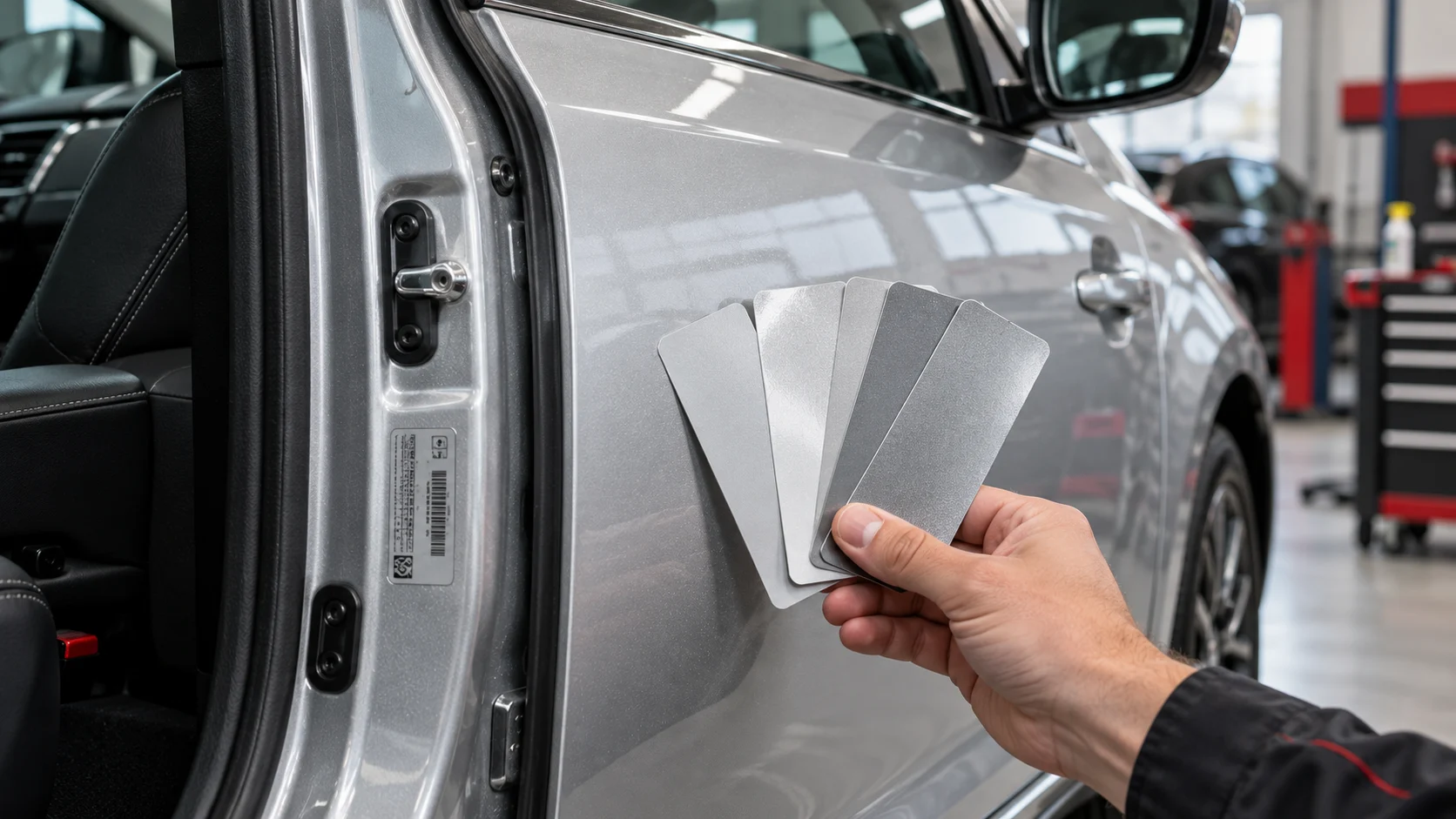
- Spray a test card, let it dry, hold it against the panel. Wet paint lies.
Cheap? Yes. Boring? Also yes. But a mismatched fender costs far more than a test card.
Bottom Line
A VIN won’t hand over a color by itself, and that is the main thing to take from all this. What it does is point to the sources that will: the door jamb label, the dealer’s build data and old lot photos. Skipping any of them is how a “perfect match” turns into a patch that shows from ten meters away.
The routine is short. Read the sticker first, since it is free and takes a minute. If the label is missing or unreadable, ask the dealer for the build data. On a used car with a rough past, check the history for repaints before trusting the factory code. And always test on a spray card in daylight before touching a panel. Ten minutes of homework beats repainting a whole fender.