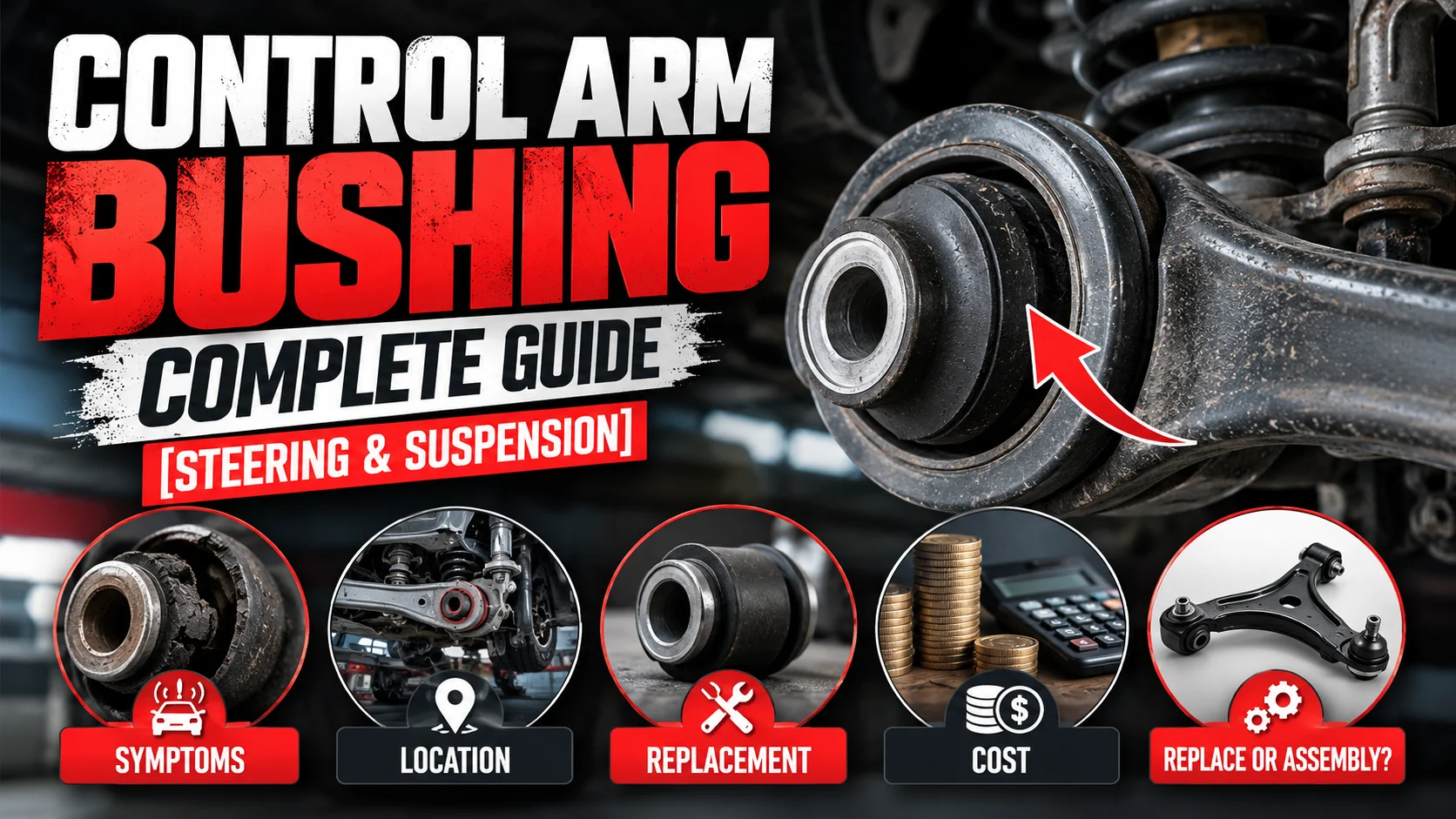
A dull clunk over bumps, wandering steering, or extra vibration can make a familiar drive feel unsettling. A worn control arm bushing is one possible culprit. Although this small part is easy to overlook, it helps your suspension move smoothly while keeping unwanted movement under control.
This guide explains what the bushing does, how to recognize possible failure, and what to expect from a control arm bushing replacement—including safety, repair choices, and typical costs in the United States.
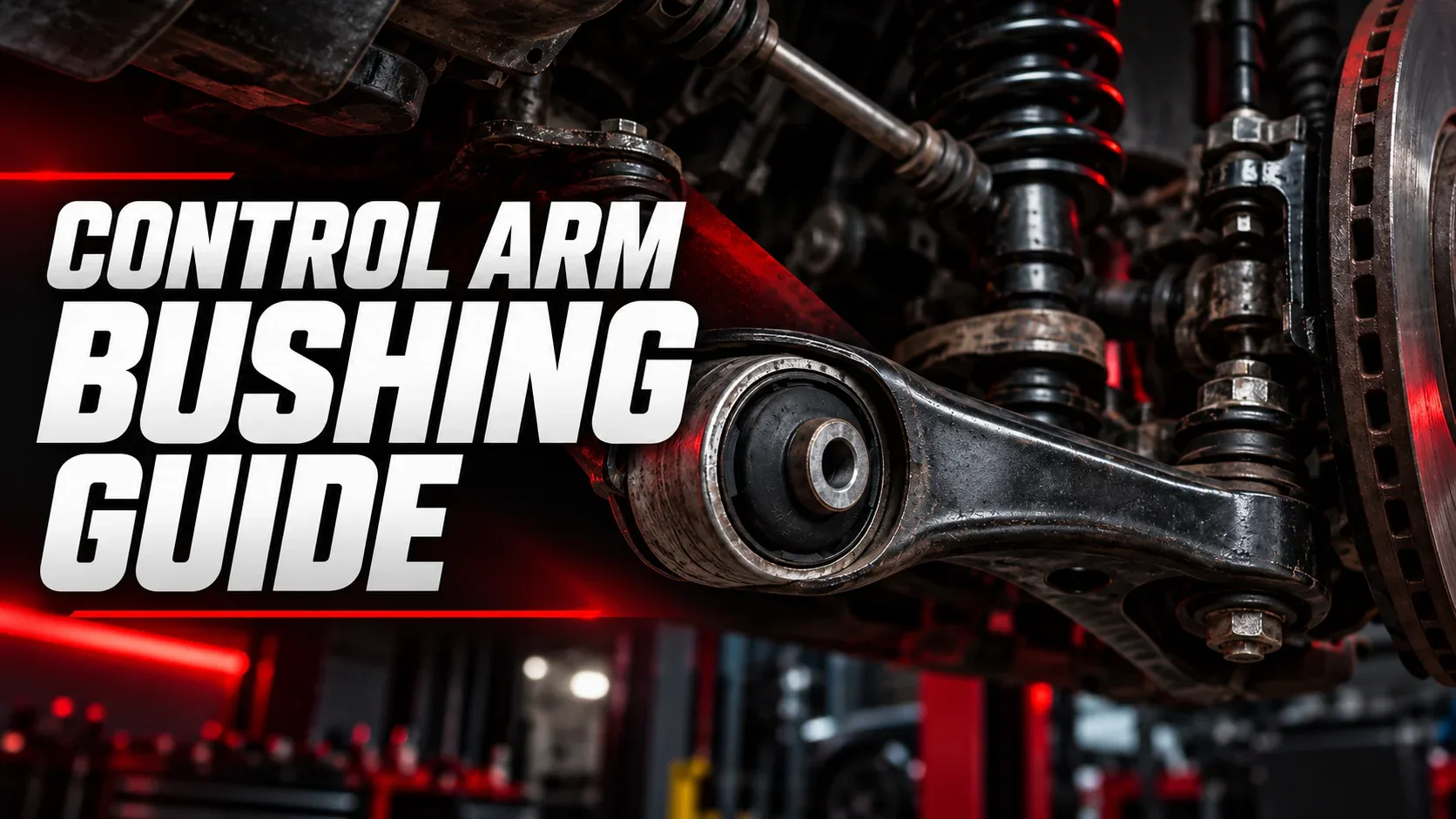
A control arm bushing is a flexible mounting component, usually made from rubber or another elastomer and metal, that connects a control arm to the vehicle structure. When it wears out, you may notice clunks, steering changes, or excessive movement. Those symptoms require inspection because other suspension faults can feel similar.
What Is a Control Arm Bushing?
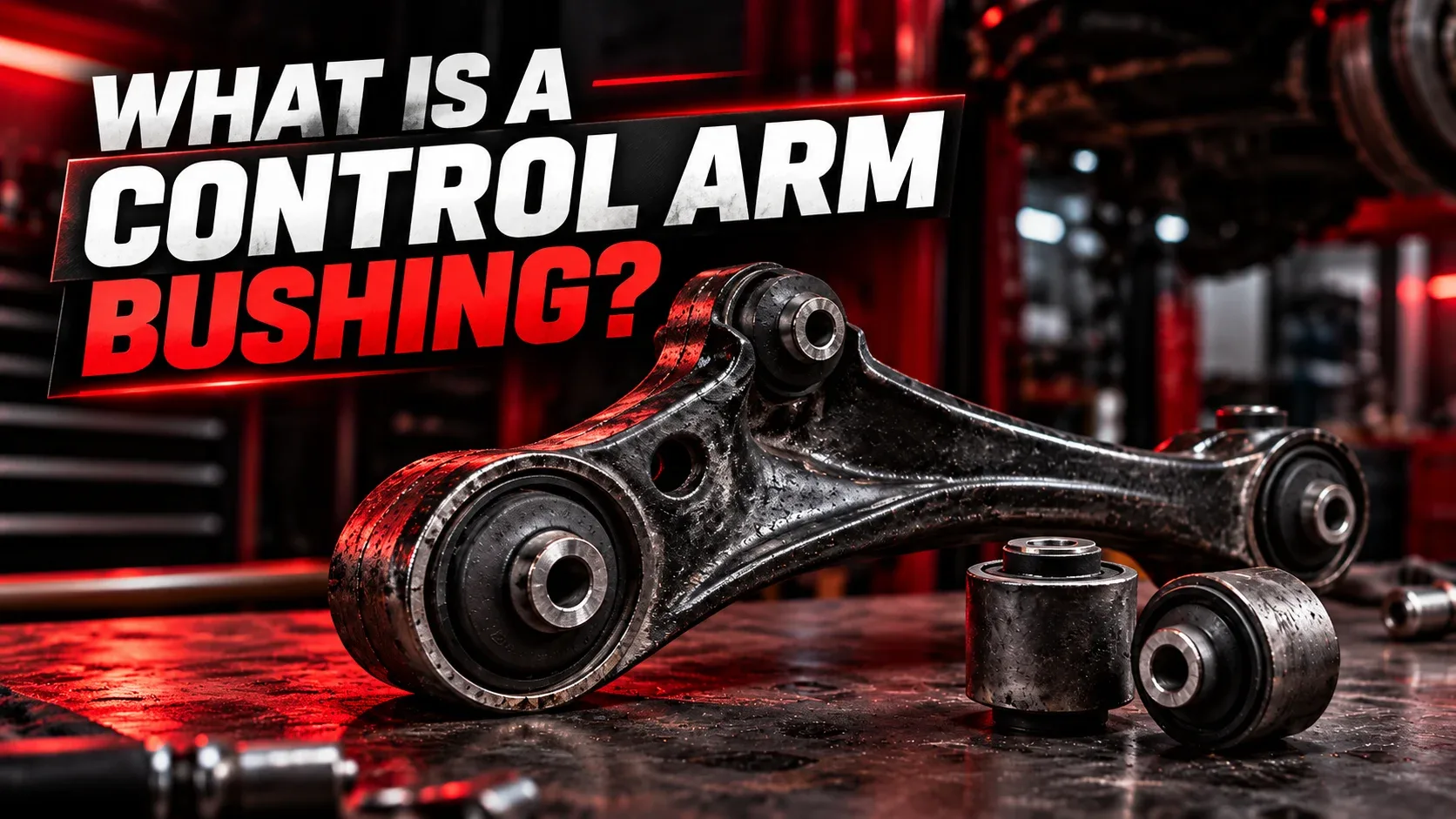
A control arm helps locate the wheel as the suspension travels over bumps and through corners. At the arm’s inner mounting points, bushings provide a controlled, cushioned connection to the frame or subframe. Many designs use a rubber element bonded between metal sleeves; some aftermarket options use polyurethane or different constructions.
Think of the bushing as a flexible joint rather than a simple piece of padding. It permits the movement designed into the suspension while resisting motion in directions where the wheel needs to stay stable.
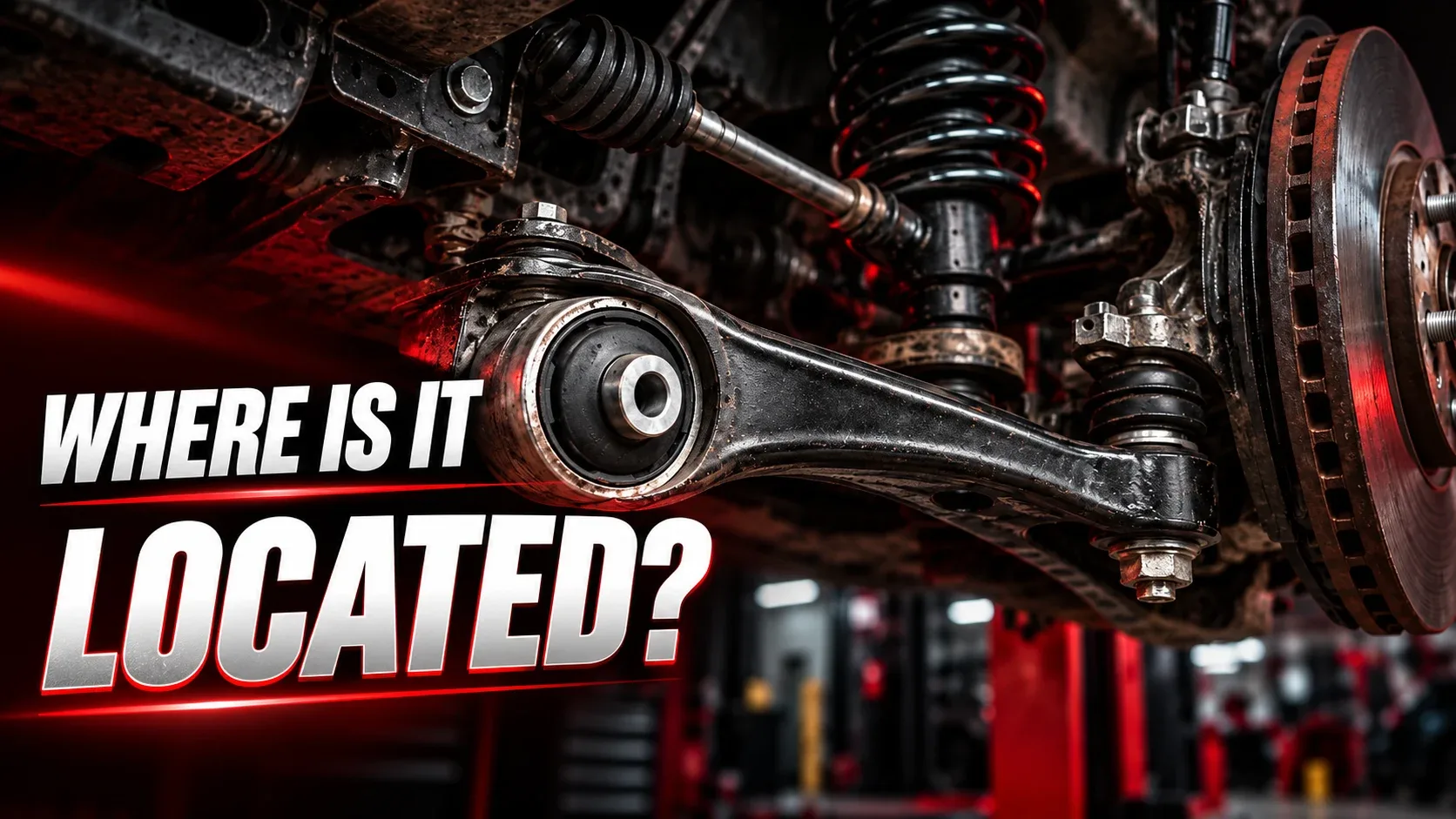
Where Is the Control Arm Bushing Located?
On many vehicles, the bushing sits where the control arm attaches to the chassis or subframe. A control arm may have one or more inner bushings and a ball joint at its outer end. Depending on the suspension design, you may find lower arms, upper arms, or multiple links at the front or rear.
The precise location varies by make and model. A vehicle-specific suspension diagram is the most reliable way to identify the correct bushing before ordering parts.
How Does a Control Arm Bushing Work?
As the wheel moves, the bushing flexes or articulates according to its design. It performs three important jobs:
- Reduces vibration: Helps prevent small road impacts from traveling directly into the cabin.
- Allows controlled travel: Accommodates suspension movement without a loose metal-to-metal connection.
- Supports predictable handling: Resists unwanted control arm movement during braking, turning, and accelerating.
If the flexible material tears or separates, the control arm may move farther than intended. The result can be noise or changes in how the vehicle responds.
7 Symptoms of a Bad Control Arm Bushing
A failing bushing does not always announce itself with a dramatic sound. Watch for a combination of these clues, especially when they appear after a pothole impact or become more noticeable over time.
| Possible symptom | What you might notice |
|---|---|
| 1. Clunking over bumps | A dull knock when a wheel meets a pothole or speed bump. |
| 2. Wandering steering | The vehicle feels less settled or needs extra correction. |
| 3. Extra vibration | More road harshness through the steering wheel or cabin. |
| 4. Uneven tire wear | Abnormal wear that may be associated with changes in wheel alignment. |
| 5. Movement during braking | A shift, thump, or unsettled sensation as load transfers forward. |
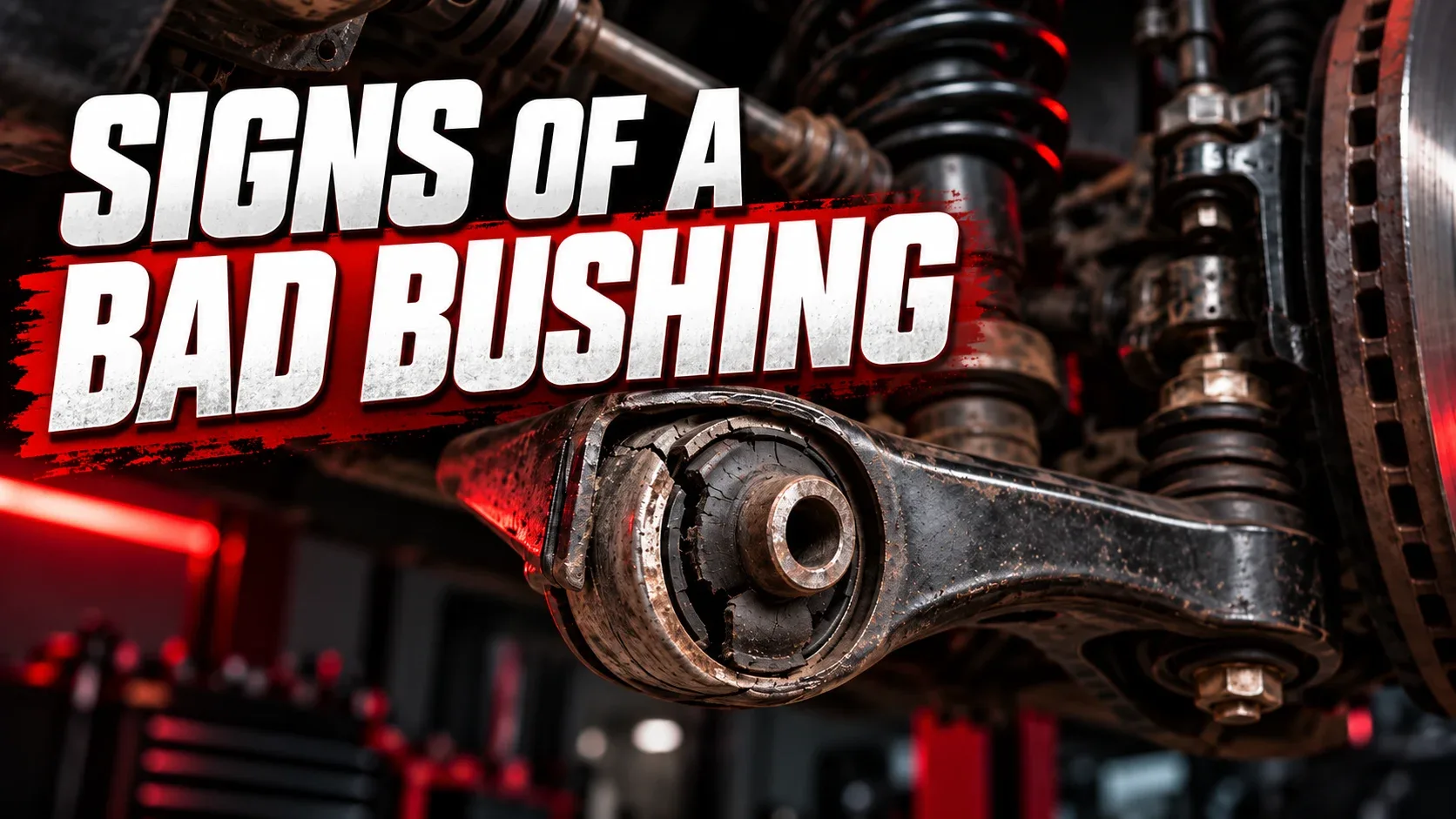
| 6. Visible deterioration | Severe cracking, torn rubber, or separation from a metal sleeve. |
| 7. Excessive arm movement | A technician observes movement beyond the vehicle’s service limits. |
What Causes Control Arm Bushings to Fail?
Bushings are designed to flex repeatedly, but their materials and surrounding components still age. Common contributors include:
- Time and weather: Rubber can harden, crack, and lose elasticity.
- Potholes and rough roads: Repeated impacts increase stress on mounting points.
- Fluid contamination: Some oils and chemicals can damage certain rubber compounds.
- Heavy use: Frequent high loads and demanding conditions can accelerate wear.
- Improper installation: Incorrect fitment or final tightening can preload and damage some bonded-rubber bushings.
Surface cracks alone do not always mean immediate replacement. Separation, severe distortion, and excessive movement are more meaningful when interpreted against the manufacturer’s inspection criteria.
How to Check Control Arm Bushings for Wear
Start by observing when the problem appears. Does the clunk happen over bumps, during braking, or while turning? That detail helps a technician distinguish bushing problems from other suspension issues.
- Record the symptoms. Note the speed, road conditions, and whether the noise occurs on one or both sides.
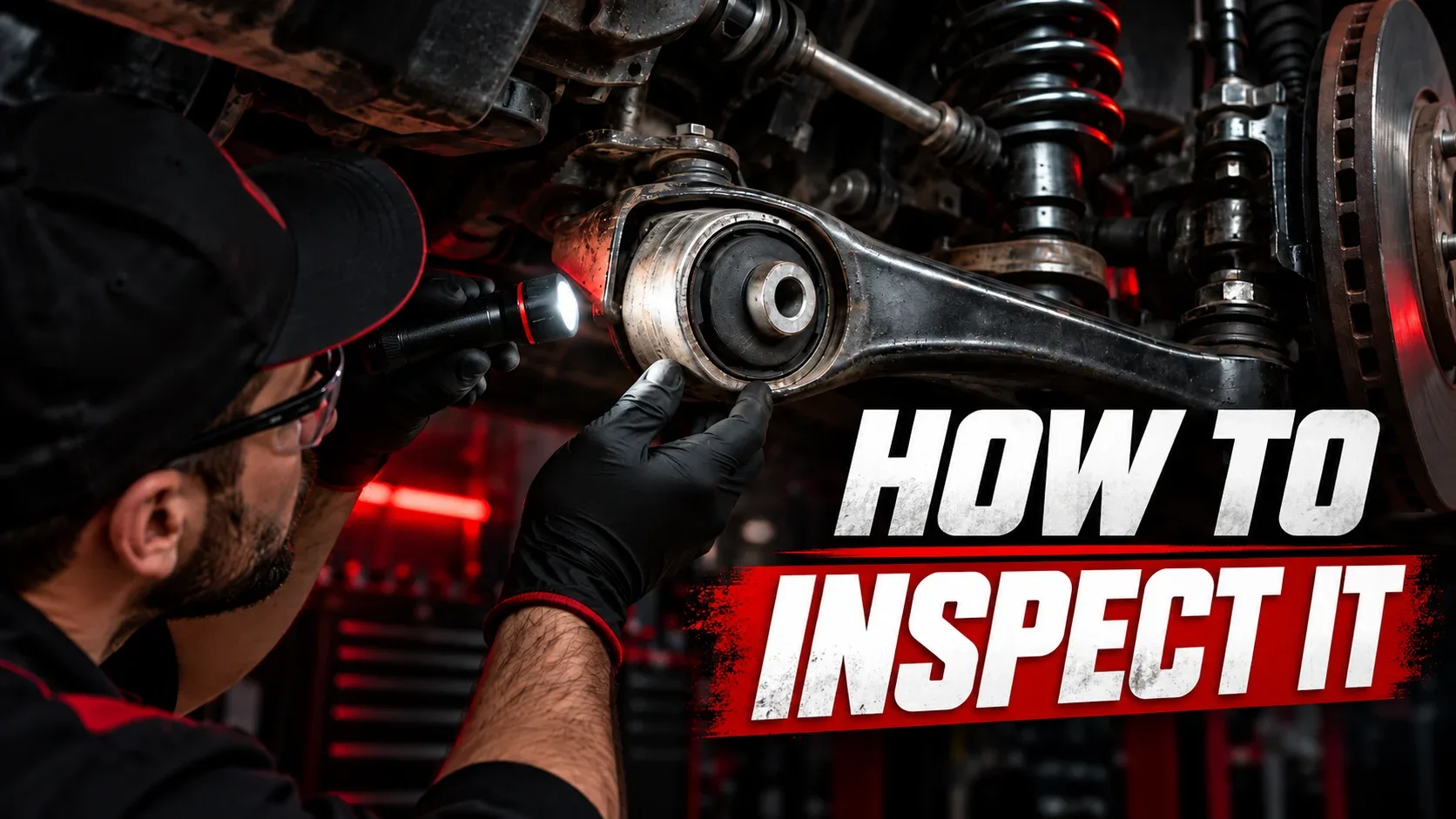
- Make a safe visual check. From an accessible position, look for obvious torn rubber, shifted sleeves, or impact damage.
- Inspect nearby parts. Tires, joints, links, and fasteners can show similar warning signs.
- Have movement checked professionally. A technician can support the suspension correctly and follow the specific manufacturer’s test procedure.
- Confirm before buying parts. Make sure the bushing is actually faulty and identify whether it is serviceable separately.
Can You Drive With a Bad Control Arm Bushing?
It depends on the severity of the damage. Minor surface aging found during maintenance is different from a bushing whose rubber has separated or whose mount allows substantial unintended movement.
With a seriously worn bushing, wheel positioning and steering response may become less predictable. If you notice significant steering looseness, severe knocking, a sudden change in handling, or visible structural damage, do not treat the vehicle as safe for normal driving. Arrange professional assessment and consider towing rather than driving it to a repair shop.
Even when the car still feels drivable, new suspension noises deserve timely inspection. Waiting can contribute to additional wear and make the repair more expensive.
Control Arm Bushing Replacement: What to Expect
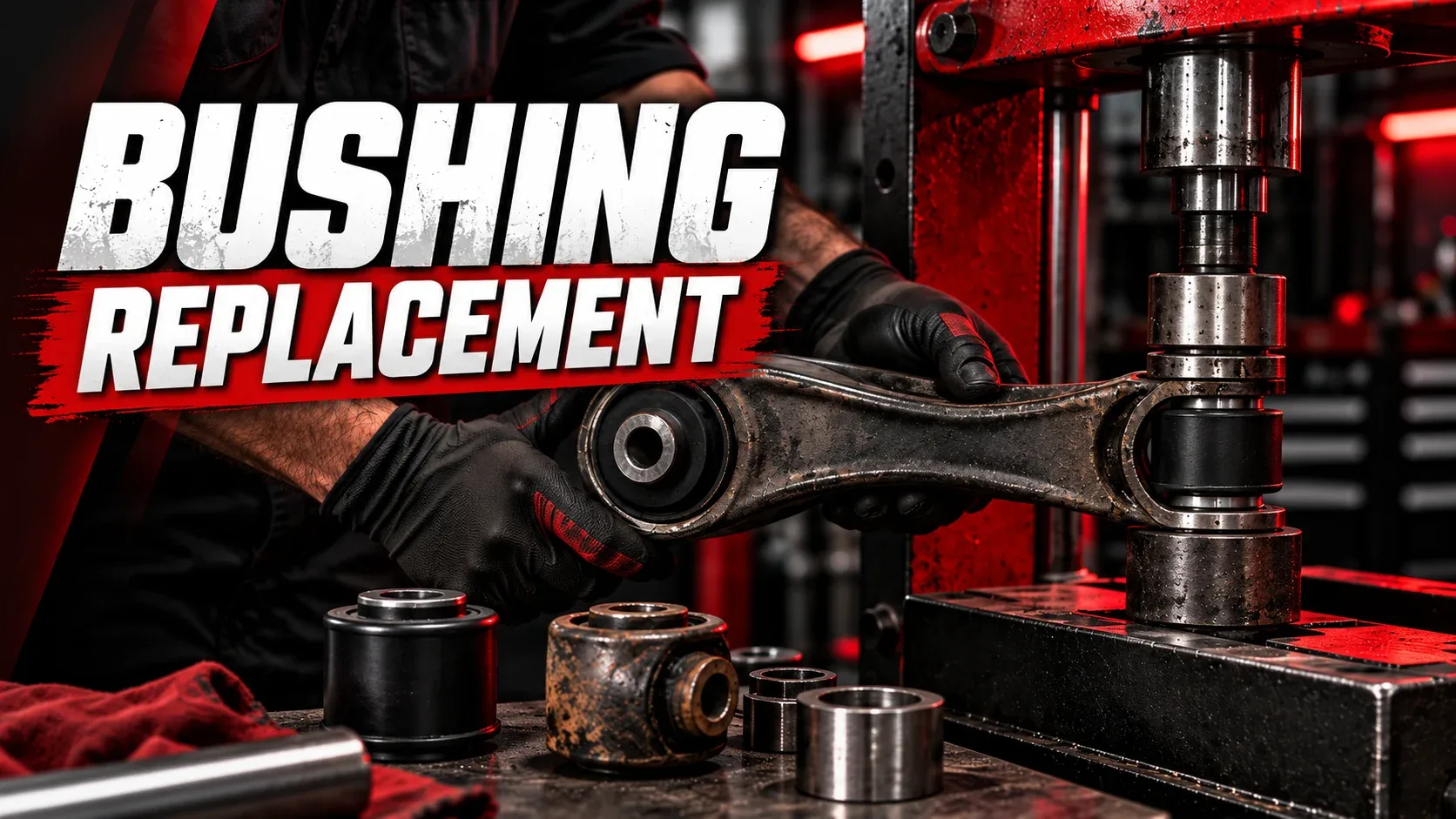
A control arm bushing replacement can mean pressing a new bushing into the existing arm or installing an entirely new control arm. The right procedure depends on how the suspension is built and whether the manufacturer offers the bushing as a separate service part.
Typical professional repair process
- Verify the failed part and select the correct vehicle-specific replacement.
- Raise and support the vehicle using the prescribed lifting points.
- Remove components needed to access the control arm or bushing.
- Remove the old bushing with appropriate tools, or replace the complete arm assembly.
- Install the replacement without damaging its shell, rubber, or mounting bore.
- Reassemble and tighten fasteners to the manufacturer’s specified torque and suspension position.
- Inspect the work and check wheel alignment as required.
Should you do it yourself?
Experienced DIY mechanics may be able to replace a complete bolt-on arm with proper equipment and service information. Pressing bushings can be more demanding: incorrect support or tooling may deform the arm or damage the new part. If you do not have the required tools, torque specifications, and safe lifting setup, a professional repair is the better choice.
Control Arm Bushing Replacement Cost
In the United States, prices vary widely with vehicle type, local labor rates, rust, and whether the bushing is sold separately. The following figures are broad planning estimates per side, not a quote for your specific car.
| Repair type | Approximate US cost | What’s included |
|---|---|---|
| Replacement bushing only | $15–$80 | Typical aftermarket part only; fitment varies |
| Bushing-only repair | $150–$400+ | Parts and labor when pressing the bushing is practical |
| Complete control arm | $250–$700+ | Installed assembly on many common vehicles; some cost more |
| Alignment, if needed | $90–$180+ | Separate service often recommended after suspension work |
These are illustrative budgeting ranges, not verified local quotes. Actual estimates depend on the vehicle, parts brand, shop, region, and extent of related damage. Ask whether alignment, taxes, and additional hardware are included.
Before approving the repair, request an itemized estimate and ask the shop to show you the failed bushing. Also check whether the opposite side and the ball joint are in good condition; replacing additional parts should be based on inspection, not assumption.
Replace the Bushing or the Entire Control Arm?
If the metal arm is sound and a replacement bushing is readily available, keeping the existing arm can save parts cost. However, the labor required to remove and press the bushing may narrow that savings. A complete control arm can be a sensible option when other attached components are worn or the bushing is not designed to be serviced on its own.
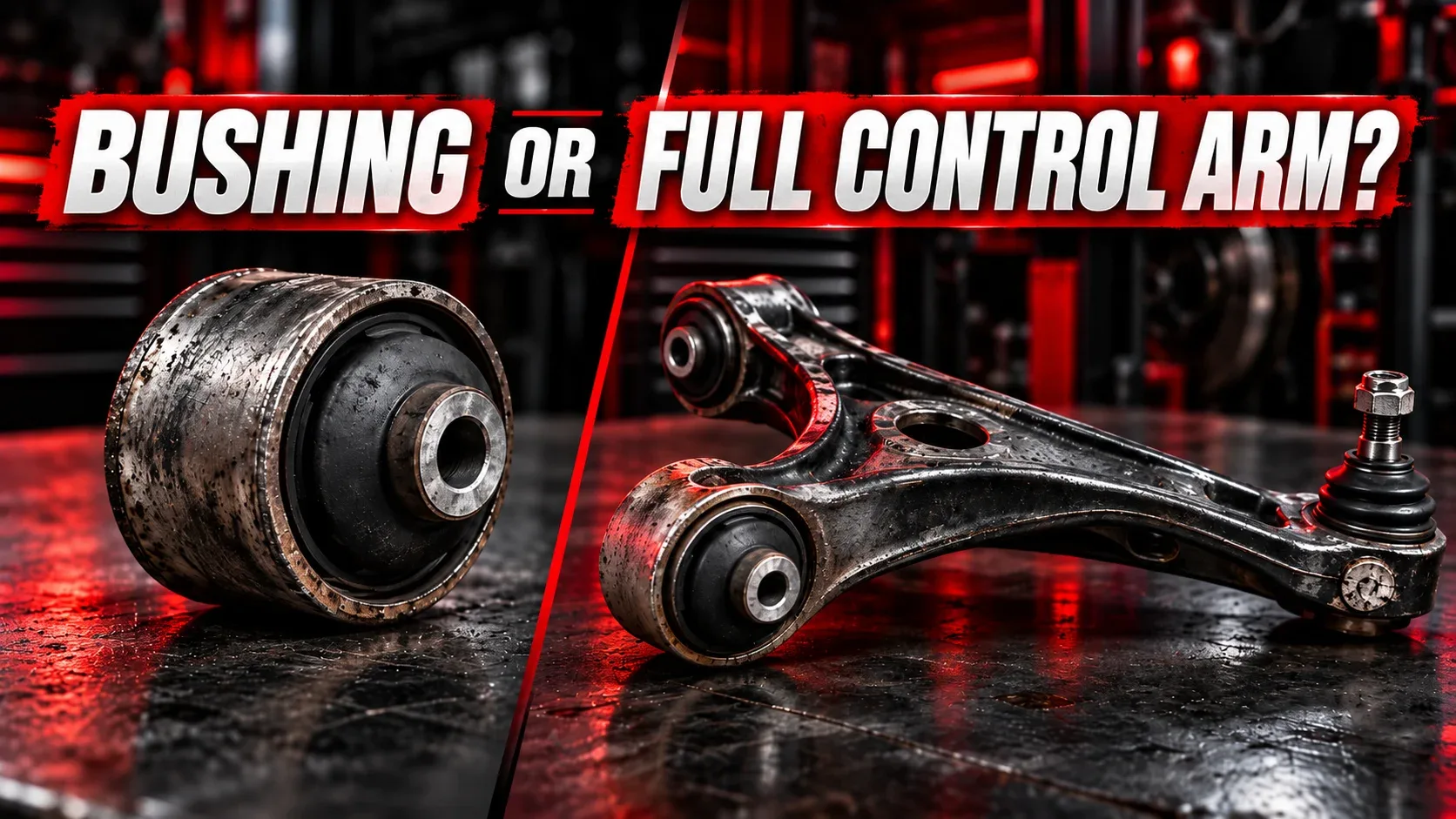
| Decision factor | Bushing only | Complete control arm |
|---|---|---|
| Parts expense | Usually lower | Usually higher |
| Labor and tools | May need a press and special adapters | May reduce pressing work, but still requires safe removal |
| Other worn components | Does not fix an unrelated worn joint | May include new joint and bushings, depending on assembly |
| Best fit | Serviceable bushing and otherwise healthy arm | Damaged arm, nonserviceable bushing, or economical assembly replacement |
How Long Do Control Arm Bushings Last?
There is no universal replacement mileage. Some bushings last many years, while others deteriorate sooner due to suspension design, climate, road conditions, contamination, or impacts.
The most practical approach is condition-based maintenance. Have the suspension inspected when you notice a new noise, unexpected tire wear, or a change in steering behavior. Address leaking fluids and damaged suspension parts before they create additional problems.
Frequently Asked Questions
What does a bad control arm bushing sound like?
It may cause a dull clunk or knock over bumps, during braking, or when suspension loads change. However, ball joints, sway bar links, and other loose components can make similar sounds. An inspection is needed to identify the source.
Can bad control arm bushings cause steering wheel vibration?
Yes, worn bushings can allow unwanted suspension movement and transmit more road vibration. But steering vibration is also commonly related to tires, wheel balance, brakes, or other components, so the symptom alone is not conclusive.
Do I need an alignment after control arm bushing replacement?
An alignment check is usually wise after control arm or bushing work, especially when mounting positions or suspension geometry may have changed. Follow the vehicle manufacturer’s service procedure and correct any alignment readings outside specification.
Can I replace just one control arm bushing?
Sometimes. If only one bushing is faulty and it is sold as a separate service part, single-bushing replacement may be appropriate. The condition of the other bushings, the arm, and the ball joint should guide the decision.
Is a control arm bushing the same as a ball joint?
No. A bushing cushions the control arm’s mounting connection and permits controlled movement. A ball joint is an articulated joint near the wheel end of many control arms. Both influence suspension behavior, but they perform different functions.
Final Thoughts
A worn control arm bushing can contribute to clunking, steering changes, and uncomfortable vibration—but not every suspension noise points to that part. Start with a careful diagnosis and assess how severe the wear really is.
If replacement is needed, compare the price of a separate bushing with the installed cost of a complete arm, and make sure the repair follows the proper tightening and alignment procedure. An accurate diagnosis is the best way to protect your safety and avoid paying for unnecessary parts.