Winter can be tough on recreational vehicles, especially when water remains inside their plumbing systems. Freezing temperatures may crack fittings, damage pumps, and cause expensive repairs.
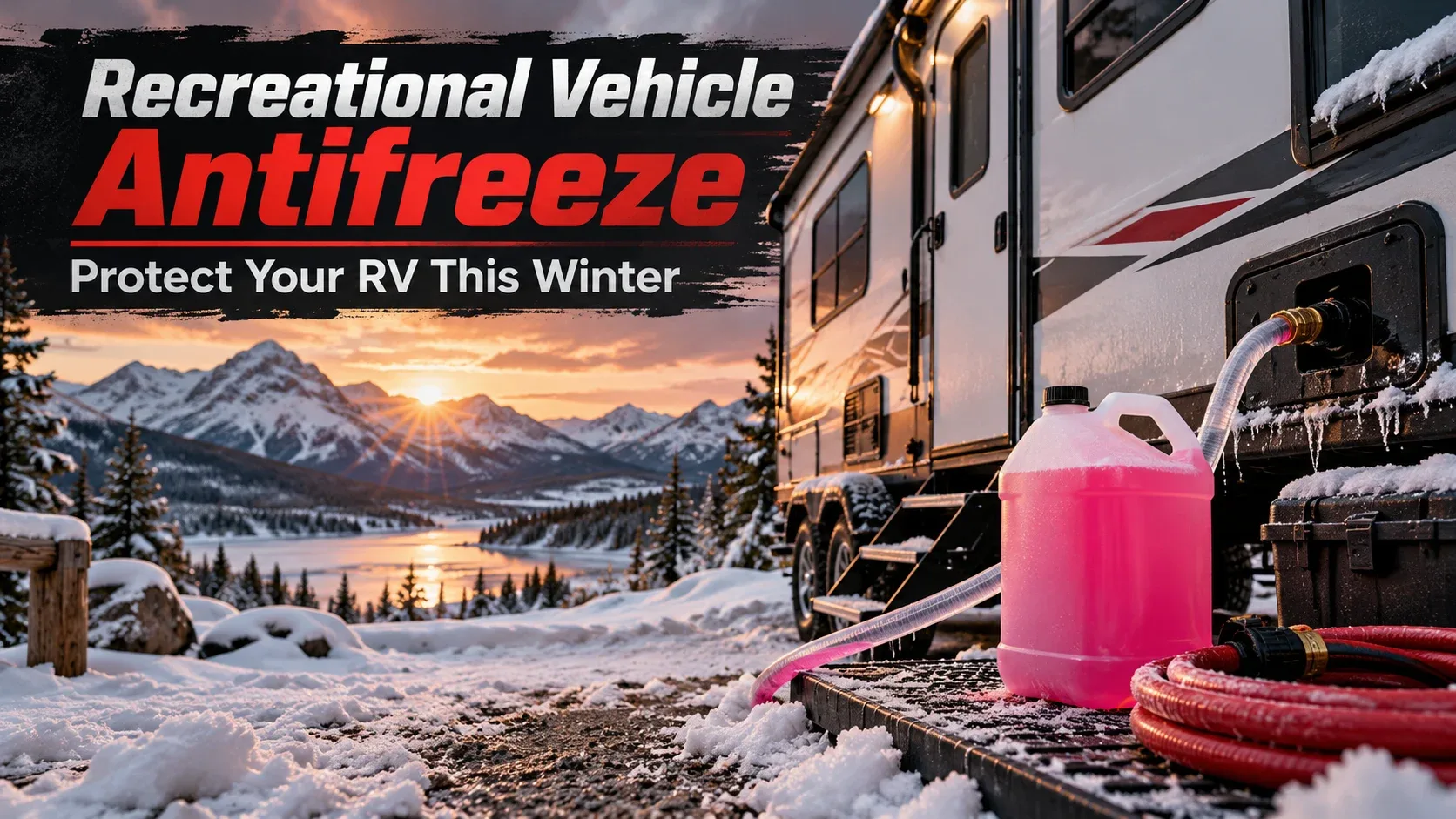
Recreational vehicle antifreeze helps protect compatible RV plumbing during winter storage. But it is important to choose the correct fluid: RV plumbing antifreeze and automotive engine coolant are designed for different purposes.
What Is Recreational Vehicle Antifreeze?
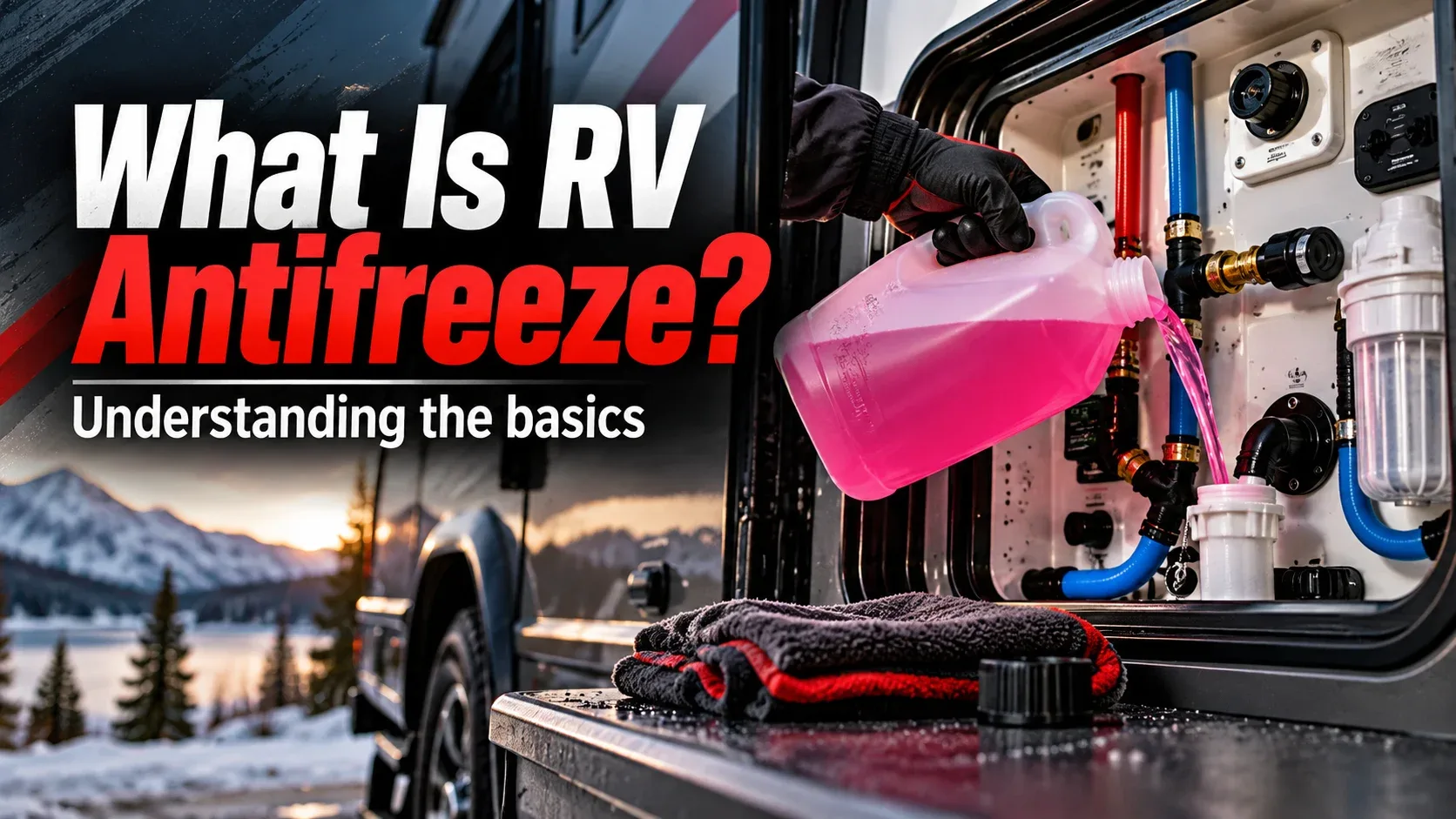
RV antifreeze is formulated to help prevent freeze-related damage when a camper, travel trailer, fifth wheel, or motorhome is stored in cold weather. Unlike engine coolant, it is generally intended for seasonal plumbing protection, not circulation through a hot engine.
It can be used, when approved by the RV and product manufacturers, in fresh-water lines, pump passages, sink and shower traps, toilet components, and other winterization-compatible fixtures.
RV Antifreeze vs. Automotive Antifreeze
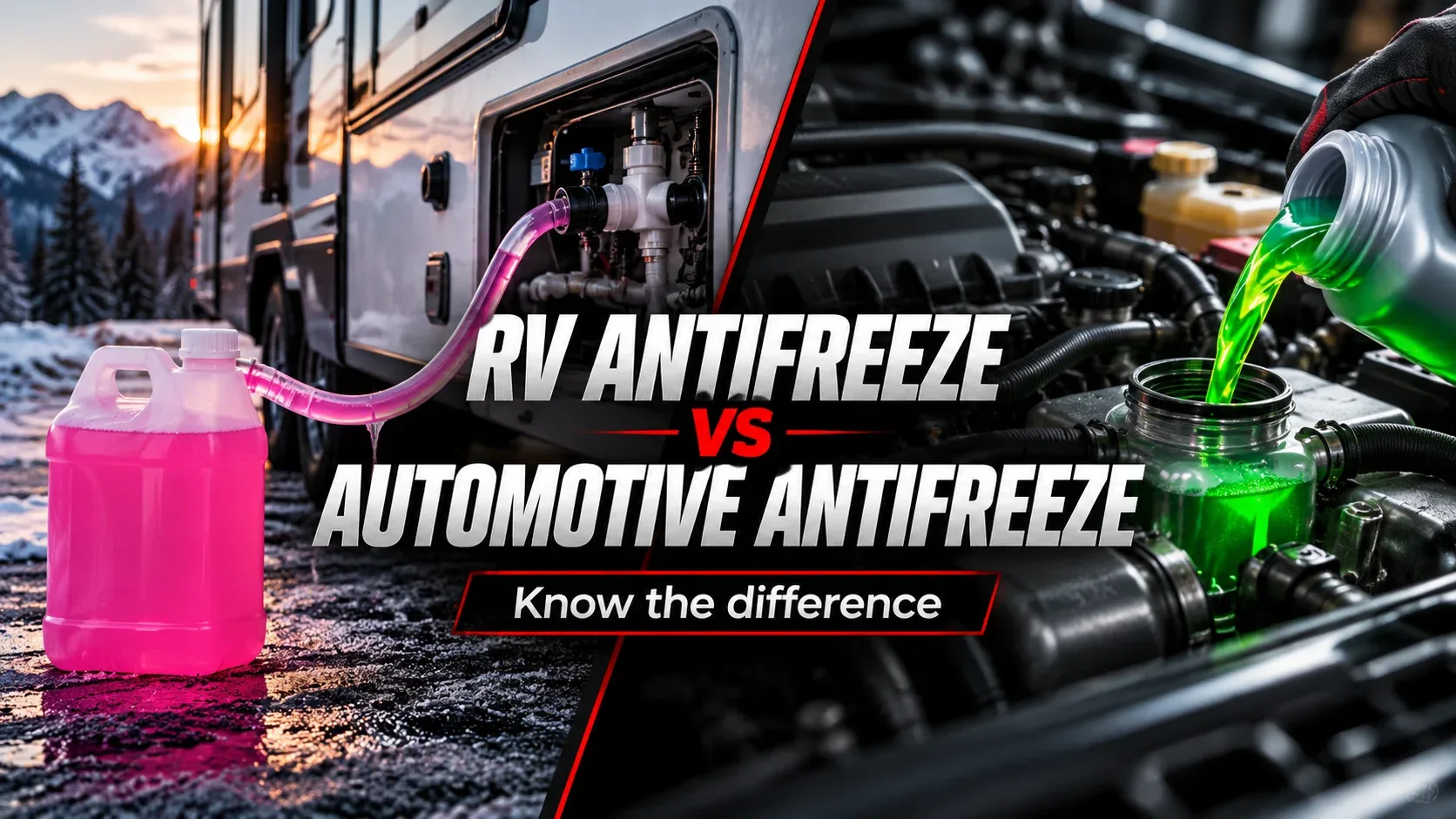
Both products protect against low temperatures, but they are not interchangeable.
| Feature | RV Plumbing Antifreeze | Engine Coolant |
|---|---|---|
| Purpose | Winterize compatible plumbing | Manage engine temperatures and corrosion |
| Typical formulation | Propylene glycol, ethanol, or blends | Glycol with engine-specific additives |
| Appropriate system | Approved RV water and drain systems | Specified engine cooling circuits |
Types of RV Antifreeze
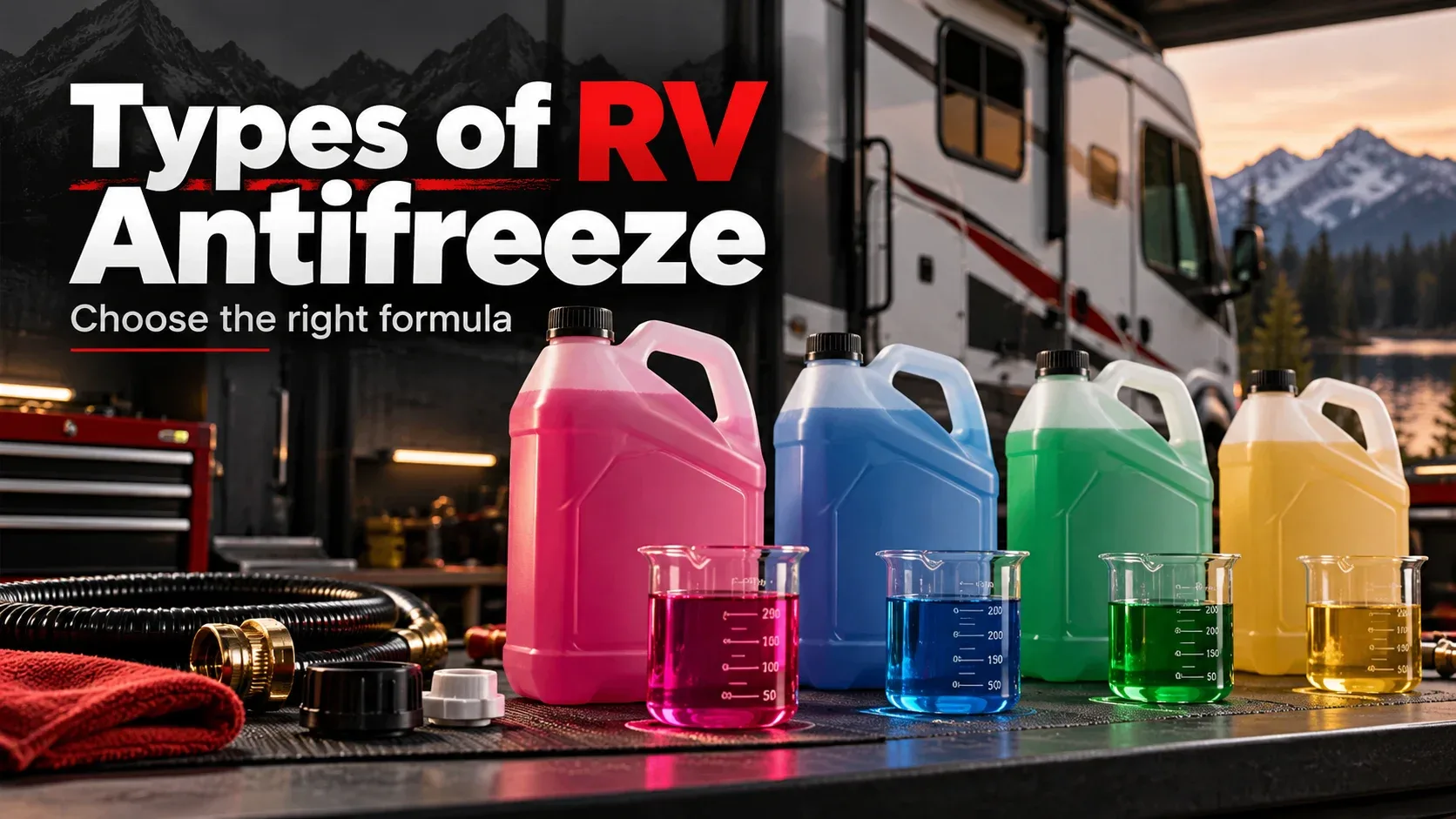
Propylene Glycol-Based
Propylene glycol formulas are commonly used for RV plumbing. For fresh-water systems, choose a product expressly labeled for potable-water plumbing winterization. Low toxicity does not mean a fluid is intended for drinking.
Ethanol-Based
Some lower-cost formulas contain ethanol. These may have noticeable odors, be flammable, or be unsuitable for certain seals or equipment. Verify compatibility before use.
Blended Formulas
Other products combine ingredients. Read the full label and technical instructions rather than assuming all pink antifreeze has the same composition.
How Cold Can RV Antifreeze Get?
A label such as -50°F commonly describes a burst-protection rating, not a promise that the product remains entirely liquid at that temperature. It may form crystals or become slushy at warmer temperatures while still offering specified protection when used correctly.
Do not dilute antifreeze unless the manufacturer explicitly permits it. Follow the stated application and temperature-rating conditions.
Where Is RV Antifreeze Used?
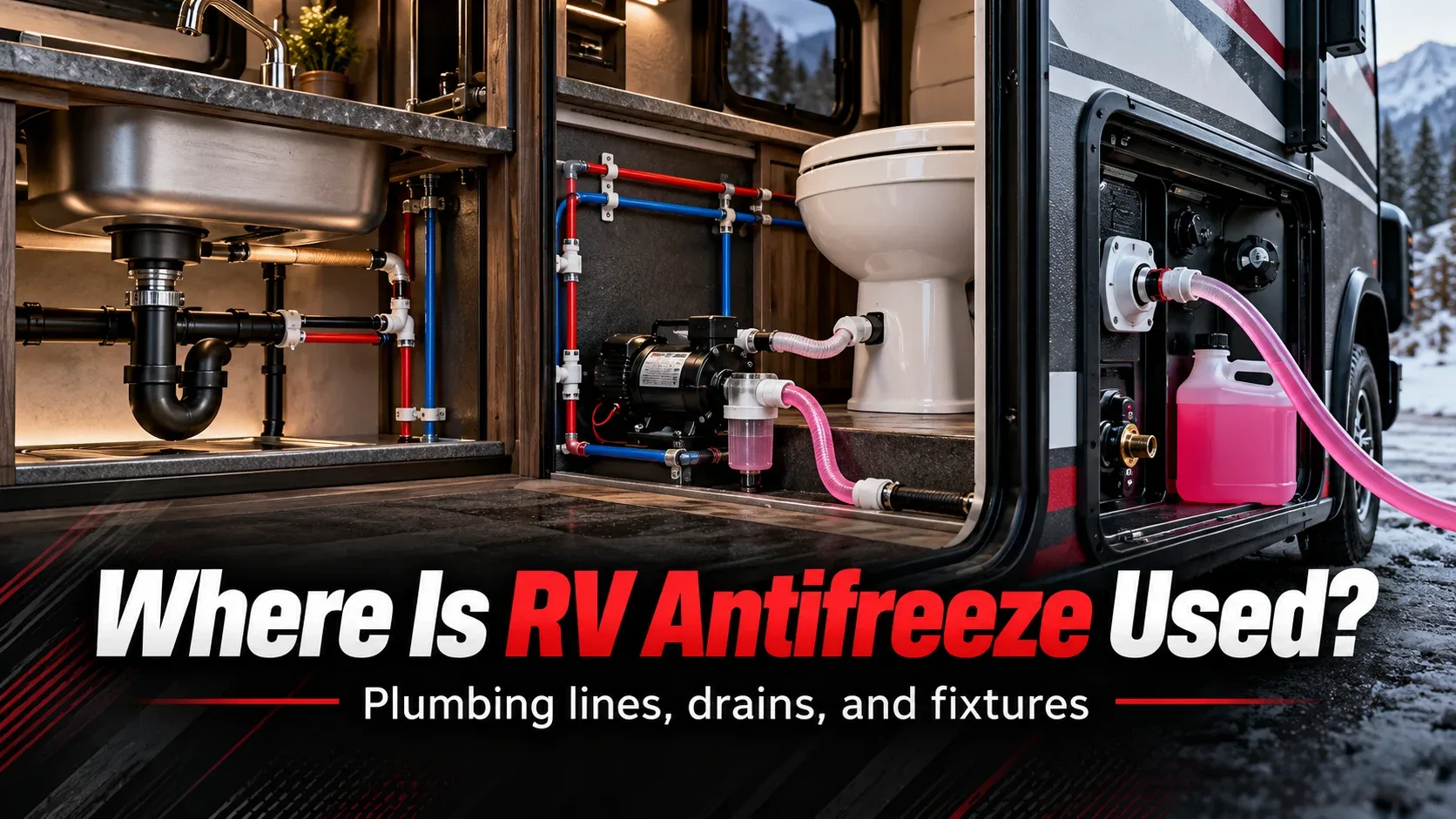
Depending on the vehicle, antifreeze may be used in:
- Hot and cold plumbing lines
- Compatible water-pump passages
- Sink and shower drain traps
- Toilet valves and seals as specified
- Outdoor showers and plumbing branches
Conventional tank-style water heaters are usually drained and bypassed rather than filled with plumbing antifreeze. Tankless heaters, washers, ice makers, and hydronic systems can have special procedures; consult their manuals.
How Much RV Antifreeze Do You Need?
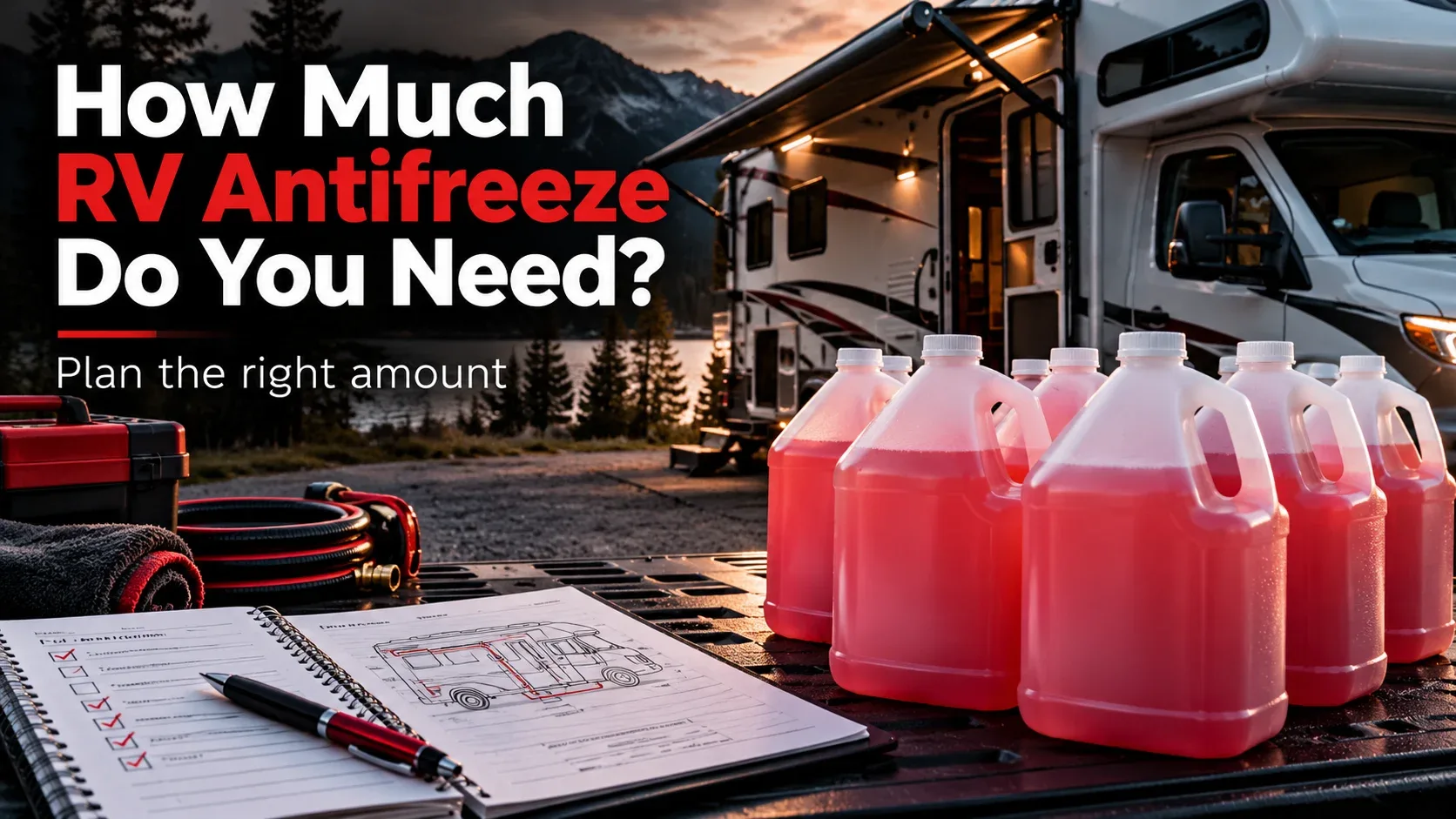
The required quantity depends more on plumbing layout, fixtures, and drainage than vehicle length alone. The following are rough shopping estimates, not exact requirements.
| RV Type | Illustrative Amount |
|---|---|
| Compact camper | 1–2 gallons |
| Travel trailer | 2–3 gallons |
| Large fifth wheel | 3–5 gallons |
| Motorhome with multiple fixtures | 3–6 gallons or more |
Always verify your RV’s procedure and keep extra fluid available as needed.
How to Winterize an RV With Antifreeze
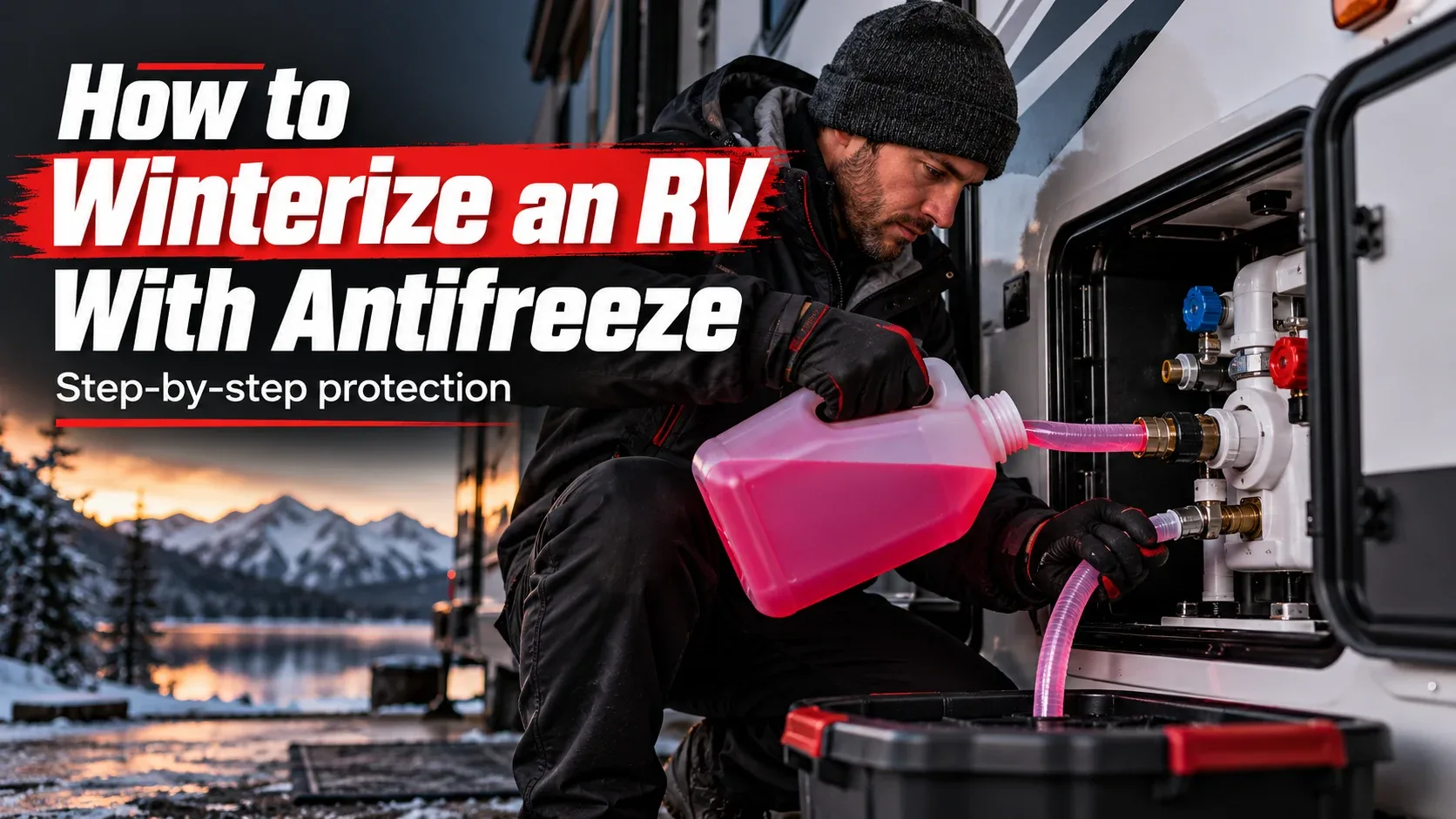
Use the sequence below only as a general overview. Plumbing layouts vary, and your owner’s manual takes precedence.
Step 1: Gather Supplies
Have approved RV plumbing antifreeze, a compatible pump winterization hose or kit, basic tools, and your RV and appliance manuals available.
Step 2: Turn Off and Drain Water
Disconnect city water, turn off the pump, and shut down water-heater heating functions. Let the heater cool and relieve pressure before draining it. Drain the fresh-water tank and plumbing through the manufacturer’s specified points.
Step 3: Configure the Water Heater Bypass
For a conventional tank heater with a bypass system, drain and bypass it as instructed. Never assume the same valve layout applies to all RVs.
Step 4: Prepare the Pump
Remove or bypass filter cartridges as directed. Connect the winterization pickup hose or select the built-in winterization valve, then place the pickup tube into approved antifreeze.
Step 5: Protect Each Plumbing Branch
Switch on the pump and work through appropriate hot and cold faucets and other compatible fixtures until the product appears consistently, following the manufacturer’s procedure. Do not let the pump run dry.
Step 6: Protect Drains and Toilets
Add the recommended amount to drain traps and any toilet components requiring protection. Special appliances may require separate procedures.
Step 7: Inspect and Finish
Check outdoor fixtures, low-point drains, unusual plumbing branches, and appliance instructions. Turn off the pump when finished.
- Drain applicable tanks and lines
- Safely drain and bypass water heater where required
- Use the correct fluid in compatible plumbing
- Check indoor and outdoor fixtures
- Protect traps and approved toilet components
- Follow special-appliance instructions
Can You Use RV Antifreeze in an Engine Radiator?
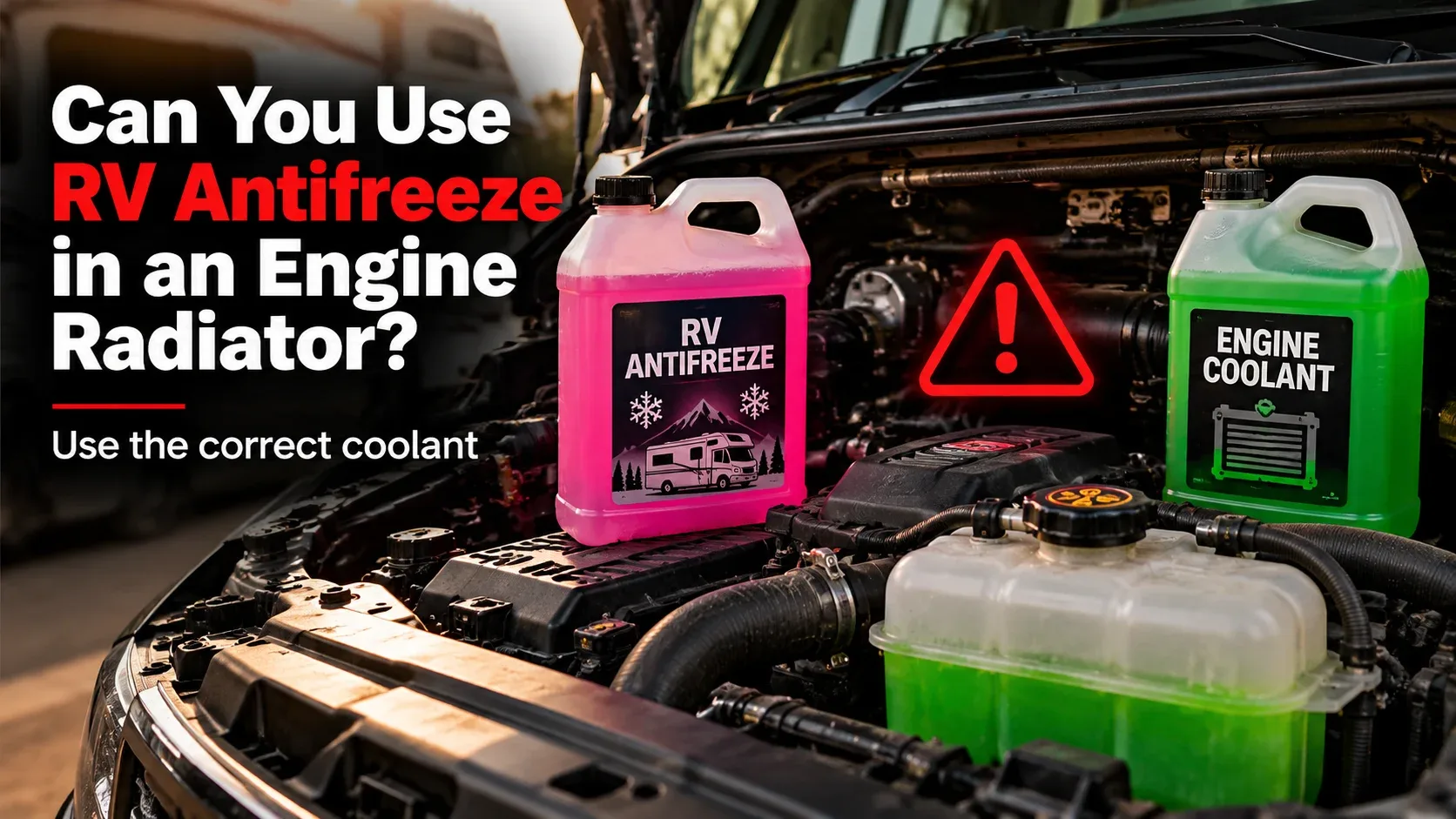
Do not use ordinary RV plumbing antifreeze in an engine radiator. The engine needs a coolant meeting its manufacturer’s heat-transfer and corrosion-protection specifications. Some specialized products are approved for certain engine winterization applications, but only use them when both the product and equipment instructions permit it.
How to Flush RV Antifreeze Out of Water Lines
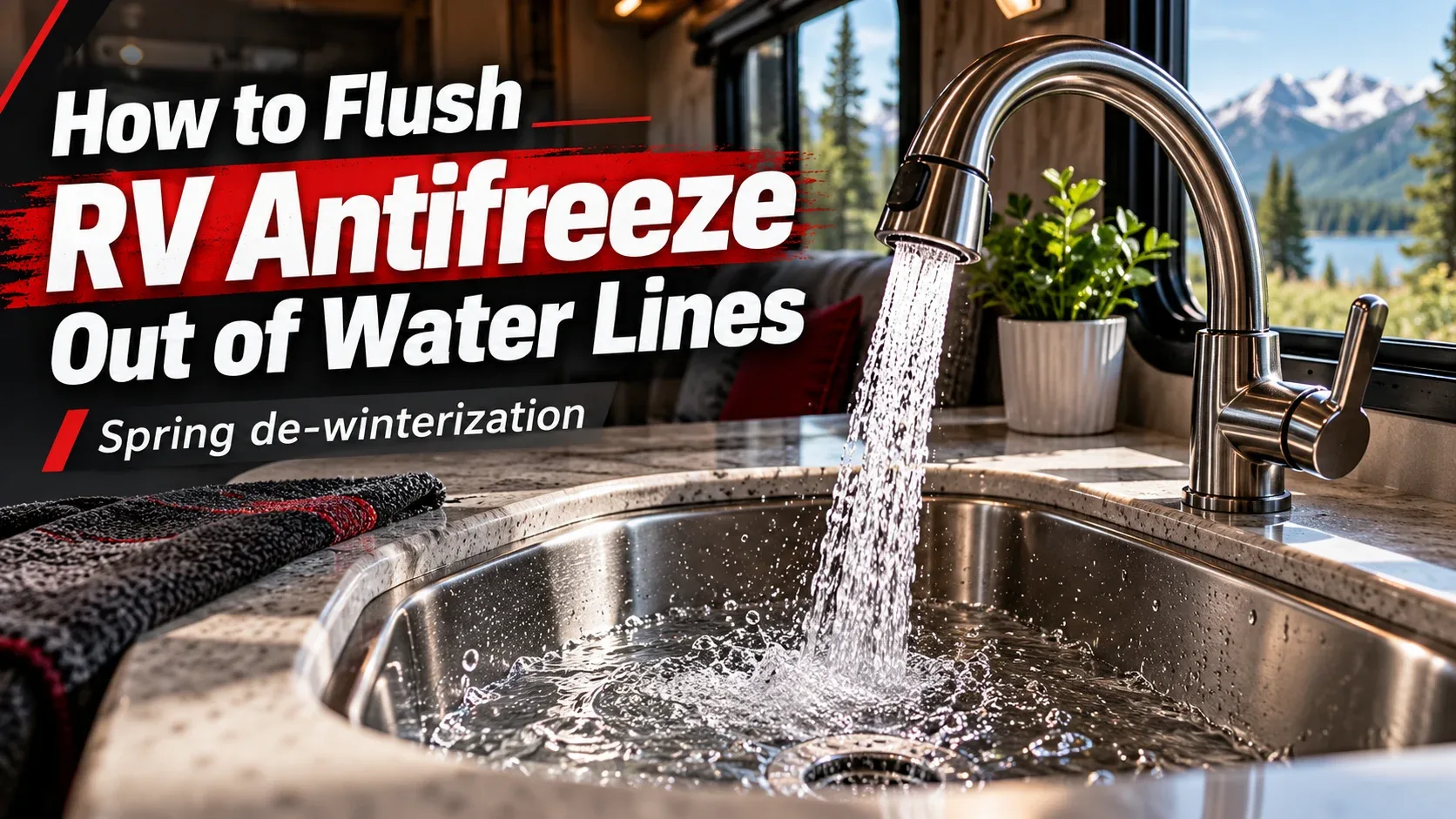
Before returning to camping, follow your manual’s de-winterization procedure:
- Inspect connections and restore the correct plumbing and valve arrangement.
- Flush each applicable line and fixture with fresh water until antifreeze is removed.
- Look for leaks around fittings, valves, and equipment.
- Sanitize the potable-water system using approved procedures.
- Fill the water heater fully before turning its heat source back on.
If water has an unusual taste or odor, investigate and continue appropriate flushing before consuming it.
Common RV Antifreeze Mistakes
- Using radiator coolant in plumbing: It is not intended for drinking-water lines.
- Failing to drain a heater: Trapped water may damage the tank.
- Overlooking outdoor fixtures: Outside showers can retain water.
- Forgetting drain traps: P-traps often hold water after the faucets are drained.
- Guessing at compatibility: Formulations can affect seals and other materials differently.
- Diluting the fluid: Unapproved dilution reduces expected protection.
- Skipping special appliances: Ice makers and other equipment may need additional steps.
How to Choose the Right RV Antifreeze
Focus on compatibility, not bottle color or price alone. Read the label for the intended application, ingredient type, burst-protection rating, and manufacturer instructions. For potable-water plumbing, select a product specifically approved for that application and confirm it matches your RV’s requirements.
Frequently Asked Questions
Is recreational vehicle antifreeze toxic?
Many propylene-glycol-based plumbing formulas are described as low-toxicity, but they are not drinks. Follow the label and use only products suitable for the intended system.
Is pink antifreeze always safe?
No. Bottle color does not establish the formulation, compatibility, or safety of a product.
Can RV antifreeze freeze?
Yes. Some products become slushy above the rated burst-protection temperature; follow the manufacturer’s explanation of the rating.
Can I put antifreeze in the fresh-water tank?
Follow your RV manual. Many owners use a pump pickup hose instead of adding antifreeze directly to the tank.
How long does RV antifreeze last?
Shelf life varies by manufacturer and storage conditions. Refer to the product label and do not use fluid that appears contaminated.
Do all RVs need antifreeze in winter?
Not necessarily. Some systems can be winterized using manufacturer-approved compressed-air methods, while others require fluid or additional steps.
Can I reuse recovered antifreeze?
Reusing recovered fluid is not recommended because it may be diluted or contaminated.
Final Thoughts
Choosing the right recreational vehicle antifreeze and following a proper winterization procedure can help prevent avoidable cold-weather damage. Keep RV plumbing antifreeze separate from engine coolant, check your system’s compatibility, and rely on the relevant owner and product manuals.