Choosing the right engine oil can feel confusing when every bottle promises better protection, cleaner engines, and longer performance. If your vehicle recommends SAE 0W-20, you may see several types of full synthetic oil with different labels and prices.
0W20 full synthetic motor oil combines a defined SAE viscosity grade with synthetic base oils and a performance additive package. This guide explains how the oil works, its benefits, oil-change intervals, compatibility, and what to check before buying.
Quick Answer: What Is 0W-20 Full Synthetic Oil?
0W-20 full synthetic oil is motor oil made with synthetic base oils and formulated to satisfy the SAE 0W-20 viscosity classification. The 0W describes low-temperature viscosity requirements, and 20 identifies a viscosity grade at operating temperatures. It is appropriate when your vehicle manufacturer specifies the viscosity and the oil meets the required performance standards.
What Is 0W-20 Full Synthetic Motor Oil?
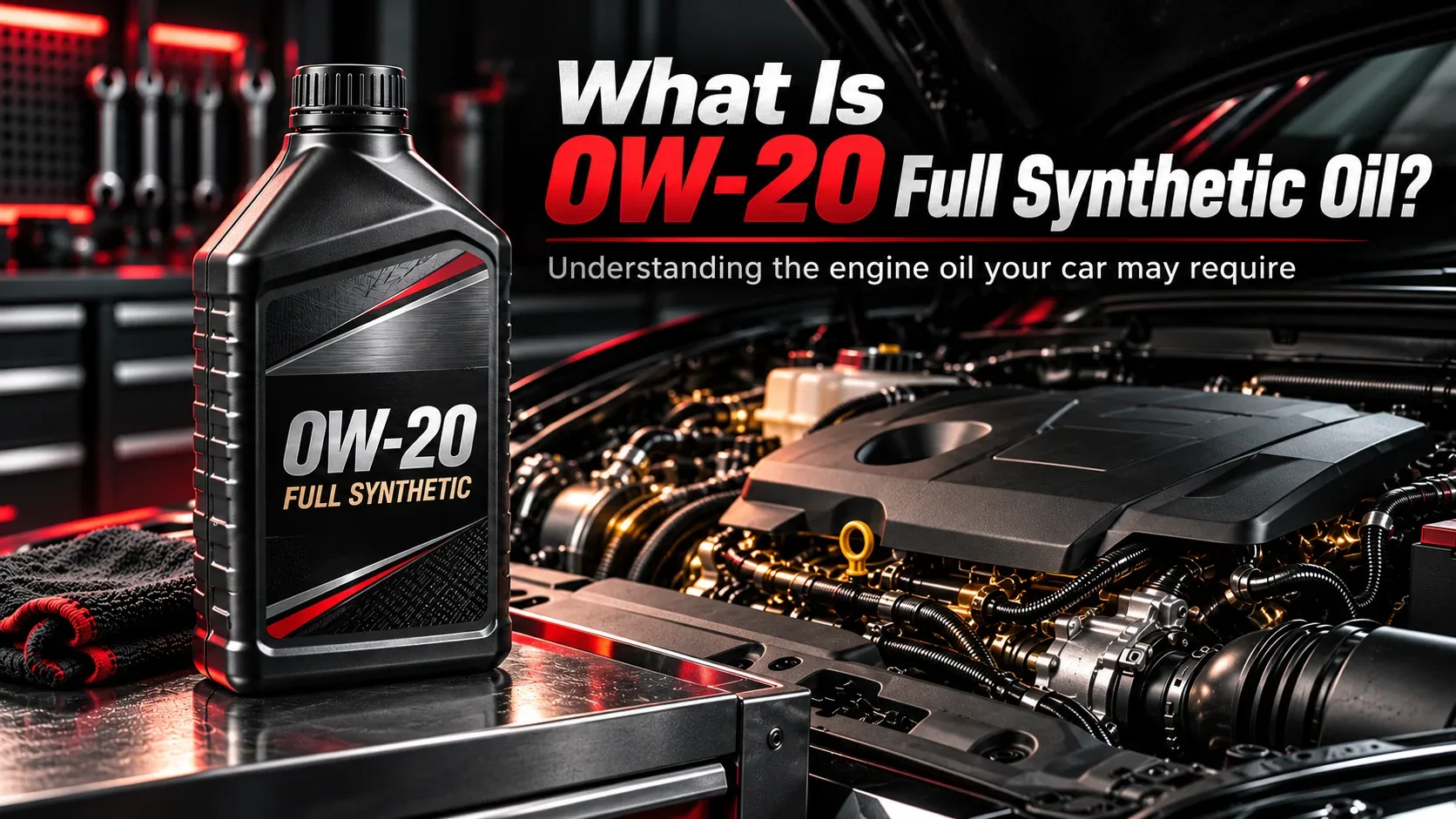
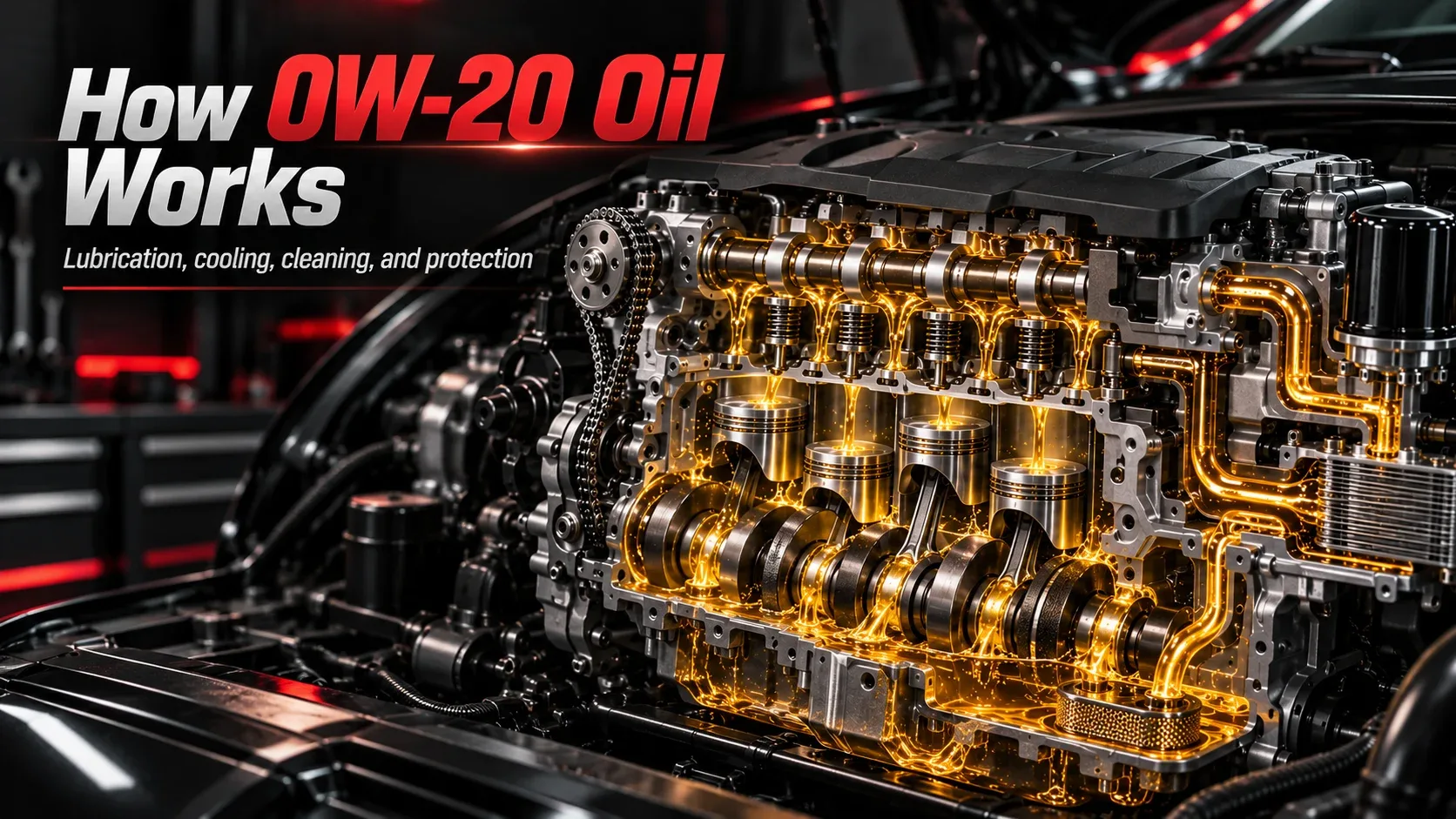
Engine oil forms a lubricating film between moving parts to reduce wear. It also carries heat, helps control deposits, protects against corrosion, and transports contaminants toward the oil filter. The 0W-20 marking refers to viscosity, while full synthetic describes the base-oil formulation.
What Does 0W-20 Mean?
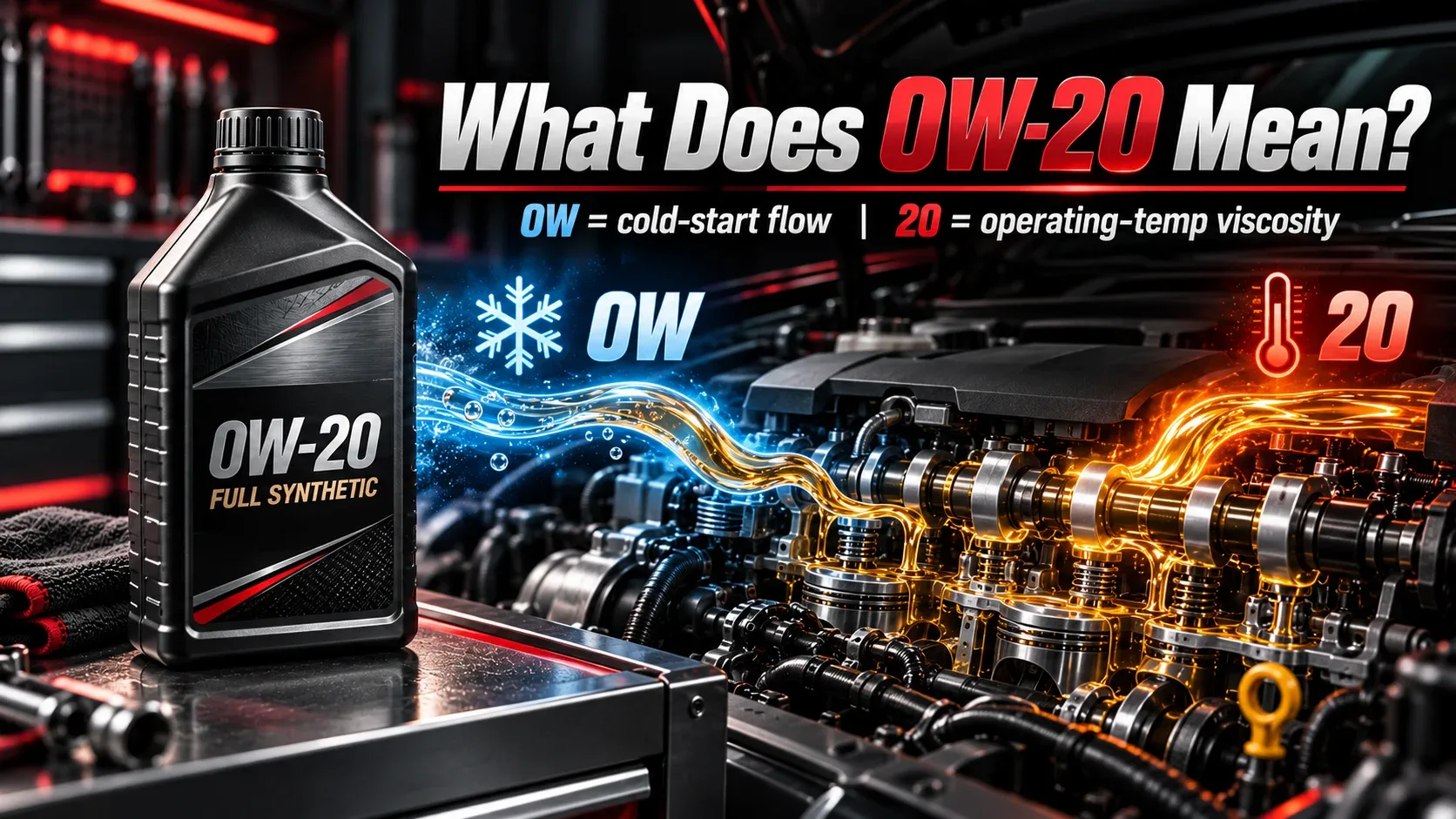
The 0W portion reflects cold-temperature cranking and pumping performance; W stands for winter. The 20 is an SAE high-temperature viscosity grade, not a temperature in degrees. A 0W-20 generally meets more demanding low-temperature requirements than a comparable 5W-20; both share the SAE 20 high-temperature grade.
Important: SAE viscosity alone does not establish whether a motor oil meets the manufacturer’s performance requirements for your engine.
How Does 0W-20 Full Synthetic Oil Work?
After engine startup, the oil pump moves oil through passages to bearings, camshafts, and other components. Correct viscosity helps oil circulate as intended while maintaining suitable lubrication under normal operating conditions.
Oil can help transfer heat away from certain engine parts. Detergents and dispersants also help manage deposits and hold contaminants in suspension until they are removed through filtration or an oil change.
Cold Starts and Engine Protection
Engine oil thickens as temperatures drop. The 0W classification ensures the oil passes defined low-temperature cranking and pumping tests. Anti-wear additives and appropriate operating-temperature viscosity also contribute to protecting moving parts.
Benefits of Using 0W-20 Full Synthetic Oil
When it is correctly specified for your vehicle, 0W-20 full synthetic oil can offer several advantages. Results vary by formulation, engine design, driving conditions, and maintenance.
Cold-Start Flow
The 0W grade meets defined performance requirements for low-temperature cranking and pumping.
Wear Protection
Appropriate viscosity and modern additive chemistry help protect lubricated engine parts.
Fuel Efficiency
Lower-viscosity oils can reduce some frictional and pumping losses in engines designed for them.
Formulation Stability
Quality synthetic formulations can resist oxidation and deposits under specified operating conditions.
Which Vehicles Use 0W-20 Full Synthetic Oil?
Some engines from Toyota, Honda, Subaru, Mazda, and other automakers specify 0W-20. Certain model years or engines in vehicles such as the Honda Civic, Toyota Camry, Honda CR-V, and Toyota RAV4 may call for this viscosity. The same model name does not guarantee the same oil requirement across engines and model years.

How to Check Whether Your Car Requires 0W-20
- Read the engine-oil section of the vehicle owner’s manual.
- Check the filler cap for a viscosity marking, then confirm it in the manual.
- Identify the required API, ILSAC, or manufacturer-specific specifications.
- Verify your engine, model year, and any alternative-oil instructions.
0W-20 vs 5W-20 vs 5W-30: What’s the Difference?
These oils differ in their SAE low-temperature and high-temperature viscosity classifications. None is universally better for every engine: suitability depends on the automaker’s requirements.
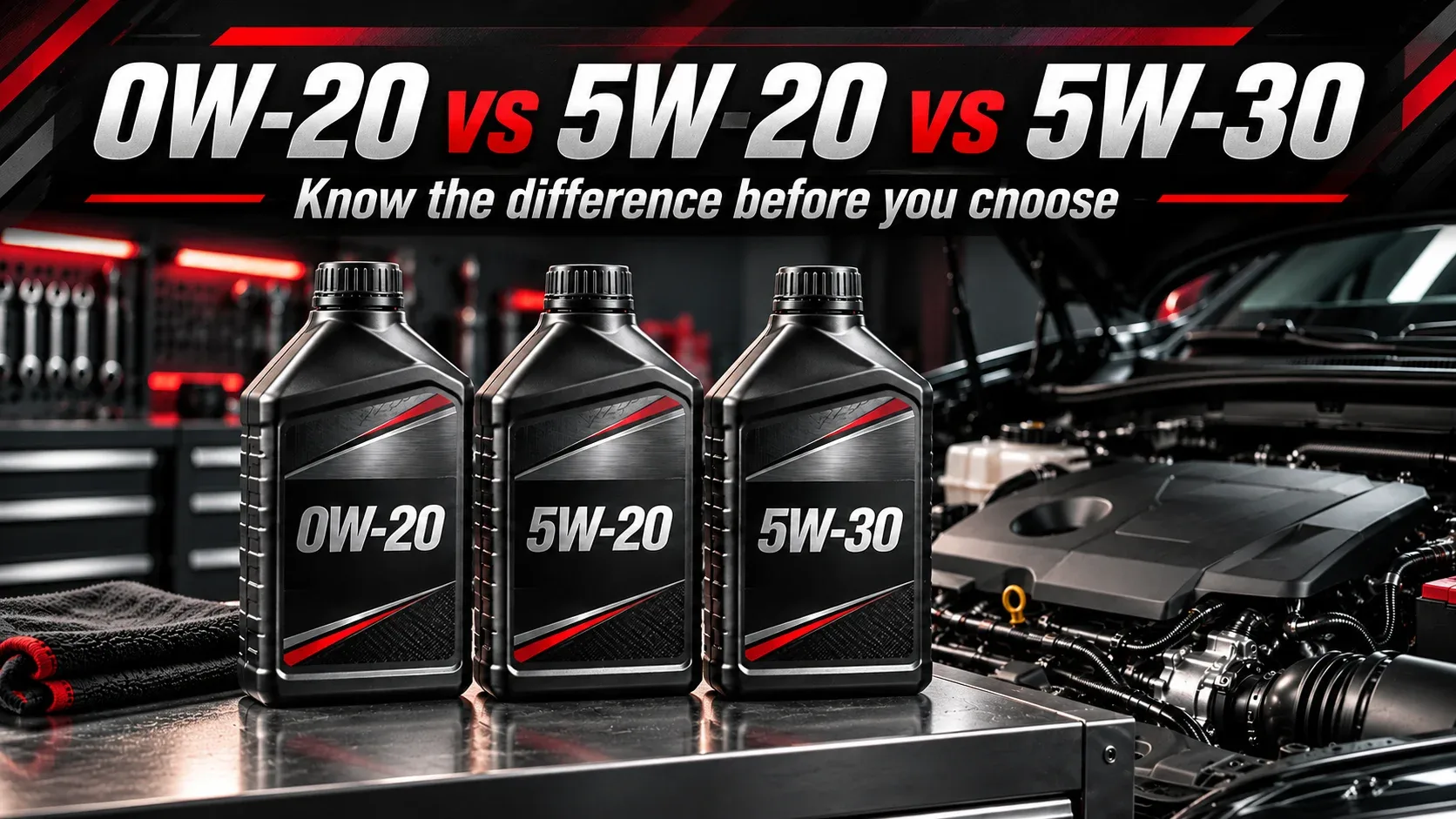
| Feature | 0W-20 | 5W-20 | 5W-30 |
|---|---|---|---|
| Winter viscosity grade | 0W | 5W | 5W |
| High-temperature grade | 20 | 20 | 30 |
| Cold-temperature classification | More demanding than 5W | 5W requirements | 5W requirements |
| Suitability | Only where approved | Only where approved | Only where approved |
Can You Use 5W-20 Instead of 0W-20?
Only if your vehicle manufacturer permits the substitution. Even oils that share an SAE 20 operating-temperature grade may not be interchangeable under the vehicle’s specified conditions.
Is 5W-30 Better for an Older Engine?
Not automatically. A thicker high-temperature grade is not necessarily safer for a high-mileage engine. Follow the manufacturer’s recommendations and seek professional diagnosis for oil consumption or wear concerns.
How Often Should You Change 0W-20 Full Synthetic Oil?
There is no single oil-change interval for every vehicle using this oil. Some maintenance schedules specify changes around 5,000 miles, while others may permit approximately 7,500 or 10,000 miles in particular conditions. These are examples, not universal recommendations.

What Affects Your Oil Change Schedule?
- Frequent short trips and repeated cold starts
- Extended idling or heavy stop-and-go traffic
- Towing, hauling, or demanding operation
- Dust, extreme conditions, and engine condition
- Elapsed time and applicable oil-life monitor guidance
Oil-life monitors can help indicate service needs, but they do not replace regular oil-level checks. If an oil-pressure warning appears, stop safely and follow the vehicle’s emergency instructions rather than continuing to drive.
How to Choose the Right 0W-20 Synthetic Motor Oil
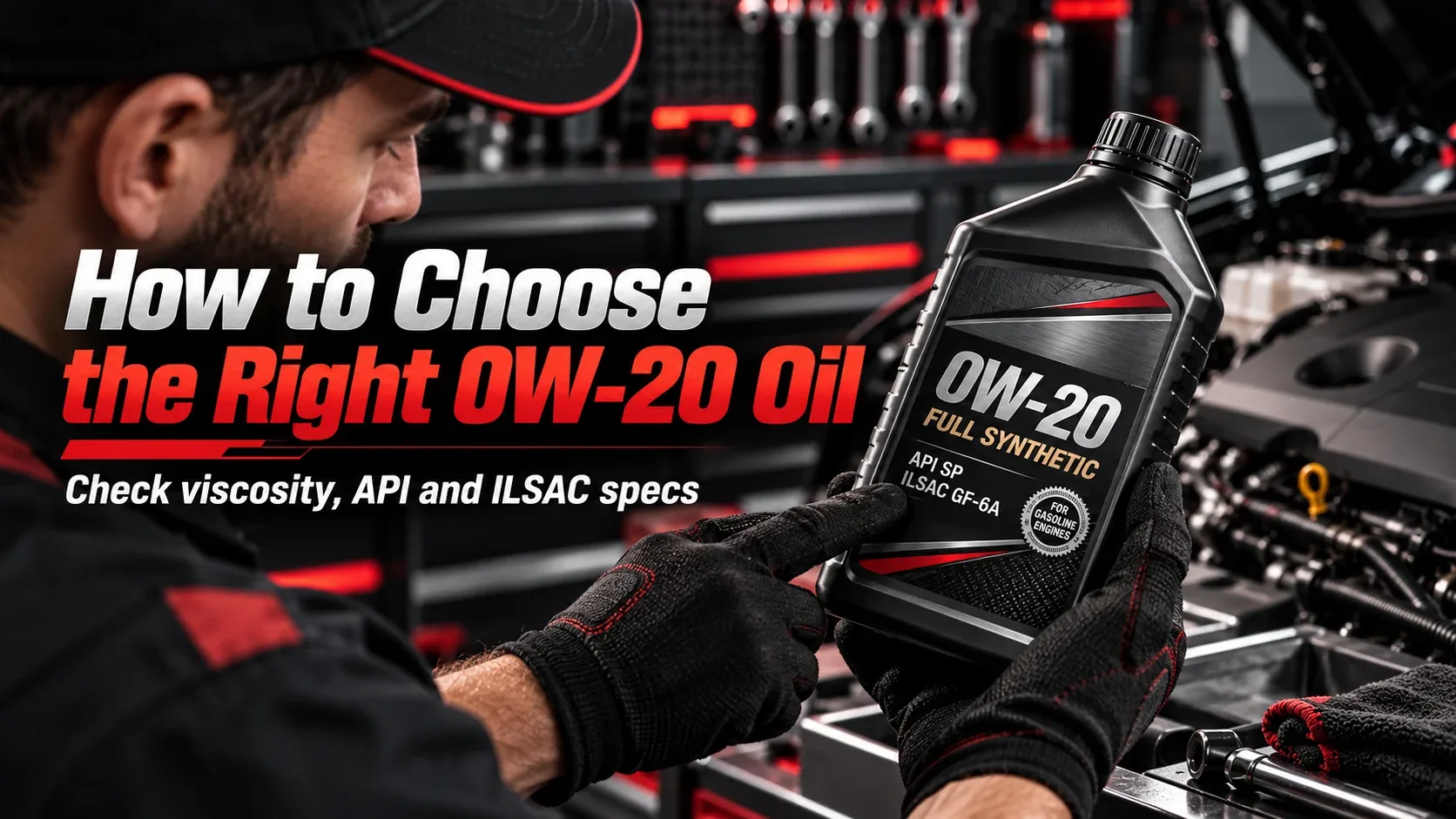
Do not select an oil based only on price, brand, or the phrase “full synthetic.” Match the SAE viscosity grade, required performance standards, and any manufacturer-specific approvals.
API and ILSAC Specifications
API and ILSAC standards establish performance requirements for qualifying passenger-car engine oils. The API SQ and ILSAC GF-7A categories began licensing in March 2025. However, meeting a general industry standard does not automatically satisfy every automaker-specific requirement.
Full Synthetic vs High-Mileage Synthetic
High-mileage products may include additives designed for some concerns associated with aging engines, such as seal conditioning. Mileage alone does not require a different oil: use a product suitable for the vehicle and its condition.
Does Brand Matter?
Compare genuine products by the specifications they meet. An appropriately certified and approved affordable oil can be more suitable than a premium product that does not match your engine’s requirements.
Common Mistakes to Avoid With 0W-20 Engine Oil
High-quality synthetic oil cannot compensate for incorrect selection or neglected maintenance. Avoid these common errors:

- Using the wrong viscosity: Check the manual before substituting another grade.
- Ignoring product standards: The same SAE grade does not mean identical approvals.
- Overfilling: Add oil in small amounts and recheck the level.
- Extending changes too far: Full synthetic is not maintenance-free.
- Ignoring oil consumption: Repeated low oil levels require investigation.
How to Check Your Engine Oil Level
- Park on level ground and follow the manufacturer’s engine-temperature and waiting-time instructions.
- Locate the dipstick, or use the vehicle’s electronic level-check procedure if equipped.
- For a dipstick system, wipe, reinsert, and check as directed in the manual.
- Add the specified oil only as needed, then recheck to avoid overfilling.
Frequently Asked Questions
Is 0W-20 full synthetic oil suitable for high-mileage cars?
Yes, if the oil meets the vehicle manufacturer’s requirements. High mileage alone does not justify changing viscosity.
Can I mix 0W-20 with another engine oil?
Some compatible motor oils can be mixed in limited circumstances, but a blend can change the oil’s properties. Follow your owner’s manual and use the specified oil for routine service.
Is 0W-20 suitable for hot weather?
Yes, when the manufacturer specifies it for those conditions. The 0W rating concerns low-temperature classification, not an oil’s maximum ambient operating temperature.
Does 0W-20 improve fuel economy?
It can reduce certain mechanical losses in compatible engines, but actual gains vary.
Can I use 0W-20 instead of 5W-30?
Only if the manufacturer allows it. The two grades have different high-temperature viscosity classifications.
Is every 0W-20 synthetic oil the same?
No. Formulations, additives, certifications, and manufacturer approvals may differ.
How many miles does 0W-20 synthetic oil last?
The recommended interval depends on the vehicle, operating conditions, and maintenance schedule—not solely on the oil label.
Final Thoughts: Is 0W-20 Full Synthetic Right for Your Car?
0W20 full synthetic motor oil can be a strong choice for engines designed for its viscosity and performance specifications. Before changing your oil, verify your owner’s manual, select a product that meets all required standards, maintain the correct oil level, and follow the recommended oil-change schedule.
The best oil is the one that meets your engine’s requirements—not necessarily the most expensive bottle on the shelf.
Technical Reference Notes
General guidance is based on SAE J300 viscosity classifications and API/ILSAC engine-oil performance categories. Refer to your particular vehicle owner’s manual for oil specifications and maintenance instructions.