Does your steering wheel feel loose, or do you hear a clunking sound when turning? A worn tie rod end may be one possible cause. This small steering component plays an important role in keeping your wheels pointed in the intended direction.
When tie rod ends wear out, they may contribute to unstable steering, uneven tire wear, and serious steering problems. This guide covers symptoms, safety concerns, the tie rod end cost to replace in the United States, and when replacement is safer than attempting a repair.
Quick Answer: What Is a Tie Rod End?
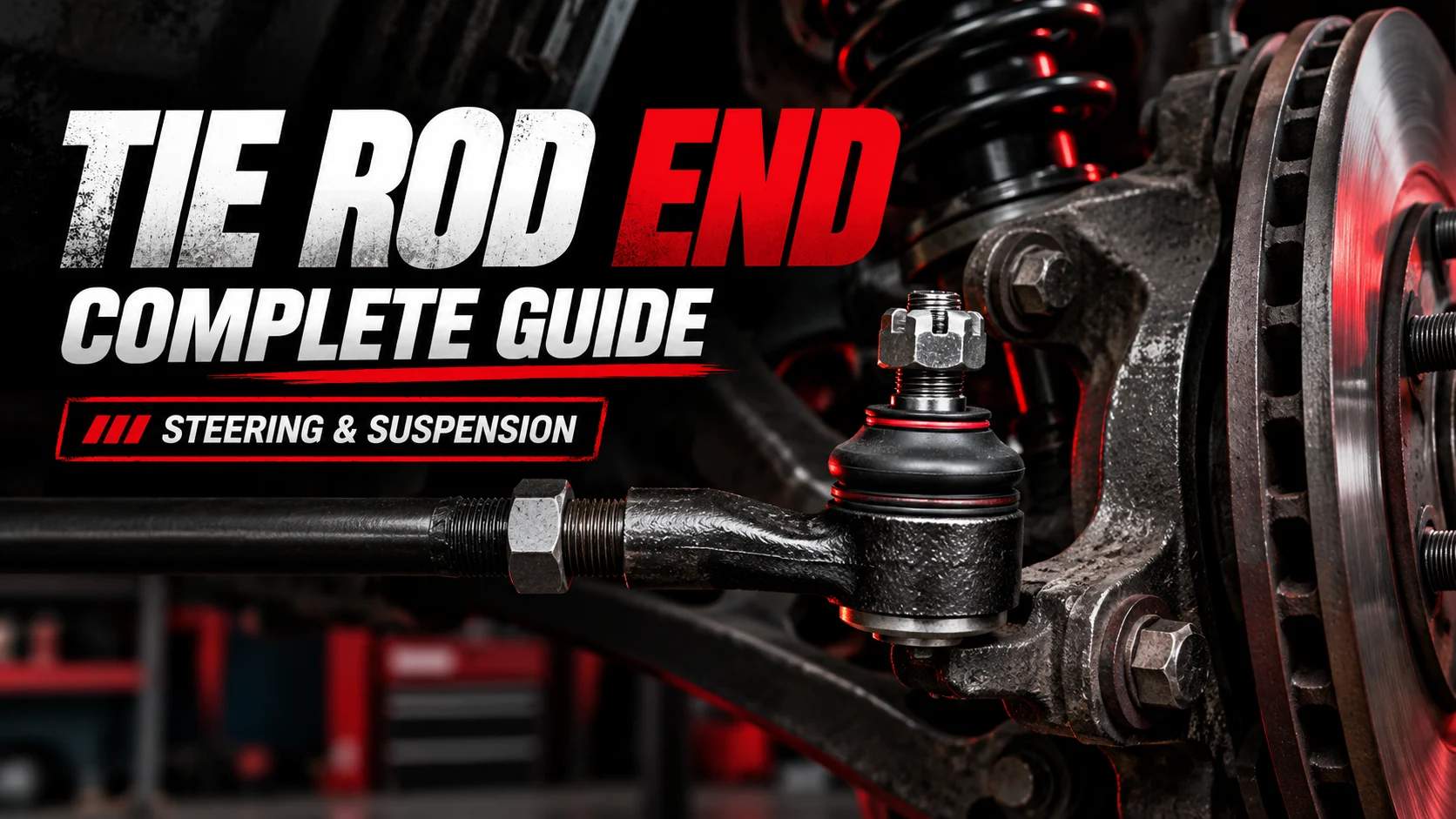
A tie rod end connects the steering linkage to the steering knuckle. It transfers movement from the steering system to the wheels while allowing joint articulation. Excessive wear may reduce steering precision and, in severe cases, compromise steering control.
What Is a Tie Rod End?
A tie rod end is part of the steering linkage that helps turn your vehicle’s front wheels. On many rack-and-pinion vehicles, inner tie rods connect the steering rack to outer tie rod ends at the steering knuckles.
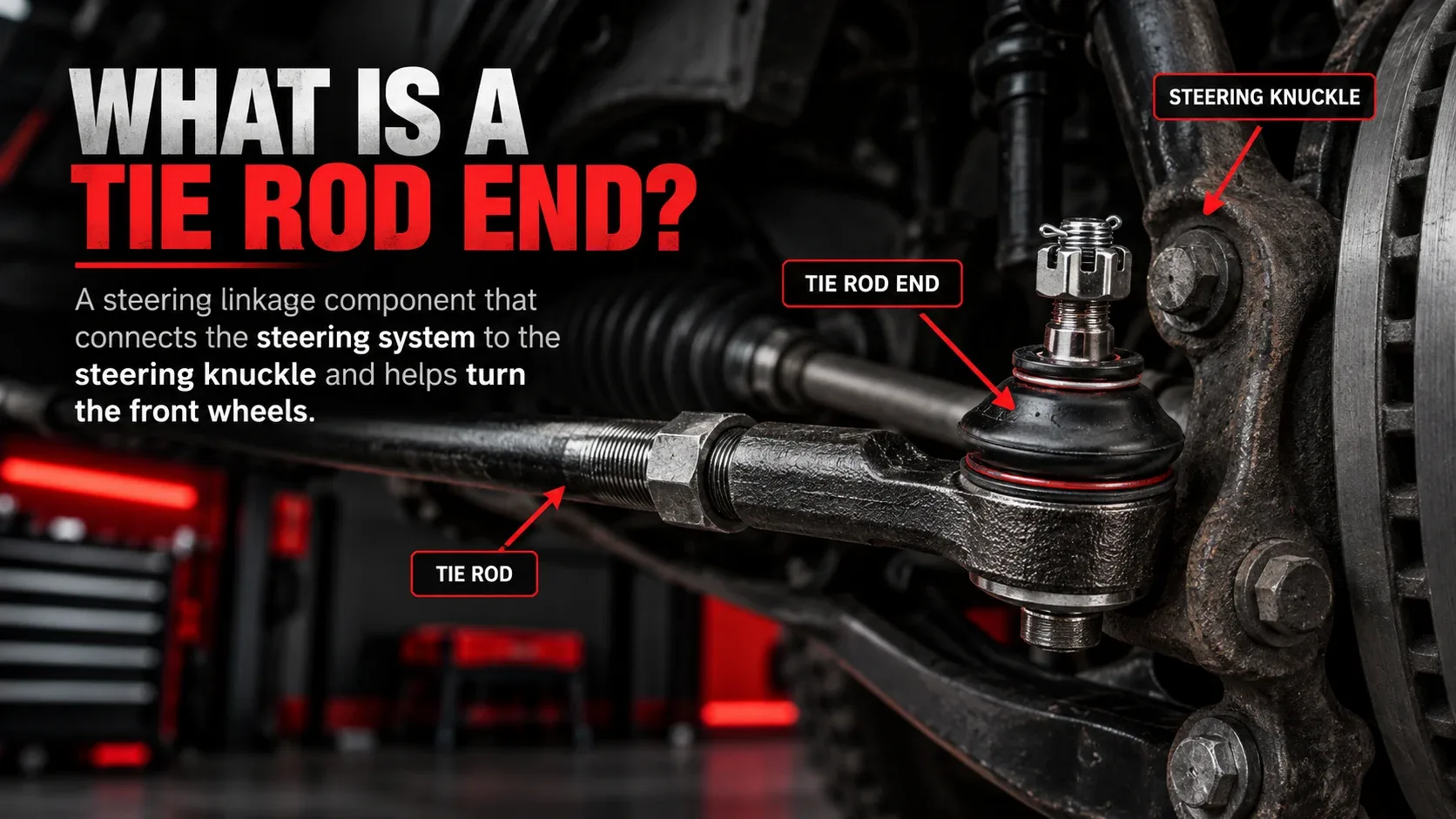
The outer tie rod end contains a ball-and-socket joint, allowing steering movement while accommodating suspension travel. Because it helps control the direction of the front wheels, its condition matters for predictable handling.
Remember: A tie rod end is a steering component, not a wheel bearing or shock absorber. Problems with these parts may nevertheless create overlapping symptoms.
How Does a Tie Rod End Work?
Tie rods transfer movement from the steering gear to the front wheels. In a typical rack-and-pinion system, the process works as follows:
- Steering input: The driver turns the steering wheel.
- Steering gear movement: The rack moves sideways to transmit the input.
- Tie rod movement: Inner and outer tie rod components transfer force to the steering knuckles.
- Wheel direction: The steering knuckles pivot and the front wheels turn.
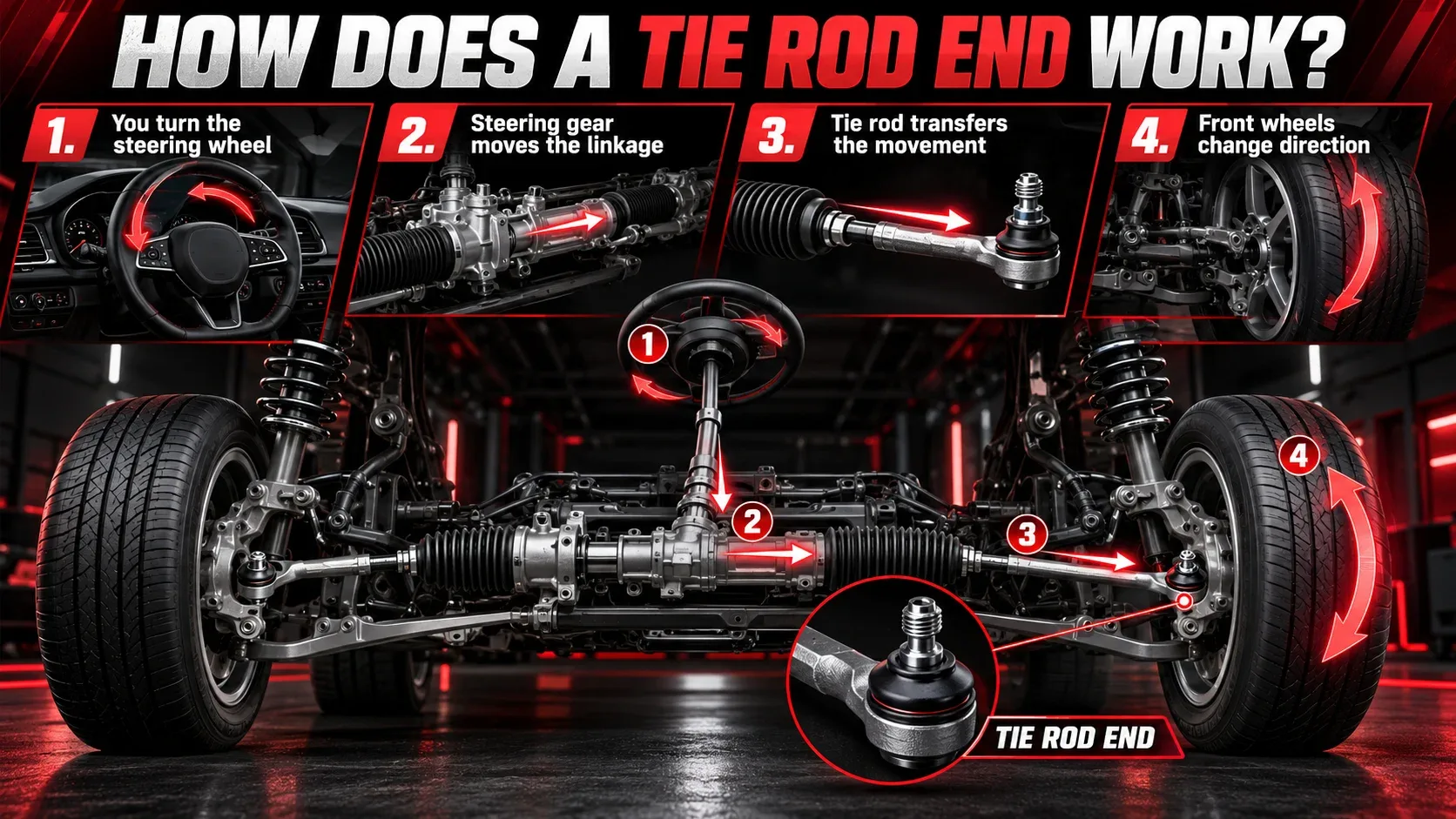
A tie rod joint should articulate freely without excessive looseness. Worn joints can reduce steering accuracy and must be inspected when symptoms appear.
Inner vs. Outer Tie Rod Ends: What’s the Difference?
Inner and outer tie rod components work together, but they occupy different positions and may require different replacement procedures.
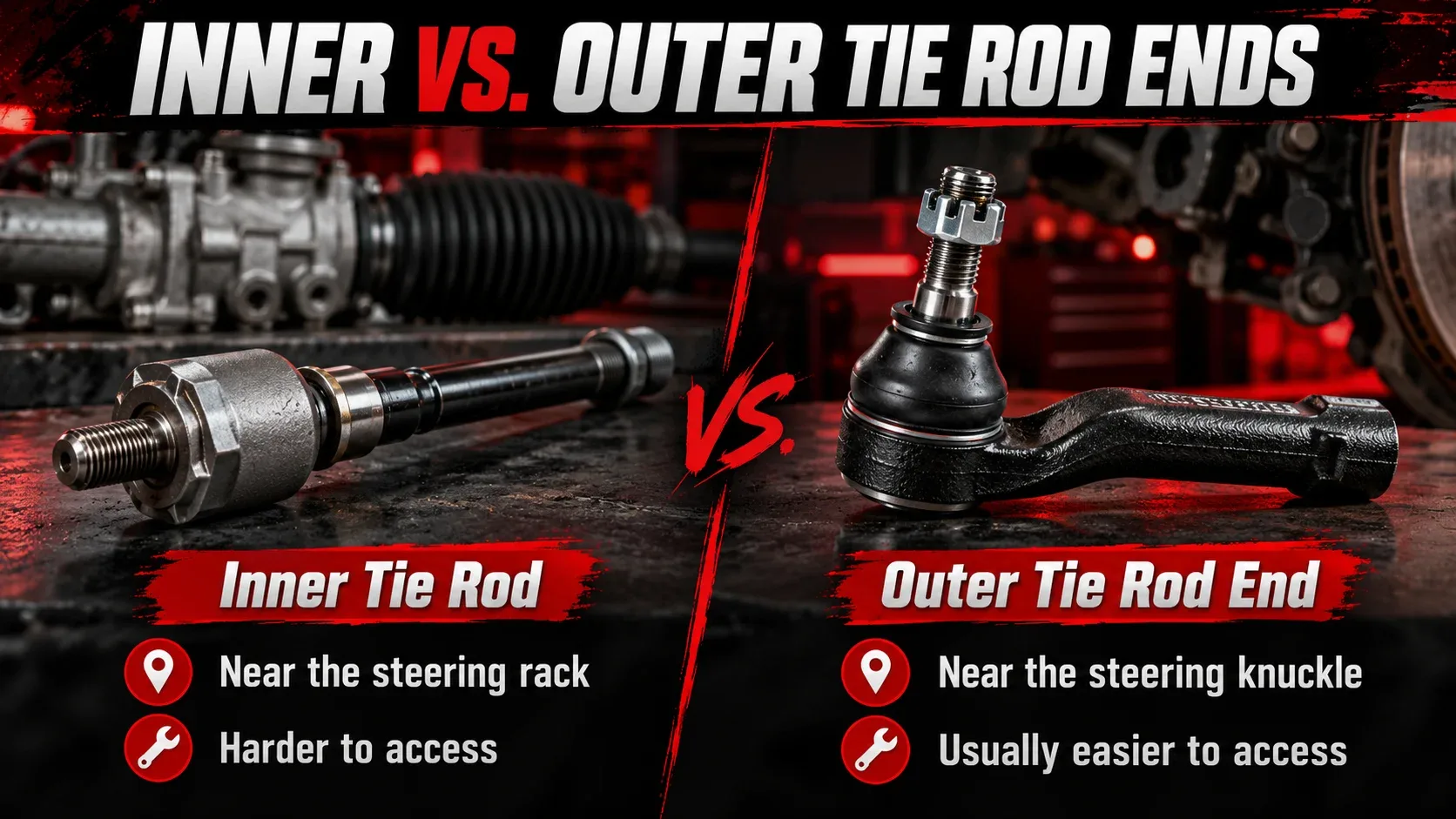
| Feature | Inner Tie Rod | Outer Tie Rod End |
|---|---|---|
| Typical location | Near steering rack | Near steering knuckle |
| Main connection | Rack to outer linkage | Linkage to knuckle |
| Accessibility | Often more involved | Usually easier to reach |
| Possible wear | Joint looseness | Joint wear and boot damage |
Steering designs vary, particularly between passenger cars and some trucks. Always consult information specific to your vehicle.
7 Common Symptoms of a Bad Tie Rod End
A worn tie rod end may cause noticeable changes in steering behavior. These are warning signs rather than proof of failure, because other steering and suspension faults may cause similar symptoms.
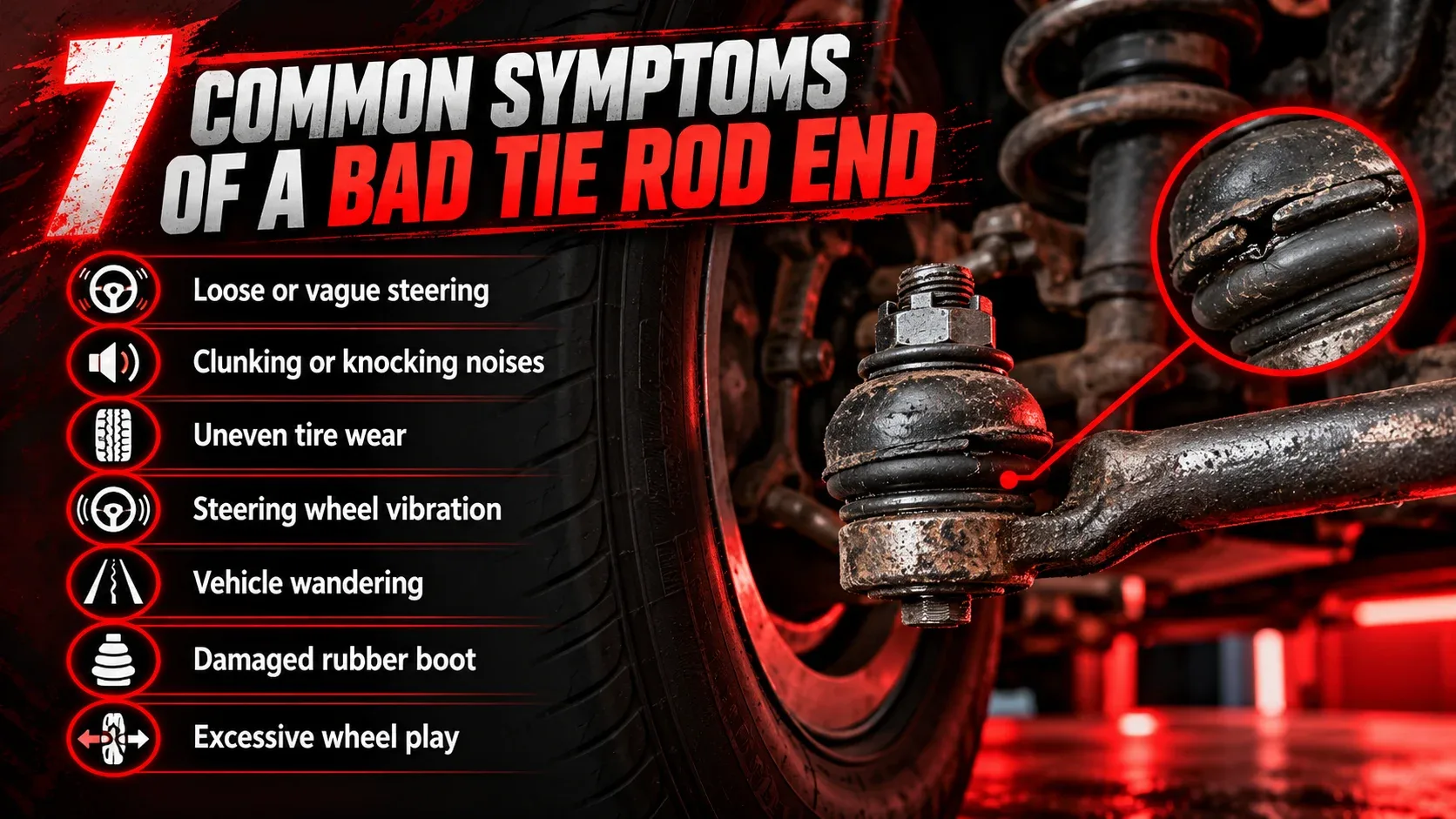
Loose or Vague Steering
Excessive joint play may reduce steering responsiveness.
Clunking or Knocking
Worn joints may produce noises when turning or traveling over bumps.
Uneven Tire Wear
Joint looseness may affect toe alignment and tire wear.
Steering Wheel Vibration
Wear may contribute to vibration, although wheel and tire problems are other possible causes.
Vehicle Wandering
Loose components or alignment problems may reduce directional stability.
Damaged Rubber Boot
A torn boot can let moisture and debris enter the joint.
Excessive Wheel Play
Inspection may reveal unwanted movement at the joint.
Diagnostic note: Ball joints, suspension bushings, wheel bearings and other components can produce similar signs. A professional inspection is needed before deciding which part to replace.
What Causes Tie Rod Ends to Wear Out?
Tie rod joints are repeatedly loaded during steering and suspension movement. Wear can be accelerated by road conditions, impacts, corrosion and damaged protective seals.
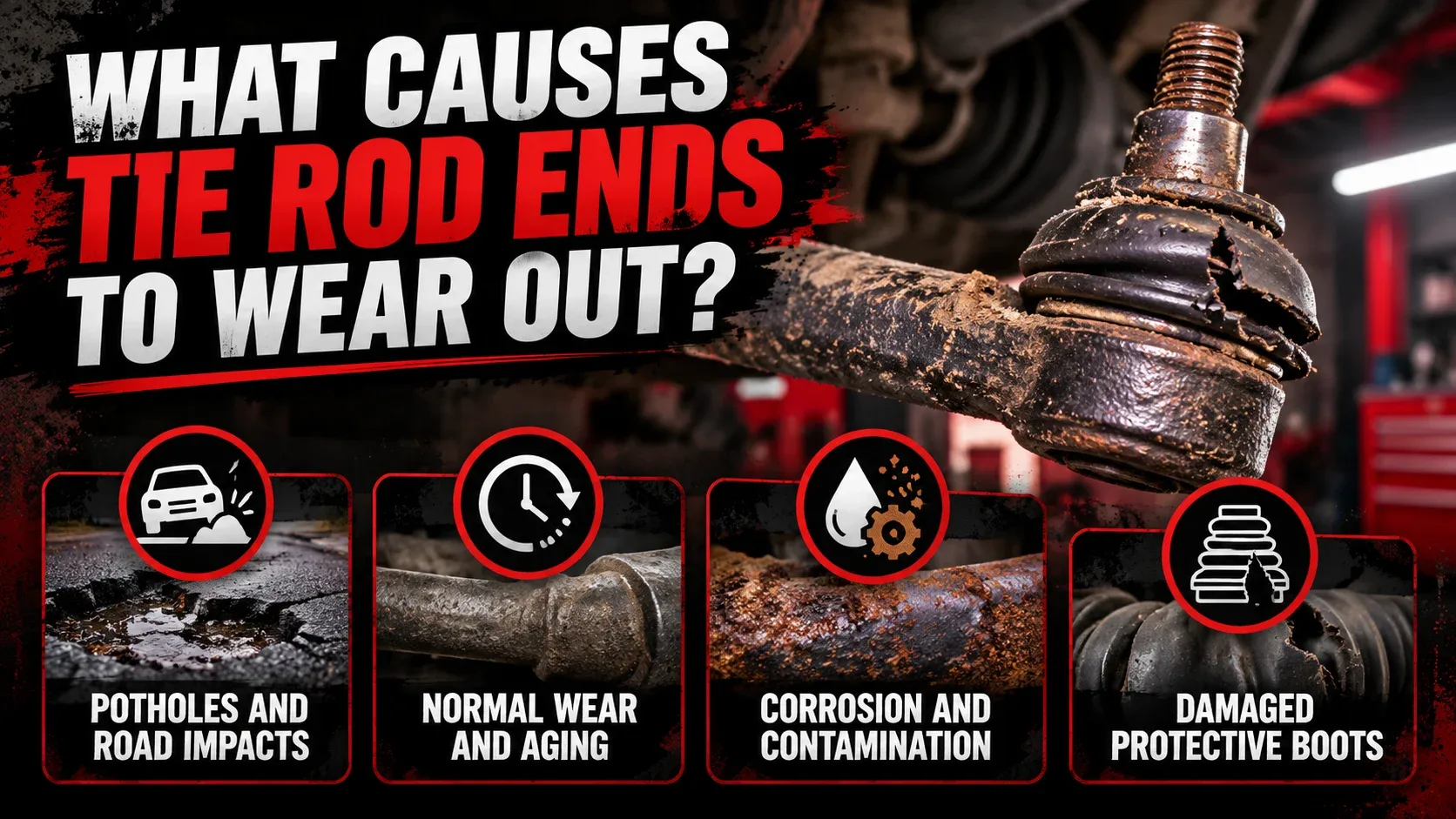
Normal Wear and Aging
Repeated movement and loads can gradually wear the internal joint surfaces. Wear rates vary by design and driving conditions.
Damaged Protective Boots
Torn dust boots can expose joint surfaces to dirt, moisture and abrasive particles, increasing the risk of damage.
Potholes and Road Impacts
Severe impacts may damage steering linkage or contribute to changes in wheel alignment.
Corrosion and Contamination
Road salt, moisture and debris may accelerate damage, particularly where protective boots have failed.
Can You Drive With a Bad Tie Rod End?
Driving with a severely worn tie rod end can be dangerous. The component contributes directly to wheel-direction control, and extreme wear or separation can compromise steering.
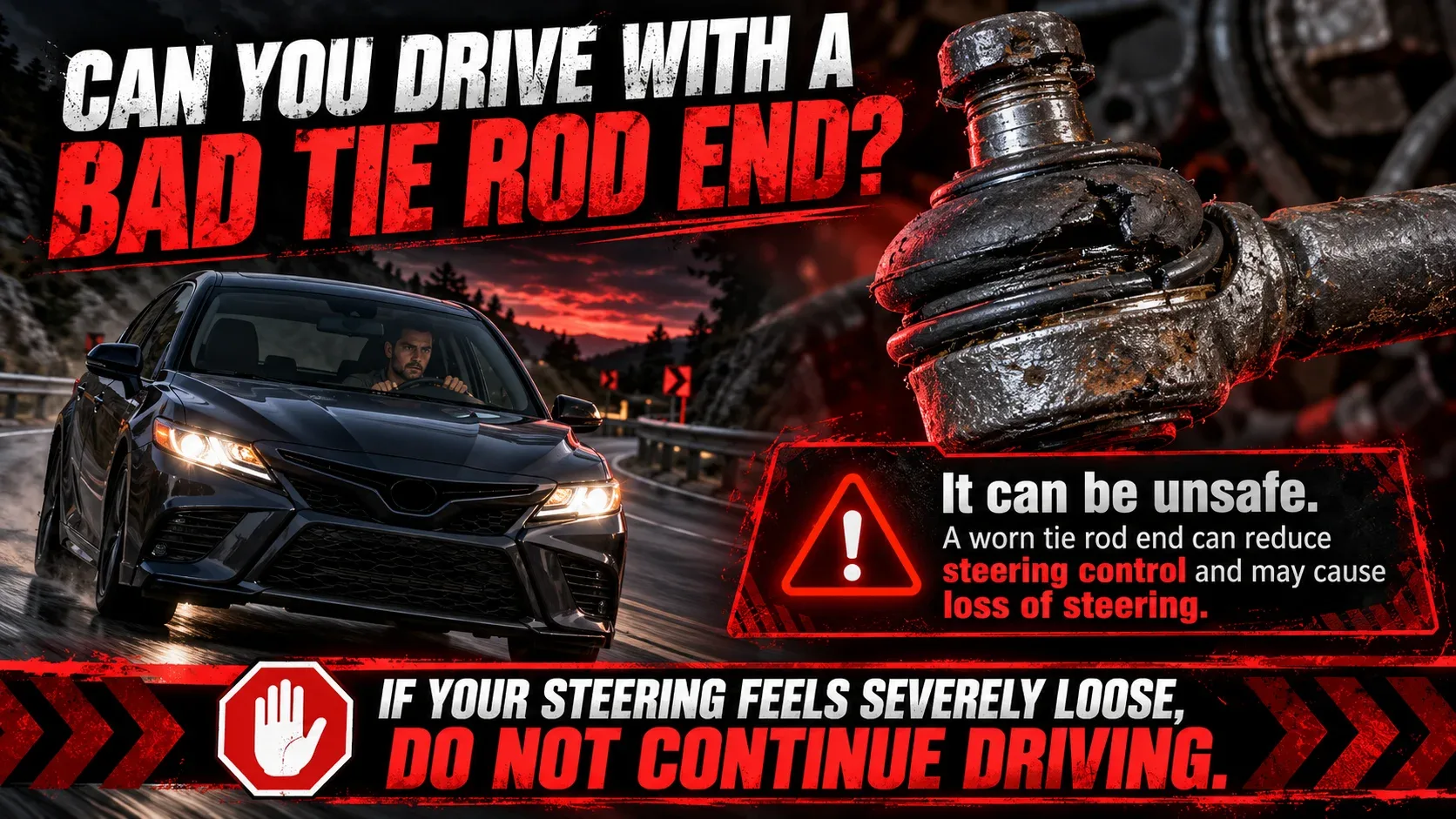
Safety warning: If steering feels severely loose, a steering joint appears to be separating, or wheel-direction control is compromised, do not drive. Arrange towing and professional inspection.
Even mild symptoms should not be ignored. Timely inspection is the best way to determine whether the vehicle is roadworthy.
Tie Rod End Cost to Replace in the USA
The tie rod end cost to replace depends on your vehicle, part choice, labor rate, corrosion, and whether alignment or additional repairs are required.
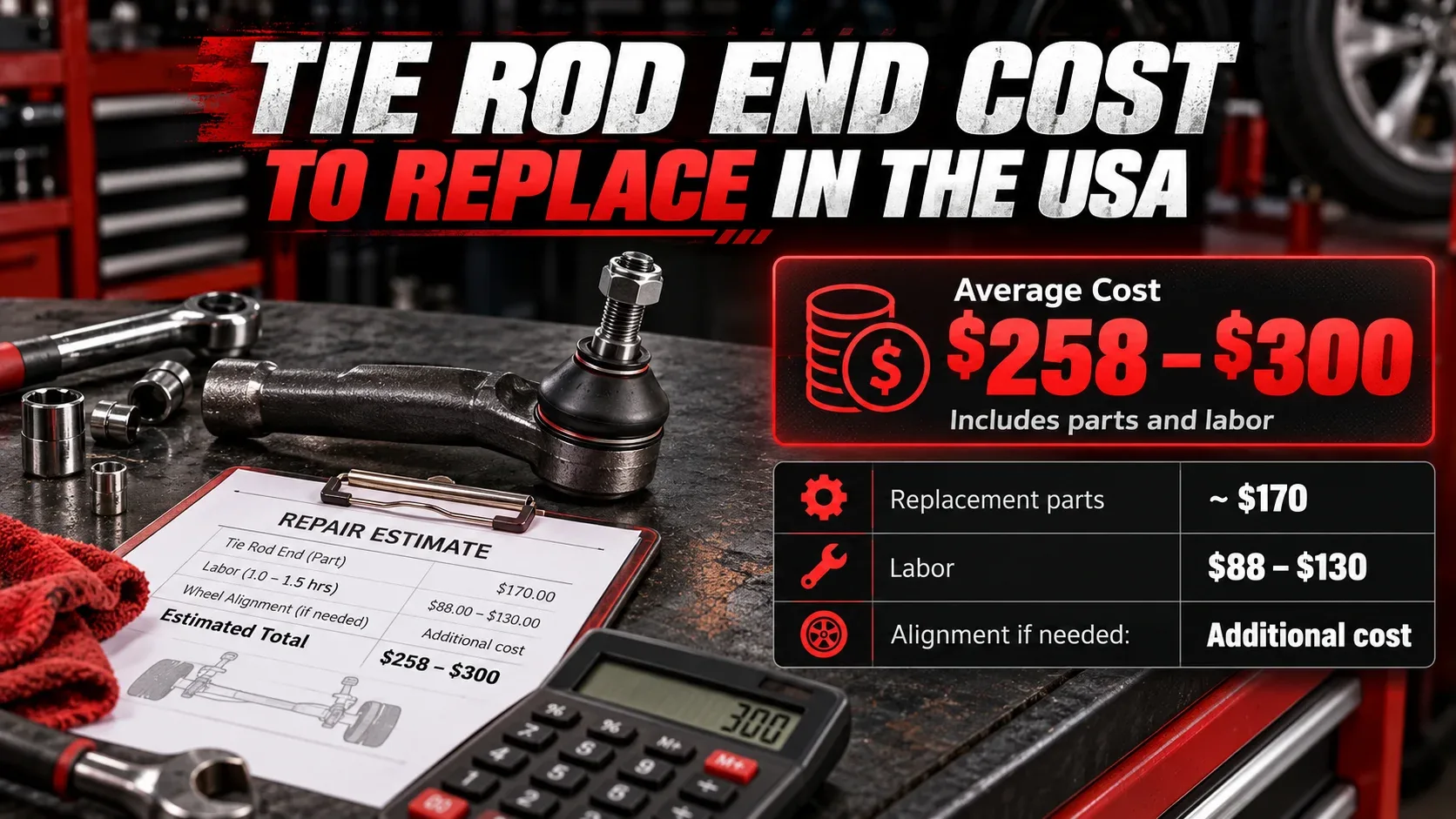
Approximate total parts and labor from RepairPal’s September 2026 tie rod replacement estimate, excluding taxes, fees and additional services.
| Cost Component | Estimated Amount |
|---|---|
| Replacement parts | Approximately $170 |
| Labor | $88–$130 |
| Estimated total | $258–$300 |
| Alignment or other needed services | Additional charge may apply |
Outer vs. Inner Tie Rod Replacement Costs
Outer tie rod ends are often more accessible. Inner tie rod replacement may require additional disassembly and specialized tools, depending on the vehicle. Ask for a written, vehicle-specific quote.
What Affects the Repair Bill?
- Make, model and model year.
- OEM or aftermarket parts.
- Local shop and dealership labor rates.
- One side versus multiple components.
- Wheel alignment and other necessary repairs.
- Rust or seized hardware.
Cost tip: Compare itemized quotes that include parts, labor, any alignment charges and related repairs. The lowest part price does not necessarily mean the best overall value.
Can You Repair a Tie Rod End Instead of Replacing It?
Drivers searching for how to repair tie rod end problems often want to know whether replacement can be avoided. A tie rod end with excessive ball-and-socket joint wear generally needs to be replaced; grease cannot restore worn joint surfaces.
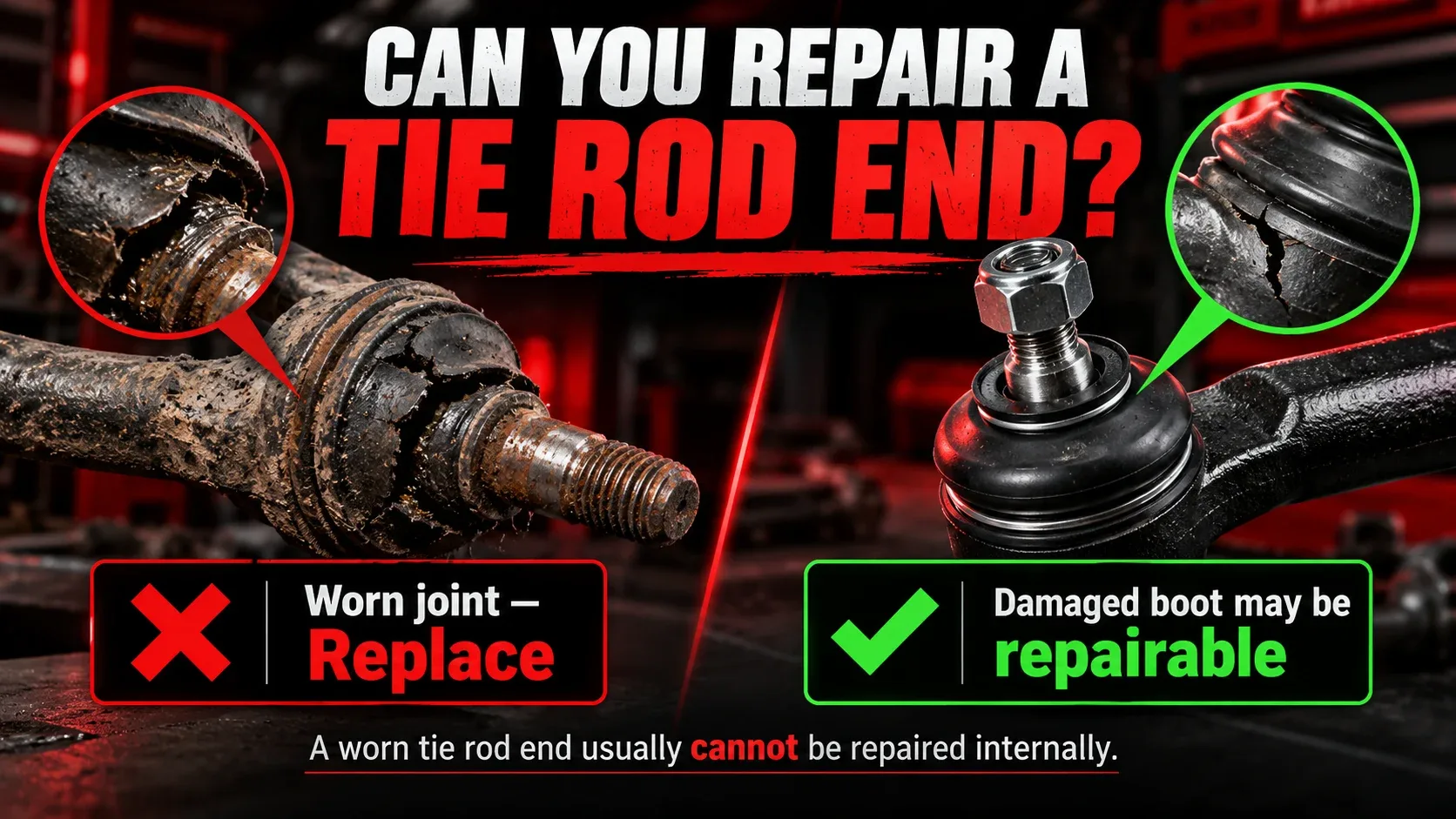
| Condition | Appropriate Response |
|---|---|
| Excessive joint play | Replace worn component |
| Bent or cracked tie rod | Replace damaged part |
| Torn boot, healthy joint | Check for manufacturer-approved boot service |
| Corrosion | Inspect condition and replace if compromised |
| Joint separating | Do not drive; tow for repair |
Do not attempt to repair a worn steering joint by welding, straightening, or artificially tightening it. Follow approved service procedures.
How to Replace a Tie Rod End
Replacing a tie rod end requires correct parts, safe vehicle support, appropriate tools and vehicle-specific service information. The following is a general overview, not a substitute for the manufacturer’s instructions.
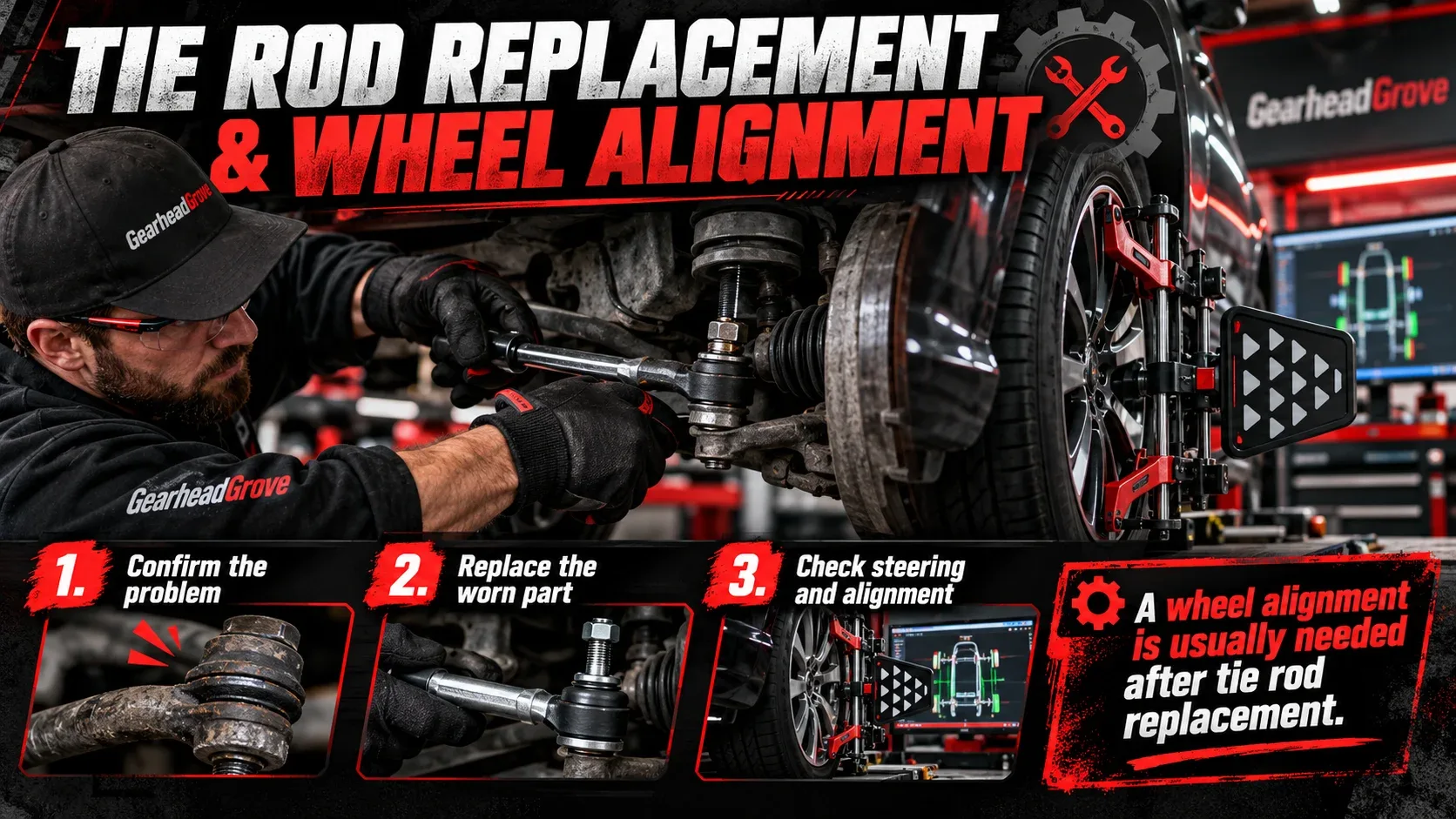
- Confirm the defective component through steering and suspension inspection.
- Support the vehicle securely at the manufacturer’s approved lifting points.
- Access the tie rod assembly and identify the relevant retaining hardware.
- Remove the faulty component using the correct procedure and tools.
- Install a matching replacement and apply manufacturer-specified torque and locking hardware requirements.
- Complete inspection and wheel alignment before returning the vehicle to ordinary service.
DIY caution: Incorrect installation of steering components can cause loss of control. If you lack proper equipment or repair experience, use a qualified mechanic.
Do You Need a Wheel Alignment After Tie Rod Replacement?
Yes. Wheel alignment is normally needed after tie rod replacement because tie rods affect wheel toe—the direction in which the front wheels point relative to the vehicle centerline.
Incorrect toe settings can accelerate tire wear and affect handling. Counting the turns during removal may approximate the old position, but it does not replace a measured alignment. Some vehicles may also require manufacturer-specific steering-angle sensor or driver-assistance checks.
Tie Rod End vs. Ball Joint: What’s the Difference?
Both components use articulated joints, but they have different roles. Tie rod ends transfer steering movement, while suspension ball joints permit movement between a control arm and steering knuckle.
| Feature | Tie Rod End | Suspension Ball Joint |
|---|---|---|
| Main function | Transmit steering input | Allow suspension and steering articulation |
| Typical connection | Steering linkage to knuckle | Control arm to knuckle |
| Possible symptoms | Looseness, noise, tire wear | Noise, looseness, tire wear |
| Major failure risk | Loss of steering control | Potential suspension separation or control loss |
These symptoms overlap, so accurate diagnosis is essential before authorizing repair.
How Long Do Tie Rod Ends Last?
There is no universal tie rod end replacement mileage. Service life depends on design, road conditions, boot integrity, corrosion and how the vehicle is driven.
Tips to Help Protect Your Tie Rod Ends
- Avoid hitting potholes at speed.
- Have torn steering joint boots inspected promptly.
- Investigate new steering sounds or looseness.
- Correct diagnosed alignment problems.
- Follow the manufacturer’s inspection schedule.
Frequently Asked Questions About Tie Rod Ends
How much does a tie rod end cost to replace?
RepairPal’s September 2026 US estimate is approximately $258–$300 for parts and labor. Taxes, fees, alignment and additional repairs may increase the final amount.
Can you drive with a bad tie rod end?
Severe wear can compromise steering. If substantial looseness or difficulty controlling wheel direction is present, do not drive. Arrange towing and professional inspection.
Can you repair a damaged tie rod end?
A mechanically worn joint generally needs replacement. Some boots may be serviceable if the joint is still sound and the manufacturer permits that repair.
What happens if a tie rod end breaks?
The steering linkage can separate from the wheel connection, potentially causing sudden loss of steering control.
Should you replace both tie rod ends?
Not automatically. Inspect both sides, and replace components based on their condition and the manufacturer’s guidance.
How long does tie rod replacement take?
Repair time varies by vehicle, part location, corrosion and alignment needs. Request a vehicle-specific estimate from your repair shop.
Can a bad tie rod end cause steering wheel shaking?
It may contribute to vibration, but wheel imbalance, tire defects and suspension faults are also possible causes.
Do tie rod ends affect alignment?
Yes. Tie rods affect wheel toe, so alignment is normally required after replacement.
Final Thoughts
A tie rod end is a small but important steering component. Loose steering, knocking, irregular tire wear and joint damage may signal problems that deserve prompt inspection.
Confirm the actual cause before replacing parts, compare repair quotes carefully, and have required alignment completed after replacement. Never ignore severe steering looseness or loss of vehicle control.