Engine cooling & overheating guide
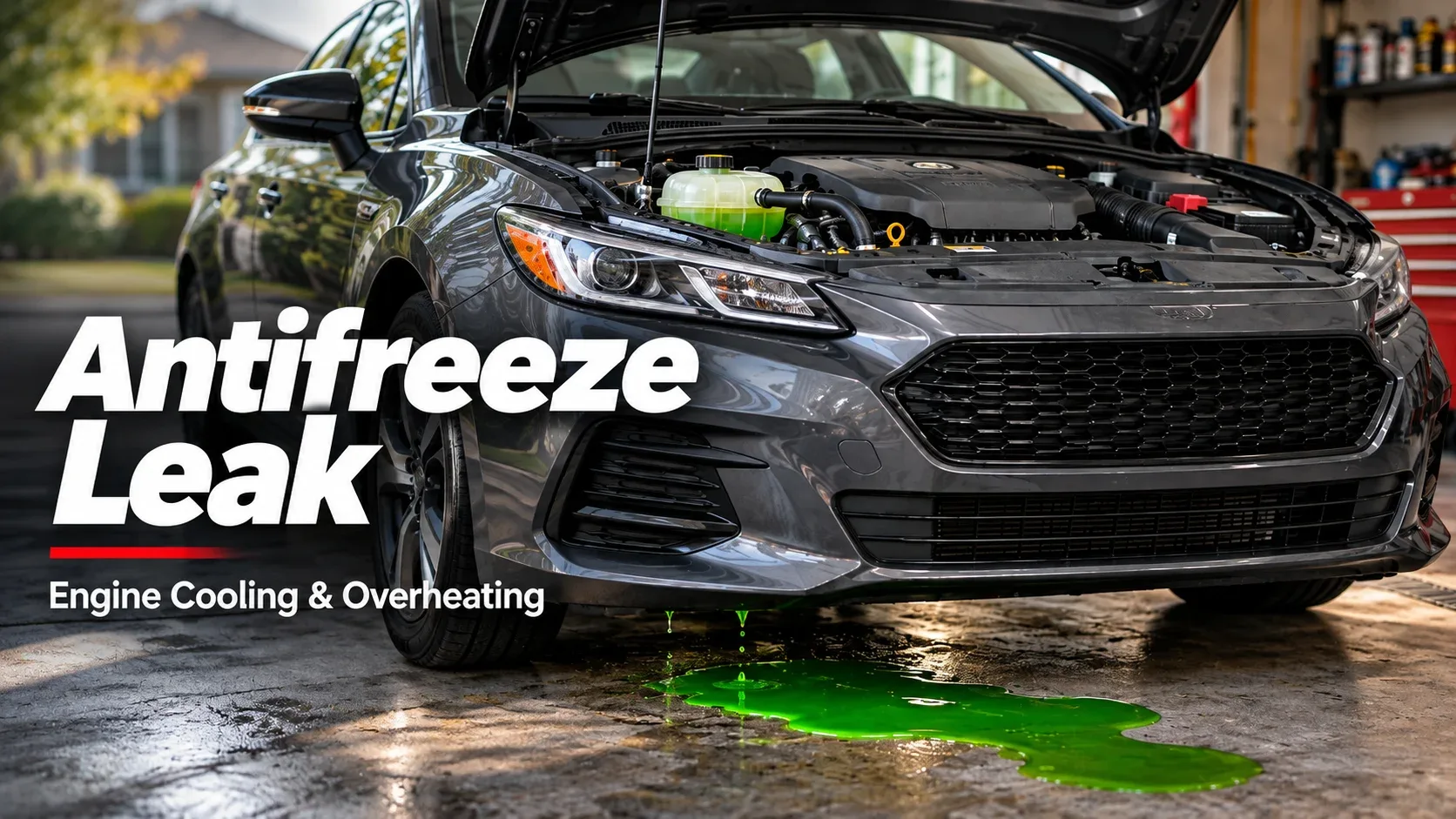
Noticed a colored puddle under your car, a sweet smell near the engine, or a coolant reservoir that keeps running low? An antifreeze leak may be to blame. Some leaks involve an inexpensive hose or connection; others point to radiator, water pump, heater core, or internal engine problems.
This guide explains how to recognize warning signs, locate likely leak sources, understand antifreeze leak repair options, and evaluate the cost to fix an antifreeze leak before authorizing work.
Quick answer: What should you do about an antifreeze leak?
Do not ignore coolant loss. If your temperature warning appears, the gauge rises unusually high, or steam escapes from the engine bay, pull over in a safe location, shut off the engine, and arrange assistance. If the engine is completely cold and no overheating has occurred, a visual inspection may help identify a wet hose, radiator, reservoir, or connection. The permanent fix is to diagnose and repair the failed part, refill with manufacturer-approved coolant, and verify the system is leak-free.
What Is an Antifreeze Leak?
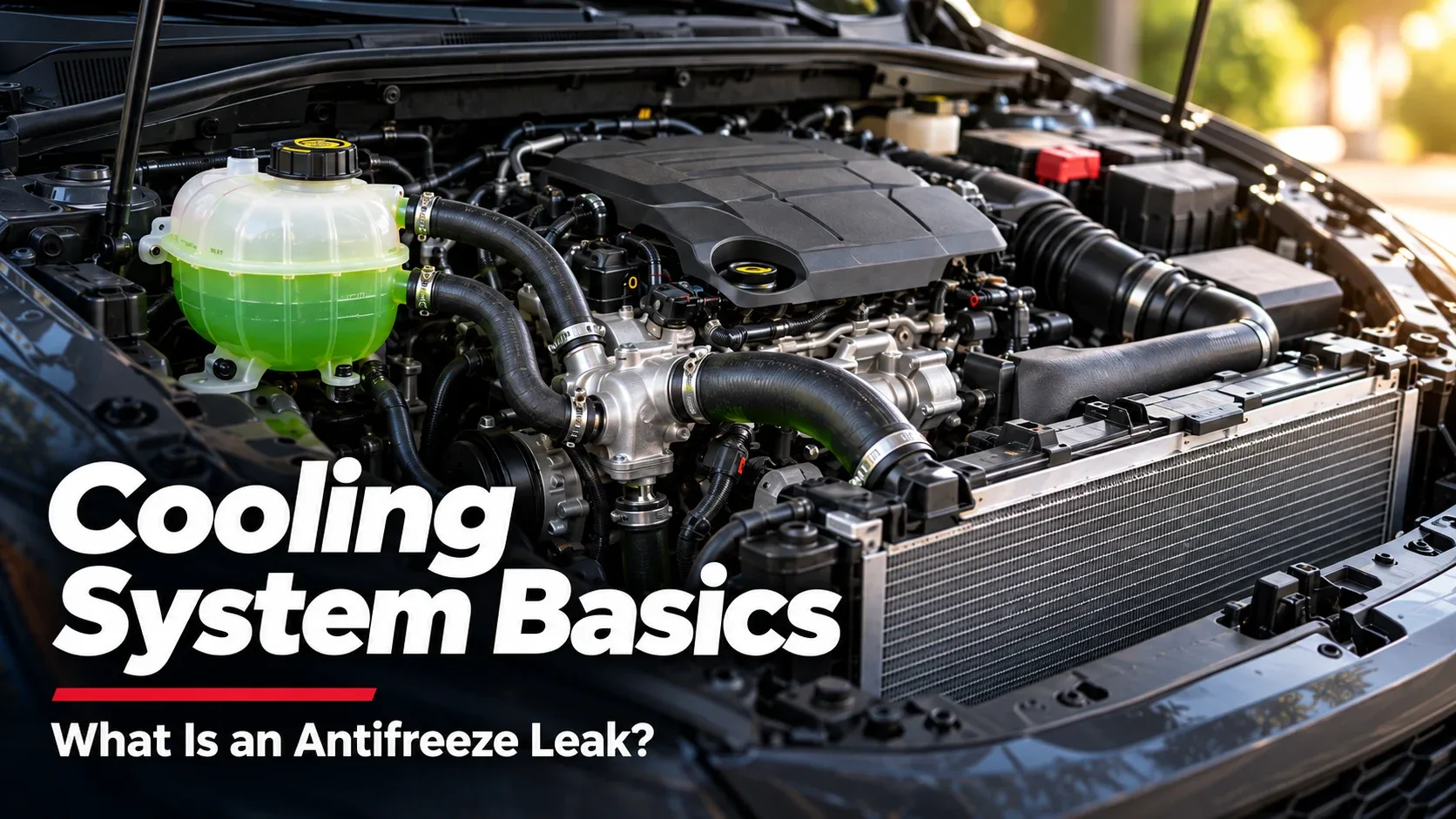
An antifreeze leak occurs when engine coolant escapes from the cooling system or, in some cases, enters an area where it should not be, such as an engine cylinder. Automotive coolant carries heat away from the engine and helps control freezing, boiling, and corrosion. It typically contains an antifreeze formulation mixed with water, although the exact chemistry and concentration depend on the vehicle.
The system includes passages inside the engine, a radiator, hoses or pipes, a water pump, a thermostat and housing, a pressure cap, and often an expansion reservoir and heater core. A damaged component or failing seal can allow coolant to escape.
External vs. internal coolant leaks
External leaks occur where coolant escapes the system and may drip beneath the vehicle or leave dried residue on parts. Internal leaks allow coolant to enter combustion chambers, the oil system, or another internal area. Internal leakage may not produce an obvious puddle and requires careful diagnosis.
Can You Drive With an Antifreeze Leak?
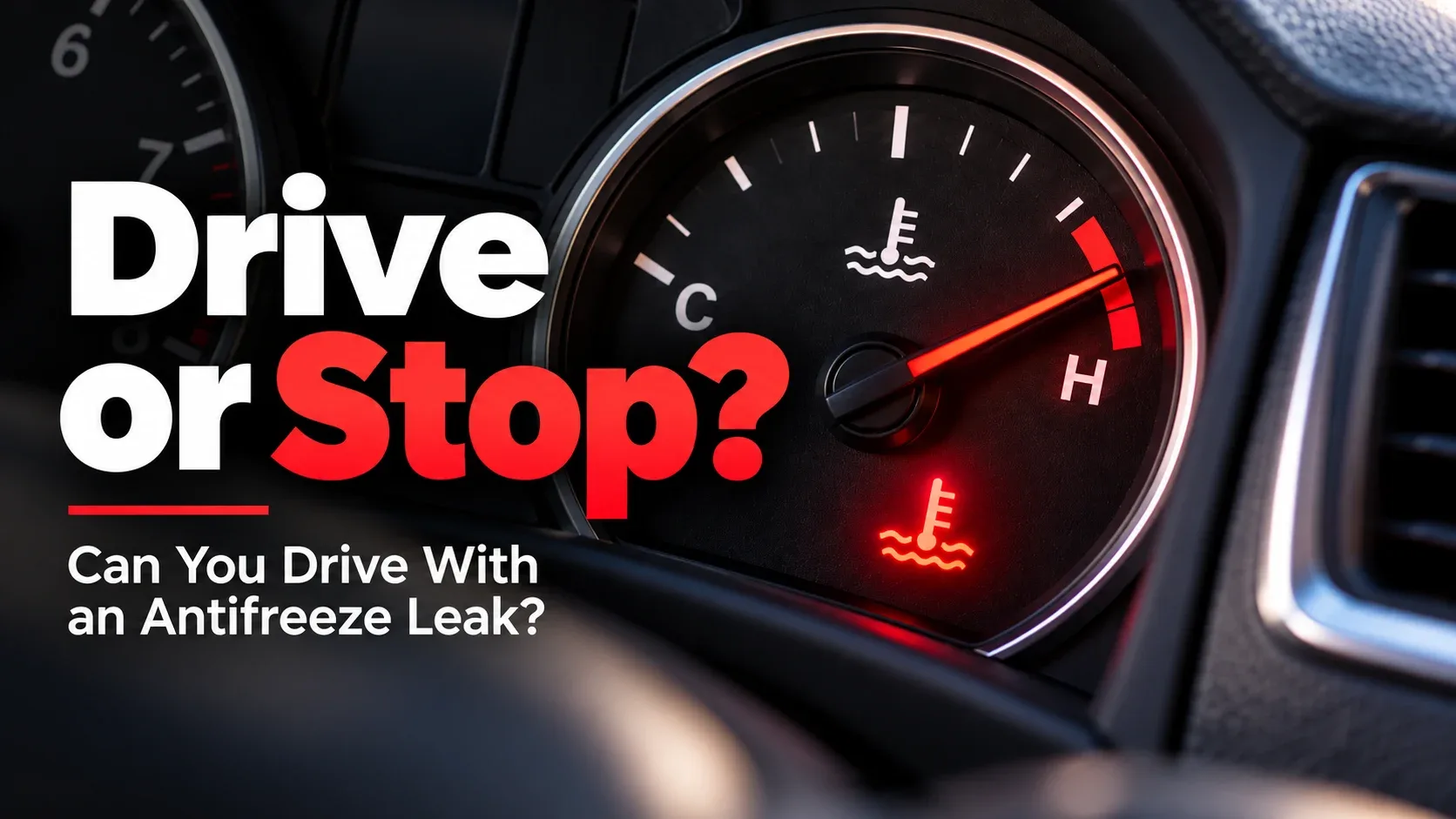
Driving with a known coolant leak is risky because coolant can be lost suddenly, reducing the engine’s ability to shed heat. Even a small leak can worsen when the cooling system heats up and becomes pressurized. A normal temperature gauge at one moment does not prove the vehicle is safe for a trip.
Stop-driving warning: If the engine overheats, a temperature warning comes on, steam appears, or coolant is visibly pouring out, stop safely, turn off the engine, and seek roadside assistance or towing. Never open a radiator cap or pressurized coolant reservoir while hot; scalding coolant can spray out.
If you suspect a leak but the engine is not overheating, avoid unnecessary driving and have the system inspected promptly. The appropriate next step depends on the severity of the loss, vehicle design, and manufacturer’s instructions; a professional can help assess it without risking engine damage.
Common Signs and Symptoms of an Antifreeze Leak
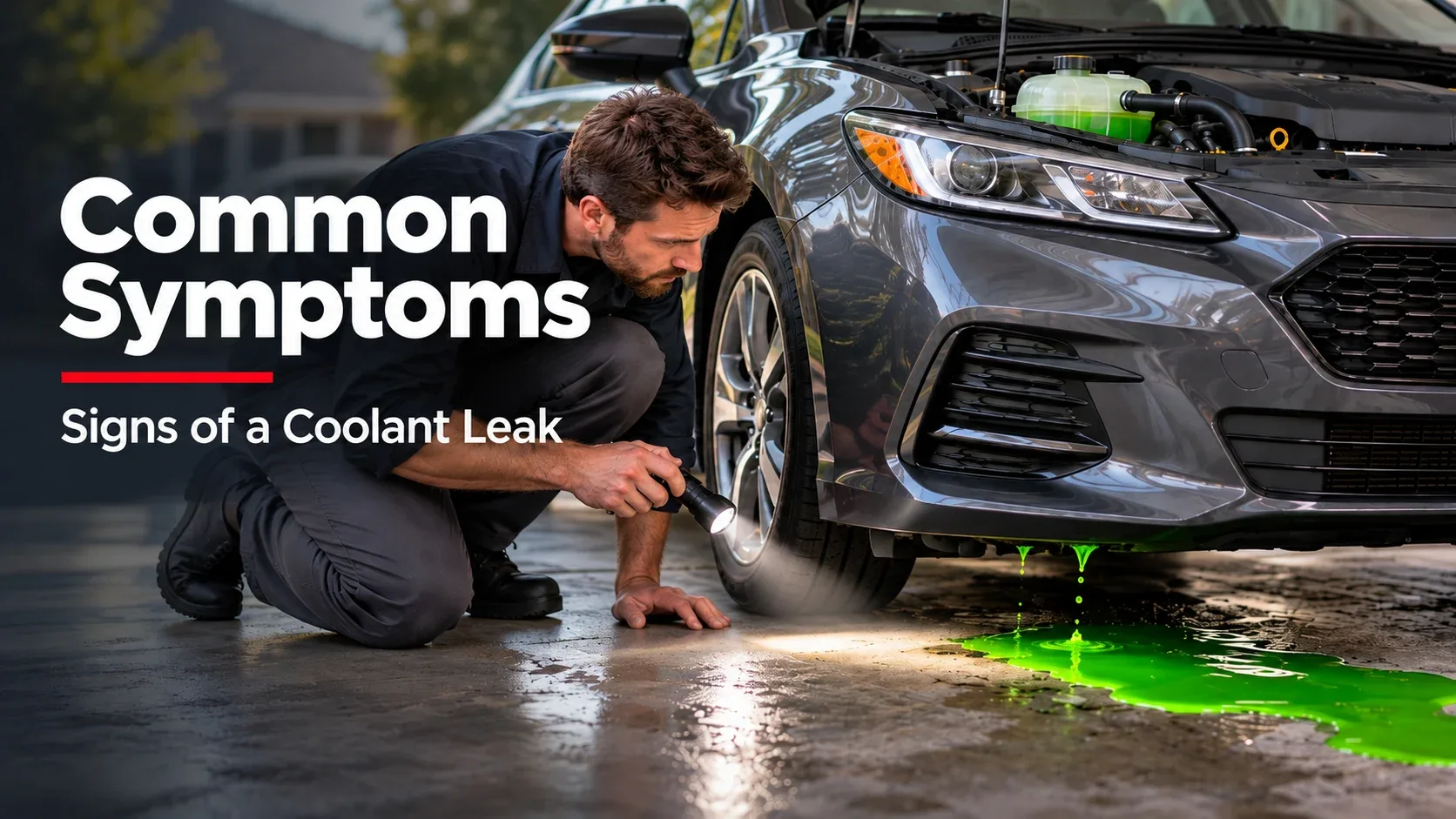
Several symptoms may indicate coolant loss, but no single sign identifies the exact failed part. Watch for patterns rather than assuming the first visible symptom gives you a diagnosis.
1. A puddle or wet spot under the car
Coolant may be green, orange, pink, blue, yellow, or another color. Look for wetness under the engine area, near radiator connections, or along coolant hoses. Clear water beneath the car after using the air conditioner may simply be condensation.
2. Coolant level keeps dropping
If the level in the expansion reservoir repeatedly falls below its cold-engine reference mark, coolant may be escaping. Check levels only as directed by the owner’s manual, and compare readings under similar cold conditions.
3. Higher-than-normal engine temperature
Low coolant or loss of cooling-system pressure can contribute to overheating. Other problems, including thermostat or fan faults, can produce similar symptoms.
4. Sweet odor near the vehicle
Some coolants produce a distinct sweet smell, particularly when they contact warm engine surfaces. Smell alone is not a reliable test.
5. Steam, residue, or cabin heating changes
Steam from the engine area is urgent. White, pink, or chalky deposits near a hose joint may indicate previously dried coolant. An affected heater core can cause interior window fogging, damp carpeting, or a sweet smell inside the cabin. Poor heater output can sometimes accompany low coolant.
| Symptom | Possible explanation | Recommended response |
|---|---|---|
| Colored puddle | External hose, radiator, pump, reservoir or fitting leak | Inspect only once cool; arrange diagnosis |
| Repeated coolant loss | External or internal leak, possibly a faulty cap | Have system pressure-tested |
| Temperature warning or steam | Overheating or coolant escaping onto hot parts | Stop safely; shut engine off; seek assistance |
| Wet passenger-side carpet | Possible heater core leak or another water source | Get cabin heating system inspected |
| Persistent white exhaust after warm-up | Possible internal coolant leak, among other causes | Professional diagnostic testing |
What Causes an Antifreeze Leak?
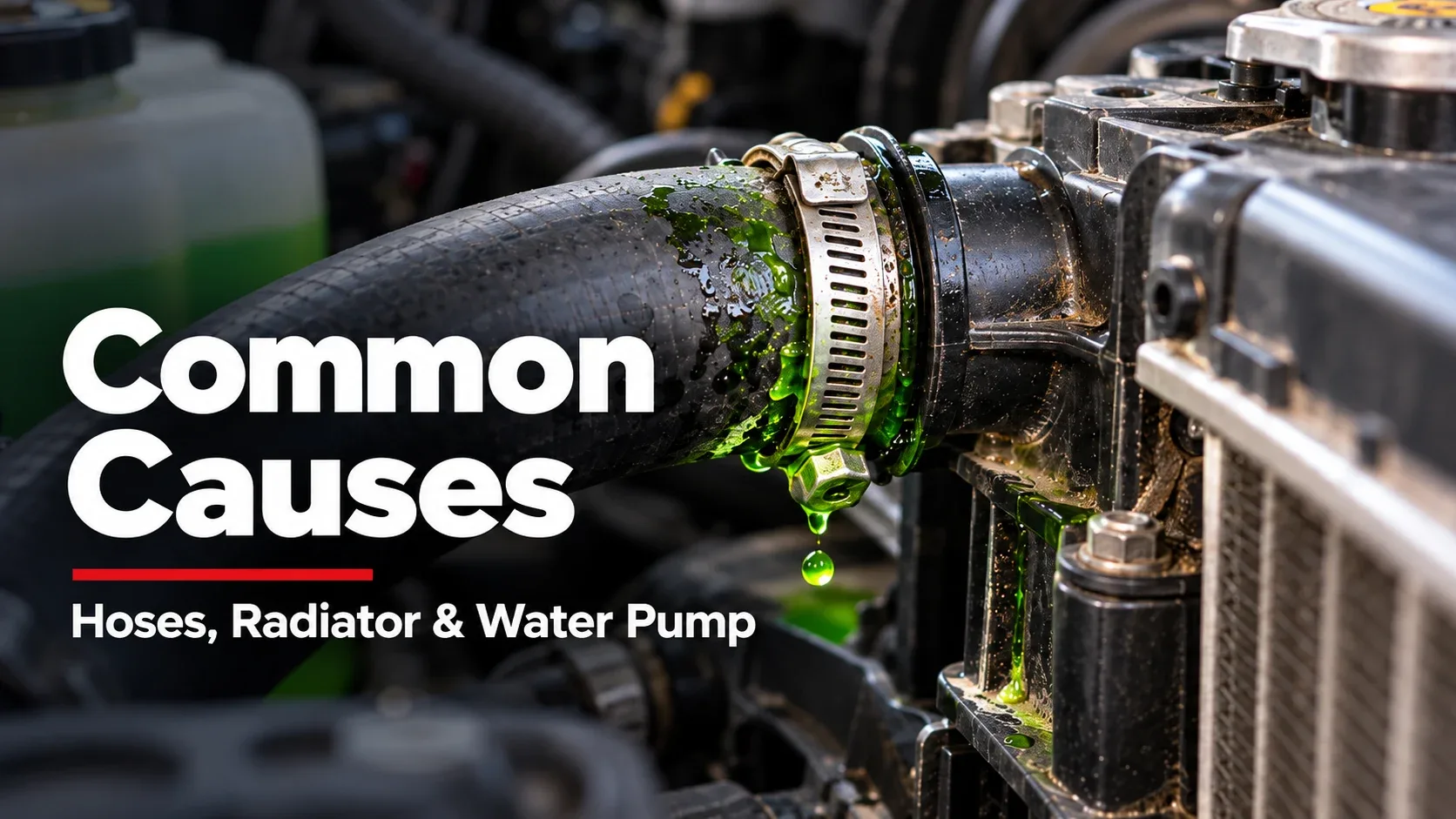
Cooling-system leaks commonly develop at seals, joints, plastic housings, or parts exposed to repeated heat cycles. The correct repair depends on finding the actual source rather than replacing components at random.
Radiator damage
A radiator may leak through a damaged core, cracked plastic end tank, or connection. Leaking radiators typically require replacement rather than an improvised patch.
Cracked coolant hoses or failing connections
Rubber hoses can harden, swell, or crack with age. A loose, corroded, or poorly sealing connection can also release coolant, particularly as system pressure rises.
Water pump seal or gasket failure
Leaks near the water pump may come from its seal, weep hole, or mounting gasket. Some engines require significant disassembly to replace the pump.
Expansion reservoir or pressure cap problems
Plastic reservoirs can crack. A faulty pressure cap can affect the pressure balance and release coolant, but the cap should not be blamed without testing.
Thermostat housing and coolant fittings
Older gaskets, cracked housings, corroded pipes, or worn O-rings can leak where coolant flows between engine components.
Heater core leakage
A leaking heater core may release coolant inside the passenger compartment. Repairs can involve extensive dashboard disassembly, depending on vehicle design.
Internal engine faults
A failed head gasket, cracked head, or damaged engine block can sometimes allow coolant into combustion chambers or engine oil. These are potentially serious issues that require testing—not a diagnosis based on white exhaust or low coolant alone.
How to Find an Antifreeze Leak
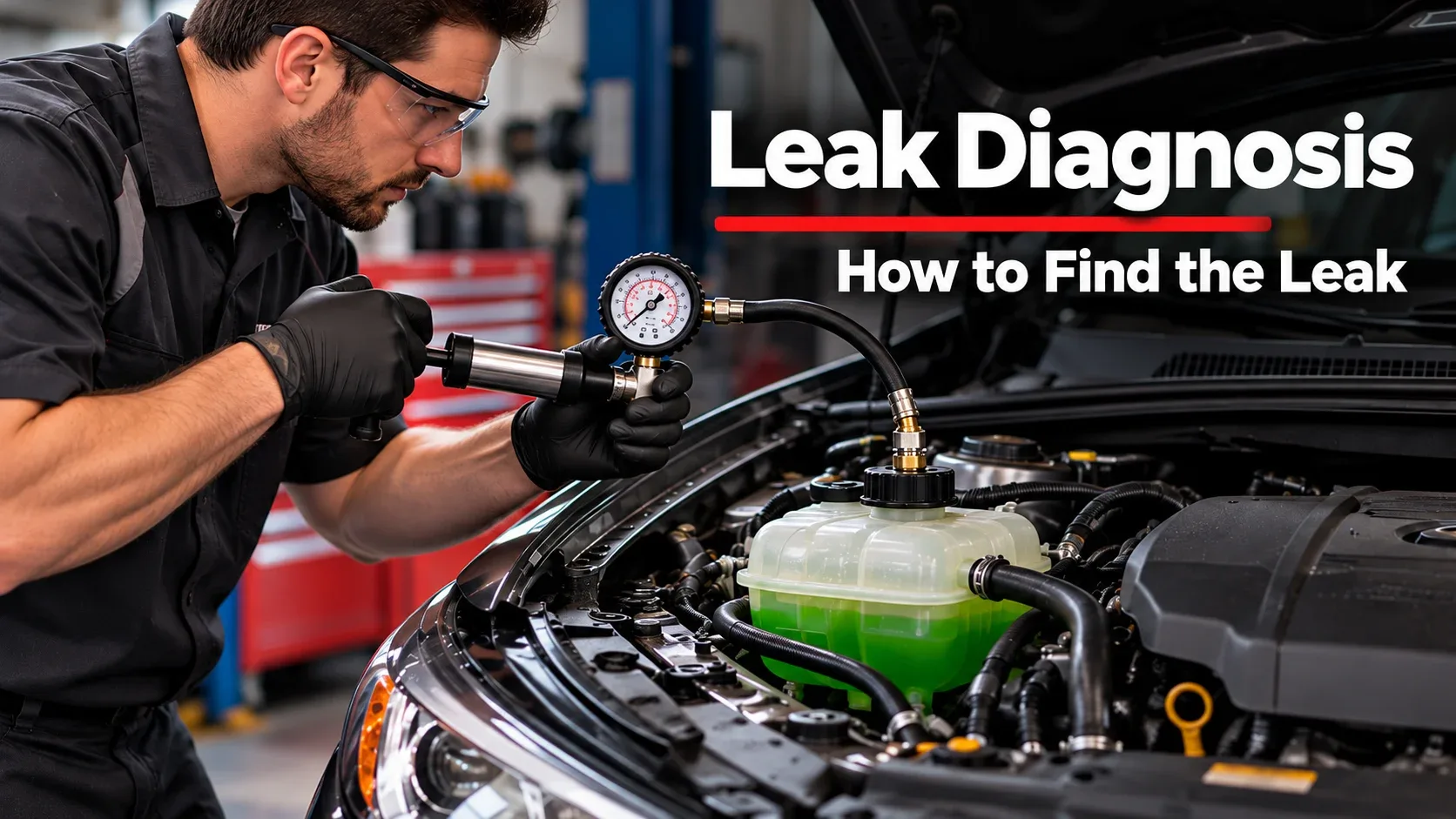
A safe inspection begins with the engine fully cooled. Avoid touching hot components or putting your hands near fans, belts, and other moving parts. Cooling fans may operate unexpectedly on some vehicles.
- Park in a safe, level place. Switch off the engine and wait until it is completely cool before checking anything in the cooling system.
- Look at the reservoir level. Compare it to the correct cold-engine markings and the owner’s manual. Do not open a hot pressurized cap.
- Check for drips or residue. Note where fluid collects, but remember that coolant may travel along underbody panels before reaching the ground.
- Inspect accessible hoses and fittings. Look for cracks, wet joints, staining, swollen hoses, and reservoir damage without dismantling hot components.
- Document the symptoms. Record when the leak appears, whether the engine overheated, and whether coolant had to be added. This helps the technician narrow the search.
- Request appropriate testing. A trained mechanic may perform a cooling-system pressure test, cap test, UV dye inspection, combustion-gas test, or other engine checks as needed.
Diagnostic tip: A leak that appears only when the engine is hot may not be visible during a brief cold inspection. A professional pressure test can help locate hidden external leaks, though the correct test method varies by vehicle.
Antifreeze Leak Repair: How Common Problems Are Fixed
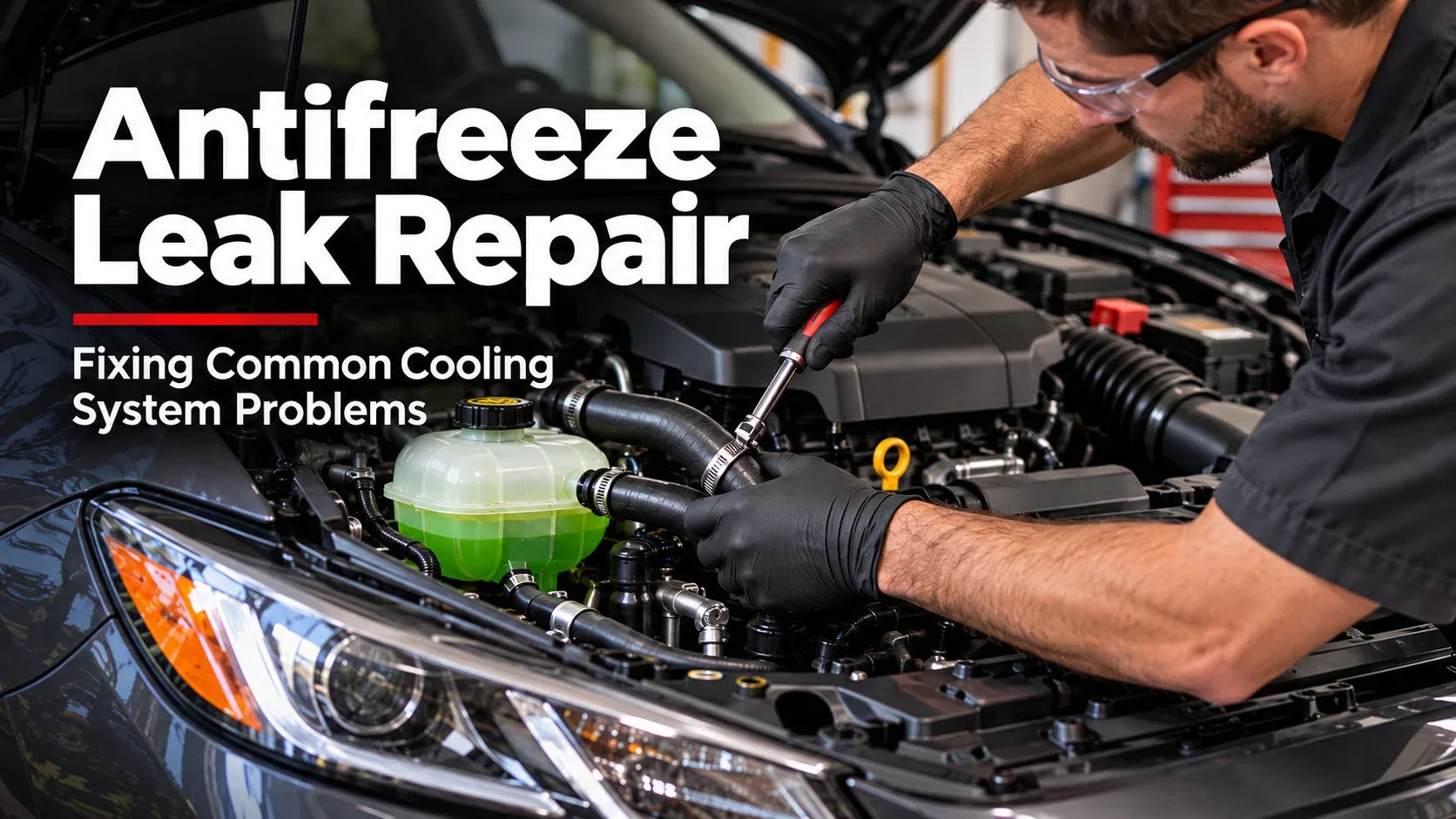
Antifreeze leak repair usually involves repairing or replacing the failed part, restoring coolant to the correct level and specification, removing trapped air using the manufacturer-approved procedure, and checking for further leaks. Simply refilling coolant does not repair the cause of coolant loss.
Leaking coolant hose
A technician may replace a cracked hose and inspect its clamps and connection surfaces. A hose with damage generally needs replacement rather than tape or sealant. Certain easily accessible hoses are suitable for experienced DIY owners with the correct procedure and tools.
Leaking radiator
A damaged radiator frequently requires replacement. The surrounding mounts, hoses, radiator cap, and connections should be checked to avoid repeated leaks.
Water pump leak
A leaking water pump generally needs replacement, along with any applicable seals or gaskets. On some engines, the pump is linked to timing-belt service or requires major disassembly; this work is best left to a qualified technician.
Cracked coolant reservoir
A cracked reservoir is normally replaced with a suitable part. The pressure cap, hose connections, and system pressure should also be evaluated.
Thermostat housing or gasket leak
Repair may require a housing, O-ring, or gasket replacement, depending on the design and condition of the sealing surfaces. Follow the manufacturer-specified procedure and fastener torque.
Heater core leak
Heater core repair can be labor-intensive because the component may be concealed behind the dashboard. A technician should confirm the diagnosis before expensive interior disassembly.
Head gasket or internal coolant leak
An internal leak requires accurate testing before major repairs are approved. Repair may involve head gasket work, cylinder-head inspection, machining when appropriate, or additional engine repairs. Severe damage may make engine replacement or another vehicle more economical.
What about stop-leak additives? These products are not a substitute for identifying and fixing a failed component. Some additives can contaminate or obstruct cooling-system passages. Avoid treating them as a permanent repair unless a qualified professional specifically advises otherwise for your vehicle.
How Much Does It Cost to Fix an Antifreeze Leak?
The cost to fix an antifreeze leak varies substantially. A simple accessible hose replacement can be much less expensive than a heater core, timing-system-driven water pump, or internal engine repair. Accurate pricing requires the vehicle year, make, model, engine, and local labor rates.
Verified diagnosis estimate
RepairPal’s estimate updated September 3, 2026 lists an average $60–$88 for coolant leak diagnosis. This is a diagnostic labor estimate, not the complete repair bill. Taxes, fees, regional differences, and subsequent repairs may be additional.
| Repair type | Relative cost | What affects the bill |
|---|---|---|
| Hose or accessible connection | Often lower | Hose accessibility, clamp type, coolant refill |
| Coolant reservoir | Often lower to moderate | Reservoir design, sensor or hose fittings |
| Thermostat housing or seal | Low to high | Location, housing design, part price |
| Radiator replacement | Moderate to high | Vehicle design, radiator type, labor |
| Water pump replacement | Moderate to high | Access, timing components, related service |
| Heater core replacement | Often high | Dashboard removal and labor time |
| Head gasket or engine repair | Potentially very high | Engine design, damage severity, machine work |
Cost categories are broad comparisons, not fixed price quotations. Obtain vehicle-specific estimates and confirm whether they include diagnostics, parts, labor, coolant, shop supplies, taxes, and warranties.
Why are coolant leak repair quotes different?
- Vehicle design: Some parts can be reached quickly; others require removal of multiple components.
- Repair location: Regional labor rates vary widely across the United States.
- Parts: OEM, aftermarket, and integrated assemblies may carry different prices.
- Associated work: A repair may require coolant replacement, special bleeding procedures, or additional failed components.
- Engine condition: Repeated overheating can add damage beyond the original leak.
How to evaluate an estimate
Ask the shop to identify the confirmed leak source, explain the test used, and itemize parts and labor. For expensive work, a second opinion can be worthwhile. Avoid approving a head gasket or major engine repair based solely on coolant disappearing without supporting diagnostic evidence.
DIY vs. Professional Antifreeze Leak Repair
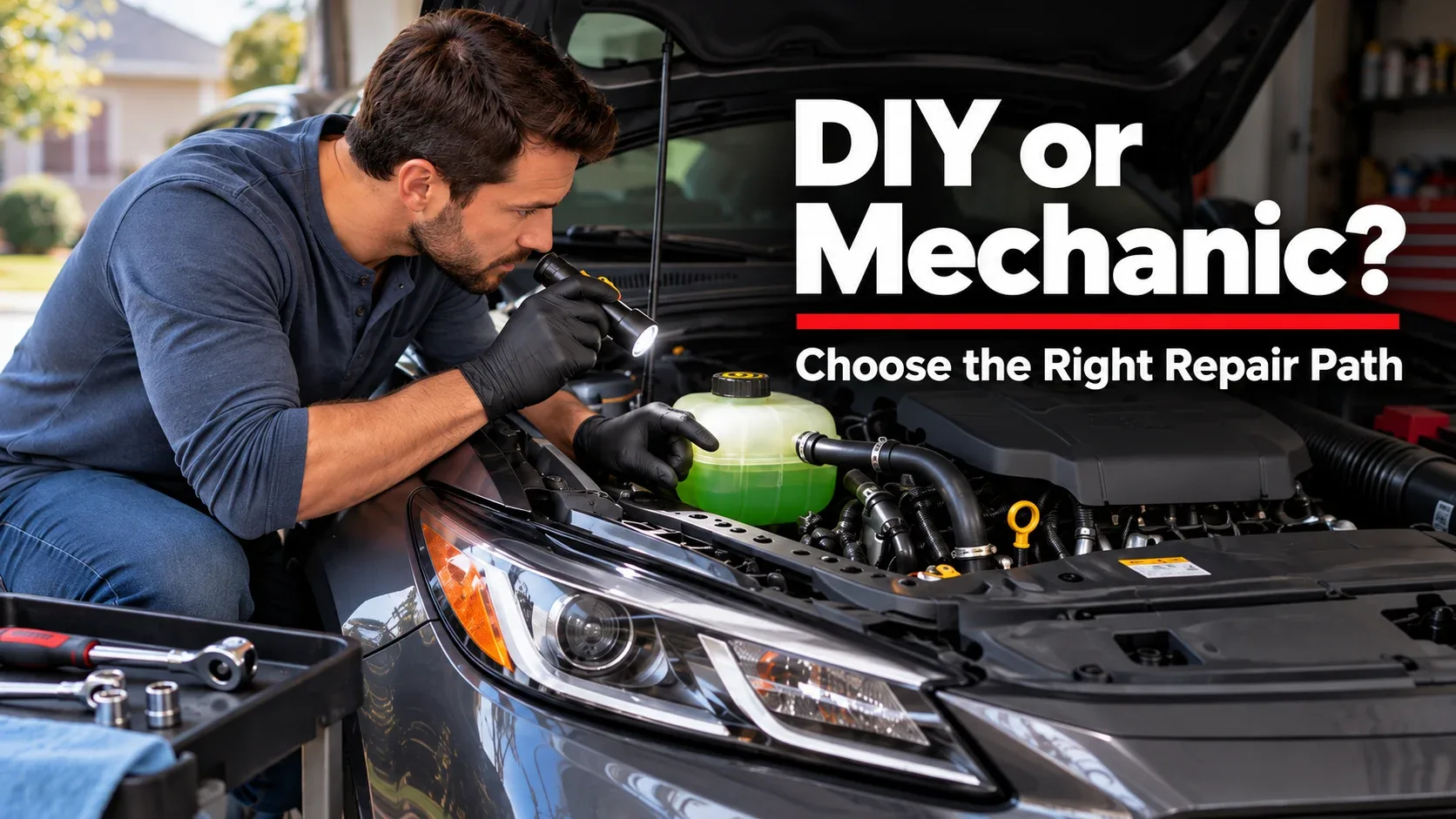
Some owners can visually inspect a cold engine or replace a straightforward accessible hose. However, many cooling systems require specialized bleeding procedures, pressure testing, access tools, and careful handling of hazardous coolant.
| Task | Typical recommendation |
|---|---|
| Cold-engine visual inspection | Suitable for many owners following the manual |
| Accessible hose or reservoir replacement | Possible DIY with correct vehicle instructions and skills |
| Cooling-system pressure test | Professional recommended if unfamiliar with pressure limits |
| Water pump or heater core replacement | Usually professional work |
| Internal leak diagnosis or head gasket repair | Professional testing and repair strongly advised |
After repair, the system must be filled with the specified coolant and properly purged of air. An incorrect filling or bleeding process can leave air pockets and cause overheating even when the leaking component has been replaced.
Is It Antifreeze or Another Fluid Leaking?
Not every puddle under a parked car is coolant. Location, texture, fluid level, and operating conditions may provide clues, but appearance alone is not enough for a definitive identification.
| Fluid | Possible appearance | Other clues |
|---|---|---|
| Antifreeze / coolant | Many colors | Coolant level falls; possible sweet odor |
| A/C condensation | Clear water | Common after using air conditioning; no coolant loss |
| Engine oil | Amber to dark brown | Oily texture and possible oil level drop |
| Transmission fluid | Red, amber, brown, or other | Generally oily; varies by vehicle |
| Washer fluid | Blue or another color | May originate near washer reservoir or tubing |
Do not taste, touch, or deliberately smell unknown fluids. Keep children and pets away from spills until they are properly cleaned up.
How to Reduce the Risk of Future Coolant Leaks
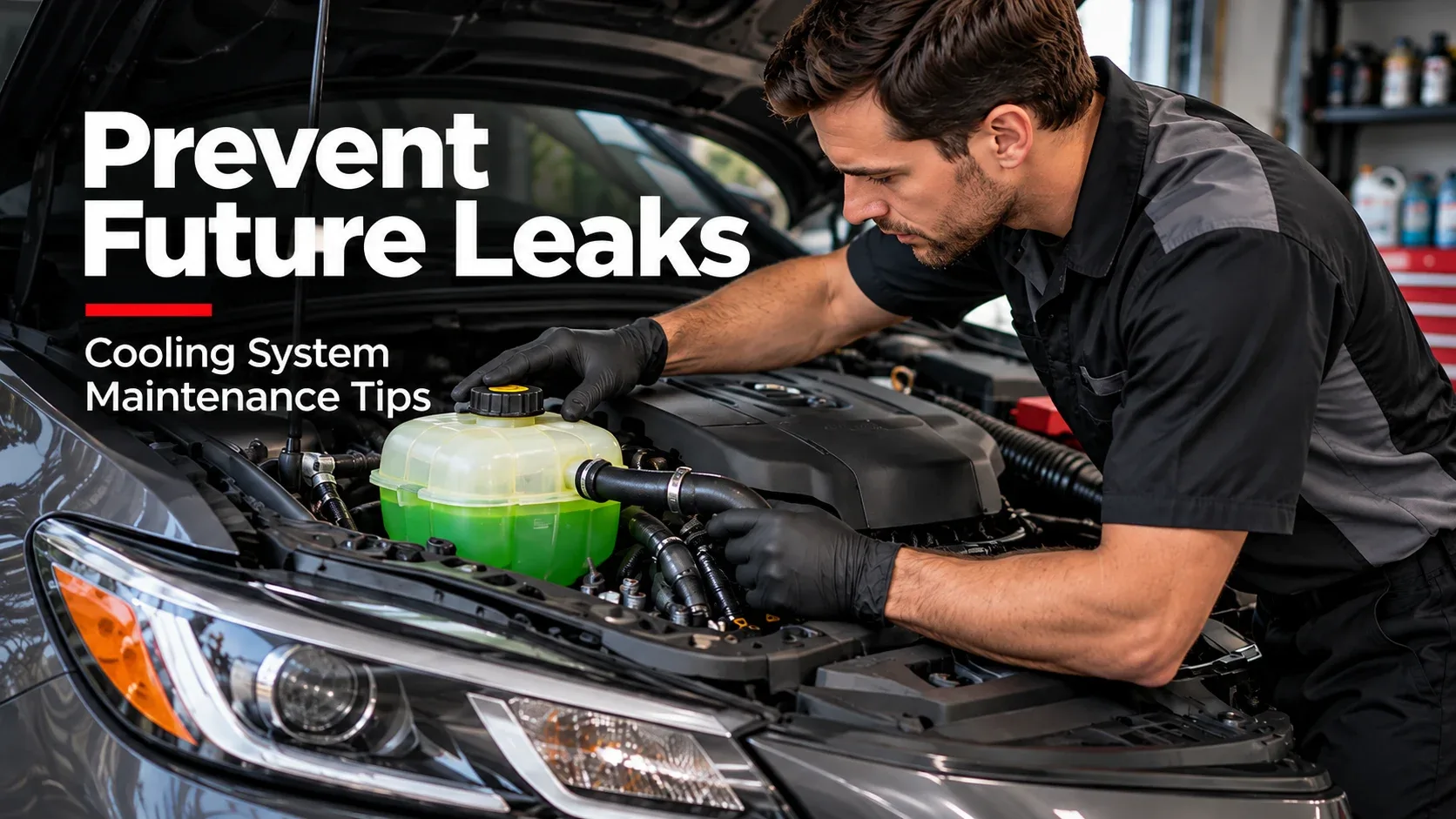
- Follow the coolant service schedule: Use the maintenance interval specified in the vehicle manual rather than a universal mileage rule.
- Use the correct coolant: Color alone does not tell you whether a coolant meets the manufacturer’s specification.
- Inspect hoses and connections: Cracking, swelling, and dried deposits deserve attention.
- Monitor levels: Check the reservoir as specified in the owner’s manual with the engine cold.
- Investigate repeated top-offs: A healthy sealed system should not routinely need unexplained coolant additions.
- Address overheating immediately: Repeatedly driving while overheating risks compounding an otherwise repairable problem.
- Dispose of coolant safely: Capture drained coolant in a suitable container and follow local hazardous-waste or recycling guidance. Never pour it into a storm drain or onto the ground.
Maintenance lowers the risk of avoidable failures but cannot prevent every sudden leak or age-related component defect.
Frequently Asked Questions About Antifreeze Leaks
How much does it cost to fix an antifreeze leak?
The total depends on the leaking component and vehicle. An accessible hose may be comparatively inexpensive, while a water pump, heater core, or internal engine repair may cost much more. RepairPal estimated coolant leak diagnosis alone at $60–$88 as of September 2026. Request a vehicle-specific repair estimate after diagnosis.
Can I drive my car with a small antifreeze leak?
A small visible leak can worsen with pressure and heat. Avoid unnecessary driving and arrange prompt inspection. If the engine overheats, a temperature warning appears, or steam is present, pull over safely, shut off the engine, and arrange towing or roadside assistance.
Why is my car losing antifreeze but not overheating?
A slow leak may reduce coolant without immediately triggering a temperature warning. Possible causes include a small external leak, a cap issue, or internal coolant loss. A pressure test and vehicle-specific inspection can help find the cause.
How do I find where antifreeze is leaking?
With the engine completely cold, check the coolant reservoir, visible hoses, radiator, reservoir housing, and ground beneath the car for wetness or residue. A mechanic can locate less visible leaks using an appropriate pressure test or UV dye.
Can an antifreeze leak fix itself?
A true leak generally does not repair itself. A temporary absence of drips may be due to temperature, pressure, or parking conditions. Persistent coolant loss needs diagnosis rather than repeated top-offs.
What is the most common cause of an antifreeze leak?
Common sources include hoses and connections, radiators, water pumps, plastic reservoirs, and thermostat housings. The most likely cause varies by vehicle, age, and service history. No single component should be assumed faulty without inspection.
Should I use a coolant stop-leak product?
Stop-leak products are not a dependable permanent solution for a damaged hose, radiator, pump, or gasket. Some may contaminate or restrict cooling passages. A proper diagnosis and component repair are generally preferable.
How long does antifreeze leak repair take?
Time depends on accessibility, diagnosis, and the failed component. A simple hose may be quicker to replace than a water pump, heater core, or internal engine seal. Ask the shop for labor time and whether additional testing is required.
Does auto insurance pay for an antifreeze leak?
Ordinary wear, deterioration, and mechanical breakdown are commonly excluded from standard auto insurance. Coverage may differ if the damage resulted from a covered accident or event. Review your policy and ask your insurer about the specific circumstances.
Can I mix different colors of antifreeze?
Do not judge compatibility by color. Use coolant meeting the exact manufacturer’s specification. Mixing incompatible coolant formulations can reduce protection or cause deposits. Consult the owner’s manual or a qualified technician before adding coolant.
Final Thoughts: Don’t Ignore an Antifreeze Leak
An antifreeze leak can begin with a cracked hose or loose connection, but it can also indicate a more involved radiator, pump, heater core, or engine problem. The right approach is to recognize the warning signs, avoid driving with an overheating engine, and identify the failed component before paying for repairs.
Next step: If you are repeatedly topping off coolant or seeing puddles, schedule a cooling-system inspection. Ask for the confirmed leak location and an itemized estimate covering parts, labor, coolant, and testing before authorizing antifreeze leak repair.
Editorial references and pricing note
- RepairPal, Coolant Leak Diagnosis Cost Estimate (updated September 3, 2026).
- AAA Club Alliance, Signs of a Coolant Leak.
- AAA, Keep Your Cool if Your Car Overheats.
General educational information only. Vehicle-specific service instructions and a qualified technician’s diagnosis take precedence over general examples.