Car AC & Heating Guide
Your car’s air conditioner should make summer drives more comfortable. But when the vents start blowing warm air, it’s tempting to assume the system simply needs more refrigerant. Before buying a can of 134a refrigerant, it’s important to know what it does, whether your vehicle uses it, and what may actually be causing the cooling problem.
This guide explains R-134a refrigerant for cars, how it works, how to identify the right refrigerant, common AC problems, professional service, and safety considerations.
What Is 134A Refrigerant?
R-134a (also written R134a or HFC-134a) is a refrigerant used in many automotive air-conditioning systems. It circulates through a sealed AC circuit, absorbing heat from cabin air at the evaporator and releasing it outside the vehicle at the condenser. Although many older and mid-generation vehicles use R-134a, newer vehicles often use another refrigerant, such as R-1234yf. Always verify the specification for your exact vehicle.
| Property | R-134a information |
|---|---|
| Other names | R134a, HFC-134a, 134a |
| Chemical name | 1,1,1,2-tetrafluoroethane |
| Refrigerant family | Hydrofluorocarbon (HFC) |
| Common vehicle application | Automotive air conditioning in compatible systems |
| Ozone depletion potential | Zero |
| Global warming potential | 1,430 (EPA-listed reference value) |
| Interchangeable with R-1234yf? | No; follow manufacturer requirements |
How Does R-134a Refrigerant Work in a Car AC System?
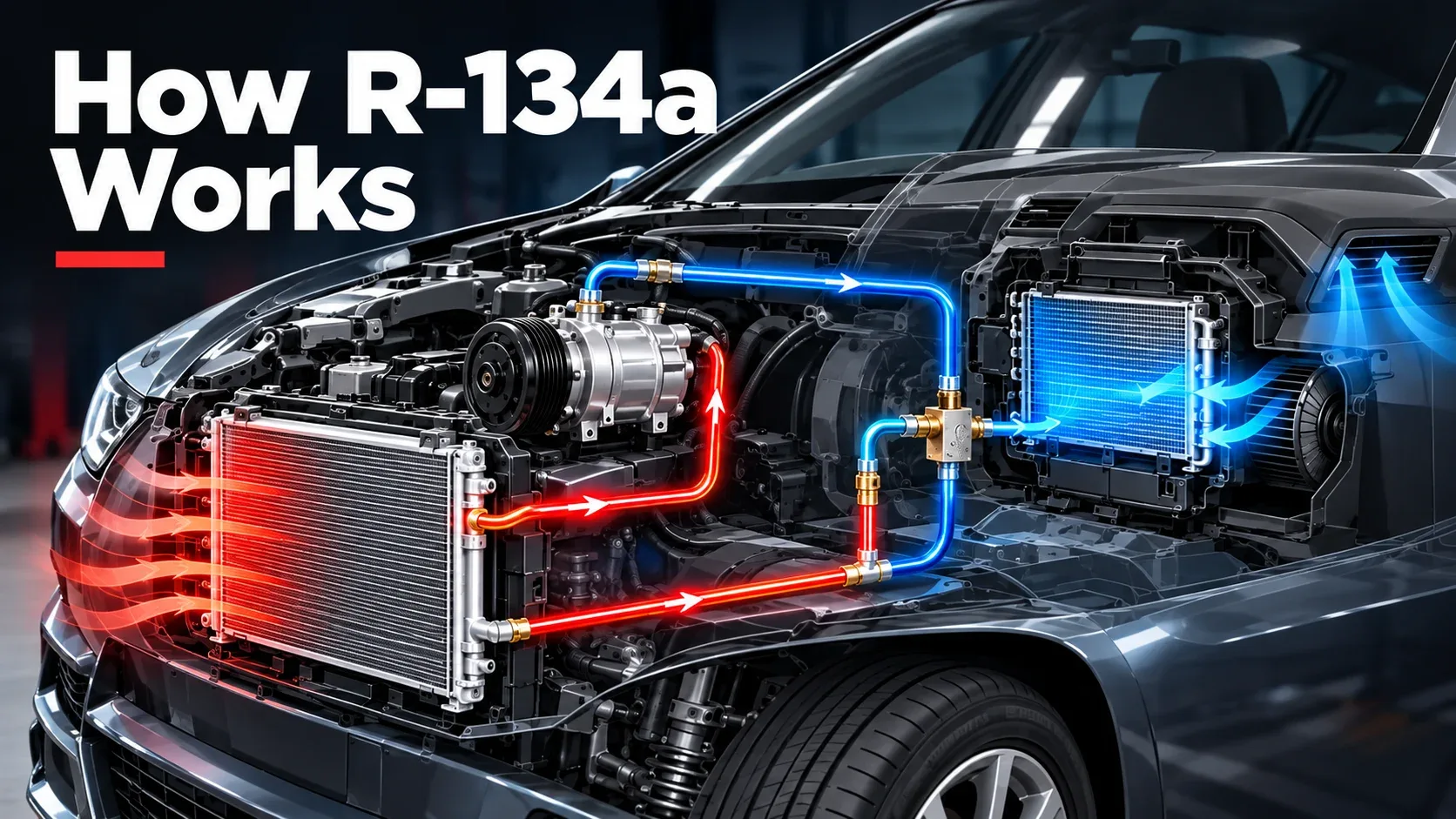
Automotive AC systems move heat rather than manufacture cold air. Refrigerant repeatedly changes pressure and physical state as it travels through the system. The blower moves cabin air across the cold evaporator, allowing heat to transfer into the refrigerant.
- Compressor: Compresses refrigerant vapor, increasing its pressure and temperature.
- Condenser: Releases heat into outside air, allowing the hot refrigerant to condense into a liquid.
- Expansion device: Restricts flow and lowers the refrigerant pressure before it enters the evaporator.
- Evaporator: Absorbs heat from cabin air as the refrigerant evaporates. The cooled air is then delivered through the vents.
Other parts, such as a receiver-drier or accumulator, hoses, sensors, fans, and controls, vary by system design. Refrigerant charge and airflow must both be correct for the system to operate as intended.
Which Cars Use 134A Refrigerant?
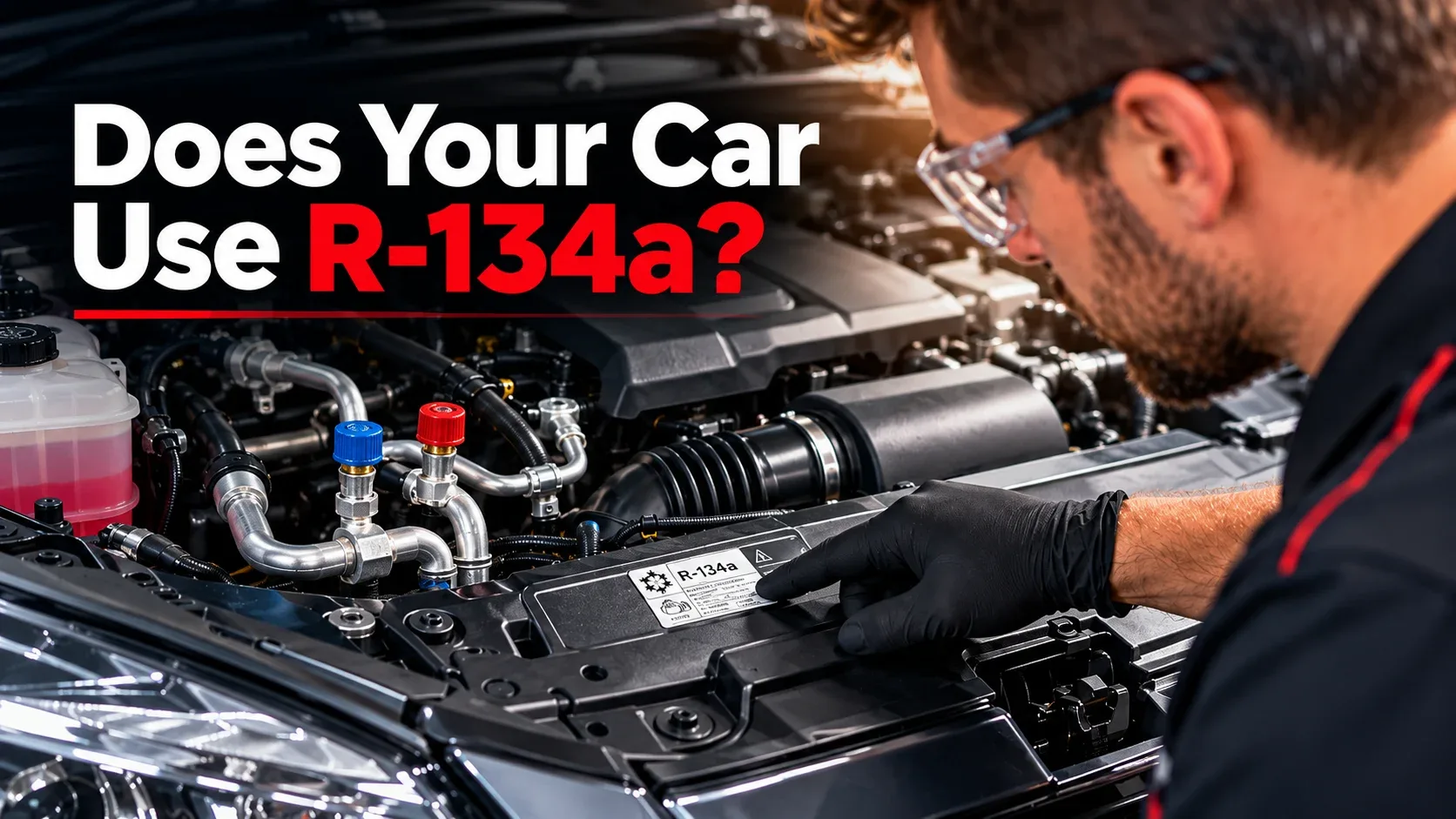
R-134a became common in passenger vehicle AC systems during the 1990s and continued to be used for many years. However, there is no universal model-year rule that reliably identifies the refrigerant in every car, SUV, pickup, or imported vehicle.
If you’re looking for 134a refrigerant for car maintenance, the safest starting point is to confirm the manufacturer’s refrigerant specification.
How to identify the correct refrigerant
- Check the underhood AC label. It usually identifies the refrigerant type and specified charge quantity.
- Read the owner’s manual or factory service documentation. Look for air-conditioning specifications.
- Confirm the exact vehicle configuration. Year, make, model, engine, and sometimes VIN or optional AC equipment matter.
- Ask a qualified automotive AC shop. This is especially helpful if the vehicle has been repaired, converted, or modified.
R-134a vs R-1234yf: What’s the Difference?
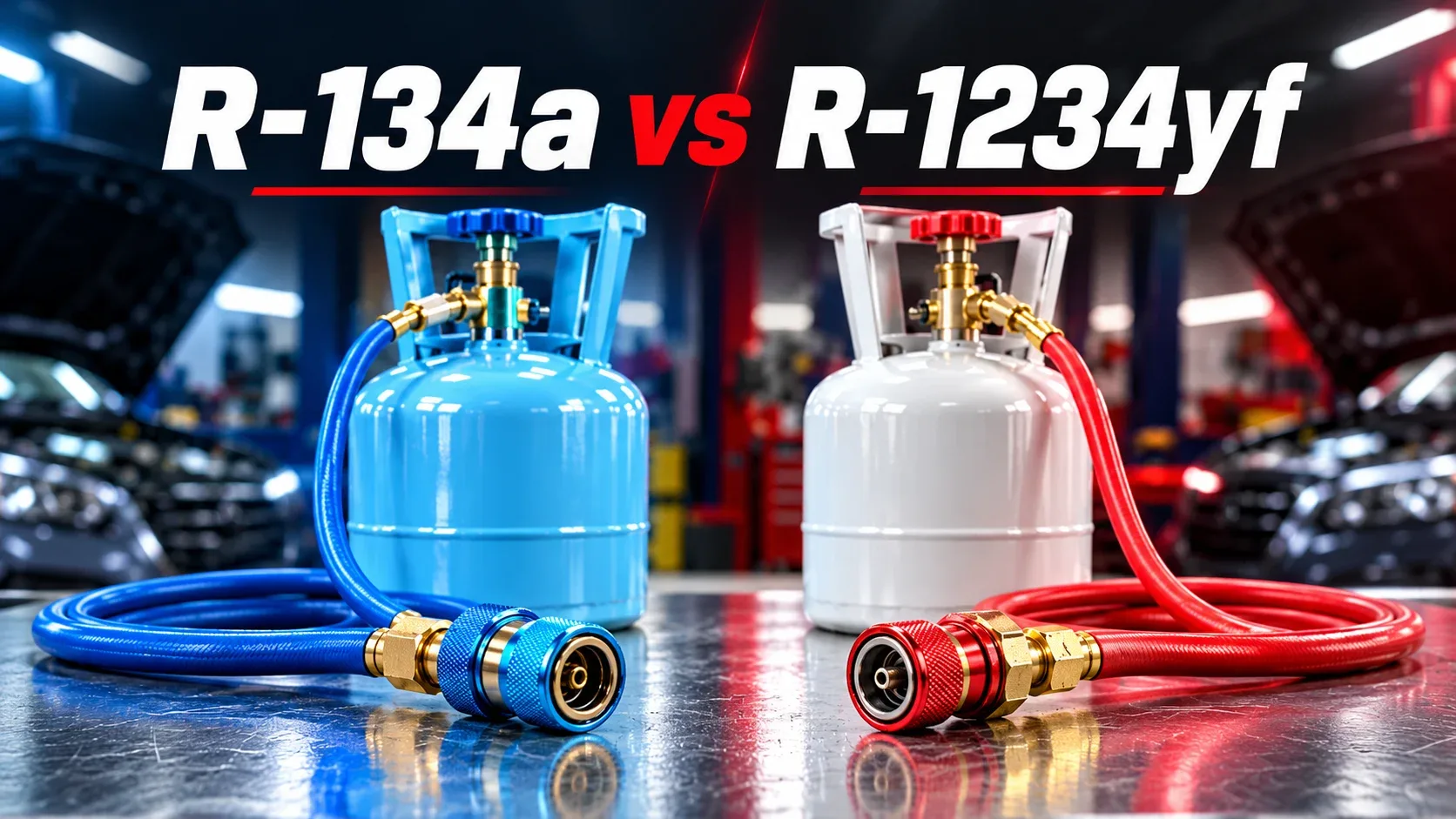
R-134a and R-1234yf both serve as automotive AC refrigerants, but they differ in chemistry, environmental impact, and service requirements. R-1234yf is a low-global-warming-potential alternative adopted in many newer cars.
| Feature | R-134a | R-1234yf |
|---|---|---|
| Refrigerant family | HFC | HFO |
| Vehicle use | Many older and existing AC systems | Many newer AC systems |
| Global warming impact | Much higher | Much lower |
| Safety classification | A1 | A2L (mildly flammable) |
| Service equipment | Equipment approved for R-134a | Equipment designed for R-1234yf |
| Directly interchangeable? | No. Never mix the two or substitute one without a manufacturer-approved procedure. | |
Different refrigerants also require the correct oils, fittings, handling procedures, and equipment. A recharge can and a matching-looking service port do not establish system compatibility.
Signs Your Car AC May Have a Refrigerant Problem

Low refrigerant charge can reduce AC cooling, but the symptoms overlap with many other faults. Diagnosing a system requires more than noticing warm air at the vents.
| What you notice | Possible explanations |
|---|---|
| Vents blow warm air | Refrigerant leak, compressor or electrical fault, blend-door issue, or cooling fan problem |
| Weak cooling in traffic | Condenser airflow or fan problem, high heat load, or another AC fault |
| Cooling has gradually worsened | Possible refrigerant leakage, condenser blockage, or changing airflow performance |
| Unusual compressor cycling | Pressure or sensor problem, control strategy, electrical issue, or incorrect charge |
| Oily dirt near an AC fitting | Possible oil/refrigerant leakage, but inspection is needed to confirm |
| Little air from vents | Clogged cabin filter, blower fault, or air-distribution restriction |
Does refrigerant naturally run out?
Automotive AC systems are designed as sealed circuits. A significant loss of refrigerant generally points to leakage or a service-related issue rather than normal fuel-like consumption. Adding refrigerant without checking why the charge is low can mask a leak and delay the proper repair.
If your AC stops cooling, check whether airflow is normal and whether the issue occurs at idle, while driving, or all the time. A technician can use that information together with system tests to identify the problem.
How Much R-134a Refrigerant Does a Car Need?
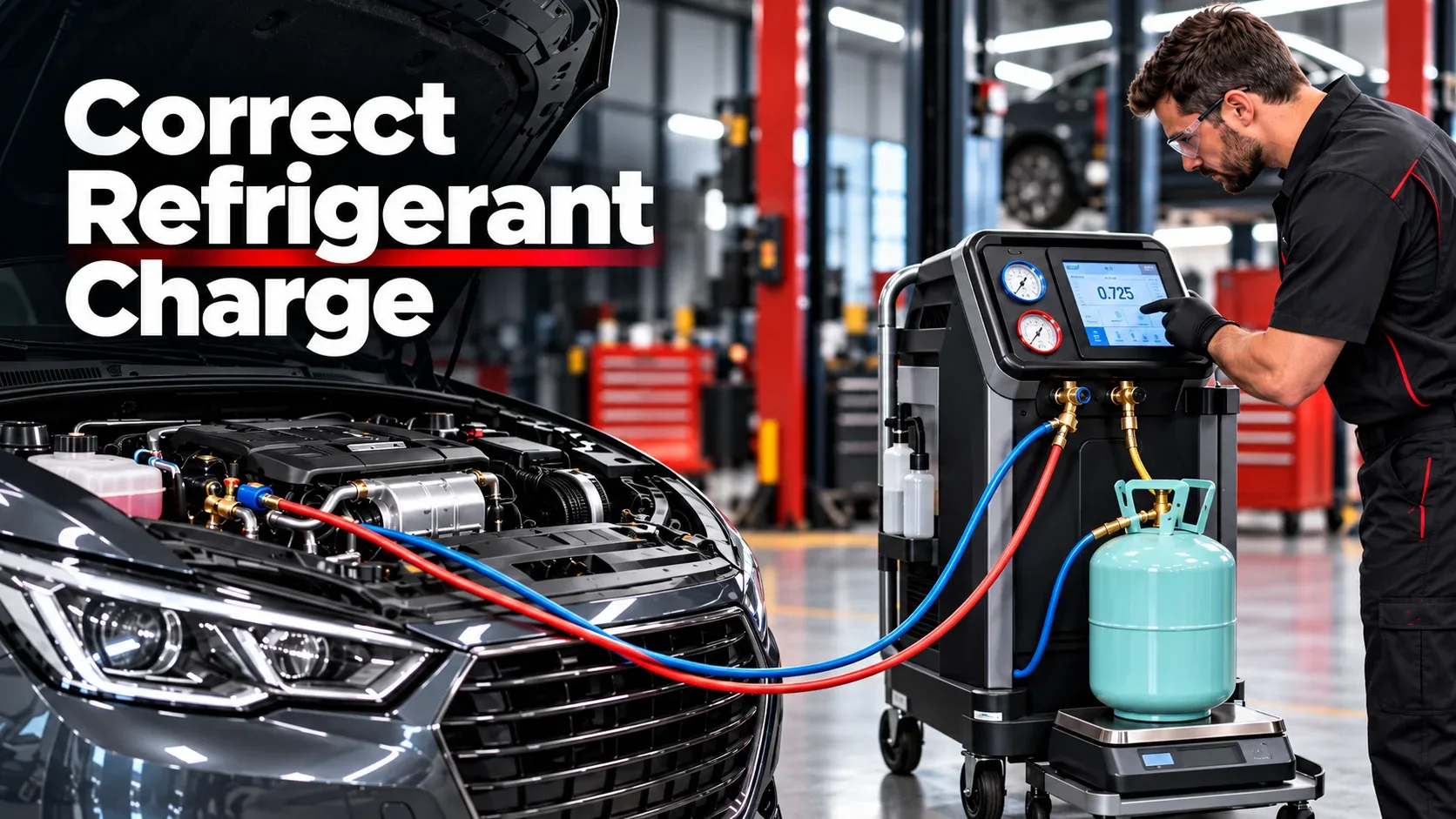
There is no single R-134a charge amount suitable for every vehicle. Refrigerant capacity depends on the specific AC system, including whether the vehicle has rear air conditioning or other optional equipment.
The specified charge is typically given by weight on the vehicle’s refrigerant label or in manufacturer service data. A professional AC service station meters the correct amount after the required diagnostic and service procedures.
Why the charge amount matters
- Undercharging can impair cooling and system operation.
- Overcharging can create excessive pressure and reduce performance.
- Using a single pressure reading is not a reliable substitute for a weight-based factory charging specification.
How Is a Car AC System Professionally Recharged With R-134a?
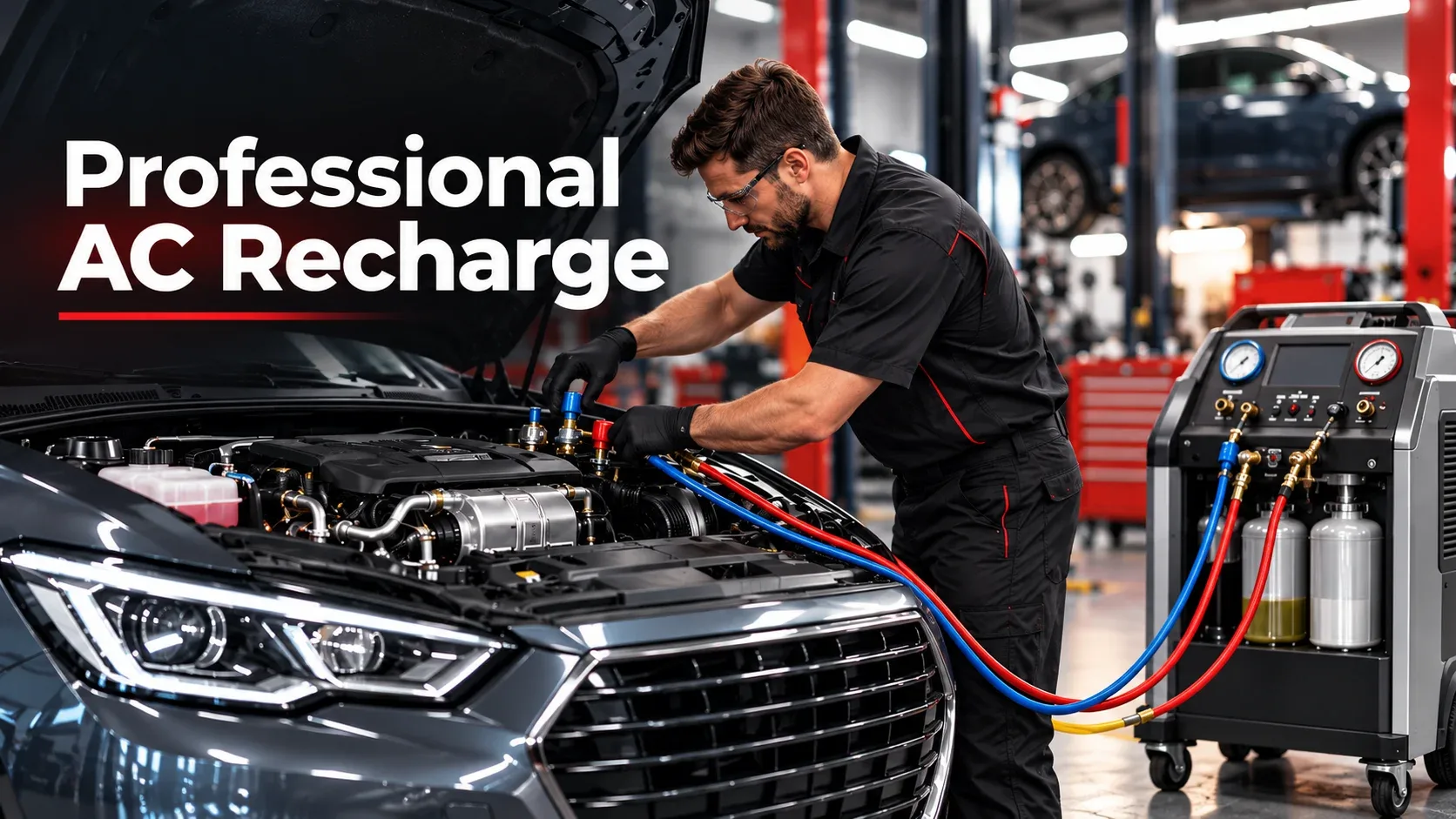
A proper recharge is more than connecting a can and watching a gauge. Automotive AC technicians use specified procedures and suitable equipment to diagnose faults, handle refrigerant, and return the system to the correct operating condition.
- Identify the refrigerant. Confirm the vehicle’s required refrigerant and service specifications.
- Inspect and diagnose. Check AC performance, airflow, leaks, and relevant electrical or mechanical components.
- Recover refrigerant properly. Use compliant recovery equipment rather than releasing refrigerant into the air.
- Repair confirmed problems. Address identified leaks or failed components before recharging as appropriate.
- Evacuate and recharge. Follow the applicable manufacturer procedure and weigh in the specified charge.
- Verify operation. Assess cooling performance, system pressures, and other vehicle-specific checks.
Because refrigerant is pressurized and can cause injury, and because AC service is regulated, owners who are not trained and equipped should consider a qualified automotive AC professional.
How Much Does an R-134a Car AC Recharge Cost?

Cost depends on location, vehicle design, labor, refrigerant quantity, diagnostic procedures, and whether there is a leak or failed part. A simple service quote should not be confused with the total cost of repairing a faulty AC system.
| Service item | What affects the price |
|---|---|
| Initial inspection or diagnosis | Testing time, required equipment, and complexity of the complaint |
| Recovery and recharge | Shop labor, specified refrigerant charge, and local pricing |
| Leak detection and repair | Leak location, access, seals, hoses, or other replacement parts |
| Compressor or condenser repair | Parts availability, vehicle design, related parts, and labor hours |
For an accurate budget, request an itemized estimate and ask whether diagnostics, leak repairs, refrigerant recovery, evacuation, and performance testing are included. Prices should be checked against current local shop quotes rather than relying on a universal national figure.
Is R-134a Refrigerant Safe to Use?
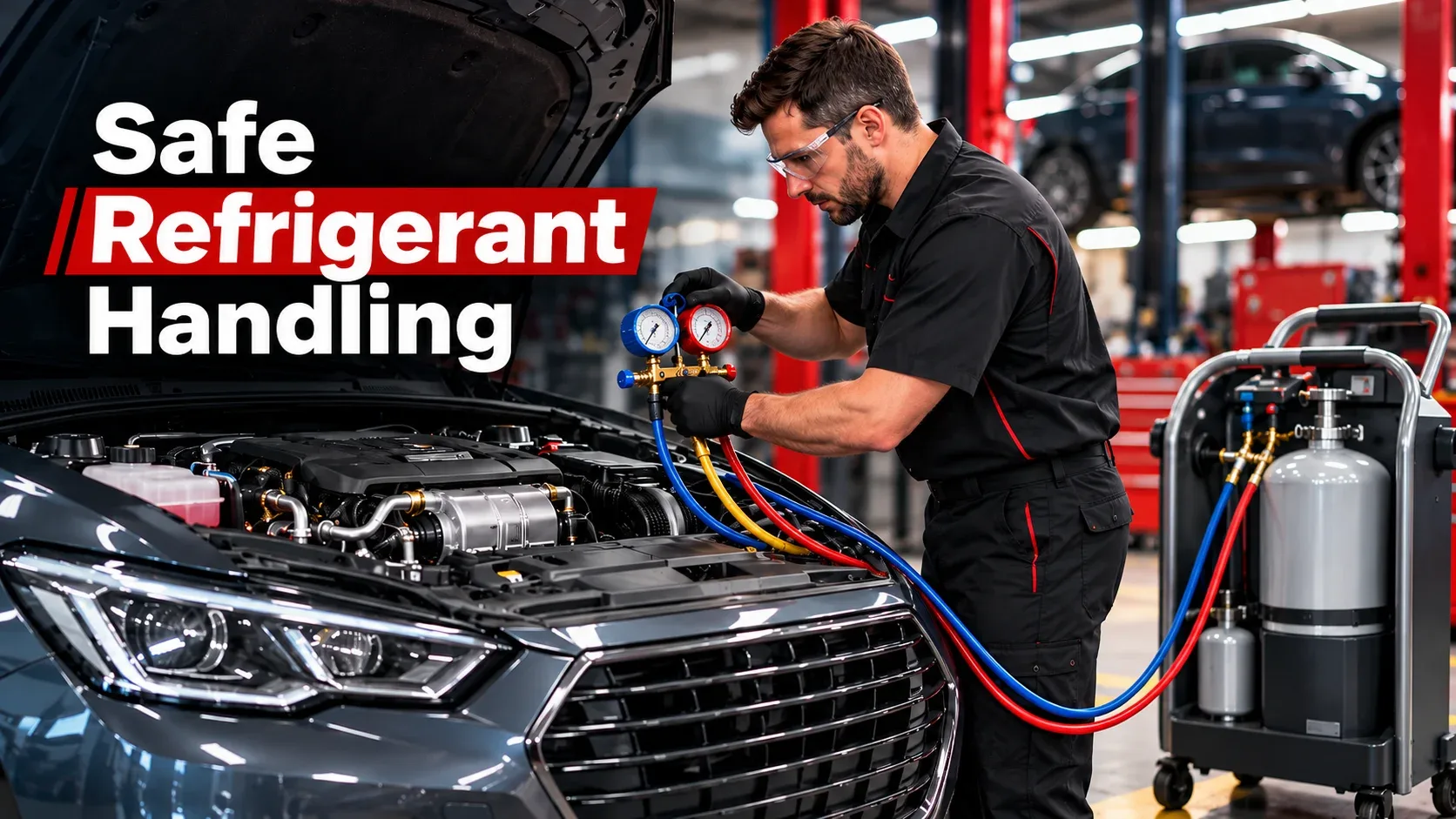
R-134a can be handled safely by trained professionals using appropriate equipment and procedures. However, it is stored under pressure and direct exposure may cause frostbite. High concentrations can displace oxygen in enclosed spaces. AC systems must not be opened casually, and refrigerant should not be intentionally vented.
Environmental considerations
R-134a has zero ozone depletion potential, but it is a potent greenhouse gas. The US Environmental Protection Agency lists a global warming potential of 1,430 for HFC-134a. That is one reason automotive manufacturers have transitioned toward lower-GWP alternatives.
Is R-134a banned in older cars?
No. US restrictions on use of high-GWP refrigerants in newly manufactured vehicles do not mean existing cars designed for R-134a must stop using it. EPA guidance says existing motor-vehicle AC systems can continue to be serviced with their approved HFC refrigerants.
Under the Clean Air Act, technicians who service motor-vehicle AC systems for payment or other consideration must hold EPA Section 609 certification and use approved refrigerant-handling equipment. Rules also prohibit intentional venting of R-134a during servicing.
Do not mix refrigerants, bypass protective equipment, or release refrigerant to the atmosphere. Use refrigerant and procedures specified for the exact vehicle and consult a qualified AC technician when diagnosis or service is required.
Does R-134a Refrigerant Affect Car Heating?
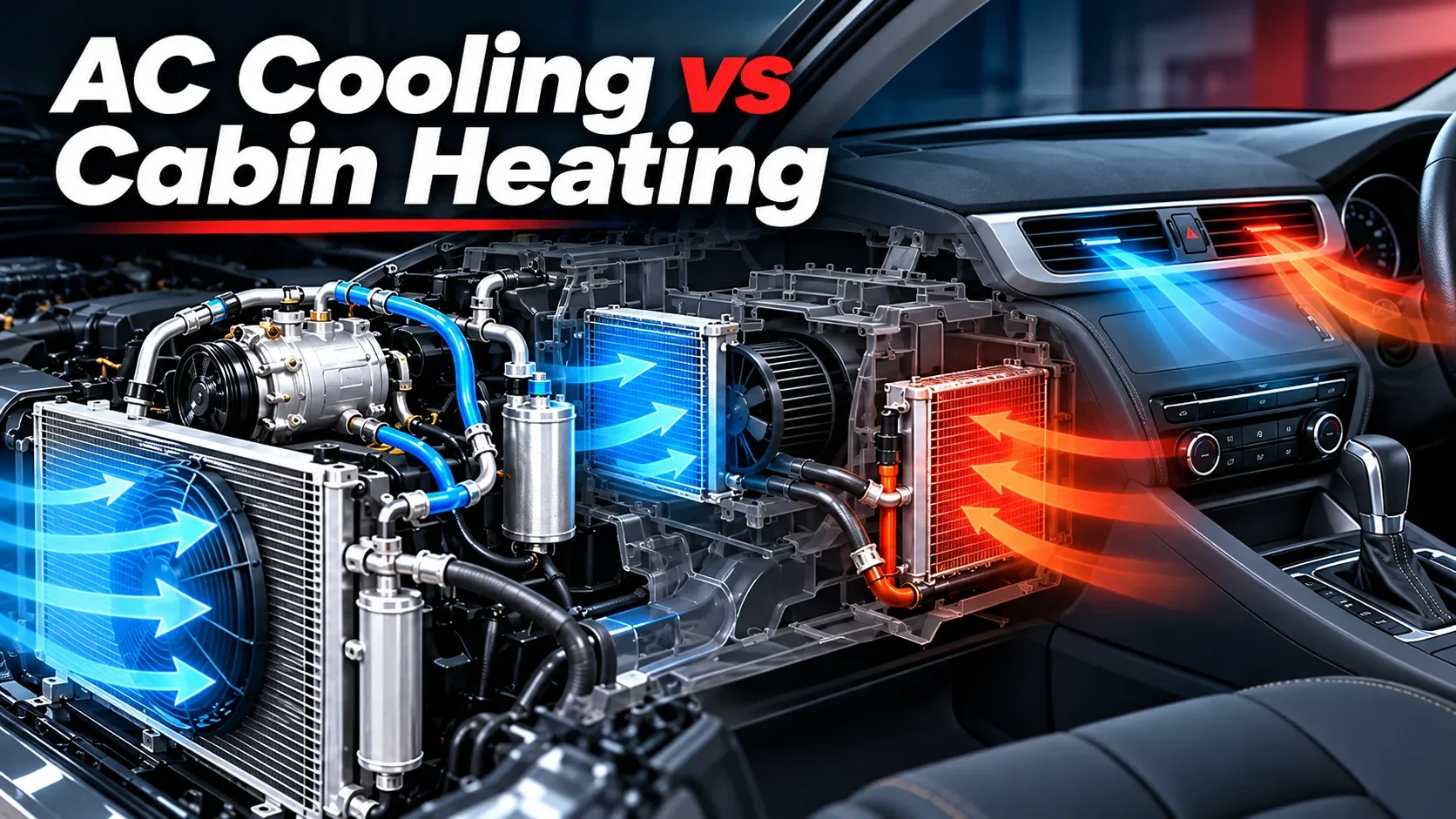
In most conventional gasoline or diesel vehicles, cabin heat comes from hot engine coolant flowing through a heater core, not from R-134a refrigerant. A heater blowing cold air can therefore have causes unrelated to the AC refrigerant charge.
Air conditioning can still play an important role in removing cabin humidity and helping clear foggy windows. Some electric vehicles and other heat-pump-equipped vehicles use refrigerant circuits to provide both cooling and heating, so the exact design matters.
If the heater is weak, diagnosis should focus on the vehicle’s actual heating and climate-control system rather than assuming an R-134a recharge will help.
How to Keep Your Car AC System Working Efficiently
- Follow manufacturer maintenance instructions for your vehicle’s AC and climate-control system.
- Replace the cabin air filter when needed to maintain airflow.
- Keep condenser airflow unobstructed and have damaged or clogged components checked.
- Investigate poor cooling early instead of repeatedly adding refrigerant.
- Repair confirmed leaks and use the specified refrigerant and lubricant.
- Use a qualified shop when specialized testing, recovery, or charging is required.
Routine refrigerant top-offs are not a universal maintenance requirement. If your vehicle repeatedly loses cooling performance because its charge is low, finding the reason matters more than repeatedly refilling it.
Frequently Asked Questions About 134A Refrigerant
Is 134a refrigerant the same as R134a?
Yes. The terms 134a, R134a, and R-134a are commonly used to refer to HFC-134a refrigerant. The vehicle’s official specification is the best reference when servicing its AC system.
Can I use R-134a refrigerant in any car?
No. Use R-134a only when specified or approved for the exact vehicle and AC configuration. Many newer vehicles require R-1234yf or another refrigerant.
Is R-134a being phased out?
US rules restrict higher-global-warming-potential refrigerants in new vehicle production, but existing vehicles designed for R-134a can continue to receive appropriate R-134a service.
Can R-134a and R-1234yf be mixed?
No. Mixing different refrigerants can contaminate the AC system and servicing equipment. Never substitute refrigerants without an approved vehicle-specific procedure.
How do I know if my car AC is low on refrigerant?
Weak cooling may be a clue, but it does not prove a low charge. A professional diagnosis can check for leaks and other problems and determine whether the refrigerant charge is incorrect.
Does car AC refrigerant run out over time?
The refrigerant circulates within a sealed system and is not consumed like fuel. Meaningful loss usually indicates leakage or a service-related problem.
Can too much R-134a damage a car’s AC?
Yes. An excessive charge can cause abnormal operating pressures and poor performance, potentially placing stress on system components. The correct charge is specified by weight for the vehicle.
Can a car AC refrigerant leak be repaired?
Many leaks can be repaired by replacing faulty seals, hoses, or components. The appropriate repair depends on where the leak is and the condition of the rest of the system.
Why does my car AC blow warm air at idle?
Possible causes include a condenser fan or airflow problem, low charge from a leak, an electrical issue, or another AC system fault. Diagnosis should consider how the system behaves at idle and while driving.
Does R-134a help heat the car?
In most conventional vehicles, engine coolant supplies cabin heat and R-134a is used for AC cooling and dehumidification. Heat-pump systems may be different.
Final Thoughts on 134A Refrigerant for Cars
134a refrigerant remains important for many vehicles originally designed to use it. However, the correct refrigerant depends on the vehicle’s actual specification, and an AC system that blows warm air may have an airflow, electrical, compressor, or refrigerant problem.
Before buying R-134a refrigerant for your car, check the underhood label and review the manufacturer guidance. If cooling is weak or refrigerant loss is suspected, proper diagnosis and professional service can help avoid unnecessary expense and prevent further problems.
Sources and Technical References
- US EPA — Regulatory Requirements for MVAC System Servicing
- US EPA — Acceptable Refrigerants and Their Impacts
- US EPA — Servicing Information for Technicians
Editorial note: General information only. Verify specifications and service requirements for your exact vehicle before making maintenance or repair decisions.