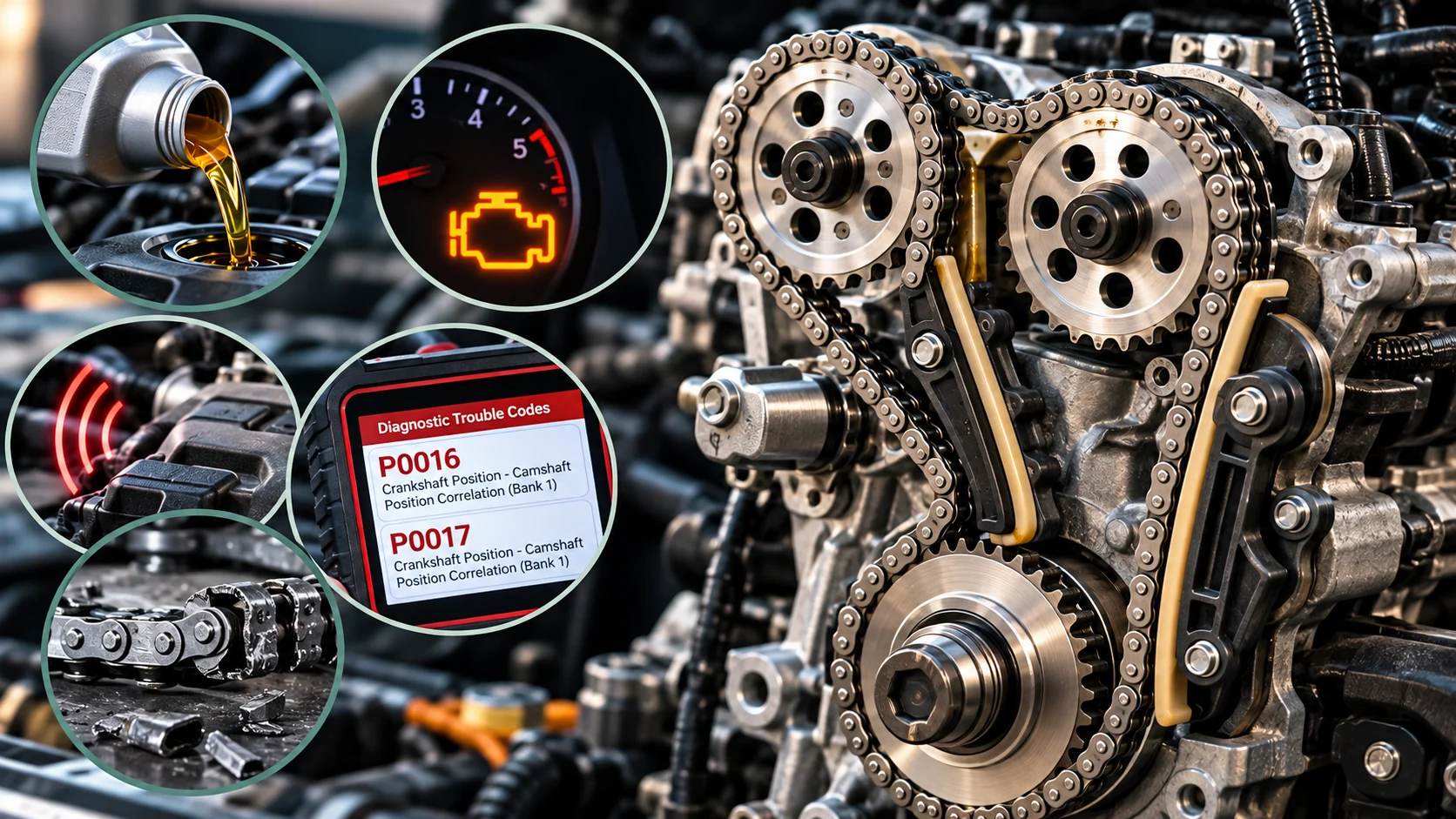
You start your car on a quiet morning and notice a metallic rattling sound coming from the engine. It lasts only a few seconds before disappearing.
At first, you ignore it. But when the noise returns or the engine begins running unevenly, you start wondering whether something more serious is happening beneath the hood.
One possible cause is a problem with the engine’s timing chain. This component plays an essential role in synchronizing the crankshaft and camshaft so the engine’s valves operate at the correct time.
When the timing system develops a serious fault, engine performance may suffer. In some circumstances, incorrect mechanical timing can cause extensive internal engine damage.
However, not every rattling engine has a bad timing chain. Faulty tensioners, worn guides, lubrication problems, and other engine components may cause similar symptoms.
This guide explains how timing chains work, the warning signs to recognize, how mechanics diagnose problems, and what a proper repair involves.
Common signs of timing chain problems include metallic rattling during startup, rough idling, reduced engine performance, starting difficulties, and certain camshaft/crankshaft correlation faults.
These symptoms do not independently confirm timing chain failure. A professional diagnosis should determine whether the chain, tensioner, guides, or another engine component is responsible before parts are replaced.
What Is a Timing Chain?
A timing chain is a metal chain that synchronizes the movement of an engine’s crankshaft and camshaft.
The crankshaft converts the up-and-down movement of the pistons into rotational motion. The camshaft controls when the intake and exhaust valves open and close.
For the engine to operate correctly, these components must remain mechanically synchronized.
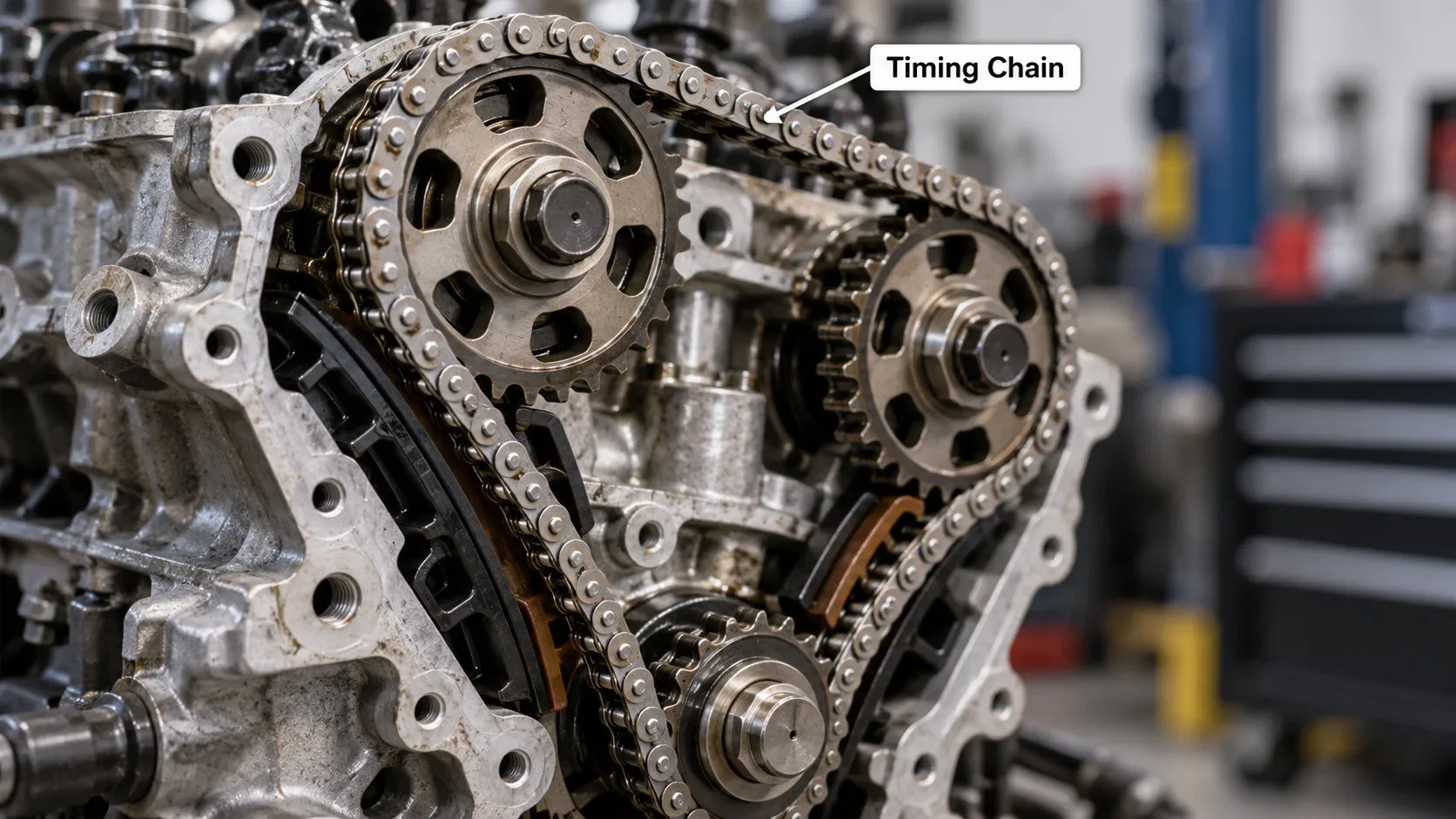
The timing chain connects the appropriate sprockets and maintains the required relationship between the crankshaft and camshaft.
Some engines use a single chain. Others use multiple chains or more complex timing assemblies.
Components of a Timing Chain System
Timing Chain
Transfers rotation between the crankshaft and camshaft sprockets.
Chain Tensioner
Helps maintain appropriate chain tension as the engine operates.
Timing Chain Guides
Support the chain and guide it along its intended path.
Timing Sprockets
Provide the toothed surfaces that engage the timing chain.
These components work together. A problem with one part can affect the operation of the entire timing system.
How Does an Engine Timing Chain Work?
In a typical four-stroke engine, the crankshaft completes two revolutions for every revolution of the camshaft.
The timing chain transfers rotation between these components, maintaining the mechanical relationship required for correct valve operation.
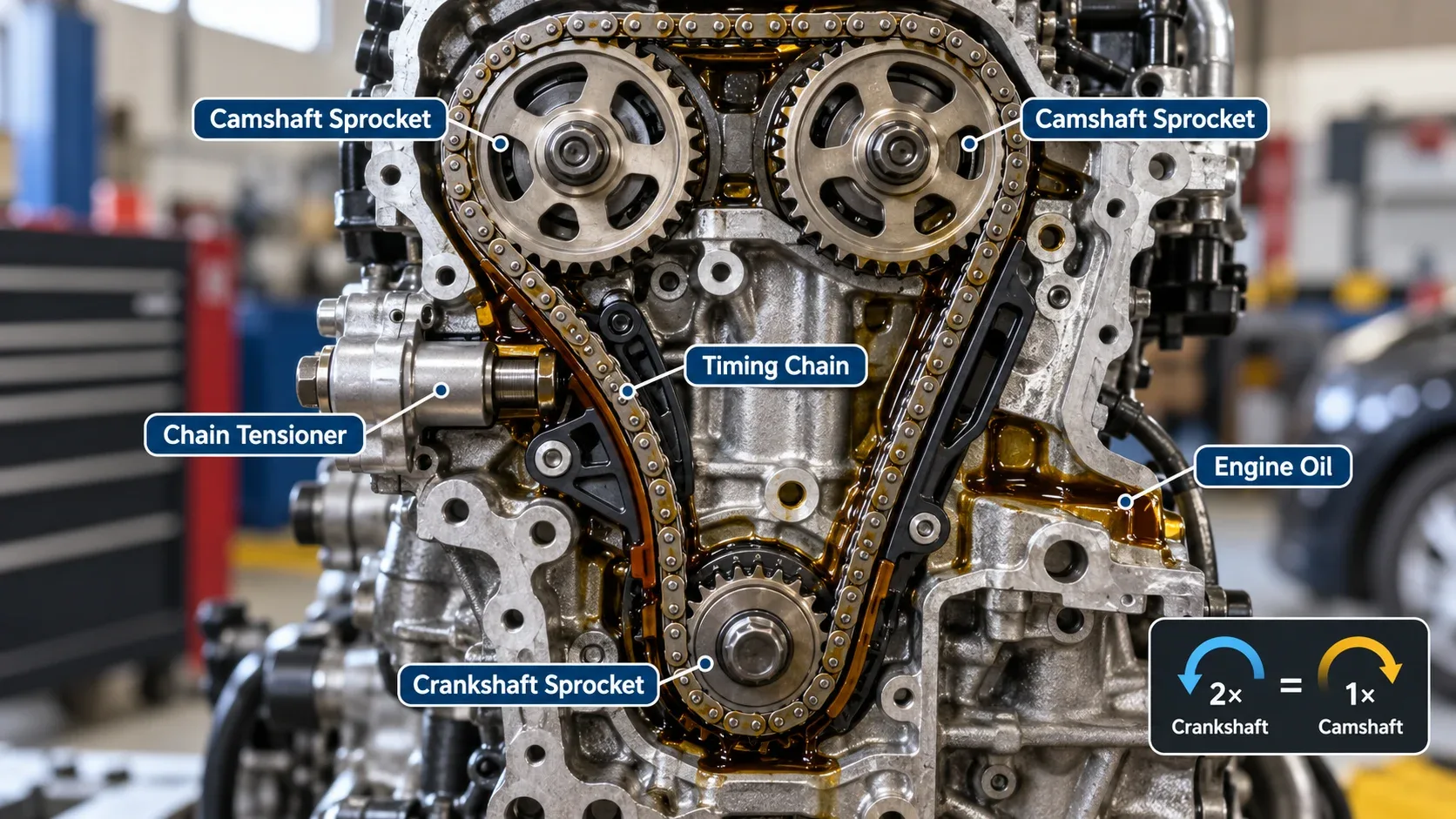
Correct timing allows the intake and exhaust valves to open and close at the intended points during the engine cycle.
The Role of the Chain Tensioner
The tensioner helps control chain movement and maintain the required tension during operation.
Some tensioners use spring force. Others depend partly on engine oil pressure. The design varies by engine.
Why Engine Oil Matters
Most timing chains operate inside the engine and depend on oil for lubrication.
Oil pressure can also influence the operation of certain hydraulic tensioners and variable valve timing components.
Technical insight: Timing systems differ between engines. The operation, diagnosis, and repair requirements for one vehicle should not be assumed to apply to another.
Common Symptoms of a Bad Timing Chain
Timing-chain-related faults may produce unusual engine noises, running problems, or diagnostic trouble codes.
However, none of these symptoms is exclusive to timing chain failure. They indicate a reason to investigate, not a confirmed diagnosis.
01. Metallic Rattling During Cold Starts
A brief metallic rattle when the engine starts may occur if the chain is not adequately controlled immediately after startup.

A tensioner problem, damaged guide, or oil-related condition may contribute to the sound. Other mechanical components can also produce similar noise.
02. Persistent Metallic Engine Noise
Rattling that continues after startup may indicate a significant mechanical problem.
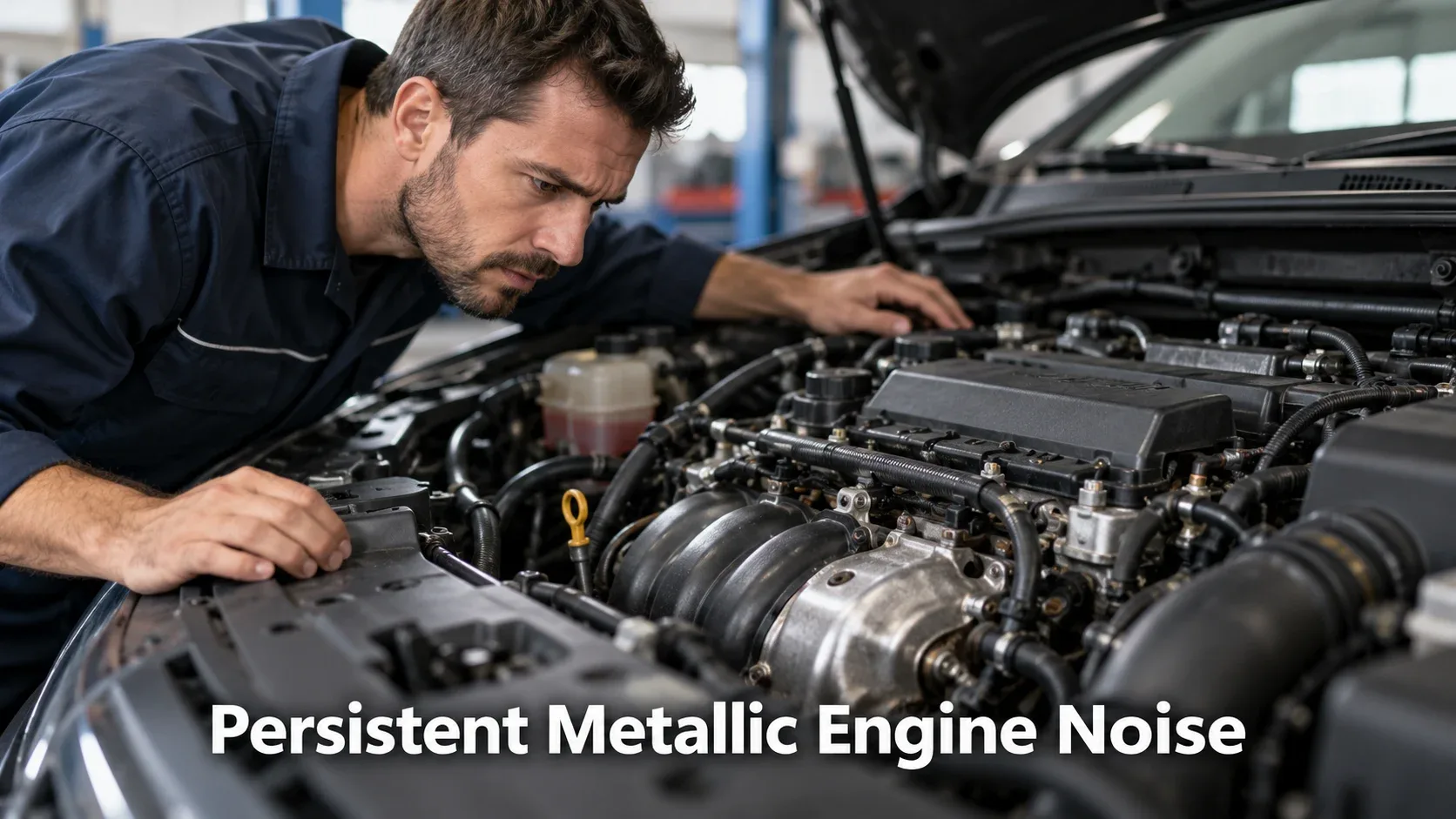
The source of the noise must be identified before attributing it to the timing system.
03. Check Engine Light
A timing-system problem can cause the engine control module to detect an unexpected relationship between camshaft and crankshaft positions.
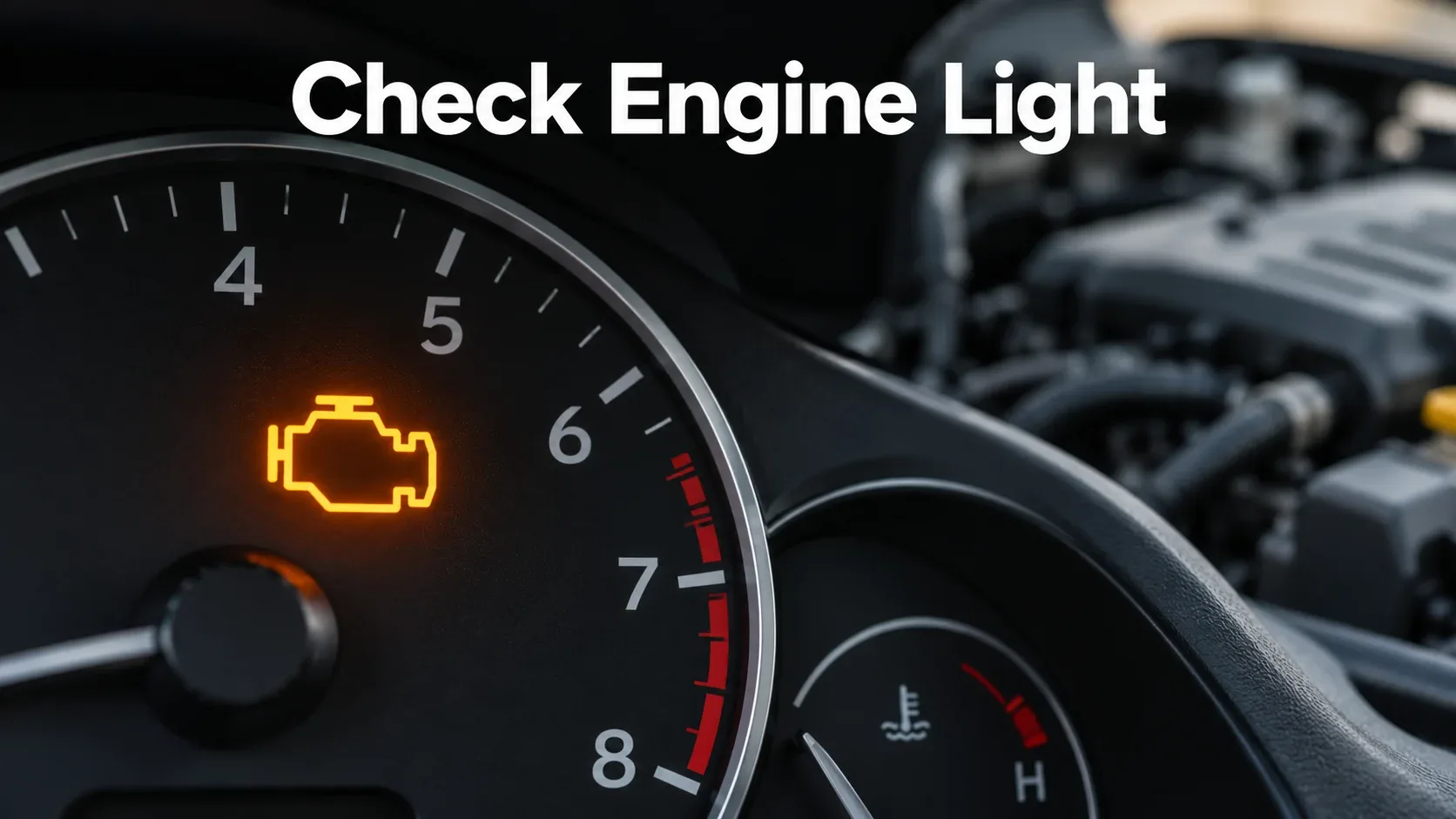
However, sensor faults, wiring issues, oil-control problems, and variable valve timing faults may produce similar findings.
04. Rough Engine Idle
Incorrect valve timing may affect stable combustion and cause the engine to idle unevenly.
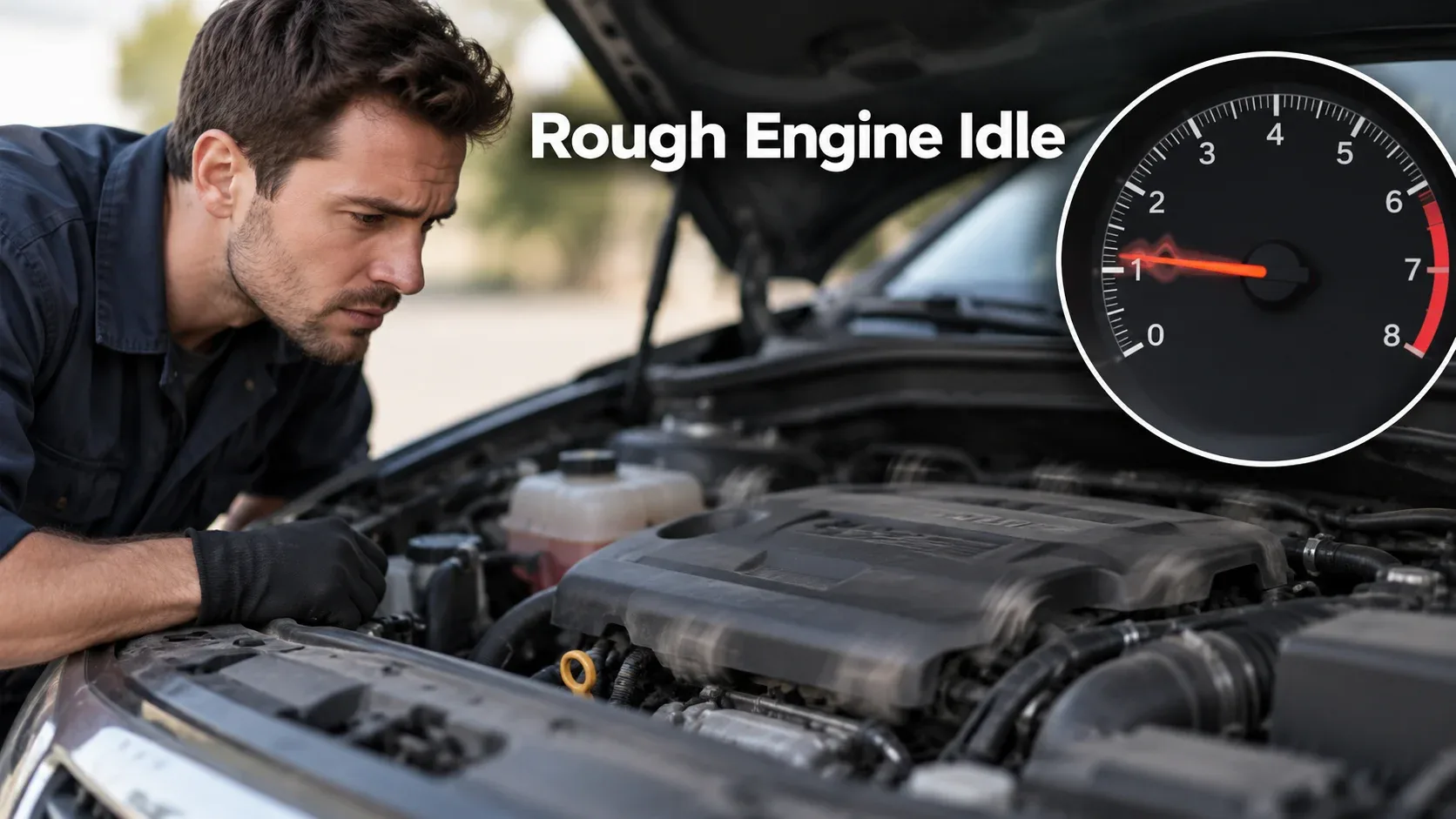
Ignition, fuel-delivery, air-intake, and compression problems can also lead to rough idling.
05. Engine Misfires
Mechanical timing problems may interfere with combustion and contribute to misfires.
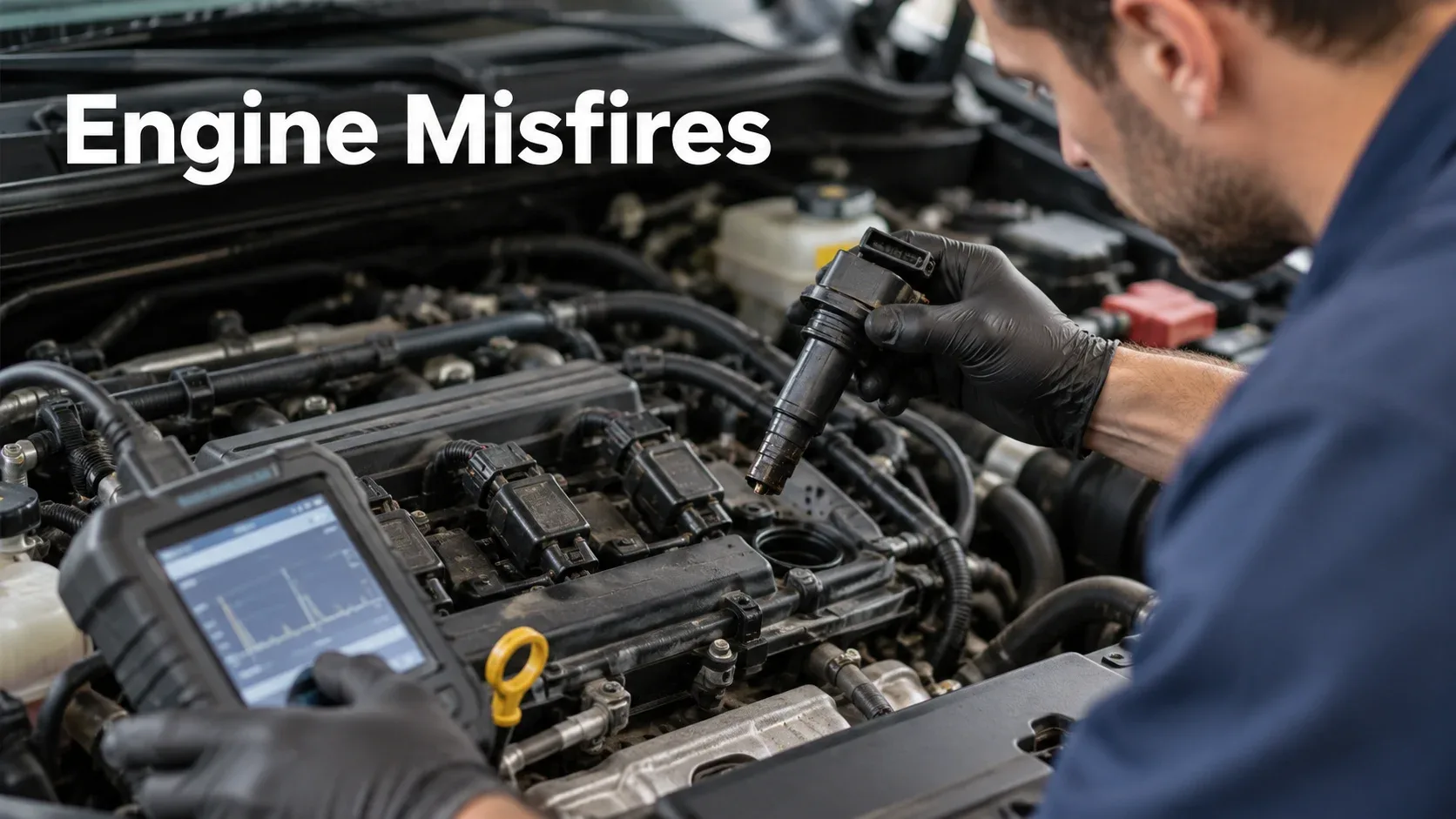
A misfire alone does not confirm timing-chain wear. Spark plugs, coils, injectors, and other components must also be considered.
06. Reduced Engine Performance
Incorrect valve timing can contribute to hesitation, reduced power, or poor acceleration.
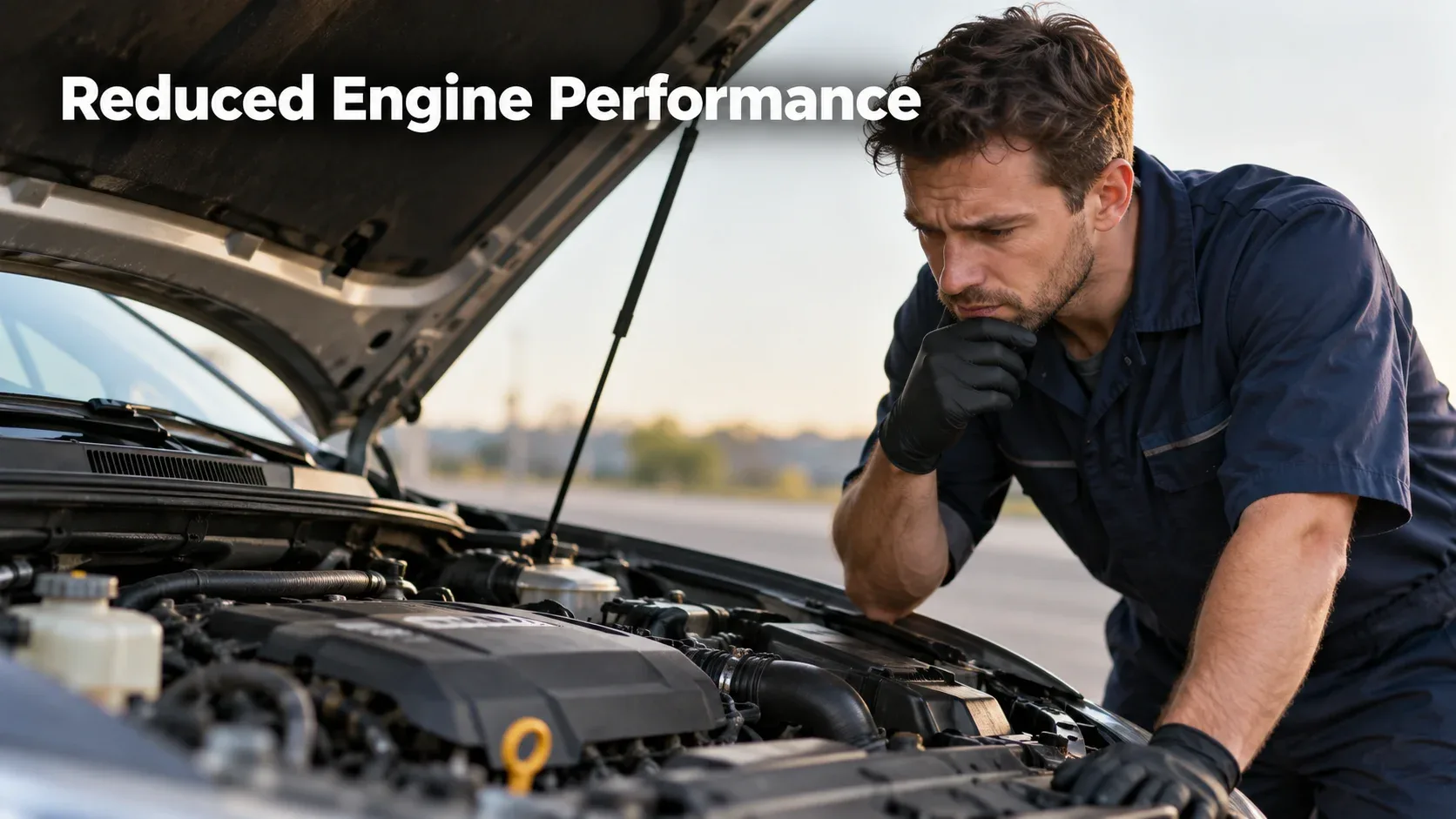
Many other engine problems produce similar symptoms, so further testing is necessary.
07. Difficulty Starting
A significant mechanical timing problem may cause extended cranking or prevent the engine from starting.

Battery, ignition, and fuel-system faults are also possible causes.
08. Engine Stalling
Severe timing-related faults may disrupt engine operation and contribute to stalling.

Unexpected stalling requires prompt attention because it can also create a road-safety risk.
09. Debris in Engine Oil
Damaged chain guides may leave plastic fragments, while abnormal mechanical wear may produce metallic debris.
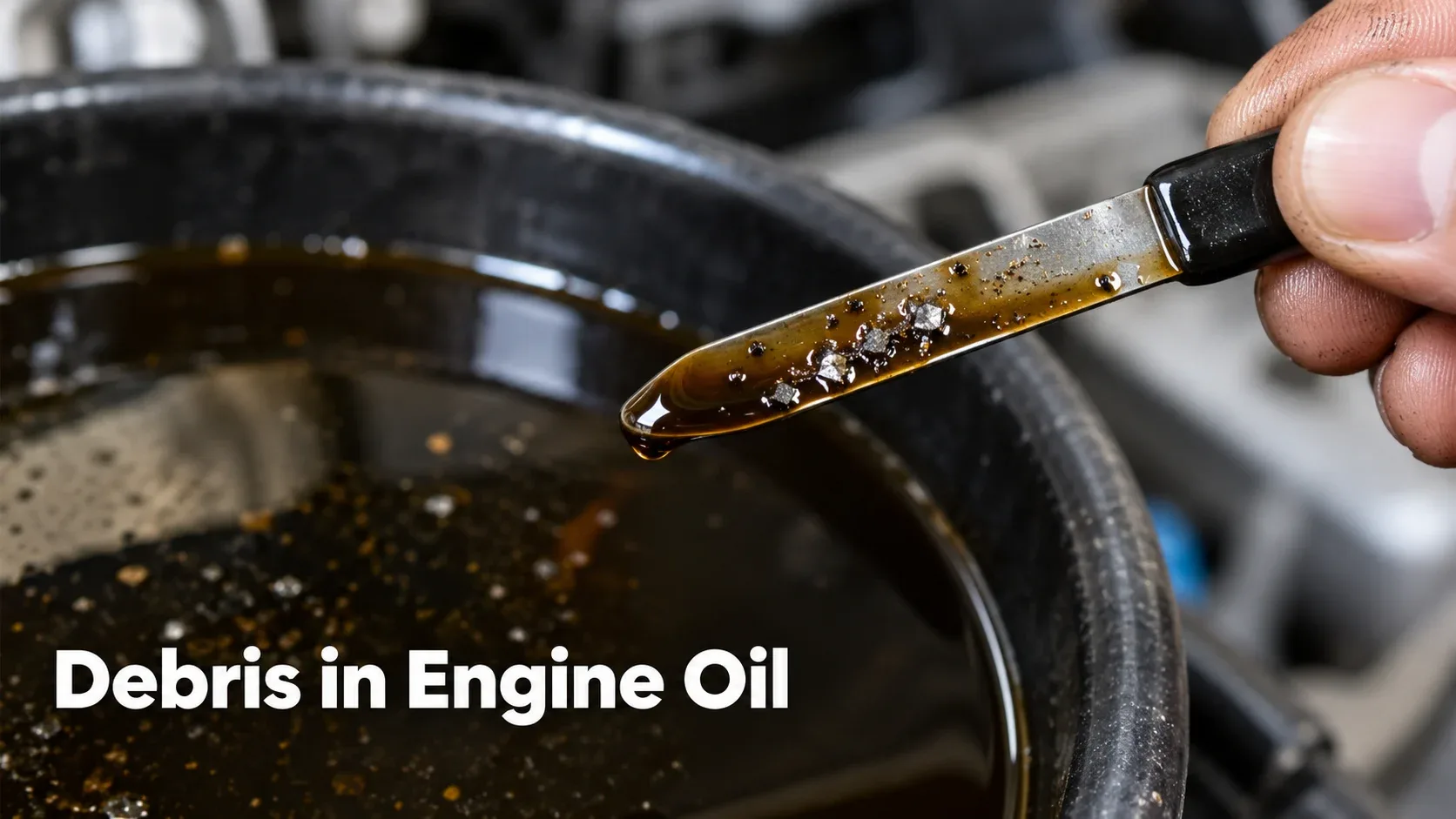
Such findings require investigation because debris can originate from different engine components.
10. Sudden Engine Failure
If a timing chain breaks or moves sufficiently out of its correct position, the engine may stop operating.
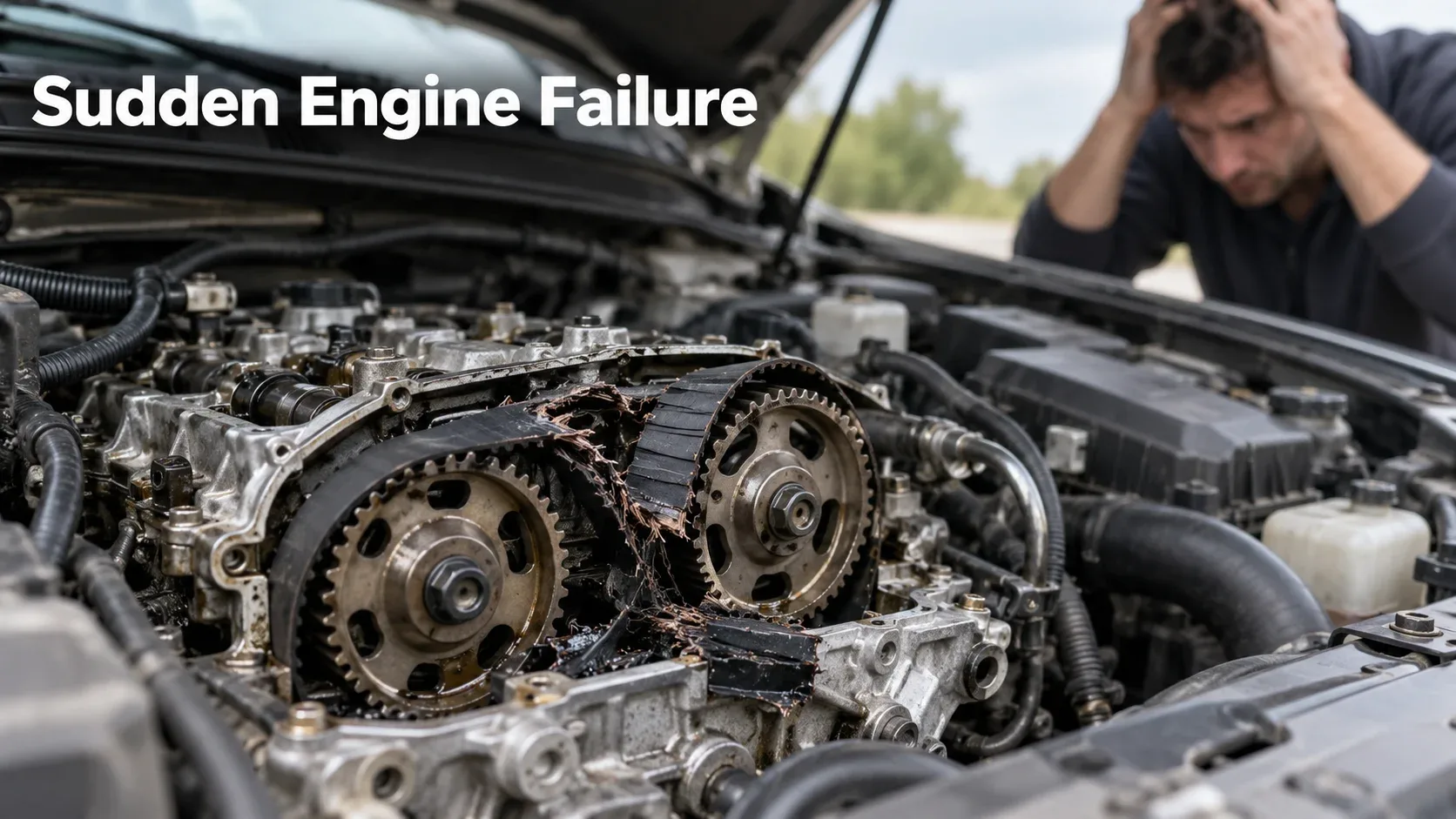
Depending on the design, the failure may cause substantial internal engine damage.
Timing Chain Symptoms at a Glance
| Symptom | Possible Timing-System Cause | Other Possible Causes |
|---|---|---|
| Cold-start rattle | Tensioner or chain movement | Valvetrain or accessory noise |
| Persistent rattle | Chain, guide, or tensioner problems | Other mechanical engine faults |
| Check engine light | Incorrect camshaft timing | Sensors, wiring, or VVT problems |
| Rough idle | Incorrect valve timing | Ignition or fuel issues |
| Hard starting | Mechanical timing error | Battery, fuel, or ignition faults |
| Reduced power | Improper camshaft timing | Numerous engine problems |
What Does a Bad Timing Chain Sound Like?
Timing-chain-related noises are often described as metallic rattling, rapid clattering, or slapping sounds.
Some noises occur briefly during startup. Others remain audible while the engine runs.
The timing, duration, and location of the sound can help a technician narrow down possible causes.
Comparing Common Engine Noises
| Sound | Possible Source |
|---|---|
| Brief startup rattle | Timing system, tensioner, or valvetrain |
| Persistent metallic rattling | Timing components or other mechanical parts |
| High-pitched squealing | Accessory belt or pulley system |
| Regular ticking | Injectors, valvetrain, or other components |
| Deep knocking | Potential internal engine mechanical problem |
Recording the noise may help describe the issue to your mechanic. However, sound alone cannot reliably confirm a timing chain failure.
Timing Chain vs. Tensioner vs. Guide Failure
A timing chain is only one part of the timing assembly.
The tensioner, chain guides, sprockets, and lubrication system also influence how the chain operates.
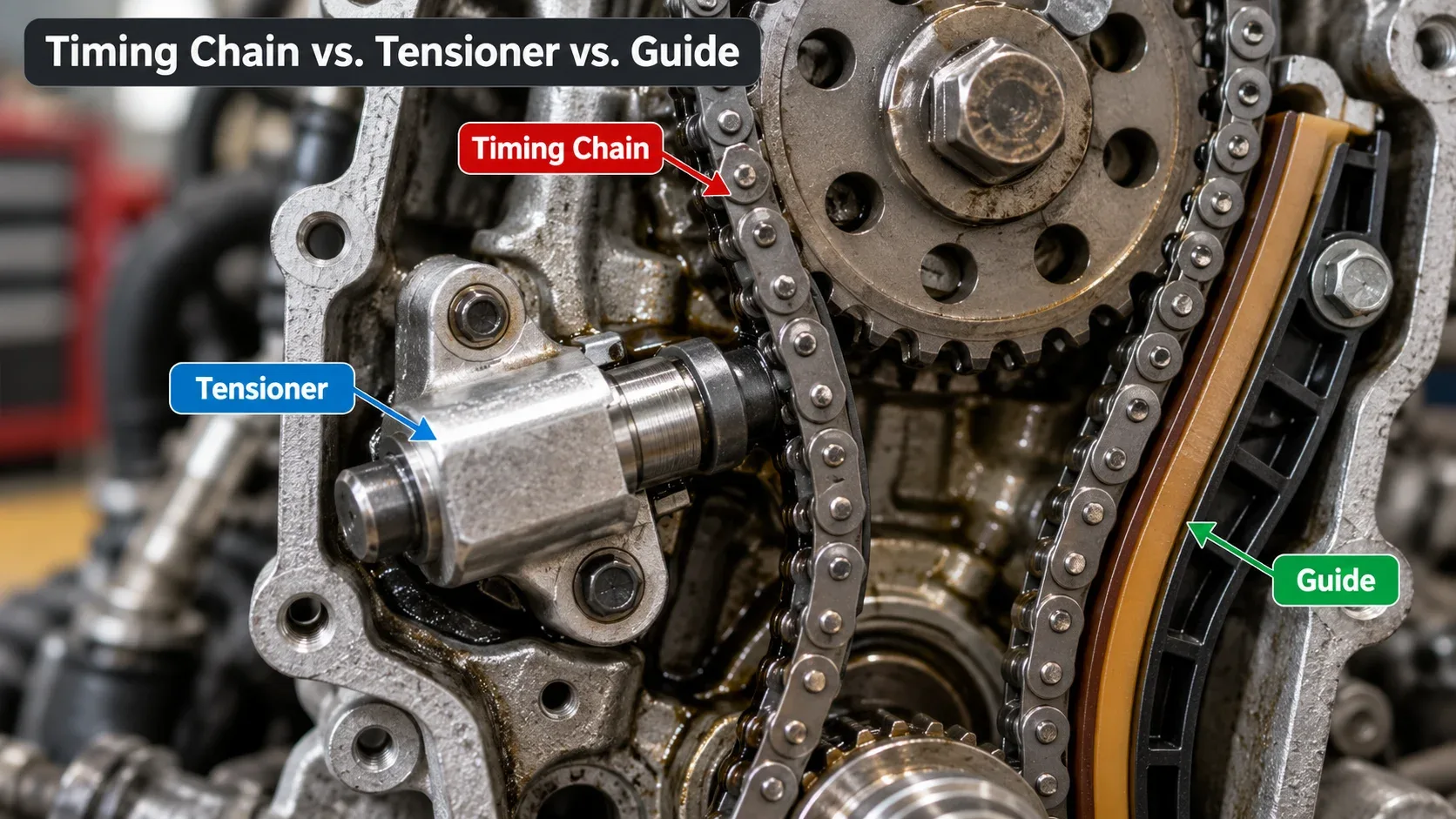
A fault in one component can produce symptoms similar to those caused by a worn chain.
| Component | Possible Failure | Potential Result |
|---|---|---|
| Timing chain | Excessive wear or elongation | Incorrect mechanical timing |
| Tensioner | Insufficient tension control | Excess movement or rattling |
| Guide | Wear, cracking, or breakage | Noise or debris |
| Sprocket | Damage or worn teeth | Poor chain engagement |
| Oil supply | Inadequate lubrication or pressure | Accelerated wear or tensioner issues |
Can a Timing Chain Tensioner Be Replaced Separately?
Sometimes, depending on the engine and the condition of the associated components.
A technician should confirm the cause and review the manufacturer’s requirements before deciding whether a component-specific repair is appropriate.
Repair insight: A recommendation to replace the complete timing assembly should be supported by inspection findings or manufacturer service procedures.
Can You Drive With a Bad Timing Chain?
Driving with a seriously compromised timing system can be risky.
If the timing chain jumps teeth or breaks, the crankshaft and camshaft may lose their required mechanical relationship.
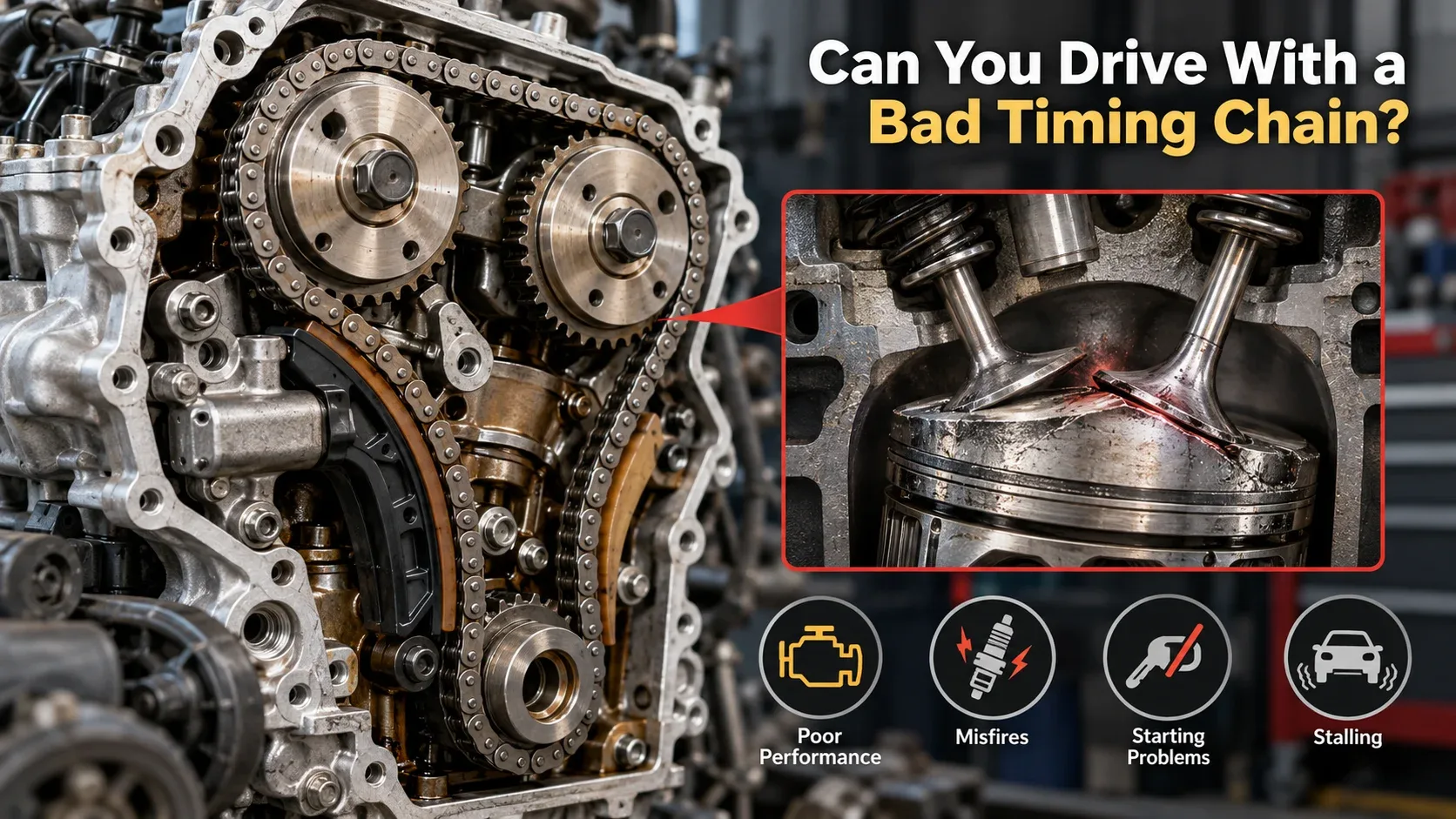
What Happens if a Timing Chain Jumps?
The engine’s valve timing may become incorrect, leading to poor performance, misfires, starting problems, or stalling.
What Happens in an Interference Engine?
In an interference engine, the valves and pistons occupy overlapping areas at different points in the engine cycle.
Correct mechanical timing prevents these components from making contact during normal operation.
If the timing relationship is severely disrupted, pistons and valves may collide. This can cause bent valves or other internal damage.
Important safety warning: If the engine develops severe metallic rattling, major performance problems, repeated stalling, or suspected mechanical timing failure, stop driving when safe and arrange professional assistance.
If the timing chain may have jumped or broken, avoid repeatedly attempting to start the engine.
How Mechanics Diagnose Timing Chain Problems
Timing chain problems should be diagnosed systematically because many engine faults produce similar symptoms.
The correct approach depends on the engine design, reported symptoms and manufacturer procedures.
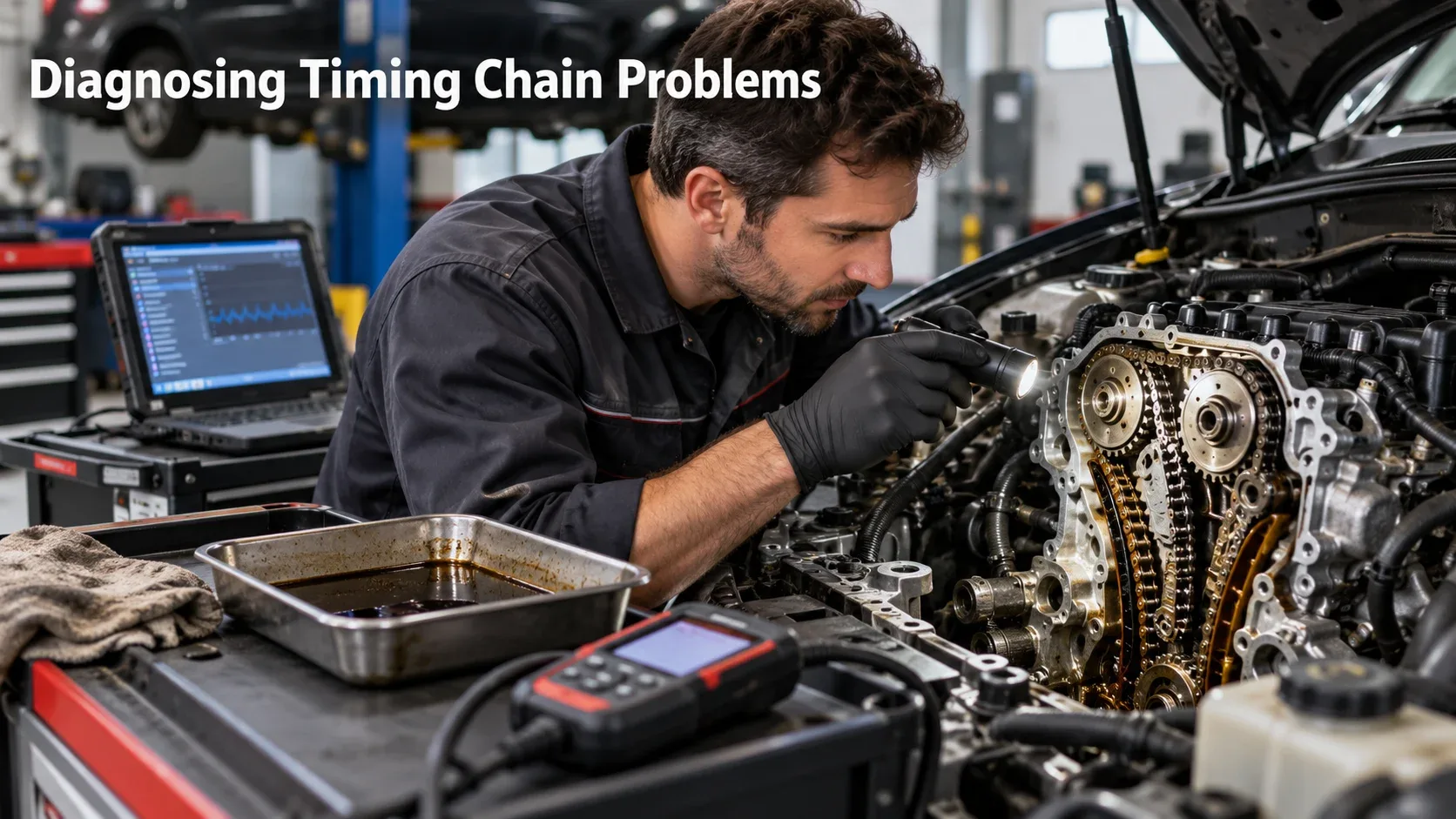
A thorough diagnosis helps identify whether the chain, tensioner, lubrication system or another component is responsible for the symptoms.
Review the Symptoms
Determine when the noise occurs, whether performance has changed, and whether symptoms are affected by temperature or operating conditions.
Examine Maintenance History
Review mileage, oil-change records, previous repairs, and applicable manufacturer service information.
Check Oil Conditions
Evaluate oil level, condition and pressure where appropriate. Lubrication problems may influence timing-system operation.
Scan for Trouble Codes
Retrieve diagnostic codes and relevant operating data using suitable diagnostic equipment.
Evaluate Camshaft and Crankshaft Correlation
Analyze timing-related signals or scan-tool data using manufacturer-approved procedures.
Inspect Mechanical Components
When preliminary testing indicates a mechanical timing fault, inspect the chain, guides, tensioner, and related components as required.
Confirm the Repair Scope
Identify the defective parts, review relevant service requirements, and explain the findings before replacement begins.
Do Codes P0016 and P0017 Mean a Bad Timing Chain?
Not necessarily. These codes can indicate camshaft/crankshaft position correlation problems on applicable vehicles.
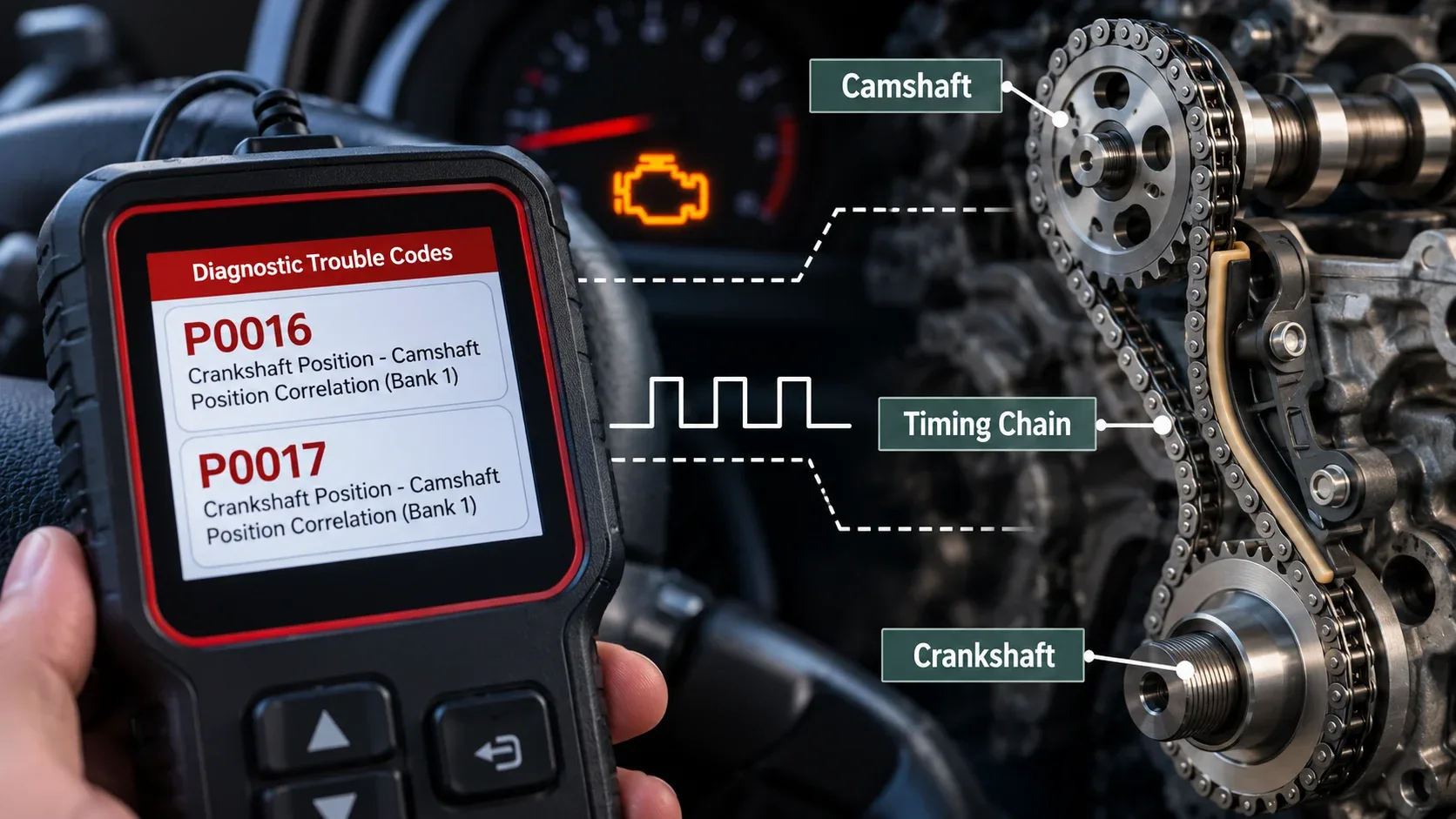
Sensor faults, wiring issues, variable valve timing problems, oil-control conditions, and mechanical timing faults must be distinguished.
A diagnostic trouble code is an important clue, not a complete diagnosis.
Timing Chain Replacement: Step-by-Step Overview
Timing chain replacement is an advanced engine repair that requires correct crankshaft and camshaft positioning.
The following overview describes a typical professional process. Actual steps and specifications must come from the manufacturer’s service instructions.
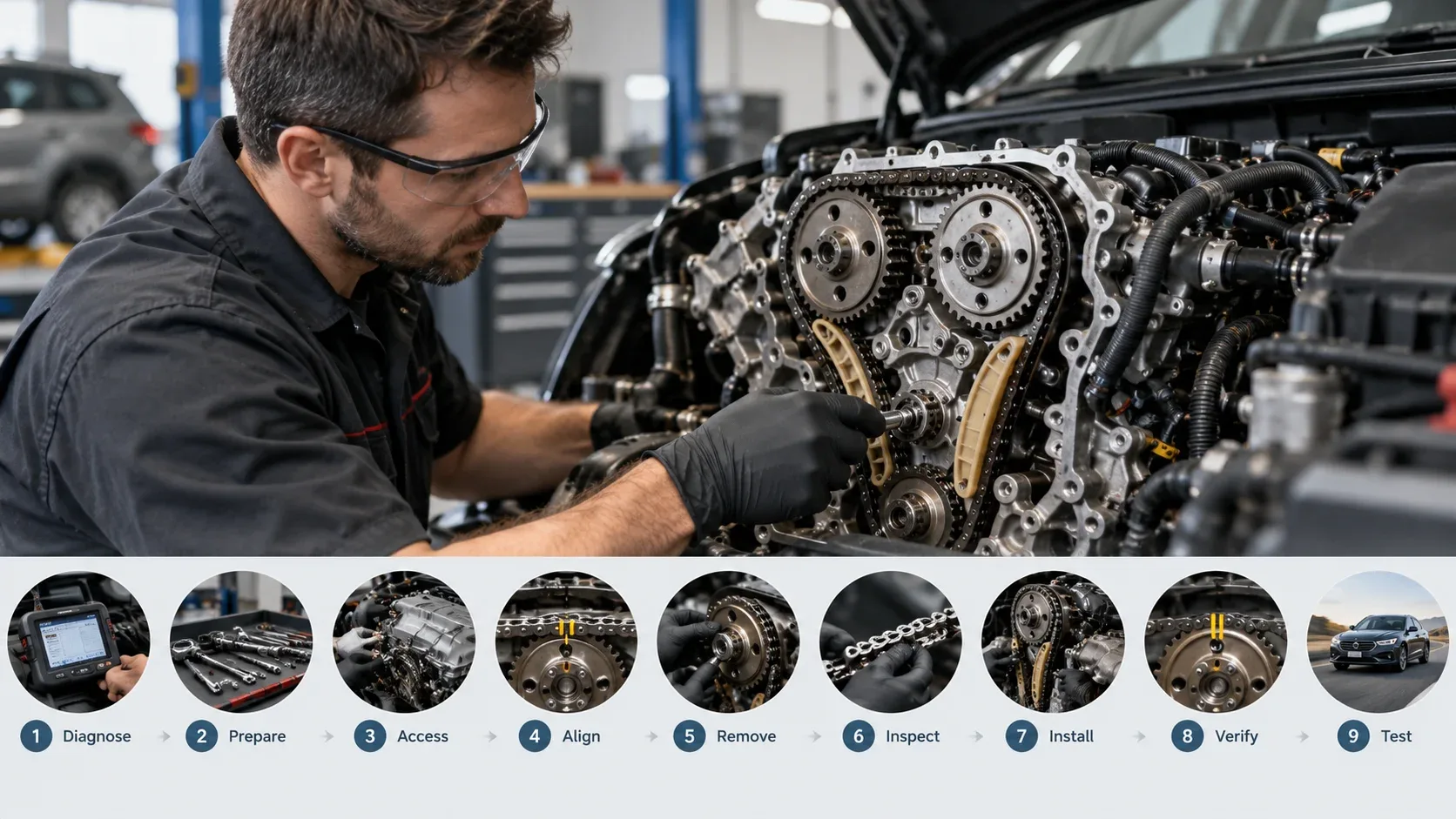
The following steps describe the main stages of a professional timing-chain replacement.
Confirm the Diagnosis
Verify which components are defective and identify the correct repair procedure.
Prepare the Engine
Secure the vehicle and follow the specified electrical, fluid, and engine preparation procedures.
Access the Timing Assembly
Remove the relevant covers, accessories, and other components necessary to reach the chain.
Position the Engine Correctly
Use the manufacturer’s specified crankshaft and camshaft positioning procedure and special tools where necessary.
Remove the Old Components
Remove the required timing parts according to the engine-specific service sequence.
Inspect Related Components
Check guides, sprockets, tensioners, and associated parts for damage or wear.
Install Replacement Components
Fit the specified parts using the required timing, tensioning, and fastener procedures.
Verify Mechanical Timing
Carry out the required timing checks before starting the engine.
Reassemble and Test
Reinstall removed components, check for leaks, review diagnostic data, and verify correct operation.
Repair caution: Incorrect timing-chain installation can cause serious internal engine damage. The repair generally requires advanced mechanical knowledge and engine-specific procedures.
Should You Replace the Chain, Tensioner, or Complete Kit?
The appropriate repair depends on which parts have failed and whether associated components remain serviceable.
When a Component-Specific Repair May Work
- The defective component has been confirmed.
- Other timing parts remain within specification.
- Manufacturer guidance permits the approach.
- Mechanical timing can be correctly restored.
When a Broader Repair May Be Necessary
- The chain has excessive wear or elongation.
- Several guides or tensioners are damaged.
- Sprockets show relevant defects.
- Manufacturer procedures require associated replacements.
A mechanic should explain the condition of the parts and the reasoning behind the recommended repair.
Timing Chain vs. Timing Belt: What’s the Difference?
Both timing chains and timing belts synchronize crankshaft and camshaft rotation.
However, they differ in construction, lubrication, maintenance, and typical service requirements.
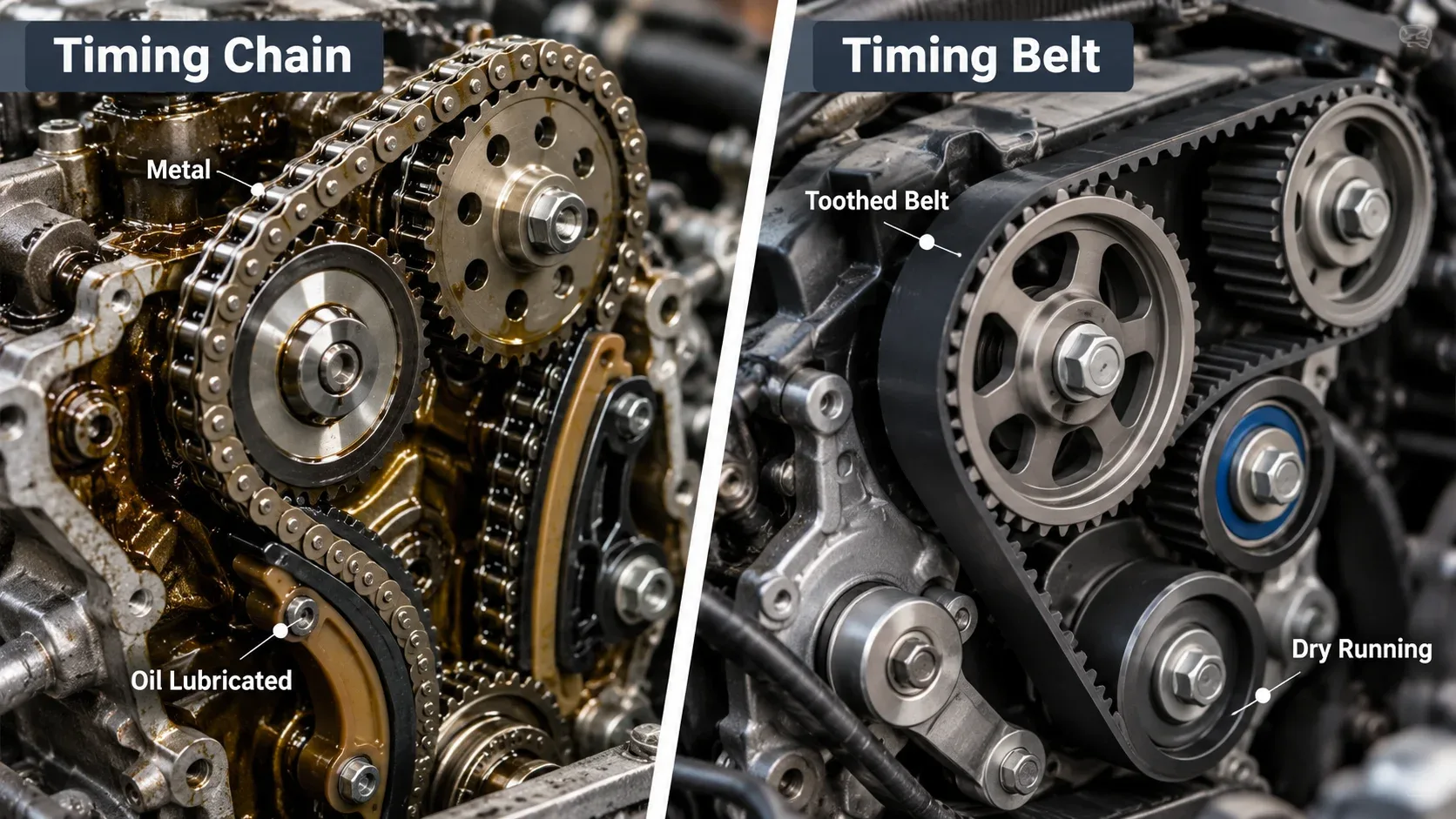
| Feature | Timing Chain | Timing Belt |
|---|---|---|
| Material | Metal | Reinforced toothed belt |
| Lubrication | Usually engine oil | Usually dry-running |
| Maintenance | Often no fixed replacement interval | Often scheduled replacement |
| Related components | Guides, tensioners, sprockets | Idlers, tensioners, pulleys |
| Common issues | Wear, guide damage, tensioner faults | Aging, wear, tensioning problems |
A timing chain may be designed for long-term service, but it is not immune to mechanical wear.
Check your specific engine configuration before following any maintenance advice.
How Long Does a Timing Chain Last?
There is no universal mileage at which every timing chain must be replaced.
Some engines operate for very high mileage without timing-chain replacement, while others develop problems earlier.
Can a Timing Chain Last 200,000 Miles?
Yes. Some timing chains can last 200,000 miles or longer.
However, that figure is not a guarantee for every engine.
What Can Shorten Timing Chain Life?
- Inadequate lubrication
- Incorrect engine oil
- Neglected maintenance
- Faulty tensioners
- Worn or damaged guides
- Engine-specific mechanical weaknesses
- Unaddressed internal engine problems
Maintenance reminder: Follow the inspection and service requirements applicable to your vehicle rather than assuming every timing chain has the same lifespan.
How to Reduce the Risk of Timing Chain Problems
Proper maintenance cannot eliminate every timing-system failure, but it can help reduce avoidable wear.
Use the Correct Engine Oil
Follow the oil grade and specification recommended by the vehicle manufacturer.
Follow Oil Change Intervals
Change oil and filters according to the appropriate maintenance schedule and operating conditions.
Check Oil Level Regularly
Monitor the oil level using the manufacturer’s recommended procedure, particularly if the engine consumes oil between services.
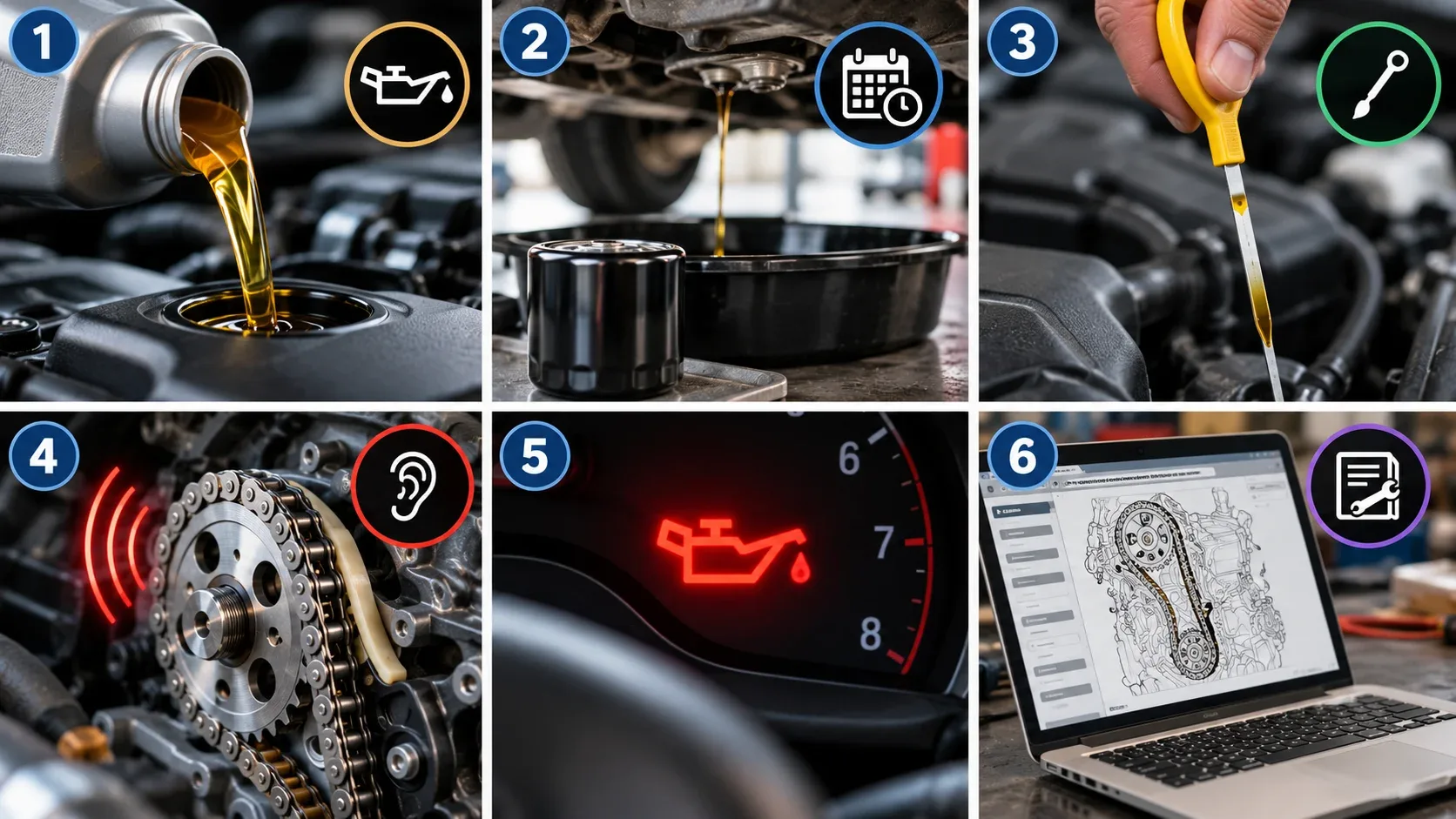
Investigate Unusual Engine Sounds
Do not ignore new or worsening metallic rattling. Arrange an inspection when symptoms appear.
Respond to Oil-Pressure Warnings
Inadequate oil pressure may damage critical engine components. Follow the vehicle’s warning instructions and avoid continuing to operate an engine with a suspected lubrication failure.
Check Manufacturer Service Information
Some engines have relevant service bulletins, revised parts, or special diagnostic procedures.
Use the exact vehicle year, make, model, engine, and VIN when researching model-specific guidance.
Questions to Ask Your Mechanic
Before approving a timing-system repair, request a clear explanation of the diagnosis and the proposed work.
- What confirms the timing-system problem?
- Which specific component has failed?
- What diagnostic trouble codes were found?
- Have the tensioners and chain guides been inspected?
- Is there evidence of internal engine damage?
- What components require replacement?
- Does the procedure follow manufacturer guidance?
- How will the repair be verified?
- What warranty applies to the completed work?
A reliable repair recommendation should explain the connection between the symptoms, diagnostic findings, and required work.
Frequently Asked Questions About Timing Chain Problems
What are the first signs of a bad timing chain?
Possible signs include startup rattling, rough engine operation, and certain timing-related diagnostic codes. These symptoms require further testing.
Can a timing chain cause a check engine light?
Yes. Mechanical timing faults can contribute to camshaft and crankshaft correlation problems, although sensors, wiring, and variable valve timing issues are also possible.
Does a bad timing chain always make noise?
No. Some timing faults produce noticeable rattling, while others may initially appear as running problems or diagnostic fault codes.
Can a timing chain jump without breaking?
Yes. A chain may jump teeth without breaking if the timing system develops a serious mechanical problem.
Can you drive with a worn timing chain?
Continued driving can be risky when mechanical timing is compromised. Severe noise, stalling, or major running problems warrant prompt professional attention.
Can a timing chain damage an engine?
Yes. Severe timing loss can cause internal damage, including piston-to-valve contact in certain interference engines.
Can a timing chain tensioner be replaced separately?
Sometimes. It depends on the diagnosed fault, the condition of associated parts, and manufacturer service requirements.
Can a timing chain last 200,000 miles?
Some chains last 200,000 miles or longer, but there is no guaranteed lifespan for all engines.
Is timing chain replacement a DIY repair?
It is generally an advanced mechanical repair that requires specialized knowledge and engine-specific procedures. Incorrect installation can cause serious damage.
Can incorrect engine oil affect the timing chain?
Yes. Correct lubrication is essential, and some tensioners depend on appropriate oil pressure for operation.
Timing Chain Problems Should Be Diagnosed Before Parts Are Replaced
A timing chain plays a critical role in keeping engine components synchronized. When the timing system develops a serious problem, the results can range from unusual engine noise to major mechanical damage.
However, rattling, rough idling, poor performance, or a check engine light does not automatically mean the chain itself has failed.
Faulty tensioners, damaged guides, oil-related conditions, and other engine problems can produce similar symptoms.
The best approach is to recognize the warning signs, avoid driving when serious symptoms appear, and obtain an accurate diagnosis before approving major repairs.
A lasting timing-system repair begins with identifying the real cause of the problem.