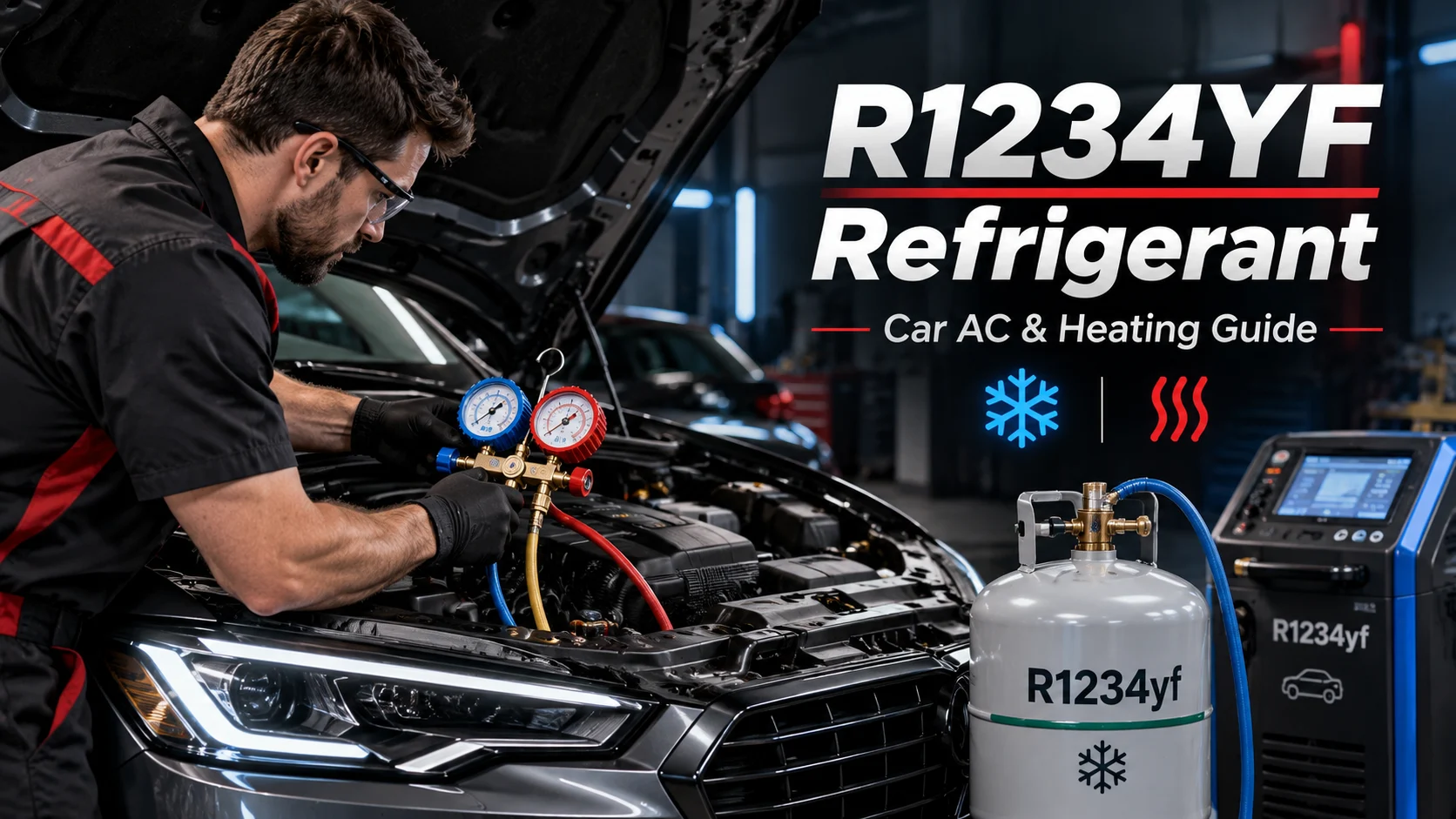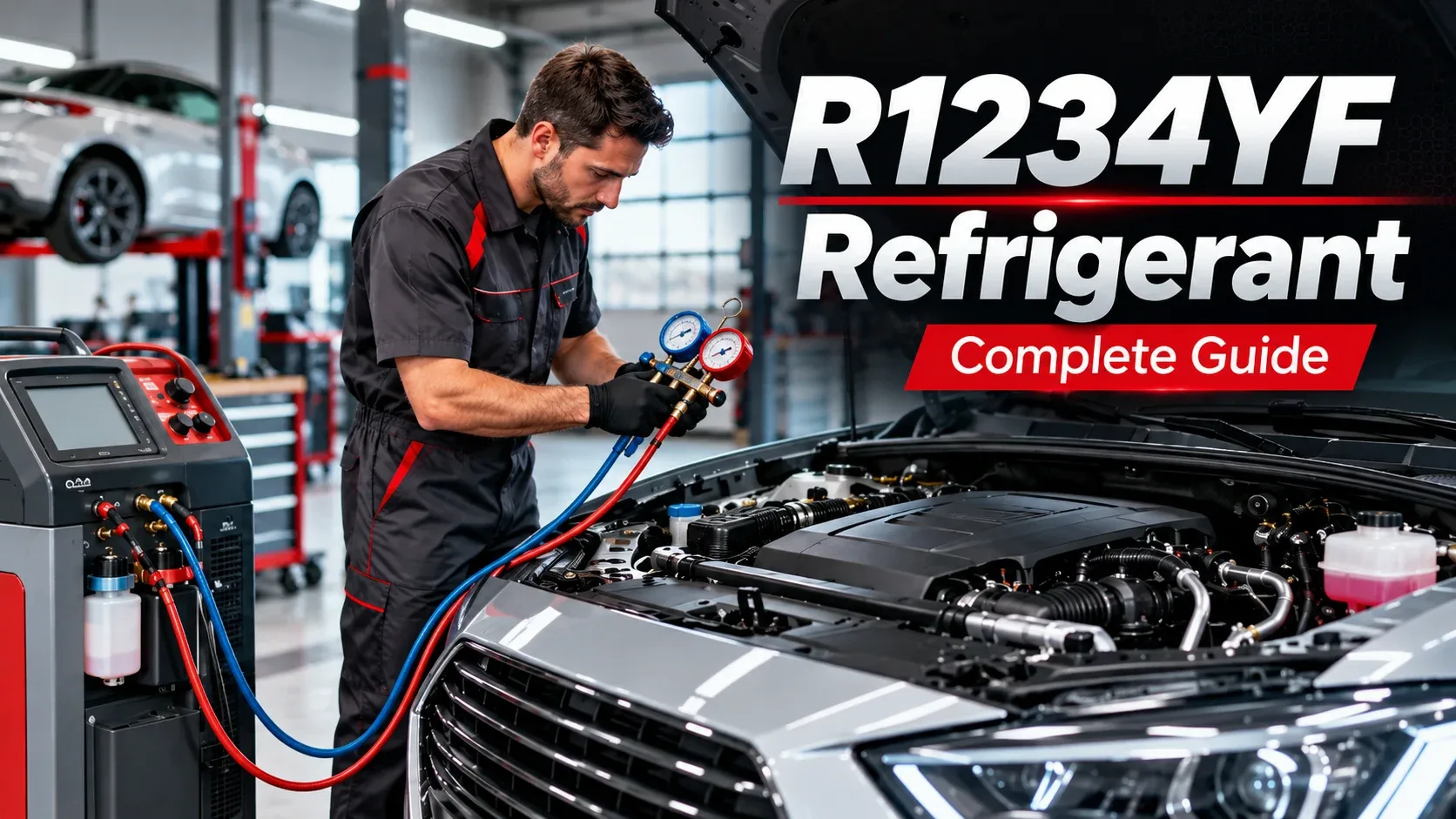
Your car’s air conditioning system depends on the correct refrigerant to keep the cabin comfortable. In many modern vehicles, that refrigerant is R1234yf.
If you’ve seen R1234yf refrigerant on a label under your hood, you may wonder how it differs from older R134a refrigerant, whether it’s safe, and why servicing it can be expensive.
This guide explains what R1234yf does, how it works, how to identify potential AC problems, and what to expect from a professional refrigerant recharge. We’ll also clarify its relationship with your car’s heating system.
Quick Answer: What Is R1234yf Refrigerant?
R1234yf, also called HFO-1234yf, is a refrigerant used in many modern automotive air conditioning systems. It absorbs heat from inside the vehicle and releases that heat outside.
Its primary environmental advantage over R134a is its much lower global warming potential. However, R1234yf is classified as mildly flammable (A2L), requires compatible service equipment, and must not be mixed with R134a.
What Is R1234yf Refrigerant?
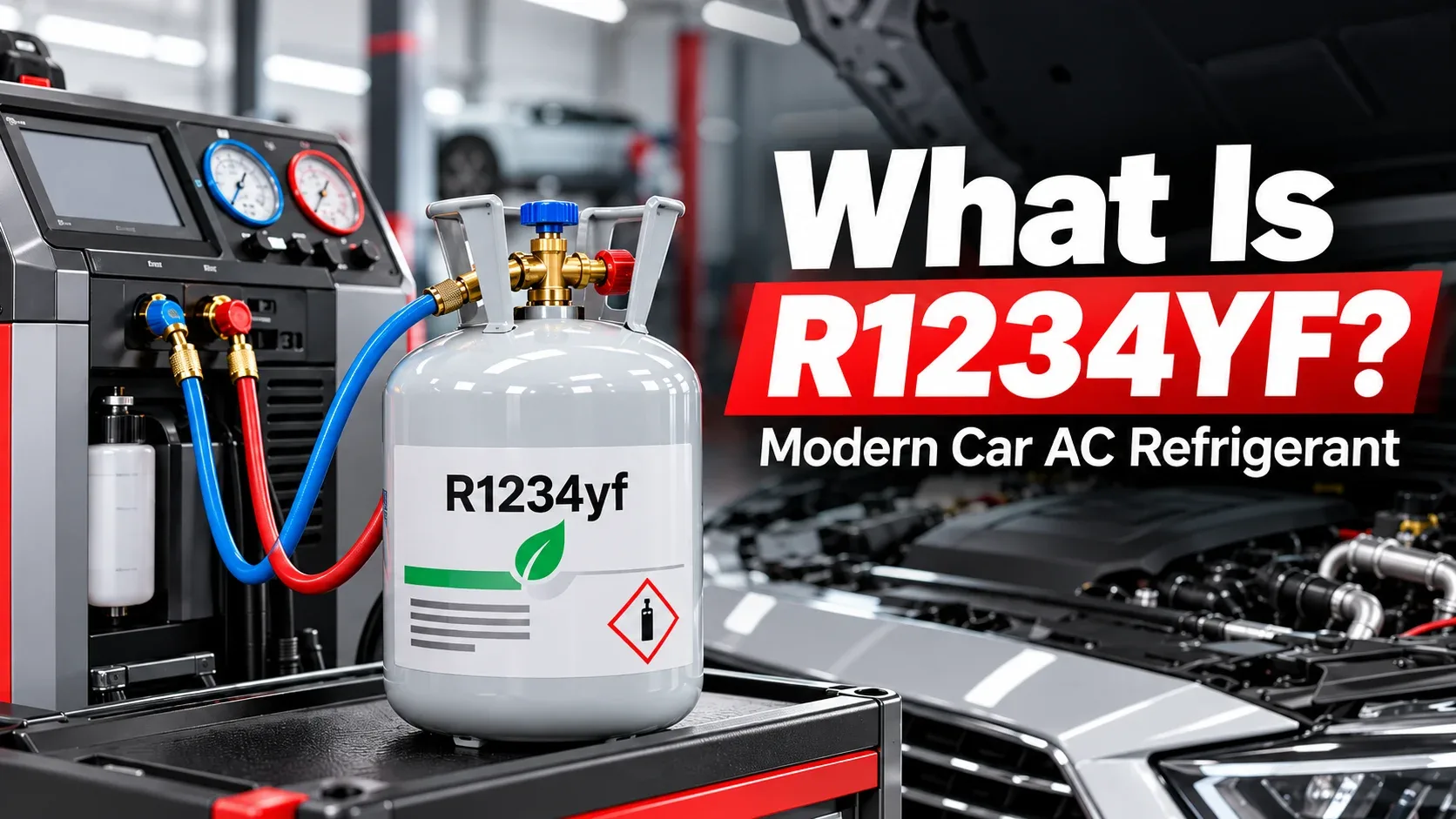
R1234yf refrigerant is a chemical designed to transfer heat in automotive air conditioning systems. Its technical name is 2,3,3,3-tetrafluoropropene, and it belongs to the hydrofluoroolefin (HFO) family.
A refrigerant doesn’t create cold air by itself. Instead, it repeatedly changes pressure, temperature, and physical state as it moves through the AC system. These changes allow the system to remove heat from your vehicle’s interior.
Why Do Newer Cars Use R1234yf?
For many years, R134a was widely used in passenger vehicles. Although effective for cooling, it has a relatively high global warming potential if released into the atmosphere.
R1234yf was introduced as a lower-impact alternative. Automotive manufacturers redesigned their AC systems to accommodate its properties and meet changing environmental requirements.
According to the US Environmental Protection Agency, R1234yf has a global warming potential of approximately 4, compared with 1,430 for R134a using the EPA’s published comparison values.
Does R1234yf Damage the Ozone Layer?
R1234yf has zero ozone depletion potential. It contains no chlorine, which was associated with ozone depletion from older refrigerants such as R12.
That doesn’t mean refrigerant should be released into the environment. Proper recovery and handling remain important for safety and environmental protection.
How Does R1234yf Refrigerant Work in a Car?

Your car’s AC system moves heat from inside the cabin to the surrounding air. R1234yf circulates through a sealed network of components, absorbing and releasing heat as its pressure and temperature change.
Main Components of an R1234yf AC System
| Component | What It Does |
|---|---|
| AC Compressor | Compresses refrigerant vapor, increasing its pressure and temperature. |
| Condenser | Releases heat to outside air and condenses refrigerant into liquid. |
| Expansion Device | Reduces refrigerant pressure before it enters the evaporator. |
| Evaporator | Absorbs heat from cabin air as refrigerant evaporates. |
| Refrigerant Lines | Carry refrigerant between AC components. |
| Sensors | Help the vehicle monitor system pressure, temperature, and operation. |
The Refrigeration Cycle Explained
- Compression The compressor draws in low-pressure refrigerant vapor and compresses it into high-pressure, high-temperature vapor.
- Condensation Hot refrigerant travels through the condenser. Outside airflow removes heat, causing much of the refrigerant to become liquid.
- Expansion The expansion device lowers refrigerant pressure, producing a colder mixture before it enters the evaporator.
- Evaporation Refrigerant absorbs heat from cabin air passing across the evaporator and returns toward the compressor as vapor.
Important: Refrigerant Is Not Fuel
A correctly functioning AC system recirculates refrigerant rather than consuming it. If the charge has become low, a leak or previous servicing issue may be responsible.
R1234yf vs R134a: What’s the Difference?
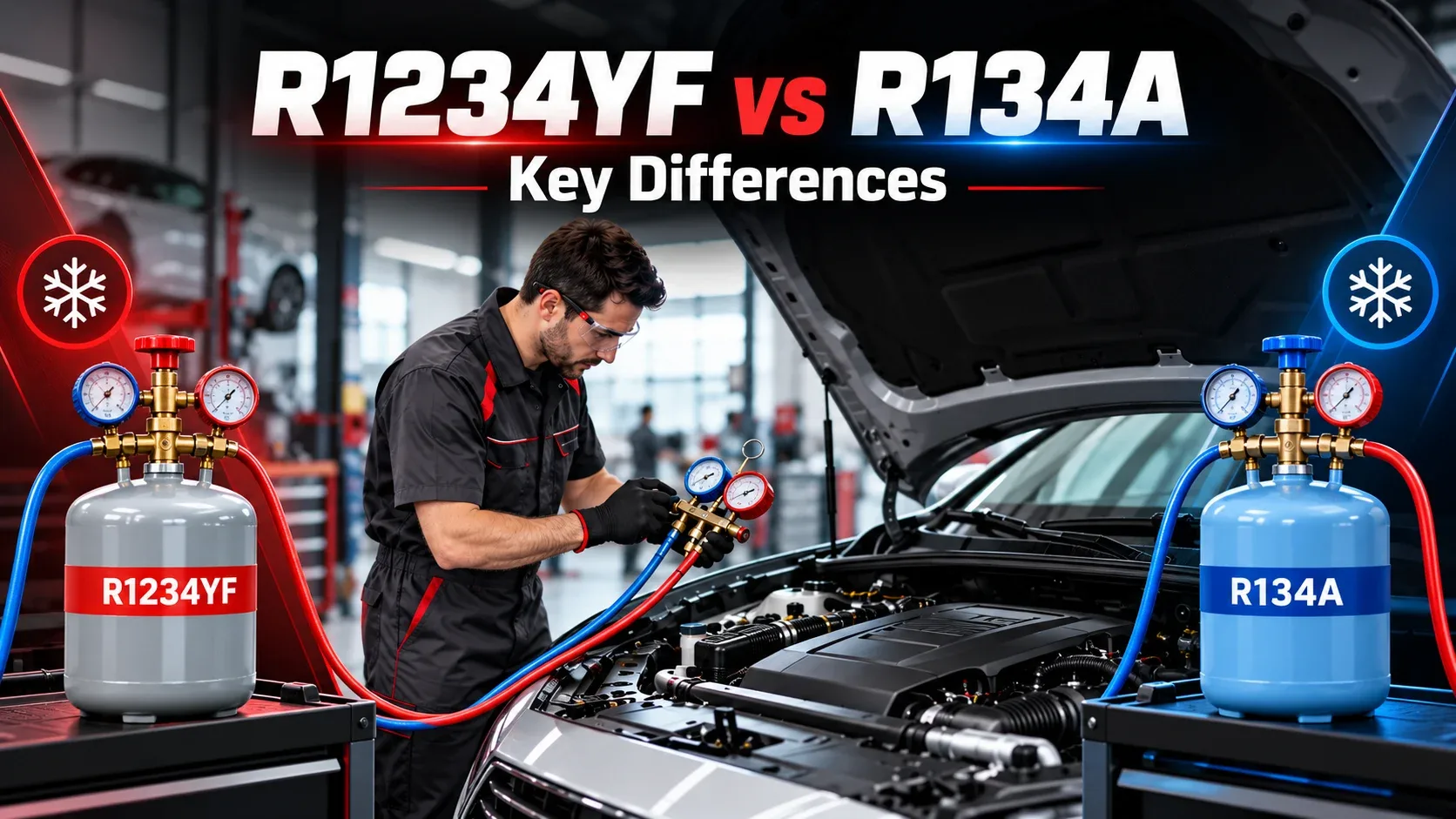
R1234yf and R134a perform similar cooling functions, but they are chemically different refrigerants with different environmental characteristics, safety classifications, and servicing requirements.
| Feature | R1234yf | R134a |
|---|---|---|
| Chemical Family | HFO | HFC |
| Global Warming Potential | 4 | 1,430 |
| Ozone Depletion Potential | Zero | Zero |
| Safety Classification | A2L, mildly flammable | A1, no flame propagation under standard test conditions |
| Common Vehicle Use | Many newer vehicles | Many older vehicles |
| Service Equipment | R1234yf-compatible equipment | R134a-compatible equipment |
| Typical Servicing Expense | Often higher | Often lower |
| Directly Interchangeable? | No | No |
Can You Put R134a in an R1234yf System?
No. R134a should not be used as a direct substitute for R1234yf. Vehicles are designed around particular refrigerant characteristics, fittings, lubricants, and safety requirements.
Mixing refrigerants can contaminate an AC system and professional recovery equipment, create servicing complications, and affect system performance.
Never mix R1234yf and R134a or use fitting adapters to bypass incompatible service connections. Always follow the vehicle manufacturer’s refrigerant specification.
How to Tell If Your Car Uses R1234yf Refrigerant
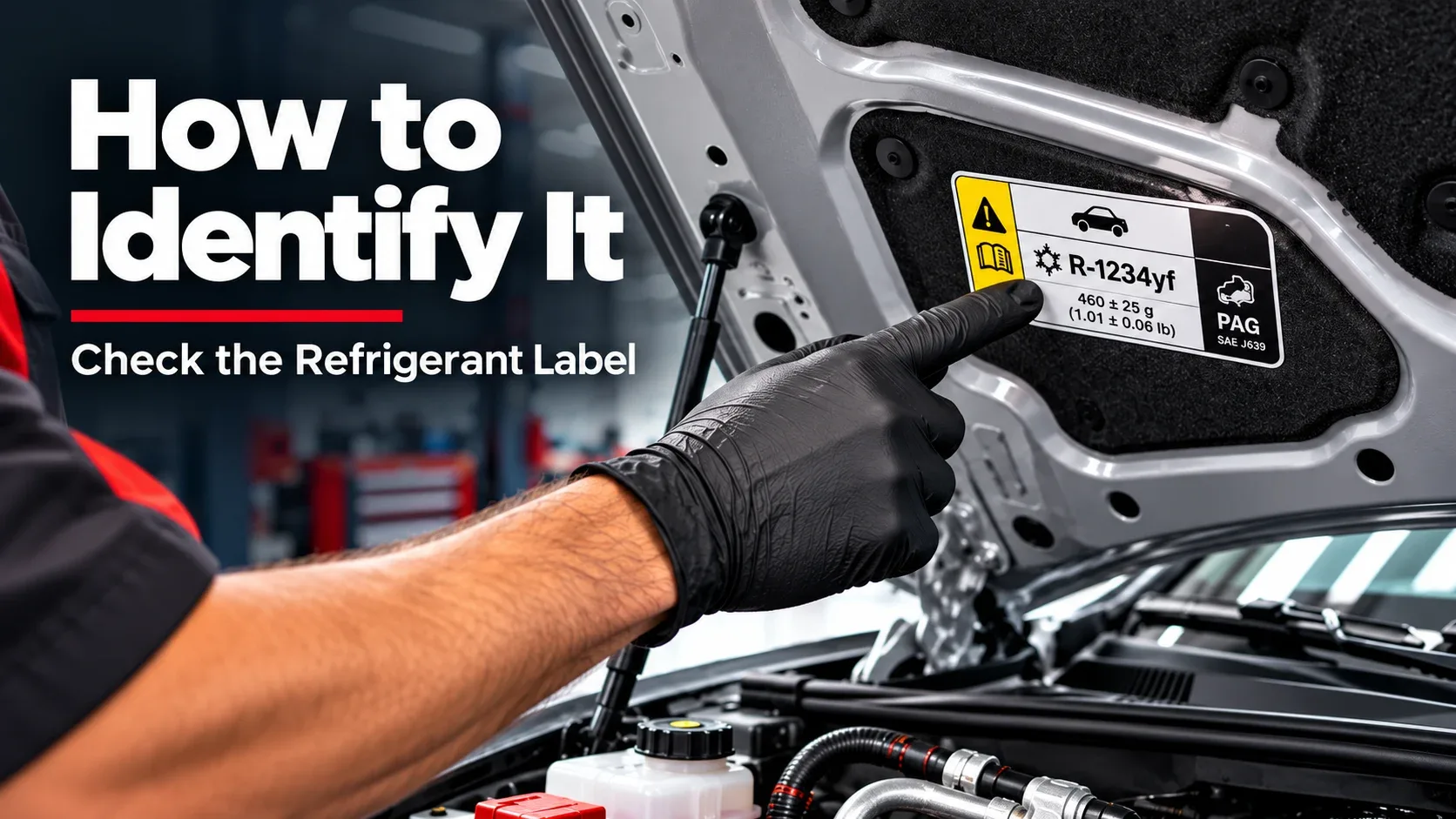
Not every modern car uses the same refrigerant. The safest way to identify the correct type is to check information supplied by the vehicle manufacturer.
- Check the Under-Hood Label Look for an air conditioning information label in the engine compartment. It commonly identifies the refrigerant type and specified charge weight.
- Read the Owner’s Manual Some owner’s manuals include refrigerant information or direct you to an under-hood service label.
- Verify the Exact Vehicle Configuration Use manufacturer service information for the correct make, model, year, engine, and equipment configuration.
- Consult a Qualified AC Technician A service shop can verify the refrigerant specification before performing work.
Do All Cars Made After 2017 Use R1234yf?
No. Although R1234yf became increasingly common during the automotive industry’s refrigerant transition, adoption varied by manufacturer, model, market, and production year.
Model year alone is not a reliable method of identification. Always verify the refrigerant label or original manufacturer specifications.
What Does the Refrigerant Label Tell You?
An AC label may show the refrigerant designation, specified charge quantity, applicable lubricant information, and relevant warnings. These details help technicians service the system correctly.
Signs Your R1234yf AC System May Have a Problem

A vehicle with low refrigerant may deliver weak cooling, but reduced AC performance doesn’t always mean the system needs a recharge.
Compressor faults, condenser airflow restrictions, blend-door problems, cooling fans, and electrical issues can create similar symptoms.
Common Symptoms to Watch For
- Warm air from the vents: The AC cannot remove enough heat from the cabin.
- Weak cooling at idle: Insufficient condenser airflow or other AC faults may affect cooling performance.
- Intermittent cooling: Cooling cycles unexpectedly or varies under similar driving conditions.
- Compressor not operating: Protection controls or electrical faults may prevent operation.
- Oily residue around connections: Some leaks leave traces of refrigerant oil.
- Repeated cooling loss: Refrigerant loss may indicate a leak requiring diagnosis.
AC Troubleshooting Guide
| Symptom | Possible Causes | Recommended Action |
|---|---|---|
| Warm Air | Low refrigerant, compressor problem, electrical fault | Arrange an AC diagnosis. |
| Weak Cooling at Idle | Condenser fan, airflow, or system issue | Have fan operation and system performance checked. |
| Intermittent Cooling | Sensor, control, compressor, or refrigerant issue | Request professional diagnosis. |
| Repeated Cooling Loss | Possible refrigerant leak | Have the system leak-tested and repaired. |
| Weak Vent Airflow | Clogged cabin filter or blower problem | Check filter and blower condition. |
Vent temperature alone cannot determine the correct refrigerant charge. A technician should identify the underlying problem before adding refrigerant.
How Is an R1234yf AC System Recharged?

An R1234yf recharge should be performed using equipment and procedures approved for the refrigerant and the specific vehicle.
Unlike adding windshield washer fluid, refrigerant servicing involves a pressurized system with strict charge quantities, contamination concerns, and safety requirements.
What Happens During Professional AC Service?
- System Inspection A technician reviews the symptoms, checks components, and confirms the manufacturer’s refrigerant specification.
- Refrigerant Identification Appropriate equipment may be used to identify refrigerant and assess the system before recovery or charging.
- Refrigerant Recovery Existing refrigerant is recovered with approved equipment instead of being intentionally vented.
- Leak Testing and Repair The technician looks for leaks and addresses identified faults.
- Evacuation and Charging The system is prepared and charged with the manufacturer-specified refrigerant quantity.
- Performance Verification Cooling performance and relevant operating parameters are checked after servicing.
Can You Recharge R1234yf Yourself?
Some consumer refrigerant products are available, but availability doesn’t mean a home recharge is suitable for every vehicle or problem.
An incorrect charge, contaminated refrigerant, unrecognized leak, or improper handling can cause additional damage or safety risks.
In the United States, technicians servicing motor vehicle AC systems for compensation generally need EPA Section 609 certification, and approved equipment must be used where required.
How Much Does R1234yf Refrigerant Service Cost?

R1234yf servicing can cost more than servicing an older R134a system. The total depends on refrigerant quantity, local labor rates, equipment requirements, diagnostic time, and whether repairs are needed.
What Determines the Final Service Price?
| Cost Factor | Why It Matters |
|---|---|
| Refrigerant Quantity | Different vehicles require different specified charge weights. |
| Material Price | R1234yf is commonly more expensive than R134a. |
| Diagnostic Labor | Finding weak cooling or a leak may require additional testing. |
| Specialized Equipment | Compatible recovery and recharge machines are an investment for service shops. |
| Leak Repair | Replacing seals, damaged lines, or components adds parts and labor. |
| Vehicle Design | Some systems are more complex or difficult to access. |
Why Is R1234yf More Expensive Than R134a?
The price difference comes partly from refrigerant production and supply costs, as well as specialized servicing equipment and procedures.
A basic recharge and a complete leak repair are very different services. The lowest advertised recharge price may not include proper diagnosis or repairs.
How to Evaluate an AC Service Quote
Ask whether the estimate includes refrigerant identification, leak inspection, recovery, the correct refrigerant charge, labor, and a post-service performance test.
Request an itemized estimate and obtain current local quotes rather than relying on a universal cost figure.
Is R1234yf Refrigerant Safe and Flammable?

R1234yf is classified as A2L, mildly flammable, under refrigerant safety classification standards. This means it has a different ignition-related safety profile than R134a.
The classification does not mean that a properly designed and maintained R1234yf vehicle AC system is inherently unsafe. Manufacturers incorporate safety measures and specific system components to manage relevant risks.
Important Safety Considerations
- Flammability: Avoid flames, sparks, and ignition sources during refrigerant handling.
- High Pressure: Refrigerant-containing components may remain pressurized when the AC is off.
- Cold Exposure: Escaping liquid refrigerant can cause frostbite-like injuries.
- Ventilation: Refrigerant leaks can create exposure risks in poorly ventilated spaces.
- Thermal Decomposition: Extreme heat or fire can generate hazardous decomposition products.
- Equipment Compatibility: Suitable refrigerant recovery and servicing tools are essential.
Do not intentionally vent refrigerant, cut into charged refrigerant lines, heat refrigerant containers, or connect incompatible charging equipment. Pressurized refrigerant systems should be handled by appropriately trained personnel.
What About Refrigerant Leaks?
A leaking system should be inspected and repaired. Simply adding more refrigerant without addressing the source of a leak may lead to repeated failures and unnecessary expense.
Does R1234yf Refrigerant Affect Car Heating?

The relationship between R1234yf and cabin heating depends on how the vehicle’s climate control system is designed.
Heating in Conventional Gasoline and Diesel Cars
In many conventional vehicles, the heater uses hot engine coolant. The coolant flows through a heater core, and a blower moves air across the heater core to warm the passenger compartment.
In this design, R1234yf is primarily associated with air conditioning rather than generating cabin heat.
The AC system may still assist with humidity management and windshield defogging by removing moisture from cabin air.
Heating in Electric Vehicles and Hybrids
Some electric and hybrid vehicles use refrigerant-based heat pumps. These systems can move heat into the cabin rather than depending entirely on waste heat from a combustion engine.
In a vehicle equipped with a heat pump that uses R1234yf, refrigerant-related problems may affect both cooling and heating performance.
| Heating System | Heat Source | R1234yf Involvement |
|---|---|---|
| Engine-Coolant Heater | Heat from engine coolant | Not the primary heat source |
| Electric Resistance Heater | Electrical heating elements | Not required for resistance heating |
| Refrigerant-Based Heat Pump | Heat transfer through a refrigerant circuit | May be essential if the system uses R1234yf |
Does Low R1234yf Cause Your Heater to Blow Cold Air?
Not necessarily. In conventional coolant-based systems, poor cabin heating is more likely related to coolant temperature, coolant flow, heater-core performance, or air-mixing controls.
In a refrigerant-based heat-pump system, refrigerant faults may contribute to heating problems.
How to Keep Your R1234yf AC System Working Properly
Good maintenance can help preserve cooling performance and identify minor issues before they become expensive repairs.
Practical AC Maintenance Tips
- Monitor Cooling: Investigate noticeable reductions in cooling performance.
- Replace the Cabin Air Filter: Follow the manufacturer’s maintenance schedule.
- Keep Airflow Paths Clear: Avoid letting leaves and debris obstruct accessible airflow areas.
- Address Unusual Noises: Compressor or climate-control noises may signal a problem.
- Repair Suspected Leaks: Proper diagnosis is better than repeated refrigerant top-ups.
- Follow Manufacturer Instructions: Always use the specified refrigerant and service procedures.
How Often Does R1234yf Need Replacing?
R1234yf doesn’t normally have a routine replacement interval simply because the refrigerant has aged.
The system is designed to retain and circulate its refrigerant charge. If cooling performance declines, the cause should be diagnosed rather than assuming replacement is due.
Frequently Asked Questions About R1234yf Refrigerant
Is R1234yf refrigerant better than R134a?
R1234yf has a much lower global warming potential than R134a, making it preferable from that environmental perspective. However, each refrigerant must be used in an appropriately designed system.
Can I put R134a in an R1234yf system?
No. R134a is not a direct substitute for R1234yf. Mixing or swapping refrigerants can contaminate the system and introduce compatibility or performance problems.
Is R1234yf refrigerant flammable?
Yes. R1234yf has an A2L classification, meaning it is mildly flammable. Vehicle systems incorporate safety measures, but the refrigerant still requires appropriate handling precautions.
Why is R1234yf refrigerant expensive?
R1234yf can cost more because of production and supply expenses, specialized service equipment, and professional servicing requirements.
How long does R1234yf refrigerant last?
Refrigerant circulates in a closed AC system and doesn’t normally need replacement due to age alone. Significant refrigerant loss may indicate a leak.
Can I recharge R1234yf myself?
Consumer recharge products may be available, but proper servicing requires an understanding of system safety, charge quantities, and diagnosis. Professional service is recommended.
Does low R1234yf affect car heating?
It depends on the vehicle. Conventional engine-coolant heaters generally don’t rely on R1234yf for heat, but refrigerant-based heat-pump systems may use it for heating and cooling.
How do I know if my car uses R1234yf?
Check the under-hood AC information label, owner’s manual, or manufacturer service information. Don’t determine refrigerant type solely from model year.
What happens if I overcharge my car AC system?
Excess refrigerant can affect operating pressures and cooling efficiency and may contribute to equipment damage. Systems must be charged to the manufacturer-specified quantity.
Does R1234yf damage the ozone layer?
R1234yf has zero ozone depletion potential and a much lower global warming potential than R134a. It must still be handled and recovered responsibly.
Final Thoughts on R1234yf Refrigerant
R1234yf refrigerant plays an important role in modern automotive air conditioning. It provides effective heat transfer while offering a much lower global warming potential than older R134a refrigerant.
Correct refrigerant selection, safe servicing, and accurate diagnosis are essential. R1234yf should not be mixed with R134a, and poor AC performance should not automatically be blamed on low refrigerant.
If your vehicle’s AC is blowing warm air, check its refrigerant specification and arrange a professional inspection when needed. Understanding the basics can help you make better maintenance decisions and avoid unnecessary repairs.