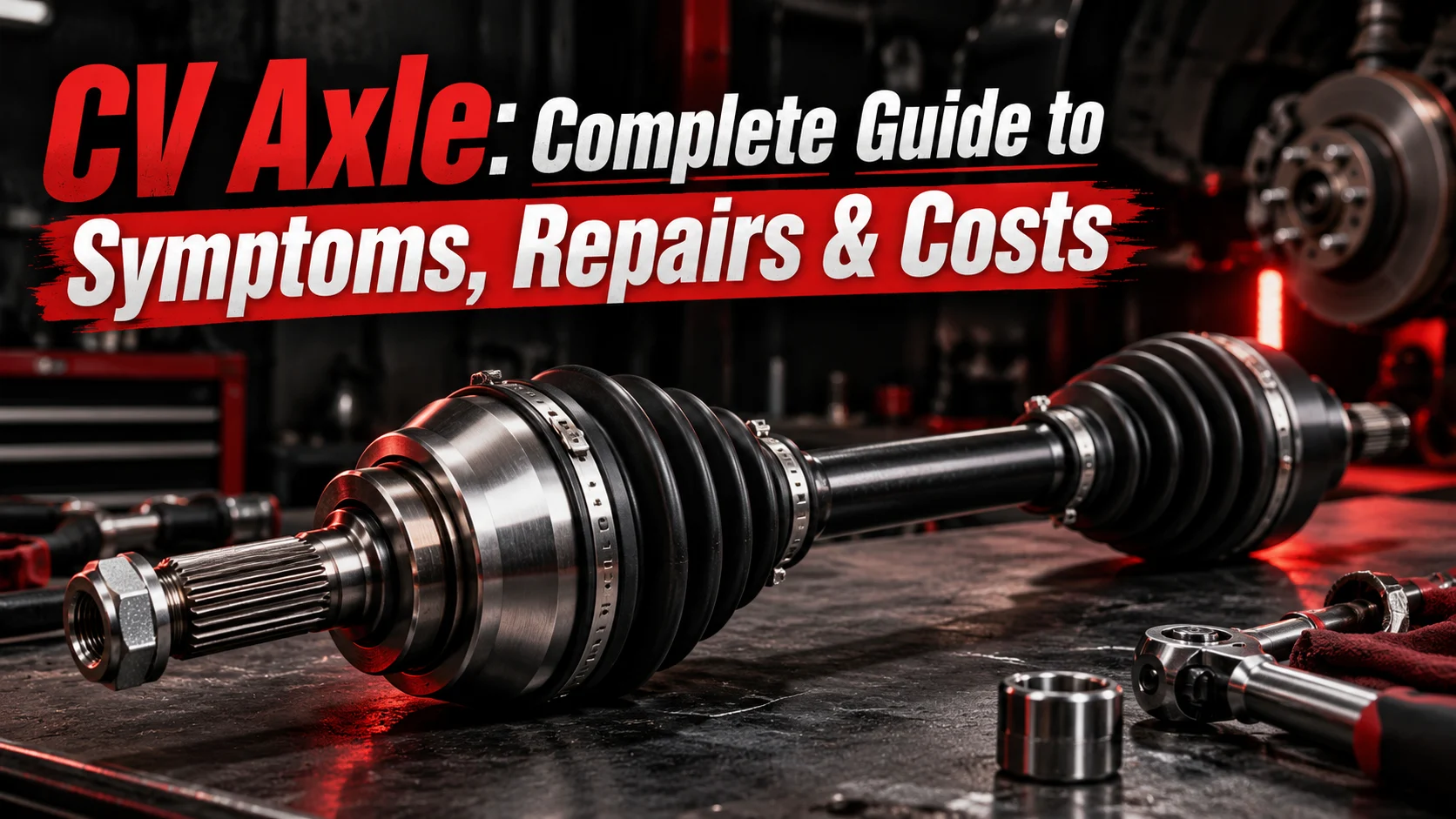
Hearing clicking when you turn or seeing grease near a wheel? Learn how CV axles work, what can go wrong, how much replacement may cost, and when it is time to stop driving.
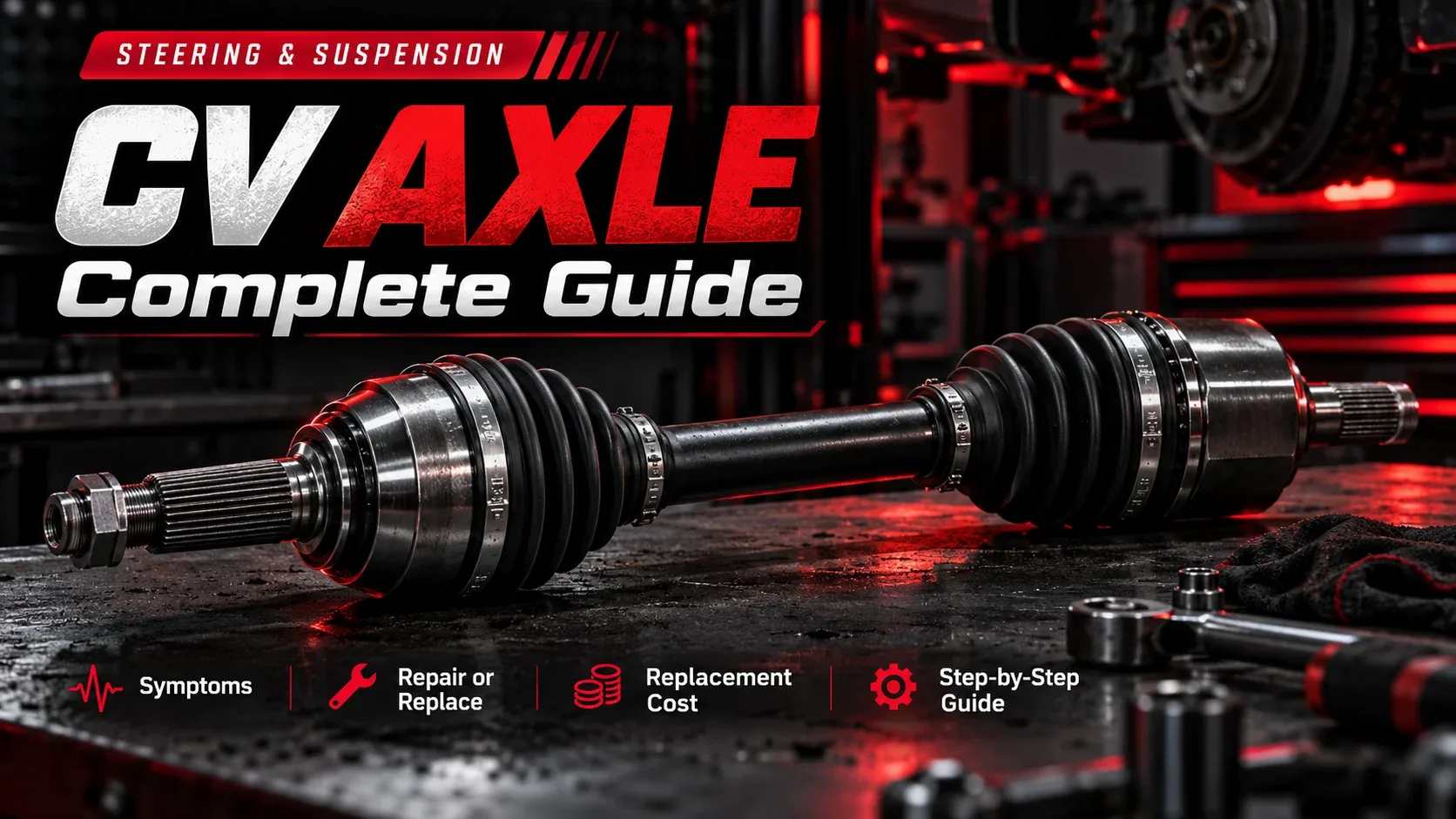
A CV axle helps transfer engine power to a driven wheel while allowing the suspension to move and, at a steering wheel, the tire to turn. A worn joint or torn protective boot can lead to clicking, shaking, or grease leaks. Because those clues overlap with other mechanical problems, the first step is confirming what actually needs attention.
What Is a CV Axle and How Does It Work?
CV stands for constant velocity. A CV axle, sometimes called a half shaft or drive axle, connects the transmission or differential to a driven wheel. Its joints transmit rotational power even when the connection changes angle as the suspension moves or the front wheels steer.
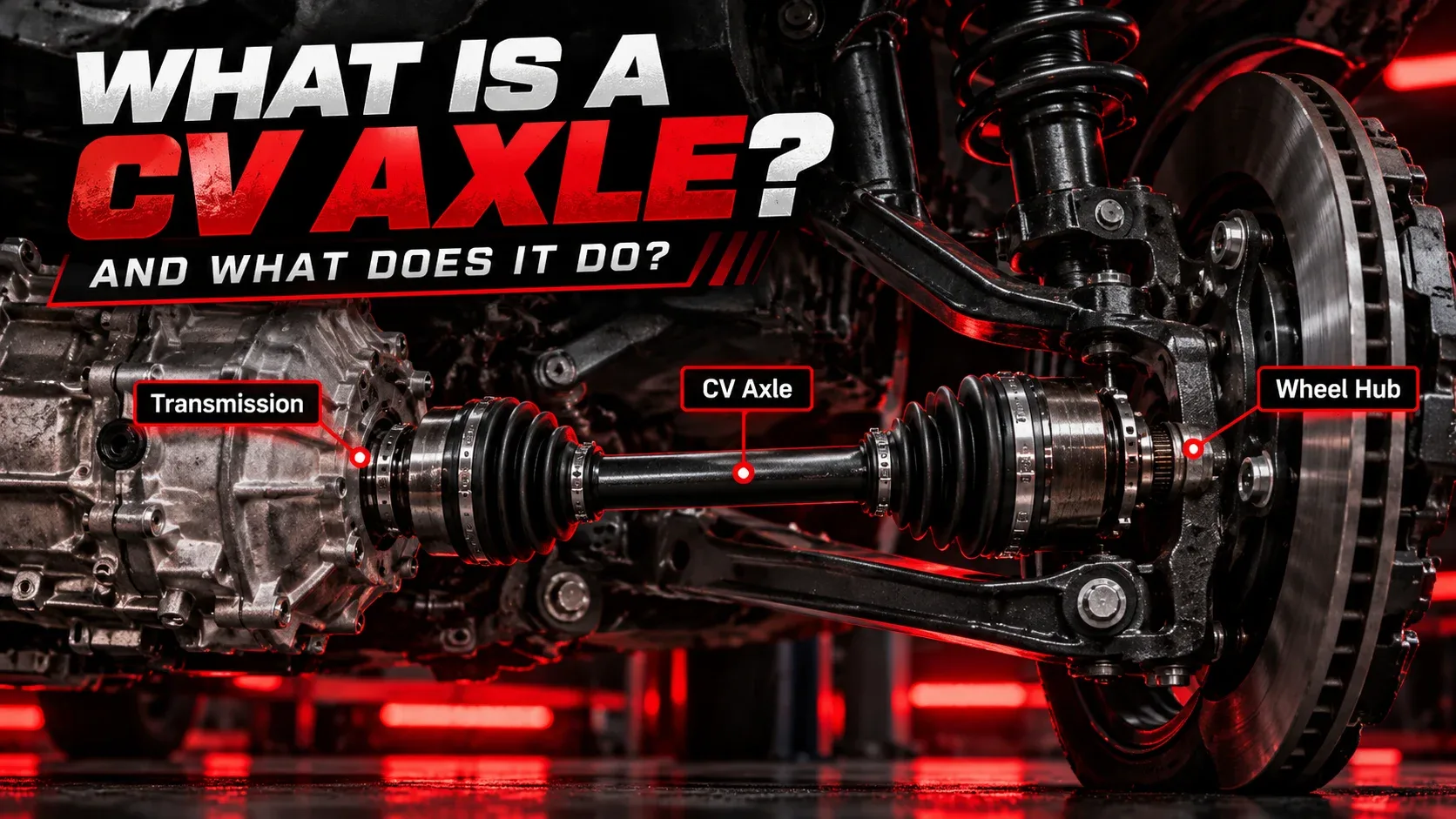
Most front-wheel-drive cars use two front CV axles. Many all-wheel-drive vehicles have CV axles at both ends, and some rear-wheel-drive vehicles with independent rear suspension also use them. The exact layout depends on the vehicle.
Although a CV axle sits beside steering and suspension components, it is primarily a drivetrain component. Unlike a steering tie rod, its job is to deliver torque rather than direct the wheel.
CV Axle Parts Explained
Knowing the main parts helps you understand why a small rubber boot failure can eventually lead to an expensive repair.
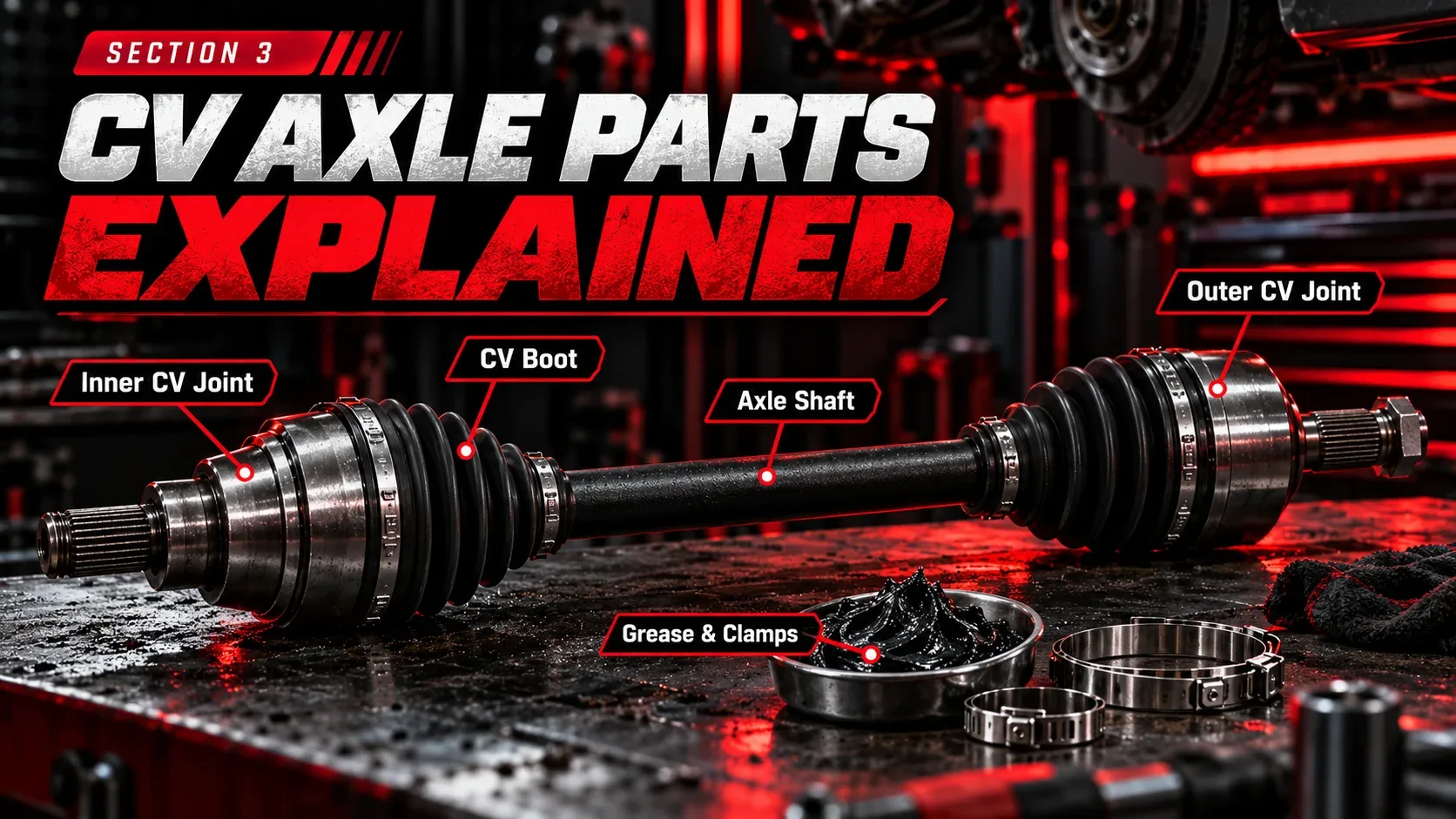
| Component | Purpose | What can go wrong? |
|---|---|---|
| Inner CV joint | Connects the axle near the transmission or differential and accommodates suspension movement. | Wear may cause acceleration-related shudder or clunking. |
| Outer CV joint | Connects to the wheel hub and accommodates large steering angles on steerable wheels. | Wear often causes repeated clicking during turns. |
| Axle shaft | Transfers torque between the joints. | Impact, corrosion or other damage may affect its integrity. |
| CV boots and clamps | Seal lubricant inside and keep contaminants outside. | Tears or loose clamps allow grease loss and contamination. |
| Joint grease | Lubricates the moving joint surfaces. | Loss or contamination accelerates wear. |
7 Bad CV Axle Symptoms You Shouldn’t Ignore
These bad CV axle symptoms are warning signs, not a final diagnosis. The pattern of the noise or vibration often provides more useful information than the symptom alone.
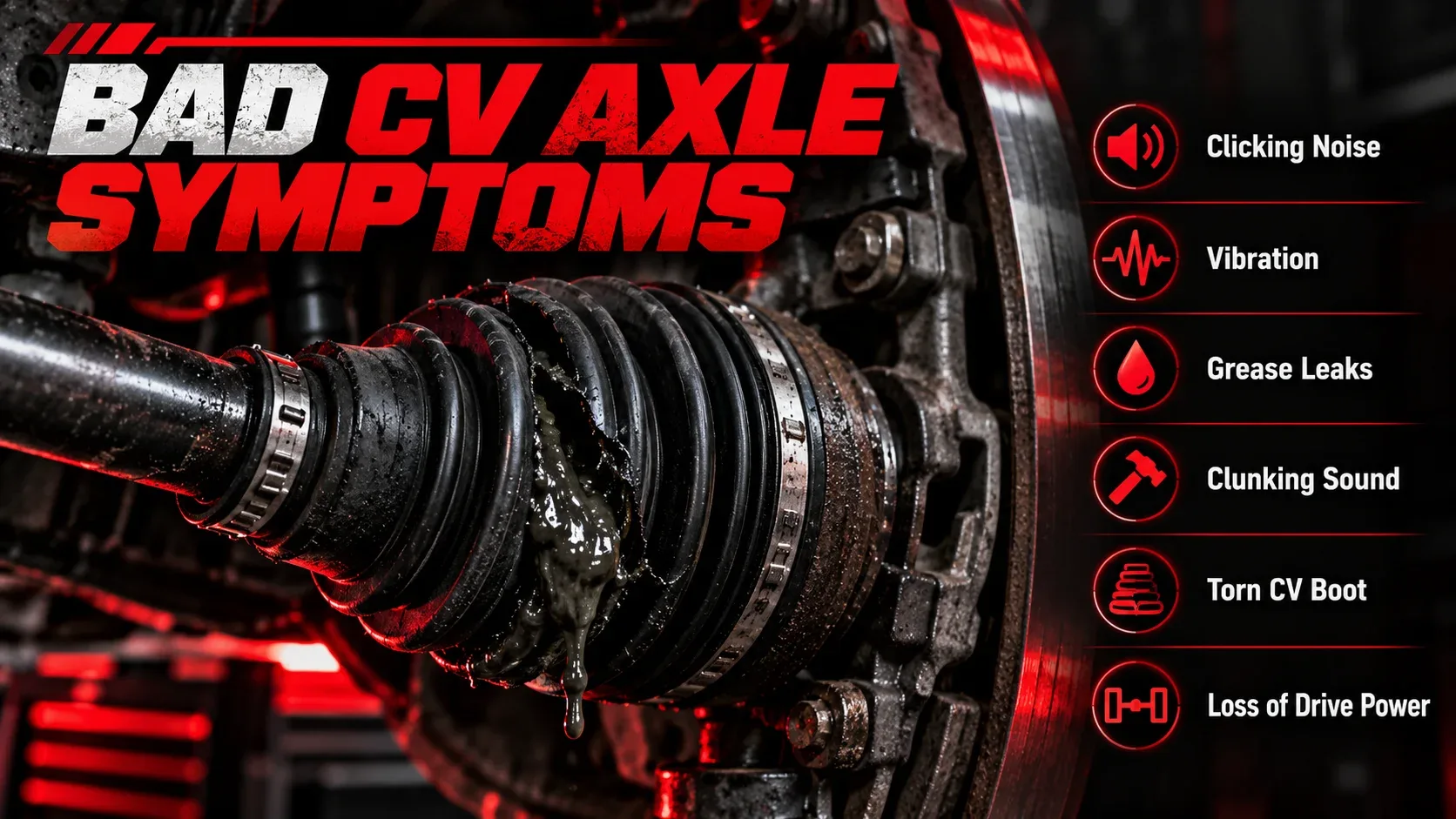
1. Clicking or popping when turning
Repeated clicking during a tight turn, especially when power is applied, is a classic clue of a worn outer CV joint. A single pop, however, can come from other steering or suspension parts.
2. Shudder or vibration during acceleration
An inner CV joint problem may create vibration as torque is applied, sometimes easing when you coast. Tire imbalance, engine mounts, and other driveline issues can produce similar sensations.
3. Grease splattered around a wheel
Thick grease on the inner wheel rim, control arm, or adjacent parts may have escaped through a torn CV boot or failed clamp. Inspect promptly; grease reaching braking components is a particular safety concern.
4. Clunking when changing load
A clunk when engaging drive, reversing, accelerating, or easing off the throttle can be associated with drivetrain play. Worn mounts, suspension joints, or other components should also be checked.
5. A cracked, loose, or torn CV boot
The boot itself may show visible splits even before any driving symptom appears. Early discovery sometimes makes a boot-only repair practical if the joint remains in good condition.
6. Unusual drivetrain noise while moving
Grinding or other abnormal sounds can accompany severe joint damage, but they are not exclusive to CV axles. Avoid assuming the source without inspection.
7. Loss of drive power in a severe failure
A broken or disconnected drive axle can prevent a vehicle from moving and may create additional hazards. If the vehicle suddenly loses propulsion or develops violent mechanical noise, pull over safely and arrange assistance.
| What you notice | One possible cause | Recommended action |
|---|---|---|
| Repeated clicking during powered turns | Outer CV joint wear | Arrange prompt inspection. |
| Shaking mainly under acceleration | Inner CV joint wear or another driveline fault | Seek diagnosis promptly. |
| Fresh grease around the wheel | Damaged boot or clamp | Check for brake contamination; have it inspected. |
| Cracked boot with no joint noise | Boot aging or damage | Service before contamination progresses. |
| Severe shaking, grinding, or loss of drive | Potential serious mechanical failure | Stop safely and obtain assistance. |
What Causes a CV Axle to Fail?
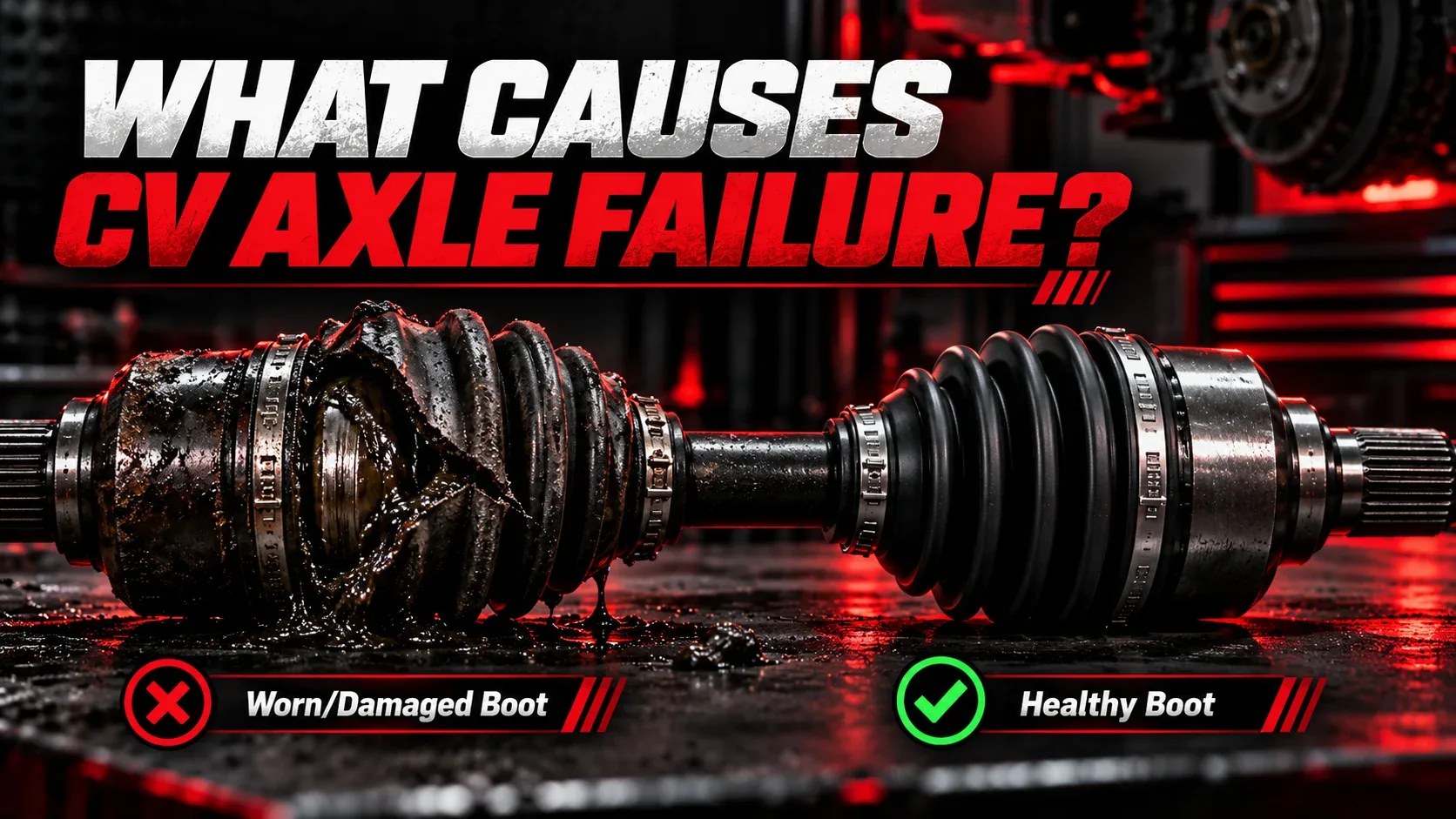
CV axles do not fail on a single universal mileage schedule. Common contributors include:
- Split boots: Rubber degrades or becomes damaged, allowing grease to escape.
- Dirt and water: Contamination wears the joint’s precision moving surfaces.
- Normal use and age: Joint surfaces may wear after extended service.
- Impact or unusual operating angles: Road strikes or certain suspension changes can increase loads.
- Installation mistakes: Incorrect fitment, damaged seals, or improper fastener procedures can create new problems.
A torn boot is a warning to inspect the joint, but it does not automatically prove that the entire axle must be replaced.
How to Diagnose a Bad CV Axle
Start with observations that do not require working beneath an unsupported vehicle. Note whether a sound appears during turning, acceleration, braking, or coasting and whether it changes with vehicle speed.
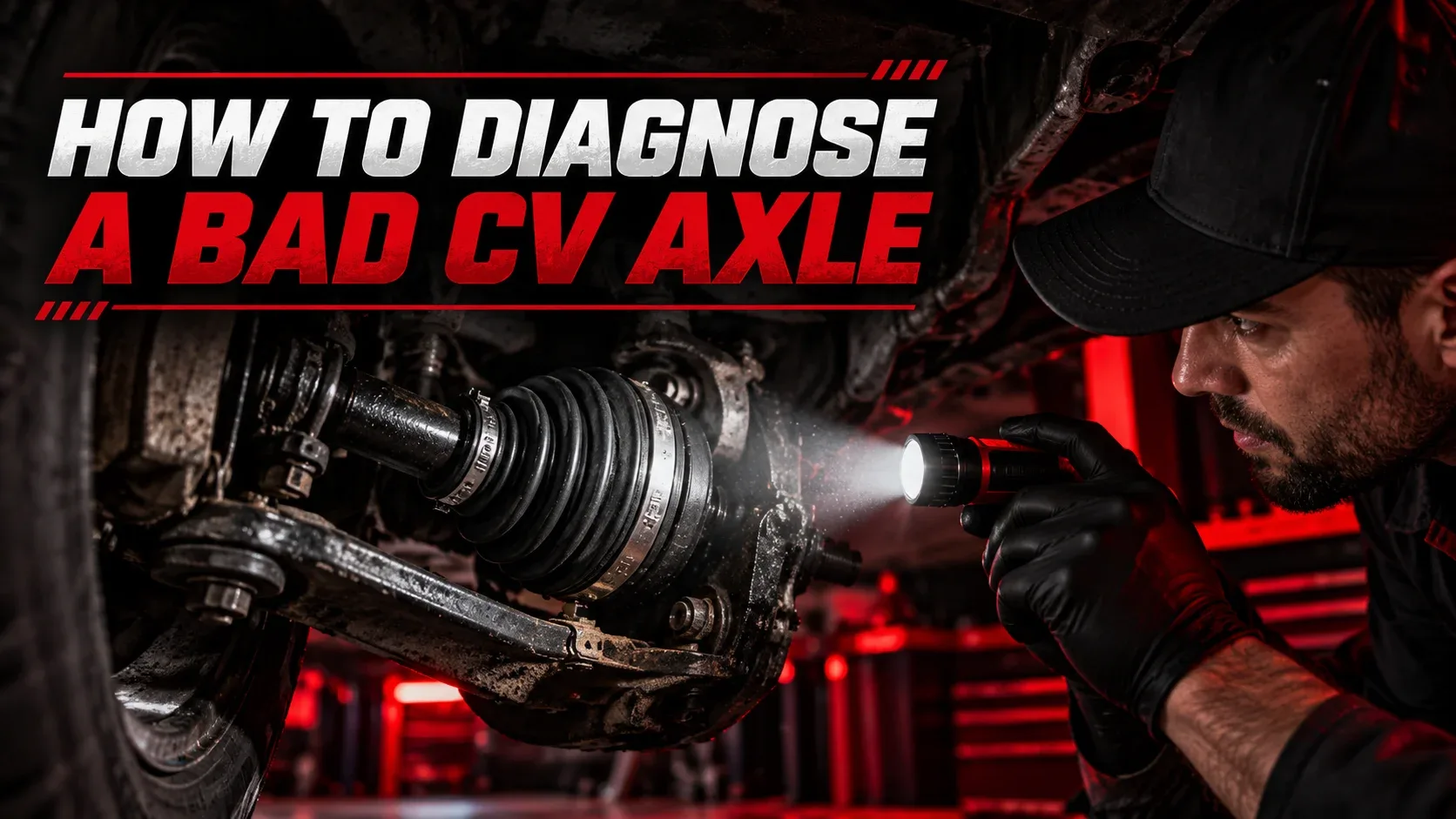
What you can observe
Visible boot tears, grease deposits, the timing of noises, changes in acceleration vibration, and any recent impact or repair work.
What a technician should confirm
Joint and shaft condition, wheel-bearing or tire issues, mount condition, leaks, and whether the specific axle assembly is the source.
A clicking outer joint is not the same as a humming wheel bearing, but real-world symptoms can overlap. A correct diagnosis prevents paying for a CV axle change that does not fix the complaint.
CV Axle Replacement Cost in the USA
If you are searching for cv axle replacement cost or cv axle change cost, remember that the price depends heavily on the exact vehicle, axle position, parts choice, local labor rates, and whether extra repairs are needed.
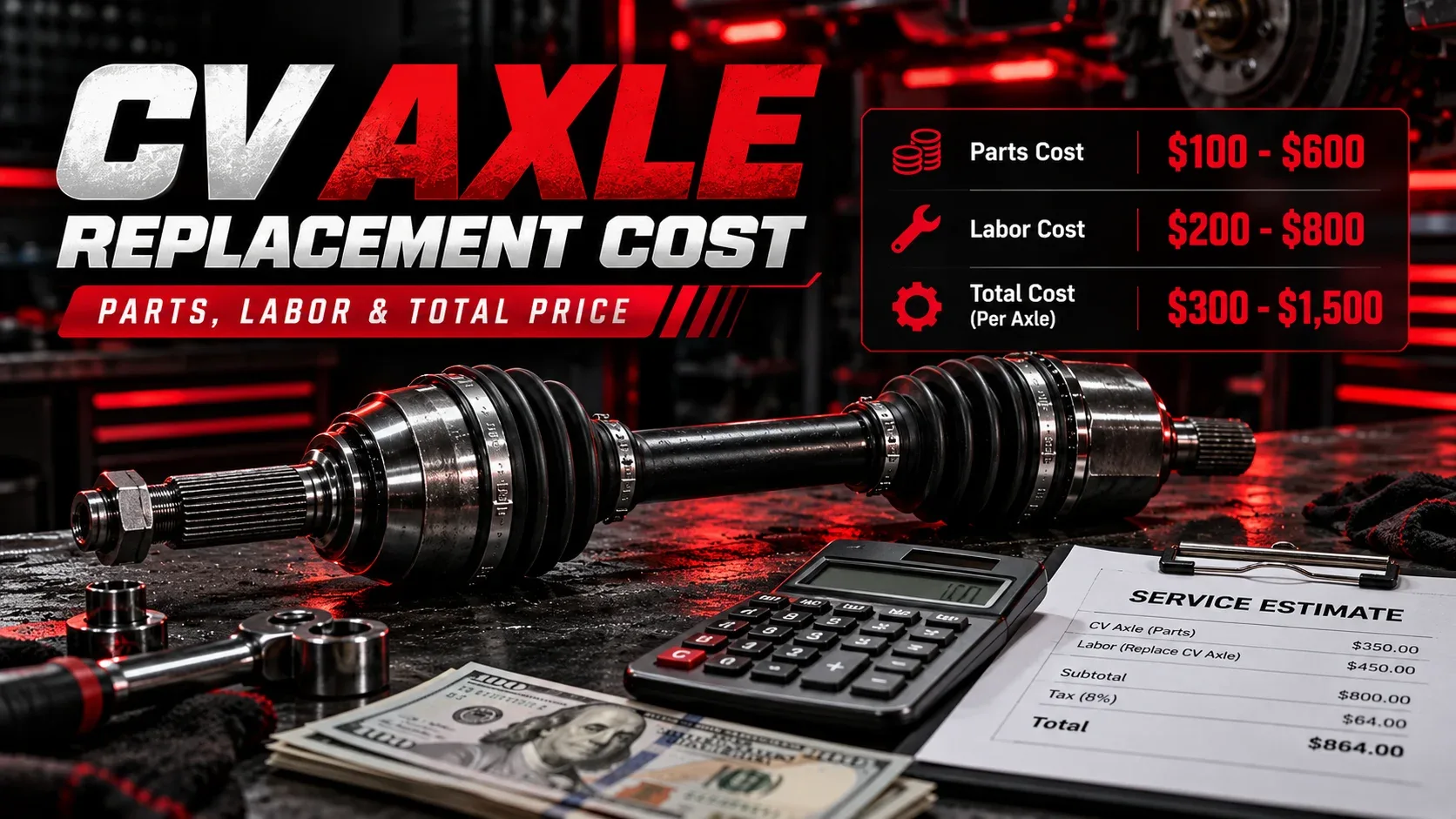
| Cost component | Published RepairPal estimate* | Why your quote may differ |
|---|---|---|
| Parts | $1,075–$1,076 | OEM vs. aftermarket selection; make, model, and axle design. |
| Labor | $208–$306 | Shop rate, service access, corrosion, and required disassembly. |
| Total | $1,283–$1,381 | Additional seals, fluids, hardware, taxes, or related repairs can apply. |
*Source: RepairPal, “CV Axle Replacement Cost Estimate,” updated September 3, 2026. The estimated components are rounded and do not represent an itemized bill for a specific vehicle.
What influences the final CV axle change cost?
- Vehicle: A compact sedan and a high-performance AWD vehicle may have very different axle parts.
- One axle or more: Replacing an additional axle adds parts and labor; both sides do not automatically require replacement together.
- Parts brand: Factory-original and aftermarket options can vary in cost, warranty, fit, and quality.
- Labor complexity: Corrosion, seized fasteners, and difficult access can increase service time.
- Extra services: Transmission or differential seals, fluids, required fasteners, or related damage can affect the quote.
CV Axle Repair vs. Replacement: Which Makes Sense?
A search for cv axle repair can refer to replacing a boot, servicing an individual joint, or fitting a complete axle assembly. These are different jobs.
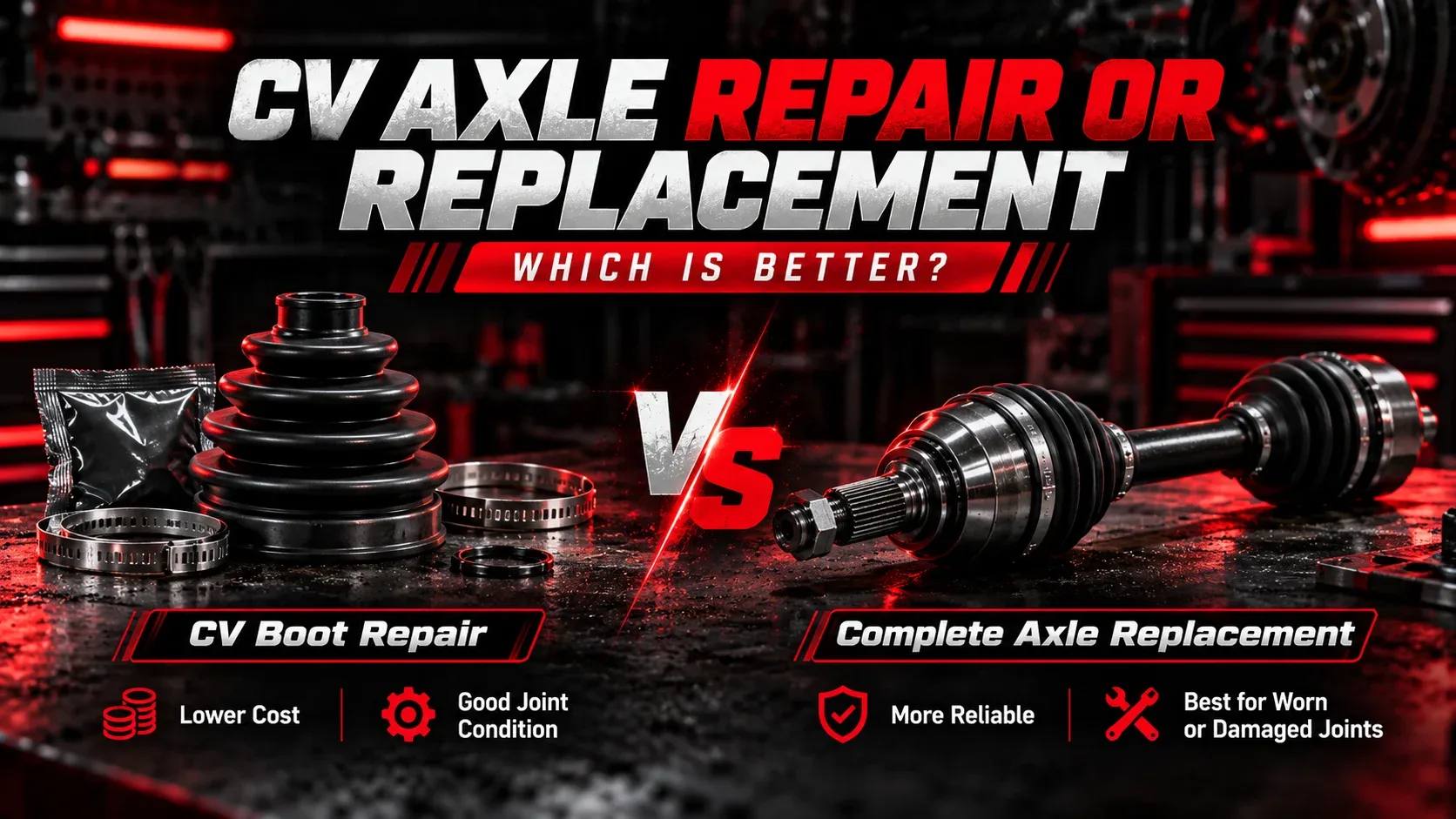
| Option | When it may be suitable | Key limitation |
|---|---|---|
| Boot replacement | Damage is found early and the joint is confirmed to be clean, quiet, and undamaged. | Labor-intensive; it will not reverse joint wear. |
| Individual joint service | A serviceable design and qualified shop support the repair. | Not practical or economical on every vehicle. |
| Complete axle replacement | Joint is clicking, badly worn, contaminated, damaged, or replacement is the better value. | Part price and quality must be considered. |
A boot repair works best before grease loss and contamination have damaged the joint. Installing a fresh boot on an already noisy, worn joint typically does not solve the underlying problem. Ask your technician to show you the boot tear, joint damage, or diagnostic evidence.
How to Change a CV Axle: Replacement Process Overview
A cv axle change is an intermediate-to-advanced automotive repair. It often requires separating suspension or steering connections, handling high-torque fasteners, and observing vehicle-specific procedures. The steps below explain what a qualified technician generally does; they are not a substitute for a model-specific service manual.
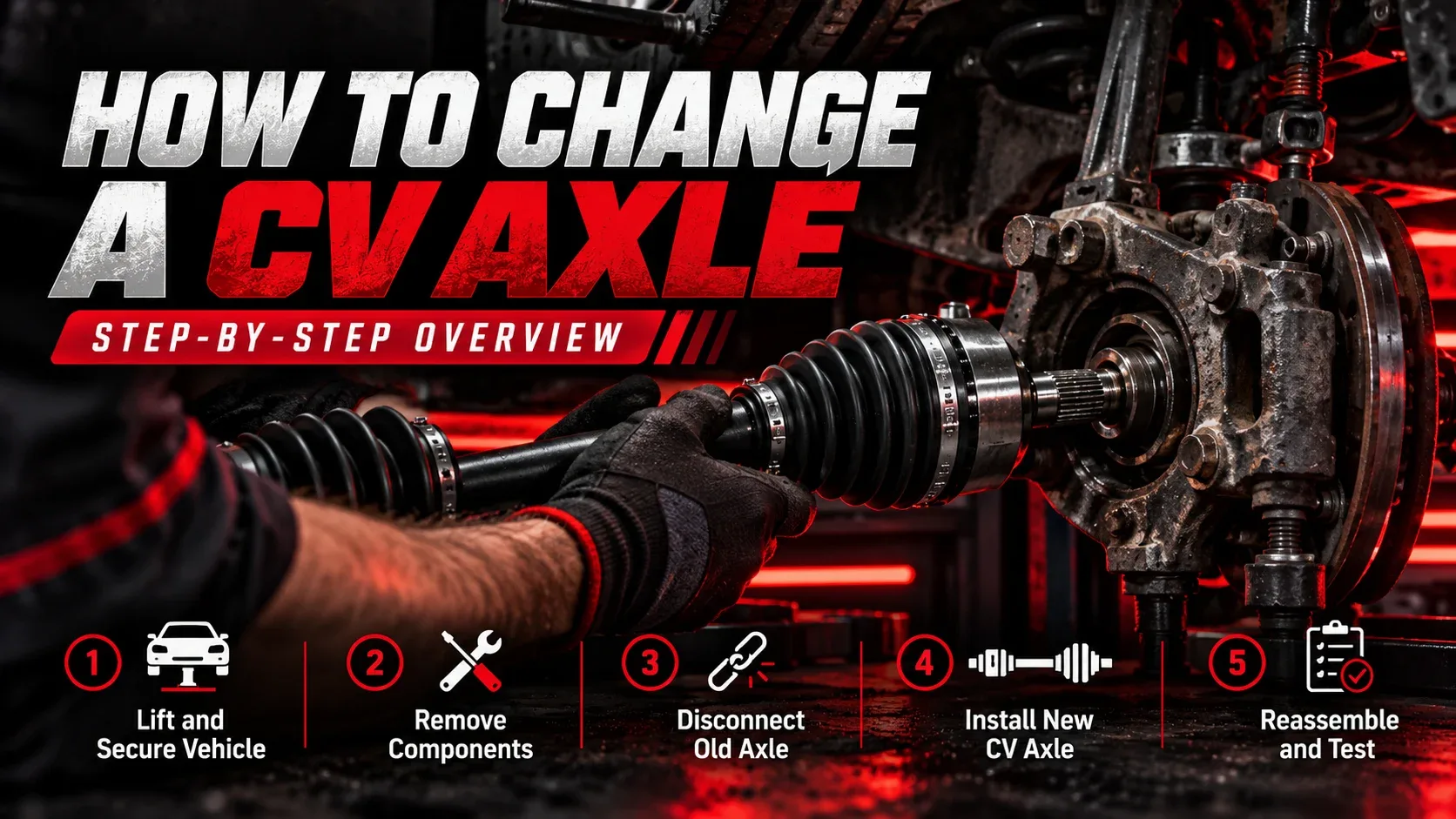
Confirm the diagnosis and replacement part
Check the exact vehicle configuration, damaged side, axle position, and any related seals or one-time-use fasteners.
Prepare and secure the vehicle
Follow manufacturer lifting and support points, wheel-chocking procedures, and appropriate personal protection requirements.
Access and disconnect the axle
Remove the necessary wheel-end hardware and detach only the steering or suspension components specified by the service procedure.
Remove the old shaft
Release the axle from the hub and transmission or differential using the correct method, taking care not to damage seals or surrounding parts.
Fit the correct new axle
Install the replacement fully and correctly. Verify engagement, boot clearance, and any required sealing components.
Reassemble to specification
Use the manufacturer’s torque values and required replacement hardware. Some axle nuts and suspension fasteners are not reusable.
Perform post-repair checks
Verify fluid levels and leaks where applicable, confirm assembly integrity, and perform a controlled check according to the service procedure. Alignment may be necessary if disturbed components require it.
Can You Drive With a Bad CV Axle?
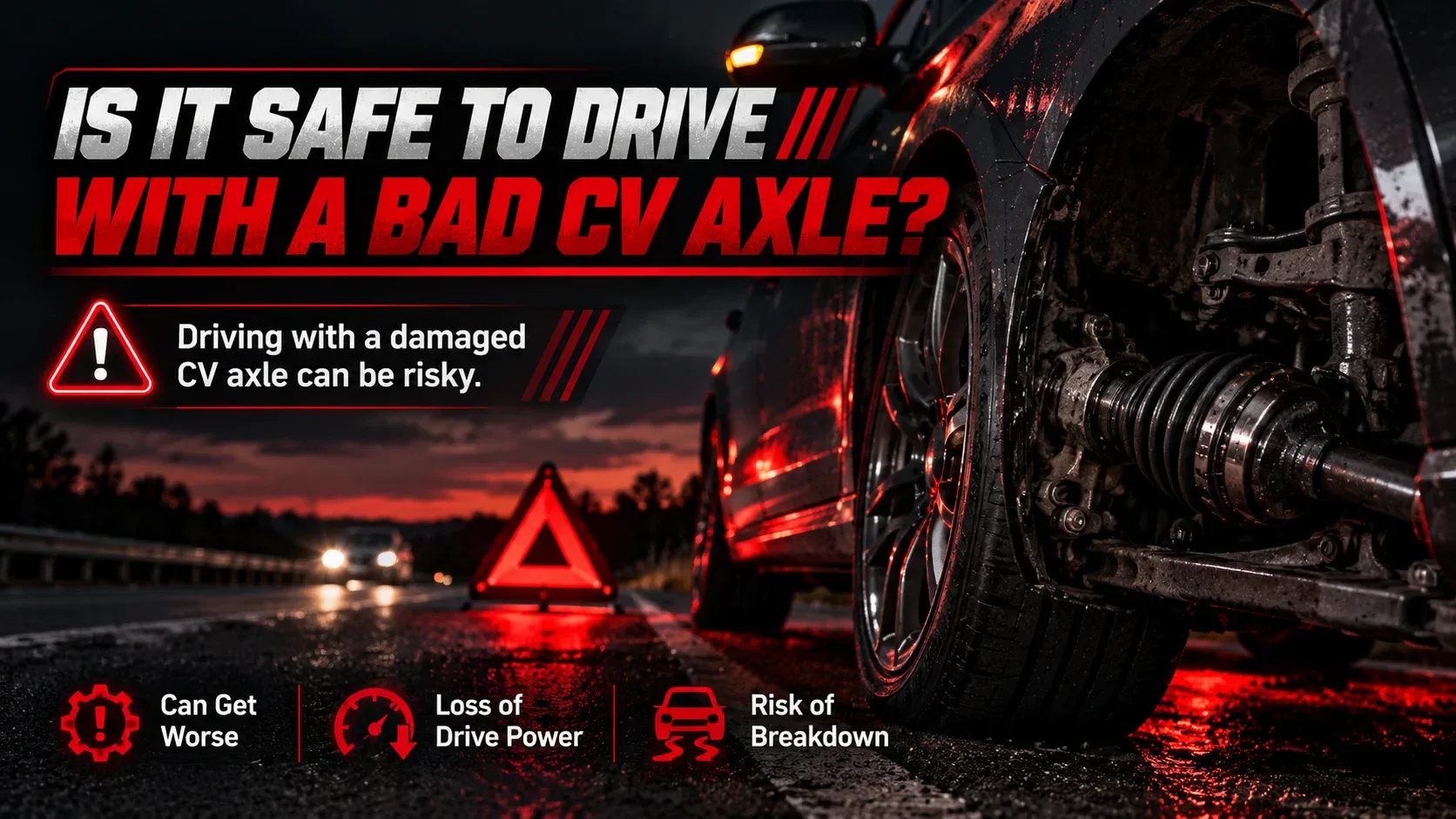
There is no reliable universal answer for how many miles a failing CV axle can be driven. A newly discovered boot split on a still-healthy joint is different from an axle making loud repeated noises or causing strong vibration.
| Situation | Safer next step |
|---|---|
| Visible torn boot, no other symptoms | Arrange an inspection promptly; ask whether the joint can be serviced. |
| Repeated clicking or noticeable vibration | Avoid unnecessary driving and obtain a professional assessment soon. |
| Severe shaking, grinding, loss of propulsion, or difficulty controlling the car | Pull over as soon as safely possible and arrange roadside assistance or towing. |
If you discover grease on a brake rotor or other braking surface, treat it as a brake-safety problem and have the vehicle assessed before driving.
How Long Does a CV Axle Last?
A CV axle with well-sealed boots may last for a large portion of a vehicle’s service life. There is no single replacement mileage that applies to every car. Road conditions, joint loads, boot condition, installation quality, and contamination all influence longevity.
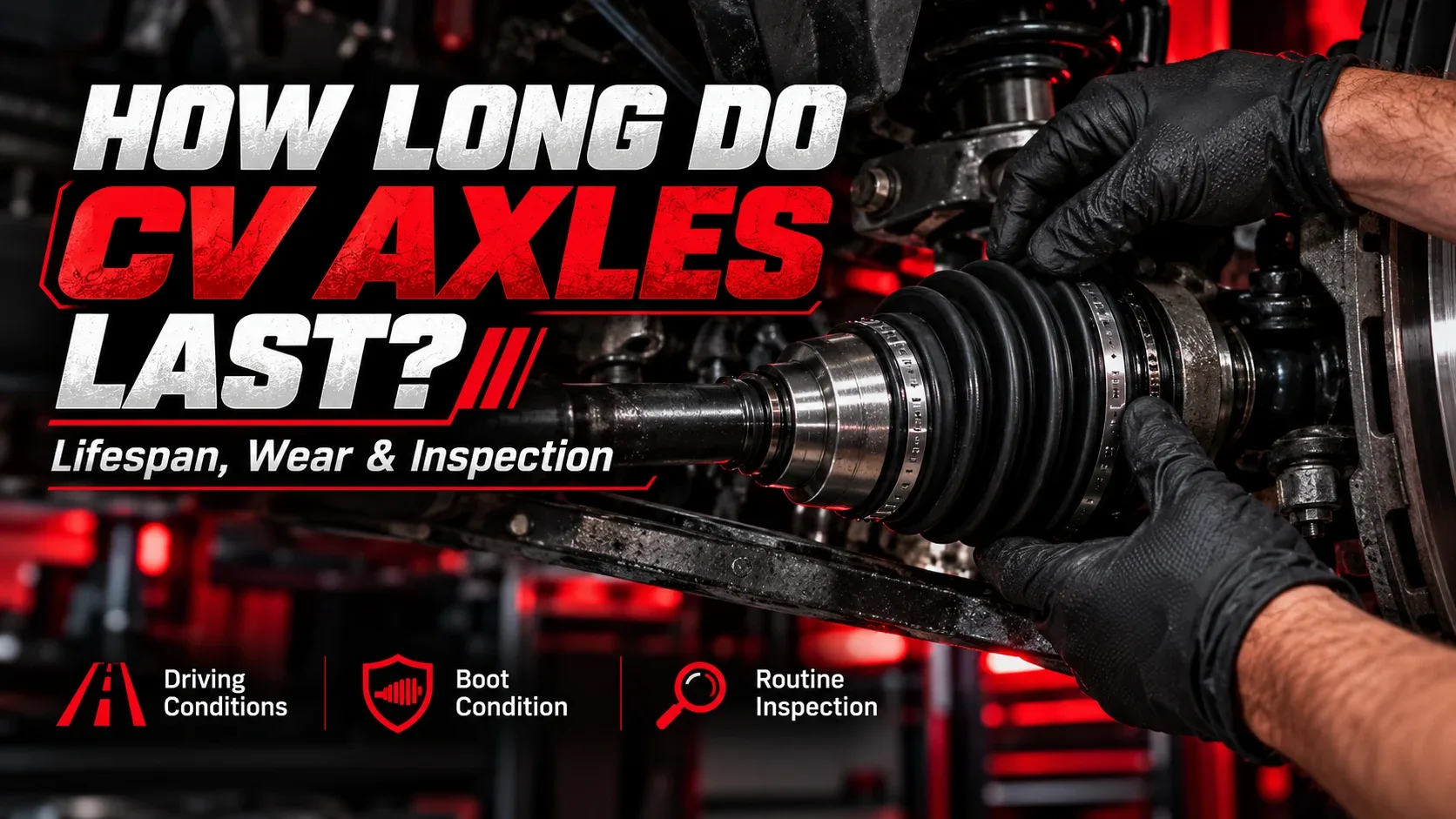
Rather than replacing axles on a guessed mileage interval, follow the vehicle manufacturer’s inspection guidance and address symptoms or visible damage when they appear.
How to Help Prevent Premature CV Axle Failure
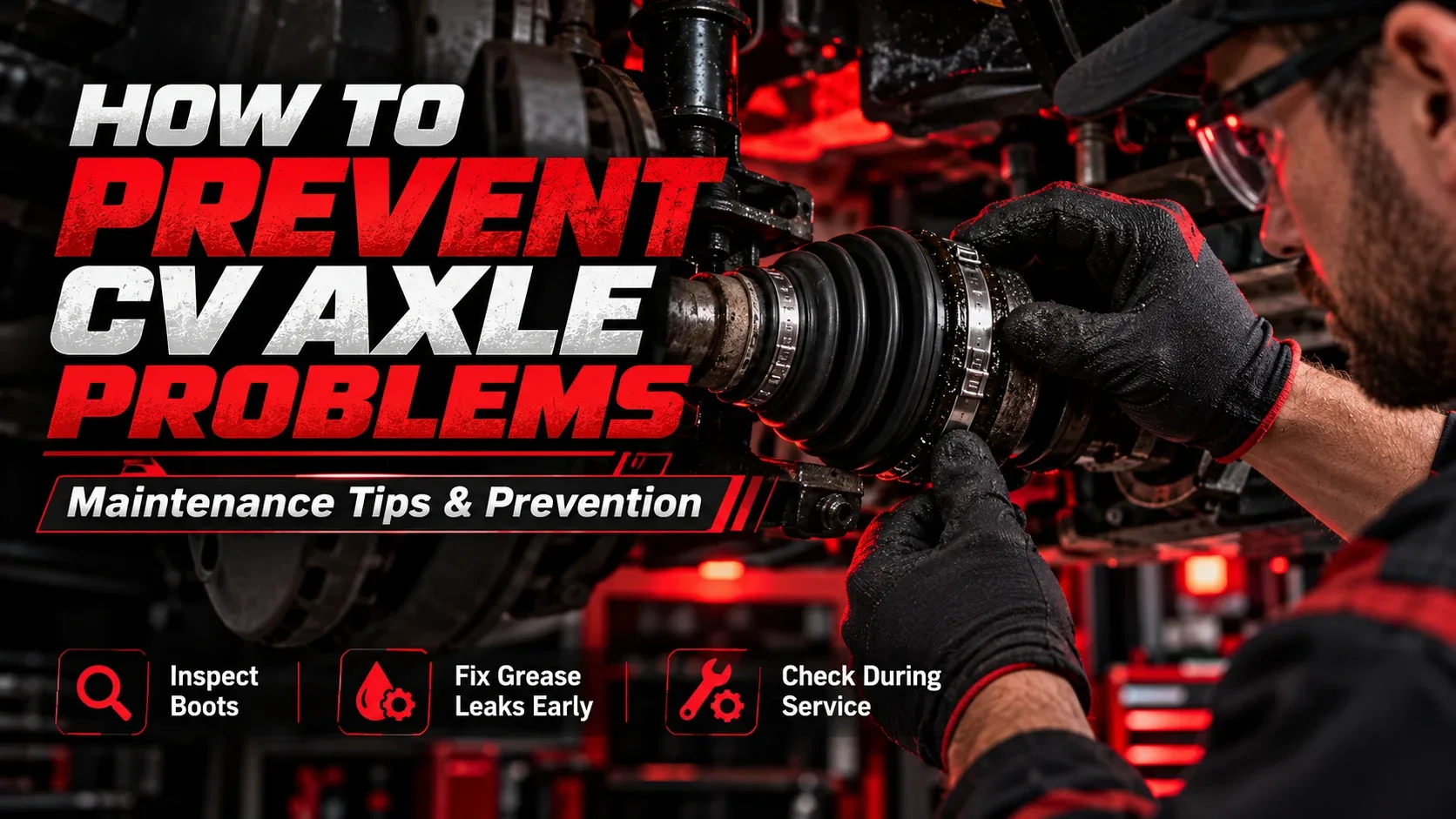
- Ask for a CV boot inspection during routine service or when other wheel-end work is performed.
- Investigate fresh grease, torn rubber, and new clicking sounds rather than waiting for louder symptoms.
- Address suspension or drivetrain modifications that create improper axle angles.
- Use correctly specified parts and installation procedures.
- Have unusual vibration diagnosed rather than replacing parts by trial and error.
Frequently Asked Questions About CV Axles
How much does a CV axle replacement cost?
It varies by vehicle, shop, part choice, and related repairs. RepairPal’s September 2026 general US estimate is $1,283–$1,381, but your actual quote may differ significantly. Ask for a written, vehicle-specific estimate.
What are the first signs of a bad CV axle?
Common clues include clicking during powered turns, vibration under acceleration, grease around a wheel, or a torn CV boot. Other faults can cause similar symptoms, so an inspection is important.
Can a CV axle be repaired instead of replaced?
Sometimes. If a boot is damaged but the joint remains clean and healthy, boot replacement may be possible. A noisy, contaminated, or worn joint commonly makes complete axle replacement the more practical option.
How long does a CV axle change take?
Time depends on the vehicle, corrosion, axle location, and what must be removed. A repair shop can provide a labor estimate for your specific model rather than relying on a universal time allowance.
Is replacing a CV axle difficult?
It is often an intermediate-to-advanced repair requiring lifting equipment, special tools, correct fastener procedures, and vehicle-specific information. A professional is the safer choice without the proper experience and equipment.
Can a bad CV axle cause vibration?
Yes. A worn inner joint can produce a shudder or vibration under acceleration. Tires, mounts, and other drivetrain parts can do the same, so vibration alone does not confirm CV axle failure.
Should I replace both CV axles at once?
Not automatically. Replace or repair the side that needs service, while inspecting the other side. Replacing both may be justified if both are damaged, but age alone does not prove both have failed.
What happens if a CV axle breaks while driving?
It may interrupt torque delivery, leave the vehicle unable to move, and potentially damage nearby parts. If serious drivetrain failure is suspected, pull over safely and arrange assistance rather than attempting to keep driving.
Are a CV axle and a CV joint the same thing?
No. A CV axle is the shaft assembly; its CV joints are the flexible power-transmitting connections at its ends. People sometimes use the terms loosely, but a joint is only one part of the assembly.
How can I tell if a CV boot is damaged?
Look for visible cracks or tears in the rubber, loose clamps, and grease around the boot or inner wheel area. Keep clear of moving parts and have a technician inspect areas you cannot safely view.
Final Thoughts: Diagnose First, Repair Confidently
Clicking around corners, acceleration-related shaking, or grease near a wheel may point to a CV axle issue, but the correct repair starts with confirmation. A healthy joint with an early boot leak may be worth servicing; a worn or contaminated joint often needs a complete axle. Request a clear diagnosis and itemized estimate so you can make a safe, informed choice.
Noticing one of these symptoms? Arrange a qualified inspection before a manageable issue becomes a breakdown.
Editorial references & pricing notes
Technical background cross-checked against Firestone Complete Auto Care, “Is Your CV Axle Going Bad? Here’s How to Tell” (August 18, 2026), and NAPA Know How, “How to Replace a CV Axle Boot” (February 26, 2024).
Cost benchmark: RepairPal, “CV Axle Replacement Cost Estimate,” updated September 3, 2026. Prices are estimates and do not replace a local, vehicle-specific quote.
This article is educational and is not a substitute for a factory service manual or hands-on diagnosis by a qualified automotive professional.