The strange case of a sinking brake pedal.
Friday evening. Jason Miller is driving home in his 2015 Toyota Camry when something feels different.
He presses the brake pedal while approaching an intersection. The pedal travels farther than expected, and the car doesn’t respond quite the way it normally does.
Jason manages to stop safely. He sees no obvious puddle beneath the vehicle, but the pedal pressure feels inconsistent.
He doesn’t risk another drive and arranges professional assistance.
The next day, a technician mentions a possible master cylinder problem.
Is it really the master cylinder, or another hydraulic component creating the same symptom?
Understand the symptoms without guessing.
Learn when repair or replacement is appropriate.
Understand what proper hydraulic service includes.
This guide follows Jason’s investigation, explains how the master cylinder develops pressure, compares other brake faults, and shows when a technician may recommend repairing or replacing the assembly.
You’ll learn how to identify possible causes, understand master cylinder replacement, and ask useful questions before authorizing repair work.
Technical note: The brake master cylinder is part of the braking system, not an engine component.
Safety Comes First
A brake pedal that suddenly sinks, feels unusually soft, requires pumping or produces reduced braking performance may indicate a serious hydraulic-system fault.
Stop safely and arrange qualified help or towing when braking is abnormal. Do not keep driving to test whether the problem gets worse.
Meet the Master Cylinder: The Small Part Behind Every Stop
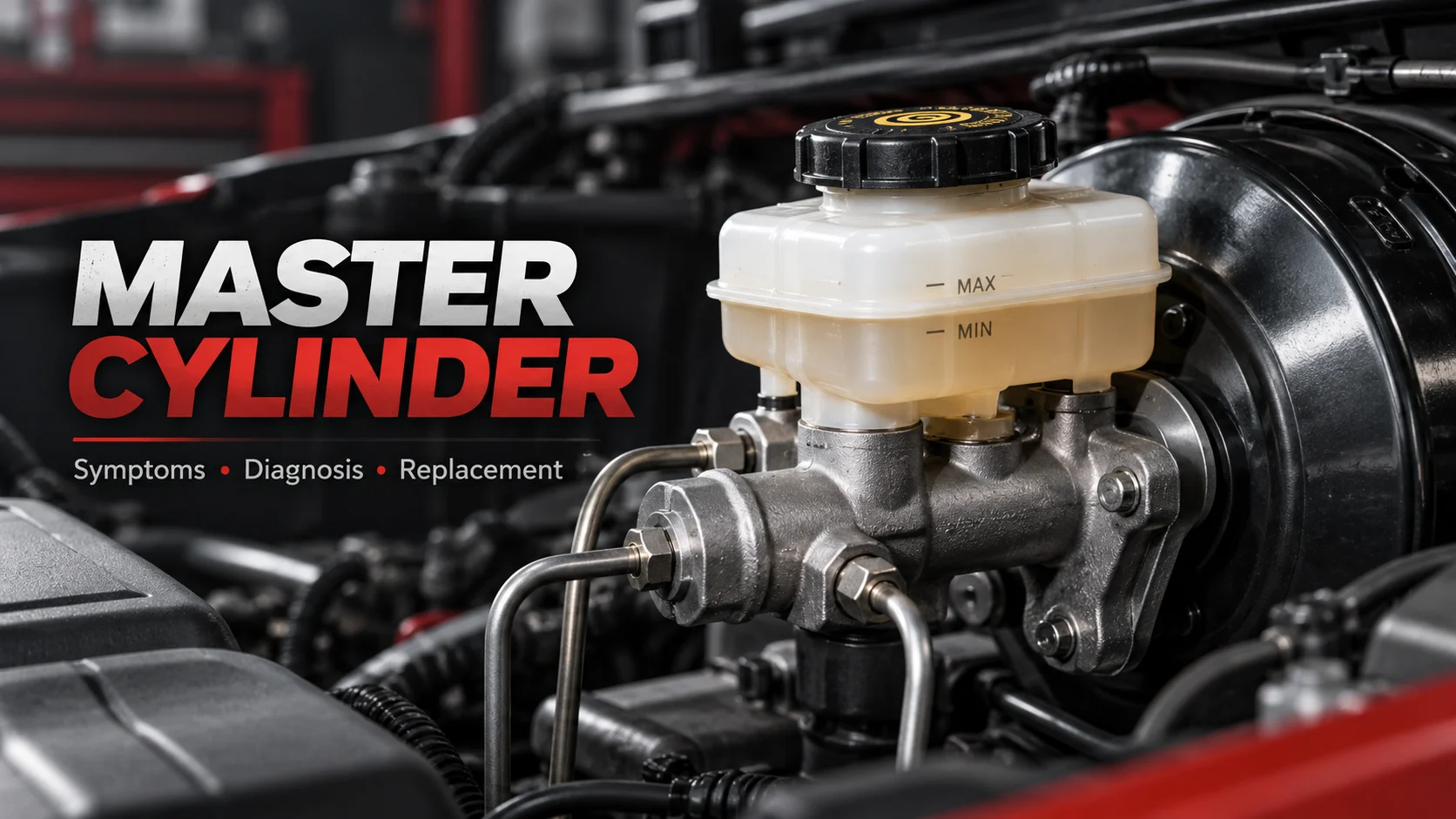
A master cylinder is the hydraulic component that converts brake-pedal force into pressure inside the vehicle’s braking circuits.
That pressure helps operate the brakes at the wheels.
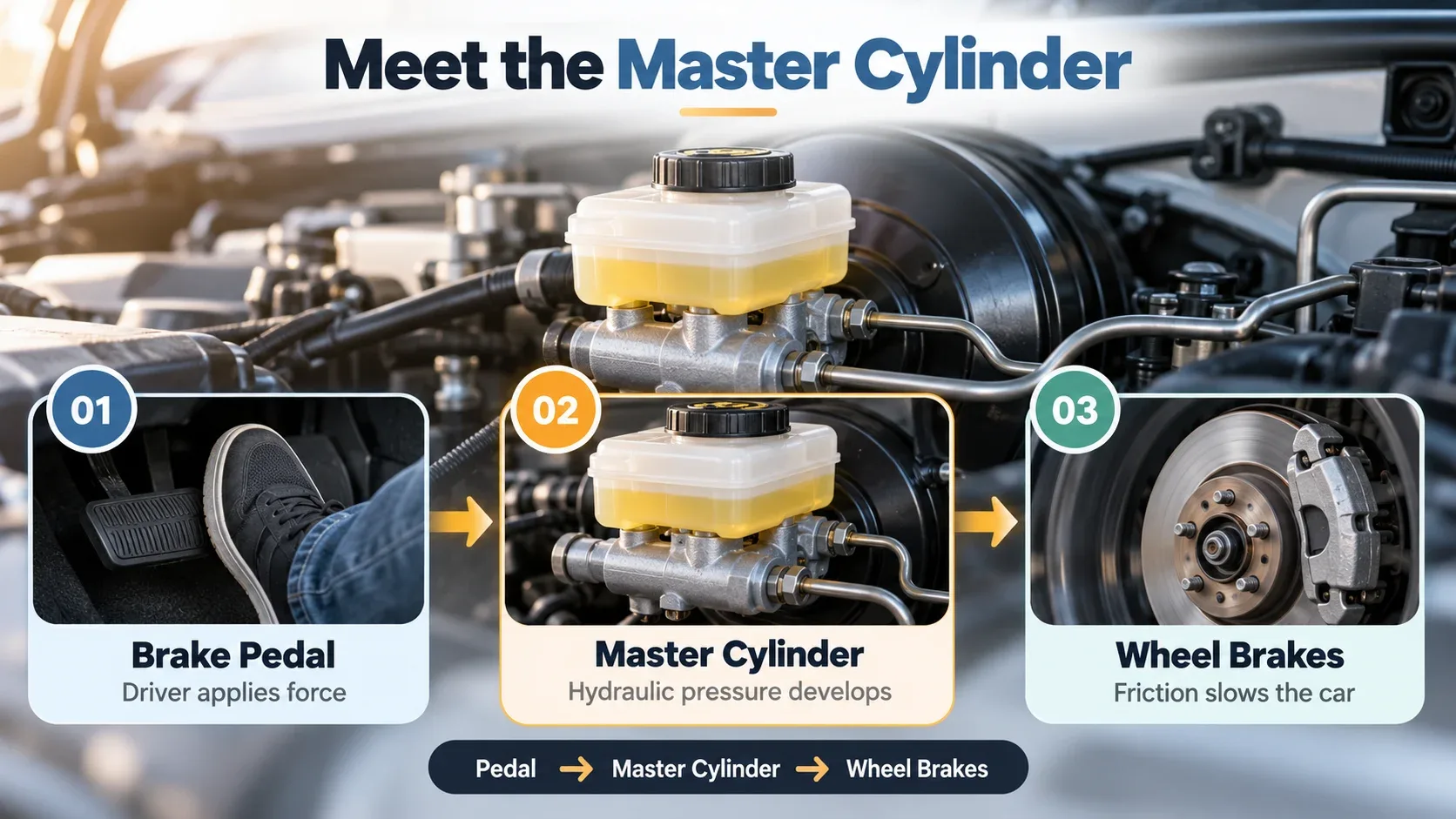
Driver applies force.
Hydraulic pressure develops.
Friction slows the car.
The master cylinder works alongside the brake booster, hydraulic lines, calipers, wheel cylinders and, on equipped vehicles, ABS components.
The pedal starts the action, the master cylinder develops pressure, and the wheel brakes create the friction needed to stop.
Where Is the Brake Master Cylinder Located?
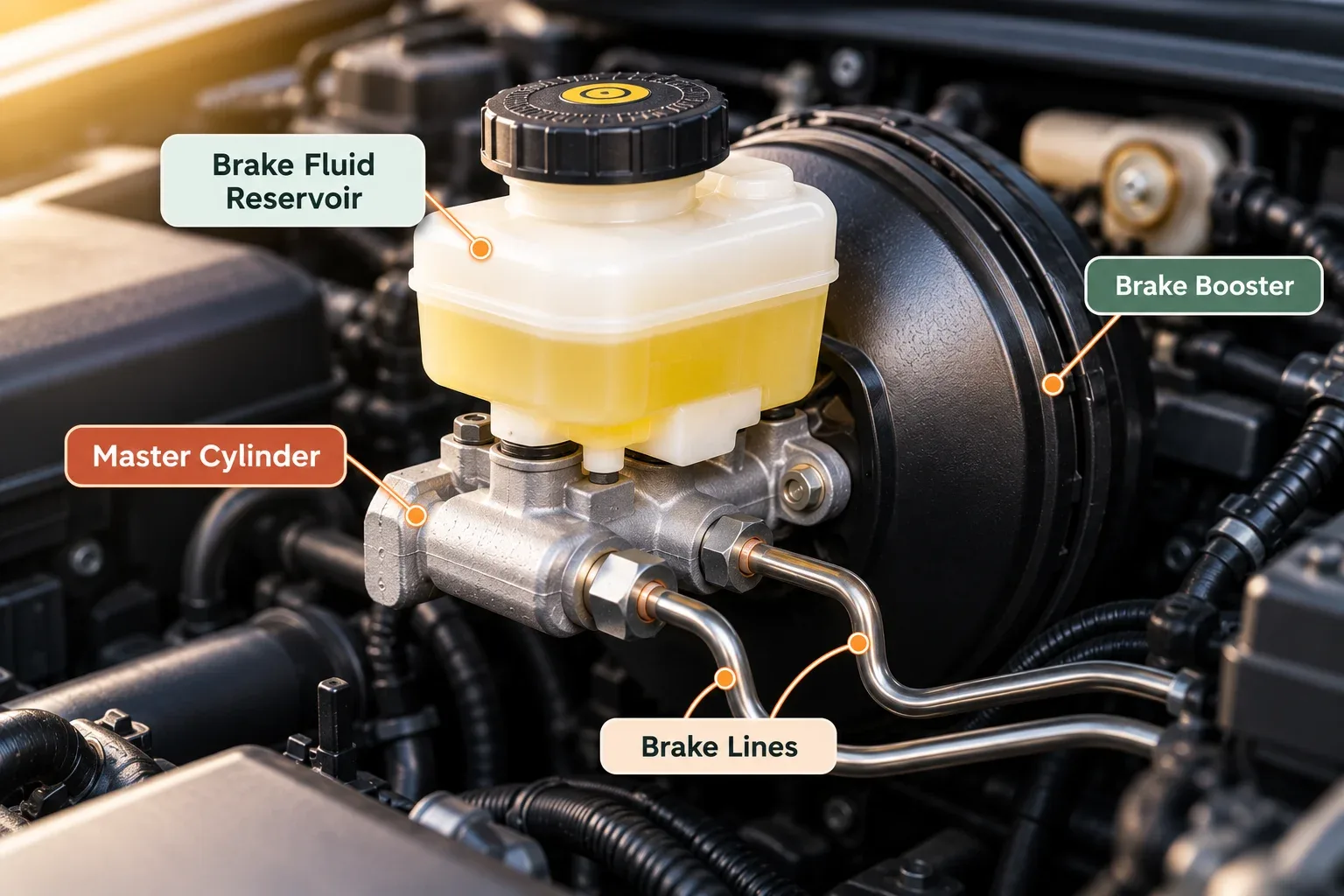
In many conventional vehicles, the master cylinder is near the driver’s-side firewall, attached to the brake booster.
The brake-fluid reservoir commonly sits above it, while metal brake lines connect to the hydraulic braking system.
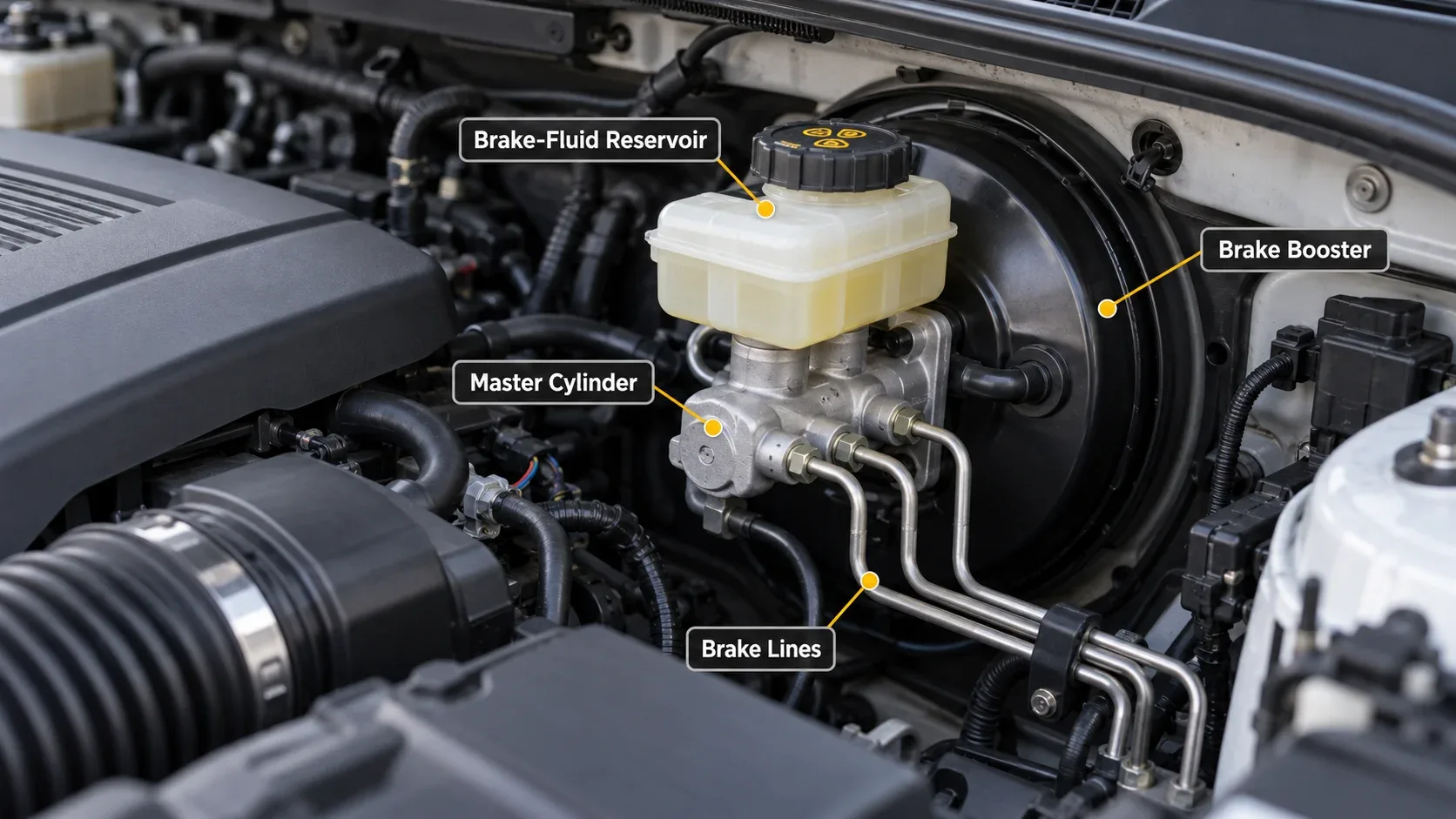
| What You See | Likely Component |
|---|---|
| Metal hydraulic housing | Master cylinder |
| Translucent fluid container | Brake-fluid reservoir |
| Large round housing | Brake booster on many conventional cars |
| Rigid metal tubes | Brake hydraulic lines |
Some hybrid and electric vehicles use different or integrated brake-control systems. Always consult model-specific service information.
What Happens Inside When You Press the Pedal?
Most conventional modern passenger cars use tandem master cylinders, with two hydraulic circuits intended to provide redundancy.
However, partial braking-system failure is still unsafe and requires professional attention.
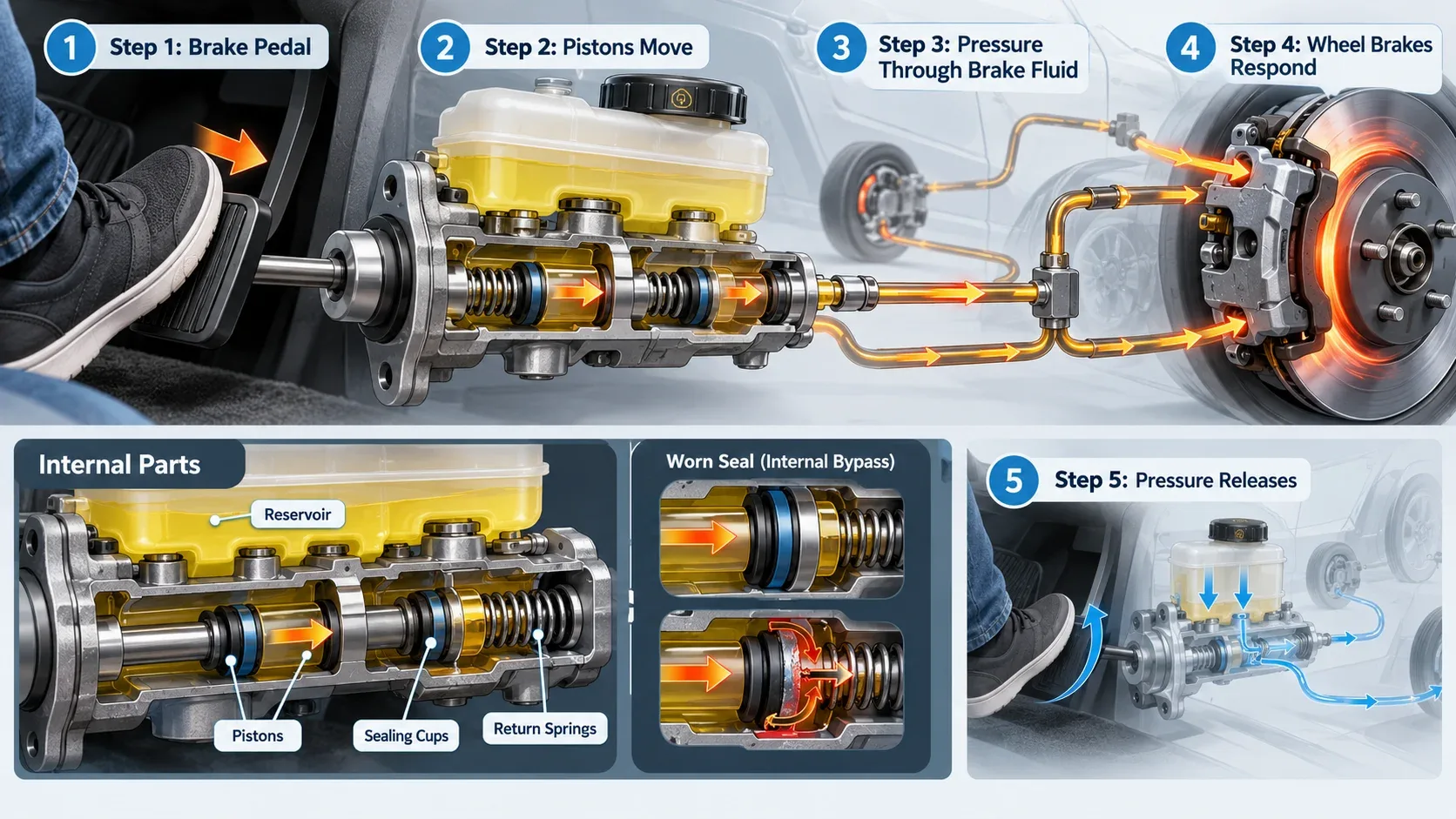
Mechanical input and any applicable brake assistance transmit force toward the master cylinder.
Seals and pistons develop hydraulic pressure within the cylinder chambers.
Hydraulic circuits transmit pressure toward the wheel brakes.
Calipers or wheel cylinders apply friction-generating braking force.
The hydraulic system returns toward its resting state, allowing the brakes to release.
Main Internal Parts
Stores the required brake-fluid supply.
Move inside the cylinder bore.
Help retain hydraulic pressure.
Help restore piston position.
A worn seal can allow fluid to bypass internally, sometimes producing excessive pedal movement without visible exterior leakage.
Five Warning Signs Worth Taking Seriously
Jason’s brake-pedal symptoms might indicate master-cylinder failure, but symptoms alone cannot prove it. Each unusual change deserves appropriate inspection.
1. A Pedal That Gradually Sinks
Under steady pressure, the brake pedal may travel farther than expected. Internal master-cylinder bypass, an external leak or other hydraulic problems are possible causes.
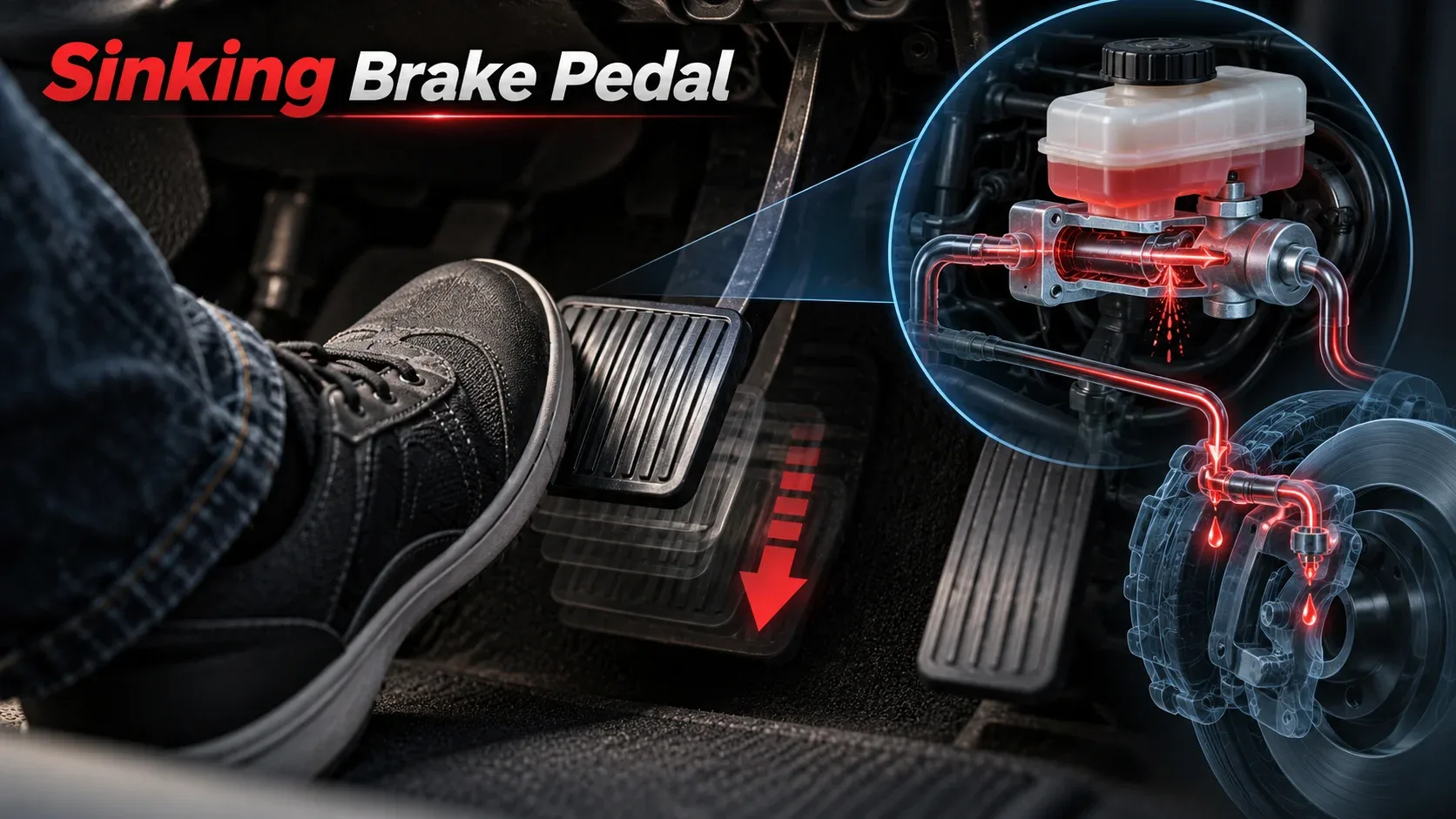
Internal bypass may occur without an obvious puddle of fluid, but appropriate testing is required to determine the actual cause.
2. A Soft or Spongy Brake Pedal
Trapped air, hydraulic leakage and other braking-system faults can cause an unusually soft or spongy pedal.
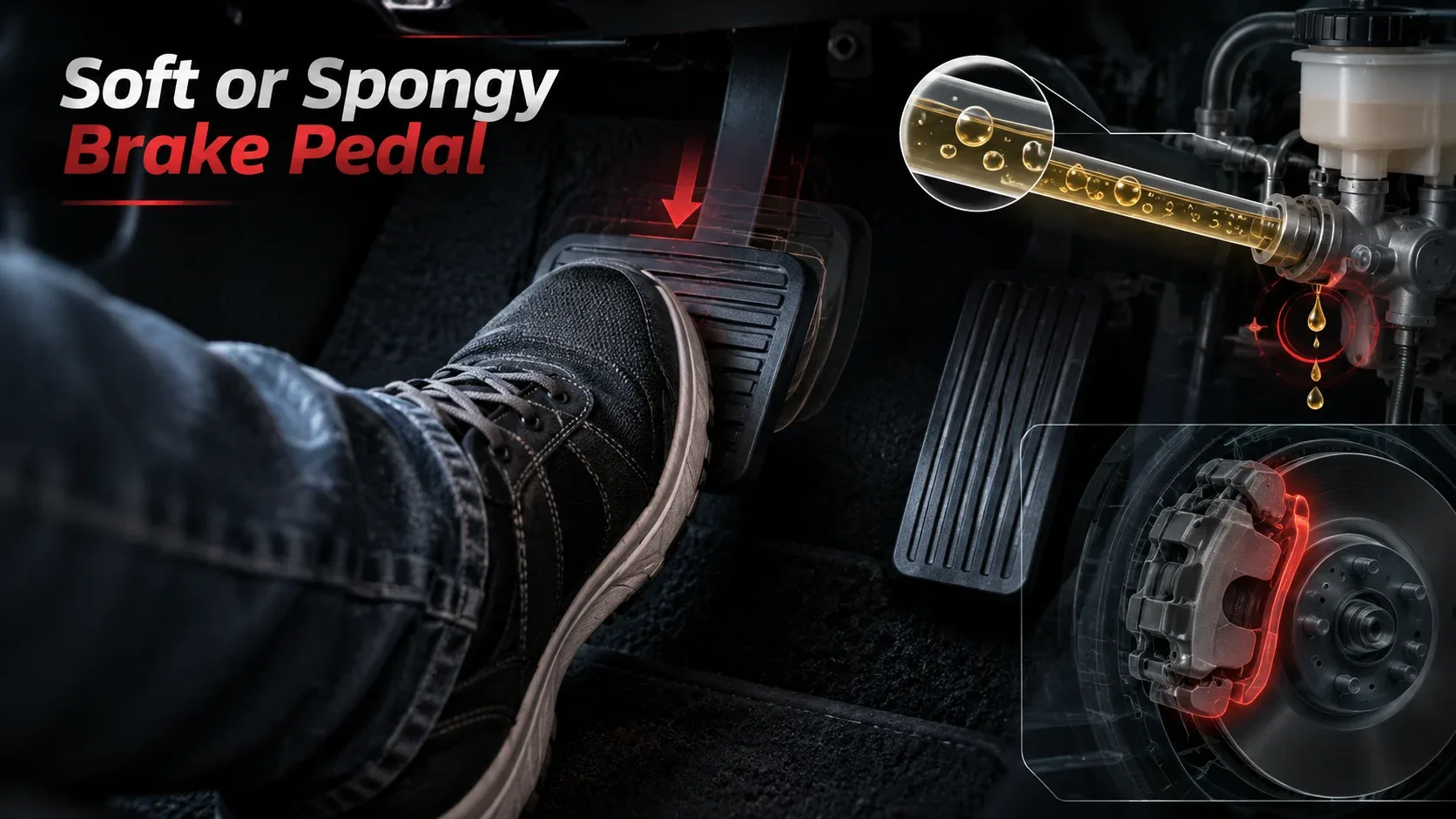
A spongy pedal does not independently establish master-cylinder failure.
3. Excessive Pedal Travel
A brake pedal moving considerably farther than normal can indicate a hydraulic or mechanical problem that requires diagnosis.
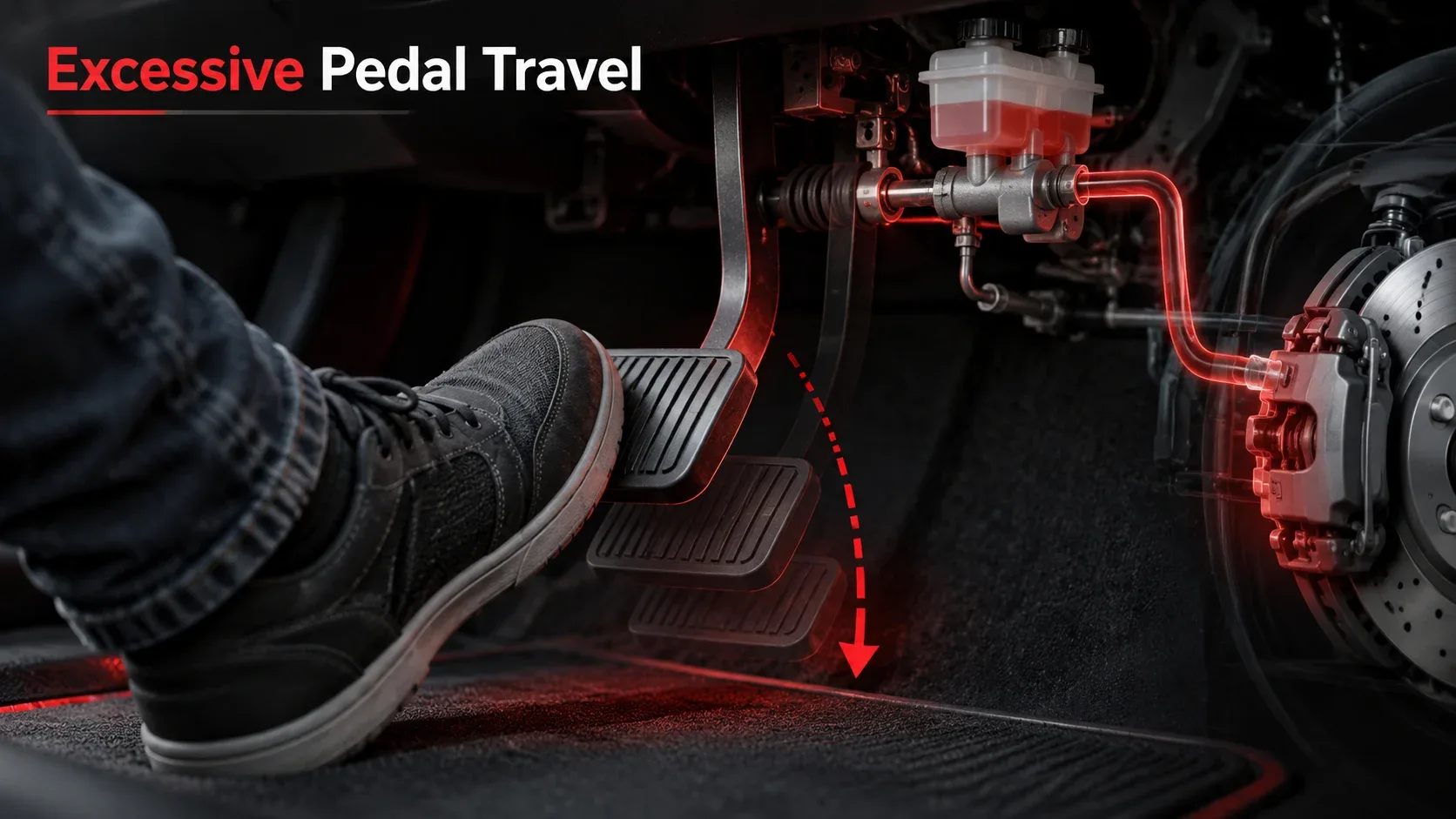
Do not attempt to confirm the problem by repeatedly testing the brakes in traffic.
4. Brake-Fluid Loss
Brake-fluid loss can result from leaks at the master cylinder, brake lines, flexible hoses, calipers or wheel cylinders.
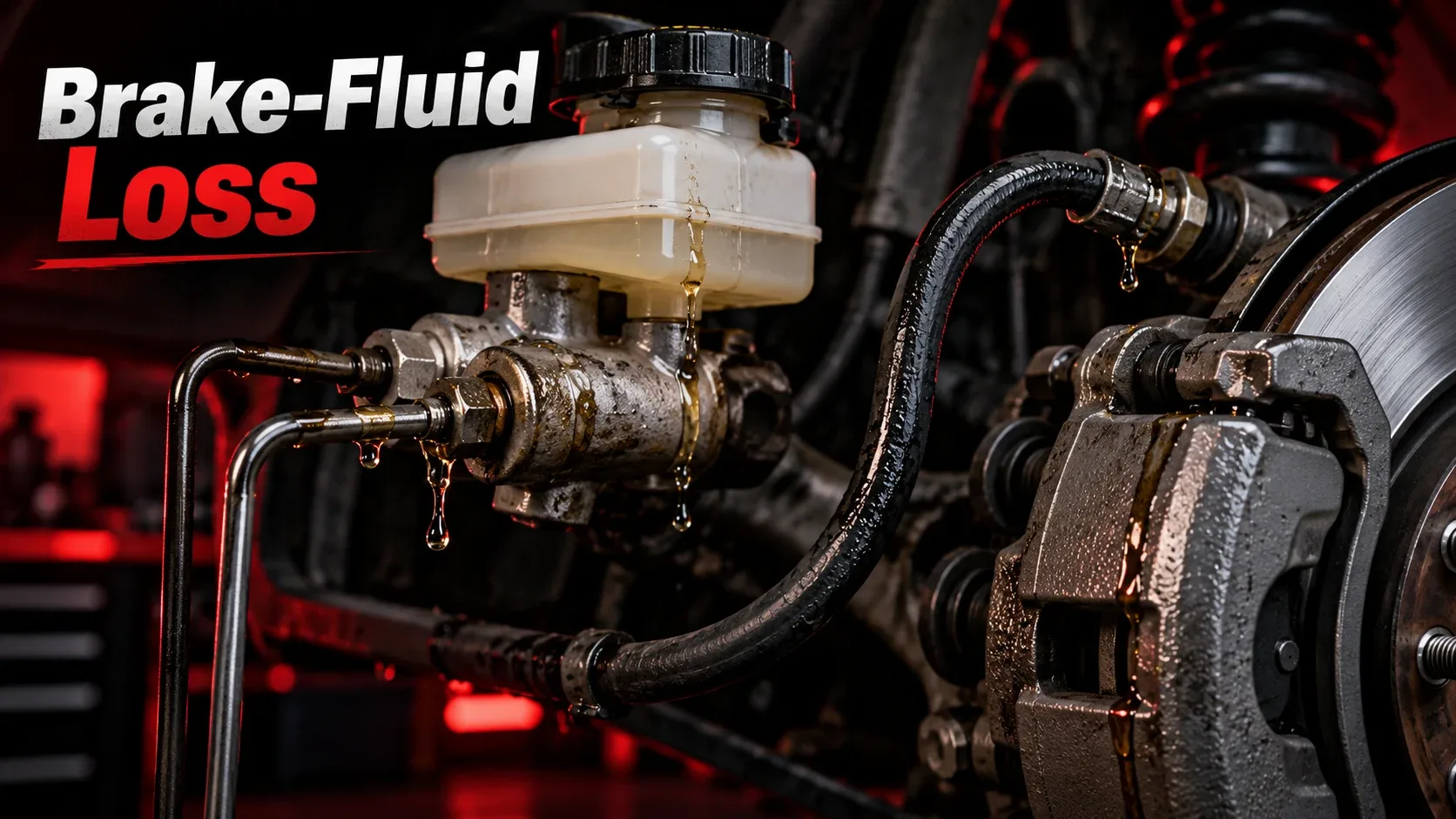
External leakage must be traced and repaired. Internal master-cylinder bypass can also occur without visible fluid loss.
5. Unusual Braking or Red Warning Lights
Reduced stopping performance and unexplained red brake-system warnings may indicate a potentially serious fault.
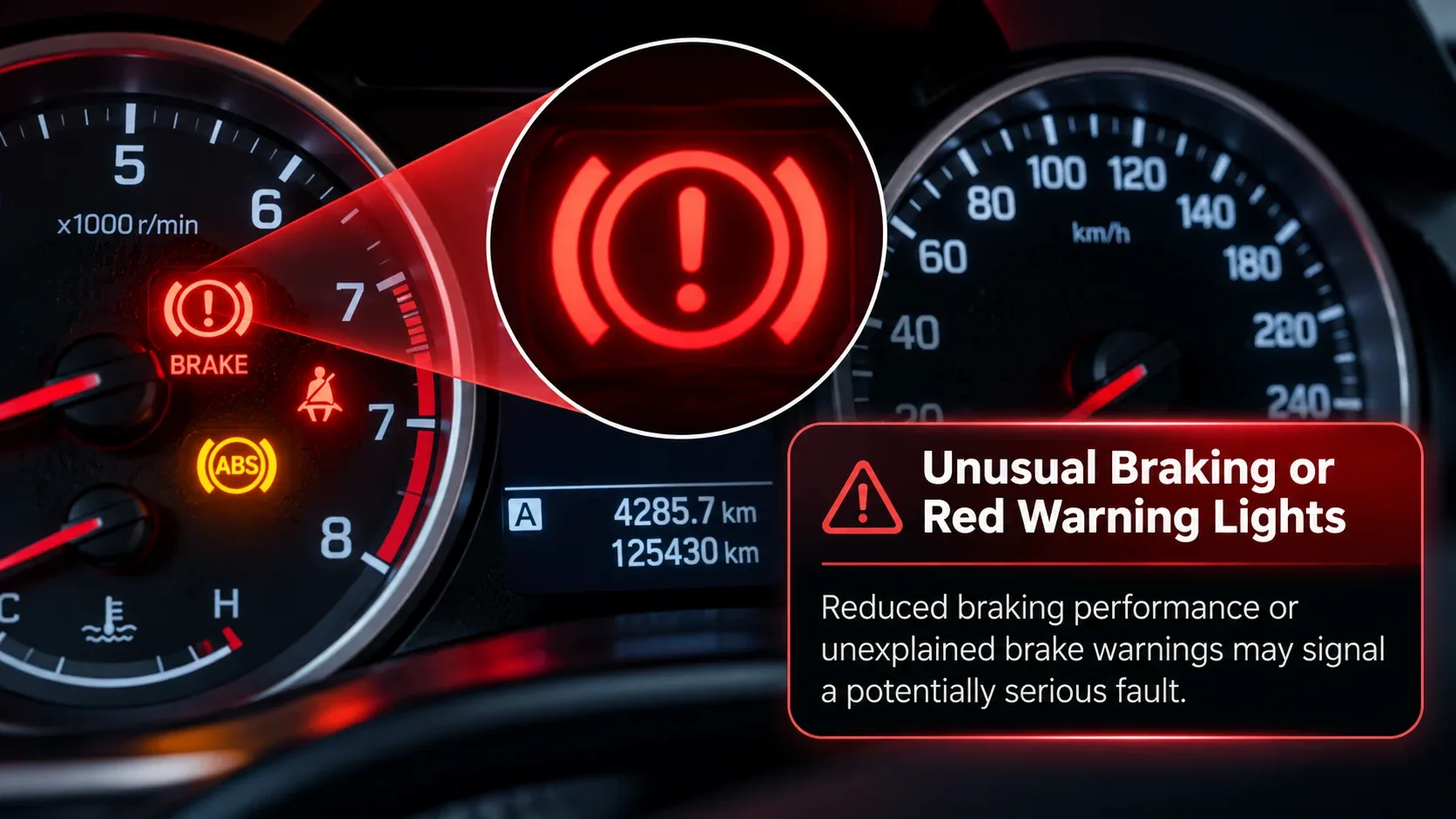
A red brake warning can also indicate an applied parking brake, depending on vehicle design.
Consult the owner’s manual and obtain professional help if the warning is unexplained or braking feels abnormal.
A master cylinder can fail internally without losing fluid externally. Conversely, a soft or sinking pedal does not automatically prove that the master cylinder is defective.
What Does Your Brake Pedal Feel Like?
Select a symptom to explore potential explanations. This educational tool is not a diagnosis or confirmation that a vehicle is safe to drive.
Internal master-cylinder bypass or another hydraulic fault can cause abnormal pedal movement.
Stop safely and obtain qualified assistance.
This tool cannot establish that a vehicle is safe to drive.
What If the Master Cylinder Isn’t the Problem?
Replacing parts without diagnosis can become expensive. Several brake-system faults produce overlapping symptoms.
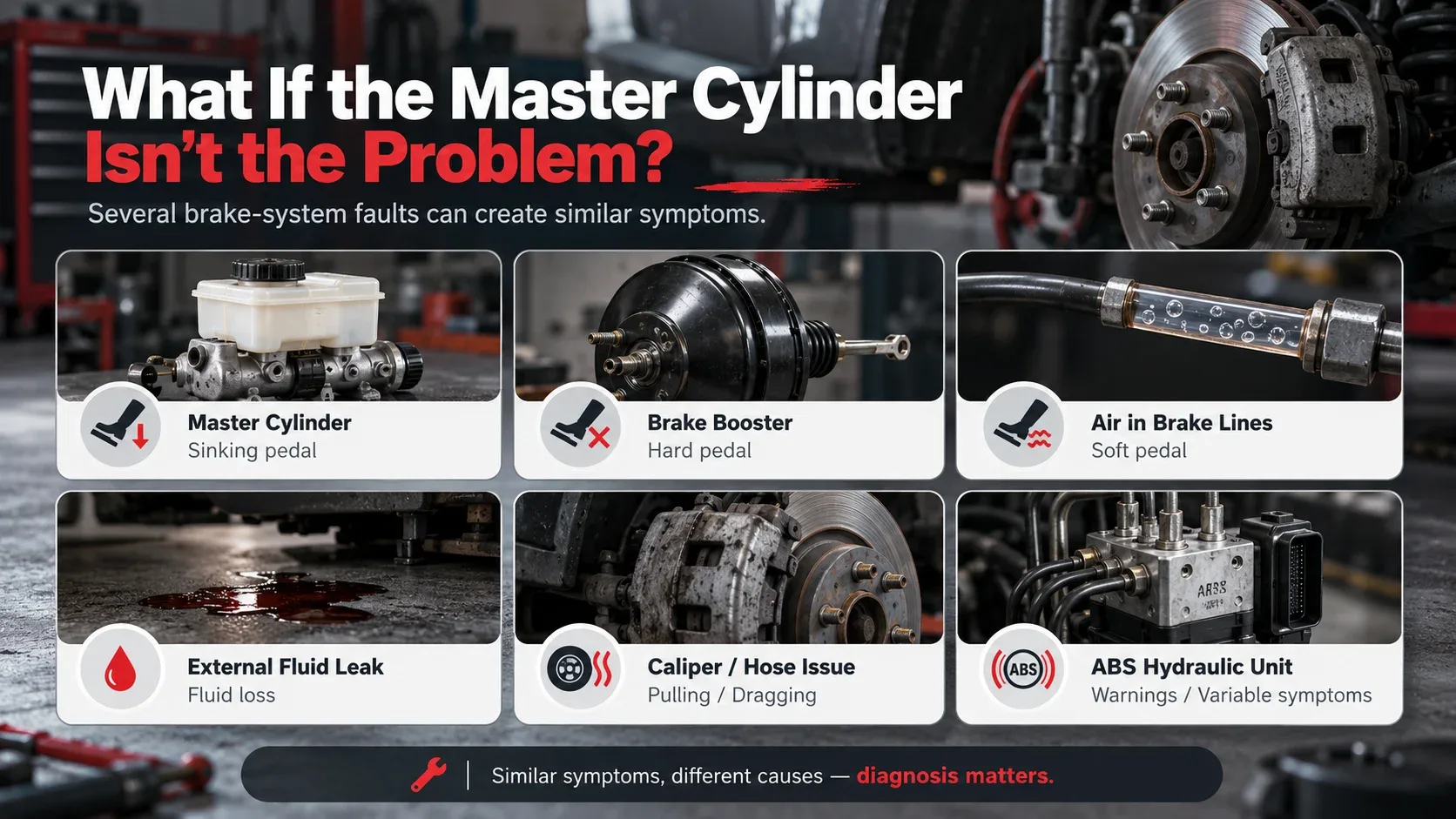
| Possible Fault | Typical Clue | Important Difference |
|---|---|---|
| Master cylinder | Sinking pedal | Internal bypass may occur without an exterior leak |
| Brake booster | Often a hard pedal | Reduces braking assistance |
| Air in brake lines | Soft pedal | Compressibility changes pedal feel |
| External fluid leak | Fluid loss, sinking pedal | Fluid escapes from hydraulic components |
| Caliper / hose fault | Pulling, dragging or variable response | Wheel-end problems affect braking |
| ABS hydraulic fault | Possible warnings, variable symptoms | May require manufacturer-specific testing |
Brake-booster problems often increase pedal effort, while hydraulic pressure loss may cause longer pedal travel. These are diagnostic clues rather than definitive rules.
How a Technician Confirms Master Cylinder Failure
Jason’s mechanic shouldn’t assume a soft pedal automatically means a defective master cylinder.
A trustworthy inspection examines alternative sources of hydraulic pressure loss before recommending a repair.
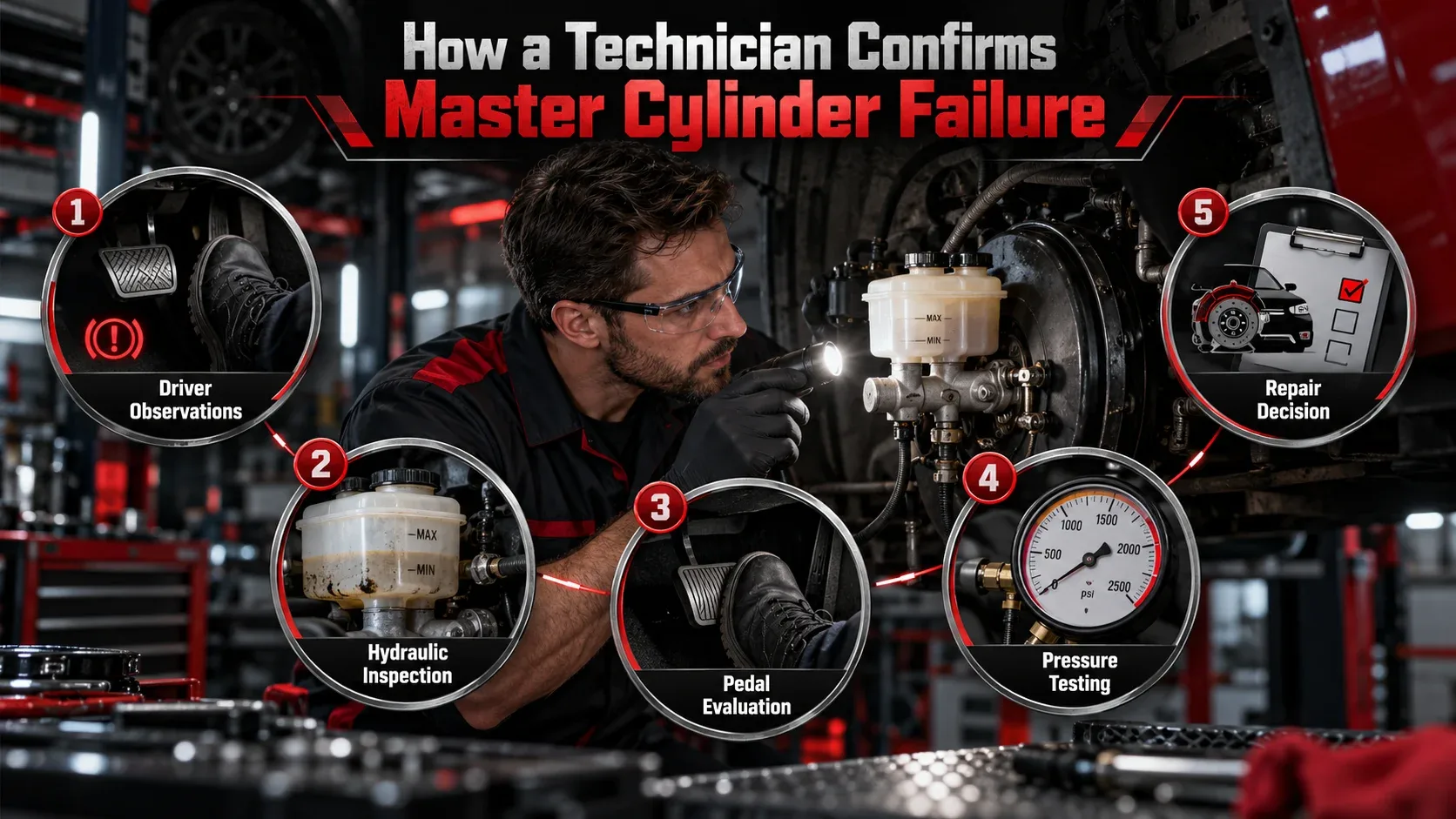
When did the symptoms appear? Was any recent work performed? Are warning lights present?
Examine accessible fluid levels, connections, hoses, lines and wheel-brake components.
Assess the behavior under appropriate controlled conditions using vehicle-specific procedures.
Specialist tests may help distinguish internal bypass from other hydraulic problems.
Replacement or approved rebuilding should follow sufficient evidence.
“What testing shows that the master cylinder is responsible, and what other causes have you ruled out?”
Can You Fix a Master Cylinder, or Should You Replace It?
The phrase fix master cylinder could describe an approved rebuild or replacement of a defective assembly.
Some older serviceable cylinders can be rebuilt when their internal bore and other components are within specifications.
Many modern designs are replaced as complete assemblies when they fail internally.
Suitable only when approved service procedures, rebuild parts and acceptable internal conditions exist.
Often the correct choice for a non-serviceable, worn or damaged master cylinder.
Adding fluid or bleeding alone will not repair worn internal seals. Choose the repair based on confirmed diagnosis and manufacturer guidance.
Master Cylinder Replacement: What a Proper Job Includes
Even after the fault is confirmed, replacing the component is only part of the work.
Correct fitment, cleanliness, bleeding and verification are critical.
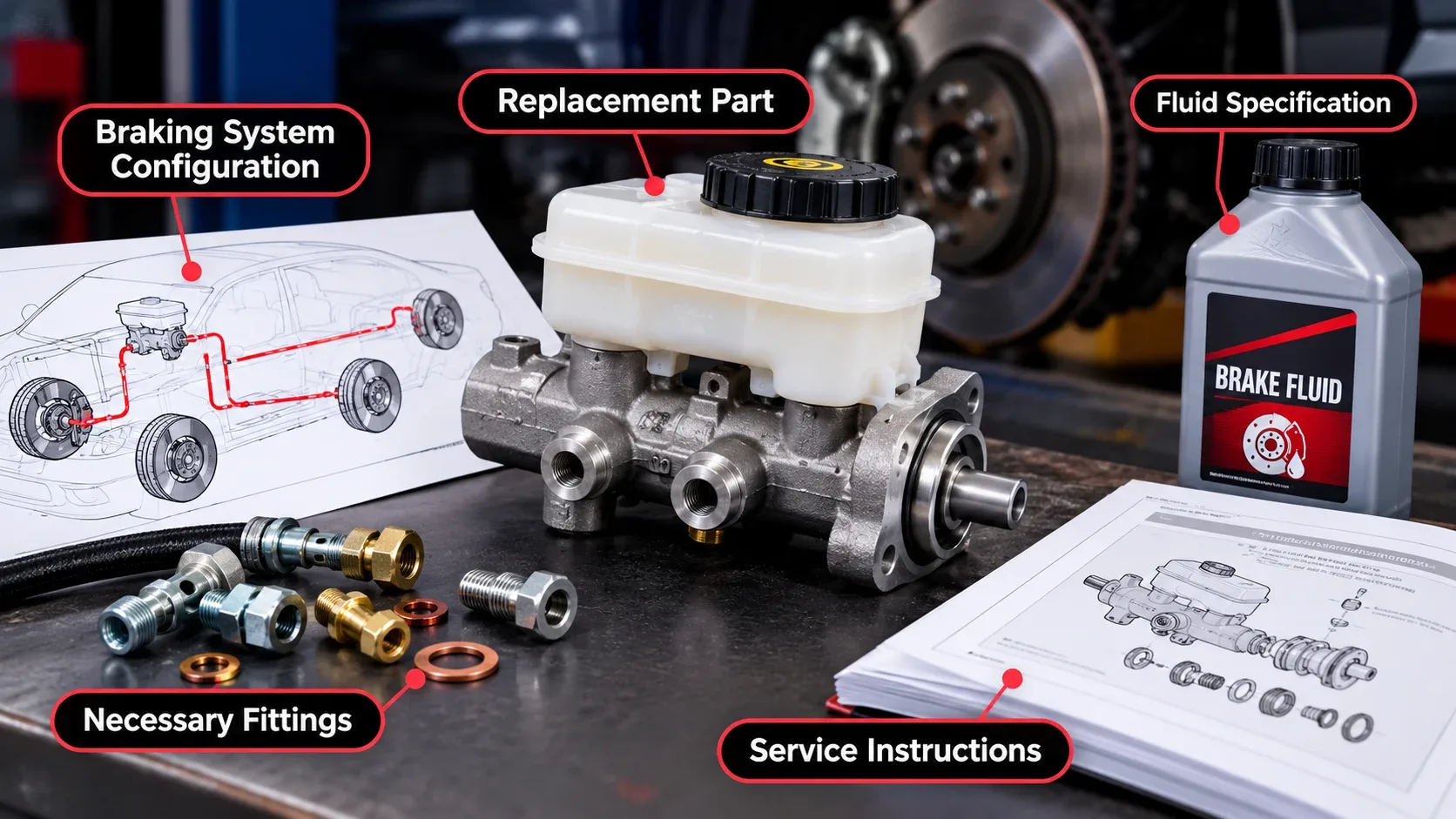
Before Replacement
Confirm the proper replacement part, brake-system configuration, fluid specification, fittings and manufacturer service instructions.
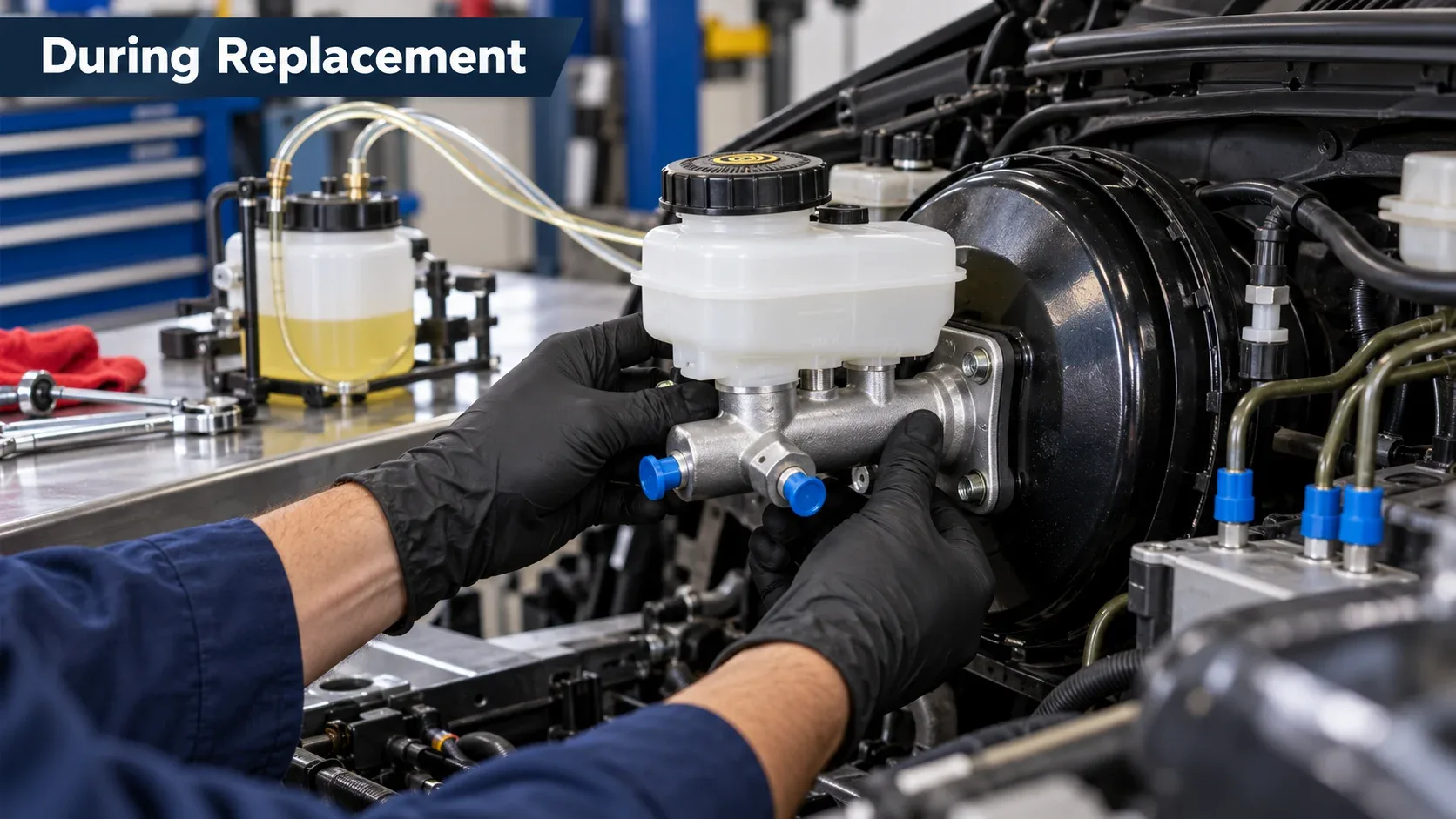
During Replacement
Follow the vehicle-specific procedure, prevent contamination and use any required manufacturer-approved pre-bleeding method.
After Replacement
Complete required hydraulic bleeding, any ABS-specific bleeding, leak inspection, fault checks and braking-system verification.
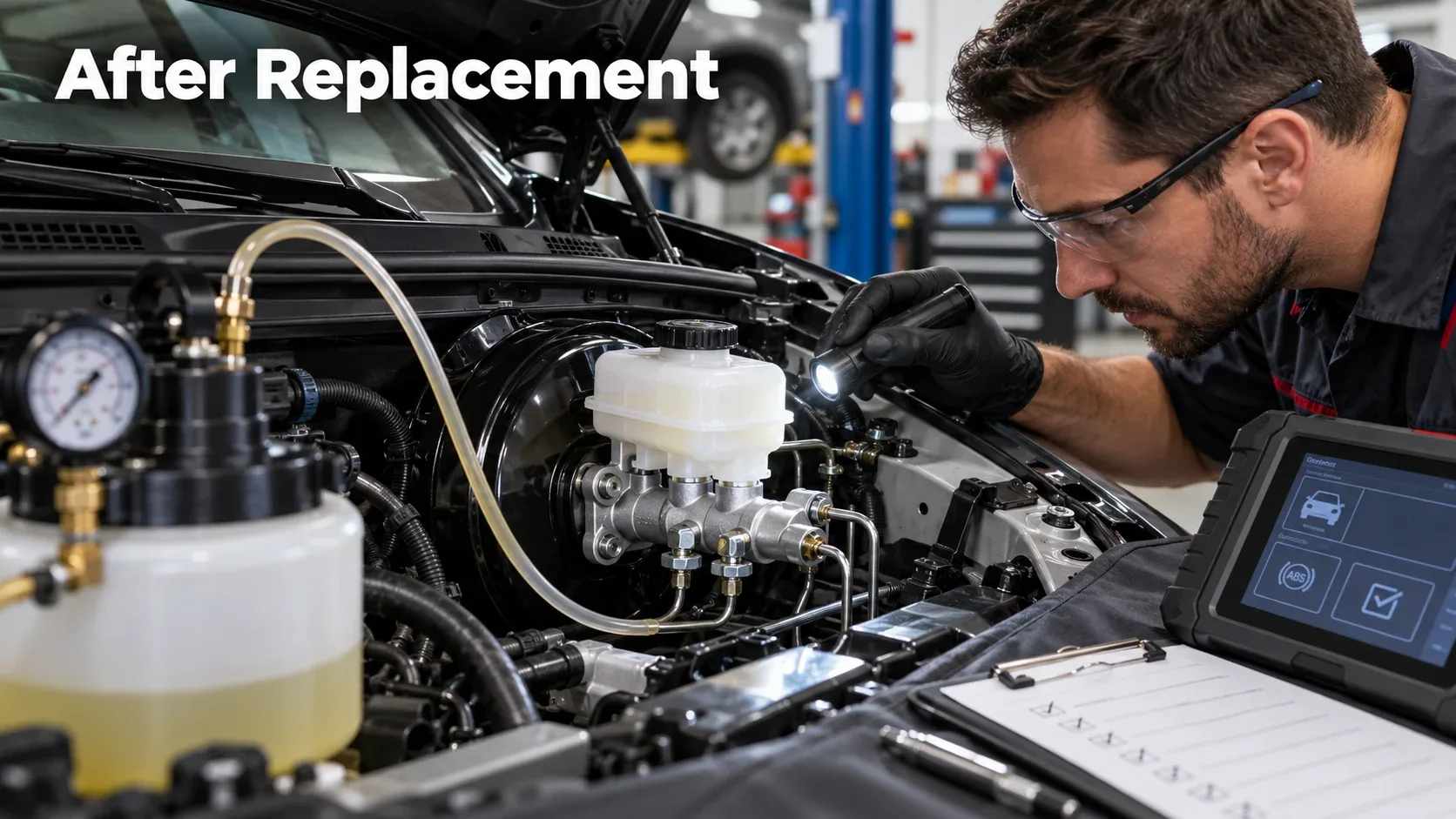
- Use the manufacturer-specified brake fluid.
- Complete the prescribed hydraulic bleeding process.
- Perform scan-tool ABS bleeding if required.
- Inspect all disturbed fittings for leaks.
- Verify proper pedal response and braking operation before returning the vehicle to service.
Brake hydraulic work is safety-critical and is not a suitable first-time DIY project for an inexperienced owner.
So, What Was Wrong With Jason’s Car?
This is an illustrative diagnostic example, not a documented repair of a specific Toyota Camry.
Jason describes excessive pedal travel and inconsistent brake response.
The technician investigates hydraulic leaks, trapped air and related faults.
Proper testing indicates that the master cylinder cannot retain pressure as intended.
A compatible master cylinder is installed following proper service procedures.
Bleeding, leak inspection and braking-system verification are completed before release.
The important part wasn’t guessing which component failed. It was confirming the cause before replacing it.
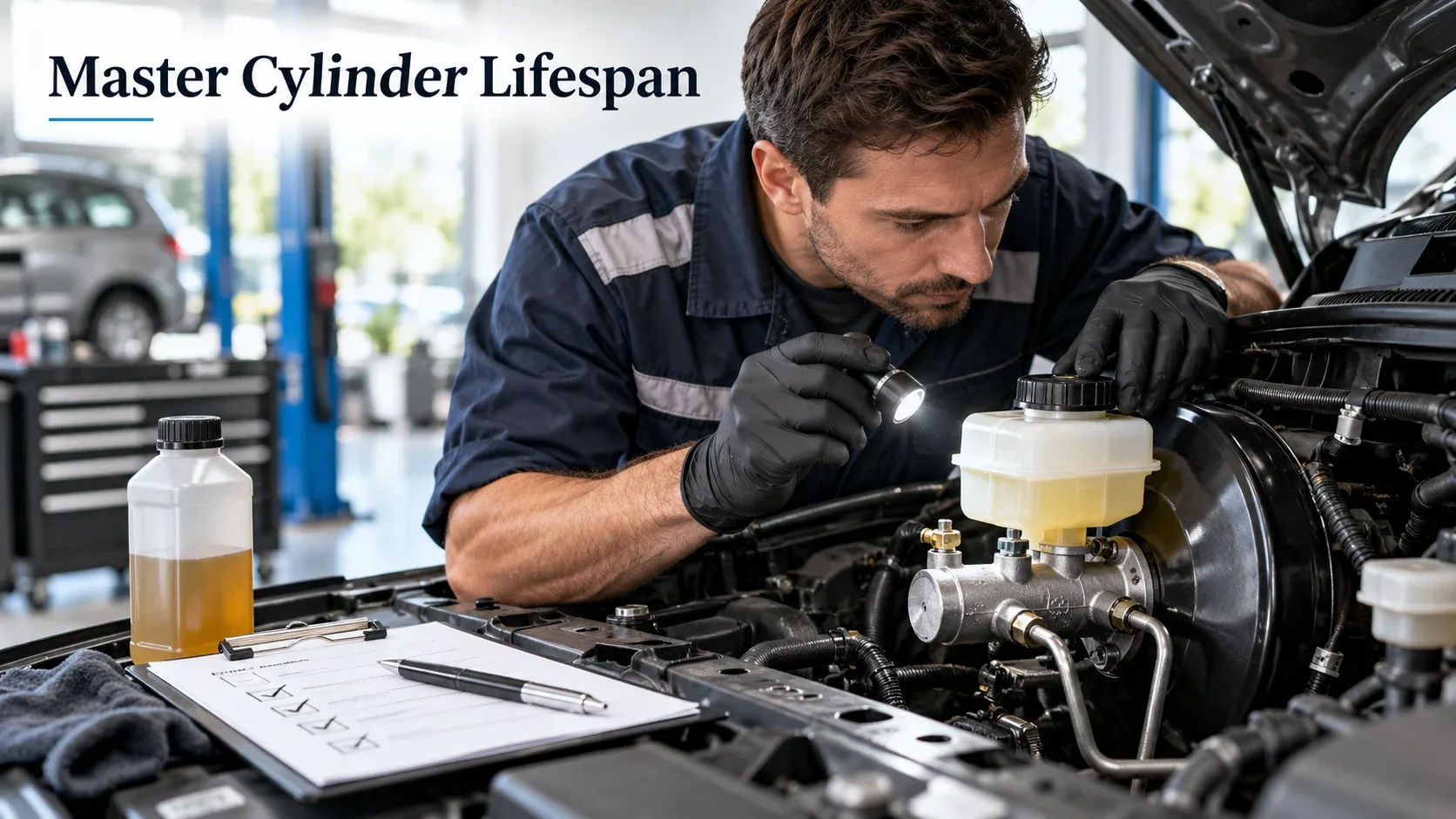
How Long Does a Master Cylinder Last?
There is no universal master-cylinder replacement interval.
Service life depends on construction, age, brake-fluid condition, environment and use.
Some last for many years, while others fail sooner because of wear, corrosion, contamination or defects.
Maintenance That Can Help
- Follow manufacturer-specified brake-fluid service intervals.
- Use the correct brake-fluid specification.
- Investigate unexpected fluid loss.
- Act promptly when brake-pedal behavior changes.
- Ensure hydraulic service follows clean procedures.
- Verify that required bleeding and post-repair checks are completed.
Good maintenance can reduce avoidable issues, but it cannot guarantee that seals or other hydraulic parts will never fail.
Five Questions to Ask Your Mechanic
Review these questions before authorizing master-cylinder work.
Frequently Asked Questions About Master Cylinders
What does a master cylinder do?
It converts brake-pedal input into hydraulic pressure for the vehicle’s braking circuits.
What are the signs of a bad master cylinder?
Possible symptoms include sinking or excessive pedal travel, difficulty maintaining pressure and abnormal braking. These symptoms may also indicate other faults.
Can a master cylinder fail without an external leak?
Yes. Internal seal bypass can cause hydraulic pressure loss without visible fluid leakage.
Can I drive with a suspected failing master cylinder?
Suspected hydraulic braking failure can be dangerous. Stop safely and seek qualified assistance or towing.
Can a master cylinder be repaired instead of replaced?
Some approved serviceable designs can be rebuilt if internal components meet specification. Many modern assemblies are replaced.
Will adding brake fluid repair the master cylinder?
No. Topping up fluid cannot repair damaged internal seals or an unresolved hydraulic leak.
What is the difference between a brake booster and master cylinder?
The master cylinder develops hydraulic pressure, while a conventional brake booster helps reduce the driver’s pedal effort.
Does replacing a master cylinder require brake bleeding?
Appropriate hydraulic bleeding is generally required. Some ABS systems need specialized scan-tool bleeding procedures.
How long does a master cylinder last?
There is no single lifespan. Condition, design, brake-fluid care and operating environment all matter.
Can I replace a master cylinder myself?
Hydraulic braking work is safety-critical and may require specialist tools and procedures. Inexperienced owners should use qualified technicians.
The Best Repair Begins With the Right Diagnosis
Jason started with an unfamiliar component and a worrying brake pedal.
In our illustrative scenario, careful testing confirmed a master-cylinder fault, and proper replacement and verification restored normal braking operation.
Recognize braking-system warning signs, stop safely when braking is abnormal, confirm the actual cause and verify every repair before returning to the road.