Engine Components & Symptoms • Maintenance Guide
Your car can run perfectly today and still be overdue for a timing belt. Learn what the belt does, which warning signs matter, how replacement intervals work, and what a fair repair estimate should include.
Quick answer: When should you replace a timing belt?
Follow the replacement interval for your exact vehicle and engine—not the appearance of the belt alone. AAA notes that timing belt replacement commonly falls around 60,000–100,000 miles, but actual mileage and age requirements vary by manufacturer. Belts sometimes fail without warning. RepairPal’s U.S. estimate, updated September 3, 2026, is $918–$1,338 for timing belt replacement, excluding taxes, location differences, and possible related repairs.
Sources: AAA timing belt guide and RepairPal cost estimator.
In This Guide
Picture this: your car has just passed 90,000 miles. The engine starts normally, fuel economy seems unchanged, and no warning light is on. Then your mechanic mentions a timing belt service. It is tempting to delay a repair when nothing feels wrong—but some timing belts wear with age and mileage while giving little or no advance notice.
The goal is not to replace parts unnecessarily. It is to learn whether your vehicle actually uses a belt, confirm the correct maintenance schedule, and understand what should be included in the quote before authorizing work.
What Is a Timing Belt and How Does It Work?
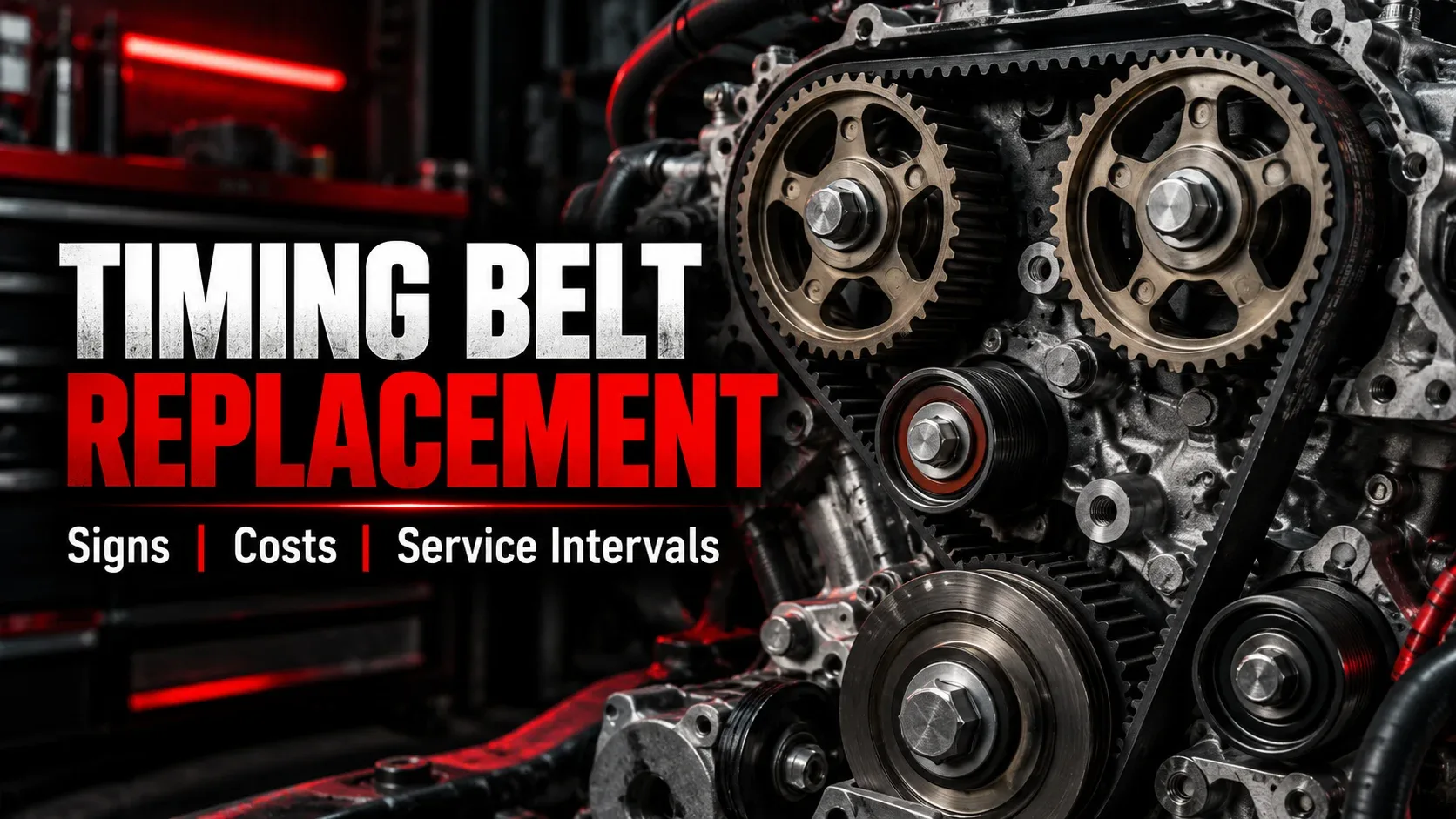
A timing belt is a reinforced, toothed belt that connects the engine’s crankshaft to one or more camshafts. The crankshaft moves the pistons; the camshafts open and close the intake and exhaust valves. The timing belt keeps these movements correctly coordinated.
Some owners call it a camshaft belt because it drives the camshaft. In engines that use this design, the terms camshaft belt and timing belt usually refer to the same component. It is not the same as the external serpentine belt, which drives accessories such as the alternator and air-conditioning compressor.
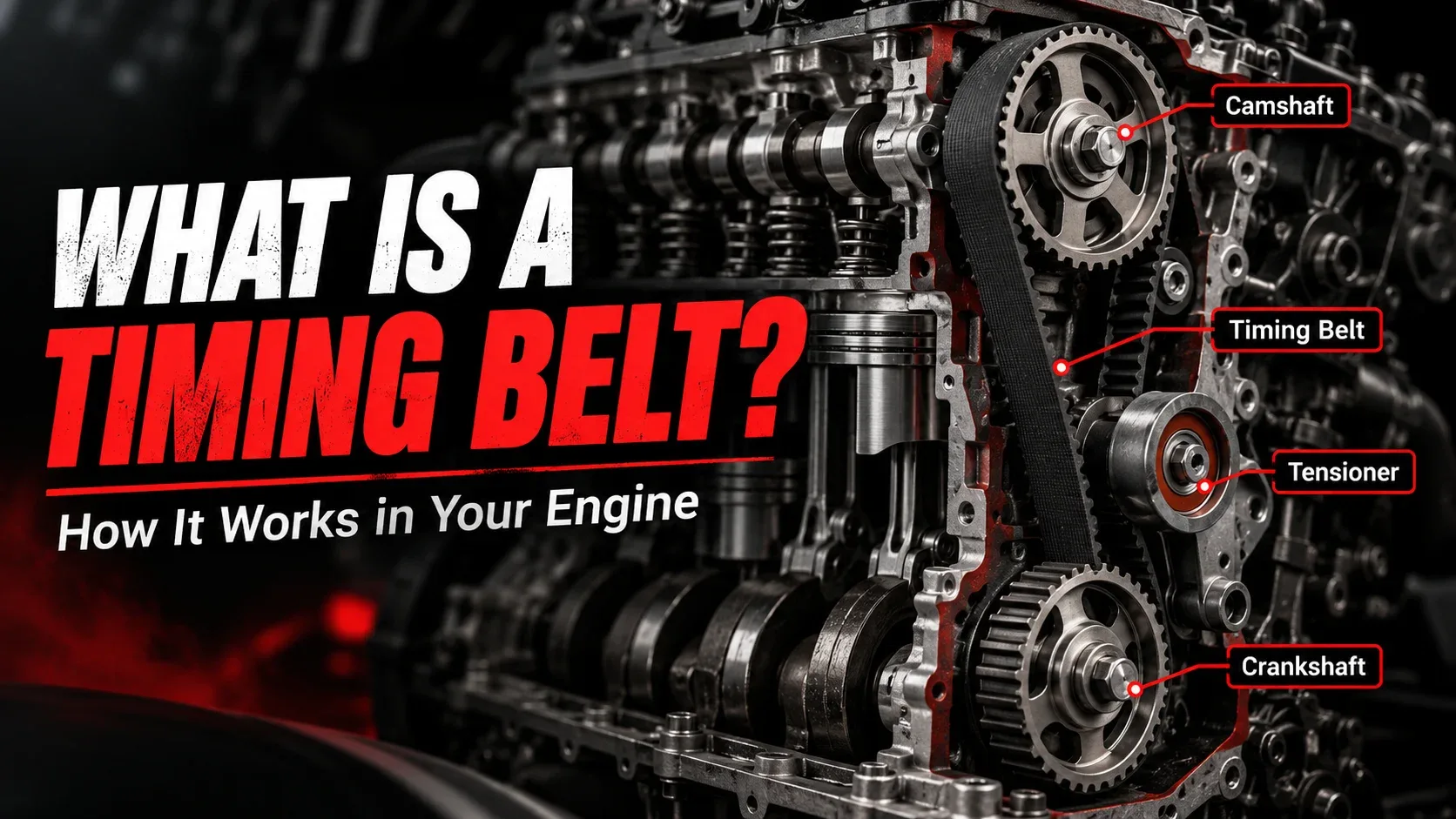
Crankshaft
Turns as the pistons move up and down inside the cylinders.
Camshaft
Controls when the intake and exhaust valves open and close.
Timing belt
Transfers precisely timed rotation between crankshaft and camshaft sprockets.
Tensioner and idlers
Help maintain correct belt tension and keep it following the intended path.
Timing Belt vs. Timing Chain: What Is the Difference?
The phrase “chain timing belt replacement” often comes from owners who are not sure which system their engine uses. A timing belt and timing chain perform the same basic synchronization job, but they are different components and cannot simply be swapped for one another.
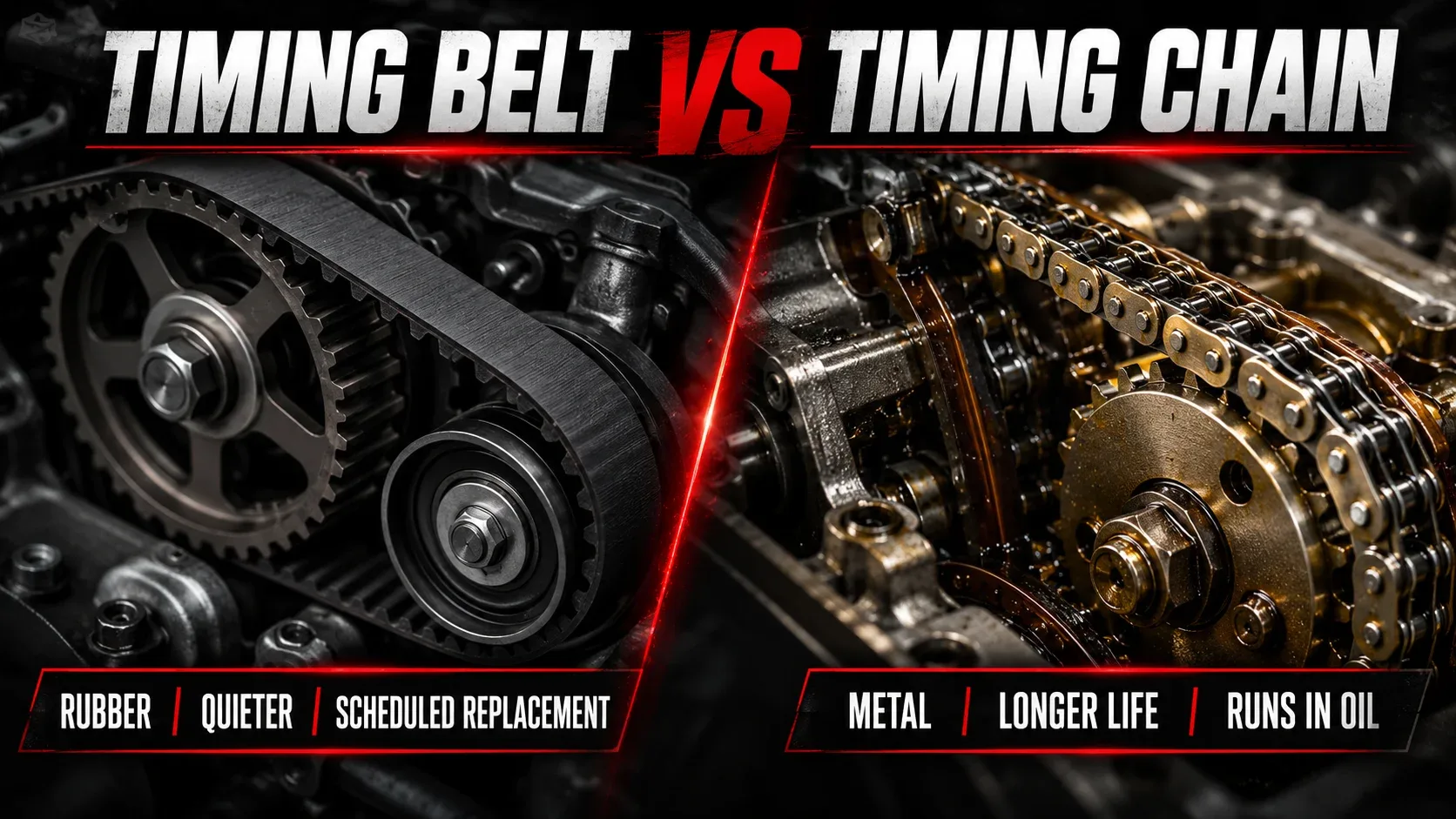
| Feature | Timing belt | Timing chain |
|---|---|---|
| Construction | Reinforced toothed belt | Metal chain and sprockets |
| Lubrication | Usually operates dry inside a cover; some designs use wet belts | Typically operates inside the engine with oil lubrication |
| Routine replacement | Often has a specific age/mileage interval | May have no fixed routine replacement interval, depending on the engine |
| Common concerns | Aging, tooth damage, contamination, tensioner/idler wear | Chain stretch, guides, tensioners, lubrication-related wear |
| Repair planning | Follow the belt service schedule | Follow chain-specific manufacturer diagnosis and maintenance instructions |
How to tell which one you have: Look up your vehicle’s model year, engine specification, and manufacturer maintenance schedule. The same model name may have different engines across years or trim levels.
Signs That Your Car’s Timing Belt May Need Replacement
The most important sign can be the least dramatic: the belt is past its scheduled service interval. A healthy-sounding engine does not prove the belt is safe. Other symptoms may suggest a timing-system issue, but none is a stand-alone diagnosis.
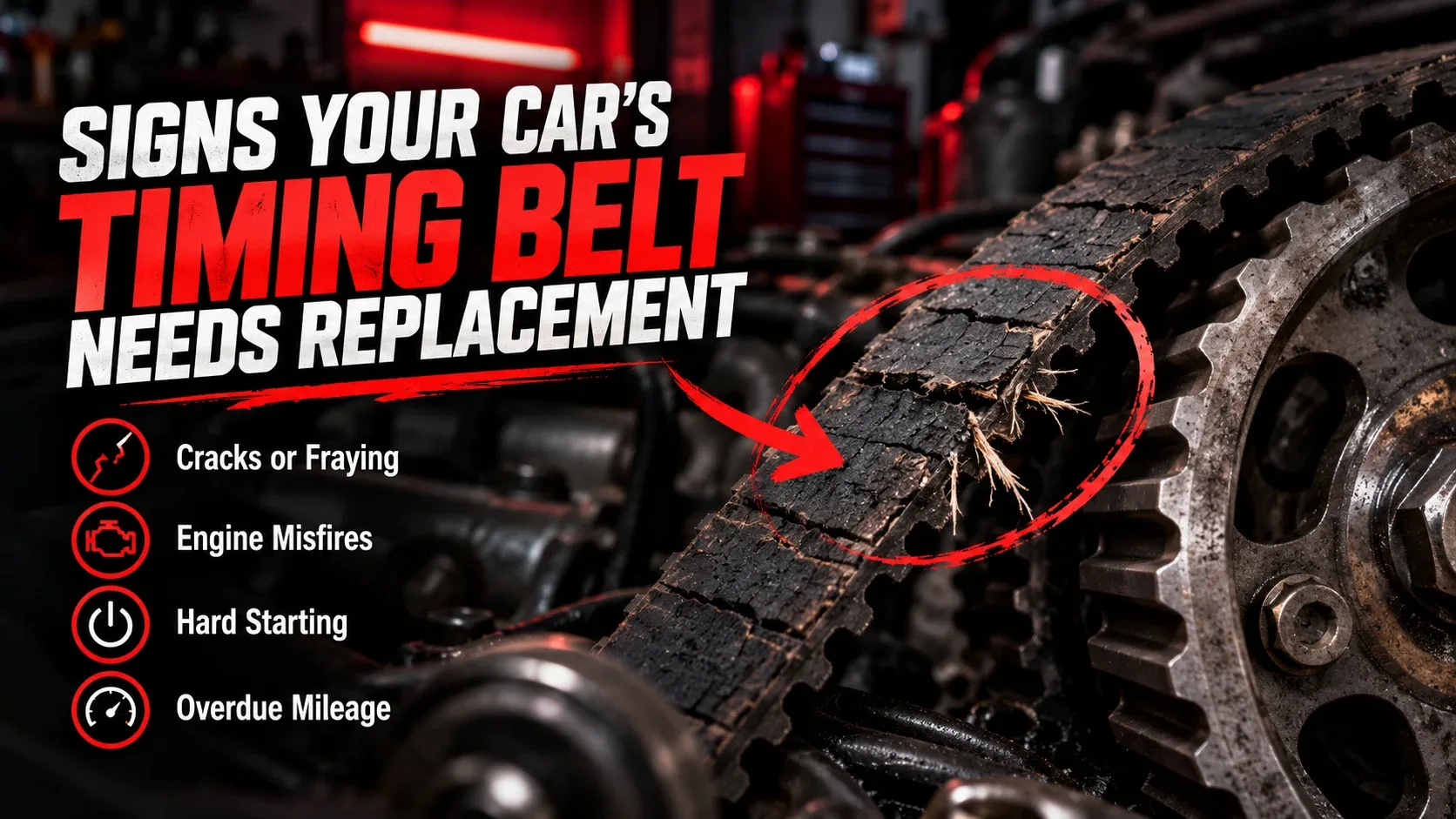
1. Overdue mileage or unknown service history
If you cannot confirm when the belt was last replaced, ask a mechanic to verify the applicable schedule and available records. A used car with a missing service history deserves extra attention even when it runs well.
2. Visible wear, missing teeth, or contamination
Where the timing belt can be safely inspected, frayed edges, surface cracks, missing teeth, oil contamination, or obvious tracking problems require professional evaluation. Many timing belts are hidden behind covers, so a casual glance under the hood will not show their condition.
3. Unusual ticking, chirping, or rattling near the timing system
Noise can come from a worn tensioner, idler bearing, or an unrelated engine accessory. A belt itself does not necessarily produce an audible warning. Have unfamiliar mechanical noises diagnosed rather than assuming their cause.
4. Misfires, rough running, or reduced power
If valve timing becomes incorrect because the belt slips or jumps teeth, the engine may run poorly. However, ignition, fuel, and sensor problems can produce similar symptoms. Proper diagnostic work is essential.
5. Sudden stalling or a no-start condition
A broken timing belt can stop the camshaft from turning correctly, causing the engine to stall or fail to start. Do not repeatedly crank an engine if a timing belt break is suspected; further damage may occur on certain engine designs.
Important: No warning signs does not mean no risk
Timing belts can fail without an obvious noise, light, or performance change. Use the maker’s replacement schedule and service history as your primary decision tools—not symptoms alone.
| Observation | Could indicate | Next step |
|---|---|---|
| Belt overdue or maintenance unknown | Scheduled service is needed or unverified | Confirm the exact interval and arrange service |
| Visible fraying, missing teeth, oil contamination | Belt or adjacent component problem | Arrange prompt professional assessment |
| Ticking or squealing near engine | Possible pulley/tensioner or unrelated issue | Have the noise diagnosed |
| Misfire or rough running | Numerous possible engine faults | Obtain a diagnostic inspection |
| Sudden stop and no-start | Possible timing system failure | Avoid repeated starting; consider towing |
Timing Belt Replacement Intervals: When Is It Due?
Timing belt service is typically specified by mileage, elapsed time, or both. The correct interval depends on engine design, model year, operating conditions, and manufacturer instructions. AAA describes 60,000–100,000 miles as a common mileage range, not an automatic rule for every vehicle.
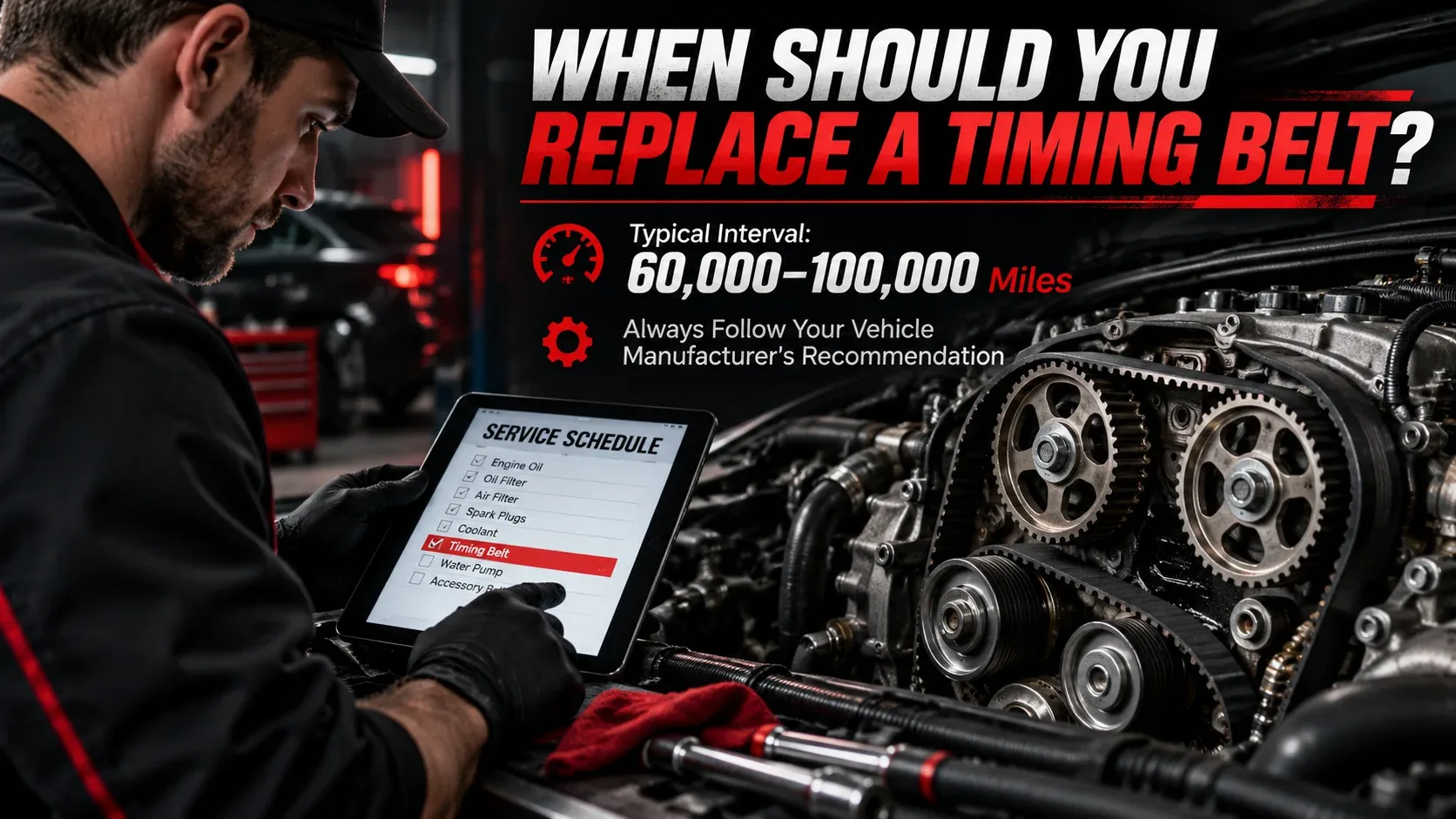
The correct way to check
- Confirm the model year, engine, and trim of your car.
- Locate the manufacturer’s maintenance schedule in the owner’s manual or official service documentation.
- Check whether the recommendation includes an age limit as well as mileage.
- Review past invoices to determine when the belt and associated parts were replaced.
- If the schedule or history is unclear, ask a qualified shop to verify it before deciding to delay.
What if you bought the vehicle used?
Do not assume the previous owner replaced the belt because the car passed a routine inspection. Look for a dated invoice documenting the vehicle mileage, replacement components, and servicing shop. If records cannot be found, discuss the risk and maintenance schedule with a qualified mechanic.
Does age matter if you drive very little?
Yes, for vehicles whose manufacturer specifies a calendar-time limit. Rubber-based timing drive materials and related components age even when annual mileage is low. Follow whichever limit—the specified years or mileage—comes first when your vehicle’s schedule states both.
Timing Belt Replacement Cost in the U.S. (2026)
For many readers, the biggest question is whether their mechanic’s estimate is reasonable. The answer depends on engine layout, labor access, regional shop rates, and the parts included in the job.
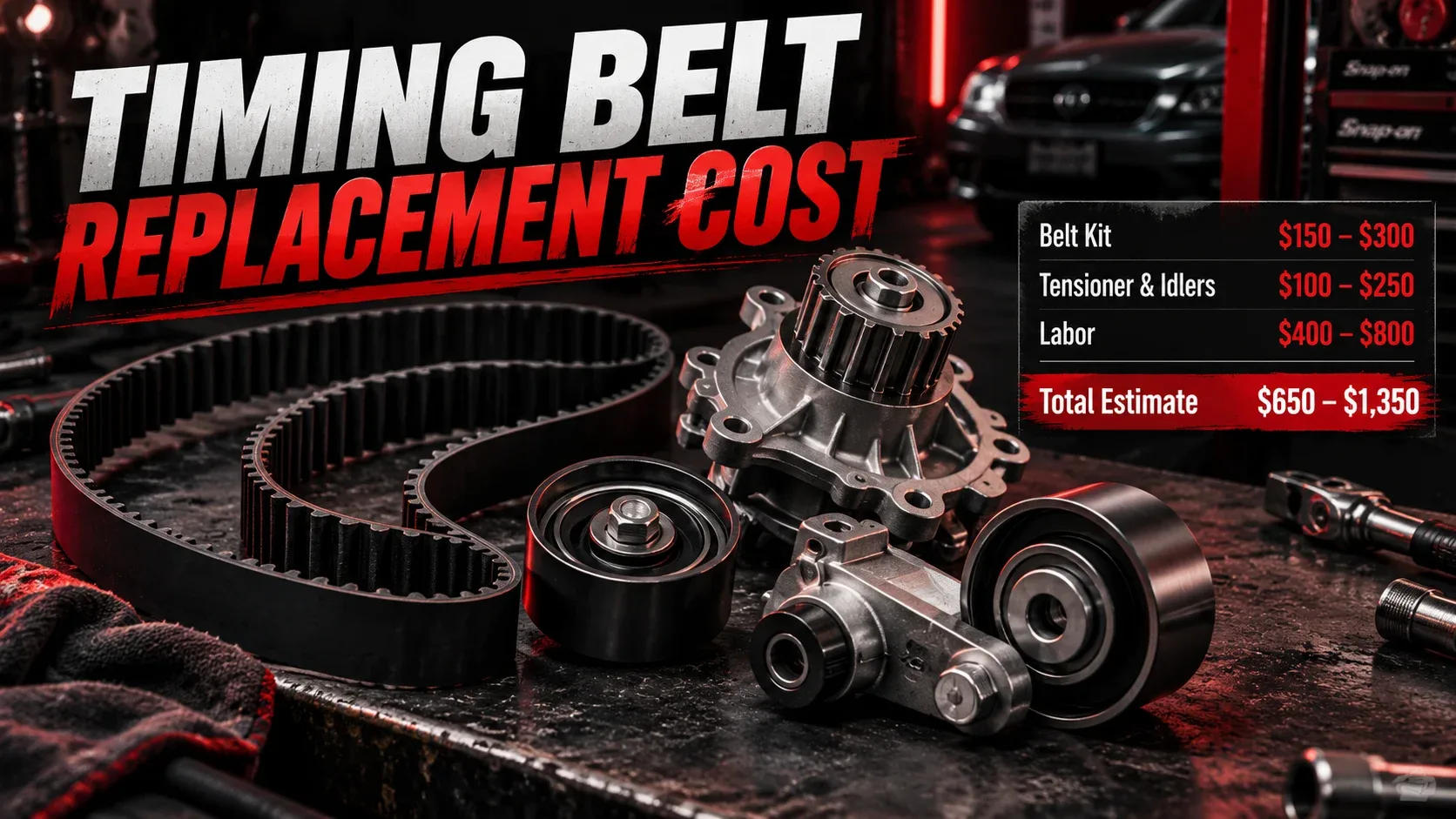
Estimated total repair
RepairPal U.S. general estimate, updated September 3, 2026.
Labor share of that estimate
Access and engine design strongly influence labor time.
| Expense | 2026 general estimate / explanation |
|---|---|
| Parts | $315–$453 in RepairPal’s national estimate; what is included may differ by quote. |
| Labor | $603–$885 in RepairPal’s estimate; engine access is a major factor. |
| Total timing belt replacement | $918–$1,338, excluding taxes and fees; a specific vehicle can be outside this range. |
| Water pump, seals, coolant or additional repairs | May change the invoice depending on the engine, parts included, and condition found during service. |
Cost source: RepairPal Timing Belt Replacement Cost Estimate. Figures are estimates, not guaranteed prices, and do not describe every model or repair scope.
Why two timing belt quotes can differ
- Access: Some engines require removing brackets, engine mounts, accessory drives, or other hardware.
- Components: A belt-only estimate may not include the tensioner, idlers, or water pump.
- Engine variation: Even vehicles sold under the same model name may use different timing systems.
- Regional labor rates: Shop rates vary across cities and service providers.
- Additional faults: Oil leaks, damaged bearings, or worn seals may need attention at the same time.
Questions to ask before approving the estimate
- Does this quote cover the belt, tensioner, and idler pulleys?
- Is the water pump timing-belt-driven on this engine, and is it included?
- Are coolant, seals, bolts, and other necessary supplies itemized?
- What warranty applies to parts and labor?
- Will the shop document the completed service and mileage?
Timing Belt Tensioner: What It Does and Why It Matters
The timing belt tensioner maintains the belt’s designed tension. Depending on the engine, it may use a spring-loaded mechanism, hydraulic damper, or another specified arrangement. Idler pulleys guide the belt along its routing path.
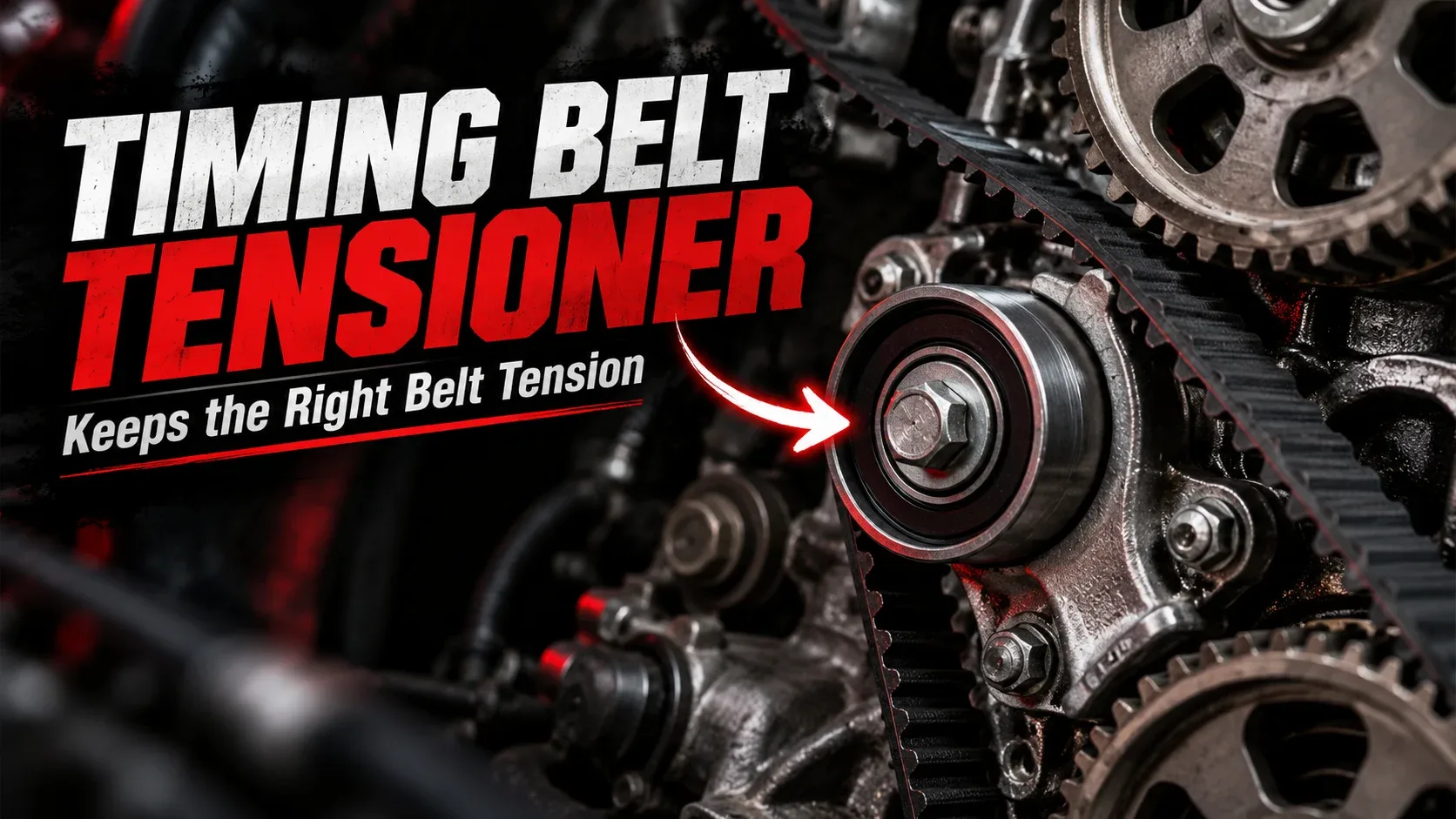
If a tensioner or bearing wears out, the belt may develop slack, track incorrectly, or become damaged. Gates explains that worn tensioners and idlers can contribute to premature timing belt failure. That is why many replacement kits include the belt together with tensioners and idlers appropriate to the vehicle.
Should you replace the tensioner with the belt?
Follow the manufacturer and kit instructions for your engine. Replacing specified related wear components during a timing belt service can avoid paying to reopen the system and reduce the risk that an older component undermines a new belt. A tensioner should not be treated as an optional afterthought when the vehicle’s service procedure calls for replacement.
Technical background: Gates Timing 101.
What Happens If a Timing Belt Breaks?
When a timing belt breaks, the camshaft and crankshaft lose their intended synchronization. The engine usually stops running and will not restart normally. The extent of damage depends heavily on the engine’s internal design and what happened as timing was lost.
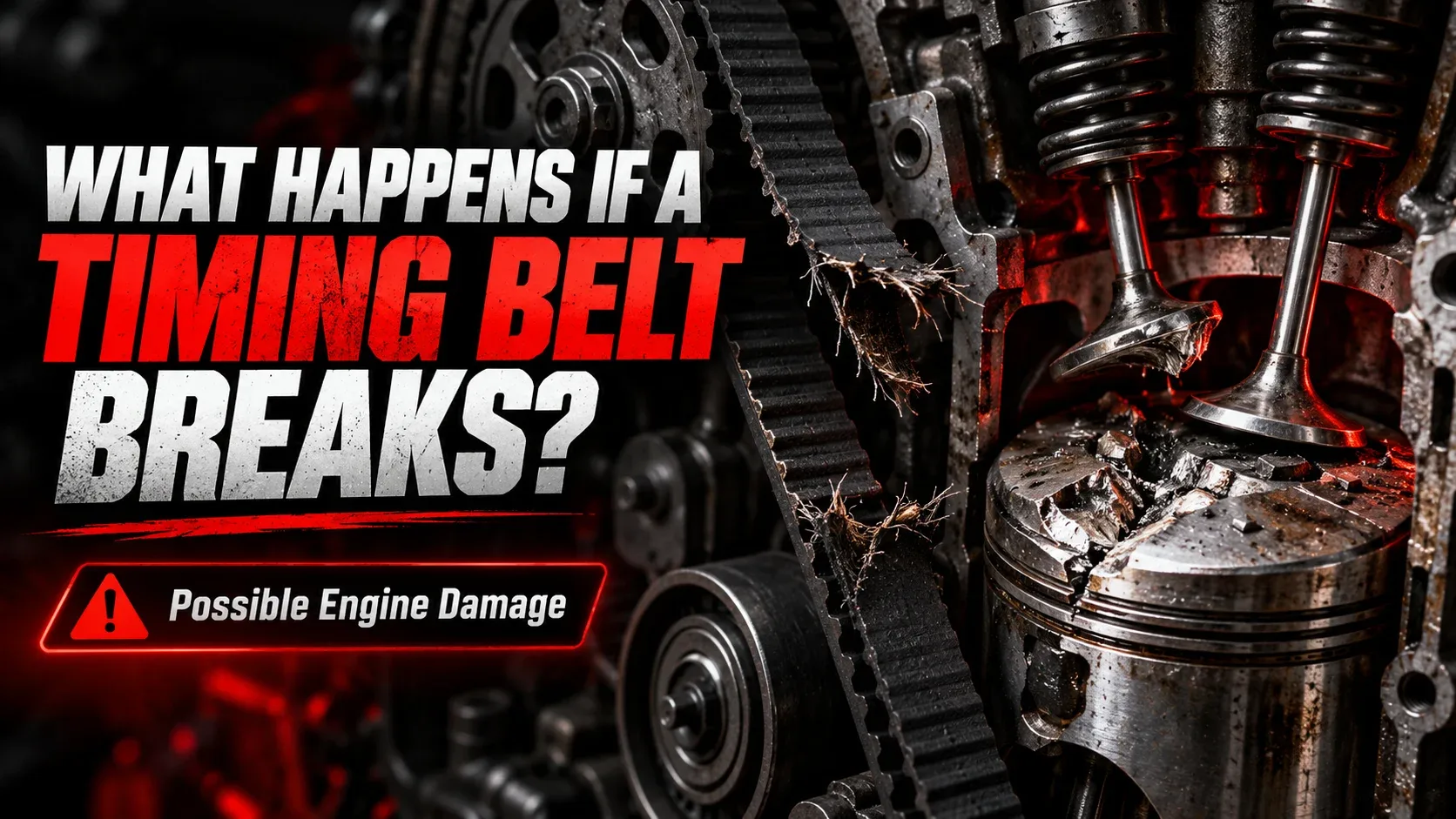
Interference engine
Pistons and open valves occupy overlapping space at different times in the cycle. Lost timing can allow contact, potentially bending valves and damaging other parts.
Non-interference engine
Engine geometry normally prevents valve-to-piston contact following timing loss. The car still stops, but valve impact is less likely.
If your engine stalls and timing belt failure is suspected
Pull over safely, switch the engine off, and avoid repeated cranking or attempts to drive. Arrange professional evaluation or towing. Do not remove timing covers or reach near moving engine parts without proper training and safety procedures.
How Is a Timing Belt Replaced?
Timing belt replacement is far more than removing an old belt and slipping on a new one. The repair requires correct crankshaft and camshaft alignment, engine-specific locking or holding tools when specified, accurate fastener procedures, and correct belt tension.
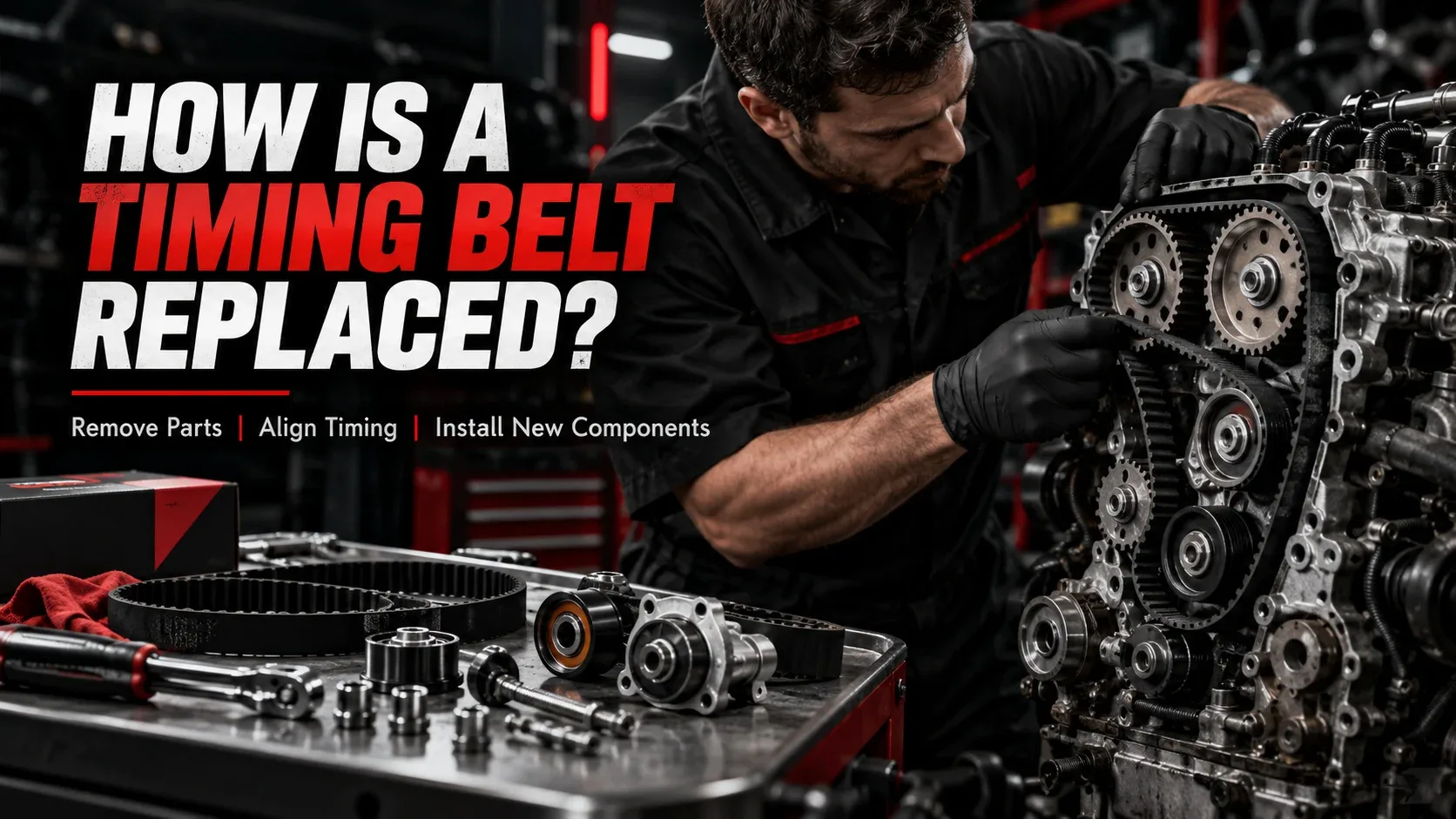
- Confirm fitment: Identify the exact engine and required timing belt service parts.
- Gain access: Remove the necessary covers and obstructing accessories according to the repair procedure.
- Secure engine timing: Position and hold the camshaft/crankshaft at the specified reference positions.
- Inspect related parts: Examine pulleys, tensioner, seals, and applicable water pump.
- Install replacement components: Fit approved parts and set tension exactly as specified.
- Verify synchronization: Perform the required checks before attempting to start the engine.
- Reassemble and test: Refill fluids if needed, verify proper operation, and document the service.
Can you replace a timing belt yourself?
This is generally a high-stakes job for an experienced technician or highly skilled DIY mechanic with the correct service manual and specialty tools. Incorrect timing or belt tension can cause a no-start condition or serious engine damage. Most beginners should use a qualified professional.
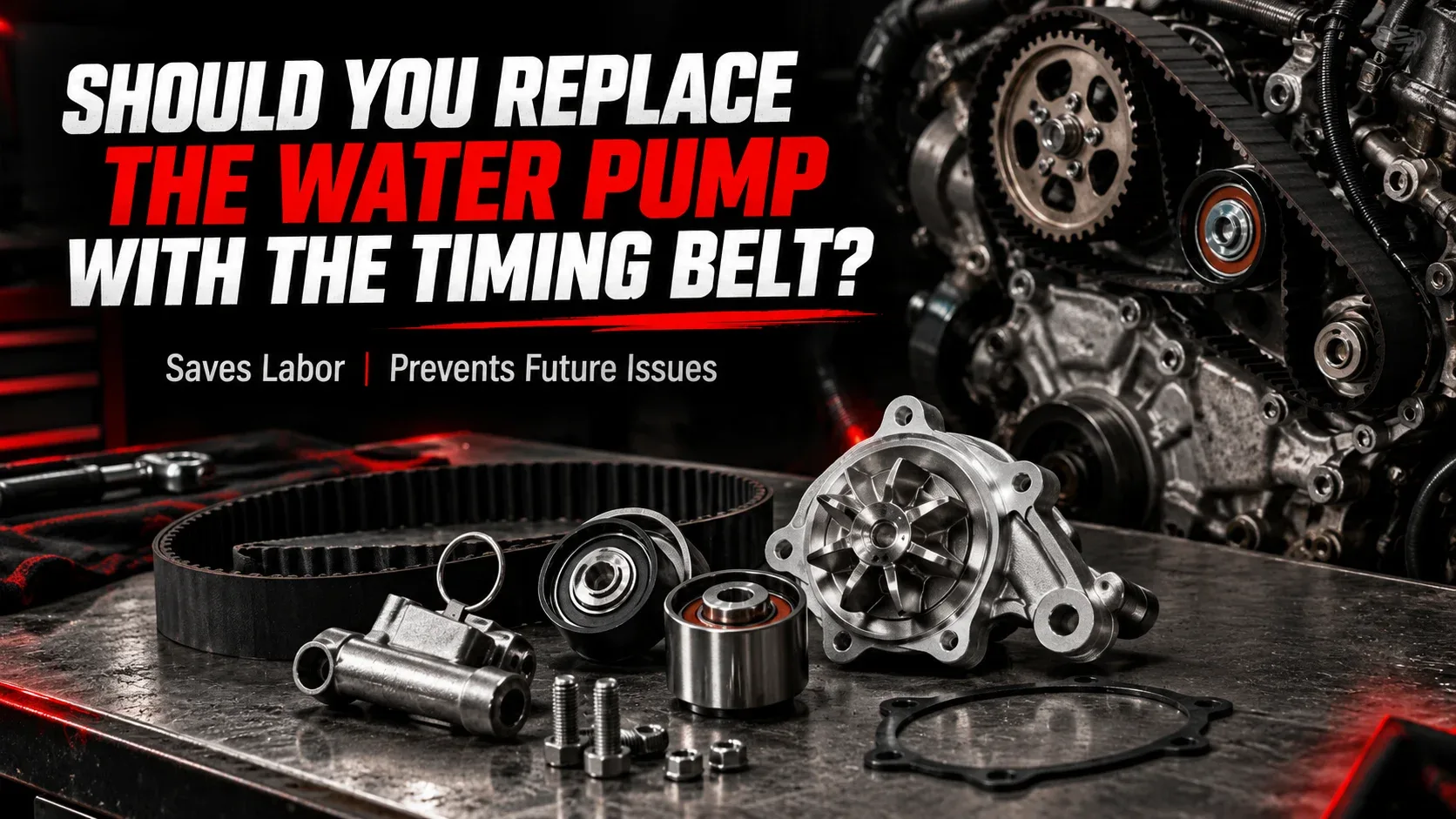
Should the Water Pump Be Replaced with the Timing Belt?
On some engines, the timing belt also drives the water pump. When the pump is buried behind the same covers, replacing it during belt service may save duplicated labor later. Gates recommends replacing timing-belt-driven water pumps together with the timing belt as part of a complete system repair.
| Approach | What it includes | Best question to ask |
|---|---|---|
| Belt-only job | New belt; related components may be excluded | Does the vehicle procedure permit reusing other parts? |
| Belt and component kit | Usually belt, tensioner, and applicable idlers/hardware | Which original components are replaced? |
| Belt, kit, and water pump | Timing components plus a new pump where appropriate | Is my pump timing-belt-driven, and how does this affect cost? |
Not every car has a timing-belt-driven water pump, so it is important to verify the engine design before treating pump replacement as a universal requirement.
Timing Belt Maintenance Checklist
Good timing belt maintenance is mostly about planning. Use this checklist to avoid guessing at the last minute:
- Identify whether your engine uses a timing belt or chain.
- Find its official replacement schedule, including any age requirement.
- Record the mileage and date of the last documented belt replacement.
- Ask the shop about belt tensioners, idlers, seals, and applicable water pump.
- Investigate oil or coolant leaks that could affect timing system parts.
- Keep invoices and update your next-service reminder after replacement.
- Do not wait for a check engine light or audible symptoms to plan scheduled service.
Your service planning worksheet
Vehicle / engine: __________________________
Current odometer: ________________________
Manufacturer interval: ____________________
Last belt replacement (date / mileage): __________
Next scheduled replacement: ________________
Frequently Asked Questions About Timing Belt Replacement
How much does timing belt replacement cost?
RepairPal estimated $918–$1,338 nationally as of September 3, 2026, with $315–$453 in parts and $603–$885 in labor. Local prices, vehicle design, taxes, fees, and related component replacements can change the total.
What are the first signs of a bad timing belt?
The clearest reason to act may be an overdue service interval. Visible damage, unusual mechanical noise, or engine timing symptoms deserve investigation, but a timing belt can fail without advance warning.
How many miles can a timing belt last?
AAA describes roughly 60,000–100,000 miles as common. Your engine may have a different mileage or age requirement, so follow its manufacturer schedule.
Can I drive with an overdue timing belt?
It is risky to assume an overdue belt is safe simply because the engine runs well. Verify the schedule and arrange service. If belt failure is suspected, do not keep driving or repeatedly attempt to start the engine.
Is a camshaft belt the same as a timing belt?
Often, yes. The term camshaft belt generally refers to the timing belt that drives the camshaft from the crankshaft, but check the terminology in your vehicle’s technical documentation.
Is timing chain replacement the same as timing belt replacement?
No. Timing chains are metal components usually operating inside an oil-lubricated engine area, while most timing belts use a separate toothed belt arrangement. Repair requirements, intervals, and costs differ by engine.
Should the timing belt tensioner be replaced at the same time?
Replace the tensioner and idlers when required by the manufacturer or timing system service procedure. Doing so can help prevent an aging component from compromising a new belt.
Will a broken timing belt destroy my engine?
Not always. In an interference engine, lost timing can lead to piston-to-valve contact and expensive internal damage. Non-interference engines are generally less prone to that particular damage, but the engine can still become inoperable.
Final Verdict: Replace on Schedule, Not After a Breakdown
A timing belt rarely offers the kind of simple warning that a worn tire or dead battery might. The best prevention is to confirm which timing system your engine uses, look up the manufacturer’s mileage and age limits, and plan the repair before the deadline.
If you are comparing estimates, ask for a written breakdown showing the belt, tensioner, idlers, applicable water pump, labor, and warranty. That gives you a sound basis for deciding what the vehicle actually needs—without paying for unnecessary parts or putting off a critical service.
Next step: Check your service records today. If the last replacement date or mileage is unknown, have a qualified mechanic confirm the schedule for your exact engine.