Your car idles roughly at a red light. You notice a faint whistle under the hood—or the engine seems to be using more oil than usual. A mechanic mentions a PCV valve. Could one small part be involved in all of this?
Possibly. A malfunctioning positive crankcase ventilation (PCV) system can contribute to rough idle, oil leaks, and other engine complaints. But those symptoms are not proof that the PCV valve is bad. This guide helps you understand what the system does, identify possible bad PCV valve symptoms, check the likely causes, and estimate PCV valve replacement cost in the United States.
Quick Answer: What Is a PCV Valve?
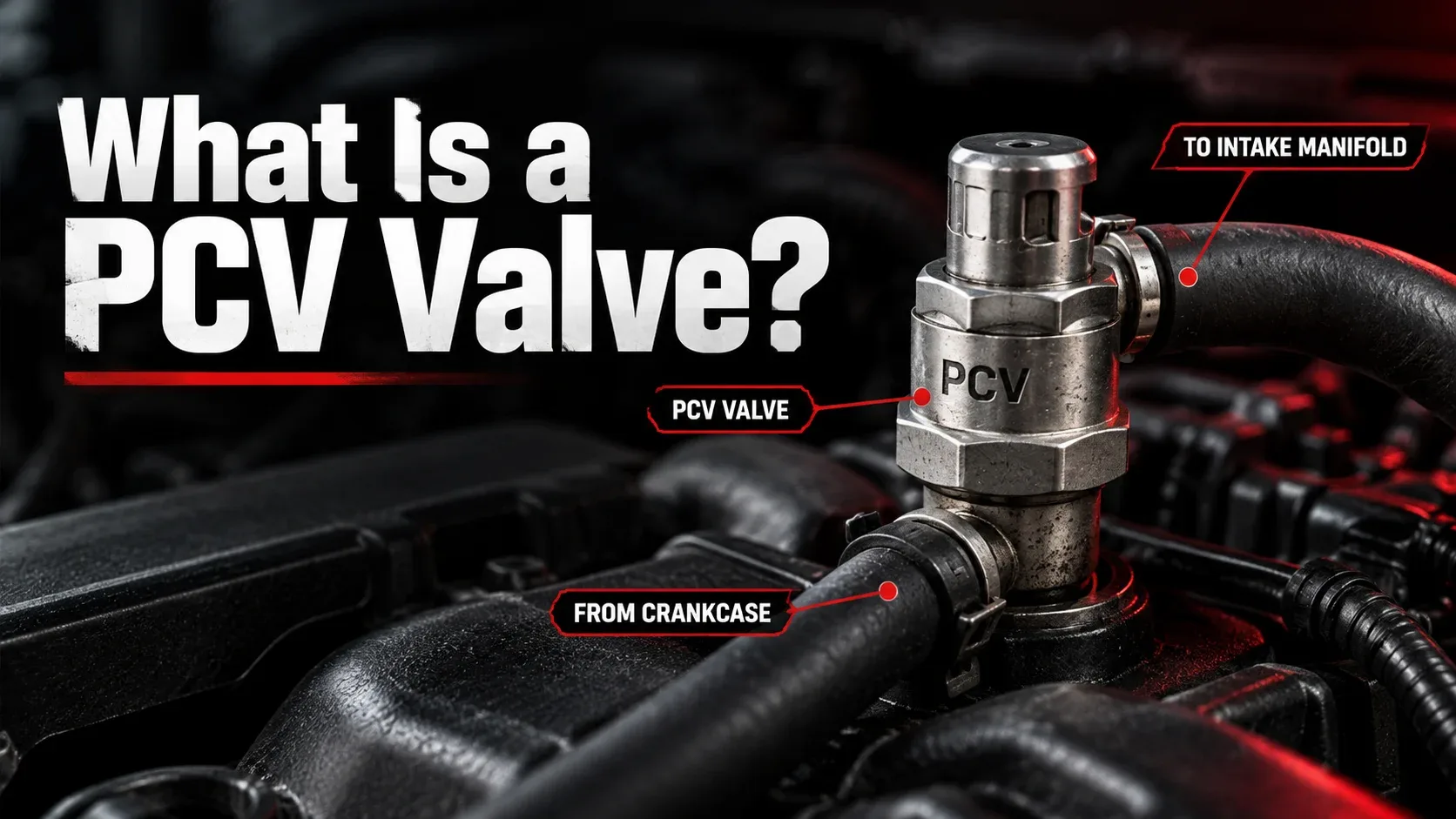
A PCV valve is part of the positive crankcase ventilation system. It helps control the movement of combustion gases that escape past the piston rings into the crankcase, routing them back to the intake to be burned. Depending on its design and failure mode, a faulty PCV system can cause air leaks, rough idle, oil leaks, or increased oil use.
Function: crankcase ventilationSymptoms: vary by failureRepair: vehicle-specificWhat Is a PCV Valve?
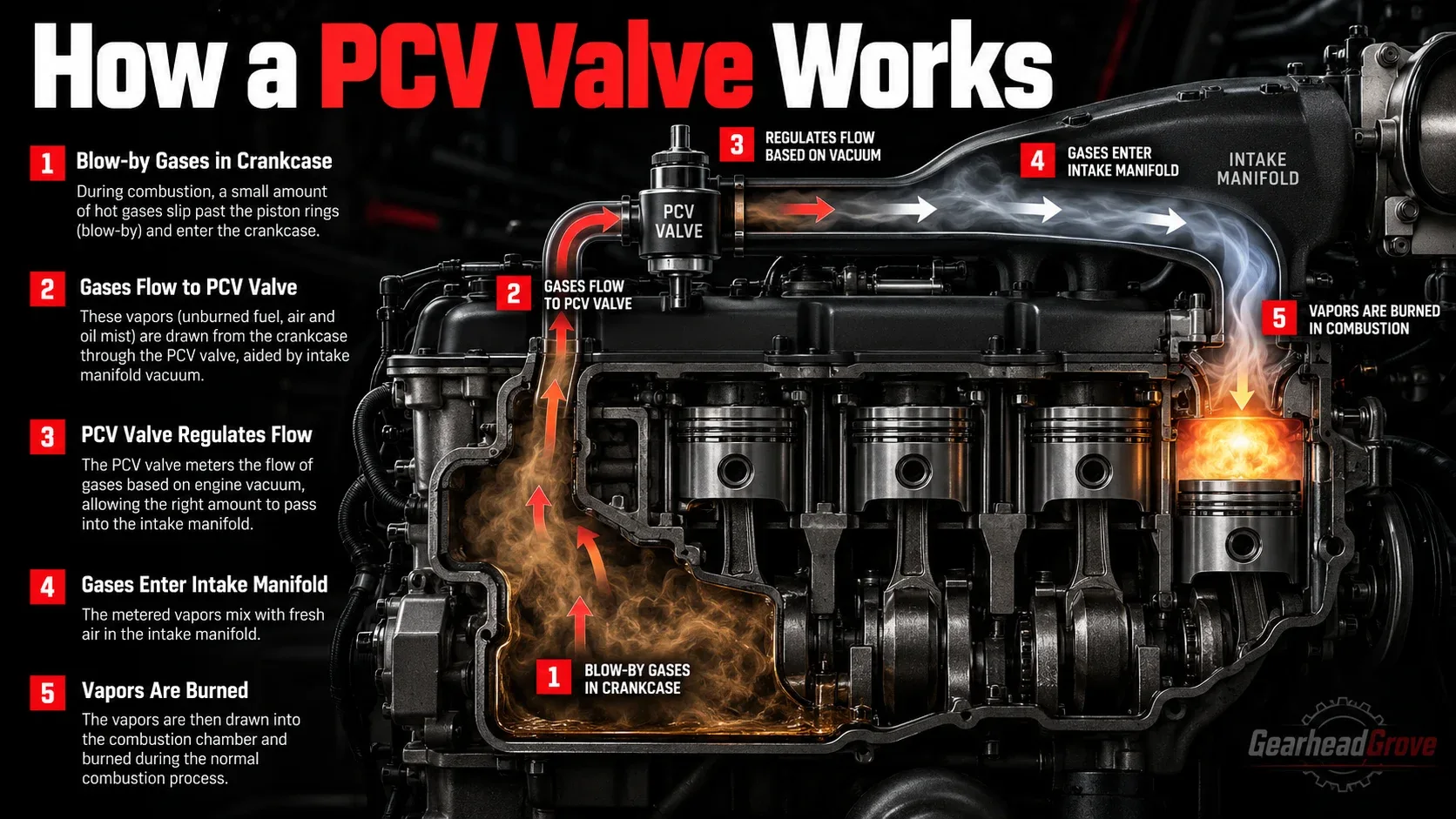
PCV stands for positive crankcase ventilation. During normal combustion, a small amount of gas slips past the piston rings into the lower engine, or crankcase. This is called blow-by. The ventilation system routes these gases back toward the intake instead of leaving them trapped inside the engine or venting them directly to the atmosphere.
In traditional systems, a spring-loaded PCV valve meters this flow. Many newer engines use a diaphragm, oil separator, calibrated passage, or a valve built into the valve cover. That is why a PCV valve may be a cheap separate component on one vehicle but part of a larger assembly on another.
How Does a PCV Valve Work?
Think of the engine crankcase as a room that needs controlled ventilation. Pressure, moisture, and combustion byproducts should not simply stay inside it. Under many operating conditions, intake vacuum helps draw vapors through the PCV system into the engine, where they are burned.
- Combustion creates blow-by: some gases pass the piston rings and enter the crankcase.
- Fresh air enters: many systems have a separate breather or fresh-air path.
- PCV flow is controlled: a valve, diaphragm, or calibrated passage regulates vapor movement.
- Vapors return to the intake: they enter the combustion process rather than accumulating in the crankcase.
Where Is the PCV Valve Located?
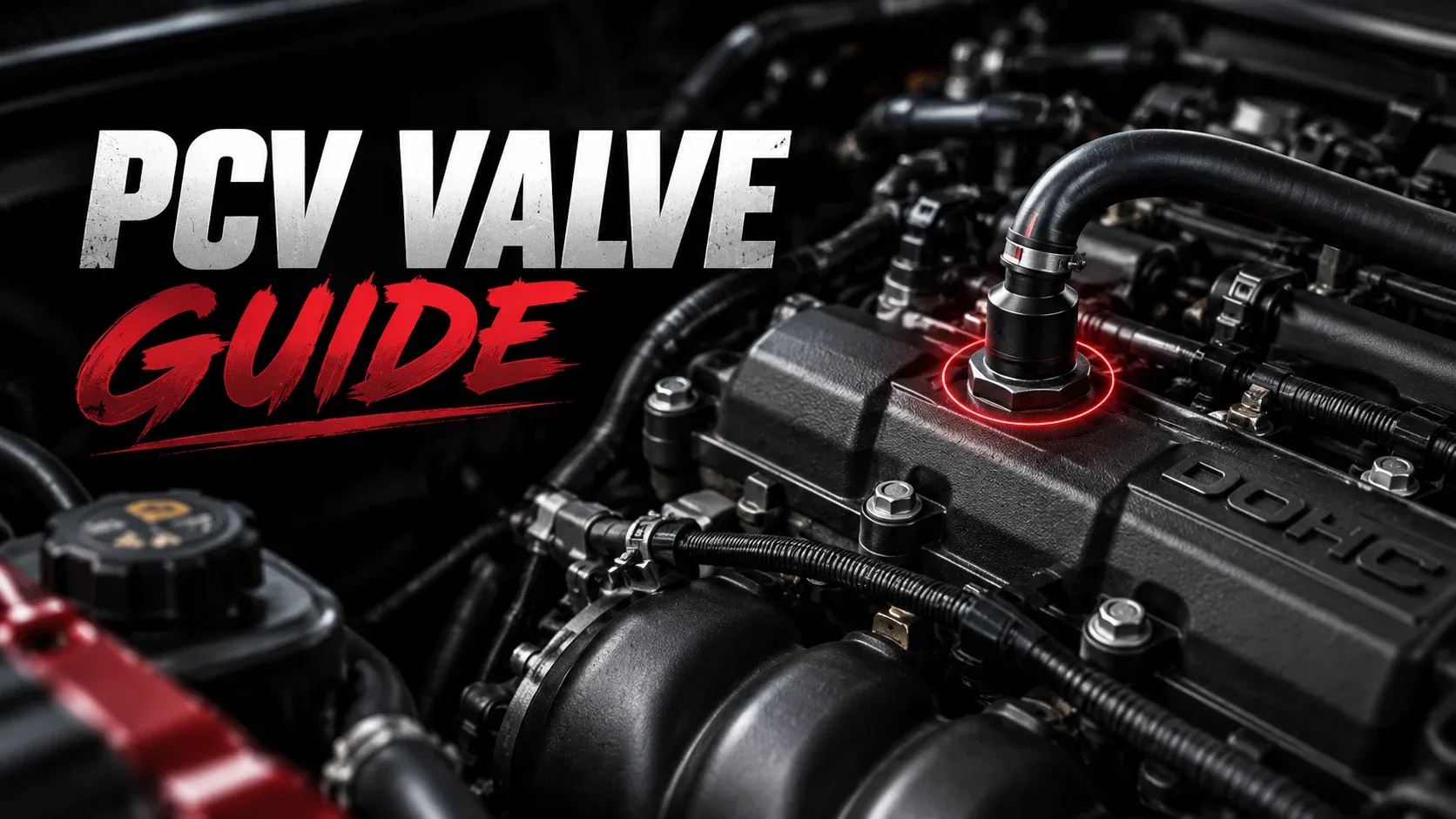
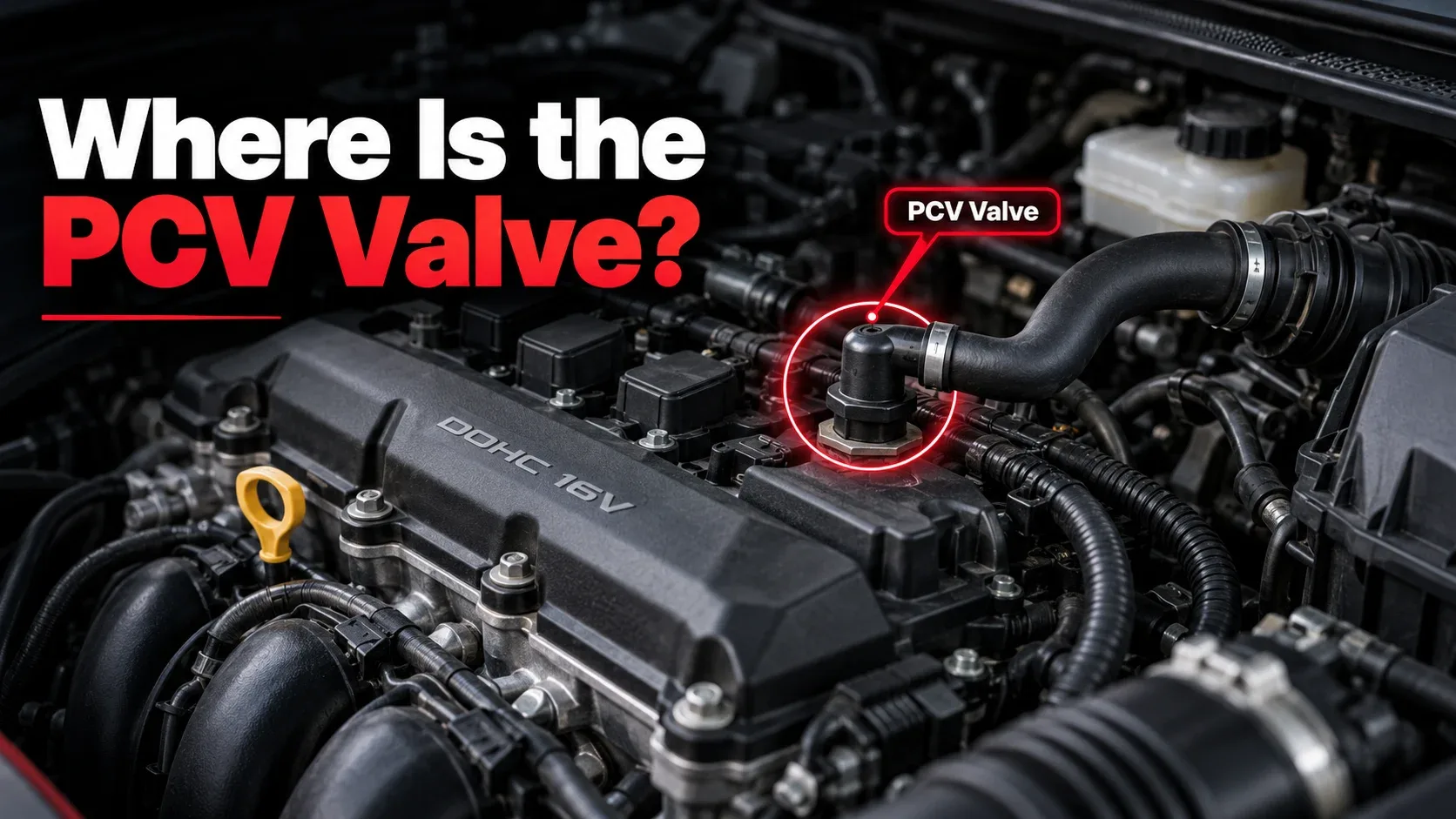
On many engines with a serviceable PCV valve, you can find it in or near the valve cover, connected to a hose leading toward the intake manifold. On other designs, it may be hidden beneath an engine cover, integrated into an oil separator, or built into the valve-cover assembly.
To locate yours, identify your vehicle’s year, make, model, and engine. Then consult the factory service information or a reputable repair manual. Avoid assuming that the location shown in a video for a similar-looking engine is identical to yours.
8 Common Bad PCV Valve Symptoms
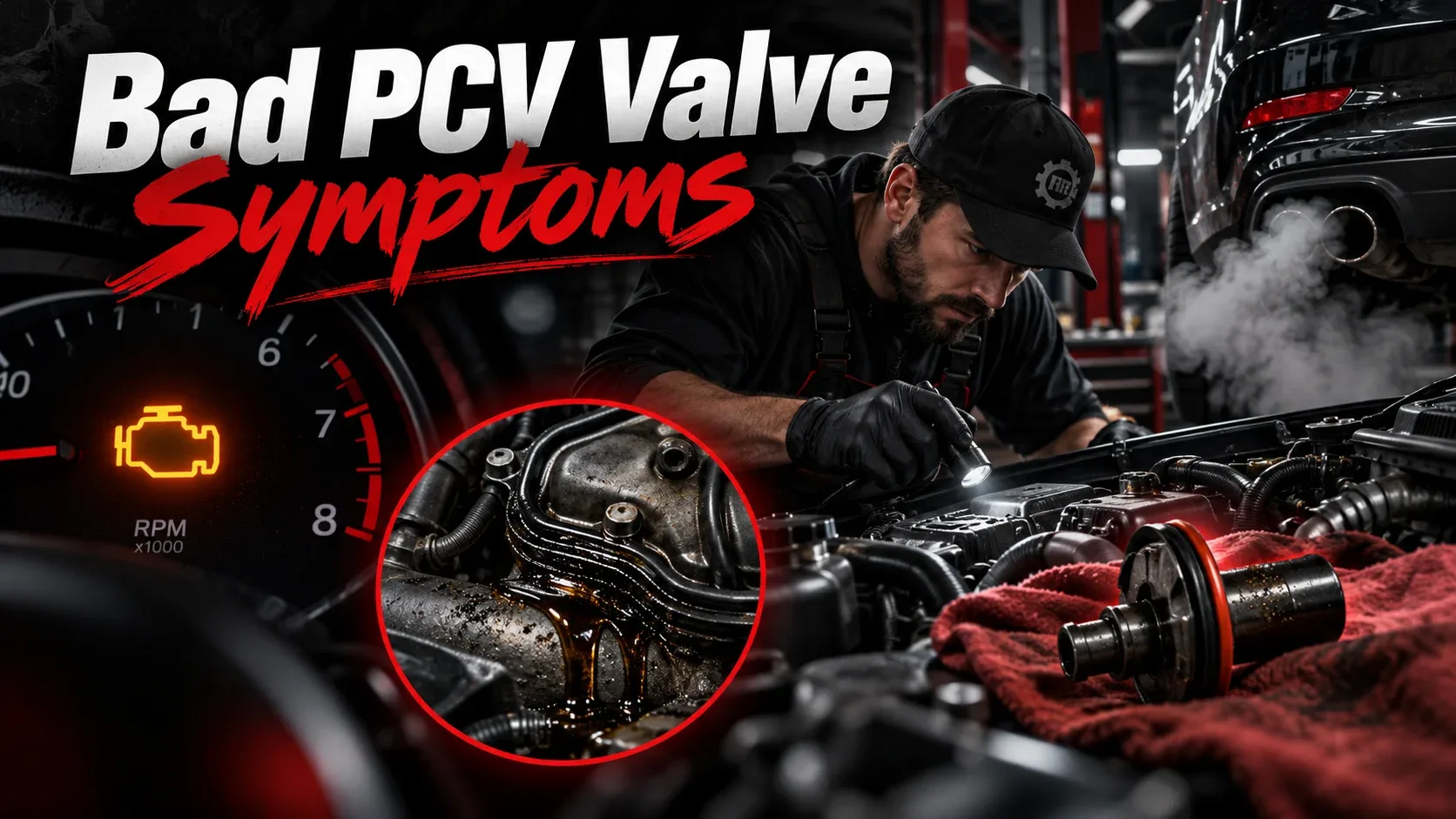
The symptoms below can point toward a ventilation problem, especially when several occur together. However, ignition faults, intake leaks, worn internal engine parts, and other problems can create similar warning signs. Confirm the cause before buying parts.
1. Rough Idle or Occasional Stalling
If a valve or diaphragm allows too much unmetered air into the intake, the engine may idle unevenly, surge, or sometimes stall. A separate intake vacuum leak can cause the same behavior, so a rough idle alone does not identify the PCV valve as the culprit.
2. Check Engine Light
An air leak associated with the PCV system can contribute to mixture-control or misfire fault codes. Scanning stored codes helps narrow the diagnostic path, but a code rarely says “replace the PCV valve” with certainty. Codes such as P0171 or P0174 may have many possible causes.
3. Increased Oil Consumption
A damaged diaphragm or malfunctioning oil separator can allow extra oil mist into the intake. Oil consumption can also result from worn piston rings, valve stem seals, or external leaks. Keep records of how often you top up the oil.
4. Oil Leaks Around Seals and Gaskets
A clogged ventilation path can allow crankcase pressure to rise, sometimes forcing oil past seals or gaskets. Existing gasket deterioration and other mechanical issues can also explain oil leaks, so check the wider system.
5. Whistling or Hissing Under the Hood
A torn PCV diaphragm or split ventilation hose may cause an audible whistle or hiss as air moves through the leak. The noise can resemble other vacuum or intake leaks.
6. Blue or Gray Exhaust Smoke
If oil is drawn into the intake and burned, you may see blue-gray smoke. Persistent smoke needs prompt attention: other causes include internal engine wear and certain turbocharger faults. White smoke can have different causes and should not automatically be blamed on PCV trouble.
7. Misfires or Reduced Engine Performance
Uncontrolled intake air or significant oil contamination may affect combustion. Hesitation, poor idle quality, and misfire symptoms justify diagnosis of the entire air, fuel, and ignition system.
8. Sludge, Moisture, or Oil Contamination
Restricted crankcase ventilation can worsen the buildup of moisture and combustion byproducts. A sludged engine can also cause PCV restrictions, so it is important to investigate which problem came first.
| Symptom | Possible PCV connection | Other causes to rule out |
|---|---|---|
| Rough idle | Excess/unmetered air | Vacuum leaks, ignition, throttle issues |
| Oil leaks | Blocked ventilation; pressure buildup | Failed seals, excessive blow-by |
| Hissing | Torn diaphragm or damaged hose | Intake gasket or vacuum hose leak |
| Oil consumption | Oil drawn through the PCV path | Ring, seal, or turbo problems |
| Check engine light | Air-fuel mixture affected | Many unrelated engine faults |
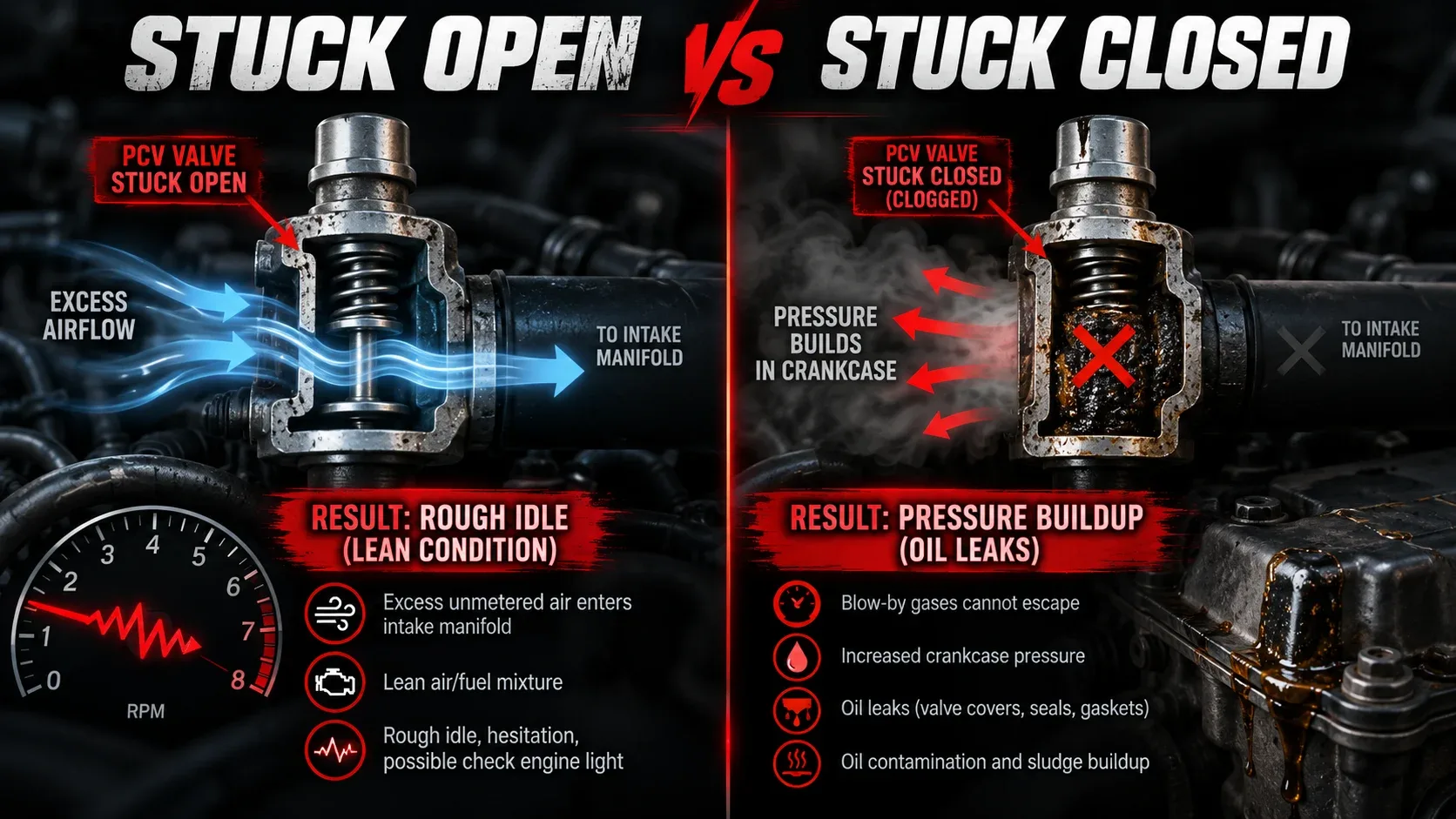
Stuck-Open vs. Stuck-Closed PCV Valve
Not all PCV failures behave the same way. An excessively open valve or leaking diaphragm may act like an intake air leak. A stuck-closed valve or blocked hose can restrict ventilation and increase crankcase pressure.
| Failure type | What can happen | Possible clues |
|---|---|---|
| Stuck open / torn diaphragm | Too much airflow into the intake, depending on system design | Rough idle, whistle, mixture codes |
| Stuck closed / clogged path | Reduced vapor evacuation and rising crankcase pressure | Oil seepage, moisture buildup, contaminated hoses |
| Broken hose / loose fitting | Unintended air entry or lost ventilation control | Hissing, rough idle, visible cracked hose |
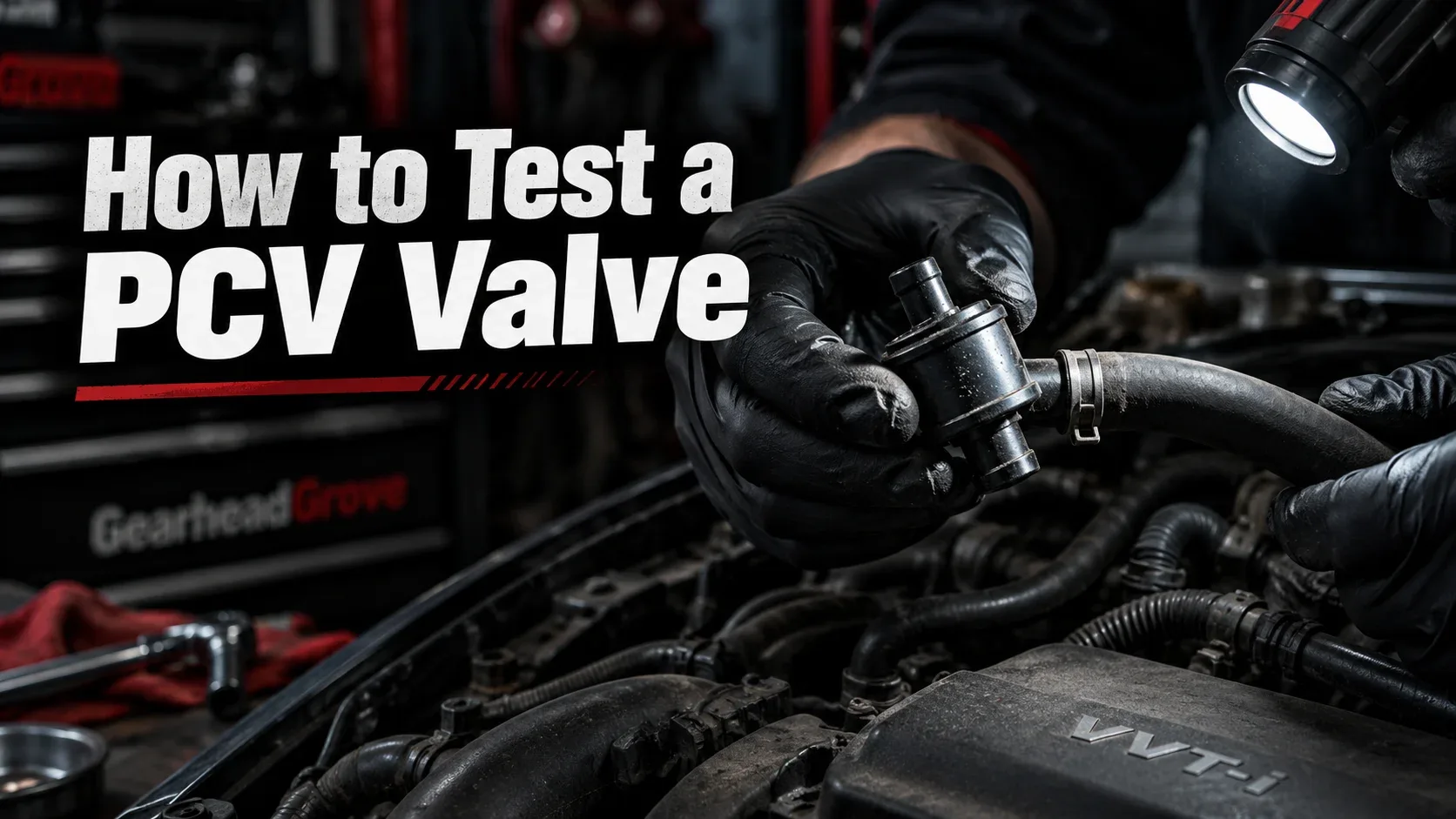
How to Test a PCV Valve Before Replacing It
The most useful test depends on the engine. A removable valve on an older vehicle may be checked differently from an electronically monitored or integrated diaphragm system on a modern turbocharged engine.
Step 1: Start With a Visual Inspection
With the engine off and cool, look for split hoses, disconnected fittings, damaged seals, obvious oil contamination, and cracked plastic. A failed hose can imitate a failed valve.
Step 2: Read Diagnostic Trouble Codes
Use an OBD-II scanner to check stored faults and freeze-frame information. Codes are clues, not final diagnoses. An experienced technician may compare fuel trims and perform an intake leak test.
Step 3: Follow the Manufacturer’s PCV Test
For some traditional valves, a service manual provides vacuum or directional-flow checks. For integrated diaphragms, the specified inspection method may be quite different. A valve that rattles when shaken is not guaranteed to work correctly.
Step 4: Check for Related Engine Problems
If symptoms persist, a technician may inspect crankcase pressure, ventilation passages, blow-by, and the oil separator as appropriate for the vehicle.
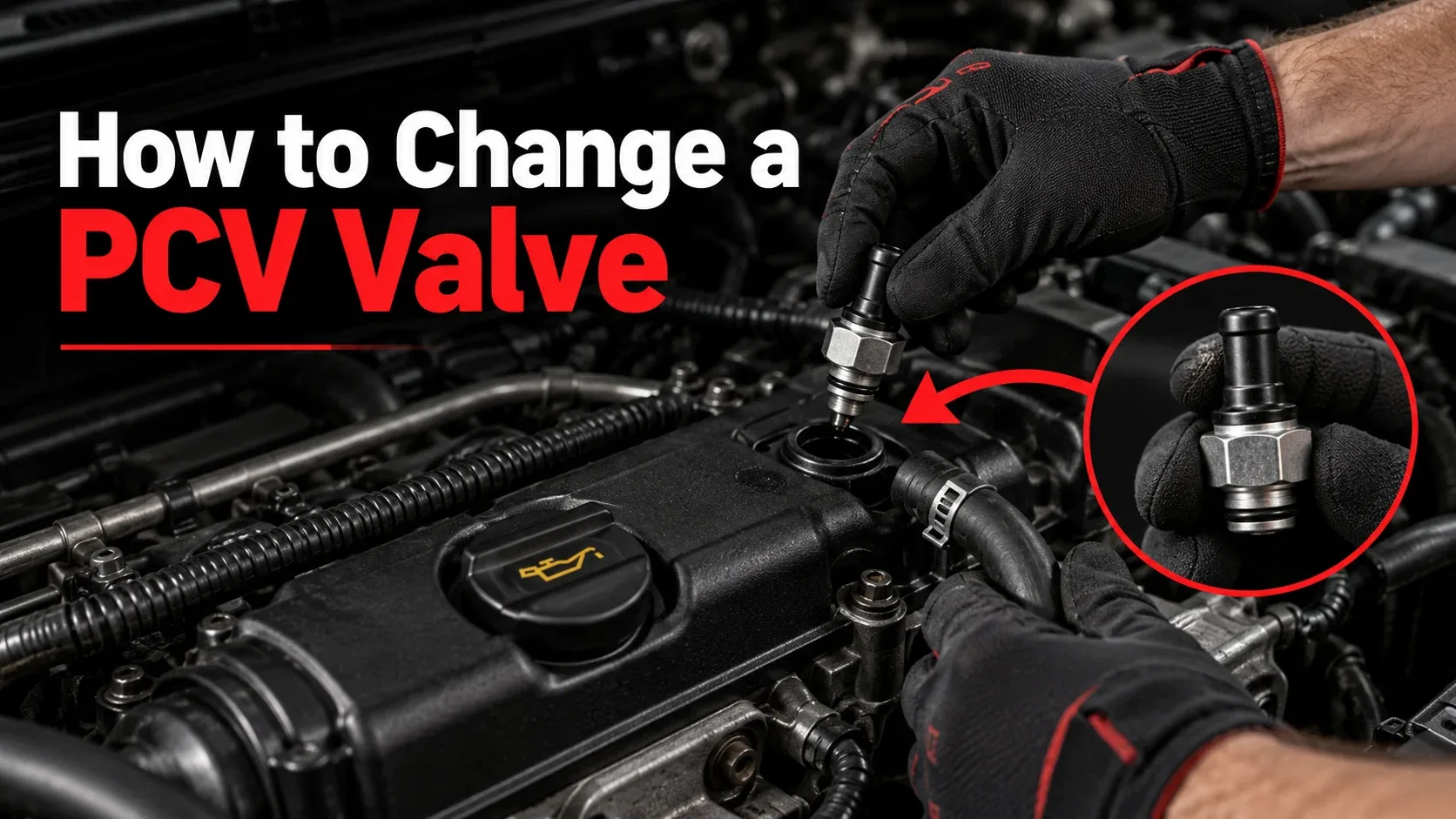
How to Change a PCV Valve: Step-by-Step
If your engine has a readily accessible, individually replaceable valve, a PCV valve replacement may be a straightforward DIY job. The instructions below are a general overview, not a substitute for your vehicle’s repair manual.
What You’ll Usually Need
- Correct engine-specific replacement PCV valve
- Vehicle service instructions
- Basic hand tools, as specified
- Protective gloves and eye protection
- Replacement hose or seal if damaged
- Clean cloth for accessible surfaces
Verify the Correct Part
Match the vehicle’s year, make, model, and engine. Check whether the PCV valve is sold separately or only as part of an assembly.
Park Safely and Let the Engine Cool
Park on level ground, turn off the ignition, secure the vehicle, and follow any additional instructions in the manual.
Locate and Inspect the PCV System
Identify the valve, breather hoses, clips, seals, and nearby connectors. Photograph the routing before disassembly if helpful.
Disconnect Components as Directed
Release hose clamps or fittings carefully. Aging plastic becomes brittle. Never force a connector that has a hidden locking tab.
Remove the Old Valve
Depending on the vehicle, the valve may pull from a grommet, twist out, or thread into a housing. Use the manufacturer-specified removal method.
Check Hoses and Seals
Inspect for cracks, collapse, hardened rubber, or heavy deposits. Replace damaged parts with the correct components; do not let debris enter the engine.
Install the Replacement
Fit new seals when required, tighten threaded parts only to the specified torque, and reconnect hoses in their original locations.
Verify the Repair
Ensure all fittings are secure. Follow the service procedure for post-repair checks and confirm whether symptoms and diagnostic codes return.
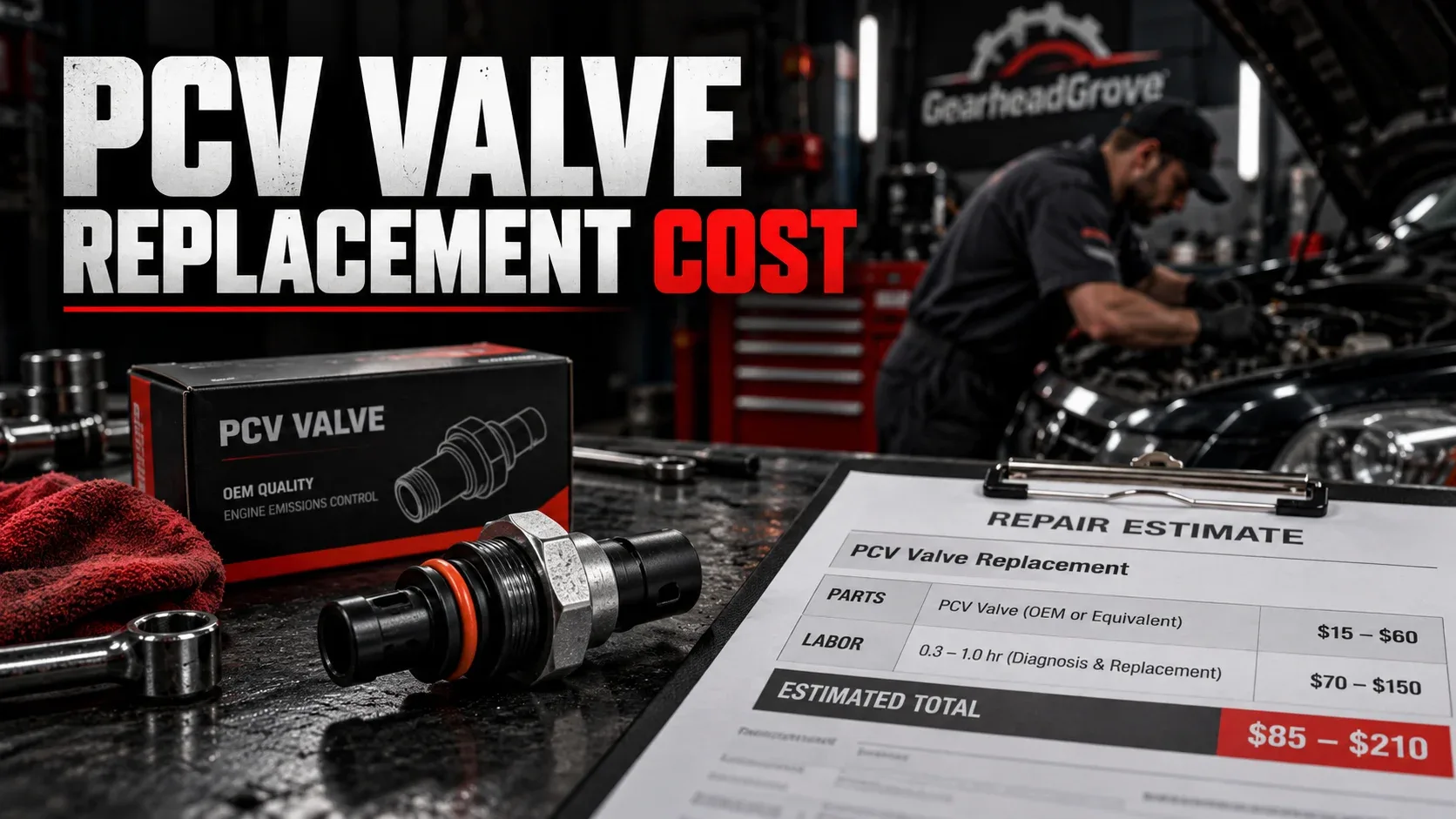
PCV Valve Replacement Cost in the USA
How much does a PCV valve replacement cost? It depends heavily on the part design and accessibility. A simple removable valve can be inexpensive to replace, but a difficult-to-reach component or integrated valve-cover assembly can cost much more.
Current US Price Snapshot
$124–$173 is RepairPal’s nationwide average estimate for a PCV valve replacement, updated September 3, 2026. Of that total, RepairPal estimates $32–$39 for parts and $91–$134 for labor. These are averages, not a quote for your particular car; taxes, local rates, and additional repairs may apply.
Source: RepairPal PCV Valve Replacement Cost Estimate (updated September 2026).
| Repair situation | What affects the bill? | What to ask the shop |
|---|---|---|
| Separate, accessible valve | Valve price and short labor time | Is the valve sold separately? |
| Valve plus hose / seal | Extra parts and potential diagnosis | Are any hoses cracked or blocked? |
| Integrated valve-cover PCV | Larger assembly, more disassembly, seals | Does the whole cover require replacement? |
| Persistent pressure or oil-use issue | Additional engine or intake testing | What tests confirm PCV is the cause? |
For perspective, RepairPal’s vehicle estimates range widely. A Ford F-150 estimate may differ considerably from one for a Toyota Camry because repair layouts and parts are not the same. Ask for an itemized estimate that separates diagnosis, parts, labor, and taxes before approving the job.
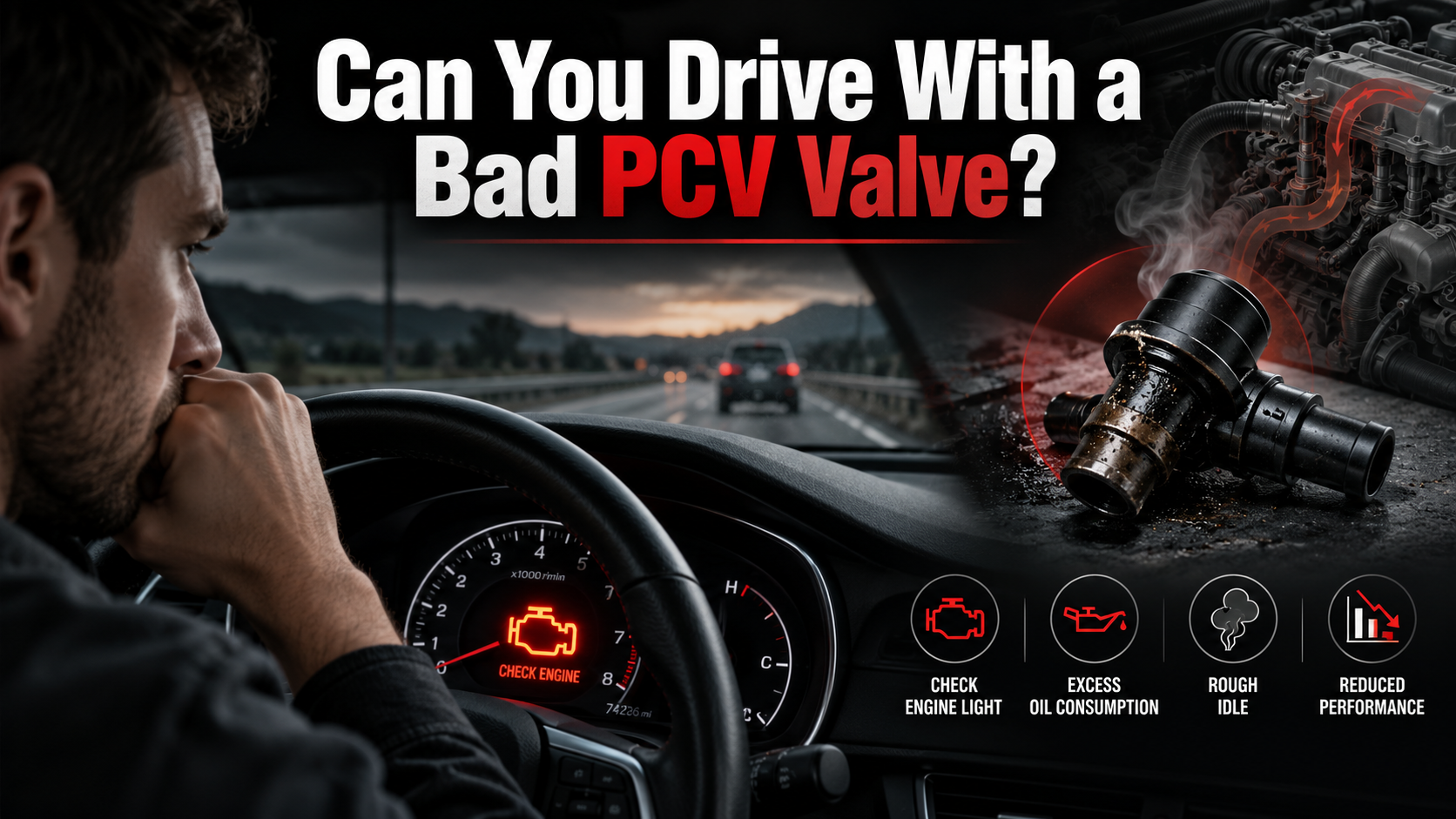
Can You Drive With a Bad PCV Valve?
Some vehicles remain drivable with a mild PCV fault, but ignoring the problem can lead to increasing oil leaks, poor running, or additional contamination. How urgent the repair is depends on the actual fault—not just the fact that a PCV valve is suspected.
If you have a flashing check engine light, severe misfire, abnormal oil-pressure warning, major oil loss, or heavy smoke, stop driving as soon as it is safe and arrange professional assistance. Even without those signs, investigate recurring symptoms rather than waiting for them to worsen.
What Causes a PCV Valve to Fail?
PCV valves and related components operate in an environment containing oil mist, moisture, and combustion gases. Over time, several things can go wrong:
- Oil deposits and sludge can restrict small passages.
- Aging rubber diaphragms may split or lose their sealing ability.
- Heat and vibration can crack plastic housings or hoses.
- Neglected oil maintenance may contribute to deposits.
- Excessive engine blow-by can overwhelm an otherwise functional PCV system.
Remember that deposits or a broken diaphragm can be a symptom of a wider condition. If a replacement fails again quickly, investigate the underlying cause.
How Often Should You Replace a PCV Valve?
There is no universal mileage interval that applies to every vehicle. Some manufacturers specify inspections or replacements; others use integrated systems that are serviced only when a problem is confirmed. The best approach is to follow the manufacturer schedule for your specific engine and to investigate symptoms early.
Simple PCV System Maintenance Checklist
- Follow recommended oil change intervals
- Use the specified engine oil
- Inspect visible ventilation hoses
- Investigate unusual idle or hissing
- Monitor oil level and consumption
- Address persistent engine codes
DIY vs. Professional PCV Valve Replacement
Should you change the valve yourself? Consider both the accessibility of the component and your confidence in the diagnosis.
| DIY may make sense when… | Choose a mechanic when… |
|---|---|
| The valve is clearly accessible and sold separately | PCV components are integrated or buried |
| You have correct service instructions and tools | Special tools or extensive disassembly are required |
| The fault has been reasonably confirmed | Symptoms could come from several systems |
| Fittings and hoses are in good condition | Oil pressure, major leaks, smoke, or misfire are present |
The cheapest repair is not always the one with the lowest parts price. Accurate diagnosis helps avoid replacing parts that were never defective.
Frequently Asked Questions
What happens when a PCV valve goes bad?
Depending on the failure, the engine may experience an air leak, rough idle, excess crankcase pressure, oil leaks, or increased oil consumption. Those symptoms also have other possible causes, so testing is important.
What are the most common bad PCV valve symptoms?
Common possible signs include rough idling, hissing or whistling, oil leaks, increased oil consumption, and a check engine light. No individual symptom confirms the diagnosis.
Can a bad PCV valve cause rough idle?
Yes. A valve or diaphragm that admits excessive unmetered air can disturb the engine’s air-fuel mixture. Other intake and ignition faults must also be considered.
Can a bad PCV valve cause oil leaks?
Yes. A blocked ventilation path may increase crankcase pressure and contribute to oil escaping past weakened seals or gaskets.
Can a PCV problem cause white or blue smoke?
Oil entering the intake may cause blue-gray smoke. White smoke has other potential causes, including condensation and coolant-related problems. Do not assume all exhaust smoke is PCV-related.
How much does PCV valve replacement cost?
RepairPal’s September 2026 US average estimate is $124–$173, including parts and labor. Actual costs depend on the car, local rates, and whether the component is part of a larger assembly.
Can I change a PCV valve myself?
Often yes, if it is a separate accessible component and you have vehicle-specific instructions. Integrated designs and uncertain diagnoses are better handled by a professional.
How long does PCV valve replacement take?
Some accessible valves can be changed quickly, while integrated or difficult-to-reach designs can require substantially more time. Ask a shop for a labor estimate tailored to your vehicle.
How do I know whether a PCV valve is stuck open?
Symptoms may include hissing, rough idle, or an air-fuel mixture fault, but confirmation requires the manufacturer-approved inspection or a professional diagnostic test.
Do all vehicles have replaceable PCV valves?
No. Most modern gasoline engines have crankcase ventilation, but not all use a separate PCV valve that can be replaced independently. Some systems are integrated into valve covers or separators.
Final Thoughts: Diagnose Before You Replace
A small PCV component can play an important role in controlling crankcase gases and protecting the engine from unwanted pressure and contamination. If your car has a rough idle, unusual oil consumption, a whistle, or new oil leaks, the PCV system belongs on the inspection list—but it should not automatically be blamed.
Your next step: Identify your engine’s PCV design, inspect visible hoses safely, check any diagnostic codes, and use vehicle-specific procedures to confirm the fault. Then compare the right part and labor estimate before deciding between DIY and professional replacement.