Once you find a car you like, the salesperson is ready to start the paperwork, and you’re tempted to decide quickly.
But that appearance and a short test drive don’t tell the whole story. Car buyers should evaluate the vehicle, paperwork, ownership costs, and deal before buying.
Whether you’re shopping at a dealership like Paul Moak Subaru or comparing options from private sellers, a clear car-buying checklist can help you evaluate the vehicle and the deal with more confidence.
The Federal Trade Commission (FTC) recommends researching the vehicle, reviewing the Buyers Guide, obtaining a vehicle history report, and considering an independent inspection.
1. Your Budget
The first thing that a car buyer should check is whether the vehicle fits within their budget.
It should cover more than the sticker price, such as:
- Monthly payment
- Down payment
- Insurance
- Fuel
- Maintenance
- Registration/taxes
- Potential repairs
Also keep in mind that a car can fit a monthly-payment budget but still be too expensive overall.
2. The Vehicle’s VIN
Before buying any car, locate the 17-character Vehicle Identification Number (VIN) and make sure it matches the paperwork. You can use the VIN to check the vehicle’s history, identify open safety recalls, and verify important details about the car. Running a VIN check reveals issues that aren’t immediately visible during a walkaround or test drive.
3. Vehicle History Report
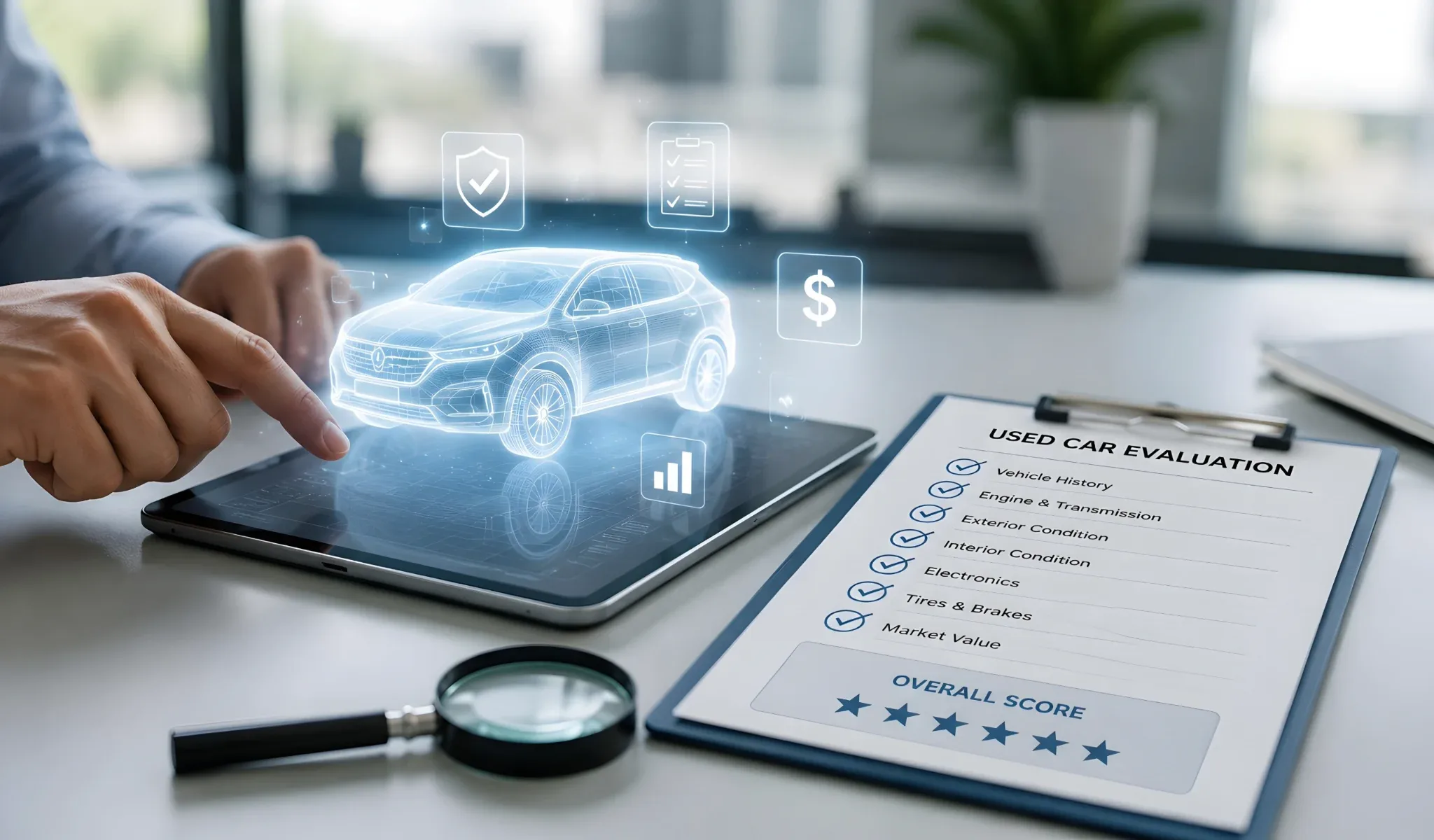
A vehicle history report can give you a clearer picture of a used car’s past. Using the VIN, you can find out information about reported accidents, title history, mileage records, previous ownership, and other reported events. A clean report is never a guarantee that the car is problem-free, though. Pair the report with a thorough inspection and test drive to get a more complete picture of the vehicle’s condition.
4. Open Safety Recalls
Before purchasing a car, check for any open safety recalls. Use the VIN to search the National Highway Traffic Safety Administration (NHTSA) recall database and check whether the manufacturer has issued a safety recall that still needs to be repaired. If a recall appears, ask the dealership whether the repair is complete and request documentation when available. Checking recalls is a quick but important step in any car buying checklist. More importantly, if it’s a used vehicle.
5. Service and Maintenance Records
Know the service and maintenance records of the vehicle you are planning to purchase. The information could be about when the oil was last changed, what major services were completed, and whether recommended maintenance was performed on the vehicle.
Maintenance history can sometimes be more informative than mileage alone.
6. Exterior Condition
It might seem like something everyone does before buying a car, but it is an important step and should not be missed.
Check the following:
- Paint differences
- Dents and scratches
- Rust
- Panel gaps
- Windshield damage
- Headlights
- Mirrors
- Tires
Suggest inspecting the car in good daylight whenever possible.
7. Tires, Brakes and Suspension
Do not forget to examine :
- Tire tread and wear patterns
- Uneven tire wear
- Brake feel
- Steering behavior
- Suspension noises
- Vibrations
8. Interior and Electronics
Buyers should not skip checking a car’s interior and electronics before purchase.
Have buyers test:
- Air conditioning/heating
- Windows
- Locks
- Lights
- Infotainment
- Bluetooth
- Cameras
- Driver-assistance features
- Seats and adjustments
Consumer Reports suggests using the test drive to evaluate comfort, controls, technology, visibility, and safety features.
9. Engine and Mechanical Condition
Shoppers should keep an eye out for the following to understand the engine and mechanical condition of a car:
- Warning lights
- Unusual noises
- Fluid leaks
- Rough idle
- Excessive smoke
- Unusual smells
However, don’t rely on your own inspection alone.
The FTC advises an independent mechanical inspection even when a used vehicle has already been inspected or certified by a dealer.
10. Take a Real Test Drive
A test drive of a car should involve driving through:
- City streets
- Highway speeds
- Stop-and-go traffic
- Turns
- Uneven pavement
- Parking situations
Check acceleration, braking, steering, visibility, road noise, comfort and technology. It is always good to plan a route that includes different road surfaces and driving for as long as practical.
11. Get an Independent Inspection
A car buyer should not skip an independent inspection. A mechanic can often spot issues much more easily.
A dealership inspection and an independent inspection serve different purposes from the buyer’s perspective. The FTC explicitly advises consumers to consider an independent mechanical inspection before buying a used vehicle.
12. Read the Buyers’ Guide and Warranty
FTC’s Used Car Rule requires most dealers to display a Buyers’ Guide on used vehicles.
It could help to determine:
- Is the vehicle sold “as is”?
- Is there a dealer warranty?
- What systems are covered?
- How long does coverage last?
- Is there a deductible?
- Who handles warranty repairs?
The FTC says the Buyers’ Guide identifies whether the vehicle is sold with a warranty or “as is” and provides important warranty information.
13. Compare Certified Pre-Owned Coverage
Certified pre-owned Subaru vehicles can offer an alternative to buying a conventional used vehicle. But shoppers should still read the specific certification and warranty terms.
For shoppers considering a Subaru, Paul Moak Subaru offers a certified pre-owned program with a 152-point inspection and factory-backed coverage.
14. Check the Out-the-Door Price
Buyers should not focus exclusively on the advertised price or monthly payment.
Ask for the out-the-door price in writing, including:
- Vehicle price
- Taxes
- Registration
- Dealer fees
- Optional products
- Add-ons
The FTC recommends asking dealers for out-the-door pricing in writing so buyers can identify additional charges and compare offers.
15. Review the Final Paperwork Before Signing
Review the final paperwork before making any commitments. Look out for the following terms in the paperwork:
- VIN
- Purchase price
- Financing terms
- APR
- Loan length
- Down payment
- Warranty terms
- Add-ons
- Dealer promises
- Return/cancellation policy
Ensure that verbal promises are put in writing. The FTC specifically warns consumers that spoken promises can be difficult to enforce.
Quick Used Car Buyer Checklist
Buying a used car follows a similar checklist, but you need to pay extra attention to details before making any payments.
- Set your total budget
- Verify the VIN
- Review vehicle history
- Check recalls
- Review maintenance records
- Inspect exterior
- Check tires and brakes
- Test interior electronics
- Look for warning lights
- Take a thorough test drive
- Get an independent inspection
- Read the Buyers’ Guide
- Compare warranty coverage
- Get the out-the-door price
- Review every document before signing
Conclusion: Don’t Let a Good Deal Rush You
The best car-buying decision is the one where a vehicle’s condition, history, ownership costs, warranty protection, and final purchase terms make sense for the buyer.
Whether you’re comparing conventional used vehicles or looking at a certified pre-owned Subaru, taking a few extra minutes to work through a dealership checklist can help you make a more informed decision.