
You have heard the deep knock that rises with load, and you have been through the checks
in our guide to what rod knock is and what causes it, which is also clear that continuing to
drive it is how a noise becomes a seized engine. So the selling question starts from there:
the car should move as little as possible from now on, and everything you tell a buyer needs
to be written down.
One thing to settle before you list it. Disclosing the fault is separate from meeting your state’s
requirements for the transfer you intend. Some states want a current inspection or emissions
certificate before a private sale, which is difficult to produce with a damaged engine, and the
rules differ for a car sold to be repaired, one sold for parts, and one going to a dismantler.
Check your state’s process for the transfer you actually plan.
Describe the condition, not a category
“Driver” and “parts car” are both unreliable labels. A car that starts is not necessarily a car
that should be driven, and a seized engine does not make the rest of the vehicle scrap, since
plenty of those get rebuilt.
Write out four facts instead: whether it starts, whether it moves under its own power, whether
the engine has been opened or removed, and how the car will leave your driveway. None of
them require you to guess.
Be equally careful about the fault itself. If a shop diagnosed a rod bearing, say so and name
the shop and the date. If you have a knock that behaves like rod knock but nobody has had
the pan off, write that you have a confirmed knock of unknown internal origin. Claiming a
specific failure you have not established can come back at you, and it does not raise the
price.
Put the diagnosis on paper
Collect what you have before the first message: the shop’s inspection report, any oil
pressure readings, the repair estimate, and your notes on when the noise appeared and
under what conditions.
This is also the part with real legal weight. Massachusetts, for example, requires private
sellers to inform buyers about all known defects which impair the safety or substantially
impair the use of the vehicle, and a buyer who shows a concealed defect of that kind can
void the sale within 30 days. States frame the duty differently, so check yours, but a written
disclosure matching the reports is the simplest record of what the buyer was told.
Attach the reports to the sale record rather than emailing them separately. Both parties sign
the same documents, and both keep a full set, including the attachments.
Price it against offers, not a formula
Clean retail value minus a repair quote is a starting point, not a market price. Buyers subtract
transport, the chance of further damage nobody has found yet, and their own labour, while a
rebuilder with a spare engine on the shelf is working from completely different costs than a
retail customer.
So gather actual offers. See what project buyers, flippers and dismantlers say, and compare
that against two real repair quotes for your engine. Before accepting a steep discount, check
whether your engine falls under a manufacturer extended coverage programme for bearing
failures, because some models have one and it changes the maths.
Arrange collection instead of a test drive
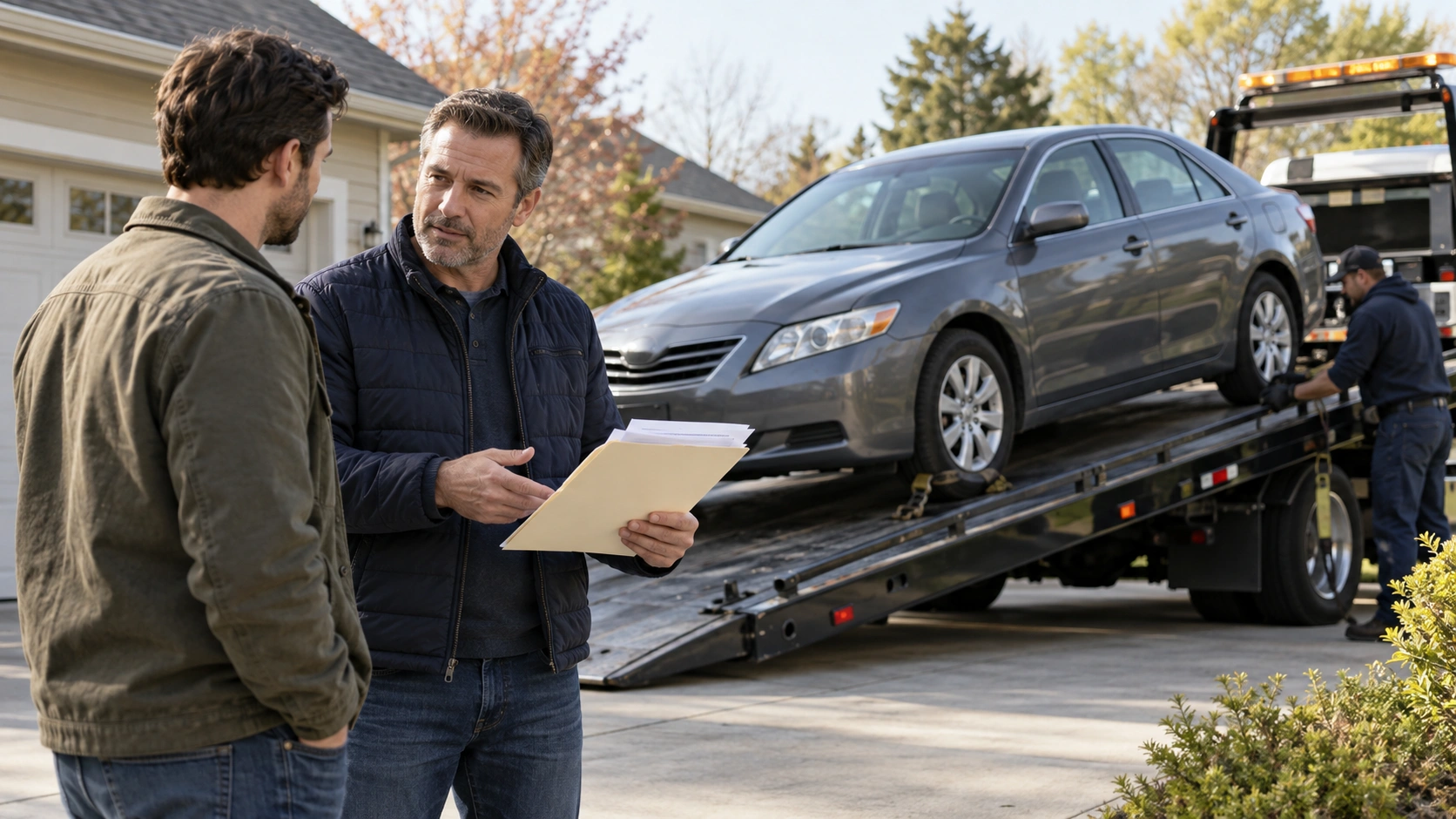
Assume the car leaves on a trailer or a flatbed. Agree who books and pays for transport,
where it loads from, and whether the keys, wheels and brakes are in a state to move it onto
a deck.
Do not start it to make a video. Running a knocking engine for advertising can turn a
rebuildable bottom end into a scored crank. Use footage you already have, and let the
shop’s report do the rest of the talking.
Buyers should still get to inspect. Let them come with their own mechanic, look at it cold, pull
codes, and check the oil and filter for debris.
What belongs in the bill of sale
A generic form covers the parties, the vehicle and VIN, the price and the date. That is the
easy half. ConsumerShield has state-specific vehicle bill of sale forms, which is worth using
because requirements such as notarization differ by state, but the details that matter here
are the ones a blank form leaves out:
- The condition as you described it, including whether the fault is diagnosed or
suspected, and by whom - The reports and estimate, listed as attachments and signed alongside the main
document - Loose parts included in the sale, such as a spare engine, a pulled head or a box of
removed components - The collection arrangement, including who pays transport and by when the car must
be gone - That the vehicle is sold with the stated fault, in the wording your state uses for private
sales
Print a full set for each side and sign both. If the buyer sends a deposit to hold it, put the
amount and whether it is refundable in the same document.
Closing the transfer
Have the title in hand and in your name, with any lien released, before you advertise.
Complete the odometer disclosure on the title unless an exemption applies, take payment
that has actually cleared before the title and keys change hands, and handle plates the way
your state directs.
Then check whether your state has a seller’s notification. Texas is the clearest example: the
TxDMV asks sellers to file a vehicle transfer notification within 30 days of the sale, and doing
so means you cannot be held responsible for parking tickets and toll violations incurred by
the buyer after the sale. It records the sale rather than transferring the title, which the buyer
still has to do.
The handover itself
A clean finish looks like this: payment verified in your account, the signed bill of sale and
attachments exchanged so both sides hold identical copies, the car collected by trailer,
plates off, and the seller notification filed where your state has one.
Keep the paperwork, the listing text and the message thread for as long as your legal and
tax obligations require, and do not clear any of it while a dispute is open. Records establish
what you disclosed and when. They do not guarantee that no claim arrives, which is the
reason to get the disclosure right rather than to rely on the file afterwards.