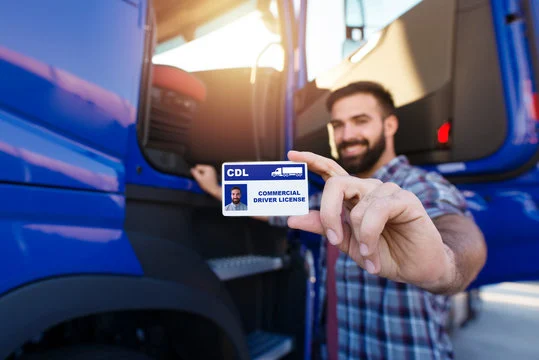

A commercial driver’s license (CDL) is required to operate certain large or specialized vehicles, and the class of CDL determines the types of commercial vehicles a driver can legally operate.
The three primary CDL classes are Class A, Class B, and Class C, with each class covering different vehicle combinations and purposes. So “What is a commercial driver’s license?” Knowing the answer can help drivers choose the correct license and avoid operating a vehicle without the required credentials.
What Is a CDL?
A CDL is a specialized driver’s license for operating certain commercial motor vehicles. Federal and state requirements determine when a CDL is necessary and what qualifications a driver must meet.
Commercial vehicles can include large trucks, tractor-trailers, buses, and other vehicles that meet specific weight or operational requirements.
The exact requirements can vary by state, so drivers should check the rules that apply where they are licensed.
Class A CDL
A Class A CDL generally allows a driver to operate a combination vehicle with a gross combination weight rating (GCWR) of 26,001 pounds or more when the vehicle being towed has a gross vehicle weight rating (GVWR) above 10,000 pounds.
Common examples include:
- Tractor-trailers
- Truck and trailer combinations
- Certain tractor-and-tanker combinations
- Other qualifying combination vehicles
A Class A CDL can also provide eligibility for operating some vehicles covered by lower CDL classes, depending on applicable endorsements and restrictions.
Class B CDL
A Class B CDL generally applies to a single vehicle with a GVWR of 26,001 pounds or more, or such a vehicle towing another vehicle that does not exceed 10,000 pounds GVWR.
Examples may include:
- Large straight trucks
- Certain dump trucks
- Some box trucks
- Certain buses
Drivers with a Class B CDL may need additional endorsements for particular types of vehicles or passengers.
Class C CDL
A Class C CDL generally applies to vehicles that do not fall within the Class A or Class B categories but are designed to transport 16 or more passengers, including the driver, or transport certain hazardous materials requiring a placard.
Examples can include certain passenger vans and vehicles transporting qualifying hazardous materials.
A driver may need specific endorsements depending on the vehicle and the type of cargo or passengers being transported.
CDL Endorsements
CDL classes are only part of the licensing system. Drivers may also need endorsements for specific operations.
Common endorsements include those for:
- Passenger vehicles
- School buses
- Tank vehicles
- Double or triple trailers
- Hazardous materials
An endorsement does not replace the underlying CDL class. Instead, it adds authorization for a particular type of driving.
Federal CDL Requirements
Federal law establishes important commercial driver’s license standards. Under 49 C.F.R. § 383.91, commercial driver’s licenses are divided into Classes A, B, and C based on the types of vehicles a driver is authorized to operate.
Drivers must meet applicable qualification requirements before receiving the appropriate CDL.
Restrictions Can Limit What You Drive
A CDL does not automatically allow a driver to operate every commercial vehicle. Restrictions can limit the types of vehicles or equipment a driver may use.
For example, restrictions may apply based on the type of transmission, vehicle configuration, or testing completed by the driver.
Drivers should review their CDL carefully to understand any restrictions listed on the license.
Why Choosing the Correct CDL Matters
Operating a commercial vehicle without the appropriate license, endorsement, or authorization can result in legal and employment consequences. It can also create safety concerns when a driver has not received the training needed for a particular vehicle.
Employers and drivers should verify that licensing requirements are satisfied before allowing a driver to operate a commercial vehicle.
Key Takeaways
- CDL requirements apply to certain commercial motor vehicles.
- Class A generally covers qualifying combination vehicles.
- Class B generally covers qualifying heavy single vehicles.
- Class C covers certain vehicles that do not meet Class A or B requirements.
- Endorsements provide additional authorization for specific vehicles or cargo.
- Restrictions can limit the vehicles a CDL holder may operate.
- Federal regulations establish the basic CDL classification system.
- Drivers should verify their state and federal requirements before operating a commercial vehicle.