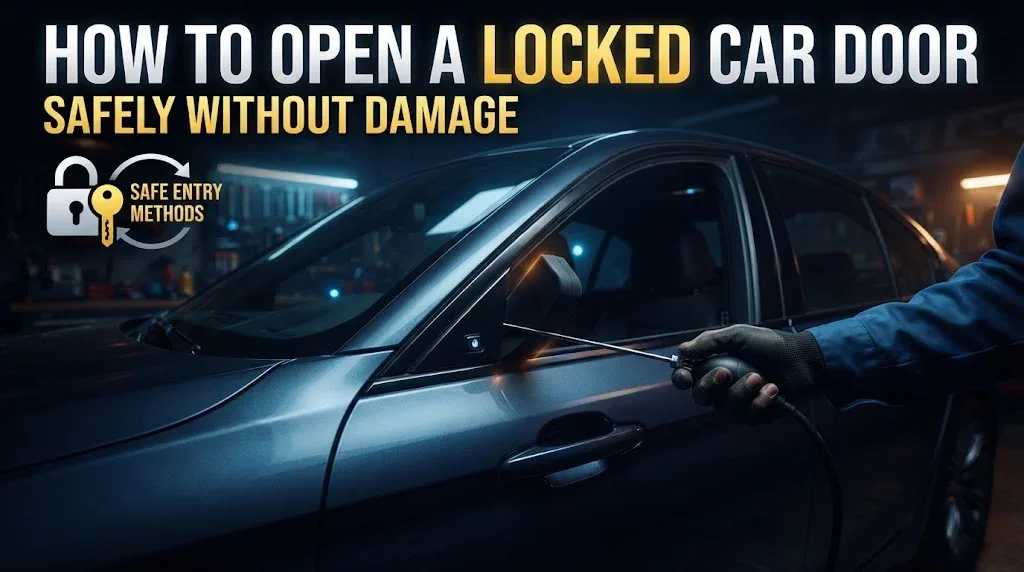

A calm, practical guide to legitimate ways to unlock a car door—without risking costly damage to your vehicle.
If a child, pet, or vulnerable person is locked inside
Call local emergency services immediately. Heat, cold, and distress can become dangerous quickly—do not wait for roadside assistance.
The safest way to unlock a car is the one designed for your vehicle.
Start with your spare key or manufacturer-supported access. If those are unavailable, call roadside assistance or a verified automotive locksmith.
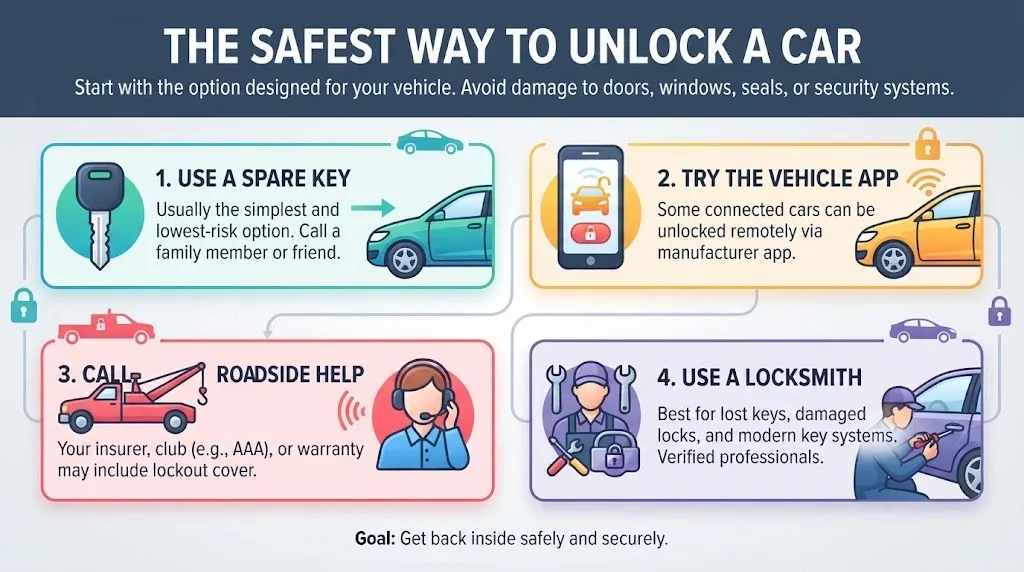
Use a spare key
Usually the simplest and lowest-risk option.
Call roadside help
Your insurer, club, or warranty may include lockout cover.
Try the vehicle app
Some connected cars can be unlocked remotely.
Use a locksmith
Best for lost keys, damaged locks, and modern key systems.
When you need to unlock a car door, the goal is not simply getting back inside—it is getting back inside without turning a stressful moment into a damaged door, window, seal, or security system. The safest option depends on your vehicle, its lock technology, and what has gone wrong.
1. First, check your situation before trying anything
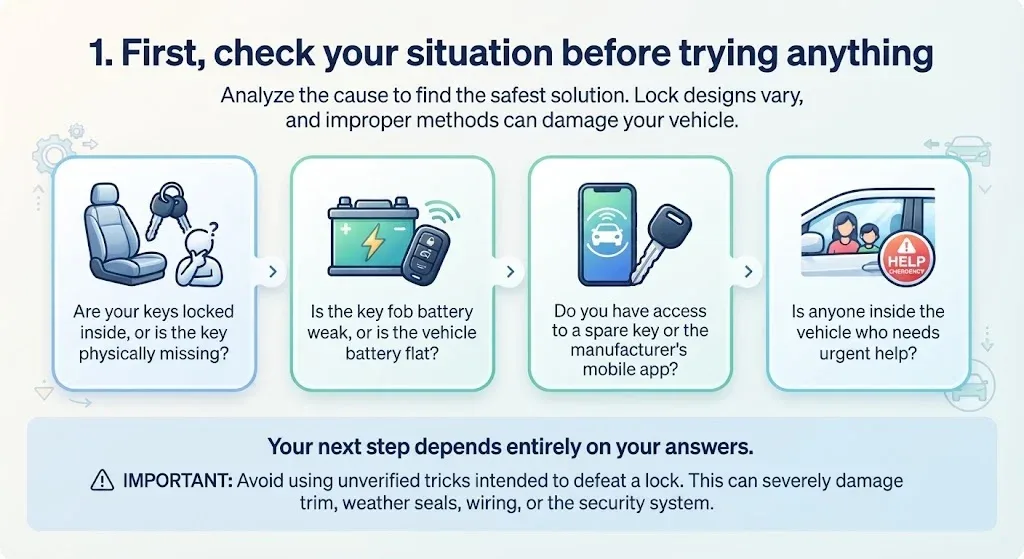
Pause for a moment and identify the cause of the lockout. A driver who left keys on the seat after fueling has a different solution from someone whose key fob stopped responding outside work. Modern cars may use mechanical locks, remote fobs, smart keys, immobilizers, or connected mobile services.
Avoid assuming that a trick you saw online will work on your vehicle. Lock designs vary widely, and methods intended to defeat a lock can damage trim, weather seals, wiring, or security components.
Quick situation check
- Are your keys locked inside, or is the key physically missing?
- Is the key fob battery weak, or is the vehicle battery flat?
- Do you have access to a spare key or the manufacturer’s mobile app?
- Is anyone inside the vehicle who needs urgent help?
2. Safest ways to unlock a car door
For most people, the safest way to open a locked car door is to use a legitimate access method that matches the vehicle. These options protect both the car and your safety.
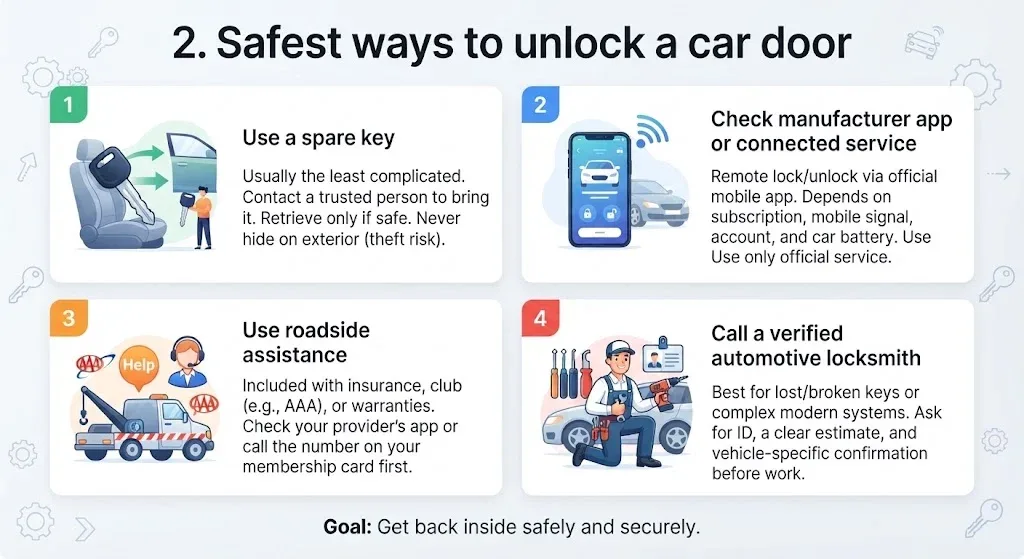
Use a spare key if you can access one
A spare key is generally the least complicated answer when keys are locked inside. Contact a trusted person who can bring it, or retrieve it only if doing so is safe and practical. Do not leave a spare hidden on the exterior of your vehicle; that can create a theft risk.
Check the manufacturer app or connected service
Many newer vehicles offer remote lock and unlock functions through an official mobile app or connected-services account. Availability depends on your subscription, mobile signal, account setup, and the vehicle’s battery condition. Use only the official service for your make and model.
Use roadside assistance included with your cover
Insurance policies, automobile clubs, vehicle warranties, and some credit-card benefits can include lockout assistance. Before paying out of pocket, check your provider’s app or call the number on your policy or membership card.
Call a verified automotive locksmith
A reputable automotive locksmith is often the best choice for a lost key, broken key, failed lock cylinder, or a vehicle with sophisticated key programming. Ask for identification, a clear estimate, and confirmation that they service your specific vehicle type before work begins.
3. Why forced entry can damage your vehicle
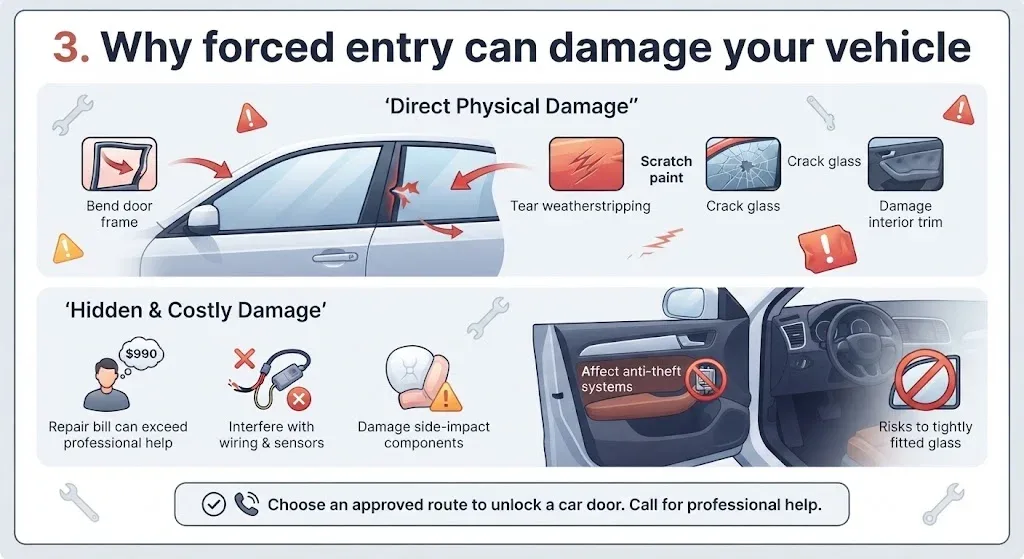
It is tempting to force a door, pry at a window, or try improvised objects when you are stranded. These approaches can bend the door frame, tear weatherstripping, scratch paint, crack glass, damage interior trim, or interfere with wiring and sensors.
Even if a door opens, the repair bill can exceed the cost of professional help. Modern vehicles may also have side-impact components, anti-theft systems, and tightly fitted glass that make DIY entry attempts particularly risky. Choose an approved route to unlock a car door rather than applying force.
4. What to do if your key fob stops working
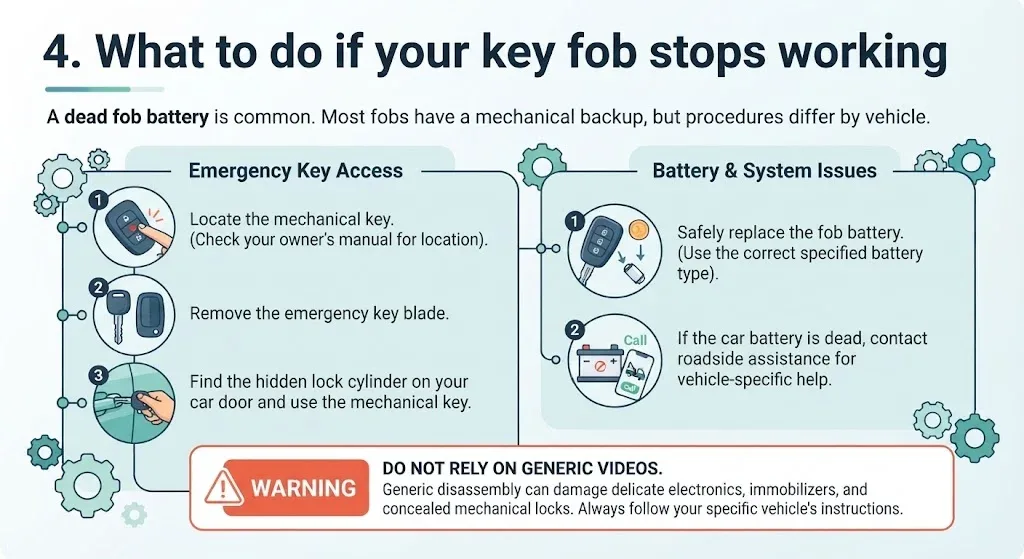
A dead fob battery is a common reason drivers search for how to unlock a car door. Most key fobs have an emergency mechanical key blade or another manufacturer-provided backup method, but the location and instructions differ by vehicle.
- Check your owner’s manual or official support site for the correct emergency-entry procedure.
- Replace the fob battery with the specified type when you can do so safely.
- If the car battery is dead, contact roadside assistance or a qualified technician for the vehicle-specific next step.
Do not rely on generic videos for key-fob disassembly or emergency access. A procedure that is appropriate for one model can damage another, especially where concealed mechanical locks or electronic immobilizers are involved.
5. When you should call a locksmith or roadside assistance
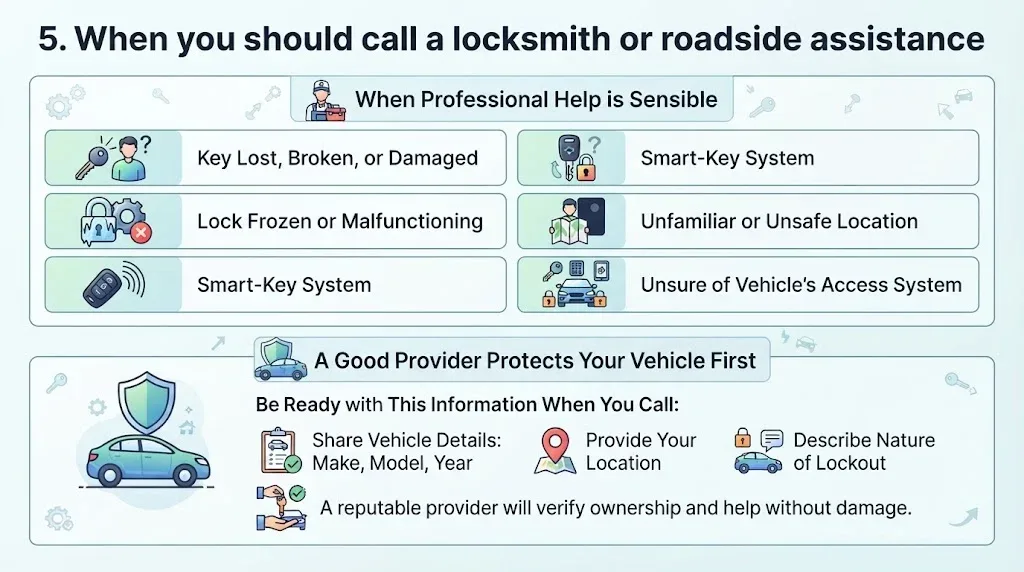
Professional help is the sensible choice when your key is lost, broken, or damaged; the lock is frozen or malfunctioning; the vehicle uses a smart-key system; or you are in an unfamiliar or unsafe location. It is also the right call whenever you are unsure which access system your vehicle has.
A good provider protects your vehicle first.
When calling, share the vehicle make, model, year, your location, and the nature of the lockout. A reputable provider can explain what they need to verify ownership and whether they can help without damage.
6. How to prevent future car lockouts
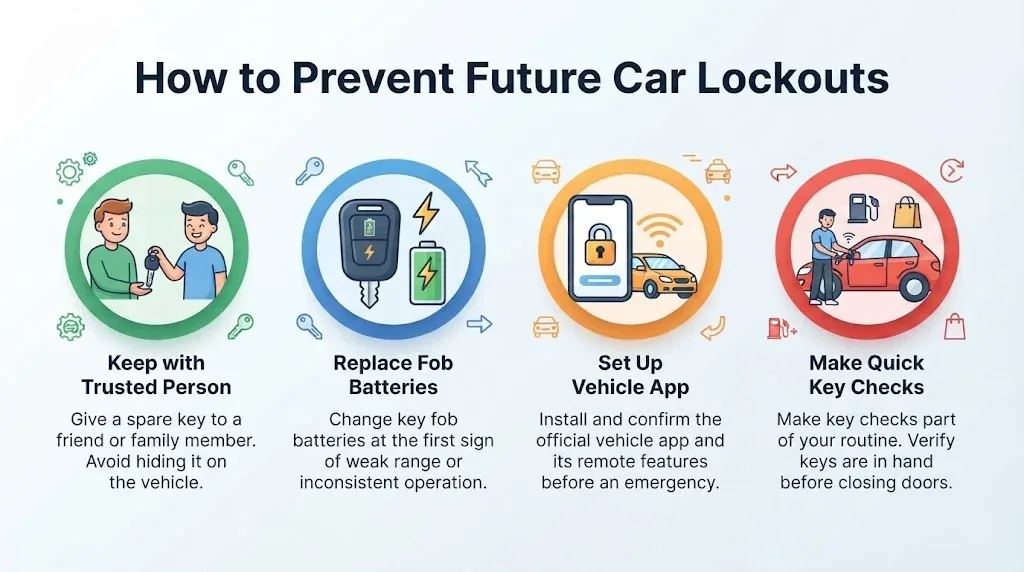
A few small habits can make a future lockout less disruptive. The right setup depends on your car and comfort level, but a backup plan is usually worth arranging before you need it.
- Keep a spare key with a trusted person rather than hiding it on the vehicle.
- Replace key-fob batteries at the first signs of weak range or inconsistent operation.
- Set up your official vehicle app and confirm its remote features before an emergency happens.
- Make a quick key check part of your routine before closing the door, especially when loading fuel, luggage, or children.
Frequently asked questions
Can I unlock my car with a coat hanger or other tool?
It is best not to. Improvised tools and forced-entry methods can damage weather seals, wiring, airbags, paint, glass, and the door frame. Use a spare key, an official connected service, roadside assistance, or a verified automotive locksmith instead.
What should I do if my key fob battery is dead?
Check the owner’s manual for the vehicle’s manufacturer-provided emergency key or backup-entry procedure. If the vehicle battery is also flat or the procedure is unclear, contact roadside assistance or a qualified technician.
Will roadside assistance unlock my car?
Many insurance policies, automobile clubs, warranties, and roadside plans include lockout assistance. Check your provider’s app, membership details, or policy number before arranging help.
How can I avoid another car lockout?
Keep a spare key with someone you trust, set up the official vehicle app, replace weak fob batteries promptly, and make a quick key check part of your routine before closing the door.