
Learn the real signs of a bad oxygen sensor, how to test the evidence before buying parts, and when replacement makes sense.
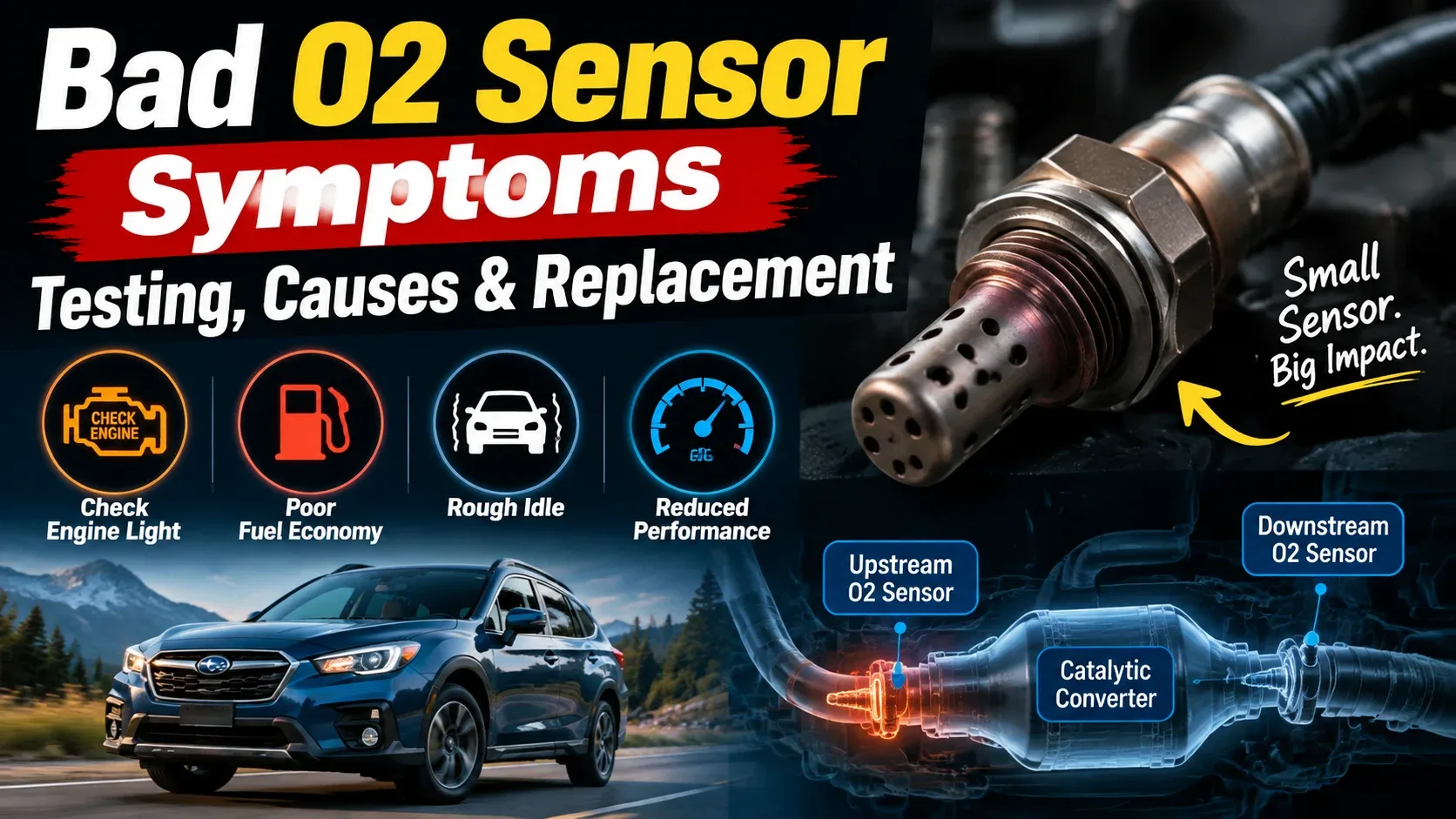
Common bad O2 sensor symptoms include a check engine light, poorer fuel economy, rough running after warm-up, hesitation, a fuel-like exhaust smell, or an emissions-test failure. None of these symptoms proves the sensor itself is bad—scan data, wiring condition, and exhaust leaks should be checked first.
What does an oxygen sensor do?
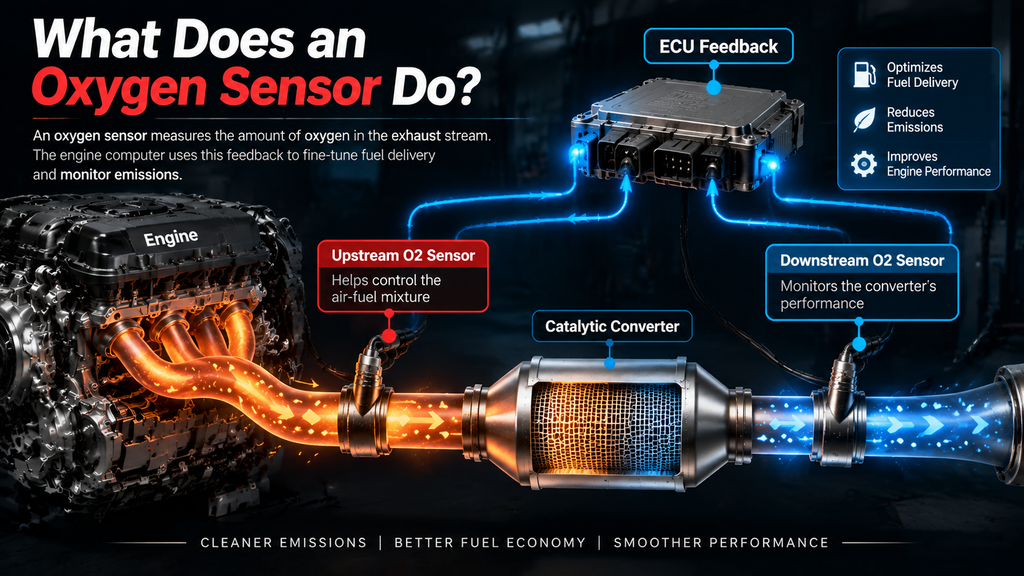
An oxygen sensor measures the amount of oxygen remaining in the exhaust stream. The engine computer uses this feedback to fine-tune fuel delivery, especially once the engine is warmed up and operating in closed loop.
The upstream sensor, before the catalytic converter, has the biggest role in fuel-mixture control. A downstream sensor, after the converter, mainly helps the computer monitor catalyst efficiency. Your vehicle may have more than two sensors, depending on its engine and exhaust layout.
Exhaust system at a glance
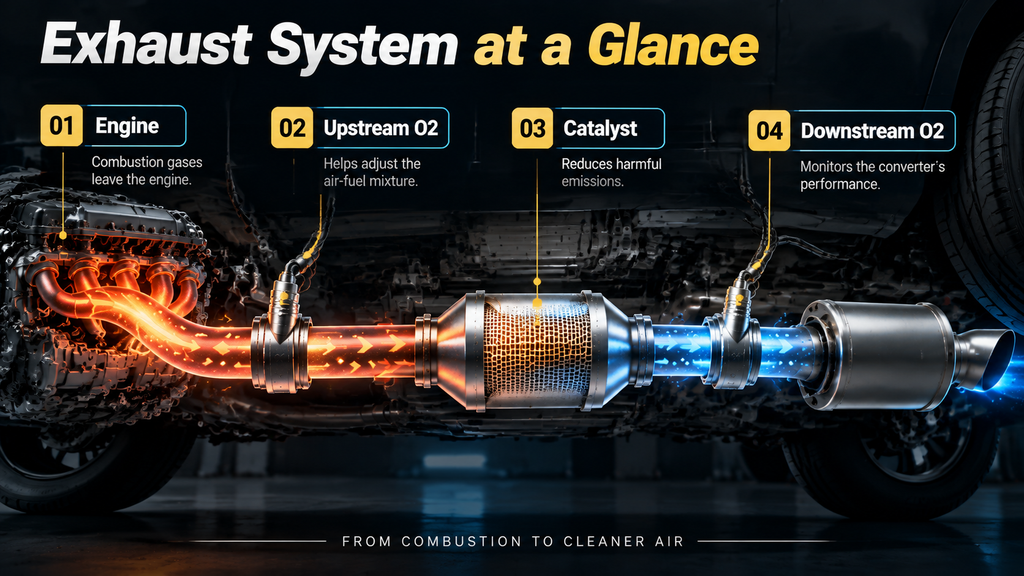
01 · Engine
Combustion gases leave the engine through the exhaust manifold.
02 · Upstream O2
Helps adjust the air-fuel mixture before gases reach the converter.
03 · Catalyst
Reduces harmful emissions when it is working at operating temperature.
04 · Downstream O2
Monitors the converter’s performance rather than directly controlling mixture.
Common bad O2 sensor symptoms
The signs of a bad oxygen sensor often overlap with other engine, intake, fuel, ignition, and exhaust faults. Look for a pattern of symptoms alongside diagnostic information—not a single clue.
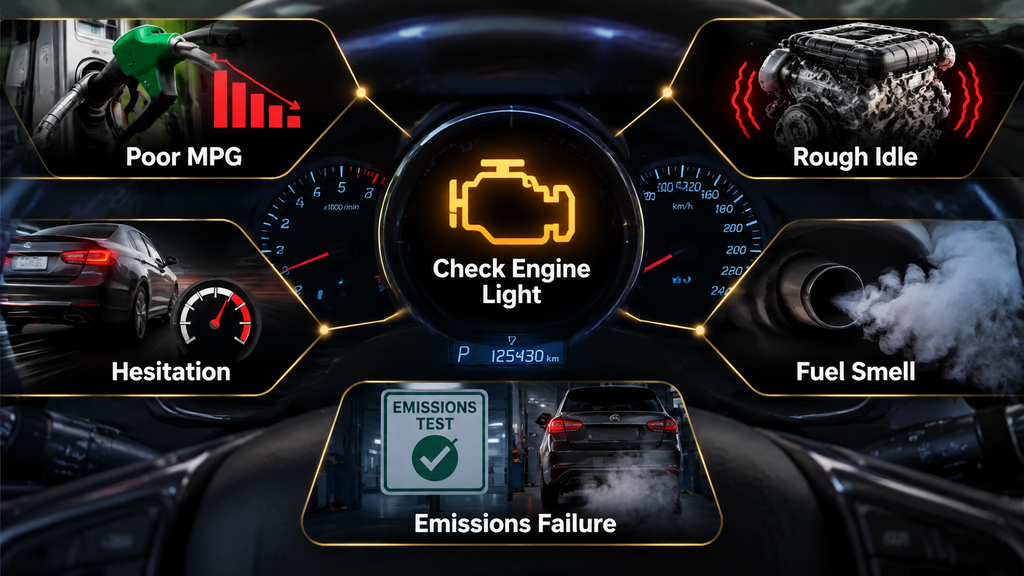
Check engine light
Codes such as P0130, P0131, P0133, or P0135 can relate to an O2 sensor circuit or signal. The code identifies a system concern, not automatically a failed sensor.
Poor fuel economy
A faulty upstream signal may contribute to excess fuel use, but low mileage can also come from driving conditions, tire pressure, injectors, thermostat issues, or airflow problems.
Rough idle or hesitation
If mixture correction becomes inaccurate after warm-up, idle quality or acceleration can suffer. Misfires, vacuum leaks, and fuel-pressure faults can produce very similar behavior.
Fuel smell or emissions failure
A rich-running condition can create a fuel-like exhaust smell and increase emissions. Treat this as a reason to diagnose soon, particularly if the warning light is flashing.
A flashing check engine light can indicate an active misfire that may damage the catalytic converter. Reduce driving and seek prompt professional advice rather than assuming the O2 sensor is the only issue.
How can I tell if my oxygen sensor is bad?
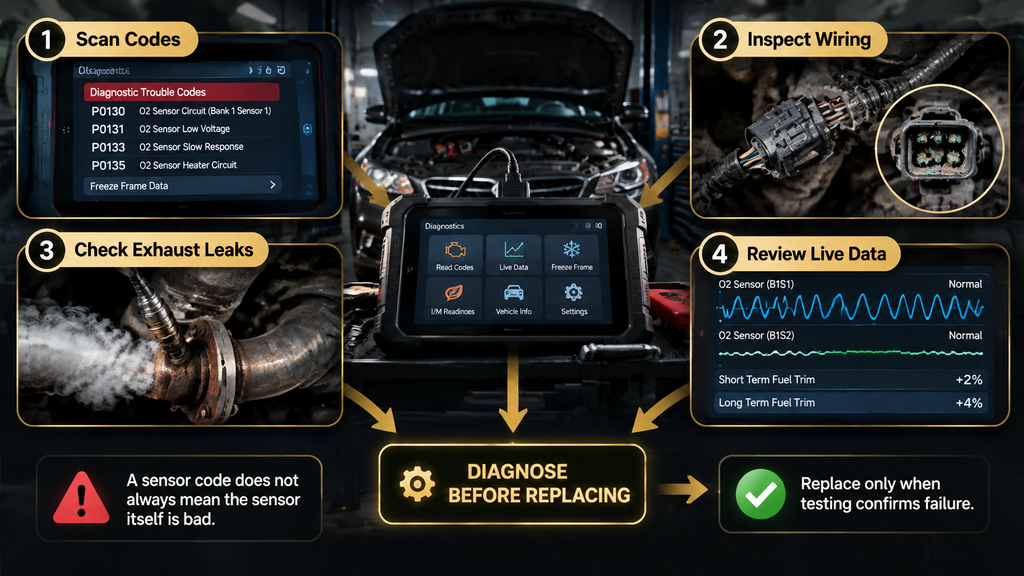
The best answer is: test the whole circuit and the engine condition around it. A sensor-related code is a starting point. Before ordering a part, gather evidence from these checks:
- Read all stored and pending codes, plus freeze-frame data. Related misfire, fuel-trim, heater-circuit, or catalyst codes matter.
- Inspect the sensor harness and connector for melted insulation, corrosion, loose pins, or routing too close to the exhaust.
- Check for exhaust leaks ahead of the sensor. Extra outside air can distort readings and mimic a sensor problem.
- Use live scan data and compare it with the service information for your exact engine and sensor type.
Common causes of oxygen sensor failure
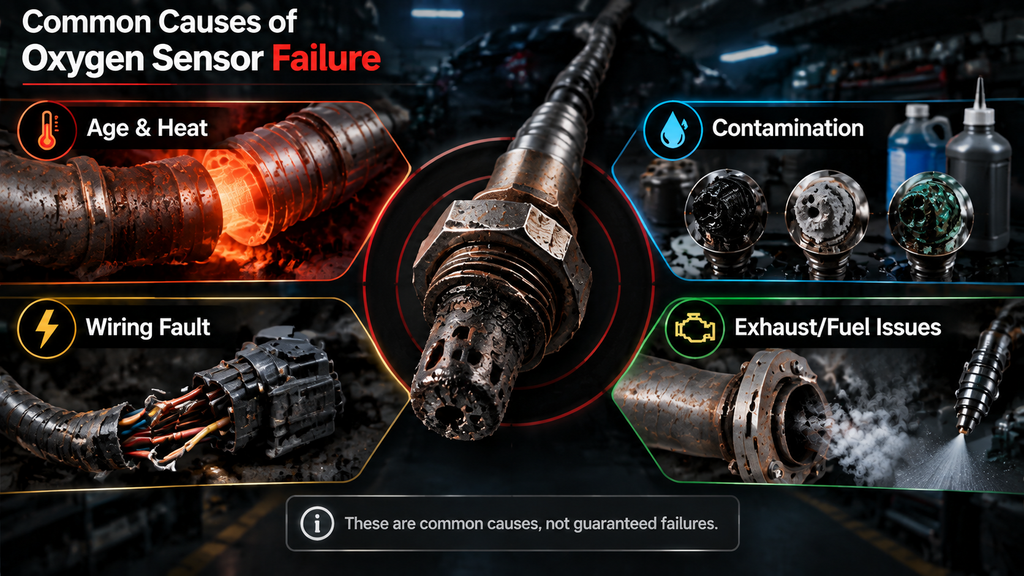
O2 sensors naturally slow down with age, but contamination and circuit problems are common reasons for early failure. If the old sensor is visibly sooted, oily, or coolant-fouled, find and correct the underlying engine problem as well.
• Age, heat cycles, and high mileage
• Oil, silicone, or coolant contamination
• Wiring damage or heater-circuit faults
• Exhaust leaks or fuel-system issues
How to test an O2 sensor
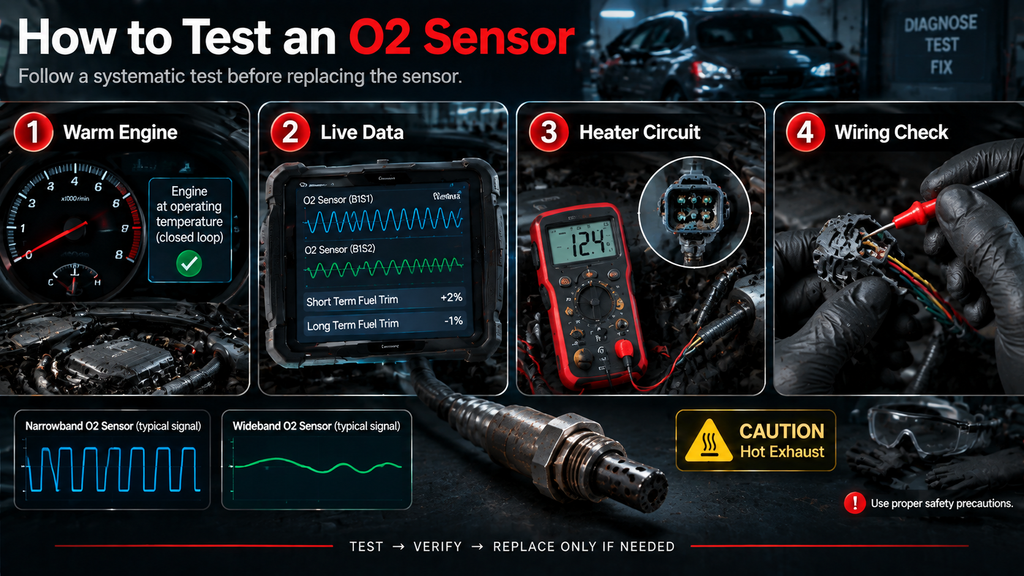
You can perform useful preliminary checks at home with a scan tool and visual inspection. Modern wideband air-fuel sensors are more complex than older narrowband sensors, so their values should be interpreted using factory service information rather than a universal voltage rule.
Start with evidence
Let the engine reach operating temperature
Many O2 sensor tests only make sense once the engine is warm and the computer has entered closed loop. Follow safe workshop practices around hot exhaust components and moving engine parts.
1. Check live data with a scan tool
Observe upstream and downstream sensor behavior, fuel trims, coolant temperature, and whether the engine is in closed loop. An older narrowband upstream sensor often switches rich-to-lean repeatedly when the system is healthy, while a downstream signal is usually steadier.
2. Inspect the heater circuit and wiring
A multimeter can help check heater-circuit power, ground, and resistance against the manufacturer specification. Do not pierce insulated wires unnecessarily, and do not apply voltage to signal wires unless the service procedure specifically calls for it.
Oxygen sensor replacement: when it makes sense
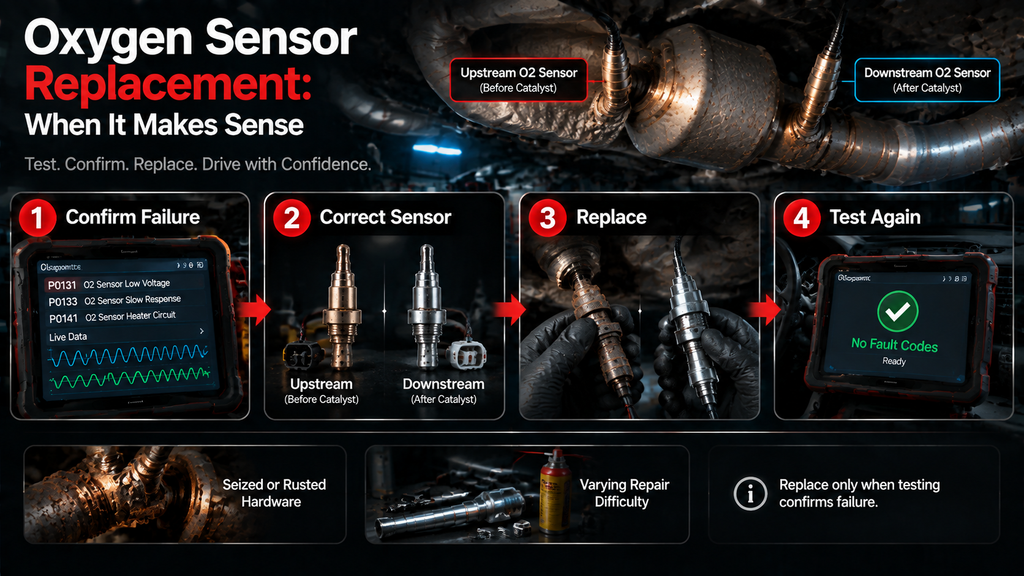
Replace an oxygen sensor when testing supports failure, the sensor heater circuit has failed, or a technician has ruled out wiring, exhaust leaks, and other causes. Use the correct sensor position and connector for the vehicle; upstream and downstream sensors are not interchangeable simply because they look similar.
Labor and part cost vary widely with sensor access, vehicle design, and part quality. A seized sensor in a rust-prone exhaust can turn a straightforward repair into a more involved job. It is usually better to replace only the confirmed failed sensor rather than automatically replacing every sensor at once.
Bad O2 sensor FAQ
Can I drive with a bad O2 sensor?
A vehicle may still drive with some O2 sensor faults, but fuel economy, emissions, and drivability can suffer. Do not ignore a flashing check engine light, strong fuel smell, severe rough running, or overheating warning signs. Those can indicate a more urgent condition.
How long does an O2 sensor last?
Service life varies by sensor design, engine condition, driving environment, and contamination exposure. Many last well beyond 100,000 miles, but there is no universal replacement interval that applies to every modern vehicle. Check the maintenance schedule for your model.
Does a bad O2 sensor affect gas mileage?
It can, especially when an upstream sensor provides inaccurate mixture feedback. However, poor gas mileage can also be caused by tire pressure, driving conditions, maintenance needs, fuel delivery concerns, thermostat faults, or ignition problems.
Does a P0420 code mean I need an O2 sensor?
No. P0420 relates to catalyst-system efficiency. Diagnosis may include checking catalytic-converter performance, upstream and downstream sensor signals, exhaust leaks, engine misfires, and fuel-control issues. Replacing a sensor without testing may not solve the problem.