A comprehensive analysis of Firestone tire quality, safety concerns, best models, and how they stack up against premium competitors.
Quick Answer
Yes, modern Firestone tires are good quality. Firestone is owned by Bridgestone, a leading global tire manufacturer. Modern Firestones offer solid performance at lower price points than premium brands. The 1990s safety issues were primarily Ford engineering failures, not tire defects. Specific models like the Destination LE3 are excellent choices for budget-conscious buyers.
Table of Contents
- 1. The Bridgestone Connection: Why It Matters
- 2. Understanding the 1990s Recall
- 3. Best Firestone Models in 2026
- 4. Noise & Comfort: Separating Myth from Reality
- 5. Firestone vs. Premium Brands: Value Analysis
- 6. Final Recommendations
1. The Bridgestone Connection: Why It Matters
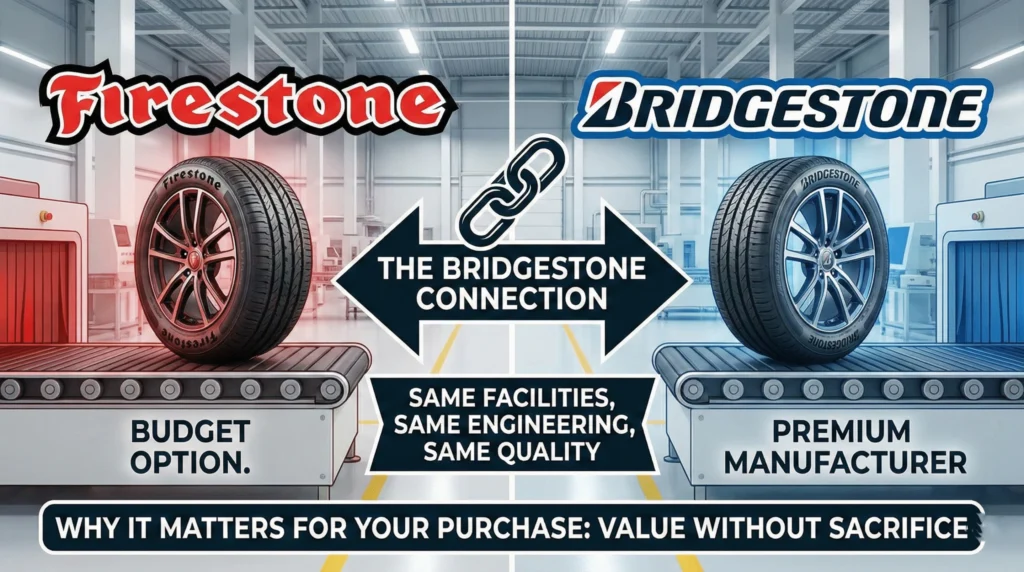
The most important fact about Firestone: Firestone has been owned and operated by Bridgestone since 1988. This isn’t a recent acquisition or a brand in name only—Bridgestone directly manufactures Firestone tires in their own facilities using the same engineering standards and quality control processes.
Think of it this way: Bridgestone is one of the “Big Three” global tire manufacturers (alongside Michelin and Goodyear). When you buy a Firestone tire, you’re essentially buying a Bridgestone product positioned at a lower price point in the market. The quality is genuine because it’s literally made by the same company.
Why This Matters for Your Purchase Decision:
When a tire shop recommends Firestones as a budget option, they’re not steering you toward a low-quality brand. They’re recommending a value-tier product from a major global manufacturer. You’re not sacrificing quality—you’re sacrificing marketing overhead and brand positioning costs.
This is similar to other corporate family relationships: Lexus is made by Toyota, Acura is made by Honda, and Infiniti is made by Nissan. The parent company uses different brand positioning to serve different market segments, but the engineering and manufacturing standards remain consistent.
The Manufacturing Reality
Firestone tires are manufactured in Bridgestone facilities alongside Bridgestone-branded tires. They share:
- Same production lines: Firestones aren’t made in a separate “budget facility”
- Same quality control: Identical testing and inspection standards
- Same rubber compounds: Often the same formulations used in premium lines
- Same R&D: Bridgestone’s engineering teams develop both brands
2. Understanding the 1990s Recall
If you’re over 30, you probably remember the Ford Explorer / Firestone tire scandal of the late 1990s. Tire failures on Explorers led to rollovers, injuries, and fatalities. Millions of tires were recalled. The incident was terrifying and left a permanent mark on Firestone’s reputation.
But here’s what the subsequent investigation and technical analysis revealed—information that fundamentally changes the story:
What the Investigation Found
The root cause of the failures wasn’t a fundamental tire defect. Instead, it was a combination of Ford’s engineering decisions, tire pressure specifications, and environmental factors working together.
The Real Technical Story
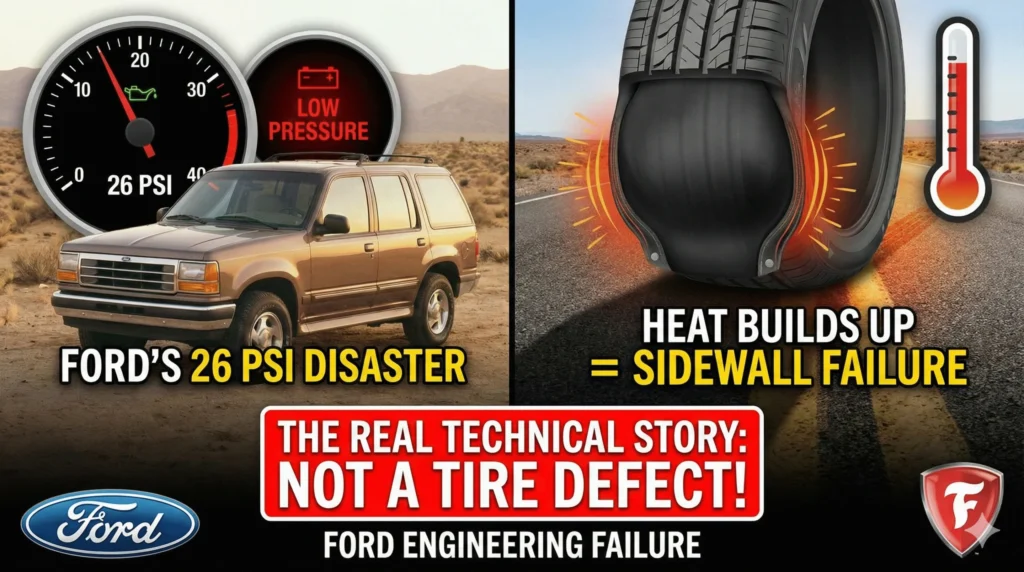
Ford’s Tire Pressure Problem: Ford recommended a tire pressure of 26 PSI for the Explorer. This was unusually low—most vehicles recommend 30-35 PSI. Why so low? Because the Explorer had a design flaw: it was prone to rolling over at higher speeds. Ford deliberately underinflated the tires to mask this issue by softening the suspension and improving ride comfort. It was a band-aid solution to a vehicle engineering problem.
The Physics of Failure: Underinflated tires + 5,000+ pound SUV + hot desert climates = excessive tire flexing, heat buildup, and sidewall failure. The same Firestone tires installed on other vehicles with proper inflation didn’t exhibit the same failure pattern.
The Blame Game: Both Ford and Firestone shared responsibility. Ford for specifying dangerously low pressure, and Firestone for not warning customers loudly enough about the risks of underpressure use. But the fundamental tire design wasn’t defective—it simply couldn’t handle the abuse Ford’s specifications created.
The Bottom Line:
The 1990s recall was primarily a Ford engineering failure, not a Firestone tire quality problem. It’s like blaming a tire for failing when a vehicle was deliberately configured to abuse it. Modern Firestones shouldn’t be held accountable for a 25+ year old incident caused by different companies’ decisions.
What Changed Since Then
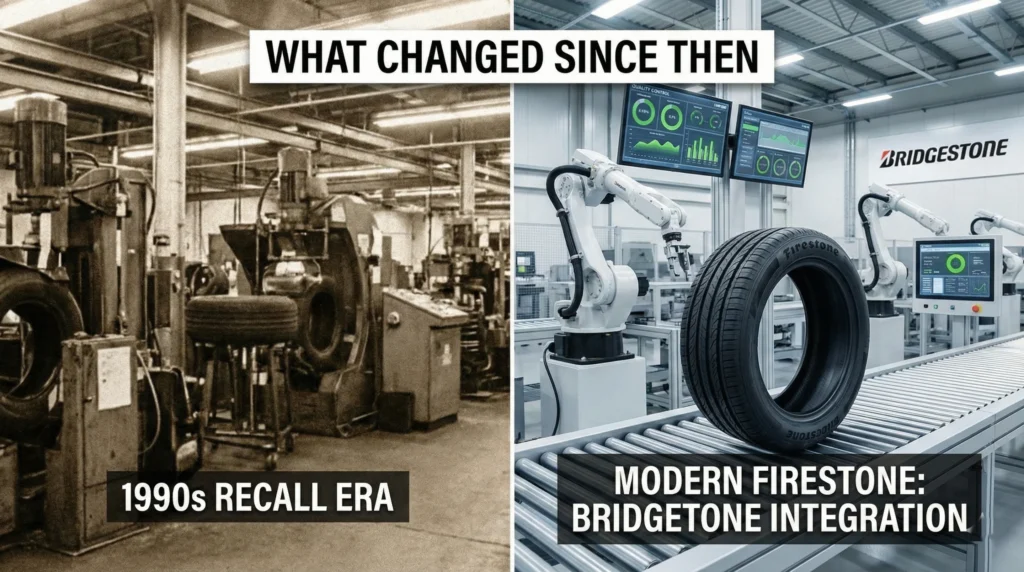
In the 25+ years since the Explorer recall, Firestone has completely modernized:
- New manufacturing facilities and processes
- Significantly improved quality control systems
- Complete product line refresh (those old tires don’t exist anymore)
- Integration with Bridgestone’s global R&D network
- Better tire pressure monitoring systems (now standard on vehicles)
Judging today’s Firestones by the 1990s recall is like judging the 2026 Mustang by the Pinto’s reputation. Too much time has passed, too much has changed.
3. Best Firestone Models in 2026
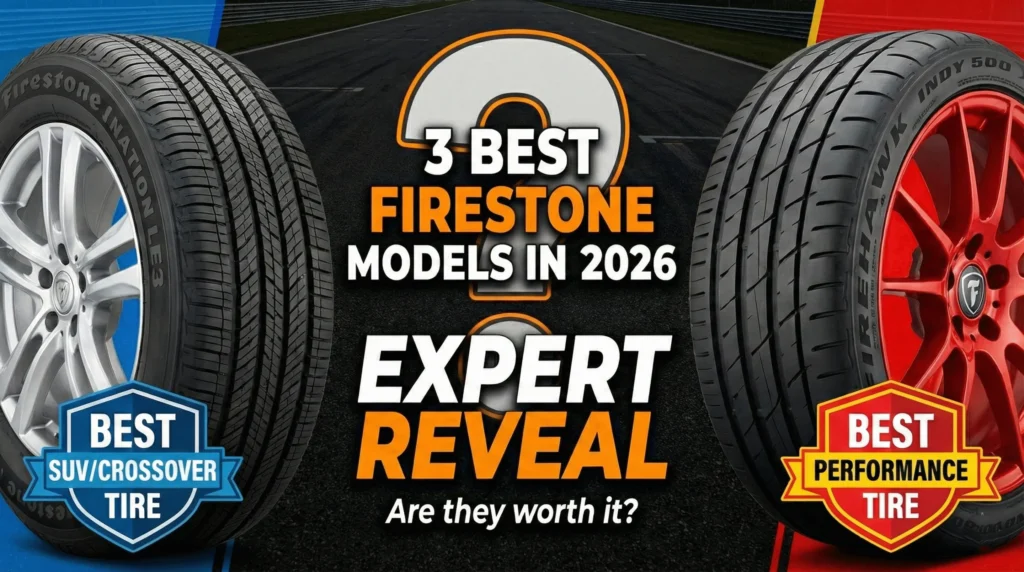
Not all Firestones are equal. Some models are excellent; others are outdated economy options. Here are the specific models that consistently receive praise from real owners and experts:
Firestone Destination LE3
TOP CHOICE All-Season SUV/Crossover
Who should buy this: Anyone with a crossover or SUV (RAV4, CR-V, Explorer, Cherokee, CX-5, etc.) looking for solid all-season performance at a reasonable price.
Why it’s excellent: The LE3 is engineered specifically for quiet, comfortable driving. It delivers strong wet traction, a 70,000-mile tread life warranty, and real-world owners consistently report durability and low noise levels. This is the tire you’re probably looking at in that Tire Rack quote.
Even the best tires get flats. If you’re heading to one of their service centers, you need to know the exact [Firestone tire patch cost in 2026] before handing over your keys.
Expert consensus: Excellent all-arounder for daily drivers. Not flashy, but reliable. Strong wet and dry performance without significant drawbacks.
Typical pricing: $120-$150 per tire
Firestone Firehawk Indy 500
PERFORMANCE Summer Performance
Who should buy this: Owners of performance or sporty vehicles (Civic Si, WRX, Mustang, Challenger, Camaro) who want summer grip without premium brand pricing.
Why it’s excellent: The Indy 500 is the budget performance tire that actually performs. Excellent grip, responsive handling, and genuine summer tire performance. Enthusiasts love these for spirited driving and track days. The value proposition is unbeatable—you get performance-tier grip without paying Pilot Sport or Conti Performance money.
Expert consensus: One of the best budget performance tires on the market. Not for winter conditions, but absolutely capable for summer performance driving.
Typical pricing: $100-$130 per tire
Firestone WeatherGrip
ALL-WEATHER Year-Round Capable
Who should buy this: Drivers in regions with occasional snow and ice (Midwest, Northeast, mountain areas) who want one tire for all seasons instead of seasonal rotation.
Why it’s excellent: The WeatherGrip is certified with the Three-Peak Mountain Snowflake rating, meaning it meets actual winter traction standards. This is a genuine all-weather tire, not a compromise. It performs decently in summer, handles occasional snow confidently, and costs less than buying separate summer and winter sets.
Expert consensus: Solid all-weather choice for variable climates. Better than an all-season in winter, better than a winter tire in summer. Great value if you don’t want seasonal tire changes.
Typical pricing: $130-$160 per tire
4. Noise & Comfort: Separating Myth from Reality
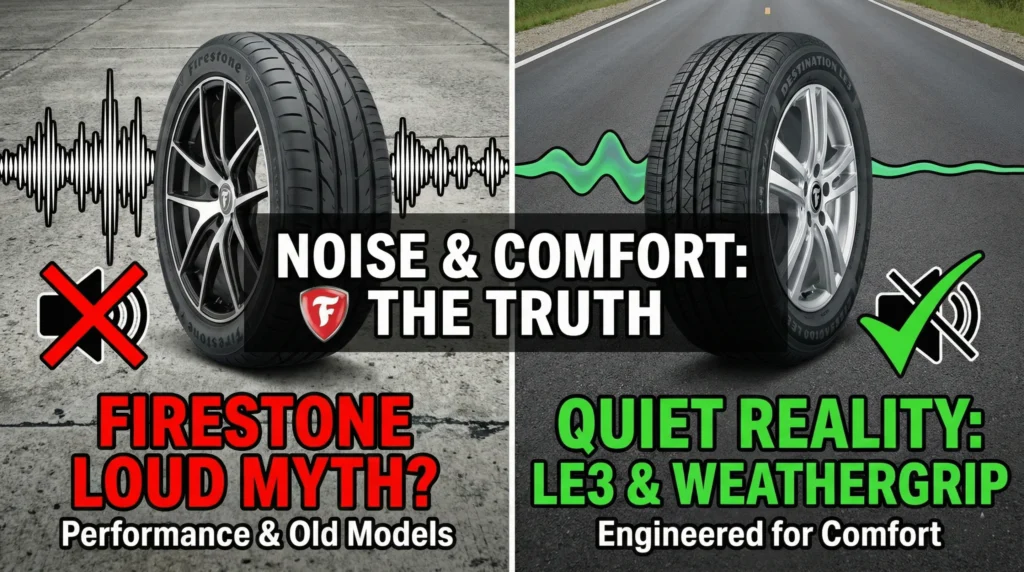
One common concern about Firestones (and Bridgestones in general) is noise. You’ll find Reddit threads and reviews mentioning “loud” or “harsh” Firestone tires. Let’s separate what’s true from what’s overblown:
What’s Actually True
- Performance tires are noisier by design: The Firehawk Indy 500 is naturally louder than the LE3 because performance tires sacrifice comfort for grip
- Some older Firestone models were noisier: The FR710 and Champion Fuel Fighter (budget economy tires) were never praised for quiet operation
- Road surface impacts noise significantly: Concrete highways are louder than asphalt, regardless of tire brand
What’s Overblown
- The LE3 is specifically engineered for quiet operation: Real-world owners consistently report it’s quiet, especially for the price
- Most noise complaints stem from worn or unrotated tires: Old tires with uneven wear naturally create noise
- Premium brands aren’t immune to noise: Michelin Defenders and Continental TrueContact Plus aren’t silent—they’re just different
- Proper inflation and rotation matter more than brand: A well-maintained Firestone will be quieter than a neglected Michelin
Practical Recommendation:
If noise is a top priority, stick with the Destination LE3 or WeatherGrip. Avoid budget economy models if quiet operation matters to you. Rotate your tires every 6,000 miles and maintain proper inflation. These practices matter more than the brand name.
5. Firestone vs. Premium Brands: Value Analysis
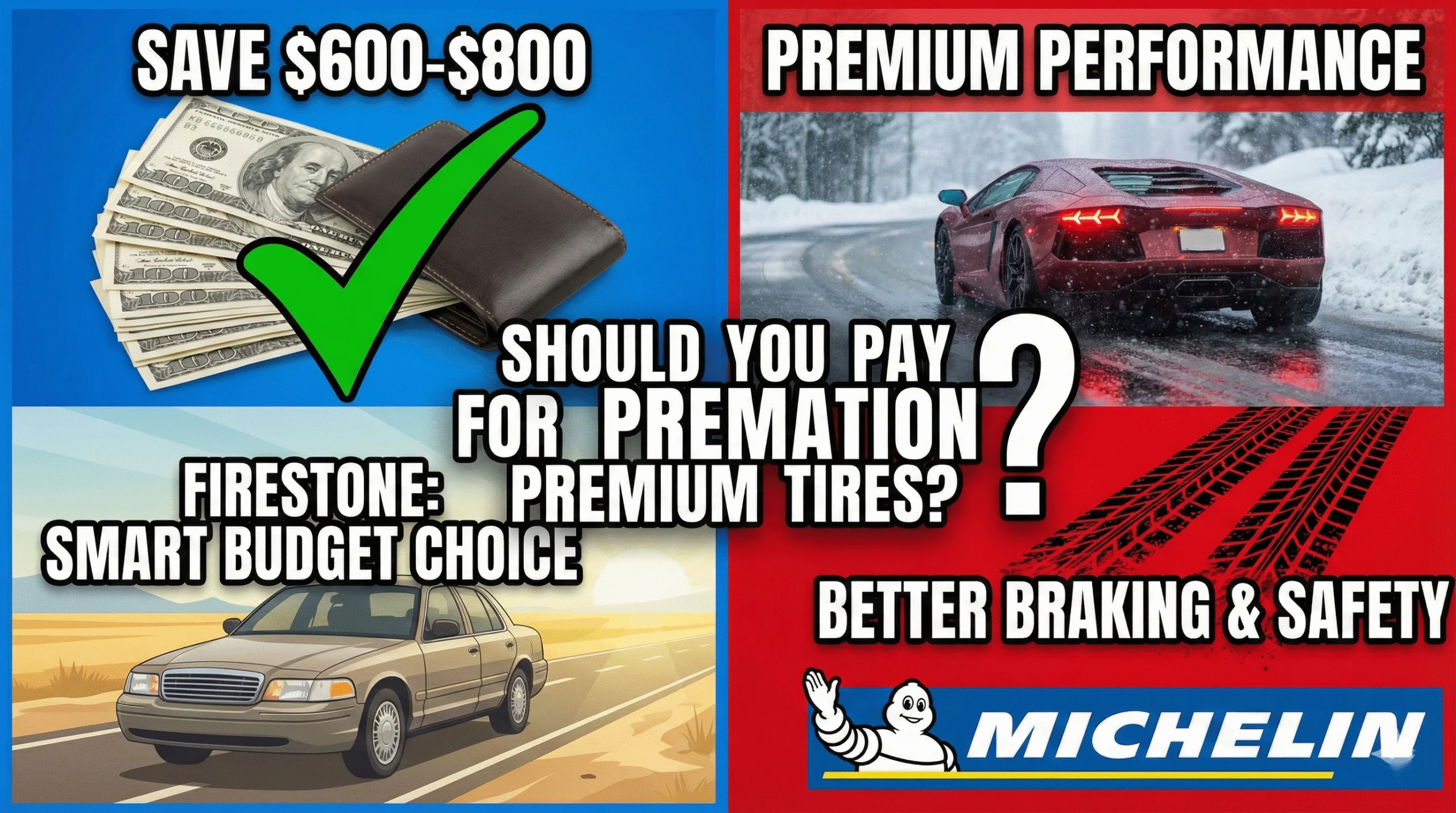
The real question: Is the extra $150-$200 per tire for Michelin or Continental worth the premium? Let’s look at the actual differences:
| Category | Firestone | Premium (Michelin/Continental) |
| Typical Cost (Set of 4) | $480–$680 | $800–$1,200 |
| Tread Life Warranty | 50,000–70,000 miles | 60,000–85,000 miles |
| Real-World Tread Life | 45,000–65,000 miles | 55,000–80,000 miles |
| Wet Braking | Good to Very Good | Very Good to Excellent |
| Dry Handling | Good | Very Good |
| Noise Level | Average to Good | Good to Very Good |
| Winter Performance | Adequate (if rated) | Excellent (if winter) |
| Warranty Support | Solid | Industry-leading |
Should You Pay for Premium?
You probably DON’T need premium tires if:
- You drive a vehicle that’s 5+ years old (depreciation means the extra tire cost isn’t justified by value retention)
- You’re a daily commuter averaging under 100 miles/day
- You plan to keep the vehicle for 5+ years (you’ll replace tires again anyway)
- Your current budget is tight (the Firestone performance difference is marginal for normal driving)
- You don’t drive in extreme weather (snow, ice, desert heat)
You probably SHOULD consider premium tires if:
- You drive a newer luxury vehicle (resale value justifies better tires)
- You live in an area with harsh winters or extreme weather
- You drive spirited/performance driving regularly (better braking = safety)
- You drive 150k+ miles and want maximum tire life
- Maximum emergency braking distance is critical (luxury vehicle = better stopping safety)
The Math:
You save $150-$200 per tire with Firestones. That’s $600-$800 for a set of four. The performance difference in normal driving? Marginal. The tire will last 90% as long. Unless your specific situation demands premium performance, Firestones are the rational economic choice.
Think of it this way: You could buy Firestones and keep $600 in your pocket, or spend $600 for a measurable but incremental improvement in wet braking distance and tire life.
6. Final Recommendations
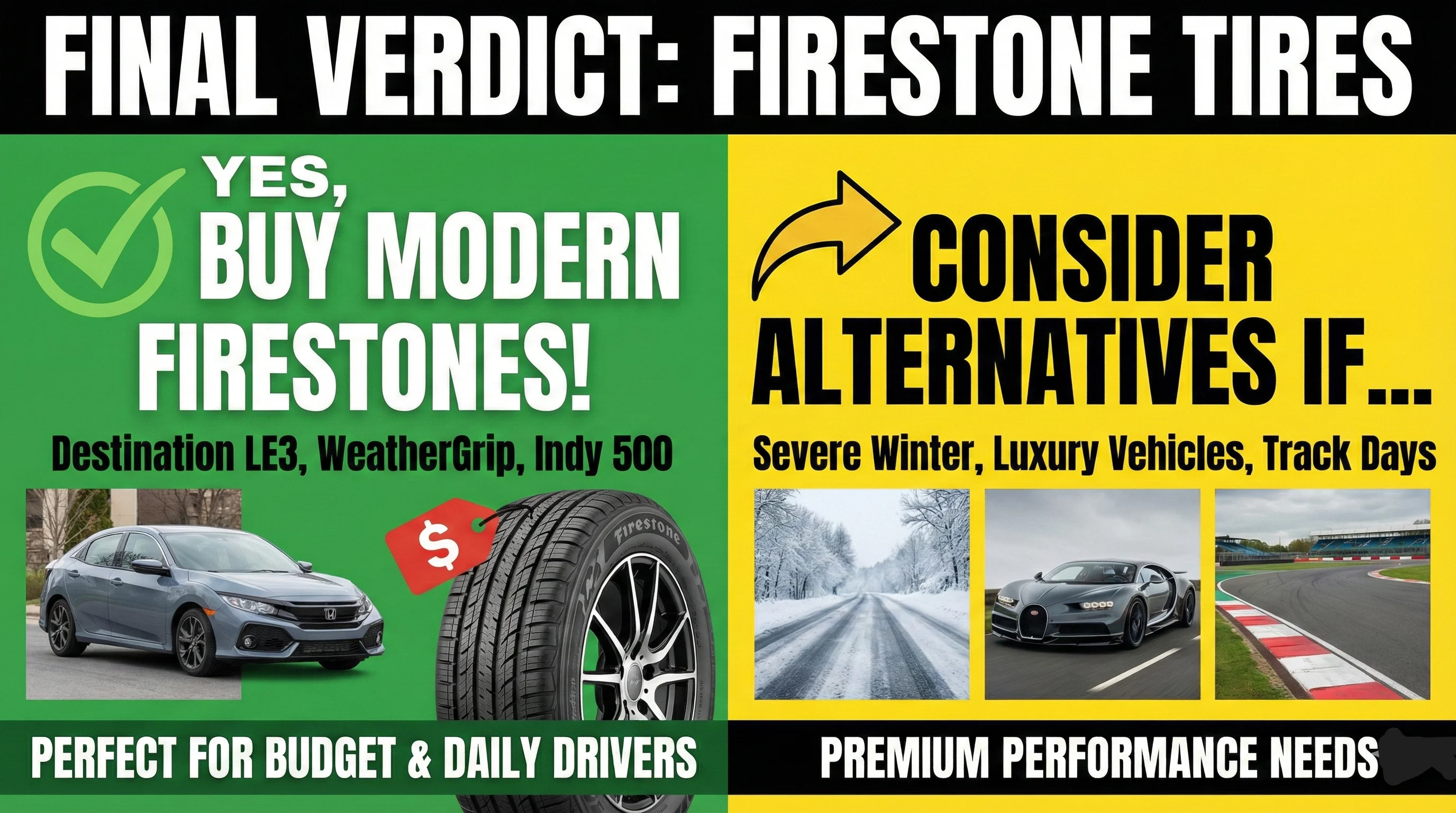
Our Expert Recommendation: Yes, Buy Modern Firestones
If you’re looking at a Firestone tire, specifically the Destination LE3, WeatherGrip, or Firehawk Indy 500, you’re looking at a legitimately good product backed by Bridgestone’s engineering. Pull the trigger, especially if there’s a promotion running.
Who Should Buy Firestones
- Daily commuters in daily driver vehicles (Corolla, Civic, CR-V, RAV4, etc.)
- Budget-conscious buyers who want quality without premium pricing
- Anyone looking at the specific praised models (LE3, Firehawk, WeatherGrip)
- People taking advantage of tire shop promotions (“Buy 3 Get 1” deals)
- Drivers whose budget is $500-$800 for a set of four tires
Who Should Consider Alternatives
- Drivers in severe winter climates (dedicated winter tires are better)
- Luxury vehicle owners (premium tires match vehicle positioning)
- Track day enthusiasts seeking maximum performance
- Those who prioritize maximum braking distance (safety margin)
- Drivers planning to keep vehicles 150k+ miles (premium tire life advantage)
The Honest Truth
Modern Firestones are safe, competent tires made by one of the world’s largest tire manufacturers. The 1990s recall is ancient history caused by factors that no longer apply. You’re not sacrificing safety by choosing Firestones—you’re choosing smart economics.
The tire industry is mature and regulated. There are no “trap” brands or hidden defects in major product lines. The difference between Firestone and Michelin is real but marginal—about 10-15% in performance across different metrics. Whether that marginal improvement is worth $600-$800 depends entirely on your situation.
If you’re standing in that tire shop right now, looking at the Firestone quote, wondering if you should save $150 per tire—the answer is yes. Buy them. Your tires will serve you well.
Article Details: Originally published March 2024. Updated to reflect current market data and tire reviews.
Research Methodology: This article synthesizes data from tire manufacturer specifications, expert reviews, consumer reports, NHTSA safety data, real-world owner reviews, and technical analysis of tire performance metrics.
Disclosure: This article contains no affiliate links and no sponsored content. We earn nothing from Firestone, Bridgestone, or any tire manufacturer.
Important Disclaimer: This article is for informational purposes. While we’ve researched extensively, tire performance can vary based on driving habits, vehicle type, road conditions, and maintenance. Always follow manufacturer recommendations for tire pressure and maintenance. When in doubt, consult your vehicle’s owner manual or a certified tire professional.
The Bridgestone Connection: Why It Matters
Here’s the fact that changes everything: Firestone has been owned by Bridgestone since 1988. That’s right—the same Japanese company that makes premium tires for luxury vehicles also makes Firestones.
This isn’t just a corporate footnote. It means Firestone tires are manufactured in the same facilities, using the same quality control standards, and often the same rubber compounds as Bridgestone tires. The difference? Marketing and price positioning.
What This Means For You
When the tire shop guy recommends Firestones, he’s essentially recommending a Bridgestone product at a lower price point. You’re not getting a “budget brand”—you’re getting the value line from a premium manufacturer.
Think of it like Lexus vs. Toyota, or Acura vs. Honda. Same parent company, same engineering DNA, different positioning in the market.
The 90s Recall: What Really Happened
Let’s address the elephant in the room. If you’re over 30, you probably remember the headlines about Ford Explorers rolling over due to Firestone tire failures. It was terrifying, and the brand took a massive hit.
But here’s what the investigation actually found:
The Real Story
- •Ford’s recommended tire pressure was dangerously low (26 PSI) to mask the Explorer’s rollover tendency and improve ride comfort.
- •Low pressure + heavy SUV + hot climates = tire failure.
- •The same tires on other vehicles with proper inflation didn’t have the same issues.
- •Ford and Firestone both made mistakes, but the root cause was a vehicle engineering decision, not a fundamental tire defect.
Fast forward 25 years: Firestone has completely revamped their manufacturing, quality control, and product lines. Holding today’s Firestones accountable for the 90s incident is like judging a 2026 Mustang by the Pinto’s reputation.
Best Firestone Tires to Actually Buy
Not all Firestones are created equal. Here are the specific models that consistently get praised by real owners (not just marketing):
Firestone Destination LE3
TOP PICK
All-Season SUV/Crossover Tire
The go-to choice for CR-V, RAV4, Explorer, and Cherokee owners. Excellent wet traction, 70,000-mile warranty, and notably quiet for the price. This is the tire you’re probably looking at right now.
✓ Quiet Ride✓ 70K Warranty✓ Great Wet Traction
Firestone Firehawk Indy 500
PERFORMANCE
Ultra-High Performance Summer Tire
The budget performance king. Civic Si, WRX, and Mustang owners love these for spirited driving without spending Pilot Sport money. Not for winter driving, but unbeatable summer grip for the price.
✓ Excellent Grip✓ Fun to Drive ⚠️ Summer Only
Firestone WeatherGrip
ALL-WEATHER
All-Weather Touring Tire
If you deal with occasional snow but don’t want winter tires, this is your play. 3-Peak Mountain Snowflake certified, meaning it meets actual winter traction standards. Great for the Midwest and Northeast.
✓ Snow Rated✓ Year-Round Use✓ 65K Warranty
The Noise & Comfort Reality Check
You’ve probably read comments saying Firestones (and Bridgestones) can be “loud” or “harsh.” Let’s break down what’s actually going on:
✓What’s True
- • Performance tires (like Firehawk) are naturally louder than touring tires
- • Some older Firestone models were noisier than competitors
- • Road surface matters more than most people realize
What’s Overblown
- • The Destination LE3 is specifically engineered for quiet operation
- • Most “noisy tire” complaints are actually worn/unrotated tires
- • Premium brands can be loud too (Michelin Defenders aren’t silent)
Pro Tip
If noise is your #1 concern, stick with the Destination LE3 or WeatherGrip. Avoid the FR710 and Champion Fuel Fighter—those are older economy designs where noise wasn’t prioritized.
Firestone vs. Premium Brands: Is It Worth the Savings?
The real question: Should you spend the extra $150–$200 on Michelins or Continentals? Here’s the honest breakdown:
| Factor | Firestone | Premium (Michelin/Continental) |
| Typical Cost (Set of 4) | $450–$650 | $700–$1,000 |
| Tread Life | 50,000–70,000 miles | 60,000–80,000 miles |
| Wet Performance | Good to Very Good | Very Good to Excellent |
| Noise Level | Average to Good | Good to Excellent |
| Warranty | Solid (model dependent) | Industry-leading |
| Best For | Daily drivers, budget-conscious buyers | Luxury vehicles, enthusiasts, extreme weather |
The Honest Answer
If you’re driving a 5+ year old Corolla, CR-V, or Explorer—Firestones are the smart buy. The marginal improvements in premium tires won’t justify the cost on a vehicle you’re not planning to track-day.
If you have a newer luxury vehicle, drive in extreme weather regularly, or your life depends on maximum braking performance—consider the premium brands.
Final Verdict: Should You Buy Firestones?
Yes, Buy Them With Confidence
Modern Firestones are legitimate, quality tires backed by Bridgestone’s engineering. The 90s recall is ancient history. If you’re looking at a Destination LE3, WeatherGrip, or Firehawk Indy 500—pull the trigger, especially if there’s a promotion running.