Oil at the transmission bellhousing can point to a rear main seal leak, but it is not proof. Learn the symptoms, how to confirm the source, what repair involves, and why labor drives the cost.
A rear main seal leak is an engine-oil leak at the back of the crankshaft, where the engine meets the transmission. The seal itself is usually inexpensive. The challenge is access: on many vehicles, the transmission, or on some layouts, the engine, must be moved to replace it.
Quick answer: how serious is a rear main seal leak?
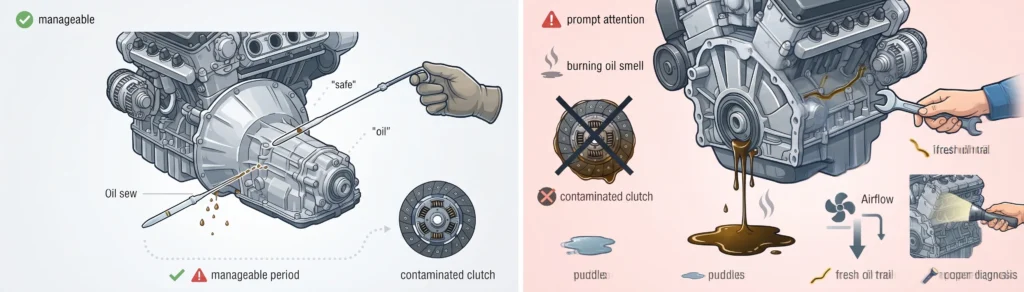
A light seep may be manageable for a while if you check the dipstick regularly and the oil level stays stable. A drip that leaves puddles, produces a burning-oil smell, contaminates a clutch, or lowers the engine oil level needs prompt attention.
Do not diagnose it from oil near the bellhousing alone. Oil often runs rearward with airflow and gravity, so a leak from higher on the engine can collect in the same area. A technician should identify fresh oil after cleaning the engine and inspecting the source.
What is a rear main seal and where is it located?
The rear main seal fits around the rear end of the crankshaft. It seals engine oil inside the crankcase as the crankshaft turns. It sits behind the flywheel or flexplate, inside the area where the engine attaches to the transmission bellhousing.
Rear main seal leak symptoms
These symptoms can support a rear main seal diagnosis, but none confirms it by itself. Look for the overall pattern and verify the source of fresh fluid.
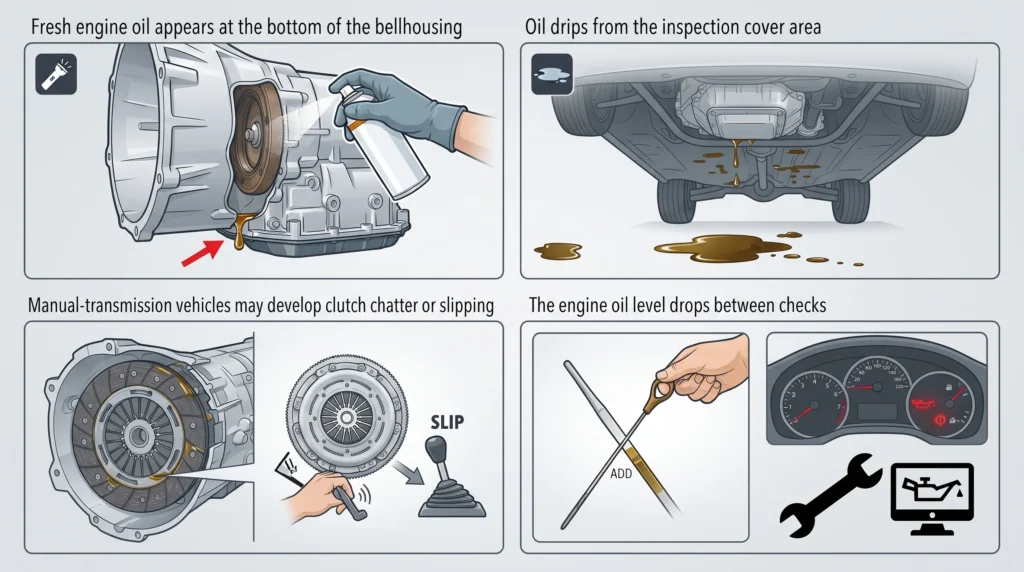
Common clues to inspect
- Fresh engine oil appears at the bottom of the bellhousing or the engine-to-transmission joint after the area has been cleaned.
- Oil drips from the inspection cover area, then leaves spots near the middle of the vehicle rather than only at the front of the engine.
- Manual-transmission vehicles may develop clutch chatter or slipping if enough engine oil reaches the clutch disc.
- The engine oil level drops between checks, or an oil-pressure warning appears—an urgent sign to stop and investigate.
How to confirm the leak source
A good diagnosis starts with a clean engine and transmission exterior. The goal is to find the highest point where fresh fluid begins—not the lowest point where it finally drips. UV dye, inspection mirrors, and vehicle-specific service procedures can help when the source is unclear.
| Possible source | Typical clue | What to verify |
|---|---|---|
| Rear main seal | Fresh engine oil originates inside or at the lower edge of the bellhousing. | Inspect after cleaning; remove inspection cover only as service information allows. |
| Valve-cover or upper-engine leak | Oil tracks down the back of the engine before reaching the bellhousing. | Look above the bellhousing for wetness around covers, sensors, and harnesses. |
| Oil pan or rear cover | Oil begins along the pan rail or rear engine cover seam. | Trace the gasket edge and fasteners for the highest fresh oil point. |
| Transmission fluid leak | Fluid color and smell differ; automatic fluid may be red, amber, or brown depending on age. | Check transmission lines, pan, seals, and fluid level using the manufacturer procedure. |
Rear main seal leak fix: what the repair involves
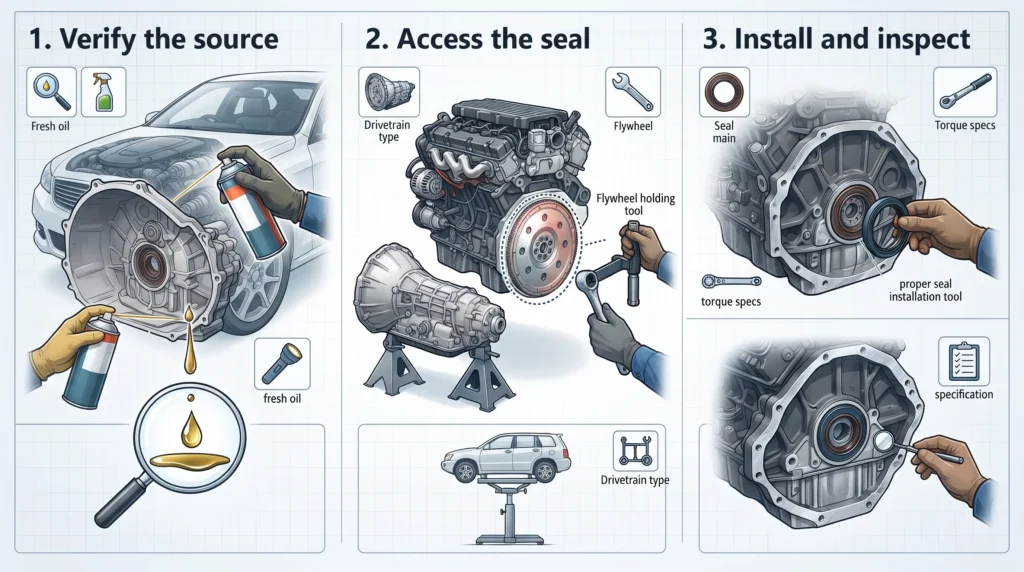
The permanent repair is replacement of the seal after the source has been confirmed. On many rear-wheel-drive, front-wheel-drive, and all-wheel-drive vehicles, this requires removing the transmission. The flywheel or flexplate is then removed so the seal can be accessed.
Exact steps vary widely by engine, drivetrain, and transmission type. A competent DIY repair requires lifting equipment, safe support methods, torque specifications, seal-installation tools, and vehicle-specific service information. The job is often best paired with related work already exposed during disassembly.
1. Verify the source
Clean, inspect, and identify fresh engine oil before major parts are removed.
2. Access the seal
Remove the transmission and related components according to the vehicle service procedure.
3. Install and inspect
Fit the correct seal carefully, inspect mating surfaces, and reassemble to specification.
Rear main seal replacement cost
The seal may cost roughly $20–$100, but replacement cost is usually driven by labor. Rates, drivetrain layout, rust, shop type, clutch condition, and related parts can change the final total. The ranges below are broad installed estimates for parts and labor, not quotes.
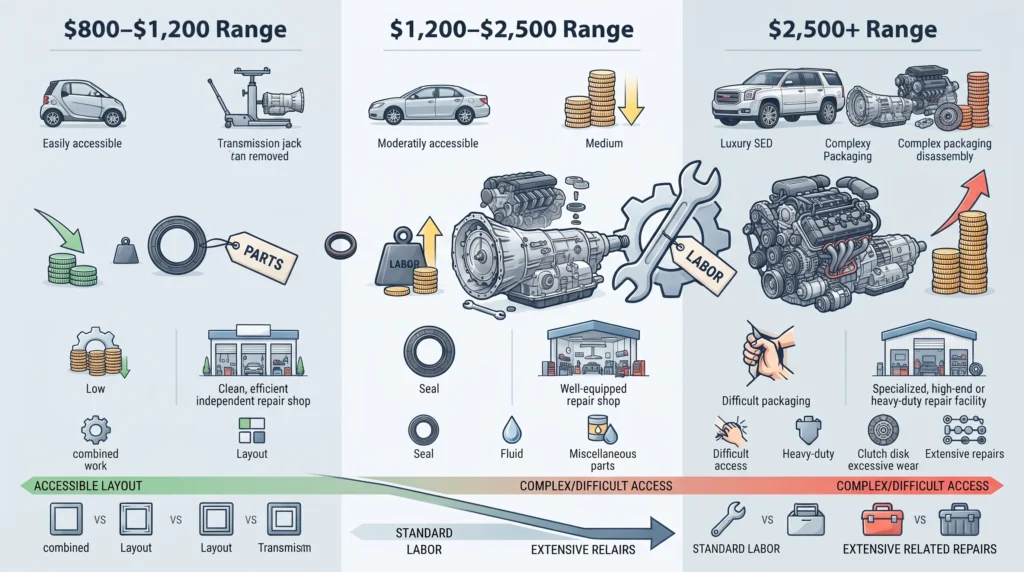
$800–$1,200
Some accessible layouts or jobs combined with other transmission work.
$1,200–$2,500
Typical independent-shop labor plus seal, fluids, and incidental parts.
$2,500+
Difficult access, luxury or heavy-duty vehicles, added clutch work, or extensive related repairs.
Can you drive with a rear main seal leak?
A minor seep is not automatically an emergency, but it should not be ignored. Keep the oil level in the safe range and watch the leak rate. Avoid driving if the oil-pressure light comes on, the dipstick level falls quickly, oil reaches a clutch, smoke or burning smell develops, or oil is dripping onto hot exhaust components.
Rear main seal leak FAQs
What causes a rear main seal leak?
Age and heat can harden the seal. Other contributors can include crankcase-pressure problems, crankshaft surface wear, improper previous installation, excessive engine movement, or simply high mileage. The underlying cause should be considered before fitting a new seal.
Does the transmission have to be removed?
Often, yes. The rear main seal sits behind the flywheel or flexplate, which is behind the transmission. Some vehicle designs differ, so always use vehicle-specific service information before planning the job.
Is a rear main seal leak worth fixing on an older vehicle?
It depends on leak rate, vehicle value, oil use, clutch condition, and whether related labor can be combined. A slow seep may be monitored; a leak that lowers oil level, damages a clutch, or causes safety and environmental concerns is more compelling to repair.
Can a rear main seal leak suddenly get worse?
Yes. Seal damage, worsening crankcase pressure, temperature changes, and driving conditions can turn a seep into a faster drip. Check the oil level regularly rather than judging severity only by driveway spots.