
An expert, model-aware guide to Cooper Tires—covering everyday value, truck and SUV strengths, buying trade-offs, and the checks that matter before you choose.
Cooper is a solid value-focused choice—especially when you select the right tire for the job.
Generally, yes. Cooper Tires has a well-established reputation for providing practical passenger, SUV, light-truck, and all-terrain tire options at a price point that often sits below premium brands. Its strongest appeal is usually the balance of capability, fitment availability, and value. The important caveat is that performance can vary substantially by product line, size, vehicle, climate, and the installed price in your area.
Where Cooper tends to stand out
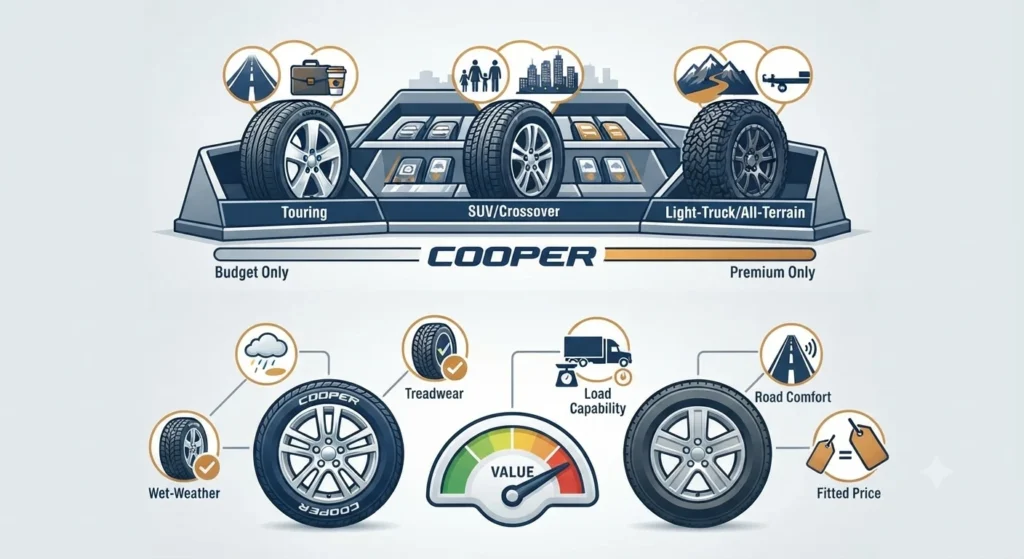
Cooper’s practical strength is its broad coverage of real-world driving needs. The range includes touring and all-season options for commuters, products aimed at SUVs and crossovers, and familiar light-truck and all-terrain lines for drivers who need more from rough roads, towing, or weekend trail use. That breadth gives many buyers a credible alternative to both budget-only and premium-only shopping.
For shoppers who care about overall ownership cost, Cooper can be especially compelling when a specific model offers the needed wet-weather behavior, treadwear warranty, load capability, and road comfort at a competitive fitted price. The brand name alone is not the recommendation; the useful comparison is always the exact tire against well-matched alternatives in the same size and category.
Best for
Drivers seeking a practical balance of price, everyday usability, and available options for cars, crossovers, SUVs, and light trucks. Cooper can be a particularly sensible comparison point for buyers who want capable all-season or all-terrain choices without automatically paying a premium-brand price.
What to watch
Do not treat every Cooper tire as interchangeable. A highway touring model, a severe-snow-rated all-weather tire, and an aggressive all-terrain product serve different priorities. Compare the exact model’s size, load index, speed rating, rolling comfort, wet performance information, warranty terms, and total fitted cost before deciding.
The sidewall name is only the beginning of the comparison

The most useful question is not simply “Are Cooper Tires good?” but “Is this specific Cooper tire right for my vehicle, roads, climate, and annual mileage?” A quiet all-season touring tire may make sense for daily highway use, while an all-terrain tire may suit a pickup that sees gravel, mud, towing, or rough rural roads.
Begin with your vehicle placard and owner manual, then narrow the shortlist by seasonal conditions and driving mix. Compare the exact tire’s published specifications, warranty documents, applicable tire-label information, independent tests where available, and current local installed pricing. Alignment, inflation pressure, driving style, road surface, and tire age can all influence the real-world result.
Key buying considerations
These are editorial guideposts, not laboratory scores. Results and suitability can differ materially by product line, size, vehicle, road surface, and intended use.
| Consideration | Editorial take |
|---|---|
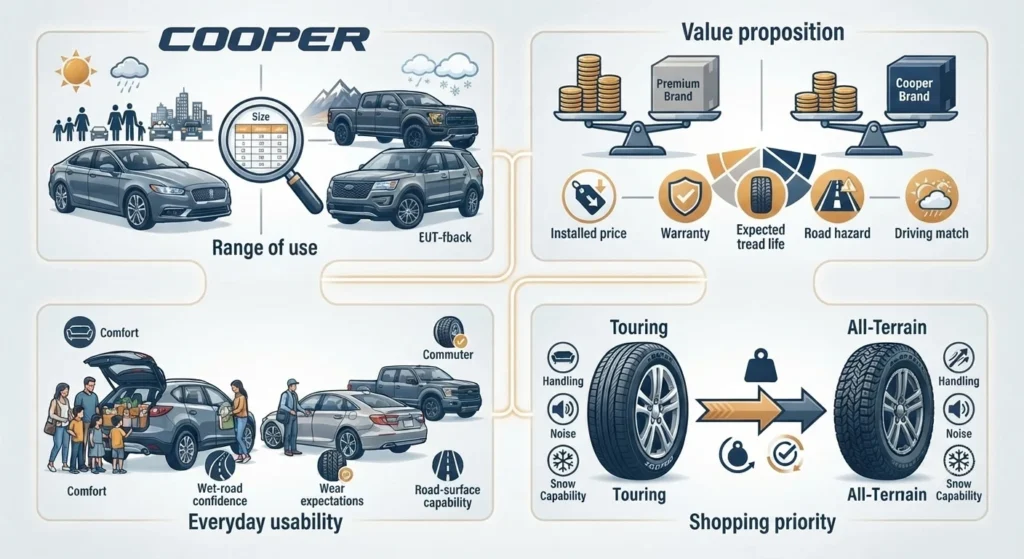
| Range of use | Strong: Cooper offers options for passenger cars, touring use, crossovers, SUVs, winter conditions, light trucks, and all-terrain applications. Confirm availability in your precise size and required specification. |
| Value proposition | Often a value-focused alternative to premium brands. The best comparison is total ownership value: installed price, warranty, expected tread life, road-hazard coverage, and whether the tire’s strengths actually match your driving. |
| Everyday usability | A practical option for many commuters, crossover drivers, pickup owners, and families when the selected line prioritizes the right balance of comfort, wet-road confidence, wear expectations, and road-surface capability. |
| Shopping priority | Choose by category and exact model, not only by brand. A Cooper touring tire and a Cooper all-terrain tire can differ dramatically in handling, noise, snow capability, weight, rolling resistance, and wear characteristics. |
Four checks worth making before choosing Cooper tires

A careful comparison can matter more than the logo on the sidewall. Use this short checklist to keep the decision grounded in fitment, conditions, and the full cost of ownership.
- Confirm tire size, load index, and speed rating against the vehicle placard and owner manual.
- Match the tire category to your dominant conditions: city roads, motorway miles, rain, winter weather, towing, gravel, or mixed surfaces.
- Compare the exact model’s wet braking, noise, warranty terms, treadwear expectations, load capability, and independent test information where available.
- Ask the installer about production date, total fitted price, balancing, alignment checks, rotation support, and local warranty handling.