
Real-world advice from certified mechanics — no fluff, no upselling. Just the stuff you actually need to know before summer hits.
How to Fix Your Car Air Con with a DIY Regas Kit (Step-by-Step)
Reading time: 8 min · Difficulty: Beginner-Intermediate · Tools needed: AC recharge kit, safety goggles, gloves
If your car’s air conditioning is blowing lukewarm air, there’s a good chance it just needs a refrigerant top-up — not a $300 mechanic bill. A car aircon regas kit costs around $30–$50 and can be done in your driveway in under 20 minutes. Here’s exactly how to do it right (and when to stop and call a pro).
⚠️ Safety First: Automotive refrigerant (R-134a or R-1234yf) is stored under high pressure and can cause frostbite on skin contact. Always wear safety goggles and thick gloves. Work in a ventilated area. If you see oily residue around AC fittings, you likely have a leak — a regas won’t fix that.
What Is a Car Aircon Regas Kit?
A regas (short for re-gas) kit is a pressurised canister of refrigerant with a hose and pressure gauge attached. You connect it to your car’s low-pressure AC service port and add refrigerant until the gauge reads in the green zone. Most kits sold in Australia and the UK use R-134a, which is compatible with cars made between 1994 and roughly 2016. Newer vehicles (2017+) often use R-1234yf — check your owner’s manual or the sticker under the hood.
Signs Your Car AC Needs a Regas
Not every AC problem is low refrigerant. But if you’re experiencing these symptoms, a regas is a sensible first step:
- Air blows cool but not cold, especially on hot days
- AC takes much longer than usual to cool the cabin
- The AC clutch clicks on and off rapidly (short-cycling)
- You haven’t had the system serviced in 3+ years
Step-by-Step: How to Use a Regas Kit
- Start the car and turn the AC to MAX COLD with the fan on high. Leave the engine running throughout the process.
- Pop the hood and locate the low-pressure service port. It’s on the larger of the two aluminium AC lines, usually near the firewall. It has a plastic cap labelled ‘L’. The high-pressure port cap won’t fit the regas hose — this is a built-in safety feature.
- Attach the regas kit hose to the low-pressure port. Pull back the collar on the quick-connect fitting, push it onto the port, and release. You should hear a slight hiss — that’s normal.
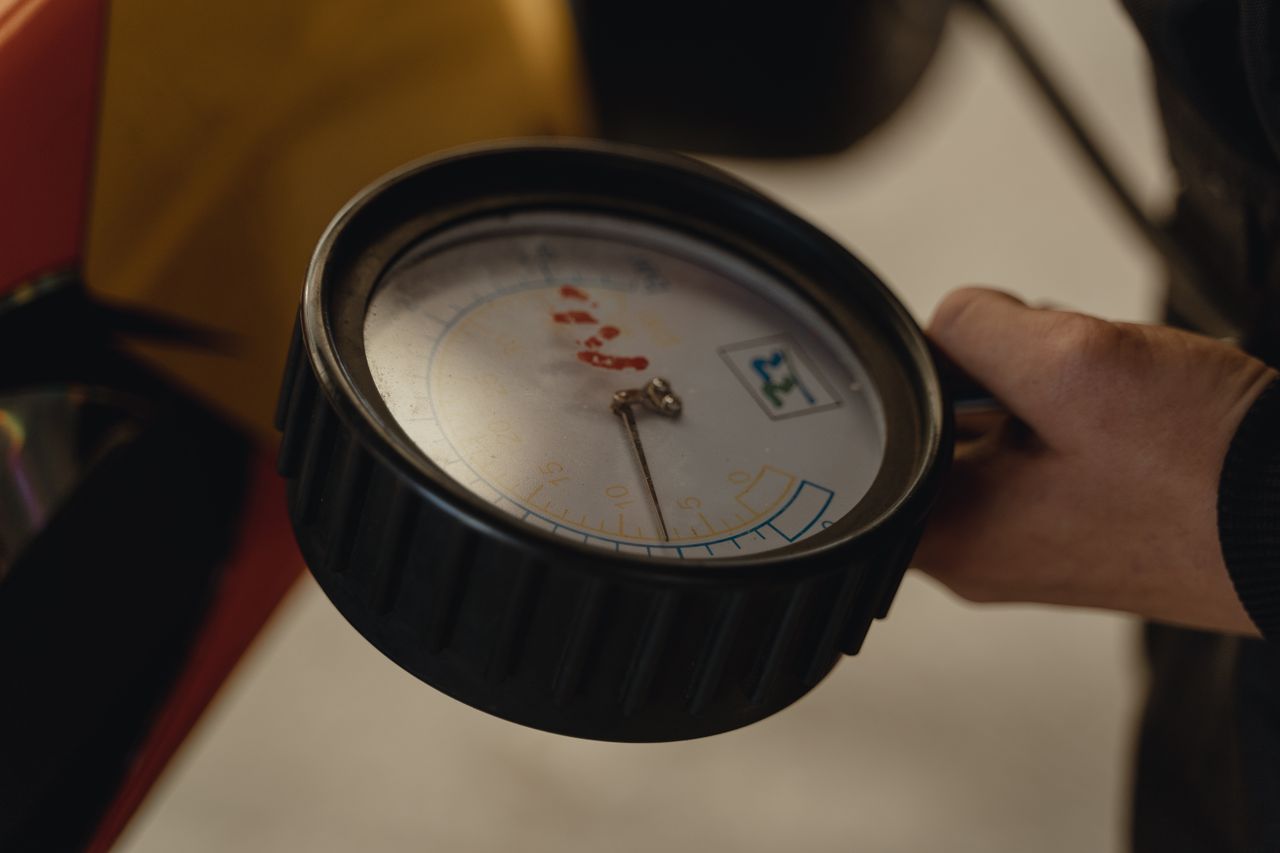
- Check the gauge. If the needle is below the green zone, your system is low on refrigerant. If it’s already in the green, your problem may be elsewhere (compressor, blend door, or condenser fan).
- Slowly squeeze the trigger or turn the valve to add refrigerant in short 3–5 second bursts. Shake the canister gently between bursts. Watch the gauge carefully.
- Stop adding refrigerant once the gauge reaches the green zone. Overcharging can damage the compressor — more is NOT better here. Disconnect the hose and replace the port cap.
💡 Pro Tip: After regassing, check the air temperature at the centre vent with a kitchen thermometer. You should see 3–7°C (37–45°F) on a moderate day. If it’s above 10°C, the system may have an underlying issue.
DIY Regas vs. Professional Service: When to Call a Mechanic
A DIY regas is great for topping up a system that’s lost refrigerant slowly over time. But if your AC stopped working suddenly, if you see green oily stains under the car, or if the compressor makes grinding noises, you likely have a leak or mechanical failure that a $40 canister won’t fix. In those cases, a professional vacuum-and-recharge with a UV dye leak test is the smart move — expect to pay $120–$250 depending on your location.
Frequently Asked Questions
Can I use a regas kit on any car?
Most kits use R-134a refrigerant, which fits cars made between roughly 1994 and 2016. Vehicles made before 1994 may use R-12 (Freon), which is now banned for consumer sale. Cars from 2017 onward often use R-1234yf — you’ll need a kit specifically labelled for that refrigerant. Check the sticker on your AC compressor or inside the hood.
What happens if I overcharge the AC system?
Overcharging increases pressure beyond what the compressor is designed to handle. This can cause the compressor clutch to disengage (so you get no cooling at all), damage compressor internals, or in extreme cases blow a hose fitting. Always stop when the gauge hits the green zone — never go into the red.

What to Do After a Car Accident: Your Complete Emergency Checklist
Reading time: 6 min · Bookmark this page or print it for your glovebox
Your hands are shaking, your heart is racing, and you can’t think straight. That’s completely normal — adrenaline does that. This checklist is designed to be read on the side of the road, right now. Follow it step by step.
🚨 If anyone is injured or the road is blocked, call emergency services immediately (000 in Australia, 911 in the US, 999 in the UK). Everything else can wait.
Your 7-Step Post-Accident Checklist
- Move to safety. If the car is drivable and you’re blocking traffic, pull onto the shoulder or into a nearby car park. Turn on your hazard lights.
- Check for injuries. Check yourself, your passengers, and the other driver. Do not move anyone who complains of neck or back pain — wait for paramedics.
- Call emergency services if needed. Even for minor accidents, a police report can be crucial for insurance claims in many jurisdictions.
- Exchange information. Get the other driver’s full name, phone number, licence number, insurance company and policy number, and vehicle registration.
- Document everything with photos. Take at least 20 photos from multiple angles (see the photo checklist below). Photograph damage, licence plates, the road, traffic signs, and skid marks.
- Talk to witnesses. If anyone saw the accident, ask for their name and phone number. Their statement can be decisive if fault is disputed.
- Contact your insurance company within 24 hours. Most policies require prompt notification. Stick to facts — don’t admit fault or speculate about causes.
What Photos to Take at the Scene
- Wide shots showing both vehicles and their positions on the road
- Close-ups of all damage to both vehicles (dents, scratches, broken lights)
- Both licence plates clearly visible
- Road conditions, traffic signs, weather, and any skid marks
Car AC Stopped Working After a Fender Bender?
If your air conditioning died after a front-end collision, there’s a strong chance the AC condenser (which sits right behind your front grille) was cracked or punctured. Refrigerant leaks out quickly through even a small crack. This is a legitimate collision-related repair that your insurance should cover. Tell your adjuster specifically that the AC failure started after the accident — and get a mechanic to confirm the condenser damage in writing before you file the claim.
Frequently Asked Questions
Should I call the police for a minor fender bender?
In many jurisdictions, a police report isn’t legally required for minor accidents with no injuries. However, it’s almost always worth getting one — insurance companies give more weight to claims backed by a police report, and it protects you if the other driver later changes their story about what happened.
Will a minor accident raise my insurance premiums?
It depends on your insurer and who’s at fault. If you’re deemed not at fault, most insurers won’t raise your premium. If you’re at fault, expect a 20–40% increase at renewal. Some policies include accident forgiveness for your first at-fault claim — check your policy documents.
Air Con for Car: How Your Vehicle’s AC System Actually Works
Reading time: 5 min · Perfect for first-time car owners
Your car’s air conditioning isn’t just a fan blowing over ice. It’s a sealed, pressurised loop that uses the physics of evaporation and condensation to pull heat out of your cabin. Understanding the basics helps you diagnose problems, avoid getting overcharged by mechanics, and keep the system healthy for years.
The Simple Explanation
Refrigerant circulates in a closed loop, constantly changing between liquid and gas. When it evaporates (inside the evaporator behind your dashboard), it absorbs heat from the cabin air — making the air feel cold. When it’s compressed back into a liquid (at the condenser in front of the radiator), it releases that heat outside the car. The compressor, powered by your engine’s belt, keeps this cycle going.
The 4 Key Components
- Compressor — The heart of the system. It pressurises refrigerant gas and pumps it through the loop. It’s belt-driven and is the most expensive part to replace ($500–$1,000+).
- Condenser — A small radiator at the front of the car. Hot, high-pressure refrigerant gas flows through it and cools into a liquid as outside air passes over the fins.
- Expansion Valve (or Orifice Tube) — A tiny restriction point that drops the pressure of the liquid refrigerant, causing it to become very cold before it enters the evaporator.
- Evaporator — Hidden behind your dashboard. Cold, low-pressure refrigerant evaporates here, absorbing heat from cabin air blown across its fins by the blower fan.
R-134a vs. R-1234yf: Which Refrigerant Does Your Car Use?
R-134a has been the standard automotive refrigerant since 1994, replacing the ozone-depleting R-12 (Freon). Starting around 2015–2017, manufacturers began switching to R-1234yf, which has a much lower global warming potential. The two are NOT interchangeable — using the wrong type can damage seals and the compressor. Check the label under your hood or your owner’s manual to confirm which refrigerant your car uses before buying any regas kit.
Simple Maintenance Tips
- Run the AC for at least 10 minutes once a week, even in winter. This keeps the compressor seals lubricated and prevents them from drying out and cracking.
- Replace your cabin air filter every 15,000–20,000 km. A clogged filter restricts airflow across the evaporator and makes the AC work harder for less cooling.
- If you notice a musty smell when you first turn on the AC, the evaporator likely has mould buildup. Run the fan on high with the AC off for a few minutes after each drive to dry the evaporator surface.
Frequently Asked Questions
Does running the AC use more petrol?
Yes, but not as much as you’d think. The AC compressor adds a small load to the engine, typically reducing fuel economy by 3–10% depending on conditions. At highway speeds, running the AC is actually more fuel-efficient than opening windows, because open windows create aerodynamic drag.What’s the difference between Freon and refrigerant?
‘Freon’ is a brand name (by DuPont/Chemours) for R-12 refrigerant, which was phased out in the mid-1990s due to ozone damage. People still use ‘Freon’ colloquially to mean any car refrigerant, but modern cars use either R-134a or R-1234yf — neither of which is technically Freon.