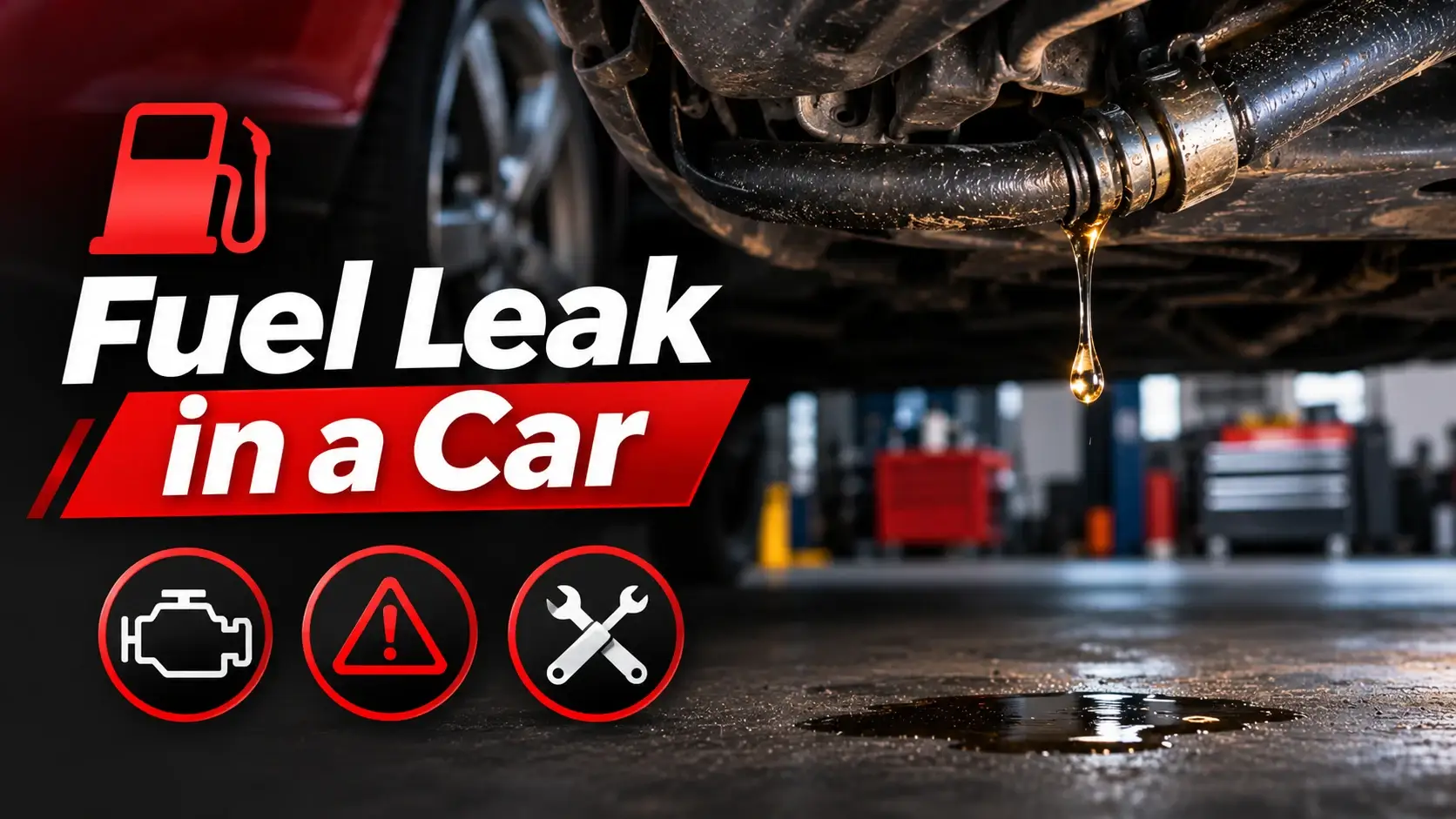
A fuel leak is one of the automotive problems you should never ignore. Whether you notice a strong gasoline smell, a suspicious puddle beneath your car, or fuel dripping from the engine compartment, the situation requires immediate attention.
Gasoline and its vapors are highly flammable. A damaged fuel line, leaking injector connection, cracked tank, or faulty fuel-system seal can allow fuel to escape and potentially reach hot surfaces or ignition sources.
If you’re searching for how to fix a fuel leak, the most important first step is not reaching for a tool. It is making sure the vehicle and everyone nearby are safe.
This guide explains fuel leak symptoms, common causes, possible leak locations, what to do immediately, how professional mechanics diagnose and repair leaks, typical repair expenses, and ways to reduce future fuel-system problems.
Important: What to Do If Your Car Is Leaking Fuel
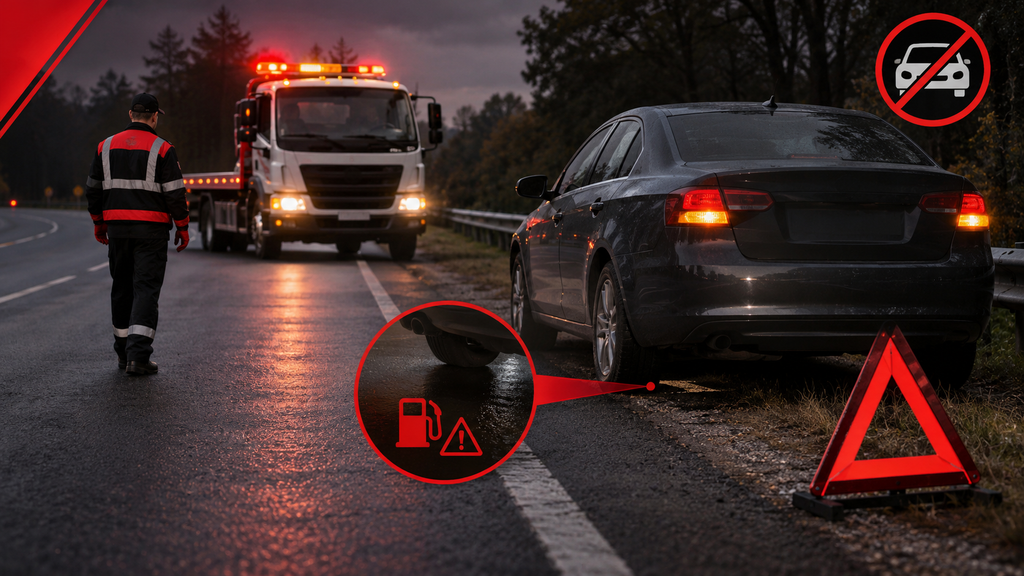
Do not start or continue driving a vehicle with a suspected active fuel leak. If you are already driving, pull over in a safe location and turn off the engine when it is safe to do so.
Keep everyone away from the vehicle, avoid cigarettes, flames, sparks, and other ignition sources, and arrange towing or professional roadside assistance. If there is smoke, fire, a major spill, or immediate danger, move away and call emergency services from a safe location.
Quick Answer: How Do You Fix a Fuel Leak?
To fix a fuel leak safely, the vehicle must first be taken out of service. A qualified technician identifies the leaking component, follows the manufacturer’s fuel-pressure and safety procedures, replaces or repairs the affected part using approved methods, and verifies that the system is leak-free before the vehicle returns to the road. Temporary patches and improvised fuel-line repairs are not reliable substitutes.
What to Do Immediately If You Suspect a Fuel Leak
When you suspect gasoline or diesel fuel is leaking, your immediate priority is to protect people and prevent ignition. Even a relatively small leak should be treated seriously until a qualified technician determines the cause.
A strong fuel odor, visible dripping, or unexpected fuel pooling near a vehicle is enough reason to stop using it.
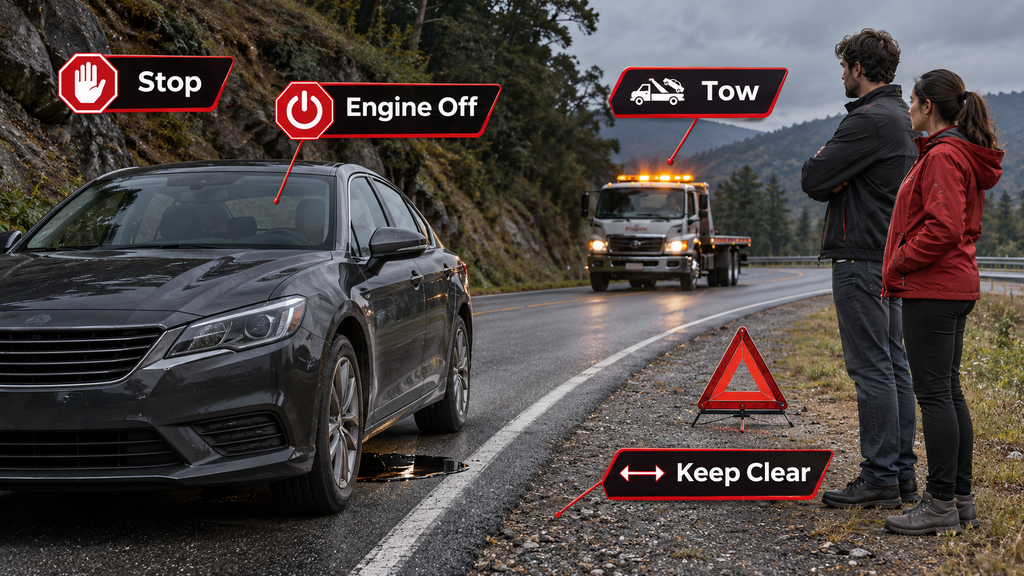
Step 1: Stop the Vehicle Safely
If you notice a strong fuel smell while driving, find a safe place to pull over as soon as practical. Avoid abrupt maneuvers that could create another road hazard.
Once safely stopped, turn off the engine. If the car is already parked and you suspect a leak, do not start it to investigate.
Step 2: Move People Away
Ask passengers to exit when safe and move away from the vehicle and any visible fuel. Avoid standing in enclosed spaces where vapors may accumulate.
If fuel is leaking inside an attached garage or near a building, move to a safe location and contact emergency services for instructions. Do not start the vehicle to move it.
Step 3: Avoid Ignition Sources
Keep cigarettes, open flames, sparks, and heat sources away from the suspected leak. Do not conduct electrical troubleshooting or use equipment that could ignite vapors.
Never use a lighter or match to locate a fuel leak.
Step 4: Do Not Attempt a Roadside Patch
Do not wrap leaking fuel lines with tape, apply household glue or sealant, or try to tighten pressurized fuel connections without the correct service procedure.
Fuel systems may retain pressure even after the engine is switched off.
Step 5: Arrange Professional Assistance
Contact roadside assistance or a towing service and explain that you suspect a fuel leak so they can determine appropriate handling.
If you see flames, smoke, a substantial spill, or another immediate hazard, retreat to a safe location and call 911 in the United States.
Remember
Do not crawl beneath a leaking vehicle, touch unidentified fluids, or repeatedly cycle the ignition to search for the leak. A professional can perform controlled tests after taking the necessary safety precautions.
What Is a Fuel Leak in a Car?
A fuel leak occurs when gasoline or diesel escapes from the vehicle’s fuel storage, delivery, or injection system through a damaged component, failed seal, loose connection, or other defect.
Fuel travels through a network of tanks, pumps, lines, filters where fitted, and injection components. A failure anywhere along this path may result in a leak.
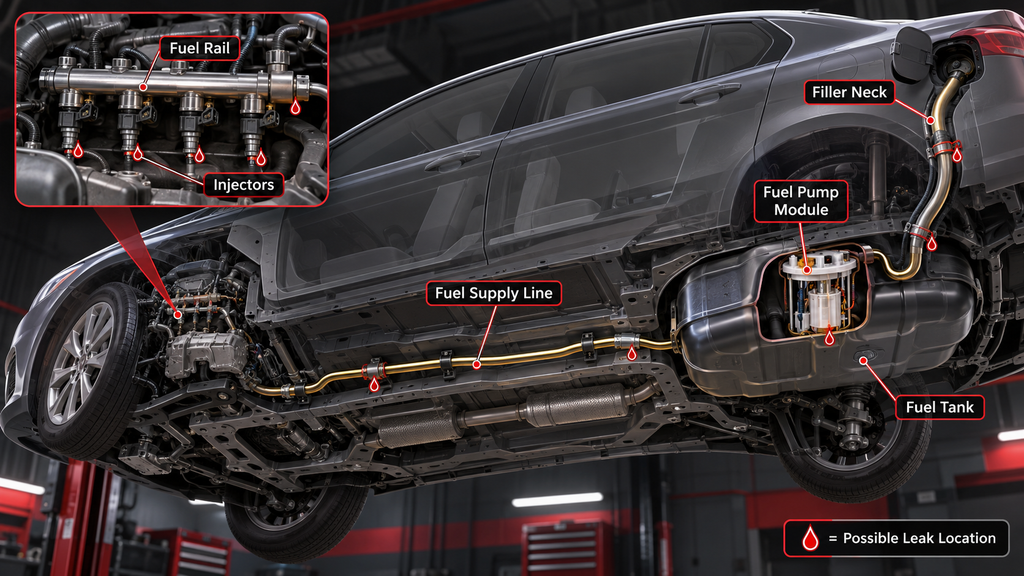
Fuel leaks can develop in storage, delivery, and injection components throughout the vehicle.
In gasoline vehicles, escaped liquid fuel can evaporate and create flammable vapor. A visible puddle is not necessary for a serious problem to exist.
Diesel systems present additional hazards, particularly at high-pressure injection components. Pressurized diesel fuel can penetrate skin and cause severe injury.
Liquid Fuel Leak vs Fuel Vapor Leak
A liquid fuel leak involves fuel escaping in liquid form. It may create wet patches, drips, staining, or puddles.
A vapor-system leak involves escaped fuel vapor, often associated with the evaporative-emissions control system on gasoline vehicles. It may trigger a diagnostic trouble code without visible liquid fuel.
A fuel smell alone cannot reliably distinguish these conditions. Treat unexplained strong or persistent fuel odor as a safety issue until professionally assessed.
7 Common Symptoms of a Fuel Leak
Fuel leaks do not always produce the same warning signs. Some drivers notice a strong gasoline smell, while others see staining beneath the vehicle or experience unusual fuel consumption.
Symptoms can help a mechanic narrow down possible causes, but they do not prove which component has failed.
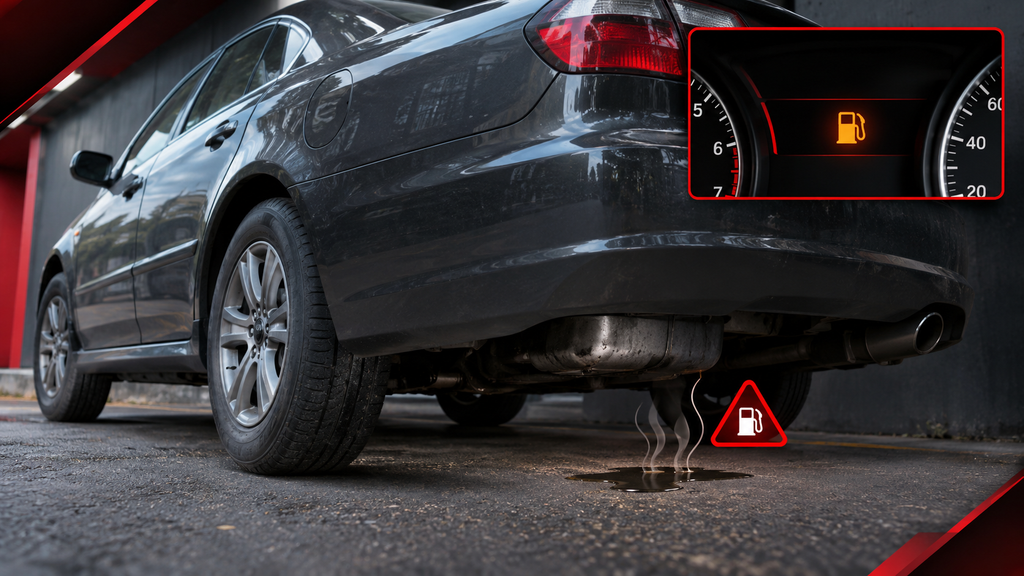
1. Strong Gasoline Smell
A persistent gasoline smell inside or around the vehicle is one of the most recognizable warning signs. Odor near the engine bay, fuel tank, or passenger compartment may indicate a liquid leak, vapor leak, or another fuel-related issue.
A brief odor after refueling may come from a spill, but do not dismiss an odor that is strong, recurring, or unexplained.
2. Wet Spots or Puddles Beneath the Car
Fuel may collect underneath a damaged tank, fuel line, filler connection, or fuel-system component.
Gasoline often appears clear or lightly colored and may evaporate relatively quickly. However, color and appearance cannot confirm the fluid type. Do not touch or smell a puddle directly to identify it.
3. Unexpected Fuel Consumption
A leak can contribute to unexplained fuel loss, but fuel economy is also influenced by driving conditions, engine operation, tire pressure, and other mechanical problems.
A sudden drop in fuel level combined with fuel odor or visible dripping deserves urgent attention.
4. Hard Starting or Engine Stalling
Some fuel delivery problems may cause inadequate or unstable fuel pressure, resulting in starting difficulties, hesitation, or stalling.
These symptoms are not exclusive to leaks and require proper diagnosis.
5. Check Engine Light
A malfunction indicator light may illuminate when the engine management system detects certain fuel-system or evaporative-emissions faults.
Not every fuel leak activates a dashboard warning, and an EVAP-related code does not automatically confirm a liquid fuel leak.
6. Visible Fuel Residue Around Components
Staining, wetness, or deterioration around fuel hoses, connections, or injection components may indicate leakage.
These conditions should be assessed by a technician without exposing people to fuel spray or vapors.
7. Fuel Smell After Refueling
An odor after filling the tank may result from spilled gasoline, a fuel-cap or filler-seal problem, an EVAP fault, or actual leakage around the filler neck or tank.
If the odor is persistent or the vehicle appears to be leaking, do not operate it until evaluated.
Fuel Leak Symptoms at a Glance
| Symptom | Possible Explanation | Recommended Action |
|---|---|---|
| Strong fuel odor | Liquid or vapor leak, refueling spill | Stop use and arrange inspection |
| Puddle beneath car | Tank, line, or connection leak | Do not start; keep clear |
| Rapid fuel-level decrease | Fuel loss or gauge issue | Evaluate alongside other clues |
| Hard starting or stalling | Fuel pressure or delivery problem | Professional system diagnosis |
| Check engine light | EVAP or other engine fault | Interpret codes with testing |
| Odor following refueling | Spill, cap, filler, EVAP, or leak | Do not dismiss persistent odor |
For more information about distinguishing automotive fluid problems, read our guide to diagnosing fluids leaking from a car.
What Causes Fuel Leaks in Cars?
Fuel leaks develop for several reasons, including aging materials, corrosion, mechanical damage, defective seals, incorrect repairs, and component manufacturing defects.
Because modern fuel systems use specialized fittings and pressure-rated components, the correct repair depends on identifying the exact source rather than applying a general-purpose patch.
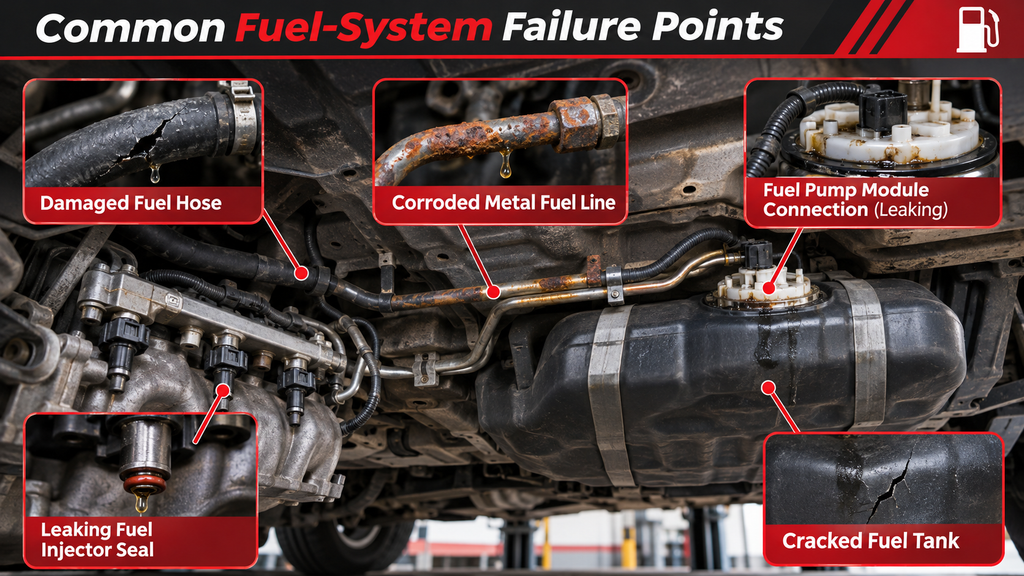
Damaged Fuel Lines and Hoses
Fuel lines connect the tank and fuel delivery components. Depending on the vehicle, they may use metal tubing, specialized polymer lines, or fuel-rated flexible hoses.
Corrosion, abrasion, impact damage, poor routing, and age-related deterioration can compromise these components.
Worn Seals and Connections
Fuel-system seals can deteriorate or become damaged during service. Loose or improperly installed connections may also leak.
Some fittings are designed for one-time use and require replacement whenever they are disconnected.
Corroded or Damaged Fuel Tank
Older metal tanks may corrode, particularly where road salt and moisture collect. Plastic tanks can also be damaged by impact or other failures.
The appropriate solution may involve replacement of the affected tank or another manufacturer-approved repair method.
Fuel Injector or Fuel Rail Leaks
Leaking injector seals, damaged injector bodies, and defective rail connections may allow fuel to escape near the engine.
These areas can be especially hazardous because hot engine or exhaust components may be nearby.
Fuel Pump and Module Leaks
Fuel pump assemblies, their sealing surfaces, and connected lines may develop faults. In some vehicles, fuel can escape near the tank-mounted pump module.
A related fuel-delivery issue may also involve the pressure-regulation system. Learn more in our fuel pressure regulator symptoms and diagnosis guide.
Where Do Fuel Leaks Usually Occur?
The location of a suspected fuel leak can provide valuable context, but fuel can travel along surrounding components before dripping onto the ground.
A puddle beneath one area does not necessarily mean the failed component is directly above it. A technician may need to inspect the entire fuel delivery path.
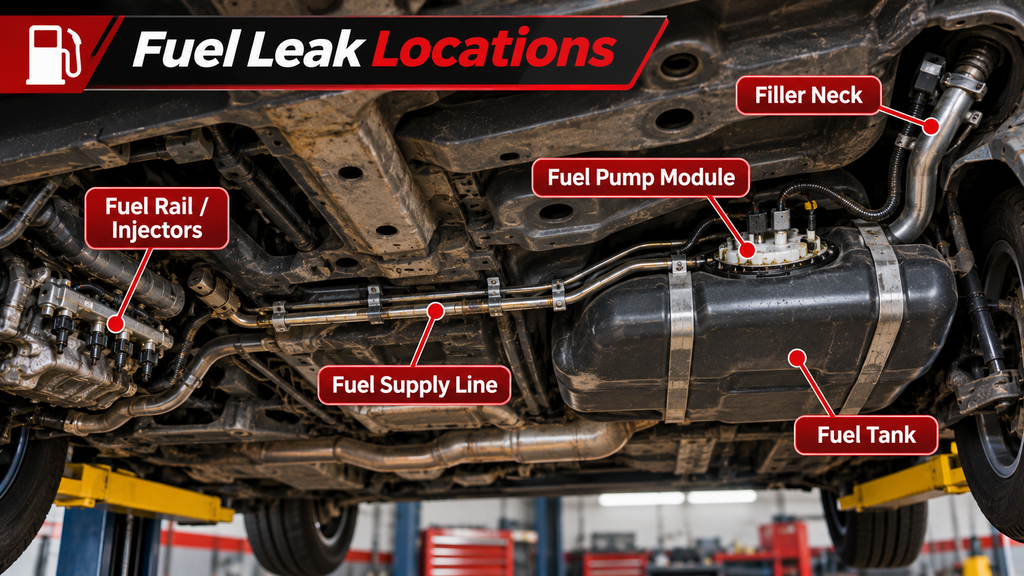
| Location | Potential Problem |
|---|---|
| Rear of vehicle | Fuel tank, pump module, filler connection, or nearby lines |
| Along vehicle underside | Damaged or corroded fuel supply line |
| Engine compartment | Injector, fuel rail, hose, connection, or high-pressure pump fault |
| Near fuel filler | Filler neck, associated seal, vent line, or spilled fuel |
Do not attempt to verify these locations by starting the engine or crawling underneath a vehicle with visible fuel leakage.
How to Fix a Fuel Leak Safely: Professional Repair Process
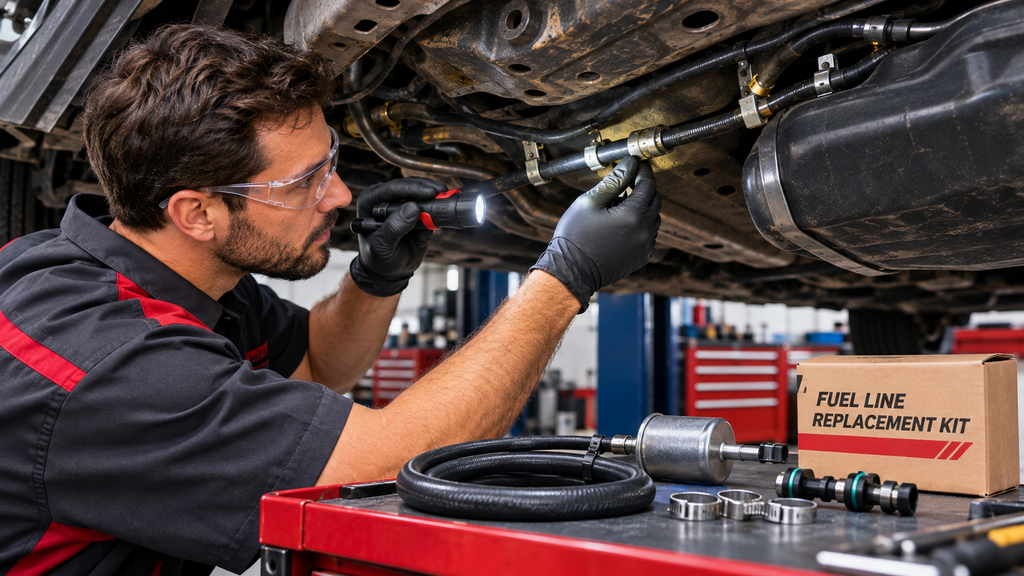
There is no single repair method that works for every fuel leak. A damaged fuel line, failed injector seal, leaking fuel pump connection, and cracked fuel tank each require a different approved repair procedure.
A qualified mechanic should first establish a safe work environment, determine the precise fault, and follow manufacturer instructions for the affected fuel system.
Step 1: Make the Vehicle Safe
Before repair work begins, the technician assesses the fuel hazard and follows the appropriate procedures for fire prevention, ventilation, electrical isolation, and handling residual fuel pressure.
Exact precautions vary by vehicle and fuel-system design.
Step 2: Identify the Leak Source
A professional may examine the fuel tank, fuel lines, fittings, injectors, seals, pump assemblies, and related components.
Diagnostic procedures may include manufacturer-approved pressure or leak testing, inspection of recorded fault codes, and testing of the vapor-control system where relevant.
Tests must be performed under controlled conditions with equipment rated for the specific system.
Step 3: Select the Correct Repair
Once the failed component is identified, the technician determines whether an approved component repair or replacement is appropriate.
Fuel-rated replacement lines, seals, fittings, pump assemblies, or tanks must be compatible with the application and installed according to service instructions.
Step 4: Complete the Repair
The repair may require replacing the affected line, connector, injector seal, fuel pump component, or fuel tank assembly.
Some high-pressure fuel components require specific single-use fittings, fasteners, and tightening procedures. Unapproved substitutions can create dangerous leaks.
Step 5: Verify a Leak-Free System
After completing the approved repair, the technician performs the manufacturer’s specified leak checks and functional verification.
The vehicle should not return to service until the problem has been resolved and safe operation confirmed.
Can You Fix a Fuel Leak Yourself?
Fuel-system repairs involve potential fire, chemical exposure, and high-pressure injection hazards. They are not appropriate tasks for inexperienced DIY mechanics.
Even experienced technicians must follow the specific vehicle manufacturer’s service procedures and use the correct tools and replacement components.
For most drivers, the safest owner-level action is to stop operating the car and arrange qualified professional repair.
Never Use These as Temporary Fuel Leak Fixes
Household tape, ordinary glue, improvised clamps, unapproved hose material, or general-purpose sealants are not substitutes for manufacturer-approved fuel-system repairs. Never loosen high-pressure fuel fittings merely to check for leakage.
Can You Drive a Car With a Fuel Leak?
No. You should not drive a vehicle with a suspected active fuel leak. Leaking fuel can create a fire hazard, especially if it reaches hot exhaust components, electrical ignition sources, or other hazardous areas.
Even a leak that appears minor while parked may behave differently when fuel pressure changes or the vehicle is moving.
What If the Leak Looks Small?
A small puddle or occasional drip does not guarantee the problem is minor. Gasoline evaporates readily, so the amount of visible liquid may not reflect the full extent of the leak.
Do not use the size of the puddle to decide that driving is safe.
What If I Only Smell Gasoline?
Fuel odor may come from a recent spill, EVAP-system problem, loose cap, or leaking component.
If the odor is strong, persistent, or unexplained, stop using the vehicle until a professional has assessed the cause. Do not assume it is harmless without confirmation.
What If the Vehicle Is Recalled?
Some vehicles have manufacturer recalls involving fuel-system defects. Check the exact vehicle identification number using the official NHTSA recall lookup.
An open safety recall may qualify for a manufacturer-provided remedy, but a suspected active fuel leak still requires immediate safety precautions regardless of recall status.
How Much Does It Cost to Fix a Fuel Leak?
The cost to fix a fuel leak depends on the vehicle, the source of the problem, the replacement components, and the labor required to reach them.
A damaged accessible hose or seal may be less expensive to repair than a leaking fuel tank or a high-pressure fuel system component.
| Repair Type | Illustrative US Total Cost |
|---|---|
| Fuel leak diagnostic inspection | $100–$250+ |
| Accessible fuel hose or connection repair | $150–$400+ |
| Fuel line replacement | $200–$800+ |
| Fuel injector seal or related repair | $150–$600+ |
| Fuel pump or module replacement | $400–$1,200+ |
| Fuel tank replacement | $600–$1,800+ |
Cost note: These are broad illustrative US budgeting ranges, not confirmed market quotes or prices for your vehicle. High-pressure systems, difficult access, luxury vehicles, corrosion, additional parts, and higher regional labor rates may increase costs substantially. Recall-covered repairs may be handled differently.
What Affects Fuel Leak Repair Cost?
Vehicle design: Some fuel components are accessible while others require significant disassembly.
Failure location: Replacing a small external connection can differ greatly from replacing a tank or pump assembly.
Parts requirements: Manufacturer-approved fittings, seals, and fuel-rated components may have application-specific costs.
Labor and testing: Controlled diagnosis, safe component removal, installation, and final leak verification add to the repair process.
Money-Saving Tip
Ask for an itemized written estimate showing the confirmed leak source, recommended repair, replacement parts, labor, and post-repair testing. Check for open recalls before authorizing work, but do not delay safety action while investigating coverage.
Fuel Leak vs Other Fluids Leaking From a Car
Not every puddle beneath a vehicle is gasoline. Condensation from an air conditioning system, engine oil, coolant, transmission fluid, and brake fluid can also collect underneath a parked car.
However, color and appearance alone are unreliable ways to confirm an unknown liquid. If there is any reason to suspect fuel, prioritize the fuel-leak safety precautions.
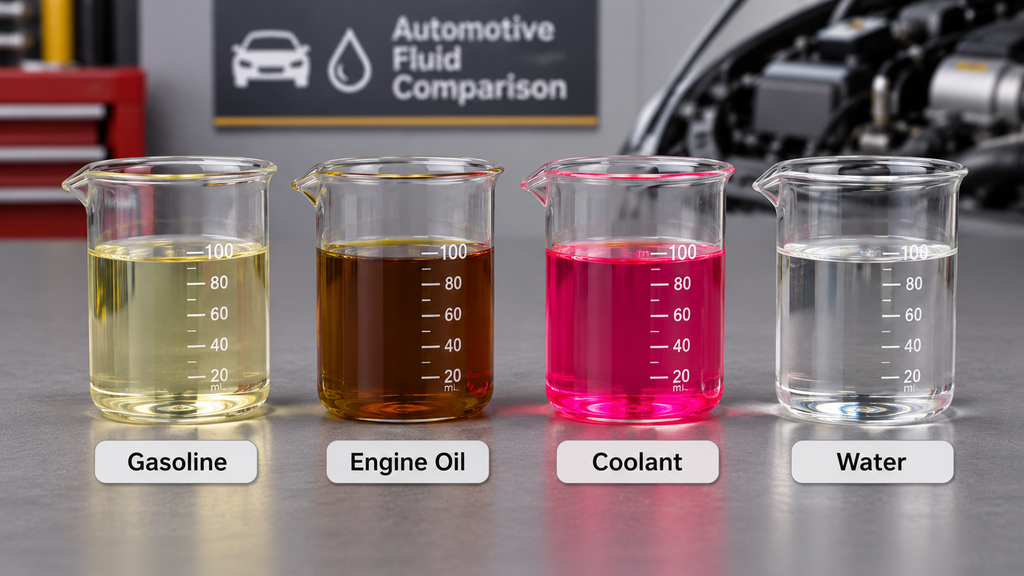
| Fluid | Typical Characteristics | Main Concern |
|---|---|---|
| Gasoline | Thin, often nearly clear; distinctive vapor | Fire and vapor exposure hazard |
| Engine Oil | Slippery, amber to dark brown or black | Lubrication loss and engine damage |
| Coolant | Various colors; often watery | Overheating and chemical exposure |
| A/C Condensation | Clear water in typical conditions | Usually normal drainage |
| Brake Fluid | Often clear to amber, depending on type and age | Potential loss of braking performance |
For related cooling-system problems, see our antifreeze leak and engine cooling guide.
Safety reminder: Never taste, touch, or deliberately inhale an unknown fluid to identify it. Suspected fuel or brake-fluid leaks should be handled as urgent problems.
How to Prevent Fuel Leaks
Not every fuel leak can be prevented, especially when unexpected damage or manufacturing defects are involved. However, regular vehicle maintenance can help identify deteriorating components before they become serious problems.
Fuel-system inspections should follow the vehicle manufacturer’s maintenance requirements and any relevant safety recalls.
Inspect Aging Fuel-System Components
During appropriate service visits, have technicians check accessible fuel lines, connections, supports, and exposed components for corrosion, rubbing, damage, or deterioration.
Address Corrosion and Road Damage
Vehicles driven in areas with heavy road salt exposure may develop corrosion on metal fuel lines and surrounding hardware.
Undercarriage inspections can help identify damaged routing and protective supports.
Avoid Overfilling the Tank
Stop refueling when the pump automatically shuts off, unless the vehicle manufacturer directs otherwise. Repeated topping off may interfere with the evaporative-emissions system.
Use Correct Service Components
Replacement fuel hoses, connectors, seals, and lines must meet the exact fuel-system and pressure requirements for the vehicle.
Do not substitute ordinary tubing or generic materials for fuel-rated components.
Stay Current on Safety Recalls
Check for open fuel-system and other safety recalls using the official NHTSA database and contact the manufacturer or authorized dealer for applicable remedies.
Respond to Unusual Fuel Odors
A new, strong, or recurring gasoline smell should prompt a safety assessment rather than repeated driving to see whether the problem disappears.
Prompt professional diagnosis can reduce the risk of an unresolved defect developing into a more serious hazard.
Frequently Asked Questions About Fuel Leaks
How do I fix a fuel leak in my car?
Stop using the vehicle, avoid ignition sources, and arrange professional inspection. The technician identifies the leaking component, makes the manufacturer-approved repair or replacement, and confirms the fuel system is leak-free before returning the car to service.
What should I do if I smell gasoline while driving?
Pull over safely as soon as practical, turn off the engine, move people away, and avoid ignition sources. Do not continue driving if a leak is suspected. Arrange professional assistance and call emergency services if there is immediate danger.
Is it safe to drive with a fuel leak?
No. An active or suspected fuel leak can create a fire hazard and should be professionally assessed before the vehicle is driven again.
How can I tell if my car has a fuel leak?
Possible signs include persistent fuel odor, visible liquid beneath the car, wetness around fuel-system components, or unexpected fuel loss. These clues require professional confirmation because other faults can produce similar symptoms.
Can a fuel leak cause a car fire?
Yes. Gasoline and its vapors can ignite if they encounter a suitable ignition source. The risk depends on the leak, environment, and conditions, but suspected leakage should always be treated seriously.
What causes fuel to leak under a car?
Common possible causes include damaged fuel lines, corroded tanks, failed seals, loose or defective connections, fuel pump assembly problems, and impact damage.
Can fuel leak from injectors?
Yes. Fuel may escape from a damaged injector, defective seal, or fuel rail connection. These areas require professional handling because of fuel pressure and nearby hot engine components.
How much does it cost to repair a fuel leak?
Costs vary greatly. An accessible hose repair may cost a few hundred dollars, while extensive line, pump, or tank repairs may cost considerably more. A confirmed diagnosis is necessary for an accurate estimate.
Can a bad gas cap cause a fuel smell?
A damaged or improperly fitted cap may contribute to fuel vapor problems on some vehicles. However, a fuel smell can have more serious causes, so a persistent or strong odor should not automatically be blamed on the cap.
Can a car leak fuel when the engine is off?
Yes. Fuel can escape from a damaged tank, line, or connection while parked. Some systems also retain residual pressure after shutdown.
Can a fuel leak be covered by a recall?
Yes, if a manufacturer safety recall applies to the specific vehicle and defect. Check the vehicle’s VIN through NHTSA or the manufacturer. Do not operate a leaking vehicle while checking eligibility.
How can I prevent fuel leaks?
Follow scheduled maintenance, address corrosion or damaged components, use correct replacement parts, avoid overfilling the tank, and respond promptly to unusual fuel odors or warning signs.
Final Thoughts
Knowing how to fix a fuel leak starts with understanding the risks and taking the right safety precautions. A leaking fuel line, tank, injector connection, or pump component can create a serious hazard, even when the amount of visible fuel seems small.
Strong gasoline odor, unexplained fuel loss, and wet patches beneath the car are useful warning signs, but symptoms alone cannot confirm the exact source.
Do not operate a vehicle with a suspected active fuel leak. A qualified technician should identify the failure, perform the correct manufacturer-approved repair, and verify the system before the car returns to normal use.
Key Takeaway
If you suspect a fuel leak, stop using the vehicle, keep people away from potential ignition hazards, and arrange professional assistance. Safety comes first; accurate diagnosis and approved repair come next