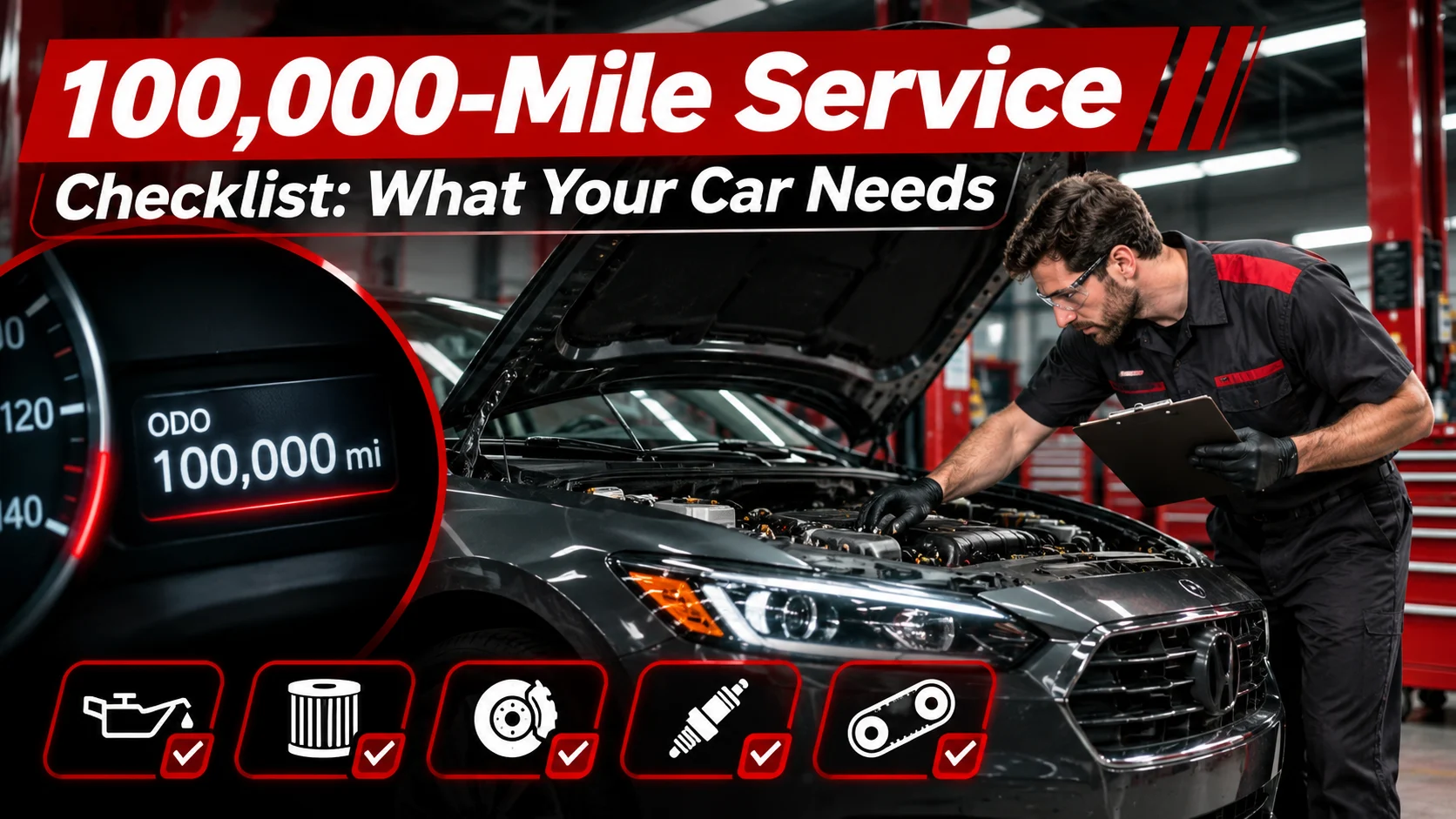
Your car has reached 100,000 miles, and you’re wondering what maintenance it actually needs. Is it time for expensive repairs, or will a few routine services keep it running?
The good news is that reaching 100,000 miles doesn’t automatically mean your vehicle needs major repairs. However, it’s an important time to review maintenance history, inspect wear-related components, and complete services recommended by your vehicle manufacturer.
This 100000 mile service checklist explains what to inspect, what may need replacing, how much maintenance might cost, and how to avoid unnecessary expenses.
What Is a 100,000-Mile Service?
A 100,000-mile service is a thorough review of your vehicle’s maintenance needs as it approaches or passes 100,000 miles. It may include fluid services, filter replacements, brake inspections, engine maintenance, and checks of other important components.
Unlike a standard oil change, this review considers several systems that can experience wear over time. However, there is no universal 100,000-mile service package that applies to every car.
Important: Always check your owner’s manual and manufacturer maintenance schedule first. Required services vary by vehicle make, model, engine, age, driving conditions, and maintenance history.
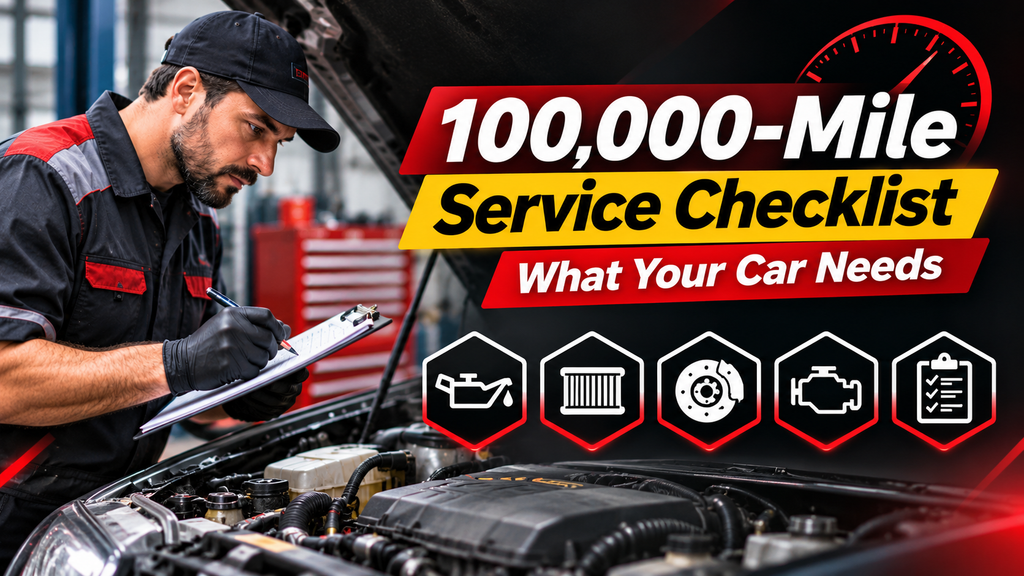
Complete 100,000-Mile Service Checklist
Use the following checklist to prepare for your next maintenance appointment. Some items require routine inspection, while others should only be replaced when the manufacturer recommends it or their condition justifies replacement.
| Component | Recommended Action |
|---|---|
| Engine oil and filter | Change if due under the normal service interval. |
| Air filter | Inspect and replace if dirty or due. |
| Spark plugs | Replace if the manufacturer interval is reached. |
| Transmission fluid | Review the specified service interval and fluid requirements. |
| Engine coolant | Test or replace according to the schedule. |
| Brake system | Inspect pads, rotors, hoses, and fluid. |
| Tires | Check tread, pressure, age, and uneven wear. |
| Timing belt or chain | Verify the engine-specific requirements. |
| Suspension | Inspect shocks, struts, joints, and bushings. |
| Battery | Test battery condition and inspect terminals. |
| Belts and hoses | Check for cracking, leakage, and deterioration. |
| Steering system | Inspect for looseness, leaks, and unusual wear. |
| Drivetrain fluids | Check service requirements where applicable. |
Maintenance Checklist
- Review owner’s manual and service records
- Check engine oil and filter interval
- Inspect engine air filter
- Check spark plug replacement schedule
- Review transmission fluid requirements
- Inspect coolant system and hoses Inspect brakes and tires
- Inspect suspension and steering
- Test battery and charging system
- Verify timing belt requirements
These checkboxes are intended for planning. Checking an item does not confirm that a component has been professionally inspected or serviced.
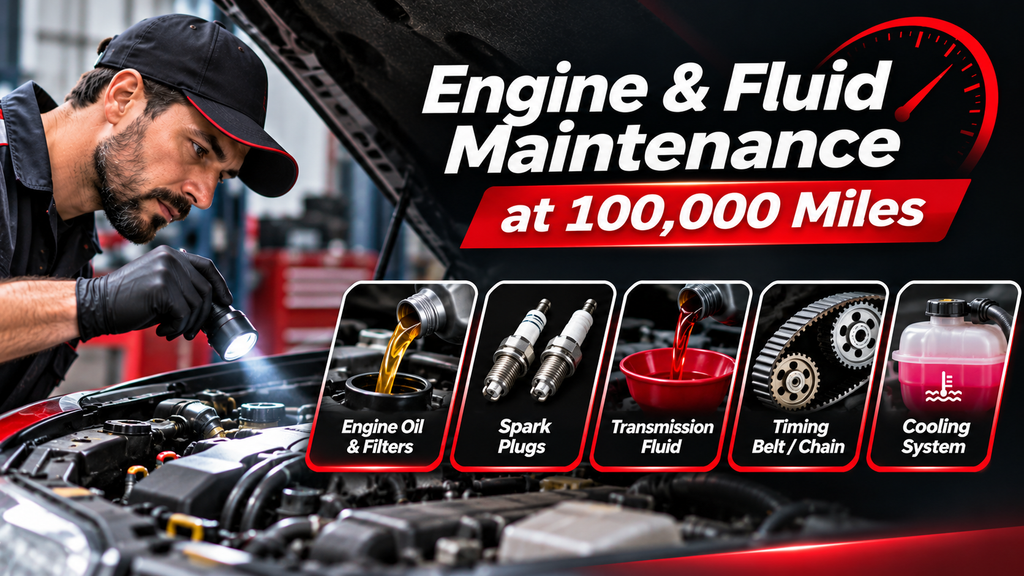
Engine and Fluid Maintenance at 100,000 Miles
Engine and fluid maintenance plays an important role in keeping a high-mileage vehicle reliable. Focus on the following areas.
1. Engine Oil and Filters
Continue changing engine oil and the oil filter at the manufacturer’s recommended intervals. Inspect the engine air filter and replace it if its condition or service schedule requires it. Reaching 100,000 miles does not automatically change the correct oil specification or service interval.
2. Spark Plugs and Ignition System
Some vehicles use long-life spark plugs with replacement intervals around 100,000 miles, while others require earlier service. Consult the maintenance schedule before replacing them. Misfires, rough idling, or poor performance may also require diagnosis.
3. Transmission Fluid
Review the transmission maintenance requirements for your specific vehicle. Automatic transmissions, manual transmissions, and CVTs may need different fluids and service procedures.
Avoid agreeing to an unnecessary transmission flush without checking the manufacturer’s recommendations and the transmission’s condition.
4. Timing Belt or Timing Chain
Some engines have timing belts requiring replacement at specified mileage or age intervals. Other engines use timing chains that may not have a routine replacement interval.
Never assume both systems need replacement at 100,000 miles. Check the exact engine specification. An overdue timing belt can cause serious engine damage in certain engines if it fails.
5. Cooling System
Inspect the radiator, coolant reservoir, hoses, water pump area, and visible connections for leaks or deterioration. Replace coolant when required by the manufacturer’s schedule.
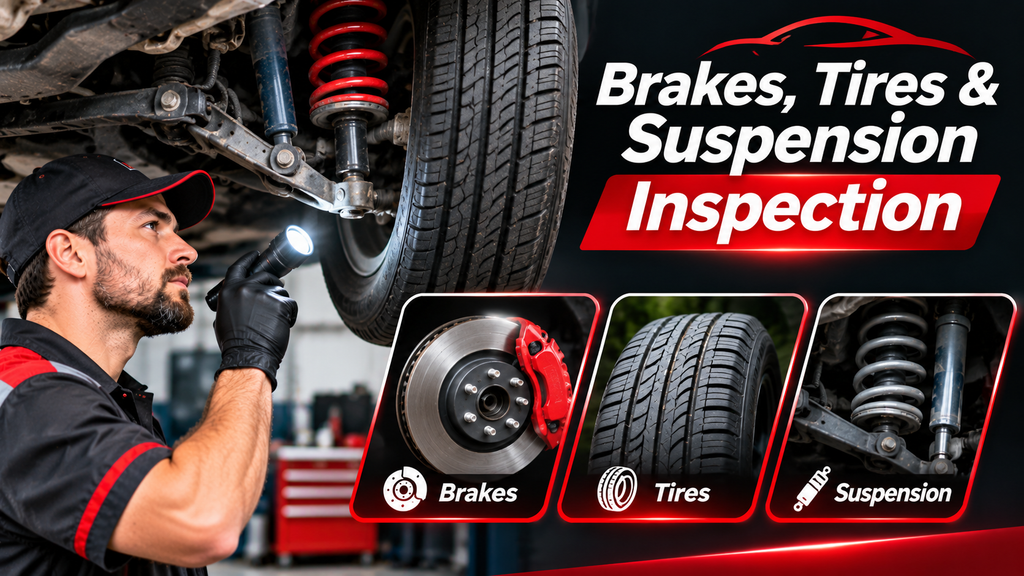
Brakes, Tires, and Suspension Inspection
Safety-related components deserve careful attention as mileage increases, even when the vehicle feels normal during everyday driving.
Brake System
Have the brake pads, rotors, calipers, brake hoses, and fluid inspected. Brake component replacement depends on actual wear, condition, and manufacturer requirements rather than mileage alone.
Tires and Wheel Alignment
Check tread depth, tire age, pressure, and uneven wear. Feathering or irregular tread patterns may indicate alignment or suspension problems. Replace tires when they no longer meet safe condition requirements.
Steering and Suspension
Worn bushings, ball joints, tie rods, shocks, and struts can affect handling and tire wear. Clunking noises, steering looseness, or unusual vibration should prompt further inspection.
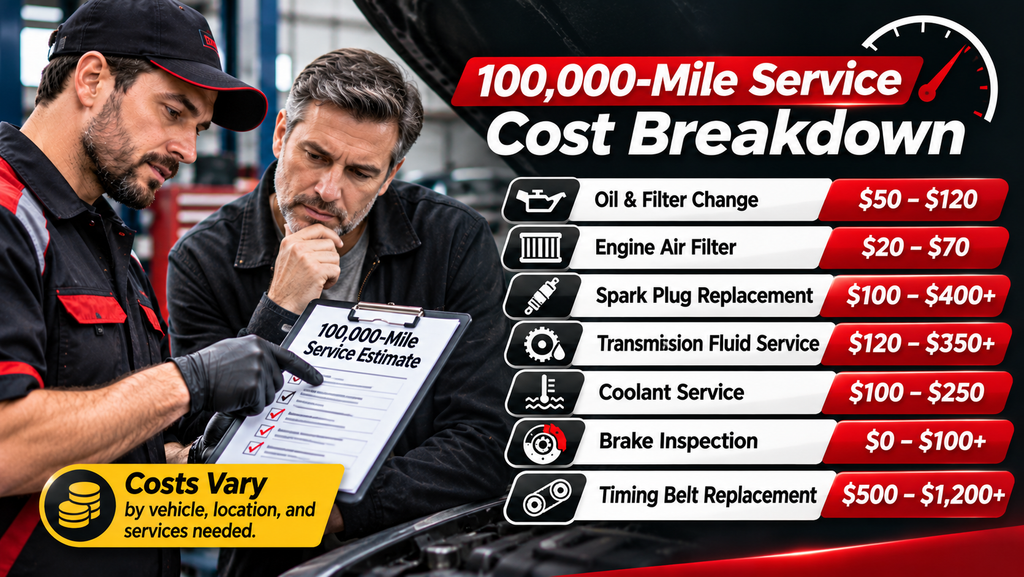
How Much Does a 100,000-Mile Service Cost?
The cost depends on your vehicle, location, labor rates, and the services actually due. A basic inspection and routine maintenance appointment will generally cost less than one involving spark plugs, major fluid services, or timing belt replacement.
| Service | Illustrative US Cost |
|---|---|
| Oil and filter change | $50–$120 |
| Engine air filter | $20–$70 |
| Spark plug replacement | $100–$400+ |
| Transmission fluid service | $120–$350+ |
| Coolant service | $100–$250 |
| Brake inspection | $0–$100+ |
| Timing belt replacement, if required | $500–$1,200+ |
Cost note: These are broad, illustrative US budgeting ranges, not verified local quotes. Actual costs may be higher, particularly for luxury vehicles, difficult-to-access components, or repairs involving additional parts. Not every listed service will be due at 100,000 miles.
Money-saving tip: Ask your mechanic for an itemized estimate separating manufacturer-required maintenance, condition-based repairs, and optional recommendations.
Can You Perform 100,000-Mile Maintenance Yourself?
Some basic maintenance tasks are suitable for experienced DIY owners, provided they have the correct tools and follow the vehicle’s service instructions.
Potential DIY Tasks
- Replacing an accessible engine air filter.
- Inspecting visible belts and hoses with the engine off and cool.
- Checking tire pressure and visible tire condition.
- Checking accessible fluid levels using the correct procedure.
- Replacing windshield wiper blades.
Tasks Better Left to Professionals
- Timing belt replacement and complex engine repairs.
- Transmission servicing requiring specialized procedures.
- Brake hydraulic system repairs.
- Suspension and steering component replacement.
- High-voltage hybrid or electric vehicle maintenance.
If you’re unsure how to complete a task safely, consult a qualified automotive technician. Never work beneath a vehicle supported only by a jack.
Common 100,000-Mile Maintenance Mistakes
Avoid these common mistakes when planning high-mileage vehicle maintenance:
- Replacing everything automatically: Mileage alone doesn’t justify replacing every fluid or component.
- Ignoring service history: Recently completed maintenance may not need to be repeated.
- Skipping manufacturer recommendations: Overdue scheduled services can create avoidable risks.
- Ignoring warning signs: Fluid leaks, overheating, braking problems, and unusual noises deserve prompt diagnosis.
- Choosing services based only on price: Correct specifications and workmanship matter as much as cost.
Frequently Asked Questions
Is a 100,000-mile service necessary?
A maintenance review is worthwhile, but there is no universal service package required at 100,000 miles. Follow your vehicle’s manufacturer schedule and maintenance history.
What should be replaced at 100,000 miles?
Depending on the vehicle, scheduled replacements may include spark plugs, certain fluids, filters, or a timing belt. Other components should be inspected and replaced only when needed.
Should I change transmission fluid at 100,000 miles?
Check the exact transmission type and manufacturer recommendations. The correct interval, fluid, and procedure vary, especially for high-mileage transmissions with uncertain service history.
Can a car last 200,000 miles?
Yes, many vehicles can reach 200,000 miles or more, but longevity depends on maintenance, driving conditions, vehicle design, and overall mechanical condition.
Should I visit a dealership or independent mechanic?
Either can be a good choice. Select a shop with experience servicing your vehicle, appropriate equipment, transparent pricing, and access to the correct service information.
Final Thoughts
A 100,000-mile service is an opportunity to protect your vehicle’s reliability, safety, and long-term value. Start with the owner’s manual, review past maintenance, inspect important components, and complete only the services that are actually due. With a sensible maintenance plan, reaching 100,000 miles can be another milestone rather than the end of your car’s useful life.