Is your car’s air conditioner blowing warm air instead of keeping you cool? A car AC recharge might help, but adding refrigerant is not always the right solution. Weak cooling can also result from a refrigerant leak, faulty compressor, electrical problem, or other AC system issue.
Understanding how AC recharging works can help you avoid unnecessary expenses and protect your vehicle’s cooling system. This guide explains common symptoms, the professional recharge process, costs, and important safety considerations.
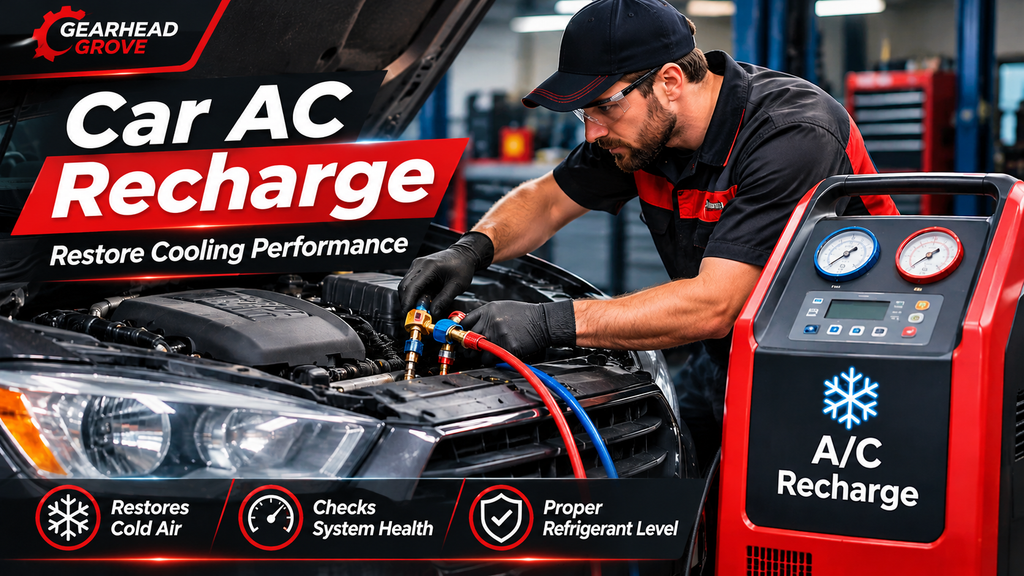
What Is a Car AC Recharge?
A car AC recharge is the process of restoring the correct amount of refrigerant to an automobile’s air conditioning system. Refrigerant circulates through the system, absorbing heat from the passenger cabin and releasing it outside the vehicle.
Unlike gasoline or engine oil, refrigerant is not supposed to be regularly consumed. Modern automotive AC systems are designed to be sealed. If refrigerant levels become low, a leak or previous servicing problem may be responsible.
Important: Recharging an AC system without identifying a refrigerant leak may provide only temporary cooling. The underlying problem should be diagnosed before adding refrigerant.
Signs Your Car AC May Need Recharging
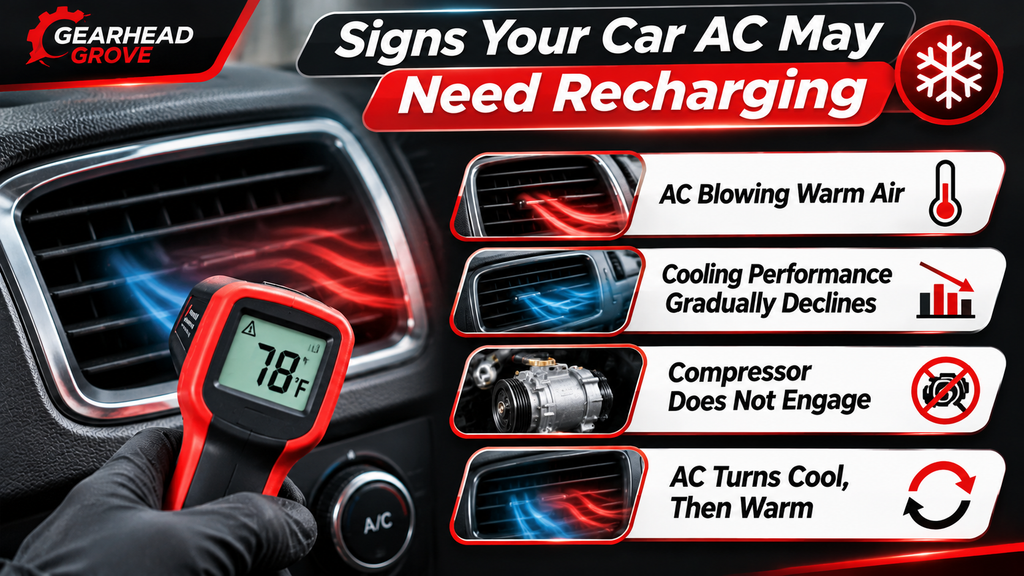
Low refrigerant can affect cooling performance, but symptoms alone cannot confirm the cause. Look for these warning signs:
1. AC Blowing Warm Air
One of the most noticeable symptoms is warm or insufficiently cooled air coming from the vents. Low refrigerant is one possibility, but compressor, electrical, and airflow faults can produce similar results.
2. Cooling Performance Gradually Declines
If your AC previously worked well but now struggles to cool the cabin, refrigerant loss may be involved. A slow leak can reduce system performance over time.
3. Compressor Does Not Engage
Some vehicles prevent compressor operation when refrigerant pressure falls outside an acceptable range. However, compressor behavior varies by vehicle, and electrical faults can cause similar symptoms.
4. AC Turns Cool, Then Warm
Inconsistent cooling may involve refrigerant pressure, airflow, compressor control, or other faults. A technician can examine system operation to determine the actual cause.
Why Does Car AC Refrigerant Get Low?
Low refrigerant usually indicates that some refrigerant has escaped from the system. Possible causes include:
- Damaged hoses or connections: Deteriorated components may allow refrigerant to escape.
- Worn seals and O-rings: Sealing problems can develop with age or damage.
- Leaking condenser: Road debris, corrosion, or physical damage may cause leaks.
- Service-related problems: Incorrect charging or poorly sealed connections can affect refrigerant quantity.
A proper leak inspection helps determine whether an automobile A/C recharge is appropriate or whether additional repairs are needed first.
R-134a vs. R-1234yf: Which Refrigerant Does Your Car Use?
Before servicing a vehicle’s air conditioner, identify the refrigerant specified by the manufacturer. Two refrigerants commonly found in US passenger vehicles are R-134a and R-1234yf.
| Feature | R-134a | R-1234yf |
|---|---|---|
| Common applications | Many older vehicles | Many newer vehicles |
| Environmental impact | Higher global warming potential | Much lower global warming potential |
| Compatibility | Use only where specified | Use only where specified |
Check the under-hood AC label or manufacturer service information for the required refrigerant type and charge amount. Never mix refrigerant types or assume they are interchangeable.
How to Charge an Automobile Air Conditioner: Professional Recharge Steps
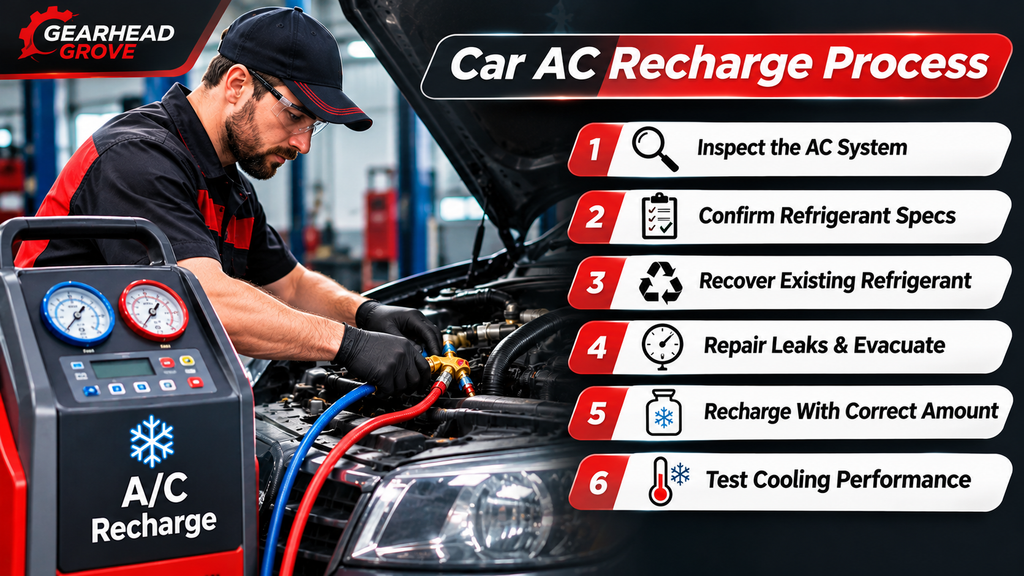
The correct recharge procedure requires suitable equipment and accurate refrigerant measurements. The steps below explain how a professional car AC recharge is generally performed. They are not a universal DIY service procedure.
Step 1: Inspect the AC System
The technician checks system operation, visible components, connections, and possible refrigerant leaks. Faults should be identified before charging.
Step 2: Confirm Refrigerant Specifications
The correct refrigerant type, factory charge quantity, and vehicle-specific service requirements are verified.
Step 3: Recover Existing Refrigerant
Using approved recovery equipment, the technician removes refrigerant as required. Refrigerant should not be intentionally vented into the atmosphere.
Step 4: Repair Leaks and Evacuate the System
Identified leaks are repaired. When required by the service procedure, a vacuum pump removes air and moisture from the system before charging.
Step 5: Recharge With the Correct Amount
The technician charges the system using the manufacturer’s specified refrigerant mass. Accurate charging by weight helps prevent undercharging and overcharging.
Step 6: Test Cooling Performance
Finally, the technician checks AC operation, relevant pressure readings, outlet temperature, and system performance according to the manufacturer’s instructions.
Can You Recharge Your Car AC Yourself?
Some stores sell consumer AC recharge kits, but using one does not guarantee the correct refrigerant charge or fix the underlying problem.
A single low-side gauge cannot reliably determine how much refrigerant is inside the system. Adding refrigerant without proper diagnosis can overcharge the system or mask a leak.
Safe checks for car owners:
- Confirm the AC controls are set correctly.
- Check whether the cabin air filter is restricting airflow.
- Look for visible damage around accessible AC components.
- Review the vehicle’s owner’s manual and AC refrigerant label.
- Arrange professional diagnosis when cooling remains poor.
Professional service is generally the safer choice when refrigerant loss is suspected, particularly for unfamiliar systems or vehicles requiring specialized equipment.
How Much Does a Car AC Recharge Cost?
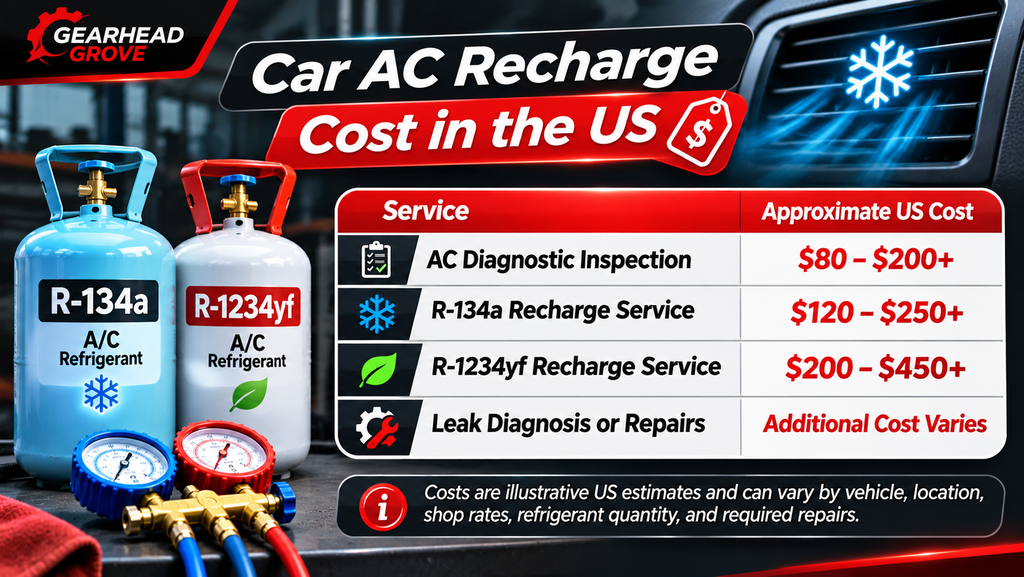
The cost of an automobile A/C recharge depends on refrigerant type, location, labor rates, system condition, and whether repairs are necessary.
| Service | Approximate US Cost |
|---|---|
| AC diagnostic inspection | $80–$200+ |
| R-134a recharge service | $120–$250+ |
| R-1234yf recharge service | $200–$450+ |
| Leak diagnosis or repairs | Additional cost varies |
These figures are illustrative US planning estimates, not verified local quotes. Costs vary by vehicle, shop, refrigerant quantity, and required repairs.
Common Car AC Recharge Mistakes to Avoid
Improper AC recharging can reduce cooling performance, damage components, and increase repair costs.
- Adding too much refrigerant: Overcharging can cause excessive system pressure and poor cooling.
- Using the wrong refrigerant: Mixing incompatible refrigerants can create service and system problems.
- Ignoring refrigerant leaks: A recharge alone will not repair damaged components.
- Relying on one pressure reading: Pressure changes with operating conditions and cannot independently confirm the correct charge amount.
- Using unsuitable additives: Some stop-leak products can complicate future servicing or damage equipment.
How Long Does a Car AC Recharge Last?
A properly functioning, sealed AC system should retain its refrigerant without needing routine top-ups. There is no universal recharge interval.
If cooling performance decreases again shortly after servicing, the system may have an unresolved leak or another fault. Repeatedly adding refrigerant is not a substitute for diagnosis and repair.
When Should You Visit a Mechanic?
Arrange professional AC service if your vehicle blows warm air despite correct settings, repeatedly loses cooling performance, has visible AC component damage, or has already been recharged without lasting improvement.
Stop attempting to recharge the system if you are unsure of the refrigerant type, suspect contamination, or notice abnormal operation. Refrigerant systems operate under pressure and require appropriate handling.

Frequently Asked Questions
Can a car AC recharge fix warm air?
Yes, if insufficient refrigerant is the actual cause. However, warm air may also result from compressor, electrical, airflow, or other system faults.
How often does a car AC need recharging?
There is no standard recharge schedule. A properly sealed system should not require regular refrigerant replacement or topping up.
Can too much refrigerant damage the AC system?
Yes. Overcharging can increase system pressure, reduce cooling performance, and potentially damage components.
How long does a professional car AC recharge take?
A straightforward service may take around one to two hours, depending on the vehicle and procedure. Leak diagnosis or repairs can take considerably longer.
Is it safe to drive with low AC refrigerant?
The vehicle may remain drivable, but the AC may perform poorly, and continued operation could stress certain components. Have the fault evaluated and follow any vehicle-specific warnings.
Final Thoughts
A car AC recharge can restore cooling when refrigerant quantity is low, but it should not be treated as the automatic solution to every air conditioning problem.
Start by checking basic AC operation, identifying the correct refrigerant, and investigating possible leaks. For accurate charging and reliable long-term performance, follow the manufacturer’s service procedures and seek qualified automotive AC service when needed.