If your check-engine light is on and your OBD-II scanner displays P0011, your engine may have a problem controlling its camshaft timing. The cause could be as simple as an oil-related issue or as complicated as a malfunctioning camshaft actuator or mechanical timing problem.
The important thing is that P0011 does not identify a single failed part. This guide explains what the code means, how serious it may be, and how to investigate the problem before spending money on repairs.
Quick Answer: What Does P0011 Mean?
P0011 means “A” Camshaft Position – Timing Over-Advanced or System Performance (Bank 1). The engine computer has detected that the camshaft timing is more advanced than expected or that the timing control system is not responding correctly. Potential causes include incorrect or contaminated oil, VVT control problems, oil-flow restrictions, and mechanical timing faults.
What Is the P0011 Code?
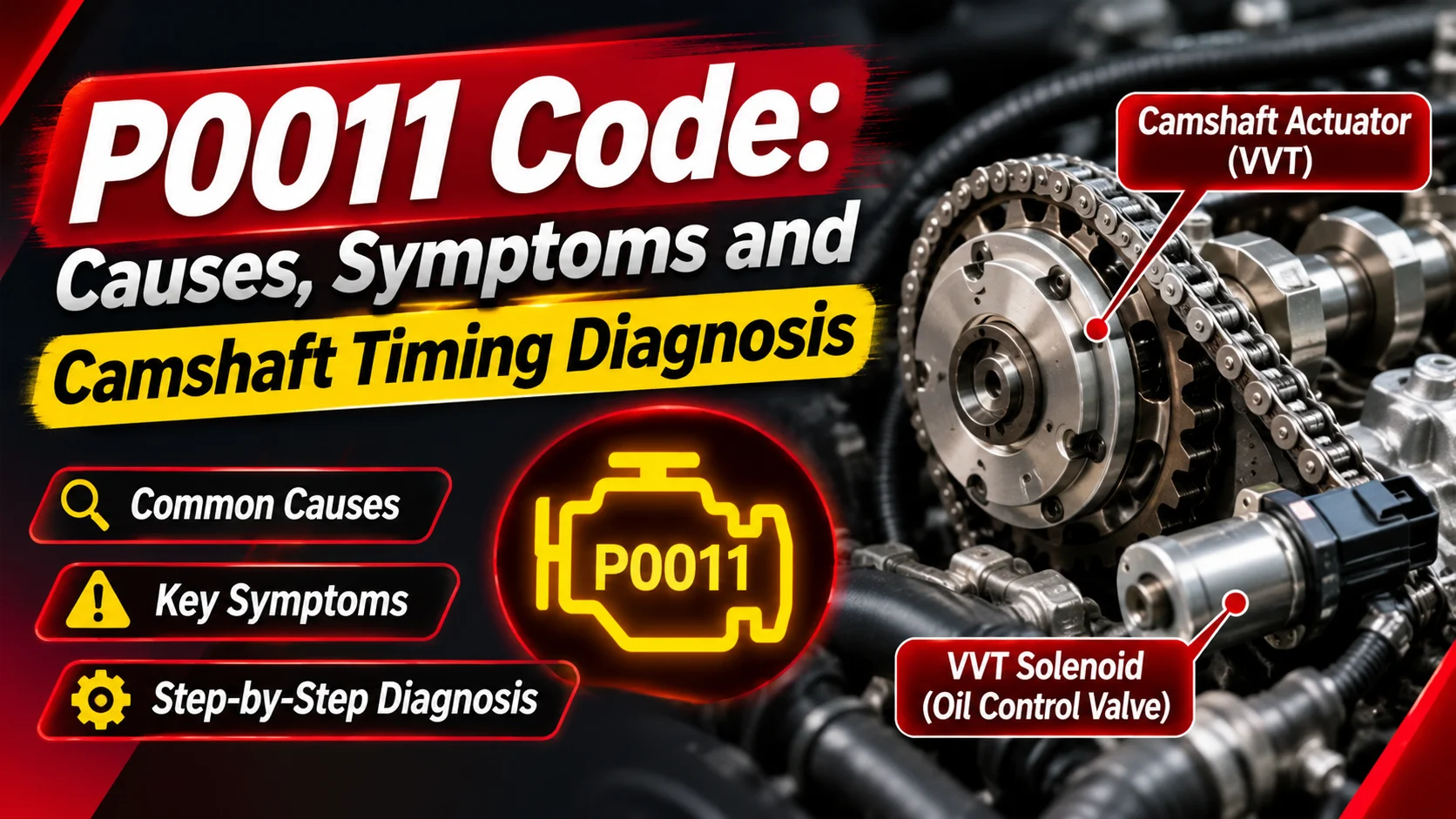
P0011 is a generic powertrain diagnostic trouble code associated with the engine’s variable valve timing (VVT) system. VVT changes camshaft timing under different operating conditions to improve engine performance, efficiency, and emissions.
When the engine control module detects that camshaft timing is too far advanced or the system is not performing as commanded, it may store P0011 and illuminate the check-engine light.
- “A” camshaft: Generally refers to the intake camshaft, depending on engine design.
- Bank 1: The side of the engine containing cylinder number one.
- Over-advanced: Camshaft timing is farther advanced than the control system expects.

Is P0011 Serious? Can You Drive With It?
P0011 should not be ignored. Its severity depends on the underlying problem and how the engine is behaving. Some vehicles may continue running with relatively minor symptoms, while others may experience rough idling, stalling, or unusual engine noises.
If the engine runs normally, arranging a prompt professional diagnosis is generally more sensible than continuing regular driving without investigating the code.
When to Stop Driving
Safely stop and shut off the engine if you notice a low oil-pressure warning, severe knocking or rattling, significant overheating, repeated stalling, or other serious operating problems. Arrange appropriate assistance rather than driving the vehicle for further testing.
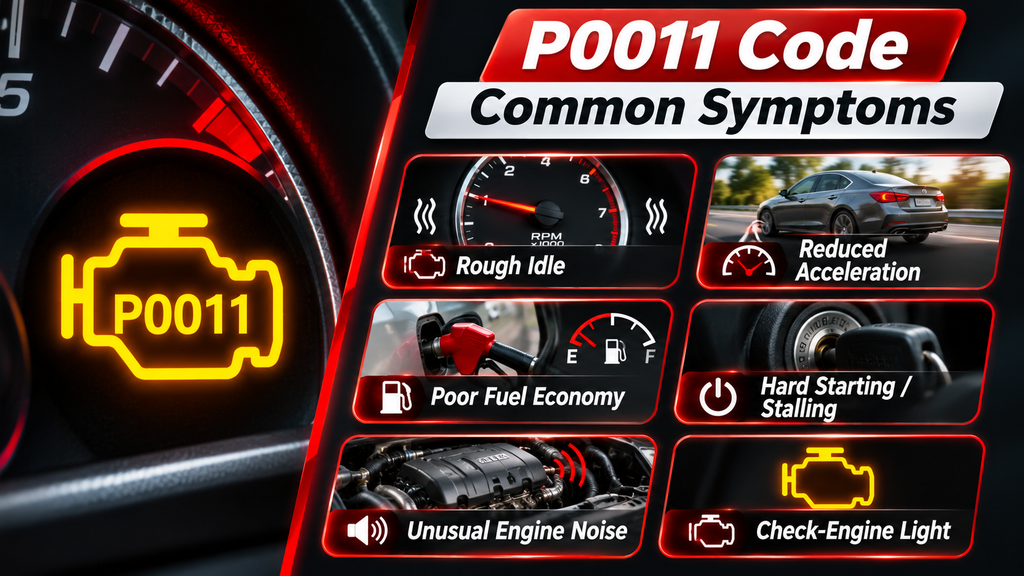
Common Symptoms of the P0011 Code
The symptoms can vary depending on the vehicle and how far the camshaft timing differs from its intended position.
- Check-engine light: Often the first noticeable warning.
- Rough idle: The engine may shake or run unevenly.
- Reduced acceleration: Engine response may feel sluggish.
- Poor fuel economy: Incorrect valve timing may reduce efficiency.
- Hard starting or stalling: Possible when timing control is significantly affected.
- Unusual engine noise: Rattling may occur with some oil-pressure, actuator, or timing-system problems.
These symptoms are clues, not proof of a specific failure. Other engine problems can produce similar behavior.
What Causes the P0011 Code?
Several faults can interfere with the engine’s ability to control camshaft timing. The following are important areas to investigate.
1. Low, Dirty, or Incorrect Engine Oil
Many VVT systems depend on engine oil pressure to move the camshaft actuator. Insufficient oil, contamination, or incorrect viscosity can interfere with the oil passages and timing-control components.
2. Faulty or Sticking VVT Solenoid
The VVT solenoid, also called an oil control valve on some engines, regulates oil flow to the camshaft actuator. A sticking valve or electrical fault may prevent the system from adjusting timing correctly.
3. Camshaft Actuator Problems
A worn or sticking camshaft phaser may fail to move to the commanded position, potentially causing an over-advanced timing condition.
4. Timing Chain or Mechanical Timing Issues
Incorrect timing alignment, damaged timing-system components, or other mechanical faults can affect camshaft position. These issues require careful diagnosis because repairs may be extensive.
5. Wiring, Oil Passages, or Related Control Faults
Damaged connectors, circuit problems, restricted oil passages, or abnormal oil pressure may also interfere with VVT operation. A camshaft sensor fault is possible in some diagnostic scenarios, but P0011 alone does not prove that the sensor needs replacement.

How to Diagnose P0011 Step by Step
A diagnosis-first approach helps reduce unnecessary parts replacement. The exact procedure depends on the vehicle’s year, make, model, and engine.
Step 1: Confirm the Code
Use an OBD-II scanner to record P0011, any additional codes, and available freeze-frame information. Avoid clearing the codes before collecting useful diagnostic data.
Step 2: Check Engine Oil
With the vehicle safely parked, check the oil level following the owner’s manual. Review the oil’s condition, viscosity specification, and maintenance history. Correct any confirmed oil-related problem using manufacturer-approved products and procedures.
Step 3: Inspect Accessible Connections
With the engine off and cool, visually inspect accessible VVT-related wiring and connectors for corrosion, damaged insulation, loose connections, or oil contamination.
Step 4: Test VVT Operation
A qualified technician can use a capable scan tool to compare commanded and actual camshaft timing, perform supported actuator tests, and check the oil control valve and its electrical circuit.
Step 5: Check Oil Pressure and Mechanical Timing
If preliminary checks do not reveal the cause, further testing may include measuring engine oil pressure, inspecting oil passages, evaluating the camshaft actuator, and checking mechanical timing alignment.
Important: Do not remove timing-system components or apply power directly to a VVT solenoid without the correct vehicle-specific instructions. Some engines also require specialized tools and procedures for accurate testing.

How Do You Fix the P0011 Code?
The correct repair depends on what diagnostic testing confirms. Possible repairs include:
- Correcting a low oil level or performing an overdue oil and filter change.
- Replacing a VVT solenoid that has been confirmed faulty.
- Repairing damaged wiring or electrical connections.
- Addressing oil-pressure problems or restricted oil passages.
- Replacing a faulty camshaft actuator when testing supports that diagnosis.
- Repairing mechanical timing components if inspection confirms a problem.
After completing the repair, follow the manufacturer’s verification procedure. This may include clearing stored codes, monitoring camshaft timing data, and completing an appropriate drive cycle to confirm the fault does not return.
P0011 Repair Cost: What Should You Expect?
Repair costs vary significantly depending on the vehicle, labor rates, accessibility, and the actual failure. The following US dollar ranges are broad planning estimates, not verified quotes for a particular vehicle.
| Potential Repair | Illustrative Cost |
|---|---|
| Oil and filter change | $50–$150 |
| VVT solenoid replacement | $150–$450 |
| Wiring or connector repair | $100–$400+ |
| Camshaft actuator replacement | $400–$1,200+ |
| Timing chain-related repair | $800–$2,500+ |
These approximate ranges are not live market prices. Diagnostic fees, taxes, and additional repairs may increase the final bill.

P0011 vs. P0012: What’s the Difference?
Both codes relate to camshaft timing performance, but they describe different conditions.
| Code | Meaning |
|---|---|
| P0011 | Camshaft timing over-advanced or system performance, Bank 1. |
| P0012 | Camshaft timing over-retarded, Bank 1. |
Neither code identifies a particular component as defective. Accurate diagnosis remains essential.
How to Help Prevent P0011
Not every camshaft timing failure is preventable, but proper maintenance can reduce some oil-related VVT problems.
- Use the engine oil grade and specification required by the manufacturer.
- Change oil and filters according to the appropriate maintenance schedule.
- Check oil levels regularly and investigate unusual oil consumption.
- Address oil-pressure warnings immediately.
- Investigate new engine noises and recurring check-engine codes promptly.
Frequently Asked Questions About P0011
Can low oil cause P0011?
Yes. Low oil levels can interfere with oil-pressure-operated VVT systems. However, the oil level alone cannot confirm the cause of P0011.
Can an oil change fix P0011?
Possibly. If incorrect or degraded oil is responsible, correcting the oil condition may resolve the issue. Persistent faults require further diagnosis.
Does P0011 mean the timing chain is bad?
No. Mechanical timing faults are one possibility, but oil-control, actuator, and electrical issues can also trigger the code.
Can a bad camshaft position sensor cause P0011?
A sensor or related circuit problem may affect camshaft position information, but P0011 is not direct proof of a failed sensor. Verify sensor operation and related codes before considering replacement.
Why does P0011 return after clearing it?
Clearing the code does not repair the underlying fault. If the control system detects the same timing problem again, the code can return.
Is P0011 the same on every car?
The generic code definition is similar across OBD-II vehicles, but the components, diagnostic criteria, and required tests can vary by manufacturer and engine.
Final Thoughts
The P0011 code indicates a camshaft timing control problem that deserves attention, but it does not automatically mean your engine needs major repairs.
Start by recording the diagnostic information and checking the engine oil. If the cause is not clear, have the VVT system, electrical controls, oil pressure, and mechanical timing evaluated using the correct vehicle-specific procedures.