
You’re sitting in a parking lot. You see a silver nail head gleaming in your tire. Your stomach drops. A new tire costs $150–$250. You have $40 left in your checking account until Friday.
Before you panic or call the tire shop and accept their first offer, here are 7 realistic facts about nail in tire repair that will help you make the right decision—and keep money in your pocket.
1. Location Is EVERYTHING
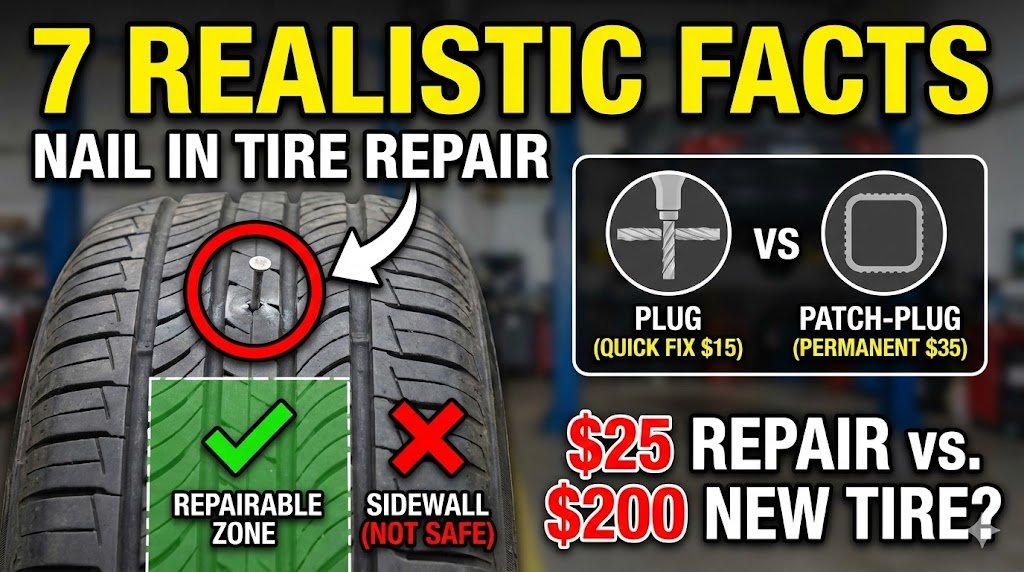
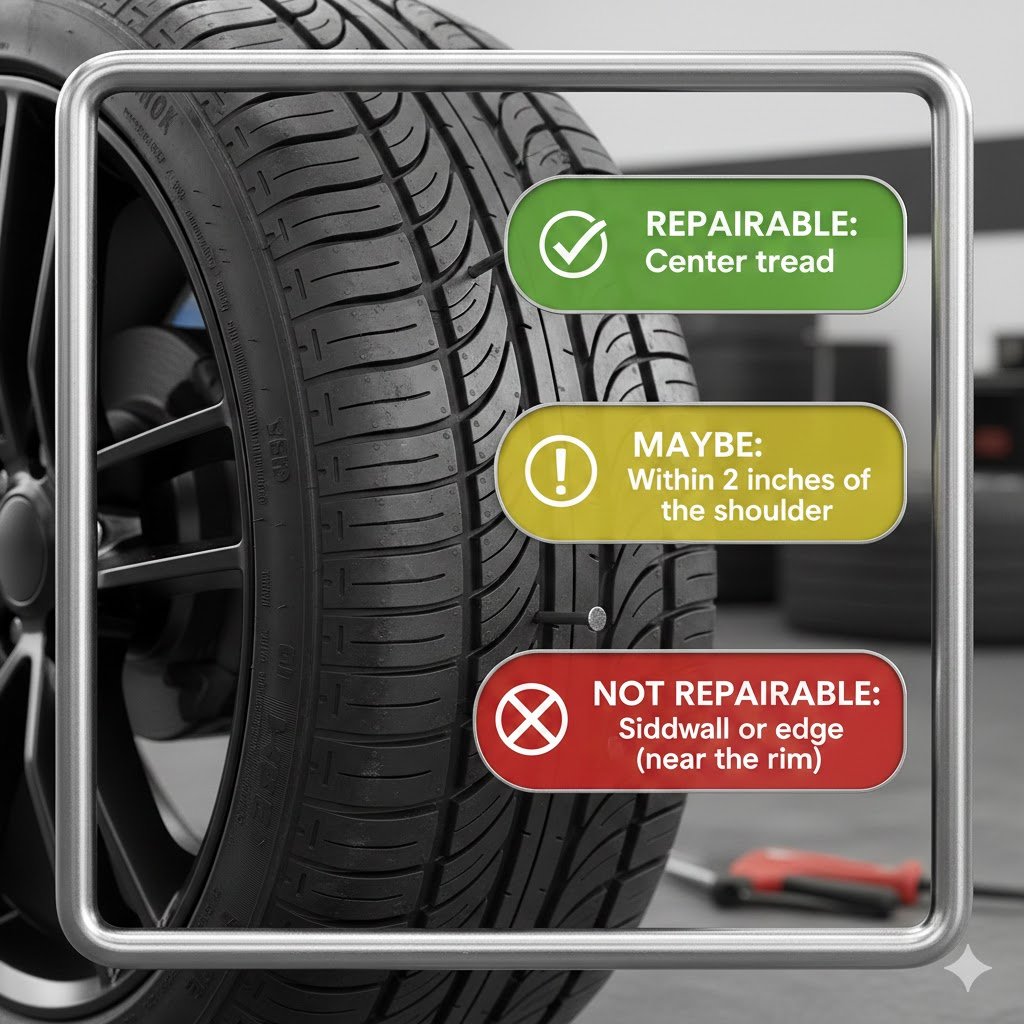
The one question that determines if your tire lives or dies: Where exactly is the nail?
- ✓ REPAIRABLE: Center tread (the main contact patch)
- ⚠ MAYBE: Within 2 inches of the shoulder
- ✗ NOT REPAIRABLE: Sidewall or edge (near the rim)
Why? The tread is the load-bearing zone. The sidewall flexes constantly and can’t hold a patch safely—that’s just physics.
Reality check: If you Google your exact tire situation and see mostly sidewall examples, you might need a new tire. But 80% of nails land in the repairable zone. You’re probably OK.
2. Size of the Hole Matters
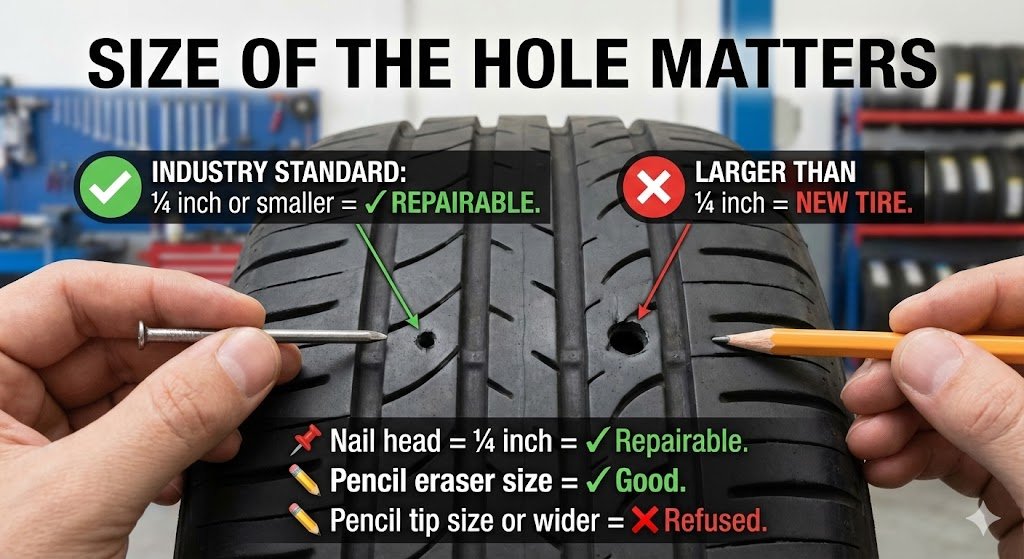
Industry standard: A hole ¼ inch or smaller is repairable. Anything larger? New tire.
- 📌 Nail head = ¼ inch = ✓ Repairable
How to check: Most standard nails are around 2mm, which is well under the limit. If the hole is the size of a pencil eraser (or smaller), you’re good. If it’s the size of a pencil tip or wider, the shop will likely refuse it.
3. Plug vs. Patch: What You’re Actually Paying For
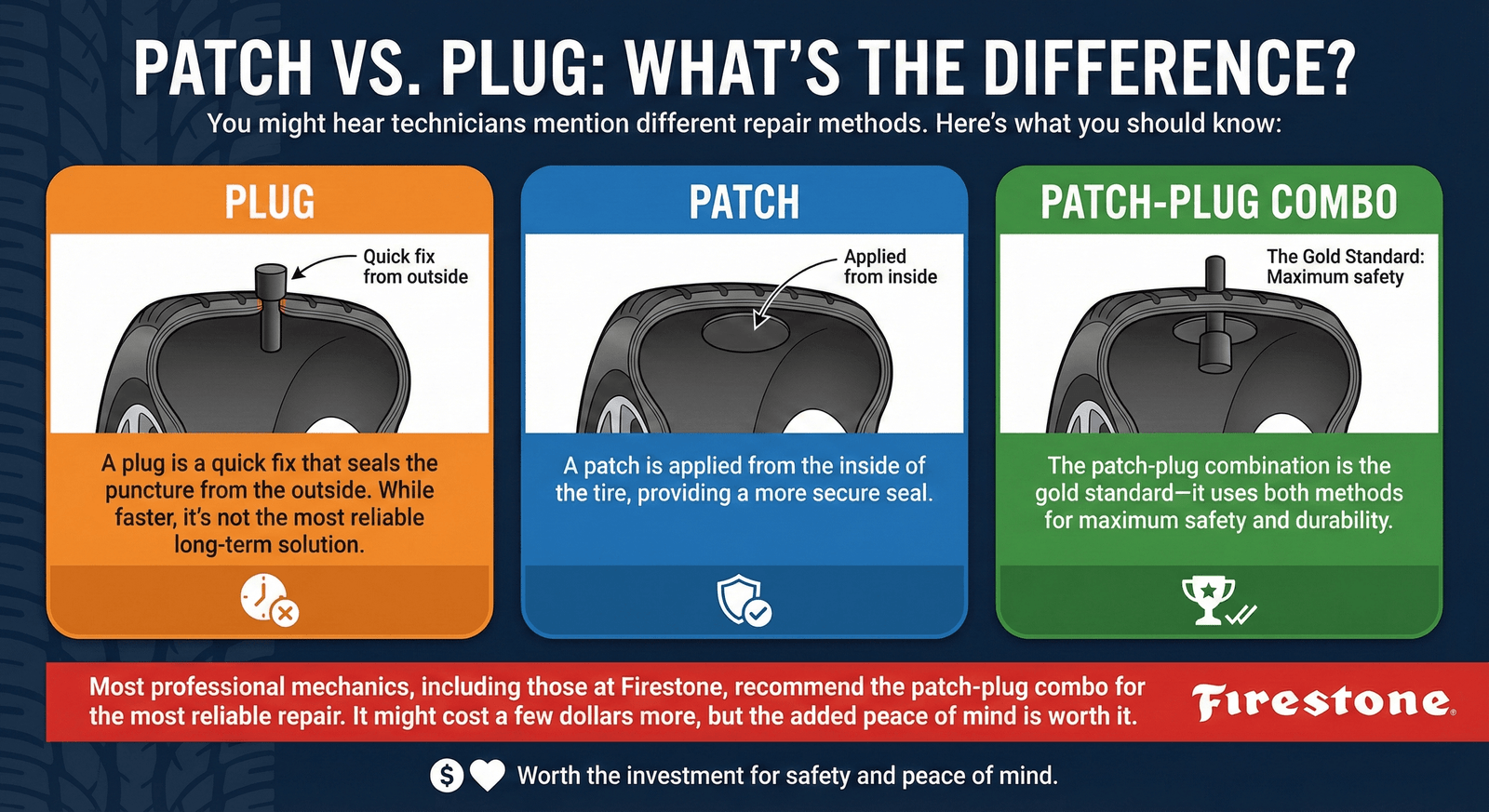
This is where the upsell happens. You need to know the difference.
🔧 Plug Only (Quick Fix) – $10–$20
- Rubber plug inserted from outside
- Takes ~10 minutes
- Tire stays on the car
- Can work loose over time
If the nail is safely in the tread and you opt for a plug instead of a patch, you should immediately check the [cost to plug a tire] at local shops.
🛠️ Patch-Plug Combo (Permanent) – $25–$40 (RECOMMENDED)
- Tire removed from rim
- Interior patch applied
- Plug fills from inside out
- Lasts the life of the tire
What to ask for: “I’d like an internal patch with a plug, please.” That’s the industry standard and it’s what you want. If they push back, ask why. If they can’t give you a good reason, find another shop.
Pro tip: Some shops will quote you only a plug and then upsell you to a patch-plug at the register, making it feel like a surprise.
4. Some Shops Will Lie (And How to Catch Them)
Not all shops, but enough that it’s worth knowing the scam:
- The Scam: “We can’t repair that. The nail is too close to the edge. You need a new tire.”
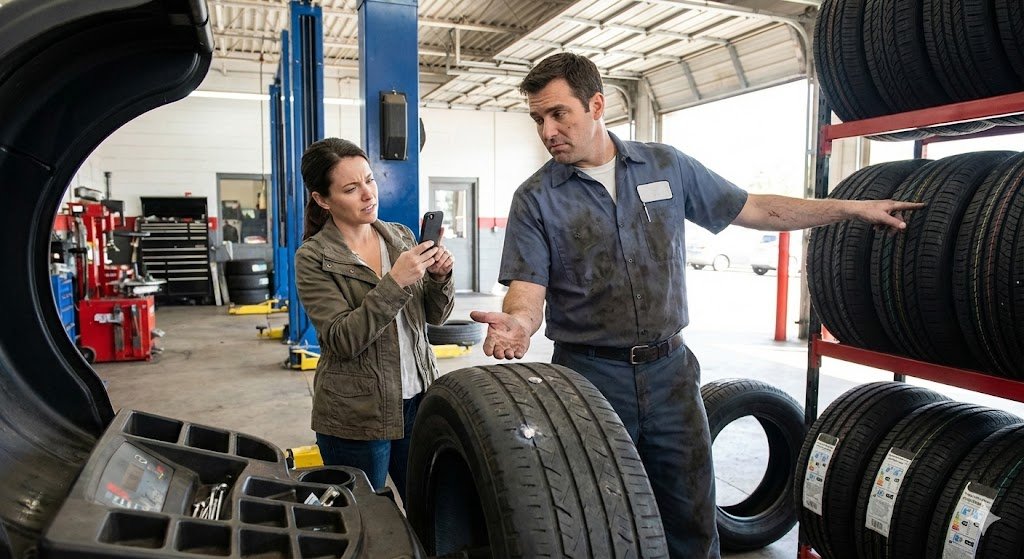
- How to Catch It: Ask to SEE the tire. Inspect it yourself. Is the nail actually in the tread or the sidewall? Take a photo. If you’re unsure, ask for a second opinion at another shop (most will do a free inspection).
Reality: Tire shops make more profit selling new tires. It’s not a conspiracy—it’s just economics. A patch-plug repair makes them $30. A new tire makes them $150+. You can’t blame them for trying, but you can be smart about it.
Where to shop: Costco, Discount Tire, and Firestone have strong reputations for honest repairs. Independent shops vary wildly.
5. You CAN Drive to the Shop (Usually)
This is the question Penny asks at 2 PM when she has to pick up her kid at 3:
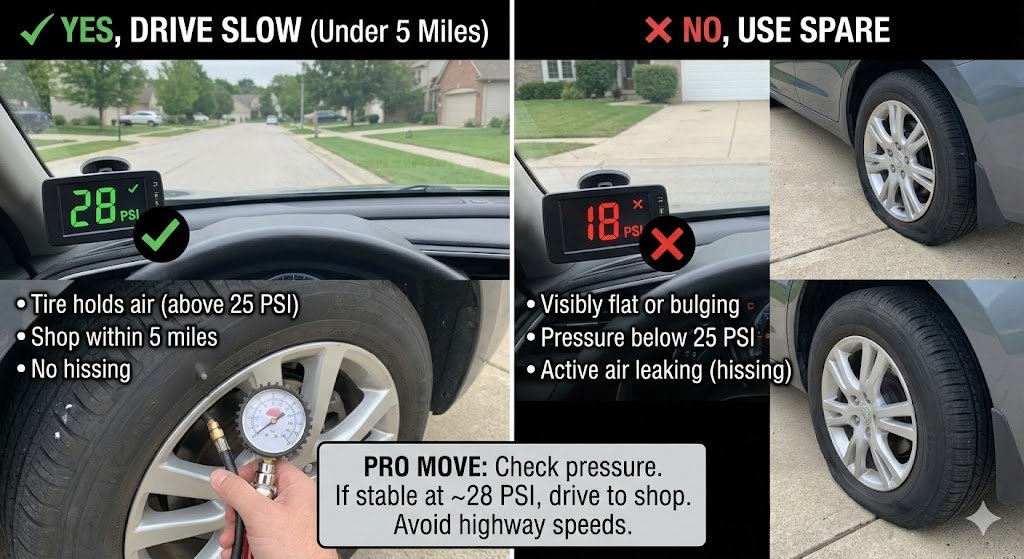
✓ YES, you can drive if:
- The tire holds air (not visibly flat)
- Tire pressure is above 25 PSI
- The shop is within 5 miles
- You’re not hearing constant hissing
✗ NO, use your spare if:
- Tire is visibly flat or bulging
- You see rubber tears or damage
- Pressure is below 25 PSI
- You hear active air leaking (hissing)
Pro move: Check your tire pressure with a gauge before deciding. If it’s at 28 PSI and stable, you can absolutely drive 3 miles to the tire shop. Just don’t hit the highway at 65 mph.
6. Free Repairs DO Exist
If you bought your tires within the last few years, you might not need to pay anything.
Where to check:
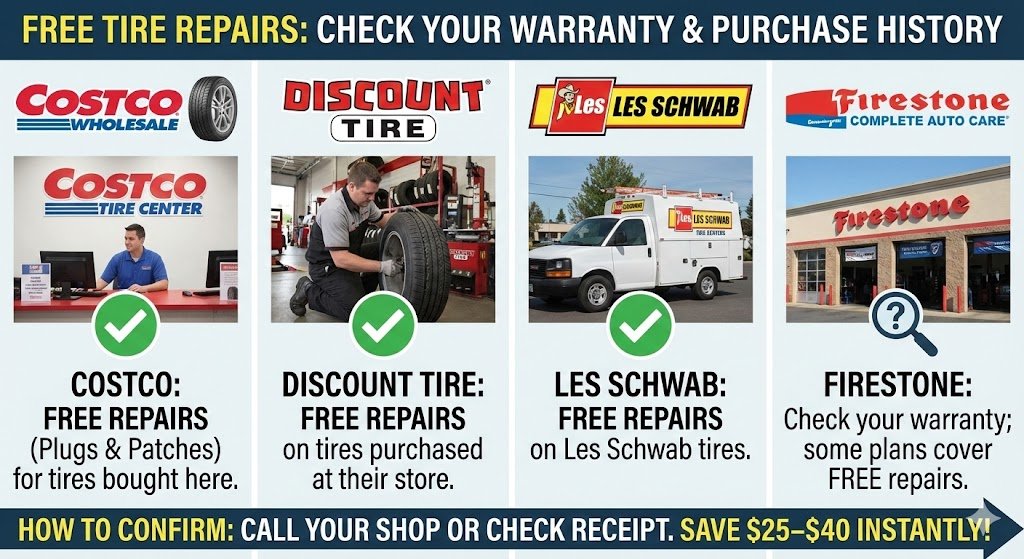
- Costco: Free tire repairs (plugs and patches) if you bought tires there
- Discount Tire: Free repairs on tires purchased at their store
- Les Schwab: Free repairs on Les Schwab tires
- Firestone: Check your warranty; some plans cover free repairs
How to confirm: Call your tire shop or check your receipt. Most will immediately tell you if you’re covered. This can save you $25–$40 instantly.
Reality check: If you bought your tires from a random shop at a discount, they might not honor free repairs. But it costs $0 to ask.
7. Preventative Patches Cost Almost Nothing
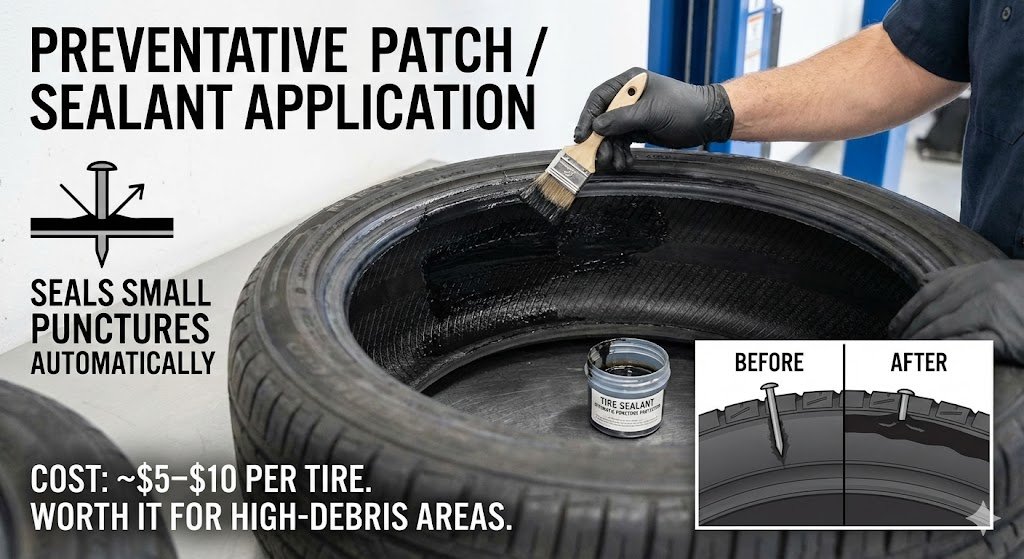
Here’s what most people don’t know: After your repair, ask the shop for a “preventative patch” or “sealant application” for your other tires.
This is a liquid rubber coating applied to the inside of the tire that seals small punctures automatically. Cost? Usually $5–$10 per tire.
Is it worth it? If you live in an area with lots of nails (construction zones, highways with debris), absolutely. It could save you $30–$40 down the line.
Note: This doesn’t fix large holes or sidewall damage, but it does handle the annoying little punctures that would otherwise mean another shop visit.
Final Thoughts: You’ve Got This, Penny
That nail in your tire? It’s probably repairable, it’ll probably cost you $25–$40, and you can probably drive there right now. You’re not looking at a $200 disaster—you’re looking at an inconvenience with a straightforward fix.
Walk into that tire shop knowing:
- ✓ Where the nail is (center tread = good news)
- ✓ What size it is (pencil eraser or smaller = repairable)
- ✓ What to ask for (internal patch-plug combo)
- ✓ What it costs ($25–$40 typical range)
- ✓ When you can drive it (if pressure is stable, you’re OK)
You’re not getting scammed today. You’re going to fix this tire, get back on the road, and move on with your life.